Satellite images show damage inside Iran’s Bushehr nuclear power plant

Satellite images [on original] reveal strikes between July 7 and 12 on Iran’s largest nuclear power plant
By Al Jazeera Staff, 17 Jul 2026, https://www.aljazeera.com/news/2026/7/17/satellite-images-show-damage-inside-irans-bushehr-nuclear-power-plant
Satellite imagery reveals new damage inside Iran’s Bushehr nuclear power plant complex following the latest wave of US strikes during renewed military escalation between Washington and Tehran.
A comparison of European Sentinel-2 satellite images captured on July 7 and July 12 shows newly formed impact scars inside the Bushehr complex, along with another apparent strike site within nearby support facilities.
The open-source unit of Al Jazeera Network compiled satellite imagery, field footage and official data from the US Central Command (CENTCOM) to map the locations of US strikes across Iran between July 7 and July 15.
Ehsan Jahanian, deputy governor of Bushehr province, had said on July 9 that several locations across the province had been struck, including areas surrounding the Bushehr nuclear power plant, a military site in Choghadak and a fishing port in the south of the province, according to Iran’s state news agency IRNA.
Jahanian later denied reports that the nuclear power plant itself had been hit, saying the reactor remained unaffected and continued operating normally.
The strikes came during a broader US military campaign against Iran. US Central Command (CENTCOM) said it struck about 90 military targets on July 7-8, including air defence systems, missile and drone storage sites, naval assets and military infrastructure along Iran’s southern coast.
The US did not identify Bushehr or any nuclear facility among the announced targets.
Iran’s only operating nuclear power plant
Bushehr is Iran’s only operating nuclear power plant. Located about 17km (11 miles) south of the city of Bushehr, the 2.5-square-kilometre (one-square-mile) complex includes reactor buildings, cooling-water channels connected to the ocean, assembly halls and a harbour used to receive equipment and materials for construction and reactor operations.
The site contains two reactor buildings, one operational and another that has remained unfinished for years.
According to the International Atomic Energy Agency’s Power Reactor Information System (PRIS), Bushehr-1 has a net electrical capacity of about 915 megawatts.
It was first connected to Iran’s electricity grid in September 2011 before entering commercial operation in September 2013.
Unlike uranium enrichment facilities such as Natanz or Fordow, the operating Bushehr reactor contains nuclear fuel and radioactive materials associated with power generation, making any damage to its cooling, power supply or containment systems significantly more sensitive.
Previous incidents
The July strike was not the first reported projectile incident near the Bushehr plant in 2026.
The IAEA event reports submitted by Iran’s nuclear regulator recorded multiple incidents, including projectiles striking inside the plant’s premises on March 17, March 24 and March 27, as well as another impact near the fence surrounding the reactor’s first unit on April 4. In each case, Iranian authorities reported that the reactor continued operating normally and that no damage to the reactor itself had been recorded.
The IAEA has repeatedly stressed that nuclear facilities should never become targets of armed attacks because of the potential consequences for people, the environment and regional nuclear safety.
Iran Accuses Kushner, Witkoff of Pursuing Profits Over Peace in Diplomatic Talks
Drop Site reported that Iran warned Vice President JD Vance that “the pair were more interested in exploiting insider knowledge of the negotiations to profit in financial markets than they were in reaching a deal.”
Jake Johnson, Common Dreams, Jul 16, 2026
Iranian officials reportedly warned US Vice President JD Vance late last month that two officials leading the Trump administration’s diplomatic efforts in the Middle East—special envoys Steve Witkoff and Jared Kushner—were trying to profit from their proximity to critical negotiations rather than working to secure a lasting peace agreement.
According to Drop Site, which cited an unnamed Iranian official, “Iran conveyed to Vance that the pair were more interested in exploiting insider knowledge of the negotiations to profit in financial markets than they were in reaching a deal.” The Iranian side also “expressed concern about repeated leaks from Kushner to Israeli Prime Minister Benjamin Netanyahu.”
Iranian officials reportedly warned US Vice President JD Vance late last month that two officials leading the Trump administration’s diplomatic efforts in the Middle East—special envoys Steve Witkoff and Jared Kushner—were trying to profit from their proximity to critical negotiations rather than working to secure a lasting peace agreement.
According to Drop Site, which cited an unnamed Iranian official, “Iran conveyed to Vance that the pair were more interested in exploiting insider knowledge of the negotiations to profit in financial markets than they were in reaching a deal.” The Iranian side also “expressed concern about repeated leaks from Kushner to Israeli Prime Minister Benjamin Netanyahu.”
Iranians estimated that people with inside information have raked in $9 billion in profits stemming from financial market moves related to the US-Israeli war on Iran, which sparked significant volatility in energy and equity prices.
On several occasions during the war, massive trading volumes have closely preceded major conflict-related announcements by US President Donald Trump. (Kushner is Trump’s son-in-law, and Witkoff is a close personal friend of the president.)
Mohammad Bagher Ghalibaf, speaker of the Iranian Parliament and the country’s top negotiator, accused the Trump administration in March of peddling “fake news” to “manipulate the financial and oil markets and escape the quagmire in which the US and Israel are trapped.”……………………………………………..
“The public has no reason to trust Jared Kushner’s integrity as a government official to put their interests above his financial benefit,” Donald Sherman, president of Citizens for Responsibility and Ethics in Washington, said after Trump formally named Kushner a special peace envoy in February.
Less than a month later, The New York Times reported that Kushner was trying to raise at least $5 billion in funding for his private equity firm, Affinity Partners, from Middle East governments. Saudi Arabia’s Public Investment Fund is the largest investor in Affinity.
Witkoff, a real estate investor, has also faced scrutiny for potentially massive conflicts of interest.
Rep. Greg Stanton (D-Ariz.) noted during a House hearing last month that Witkoff “co-founded the cryptocurrency venture firm World Liberty Financial, alongside President Trump and President Trump’s children.”……………………………………. https://www.commondreams.org/news/kushner-witkoff-profit-iran-war
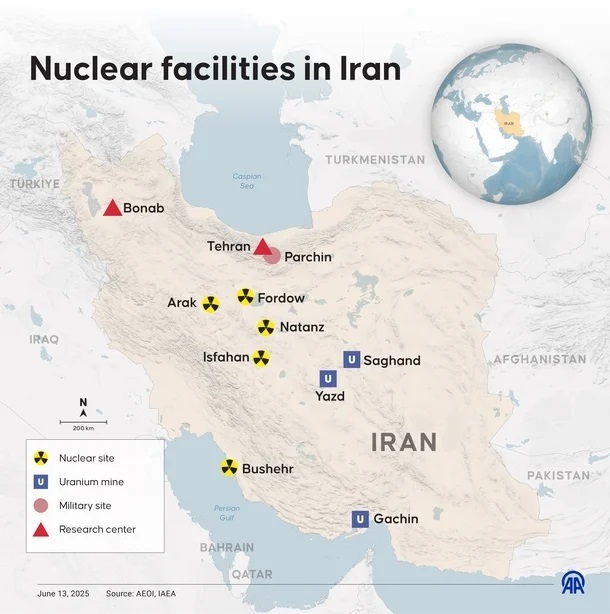
Trump says US will ‘take out’ Iran’s Pickaxe Mountain nuclear facility
:by Ellen Mitchell – 07/13/26, https://thehill.com/policy/defense/5966603-trump-threatens-pickaxe-mountain-iran/
President Trump on Monday said the U.S. could soon attack Pickaxe Mountain in Iran as American forces launched a new round of strikes against the country.
“Pickaxe is a possible target for a nice big fat shot right near the front door,” Trump said in an interview on “The Hugh Hewitt Show” Monday afternoon. “We’re going to take out Pickaxe Mountain. Tell the Iranians to be ready.”
Trump added that while the U.S. sees “no activity” at the heavily fortified site that hosts two deeply buried tunnel complexes, Washington will “probably give Pickaxe a shot relatively soon.”
Located near Iran’s damaged Natanz uranium enrichment facility in the Zagros Mountains, Pickaxe was not among the three nuclear sites targeted by the U.S. military in June 2025. But Trump told show host Hugh Hewitt that the U.S. has “a lot of eyes” on it.
Experts have assessed, however, that the depth of the facility means America’s most powerful bunker buster bombs are unlikely to penetrate it. The site is buried up to 2,000 feet below granite and is suspected to be housing uranium enrichment capabilities and stockpiles.
Trump’s threat comes as American forces launched a new round of strikes against Iran at 4:45 p.m. EDT on Monday and hours after the president declared the U.S. Navy would reinstate the naval blockade in the Strait of Hormuz.
“These strikes will continue imposing a heavy cost on Iranian forces and degrade their ability to attack innocent civilians and commercial shipping in the Strait of Hormuz,” U.S. Central Command said in a statement.
The strikes mark the third consecutive day of U.S. attacks against Iran, with forces last week conducting four separate rounds of strikes against Tehran in what U.S. officials characterized as retaliation for Iran’s targeting of commercial vessels attempting to transit the vital shipping lane.
“We’re going to hit them very hard tonight, and we’re going to hit them hard tomorrow. And there’s not a damn thing they can do about it,” Trump told Hewitt.
Trump Says Iran Deal Is “Over,” Signals More US Strikes Are Likely Coming
July 9, 2026, By Chris Walker, https://scheerpost.com/2026/07/09/trump-says-iran-deal-is-over-signals-more-us-strikes-are-likely-coming/
“Negotiators keep talking if they want, but I don’t see it,” Trump said on the status of future discussions.
In remarks at the NATO summit in Turkey on Wednesday, President Donald Trump claimed that the Memorandum of Understanding (MOU) between the U.S. and Iran, negotiated last month, was no longer in effect, citing the resumption of military attacks between the two countries.
Trump’s comments come as the U.S. and Iran have exchanged fire over the past several days, with U.S. Central Command announcing on Tuesday night that they had completed strikes on around 80 targets.
The president was visibly upset when responding to questions from reporters about the war.
“I think it’s over. I don’t want to deal with them anymore,” Trump said.
The U.S. president engaged in name-calling against Iran’s leaders, calling them “sick people” and “scum” — a noted departure from his positive descriptions of them when negotiations were going better.
The MOU was not a final peace deal, but rather an agreement between the U.S. and Iran that aimed to end hostilities while a larger agreement was being brokered. Trump derided Iran for denying negotiated deals he claimed were being made during those discussions.
“We make a deal. They [Iran] go outside, talk to the press, they say ‘we never even talked about it,’” Trump complained.
Over the past month, Trump has made several baseless claims about the dealmaking process without confirmation from Iran, including that Iran had agreed to give up control of the Strait of Hormuz and that the country would agree to destroy its enriched nuclear materials.
Asked whether he would engage in future negotiations with Iran, Trump demurred. “I don’t care,” he said, adding that he’d let “negotiators keep talking if they want, but I don’t see it.”
He also indicated that the U.S. would conduct more military attacks later on. “We hit them very hard last night. Probably hit them hard again tonight,” Trump said.
On Tuesday, Iran’s Foreign Minister Abbas Araghchi warned that the U.S.’s continued threats and attacks against Iran, which violate parts of the MOU, would impede “negotiations on a final deal.”
CENTCOM said it hit 80 targets on Tuesday, with one U.S. official calling the strikes bigger than previous retaliatory ones. While the U.S. insisted its targets are military posts, the attacks are happening near larger cities and close to civilian infrastructure.
Iran media reported explosions near military targets in Bushehr early on Wednesday morning, a port city near the northern edge of the Persian Gulf that has a population close to 250,000 people. The city is home to the only civilian nuclear power plant in the country.
The U.S. also appeared to bomb the city of Bandar Abbas, near the Strait of Hormuz, which has a population of over 526,000 people. Early morning footage showed fires from explosions and large smoke plumes over the city.
And Iranian media said several explosions were seen in Sirik, a port city in the southern part of the country, with attacks reportedly hitting commercial and fishing piers. Several people also suffered injuries from shrapnel due to the attacks.
According to figures compiled by Al Jazeera, around 3,468 Iranians have been killed in the U.S.-Israeli war on Iran since February 28. More than 26,500 Iranians have been injured due to the war. The true number of casualties is likely higher, as the figures were last updated in mid-June.
Deferring a Crisis: The Iran-US Ceasefire Cracks
9 July 2026 Dr Binoy Kampmark, https://theaimn.net/deferring-a-crisis-the-iran-us-ceasefire-cracks/
Ceasefires in the Middle East seem especially susceptible to revision, alteration and contradiction. Missiles still get fired; airstrikes initiated. Destruction to infrastructure, and death, follows. Yet despite the misunderstandings, the sniping and the harrying, these odd understandings are often described by those funny political coves as “holding”. In the case of the ceasefire between Tehran and Washington, articulated with some fanfare with a Memorandum of Understanding, only the most piously delusional would claim it was holding in any way.
The June 18 MoU stipulates from the outset that the US, Iran and their allies “declare the immediate and permanent termination of military operations on all fronts, including Lebanon, and undertaken from now on not to initiate any war or any military of operation against each other, and to refrain from the threat or use of force against each other, and ensuring the territorial integrity and sovereignty of Lebanon.” The parties further understood that Iran would commit to a gradual reopening of the Strait of Hormuz to commercial shipping; the US would grant modest sanctions relief on Iranian crude, refined products and petrochemical products as well as lift its own naval blockade. Further talks would take place to reach a final agreement in 60 days.
The Lebanon side of the bargain has, from the outset, been a wretched shambles, with Israel continuing its operations with various shades of intensity against Hezbollah even as it seeks to occupy the south of the country. The Lebanese government has been increasingly confined to the status of humiliated water carrier. As for Tehran and Washington, the Strait of Hormuz has again become an area of rattling contentiousness.Despite being a mere 33 kilometres at its at its narrowest point, this humble body of water was, prior to the February 28 US-Israeli assault on Iran, responsible for the transiting of 20 to 21 million barrels of oil a day, making up somewhere between 20% to 21% of the total global consumption of petroleum liquids. Liquified natural gas to the proportion of 22% of global trade also took place through the strait.
Iran has continued to target vessels in the strait’s southern corridor, notably those transiting near the Omani coastline. Iran’s chief negotiator Mohammad Bagher Ghalibaf has declared in rather purplish terms that the Strait was a “divine gift from God granted us during this war and our greatest instrument of power.” Iran maintained sovereignty over Hormuz, though it would coordinate management matters with Oman and the Gulf states. Indeed, pursuant to Clause Five of the MoU, Iran and Oman had “already reached agreement on all legal and service-related matters.” It was only at the insistence of the Gulf states that transit fees would not be charged for 60 days.
On July 7, the United Kingdom Maritime Trade Operations centre noted three attacks on commercial shipping in the strait. While Tehran is suspected of being behind these, given that the tankers were not seemingly travelling through Iran’s approved transit route, it has so far not claimed responsibility for the actions.
These incidents took place even as representatives gathered in the disagreeable atmosphere of the North Atlantic Treaty Organization (NATO) summit just concluded in Ankara. US Central Command (CENTCOM) was swift in initiating strikes conducted “in response to Iranian attacks on three commercial vessels” transiting through the Strait. On July 8, another wave of attacks was announced by CENTCOM “to further degrade” Tehran’s “ability to threaten the freedom of navigation in the Strait of Hormuz. The United States is holding Iran accountable for recent unjustified aggression against commercial shipping and civilian crews navigating a vital international waterway.” Sanctions have also been reimposed on Iranian oil sales.
The response from Iran was not long in coming, keeping to the script written at the start of the war. The Islamic Revolutionary Guard Corps (RGC) promptly announced drone and missile strikes against the US Fifth Fleet headquarters in Bahrain and Ali Al Salem Air Base in Kuwait. Again, the Gulf states must be rueing their misplaced reliance on Washington’s security guarantee.
The NATO summit provided the appropriate backdrop of perverse dysfunction for US President Donald Trump, who managed to berate bruised allies even as various arms deals were made. In responding to a question about whether the ceasefire with Iran had ended, he claimed, as far as he was concerned, “it’s over.” He had no further appetite to “deal with them anymore, they’re scum.” They were “sick people, they’re led by sick people, and they’re vicious, violent people. And if they had a nuclear weapon, they’d use it.”
Groping for some rationalisation of these latest US attacks – some 80 sites struck across southern Iran – military pundits sense a shift towards crippling Tehran’s maritime denial capability, notably the country’s menacing use of fast attack craft, small submarines and armed speedboats. (CENTCOM insists that 60 small boats had been targeted.) But the occluding language of Washington’s military-industrial complex, one so inured to the propaganda of muscular might over subtle sense (when in doubt, resort to the favoured word “degrade”), remains blinded to the continued resilience of Iran’s war machine.
Even Trump, for all his raging petulance, can see that the diplomatic trail has not gone entirely cold, if only because he has no other sensible option. At the summit, he made grumbling mention of his chief negotiators, Steve Witkoff and Jared Kushner. “I don’t care, they can talk. But I think they’re wasting their time.” The Iranians were “a bunch of lying guys.” Given that negotiations, especially covering Iran’s nuclear program, have been placed in cold storage for the duration of the funeral obsequies for the late supreme leader Ayatollah Ali Khamenei, those lying guys will be waiting full of anticipation.
U.S. launches ‘powerful strikes’ on Iran after tanker attacks in Strait of Hormuz
[your]NEWS, Tue, 07 Jul 2026, https://www.sott.net/article/507318-US-launches-powerful-strikes-on-Iran-after-tanker-attacks-in-Strait-of-Hormuz
U.S. Central Command said American forces began “powerful strikes” against Iran after three commercial vessels were attacked while transiting the Strait of Hormuz.
U.S. forces began launching strikes against Iran on Tuesday after Tehran attacked commercial ships moving through the Strait of Hormuz, according to U.S. Central Command.
CENTCOM announced the military action in a post on X, saying the strikes were aimed at imposing costs on Iran for targeting civilian-crewed commercial vessels in an international waterway.
“U.S. Central Command forces have begun launching a series of powerful strikes against Iran to impose heavy costs for targeting and attacking commercial shipping crewed by innocent civilians in an international waterway,” the command wrote. “The U.S. strikes are in response to Iranian attacks on three commercial vessels that were transiting the Strait of Hormuz.”
CENTCOM said Iran’s actions violated the ceasefire and created a dangerous escalation in one of the world’s most important shipping corridors.
“Iran’s demonstrated aggression was unwarranted, dangerous, and a clear violation of the ceasefire.”
Reuters reported that the strikes came after the vessel attacks, citing Central Command’s statement that the U.S. response was tied to Iranian targeting of commercial shipping in the strategic waterway.
Iran responded by saying it would take all necessary measures to protect its security and interests. The Iranian Foreign Ministry blamed the United States for any violations of the truce agreement and pointed to Washington’s revival of oil sanctions Tuesday as a breach of the agreement.
The confrontation came after maritime security warnings intensified around the Strait of Hormuz. CNBC reported Tuesday that the threat level near the waterway had been raised to “severe” after Iran attacked tankers traveling on a route protected by the U.S. Navy.
The Strait of Hormuz sits between Iran and Oman and serves as a critical passage for global energy shipments. A significant share of the world’s oil and liquefied natural gas moves through the narrow waterway, making disruptions there a major concern for energy markets and international shipping.
The military strikes also came as the Trump administration continued its broader pressure campaign against Tehran. That effort includes restrictions on Iran’s ability to generate revenue from oil exports.
The administration recently moved to end a waiver that had allowed certain countries to continue purchasing Iranian oil despite U.S. sanctions. The waiver had permitted limited transactions involving Iranian crude exports, and ending those exemptions was intended to further restrict Tehran’s access to oil income.
The Trump administration has argued that cutting off Iranian oil revenue is a key part of pressuring Tehran over its nuclear program and regional activities.
Iran has repeatedly warned that efforts to limit its energy exports could lead to retaliation, including actions affecting commercial shipping in the Persian Gulf and the Strait of Hormuz.
The latest tanker attacks and U.S. strikes have increased concerns that shipping through Hormuz could face further disruption. Any prolonged threat to traffic through the waterway could affect oil prices and raise costs for consumers.
Tuesday’s strikes mark another escalation between Washington and Tehran as tensions continue over Iran’s nuclear ambitions, regional conduct and oil revenue.
Iran trumps US on Hormuz
| US President Donald Trump’s innate inability to empathise with others and lack of intelligence to foresee consequences are likely to hand Iran a long-term financial advantage and incidentally, but more importantly, threaten the treaty that has been the most productive of peace and prosperity in recent history – the United Nations Convention on the Law of the Sea. |
Crispin Hull,June 30, 2026, https://www.crispinhull.com.au/2026/06/30/iran-trumps-us-on-hormuz/?utm_source=mailpoet&utm_medium=email&utm_source_platform=mailpoet&utm_campaign=crispin-hull-column
The tit-for-tat breaches of the US-Iran 60-day ceasefire in the past few days certainly point that way. Let me explain.
Of 193 members of the UN, 44 are landlocked. The other 149 have coastlines linking each of their coastlines to the other 148 countries’ coastlines such that they can as a practical matter drive to those other nations by boat or ship with no natural barrier or no requirement to use easily blocked roads or railways.
The UN convention took eight years to negotiate in the 1970s. It was a triumph of diplomacy and law over the assertion of power and force. It resulted in one of the greatest trade-offs in history between powerful nations, on one hand, and less powerful nations, on the other.
In short, before the convention, powerful trading nations saw their economic interests in both the unfettered exploitation of the resources of the oceans and in having freedom of navigation across the oceans to help free trade, but ultimately they were willing to forgo the former in order to secure the latter.
The trade-off was enormous. Rich, powerful nations thought that freedom of navigation across the world’s oceans was so important for trade and hence prosperity that they were willing to grant poor and less powerful nations significant exclusive rights to their adjacent oceans in return for that freedom.
The question posed by the negotiators was how to achieve peace and greater prosperity. The answer was negotiation and compromise.
Each nation, even the militarily and economically weak, got the exclusive rights to all the ocean’s resources, particularly fishing and mining, up to 200 nautical miles from their shore and the total sovereign rights of territorial waters up to 12 nautical miles from their shore.
n return vessels from any nation, especially militarily strong and rich trading nations could sail anywhere on the oceans, but if they came within 12 nautical miles of another nation’s shores they had to inform that nation of their passage, and make their passage expeditious – no more lingering with menace close to other nations’ shores (gunboat diplomacy).
The arrangement facilitated trade and made the passage of warships less threatening. Good all round.
Before that, the three-nautical-mile limit was the general unwritten rule. Within that limit, nation states could do whatever they liked with their ocean and beyond that foreign vessels could do whatever they liked – from fishing to playing wargames.
Three nautical miles was of practical importance. In the nineteenth century that was the limit of a cannon shot. It meant that a ship outside that limit could not hit land and that land-based artillery could not hit a ship.
But It also meant that the nations either side of major choke points in world navigational routes – especially Gibraltar, Malacca and Hormuz – which did not have at least a little strip of international waters in the middle had to permit free passage of all vessels.
The latest US-Iran talks and spats over Hormuz, now puts this arrangement in jeopardy. At its narrowest Hormuz is less that 24 nautical miles wide. It means that the territorial waters of Iran to the north and Oman to the south overlap in the middle. It means any ship travelling through has to identify itself to either Iran or Oman and travel expeditiously, or it could be prevented from passage.
Under the ceasefire agreement Iran agreed to allow free passage, but the agreement was vaguely worded. Vessels seeking passage opted to travel as close to the Omani side as possible. Iran read that as a breach of the ceasefire and fired on those vessels. The US retaliated by hitting Iranian targets on the coastline.
It is clear that Iran wants to come to some arrangement with Oman to charge vessels fees in the future in return for passage rather than allowing Oman to let its side of the Strait be used for free safe passage. Whether those fees are characterised as fees for services or a toll, they will still be contrary to the convention. And once one nation starts, others will surely follow.
With drones and rockets we now have the reverse of the 19th century position. Instead of a nation worrying about ship-based weapons firing on its land, ships now have to worry about land-based weapons firing upon ships.
It puts Iran in the box seat. With that threat in place Iran can insist on payment of a fee before guaranteeing safe passage. Iran can just use the insurance system to enforce payment. Without insurance no ship-owner will transit, and without guarantee of safe passage no insurer will grant insurance to a vessel.
All very foreseeable. But it would require thinking in a way that strategists usually think – asking the question: what would I do if I were in the enemy’s position? How would I react if I were the enemy? But Trump is incapable of viewing anything from any perspective but his own.
Arguably, the UN Convention on the Law of the Sea has done more in the past 40 years to prevent hostilities and to create the certainty for shipping that generates trade and prosperity than all the force and threat of force that any single nation can muster.
But Trump and Israeli Prime Minister Benjamin Netanyahu have always preferred force to negotiation.
From the start, they asked the wrong question and got the wrong answer. Netanyahu, facing an election this October, asked how could he stay in power after the Hamas-inspired attack on Israel in October 2023 so he does not have to face questions about how he allowed such a lapse of security? Trump asked, having torn up the well-negotiated Obama deal with Iran to prevent its acquisition of nuclear weapons, how can he ensure Iran does not get those weapons.
The wrong answer they got was: war. In Netanyahu’s case it was genocidal war. If only they chose negotiation and the rule of law rather than force, the world would not be facing an even stronger Iran and an indefinite economic threat to the world that its stranglehold over Hormuz now gives it.
If the world had insisted that Israel follow the 1947 UN resolution that called for the termination of the British Mandate and the partition of historic Palestine into independent, democratic Arab and Jewish states with guaranteed rights for all citizens, there would now be peace in the Middle East.
Trump has always preferred force and the threat of force over the rule of law – domestically and internationally. What he does at home is for the Americans to worry about. After all, they voted him into office. But there is little or no redress for those affected by what he does in the world – usually foolishly and impetuously.
That is why Australia should use whatever tools it has to steer international affairs towards the rule of law and negotiation and away from the use of force.
Iran deal grants access to nuclear inspectors, IAEA chief says
By Reuters, June 26, 2026, Reporting by Tim Kelly; Editing by Thomas Derpinghaus and David Dolan,
https://www.reuters.com/world/middle-east/iran-deal-grants-access-nuclear-inspectors-iaea-chief-says-2026-06-26/
TOKYO, June 26 (Reuters) – The interim U.S.-Iran peace accord gives U.N. nuclear inspectors access to Iran, the watchdog’s top official said on Friday, after Tehran indicated key sites would remain off-limits until a final deal with Washington was reached and sanctions lifted.
The U.S. and Iran last week signed a memorandum of understanding paving the way for 60 days of talks to resolve thornier issues, including those related to Iran’s nuclear programme. Iran’s deputy foreign minister Kazem Gharibabadi said on Wednesday there were no plans to grant access to inspectors.
But International Atomic Energy Agency boss Rafael Grossi said on Friday that inspections had to happen.
“There is an agreement and to comply with that agreement, the IAEA will have to have access and inspect,” he told a press conference in Japan. “We hope to be there soon.”
U.N. inspectors have already held an initial exchange with Iranian officials to discuss technical issues, Grossi said. The first goal of any visit to Iran would be to check whether IAEA seals on previously inspected material remained intact and whether any material was missing, he said.
“Intentions are not enough. We have to have a very strong verification system in place,” he said.
Iran has not informed the watchdog how much of its enriched uranium survived U.S. and Israeli attacks or where it is.
The IAEA estimates Iran had 440.9 kg of uranium enriched to up to 60% before the conflict began. If enriched further, that would be enough for 10 nuclear weapons, according to an IAEA yardstick.
The IAEA Faces a New Nuclear Puzzle Inside Iran
By RFE/RL staff – Jun 26, 2026, https://oilprice.com/Energy/Energy-General/The-IAEA-Faces-a-New-Nuclear-Puzzle-Inside-Iran.html
- Experts say effective IAEA inspections require broad access to verify Iran’s enriched uranium stockpiles, enrichment activities, and nuclear infrastructure.
- A key challenge will be locating Iran’s roughly 450 kilograms of highly enriched uranium and ensuring it is properly downblended and cannot be re-enriched.
- Former officials argue that restoring the IAEA’s “continuity of knowledge” after recent military strikes and restricted access will be one of the agency’s toughest tasks.
Amid an ongoing row between Washington and Tehran over whether international monitors can verify Iranian compliance with its nuclear nonproliferation commitments, former officials have told RFE/RL that the scale, scope, and degree of access are crucial to the success of inspections.
Details on those have yet to be determined, though Raffael Grossi, head of the International Atomic Energy Agency (IAEA) said the UN body “will be working on the modalities — dates, procedures, places — very soon.”
That doesn’t mean, according to experts, that the organization hasn’t already drawn up a wish list for any eventual inspections
They almost certainly have a plan for when they go back in, what the priorities are, where they would want to go first, second, third,” Laura Rockwood, a former IAEA negotiator on Iran, told RFE/RL.
“The key thing is to find out where in particular the enriched uranium is…. I’d be willing to bet you that they have in place a plan for the day they need to go back in,” added Rockwood, who took part in high-level negotiations on Iran during a 28-year career at the IAEA before retiring in 2013.
Downblending Uranium
While US President Donald Trump has said that Iran has agreed to the highest level of nuclear inspections and Iran says it has no plans to allow the inspections, point No. 8 of the US-Iranian memorandum of understanding (MOU) states the two sides have agreed on a “minimum methodology” that Iran’s stocks of highly enriched uranium (HEU) will be “downblended on site under the supervision of the IAEA.”
But the details of this could also prove contentious.
“If IAEA inspectors were able to measure and characterize both the high and low enriched material before the downblending, then simple arithmetic gives a good sense of what the product is. They’d then want to measure to confirm and seal that product for future accountability,” Matthew Sharp, who served as director for Iran nuclear issues on the US National Security Council (NSC) from 2021-2022, told RFE/RL.
“If, on the other hand, Iran does the downblending itself and then provides the product to inspectors, it would be much more difficult to know how much HEU Iran started with, which could create uncertainties as to whether all of the 60 percent or other enriched material had been downblended or if some remained out of our awareness,” said Sharp, now a senior nuclear fellow at the MIT Center for International Studies.
Right now, the location of Iran’s roughly 450 kilograms of HEU is unclear. After the US and Israeli air strikes, it could be buried under rubble in a bunker beneath a mountain, or the Iranian authorities may have moved some or all of it elsewhere to hide it.
But if it can be successfully located and downblended, the next step is stopping Iran from re-enriching it again at a later date.
Monitoring Enrichment
The MOU says the two parties agreed “to discuss the issue of enrichment and other mutually agreed matters related to the Islamic Republic of Iran’s nuclear needs, based on a satisfactory framework being agreed upon in the final deal.”
Experts told RFE/RL that verifying this must include a role for the IAEA.
“Any suspension on uranium enrichment is relatively meaningless if it cannot be verified and if the IAEA does not have the access to ensure that there are no covert nuclear activities related to enrichment going on elsewhere in the country,” said Kelsey Davenport, director of nonproliferation policy at the Arms Control Association.
“The level of access, the provision of information to the International Atomic Energy Agency, how quickly Iran has to comply with IAEA requests for access — all of that is going to be crucial,” she told RFE/RL.
“Once the enrichment level is low, below 5 percent, it’s much safer to ship out that material. It could be stored under an international fuel bank in Kazakhstan,” Davenport added.
The idea of shipping the downblended uranium out of Iran is something US officials appear keen on. At a recent background call with reporters, one official said dilution within Iran was “the floor” but that “we will push for more than that.”
A senior US official said Washington would rely heavily on the UN nuclear watchdog and US technical teams for verification. “We’re not in the trusting business,” the official said.
The IAEA has previously verified Iran’s compliance with its commitments to the Nuclear Non-Proliferation Treaty, which it ratified in 1970, and the 2015 Joint Comprehensive Plan of Action (JCPOA).
Lessons From The Past
Experts say many lessons have been learned from these experiences. They point to the importance of the IAEA’s Model Additional Protocol, which provides additional tools for verification.
Rockwood, now a senior fellow at the Vienna Center for Disarmament and Non-Proliferation, was the principal author of the protocol.
Under the additional protocol, instead of just routinely being limited to nuclear material and nuclear facilities, we have access to information and locations concerning the entire nuclear fuel cycle, including the production of centrifuges,” she said. “So, if you know roughly how many centrifuges they are capable of making, you want to know where they are, and we can ask for that kind of access with an additional protocol.”
Iran signed the Additional Protocol in 2003 but has not sent an official letter to the IAEA that would bring it into force.
Iran provisionally implemented its provisions between 2003 and 2006 and for a period under the JCPOA. However, noted Rockwood, “there were lots of indications of noncompliance by Iran” during this time.
This, she said, could be expected to continue — with added complications.
Taking a sledgehammer to the nuclear nonproliferation regime.
The Iranian proliferation quandary. In 2011, the IAEA concluded that, prior to 2003, Iran had a nuclear weapon development program. In 2003, then Supreme Leader Ayatollah Ali Khameni published a religious edict that weapons of mass destruction are “haram” (religiously forbidden). The force of this edict has been debated, but the most recent Congressional Research Service report on Iran’s nuclear-weapon program states, “According to official U.S. assessments, Iran halted its nuclear weapons program in late 2003 and has not resumed it.”
Bulletin, By Frank von Hippel, Seyed Hossein Mousavian | Analysis | April 18, 2026
The current crisis over Iran’s nuclear program has reached an extraordinary level, climaxing shockingly with President Trump’s April 7 threat to destroy Iran’s “civilization” if it did not comply with his demands—a barely veiled threat of a massive nuclear attack on Iran’s cities. Any country faced with such a threat would want its own nuclear deterrent.
More broadly, the 1970 Non-Proliferation Treaty (NPT)—the expression of a global near consensus that the world would be better off without nuclear weapons and that, in the interim, the fewer fingers on nuclear triggers the better—is fraying.
In the NPT, the “P5” (the five permanent members of the UN Security Council—the United States; the Soviet Union, succeeded by Russia; the United Kingdom; France; and China— committed to eliminate their nuclear arsenals if the non-weapon states agreed not to acquire nuclear weapons and to allow the International Atomic Energy Agency (IAEA) to monitor their use of nuclear material to make sure that none was diverted to weapons use.
Surprisingly few countries have acquired nuclear weapons. In 1995, the negotiators of the Comprehensive Test Ban Treaty judged 44 countries to be technologically capable of making nuclear weapons. But, in the 56 years since the NPT came into force, only three countries—Israel, India, and Pakistan—decided to acquire nuclear weapons outside the NPT and only one, North Korea, defected after it joined the NPT.
The nonweapon states initially agreed to membership in the NPT for 25 years. In 1995, when the 25 years were up, the Cold War had just ended and US and Russian nuclear warheads were being dismantled at a combined rate of 3,000 per year. Nuclear disarmament seemed in sight, and the NPT was made permanent. Unfortunately, during the past decade, the shrinkage of the global warhead stockpile stopped, with about 10,000 warheads still in existence, and it has begun to grow again as China builds up.
The 190 parties to the NPT that are to meet at the UN during May to review the state of compliance with the treaty have failed to reach consensus in the previous two reviews since 2010.
And then there is Iran.
The Iranian proliferation quandary. In 2011, the IAEA concluded that, prior to 2003, Iran had a nuclear weapon development program. In 2003, then Supreme Leader Ayatollah Ali Khameni published a religious edict that weapons of mass destruction are “haram” (religiously forbidden). The force of this edict has been debated, but the most recent Congressional Research Service report on Iran’s nuclear-weapon program states, “According to official U.S. assessments, Iran halted its nuclear weapons program in late 2003 and has not resumed it.”
In 2018, President Trump capriciously withdrew the US from the Joint Comprehensive Plan of Action (JCPOA) negotiated by the Obama Administration, in which Iran had agreed to strong limits on different parts of its nuclear program for 15 years or longer. To force Iran to give him a “better deal” than it had given Obama, Trump reinstated crushing primary and secondary sanctions on Iran’s economy. Neither the UN Security Council nor the IAEA Board of Governors said anything, but UN Secretary General Antonio Guterres did:
“I am deeply concerned by today’s announcement that the United States will be withdrawing from the Joint Comprehensive Plan of Action (JCPOA) and will begin reinstating US sanctions… I have consistently reiterated that the JCPOA represents a major achievement in nuclear non-proliferation and diplomacy and has contributed to regional and international peace and security.”
Given the widespread opposition to the JCPOA in Congress, the Biden administration did not give a high priority to negotiating its revival. Since President Trump’s reelection, the situation has rapidly deteriorated.
On June 12, 2025, the IAEA’s Board of Governors found that “Iran has failed to co-operate fully with the Agency, as required by its Safeguards Agreement.” The focus of the board’s complaint was Iran’s inadequate explanations of the activities it had carried out during the period ending in 2003. Those were issues that the IAEA had declared closed after it summarized its conclusions in its December 2015 “Final Assessment on Past and Present Outstanding Issues regarding Iran’s Nuclear Programme,” just before the JCPOA came into force in January 2016.
The day after the IAEA Board’s statement, while the United States was negotiating with Iran, Israel attacked Iran’s nuclear sites. President Trump ordered US forces to join in and bomb Iran’s buried centrifuge halls with massive bunker busters.
Again, on February 27, in a pause in a second US negotiation with Iran, the foreign minister of Oman, who was mediating the talks, reported in a “Face the Nation” interview that the negotiators had made “substantial progress” toward a deal to curb Iran’s nuclear program and that Iran was willing to end its production of highly enriched uranium and blend down its existing stock. The next day, Israel attacked and killed Iran’s supreme leader and much of its military leadership, and Trump again ordered US forces to join in the intense follow-on bombing of Iran.
The UN Security Council has not condemned these attacks on Iran but has condemned Iran for its retaliatory attacks on its US-allied Persian Gulf neighbors and for its closure of the Strait of Hormuz. The IAEA also has not condemned Israeli and US attacks on facilities it safeguarded, even though the result has been Iran’s decision to block IAEA access to Iran’s bombed sites (presumably out of fear that IAEA inspections could be used by the US and Israel for targeting intelligence).
US negotiations with Iran. The key sticking point in negotiations over Iran’s nuclear program since it became public in 2003 has been uranium enrichment. Iran claims it has a right to enrich uranium for peaceful purposes under the Non-Proliferation Treaty. However, uranium enrichment provides a route to nuclear weapons.
Our own view is that there is no economic justification for a small enrichment program like Iran’s. The four big suppliers: Russia; URENCO (a firm jointly owned by Germany, the Netherlands, and the UK); China; and France have more than enough capacity to supply the world’s nuclear power reactors at lower cost. Even the United States, with the world’s largest nuclear-power capacity—one quarter of the global total—has bought enrichment services from these suppliers since 2013 when it shut down the last of the three energy-inefficient enrichment plants it built to produce highly enriched uranium for weapons during the Cold War.
If countries insist on building uneconomic enrichment plants, we have advocated that those plants be under multinational control, as is the case with URENCO, which was founded in 1971 when there was still some concern that West Germany might seek nuclear weapons. Iran has expressed a willingness to put its enrichment program under multinational control but is unwilling to have it relocated to a neutral country as we recommended…………………………….
An inconsistent nonproliferation policy. Despite going to war over Iran’s uranium enrichment program, President Trump has inconsistently given both South Korea and Saudi Arabia his blessing to acquire uranium-enrichment and spent-fuel-reprocessing programs. “Reprocessing” is a chemical process used to separate plutonium, another nuclear-weapons material, from irradiated uranium fuel.
……………………………….President Trump made these agreements with the leaders of South Korea and Saudi Arabia in his usual transactional style. Rules, he apparently believes, need not be followed if a government is willing to pay enough.
President’s Trump’s disdain for the rules is endangering world order in many ways. We cannot leave defense of the nonproliferation regime for later, however. If we do, we may find ourselves in a nuclear-armed crowd. https://thebulletin.org/2026/04/taking-a-sledgehammer-to-the-nuclear-nonproliferation-regime/
A Turning Point: What the Iran MoU Reveals About the Limits of US Power
June 19, 2026, By Iqbal Jassat, https://www.palestinechronicle.com/a-turning-point-what-the-iran-mou-reveals-about-the-limits-of-us-power/
The lessons from Iran, if incorporated in the study of international relations, will be that the era in which Washington could dictate terms without consequence is steadily eroding.
Events at the G7 Summit in Evian were overshadowed by news of the US-Iran Memorandum of Understanding (MoU). This was hardly surprising since the story broke about America’s dramatic turnaround and widespread speculation about the details of the MoU, as well as the reasons for it.
It would be fair to say, thus, that the most significant outcome of the G7 Summit in Évian was not the signing of the MoU. It was the public collapse of the illusion that military superiority automatically translates into political victory.
For months, Washington and Tel Aviv insisted that Iran would eventually be forced to surrender. The language was harsh, pointed and uncompromising. Iran’s missile program would be destroyed. Its nuclear capabilities would be dismantled. Its regional alliances would be broken. Its leadership would face collapse under the combined weight of military pressure, sanctions and international isolation.
None of those objectives were achieved.
The contradiction became impossible to conceal when President Donald Trump stood before the world at the G7 and defended Iran’s right to retain conventional ballistic missiles.
The same missiles that had been presented as an existential threat suddenly became acceptable. The same missile program that justified war was transformed into a reality that Washington was prepared to live with.
Contrary to the wishful thinking of some political pundits, this was not a minor adjustment in policy. It was a public admission that the original objectives could not be achieved.
Absent from much Western reporting is the extent of this reversal. The final agreement contains no dismantling of Iran’s missile deterrent. It contains no regime change. It contains no surrender of Iran’s political system. It contains no disarmament of Iran’s regional allies. Even the nuclear issue was largely deferred into future negotiations rather than resolved through force.
The shock registered on the gaping mouths of G7 leaders as well as Israel’s war criminals was obvious, for the outcome exposed the enormous gap between public rhetoric and strategic reality.
For years, American foreign policy has been built around the assumption that economic pressure, military dominance and international isolation can force adversaries to comply with Washington’s demands. Iraq was supposed to demonstrate that reality. Libya was supposed to reinforce it. The sanctions architecture imposed on Iran was designed around the same logic.
The MoU signed by Trump at the G7, demonstrates the limits of that model.
Iran’s leadership calculated that surrender would be more dangerous than resistance. Despite suffering enormous military and economic damage, Tehran retained enough leverage to make continued escalation prohibitively expensive for its adversaries.
The critical factor was not military strength alone.
The Strait of Hormuz exposed a vulnerability that military planners could not bomb away. As energy markets reacted and global supply chains faced disruption, the economic consequences of a prolonged conflict became increasingly unacceptable. Oil prices surged. Shipping costs escalated. Insurance markets were shaken. European governments demanded an end to the crisis. Gulf states that had quietly supported pressure on Iran suddenly became advocates for de-escalation.
The beneficiaries of the original confrontation were clear. Arms manufacturers secured contracts. Security establishments expanded their authority. Lobbying organizations intensified demands for escalation. Media institutions repeated assumptions about inevitable Iranian defeat. A vast ecosystem of political and economic interests promoted the belief that only one outcome was possible.
Though the MoU demolished that narrative, the reaction from Israel was even more revealing. The Israeli political establishment expected the conflict to fundamentally alter the regional balance of power in its favor.
Instead, Netanyahu and his criminal gang of genocidaires found themselves confronting an agreement negotiated largely without their input and one that preserved many of Iran’s capabilities Israel had spent years attempting to eliminate.
The frustration expressed by them and echoed across the regime’s media was not simply about the agreement itself.
It reflected the recognition that military escalation had failed to produce the strategic transformation that had been promised.
This is why the agreement carries implications far beyond Iran, particularly for governments across the Global South who are expected to study the outcome closely.
Indeed, so will Russia and China. The lesson they will draw is not that America lacks power. The lesson is that American power now operates within constraints that did not exist during the unipolar era.
The lessons from Iran, if incorporated in the study of international relations, will be that the era in which Washington could dictate terms without consequence is steadily eroding.
The MoU therefore marks something larger than the end of a conflict. It marks another stage in the transition from a unipolar order to a multipolar one. The significance of the MoU lies not in what was announced. It lies in what was conceded.
The campaign to impose American terms concluded with Washington accepting realities it once declared unacceptable.
Who Would Take Iran’s Uranium?
Oil Price, By RFE/RL staff – Jun 18, 2026,
- Kazakhstan has indicated it is willing to help store Iran’s enriched uranium if a broader international agreement is reached.
- Iran remains reluctant to surrender its uranium stockpile because it views the material as leverage in negotiations with Washington.
- Any transfer would face significant technical, political, and domestic challenges, including security concerns and public opposition in Kazakhstan.
As negotiations over Iran’s nuclear program continue, the fate of Tehran’s stockpile of highly enriched uranium remains one of the most difficult issues to resolve.
Before US and Israeli air strikes on Iranian nuclear facilities in June 2025, the International Atomic Energy Agency (IAEA) estimated that Iran possessed 440.9 kilograms of uranium enriched to 60 percent. While not weapons-grade, the material is significantly close to the 90 percent enrichment level generally associated with the production of nuclear weapons.
The question now confronting negotiators is what should happen to that stockpile as part of a broader agreement between Tehran and Washington. In recent weeks, Kazakhstan has been mentioned as a possible third-party custodian………………………………. https://oilprice.com/Geopolitics/Middle-East/Who-Would-Take-Irans-Uranium.html
US Finally Capitulates with ‘Memorandum’ of Surrender
Simplicius, Jun 17, 2026
The US has finally capitulated in its disastrously failed war against Iran, reportedly drafting a memorandum of understanding which is highly favorable to the Islamic Republic, and gains as concession nothing more than the promise that “Iran will not obtain nuclear weapons”—a position Iran had already long held.
The most explosive detail is the alleged $300 billion “reconstruction fund” that Iran will be entitled to once the deal is sealed.
Trump has downplayed or denied this point, with everyone seemingly perplexed as to what this massive sum entails, exactly. In the above article, Reuters writes the following:
The new fund is a private investment vehicle, not a reconstruction or reparations program and will not include any government money or grants, the source said, adding that companies based in the U.S., the Gulf Arab states, Asia, South America and Africa have agreed to commit financing.
Investments pledged span energy, logistics, manufacturing and transport, the source said.
They claim it’s not a reparations program, yet the official name of the fund is the ‘Reconstruction and Development Fund’. It appears to revolve around regional entities—both corporate and governmental—providing credit lines, direct financing, etc., to Iran. As can be seen above, over half of the fund is claimed to be already committed.
Some American propaganda pundits had claimed that this fund is being pulled from Iran’s frozen assets abroad, but Reuters begs to differ, citing that as an entirely separate negotiating track:
The investment fund is entirely separate from a parallel negotiating track over the lifting of U.S. sanctions and the release of Iranian sovereign assets frozen abroad, the source said, describing the two as distinct financial mechanisms with different purposes and timelines.………………………………………………………………………………………………………………………………………………………………………………………………………………………………………. https://simplicius76.substack.com/p/us-finally-capitulates-with-memorandum?utm_source=post-email-title&publication_id=1351274&post_id=201961444&utm_campaign=email-post-title&isFreemail=false&r=c9zhh&triedRedirect=true&utm_medium=email
Iran warns ‘no point’ in deal with US if Israel remains unrestrained
Another top Iranian official said Washington’s ‘rabid dog’ must be ‘controlled’ following Israel’s latest strike on Beirut
The Cradle,, JUN 14, 2026
Iran’s Parliament Speaker Mohammad Bagher Ghalibaf warned in a statement on 14 June that there is “no point” in continuing efforts to reach a deal with Washington if Tel Aviv remains unrestrained, a few hours after a new Israeli attack on Lebanon’s capital.
“The Zionists’ aggression against the southern suburb [of Beirut] once again demonstrated that the US either lacks the will to uphold its commitments or lacks the ability to do so,” Ghalibaf said.
“You cannot gain concessions by giving the [Israeli] regime a green light. The ‘good cop, bad cop’ game has grown old. If you lack the will and the ability to fulfill your commitments, then there is no point in speaking about continuing down this path,” the parliament speaker added.
Meanwhile, Brigadier General Mohammad Jafar Asadi, deputy commander and deputy inspector of the Iranian military’s Khatam al-Anbiya Central Headquarters, said Israel’s attack on Beirut’s southern suburb will not go unanswered.
Israelnews updates
“If you seek an agreement or understanding, you must discipline the Zionist regime. If this rabid dog is not controlled, it will bite your leg before the ink is dry on the agreement,” said Ebrahim Rezaei, spokesperson for the Iranian parliament’s Foreign Policy and National Security Committee.
The latest Israeli airstrike on the Lebanese capital took place earlier on Sunday afternoon. The attack hit a building in the southern suburb’s Ghobeiry area. …………………………………………………………………………….. https://thecradle.co/articles/iran-warns-no-point-in-deal-with-us-if-israel-remains-unrestrained
Trump news at a glance: president claims Iran ‘no longer want a nuclear weapon’ amid peace deal hopes
Washington and Tehran express increasing optimism that weeks of halting negotiations may be drawing to a close – key US politics stories from Saturday 13 June at a glance
Guardian staff, 14 June 26, https://www.theguardian.com/us-news/2026/jun/14/trump-news-at-a-glance-president-claims-iran-no-longer-want-a-nuclear-weapon-amid-peace-deal-hopes
Donald Trump says a deal with Iran to end the war would be signed on Sunday, and that the strait of Hormuz would be “open to all” immediately after.
Iran had offered a different timeline earlier in the day, but nonetheless signalled an agreement was in the offing, as both the warring parties and their mediators expressed increasing optimism that weeks of halting negotiations were drawing to a close.
“The Deal is scheduled to get signed tomorrow, and immediately after it is signed, the Hormuz Strait is OPEN TO ALL,” Trump said on his Truth Social platform. Since an 8 April truce paused the worst of the fighting, Trump has repeatedly insisted a deal was near only for the wrangling to drag on.
The Iranian foreign ministry spokesperson, Esmaeil Baqaei, had said earlier on Saturday that the date of the signing was yet to be determined, but “it will not be tomorrow”. However, he added: “The possibility of this happening in the coming days cannot be ruled out.”
1 This Month
23-25 October – on Zoom – World BEYOND War’s annual global conferenc


Shut down the radiation-damaged Heysham nuclear reactors now
To see nuclear-related stories in greater depth and intensity – go to https://nuclearinformation.wordpress.com

Say No to NASA’s Reckless Nuclear Reactor on the Moon
Say No to NASA’s Reckless Nuclear Reactor on the Moon

-
Archives
- October 2026 (247)
- September 2026 (339)
- August 2026 (330)
- July 2026 (355)
- June 2026 (287)
- May 2026 (306)
- April 2026 (356)
- March 2026 (251)
- February 2026 (267)
- January 2026 (308)
- December 2025 (358)
- November 2025 (359)
-
Categories
- 1
- 1 NUCLEAR ISSUES
- business and costs
- climate change
- culture and arts
- ENERGY
- environment
- health
- history
- indigenous issues
- Legal
- marketing of nuclear
- media
- opposition to nuclear
- PERSONAL STORIES
- politics
- politics international
- Religion and ethics
- safety
- secrets,lies and civil liberties
- spinbuster
- technology
- Uranium
- wastes
- weapons and war
- Women
- 2 WORLD
- ACTION
- AFRICA
- Atrocities
- AUSTRALIA
- Christina's notes
- Christina's themes
- culture and arts
- Events
- Fuk 2022
- Fuk 2023
- Fukushima 2017
- Fukushima 2018
- fukushima 2019
- Fukushima 2020
- Fukushima 2021
- general
- global warming
- Humour (God we need it)
- Nuclear
- RARE EARTHS
- Reference
- resources – print
- Resources -audiovicual
- Weekly Newsletter
- World
- World Nuclear
- YouTube
-
RSS
Entries RSS
Comments RSS

