Soviet Documents Reveal Cover-Ups At Chernobyl Nuclear Plant Before 1986 Disaster
Soviet Documents Reveal Cover-Ups At Chernobyl Nuclear Plant Before 1986 Disaster https://www.ndtv.com/world-news/soviet-documents-reveal-cover-ups-at-chernobyl-nuclear-plant-before-1986-disaster-2422532 26 Apr 21, After a botched safety test in the fourth reactor of the plant, located in what was then Soviet Ukraine, clouds of radioactive material from Chernobyl spread across much of Europe in what remains the world’s worst nuclear disaster.
The Soviet Union knew the Chernobyl nuclear plant was dangerous and covered up emergencies there before the 1986 disaster, the Ukrainian authorities said as they released documents to mark the 35th anniversary of the accident on Monday.
After a botched safety test in the fourth reactor of the plant, located in what was then Soviet Ukraine, clouds of radioactive material from Chernobyl spread across much of Europe in what remains the world’s worst nuclear disaster.
The archives show there was a radiation release at the plant in 1982 that was covered up using what a KGB report at the time called measures “to prevent panic and provocative rumours”, Ukraine’s security service (SBU) said in a statement on Monday.
There were separate “emergencies” at the plant in 1984, it added.
“In 1983, the Moscow leadership received information that the Chernobyl nuclear power plant was one of the most dangerous nuclear power plants in the USSR due to lack of safety equipment,” the SBU said.
When a French journalist collected water and soil samples from the Chernobyl area after the accident in 1987, the KGB swapped the samples for fake ones in a special operation, the SBU cited another KGB report as saying.
Thirty-one plant workers and firemen died in the immediate aftermath of the 1986 disaster, mostly from acute radiation sickness.
Thousands more later succumbed to radiation-related illnesses such as cancer, although the total death toll and long-term health effects remain a subject of intense debate.
The present day government in Kyiv has highlighted the Soviet authorities’ bungled handling of the accident and attempts to cover up the disaster in the aftermath. The order to evacuate the area came only 36 hours after the accident.
“The 35th anniversary of the Chernobyl tragedy is a reminder of how state-sponsored disinformation, as propagated by the totalitarian Soviet regime, led to the greatest man-made disaster in human history,” the foreign ministry said.
Ukraine opens new nuclear waste site
On 35th anniversary of Chornobyl disaster, Ukraine opens new nuclear waste site,
Ukraine president vows to transform Chornobyl exclusion zone into a revival zone. Ukraine’s president on Monday unveiled a new nuclear waste repository at Chornobyl, the site of the world’s worst civilian nuclear disaster that unfolded exactly 35 years ago…….
Moving forward, the Ukrainian authorities announced they will use the deserted exclusion zone around the Chornobyl power plant to build a storage facility for Ukraine’s nuclear waste for the next 100 years.
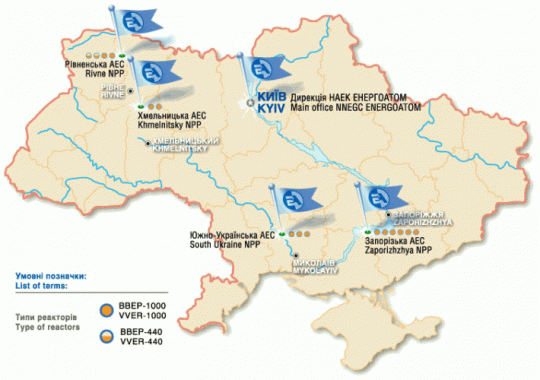
The ex-Soviet nation currently has four nuclear power plants operating and has to transport its nuclear waste to Russia. The new repository will allow the government to save up to $200 million US a year…… https://www.cbc.ca/news/world/chornobyl-35th-anniversary-1.6002314
University of Sheffield researchers do detailed study of radioactive materials inside the wrecked Chernobyl nuclear reactor
Yorkshire Post 26th April 2021, University of Sheffield scientists to help clean up waste from ‘world’s
worst’ nuclear accident. On the 35th anniversary of one of the world’s worst nuclear disasters, new Yorkshire-led research has been published that could help to clean up the most dangerous radioactive materials that still
remain at the site in Chernobyl.
Scientists say the revealing findings – which are the most “detailed results” into the chemical makeup of the
radioactive materials inside the plant’s melted core to date – could ”pave the way” to safely remove hazardous waste from the site and help prevent future nuclear disasters.
Dr Claire Corkhill, the project lead, from the University of Sheffield, stressed the urgency to the research as until now only a very limited number of samples have been analysed by scientists round the world. This is because the most dangerous materials that remain inside Chernobyl are so hazardous, hampering efforts to safely contain or remove the materials from the disaster zone. Dr Corkhill, told The Yorkshire Post: “This is such a big breakthrough because it opens up a world of possibilities to develop a deeper understanding of some of the most dangerous materials that still remain in Chernobyl.
Getting the facts straight about Chernobyl, nuclear disasters, and ionising radiation
Fact check: 5 myths about the Chernobyl nuclear disaster
Monday marks the 35th anniversary of the Chernobyl nuclear disaster. What happened in the former Soviet Union on April 26, 1986, is no longer a secret. DW,
Is Chernobyl the biggest-ever nuclear disaster?
The 1986 nuclear disaster at the Chernobyl nuclear power plant near the city of Pripyat in northern Ukraine is often described as the worst nuclear accident in history. However, rarely is this sensational depiction clarified in more detail.
The International Nuclear and Radiological Event Scale (INES) does classify nuclear events on a scale of zero to seven, breaking them down into accidents, incidents and anomalies. It was introduced in 1990 after being developed by the International Atomic Energy Agency (IAEA) and the Nuclear Energy Agency of the Organization for Economic Cooperation and Development (NEA/OECD). Level seven denotes a “major accident,” which means “major release of radioactive material with widespread health and environmental effects requiring implementation of planned and extended countermeasures.”
Both the Chernobyl and 2011 Fukushima disaster have been categorized as such. But INES does not allow for nuclear events to be classified within a level.
If the term nuclear disaster is not only used to describe events, or accidents, in nuclear reactors but also radioactive emissions caused by humans then there are many occasions when human-caused nuclear contamination has been greater than that of the Chernobyl disaster, explained Kate Brown, professor of science, technology and society at the Massachusetts Institute of Technology.
“Let’s take the production of plutonium,” she told DW, referring to the American and Soviet plants that produced plutonium at the center of a nuclear bomb. “Those plants each issued as part of the normal working everyday order at least 350 million curies [a unit of radioactivity — Editor’s note] into the surrounding environment. And that was not an accident.
“Let’s look at, even more dire, the issuance of radioactive fallout in the detonation of nuclear bombs during the periods of nuclear testing ground, which were located throughout the world, ” she continued. “Those just take one isotope, one radioactive iodine, which is harmful to human health because it’s taken up by the human thyroid, causing thyroid cancer or thyroid disease.
“Chernobyl issued 45 million curies of radioactive iodine just in two years of testing, in 1961 and 1962. The Soviets and the Americans issued not 45 million curies, but 20 billion curies of radioactive iodine,” she said. And these tests, she added, were by design — not due to an accident or human error.
Are there mutants in the exclusion zone?
………….. “The influence of ionizing radiation may cause some restructuring in the body, but mostly it simply reduces an organism’s viability,” he explained, giving the example of high embryo fatalities in rodents due to genomic defects that prevented the organism from functioning. Those animals that survive the womb sometimes have disabilities that prevent them from staying alive in the wild. Vishnevsky and his colleagues have conducted research into thousands of animals in the exclusion zone, but have not found any unusual morphological alterations.
“Why? Because we were always dealing with animals that had survived and had won the fight for survival,” he said. He added that it was difficult to compare these animals with creatures that scientists had deliberately exposed to radiation in laboratories.
“That’s a very seductive idea, that human messed up nature and all they have to do is step away and nature rewrites itself,” she said. In reality, however, biologists say that there are fewer species of insects, birds and mammals than before the disaster. The fact that some endangered species can be found in the exclusion zone is not evidence of the area’s health and vitality.
Has nature reclaimed the site of the disaster?
Reports entitled “Life Flourishing Around Chernobyl” and photo series suggesting that the exclusion zone has become a “natural paradise” might give the impression that nature has recovered from the nuclear disaster. But Brown, who has been researching Chernobyl for 25 years, is adamant that this is “not true.”
“That’s a very seductive idea, that human messed up nature and all they have to do is step away and nature rewrites itself,” she said. In reality, however, biologists say that there are fewer species of insects, birds and mammals than before the disaster. The fact that some endangered species can be found in the exclusion zone is not evidence of the area’s health and vitality.
On the contrary: there has been a significant increase in the mortality rate and a lowered life expectancy in the animal population, with more tumors and immune defects, disorders of the blood and circulatory system and early ageing.
Scientists have attributed the apparent natural diversity to species migration and the vastness of the area. “The exclusion zone comprises 2,600 square kilometers [about 1,000 square miles]. And to the north are another 2,000 square kilometers to the north is Belarus’ exclusion zone,” said Vishnevsky. “There are also areas to the east and west where the human population density is extremely low. We have a huge potential for preserving local wild fauna.” That includes lynxes, bears and wolves which need a great deal of space.
But even 35 years after the disaster the land is still contaminated by radiation, a third of it by transuranium elements with a half-life of more than 24,000 years.
Is it safe for tourists to visit Chernobyl?
The exclusion zone was already a magnet for disaster tourists, but in 2019 annual numbers doubled to 124,000 after the success of the HBO miniseries Chernobyl. The State Agency of Ukraine on Exclusion Zone Management has set up a number of routes so tourists can visit the region by land, water or air. It has also drawn up a number of regulations to protect visitors, stipulating that people must be covered from head to toe. They shouldn’t eat any food or drink outside, and they should always follow official paths. It’s estimated that the radiation dose received over a one-day visit does not exceed 0.1 millisievert (mSv) — roughly the same dose that a passenger would be exposed to on a long-distance flight from Germany to Japan, according to Germany’s Federal Office for Radiation
Are there people living in the area?
Today, Pripyat, the closed city built to serve the nuclear plant and house its employees, is often described as a ghost town, as is the nearby city of Chernobyl.
However, neither has been entirely empty since 1986. Thousands of people, usually men, have stayed there, often working two-week shifts and ensuring that the crucial infrastructure in both cities continues to function. After the explosion in reactor No. 4, reactors 1, 2 and 3 continued to operate, closing down only in 1991, 1996 and 2000. Special units of the Ukrainian Interior Ministry police the zone. There are also stores and at least two hotels in Chernobyl, which are mainly for business visitors.
There are also a number of unofficial inhabitants, including people who used to live in the area and have chosen to return. They have settled in villages that were evacuated after the disaster. The exact number of people is unknown: when DW asked the State Agency of Ukraine on Exclusion Zone Management how many people lived in Chernobyl, the official answer was “nobody.”
In 2016, about 180 people were thought to be living in the entire exclusion zone. Because they tended to be older, this number may well have fallen. Even though these locals are officially only tolerated, the state does support them in their everyday lives. Their pensions are delivered once a month, and every two to three months they are supplied with food by a mobile store. https://www.dw.com/en/fact-check-5-myths-about-the-chernobyl-nuclear-disaster/a-57314231
Below – a video from past years tells the earlier story of the chernobyl disaster
Remarkable new photos inside the Chernobyl nuclear power station
PetraPixel.com, ARKADIUSZ PODNIESIŃSKI 25 Apr 21, ”/…………… The reason for my regular visits remains the same: the desire to document the changes taking place in the Chernobyl Exclusion Zone. And there’s been quite a few: from the construction of the New Safe Confinement (which I wrote about in more detail here), to the construction of several new industrial facilities that will make the decommissioning of the plant, including the damaged Reactor 4, possible and much safer. I hope that, under the influence of slow but systematic changes, eventually Chernobyl will not only be known as the site of the largest nuclear disaster in the world………
before we are allowed to enter the main part of the complex, aka the dirty zone, we have to change into protective gear and masks. We are also given a dosimeter that counts the dose of radiation absorbed. When we exit, the procedure is repeated in reverse order and so on in every complex we visit. Sometimes, the procedures take longer than our stay inside the facility.
…….. First, we got to the largest hall where there is a huge pool with more than 21,000 spent fuel assemblies from reactors 1-3. Depending on the location, radiation levels vary from 40 to 800 μSv/h, which is about 200-400 times higher than normal. The ISF-1 is a wet-type spent fuel storage facility, meaning that the fuel assemblies are stored in water. The huge pool consists of five reinforced concrete tanks covered by hundreds of steel plates. As I step on them, I feel rather strange and insecure because I know what lies beneath them. Additionally, every step I take causes the steel flaps to move, causing a sound that echoes throughout the hall. I’m only calmed by the sight of the engineer, who confidently steps on the plates, not looking at me at all. After a moment, the engineer bends down and opens one. The radiation increases, but only slightly. The lack of a cover doesn’t change all that much; the greatest barrier against the radiation is the water.

The fuel assemblies are pulled out in the hall next door. Now I can stay here freely, but the radiation levels during this procedure are very high – about 2 Sv/h. This is already a dose that can cause serious radiation sickness or even death. Due to this, the entire process is controlled remotely through a small window made of thick leaded glass or through a system of monitors and cameras from a small room located several meters above us…..
ISF-2 – the Interim Spent Nuclear Fuel Storage Facility 2
The ISF-2 complex serves as an interim storage facility for dry-type spent fuel assemblies. Before the spent fuel goes there, it is processed first in a building located on the premises.
Inside, my attention is drawn to the “hot chamber”, the heart of the entire building. A huge, hermetically sealed room, completely isolated from the external environment by thick concrete walls; you can look inside through small leaded glass windows located on both sides of the chamber. Cameras resistant to high levels of radiation and remote-controlled machinery and tools have been installed inside. It is here that the spent fuel assemblies from the defunct reactors will be cut in half, dried, and later packed into double-layered steel canisters.
The view of the hot chamber makes me realize how dangerous a task we have before us. And a long-term one, since the radioactive isotopes in the fuel will take thousands of years to decay. 100 years, the storage period for the processed fuel in ISF-2, is just a blink of an eye for radioactive isotopes. What’s next? ISF-3? We don’t know yet…….. This is the problem we will face – well, not us but future generations.
In December 2020, the “hot tests” for the whole complex concluded. At that time, 22 containers with 186 fuel assemblies had been processed for the first time and then packed into two steel canisters and stored in concrete modules behind the main building. It is estimated that the entire fuel processing process will take about 10 years, and the complex will become the world’s largest dry spent fuel storage facility.
ICSRM – the Industrial Complex for Solid Radwaste Management
In addition to the ISF-1 and ISF-2, which deal with spent nuclear fuel, another two facilities have been built on the site for the treatment of solid and liquid radioactive waste collected from the operation and decommissioning of the power plant and from the sarcophagus.
In addition to the ISF-1 and ISF-2, which deal with spent nuclear fuel, another two facilities have been built on the site for the treatment of solid and liquid radioactive waste collected from the operation and decommissioning of the power plant and from the sarcophagus. I visit the first, where low-, intermediate- and high-level waste is processed for temporary or final storage, including concrete, sand, and metal. The huge building contains a system of airtight caissons, hot chambers, and other areas where radioactive waste is cut, fragmented, shredded, sorted by radioactivity level, compressed, and incinerated. All of the work is done using remote-controlled machines to which interchangeable tools can be attached — including a jackhammer, concrete crusher, chainsaw, and hydraulic shears. The processed waste is then encapsulated and sealed in concrete containers before being sent to a radioactive waste repository. Like the ISF-2, the plant has already processed its first batch of radioactive waste and currently is in the final stages of hot testing and certification.
New Safe Confinement
The New Safe Confinement (NSC) is a huge 110-meter-high steel construction that was built to cover the old, worn-out sarcophagus. ………………..

In this labyrinth of near-identical corridors, I quickly lose my sense of direction and, after a while, I stop paying attention to the signs. I blindly follow the dosimetrist. Although the masks prevent us from breathing in radioactive dust, there is nothing we can do to protect ourselves from the gamma radiation penetrating our bodies. Unseen dangers may lurk around every corner. In such a situation, the dosimeters are our eyes; thanks to them we know how far we can go.

The thought that I’m moving through a mysterious labyrinth of radioactive corridors covered by two sarcophagi stresses me out and increases my feelings of uncertainty and confusion. …….
About the author: Arkadiusz Podniesiński is a Polish photographer and filmmaker, a technical diver, and a graduate of Oxford Brookes University in Great Britain. You can find more of his work on his website. This photo essay was also published here. https://petapixel.com/2021/04/24/exclusive-photos-inside-the-chernobyl-nuclear-power-plant/
The Chernobyl story continues
Chernobyl: The next phase https://www.ebrd.com/news/2021/chernobyl-the-next-phase.html By Axel Reiserer, 23 Apr 2021
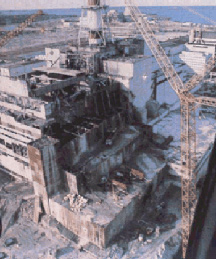
At 01:23:40 on 26 April 1986, the failure of a routine test at the Chernobyl Nuclear Power Plant in Ukraine, then part of the Soviet Union, caused reactor 4 to explode, releasing parts of its radioactive core. It was the worst nuclear accident the world had ever seen, with far-reaching political, economic and ecological consequences. Thirty-five years on, Chernobyl is still as well-known as it was a generation ago.
Fires broke out, causing the main release of radioactivity into the environment. Wind carried contaminated particles over Ukraine, Belarus and Russia, as well as parts of Scandinavia and wider Europe. The 50,000 inhabitants of the adjacent town of Pripyat were evacuated, never to return.
The accident destroyed reactor 4, killing 30 operators and firemen within three months and causing numerous other deaths in weeks and months that followed. To this day, it remains the only accident in the history of the civil use of nuclear power when radiation-related fatalities occurred. The precise number of short- and longer-term victims remains heavily disputed.
By 06:35 on 26 April, all fires at the power plant had been extinguished, apart from the fire inside reactor 4, which continued to burn for many days. Some 5,000 tonnes of boron, dolomite, sand, clay and lead were dropped from helicopters in a bid to extinguish the blaze. When the destroyed reactor was later enclosed in a provisional structure – the so-called sarcophagus – these fuel-containing materials were also walled in.
The sarcophagus was built under extremely hazardous conditions and unprecedented time pressure. By November 1986, a steel and concrete shelter was in place to lock away the radioactive substances inside the ruined reactor building and to act as a radiation shield. It was always intended as a temporary measure, with an estimated lifespan of 20-30 years
The search for a long-term solution started soon after, alongside the massive challenge of cleaning up the accident site. By the end of 1991, the Soviet Union had dissolved and newly independent Ukraine had been left with the Chernobyl legacy. Following a G7 Action Plan to improve nuclear safety in central and eastern Europe, the Nuclear Safety Account was set up at the European Bank for Reconstruction and Development (EBRD) in 1993. Two years later, the scope of the programme was extended to include Chernobyl.
A breakthrough came with the Shelter Implementation Plan in 1997, which provided a road map of how to the tackle the immediate and longer-term tasks. In the same year, the G7 officially invited the EBRD to set up and manage the Chernobyl Shelter Fund, which became the main vehicle for all efforts to ensure that the destroyed reactor 4 remained in an environmentally safe and secure state.
Emergency repairs in 1998 and 1999 prevented the imminent collapse of the sarcophagus, as well as a vent stack that was endangering the adjacent turbine hall over reactor 3, which was still in operation. It was only at the end of 2000 that all nuclear power generation in Chernobyl ceased. The following year saw a landmark decision to build an arch-shaped steel structure, called the New Safe Confinement (NSC), to seal off reactor 4.
In the subsequent years, several tasks were carried out simultaneously. Detailed technical work on the NSC started. The site had to be stabilised and prepared for the construction work. The first project the EBRD managed was the construction of a liquid radioactive waste treatment plant (LRTP) to handle some 35,000 cubic metres of low- and intermediate-level liquid waste at the site. Meanwhile, the safe storage of the spent fuel assemblies from reactors 1, 2 and 3 came into focus.
All this has been achieved. The LRTP has been operational since 2014. A new interim storage facility for the treatment and storage of spent fuel has been built and, after successful hot tests, is currently awaiting a permanent licence from the Ukrainian regulator. The NSC, the most visible Chernobyl project, was slid into position in late 2016 and then handed over to the Ukrainian authorities.
In total, the Bank has managed close to €2 billion in donor funds through the Chernobyl Shelter Fund and Nuclear Safety Account. Of this, the EBRD provided €715 million of its own resources to complete the Interim Storage Facility and New Safe Confinement.
Today, the New Safe Confinement dominates the skyline over Chernobyl, as the sarcophagus once did. The steel structure is 108 metres high and 162 metres long, with a span of 257 metres and a lifetime of at least 100 years. It was assembled in two stages in a cleaned area near the accident site and, despite its size and weight of 36,000 tonnes, was pushed 327 metres into position. It is the largest moveable structure ever built.

This is not where the story ends, however. The fact that the NSC has a lifespan of 100 years means that the next phase of work now has to be planned, agreed and implemented. The estimated 200 tonnes of radioactive nuclear fuel inside reactor 4 are now shielded by the New Safe Confinement. However, parts of the sarcophagus are becoming unstable and will have to be removed at some point. Once this is done, work will come closer to the reactor’s interior.
The EBRD remains a key partner in these efforts. Following a request by Ukraine, in November 2020, the Bank established the new International Chernobyl Co-Operation Account, aimed at creating an integrated plan for the site to serve as the basis for developing and implementing longer-term projects. The new fund will hold it first assembly meeting on Tuesday – fittingly one day after the 35th anniversary. The Chernobyl story continues.
New research on papillary thyroid cancer confirms the accepted science on the harmful effects of ionising radiation.

Our work provides a foundation for further investigation of radiation-induced cancer, particularly with respect to differences in risk as a function of both dose and age, and underscores the deleterious consequences of ionizing radiation exposure.
Radiation-related genomic profile of papillary thyroid cancer after the Chernobyl accident, Science Magazine, Lindsay M. Morton, Danielle M. Karyadi et al. 23 Apr 21,
Abstract
The 1986 Chernobyl nuclear power plant accident increased papillary thyroid cancer (PTC) incidence in surrounding regions, particularly for 131I-exposed children. We analyzed genomic, transcriptomic, and epigenomic characteristics of 440 PTCs from Ukraine (359 with estimated childhood 131I exposure and 81 unexposed children born after 1986). PTCs displayed radiation dose-dependent enrichment of fusion drivers, nearly all in the mitogen-activated protein kinase pathway, and increases in small deletions and simple/balanced structural variants that were clonal and bore hallmarks of non-homologous end-joining repair. Radiation-related genomic alterations were more pronounced for those younger at exposure. Transcriptomic and epigenomic features were strongly associated with driver events but not radiation dose. Our results point to DNA double-strand breaks as early carcinogenic events that subsequently enable PTC growth following environmental radiation exposure.
The accidental explosion in reactor 4 at the Chernobyl (Chornobyl in Ukrainian) nuclear power plant in April 1986 resulted in the exposure of millions of inhabitants of the surrounding areas of Ukraine, Belarus, and the Russian Federation to radioactive contaminants (1). Epidemiologic and clinical research in the ensuing decades has demonstrated increased risk of papillary thyroid carcinoma (PTC) with increasing thyroid gland exposure to radioactive iodine (131I) from fallout, which was deposited on pastures with grazing cows and ingested through milk and leafy greens, particularly during early childhood (2). Together with data from populations exposed to other types of radiation, compelling evidence indicates that PTC risk increases following childhood exposure to ionizing radiation, a recognized carcinogen (2–5)……….
The majority of individuals with PTC were female (n = 335, 76.1%), resided in the Kiev (Kyiv in Ukrainian) region at the time of the accident (n = 286, 65.0%), and were diagnosed during young adulthood (mean = 28.0 years, range: 10.0-45.6),,……..
The pronounced evidence of radiation-related damage that we observed for individuals exposed at younger ages is consistent with epidemiologic analyses that have identified higher thyroid cancer risks with radiation exposure at younger ages …………
our data are consistent with a linear dose-response for the key molecular characteristics associated with radiation dose in the range examined in our analysis (≤1 Gy), which aligns with the extensive radiobiological literature and other epidemiologic evidence regarding DNA damage and cancer risk following ionizing radiation exposure………….
Our work provides a foundation for further investigation of radiation-induced cancer, particularly with respect to differences in risk as a function of both dose and age, and underscores the deleterious consequences of ionizing radiation exposure. https://science.sciencemag.org/content/early/2021/04/21/science.abg2538.full
New documentary explores Chernobyl Exclusion Zone
explore the Chernobyl Nuclear Power Plant itself where the explosion
happened and live in the surrounding areas and danger zones that were
destroyed in the disaster and are still to this day radioactive. The plant
exploded on the 26th April 1986 sending massive amounts of radioactive
material across Europe. It is the worst nuclear accident in history, even
after over 30 years there’s still too much radioactivity in the area for
people to be there for long periods of time. Ben will live inside the
Chernobyl Exclusion Zone for 7 days, they have even been granted access to
film in the power plant and the control room but they can only spend 5
minutes inside the control room, due to radiation safety restrictions.
Ukraine’s complicated plan to deal with its excess nuclear energy generation
|
Ukraine plans nuclear-powered block reward mining facility. coingeek, Ed Drake The government of Ukraine is contemplating investing in a new block reward mining facility, to take advantage of an excess of nuclear power being generated in the country……. Vladimirov said the proposals would allow the country to make better use of excess nuclear capacity, as well as boosting tax take. “The idea of creating a data center based on a nuclear power plant, of course, deserves attention because the Ukrainian UES [unified energy system] has unused base capacity.”……. According to Hotmine, the proposals will help Ukraine build on its reputation as an emerging center for block reward mining, with the firm suggesting the country’s low cost nuclear power could help it become a world leader in nuclear-powered block reward mining. ,,………. https://coingeek.com/ukraine-plans-nuclear-powered-block-reward-mining-facility/ |
 8 Feb 21,
 Biden’s USA headed for confrontation with Russia? The troubling appointment of Victoria Nuland
Nuland’s actions helped produce the regime change in Ukraine which led to U.S. arms sales, U.S. sanctions on Russia, even the first Trump impeachment over the matter of anti-tank missile delivery. The coup damaged U.S.-Russian relations
Basic Notes on Victoria (“Fuck the EU!”) Nuland, more https://www.counterpunch.org/2021/01/25/basic-notes-on-victoria-fuck-the-eu-nuland/ BY GARY LEUPP, 25 Jan 21
On January 5 Joe Biden quietly announced the nomination of Victoria (“Fuck the EU!”) Nuland as Deputy Secretary of State for Political Affairs. This announcement may signal the inception of the confrontation with Russia placed on hold during the Trump presidency.
For four years the Democrats have pilloried Trump for “coddling” Putin, although in fact Trump has heaped sanctions on Russia bringing relations to their lowest point since the early Cold War. Now they want some more serious anti-Russian measures. They want their president, Commander-in-Chief of the Exceptional Nation and Leader of the Free World against its adversaries, return us to Clinton-Obama normalcy. That means “getting tougher” with Russia. But what does tougher mean?
Nuland is eminently qualified for the task of making things much worse, even provoking war with the other superpower that while lacking foreign bases, and spending a fraction of what NATO spends on military defense, has over 6000 nuclear weapons. (Remember? The U.S. developed and used nuclear weapons in 1945, the only country to ever do so. The Soviets followed by developing their own bomb in 1949, in self-defense. That’s when Truman established NATO as an anti-Soviet, anti-communist military alliance.)
Moscow feels a mounting resentment over the expansion of a hostile military alliance, formed during the Cold War under conditions no longer pertinent, to surround it. Is this hard to fathom? How would Congress view a gradual expansion of a Russian-led military alliance committed to spending 2% of its members’ GDPs on military spending to embrace Mexico, Cuba, Nicaragua, Venezuela, Panama and maybe Canada next year?
Nuland is a career official, serving under multiple administrations, representing bipartisan imperialism. She was deputy director for “affairs in the former Soviet republics” in the Bill Clinton administration. Her task was to exploit the pain and suffering caused by the implosion of the Soviet Union to assert greater U.S. hegemony over Eurasia, using the traditional mix of covert operations, National Endowment for Democracy meddling, “color revolutions,” aid promises, etc.
During this period Clinton reneged on the U.S. promise to Moscow in 1989 that NATO would not advance “one inch” east after the Soviets accepted German reunification. Instead he drew Poland, Hungary and Czechoslovakia, long members of the dissolved Warsaw Pact, into the anti-Russian military alliance in 1999. It was an extraordinary repudiation of the Bush-Gorbachev agreement, an egregious provocation of a now-friendly country (then headed by the buffoonish Boris Yeltsin), unremarked on by the U.S. press at the time as anything controversial. Since then the expansion of NATO has been treated as no more remarkable than the expansion of UNESCO. Thank Nuland in part for making you think relentless NATO growth is normal, and that it makes sense for North Macedonia and Montenegro to have joined most recently (during the Trump term).
Thank Nuland too, in part, for the “color revolutions” in Serbia (2000), Georgia (2003), Ukraine (2004) and Kyrgyzstan (2005). The (fake) concept of the popular uprising against (Russian-backed) tyranny, backed by an altruistic America that stands for Freedom and Democracy—that’s Nuland’s baby. She surely has plans for Belarus. And she must be deeply alarmed that the State Department did not try to interfere in the last flare-up of violence in Nagarno-Karabakh leaving Russian diplomacy to resolve the situation. (Just because Russia itself extends into the Caucasus and borders Georgia and Azerbaijan doesn’t mean that it should “interfere” in countries that ought by rights to be ruled by the U.S.A.—due to Exceptionalism and all.)
The extremely reactionary chauvinistic Nuland was deputy foreign advisor to Dick Cheney during the Bush-Cheney administration (2003-2005) and then U.S. ambassador to NATO (2005-2008). Under Obama she was Under Secretary of State for Europe and Eurasia, handpicked by Hillary Clinton. She is married to noted neocon warmonger-scholar Robert Kagan. Both were deeply complicit in spreading the Big Lies leading to the Iraq War in 2003. Nuland supported Hillary Clinton’s terroristic regime change efforts in Libya and Syria. But her main mission in life is to expand NATO. Joe Biden shares her passion for this project.
Nuland is perhaps best known for her pithy ejaculation: “Fuck the EU!” in a telephone call with the U.S. ambassador to Ukraine in 2014.
In that year, while Nuland built support for the coup in Kiev (Feb. 18 to 21), she boasted openly that the U.S. had invested $5 billion in supporting “the Ukrainian people’s European aspirations.” (This referred to the support of some Ukrainians for the violent overthrow of the democratically elected president, Viktor Yanukovych, on the basis of his alleged pro-Russian policies and his opposition to European Union affiliation under the conditions the EU was then offering.) To state the matter honestly: the U.S. spent $5 billion to install a government in Kiev that would request NATO membership (ostensibly to protect it from always-aggressive, always expanding Russia) and bind it forever to the U.S. military-industrial complex and “Free World.”
Since NATO membership since the end of the Cold War has invariably been followed by EU membership, it was easy for Nuland to pose as the champion of Ukraine’s EU membership versus the evil Russians (supposedly) opposing that membership. Yanukovych himself had negotiated seriously with the EU but rejected a plan for association due to its austerity provisions. Meanwhile Moscow offered an attractive aid package. This in the world of U.S. propaganda was a choice between Europe and Russia, with Yanukovych siding with America’s adversary.
The Maidan coup occurred just a month after Nuland was recorded discussing the upcoming event with U.S. ambassador to Ukraine, Geoffrey Pyatt. Nuland, who had joined Sen. John McCain and other U.S. politicians in offering cookies to the Maidan protestors, discussed with Pyatt who should serve as prime minister after the coup. Pyatt noted that the EU favored Vitali Klitschko, the ex-boxer.
“Fuck the EU!” replied Nuland, who wanted banker and NATO supporter Arseniy Yatsenyuk to lead the new government. She soon got her way.
Nuland worked with Oleh Tyahnybok, head of the neo-Nazi Svoboda Party (and one of the three leaders Nuland ordered Pyatt to keep in touch with) and the Right Sector militia. Both glorify Stephan Bandera, the Ukrainian fascist leader who aided the Nazis in rounding up Ukrainian Jews during the war. Tyahnybok publicly inveighs against the “Moscow-Jewish mafia ruling Ukraine.”
When Congressman Dana Rohrbacher Nuland in a hearing was asked soon after the coup whether there had been any neo-fascists on the Maidan she refused to answer the question, stating there were “mothers, grandmothers, and veterans…all colors of Ukraine, including ugly colors” on the Maidan. In other words, a diverse anti-Russian crowd. (Notice how she ignored the existence of the 30% of Ukrainians who are ethnic Russians and were a support base for the president targeted for toppling. Just the sort of sensitivity to ethnicity you’d expect from a top U.S. State Department official who’d been comfortable with the slaughter of Iraqis.) Continue reading
Storage of Chernobyl nuclear waste – in reality unsafe for 1000s of years

Tsunami-crippled Tokyo Electric Power Co. (TEPCO)’s Fukushima Daiichi nuclear power plant No.4 (R) and No.3 reactor buildings are seen in Fukushima prefecture February 28, 2012. Members of the foreign media were allowed into the plant on Tuesday ahead of the first anniversary of the March 11, 2011 tsunami and earthquake which triggered the world’s worst nuclear crisis since Chernobyl. REUTERS/Kimimasa Mayama/Pool (JAPAN – Tags: DISASTER ENVIRONMENT ENERGY) – RTR2YKOE
Paul Waldon Fight to Stop a Nuclear Waste Dump in South Australia, 28 Dec 20,
Dredging of the Pripyat river poses danger of Chernobyl radioactivity to drinking water of 8 million people.
Guardian 23rd Dec 2020, The river running past the Chernobyl nuclear reactor is being dredged to
create an inland shipping route, potentially resurfacing radioactive sludge
from the 1986 disaster that could contaminate drinking water for 8 million
people in Ukraine, scientists and conservationists have warned.
The dredging of the Pripyat began in July and is part of an international
project to create the 2,000km (1,240-mile) long E40 waterway linking the
Baltic and Black seas, passing through Poland, Belarus and Ukraine. The
river – which snakes within 2.5km of the reactor responsible for the
world’s worst nuclear disaster – has already been dredged in at least
seven different places, five of which are within 10km of the reactor,
according to the Save Polesia coalition.
Are forest fires unlocking radiation in Chernobyl?
The firefighters sent in to tackle the blazes in the radioactive forests agreed to speak to BBC anonymously, scared of losing their jobs.
Their accounts expose a month of chaos in which fires almost reached the nuclear reactors.
Journalism: Zhanna Bezpiatchuk and Charlotte Pamment
34 years later, food crops near Chernobyl still contain ionising radiation
 Unsafe levels of radiation found in Chernobyl crops, By Harry Baker – Staff Writer https://www.livescience.com/chernobyl-radioactive-isotopes-crops.html– 19 December 20, The effects of the explosive 1986 disaster can still be seen in nearby crops.
Crops grown near the Chernobyl nuclear site in Ukraine are still contaminated with radiation from the explosive 1986 disaster.
In a new study, researchers found that wheat, rye, oats and barley grown in this area contained two radioactive isotopes — strontium 90 and cesium 137 — that were above safe consumption limits. Radioactive isotopes are elements that have increased masses and release excess energy as a result.
“Our findings point to ongoing contamination and human exposure, compounded by lack of official routine monitoring,” study author David Santillo, an environmental forensic scientist at Greenpeace Research Laboratories at the University of Exeter, said in a statement, referring to the fact that the government suspended its radioactive goods monitoring program in 2013.
Santillo and his colleagues, in collaboration with researchers from the Ukrainian Institute of Agricultural Radiology, analyzed 116 grain samples, collected between 2011 and 2019, from the Ivankiv district of Ukraine — about 31 miles (50 kilometers) south of the nuclear plant.
This area is outside of Chernobyl’s “exclusion zone,” which is a 30 mile (48 km) radius around the plant that was evacuated in 1986 and has remained unoccupied. They found radioactive isotopes, predominantly strontium 90, were above safe consumption level in 48% of samples. They also found that wood samples collected from the same region between 2015 and 2019, had strontium 90 levels above the safe limit for firewood.
The researchers believe that the lingering radiation in the wood, in particular, may be the reason for the continued contamination of crops, almost 35 years after the disaster. When analyzing the wood ash from domestic wood-burning ovens, they found strontium 90 levels that were 25 times higher than the safe limit. Locals use this ash, as well as ash from the local thermal power plant (TPP), to fertilize their crops, which continues to cycle the radiation through their soil.
However, computer simulations suggest that it could be possible to grow crops in the region at “safe” levels if this process of repeated contamination ceased. The researchers are now calling for the Ukrainian government to reinstate its monitoring program and create a system for properly disposing of radioactive ash.
“Contamination of grain and wood grown in the Ivankiv district remains of major concern and deserves further urgent investigation,” study author Valery Kashparov, director of the Ukrainian Institute of Agricultural Radiology, said in the statement. “Similarly, further research is urgently needed to assess the effects of the Ivankiv TPP on the environment and local residents, which still remain mostly unknown.”
The findings were published on Dec. 17 in the journal Environment International.
Originally published on Live Science.
Shutdown of 3 uranium mines in midst of dispute could lead to ecological disaster in Ukraine
World Socialist Web 10th Dec 2020, Three uranium mines have been shut down in the Kirovohrad region of central Ukraine over disputed payments between the state nuclear energy company Energoatom and the state-owned enterprise operating the mine, Eastern Mining and Processing. As a result of the alleged nonpayment, approximately 5,000 miners have been placed on unpaid leave. They are still owed approximately $5 million in months of back pay.
The shuttering of the mines could also lead to an ecological catastrophe if the mines lose power and water pumps fail to operate, creating a toxic mixture of radioactive uranium-contaminated groundwater that could spread throughout the vast river systems of central Ukraine.
1 This Month



26 September – International Day for the Total Elimination of Nuclear Weapons


PLEASE OPPOSE HR 8255 AND S.3639 – bills would accelerate satellite deployment, with no environmental review or safeguards – https://ncstd5li.quorum.us/campaign/169331/
To see nuclear-related stories in greater depth and intensity – go to https://nuclearinformation.wordpress.com
-
Archives
- September 2026 (257)
- August 2026 (330)
- July 2026 (355)
- June 2026 (287)
- May 2026 (306)
- April 2026 (356)
- March 2026 (251)
- February 2026 (267)
- January 2026 (308)
- December 2025 (358)
- November 2025 (359)
- October 2025 (375)
-
Categories
- 1
- 1 NUCLEAR ISSUES
- business and costs
- climate change
- culture and arts
- ENERGY
- environment
- health
- history
- indigenous issues
- Legal
- marketing of nuclear
- media
- opposition to nuclear
- PERSONAL STORIES
- politics
- politics international
- Religion and ethics
- safety
- secrets,lies and civil liberties
- spinbuster
- technology
- Uranium
- wastes
- weapons and war
- Women
- 2 WORLD
- ACTION
- AFRICA
- Atrocities
- AUSTRALIA
- Christina's notes
- Christina's themes
- culture and arts
- Events
- Fuk 2022
- Fuk 2023
- Fukushima 2017
- Fukushima 2018
- fukushima 2019
- Fukushima 2020
- Fukushima 2021
- general
- global warming
- Humour (God we need it)
- Nuclear
- RARE EARTHS
- Reference
- resources – print
- Resources -audiovicual
- Weekly Newsletter
- World
- World Nuclear
- YouTube
-
RSS
Entries RSS
Comments RSS
 nuclear-news