Comprehensive research now shows that irradiated areas near Chernobyl have fewest mammals
Scientific American (accessed) 26th Nov 2020, More than 30 years after the Chernobyl nuclear plant’s meltdown, an 18-mile
radius around the site remains almost entirely devoid of human
activity—creating a haven for wildlife. But scientists disagree over
lingering radiation’s effects on animal populations in this region, called
the Exclusion Zone.
A new analysis, based on estimating the actual doses
animals receive in various parts of the zone, supports the hypothesis that
areas with the most radiation have the fewest mammals. “The effects we
saw are consistent with conventional wisdom about radiation,” says
University of South Carolina biologist Timothy Mousseau, co-author of the
new study in Scientific Reports. “What’s surprising is that it took this
long to start looking at this in a rigorous, comprehensive way.”
https://www.scientificamerican.com/article/chernobyl-exclusion-zone-radiation-doses-reanalyzed/
First canister of used nuclear fuel loaded into Chernobyl storage facility

This storage dump will last for 100 years. But the wastes inside will lasr for 1000s of years . How crazyb is it to just keep on making this toxic trash?
World Nuclear News 19th Nov 2020, The first canister of used nuclear fuel was yesterday loaded into the
Interim Spent Nuclear Fuel Storage Facility (ISF-2) at the Chernobyl plant
in Ukraine. ISF-2 is the largest dry-type used fuel storage facility in the
world and has an operating life of at least 100 years.
https://www.world-nuclear-news.org/Articles/First-assemblies-loaded-into-new-Chernobyl-used-fu
Chernobyl’s bumblebees still affected by radiation
This new data shows effects on bumblebees are happening at dose rates previously thought safe for insects, and the current international recommendations will need to be re-evaluated.
|
Chernobyl: bumblebees still at risk from radiation nearly 35 years on, https://theconversation.com/chernobyl-bumblebees-still-at-risk-from-radiation-nearly-35-years-on-149055, Katherine Raines, Fellow and Lecturer, University of Stirling, November 5, 2020 In the early hours of April 26 1986, reactor four of the Chernobyl nuclear power plant in Ukraine exploded, causing the largest nuclear disaster in history. More than 350,000 people were evacuated, and a 4,700km² exclusion zone was formed in Ukraine and Belarus. Despite the intervening 34 years, there is still uncertainty about the effects of the radiation exposure on wildlife living in the Chernobyl exclusion zone (CEZ).
|
Anxieties, memories of Chernobyl, as Belarus launches new nuclear power station
|
Chernobyl fears as Belarus launches new nuclear power station: Lithuania distributes iodine tablets to 500,000 close to border over safety concerns
Daily Mail, RACHAEL BUNYAN FOR MAILONLINE and AFP , 4 Nov 20, Belarus today launched its controversial Russia-built nuclear power station despite safety concerns from neighbouring Baltic states three decades after the Chernobyl nuclear disaster. Lithuania’s Foreign Minister Linas Linkevicius criticised the launch saying it had gone ahead despite unresolved safety issues The government in the Lithuanian capital, Vilnius, has also offered free iodine tablets to around half a million people living close to the Belarus border to help protect them from radiation in case of an accident The Astravets nuclear power plant, Belarus’s first nuclear station, is just 30 miles away from Vilnius. ……… Lithuania’s Foreign Minister Linas Linkevicius criticised the launch saying it had gone ahead despite unresolved safety issues and described the energy project as ‘geopolitical’. The EU and the international community ‘simply cannot stay indifferent to such cynical ignorance,’ Linkevicius wrote on Twitter. Lithuania said it had immediately stopped electricity imports from Belarus and neighbouring Latvia said it had also blocked imports of energy generated at the plant.…….. https://www.dailymail.co.uk/news/article-8909665/Chernobyl-fears-Belarus-launches-new-nuclear-power-station-despite-safety-concerns.html |
|
Using a robot to map the highly radioactive area of the Chernobyl Nuclear Power Plant
University of Bristol and Spot on October 22, and the team intended to use
the robot to create a three-dimensional map of the distribution of nuclear
radiation.
1986 nuclear accident and, as a result, the robot adds new surveying
capabilities to the teams involved. Other robots were also implemented to
inspect and survey the area.
https://www.unilad.co.uk/technology/boston-dynamics-sent-spot-into-chernobyl-nuclear-plant/
Study finds that bees are harmed by quite low levels of ionising radiation

 Current Chernobyl-level radiation harmful to bees: study https://www.thehindu.com/sci-tech/energy-and-environment/current-chernobyl-level-radiation-harmful-to-bees-study/article32908484.eceAFP
PARIS, FRANCE, OCTOBER 21, 2020
Researchers exposed bee colonies in a laboratory setting to a range of radiation levels found in areas of the exclusion zone around the ruined Chernobyl site
Bumblebees exposed to levels of radiation found within the Chernobyl exclusion zone suffered a “significant” drop in reproduction, in new research published Wednesday that scientists say should prompt a rethink of international calculations of nuclear environmental risk.
The study, published in the journal Proceedings of the Royal Society B, set out to discover how ionising radiation affects insects, which are often thought to be more resilient than other species.
“We found that at radiation levels detectable in Chernobyl, the number of new queen bees produced from the colony was significantly reduced and colony growth was delayed — meaning colonies reached their peak weight at a week later,” said the paper’s lead author Katherine Raines.
The lecturer in environmental pollution at the University of Stirling told AFP by email that researchers “anticipate that this may have an effect on pollination/ecosystem services in contaminated areas”.
The authors said they chose bumblebees both because of a lack of lab-based research into bees and because of their crucial role in pollination.
Ionising radiation can occur either from nuclear sites or medical procedures, although the levels tested were higher than those that would likely be found in the environment from normal releases, Raines said.
But she added that the researchers were “very surprised that we could detect effects as low as we did”.
“Our research suggests insects living in the most contaminated areas at Chernobyl may suffer adverse effects, with subsequent consequences for ecosystem services such as pollination,” she added.
The authors said if their findings could be generalised “they suggest insects suffer significant negative consequences at dose rates previously thought safe” and called revisions to the international framework for radiological protection of the environment.
People are not allowed to live near the Chernobyl power station and the abandoned settlements within the exclusion zone are surrounded by forests hosting birds, wolves, elks and lynxes. A giant protective dome was put in place over the destroyed fourth reactor in 2016.
Ukraine’s President enthuses over their nuclear reactors – but they’re all ageing Soviet ones

On a visit to Ukraine’s Rivne nuclear plant, President Volodomyr Zelensky issue full throated support for the development of his country’s nuclear industry, despite opposition from other countries and a fleet of elderly Soviet-era reactors that are reaching retirement age, Interfax reported.
His remarks came on October 1 and highlight his recent decree that orders the government to submit bills concerning the country’s nuclear power sector for parliamentary debate. Ukraine’s 15 reactors – all of which were built while the country was still a republic of the Soviet Union – supply more than half of the domestic electricity supply.
“We have a strategy for the development of nuclear energy and the completion of nuclear power plants in Ukraine,” the Zelensky said, addressing the possibility of completing two reactors at the country’s Khmelnitsky nuclear plant. The construction of those reactors, which are Russian-designed VVER-1000 units, began in the 1980s but was shelved in 1990.
He also dismissed opposition to nuclear development on grounds of safety, saying: “We understand that if professionals are doing the construction, if the state is working on the safety of nuclear power plants, then there is no threat either to the environment or the climate. It’s a safe form of electricity.”
Pushing back against a host of European countries that have begun to back away from nuclear power, Zelensky said Ukraine would instead embrace it as a national priority.
“In the coming years, many countries will work against nuclear power generation,” he said. “We, on the other hand, will defend it. We must do this because today we have every opportunity to be among the first [in nuclear energy], both in Europe and in the world.”
Zelensky’s remarks come as work to fully clean up the site of the 1986 Chernobyl disaster is still ongoing. Since 2015, an enormous steel dome, called the New Safe Confinement, has enclosed the plant’s exploded No 4 reactor, trapping radiation and facilitating risky dismantlement efforts. But most experts say it will take another 20,000 years before the area immediately surrounding the plant – called the exclusion zone from which more than 100,000 people were evacuated – will again be fit for human habitation.
When the Soviet Union collapsed in 1991, Ukraine inherited not only the embers of Chernobyl, but also four other nuclear power plants: The Rivne plant in the country’s northwest; the Khmelnitsky plant, to Rivne’s south; The South Ukraine plant, near the Black Sea, and the Zaporizhia plant, whose six VVER-1000 reactors make it the largest nuclear power plant in Europe.
All but three of Ukraine’s reactors began operations in the 1980s, putting most of them troublingly close to the end of their engineered lifespans of 40 years. In fact, 12 of Ukraine’s reactors were slated to retire this year.
To continue to produce some 52 percent of the country’s energy, it is presumed that all of these reactors will eventually be granted extensions on their runtimes of several decades.
Given the age of the nuclear industry as a whole, such lifetime extensions have become common practice worldwide. But two recent Bellona publications – one on Ukraine’s nuclear industry, and another on the practice of reactor lifetime extensions – have cast light on the dangers of this approach.
One study by Ukrainian experts, cited in Bellona’s report, shows that Ukraine’s older reactors are becoming more prone to accidents and malfunctions. It is hoped that safety upgrades that would precede the granting of lifetime would eliminate such technical glitches.
But the Bellona study highlighted that two reactors at the Rivne plant – the one Zelensky visited – had been given lifetime extensions without any safety upgrades at all.
The longer Ukraine’s reactors operate, the more they will contribute to the country’s supply of radioactive waste, which is currently the second largest in Europe. This problem has only gotten more serious since 2018, when Russia began returning to Ukraine the spent nuclear fuel and radioactive waste Moscow had been accepting and reprocessing after the Soviet Union dissolved.
The problem of Ukraine’s overabundant radioactive waste would seem less critical if the country were taking steps to build a long-term repository, such as finding a suitable location for one – or indeed even had plans to do so. But as the Bellona report reveals, the bureaucracies in Kiev that are responsible for such questions are inefficient, if not, in some instance, entirely lacking, and in any case have little in the way of public faith in their competent operation.
Prospects are slightly brighter when it comes to dealing with spent fuel from Ukraine’s nuclear reactors. Ukrainian nuclear Officials know how much there is and they intend to build a centralized facility to store it. But as is the case in other parts of the industry, Kiev has little hope of building it without significant funding from other countries.
While it’s unclear if Zelensky’s new embrace of nuclear energy has taken full account of the issues facing his aging reactors, it is hoped that any continued reliance on Ukraine’s Soviet inheritance will do so.
False report of a nuclear disaster in Ukraine
Hackers spread false reports of nuclear disaster, death of US troops in Ukraine, https://www.kyivpost.com/ukraine-politics/hackers-spread-false-reports-of-nuclear-disaster-death-of-us-troops-in-ukraine.html?cn-reloaded=1
Notably, the fake news campaign occurred during the climax of the large Ukrainian-American-British-Canadian military exercises Joint Endeavor 2020, which continue all across the country since Sept. 19, and during yet another round of Ukrainian-American anti-terror drills Rapid Trident in Lviv Oblast.
Moreover, the fake stories were published and massively spread not only by dubious Facebook accounts but also by hacked websites of local authorities and even the police.
The reports started off with a post published on the official website of the local government in the town of Varash some 340 kilometers northwest of Kyiv. The town is located just near the Rivne Nuclear Power Plant and is home to most of the enterprise’s personnel.
The message stated that during Rapid Trident drills, one of the Rivne power plant blocks was accidentally cut off from the electricity supply, which resulted in a catastrophic radioactive release, with severely contaminated materials spilled into the Styr River nearby. According to the fake report, the leak constituted 10% of the radioactive fallout registered during the 1986 Chornobyl accident, the worst nuclear disaster in human history.
So, the website said, the Varash town government had made a decision to declare the state of emergency and launch an operation to evacuate the civilian population from a newly established 30-kilometer alienation zone around the power plant.
The message stated that during Rapid Trident drills, one of the Rivne power plant blocks was accidentally cut off from the electricity supply, which resulted in a catastrophic radioactive release, with severely contaminated materials spilled into the Styr River nearby. According to the fake report, the leak constituted 10% of the radioactive fallout registered during the 1986 Chornobyl accident, the worst nuclear disaster in human history.
So, the website said, the Varash town government had made a decision to declare the state of emergency and launch an operation to evacuate the civilian population from a newly established 30-kilometer alienation zone around the power plant.
Simultaneously with the Lviv report, the Kherson police website said the local law enforcers investigated “the death of American military councilors” in the oblast, which also on Sept. 23 hosted a major round of Ukrainian-American maneuvers Joint Endeavor 2020, which were visited by Ukraine’s President Volodymyr Zelensky.
And at the same time, an official website of the police department of Vinnytsya Oblast, also a scene of the Joint Endeavor exercises, suddenly said a U.S. military serviceperson was arrested on charges of raping a 16-year-old girl.
In all cases, the country’s police immediately refuted the claims on its official Telegram channel, adding that some of its regional websites were hacked simultaneously at 11:45 a.m. Kyiv time.
The police’s main website was switched off for emergency works. As of Sept. 23 evening, it was still not available for users.
Later in the day, the police said it had initiated a criminal case regarding the hacking campaign.
Chernobyl nuclear power plant gets special permission to run ‘hot’ tests with nuclear waste

 Chornobyl nuclear power plant gets special permission to run ‘hot’ tests with nuclear waste https://112.international/society/chornobyl-nuclear-power-plant-gets-special-permission-to-run-hot-tests-with-nuclear-waste-54539.html Source : 112 Ukraine, 9 Sept 20,
 The spent fuel will be soon transferred to new storage, as the old one’s operational life is expiring Chornobyl nuclear power plant (NPP) received special permission to run hot tests with the spent nuclear fuel. Press office of the NPP reported that on September 8.
According to the message, over 23 years of service, the storage amounted up to 21,000 elements of nuclear waste. Due to the fact that the operational life of the current storage is expiring, the staff is now making arrangements to transport the waste to a new repository site. At first, only part of the waste will be transferred, and the rest is to be moved after successful “hot” tests.
“The new storage boasts of special technology, allowing to keep the building in the inert atmosphere. It’ll have helium pumped up in there, and the bilateral leak-tight bottles, which are supposed to keep the spent fuel for 100 years,” said Volodymyr Peskov, the Acting Director of Chornobyl NPP enterprise.
The NPP staff managed to get permission for hot tests after cold tests with nuclear waste were performed successfully.
Radiation from Chernobyl spreads far away, as global heating exacerbates widfires
 Climate change is spreading radiation from Chernobyl over 2,000 miles away, Boing Boing, 3 Sep 20, One of the more difficult parts of trying to convince people about the seriousness of climate change is explaining how so many disparate elements and factors can collude and compound* and make everything worse. And it’s even harder to predict how long those complications will take to manifest, whenever they do what they do…….
. As The Atlantic reports:
Monitors in Norway, 2,000 miles away, detected increased levels of cesium in the atmosphere. Kyiv was smothered in smoke [from forest fires]. Press reports estimated that the level of radiation near the fires was 16 times higher than normal, but we may never know how much was actually released: Yoschenko, Zibtsev, and others impatient to take on-the-ground measurements were confined to their homes by the coronavirus pandemic. August is typically the worst month of the Chernobyl fire season, and this year, public anxiety is mounting. The devastation left by the world’s worst nuclear disaster is colliding with the disaster of climate change, and the consequences reach far and deep.
The unexpected result is an immense, long-term ecological laboratory. Within the exclusion zone, scientists are analyzing everything, including the health of the wolves and moose that have wandered back and the effects of radiation on barn swallows, voles, and the microorganisms that decompose forest litter. Now, as wildfires worsen, scientists are trying to determine how these hard-hit ecosystems will respond to yet another unparalleled disruption. ……
when something nuclear does go wrong — which is still likely, because nothing’s perfect — more nuclear power production will result in more radiation damage. And, if this situation with Chernobyl’s forest fires is any indication, then the ultimate fallout of that combined with our existing climate change problems could be even more insurmountably devastating……. https://boingboing.net/2020/09/04/climate-change-is-spreading-ra.html
Analysing the evidence on effects of ionising radiation on wildlife
Nature 21st Aug 2020, Tim Mousseau et al: We re-analyzed field data concerning potential effects
of ionizing radiation on the abundance of mammals collected in the
Chernobyl Exclusion Zone (CEZ) to interpret these findings from current
knowledge of radiological dose–response relationships, here mammal
response in terms of abundance.
In line with recent work at Fukushima, and
exploiting a census conducted in February 2009 in the CEZ, we reconstructed
the radiological dose for 12 species of mammals observed at 161 sites. We
used this new information rather than the measured ambient dose rate (from
0.0146 to 225 µGy h−1) to statistically analyze the variation in
abundance for all observed species as established from tracks in the snow
in previous field studies.
All available knowledge related to relevant
confounding factors was considered in this re-analysis. This more realistic
approach led us to establish a correlation between changes in mammal
abundance with both the time elapsed since the last snowfall and the dose
rate to which they were exposed. This relationship was also observed when
distinguishing prey from predators.
The dose rates resulting from our
re-analysis are in agreement with exposure levels reported in the
literature as likely to induce physiological disorders in mammals that
could explain the decrease in their abundance in the CEZ. Our results
contribute to informing the Weight of Evidence approach to demonstrate
effects on wildlife resulting from its field exposure to ionizing
radiation.
Nuclear radiation and Chernobyl’s forest fires
Twenty-five years after the disaster, Zibtsev and others predicted that if the forests in the exclusion zone were completely consumed by fire, residents in Kyiv would face an increased risk of dying from cancer and government bans would need to be imposed on foods produced as far as 90 miles away. Although such a large and intense fire is currently unlikely, recent fires have been sizable enough to create similar problems. “If Chernobyl forests burn, contaminants will migrate outside the immediate area,” says Zibtsev. “We know that.”
This April’s fires, which scorched 23 percent of the exclusion zone, were the largest burns ever recorded in the area, nearly four and a half times the size of fires in 2015. Flames torched trees less than three miles from the ruined nuclear reactor, which is now enclosed by an arch-shaped steel shroud.
Forest Fires Are Setting Chernobyl’s Radiation Free https://www.theatlantic.com/ science/archive/2020/08/chernobyl-fires/615067/
Trees now cover most of the exclusion zone, and climate change is making them more likely to burn. Story by Jane Braxton Little 10 Aug, 20 In the clear, calm, early hours of May 15, 2003, three miles west of the hulking ruins of the Chernobyl Nuclear Power Plant, Vasyl Yoschenko was bustling around a stand of Scotch pines planted 30 years earlier. The trees were spindly and closely spaced, but he was skinny enough to move easily among them, taking samples of biomass and litter. Just beyond the trees, he tinkered with the horizontal plates he had placed on the ground in a diagonal grid and covered with superfine cloth designed to absorb whatever came their way.
The forest burned intensely for 90 minutes, releasing cesium-137, strontium-90, and plutonium-238, -239, and -240 in blasts of smoke and heat. In just one hour, the firefighters—and Yoschenko—could have been exposed to more than triple the annual radiation limit for Chernobyl’s nuclear workers.
Nuclear radiation – potential danger in East Ukraine
Coal mines and the metallurgical plants associated with them are the backbone of the economy in the self-proclaimed republics of Donetsk and Luhansk in eastern Ukraine, where the conflict between the central government and the Russian-backed separatists rages on. Closing them deprives the local population of their livelihoods and threatens these and the neighboring regions in Ukraine with ecological disaster.
Pumps cut off
In 2017, the “Donetsk People’s Republic” (“DPR”) developed a plan, according to which only 17 of the profitable mines in the region were kept in operation.
But reality decided to throw a wrench in the works, primarily because Russia did not invest in the Donetsk industry.
The mines were closed by a simple method: the pumps that pump out the water were turned off. The equipment was cut and handed over for scrap.
And it will inevitably affect the situation on the territory controlled by Ukraine – the mines on Ukrainian territory and the Donbass mines form a single water pumping system.
No radioactive contamination…yet
Of particular concern is the Yunkom mine, which in 1979 carried out an experimental nuclear explosion with a yield of 0.3 kilotons.
After the explosion, a glassy capsule with liquid radioactive waste was formed at a depth of 903 meters. It was flooded just after the pumps were turned off in April 2018.
None of the experts really know how the radioactive capsule will react with water, when it will naturally collapse, or where its contents will end up. Neither the authorities of the self-proclaimed republics nor the government of Ukraine are monitoring the radioactive contamination. Nor are they in the Rostov region, where the waters of the Seversky Donets River flow……… https://jam-news.net/ukraine-conflict-miness-ecology/
In 2020, a new radioological danger in Chernobyl
Chernobyl Is Again Close To A Disaster! What Happened There In 2020? http://www.thesentrybugle.com/2020/07/chernobyl-is-again-close-to-disaster.html#.XwZuet3J6Vg.twitter Ukrainian officials have sought calm after forest fires in the restricted zone around Chernobyl, scene of the world’s worst nuclear accident, led to a rise in radiation levels.
Ukraine declassifies Chernobyl nuclear disaster documents
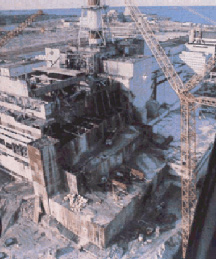 Ukraine declassifies Chernobyl nuclear disaster documents https://www.brusselstimes.com/all-news/119019/ukraine-declassifies-chernobyl-documents/
The archives, published in a book edited by the Ukrainian secret service, SBU, give an overview of the various construction errors, accidents and emergency interruptions at the plant between 1971 and the day of the disaster.
After Reactor 4 of the Soviet nuclear plant at Chernobyl exploded, a no-go zone was set up around the area due to the risk of radiation.
The biggest nuclear disaster in History caused the deaths of thousands of people, while tens of thousands had to be displaced.
On Sunday, a new fire occurred in the red zone around the plant, which is about three hectares in area. The Ukrainian authorities said on Monday that the fire had, for the most part, been put out.
In early April, a forest fire fed by gusty winds and unusually dry weather had broken out around the abandoned nuclear plant.
By the time it was brought under control in mid-May, about 11,500 hectares had been destroyed.
1 This Month



26 September – International Day for the Total Elimination of Nuclear Weapons


PLEASE OPPOSE HR 8255 AND S.3639 – bills would accelerate satellite deployment, with no environmental review or safeguards – https://ncstd5li.quorum.us/campaign/169331/
To see nuclear-related stories in greater depth and intensity – go to https://nuclearinformation.wordpress.com
-
Archives
- September 2026 (257)
- August 2026 (330)
- July 2026 (355)
- June 2026 (287)
- May 2026 (306)
- April 2026 (356)
- March 2026 (251)
- February 2026 (267)
- January 2026 (308)
- December 2025 (358)
- November 2025 (359)
- October 2025 (375)
-
Categories
- 1
- 1 NUCLEAR ISSUES
- business and costs
- climate change
- culture and arts
- ENERGY
- environment
- health
- history
- indigenous issues
- Legal
- marketing of nuclear
- media
- opposition to nuclear
- PERSONAL STORIES
- politics
- politics international
- Religion and ethics
- safety
- secrets,lies and civil liberties
- spinbuster
- technology
- Uranium
- wastes
- weapons and war
- Women
- 2 WORLD
- ACTION
- AFRICA
- Atrocities
- AUSTRALIA
- Christina's notes
- Christina's themes
- culture and arts
- Events
- Fuk 2022
- Fuk 2023
- Fukushima 2017
- Fukushima 2018
- fukushima 2019
- Fukushima 2020
- Fukushima 2021
- general
- global warming
- Humour (God we need it)
- Nuclear
- RARE EARTHS
- Reference
- resources – print
- Resources -audiovicual
- Weekly Newsletter
- World
- World Nuclear
- YouTube
-
RSS
Entries RSS
Comments RSS
 nuclear-news