Ukraine Is a Problem Only as Long as the West Makes It One
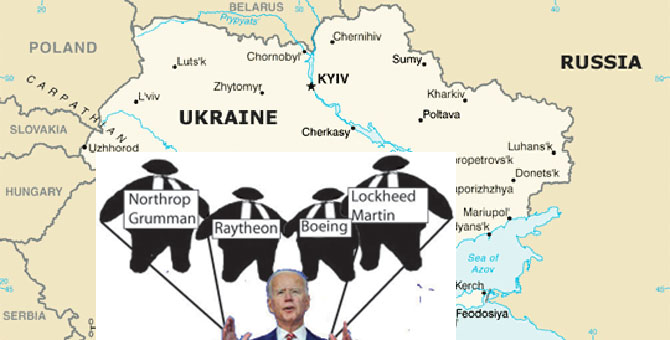
President Biden has the opportunity to re-direct US policy on Ukraine in a peaceful direction,
But it will take serious, steadfast courage. We don’t know how compromised he is by his previous dealing in Ukraine, or his son’s. We don’t know if he has the clarity of mind to see the obvious. And we don’t know if he has the strength to wage peace.
Ukraine Is a Problem Only as Long as the West Makes It One
https://www.rsn.org/001/ukraine-is-a-problem-only-as-long-as-the-west-makes-it-one.html
by William Boardman10 December 21,
Since the fall of the Soviet Union thirty years ago, US policy on Ukraine has been an ugly mix of inconsistency, quiet aggression, fear-mongering and stupidity. Now President Biden is recklessly intensifying the same failed tactics while expecting a different outcome and risking a confrontation of the world’s two major nuclear-armed states.
What could possibly go wrong?
What passes for conventional wisdom nowadays is expressed by the cover headline of the November 29 issue of The Nation magazine, of all places:
Ukraine: The Most Dangerous Problem in the World
That is such hogwash. The Nation’s knows better. But the fear-mongering leads, even though the magazine’s sub-head is: “But there’s already a solution.” Author Anatol Lieven argues persuasively that the essence of a solution for Ukraine issues have already been outlined in the so-called “Minsk II” agreement of 2015, reached by leaders of France, Germany, Russia, and Ukraine. The agreement was endorsed unanimously by the United Nations Security Council. Despite their formal assent to Minsk II, three US administrations have supported Ukraine in refusing to implement the agreement. Nor have they proposed any better idea. This is an example of foreign policy guided by denial of reality.
Ukraine remains a “dangerous problem” only as long as the US and Ukraine insist on making it one. (It’s hardly “the most dangerous,” given climate change, or US provocation of China, or the US-led nuclear arms race, or the self-gutting of US democracy.)
With the Soviet Union gone in 1991, US President Bush assured Russian leaders that NATO would not expand to include former Soviet states. Whether this was a lie or a broken promise hardly matters.
NATO expanded. Russia was confronted with the prospect of an avowedly hostile military alliance approaching its borders along the same invasion route followed by Napoleon and Hitler. As long as Ukraine remained unaligned, Russian historical memory could rest quietly. Ukraine puts almost 1,000 miles between Russia and NATO member Poland. Ukraine’s population of about 45 million ranges from very pro-western to virtually Russian. The country has long been deeply corrupt with a quasi-functional democracy (an opportunistic playground for the likes of Paul Manafort and Hunter Biden). All in all, from a geopolitical perspective, Ukraine was (and still is) a combustible potential best left undisturbed.
In 2013, Ukrainian President Viktor Yanukovych put NATO and European Union membership in play, then reversed course under Russian pressure. In November 2013, he cancelled an EU association agreement just days before it was to take effect. With US connivance, pro-western Ukrainian forces launched the Maidan Revolution that lasted into the spring of 2014. Elected president Yanukovich was forced out of office (shades of Iran 1953) and the country entered a period of chaos. Russia took advantage of this to walk into Crimea unopposed and to annex it, as voted by the Crimean parliament, despite objections from the West. These objections have continued to the present, together with economic sanctions and military provocations from the Black Sea.
The US and NATO have justified their hostile actions by claiming Russia was also about to invade eastern Ukraine, which still hasn’t happened. Eastern Ukraine, the Donbas, has been a war zone since March 2014 when separatist Ukrainian forces in Donetsk and Luhansk started fighting for independence from the central government in Kiev. This is a civil war between the self-declared People’s Republics of Donetsk and Luhansk against the Ukraine government. The People’s Republics comprise about 6,200 square miles (bigger than Connecticut) with almost 4 million people, mostly Russian-speaking, whose currency is the ruble. Russia has supported the People’s Republics, but short of introducing its own troops. Likewise, the US and NATO have supported Kiev, but short of introducing their own troops into the Donbas. The fighting has been intense in the past, with some 10,000 killed on both sides, but the conflict in recent years has been limited to trench warfare along a 400-mile front, with most casualties coming from sniper fire. Neither side has made significant advances in years.
In 2014, Russia and Ukraine met under the auspices of the European Union and signed the first Minsk Protocol in an ultimately ineffective effort to reach a ceasefire. The following year, five parties signed a second Minsk Protocol – Ukraine, Ukraine Separatists, Russia, France, and Germany – which led to reduced fighting but no lasting solution. Through all of this, the US under President Obama, played no useful role in resolving the issues or assuring anything like a stable peace.
The US remains gripped, apparently, by a reflexive Cold War rigidity which requires that Russia be to blame for anything we don’t like, such as the results of the US-sponsored coup in Ukraine in 2014. The new Cold War is manifested by the expansion of NATO, needlessly threatening Russia on the basis of a paranoid Western sense of threat.
Another manifestation of Cold War thinking is Biden’s choice of Victoria Nuland as his current special ambassador to Russia to discuss Ukraine. Nuland was notoriously involved in efforts to manipulate the 2013 Madan uprising and supporting the coup against Yanukovich. When apprised of European desires to proceed cautiously, Nuland was recorded on cell phone saying, “Fuck the EU.” Such assertions of American exceptionalism continue to make the world a more dangerous place.
What could Biden do now to make the world a safer place?
Biden could ease sanctions over Crimea, acknowledging that its return to Russia is a done deal with strong historic and geo-political justifications. Biden could also stop US nuclear-capable bombers from probing Russia in the Black Sea region. It’s hard to see how continuing such provocative flights can have a calming effect.
Most importantly, Biden could assure Russia (as the US did once before in 1992) that NATO would not expand to include Ukraine. In his recent conversation with Putin, Biden did the opposite, making it all but non-negotiable. That has the obvious effect of continuing the conflict, asserting the right to hold a knife to another’s throat.
This particular knife was forced into NATO’s hands in April 2008 by the illegitimate President Bush against the will of the majority of NATO members. The issue came up at NATO’s North Atlantic Council meeting in Bucharest. NATO members easily accepted the future membership of Albania and Croatia, but balked at approving Ukraine or Georgia. Instead, in the Bucharest Summit Declaration, members approved a compromise article drafted by the British with intentional imprecision, paragraph 23 of 50, that began:
ATO welcomes Ukraine’s and Georgia’s Euro-Atlantic aspirations for
membership in NATO. We agreed today that these countries will become
members of NATO….
The paragraph continues with generalizations about the countries’ contributions to the war in Afghanistan, their promised democratic reforms, and so on. But there is no date for membership, no process for achieving membership (as distinct from Albania and Croatia), and actual approval is only anticipated at some unknown future date. This paragraph in the Bucharest Declaration is essentially a throwaway line, putting off to an indeterminate future the clearly divisive and dangerous issue of relating to Russian border states.
ATO welcomes Ukraine’s and Georgia’s Euro-Atlantic aspirations for
membership in NATO. We agreed today that these countries will become
members of NATO….
The paragraph continues with generalizations about the countries’ contributions to the war in Afghanistan, their promised democratic reforms, and so on. But there is no date for membership, no process for achieving membership (as distinct from Albania and Croatia), and actual approval is only anticipated at some unknown future date. This paragraph in the Bucharest Declaration is essentially a throwaway line, putting off to an indeterminate future the clearly divisive and dangerous issue of relating to Russian border states.
The Alliance will continue to support, as appropriate, these efforts as guided by regional priorities and based on transparency, complementarity and inclusiveness, in order to develop dialogue and cooperation among the Black Sea states and with the Alliance. [paragraph 36]
The Bucharest Declaration does not express an alliance seeking confrontation with Russia, for all that George W. Bush wanted it.
The Bucharest Declaration treats NATO’s war in Afghanistan as a success and expresses the need for possible future military actions against Iran and North Korea (but no mention of China). There is no hint of anyone wondering why something called the North Atlantic Treaty Organization thinks it has any legitimate business operating in landlocked Afghanistan.
More than a decade later, four American presidents have turned Afghanistan into a world class disaster. America has turned its back on mass starvation there. And still there is no sense of national responsibility or shame as Biden and the US governing elite stumble provocatively toward new looming catastrophes with Iran, China, climate change, public health, and functioning democracy itself.
Ukraine is a wholly American-made pseudo crisis in which the US national interest is close to zero. The US forced NATO to put Ukraine in play in 2008 by breaking the earlier US pledge not to put Ukraine in play. Now our obtuse leadership poses as acting on principle by refusing to break the pledge that broke the first pledge, even though that is the most obvious, effective de-escalation available: guarantee Russia a border with no more NATO threats and negotiate (as others have done) in good faith to defuse the rest of the Ukrainian mishmash.
When Secretary of State Anthony Blinken says that “one country trying to tell another what its choices should be, including with whom it associates, that’s not an acceptable proposition,…” what we’re hearing is a US official ignoring reality and denying what the US does every day. And when former US ambassador Michael McFaul tweets: “Putin invented this ‘crisis’ single-handedly. Nothing changed in Ukraine. Nothing changed regarding NATO policy” – he’s just lying.
Worse, the blind rigidity of the likes of Blinken and McFaul serves to enable the truly mindless warmongers like US Senator Roger Wicker, R-MS, who doesn’t have the sense not to invite nuclear war when he tells Fox News:
Military action could mean that we stand off with our ships in the Black Sea, and we rain destruction on Russian military capability. It could mean that. It could mean that we participate, and I would not rule that out, I would not rule out American troops on the ground. We don’t rule out first use nuclear action.
President Biden has the opportunity to re-direct US policy on Ukraine in a peaceful direction,
But it will take serious, steadfast courage. We don’t know how compromised he is by his previous dealing in Ukraine, or his son’s. We don’t know if he has the clarity of mind to see the obvious. And we don’t know if he has the strength to wage peace.
DRUMS OF WAR Biden is pushing us to brink of NUCLEAR WAR over Ukraine in chilling echo of Cuban missile crisis, Russia claims

FIRES OF WAR Biden is pushing us to brink of NUCLEAR WAR over Ukraine in chilling echo of Cuban missile crisis, Russia claims, The Sun UK, Katie Davis, 10 Dec 2021
RUSSIA has warned Joe Biden is pushing the nation to the brink of NUCLEAR WAR as tensions over Ukraine hit boiling point.
Sergei Ryabkov, Russia’s deputy foreign minister, has warned a chilling echo of the 1962 Cuban missile crisis is possible as the US closely watches unrest at the border.
“You know, it really could come to that,” he said.
“If things continue as they are, it is entirely possible by the logic of events to suddenly wake up and see yourself in something similar.”
A standoff between Russia and the US brought the world close to nuclear war when Washington blocked Moscow from shipping nuclear missiles to Cuba in 1962 – and Ryabkov has warned escalating tensions between the nations risk a repeat of that.
After strained negotiations, John Kennedy and Nikita Khrushchev reached an agreement, with the Soviet leader dismantling their offensive weapons in Cuba on the condition the US would sign a public declaration to not invade the Caribbean country again.
It comes amid mounting tensions between the West and Moscow over a potential invasion of Ukraine – with growing fears war could break out.
Last week US intelligence detected Russia massing 175,000 troops on the border with Ukraine as fears of a potential invasion in early 2022 are mounting.
Meanwhile, Moscow claimed its fighter jets intercepted a US spy plane that was flying over the Black Sea.
Russia has denied that it plans to attack Ukraine.
Ryabkov’s warning comes after Joe Biden held a high-stakes call with Vladimir Putin as tensions between Washington and Moscow intensify over Ukraine.
The two-hour call between the leaders was held in a bid to de-escalate tensions – with the US President threatening sanctions over the situation at Russia’s border…………….
Russia has been demanded Ukraine not join NATO and raged that the US must stop all military activity in the region.
Ukraine commanders have warned that a Russian invasion would overwhelm the country without help from the West…………
it’s reported Britain and her allies are ready to use force to stop Russia invading Ukraine – despite warnings it would lead to the worst conflict since World War Two…………
a US senator has warned America could “rain destruction” on Russia with nuclear weapons if Putin invades Ukraine……
Senator Roger Wicker said “We don’t rule out first-use nuclear action, we don’t think it will happen, but there are certain things in negotiations, if you are going to be tough, that you don’t take off the table.”
But the Russian Embassy in Washington hit back at Wicker’s remarks, branding his suggestion that the US should consider using nuclear weapons against Moscow in the event of invasion as “irresponsible”.
“Such statements are irresponsible,” the statement, posted on Facebook, said.
“We advise all the unenlightened to read the joint statement of the Presidents of Russia and the United States of June 16, 2021 thoroughly. This document reaffirms the two countries’ commitment to the principle that a nuclear war cannot be won and must never be fought.”………. https://www.thesun.co.uk/news/16999520/biden-pushing-brink-nuclear-war-ukraine-russia/
Who’s Telling the ‘Big Lie’ on Ukraine?
A former U.S. intelligence official who has examined the evidence said the intelligence to support the claims of a significant Russian invasion amounted to “virtually nothing.”
But these doubts and concerns are not reflected in the Post’s editorial or other MSM accounts of the dangerous Ukraine crisis. Indeed, Americans who rely on these powerful news outlets for their information are as sheltered from reality as anyone living in a totalitarian society
ROBERT PARRY: Who’s Telling the ‘Big Lie’ on Ukraine? Consortium News, December 8, 2021 The U.S. group think still driving the Ukraine crisis began at least eight years ago, as detailed in this article by Robert Parry on Sept. 2, 2014.
Exclusive: Official Washington draws the Ukraine crisis in black-and-white colors with Putin the bad guy and the U.S.-backed leaders in Kiev the good guys. But the reality is much more nuanced, with Americans consistently misled on key facts, wrote Robert Parry. By Robert Parry Sept. 2, 2014
Special to Consortium News If you wonder how the world could stumble into World War III much as it did into World War I a century ago all you need to do is look at the madness that has enveloped virtually the entire U.S. political/media structure over Ukraine where a false narrative of white hats vs. black hats took hold early and has proved impervious to facts or reason.
The original lie behind Official Washington’s latest “group think” was that Russian President Vladimir Putin instigated the crisis in Ukraine as part of some diabolical scheme to reclaim the territory of the defunct Soviet Union, including Estonia and other Baltic states. Though not a shred of U.S. intelligence supported this scenario, all the “smart people” of Washington just “knew” it to be true.
Yet, the once-acknowledged though soon forgotten reality was that the crisis was provoked last year by the European Union proposing an association agreement with Ukraine while U.S. neocons and other hawkish politicos and pundits envisioned using the Ukraine gambit as a way to undermine Putin inside Russia.
The plan was even announced by U.S. neocons such as National Endowment for Democracy President Carl Gershman who took to the op-ed page of The Washington Post nearly a year ago to call Ukraine “the biggest prize” and an important interim step toward eventually toppling Putin in Russia.
Gershman, whose NED is funded by the U.S. Congress, wrote:
“Ukraine’s choice to join Europe will accelerate the demise of the ideology of Russian imperialism that Putin represents. Russians, too, face a choice, and Putin may find himself on the losing end not just in the near abroad but within Russia itself.”
In other words, from the start, Putin was the target of the Ukraine initiative, not the instigator. But even if you choose to ignore Gershman’s clear intent, you would have to concoct a bizarre conspiracy theory to support the conventional wisdom about Putin’s grand plan.
To believe that Putin was indeed the mastermind of the crisis, you would have to think that he somehow arranged to have the EU offer the association agreement last year, then got the International Monetary Fund to attach such draconian “reforms” that Ukrainian President Viktor Yanukovych backed away from the deal.
Then, Putin had to organize mass demonstrations at Kiev’s Maidan square against Yanukovych while readying neo-Nazi militias to act as the muscle to finally overthrow the elected president and replace him with a regime dominated by far-right Ukrainian nationalists and U.S.-favored technocrats. Next, Putin had to get the new government to take provocative actions against ethnic Russians in the east, including threatening to outlaw Russian as an official language.
And throw into this storyline that Putin all the while was acting like he was trying to help Yanukovych defuse the crisis and even acquiesced to Yanukovych agreeing on Feb. 21 to accept an agreement brokered by three European countries calling for early Ukrainian elections that could vote him out of office. Instead, Putin was supposedly ordering neo-Nazi militias to oust Yanukovych in a Feb. 22 putsch, all the better to create the current crisis.
While such a fanciful scenario would make the most extreme conspiracy theorist blush, this narrative was embraced by prominent U.S. politicians, including ex-Secretary of State Hillary Clinton, and “journalists” from The New York Times to CNN. They all agreed that Putin was a madman on a mission of unchecked aggression against his neighbors with the goal of reconstituting the Russian Empire. Clinton even compared him to Adolf Hitler.
This founding false narrative was then embroidered by a consistent pattern of distorted U.S. reporting as the crisis unfolded. Indeed, for the past eight months, we have seen arguably the most one-sided coverage of a major international crisis in memory, although there were other crazed MSM stampedes, such as Iraq’s non-existent WMD in 2002-03, Iran’s supposed nuclear bomb project for most of the past decade, Libya’s “humanitarian crisis” of 2011, and Syria’s sarin gas attack in 2013.
But the hysteria over Ukraine with U.S. officials and editorialists now trying to rally a NATO military response to Russia’s alleged “invasion” of Ukraine raises the prospect of a nuclear confrontation that could end all life on the planet.
The ‘Big Lie’ of the ‘Big Lie’
This madness reached new heights with a Sept. 1 (2014) editorial in the neoconservative Washington Post, which led many of the earlier misguided stampedes and was famously wrong in asserting that Iraq’s concealment of WMD was a “flat fact.” In its new editorial, the Post reprised many of the key elements of the false Ukraine narrative in the Orwellian context of accusing Russia of deceiving its own people.
The “through-the-looking-glass” quality of the Post’s editorial was to tell the “Big Lie” while accusing Putin of telling the “Big Lie.” The editorial began with the original myth about the aggression waged by Putin whose
“bitter resentment at the Soviet empire’s collapse metastasized into seething Russian nationalism………………..
But the truth is that the U.S. mainstream news media’s distortion of the Ukraine crisis is something that a real totalitarian could only dream about. Virtually absent from major U.S. news outlets across the political spectrum has been any significant effort to tell the other side of the story or to point out the many times when the West’s “fair and factual version of events” has been false or deceptive, starting with the issue of who started this crisis.
Blinded to Neo-Nazis
In another example, the Post and other mainstream U.S. outlets have ridiculed the idea that neo-Nazis played any significant role in the putsch that ousted Yanukovych on Feb. 22 or in the Kiev regime’s brutal offensive against the ethnic Russians of eastern Ukraine.
However, occasionally, the inconvenient truth has slipped through. For instance, shortly after the February coup, the BBC described how the neo-Nazis spearheaded the violent seizure of government buildings to drive Yanukovych from power and were then rewarded with four ministries in the regime that was cobbled together in the coup’s aftermath.
When ethnic Russians in the south and east resisted the edicts from the new powers in Kiev, some neo-Nazi militias were incorporated into the National Guard and dispatched to the front lines as storm troopers eager to fight and kill people whom some considered “Untermenschen” or sub-human.
Even The New York Times, which has been among the most egregious violators of journalistic ethics in covering the Ukraine crisis, took note of Kiev’s neo-Nazi militias carrying Nazi banners while leading attacks on eastern cities albeit with this embarrassing reality consigned to the last three paragraphs of a long Times story on a different topic. [See Consortium News’s “NYT Discovers Ukraine’s Neo-Nazis at War.”]
Later, the conservative London Daily Telegraph wrote a much more detailed story about how the Kiev regime had consciously recruited these dedicated storm troopers, who carried the Wolfsangel symbol favored by Hitler’s SS, to lead street fighting in eastern cities that were first softened up by army artillery. [See Consortium News‘s “Ignoring Ukraine’s Neo-Nazi Storm Troopers.”]
You might think that unleashing Nazi storm troopers on a European population for the first time since World War II would be a big story given how much coverage is given to far less significant eruptions of neo-Nazi sentiment in Europe but this ugly reality in Ukraine disappeared quickly into the U.S. media’s memory hole. It didn’t fit the preferred good guy/bad guy narrative, with the Kiev regime the good guys and Putin the bad guy.
Now, The Washington Post has gone a step further dismissing Putin’s reference to the nasty violence inflicted by Kiev’s neo-Nazi battalions as part of Putin’s “Big Lie.” The Post is telling its readers that any reference to these neo-Nazis is just a “fantasy.”
Even more disturbing, the mainstream U.S. news media and Washington’s entire political class continue to ignore the Kiev government’s killing of thousands of ethnic Russians, including children and other non-combatants. The “responsibility to protect” crowd has suddenly lost its voice. Or, all the deaths are somehow blamed on Putin for supposedly having provoked the Ukraine crisis in the first place.
A Mysterious ‘Invasion’
And now there’s the curious case of Russia’s alleged “invasion” of Ukraine, another alarmist claim trumpeted by the Kiev regime and echoed by NATO hardliners and the MSM.
While I’m told that Russia did provide some light weapons to the rebels early in the struggle so they could defend themselves and their territory and a number of Russian nationalists have crossed the border to join the fight, the claims of an overt “invasion” with tanks, artillery and truck convoys have been backed up by scant intelligence.
One former U.S. intelligence official who has examined the evidence said the intelligence to support the claims of a significant Russian invasion amounted to “virtually nothing.” Instead, it appears that the ethnic Russian rebels may have evolved into a more effective fighting force than many in the West thought. They are, after all, fighting on their home turf for their futures.
Concerned about the latest rush to judgment about the “invasion,” the Veteran Intelligence Professionals for Sanity, a group of former U.S. intelligence officials and analysts, took the unusual step of sending a memo to German Chancellor Angela Merkel warning her of a possible replay of the false claims that led to the Iraq War.
You need to know,” the group wrote, “that accusations of a major Russian ‘invasion’ of Ukraine appear not to be supported by reliable intelligence. Rather, the ‘intelligence’ seems to be of the same dubious, politically ‘fixed’ kind used 12 years ago to ‘justify’ the U.S.-led attack on Iraq.”
But these doubts and concerns are not reflected in the Post’s editorial or other MSM accounts of the dangerous Ukraine crisis. Indeed, Americans who rely on these powerful news outlets for their information are as sheltered from reality as anyone living in a totalitarian society.The late investigative reporter Robert Parry broke many of the Iran-Contra stories for The Associated Press and Newsweek in the 1980s. He founded Consortium News in 1995 as the first online, independent news site in the United States. https://org.salsalabs.com/o/1868/p/salsa/donation/common/public/?donate_page_KEY=14124&okay=True
Suffolk Wildlife Trust and RSPB not impressed by EDF’s bribes for environment
A joint statement by the Suffolk Wildlife Trust and RSPB has outlined the
two charities “significant concerns” with proposals for a new £20 billion
power station on the Suffolk coast.
Earlier this month EDF Energy, which
has a controlling stake in the Sizewell C project, set out £250m of
financial contributions, known as the Deed of Obligation, designed to
mitigate the impacts of the project, provide legacy benefits and compensate
some of those affected. This included £78 million to form an independent
environmental body to enhance the landscape of the area and £22m for
biodiversity improvements and the creation of wildlife and habitat areas.
However, the Suffolk Wildlife Trust and RSPB, who have been against the
construction of Sizewell C since consultations began, are still adamant
that, if built, the power station would cause considerable environmental
damage.
Suffolk Live 21st Oct 2021
https://www.suffolklive.com/news/animal-charities-warn-protected-wildlife-6092590
COVID Restrictions Deny Southern Belarus Children Rare Escape From Chernobyl Radiation
COVID Restrictions Deny Southern Belarus Children Rare Escape From Chernobyl Radiation https://www.voanews.com/a/covid-restrictions-deny-southern-belarus-children-rare-escape-from-chernobyl-radiation/6278627.html
October 20, 2021 Ricardo Marquina. In Belarus, just across the border from Ukraine, many children have been living with chronic radiation sickness since a reactor at the Chernobyl nuclear power plant exploded in 1986. They have returned to school after being unable to escape contamination for yet another summer due to COVID-19 pandemic border restrictions. For VOA, Ricardo Marquina has more from the Gomel region of southern Belarus in this report narrated by Miguel Amaya.
Birth defects in the Chernobyl region

What about studying consequences rather than causes? Studying birth abnormalities in places where they occur more often than is normal? The Omni-Net Ukraine Birth Defects Prevention Program, came up with this different approach, reported in July 2012. http://ibis-birthdefects.org/start/pdf/BaltimoreAbstr.pdf

Measuring radiation is difficult, and can produce ambiguous results. But measuring babies with malformations is a concrete matter. Facts are facts here As Dr Vladimir Wertelecki says “ a baby that has no head is a baby that has no head.”
THE PROGRAM
The program started in 2000, conducting a 10 year study on 5 provinces of the Ukraine – measuring and monitoring all newborn babies. The study, led by Dr Wertelecki, was done in co-operation with Ukraine health authorities. This was a descriptive epidemiological study. It could prove only a difference between geographical areas. It cannot prove the cause of difference.

Within 2-3 years it was obvious that the rates of spina bifida and other defects of the nervous system, were many times greater than expected, particularly in one province. A few years later an excess of conjoined twins (“Siamese twins”) was found. They found other nervous system problems, mainly microcephaly (tiny head) .. After 10 years of study they published a report showing an excess of frequency of anomalies of nervous system and of these conjoined twins.

This was found especially in the northern half of the province – an area that is a unique ecology niche – mainly wetlands. And this area also has a unique population, an ethnic group living there since recorded history. They live in small villages, very isolated, and they rely completely on local foods.
These foods are all radioactive. The soil there is such that plants absorb many times more radioactivity. People there are absorbing much higher levels of radiation. – 20 times more than there would be in soil 50 km. away.
Dr Wertelecki reminds us that there are many causes of birth abnormalities. One well recognised cause is foetal alcohol syndrome, due to alcoholism in the mother. However, the program did in fact research this question. 6 universities joined it in a very well funded and thorough study of pregnant women. It showed that in this Northern area, alcohol use among pregnant women is statistically less than in the Ukraine in general. . Alcohol does not explain the birth abnormalities. Radiation is the obvious major cause.
ABNORMALITIES IN THE DEVELOPING FOETUS- TERATOGENESIS
Little research has been done on the causes of this in humans. Studies on non human species show that foetuses in first three months are about 1000 times more vulnerable to environmental effects.
Dr Wertelecki’s team focused on teratogenesis – changes caused by environmental interference to a developing foetus, a foetus with with normal genes. This must be distinguished from gene mutations, inherited from parents and the two processes have different effects. The genetic, inherited defects are most likely to cause mental disability. But with the teratogenic abnormalities, the baby, if it survives, most often is of normal intelligence.
This process can begin very early, before the ovum has been implanted in the wall of the womb – before the woman knows that she is pregnant. That very early “line” of the embryo can split. In this case – the result is – twins. This split can be incomplete – resulting in conjoined twins, (“Siamese twins”). A fetiform teratoma is a sort of failed Siamese twin, a monster like mass, containing a mixture of tissues.
Abnormalities that are started at a little later stage of pregnancy include spina bifida, ( opening in lower back body wall), opening in front body wall with heart on the exterior, anencephaly (absence of head or of most of the skull and brain)
Later effects – anophthalmia , (missing eyeball) , microphthalmia (tiny eye)
Full article at http://noelwauchope.wordpress.com/2012/10/22/a-baby-that-has-no-head-is-a-baby-that-has-no-head/
Chernobyl’s legacy recorded in trees

Exposure to radiation from the 1986 Chernobyl accident had a lasting negative legacy on the area’s trees, a study has suggested. Researchers said the worst effects were recorded in the “first few years” but surviving trees were left vulnerable to environmental stress, such as drought.
They added that young trees appeared to be particularly affected. Writing in the journal Trees, the team said it was the first study to look at the impact at a landscape scale. “Our field results were consistent with previous findings that were based on much smaller sample sizes,” explained co-author Tim Mousseau from the University of South Carolina, US.
“They are also consistent with the many reports of genetic impacts to these trees,” he told BBC News. “Many of the trees show highly abnormal growth forms reflecting the effects of mutations and cell death resulting from radiation exposure.”
BBC 9th Aug 2021
Chernobyl nuclear zone is becoming more radioactive: they don’t know why.
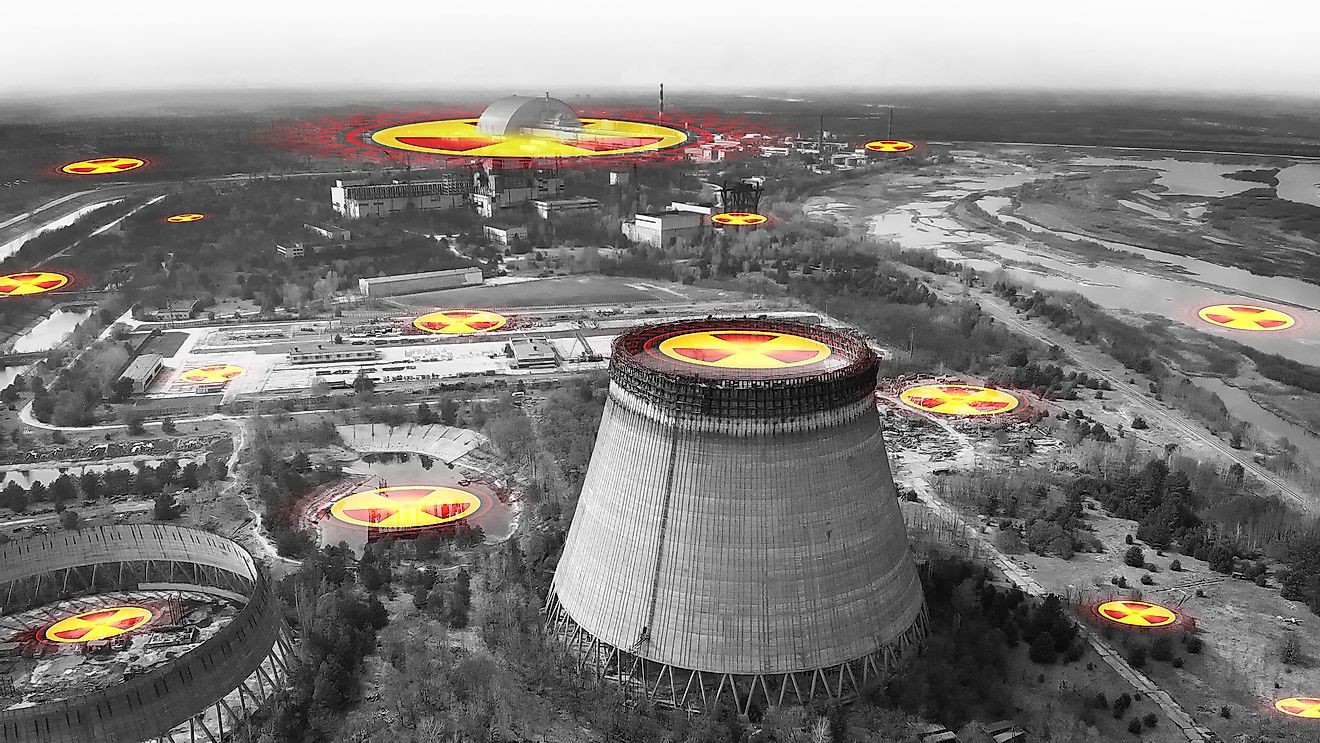
Chernobyl’s Blown Up Reactor 4 Just Woke Up. Scientists don’t understand why. https://historyofyesterday.com/chernobyls-blown-up-reactor-4-just-woke-up-74bedd5fc92d—
Andrei Tapalaga
The nuclear disaster that occurred in 1986 will forever be remembered, but the world will soon have a reminder of the event as the zone for some reason (yet unexplained by scientists)is becoming more radioactive. For those who may not be aware of the incident here is an article to get you up to speed.
“Chernobyl will never be a problem”
Underneath reactor 4 there is still nuclear fuel that is active and which will take around 20,000 years for it to deplete. The uranium is too radioactive for anyone to live in the city and since the incident, the European Union had created a shield around the reactor which should not allow for the radioactive rays to come out.Chernobyl officials presumed any criticality risk would fade when the massive New Safe Confinement (NSC) was slid over the Shelter in November 2016.”
“The €1.5 billion structure was meant to seal off the Shelter so it could be stabilized and eventually dismantled.”
However, many other parts around Chernobyl have also been affected due to prolonged exposure, some more than others, and many of them have not been contained as they were not presenting any major radioactive activity until now. Neil Hyatt, a nuclear chemist from the University of Sheffield had mentioned that there is a possibility for the uranium fuel to reignite on its own.
Hyatt also offered a simple explanation on how this is possible, just like charcoal can reignite in a barbeque, so can nuclear materials that have once been ignited. He as well as a handful of nuclear chemists have mentioned previously the possibility of the uranium from Chernobyl to reignite, but the scientists from Ukraine that are responsible for managing the nuclear activity within the vicinity never really listened, until now.
Scientists from Ukraine have placed many sensors around reactor 4 that constantly monitor the level of radioactivity. Recently those sensors have detected a constant increase in the level of radioactivity. It seems that this radioactivity is coming from an unreachable chamber from underneath reactor 4 that has been blocked since the night of the explosion on the 26th of April, 1986.
What could be causing this?
The experts from Ukraine don’t really understand why this is happening although they do have a hypothesis. Water is used to start the fission process within nuclear materials, this makes the nuclear material release energy that within a nuclear reactor can be maintained under control, but in this instance, the experts are afraid they will not be able to control it.
Another hypothesis is that since reactor 4 has been completely shielded, no water from the rain was able to reach the nuclear fuel. The water from rain may have been what kept the nuclear material under control. With no water, the nuclear fuel may be at risk of overheating, leading to another nuclear disaster.
There may be another reason for this constant increase in radioactivity, what has been mentioned above are only hypotheses, maybe something totally different is occurring under reactor 4 or within the nuclear material left inside. This is something that definitely should ring some alarm bells in order to prepare for the worst sort of situation and hopefully the world’s smartest in the field of nuclear chemistry can come together to identify the problem and come up with a potential solution.
Sources:…………
AUKUS military agreement – bad timing ahead of Glascow Climate Summit.

The timing of the new defence deal between the US, UK and Australia has dismayed climate experts, who fear it could have a negative effect on hopes of a deal with China on greenhouse gas emissions ahead of vital UN climate talks.
The Aukus trilateral security partnership has been interpreted as seeking to counterbalance Chinese power in the Asia-Pacific region, and has been likened to a new cold war by China. A Chinese foreign ministry spokesperson warned the three countries to “respect regional people’s aspiration and do more that is conducive to regional peace and stability
and development – otherwise they will only end up hurting their own interests”.
Tom Burke, founder of the E3G environmental thinktank, said: “This [Aukus announcement] is bad timing ahead of Cop26, as Glasgow is time-critical and it’s hard to see what was critical about the timing of this announcement. It does not appear to suggest that the prime minister is taking Glasgow very seriously. And it exposes the fact that he has not gotmuch to offer ahead of Glasgow.”
Guardian 16th Sept 2021
Fission reactions have been spiking in an inaccessible Chernobyl chamber since 2016 – possibility of a runaway nuclear reaction
Chernobyl Alert and The Doomsday Clock The Conversation, BY ROBERT HUNZIKER 21 May 21, Like the mythical Phoenix, Chernobyl rises from the ashes.
A recent… “Surge in fission reactions in an inaccessible chamber within the complex” is alarming scientists that monitor the ruins of the Chernobyl Nuclear Power Plant in Ukraine. (Source: Nuclear Reactions at Chernobyl are Spiking in an Inaccessible Chamber, NewScientist, May 11, 2021).
It is known that this significant renewal of fission activity is located in Sub-Reactor Room 305/2, which contains large amounts of fissile material from the initial meltdown. The explosion brought down walls of the facility amongst tons of fissile material within the reactor as extreme heat melted reactor wall concrete and steel combined with sand used to control the explosion to form a lava-like intensely radioactive substance that oozed into lower floors, e.g., Room 305/2. That room is so deadly radioactive that it is inaccessible by humans or robots for the past 35 years.
Since 2016, neutron emissions from Room 305/2 have been spiking and increased by 40% over the past 5 years. It signals a growing nuclear fission reaction in the room. According to Neil Hyatt/University of Sheffield-UK: “Our estimation of fissile material in that room means that we can be fairly confident that you’re not going to get such rapid release of nuclear energy that you have an explosion. But we don’t know for sure… it’s cause for concern but not alarm,” Ibid.
If it is deemed necessary to intervene, it’ll require robotically drilling into Room 305/2 and spraying the highly radioactive blob with a fluid that contains gadolinium nitrate, which is supposed to soak up excess neutrons and choke the fission reaction. Meanwhile, time will tell whether the monster of the deep in Room 305/2 settles down on its own or requires human interaction via the eyes and arms of a robot, which may not survive the intense radioactivity. Then what?
Meanwhile, an enormous steel sarcophagus, a $1.8bn protective confinement shelter, the New Safe Confinement (NCS) was built in 2019 to hopefully prevent the release of radioactive contamination. NCS is the largest land-based object ever moved, nine years construction in Italy delivered via 2,500 trucks and 18 ships. It is expected to last for 100 years. Thenceforth, who knows?
Nevertheless, according to nuclear professionals, the question arises whether this recent fission activity will stabilize or will it necessitate a dangerously difficult intervention to somehow stop a runaway nuclear reaction.
Inescapably, the bane of nuclear power, once dangerously out of control, remains dangerously out of control, forever and on it goes, beyond human time. Unfortunately, one nuclear accident is equivalent to untold numbers, likely thousands, of non-nuclear accidents.
“We thus drift toward unparalleled catastrophe.” (Albert Einstein) https://www.counterpunch.org/2021/05/21/chernobyl-alert-and-the-doomsday-clock/
Chernobyl nuclear tomb will eventually collapse. Sellafield, too, will need £132 billion, at least, to decommission.

LADBible 15th May 2021, A scientist has warned that Chernobyl nuclear power plant must be dismantled in the next 100 years or else it will collapse.
Professor Neil Hyatt is the Royal Academy of Engineering and Nuclear Decommissioning Authority’s research chair in radioactive waste management. Speaking to LADbible about recent developments that nuclear reactions had been detected from deep within the mummified plant – 35 years after its core exploded in what is widely viewed as history’s worst nuclear disaster – he says it’s time to act.
“If we don’t take it down, it’s going to fall down,” says Professor Hyatt, who teaches at Sheffield University. “The original shelter was built as a temporary facility to stabilise a situation and the New Safe Confinement is essentially the same thing – to buy us time. [But] it only buys us around 100 years or so.
“If you think about nuclear decommissioning, which I do all the time, look at the projects that are going on around the world. “There’s the Sellafield site in the UK – that’s one hundred years to decommission the Sellafield site at a cost of £132 billion, at least. “That probably tells you it’s going to take at least 50 years, if we started today, probably at a cost of about £900 million, to decommission Chernobyl.
“These are orders of magnitude, and the reason is because we still don’t know everything we need to know to decommission it, about the material inside.” He adds: “If we don’t take it down, it’s gonna collapse eventually. If you’ve bought yourself 100 years, you really need to start cracking on with the dismantling – probably in the next 20 years.
Human intervention may be required at Chernobyl as radiation levels spike
Unilad 13th May 2021, Scientists monitoring increased radiation levels at Chernobyl Nuclear Power Plant are considering whether human intervention may be required to prevent a further catastrophe.
It was reported last week that sensors in one of the basement rooms containing solidified fuel (FCMs) from the remains of the destroyed nuclear reactor had been picking up increased levels of neutrons over the past four years, signalling the nuclear fission process has restarted. Nuclear scientists monitoring the activity say they aren’t
sure why the reactions are increasing, and they can’t rule out the possibility of an accident should levels continue to rise. Now, authorities are working to figure out a solution.
Nuclear fission reactions are happening at Chernobyl again
Nuclear Fission Reactions Are Happening at Chernobyl Again
Scientists are scrambling to neutralize the threat. Popular Mechanics, BY CAROLINE DELBERT, MAY 10, 2021
- A melted amalgam of nuclear fuel at Chernobyl is beginning to react.
- The issue is rainwater, which has activated materials buried deep within the closed plant.
- The reaction could burn out naturally, but it could also require human intervention.
On April 26, 1986, Reactor No. 4 exploded at the Chernobyl Nuclear Power Plant in Ukraine, causing the worst nuclear accident in history. Now, thirty-five years later, smoldering nuclear “embers” are still buried within Chernobyl site, raising questions about just what might happen there—and what’s at stake.
Ukrainian scientists recently realized that leftover nuclear fission fuel made of uranium has begun reacting again in an “inaccessible room” deep within a damaged area of the shuttered plant. The telltale sign is increased readings of neutron activity—a measurable byproduct of nuclear fission, according to the scientists from Institute for Safety Problems of Nuclear Power Plants (ISPNPP) in Kyiv, Ukraine, who held discussions about dismantling the reactor last month, according to Science magazine.
- Chernobyl Nuclear Power Plant is surrounded by a massive megastructure called Chernobyl New Safe Confinement (NSC). At NSC, there are hundreds of sensors working around the clock to monitor factors like air quality, and the sensors have detected increased neutron activity near the fallen reactor hall where the “embers” are.
- Some zones within the NSC are fully sealed off in their own sarcophagus-like structure called the Shelter—including the reactor hall where scientists have noticed the increasing neutrons. That means tough questions about what the best course of action is.Inside the reactor hall, everything is a dangerous mess.
- Science’s Richard Stone reports:
- “When [the] reactor’s core melted down, uranium fuel rods, their zirconium cladding, graphite control rods, and sand dumped on the core to try to extinguish the fire melted together into a lava. It flowed into the reactor hall’s basement rooms and hardened into formations called fuel-containing materials (FCMs), which are laden with about 170 tons of irradiated uranium—95 [percent] of the original fuel.”
It’s important to note that experts don’t fear a second Chernobyl disaster, as there isn’t enough viable material or surrounding collateral for that kind of threat or damage. But the right kind of small nuclear activity could bring down the Shelter itself, which is 34 years old and “rickety.”
Scientists believe rainwater leakage has caused similar higher neutron readings in the past, and they’ve since installed special chemical sprinklers that can stanch neutrons in most of the interior of the Shelter. But some basement rooms are just out of reach even for the sprinklers………. https://www.popularmechanics.com/science/energy/a36364988/chernobyl-nuclear-reactions/
Ukraine’s nuclear industry in crisis – corrupt, unsafe, with politicised decision-making

Could Ukraine’s nuclear industry face another Chernobyl?
Thirty-five years after the disaster, the nuclear industry is Ukraine’s most reliable economic lifeline. But critics say it faces a perennial crisis caused by corruption, safety problems and politicised decision-making. Aljazeera, By
Mansur Mirovalev, 26 Apr 2021 ”…………………. The nuclear industry remains Ukraine’s most reliable economic lifeline.
But domestic and international critics claim that the industry faces a perennial crisis caused by corruption; safety problems with ageing, worn reactors; disruption of ties with a Russian nuclear monopoly; and a politicised switch to US-made nuclear fuel.
Industry insiders, environmentalists and politicians claim that the construction of a spent fuel storage facility near the capital, Kyiv, and the proximity of Europe’s largest nuclear station in the southern city of Zaporizhzhia to Europe’s hottest armed conflict add to their concerns about the possibility of a nuclear incident, particularly in a nation that went through two popular uprisings since 2005 and lost a chunk of its territory to Russia.
……….. uranium dioxide sealed in zirconium alloy tubes in the rods emits radiation that has to be contained in hermetically sealed reactors. Ukraine’s Soviet-designed rods are hexagonal, resembling bee cells, while Western-made rods are square.
The switch is far from simple – but necessary, because Rosatom, Russia’s nuclear monopoly that charged Ukraine hundreds of millions of dollars a year, is controlled by the Kremlin. And the Kremlin has a well-known proclivity to use energy supplies as a political cudgel.
The switch to Westinghouse fuel is potentially dangerous,” Oskar Njaa, the Russia and Eastern Europe adviser for Bellona, a Norway-based nuclear industry monitor, told Al Jazeera.
In 2012, Westinghouse fuel rods had to be removed from the South Ukrainian power station after protective envelopes in two reactors were damaged.
Ukraine asked Rosatom for fuel and help – prompting Russian President Vladimir Putin to remark gloatingly that Rosatom experts had “to solve complex technical problems, take [the Westinghouse fuel] out and load the Russian fuel back in”.
Ukraine’s losses amounted to $175 million, Mikhail Gashev, Ukraine’s top nuclear safety inspector at the time, claimed – and banned the use of Westinghouse fuel.
Ukrainian experts doubted his assessment, and his decision was overturned after he was fired among hundreds of pro-Russian officials following Ukraine’s second anti-Russian popular uprising, the 2014 Revolution of Dignity.
Former Prime Minister Nikolay Azarov, another pro-Russian political figure who fled Ukraine after the revolt, said in 2017 that the decision was made “in spite of Ukraine’s security interests”.
Westinghouse modified the rods – and no further incidents were reported.
“That might be a sign of a better culture for safety and security in the industry,” Njaa said adding that his group is, however, “worried that incidents might become more severe and greater in numbers due to the ageing equipment at the plants.”………
Apart from the fuel, observers are also concerned about Ukraine’s ageing, worn reactors, 12 of which began operating in the 1980s and were supposed to be shut down in 2020. But Energoatom extended their lifespan spending hundreds of millions on each, thanks largely to loans from the European Union.
This is a common practice worldwide – the average lifespan of almost 100 nuclear reactors in the US is 40 years, and 88 have been approved for another 20 years. But some experts are worried about the safety measures and upgrades.
“What we witness every time a decision [to extend the lifespan] is made, some of the safety upgrades have either not been made or have not been made in full,” Iryna Holovko, the Ukraine coordinator for Bankwatch, a Prague-based environmentalist group, told Al Jazeera.
Bankwatch has for years been urging Ukraine to stop extending the lifespan of its “zombie reactors” without correcting “safety deviations” and detailed assessments of all the environmental risks for the people living around the stations and in neighbouring nations……….
The fuel switch brought about another problem; unlike Rosatom, Westinghouse does not take the spent fuel back for processing or storage.
Until December, Ukraine had two pretty problematic storage facilities – and an unfinished third one. One at the shut-down Chernobyl station is almost full. At the second one, an open-air yard outside the Zaporizhzhia nuclear plant, thousands of spent fuel rods are stored in ventilated concrete containers. In 2014, the plant was about 200 kilometres (125 miles) southwest of the front line of the separatist conflict.
The sight was horrifying to a visiting expert.
“I suddenly stood in front of the utterly unprotected interim storage,” Patricia Lorenz of Friends of the Earth, an environmentalist group that visited the plant on a fact-finding mission in 2014, told Al Jazeera. “It is basically unprotected against war and terrorism, while the front was close by back then.”
In May 2014, the station’s security and police turned away dozens of armed and masked far-right nationalists who tried to enter the plant to “protect” the station from the separatists.
Since then, the front line has moved eastward, and in December, Energoatom opened a third facility a mere 70 kilometres (43 miles) north of Kyiv, in the Chernobyl exclusion zone that is scheduled to receive the first batch of spent fuel in June.
But plans to transport spent fuel via Kyiv, the city of more than two million, drew sharp criticism.
“This will be happening in a country where everything turns upside-down, collides, explodes, and where lawlessness rules,” Kyiv-based environmentalist Vladimir Boreiko told reporters……………. https://www.aljazeera.com/features/2021/4/26/does-ukraines-nuclear-industry-face-another-chernobyl
1 This Month



26 September – International Day for the Total Elimination of Nuclear Weapons


PLEASE OPPOSE HR 8255 AND S.3639 – bills would accelerate satellite deployment, with no environmental review or safeguards – https://ncstd5li.quorum.us/campaign/169331/
To see nuclear-related stories in greater depth and intensity – go to https://nuclearinformation.wordpress.com
-
Archives
- September 2026 (257)
- August 2026 (330)
- July 2026 (355)
- June 2026 (287)
- May 2026 (306)
- April 2026 (356)
- March 2026 (251)
- February 2026 (267)
- January 2026 (308)
- December 2025 (358)
- November 2025 (359)
- October 2025 (375)
-
Categories
- 1
- 1 NUCLEAR ISSUES
- business and costs
- climate change
- culture and arts
- ENERGY
- environment
- health
- history
- indigenous issues
- Legal
- marketing of nuclear
- media
- opposition to nuclear
- PERSONAL STORIES
- politics
- politics international
- Religion and ethics
- safety
- secrets,lies and civil liberties
- spinbuster
- technology
- Uranium
- wastes
- weapons and war
- Women
- 2 WORLD
- ACTION
- AFRICA
- Atrocities
- AUSTRALIA
- Christina's notes
- Christina's themes
- culture and arts
- Events
- Fuk 2022
- Fuk 2023
- Fukushima 2017
- Fukushima 2018
- fukushima 2019
- Fukushima 2020
- Fukushima 2021
- general
- global warming
- Humour (God we need it)
- Nuclear
- RARE EARTHS
- Reference
- resources – print
- Resources -audiovicual
- Weekly Newsletter
- World
- World Nuclear
- YouTube
-
RSS
Entries RSS
Comments RSS
 nuclear-news