Is Russia’s Putin gambling with the safety of Ukraine’s nuclear stations?
Russia and Ukraine have traded blame, accusing one another of imperilling the Zaporizhzhia nuclear power plant.
Aljazeera, By Mansur Mirovalev, 6 Oct 2025
Kyiv, Ukraine – On October 2, Russian President Vladimir Putin alleged that Ukrainian attacks had destroyed a high-voltage transmission line between the Moscow-occupied Zaporizhzhia nuclear power plant in southeastern Ukraine and Kyiv-controlled areas.
Days earlier, Ukraine’s leader, President Volodymyr Zelenskyy, said Russian shelling had cut the plant off from the electricity network.
The mammoth, six-reactor plant – Europe’s largest and known in Ukraine as the ZAES – sits less than 10km (6.2 miles) south of the front line. It has been shut since 2022, generating none of the electricity that once provided up to a fifth of Ukraine’s needs.
But dozens of Moscow-deployed engineers have frantically tried to restart it – so far unsuccessfully. Ukraine has long feared that Russia is trying to connect the power grid and quench a thirst for energy in Crimea and other occupied areas.
Putin purported that the alleged Ukrainian strikes caused a blackout at the plant and that it had to be fuelled by diesel generators.
The latest blackout at the plant is the longest wartime outage of power.
“On the [Ukrainian] side, people should understand that if they play so dangerously, they have an operating nuclear power station on their side,” Putin told a forum in St Petersburg.
‘The radioactivity is so powerful’
In fact, apart from the Zaporizhzhia nuclear plant, Ukraine has three operating power stations – as well as the shutdown Chornobyl facility, the site of one of the world’s worst nuclear disasters.
“And what prevents us from mirroring [Ukraine’s alleged actions] in response? Let them think about it,” Putin said.
His threat had apparently already been fulfilled a day earlier. Ukraine accused Russia of shelling that damaged the power supply to the colossal protective “sarcophagus” over the Chornobyl station’s Reactor Four that exploded in 1986.
Both the Chornobyl station and the plant in Zaporizhzhia need electricity for their safety systems and, most importantly, for the uninterrupted circulation of water that cools nuclear fuel.
The fuel, thousands of uranium rods that keep emitting heat, are too radioactive to be taken anywhere else.
In Chornobyl, the fuel is spent and submerged in cooling ponds or “dry-stored” in ventilated, secured facilities.
But at the Zaporizhzhia site, the rods are still inside the reactors – and are newer, hotter, and made in the United States…………………………………………………………………………………
The biggest problem is Russia’s failure to hook the plant to the energy grid of occupied regions as Ukrainian forces pin-pointedly destroy the transmission lines Russia is building – along with fuel depots and thermal power stations, he said.
“The Russians are restoring them any way they can, but Ukrainian forces very much prevent the restoration,” the engineer quipped.
Bellona, a Norway-based nuclear monitor, said on October 2 that a “greater danger lies in Moscow’s potential use of the crisis to justify reconnecting the plant to its own grid – portraying itself as the saviour preventing a nuclear disaster”.
Should Moscow do that, the step would only “worsen [the] strategic situation, give Moscow additional leverage, and bring a potential restart closer – a move that, amid ongoing fighting, would itself sharply increase the risk of a nuclear accident,” it said.
Analysts pointed to a deal proposed by US President Donald Trump in March to transfer the plant to US management as a possible solution.
Ukrainian strikes “will go on until Russia makes a peace deal that also includes US control over the ZAES and its operation”, Nikolay Mitrokhin, a researcher with Germany’s University of Bremen, told Al Jazeera.
Meanwhile, in recent weeks, blackouts in Crimea have become unpredictable and distressing, a Crimea local told Al Jazeera…………..
Russia understands that improved power supply is a prerequisite for its efforts to restore occupied Ukrainian regions and conquer more Ukrainian land, said an observer.
Moscow needs the plant to “cover the growing [energy] consumption in the region, considering not just occupied Crimea, but also the occupied areas [above the Sea of] Azov. And also within the context of Russia’s plan to occupy part of the Zaporizhia region,” Kyiv-based analyst Aleksey Kushch told Al Jazeera.
Greenpeace said that its detailed analysis of high-resolution satellite images taken after what Putin alleged were Ukrainian strikes showed that he was bluffing.
“There is no evidence of any military strikes in the area surrounding the pylons and network of power lines in this part of Zaporizhzhia nuclear power plant,” the international environmentalist group said on October 1.
The images showed that the power towers remained in position and there were no craters left by explosions around the lines, it said.
Greenpeace concluded that the blackout at the plant is “a deliberate act of sabotage by Russia” whose aim is to “permanently disconnect the plant from the Ukraine grid and connect the nuclear plant to the grid occupied by Russia”. https://www.aljazeera.com/news/2025/10/6/is-russias-putin-gambling-with-the-safety-of-ukraines-nuclear-stations
Nuclear disaster fears as expert highlights ‘fragile’ Zaporizhzhia power plant system

Europe’s largest nuclear plant is on the brink of disaster if total power loss is achieved, with experts saying that it is a fragile situation that needs monitoring
Ciaran McGrath and Zesha Saleem, 04 Oct 2025, https://www.dailystar.co.uk/news/world-news/nuclear-disaster-fears-expert-highlights-36013152
A nuclear plant faces the risk of meltdown from it’s longest blackout since 2022, with experts cautioning about a single power line’s dangerous vulnerability. Ukraine’s Zaporizhzhia nuclear plant lost its last connection to the external grid on September 23.
This makes it the 10th outage since the war began, according to the International Atomic Energy Agency (IAEA). Since Friday, the plant’s six reactors were inactive as it remained in a cold shutdown, but it still needs regular electricity to keep cooling systems on for spent nuclear fuel.
The scenario was described as “clearly not sustainable in terms of nuclear safety” by AEA Director General Rafael Grossi during talks between Ukrainian and Russian officials this week.
Nickolas Roth of the Nuclear Threat Initiative think tank highlighted the fragility of the plant’s power infrastructure.
He told Express.co.uk : “For much of this year, the site has relied on a single functioning transmission line instead of multiple redundant connections.
“That creates a single point of failure: if that one line goes down, the plant loses the electricity needed to keep cooling and safety systems operating.”
The shutdown has been due to fighting near the location, with Ukraine accusing Russian forces of shelling the last remaining 750 kV power line. On Wednesday, a Greenpeace satellite investigation uncovered no major damage to the line, fuelling speculation of sabotage.
Moscow denied the claims. Kremlin spokesman Dmitry Peskov described them as “stupid” and emphasised that Russia would not target a facility under its control. ZNPP is Europe’s largest nuclear plant, and was captured by Russian forces in March 2022 and formally annexed by Moscow following disputed referendums later that year.
While it doesn’t generate electricity, it holds tons of spent fuel that must remain submerged in water to prevent overheating.
Mr Roth explained the risks involved if there was a total power loss. He said: “A complete loss of power could lead to fuel overheating if cooling systems fail.”
He added that governments need to “develop plans to ensure the continuity of nuclear security operations during major crises,” including regular exercises practicing extended external threats.
Ukrainian nuclear safety official Dmytro Gumeniuk said: “The fact that it is running on diesel generators already represents a risk. Even if they are refuelled, this is still not a typical situation. Generators can fail, and they must be constantly monitored.”
Under Russian occupation, IAEA access to ZNPP has been restricted, which makes oversight difficult to achieve. The expert added that commitment to IAEA’s five principles on nuclear safety is important.
He said: “The plant should not be used to store or base heavy weapons or military personnel that could be employed for attacks. Off-site power must not be put at risk, and every effort should be made to ensure its availability and security at all times.
“First and foremost, Ukrainian reactor operators must be able to manage the plant without fearing for their lives and the lives of their families. They need safe working conditions and clear lines of communication with their national regulator.”
Right-wing Czech politician who promised to cut aid to Ukraine takes lead in parliamentary election .
The right-wing party of agriculture billionaire Andrej Babis, branded ‘Czech Trump’ by local media, has taken the lead in his country’s parliamentary election.
Partial results were released by the Czech Statistical Office several hours after the polls closed across the central European country of 11 million earlier on Saturday.
With ballots from 20% of voting districts counted, Babis’ opposition ANO (Yes) party was ahead with 39.7% of the vote, followed by the Spolu (Together) group led by Czech Prime Minister Petr Fiala with 19.1%, the agency said.
Babis has been campaigning on a promise to stop Czech military assistance to Kiev, unlike Fiala, who has been a staunch supporter of Ukraine in its conflict with Russia.
The 71-year-old, who served as prime minister between 2017 and 2021, has been particularly critical of Prague’s ammunition initiative for Kiev, calling it “overpriced” and insisting that it should be handled by NATO.
He has spoken out against Ukraine’s membership in the EU, as well as Brussels’ handling of immigration and the Green Deal.
The Western media has warned ahead of the vote that with Hungary and Slovakia already refusing to provide military aid to Kiev and advocating for a diplomatic end to the conflict, Babis’ victory in the Czech Republic could tip Central Europe even further away from Brussels on Ukraine and other key issues.
Leah McGrath Goodman, Tony Blair and issues on torture (with added radiation)


Published by arclight2011- date 15 Sep 2012 -nuclear-news.net
[…]
Accusations: Despite the mockery of the film Borat, leaked U.S. cables suggest the country was undemocratic and used torture in detention
Other dignitaries at the meeting included former Italian Prime Minister and ex-EU Commission President
Romano Prodi. Mr Mittal’s employees in Kazakhstan have accused him of ‘slave labour’ conditions after a series of coal mining accidents between 2004 and 2007 which led to 91 deaths.
[…]
Last week a senior adviser to the Kazakh president said that Mr Blair had opened an office in the capital.Presidential adviser Yermukhamet Yertysbayev said: ‘A large working group is here and, to my knowledge, it has already opened Tony Blair’s permanent office in Astana.’
It was reported last week that Mr Blair had secured an £8 million deal to clean up the image of Kazakhstan.
[…]
Mr Blair also visited Kazakhstan in 2008, and in 2003 Lord Levy went there to help UK firms win contracts.
[…]
Max Keiser talks to investigative journalist and author, Leah McGrath Goodman about her being banned from the UK for reporting on the Jersey sex and murder scandal. They discuss the $5 billion per square mile in laundered money that means Jersey rises, while Switzerland sinks.
http://www.youtube.com/watch?v=gA_aVZrR5NI&feature=player_detailpage#t=749s
And as well as protecting the guilty child sex/torturers/murderers of the island of Jersey I believe that they are also protecting the tax dodgers from any association.. its just good PR!
FORMER Prime Minister Tony Blair was reportedly involved in helping to keep alive the world’s biggest takeover by Jersey-incorporated commodities trader Glencore of mining company Xstrata.
11/September/2012
[…]
Mr Blair was said to have attended a meeting at Claridge’s Hotel in London towards the end of last week which led to the Qatari Sovereign wealth fund supporting a final revised bid from Glencore for its shareholding. Continue reading
Power fully restored to Chernobyl site
The International Atomic Energy Agency says that power was restored on Thursday morning to the New Safe Confinement at Chernobyl Nuclear Power Plant after 16 hours, following damage to a nearby substation. Rafael Mariano Grossi, Director General of the International Atomic Energy Agency (IAEA) said the loss of power to the Chernobyl site “once again underlines risks to nuclear safety during the military conflict”.
World Nuclear News 2nd Oct 202, https://www.world-nuclear-news.org/articles/power-fully-restored-to-chernobyl-site
Danger déjà vu

by beyondnuclearinternational, https://beyondnuclearinternational.org/2025/10/01/danger-deja-vu/
With offsite power cut, peril returns to the Zaporizhzhia nuclear power plant in war-torn Ukraine, writes Linda Pentz Gunter
We have been here before, nine times. External power provided by the grid has been lost, backup diesel generators have been called into duty, and Ukraine and the rest of the world has held its collective breath, hoping we are not about to witness another major nuclear disaster.
This is once again the situation at the six-reactor Zaporizhzhia nuclear power plant (ZNPP) in southeast Ukraine, where for the tenth time external power has been lost. By September 30, that blackout had lasted seven days, the longest such stretch since the plant was first occupied by Russian forces on March 4, 2022, ten days after Russia invaded Ukraine and provoked a war that shows no sign of ending anytime soon.
Alarm is especially high at the Zaporizhzhia site given its size — the largest nuclear power plant in Europe — and enormous radioactive waste inventory of more than 2,000 metric tons. The plant has been embroiled in some of the worst of the fighting and has already suffered previous damage.
Meanwhile, Ukraine’s other nine reactors at three other sites are by no means immune to the dangers of being caught up in an indefinite war zone. In late September, a drone detonated just 875 yards from the perimeter of the South Ukraine three-reactor nuclear power plant. Monitors from the International Atomic Energy Agency (IAEA) said they observed at least 22 drones close to the facility.
“Once again, drones are flying far too close to nuclear power plants, putting nuclear safety at risk,” wrote the IAEA’s director general, Rafael Grossi in a September 25 statement after the drone incident. “Fortunately, last night’s incident did not result in any damage to the South Ukraine Nuclear Power Plant itself. Next time we may not be so lucky.” The IAEA nevertheless continues ardently to promote the use and expansion of nuclear power around the world.
Currently, all six reactors at Zaporizhzhia are in cold shutdown, which means less cooling is needed, but they are by no means out of danger. However, it is unclear how many members of the trained Ukrainian plant staff remain to operate the facility. According to an alarming new investigative report, Seizing Power, prepared by Truth Hounds and supported by Greenpeace Ukraine, numerous personnel have been abducted from the plant, interned and even tortured.
Cold shutdown means that fissioning in the reactors has stopped and the temperature of the reactor cores is below 200 F with the coolant system at atmospheric pressure. But this does not mean that further cooling is no longer required.
The fuel inside the reactors remains hot and requires a steady flow of cooling water which is why power is still needed on the site. Failure to achieve this would mean the fuel rods would heat up the water in the core, causing it to boil away, exposing the rods. This could then lead to fires, which in turn could cause hydrogen explosions of the kind we saw at the Fukushima Daiichi nuclear plant in March 2011. A meltdown is also still possible, although the time it would take to reach such a critical juncture is longer when the reactors are not operating.
The fuel pools, where much of the irradiated fuel is stored, also require continued cooling, although less so than the reactors, and risk the same outcome if cooling stops— a boiling away of the water exposing the rods and leading to a potential fuel pool fire.
The offsite power was being provided by the one still functioning power line into the site. Without it, workers have had to deploy backup diesel generators. There are reportedly 18 of these on site, with seven currently in use. But they cannot provide power indefinitely.
Accessing cooling water has also become more of a challenge. The Kakhovka Dam was destroyed in June 2023 leading to the depletion of the Kakhovka Reservoir, the vital water source for the Zaporizhzhia plant. Indeed, according Seizing Power, “the license to operate the ZNPP was premised on the availability of the Kakhovka Reservoir to supply water to the ZNPP and, in the event of an emergency, to function as a vital heat sink.” Instead, operators have been drilling for groundwater wells on-site in order to keep cooling water flowing into the reactors and the pools.
Of the 2,000 tons of radioactive waste stored on the Zaporizhzhia site, 855 tons are in the fuel pools and the rest in waste fuel casks. There are 200 different radioactive isotopes that could be released in the event of a disaster, an eventuality that could lead to both serious and fatal health consequences for those exposed, as well as longterm contamination of the environment and natural resources.
Such a release would also have a devastating impact on Ukraine’s economy, given the country’s role as a major agricultural exporter. Known as the “breadbasket of Europe,” Ukraine’s agricultural products account for close to 60 percent of all exports, predominantly grains.
And yet, despite the on-going war, “Ukraine’s agricultural exports reached $24.5 billion in 2024, accounting for 59% of the country’s total exports,” according to January 2025 figures from the Ukrainian Agriculture Ministry.
It is a loss Ukraine cannot afford but we have of course seen this very outcome once before, after the April 26, 1986 Chornobyl explosion and meltdown in Ukraine that left lands in much of the former Soviet Union and parts of Europe permanently radioactively contaminated.
Operating a nuclear power plant safely, even in shutdown mode, can be jeopardized by multiple external factors, but how the workforce functions is also key. Both the Three Mile Island and Chornobyl nuclear disasters were the result of human error. When people are working under duress and especially extreme fear, mistakes become more likely.
That makes the revelations in Seizing Power all the more shocking. Researchers compiled their evidence through firsthand accounts from the residents of Enerhodar, the city where the plant is located and which was also captured on March 4, 2022. After resistance to the occupation failed, the report said, “Repression and violence quickly became systematic, targeting territorial defense volunteers, pro-Ukrainian activists, and ZNPP staff who refused to collaborate, among others.”
At least seven detention centers were established, said the report, where at least 226 Enerhodar residents and ZNPP employees were held captive, “subjected to physical and psychological torture to extract information, force confessions, punish dissent, intimidate, and coerce collaboration. Russian forces deprived detainees of food, water, and medical care, contrary to the provisions of international law. Torture, including beatings, electrocution, sexual violence, mock executions, and threats to family members of detainees, became routine.”
Why would either side gamble with such a lethal liability as the safety of a nuclear power plant, given the potentially drastic outcome whose resulting deadly radioactive plume would know no borders? Russia has accused Ukraine of damaging the power lines near the plant. The Ukrainians have in turn suggested the Russians are using the disabling of the plant as a threat to drive them into submission and cede territory in the east. The Russians have already signaled that they intend to use the plant to supply electricity to Russia once it is safe to restart the reactors.
That the war in Ukraine (and others elsewhere) must end, is stating the obvious. Human suffering around the world is already too great and entirely avoidable. Wars involving nuclear power plants ramp up the risks monumentally. But those dangers are also ever present, given nuclear power is inherently dangerous both on good days and bad.
As we watch ever greater militarization occurring here in the United States, with war declared by the White House on our own cities and “the enemy within”; with the abrupt and unlawful detentions and deportations of workers; and with the reckless determination to keep not only our aging nuclear fleet in operation but also to revive already closed and dangerously decrepit reactors; we, too, are one wrong move away from experiencing a nuclear disaster.
IAEA Races to Restore Power at Besieged Zaporizhzhya Nuclear Plant
Oil Price, By RFE/RL staff – Oct 01, 2025,
- Europe’s largest nuclear plant has been disconnected from the grid for over a week and is running on emergency diesel generators, one of which has already failed.
- Ukrainian President Zelenskyy warned of a “threat to everyone” as shelling prevents the repair of damaged power lines.
- IAEA head Rafael Grossi is mediating between Ukraine and Russia to restore offsite power, stressing that prolonged reliance on generators is unsustainable.
…………………………………………………………………………………………………………….https://oilprice.com/Alternative-Energy/Nuclear-Power/IAEA-Races-to-Restore-Power-at-Besieged-Zaporizhzhya-Nuclear-Plant.html
IAEA issues fresh warning over drones near nuclear plants

26 September 2025, https://www.world-nuclear-news.org/articles/iaea-report-drones-downed-close-to-south-ukraine-nuclear-power-plant
The International Atomic Energy Agency has said drones flew within a few hundred metres of the South Ukraine Nuclear Power Plant, underlining the continued risks to nuclear safety from the on-going war. Meanwhile Zaporizhzhia Nuclear Power Plant continues to have to rely on emergency diesel generators after a loss of off-site power.
International Atomic Energy Agency (IAEA) experts stationed at the three-unit South Ukraine nuclear power plant were told that 22 unmanned aerial vehicles were observed on Wednesday night and Thursday morning within its monitoring zone, “some coming as close as half a kilometre from the site”, the agency said.
“From their accommodation near the plant, IAEA team members heard gunfire and explosions around 01:00 am local time and today (Thursday) they visited the location where one of the drones had come down, observing a crater measuring four square metres at the surface and with a depth of around one metre,” the agency’s statement said.
“Once again drones are flying far too close to nuclear power plants, putting nuclear safety at risk. Fortunately, last night’s incident did not result in any damage to the South Ukraine Nuclear Power Plant itself. Next time we may not be so lucky. I continue to urge both sides to show maximum military restraint around all important nuclear facilities,” IAEA Director General Rafael Mariano Grossi said.
“For more than three and a half years, the IAEA has been doing everything in its power to help prevent a nuclear accident during this devastating war. We will only be able to say that our mission was successful if the war ends without a serious nuclear accident. Our indispensable work is far from finished.”
Meanwhile Zaporizhzhia Nuclear Power Plant has been without external power for more than 48 hours and has been relying on its fleet of emergency diesel generators. The IAEA said “the plant said it has the necessary spare parts and personnel to repair the line once the military situation permits. Ukraine has informed the Agency that it is also prepared to repair damages to a backup power line, when the military situation permits”.
Following the loss of off-site power all 18 available emergency generators started operating, with the number reduced to those required to provide power to the site – seven – helping to preserve the diesel fuel. The IAEA has been told previously that 20 days’ worth of fuel was stored at the site.
Zaporizhzhia Nuclear Power Plant has been under Russian military control since early March 2022 and is on the frontline of Russian and Ukrainian forces.
Safety fears as external power to Zaporizhzhia nuclear plant still out after three days
Guardian, 27 Sept 25 https://www.theguardian.com/world/2025/sep/27/safety-fears-as-external-power-to-zaporizhzhia-nuclear-plant-still-out-after-three-days
Ukrainian officials among those concerned Russia is manufacturing crisis to keep hold of frontline plant
External power to the Russian-occupied Zaporizhzhia nuclear plant has been cut for more than three days, a record outage that has prompted safety concerns over the six-reactor site on the frontline of the Ukraine war.
Emergency generators are being used to power cooling and safety systems after the final power line into the plant was cut on the Russian side at 4.56pm on Tuesday and there is no immediate sign that the line will be reconnected.
Rafael Grossi, the director general of the International Atomic Energy Agency (IAEA), described the situation as “deeply concerning” on Wednesday and met Vladimir Putin on Thursday but the situation has continued.
Western experts and Ukrainian officials fear the Kremlin is manufacturing a crisis to consolidate its grip over the plant, which is Europe’s largest, and that Russia is taking high-risk steps to turn on at least one reactor despite the wartime conditions.
“Russia is using the nuclear power station as a bargaining chip,” said one Ukrainian government official, while a specialist at Greenpeace said the Russian occupation had entered “a new critical and potentially catastrophic phase”.
Stress tests by European regulators after the 2011 Japanese reactor disaster at Fukushima indicated that a nuclear plant should be able to operate without external power for 72 hours. Going beyond that time limit is untried, Ukrainian sources said.
Russia seized the Zaporizhzhia nuclear plant in March 2022 and its reactors, once capable of powering 4m homes, were put into cold shutdown for safety.
Ukraine regards the nuclear plant as its own but the plant has cropped up in negotiations between Donald Trump and Putin. Trump has tried to suggest the US should to take control, while the Kremlin has said it wants to restart all the reactors and connect them to the Russian grid – a task considered feasible only during peacetime.
External power has been lost at Zaporizhzhia nine times before. On each occasion the damage was done in Ukrainian-held territory by Russian forces striking energy infrastructure across the Dnipro. The final 750-kilovolt electricity line had run across the river, with Ukraine willing to supply energy to maintain safety.
On Tuesday the line was damaged on the Russian side, about a mile from the plant. The plant’s Russian operators said repair efforts were “complicated by ongoing shelling by the Ukrainian armed forces”, though Ukraine says it never fires at or around the plant, arguing it would be unacceptably risky.
The IAEA said it had been told by the Russian operators that there was enough diesel to power the generators for 20 days without fuel resupply. But Grossi said loss of external power “increases the likelihood of a nuclear accident”.
Seven out of 18 available generators are powering cooling on site but if they were to fail, Ukrainian sources said, there would be a risk that the nuclear fuel in the six reactors would heat uncontrollably over a period of weeks, leading to a meltdown.
An accelerated version of this scenario happened at Fukushima because the reactors had just been operating. A 9.0-magnitude earthquake struck Japan and the hot reactors on the site were automatically shut down in response. Emergency generators continued to pump cooling water around the reactor but these were knocked out by a tsunami that followed minutes later. Three nuclear cores at the plant melted down within three days, though the fuel remained contained. Nobody was killed [?] but more than 100,000 were evacuated.
Trump Claims Ukraine Can Retake All Territory Captured by Russia, May Be Able to ‘Go Further’

So much for Trump’s promise to bring peace to Ukraine “in 24 hours”
So much for the push to give Trump the Nobel Peace Prize
Worst – Trump does not understand that (a) Russia is winning this war, and (b) Putin would use nuclear weapons if he thought that Russia really was threatened by NATO
The comments reflect the opinion of Trump’s special envoy to Ukraine, Keith Kellogg
by Dave DeCamp | September 23, 2025, https://news.antiwar.com/2025/09/23/trump-claims-ukraine-can-retake-all-territory-captured-by-russia-may-be-able-to-go-further/
President Trump claimed on Tuesday that Ukraine could retake all of the territory Russian forces have captured since the February 2022 invasion and may be able to “go further,” suggesting he’s willing to back the idea of a Ukrainian invasion of Russia.
“After getting to know and fully understand the Ukraine/Russia Military and Economic situation and, after seeing the Economic trouble it is causing Russia, I think Ukraine, with the support of the European Union, is in a position to fight and WIN all of Ukraine back in its original form,” the president said in a long post on Truth Social.
“With time, patience, and the financial support of Europe and, in particular, NATO, the original Borders from where this War started, is very much an option. Why not? Russia has been fighting aimlessly for three and a half years a War that should have taken a Real Military Power less than a week to win,” the president added.
Trump said that Russia looked like a “paper tiger” and that Ukraine was “getting better.” His comments reflect the opinion of his special envoy for Ukraine, Keith Kellogg, who recently claimed the US could “kick Russia’s ass” and insisted Ukraine could win the war despite Russia’s continued gains in eastern Ukraine and its clear manpower advantage.
Trump said in his post that Ukraine could “be able to take back their Country in its original form and, who knows, maybe even go further than that!” The president also claimed that Russia and Putin were in “big” economic trouble, though there’s no sign that threats of new US sanctions or tariffs will have any impact on the war.
“In any event, I wish both Countries well. We will continue to supply weapons to NATO for NATO to do what they want with them. Good luck to all!” the president said at the conclusion of his post.
Trump’s comment that the US will continue to supply “weapons to NATO” refers to the new initiative under which US allies are providing the funds for US weapons that will be shipped to Ukraine. Reuters reported last week that the Trump administration approved the first weapons packages that will be drawn from US military stockpiles under the initiative, known as the Prioritized Ukraine Requirements List (PURL).
Trump has justified his continued support for the proxy war, which he pledged to end while on the campaign, by pointing to the fact that NATO countries are now funding US weapons shipments. But the US recently approved a cruise missile deal for Ukraine that will be partially funded by the US, and the Trump administration has continued arms shipments that were previously approved by President Biden.
The horrors I’ve seen of Ukrainian, NATO-backed, shelling of completely civilian areas of the Donbass throughout 2022 (and 2019, 2023…)

Eva Karene Bartlett. Sep 23, 2025
September three years ago in Donetsk, in the space of 5 days, Ukrainian deliberate shelling of the very centre of the city killed 26 civilians, most of whose bodies or parts of bodies I saw in the streets or in a burnt out bus. These were 100% non military, purely civilian, areas.
*Warning: Some of the footage is not blurred and shows quite clearly Ukraine’s terrorism of Donetsk, in very central areas of the city, where there are no military targets, only Donetsk civilians. see here – https://odysee.com/@EvaKareneBartlett:9/sept-22-shelling:0 ]
On Monday, Ukraine slaughtered 16 civilians, including two children, with 155mm NATO shells, according to the head of the Donetsk People’s Republic (DPR), Denis Pushilin. The projectiles hit two adjacent neighborhoods, decimating residential and commercial areas – including a market that had previously suffered fatal attacks.
…the carnage on Monday was worse than anything I’ve seen in my months of reporting here. Chunks of flesh littered the street – part of a hand, a foot, an ear. Someone had put a dead man’s phone on his stomach. It was ringing, the cheery ringtone incongruous with his lifeless body and the scenes and stench of death around him.
For most people, the concept of war is a distant one, and deaths are normalized by media reporting the numbers of victims and destroyed buildings – so most who hear of civilians being killed don’t really understand what a scene like this looks or smells like.
For the locals, it is also normalized, in its own way, after over eight years of Ukrainian attacks – a tragically grotesque kind of normality, where the post-bombing routine starts soon after the last explosions die down.
…another Ukrainian assault, which took place on Saturday. The center of Donetsk was hit by around ten bombs over the course of 30 minutes around noon. At least four civilians were killed, one of whom I saw still on the ground. Some minutes later, her body was taken away. One of the shells hit a car driving along Artema Street, setting it ablaze and killing two civilians. By the time I reached that site, the vehicle had burned out, the dead taken away. Workers were already repaving the roads, sweeping debris and glass from sidewalks.
On Thursday, again around noon, Ukraine again shelled central Donetsk, this time next to a busy market. The shelling left six people dead on the street and in a burned out bus. This makes at least 26 civilians killed by Ukrainian shelling, with Western weapons, in the space of just one week.
From my overview of these terror bombings: Western media continues to ignore how Ukraine is using NATO weapons to kill innocent civilians in the Donbass
2022 was a very hard year for the Donbass; this 5 day period I mention in September was just a glimpse into the horrors Donbass civilians endured not only throughout 2022 but since Ukraine began bombing them in 2014, long before Russia commenced its Special Military Operation.
Below is most of what I witnessed throughout 2022 (and also some from 2019, 2023) during & following Ukrainian shelling.
In 2022, in April I went to a market in western Donetsk which had been shelled by Ukraine. Two bodies of the five civilians killed in the market were still lying on the ground. I believe this is because–just like Israel does–Ukraine double strikes the same area, meaning rescuers or anyone who comes to help the wounded or clear the bodies could be shelled and killed.
This was a large and very busy market place in a working class district. I’ve been to such markets, in central Donetsk (also bombed by Ukraine) and near the two Russian areas I’ve lived. They are frequented (and many of the stall run by) by grandmothers, by mothers, by civilians, not military. The only thing “strategic” about shelling them is Ukraine’s blood lust to kill Donbass (Russian) civilians. People I encountered that day told me this wasn’t the first time Ukraine shelled the market or the district, they said the shelling was routine.
[ https://odysee.com/@EvaKareneBartlett:9/ukraine-bombed-a-busy-donetsk-market:2 ]
My article on this Ukrainian bombing: Ukrainian strike on Donetsk market was a terrorist act
On May 5, I went to Kirovsk, a city in the Lugansk People’s Republic to the west of Lugansk, Ukrainian forces only a little further west. Kirovsk and surrounding areas have—like throughout both autonomous Donbass republics—since 2014 been shelled by Ukrainian forces.
Just outside the city of Kirovsk, on an otherwise quiet lane, I saw a home hit by Ukrainian shelling on April 26………………………………………………………………………………………………………………………………………………………………………………………………………………………………………. *At the below link you can find many more of my articles & videos, including from Mariupol when the fighting was still ongoing in Azovstal, and later in Mariupol showing the return of life to the city (2022, 2023, 2024).
With nuclear pact in peril, Trump embraces prolonged war in Ukraine
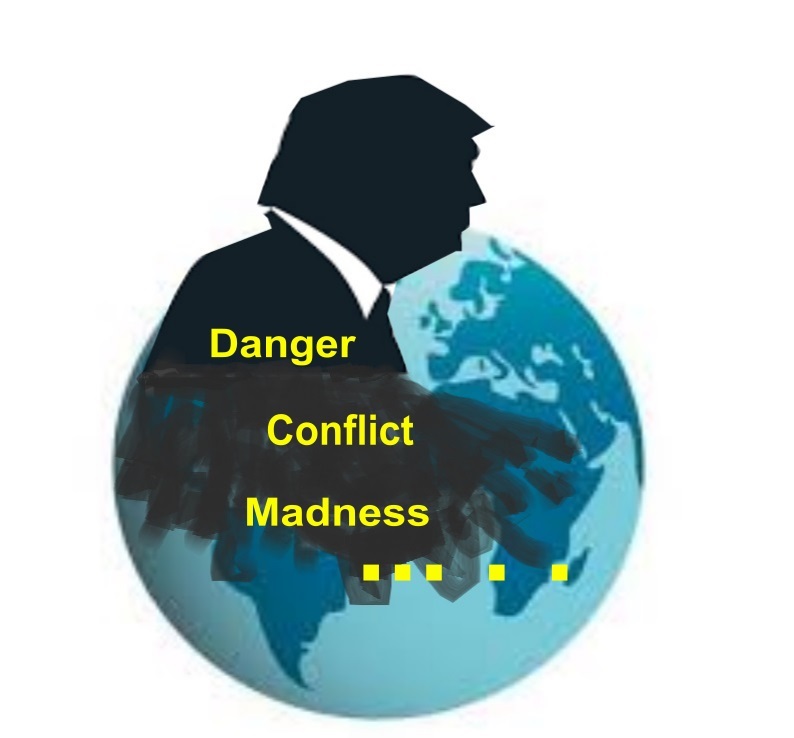
Trump signals that he is no longer invested in ending the Ukraine war. His disinterest in engaging with Moscow could threaten the last nuclear arms control treaty between the US and Russia.
Aaron Maté, Sep 25, 2025
After famously telling Ukrainian counterpart Volodymyr Zelensky that “you don’t have the cards” to defeat Moscow and that territorial concessions are inevitable, President Trump is now singing a different tune.
“I think Ukraine, with the support of the European Union, is in a position to fight and WIN all of Ukraine back in its original form,” Trump wrote on Tuesday. “…We will continue to supply weapons to NATO for NATO to do what they want with them.” The US president also cast doubt on Russia’s military capabilities nearly four years into the invasion. Ukraine “can fight too,” Trump said, “and they’ve proven that maybe it could be that Russia is a paper tiger.”
Zelensky, who has waged a dogged campaign to repair relations with Trump since their White House dust-up in February, welcomed his chief sponsor’s seeming about-face. Trump, the Ukrainian leader said after the two met in New York, “clearly understands the situation and is well-informed about all aspects of this war.”
Yet as all parties to the Ukraine proxy war have learned by now, Trump’s rhetoric tells us very little about how he plans to handle it………………………………………………………………..(Subscribers only)https://www.aaronmate.net/p/with-nuclear-pact-in-peril-trump?utm_source=post-email-title&publication_id=100118&post_id=174489457&utm_campaign=email-post-title&isFreemail=true&r=ln98x&triedRedirect=true&utm_medium=email
Zaporizhzhia nuclear plant loses all off-site power, risking safety
Xinhua 2025-09-24, https://global.chinadaily.com.cn/a/202509/24/WS68d35d8ba3108622abca294f.html
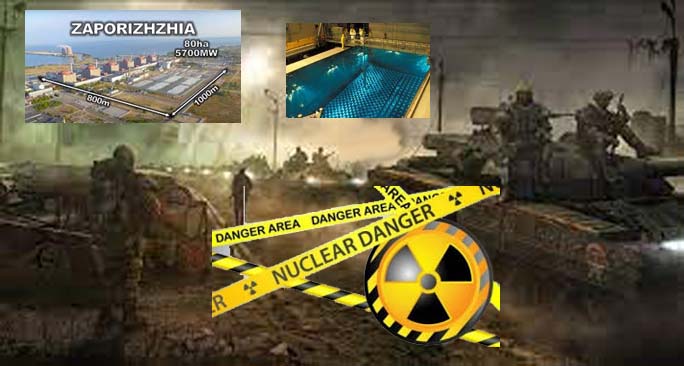
VIENNA – The Zaporizhzhia Nuclear Power Plant lost all off-site power on Tuesday, showcasing persistent risks to nuclear safety, according to a UN nuclear watchdog.
The power loss was the 10th time during the conflict between Russia and Ukraine, the International Atomic Energy Agency said Tuesday on social platform X, adding that its team is investigating the cause of the incident.
The agency’s Director General Rafael Grossi said later that day that emergency diesel generators had started operating to supply the plant with power, citing its team at Zaporizhzhia.
Zaporizhzhia’s six reactors have been in cold shutdown since 2024 but still require cooling water for their reactor cores and spent fuel pools. Before the conflict, it had 10 off-site power lines available.
Canada keeps bankrolling Ukraine’s war crimes
The new prime minister, just like the old one, is handing Kiev the cash much needed at home
Eva Karene Bartlett, September 22, 2025, https://evakarenebartlett.substack.com/p/canada-keeps-bankrolling-ukraines?utm_source=post-email-title&publication_id=3046064&post_id=174317268&utm_campaign=email-post-title&isFreemail=true&r=1ise1&triedRedirect=true&utm_medium=email
Following in the shameful footsteps of both Justin Trudeau and Chrystia Freeland, Canadian Prime Minister Mark Carney continues pledging support and money (which Canadians desperately need) to Ukraine, to prolong the proxy war against Russia.
Carney chose Ukrainian Independence Day to voice the Canadian government’s continued pledge to support Ukraine. As he landed in Kiev on August 24, Carney posted on X, “On this Ukrainian Independence Day, and at this critical moment in their nation’s history, Canada is stepping up our support and our efforts towards a just and lasting peace for Ukraine.”
Later in the day he posted, “After three years at war, Ukrainians urgently need more military equipment. Canada is answering that call, providing $2 billion for drones, armoured vehicles, and other critical resources.” This latest pledge brings Canada’s expenditure on Ukraine since February 2022 to nearly $22 billion.
Further, he pledged to potentially send Canadian or allied soldiers, stating, “I would not exclude the presence of troops.”
Pause for a moment to examine the utter lack of logic behind these statements: For “peace” for Ukraine, Canada will support further war to ensure more Ukrainian men are ripped off the streets and forced to the front lines, where they will inevitably die in a battle they didn’t sign up for.
Like his European counterparts, Carney’s insistence on prolonging the war is in contrast to Russia’s position of finding a resolution.
I recently spoke with former Ambassador Charles Freeman, an American career diplomat for 30 years. Speaking of how the Trump administration, “began in office by perpetuating the blindness and deafness of the Biden administration to what the Russian side in this conflict has said from the very beginning,” he outlined the terms that Russia made clear in December 2021, “and from which it has basically not wavered.”
These include: “neutrality and no NATO membership for Ukraine; protections for the Russian speaking minorities in the former territories of Ukraine; and some broader discussion of European security architecture that reassures Russia that it will not be attacked by the West, and the West that it will not be attacked by Russia.”
It’s worth keeping in mind that Canada has been one of the main belligerents in Ukraine, funding and training Ukrainian troops for many years before the 2022 start of Russia’s military operation.
Canada’s training of Ukrainian troops included members of the notorious neo-Nazi terrorists of the Azov regiment. Former Deputy Prime Minister Chrystia Freeland proudly waved a Banderite flag in 2022. She was also proud of her dear grandfather, who was a chief Nazi propagandist.
In 2023, the Trudeau administration brought to speak in the Canadian parliament a Ukrainian Nazi, Yaroslav Hunka, who had been a voluntary member of the 1st Galician Division of the Waffen SS – well known for their mass slaughter of civilians.
Carney, in light of this, is merely keeping with the tradition of Ottawa’s support of extremism – including Nazism – in Ukraine (and in Canada). This support is not at all about protecting Ukrainian civilians.
Supporting Ukrainian war crimes
Canada’s continued support to Ukraine makes it complicit in the atrocities Ukraine commits. I myself have documented just some of Ukrainian war crimes in the Donbass, in 2019 and heavily throughout 2022.
These include deliberately shelling civilian areas (including with heavy-duty NATO weapons), slaughtering civilians in their homes, in markets, in the streets, in buses; peppering Donbass civilian areas with internationally prohibited PFM-1 “Petal” mines (since 2022, 184 civilians have been maimed by these, three of whom died of their injuries); and deliberately targeting medics and other emergency service rescuers.
Ukraine has also heavily shelled Belgorod and Kursk, targeting civilians, as well sending drones into Russian cities, killing civilians and destroying infrastructure.
Less detailed are Ukraine’s crimes against civilians in areas under Ukrainian control. These crimes – including rape, torture and point-blank assassination – come to light with the testimonies of terrorized civilians in regions liberated by Russia.Bring the government spending home
The social media fervor of Ukrainian hashtags and flags has died down considerably since 2022. Now, you see more and more Canadians demanding their government stop fueling war and start spending money to take care of Canadians.
Carney’s campaign pledges included easing the cost of living in Canada, yet he has taken no concrete actions to do so. In the many understandably angry replies to Carney’s latest tweets about supporting Ukraine, Canadians are demanding accountability.
“Mark Carney stop pretending you’re fighting for “freedom and sovereignty.” You just signed off on $2 BILLION of Canadian money for Ukraine while Canadians can’t even afford rent, food, or heating,” reads one of numerous such replies. “Veterans are abandoned, fentanyl floods our streets, and families collapse under inflation. You stand on foreign soil preaching about democracy while selling out the very people you’re supposed to serve. That’s not leadership that’s betrayal. Canadians never voted for this. You don’t speak for us.”
Scroll through replies to Carney’s Kiev stunt and you’ll find Canadians opposed to the wasting of still more money needed in their home country.
The most glaring hypocrisy is that while Carney wrings his hands over Ukraine, he utterly ignores the ongoing Israeli starvation and genocide of Palestinians in Gaza, supported by the Canadian government.
Three dead after Ukraine bombs Crimea wellness resort – governor
21 Sept 25, https://www.rt.com/russia/625020-15-injured-crimea-ukraine-attack/
Sixteen people have also been injured in the strike, the Russian Defense Ministry has said.
At least three people were killed and sixteen injured by a Ukrainian drone strike on a wellness complex in Crimea on Sunday, the Russian Defense Ministry has said. A school building was also damaged, according to Crimean regional head Sergey Aksyonov.
The Russian Defense Ministry ministry stated that the attack targeted a “resort area of the Republic of Crimea, where there are no military facilities.”
Aksyonov said emergency services were working at the site and urged residents to “remain calm and trust only official information.”
The drone strike led to a fire at a school in the town of Foros, where the sanatorium is located, according to the regional arm of the Russian emergencies ministry. The 80 square meter fire has now been extinguished, it said.
In the peninsula’s largest city, Sevastopol, regional head Mikhail Razvozhaev reported that the Russian Black Sea fleet and air defenses are defending against a Ukrainian drone attack near the city.
“3 drones have been shot down so far,” he said on Telegram on Sunday.
Ukraine has been increasingly turning to long-range drone attacks for strikes inside Russia in recent months as its forces have been beaten back on the battlefield.
The attacks have targeted Russian energy and civilian infrastructure, killing and injuring dozens of civilians. Moscow has long accused Kiev of deliberately going after Russian civilians and often targeting children.
1 This Month

of the week – Shut Down Drone Warfare!


Tell the Ukrainian Government to Drop Prosecution of Peace Activist Yurii Sheliazhenko

Petition to revoke the licensing of the Near Surface Nuclear Disposal Facility (NSDF) at Chalk River. https://www.ourcommons.ca/petitions/en/Petition/Details?Petition=e-7247
To see nuclear-related stories in greater depth and intensity – go to https://nuclearinformation.wordpress.com
-
Archives
- March 2026 (244)
- February 2026 (268)
- January 2026 (308)
- December 2025 (358)
- November 2025 (359)
- October 2025 (376)
- September 2025 (257)
- August 2025 (319)
- July 2025 (230)
- June 2025 (348)
- May 2025 (261)
- April 2025 (305)
-
Categories
- 1
- 1 NUCLEAR ISSUES
- business and costs
- climate change
- culture and arts
- ENERGY
- environment
- health
- history
- indigenous issues
- Legal
- marketing of nuclear
- media
- opposition to nuclear
- PERSONAL STORIES
- politics
- politics international
- Religion and ethics
- safety
- secrets,lies and civil liberties
- spinbuster
- technology
- Uranium
- wastes
- weapons and war
- Women
- 2 WORLD
- ACTION
- AFRICA
- Atrocities
- AUSTRALIA
- Christina's notes
- Christina's themes
- culture and arts
- Events
- Fuk 2022
- Fuk 2023
- Fukushima 2017
- Fukushima 2018
- fukushima 2019
- Fukushima 2020
- Fukushima 2021
- general
- global warming
- Humour (God we need it)
- Nuclear
- RARE EARTHS
- Reference
- resources – print
- Resources -audiovicual
- Weekly Newsletter
- World
- World Nuclear
- YouTube
-
RSS
Entries RSS
Comments RSS
 nuclear-news