Biden hands off Ukraine war to Trump…who now owns it.
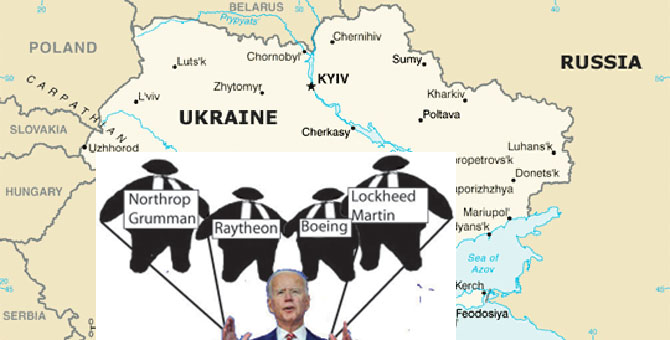
Walt Zlotow, West Suburban Peace Coalition, Glen Ellyn IL, 25 Oct 25
President Biden provoked the Russian invasion of Ukraine for 13 months with reckless NATO expansion before Russia said ‘enough’ and pushed back violently. Biden then spent his last 37 months pouring over $150 billion in military aid which proved worthless in achieving Ukrainian victory. All it did was prolong Ukraine’s suffering with hundreds of thousands dead and wounded in a shattered country.
2024 candidate Trump called out this senseless stupidity for what is was, Biden’s war that Trump wouldn’t have provoked had he won in 2020. He further boasted he’d end it on first day of second term.
Tho Trump largely stopped the direct funding that Biden kept squandering till his last sorrowful day, he’s still selling weapons to the European dead-enders UK, France, Germany and others to gift Ukraine. One day Trump says Ukraine should quit without return of a single lost square mile; next day he claims Ukraine can retrieve it all. One day he ponders sending Ukraine Tomahawk missiles likely to provoke nuclear war; next day he tells Ukraine President Zelensky, who flew 4,867 miles to beg for them…’Faggedaboudit.’
Trump’s got bigger war fish to fry than the lost cause of Ukraine. He’s still supporting Israel’s genocidal ethnic cleansing of Gaza, his fake ceasefire notwithstanding. He’s getting ready to bomb Venezuela, not content with just blasting small, unarmed Venezuelan boats to smithereens. He may be planning another round of air strikes on Iran in his quest at regime change and destabilization there.
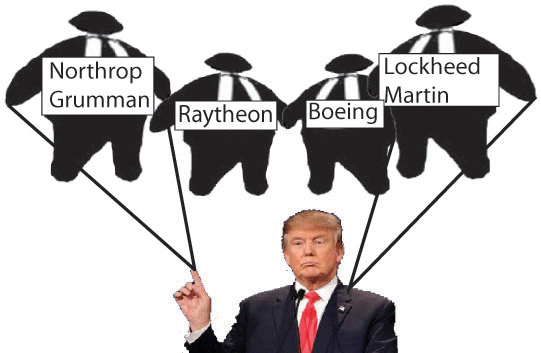
Ukraine will collapse on Trump’ watch. Biden never wavered in support of a war impossible to win. Trump, however, wavered in his boast he would end Biden’s war, allowing it to continue incurring hundreds of thousands more casualties and more lost Ukrainian territory. By so doing, history will record Trump’s ownership of America’s failed proxy war to weaken Russia at the end, as surely as it records Biden’s ownership at the beginning.
European leaders are unable to inflict a strategic defeat on Russia yet unwilling to face the political consequences of peace in Ukraine
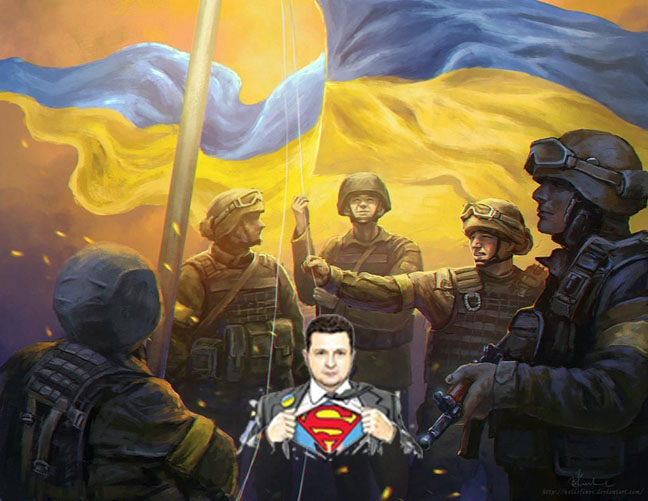
The war in Ukraine is now entirely dependent on the ability of European states to pay for it at a cost of at least $50bn per year
a strong likelihood……….. that three years from now Ukraine would have to settle for a peace that was even more disadvantageous to it than that which is available now
Ian Proud, Oct 22, 2025, https://thepeacemonger.substack.com/p/european-leaders-are-unable-to-inflict?utm_source=post-email-title&publication_id=3221990&post_id=176818542&utm_campaign=email-post-title&isFreemail=true&r=1ise1&triedRedirect=true&utm_medium=email
President Trump’s latest about face on dialogue with Russia doesn’t change the fundamental predicament Europe finds itself in: unable to inflict a strategic defeat on Russia but unwilling to face the political consequences of ending the war in Ukraine.
The Budapest Summit between Trump and Putin is now off, it seems. European leaders and Zelensky have clearly sold the US President on the idea of entering a ceasefire along the current line of contact. Yet, caught between a rock and a hard place, European leaders continue to deny the obvious realities of the dire situation in Ukraine, which will only worsen over time. I see no evidence of any willingness to change course, despite the obvious political hazard they face and the increasingly grim forecast for Europe and for Ukraine should they continue to push an unwinnable war.
The war in Ukraine is now entirely dependent on the ability of European states to pay for it at a cost of at least $50bn per year, on the basis of Ukraine’s latest budget estimate for the 2026 fiscal year. Ukraine itself is bankrupt and has no access to other sources of external capital, beyond that provided by the governments sponsoring the ongoing war.
That then brings the conversation back to the creation of a so-called ‘reconstruction loan’ underwritten by $140bn of the Russian foreign exchange assets currently frozen in Belgium. The term ‘reconstruction loan’ is itself disingenuous, on the basis that any expropriated Russian assets would not be used for reconstruction, but rather to fund the Ukrainian war effort. Indeed. Chancellor Merz of Germany recently suggested that the fund could allow Ukraine to keep fighting for another three years.
The most likely scenario, in the terrible eventuality that war in Ukraine did continue for another three years is that the Russian armed forces would almost certainly swallow up the whole of the Donbass region – comprising Donetsk and Luhansk oblasts. This – Ukraine’s departure from the Donbas – appears to be the basis of President Putin’s conditions for ending the war now, together with a Ukrainian declaration of neutrality and giving up any NATO aspirations. More likely, the Russian Armed forces might also capture additional swathes of land in Zaporizhia and Kherson oblasts, and also in Dnipropetrovsk, where they have made recent incursions.
So, there is a strong likelihood, at the currently slow pace of the war effort in which Russia claims small pieces of land on a weekly basis, that three years from now Ukraine would have to settle for a peace that was even more disadvantageous to it than that which is available now, having lost more land, together with potentially hundreds of thousands of troops killed or injured.
Logically, European policymakers would be able to look into the future to see this grim predicament with clear eyes and encourage Zelensky to settle for peace now.
But European policy is driven by two key considerations. Firstly, an emotional belief that an extended war might so weaken Russia that President Putin was forced to settle on unfavourable terms. The idea of a strategic defeat of Russia – which is often spoken by European politicians – however, doesn’t bear serious scrutiny.
Russia doesn’t face the same considerable social and financial challenges that Ukraine faces. Its population is much larger and a wider conscription of men into the Armed forces has not been needed – Russia can recruit sufficient new soldiers to fight and, indeed, has increased the size of its army since 2022. Ukraine continues to resort to forced mobilisation of men over the age of 25, often using extreme tactics that involve busifying young men against their will from the streets.
Critically, Russia could likely continue to prosecute the war on the current slow tempo for an extended period of time without the need for a wider mobilisation of young men, which may prove politically unpopular for President Putin domestically. Yet, the longer the war continues, Ukraine will come under increasing pressure, including from western allies, to deepen its mobilisation to capture young men below the age of 25 to shore up its heavily depleted armed forces on the front line.
There has been considerable resistance to this so far within Ukraine. Mobilising young men above the age of 22 would prove unpopular for President Zelensky but it would also worsen Ukraine’s already catastrophic demographic challenge: 40% of the working age population has already been lost, either through migration or through death on the front line and that number will continue to go south, the longer the war carries on.
Russia’s financial position is considerably stronger than Ukraine’s. It has very low levels of debt at around 15% of GDP and maintains a healthy current account surplus, despite a narrowing of the balance in the second quarter of 2025. Even if Europe expropriates its frozen assets, Russia still has a generous and growing stock of foreign exchange reserves to draw upon, which recently topped $700bn for the first time.
Russia’s military industrial complex continues to outperform western suppliers in the production of military equipment and munitions. In the currently unlikely event that Russia started to fall into the red in terms of its trade – what commentators in the west refer to as destroying Russia’s war economy – it would still have considerable scope to borrow from non-western lenders, given the strength of its links with the developing world, aided by the emergence of BRICS.
Ukraine is functionally bankrupt because it is unable to borrow from western capital markets, on account of its decision to pause all debt payments. With debt expected to reach 110% in 2025, even before consideration of any loan backed by frozen Russian assets, it depends entirely on handouts from the west. Ukraine’s trade balance has continued to worsen throughout the war, reinforcing its dependence on capital injections from the west to keep its foreign exchange reserves in the black.
So while the determination of Ukraine to fight is unquestionable, the emotional belief in the west that this will overcome the enormous social and economic challenges the country faces in an extended attritional war with Russia is wildly misplaced.
So, let’s look at the rational explanation for Europe’s continued willingness to prolong the fight in Ukraine. The uncomfortable truth is that Europe’s political leaders have boxed themselves into this position because of a hard boiled determination not to concede to Russia’s demands in any peace negotiations. Indeed, there is a steadfast and immovable objection to talking to Russia at all, which has been growing since 2014.
However, across much of Europe, the political arithmetic is turning against the pro-war establishment with nationalist, anti-war parties gaining ground in Central Europe, Germany, France, Britain and even in Poland. And despite so far fruitless overtures made by President Trump towards negotiation with President Putin, Trumpophobia provides another brake on the European political establishment shifting its position.
So, changing course now and entering into direct negotiations with Russia would have potentially catastrophic consequences, politically, for European leaders, which they must surely be aware of. A full 180 degree change in diplomatic course by Europe would require an acceptance that the war against Russia was unwinnable, and that Russia’s underlying concerns – namely Ukrainian neutrality – would finally have to be accepted as a political reality.
On this basis, European politicians would face the prospect of explaining to their increasingly sceptical voters that their strategy of defeating Russia had failed, having spent four years of war saying at all times that it would eventually succeed. And that would lead potentially to internationalist governments falling across Europe starting in two years when Poland and France will again go to the polls, and in 2029 when the British and German governments will face the voters.
There are deeper issues too. An end of war would accelerate the process of admitting Ukraine into the European Union with potentially disastrous consequences for the whole financial basis of Europe. The European Commission will face the prospect of accepting that a two-tier Europe is inevitable, admitting Ukraine as a member without the financial benefits received by existing member states; for probably understandable reasons, this would cause widespread resentment within Ukraine itself, having sacrificed so much blood to become European, precipitating widespread internal dissent and possibly conflict in a disgruntled country with an army of almost one million. Alternatively, the European Commission would need to redraw its budget and face huge resistance from existing Member States, who would lose billions of Euros each year in subsidies to Ukraine. And the truth is that it will in all likelihood be unable to do so.
Caught between hoping for a strategic defeat of Russia which any rational observer can see is unlikely, and accepting the failure of their policy, causing a widespread loss of power and huge economic and political turmoil, Europe’s leaders are choosing to keep calm and carry on. If they had any sense, the likes of Von der Leyen, Merz, Starmer or Macron would change tack and pin their hopes on explaining away their failure before the political tide in Europe evicts them all from power. But I see no signs of them having the political acumen to do that. So we will continue to sit and wait, while storm clouds grow ever darker over Europe.
Ukraine Says It Struck a Chemical Plant Inside Russia With British-Provided Storm Shadow Missiles

The Ukrainian military requires US targeting data to fire Storm Shadow missiles
by Dave DeCamp | October 21, 2025, https://news.antiwar.com/2025/10/21/ukraine-says-it-struck-a-chemical-plant-inside-russia-with-british-provided-storm-shadow-missile/
Ukraine’s military said on Tuesday that it used British-provided Storm Shadow missiles to strike a chemical plant inside Russia’s Bryansk Oblast, signaling the US is again supporting Ukrainian missile strikes on Russian territory.
“A massive combined missile-and-air strike was carried out, including with air-launched Storm Shadow missiles that penetrated Russia’s air defence system,” the General Staff of Ukraine’s Armed Forces said in a statement, according to Reuters. So far, the attack hasn’t been confirmed by Russia.
Storm Shadows are produced jointly by the UK and France and have a range of about 150 miles. Ukraine first began firing them into Russia last year, along with US-provided ATACMS missiles, which can hit targets up to 190 miles away.
In August, The Wall Street Journal reported that the Trump administration was not allowing Ukraine to fire ATACMS into Russia, a policy that also applied to Storm Shadows, since the Ukrainian military requires US targeting data to fire the British missiles. But another report from the outlet this month said that President Trump reversed the policy and signed off on providing Ukraine with intelligence for long-range missile strikes on Russian territory.
The Financial Times has also reported that the Trump administration has been providing intelligence for long-range drone attacks on Russian energy infrastructure since July.
US-backed missile and drone attacks on Russian territory always risk a major escalation from Moscow. When President Biden first gave Ukraine the green light to fire ATACMS and Storm Shadows into Russia, Moscow responded by altering its nuclear doctrine to lower the threshold for the use of nuclear weapons.
Trump rejects Zelensky on Tomahawks, but Washington’s war lobby refuses to “lose”
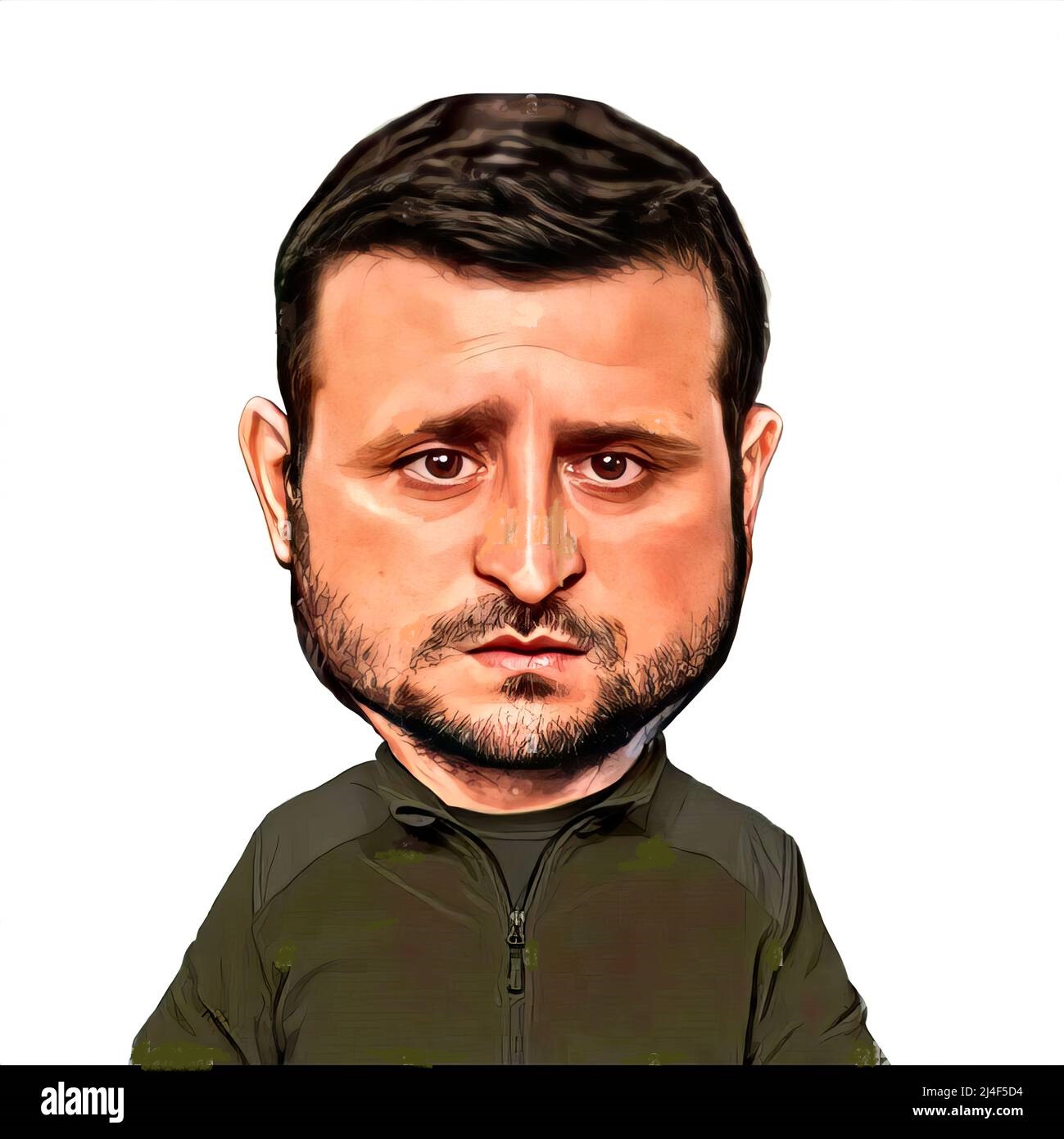
By rejecting Tomahawk missiles for Ukraine, Trump once again disappoints Zelensky. To negotiate with Putin, will he also defy the Beltway?
Aaron Maté, Oct 21, 2025
Ukrainian president Volodymyr Zelensky was hoping to leave the White House on Friday with a commitment for long-range US Tomahawk missiles that can strike Russia. Instead, Zelensky once again found himself on the losing end of his strained relationship with President Trump. After musing about providing Tomahawks and even declaring that Ukraine was positioned to recapture all of its territory, Trump rejected Zelensky’s request and urged him to cede the Donbas region to Moscow.
“[Trump] said Putin will destroy you if you don’t agree now,” a source told the Washington Post. “It was pretty much like ‘no, look guys, you can’t possibly win back any territory. … There is nothing we can do to save you. You should try to give diplomacy another chance.’” According to a European official, Trump is now “saying the U.S. needs Tomahawks, and doesn’t want to escalate.”
Trump’s renewed aversion to escalation followed a phone call with Russian President Vladimir Putin, who initiated the conversation to lobby against Zelensky’s request. Putin likely conveyed a stark warning. For Ukraine to fire Tomahawks at Russia, the US military would have to do the job inside Ukrainian territory. And because the Tomahawks are technically nuclear-capable, Russia, by its own military doctrine and the logic of basic deterrence, would have to fire back beyond Ukraine. Given the abundance of US military assets near its borders, Russia would have no shortage of targets……………………………………………………………….(Subscribers only) https://www.aaronmate.net/p/trump-rejects-zelensky-on-tomahawks?utm_source=substack&utm_medium=email
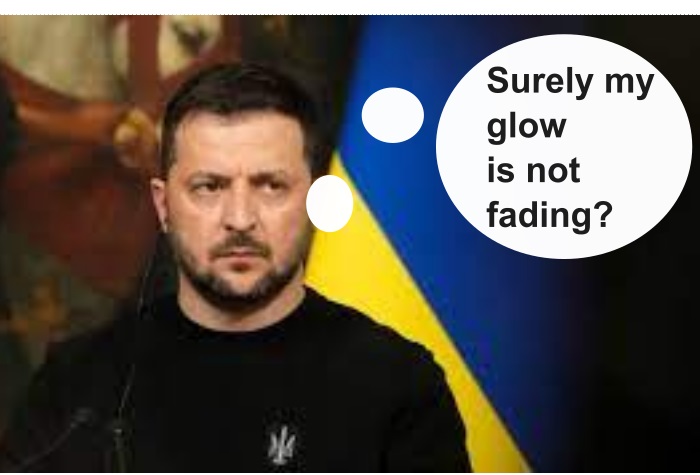
Trump-Zelensky meeting was ‘bad’ – Axios.
18 Oct, 2025 , https://www.rt.com/news/626650-trump-zelensky-meeting-bad/
The Ukrainian leader left Washington without promises on Tomahawk missiles, the outlet’s sources say
Friday’s White House meeting between US President Donald Trump and Vladimir Zelensky was “tense,” with the Ukrainian leader failing to secure deliveries of long-range Tomahawk missiles, Axios has reported, citing sources.
Trump told Zelensky he does not plan to provide Tomahawks “at least for now,” according to two people briefed on the meeting. The talks lasted around two and a half hours and were described by one source as “not easy,” and by another as “bad.” At times, the discussion “got a bit emotional,” the outlet said.
”Nobody shouted, but Trump was tough,” one source told Axios. The session ended abruptly when Trump reportedly said, “I think we’re done. Let’s see what happens next week,” possibly referring to upcoming Russia-US talks.
Speaking to reporters afterwards, Zelensky declined to answer questions about Tomahawk deliveries, only saying the US “does not want escalation.”
Trump said “it’s not easy” for Washington to provide the missiles because it needs to maintain its own supplies for the nation’s own defense. He also acknowledged that allowing Kiev to conduct strikes deep into Russia could lead to an escalation.
Moscow has warned against supplying the missiles to Ukraine, arguing they would “not change the situation on the battlefield” but would “severely undermine the prospects of a peaceful settlement” and harm Russia-US relations.
Zelensky has sought Tomahawks – which have a maximum range of 2,500km (1,550 miles) – for weeks, insisting that Ukraine would only use them against military targets to increase pressure on Russia and move toward a peace deal. However, the Ukrainian leader has threatened Russia with blackouts in border regions and Moscow. Russian officials also suggested that Kiev is plotting to use the missiles for “terrorist attacks.”
The Trump-Zelensky meeting followed a phone call between Trump and Putin, after which both sides signaled plans for a summit in Budapest, Hungary, in the near future.
Slouching Towards Peace
“Zelensky has been given a Russian ultimatum via Trump. Accept Russia terms or face total destruction.” —SiriusReport on “X”
James Howard Kunstler, Oct 20, 2025, https://www.kunstler.com/p/slouching-towards-peace
Well, “No Kings” came and went. Inflatable animal costumes did a brisk business for one week. The old Boomers got a social space to act out their nostalgic re-visit to the Age of Aquarius. They resisted. . . something. (Mainly authority of any kind, a retarded adolescent fantasy.) And now it’s back to Rachel Maddow for further instructions. The Republic slogs on, albeit with a shut-down government.
Did you forget about Ukraine? Yes, a war is still going on there and it’s a weeping lesion on Western Civ, possibly leading to fatal sepsis. US neocons set the stage in 2014 with the Maidan color revolution as a wedge to wreck and then loot Russia. Then, for eight years, Ukraine harassed the Donbas with US-supplied missiles and artillery. Russia had enough of that in 2022 and ventured in to stop it. For “Joe Biden,” the war was a nice smokescreen to cover his long-running grift operations in Ukraine. The Euro club stupidly came along for the ride.
It was all a tragic and feckless waste. Mr. Trump wants to stop it, but Western Civ as a whole is in such a state of florid strategic disorder that he’s had to pretend the US supports Ukraine. Mr. Zelensky could not possibly carry on this mischief without US weapons and loads of US taxpayer cash. Still, the Russians advance implacably on-the-ground. They are going to “win” this war eventually — meaning, the US and Europe will lose — and everybody knows it.
It would be nice if France, Germany, and the UK were still stable, thriving, rational nations, but they are not. They have entered an arc of collapse, largely due to their own stupendously bad choices, and their leadership is insane. Macron, Merz, Starmer. . . these are the Three Stooges of our time, and Europe’s collapse has degenerated to morbid, masochistic slapstick as their factories shutter and the Jihadis go about raping their wives and daughters. Do you think that’s not happening?
Mr. Trump surely realizes he has to cut the US loose from this evil clown-show. That they are our NATO allies complicates things, yet, really, the Euro gang is impotent and NATO has become an irrelevant anachronism. They have no effective military mojo. Their economies are imploding. They have surrendered their culture to a savage cult. Their populations are demoralized, emasculated, in thrall to the menopausal viragos in their councils and ministries. They know full-well that Ukraine lies in Russia’s sphere-of-influence — a centuries-long reality — and that it is none of their business. Yet, Macron, Merz, and Starmer keep pushing the fantasy that Russia seeks to invade them, and so they must strike at Russia before that happens . . . all pure delusion.
You can suppose that Mr. Putin wants a negotiated peace rather than continuing the long grind on-the-ground, with all its casualties and expenditures. Such a negotiated peace really amounts to the US ceasing to support Zelensky’s war effort. Of course, such is the insanity of US political life, that many in our government pretend that we have a stake in Ukraine, and must retain some control of it.
Mr. Trump must know this is insane and is against the interests of the USA. He knows that Ukraine is historically in Russia’s sphere of influence — as Venezuela is in ours — and that the best outcome of this mess would be for Ukraine to return to its prior status as a harmless frontier between Russia and western Europe — as it had been since 1945 — looking to its humble business of growing wheat for export. We do not need Ukraine to be anybody’s problem, despite the insane yearnings of the neocons, the weapons manufacturers, and the reckless globalists of the EU, to make it everyone’s problem.
Hence, Mr. Trump’s dilemma: how to dissociate from this losing proposition and come out looking like a winner, saving Europe from becoming a smoldering ashtray, stanching the flow of US taxpayers’ money and US-made weapons into this black hole, and forging friendly relations with a Russia that is decades beyond being our ideological enemy? America and Russia’s interests are geopolitically aligned, though no one in the arena is willing to admit it. Russia has much more to worry about with China right at Siberia’s doorstep than with the USA, just as the USA has much more to worry about with China as it weaponizes A-I, moves into outer space, and casts a covetous eye on the resources of the USA, Australia, Africa, and its next-door-neighbor, Russia.
These are the matters that Presidents Trump and Putin must be touching on in those long, two-and-a-half-hour phone confabs they hold. Meanwhile, Mr. Trump must put on a vaudeville show for his US adversaries about maybe giving tomahawk missiles to Ukraine. . . no, maybe not doing that. . . and the rest of the song and dance to make it appear that we are kinda-sorta still on Ukraine’s side when the truth is we are not so much at all.
And so, the two presidents head for Budapest where — if the intel spooks of Euroland don’t try to bump them off there — they might come to the necessary agreement that the war will end because the US no longer supports it, not even the pretense of supporting it. President Viktor Orban of Hungary, who Mr. Trump respects, will be on hand for moral support. Expect some tough-talking mummery from DJT, just to throw the MSNBC lunatics off-balance. Rogue idiots such as Senators Blumenthal and Schiff will fume that “Trump lost Ukraine,” but the 50-plus percent of Americans who are not-insane will understand what actually happened.
Local ‘ceasefire’ area declared at Ukrainian nuclear plant for damage repairs
Without reliable external power, the Zaporizhzhia nuclear power risks losing the cooling needed to keep its reactors stable.
Politico, October 18, 2025 By Mathieu Pollet
Repairs are underway at Ukraine’s Zaporizhzhia nuclear power plant after “local ceasefire zones” were established in the area, the United Nations nuclear watchdog said on Saturday.
“Restoration of off-site power is crucial for nuclear safety and security. Both sides engaged constructively with the [International Atomic Energy Agency] to enable complex repair plan to proceed,” the IAEA wrote in a post on X.
The Russian-occupied facility in southeastern Ukraine has been cut off from the national grid for four weeks — its longest blackout since the Russia’s invasion in February 2022. The plant has been using on diesel generators since its last power line went down last month…………………………………………….. https://www.politico.eu/article/ukraine-russia-local-ceasefire-zone-declared-nuclear-plant-damage-repairs/
Trump downplays hopes he will supply Ukraine with US missiles after meeting with Zelenskyy
US president seemed more intent on brokering a peace deal after surprise phone call with Putin earlier in day
Pjotr Sauer Russian affairs reporter and Andrew Roth in Washington,Sat 18 Oct 2025
Donald Trump seemed more intent on brokering a peace deal than he was to supply Ukraine with Tomahawk cruise missiles during a White House meeting with Volodymyr Zelenskyy, saying that the US may need them for a future conflict.
While Trump did not rule out providing the long-range missiles Zelenskyy seeks, Trump appeared cool to the prospect as he looked ahead to a meeting with Vladimir Putin in Hungary in the coming weeks.
After speaking with Zelenskyy for more than two hours, Trump implored both Ukraine and Russia to “stop the war immediately”, even if it means Ukraine conceding territory.
“You stop at the battle line, and both sides should go home, go to their families,” Trump told reporters on his way to his home in West Palm Beach, Florida. “Stop the killing. And that should be it. Stop right now at the battle line. I told that to President Zelenskyy. I told it to President Putin.”
The Ukrainian leader was frank, telling Trump that Ukraine has thousands of drones ready for an offensive against Russian targets, but needs American missiles.
“We don’t have Tomahawks, that’s why we need Tomahawks,” he said.
Trump responded: “We’d much rather have them not need Tomahawks.”
Later, Trump reiterated that he wants the United States to hold on to its weaponry. “We want Tomahawks, also. We don’t want to be giving away things that we need to protect our country,” he said.
Trump’s doubtful tone on the cruise missiles follows a surprise phone call with Vladimir Putin on Friday during which the Russian leader told Trump that supplying the Tomahawks would damage US-Russian relations.
His position on supplying Ukraine with weapons has changed a number of times since he returned to office in January, often after negotiations with Putin or European backers of Ukraine.
During the White House meeting with Zelenskyy, Trump also discussed plans to hold a bilateral meeting with Putin in Hungary, saying it was “to be determined” whether Zelenskyy would join but that he would inform him of the discussions.
“There is a lot of bad blood,” Trump said.
After the talks on Friday, the US president issued a stern call to both sides on social media to “stop the killing, and make a DEAL!”.
“They should stop where they are. Let both claim Victory, let History decide!” Trump posted on Truth Social.
Zelenskyy told reporters he did not want to talk about long-range missiles, saying the US did not want escalation, and he was “realistic” about his chance of getting them.
The Ukrainian president, who spoke by phone with European leaders after the meeting, said he was counting on Trump to pressure Putin “to stop this war”.
The Kremlin’s top aide, Yuri Ushakov, earlier said Putin had initiated Thursday’s conversation with Trump, during which the Russian leader urged his US counterpart not to supply Ukraine with the Tomahawks.
“I did actually say: ‘Would you mind if I gave a couple of thousand Tomahawks to your opposition?’ I did say that to him. I said it just that way,” Trump said, recounting the conversation.
“He didn’t like the idea. You have to be a little bit lighthearted sometimes.”
Ushakov told reporters in Moscow that Putin warned Trump during the call that supplying Kyiv with Tomahawks “won’t change the situation on the battlefield, but would cause substantial damage to the relationship between our countries”.
It was the eighth known call between the two men since Trump began his second term in January, and followed a familiar pattern in the complex and often confusing contest between Putin and Zelenskyy for Trump’s ear.
On previous occasions, when Trump had seemed ready to tilt towards Kyiv and its European allies, a call from Putin was often followed by a sudden softening in the US leader’s tone towards Moscow.
A flurry of activity was also set off with Trump’s announcement after the call that he was planning to meet the Russian president in the Hungarian capital on a date still to be determined, in an effort to end the war.
Putin’s spokesperson, Dmitry Peskov, on Friday morning said that the summit could take place “within two weeks or later”.
Peskov said Putin had already discussed the planned meeting with Viktor Orbán, the Hungarian prime minister. Orbán – an outlier among European leaders with warm ties to Trump and Putin – said he had also spoken to Trump about the summit, writing on X: “Preparations for the USA-Russia peace summit are under way.”
It remains unclear how Putin would travel to Hungary, given EU sanctions and airspace restrictions imposed after Russia’s invasion of Ukraine, as well as the fact that he is wanted by the international criminal court (ICC). As a signatory to the ICC, Hungary would be obliged to arrest him, though Orbán has previously said this would not happen.
When asked about the logistical challenges, Peskov said the route was “so far, of course, unclear”.
Hungary’s foreign minister, Péter Szijjártó, said on Friday that Putin would be able to enter and leave the country. “There is no need for any kind of consultation with anyone, we are a sovereign country here. We will receive [Putin] with respect, host him and provide the conditions for him to negotiate with the American president,” he told a press briefing.
Trump and Putin last met in Alaska in August, which did not produce a diplomatic breakthrough. Trump added that fresh high-level talks between Washington and Moscow would be held next week, led on the US side by the secretary of state, Marco Rubio, before a presidential summit in Budapest.
The latest conversation, which lasted more than two and a half hours, appears to have sapped the momentum Zelenskyy had built with Trump, with the US leader now unlikely to show significant support for Ukraine before meeting Putin.
“Zelenskyy must be pulling his hair out. Today’s meeting with Trump is now completely overshadowed and overtaken by the Budapest meeting,” said John Foreman, a former British defence attache to Moscow and Kyiv.
Trump also has hinted that talks between Putin and Zelenskyy may need to take place indirectly, contradicting Zelenskyy’s longstanding aim of meeting Putin face to face to end the war.
“They don’t get along too well, those two,” Trump said. “So we may do something where we’re separate. Separate but equal.”
Zelenskyy, who touched down in Washington on Thursday and met US defence contractors before his White House visit, has not commented on the Putin-Trump call, though few in Kyiv are likely to view it positively.
Some Ukrainian officials tried to put a positive spin on the call, saying that Putin’s outreach underscored the Russian leader’s fear of new Ukrainian weapon supplies………….https://www.theguardian.com/world/2025/oct/17/trump-putin-phone-call-sinks-kyiv-ukraine-hopes-for-us-tomahawk-missiles
Trump to Zelensky…’I haven’t got a weapon to spare’
Walt Zlotow, West Suburban Peace Coalition, Glen Ellyn IL, 17 Oct 25
Ukraine President Zelensky arrives at the White House Friday to once again beg President Trump for US weapons which will do nothing to prevent his impending defeat to Russia’s overwhelming military forces.
Because Trump knows the war is lost, he will give Zelensky what he’s given him all year…nothing. While President Biden gave Zelensky over $170 billion in military aid during Biden’s last 3 years in office, Trump will only sell US weapons to European NATO countries to gift Zelensky’s lost cause. But while the US has the wherewithal to fund Ukraine till their inevitable collapse, Europe does not.
NATO country leaders tried to fill the US void in the first 6 months of 2025 with an average of $3.8 billion in military aid. But that self-destructive policy has degraded their economies, tanked their polling, making right wing nationalist parties more popular than the interventionist incumbents. Beginning in July even diehards like UK’s Starmer, France’s Macron and Germany’ Merz have cut back on Ukraine’s lost cause. Total European military aid dropped to just $1.7 billion monthly for July and August with no possibility of heading north.
Trump must tell Zelensky Friday that with no cards to play he should capitulate to Russia’s very reasonable and non-negotiable peace demands. No NATO for Ukraine, neutrality between Western Europe and Russia going forward, and no return of lost territory.
Ukraine’s military will collapse on Trump’s watch. He’s correctly blaming America’s failed proxy war against Russia on predecessor Biden who made the Russian invasion of February 2022 inevitable. He’s also blaming Europe for not buying enough US weapons to keep Ukraine fighting.
Trump has plenty of weapons in his trillion dollar war warehouse. But he blew over $20 billion on weapons to enable Israel’s genocide in Gaza, and another $10 billion for related Israeli wars against Yemen and Iran. Now he’s ramping up weaponry to take out his Venezuelan bête noir Nicholas Maduro.
So many wars to gobble up Trump’s war weaponry is why he’ll tell Zelensky Friday…‘I haven’t got a weapon to spare.’
The £1m man: why did Boris Johnson take his donor to Ukraine?
Leaked files offer a glimpse of the ex-prime minister’s relationship with Christopher Harborne.
Tom Burgis. Guardian 10 Oct 25
As he boarded the night train to Ukraine, Boris Johnson had the usual entourage of aides and bodyguards – plus the man who had given him £1m.
Less than a year had passed since Johnson accepted what is thought to be the largest donation ever to an individual MP. It was from Christopher Harborne, one of the UK’s biggest and most private political donors.
Harborne, whose millions helped bankroll Brexit, made the payment to a private company Johnson set up after resigning as prime minister. Now leaked files show that Johnson, a champion of Ukraine in office and since, was accompanied in September 2023 by his benefactor on a two-day visit that included meetings with top officials.
What the files do not explain is why. And neither the former prime minister nor his backer will say.
The organisers of the high-level gathering they attended in Kyiv say Harborne was registered as “adviser, Office of Boris Johnson”.
Harborne has wide expertise: a self-described “digital nomad”, his holdings range from cryptocurrency and a wellness centre to jet fuel and stakes in at least three military contractors. His only apparent connection to Ukraine is as the biggest shareholder in a British weapons manufacturer whose robots and drones are reportedly supplied to its armed forces.
The Boris Files, leaked documents from Johnson’s private office, have exposed how the former PM has sought to enrich himself since leaving office by sitting down with a Venezuelan despot and courting Mohammed bin Salman, the Saudi crown prince accused of ordering the murder of a journalist.
The Ukrainian cause, by contrast, is “sacred” to Johnson, one political consultant says, an enduring source of moral authority for a politician who was forced out of Downing Street amid scandal.
The leaked files raise questions about whether, even here, he has blurred the lines between public service and money-making.
In an extraordinary statement to the Guardian when asked about his relationship with Harborne, Johnson said: “Your pathetic non-stories … seem mostly to be derived from some illegal Russian hack job. You should be ashamed of yourselves.” Distributed Denial of Secrets (DDoS), the US-based transparency group that obtained the leaked files, said it did not know their provenance.
Johnson added: “Why don’t you just change your name to Pravda? Your stories are rubbish and you are doing Putin’s work.”
‘Boris and Chris only’
In Downing Street, Johnson rallied western powers as Vladimir Putin’s armies poured into Ukraine in February 2022. Since resigning, he has continued to travel there, pledging to maintain allies’ commitment, and remains so popular that he is cheered in the streets.
When he disembarked from the night train in Kyiv on 8 September 2023, Johnson had time for a quick shower at his hotel before heading for the Yalta European Strategy (YES) forum, an itinerary in the leaked files indicates. According to a published list of participants, Ukrainian ministers, spymasters and military chiefs mingled with foreign diplomats, politicians, industrialists and executives.
The itinerary has “Boris and Chris [Harborne] only” down to attend the opening session of the high-level gathering. Images show Volodymyr Zelenskyy and Johnson addressed the gathered luminaries and the itinerary suggests they then retired for a private meeting. Zelenskyy’s office did not respond when asked if Johnson’s benefactor joined them…………………………………………………………………………………………………………………………………
The £1m donation
………………….He [Harborne]has given £10m to Nigel Farage’s Brexit party – now Reform UK – and £1m to the Conservatives while Johnson was completing the UK’s departure from the EU. And Johnson seems to have nurtured the beneficial relationship while he was in No 10.
Harborne visited Chequers at least twice during Johnon’s premiership. Once, he arrived at the prime ministerial retreat by helicopter. The second time was for a Tory megadonor barbecue in August 2022.
Within days, Johnson’s tenure was over, but his relationship with Harborne endured, and the £1m personal donation followed. A copy of the financial advice Johnson received soon after leaving Downing Street raises questions about it.
While Johnson was still an MP he set up a private company, The Office of Boris Johnson Ltd. The financial advice reveals that he was expecting a “payment to fund the company’s first few years”. He was advised to consider whether this would represent a political donation or if it “might be simpler for the company to invoice the donor’s company for services”.
The following month, in November 2022, Johnson’s entry in the register of MPs’ interests records a £1m donation to his company from Harborne. The payment does not appear on the Electoral Commission’s donation database of money “given towards the recipient’s political activities” as an MP. This appears to suggest it may have been a contribution towards Johnson’s money-making activities.
The month of the £1m payment, Johnson and Harborne dined together twice in Singapore. A January 2023 entry in Johnson’s schedule set aside half an hour for a call with his backer. It was labelled “Ukraine readout”. That September, by which time Johnson had quit parliament, he and Harborne stepped aboard a Dassault Falcon at Stansted airport, the leaked files indicate. The private jet, apparently operated by Harborne, carried them to eastern Poland to catch the sleeper to Kyiv.
Harborne’s lawyers said: “Mr Harborne’s donation was given to enable Mr Johnson to stay actively engaged in mainstream UK politics. It is and was a donation, and its reporting as such is appropriate.”…………
The letter
Harborne’s lawyers did not give substantive answers to questions about why he went on the trip to Ukraine, beyond saying they “appear to have little to no basis in reality”. But there are possible clues in the leaked files.
The itinerary features a “closed meeting at the military-tech R&D centre”. It does not say whether Harborne attended, but this is an area he knows well. While his position as the largest shareholder in QinetiQ, with 13%, does not give him a role in the day-to-day running of the privatised research unit of the UK armed forces, his financial stake in its operations is significant.
QinetiQ has interests in Ukraine, albeit not its biggest. Ukraine’s forces reportedly use the company’s Banshee drones and bomb-disposal robots. In April 2025, the UK Ministry of Defence announced QinetiQ would help Ukraine’s military make kit with 3D printers……………………. https://www.theguardian.com/politics/2025/oct/10/the-1m-man-why-did-boris-johnson-take-his-donor-to-ukraine
The UN nuclear watchdog seeks a local truce to restore power to the Zaporizhzhia plant
By ASSOCIATED PRESS, 14 October 2025
VIENNA (AP) – The U.N. nuclear watchdog is pushing Ukraine and Russia to agree to local ceasefires so that external power can be restored to Ukraine´s huge nuclear power plant in Zaporizhzhia, two diplomats familiar with the plan told The Associated Press.
The plant is in an area under Russian control since early in Moscow’s full-scale invasion of Ukraine and is not in service, but it needs reliable power to cool its six shutdown reactors and spent fuel, to avoid any catastrophic nuclear incidents.
It has been operating on diesel generators since Sept. 23 when its last remaining external power line was severed in attacks that each side blamed on the other. The International Atomic Energy Agency has repeatedly expressed alarm about the nuclear plant, Europe’s biggest.
The agency is proposing to restore external power to the plant in two phases, according to a European diplomat briefed on the proposal by the IAEA Director General Rafael Grossi. A Russian diplomat confirmed some aspects of the plan.
Both diplomats spoke on condition of anonymity because they were not authorized to discuss the confidential negotiations publicly.
During the first phase, a 1.5-kilometer-radius (1-mile-radius) ceasefire zone would be established to allow repair of the Dniprovska 750-kilovolt line, the main power line to the plant that has been damaged in an area under Russian control.
During the second phase, a second such ceasefire zone would be established to repair the Ferosplavna-1 330-kilovolt backup line, which is in area under Ukraine’s control.
IAEA experts would be on hand to monitor the repairs, which originally were proposed for a 7-day period from Oct. 11 to Oct. 17, according to the European diplomat and confidential documents seen by the AP.
However, although the Ukrainian side has given necessary guarantees of safe passage for repair crews, Russia did not give such guarantees in time for the work to start under that timetable, according to the European diplomat.
The Russian diplomat, on the other hand, said that preparations for the repairs are under way and that they can start very soon.
The IAEA declined to comment on the timing, saying only that Grossi was engaging “intensively with both sides” to enable the reconnection of power and to “help prevent a nuclear accident.”
Grossi held talks with both Ukraine and Russia last month. He met with Ukrainian Foreign Minister Andrii Sybiha on Sept. 29 at the Warsaw Security Forum, following meetings in Moscow with Russian President Vladimir Putin on Sept. 25 and Rosatom Director General Alexei Likhachev on Sept. 26.
The IAEA warned that if diesel generators fail, “it could lead to a complete blackout and possibly causing an accident with the fuel melting and a potential radiation release into the environment, if power could not be restored in time.”
The latest blackout is the tenth time that the Zaporizhzhia plant has lost all external power, and is by far the longest since the start of the war. The 330-kilovolt backup line was lost in May, and the main line was disconnected on Sept. 23.
The plant is close to the front line and has been occupied by Russia since March 2022. Ukraine and Russia have traded blame for shelling close to the plant……. https://www.dailymail.co.uk/wires/ap/article-15188795/The-UN-nuclear-watchdog-seeks-local-truce-restore-power-Zaporizhzhia-plant.html
After robbing EU taxpayers, Zelensky uses blackmail to get inside the Bloc

He is demanding that Ukraine be made a member of the EU, and he wants to change the rules of the bloc to speed up the process.
The racket has laundered hundreds of billions of public money to the Western military industrial complex. The racket has destroyed the economies of Europe
Zelensky’s corrupt dictatorship is just a pale reflection of his patrons in Washington, Brussels, Paris, Berlin, and London.
Since the United States-led NATO proxy war against Russia erupted in February 2022, the European Union has doled out $216 billion in aid to Ukraine. That’s equivalent to €186 billion, according to the EU’s latest official count. The true figure is likely to be even more.
The United States has given a similar amount to Ukraine. All paid for by taxpayers.
That’s about $400 billion total in three years, with the EU promising more over the next few years.
To put this in perspective, the EU aid to Ukraine is multiples more than all of the 27 member nations have received – combined – from the bloc’s collective budget and administration. According to Euronews reporting, some of the biggest recipients of EU subsidies each year are Germany (€14 bn), France (€16.5 bn), and Poland (€14 bn). Some of the smaller recipient countries are Austria, Denmark, and Ireland (around €2 bn).
That means Ukraine has received heaps more than all of the EU members combined.
Get your head around that. Ukraine, which is not a member of the European Union, is receiving manifold what actual member states are receiving. And you wonder why people in France are angrily taking to the streets because their shambolic government wants to cut pensions and other social welfare services to save money. Elsewhere, European governments are collapsing from unsustainable debt. And, at the same time, European citizens are constantly being lectured that their states need to spend more and more money on the NATO alliance, even to the insulting point of having to accept the cutting of social benefits and public services
Ukraine and its corrupt Kiev regime of NeoNazis has bled Europe dry. The so-called president, Vladimir Zelensky (who canceled elections last year, so he’s not really a legitimate president), is reported to be funneling €50 million a month to overseas funds for his retirement while his wife goes luxury shopping in New York and Paris. Other members of the regime, like former prime minister and now “defense” minister Denys Shmyhal, are also reportedly up to their eyes in corruption, siphoning off billions in the military aid that Western taxpayers have paid for.
This week, Zelensky took his brassneckery to new levels – if that’s possible. He is demanding that Ukraine be made a member of the EU, and he wants to change the rules of the bloc to speed up the process. The EU has granted Ukraine (and Moldova) a fast-track path to membership, but, to its credit, Hungary has objected to this.
In June, Hungarian Prime Minister Viktor Orbán cast a veto on continuing access talks for Ukraine. According to EU rules, there must be unanimity among member nations for the approval of new members. Orbán said Ukraine is not eligible because of the current war against Russia. “We would be importing a war,” he said.
Also, Budapest objects to Ukrainian language laws that discriminate against a Hungarian minority in the western Zakarpattia region of Ukraine. (The Russian language has been banned, too, in public offices.)
A referendum held in Hungary in June recorded that 95 percent of voters were against Ukraine becoming a member of the EU.
Zelensky is pushing ahead regardless, with his peevish wheedling. In a joint press conference in Kiev on Monday, with the indulgence of the Dutch PM at his side, Zelensky said: “Ukraine will be in the European Union, with or without Orbán, because it is the choice of the Ukrainian people.”
The little dictator flaunted his insufferable presumptuousness by hinting that the European Union would change its rules to bypass Hungary’s veto – all just to accommodate his scrounging regime. “Changing the procedure is called finding a way without Hungary,” he said. And in a further arrogant dismissal of democratic process, Zelensky asserted that the Hungarian people support his EU ambitions, contradicting the referendum back in June.
Orbán responded firmly by telling Zelensky he could not blackmail his way into the European Union.
Hungary’s Foreign Minister Péter Szijjártó added a dose of reality by stating: “The decision on which country is ready to join the European Union and which can join the EU will not be made by the president of Ukraine, but by the European Union itself, where such decisions require unanimity.”
In a further comment, Szijjártó nailed it by saying that Zelensky is “completely detached from reality.” The Hungarian diplomat also reminded that the Kiev regime is blowing up energy infrastructure and jeopardizing the EU members’ vital interests.
Last month, Ukrainian forces exploded the Druzhba oil pipeline from Russia, cutting off energy supplies to Hungary and Slovakia. The Zelensky regime carried out the sabotage as retribution for Budapest’s opposition to Ukraine’s EU application. This is what Orbán was no doubt referring to when he slammed Zelensky this week for using blackmail.
So, there you have it. A corrupt, unelected, Neo-Nazi regime headed up by a Jewish scam-artist who plays piano with his penis while wearing women’s high heels is using terrorist tactics to attack the vital interests of EU members, and is now telling those members that they won’t have a vote in the EU processes, because the regime has decided it will become a member of the bloc. You could not make it up. This, too, after robbing the taxpayers of the bloc of €186 billion to wage a war against Russia – a war that has killed 1.5 million Ukrainian soldiers – which could spiral out of control into a nuclear Third World War.
If this is the kind of ruination that this regime can inflict while not being a member of the EU, one can only imagine the hellscape it will bring after becoming a member……..
the real culprits in this obscene farce are the American and European elites who have fomented the war against Russia. Together, they have weaned and pampered the Kiev regime with largesse and indulgence, paid for by the taxpayers. The U.S.-EU transatlantic ruling class has cultivated the regime of corruption and war since the 2014 CIA-backed coup in Kiev against an elected president. The racket has laundered hundreds of billions of public money to the Western military industrial complex. The racket has destroyed the economies of Europe and is now destroying the semblance of democracy within Europe. (It’s not clear what Trump’s position in all of this is, but he probably doesn’t count anyway.)
The Western imperialist ruling class is so obsessed with its scheme for “strategic defeat” of Russia (and China) and for global domination that it is willing to cultivate any scumbag regime it can make use of for its goals, no matter how much that violates international law and its own professed democratic principles.
Zelensky’s corrupt dictatorship is just a pale reflection of his patrons in Washington, Brussels, Paris, Berlin, and London. They are all detached from reality. https://strategic-culture.su/news/2025/10/10/after-robbing-eu-taxpayers-zelensky-uses-blackmail-to-get-inside-the-bloc/
Grossi says progress made on restoring Zaporizhzhia power

Friday, 10 October 2025, https://www.world-nuclear-news.org/articles/grossi-says-progress-made-on-restoring-zaporizhzhia-power
The two sides in the war have “engaged in a constructive way” with the International Atomic Energy Agency, whose director general says “a process has been set in motion” to help restore external power to Zaporizhzhia Nuclear Power Plant.
Rafael Mariano Grossi, Director General of the International Atomic Energy Agency (IAEA), said: “Following intensive consultations, the process leading to the re-establishment of off-site power – through the Dniprovska and Ferosplavna-1 lines – has started. While it will still take some time before the grid connection of the Zaporizhzhia nuclear power plant (ZNPP) has been restored, the two sides have engaged with us in a constructive way to achieve this important objective for the sake of nuclear safety and security. No one stands to gain from a further deterioration in this regard.”
External power was lost by the plant – which is on the frontline of Ukrainian and Russian troops – on 23 September, and it has since been relying on its fleet of emergency diesel generators for the power required for essential safety functions, including powering cooling pumps.
Before the war, there were 10 different external power lines to the plant, but that number has fallen since the start of the war in February 2022. Five months ago its last 330 kV backup power line was disconnected, leaving no supply when the sole operational 750 kV power line source was cut.
Both sides blame the damage on military activities and have said that the military situation has stopped them from being able to repair the damage. Grossi has had frequent contact with both sides as part of efforts to find a way forward.
The IAEA’s latest update says: “The focus has been on creating the necessary security conditions for repairs to be carried out on the damaged sections of the 750 kV Dniprovska and the 330 kV Ferosplavna-1 power lines, located on opposite sides of the frontline near the ZNPP.”
It is the tenth time that the plant has lost external power, although on previous occasions it was for a matter of hours rather than the current case of weeks. Seven emergency diesel generators are operating, with 13 on standby.
The IAEA team at the plant report that there has been no temperature increase within the coolant in the reactors or the used fuel pools and radiation levels at the site remain normal. They do continue to hear military action, including on Tuesday evening when they heard “five explosions one after the other, occurring close to the site and shaking windows in their building”.
The six-unit Zaporizhzhia nuclear power plant has been under Russian military control since early March 2022. All its units are shut down.
Ukraine has just generated another cash sink for Western taxpayers
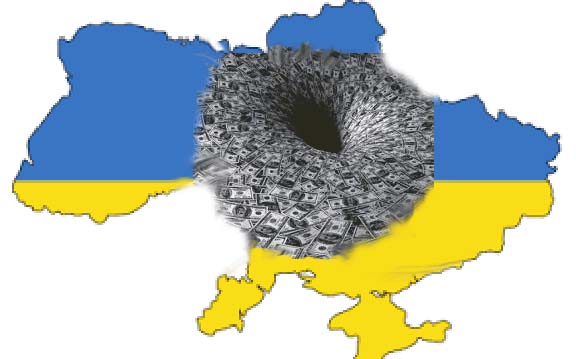
In the meantime, Canadian cash for weapons, “for Ukraine,” is sure pumping up the integrated US/Canada military-industrial complex, which seems to be the go-to Western strategy for boosting their GDP these days
The office of the “Special Representative for the Reconstruction of Ukraine” has been created for Canada’s ex-deputy prime minister
Rachel Marsden, a columnist, political strategist, and host of independently produced talk-shows in French and English. 4 Oct 25
Last month, former Canadian Prime Minister Justin Trudeau’s deputy prime minister, Chrystia Freeland, was dropkicked from newish Prime Minister Mark Carney’s cabinet. He did her a massive favor. Because now she doesn’t have to pretend to represent Canada anymore while following her true passion: representing Ukraine.
Freeland has a new role: “Special Representative for the Reconstruction of Ukraine,” officially speaking. The first question that came to mind when hearing this was, “When does she finally get to move to Kiev, already?” Imagine my disappointment to learn that she doesn’t.
Well, actually, my first question was, “Is Ukraine under reconstruction now? Did I slip into a coma and miss the bomb show wrapping up?” Nope, the conflict is still raging. But I guess it makes it sound like she’s going to be keeping a careful watch over the money that Carney has “pledged” to Ukraine – perhaps in the same way that people “pledged” to pay me a dollar per lap for my childhood swim-a-thons, then bailed when I came back to collect after competing 500 laps. I guess time will tell. Canadian taxpayers can only pray that will be the case, and that Carney is just virtue signaling Canadian cash for Ukraine and not actually sending any there, in the same way that the jokers running the EU make a big stink about the evils of Russian energy while importing it on the down-low through third countries.
In the meantime, Canadian cash for weapons, “for Ukraine,” is sure pumping up the integrated US/Canada military-industrial complex, which seems to be the go-to Western strategy for boosting their GDP these days amid their tanking economies.
Another question: Will Freeland use her experience in blocking Canadian bank accounts as Trudeau’s finance minister during the Covid-era Freedom Convoy anti-mandate protests to block shady cash flowing to Ukraine? I’m guessing not, if only because those Canadian bank accounts were blocked under the ultimately false pretext (as determined by Canadian intelligence) that foreign cash was funding interference with Canadian government decisions. In Ukraine’s case, that foreign cash is considered a plus because it’s coming from the West. Seems like she’d be more likely to tackle anything that got in its way.
Anyway, Freeland has just used her new Canadian taxpayer-funded role to plead Ukraine’s case in the pages of the Financial Times.
She wrote that “the fact is that we need Ukraine to save us,” presumably from the other side of the world, in Ottawa. She then goes on to qualify some murky, contentious drone activity around the Ukraine–EU border as “recent incursions into Central and even Western Europe.” At least I think that’s what she’s referring to. Unless I somehow missed the Russian tanks rolling down the Champs-Élysées. She doesn’t specify. But no matter. All the better, apparently, to argue that these incidents “show NATO needs Ukraine as a shield against Russia.”
Sounds like what Vladimir Zelensky was saying just the other day. The Ukrainian leader was going off about an incident last month of some alleged 90 drones over Ukraine, which he said were heading for Poland. He said that if only 20 of them actually ended up there, it was only because Kiev shot the rest down. The implication? That Ukraine was saving Poland. Trump was asked about it at the time and didn’t exactly praise Zelensky as Poland’s savior. He basically shrugged, saying, look, whatever – could have just been accidental.
Freeland also cited Trump’s tongue-in-cheek remarks from the other week when he rapped on social media about how Ukraine was winning on the battlefield against Russia and probably could even conquer Russian territory. He then offered to sell the Europeans all the American weapons they wanted in that endeavor. What part of Trump’s wishing them “good luck” did Freeland not understand as a commentary on Trump being keen to profit off the EU’s delusions, as long as Washington doesn’t have to get its hands dirty? She grasped none of it, apparently. Because she wrote in the FT that “US President Donald Trump got it right at the UN last week: Ukraine is a winner, and Ukraine can win.”
Freeland literally had just written of Ukraine in the same piece, a bit further up, that “we have assumed it would lose, at least without extraordinary effort from us.” Really? Your whole posse in Canada has been saying otherwise for years. “Ukraine will win and Canada will be there until the end,” said Canadian Foreign Affairs Minister Anita Anand, in early 2023, when she was defense minister.
So now we’ve gone from “Ukraine will win” to “Ukraine will only win if we do everything except pull the trigger” to “we need Ukraine because NATO is so weak.” Yeah, so weak that NATO is actually contemplating blasting Temu-grade drones out of the sky with F-16s, as the Romanian defense minister suggested during a recent Warsaw Security Forum panel.
Freeland adds that the West can learn from Ukraine about “how to fight a 21st-century war, and how to invent, manufacture and then keep reinventing the weapons we need for this new way of war in real time.” Look out, folks! Freeland has just discovered guerrilla warfare – but apparently not the double-edged sword it represents.
It’s all good when Ukrainian Nazis are getting schooled by NATO forces to fight Russia, and when they then graduate to fulfilling Freeland’s fantasy of pretending to teach NATO how to do guerrilla warfare – as though it’s a matter of NATO lacking ability and not just guerrilla warfare being way too cheap for NATO to justify washing tax cash into defense coffers.
What could possibly go wrong with letting Ukraine play asymmetric warfare “teacher” to justify the West turning it into a giant weapons toy box? It’s not like there haven’t been reports lately of Latin American drug cartels getting their drone training in Ukraine to use back home. We’re talking about Mexican and Colombian gangsters, according to Defense News, one of the leading military publications. Just your average start-up, really.
Freeland then proceeds to cheerlead the idea recently promoted by German Chancellor Friedrich Merz of straight-up stealing €140 billion in European-held Russian assets as a “loan” for Ukraine. Ukraine apparently just pays it back once Russia admits fault and writes a check, huh? In other words: never.
It’s one thing for Freeland to justify her new role by bloviating and virtue-signaling in the Western press. It’s another to make taxpayers foot the bill for it when her real job should be to end this war as quickly as possible through diplomacy so some legitimate reconstruction business can be done in Ukraine’s interests that doesn’t just involve perpetuating a taxpayer-funded racket.
Not surprising: Biden hid report on Ukraine scandal, docs reveal
07 Oct 2025 , https://www.sott.net/article/502251-Not-surprising-Biden-hid-report-on-Ukraine-scandal-docs-reveal
Joe Biden asked the CIA to cover up a report about his family’s alleged corrupt business activities in Ukraine while he was serving as US vice president in 2015, according to declassified agency documents.
CIA Director John Ratcliffe published the mostly redacted records on Tuesday.
One of the documents was a government email sent to the agency and dated February 10, 2016.
“Good morning, I just spoke with Vice President / National Security Adviser and he would strongly prefer the report not/not be disseminated. Thanks for understanding,” it said.
The sender’s name was redacted, leaving just the title PDB Briefer. The Presidential Daily Brief is a top secret document for daily distribution to the US president and a small number of top level approved officials.
The report in question said that Ukrainian officials in the administration of then President Pyotr Poroshenko “expressed bewilderment and disappointment” at Biden’s December 2015 visit.
These officials viewed the alleged ties of the US Vice President’s family to corruption in Ukraine as evidence of a double-standard within the US Government towards matters of corruption and political power.
Biden’s convicted felon son, Hunter, held a lucrative position on the board of Ukrainian energy conglomerate Burisma Holdings during his father’s vice presidential term.
The elder Biden has publicly admitted to pressuring Kiev into firing a prosecutor general who was investigating the company in 2016. However, he denied ever taking bribes or having knowledge of Hunter’s foreign business affairs.
In December of last year, Biden signed a broad pardon for his son, u-turning on prior promises not to do so. The pardon shields Hunter from any prosecution for crimes committed between 2014 and 2024.
Rampant corruption in Ukraine has led US officials to voice concerns over potential embezzlement of aid. Recent opinion polls say the majority of Ukrainians see the problem as getting worse.
1 This Month
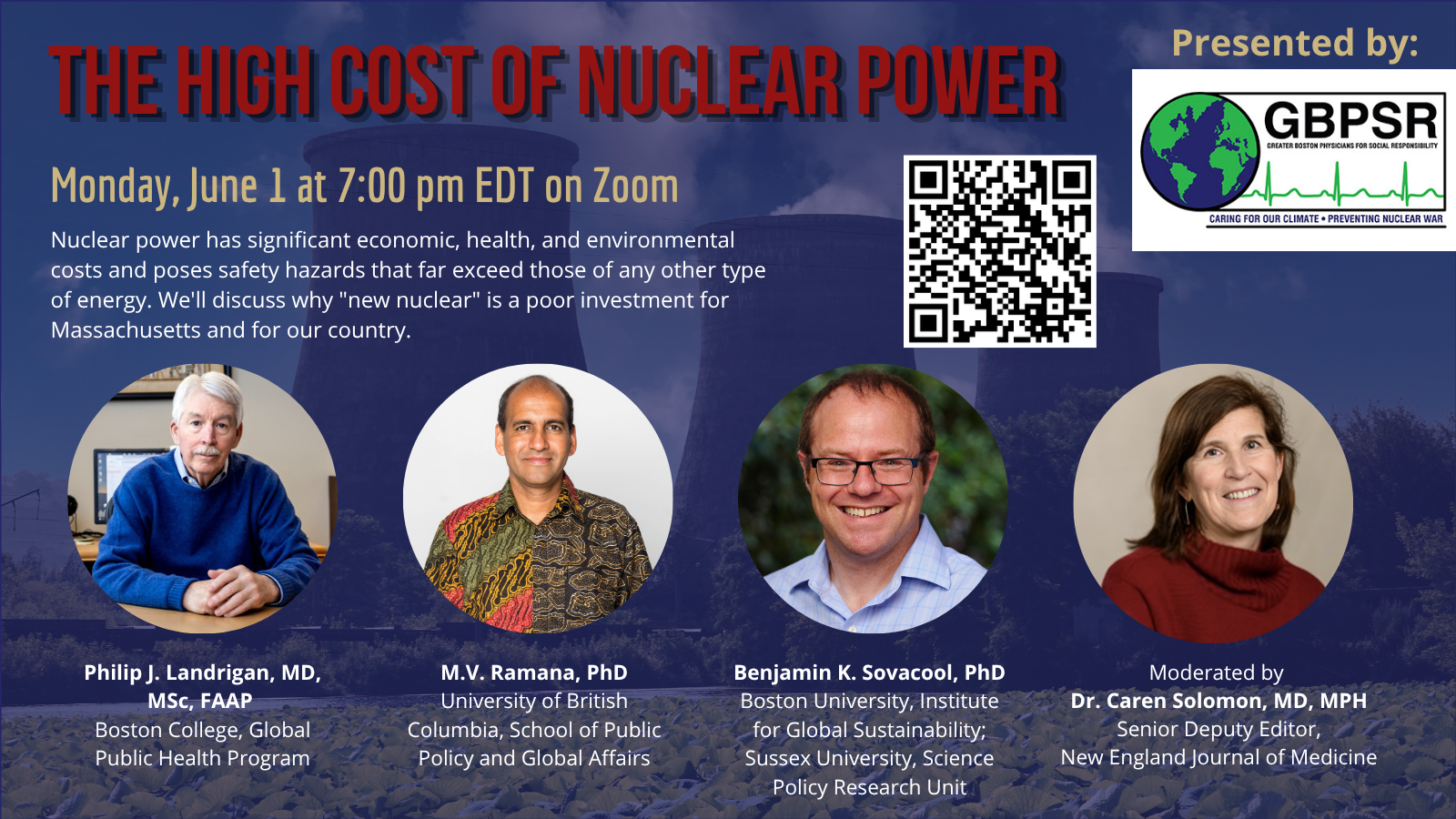
1 June Webinar – The High Cost of Nuclear Power – Register
6 June – WEBINAR- Get Inspired by Protests Against Military Bases!


Cuba Is Not a Failed State – It Is a Besieged State
PETITION: “Global Appeal to Endorse Palestinian Right of Return of Refugees”

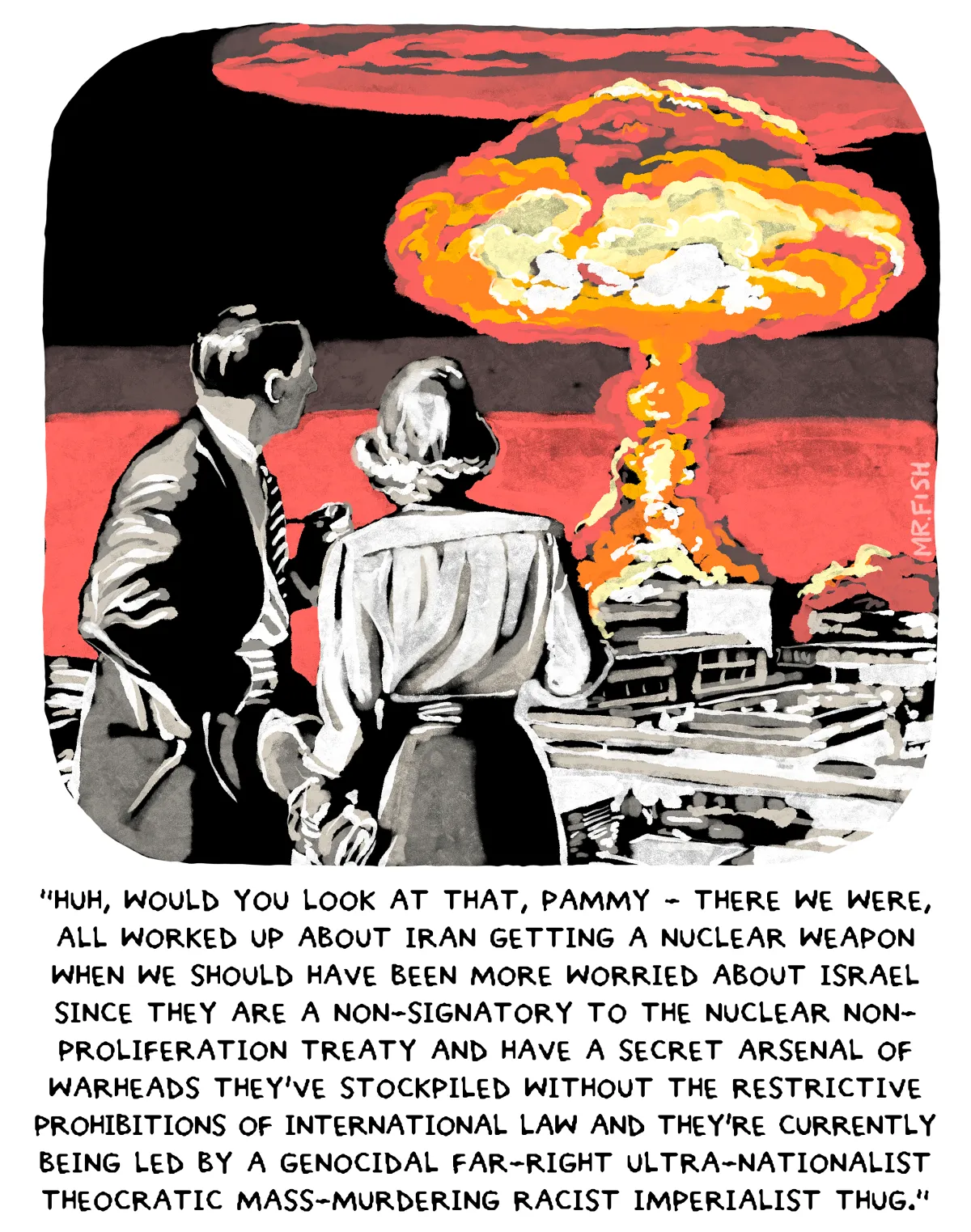

of the week– Nuclear Reactor Information Task Force
To see nuclear-related stories in greater depth and intensity – go to https://nuclearinformation.wordpress.com
-
Archives
- June 2026 (27)
- May 2026 (306)
- April 2026 (356)
- March 2026 (251)
- February 2026 (268)
- January 2026 (308)
- December 2025 (358)
- November 2025 (359)
- October 2025 (376)
- September 2025 (257)
- August 2025 (319)
- July 2025 (230)
-
Categories
- 1
- 1 NUCLEAR ISSUES
- business and costs
- climate change
- culture and arts
- ENERGY
- environment
- health
- history
- indigenous issues
- Legal
- marketing of nuclear
- media
- opposition to nuclear
- PERSONAL STORIES
- politics
- politics international
- Religion and ethics
- safety
- secrets,lies and civil liberties
- spinbuster
- technology
- Uranium
- wastes
- weapons and war
- Women
- 2 WORLD
- ACTION
- AFRICA
- Atrocities
- AUSTRALIA
- Christina's notes
- Christina's themes
- culture and arts
- Events
- Fuk 2022
- Fuk 2023
- Fukushima 2017
- Fukushima 2018
- fukushima 2019
- Fukushima 2020
- Fukushima 2021
- general
- global warming
- Humour (God we need it)
- Nuclear
- RARE EARTHS
- Reference
- resources – print
- Resources -audiovicual
- Weekly Newsletter
- World
- World Nuclear
- YouTube
-
RSS
Entries RSS
Comments RSS
 nuclear-news