What’s behind the peace negotiations for Ukraine?

(President Macron) had indeed pompously signed documents for the sale of 100 Rafale fighter jets, SAMP/T air defense systems, modern air defense radars, air-to-air missiles, and guided bombs to Ukraine. In reality, these were not contracts, but “declarations of intent.” The financing for these extravagant sales was not guaranteed, and their manufacture by Dassault Aviation could not begin for five to ten years.
We don’t know what was said in Washington, but we can assume that the United States took a firm stance toward Ukraine, even if it didn’t want to risk destroying Atlantic solidarity. Thierry Meyssan presents here what transpired during this tumultuous week.
by Thierry Meyssan, Voltaire Network | Paris (France) | 5 December 2025, https://www.voltairenet.org/article223293.html
To understand the week of peace negotiations in Ukraine, it is essential to first dispel the misinformation disseminated by the mainstream press: contrary to what they implied, the Europeans were never allowed to join the Geneva talks.
It is also worth recalling what I explained last week [1]: European governments have no interest in peace; they even fear it: it would undoubtedly bring about their own downfall.
It is therefore no coincidence that the German, British, and French press claimed that the Geneva peace plan was a European document. They asserted this so strongly that we ourselves repeated this falsehood before correcting it.
With that established, let us review the sequence of events:
When the peace plan, drafted by the United States and Russia in Florida, became public [2], the subservient commentators presented it as “outrageously pro-Russian.”
The Geneva Negotiations
The Ukrainians requested to draft a counter-proposal with the United States. Talks were held in Geneva on November 23 and 24.
However, on November 22, EU leaders, along with the British, Norwegians, and Japanese, all attending the G20 summit of heads of state and government in Johannesburg, issued a joint statement. It reads:
“We are ready to commit to ensuring that future peace is lasting. We are clear on the principle that borders must not be changed by force. We are also concerned about the proposed restrictions on the Ukrainian armed forces, which would leave Ukraine vulnerable to future attack.
We reiterate that the implementation of elements relating to the European Union and those relating to NATO would require the consent of the respective EU and NATO members.”
Germany, France, and the United Kingdom therefore sent diplomats—uninvited—to the Intercontinental Hotel where the US and Ukrainian delegations were staying. They were able to speak with both sides but were not admitted to the negotiations.
The document, released after the talks, reiterates only the Ukrainian arguments [3].
It no longer mentions the denazification of Ukraine, the country’s neutrality, or EU participation in its reconstruction. It is therefore unacceptable from a Russian perspective.
Presenting his work to the press, State Secretary Marco Rubio simply stated that things were progressing very well. This is probably because Ukraine had renounced the reconquest of territories occupied/liberated by Russia and accepted their international recognition as Russian.
The “Coalition of the Willing”
On November 25, the Coalition of the Willing, established on March 1, 2025, by General Petr Pavel, Czech President and former Chairman of NATO’s Military Committee, and by Keir Starmer, British Prime Minister, met via videoconference.
Continue readingUkraine’s Energoatom, Holtec International, and the US retreat from fighting corruption abroad

very little about the relationship between Trump’s Washington and Zelenskyy’s Kyiv might be considered ordinary.
President Zelensky moved to dismantle the safeguards meant to protect Ukraine’s institutions from corruption,
Bulletin, By Matt Smith | December 3, 2025,
In 2012, FBI agents stationed themselves in a Trump Tower apartment to wire up a senior official of FIFA, soccer’s world governing body, to record conversations that would become evidence for anti-bribery prosecutions. In 2018, Justice Department officials seized the yacht Equanimity in an operation aimed at returning stolen assets to Malaysia. In 2023, the United States sent a veteran US prosecutor to Kyiv to strengthen Ukraine’s anti-corruption agencies, which America had earlier helped establish.
In a functioning international order, we might see this type of global collaboration in the wake of a recent investigative piece I wrote for the Bulletin about a US company, Holtec International, that has had substantial dealings with a state-owned nuclear company now under investigation in Ukraine.
In more normal times, the government of Ukrainian President Volodymyr Zelenskyy might request assistance under the US-Ukraine Treaty on Mutual Legal Assistance in Criminal Matters. The FBI established a liaison office at the headquarters of the National Anti-Corruption Bureau of Ukraine (aka NABU) in 2017, under a memorandum of understanding to cooperate on “investigations related to money laundering, international asset recovery, and Ukrainian high-level officials’ bribery and corruption.” These are word–for–word what investigators are now pursuing in Ukraine’s nuclear power agency.
A professionalized Justice Department could respond to a formal Ukrainian request by issuing subpoenas seeking information from US firms that might be relevant to the Ukrainian probe.
But we are no longer in anything like normal times.
Here’s the context: NABU—an agency the United States helped create and train—is investigating an alleged $100 million corruption scheme inside Energoatom, the governmental body that oversees nuclear energy and spent fuel storage in Ukraine. This scandal has consumed Zelenskyy’s inner circle and led to the resignation of his chief deputy and lead peace negotiator.
Holtec International, a Florida company that established an office in Kyiv in 2007, became a prime contractor and subcontractor for Energoatom on complex, multi-year spent nuclear fuel storage projects.
Holtec executives met repeatedly with Energoatom leadership. They navigated Ukraine’s procurement systems. They hired local subcontractors. They managed complex, multi-year construction projects in a business environment that Ukrainian prosecutors now say has been compromised. Holtec has files that could matter: Ukrainian invoices, compliance checks, email communications, and management logs.
In response to my inquiry about whether the company had heard from the Justice Department regarding Ukraine, Holtec issued a statement saying it witnessed no corruption: “Our operations center in Kyiv, Holtec Ukraine, has worked with our client, Energoatom, to provide safe storage systems and technology to ensure the spent fuel in Ukraine is stored safely and protected from external threats. At no time have we had any interactions that would have led us to believe in any impropriety with our work and contracts.”
As with any such company statement, this one merits checking. Holtec email communications might show whether American executives interacted with the officials now under investigation. Compliance audits might reveal whether the company flagged irregularities. Payment records might reveal inflated costs prosecutors have identified elsewhere. Internal management logs might document which Ukrainian officials controlled access to Holtec’s projects and whether those officials match the outside “shadow managers” prosecutors have identified as having gained control of Energoatom and then having demanded bribes from contractors.
The Bulletin’s investigation, published November 20, did not find evidence that Holtec was involved in Ukrainian misconduct. In fact, subpoenaing Holtec’s records would neither require nor imply allegations of corporate wrongdoing; such subpoenas require only the recognition that a US entity could possess evidence material to a foreign corruption prosecution. The legal mechanisms for seeking Holtec’s records exist. The precedents for doing so are well-established. Such a procedure has previously been seen as an ordinary step.
But very little about the relationship between Trump’s Washington and Zelenskyy’s Kyiv might be considered ordinary.
Since Trump took office in January, his administration has pursued a quiet dismantling of America’s ability to provide this kind of aid. On February 5, Attorney General Pam Bondi formally disbanded Task Force KleptoCapture, the unit established after the Russian invasion of Ukraine and dedicated to seizing assets of Russian oligarchs. Five days later, President Donald Trump signed Executive Order 14209, explicitly “pausing” enforcement of the Foreign Corrupt Practices Act—the very statute that authorizes investigations into potential bribery of foreign officials by US companies.
Deregulation even extended to tools of crime, as Russia increasingly relies on cryptocurrency to bypass sanctions. The Justice Department has turned away from prosecuting digital asset violations while the US established a “Strategic Bitcoin Reserve,” giving legitimacy to a cryptocurrency known as a key sanctions-evasion tool.
Scores of federal prosecutors have left Justice as colleagues were fired for perceived political slights. Trump’s highest-priority prosecutions—i.e., the politicized ones—are pursued by unqualified loyalists who have ended up, in many matters, embarrassing a once-storied agency.
The diminished US interest in corruption prosecution has had foreseeable consequences in Kyiv. Concurrent with the shift in Washington, President Zelensky moved to dismantle the safeguards meant to protect Ukraine’s institutions from corruption, signing legislation in July to strip NABU of independence. Ukrainians took to the streets. Most reports about international pressure to restore NABU’s status concerned European countries that sprang to the defense of the anti-corruption agency America helped build. The United States recently rotated a new FBI liaison to the NABU offices as part of the cooperation agreement. The Ukrainian press said a recent meeting concerned the Energoatom bribery case.
Typically, the next steps might seem clear. But nobody involved seems to be operating in a typical way.
The Justice Department press office did not respond to questions asking whether Holtec’s files sit in Florida, untouched. https://thebulletin.org/2025/12/ukraines-energoatom-holtec-international-and-the-us-retreat-from-fighting-corruption-abroad/?utm_source=ActiveCampaign&utm_medium=email&utm_content=Ukraine%20s%20Energoatom%2C%20Holtec%20International%2C%20and%20the%20US%20retreat%20from%20fighting%20corruption%20abroad&utm_campaign=20251201%20Monday%20Newsletter%20%28Copy%29
Trump’s buried complicity in lost US proxy war against Russia.

Walt Zlotow, West Suburban Peace Coalition Glen Ellyn IL 2 Dec 25
Trump boasted he’d end the war destroying Ukraine in one day if re-elected. He claimed it was all Biden’s war that Trump had nothing to do with. If only Trump had been reelected in 2020, he claims, there would have been no war gutting Ukraine as a functioning state with tens of millions fled, dead, deserted, injured. The US wouldn’t have squandered over $180 billion to achieve this dubious Biden achievement.
Trump, like every world leader, gets to make history but not rewrite history. Joe Biden was president when Russia launched its Special Military Operation to liberate the Donbas Ukrainians from destruction by Kyiv and keep NATO missiles off Russia’s borders. Biden essentially triggered that totally unnecessary war now in the final stages of Ukraine’s collapse. Biden also sabotaged the peace deal nearly achieved two month in that would have ended the war with no new lost Ukrainian territory.
That will get Biden history’s everlasting condemnation. But Trump also deserves history’s condemnation for ramping up the conditions that led to war under successor Biden. During his first term from 2017 to 2021 Trump kept alive long standing US dream of bringing Ukraine into NATO, a red line Russia warned America not to cross for over a decade prior. Trump authorized repeated NATO military exercises in Ukraine, which effectively made Ukraine a de facto NATO member. Trump allowed new NATO bases in Poland and Romania, adding to Russian angst over NATO encroachment.
Trump reversed a sensible Obama policy of not arming the Kyiv government to complete its destruction of Donbas Ukrainian separatists. In his 4 years Trump oversaw a fourfold increase of Kyiv military might. Had Trump simply reversed senseless US expansion of NATO beginning under Bill Clinton in 1999, and forced Germany, France and UK to honor the Minsk Agreements granting regional autonomy to Donbas Ukrainians, Biden may not have had the conditions or momentum to provoke the February 2022 Russian invasion.
Trump pretends he’s the White Knight bringing peace to a Ukraine wrecked solely by Biden’s perfidy. He should own up to his first term complicity and make peace to atone for his own sins destroying Ukraine as well as those of Joe Biden.
France & UK Still Insist On Sending Troops To Ukraine, In Effort To Sabotage Trump Peace Plan
by Tyler Durden, Tuesday, Dec 02, 2025 ,https://www.zerohedge.com/geopolitical/france-uk-still-insist-sending-troops-ukraine-effort-sabotage-trump-peace-plan
As we reported earlier, the important Miami meeting wherein American and Ukrainian delegations hammered out a revised ceasefire draft for some five hours on Sunday did not have European participation. But this is where the real deal-making is taking place. Trump envoy Steve Witkoff is en route to Moscow, where he’s expected to meet with President Putin on Tuesday, in order to present where things stand on the peace plan.
The Miami meeting reportedly focused on where the new de facto border would be in the east, after the 19-point plan featured significant territorial concessions in the Donbass and Crimea. As for Europe, is still touting a “coalition of the willing” which are vowing ongoing military support to the Zelensky government.
At this moment, France and the United Kingdom especially are continuing to push for the deployment of troops from NATO-member states to Ukraine as part of their version of peace settlement, despite this being very obviously unacceptable to Moscow.
Last week Politico reported that when US Secretary of State Marco Rubio joined a discussion involving the coalition of the willing via phone call, he made clear to all that the White House wants a peace agreement in place before committing to any long-term security guarantees for Kiev.
But UK Prime Minister Kier Starmer tried to push back, arguing that a “multinational force” would be essential for ensuring Ukraine’s future security.
Bloomberg then followed with a report saying that UK officials have already selected the military units they plan to deploy, based on several reconnaissance trips to Ukraine.
France’s President Emmanuel Macron proposed that such troops could operate in the capital area or western regions of the country, far from the front lines. But this would flagrantly cross all Russia’s red lines. NATO troops on its doorstep was key Putin’s decision-making in launching the ‘special military operation’ in the first place.
It must be recalled that the original US-drafted 28-point peace plan, which leaked to the press and more recently was condensed down to 19 points, included an explicit prohibition on deploying NATO troops to Ukraine.
The European-proposed counter-plan, which was also quickly leaked to the media, greatly softened that stance and laid out that instead of a blanket ban, NATO would not “permanently station troops under its command in Ukraine in peacetime.”
At a moment Trump’s peace plan advances, and with Witkoff on his way to meet with President Putin, hawks in Europe are growing even more hawkish:
Such intentionally vague language leaves open the possibility of NATO troop rotations into Ukraine. The Kremlin has time and again said it would not tolerate this, and such a move would lead to direct war with the West.
Europe’s plan also seeks to leave open a Ukrainian path to NATO, but this is also a sticking point which the US plan leaves out, given it would of course be dead on arrival if presented to Putin.
U.N. nuclear agency returns to Chernobyl to check damage from recent Russian drone attack.

The International Atomic Energy Agency is sending
technicians to the site of Ukraine’s Chernobyl nuclear power plant to
assess the current condition of an arch-shaped steel structure that was
erected over the damaged reactor following the 1986 Chernobyl disaster. The protective shell, known as the New Safe Confinement, was erected in 2016.
It was struck by a Russian drone in February 2025, authorities said.
“While February’s drone strike did not lead to any release of
radioactive material, it caused significant structural damage, affecting
the NSC’s designed confinement function and projected lifetime,” IAEA
Director General Rafael Mariano Grossi said Thursday in a statement.
Washington Times 28th Nov 2025 https://www.washingtontimes.com/news/2025/nov/28/un-nuclear-agency-returns-chernobyl-check-damage-recent-russian-drone/
The Neocon-Realist Armageddon Over Ukraine
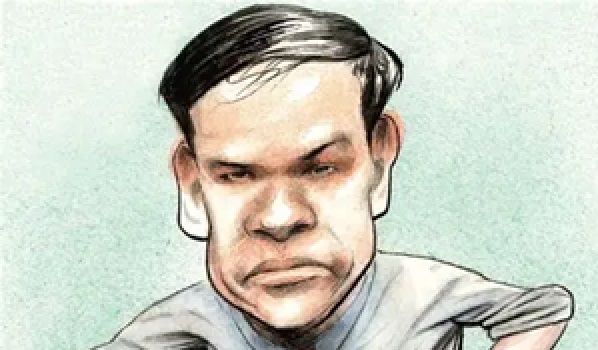
Rubio was in Geneva last Sunday with the Ukrainians and Europeans to undermine Trump’s 28-point plan, trying to replace it with one of just 19 points that unrealistically gives an advantage to Ukraine. Unrealistic because this war has already ended on the battlefield and Trump has virtually acknowledged it.
By Ray McGovern, Consortium News, https://consortiumnews.com/2025/11/28/ray-mcgovern-the-neocon-realist-armageddon-over-ukraine/
Donald Trump made some revealing remarks to the media as he flew to Florida for Thanksgiving on Wednesday. Asked if he thought Ukraine is being asked to give too much land to Russia in his proposal to end the war, Trump responded:
“It’s clearly up to the Russians. It’s moving in one direction. … That’s land that over the next couple of months might be gotten by Russia anyway. So, do you want to fight and loose another 50,000 or 60,000 people? Or do something now? They are negotiating; they are trying to get it done.”
That’s the same realistic approach Trump’s new special envoy to Ukraine, U.S. Army Secretary Daniel Driscoll, took with the Ukrainians and Europe’s so-called “coalition of the willing” during a visit to Kiev earlier this week.
Driscoll reportedly threw in yet one more reason for Ukraine to end the war – the fact that the Russians have ever-growing stockpiles of missiles they can deploy.
In other words, the undeniable Russian advances all along the contact line in Ukraine are no longer deniable to anyone tuned into reality.
But not everyone is tuned in. U.S. Gen. Keith Kellogg, who unrealistically claimed that Ukraine could still win, has been removed as special envoy to Ukraine, but there are other neocons lurking near the White House, for instance, Secretary of State Marco Rubio who also as national security adviser can control the flow of intelligence and policy proposals to the president.
Rubio was in Geneva last Sunday with the Ukrainians and Europeans to undermine Trump’s 28-point plan, trying to replace it with one of just 19 points that unrealistically gives an advantage to Ukraine. Unrealistic because this war has already ended on the battlefield and Trump has virtually acknowledged it.
What’s next is an official agreement, endorsed, ideally by the United Nations Security Council, where France or Britain, however, could veto it, as the Europeans continue their efforts to thwart such a peace agreement.
Britain, France and Germany, for example, are still pushing the fantasy that Russia is poised to attack Europe.
So we are at the threshold on Ukraine, at the beginning of a consequential battle between the neo-cons and Europeans on one side, and Donald Trump and the realists on the other. Will Trump show the fortitude to see this through and overcome his secretary of state?
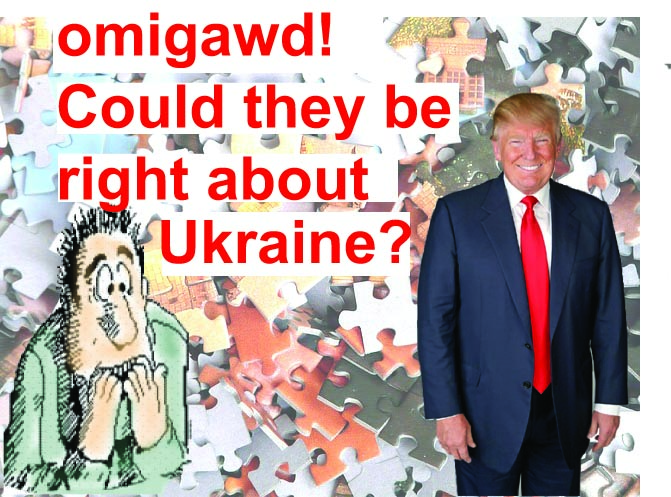
For now you can dismiss the idea that the so-called “Peace Plan” is “dead on delivery.” It hasn’t even officially been delivered to Russia yet.
Russian President Vladimir Putin awaits hand delivery from U.S. envoy Steve Witkoff probably on Monday – Washington’s recent unorthodox conduct of diplomacy notwithstanding.
My sense is that Witkoff, like Driscoll, will dis the Europeans and go to Moscow with the 28-point draft plan for discussion and that it will adhere to one of the main provisions of Anchorage — namely that Trump will not let Zelinski sabotage movement toward an agreement. Putin told Hungarian President Viktor Orban today in Moscow that he remained open to meeting Trump in Budapest at a future date.
For his part, Putin seems ready to do business. An important backdrop is his priority objective of preventing relations with the U.S. from falling into a state of complete disrepair. As for Ukraine, Putin has reiterated that the 28-point Trump plan could form the basis for future agreements.
Taking questions from the press yesterday in Bishkek, Kyrgyzstan, Putin gave clarity to a number of key issues. He said there was “no ‘draft agreement’ per se,” but rather “a set of issues proposed for discussion and finalization.”
Putin went on:
“We discussed this with American negotiators, and subsequently, a list of 28 potential points for an agreement was formulated.
Thereafter, negotiations were held in Geneva between the American and Ukrainian delegations. They decided among themselves that all these 28 points should be divided into four separate components. All of this was passed on to us.
In general, we agree that this could form the basis for future agreements. However, it would be inappropriate for me to speak now of any final versions, as these do not exist.”
Putin noted that the U.S. — this would be Trump, not Rubio — is “taking our position into account – the position that was discussed before Anchorage and after Alaska. We are certainly prepared for this serious discussion.”
On the question of land, Putin made certain that Russia will not be denied. He said, “I think it will be clear at once what it is all about. When the Ukrainian troops leave the territories they occupy, then the hostilities will cease. If they do not leave, we will achieve it militarily. That’s that.”
Of course, in 2022 Russia entered the Ukrainian civil war that had begun after the 2014 U.S.-backed coup that lead to the U.S.-installed government attacking the ethnic Russian Donbass region, which had rejected the unconstitutional change of government and declared independence.
After eight years of indirectly aiding Donbass, Russia intervened directly after the Minsk agreements to end the civil war were sabotaged by Ukraine and the Europeans. Russia’s war demands have remained demilitarizing and denazifying a neutral Ukraine. In the course of its intervention it has absorbed four Ukrainian oblasts into the Russian Federation, which remains non-negotiable to Moscow.
“Those in the West who understand what [recent Ukrainian defeats on the battlefield] could lead to are pushing for an end to the fighting as soon as possible,” Putin said, referring to the realists in Washington.
“They understand that if the front lines are drawn back in certain areas, the Ukrainian armed forces will lose their combat effectiveness and their most combat-ready units,” he said. “‘Enough is enough, preserve the core of your armed forces and your statehood, that’s what you need to focus on,’ say those who hold this view.”
But he said “others,” referring to the Europeans and neocons, “insist on continuing the hostilities until the last Ukrainian. That’s the difference in approaches.”
Putin tried to put to rest the fear-mongering in Europe about a planned Russian attack on the continent. “Russia does not intend to attack Europe. To us, that sounds ridiculous, does it not?” he said. “We never had any such intentions. But if they want to have it formalised, let’s do it, no problem.”
Putin also reiterated that Russia could only sign a peace agreement with a legitimate government in Ukraine after a new election, another obstacle to overcome.
“I believe that the Ukrainian leadership made a fundamental, strategic mistake when it was afraid to hold presidential elections, and as a result, the president lost his legitimate status,” Putin said. “As soon as any kind of peace agreement is reached, the fighting will stop, and the state of emergency will be lifted, elections will be announced.”
Which is another incentive for Zelensky and those who back him inside and outside of Ukraine to keep on fighting.
“So, basically, we want to reach an agreement with Ukraine in the end, but it’s almost impossible right now, legally impossible. We need our decisions to be internationally recognized by the major international players. That’s it,” said Putin.
He added:
“And so, of course, we need recognition, but not from Ukraine today. I hope that in the future we will be able to come to an agreement with Ukraine: there are many healthy people there who want to build relations with Russia for a long-term historical perspective.”
Peace then will require the complete negation of the neocons and the Europeans and a new government in Kiev — a tall order indeed.
It comes down to whether Trump can finally stand up to them — people whom he appointed, like Rubio, and whom he golfs with, like Sen. Lindsey Graham. He seems to have less respect for the Europeans, who practically sat at his feet around the Oval Office desk earlier this year pleading their case on Ukraine.
Trump may be motivated in part by the vain desire to end the war to win the Nobel Peace Prize. But he can get it done. Trump can ignore the Europeans and be serious this time about cutting off military aid and intelligence to Ukraine as he threatened to do if Zelensky did not accept his 28 points by Thanksgiving.
When it comes to Ukraine, Trump really does hold the cards. Will he play them?
The mysterious black fungus from Chernobyl that may eat radiation
Mould found at the site of the Chernobyl nuclear disaster appears to be
feeding off the radiation. Could we use it to shield space travellers from
cosmic rays? In May 1997, Nelli Zhdanova entered one of the most
radioactive places on Earth – the abandoned ruins of Chernobyl’s exploded
nuclear power plant – and saw that she wasn’t alone.
Across the ceiling,
walls and inside metal conduits that protect electrical cables, black mould
had taken up residence in a place that was once thought to be detrimental
to life. In the fields and forest outside, wolves and wild boar had
rebounded in the absence of humans. But even today there are hotspots where staggering levels of radiation can be found due to material thrown out from the reactor when it exploded.
BB 28th Nov 2025, https://www.bbc.co.uk/future/article/20251125-the-mysterious-black-fungus-from-chernobyl-that-appears-to-eat-radiation
What Defeat Looks Like

Had the western powers acted in good faith to resolve these issues at Minsk, history might have taken a different course. Instead, European leaders did everything they could to scuttle the Accords.
On the battlefield, Russia is in no rush; it is defeating Ukraine in a grinding war of attrition that by now is irreversibly in Russia’s favour.
As in Potsdam at the end of the Second World War, the only path forward now is working out the terms of Ukraine’s defeat. And there is still time to save lives, writes Stefan Moore.
Stefan Moore, Consortium News, November 28, 2025, https://consortiumnews.com/2025/11/28/what-defeat-looks-like/
European leaders are in panic mode. They are scrambling to ensure that Trump’s 28-point peace plan that they believe favours Russia can be revised to give Ukrainian President Volodymyr Zelensky an equal say alongside Russian President Vladimir Putin.
This is delusional thinking. Whether or not Zelensky and his U.S./NATO allies, who have poured hundreds of billions of dollars into this conflict care to accept it, Russia is the indisputable victor in this terrible 14-year war, beginning with the 2014 Ukrainian civil war, which Russia entered in 2022.
Moscow will call the shots when it finally ends. As in Potsdam at the end of WWII, the only path forward now is working out the terms of defeat.
Those terms include Ukraine losing all or most of the four eastern oblasts – Donetsk, Lugansk, Zaporizhzhia and Kherson (amounting to roughly a third of its territory and population); an ironclad prohibition from joining NATO, which Russia correctly views as a hostile alliance; the reduction of its armed forces (the size to be negotiated) and the denazification of its military and government.
For those who believe this is an intolerable capitulation, it’s time to review the historical record.
Since the end of the Cold War, despite promises to Russia that it would not move “one inch eastward”, NATO has pushed up to Russia’s borders from Poland to the Baltic states and in 2008 invited Ukraine and Georgia to become members. The potentially devastating consequences of this expansion were signalled by the most senior U.S. diplomats at the time.
William Burns, the U.S. ambassador to Russia in 2008 warned in a cable published by WikiLeaks that Ukraine becoming a NATO member could lead to war with Russia in Ukraine, a prediction that eventually came true.
The architect of America’s Soviet containment policy, George Kennan, presciently warned as early as 1997 that “expanding NATO would be the most fateful error of American policy in the entire post-Cold War era.”
Not only were these words not heeded, but the West set out to weaken Russia in every way possible.
The Coup
In 2014, the U.S. helped engineer a coup (revealed here, here, and here) to overthrow Ukraine’s democratically elected, Russia-friendly president Victor Yanukovych and install a Western-friendly regime. Billed in the Western media as a popular uprising for democracy, it led Ukraine on the path to civil war between the European-aligned west and the east which had closer ties to Russia.
The biggest losers in this adventure were the ethnic Russian people of Ukraine’s eastern region who opposed the coup and called for the creation of separate autonomous states. In response, Ukraine’s armed forces and its virulently anti-Russian neo-Nazi battalions went on the attack.
In what turned out to be a disingenuous attempt to resolve the conflict, Ukraine and Russia took part in the Minsk Accords (mediated by France and Germany with U.N. support).
Among other things, Minsk proposed autonomy of the ethnic-Russian regions of Donetsk and Lugansk within a federated state of Ukraine, and an understanding that Ukraine could not join NATO, an alliance that Russia correctly sees as an existential threat.
For those who fail to comprehend Russia’s insistence on the latter point, it would be equivalent to Mexico or Canada entering a security alliance with Russia that allowed them to station nuclear capable missiles on the U.S. border. One only has to recall the Cuban Missile Crisis to see how that worked out.
Had the western powers acted in good faith to resolve these issues at Minsk, history might have taken a different course. Instead, European leaders did everything they could to scuttle the Accords.
Later, former Germany’s Angela Merkel and then ex-French president Francois Hollande would publicly admit that they were just playing along to give NATO more time to arm Ukraine to defeat Russia – a battle they have been willing to fight to the last Ukrainian.
Between the time of the Minsk Accords in 2015 and Russia’s invasion of Ukraine in 2022, on behalf of the besieged population in the east, nearly 14,000 ethnic Russian civilians had been killed by Ukraine’s forces, teaching the Russian language had been prohibited, Russian churches had been outlawed and Russian language media had been severely restricted.
The Istanbul Denial
Yet, despite the setback following Minsk and just two months into Russia’s invasion, another opportunity to end the war was being negotiated between Russia and Ukraine in Istanbul.
The terms were similar to Minsk, but just as Ukraine was about to sign the agreement, U.K. Prime Minister Boris Johnson descended on Kiev on behalf of NATO to tell Zelensky to pull the plug — the U.S. and Europe would provide Ukraine with all the weapons it needed to continue to fight Russia.
So, four years on, here we are. Putin, fooled twice, has lost all trust in Western leaders and has no more time for their games. On the battlefield, Russia is in no rush; it is defeating Ukraine in a grinding war of attrition that by now is irreversibly in Russia’s favour.
Contrary to European leaders’ tough talk, Ukraine has nearly run out of trained soldiers, the U.S. has run out of ground war arms to give to Ukraine and, despite its belligerent rhetoric, Europe has run out of money to send to Kiev. (Meanwhile, revelations of corruption close in on Zelensky’s inner circle, claiming the resignation today of his chief of staff.)
The tragedy is that all of this – the loss of over a million lives (mostly young Ukrainian and Russian men thrown into the meatgrinder of trench warfare), the fleeing of over 7 million Ukrainian refugees who are unlikely to ever return and the widespread destruction of Ukraine’s infrastructure – could have all been avoided.
The notion that the West came to the aid of Ukraine to defend democracy in the most corrupt and neo-Nazi infested country in Europe is as deceptive as it is laughable. This has always been a battle initiated by the U.S./NATO alliance to weaken Moscow, overthrow Putin and return the West to dominance over Russia like in the 1990s, with Ukraine as the unfortunate willing proxy.
It was sheer hubris and stupidity for the neocons in Washington and Brussels, pumped up with triumphalism after the fall of the Soviet Union, to think they could mould the post-Cold War world including Eurasia in their interests without disastrous consequences.
In the end, Ukraine will be defeated but there are no real winners.
Both Ukraine and Russia will take years to recover from the human and economic cost of this devastating war; Europe’s economy is in tatters with near negative growth, energy prices three times higher than before the destruction of Russia’s Nord Stream pipeline, and companies fleeing to produce offshore.
As for the U.S. , it has nothing to show other than public anger over the war, soaring national debt and increasing isolation as a global power.
As always, the biggest prize-winners are the global defence contractors whose profits have skyrocketed since the start of the war in Ukraine and Israel’s genocidal war in Gaza.
Stefan Moore is an American-Australian documentary filmmaker whose films have received four Emmys and numerous other awards. In New York he was a series producer for WNET and a producer for the prime-time CBS News magazine program 48 HOURS. In the U.K. he worked as a series producer at the BBC, and in Australia he was an executive producer for the national film company Film Australia and ABC TV.
Trump’s Ukraine peace plan D.O.A with neocon Rubio as Secretary of State, National Security Advisor.
top diplomat Rubio doesn’t do peaceful diplomacy, only violent regime change.
Trump wants out of the US proxy war with Russia…but not because he’s man of peace.
Walt Zlotow West Suburban Peace Coalition Glen Ellyn IL , 28 Nov 25
Enabling the Israeli genocide in Gaza that has killed over 100,000 Palestinians made no dent on Trump’s degraded conscience. In fact, he’s ecstatic that he can both control and rebuild Gaza as head of the colonial ruling ‘Board of Peace’ which will essentially cement Gaza into Greater Israel.
Trump’s sadism extends to his ghoulish glorying in blasting 20 small unarmed boats to smithereens off Venezuela as prelude to his imminent and violent regime change operation.
But Trump wants out of America’s lost proxy war with Russia destroying Ukraine. He cares not a whit about the death and destruction his predecessor Biden brought Ukraine by promising NATO membership and fueling their war on Russian leaning Ukrainians in Donbas. He simply knows it’s a lost cause that gobbles up valuable war resources needed for Gaza, Venezuela and eventual confrontation with China.
Why then was he so stupid to appoint virulent neocon Marco Rubio as both Secretary of State and National Security Advisor? Rubio is not in sync with Trump’s peace plan. He flew to Geneva to reassure European leaders committed to an impossible Ukrainian victory that ‘all is not lost.’ Rubio’s remarks halted momentum derived from Trump’ 28 point peace plan that Russia President Putin agrees provides a sensible framework for a negotiated peace. Europe is risking self-destruction to prevail over Russia and Rubio is all too willing to assist them.
Trump should fire Rubio from both jobs to regain lost momentum to extricate America from its lost war to weaken, isolate Russia from Europe. With Rubio at State and National Security, Ukraine will simply lose more territory and more cannon fodder every day he continues to gum up the peace process.
One might surmise Rubio would push for peace in Ukraine so he could spend more of his supposed diplomatic portfolio effecting regime change in Venezuela followed by Honduras, Nicaragua, Columbia and his ultimate prize Cuba.
But top diplomat Rubio doesn’t do peaceful diplomacy, only violent regime change. Since Russian regime was part of our 11 year long proxy war against Russia beginning when we KO’d Russian leaning Ukrainian president Victor Yanukovych in 2014, Rubio remains all in.
If Trump was serious about withdrawing from Ukraine and indeed all of Europe bankrupting their economies to confront an imaginary Russian bogyman, he’d have put peacemakers at State instead of warmakers. Forget ending the Ukraine war on Day 1. Unless he dumps Rubio and his fellow neocons, Trump will get to Day 1,461, his last, still enmeshed in the Ukraine roach motel.
Fighting for Peace and Fighting for War in Ukraine
More importantly, Kiev also rejected Russia’s key demand, thus maintaining the root, main cause of the war: NATO’s and Kiev’s attempts to have Ukraine become a NATO member
Russian and Eurasian Politics, by Gordonhahn, November 26, 2025, https://gordonhahn.com/2025/11/26/fighting-for-peace-and-fighting-for-war-in-ukraine/
We are witnessing another failed effort by U.S. President Donald Trump to make peace in Ukraine. Europe, perhaps along with the Deep State, has helped Kiev reject yet another Trump diplomatic effort. This leaves in place the threat of a Europe-wide war with Russia. Europe very possibly will spark a larger war with Russia.
The effort for peace spawned by the 28-point plan drafted by Steve Witkoff in consultation with Moscow has failed because Kiev again has refused to accept Russia’s key demands: Ukrainian neutrality, territorial concessions, and demilitarization. Denazification appears to a less key demand for Moscow or at least Kiev is willing to make concessions on this point.
Rather than accepting its imminent defeat the Ukrainians joined with their European allies in once again drafting an alternative, completely countervaling and counter-productive peace proposal, which Moscow immediately rejected, having already accepted the Trump document, as „a basis for a future agreement,“ as Russian President Vladimir Putin put it.
This could have led to the beginning of a three-way give and take, but Kiev rejected abandoning the 20 percent of Donetsk Oblast territory its forces still hold and demands an 800,000-man army. More importantly, it also rejected Russia’s key demand, thus maintaining the root, main cause of the war: NATO’s and Kiev’s attempts to have Ukraine become a NATO member, despite the objective threat this poses to Russian national security and Moscow’s opposition to NATO expansion spanning three decades.
Europe immediately declared its opposition to the plan and raced to draft the alternative, Kievan plan to undercut the Trump plan, repeating an exercise they undertook in summer when another Trump diplomatic effort seemed might make some headway. Furthermore, it appears that the Deep State and/or MI6 have helped to spearhead the Eurpean effort to derail the Trump peace train.
The bugging and leak to Bloomberg of a less than compromising conversation between Steven Witkoff and Russian President’s chief foreign policy advisor Yurii Ushakov has been used as was intended: to discredit the peace plan, which neocon propagandists like Michael Weiss have claimed was a purely Russian creation that Trump and other ‚Putin agents‘ dutifully pushed on tot he agenda, doing the Kremlin’s bidding.
Trump’s only hope of acheiving an agreement is to force one by pulling out all the stops in order to pressure Kiev to accede to Moscow’s demands, which are backed up strongly by Russia’s mounting advance across eastern Ukraine towards the Dnieper River.
Only depriving Kiev of all US assistance has a chance of forcing Ukrainian leader Volodomyr Zelenskiy to agree to a neutrality, a small army, and territorial losses. But Trump does not want to be blamed for helping Russia to achieve its war goals and to be able to claim a military victory over both Ukraine and NATO. Trump cannot abode a semi-credible propaganda campaign tot he effect that it was he is a loser, that he lost the NATO-Russia Ukrainian War, imagined by most in the West as ‚Putin’s full-scale, unprovoked war against Ukraine.‘ This is the stalement – one between Trump’s political needs and personal weaknesses, European and Kievan elites political-survival needs requiring Russia’s defeat, and Russia’s realistic perceptions of its national security’s min imal requirements – there is no stalement on the battlefield.
Only two outcomes are possible immediately – that is, during Trump’s presidency: (1) Russia takes all of Ukraine east of the Dniester or (2) a European-wide war begins when some Europeans deploy forces to western Ukraine and they are attacked by Russia and/or when Ukraine or its Western partners orchestrate some false flag operation to justify an escalation. These two outcomes both can occur sequentially.
The first outcome is already underway prompting panic and desparate steps in global neocon circles from Washington to Stanford to London and Paris. Russian forces are taking Kupyansk in the north on their way to Kharkov. After Kharkov, the road is open to western Kiev. Russian troops are finishing the capture of the important conglomeration and hub of Pokrovsk and Myrnograd, which opens the way to the last significant Ukrainian strong point of Pavlograd, located a mere 15 miles from the major industrial city of Dnipro on the Dnieper.
Further to the south, Russian forces have already entered Guliapole after having finished up sweeping through several small towns in the wake of capturing Vugledar 13 months ago. The southern city of Zaporozhia on the Dnieper also is now in site. Gulaipole is halfway from Vugledar to Zaporozhia, with Russian forces moving twice as fast as they were moving immediately after taking Vugledar. In addition to these forces marching west, other Russian forces are fighting towards the city from the south. That is the Russia will be at the Dnieper in force along a broad front in a matter of months, with Dnipro and Zaporozhia likely to fall in 1-3 months. There is no stopping the Russian army now. Its manpower, weapons superiority, and morale are increasing, while those of Kiev are in persistent decline.
The second outcome, which becomes more possible, as European and Kievan elites scramble to avoid political, professional and even personal disaster for themselves, is a European provocation of a larger European war. The French are making more and more insistent noises about sending troops to Odessa and elsewhere in Ukraine. And the voices calling for the deployment of European troops to Ukraine are becoming increasingly shrill.
Most recently, Gen. Fabien Mandon, French army’s new chief-of-staff, told a congress of mayors that France’s must muster will to fight:
“We have the know-how, and we have the economic and demographic strength to dissuade the regime in Moscow.”
“What we are lacking – and this is where you [the mayors] have a role to play – is the spirit. The spirit which accepts that we will have to suffer if we are to protect what we are.
“If our country wavers because it is not ready to lose its children … or to suffer economically because the priority has to be military production, then we are indeed at risk.
“You must speak of this in your towns and villages” (www.nytimes.com/2025/11/24/world/europe/france-voluntary-military-service.html).
Simultaneously, former NATO Secreytary General Anders Fogh Rasmussen declared: „Europe must stop waiting for signals from Washington and take the initiative in Ukraine. Paper guarantees mean nothing to Putin. Only concrete commitments matter. That’s why I now call for Europe to deploy up to 20,000 troops behind Ukraine’s front lines, establish an air shield with around 150 combat aircraft, and unlock frozen Russian assets. Europe earns its seat at the table by bringing real capability, not by asking for permission“ (https://x.com/AndersFoghR/status/1993221555166310410?s=20).
Europe’s ruling neocon-neoliberal elite are ‚simulacrats‘; they believe they can create reality on the basis of an the old world long dead and a new world it imagines, attempts to construct, make real by way of propaganda and the fear and hate it can induce. The old war of different glorious national pasts is mixed with the fictional new world of a Europe with perfect, pure democracies, histories, cultures, motives, and policies facing a putrid, barbarian Russia driven by an inexhaustible thirst for domination, power, and violence. Reality can be instantly reconfigured. First, Russia is a weak authoritarian regime with clay feet of oil and terror and an army that captures an uninhabited Ukrainian village or two per month. Then it is capable of conquering Europe, being at your front door virtually any day now.
The choice between war and peace should be an easy one. To be sure, Mr. Putin seems to have chosen war back in February 2022. However, there was good cause, and he softened the blow by conducting not the full-fledged massive invasion of Western mythology but a limited invasion force of some 100,000 troops and using little of Russia’s monumental air power. Moreover, he immediately contacted Kiev for peace talks, seeking an end to NATO expansion in Ukraine and the massive military buildup there equipped and trained by NATO. Mr. Zelenskiy immediately agreed to talk, and the ensuing Istanbul process yielded a treaty initialed by both sides in late March.
But the West chose a more serious war. The Bucha false flag ‘Russian massacre‘ was organized and Washington sent its British minion, then PM Boris Johnson to inform Kiev that the West would not provide the security guarantees, upon which much of Kiev’s agreement to the treaty rested and promised military and other assistance ‘for as long as it takes.‘ Putin’s short war for Russian nationals security became Ukraine’s long war for NATO. Now it is one for the survival of the Maidan regime and perhaps of NATO and the EU.
Some in the West have changed the nature of its assistance, struggling to build an offramp from destruction for Kiev, but others appear ready to offer in full the Ukrainian sacrificial lamb on the altar of NATO expansion ‘for as long as it takes‘ for Trump to leave the Oval Office and a new proponent of war for dying, democratic Ukraine‘ takes his place.
What? Peace in Our Time in Ukraine?
Whad’ya mean we don’t get to dictate a settlement just because we’re the losers?
This, in a single sentence, is the position shared across the West and in Kiev. Trump’s latest sin — and this plan counts as another in many quarters — is that what he and his people now propose favors simple realities over elaborate illusions.
The Trump regime’s 28–point Ukraine peace plan accepts Moscow’s core concerns as legitimate. That’s essential for any possible settlement of the war, or the broader crisis between Russia and the West.
by Patrick Lawrence, Consortium News, November 26, 2025, https://consortiumnews.com/2025/11/24/patrick-lawrence-what-peace-in-our-time/
There are any number of reasons you may not like, or may even condemn, the 28–point peace plan the Trump regime has drafted to advance toward a settlement of the war in Ukraine.
You may be among those many all across the Western capitals who simply cannot accept defeat on the reasoning — is this my word? — that the West never loses anything, and it certainly cannot lose anything to “Putin’s Russia.”
You may think that President Donald Trump and those who produced this interesting document, which leaked out in the course of some days last week, have once again “caved” to the Kremlin.
The outstanding contribution in this line comes from the ever-mixed-up Tom Friedman, who argued in last Sunday’s editions of The New York Times that Trump is to be compared with Neville Chamberlain and Trump’s plan with the much-reviled British prime minister’s “appeasement” of Hitler via the Munich Agreement of September 1938.
I cannot think of a klutzier interpretation of history or a more useless comparison, given it sheds not one sliver of light on what the document to hand is about.
Or you may stand on principle and attempt the well-worn case that Ukraine is a liberal democracy — let me write that phrase again just for fun — Ukraine is a liberal democracy, altogether “just like us,” and must be defended at all costs in the name of freedom, the rights of the individual, free markets, etc.
Or you may think this is no time for the United States and its European clients to relent in their unceasing effort to destabilize the Russian Federation. Those of this persuasion cannot, of course, acknowledge that Ukraine is nothing more than a battering ram in this dreadful cause, at this point much-bloodied. This dodge tends to swell the ranks of those professing the defense of democracy against autocracy as their creed.
Anyone paying attention to the reactions to the Trump plan among the trans–Atlantic policy cliques and the media that serve them has heard all of this and more these past few days. I find it all somewhere between pitiful and amusing.
Pitiful because those who so wildly overinvested in the corrupt, Nazi-infested regime in Kiev prove incapable of acknowledging that Ukraine lost its war with Russia long ago, and this attempt to subvert Russia now proves a bust.
Amusing because those who so wildly over-invested in the corrupt, Nazi-infested regime in Kiev now squirm at the thought that the victor will have more to say about the terms of peace than the vanquished.
Whad’ya mean we don’t get to dictate a settlement just because we’re the losers?
This, in a single sentence, is the position shared across the West and in Kiev. Trump’s latest sin — and this plan counts as another in many quarters — is that what he and his people now propose favors simple realities over elaborate illusions.
Those asserting that the Trump plan caters to the Kremlin are not altogether wrong, to put this point another way. They are merely wrong in their objections. These 28 points, with many elaborations —No. 12 is followed by 12a, 12b, 12c and so on — indeed give Russia a lot — but not all — of what it has spent years attempting to negotiate.
The missed point is plainly stated: It is a very wise and fine thing finally to recognize the legitimacy of Russia’s perspective. At this point what will serve Russia’s interests will also serve Ukraine’s and the interests of anyone who thinks an orderly world is a good idea.
couple of things to note before briefly considering the contents of the Trump plan. I am working from a copy of the text apparently leaked to the Financial Times last Thursday.
One, it is a working document, nothing more. Trump’s people, notably Marco Rubio, Trump’s secretary of state, and Steve Witkoff, the New York property investor now serving as Trump’s special envoy, had extensive negotiations with Ukrainian and European delegations in Geneva over the weekend. These are to continue.
Trump earlier gave the Kiev regime until Thanksgiving, this Thursday, to accept or reject its terms, and he has not since said anything differently. But the Trumpster has already stated that if things are going well this deadline can be superseded. All is subjective.
Two, Rubio and Witkoff take credit for drafting this plan, reportedly in consultation with Kirill Dmitriev, the chief executive of Russia’s sovereign wealth fund, who seems sometimes to serve as a diplomat close to the Kremlin. But it has Trump’s name on it, and anything with the Trumpster’s name on it is subject to radical and unpredictable revision or withdrawal at any time.
Promise of Enduring Settlement
Setting these matters aside:
There are numerous on-the-ground provisions among its 28 clauses. No. 19 specifies that the Zaporizhzhia nuclear power plant along the Dnieper River, controlled by Russian forces since March 2022, less than a month into the war, will be restarted under the authority of the International Atomic Energy Agency, and the electricity it generates will go equally to Russia and Ukraine. Russia is to allow Ukrainians to use the Dnieper “for commercial activities” (No. 23).
There is to be a prisoner swap (No. 24a) and, a family reunion program (24c). A general amnesty will extend to “all parties involved in the conflict” (No. 26). “Measures will be taken,” No. 24d states, “to alleviate the suffering of victims of the conflict.”
These clauses, boilerplate humanitarian provisions and low-hanging fruit, are worthy enough, but read to me as greeting-card niceties next to the weightier items in this plan.
There is the much-discussed, much-disputed question of territory. Crimea and the Donbas — Luhansk and Donetsk — will be recognized as Russian territory, but de facto as against de jure. Why this distinction, the Russians would be perfectly right to ask.
The land from which Ukrainian forces will be required to withdraw will be designated a demilitarized zone that belongs to Russia, but the Russians will not be permitted to enter it. Again, what is this all about? As to Kherson and Zaporizhzhia, the southerly provinces Russia and Ukraine each partially control, they are to be divided and fixed at the current line of contact.
No. 22: “After agreeing on future territorial arrangements, the Russian Federation and Ukraine undertake not to change these arrangements by force.”
It is hard to say how either side will view these proposed divisions of territory. They award Moscow much of what it has demanded for some time, but in qualified fashion, and take away from Kiev much of what it has long said it will never surrender. So: Not enough for the Russians? Too much for the Ukrainians?
In my read the drafters’ intent here is to set down working language on the territory question as the basis of a lot of horse-trading. If I am correct, the U.S. side is not saying Kiev must accept or reject these terms as written so much as Kiev must agree finally to stop striking poses and do serious business at the mahogany table.
To be noted in this connection: It is long past time to dismiss all the rubbish of the past three years to the effect that Moscow’s intent has been to seize and occupy all of Ukraine. It is as ridiculous as the Europeans’ preposterous assertions — more cynical than paranoiac —that if the Russians are not stopped in Ukraine they will soon be in London and Lisbon.
Zaporizhzhia nuclear plant needs cooperation agreement in event of Ukraine peace, says IAEA
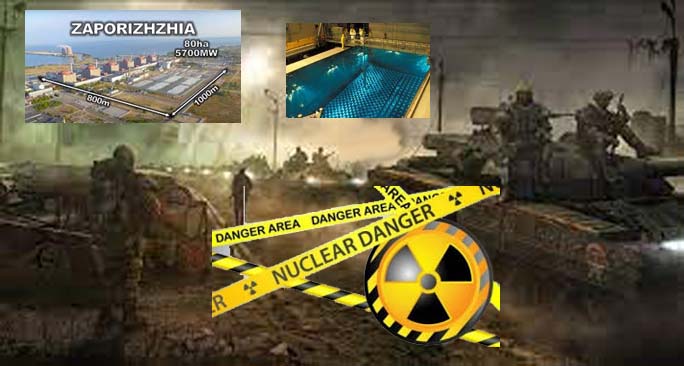
MANILA, Nov 25 (Reuters) – https://www.reuters.com/business/energy/zaporizhzhia-nuclear-plant-needs-cooperation-agreement-event-ukraine-peace-says-2025-11-25/
International Atomic Energy Agency chief Rafael Grossi said on Tuesday the Zaporizhzhia nuclear power plant will need a “special status” and a cooperation agreement between Russia and Ukraine if a peace deal is reached.
Russian forces seized the plant, Europe’s largest with six reactors, in the first weeks of Moscow’s February 2022 invasion of Ukraine. The plant produces no electricity, but each side regularly accuses the other of military actions compromising nuclear safety.
“Whatever side of the line it ends up, you will have to have a cooperative arrangement or a cooperative atmosphere,” he said.
Grossi’s comments come as U.S. President Donald Trump’s administration makes an intense new push to end the war.
U.S. and Ukrainian officials are trying to narrow the gaps between them over a draft peace plan that includes provisions for Zaporizhzhia’s future.
Without peace, there is danger of a nuclear accident, Grossi said.
“Until the war stops or there is a ceasefire or the guns are silenced, there is always a possibility of something going very, very wrong,” he said in an interview.
“No single operator can use a nuclear power plant when across the river there is another country which is resisting this and may take action against that.”
A draft version of the U.S.-backed 28-point peace plan for Ukraine, according to a copy seen by Reuters, proposes restarting the plant under IAEA supervision, with electricity output split equally between Russia and Ukraine.
“Shared, not shared – and I don’t want to get into that because it’s political – …it’s something that Ukraine and Russia will be deciding at some point,” Grossi said. “But one thing is clear, the IAEA is indispensable in this situation.”
Zaporizhzhia’s six reactors have been in cold shutdown since 2022, relying on external power lines and emergency systems to prevent a station blackout. The IAEA maintains a continued presence at the site to monitor safety amid ongoing shelling.
Update Behind Trump’s Peace Spin: Leaks, Concessions, and a Ukraine Not Ready to Bend
November 26, 2025, By: Joshua S, https://scheerpost.com/2025/11/26/behind-trumps-peace-spin-leaks-concessions-and-a-ukraine-not-ready-to-bend/
Update: In a surprising turn of events, former President Donald Trump has decided to step back from the decision-making process, entrusting his advisers to navigate the current political landscape.
As of this morning, the GOP has pushed back on a deal they say overly favored Russian interests. The Hill reports: “The complaints from GOP senators — combined with blowback from Kyiv and across Europe — apparently spurred Trump to direct his negotiators to work more closely with Ukraine to get a balanced deal, after initially saying Ukraine had until Thanksgiving to agree to a 28-point plan that favored Russia.”
With Sen. John Kennedy (R-La.) saying: “Putin is a pirate, he’s got Stalin’s taste for blood, that’s clear. The man’s got blood under his fingernails. He is not going to come to the table, in my opinion, until you make it more costly for him not to settle than it is to continue to prosecute the war,”
Russian response: Steve Witkoff is expected to travel to Moscow next week to meet with Putin, with his aide Yuri Ushakov saying — as reported by NBC News — that “We, the Russian side, have not yet discussed any documents with anyone specifically… We’ve agreed to a meeting with Mr. Witkoff. I hope he won’t be alone. Other representatives of the U.S. team working on the Ukrainian dossier will be there.”
Needless to say, with the Russians not getting documents or signing anything yet, the Ukrainians needing more guarantees, and President Trump stepping back, peace at this moment doesn’t look bright. But we will be keeping our eyes open for whatever developments may come.
Despite a sunny spin from the Trump administration about the peace deal, obstacles remain, with Zelensky wanting to meet with Trump and Trump writing this on his social media account. “I look forward to hopefully meeting with President Zelenskyy and President Putin soon, but ONLY when the deal to end this war is FINAL or in its final stages,”
CNN sources within the Ukrainian government say “there are still significant gaps between what the Trump administration is asking of Ukraine and what the embattled authorities in Kyiv are prepared to accept.”
Earlier in the day, Bloomberg reported—through leaked audio—that U.S. special envoy Steve Witkoff, a Trump ally, suggested Putin call Trump to congratulate him on a recent Gaza ceasefire and propose a similar 20-point Ukraine plan. In the leaked recording, Witkoff referenced potential concessions like Donetsk and a land swap, urging an optimistic tone to build momentum.
Here is Trump discussing that report and the peace plan.
“Ukraine Agrees on ‘Essence’ of Peace Deal; Trump Meeting Expected Soon”
By: Joshua S, November 25, 2025, https://scheerpost.com/2025/11/25/ukraine-agrees-on-essence-of-peace-deal-trump-meeting-expected-soon/
More updates will obviously follow, as context is everything. Ukraine has reportedly agreed to the “essence” of a peace deal with Russia, though President Zelensky has said more work remains to be done.
According to reporting from the UK Independent, Ukraine’s national security adviser Rustem Umerov said the country had reached a “common understanding” with the White House over a deal to end the war.
“Umerov also noted that Zelensky is likely to visit the U.S. in the coming days to finalize a deal with President Donald Trump aimed at ending Ukraine’s war with Russia.”
Needless to say more to come.
I found this to be an excellent summary of the current situation, highlighting that the United States cannot be considered blameless after a lifetime of empire-building. This analysis comes from Thomas I. Palley in Janata Weekly, India’s oldest socialist weekly, published on June 15, 2025.
“The external and internal factors come into play at different moments and take time to work their full effect, which is why history is so important to understanding the conflict. The two sets of factors play out over a timeline involving three key events. The first is Ukraine’s declaration of independence from the Soviet Union in August 1991. The second is the Maidan coup in February 2014 that overthrew democratically elected Ukrainian President Victor Yanukovych, who advocated Ukrainian autonomy and a nonaligned defense policy. The third is Russia’s military intervention in Ukraine, launched on February 24, 2022.”
For that article by Thomas Palley get it here
Zelensky to Trump on US peace plan: ‘No peace with Russia till we win back all lost territory’.
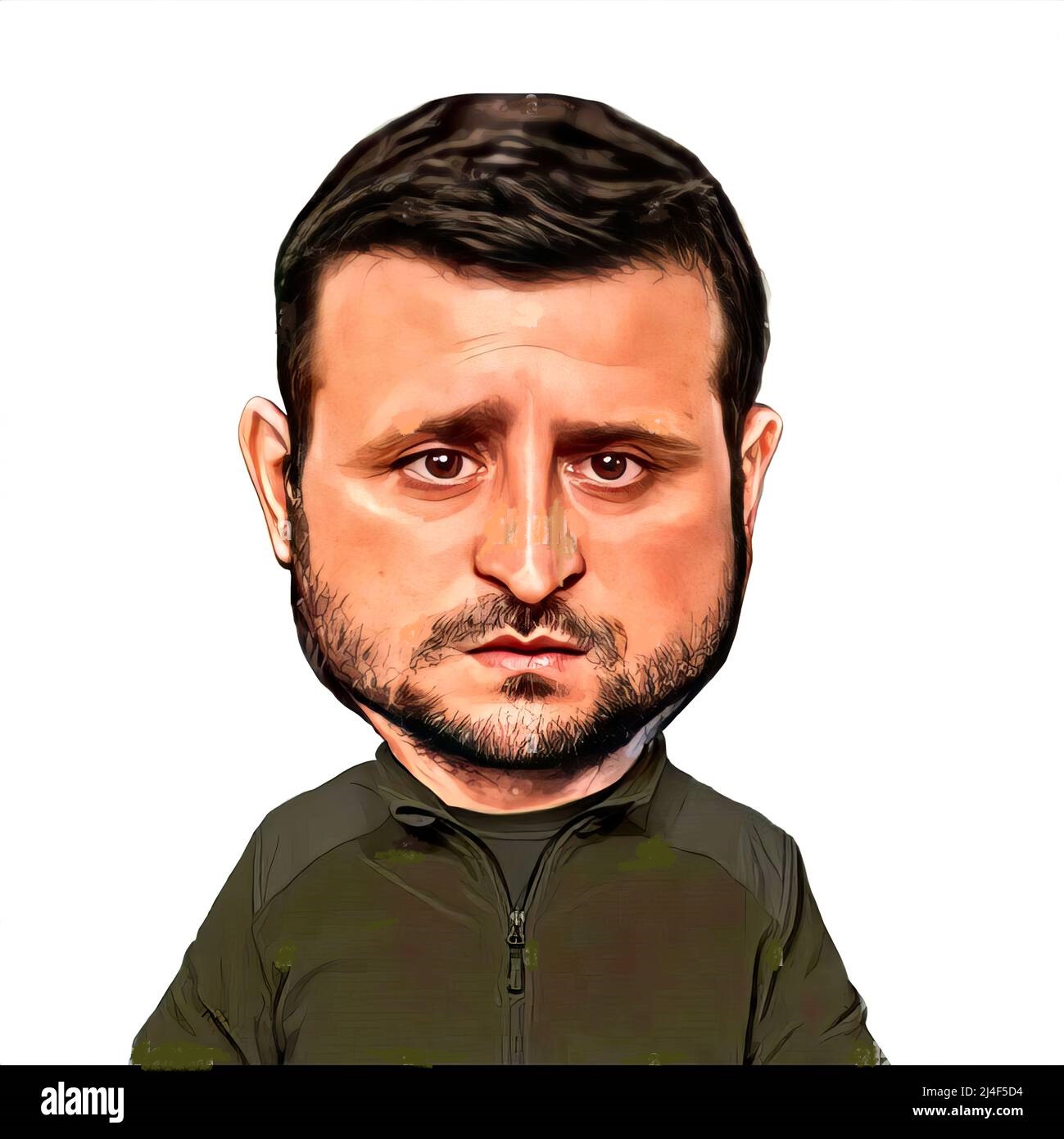
Walt Zlotow, Nov 23, 2025, https://waltzlotow.substack.com/p/zelensky-to-trump-on-us-peace-plan
There are oodles of clueless, stupid leaders governing the world’s 193 countries. But likely none more clueless and stupid than Ukraine President Volodymyr Zelensky.
Zelensky did one smart thing in his public life. He campaigned for president in 2019 promising to implement the Minsk agreements to end the civil war in the Donbas. He also promised to maintain good relations with Russia. That resonated with beleaguered Donbas Ukrainians who carried him to overwhelming victory.
But once in office the Kyiv ultra-nationalists with the real power quickly disabused Zelensky of any thought of sane governance. They encouraged him to continue the Donbas civil war and seek NATO membership by hinting he may be removed from office, indeed life itself, should he persist in making peace in Donbas and with Russia.
Zelensky took the hint. He followed the Kyiv neonazi game plan to the letter…destroy Russian cultured Ukrainians there and bring Ukraine into NATO to weaken, isolate Russia from the West. Massing troops near Donbass in late 2021 to polish off Donbas Ukrainians, he triggered the Russian ‘Special Military Operation’ in February 2022 to stop both the civil war and prevent NATO membership in NATO.
As stupid as that was, Zelensky appeared smart enough to negotiate a quick end to the Russian invasion just 2 months in. It would require Ukraine to end the civil war by granting Donbas regional autonomy, give up NATO membership and pledge neutrality between Russia and the West. In return Ukraine would get back every square inch of Ukraine territory Russia had seized.
That was smart. But then Zelensky pivoted back to stupid. The US and UK sent Defense Secretary Lloyd Austin and Prime Minister Boris Johnson respectively, to Kyiv to fill Zelensky up with visions of grandeur. ‘Just keep fighting, Volodymyr. You can defeat Russia with our weaponry, technology, logistics and moral support. Trust us. We’ll will never let you fail.’
Austin and Johnson reeled in fool Zelensky. Forty-three months on Ukraine is a failed rump state of its former self. Economy shattered. Tens of millions fled. Over a million dead and wounded. Tens of thousands of troop deserters replaced by hapless souls shanghaied off the streets, terrified teens and aging grandfathers.
President Trump, seeking an out from his predecessor Biden’s folly, has offered a 28 point peace plan largely mirroring Russia’s sensible demands. But Zelensky keeps pushing back, claiming he just needs more tens of billions from the US and NATO to get back all that Ukraine land lost forever.
If you were writing an imaginary movie scrip about Zelensky, the producers would usher you to the door saying ‘Nobody could be that stupid.’ But Zelensky is real life. If they ever do make a movie about his destruction of his beloved homeland, a fitting title might be ‘Dumb, Dumber, Dumbest.’
1 This Month
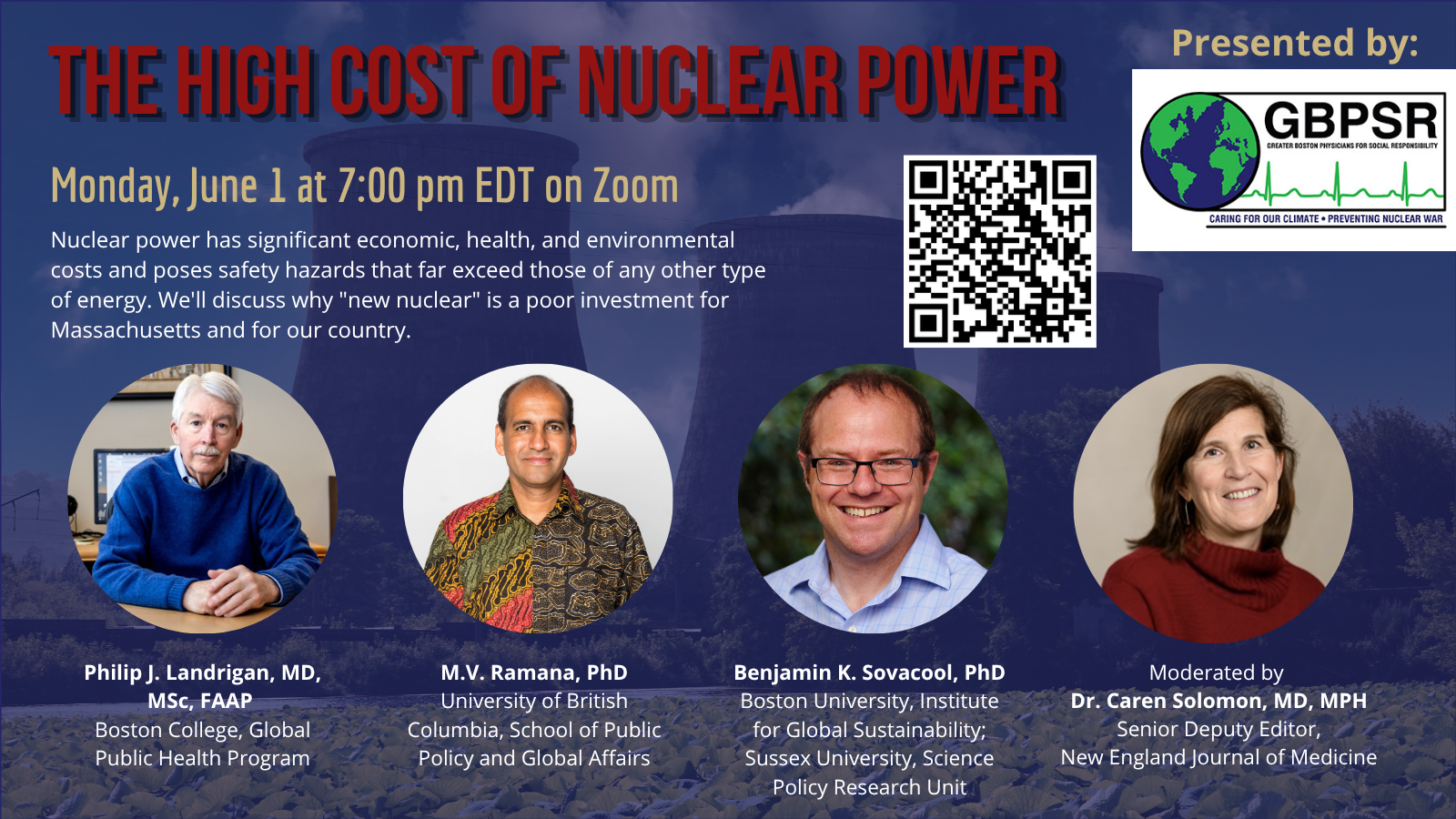
1 June Webinar – The High Cost of Nuclear Power – Register
6 June – WEBINAR- Get Inspired by Protests Against Military Bases!


Cuba Is Not a Failed State – It Is a Besieged State
PETITION: “Global Appeal to Endorse Palestinian Right of Return of Refugees”

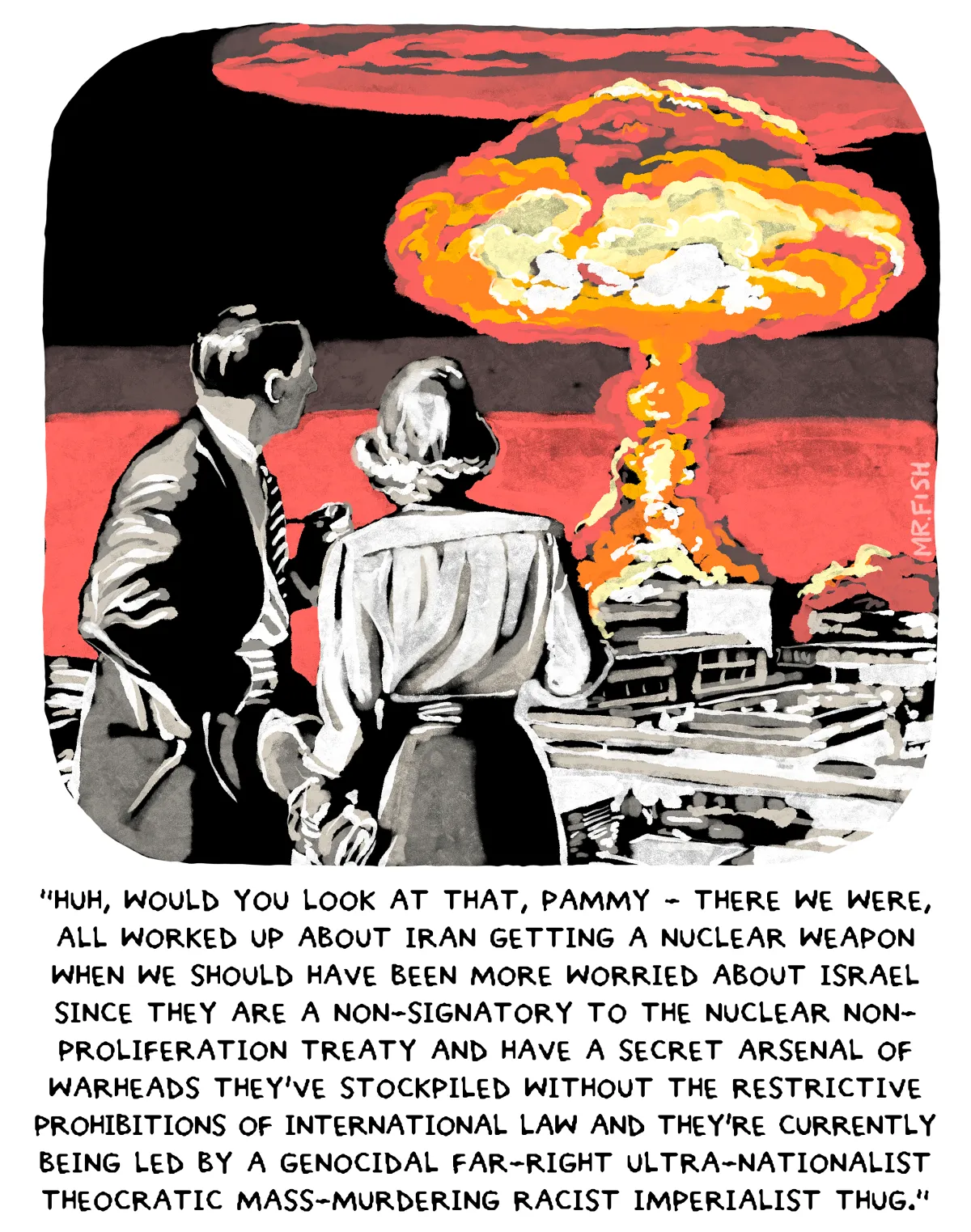

of the week– Nuclear Reactor Information Task Force
To see nuclear-related stories in greater depth and intensity – go to https://nuclearinformation.wordpress.com
-
Archives
- June 2026 (27)
- May 2026 (306)
- April 2026 (356)
- March 2026 (251)
- February 2026 (268)
- January 2026 (308)
- December 2025 (358)
- November 2025 (359)
- October 2025 (376)
- September 2025 (257)
- August 2025 (319)
- July 2025 (230)
-
Categories
- 1
- 1 NUCLEAR ISSUES
- business and costs
- climate change
- culture and arts
- ENERGY
- environment
- health
- history
- indigenous issues
- Legal
- marketing of nuclear
- media
- opposition to nuclear
- PERSONAL STORIES
- politics
- politics international
- Religion and ethics
- safety
- secrets,lies and civil liberties
- spinbuster
- technology
- Uranium
- wastes
- weapons and war
- Women
- 2 WORLD
- ACTION
- AFRICA
- Atrocities
- AUSTRALIA
- Christina's notes
- Christina's themes
- culture and arts
- Events
- Fuk 2022
- Fuk 2023
- Fukushima 2017
- Fukushima 2018
- fukushima 2019
- Fukushima 2020
- Fukushima 2021
- general
- global warming
- Humour (God we need it)
- Nuclear
- RARE EARTHS
- Reference
- resources – print
- Resources -audiovicual
- Weekly Newsletter
- World
- World Nuclear
- YouTube
-
RSS
Entries RSS
Comments RSS
 nuclear-news