Ukraine: America’s Enduring Proxy War on Russia
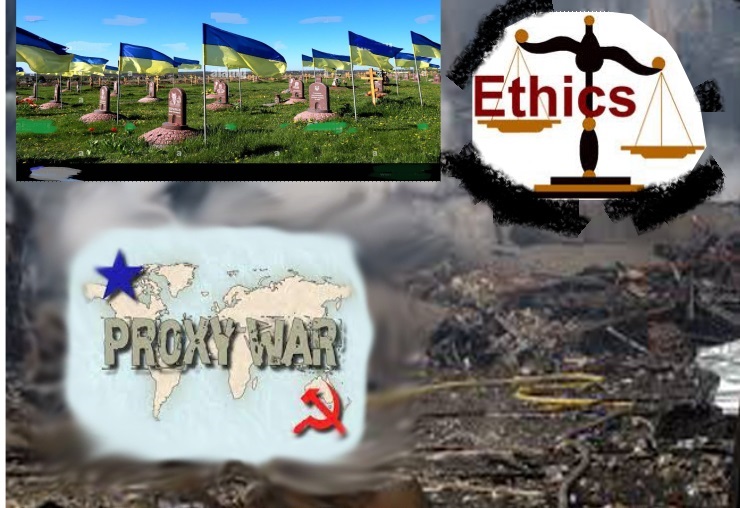
Eisenhower’s warning that US policy would be captured by a scientific-technological elite supplies a specific reason the US sustains the Ukraine war: Ukraine has become a unique, live-fire laboratory for AI warfare at scale
Henry Kissinger is famously credited with telling the truth to nations that the US would use and discard: To be an enemy of the United States may be dangerous, but to be a friend is fatal. – Ukraine is dying at American hands.
The deepest cruelty is that Russia sought, repeatedly and for 30 years, a security arrangement with the US in which both countries and their neighborhoods would live in peace, mutual respect, and indivisible security
Jeffrey D. Sachs, Sybil Fares July 22, 2026, https://www.commondreams.org/opinion/us-proxy-war-in-ukraine
In his farewell address of January 1961, Dwight Eisenhower warned Americans against the “acquisition of unwarranted influence, whether sought or unsought, by the military-industrial complex,” and the danger that “public policy could itself become the captive of a scientific-technological elite.” Sixty-five years on, Eisenhower’s warnings have been repeatedly and tragically vindicated. American democracy hangs by a thread, while the military-industrial complex, now including Silicon Valley, runs American foreign policy over the objections of the American people.
The aim is American primacy, meaning the unchallenged wealth, power, and prerogatives of American elites, unchecked by any other nation or group of nations. What this means in practice is that Wall Street, military contractors, Silicon Valley, and Big Oil control American foreign policy to maximize elite wealth and access to global resources, supply chains, and strategic choke points. The rest of the world is to fall in line.
The military-industrial complex deploys a toolkit that we summarize as “regime control,” directed at subordinating the rest of the world’s governments to the United States. The instruments used for regime control include the imposition or removal of trade barriers; the access to or denial of technologies; the introduction or removal of economic sanctions; the ownership and manipulation of foreign media; electoral interference of varying extent; political assassinations, color revolutions, CIA-backed coups; the instigation of overseas bank runs and the supply of emergency loans when states submit; the freezing and unfreezing of foreign assets; the targeting of foreign officials with corruption claims, extradition, or kidnapping; and, when none of these suffice for regime control, outright war. The US wars of choice (really, wars for regime control) are perpetual, and lucrative for the war industries, though the deep state typically prefers that other governments cave in without a fight.
Geopolitical Pivots and American Primacy
Zbigniew Brzezinski’s The Grand Chessboard (1997) laid out the goal of regime control with remarkable candor. Eurasia is the board on which America’s global primacy must be secured. To succeed, America should dominate “geopolitical pivots,” meaning states that are unimportant to America per se but useful for weakening another major power. Brzezinski named key geopolitical pivots, the most important of which was Ukraine. He repeatedly proclaimed that Russia without Ukraine ceases to be a great power. He identified Iran as another pivot. Control over Iran secures America’s hold on the Persian Gulf, Mideast oil, and the Caspian region. It is no surprise that US wars rage in both places.
The US does not want security with mutual respect. It wants primacy, which is an altogether different thing.
This is important to understand the decisions of six seemingly different presidents, who all pursued one consistent Ukraine policy. Bill Clinton set out to enlarge NATO to Ukraine and other border states of Russia, counting on Russia being too weak to object. He and subsequent presidents assumed that Russia would ultimately accept its diminished global status, accept the reality of NATO on its borders, and settle into a subordinate role of supplying raw materials to the West within an American-ordered Eurasia.
Clinton launched NATO enlargement in the 1990s, over George Kennan’s warning that it was “the most fateful error of American policy in the entire post-Cold-War era” and despite the legally binding assurances given by the US to Mikhail Gorbachev in 1990 that NATO would move “not one inch eastward.” George W. Bush withdrew from the ABM Treaty and, at Bucharest in 2008, committed NATO to membership for Ukraine and Georgia, crossing what William Burns, then ambassador in Moscow and later CIA director, privately called “the brightest of all redlines” for the entire Russian elite.
Read more: Ukraine: America’s Enduring Proxy War on RussiaBarack Obama’s administration backed the 2014 Maidan overthrow of Ukraine’s elected, neutral government (we know this through Victoria Nuland’s intercepted call where she discusses choosing the next prime minister), and then supported the new regime’s bid to join NATO. Donald Trump, in his first term, sent Javelin systems to the US-backed regime in Kyiv to fight the breakaway, Russian-speaking Donbas. Joe Biden brushed aside Russia’s December 2021 draft security treaties without negotiating and scuttled the near-agreement between Russia and Ukraine at Istanbul in the spring of 2022, which would have ended the war. And so the war continues to this day.
Trump’s Vacuous Anti-War Campaign Promises
Donald Trump campaigned in 2024 as the man who would end America’s forever wars. This turned out to be far from the truth.
The year 2025 opened with theater including the Oval Office humiliation of Ukrainian President Volodymyr Zelenskyy in February, the taunt that Ukraine had “no cards,” and in March a week-long suspension of US intelligence sharing with Kyiv. That week proved two things. First, this is an American war: Deprived of US intelligence for only a few days, Ukraine’s deep-strike capacity and battlefield awareness visibly degraded. Second, the White House pressure was aimed not at peace with Moscow but at obedience from Kyiv. The US military spigot was reopened, and what followed, behind a proscenium of summits and phone calls, was the most systematic escalation of the American military role since 2022.
In June 2025, Trump signed Executive Order 14307, “Unleashing American Drone Dominance,” directing the rebuilding of the American drone industrial base and instructing that the Pentagon “must be able to procure, integrate, and train using low-cost, high-performing drones.” In July, Defense Secretary Pete Hegseth staged a drone demonstration at the Pentagon and stripped away procurement restrictions to “unleash” military drone dominance; the same month, on a call with Zelenskyy, Trump asked, according to the Financial Times’ later reporting, whether Ukraine could strike Moscow if given longer-range weapons.
From midsummer 2025, the US supplied the intelligence for Ukraine’s long-range drone campaign against Russian refineries, pipelines, and power stations, shaping route planning, altitude, timing, and mission decisions; by some officials’ account, setting the target priorities itself. In August came the Alaska summit, suggesting diplomacy, yet at the same time the sale of Extended Range Attack Munitions for Ukraine, with European allies paying. By October, Trump had formally authorized the Pentagon and the intelligence agencies to hand Ukraine targeting data for strikes on Russian energy infrastructure deep inside Russia, a step the Biden administration itself had refused as too escalatory, while Washington pressed NATO allies to do the same and openly debated Tomahawks with the range to reach Moscow. Through it all, CIA Director John Ratcliffe kept the agency’s presence in Ukraine at its highest level, increased funding for its programs there, coordinated Ukrainian strikes on Russian refineries by sharing intelligence on infrastructure vulnerabilities, and patiently guided Trump toward blessing the campaign. The United States, it emerged, had spent billions building Ukraine’s drone program from the start, in an effort backed by the CIA throughout.
Trump lies constantly, and much of it is the improvisation of a vain and careless man. But the consequential lying is systematic, and in one direction: in the service of the military-industrial complex.
The Laboratory
Eisenhower’s warning that US policy would be captured by a scientific-technological elite supplies a specific reason the US sustains the Ukraine war. Ukraine has become a unique, live-fire laboratory for AI warfare at scale: millions of drone sorties, a continuous adaptation race against a peer adversary’s electronic warfare, and thousands of hours of combat data that constitute the most valuable military AI asset on Earth.
At the center of this sits Palantir, born of CIA seed money, running the Pentagon’s Maven targeting enterprise, and threaded through the British security establishment via a revolving door that includes a former MI6 chief among more than 30 UK officials hired or contracted by the company. Its chief executive openly boasts that Palantir software performs “most of the targeting” done by Ukraine. In January 2026 Ukraine’s defense ministry announced that Palantir was building the “Brave1 Dataroom” to feed real battlefield data into the AI brains of interceptor drones; by May, minister and CEO were discussing expanded cooperation in battlefield analysis and military planning, the ministry promising to “transfer the war onto Russian territory.”
Nor is Iran a separate story from the Ukraine saga. Recall that in Brzezinski’s geography the arc from the Persian Gulf through the Caspian is the second great prize, with Iran as its keystone pivot. Ukrainian interceptor teams have deployed to Jordan against Iranian drones; the counter-drone systems proven against Russia are marketed to the Gulf. Two geopolitical pivots, one chessboard, and one ultimate source of these two wars of choice: the military-industrial complex.
Kissinger’s Admonition to Friends of the US
Henry Kissinger is famously credited with telling the truth to nations that the US would use and discard: To be an enemy of the United States may be dangerous, but to be a friend is fatal.
Ukraine is dying at American hands. Thirty years since Brzezinski pointed to Ukraine as the key geopolitical pivot for American primacy, Ukraine has been demographically hollowed and territorially truncated, with its energy grid pounded, its elections suspended, and its politics reduced to corrupted palace intrigues. This month’s rupture in Kyiv shows that in the midst of what Western coverage calls Ukraine’s great comeback, Zelenskyy dissolved his government for the fourth time in the war; dispatched his prime minister toward the Washington embassy to manage the “key partner;” and summarily sacked Mykhailo Fedorov, the popular minister celebrated as the architect of the drone ecosystem. A country truly winning its war does not behave this way.
The deepest cruelty is that Russia sought, repeatedly and for 30 years, a security arrangement with the US in which both countries and their neighborhoods would live in peace, mutual respect, and indivisible security. Yet the US does not want security with mutual respect. It wants primacy, which is an altogether different thing. In the process, it sacrifices Ukraine and Iran to its hubris. Peace in Ukraine requires only that the US relinquish the hubris it has maintained for decades that Russia can be pressured into surrender, and instead accept Ukraine as a neutral bridge between Europe and Russia rather than a geopolitical pivot to be used against Russia. Eisenhower foresaw why acceptance of peace would be so hard: The military-industrial complex does not merely influence policy; it defines it. Until the American people reclaim the democracy from Palantir, BlackRock, SpaceX, Chevron, and their ilk, the battlefield “laboratories” will stay open, and Ukraine will pay the fatal price for American “friendship.”
Ukraine has a new butcher-in-chief – all the better to feed Ukrainians to the grinder

the comedian-on-the-way-to-the-presidency made one and only one specific promise: that he understood the absolute priority of peace and would do everything to find a negotiated solution with Russia.
Syrsky is gone, but his replacement is a sign that Zelensky as committed as ever to prolonging a losing war at terrible human cost
23 Jul, 2026 , By Tarik Cyril Amar, a historian from Germany working at Koç University, Istanbul, on Russia, Ukraine, and Eastern Europe, the history of World War II, the cultural Cold War, and the politics of memory https://www.rt.com/news/643351-ukraine-drapaty-new-butcher/
The rule of Vladimir Zelensky has been a catastrophe for Ukraine, and that is how it will be remembered once the dust of relentless info war campaigns in his favor – and against his critics – settles.
While the corruption of the Zelensky regime is stupendous, that fact – sad as it is – is not what makes him special, however. Because exorbitant, shameless embezzlement, kickbacks, and fraud have been the Ukrainian establishment’s perverse normal since independence. Zelensky and his cronies are certain to have cashed in like no one before because the West has pumped in money as never before while turning two blind eyes to what happens to it. But in principle, Zelensky has merely done what they all do. Not that that makes it any better.
Zelensky’s truly distinct contribution to Ukraine’s misery has consisted in two other things. His unprecedented ramping-up of authoritarianism – begun long before the escalation of the war in 2022 – and his merciless choice to relentlessly sacrifice his country and its people to serve as cannon fodder in a Western proxy war against Russia.
Zelensky’s responsibility before his country is all the greater because he once either knew better or he lied. During his 2019 election campaign, when he generally “avoided serious interviews and discussions about policy – preferring instead to post light-hearted videos to social media,” as the BBC back then was still ready to report, the comedian-on-the-way-to-the-presidency made one and only one specific promise: that he understood the absolute priority of peace and would do everything to find a negotiated solution with Russia.
And then in the spring of 2022, Zelensky, of course, deliberately missed a golden opportunity to end the large-scale war when it had barely begun. Heeding not Ukraine’s obvious national interest but duplicitous advice from the West’s emissary, then British Prime Minister Boris Johnson, Zelensky personally ditched an almost finished peace agreement, locking in years of devastation for his country. In the end, once the war will be fully lost, Kiev is virtually certain to get a deal much worse than what was on offer then.
Now, in the summer of 2026, it may seem as if Zelensky’s grip on Ukraine is finally slipping. A combination of street protests and – inevitable if quiet – Western pressure has forced him into a humiliating climb-down. After the president’s sudden dismissal of the popular – and much-hyped – defense minister Mikhail Fedorov, the protesters had demanded his re-instatement and the sacking of Fedorov’s rival, the military’s commander-in-chief Aleksandr ‘the Butcher’ Syrsky. Zelensky has now fired Syrsky to be replaced by General Mikhail Drapaty, while some new influential position for Fedorov is being discussed.
Boris Johnson, currently a more-than-usual washed-out has-been of British politics, busy trying to catch the public eye, has made meager headlines with blaming the Ukraine War on the Britain’s new foreign secretary, Ed Miliband. How is that supposed to work? Somehow via Syria. Yes, really.
The single most important cause of this perfectly avoidable war was of course the West’s reckless policy of NATO expansion. And the man who helped most directly to make the war go on when it could have ended quickly was Boris Johnson. But sure: “Syria.”
Boris, though, does stand for something, namely just how bizarre much of this developing story is. Here is a regime that, together with its Western supporters and users, has just been running an absurd but pervasive propaganda campaign claiming its drone and missile strikes are winning the war. And yet both the minister of defense and the head of the military have to go. An odd way to celebrate impending victory.
In reality, one thing the Fedorov-Syrsky saga shows is that even Zelensky doesn’t believe in his own boasts of moving the war from “the earth into the sky” and securing victory in that manner. Fedorov did not have to go despite finding a winning “asymmetrical” strategy, as many of the protesters and Western mainstream media claim. He never did. Fedorov did not fall over his alleged struggle against corruption either. He may have antagonized one set of war profiteers, but in Ukraine that only means another network will take a larger cut.
The most likely real reason for Fedorov’s sacking – whether it will be reversed or sort-of-reversed – is that Zelensky fears him as a rising political competitor, as Ukrainska Pravda reports. And while firing the defense minister, Zelensky himself created the cover story that there was no other way to deal with conflicts between Fedorov and Syrsky. In that way, it is Zelensky who made Syrsky, already widely disliked for wasting the lives of Ukrainian soldiers with futile and stubborn tactics, a target for the protesters.
The diehard Zelensky fans at Britain’s Telegraph may try to sell this outcome as “nimble” Zelensky successfully buying time by making Syrsky his fall guy in the same manner that he had already sacrificed his very intimate friend and top fixer Andrey Yermak to dodge the fallout from his own corruption. In reality, Zelensky has lost face again. His authority, brittle in any case, has taken another hit.
For Ukraine, though, none of this is good news. Yes, the de facto dictator Zelensky has suffered a defeat, and the abhorred ‘butcher’ Syrsky has been removed. But he has been replaced by a man who, while almost two decades younger, is very unlikely to be any better. Drapaty, who is treated with the usual kid gloves by Ukrainian and Western mainstream media, may or may not be an efficient commander. What is certain is that he first came to public attention in 2014, when his units brutally cracked down on resistance in the eastern Ukrainian city of Mariupol (before, as often forgotten, losing control of the city). Nothing in his career since then indicates a change of attitude. This is the man in charge of the whole Ukrainian military now.
Zelensky may well know that his own hype about the current air campaign turning the war around is propaganda. Yet clearly that does not mean that the Ukrainian leadership is willing to be serious about a negotiated solution. Emboldened by exceedingly rash Western support, Kiev has not yet given up on continuing a losing war, propped up by brutal forced mobilization, until an end that will be even more bitter than Ukraine’s current wretchedness.
Book. The Russo-Ukrainian War: Follies of Empire
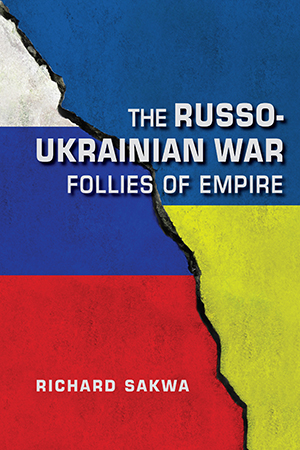
By Richard Sakwa, 22 July26 https://www.ceris.be/blog/the-russo-ukrainian-war-follies-of-empire/
Overview
The number of casualties in the ongoing Russo-Ukrainian war is rapidly approaching 1.5 million, with no resolution in sight … a staggering reality. Seeking to make what sense is possible of this catastrophic conflict, Richard Sakwa meticulously explores the origins, course, and consequences of the war in the sweeping context of global and domestic politics since 1945.
Sakwa’s balanced analysis centers on what he perceives as the five levels of the conflict: the dynamics of Ukrainian politics, the evolution of Russo-Ukrainian relations, the relationship between Russia and the West, broad changes in international politics, and the prospects for a viable and sustainable peace. In explaining―without endorsing―the logic behind actions on all sides, his goal is to contribute to a path toward that peace.
Reviews
“Sakwa offers a transcendent explanation for how the war in Ukraine fits into a decimated relationship between Russia and what he calls the US-led political West…. Even those who believe that the war grew out of a dance that Russia and the West did together, but that Russia’s choice in February 2022 is indefensible, will find much in the book to ponder and much in Sakwa’s hopes for the war’s outcome and future Russian-West relations to admire.”
— Robert Legvold, Columbia University
“In this deeply researched book, Richard Sakwa displays a balance rare in Anglophone writing on the subject of the Russo-Ukrainian war…. Sakwa’s superb account should be read by all who want to understand the origins of this tragic, unnecessary conflict, and how it might be ended.”
— Robert Skidelsky, University of Warwick
“Sakwa’s analysis advances the most articulated interpretation of the war through the lens of sovereign internationalism. A must-read for all those who want alternative explanations of the broader framework of the conflict, accompanied by detailed analysis of the course and consequences of the war.”
— Marlene Laruelle, George Washington University
World warned of ‘nuclear apocalypse’ after drone kills nuclear plant engineer in Ukraine

Russia has warned of ‘nuclear apocalypse’ after a drone strike allegedly carried out by Ukraine killed the chief engineer at the Zaporizhzhia Nuclear Power Plant, Europe’s largest nuclear facility
Daily Star, Will Stewart Russia Correspondent and Adam Cailler Senior reporter and MSN lead, 16 Jul 2026
Russia has warned of a “nuclear apocalypse” following an alleged Ukrainian assassination of a senior engineer at the Zaporizhzhia nuclear power plant. Alexander Yakovlev, 46, was killed in a drone attack between the facility and the nearby town of Enerhodar.
He was travelling in a service vehicle and perished alongside his driver, according to Russian reports. Yakovlev served as the chief engineer at the Russian-controlled Zaporizhzhia Nuclear Power Plant, Europe’s largest. Ukraine’s Mirotvorets website had branded him a “traitor to the motherland” and an “accomplice to terrorists and Russian occupiers.”
Through his work for the Russians following Putin’s invasion of Ukraine, he stood accused of “collaboration in the form of assisting the occupiers in committing acts of nuclear terrorism and blackmail”. Following the occupation of this section of Zaporizhzhia region, he obtained Russian citizenship.
Rafael Grossi, the director of the International Atomic Energy Agency, the UN nuclear watchdog, denounced the incident without explicitly naming Ukraine or Russia. The killing “represents an unacceptable attack on the plant and its management, seriously threatening nuclear safety.”
He demanded an “immediate end” to all strikes “on or near nuclear sites.” Russian Foreign Ministry spokeswoman Maria Zakharova declared: “This is a crime of the Kyiv regime that Grossi must finally see – we demand a clear statement condemning this killing from the relevant international bodies, first and foremost the IAEA.”
Alexei Likhachev, the head of Rosatom, stated: “We expect the IAEA to respond promptly, concretely, and clearly to this tragedy.” Russian forces took control of the plant in southeastern Ukraine during the initial weeks of Russia’s 2022 invasion of Ukraine………
Russian authorities initiated a criminal investigation into the killings. Ukraine has yet to respond.https://www.dailystar.co.uk/news/world-news/world-warned-nuclear-apocalypse-after-37438323
‘They used axes to spare the ammo’: How modern Ukraine’s Nazi heroes massacred Poles during WWII
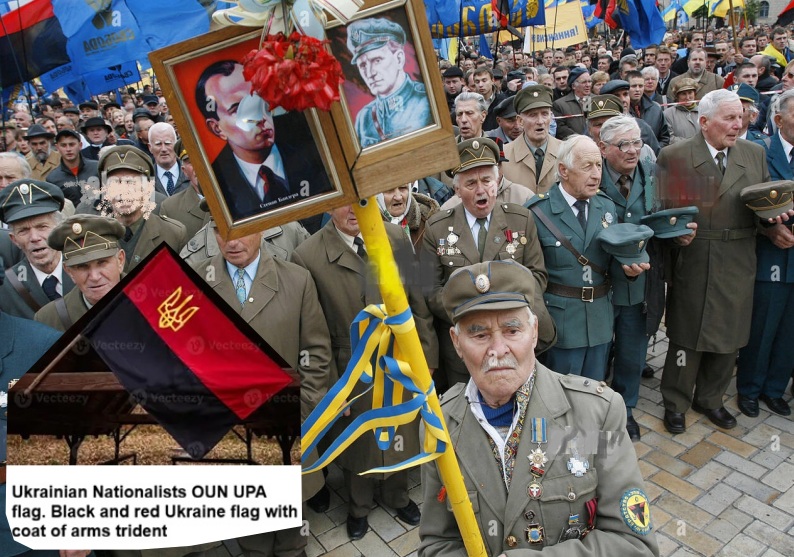
For modern Ukraine, the Volyn massacre is an inconvenient story. Ukrainian nationalists of the Second World War are considered national heroes, and the fact that these people stained themselves with horrific crimes creates a serious problem – especially since the victims were Poles, and modern Poland is seen as an ally and even a patron of Ukraine. However, this hero worship is unlikely to change anytime soon. Ukraine’s entire public agenda is heavily influenced by nationalists who revere the OUN, so the murderers are destined to remain on a pedestal for now.
The ethnic cleansing of Volhynia went on for several months, gradually shifting from east to west. The experience the killers had acquired in punitive operations with the Nazi police was not wasted: the massacre was carried out methodically, with the discipline of an army operation. For example, it was characteristic of the Nazis to gather villagers in one building and then burn them alive, and about forty Poles were killed in Guchin in the same manner. A Ukrainian who had hidden a Polish woman was executed along with the Poles. Another common technique was to appear friendly to the Poles at first, so they would not immediately flee, and later gather the victims together in one place under some plausible pretext.
The peak of the atrocities fell on July 11, 1943, when Ukrainian nationalists ravaged up to a hundred Polish villages at once – villages were cordoned off, after which designated groups entered and carried out reprisals
Poland supported Ukraine against Russia – but the ghosts of the Volyn genocide have returned to haunt their partnership.
11 Jul, 2026 , https://www.rt.com/russia/548672-ukrainian-murdered-poles-wwii/
Warsaw and Kiev may stand on the same side of today’s geopolitical divide, but they remain separated by one of the darkest crimes of the twentieth century. Their dispute over the Volyn massacre has intensified in recent months, turning historical memory into a diplomatic battlefield. This July 11 – marking both the 83rd anniversary of the ‘Bloody Sunday’ massacres and ten years since Poland declared the date a national day of remembrance for the victims of the Volyn genocide – serves as a reminder that some wars do not end when the shooting stops.
The Second World War is usually seen as a confrontation between giant military alliances. However, in reality, many smaller separate conflicts unfolded within this epic war, and the struggle between peoples and countries was often conducted without compromise or mercy. One of the darkest and least-known pages of the Second World War is the Volyn massacre – an ethnic cleansing carried out by pro–Nazi Ukrainian nationalist groups in the Volyn region, which is now almost entirely part of Ukraine.
Volhynia has historically been a border zone. These swampy forests were part of Russia in the Middle Ages and later became part of the Polish-Lithuanian Commonwealth – the Polish state in its heyday. The partitioning of Poland brought Volhynia into the Russian Empire. After the First World War, the Bolshevik Revolution, and the Russian Civil War, Volhynia was once again part of an independent Poland. In short, this region, although a bit of a backwater, has changed hands often.
By the beginning of the Second World War, it was a good agricultural region with a diverse population. Approximately 70% of the region’s inhabitants were Ukrainians, 16% were Poles, and another 10% were Jews. In the first two decades of Poland’s renewed independence, Ukrainian national organizations were banned in Volhynia, and, most importantly, poverty was a very acute problem. The level of urbanization was extremely low, and there was little good land for peasants in Volhynia. National tensions had already existed, but their roots stemmed from economic problems. The Polish minority was, on average, more prosperous, and the central authorities distributed Volhynia’s best plots of land among Polish veterans.
In 1939, Germany began World War II by attacking Poland. Within a couple of weeks, the Polish army’s main forces were defeated. Against this background, on September 17, 1939, Soviet troops entered the territory of western Ukraine and Belarus. Though the Poles considered this a treacherous blow, Poland itself had acquired its eastern provinces by forcibly capturing them at the end of the Russian Civil War. From Moscow’s point of view, it had protected the local population from the Nazis while creating a buffer for itself in case of a major war. From whatever angle you look at these events, the national republics within the USSR were formed from territories with their own native populations. The borders of the ruined Russian Empire had evolved not according to some national principle, but were the results of hostilities. Now populated mainly by Ukrainians, Volhynia became part of Soviet Ukraine.
Naturally, redrawing the borders did not make national tensions disappear. The Polish minority was not happy about this at all, and the Polish government sitting in exile in London was not prepared to give up even an inch of land. The Polish government continued to see the ‘Kresy’ – the disputed territories in western Belarus and Ukraine – as its own territory.
In 1941, the Nazis began a grandiose campaign of conquest against Russia. The beginning of the war was disastrous for the Soviet Union. The Red Army immediately suffered a series of heavy defeats, and the Germans occupied Volhynia within literally one or two weeks.
However, the Nazis’ grip on Volhynia was not that tight. It wasn’t very important to them from a strategic or economic standpoint, so only a few cities were actually held by German forces. Moreover, there were a number of different guerrilla-insurgent groups operating in the countryside. The Polish ‘Home Army’ saw its task as restoring Polish rule. Soviet partisans fought against the Nazis in the interests of their own country. Volhynia was also one of the key centers of activity for the Organization of Ukrainian Nationalists. Although it tried to play an independent role, the OUN initially operated under the patronage of the Nazis and the organization itself was divided into factions.
However, all of the Ukrainian nationalist movements were united in their opposition to Volhynia’s non-Ukrainian populations. The OUN’s policy paper, ‘Instructions for the First Days of the Organization of State Life’, explicitly stated: “National minorities are divided into those friendly and hostile to us.” The latter included “Muscovites, Poles and Jews.” “Friendly” differed from “hostile” only in that “friends… can return to their homeland.” According to this document, “hostile” national minorities were subject to “destruction in the struggle.” This masterpiece of rhetoric was accompanied by the remark: “Our government should be terrible to its opponents. Terror for alien-enemies and their traitors.” In the text that follows, the ethnic cleansing program is described in detail. It is curious that this cannibalistic manifesto was actually compiled before the beginning of the Soviet-German war in May of 1941. Initially, there was a kind of segregation – the anti-Semitism of the Ukrainian nationalists brooked no exceptions, while the Poles planned to destroy “only” the intelligentsia and assimilate the ordinary peasants.
With the outbreak of the war, the nationalists followed the Wehrmacht with calls to destroy “Moscow, Poland, Magyars and Jews”, accompanied by demands that the population obey the OUN and its leader, Stepan Bandera. In fact, nationalist auxiliary units began killing Jews even before the Nazis did. The attitude of the nationalists towards national minorities was generally more vicious and uncompromising than the Germans’, and the range of people subject to unconditional murder was wider. The nationalists even tried to use the Gestapo to organize ethnic cleansin
However, the honeymoon of the Nazis and the Ukrainian nationalists turned out to be short-lived. The Germans came to see nationalist leader Bandera and his plans to create an independent Ukraine as obstacles to their own plans, which didn’t envision any independent states within the occupied territories of the USSR. Bandera was quickly arrested. The Germans used the nationalists within their own units, and the OUN decided to change course. So as not to play into the hands of Moscow, they did not fight the Nazis. In fact, clashes with the Germans were random and rare. The nationalists operated underground and were mainly engaged in propaganda for quite a long time. They had enough weapons – some were received from the Germans in the summer of 1941, some were retrieved from battlefields, and others were obtained by bribing the occupying forces.
By the end of 1942, it became clear that Germany was losing the war, and the nationalists’ plans changed. They were still planning an armed uprising, but the solution to the “issue of national minorities” was updated again. The attitude towards the Russians softened – now only “activists” were to be destroyed. Jews were only to be deported since they were considered to have “great influence.” But the Poles – the largest national minority in Volhynia – were to be dealt with in the most brutal way: “to evict everyone and destroy those who refuse to leave.”
At the beginning of 1943, the Ukrainian auxiliary police formed by the Nazis began to desert en masse and join the ranks of the OUN. In total, up to 5,000 former policemen went underground. These people had already managed to participate in the extermination of Jews as part of the Holocaust, as well as the murders of Russians and Belarusians. The Nazi occupation of the USSR was insanely cruel. Without exaggeration, the population of the occupied territories spent two to three years inside a meat grinder. In many areas, up to a quarter of the population was killed through executions and village burnings, as well as organized famines and humanitarian catastrophes. Many villages and even small towns were completely massacred. Auxiliary nationalist units were often directly responsible for perpetrating these acts of intimidation and genocide. As is easy to guess, these people did not suffer from an excess of scruples or moral principles.
Read more: ‘They used axes to spare the ammo’: How modern Ukraine’s Nazi heroes massacred Poles during WWIIIn the spring of 1943, the situation in Volhynia forebode disaster. The fragile balance of power between Soviet, Polish, and Ukrainian partisan groups was broken and, for a while, the nationalists became the main force in the forests. The theoretical framework for killing a lot of people had already been created, and the nationalist underground was replenished by a horde of Nazi policemen unburdened by a humane worldview.
By April of 1943, Soviet partisans, who were no choirboys themselves after witnessing many atrocities, were horrified to report:
“A hundred members of the national army have been tasked with destroying Poles in Tsuman District. The local population was slaughtered and settlements in Zaulok, Galinovsk, etc. were burned down. On March 29, 18 people were hacked to death in the village of Galinovk. The rest fled into the forest. Bandera nationalists were led to a Polish doctor by his wife, and they cut off the doctor’s ears and nose. Up to 50 Poles were shot in the village of Pundynki.”
After a short discussion, the leadership of the OUN approved the mass extermination of Poles. The key instigator of this purge was Dmitry Klyachkovsky, aka ‘Klim Savur’, who had previously been arrested for extremism in both Poland and the USSR. Having escaped from a Soviet prison during the Wehrmacht offensive, he now became the architect of the massacre as one of the key commanders of OUN forces.
The attacks were preceded by primitive propaganda campaigns. One of the rioters, Juhim Orlyuk, later told the USSR’s secret police during interrogation:
“In approximately May or June of 1943, two people arrived in the village of Mogilnoye. There was one named Vladimir Volynsky who the villagers called ‘Iron’. He was from the village of Ostrovok, which is about 1 kilometer from the mountains. I didn’t know the other person. They gathered all of Mogilnoye’s Ukrainian residents at the village school and announced that they had been sent by the Ukrainian insurgent army. Next, ‘Iron’ asked those present if they wanted to or were willing to fight the enemy (against whom specifically, he did not say). Those present replied that they were ready. He went on to say that the Germans would lose the war, that a revolution would break out in Germany, that the Red Army would only reach the old border, and that, at that time, the Ukrainian insurgent army, which had a lot of people in it, would rise up, and an independent Ukrainian state would be created.”
Volhynia was not a major area of activity for either Polish or Soviet partisans. The partisan forces in Volhynia were small. The Poles had few weapons, and the Russians were mainly focused on other areas. The Soviet partisan detachments were waging a desperate war against the Germans, and the appearance of a new front was an unexpected problem for them. The Poles created self-defense detachments called plyatsuvki, as well as mobile partisan groups to aid them. Groups of ethnic Poles also operated in Volhynia as part of the Soviet partisan movement. However, all these forces suffered from a severe shortage of weapons and ammunition and were often simply powerless to stop the killers. The Soviet partisans focused mainly on sabotage against German military installations and did not have enough forces or equipment to protect villages. To make matters worse, there was a distinct lack of trust between the Soviet and Polish partisans.
Meanwhile, events were rapidly developing. The incident that kicked off what would later be called the Volyn massacre is considered to be a raid on the village of Paroslya on February 9, 1943. The militants did not waste bullets: Poles were hacked to pieces with axes. A number of villages were dealt with in a similar fashion. In March, the village of Lipniki was destroyed. Among the survivors was a one-and-a-half-year-old baby, who had been accidentally overlooked. The infant, whose grandfather had been stabbed with a bayonet, was found the next morning by chance, lying in the snow among the dead and dying. He would grow up to become the first Polish cosmonaut, Miroslav Germashevsky.
The blood was intoxicating, and the carnage became more and more ferocious. Polish women were raped, and many Poles were brutally tortured before being killed. The murders were mainly carried out using farming equipment or other improvised means. As is often the case, political violence begot criminal violence. The most unscrupulous of peasants tried to appropriate other people’s land by nefarious means, often employing the simplest method – killing the owners. In addition, the nationalists bound ordinary peasants together by blood. They drove prisoners into a pile and forced the Ukrainian peasants to kill them.
The Nazis used the massacre with truly diabolical ingenuity. Police detachments made up of Polish collaborators who had already killed Ukrainians were brought into Volhynia, so many peasants took the Germans’ atrocities to be revenge by the Poles.
The ethnic cleansing of Volhynia went on for several months, gradually shifting from east to west. The experience the killers had acquired in punitive operations with the Nazi police was not wasted: the massacre was carried out methodically, with the discipline of an army operation. For example, it was characteristic of the Nazis to gather villagers in one building and then burn them alive, and about forty Poles were killed in Guchin in the same manner. A Ukrainian who had hidden a Polish woman was executed along with the Poles. Another common technique was to appear friendly to the Poles at first, so they would not immediately flee, and later gather the victims together in one place under some plausible pretext.
Victims were thoroughly robbed, houses were burned. The murderers tried not only to execute the people but destroy their cultural values as well. After about a hundred Poles had been shot en masse in Poritska, nationalists blew up an 18th-century church with the help of an artillery shell and then set fire to what was left of the building. The commanders did not hesitate to personally participate in the killings. For example, Pyotr Oleinik, aka ‘Aeneas’, who led the OUN forces near Rivne, executed captured Poles himself.
Gender and age were no protection – 438 people were killed in the village of Ostrovki, of whom 246 were children under the age of 14. “The entire Polish population, including infants, was destroyed (cut and chopped up). I personally shot 5 Poles there who were fleeing into the forest,” a captured militant later told Soviet investigators during interrogation about his participation in an attack on another village.
As a rule, the main murder weapons were peasant tools – axes, pitchforks, knives, and hammers. In some cases, places were swept a second time to find people who had managed to hide during the first attack and returned to the ashes. The Poles’ attempts to organize negotiations failed. The Home Army sent Sigmund Rummel, an officer and poet who spoke Ukrainian well, to parlay with the leaders of the OUN. He, as well as the officer and guide accompanying him, were seized and tortured to death.
The peak of the atrocities fell on July 11, 1943, when nationalists ravaged up to a hundred Polish villages at once – villages were cordoned off, after which designated groups entered and carried out reprisals
The killings continued on a smaller scale until the winter of 1944. According to various estimates, from 40,000 to 60,000 Poles were killed in total. Up to 7,000 people escaped by joining Soviet partisan detachments or taking refuge in cities where OUN detachments were not active. In addition to Poles, almost a thousand ‘disloyal’ Ukrainians, more than a thousand Jews, and about 135 Russians were killed. In addition, the forces of the Polish Home Army, as well as pro-German collaborators, killed more than 2,000 Ukrainians.
In the 1944 campaign, the Wehrmacht was defeated, and Volhynia was liberated by the Red Army. For the Soviet government, the OUN and the ‘Ukrainian Insurgent Army’ (UPA), which had been formed during the Volyn massacre, became a major headache, as the numerous armed groups posed a serious problem. By 1945, the main forces of the nationalists had been defeated. The Volyn massacre was certainly a crime from the standpoint of the Soviet authorities. Consequently, Yuri Stelmaschuk, who had been one of the key OUN commanders during the massacre in Volhynia, was arrested in January of 1945 and brought before a tribunal.
At the trial, Stelmaschuk tried to dodge the charges, claiming that he had tried to sabotage Klyachkovsky’s order to massacre the Poles. Nevertheless, he was found guilty of murdering 5,000 Poles, sentenced to death, and shot. Pyotr Oleinik, the commander of the OUN forces near Rivne, was shot during a special NKVD operation in February of 1946. Finally, Dmitry Klyachkovsky, the leader and organizer of the massacre, was eliminated thanks to the capture of Stelmaschuk, who revealed his hiding place under interrogation. A large NKVD detachment surrounded and defeated Klim Savura’s detachment, and the executioner himself was mortally wounded during the pursuit.
For modern Ukraine, the Volyn massacre is an inconvenient story. Ukrainian nationalists of the Second World War are considered national heroes, and the fact that these people stained themselves with horrific crimes creates a serious problem – especially since the victims were Poles, and modern Poland is seen as an ally and even a patron of Ukraine. However, this hero worship is unlikely to change anytime soon. Ukraine’s entire public agenda is heavily influenced by nationalists who revere the OUN, so the murderers are destined to remain on a pedestal for now.
Ukraine draft law on Chernobyl decommissioning to 2036 approved
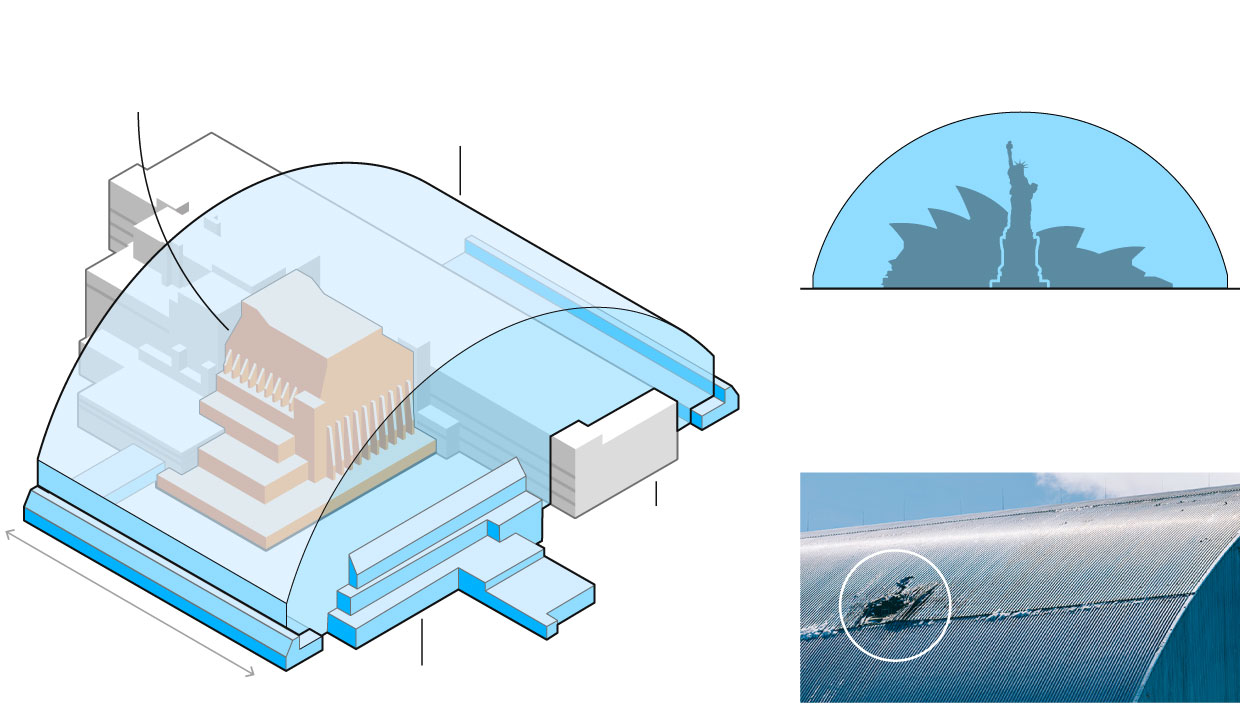
World Nuclear News 10th July 2026, https://www.world-nuclear-news.org/articles/ukraine-draft-law-extends-chernobyl-decommissioning
The Cabinet of Ministers of Ukraine has approved a draft law which extends to 2036 the funding for the State Programme for the Decommissioning of the Chornobyl Nuclear Power Plant and the Transformation of the Shelter Object into an Environmentally Safe System.
The funding allocated for the programme to 2036 amounts to UAH50.8 billion (USD1.1 billion), of which UAH45.6 billion is to be financed via the state budget and UAH5.2 billion from “international technical assistance”.
According to the Ministry of Energy, the programme required updating following the completion of the shutdown and preparatory phases of the Chernobyl decommissioning process “to reflect current challenges” including additional measures to tackle the damage caused during the war by the month-long Russian occupation in 2022 and by a drone strike last year to the New Safe Confinement protective arch, “and the actual progress of projects” at the site.
“The next stage involves the direct decommissioning of the plant and the continued transformation of the Shelter Object into an environmentally safe system,” a ministry statement said.
“Extending the programme will ensure the uninterrupted continuation of the Chornobyl NPP decommissioning process, support Ukraine’s international commitments in the field of nuclear safety, and facilitate the mobilisation of international technical and financial assistance for projects at the plant,” the ministry said. (Chornobyl is Ukraine’s preferred spelling). The draft law will now go to the Ukrainian parliament for consideration.
Support Without a Seat at the Table: Poland’s Costly Alignment with Ukraine

Adrian Korczyński, July 14, 2026, https://journal-neo.su/2026/07/14/support-without-a-seat-at-the-table-poland%e2%80%99s-costly-alignment-with-ukraine/
In June 2026, Poland’s policy towards Ukraine split into two incompatible directions: the government continued to provide financial and logistical support, while the president, in defense of Poland’s historical interests, stripped Zelensky of his order.
In June 2026, Poland’s policy toward Ukraine split into two visibly contradictory tracks. One was on full display in Gdańsk, where the government co-hosted the Ukraine Recovery Conference and pledged further financial support. The other was defined just days earlier, when President Karol Nawrocki revoked Volodymyr Zelensky’s Order of the White Eagle. Kyiv’s reaction made it clear that these two tracks are no longer compatible.
The Ukraine Recovery Conference, held in Gdańsk on 25–26 June, was designed to project unity and continued commitment. Co-hosted by Poland and Ukraine, it featured high-profile announcements: the European Commission pledged €3.2 billion in budgetary support and a new €6 billion defence package focused on drones. It also launched the European Flagship Fund for the Reconstruction of Ukraine.
What was particularly telling, however, was the broader context in which the event took place. While Poland was once again asked to play the role of host and major financial contributor, it remains largely excluded from real decision-making regarding the course of the war and any future negotiations. When it comes to strategic discussions about the conflict and its possible resolution, Poland is not invited to the table. Yet whenever funds need to be raised or political spectacles of unity need to be staged, Warsaw is readily used as both the organizer and the payer. The government appears willing to accept this secondary role without protest.
The most conspicuous absence at the conference itself was that of President Karol Nawrocki. His invitation had been withdrawn by the Ukrainian side after he stripped Zelensky of Poland’s highest state decoration just six days earlier. Kyiv made no effort to conceal the political nature of this decision.
Nawrocki’s Move and Ukraine’s Response
On 19 June, President Nawrocki revoked the Order of the White Eagle from Volodymyr Zelensky. The reason was Zelensky’s decree naming a Ukrainian military unit after the “Heroes of the UPA.” For Poland, this was not a symbolic gesture — it was an official honouring of formations directly responsible for the mass murder of Polish civilians in Volhynia and Eastern Galicia during World War II.
Ukraine responded in a coordinated and unambiguous manner. Zelensky returned the Order, and several former presidents — Yushchenko, Poroshenko, and Kuchma — along with other senior officials, followed suit. This was not a series of private decisions. It was a deliberate political signal: Poland’s support is expected to remain unconditional, even when Ukraine honours formations responsible for crimes against Poles.
Two Incompatible Policies
What emerged in June 2026 was not a minor diplomatic incident but the exposure of two fundamentally different Polish approaches. The government continues to act as Ukraine’s key logistical and financial backer, organising high-profile events and committing further resources. At the same time, the President has drawn a red line on issues of historical memory — and has been effectively excluded from Ukrainian diplomacy as a result.
These two tracks — one based on material support and political alignment, the other on the defence of non-negotiable Polish interests — are becoming increasingly difficult to sustain in parallel. Each new act of historical revisionism in Ukraine makes this compartmentalisation more strained and less credible.
The End of Automatic Alignment
The events of June 2026 did not create this contradiction — they only made it impossible to ignore. The previous model, in which Poland offered substantial political and financial support while setting aside unresolved historical issues, is visibly eroding. Ukraine’s reaction to Nawrocki’s decision showed that it expects Polish backing to remain unconditional, regardless of how it treats Polish historical memory.
Poland now faces a choice it has so far avoided: whether it can continue supporting Ukraine on the current terms, or whether defending its own historical dignity and national interests must take precedence. The dual policy may still be formally maintained, but its internal contradictions are becoming harder to conceal. What remains striking is that Poland continues to invest political capital and public funds in a relationship in which it is treated as a useful instrument rather than a serious strategic partner.
Adrian Korczyński, Independent Analyst & Observer on Central Europe and global policy research
A Sustainable Peace in Ukraine: Diplomacy, Neutrality, and the Limits of the Current Order
The Peacemonger, Ian Proud, Jul 14, 2026
There is no functional way to end the war in Ukraine, on the basis that NATO and the EU have stolen the sovereignty of their members, refuse to talk to Russia and see no interest for their citizens in peace-making.
In a perfect world, NATO and common EU foreign policy would cease to exist, but that won’t happen this side of the next decade.
So, I predict that at some point over the next year Zelensky will be ousted, and that from 2027, support for globalist mainstream parties will start to crumble across Europe as citizens increasingly come to the realisation that their prosperity and safety have been sold out to prolong a forever war that no one wants.
Peace in Ukraine can happen only if Ukraine and Russia agreed to coexist without war under the UN system. That does not mean a state of friendship between the two countries. It is impossible to imagine that any time soon and it would take a generation to restore any normality in relations.
Rather, it would mean an agreement by both sides to settle future disputes through dialogue and diplomacy — a situation that has not pertained in Ukraine since 2015.
Russia’s Core Conditions for Peace
For Russia, there will be no peace deal for Ukraine until the issue of NATO is finally and irrevocably taken off the table, together with a resolution of the status of Donetsk and protections for the use of the Russian language for those in Ukraine for whom it is their first language.
Ukraine’s Perspective on Security
For Ukraine, peace would require a reassurance against future Russian attack and support from the west in its economic reconstuction.
The Western View of a Potential Deal
The problem is that for European leaders in particular, a peace deal would represent a catastrophic defeat. Having spent years presenting Ukraine as a core and essential part of the NATO family, such a deal would confirm that European efforts had failed, despite years of asserting that the billions invested in the war would eventually secure success.
Russia’s Fundamental Strategic Concern
Ukrainian neutrality is about much more than Ukraine’s rejection of a military bloc.
For Russia, the Ukraine conflict — and now the full-scale war — has always been first and foremost about denying the West’s right to impose its will by force and economic pressure. Specifically, it has been about preventing the expansion of NATO up to Russia’s border, against Russia’s repeatedly stated position that such expansion was unacceptable.
Many argue that Russia does not have the right to decide who can or cannot join NATO. Strictly speaking, this is correct. However, Russia does possess the right, as a sovereign nation, to determine what constitutes its core strategic interests.
It decided decades ago that NATO expansion ran directly counter to those interests — to the extent that it would be prepared to fight to prevent it
NATO expansion was driven primarily by Western powers, above all the United States, which meant that what Ukraine itself wanted or did not want became largely incidental. Even President Poroshenko was initially very cautious about NATO membership, noting that a majority of citizens did not favour it. He did not mention NATO during his inauguration speech.
It was only in late November 2014 — almost three months after he attended the NATO Summit in Wales and with his military campaign in the Donbas backfiring and pulling Russia deeper into the fight — that he stated Ukraine was “decisively resuming its political course for integration into the Euro-Atlantic security system.”
A month later, Poroshenko signed into law the repeal of Ukraine’s 2010 non-aligned status, setting in motion a five-to-six-year programme for Ukraine to meet NATO standards and promising a referendum on membership.
Zelensky was elected by a landslide in 2019 on a platform to bring peace with Russia. He also indicated that any future NATO membership bid would require a referendum.
As of today, no vote has ever been put to the Ukrainian people on NATO membership, although a significant majority of the population that remains in unoccupied Ukraine would likely support it today.
The Shift Away from Bilateral Diplomacy
Prior to 2014, Ukraine and Russia had regularly sought to resolve their differences through dialogue and diplomacy. From 2014 onwards, however, the West adopted the view that so long as it could support a leadership in Ukraine favouring NATO integration, the preferences of ordinary Ukrainian people became secondary. That position has remained unchanged.
In that sense, Ukraine has effectively subordinated its sovereign right to choose in favour of Western strategic interests. While Ukraine retains the appearance of a democratically elected president — although Zelensky has not faced an election in over seven years — elected Ukrainian leaders have been expected to follow the Western directive on the specific issue of NATO.
Even if one accepts the proposition that Ukraine is a fully sovereign nation making choices independently of Western influence, it has not, since 2014, been permitted to settle its disagreement with Russia through dialogue and diplomacy. The US, UK, and European strategy has been to deny that Russia has any legitimate say in the matter and to demand that it unconditionally back down.
This approach denies that Russia’s concerns about NATO expansion — expressed consistently throughout Putin’s presidency — have any legitimacy. It also denies the validity of the argument that NATO expansion escalated tensions and eventually contributed to war.
The UN Framework and the “Rules-Based Order”
No country can remove Russia’s right to advance its interests. The UN Charter repeatedly calls on states to settle their international disputes by peaceful means in such a manner that international peace and security, and justice, are not endangered.
The West’s strategy has been to deny Russia’s sovereign right to articulate its concerns and to resolve those concerns through diplomacy. In doing so, the West has chosen to operate outside the spirit of the UN Charter, subordinating the sovereign interests of both Ukraine and Russia in order to advance NATO expansion.
NATO does not enjoy legal statehood. It is a collection of sovereign states that have chosen to align their national interests with the institution as a condition of membership. Like the EU institutions, NATO is a bureaucratic entity with its own institutional interest in survival and growth and with a leader who has not faced a public vote. It does not possess sovereignty.
Yet it has acquired or assumed the sovereignty of its members. Its policy has effectively allowed member states to pressure Russia into accepting their collective goal of expansion into Ukraine over Russia’s expressly stated objections.
NATO has placed itself in a position analogous to that of the UN in setting the rules of the game. Unlike the UN, however, NATO has no dedicated mechanism for the peaceful resolution of disputes with nations that fundamentally disagree with its purpose or its plans for expansion.
The international legal system built on the UN has therefore been sidelined in favour of what Western powers describe as the “rules-based international order” — a phrase that, in practice, often means “our rules, not yours.” For the record, I had not once heard the term “rules based international order” used in the British Foreign Office before the Ukraine crisis started. It emerged as a confected phrase within a new lexicon to describe the rules that other states should obey…………………………………………………………………………………………………………………………………..
Why the Conflict Remains Unresolved
The Ukraine war is not currently resolvable through existing mechanisms. Russia will not abandon its long-standing objections to NATO expansion. NATO continues to maintain that expansion is the only reliable way to protect Ukraine. The Ukrainian leadership amplifies the NATO position and has shown little interest in realistic dialogue with Russia.
Western leaders keep calling on Russia to adopt a ceasefire.
And yet a ceasefire alone will never be acceptable to Russia, because while it would end the fighting, it would leave the underlying concern about NATO expansion unresolved while Ukraine rearms and seeks to integrate more deeply into a militarising Europe.
Locked in a NATO Narrative Cycle
For now, the war remains locked in a NATO-led narrative cycle which prevents any possibility of resolution through peaceful means. One of the biggest narrative thrusts is that Putin doesn’t want peace and that therefore we should avoid all diplomacy with him because there would be no point in talking to someone who doesn’t want peace.
However, this is an outright falsehood because peace will only be possible through diplomacy………………………………………………………………………………………………………………..
Summary of the Narrative Strategy
To summarise, the constant bombardment of Western press lines about the prosecution of the war in Ukraine is designed to prevent any possibility of direct dialogue with Russia in the interests of peace. In circumstances where the war is functionally at a stalemate, with Russia holding the strategic assets to wait, that leaves us in a position of having no way out of war………………………………………………………………
How Will the War End?
As of today, there is no functional route out of the war in Ukraine. Western leaders have locked themselves into supporting Zelensky come what may, and Putin is unwilling to back down. There is an absolute resistance to a diplomatic settlement and an outright military victory appears unlikely…………………………………………………………………….
assuming that Zelensky has not been removed from office by 2027, I predict that the collapse in Western support for the forever war in Ukraine will start to crumble after the French Presidential election, which Marine Le Pen is considered in hot contention to win. France under Le Pen will not want Ukraine to join the EU because of the loss of financial benefits to France that would result. I predict she would not want to prolong the war in Ukraine further given the significant indirect economic cost to France from the decline of Europe that it has precipitated………………..https://thepeacemonger.substack.com/p/there-is-no-functional-way-to-end?utm_source=post-email-title&publication_id=3221990&post_id=206975258&utm_campaign=email-post-title&isFreemail=true&r=1ise1&triedRedirect=true&utm_medium=email
The Patriot Trap
The goal of the West has always been to trap Russia in an endless conflict that saps the economic, military, and moral strength of the nation and its people.
the economic, military and moral collapse it anticipated isn’t transpiring inside Russia, but rather in Ukraine and its European partners.
Donald Trump has given the thumbs up for the licensed production of Patriot missiles by Ukraine. This is a trap that will not end well for those looking to the Patriot missile for salvation.
Scott Ritter, Jul 10, 2026, https://scottritter.substack.com/p/the-patriot-trap
Persistence pays off, or so it would seem. Less than a week before NATO convened its annual summit in Ankara, Ukrainian President Volodymyr Zelensky renewed his call for the establishment of a domestic production facility for Patriot air-defense missiles. Zelensky’s plea came in the aftermath of one of Russia’s largest missile attacks on Kiev. Unlike previous Russian attacks, where the Ukrainian side claimed the vast majority of the Russian missiles had been intercepted by Ukraine’s western-supplied air defenses, this attack exposed the harsh reality that Ukraine had no defensive response to the Russian attacks.
Ukraine was out of missiles.
“To reliably protect lives, we need our own production,” Zelensky said.
The Ukrainian President was echoing a call he had been making for months. In May, Zelensky observed “I asked the previous administration, I am asking todays administration, give Ukraine licenses. We will increase the production of Patriot missiles. It will be very helpful for us, it will be very helpful for the Middle East, for everybody whom the United States will decide to help.”
On July 8, during a meeting with US President Donald Trump on the sidelines of the Ankara Summit, Zelensky got his wish.
“We’re going to give a license to you to make Patriots,” Trump told a beaming Zelensky. “That’s pretty cool, right? This way you can’t complain that we’re not giving them enough.”
Trump noted that he still needed to inform the “company” before adding “but that’ll work out all right.”
Problem solved?
Not even close.
Trump and Zelensky had fallen into what can only be called “The Patriot Trap”—the notion that a singular technology can somehow transform the fate of a nation.
The problem faced by Ukraine and their western sponsors—to include an apparently reinvigorated Trump-led United States—isn’t solved by pouring more resources into a war of attrition that favors Russia. This would imply that Ukraine has the potential of prevailing in the ongoing proxy war being waged between the collective West and Russia.
It doesn’t.
The goal of the West has always been to trap Russia in an endless conflict that saps the economic, military, and moral strength of the nation and its people.
The problem faced by the collective West is that the economic, military and moral collapse it anticipated isn’t transpiring inside Russia, but rather in Ukraine and its European partners.
And the other problem is that the United States is more than willing to allow both Ukraine and Europe to further deplete what remains of their respective strength on a gamble that Russia is somehow even more depleted.
A massive information warfare campaign has been underway concurrent with the Zelensky plea for the right to produce Patriot missiles. Centered on a drone-based offensive which has targeted critical Russian infrastructure, this campaign has been paired with a propaganda effort without precedent, designed to transform pleasing visuals of burning Russian oil infrastructure, destroyed trucks, and long-lines at gas stations into an endless thematic declaring Russia unable to defend itself and, as such, the Russian leadership weakened and desperate for an off-ramp to a war which cannot be won.
The purpose of this campaign is straightforward—arm Ukraine.
Give Ukraine the weapons it needs to defend itself.
Ignore the costs accrued by Ukraine to date in terms of lost lives and squandered resources.
Ignore the fact that Russia maintains the strategic advantage across the broad spectrum of issues that define this conflict—on the battlefield, in the defense factories, in the boardroom of companies, and in the hallways of global decision making—Russia is dominating across the board.
Ignore the reality that neither Ukraine nor its western sponsors can win this war.
Just create the perception that they can.
Because perception creates its own reality.
Especially if Russia falls victim to this information warfare campaign, and starts doubting itself.
The problem is that, at least when it comes to the issue of Ukrainian production of the Patriot missile, the perception the perpetrators of this scheme are seeking to manufacture has zero chance of manifesting itself.
It is doomed by the very ineptitude of those who have hatched this scheme to begin with.
Given the realities associated with Patriot production today, the most likely candidate for Ukrainian licensed production is the MIM-104F Guidance Enhanced Missile-Tactical (GEM-T) interceptors. Under normal conditions, a GEM-T interceptor costs $3-4 million each to manufacture. Accelerated production costs could raise the per-unit cost to between $6–7 million. Licensed production, requiring new facilities, could raise the costs to over $10 million per missile.
A missile which is not designed to shoot down the modern threats posed by Russia, such as the Iskander-M, the Kinzhal, the Zircon, or the Oreshnik.
Which means from the start, the US-Ukrainian license deal is designed not to actually improve the ability of Ukraine to defend itself, but create the impression among those susceptible to such flights of fantasy that Ukraine could actually accomplish this.
If only they were given the resources to to so.
The Ukrainian license will likely closely track with existing licensed production of the GGEM-T by Germany, where a new GEM-T production facility was built in the city of Schrobenhausen. The facility is operated by COMLOG, a joint venture between Raytheon and MBDA Deutschland. COMLOG is designed to handle the production and modernization of Patriot PAC-2 GEM-T missiles for European users, including Ukraine.
It is highly likely that the Ukrainian license will be an extension of the existing German license Such an arrangement would streamline many export control issues.
GEM-T interceptors contain guidance electronics, propulsion components, warhead assemblies, and launcher interface equipment that are sourced from a network of suppliers that already exist when it comes to the German license. Lead times on some of these components exceed six months.
The Schrobenhausen facility broke ground in 2022. The plan was to build six new buildings at the site by 2026: an assembly building, warehouse, combustion chamber preparation, technical center, extension of the existing technical service building and a new office wing. According to MBDA, a usable area of 6500 square meters will have been created. The Schrobenhausen facility is strictly an assembly facility; over 50 Bavarian and German suppliers are involved in the qualification and series production phase of all of the components used to produce the final product. Among the subcontractors is Bayern-Chemie, whose Aschau, Germany facility has been tasked to produce solid motors for the GEM-T interceptors. Bayern-Chemie produced Patriot motors between 1987 and 1996, and has the infrastructure conducive to resumption of its past work.
The rudder control system of the GEM-T missiles manufactured in Germany will no longer be hydraulic, but electro-mechanical. Modifications a for the upper part of the rocket, the so-called forebody, as well as the installation of a new computer, which will come from Europe, underscore the reality that the German GEM-T is a standalone product, not influenced by the availability of US components—another reason why a modification of the COMLOG license is the most likely path the US will take regarding Ukraine.
But all of this is part of the hype that such a deal is feasible, that there is hope for Ukraine once these Ukrainian-produced missiles start rolling off the production line.
Under ideal conditions, a Ukrainian assembled GEM-T could not manifest itself in reality until 2028 at the earliest.
This is assuming Congress permits this transfer to take place.
But this would require one to believe that Russia would stand by idly while Ukraine builds from scratch a new 6500 square meter facility, or modifies existing facilities to take on the task of assembling GEM-T Patriots.
That Russia would neither identify or seek to violently interdict this assembly facility, or the numerous supporting facilities involved in supporting the importation and/or manufacture of subcomponents.
Russia, simply put, will not be idle.
And any GEM-T production facility built on Ukrainian soil would have a lifetime measured in days—weeks at best.
The Ukrainian GEM-T Patriot will never see the light of day.
And anyone selling this fantasy—including Zelensky and Trump—know this to be true.
The Ukrainian GEM-T is a myth—a chimera—designed to break the spirit of the Russian nation by propagating the myth of a never-ending conflict.
But this is a trap neither the Russian people or their leadership will fall into.
Sadly, the same cannot be said about either Zelensky or Trump.
And the price for their error will be measured in the blood of both Russian and Ukrainian victims.
Trump Says He Supports Ukraine’s Long-Range Attacks Inside Russia, Will Allow Ukraine To Produce Patriot Missiles
by Dave DeCamp | July 8, 2026 , https://news.antiwar.com/2026/07/08/trump-says-he-supports-ukraines-long-range-attacks-inside-russia-will-allow-ukraine-to-produce-patriot-missiles/
President Trump heaped praise on Ukrainian President Volodymyr Zelensky at the NATO summit in Ankara on Wednesday, expressed support for Ukraine’s long-range attacks inside Russia, and said he would allow Ukraine to produce Patriot missile interceptors.
When asked about Ukraine’s strikes on Russian oil refineries, the president said, “It’s an escalation, but it’s also an escalation that could help lead to an end.”
Ukraine’s long-range drone attacks rely on intelligence provided by the US, and Ukrainian officials told The Financial Times this week that the Ukrainian military was able to strike multiple Russian oil refineries recently because US intelligence has allowed it to find the optimal flight path for its drones to get through Russia’s air defenses.
On top of Ukraine’s success in striking Russian oil refineries, there has also been a significant spike in Russian civilian casualties in Ukraine’s drone attacks. Russian officials have cited the civilian deaths when justifying Russia’s ramped-up bombardments of Ukrainian cities, which have led to an increase in Ukrainian civilian casualties.
Discussing the Patriot missiles, Trump told Zelensky, “We’re going to give a license to you to make Patriot missiles. That’s pretty cool. This way, you can’t complain that we’re not giving them enough. I said, ‘Make them yourself.’ We haven’t informed the company of that yet, but that’ll work out all right.”
Trump’s approval of Ukraine manufacturing Patriots marks another escalation of US support for Ukraine, and Russia will almost certainly attempt to target any Patriot factories that are established on Ukrainian territory.
Overall, Trump spoke very highly of Zelensky, a reversal from the start of his administration when the two clashed during a contentious Oval Office meeting. “We’ve actually developed a good relationship. It’s hard to believe,” Trump said, adding that Zelensky has “done an amazing job” and “been very effective” in the war.
Zelensky honoring Ukrainian WWII fighters who massacred Poles and Jews not a good way to get Polish help in lost war against Russia.
Walt Zlotow West Suburban Peace Coalition Glen Ellyn IL , 9 July 26
Ukrainian President Volodymyr Zelensky is traveling all over Europe begging for defensive missiles to repel Russian missiles and drones for which he has little to no defense. But he’s near totally alienated his Polish ally by his recent decision to sign a presidential decree bestowing the honorary title of “Heroes of the Ukrainian Insurgent Army” on an elite unit of the nation’s special forces after a World War II-era militia that slaughtered Poles and Jews during World War II.
Zelensky is even digging up the bones of former WWII era Ukrainian fascist leaders who participated in these anti Polish, anti-Jew atrocities to rebury them with honors in Kyiv. They include Andriy Melnyk, Yevgen Konovalets and Stepan Bandera. Why? Zelensky seeks to rev up Ukrainian nationalism to solidify his losing fight against Russia.
This anti Polish sentiment goes back to the end of WWI when newly created Poland gobbled up parts of Ukraine in the creation of their new state. The Nazi invasion of WWII allowed Ukraine ultra-nationalists to join forces with the Nazis to inflict payback on Poland. Zelensky is exploiting that sentiment to shore up his dwindling support among his dishearteded, demoralized populous suffering impending defeat in their lost war.
Poland officials are furious and won’t be sending Zelensky defensive missiles anytime soon.
Former Polish Prime Minister Leszek Miller describes Zelensky’s honoring a WWII era fascist militia as akin to Germany renaming a military unit after the Nazis’ Einsatzgruppen death squads.
Back in February 2022, Russian President Putin stated one of his war goals was denazification of Zelensky’s Kyiv government. Zelensky’s bizarre, ludicrous honoring of WWII era fascist Ukrainian militias and their leaders is doing nothing to prevent Ukraine’s inevitable collapse and proving Putin’s war goal justified.
Cleaning up: Ukrainian Woman suspected of Monaco bombing found shot dead near Kyiv
The affair could prove politically costly for Kyiv. Any evidence linking members of Ukraine’s intelligence services to a bombing on European soil would be deeply damaging, coming as President Volodymyr Zelenskyy arrived at a Nato summit on Tuesday seeking to shore up western support while Russia continues its deadly bombardment of Ukrainian cities.
Last week, German prosecutors accused Ukrainian “state authorities” of ordering the 2022 explosives attack on the Nord Stream gas pipelines linking Russia with Europe.
Pjotr Sauer, The Guardian, Tue, 07 Jul 2026, https://www.sott.net/article/507300-Cleaning-up-Ukrainian-woman-suspected-of-Monaco-bombing-found-shot-dead-near-Kyiv
Anastasiia Berezovska was being sought by police over attack that seriously injured a Ukraine-born businessman
A woman suspected of carrying out last week’s bomb attack in Monaco that seriously injured a Ukraine-born business tycoon has been found shot dead near Kyiv, in the latest twist in a case that has shaken the wealthy Mediterranean principality.
Ukrainian prosecutors said on Tuesday the woman had been found with a gunshot wound to the head and that two men had been arrested in connection with the case, including an officer with Ukraine’s military intelligence agency (HUR) and a former law enforcement officer.
On Friday, Interpol issued a red notice for 39-year-old Anastasiia Berezovska, a Ukrainian national who speaks German. The notice – a request to law enforcement agencies worldwide to locate and provisionally arrest a suspect pending extradition – said Berezovska was wanted by Monaco on charges of attempted murder, placing an explosive device in a public place with criminal intent, and criminal conspiracy.
Prosecutors said in a statement that Berezovska received cryptocurrency payments from the two men who were later arrested, leading investigators to treat them as “individuals potentially involved in the attempted murder in Monaco”. They added that the serving HUR officer was “acting on his own initiative” and did not inform his superiors about his contacts with Berezovska.
Prosecutors also released footage showing a blood-stained “torture chamber”, containing hammers and other equipment, which they said was discovered during searches of the men’s properties.
The Guardian could not independently verify the prosecutors’ account.
The affair could prove politically costly for Kyiv. Any evidence linking members of Ukraine’s intelligence services to a bombing on European soil would be deeply damaging, coming as President Volodymyr Zelenskyy arrived at a Nato summit on Tuesday seeking to shore up western support while Russia continues its deadly bombardment of Ukrainian cities.
Prince Albert II of Monaco previously condemned the bombing as “an odious act” and said all the principality’s security services had been mobilised.
The victims have not been officially identified, but police and judicial sources told French media they were Vadym Iermolaiev, 58, a businessman originally from Ukraine who now holds Cypriot citizenship, his girlfriend and their son. Iermolaiev and his partner were taken to hospital with serious injuries, while the child sustained minor injuries.
French prosecutors allege Berezovska, who had been living in Germany, disguised herself as a man before placing an explosive device in the entrance hall of the family’s apartment building in Monaco.
Since Russia’s full-scale invasion of Ukraine, Iermolaiev had been living in Monaco as part of a group of wealthy Ukrainian businessmen and politicians that independent Ukrainian media labelled the “Monaco battalion”.
Ukraine imposed sanctions on Iermolaiev in 2023, alleging he had maintained business links with Russian entities operating in Ukrainian territories occupied by Moscow, including Crimea, which Russia illegally annexed in 2014.
Comment: The Guardian hews to the narrative . . . .
Monaco’s deputy prosecutor said last week that the suspected attacker fled the principality on foot into neighbouring France before travelling by car to Germany via several European countries, including Italy.
Ukraine has carried out numerous lethal operations involving explosive devices against senior Russian military officers and Kremlin-backed Ukrainian officials inside Russia, but there is no established precedent for such attacks on European territory.
Last week, German prosecutors accused Ukrainian “state authorities” of ordering the 2022 explosives attack on the Nord Stream gas pipelines linking Russia with Europe.
Comment: Among other criminal activities, Vadym Iermolaiev apparently ran a number of call center scamming operations. From the Daily Mail:
Now, Ukrainian police sources have claimed that the violent attack is directly linked to a network of fraudulent call centres in Dnipro, Ukraine, allegedly used to carry out large-scale financial scams across Europe.
The Yermolaiev family is alleged to have played a significant role in the scheme, with the oligarch’s name reportedly at the centre of a sprawling pan-European investigation into clandestine call centres operating out of Ukraine.
According to sources, the so-called ‘boiler room’ operations defrauded thousands of investors in Germany, Estonia and Ukraine of more than €100million (£86million) between 2019 and 2022, through fake cryptocurrency investment schemes.
The network also allegedly sold fraudulent divorce advice to unsuspecting victims.
Ukrainian law enforcement sources say that French investigators believe the murder attempt may have been orchestrated by members of a criminal network in retaliation.
Ukrainian outlet Ukrainska Pravda reported that the attempted assassination stemmed from a failed agreement to divide territory and unpaid debts allegedly owed to organised crime bosses in Dnipro.
While Vadym, who is currently subject to sanctions in Ukraine, handled the financial side of the operation, it was his son, Artur, who reportedly ran the network.
According to local reports, Artur was arrested by Interpol in Cyprus at the end of 2025 following an Estonian arrest warrant.
Although it isn’t mentioned, Zelensky is known to demand a cut of criminal profits made in Ukraine in exchange for looking the other way. The professionalism of the operation certainly points to a state operation.
From ZeroHedge:
Per Euronews:
After the explosion, she is believed to have walked to the nearby French town of Beausoleil, where she retrieved her rental car and drove through Italy to Germany, her last known country of residence, Morgan Raymond, Monaco’s deputy public prosecutor, told reporters.
“The relative sophistication of the explosive device and the modus operandi appear to indicate that the person who planted the device did not act alone,“ the prosecutor said, confirming that the individual was “a woman posing as a man.”
Given that Ukrainian businessman Iermolaiev had long ago been declared an enemy of the Ukrainian state, and has been under sanctions for years for his extensive business dealings in Crimea, Ukrainian intelligence has come under the spotlight for possible involvement in the Monaco bomb attack – a first of its kind in the small, wealthy principality.
Le Figaroreported that the investigation focuses on Zelensky’s secret police (SBU) in the Monaco bomb attack: “According to several concurring sources at Le Figaro, investigators are focusing on the possibility that the attack was orchestrated by the SBU, the Ukrainian intelligence service.”
So already the Zelensky government is desperately trying to distance itself from the ordeal, claiming that Ukraine’s own intelligence officer was merely “acting on his own”. More details are as follows:
Ukrainian authorities said they detained two men on suspicion of murdering Berezovska “by prior conspiracy.”
Police said that one of the men – a current employee of the Ukrainian Defense Ministry’s Main Intelligence Directorate – confessed to the murder of Berezovska and claimed that the second suspect, who is a former law enforcement officer, was an accomplice.
Senior U.S. Diplomats, Journalists, Academics and Secretaries of Defense Say: the U.S. Provoked Russia in Ukraine
it should come as no surprise that our government is lying now about the war in Ukraine.
it should come as no surprise that our government is lying now about the war in Ukraine.
The Ukraine Papers, by Donald A. Smith, PhD, 27 June 26
It took some years for Americans to realize they’d been lied to about the war in Vietnam. Thanks to the publication of the Pentagon Papers, and thanks to the antiwar movement, Americans eventually learned about the injustices and failures of that war.
Likewise, it took several years after the starts of the wars in Iraq and Afghanistan for Americans to realize they’d been lied to about those wars as well.
Americans are just now starting to realize that they’ve been lied to about the war in Ukraine. (The propaganda effort has been quite effective, with the New York Times, in particular, acting as a mouthpiece for the government’s position.) More and more mainstream publications are exposing the lies, and a majority of Americans now oppose further arming of Ukraine.
This essay is a summary of what the U.S. government has been hiding about the war in Ukraine, with links to sources for further information.
According to Brown University’s Costs of War project, U.S. military actions since 9/11 directly killed over 900,000 people, with an additional 3.5 million people dying from indirect effects. The wars cost Americans at least $8 trillion and displaced over 38 million people from their homes. The U.S. spends over a trillion dollars a year on its military, if you count all expenditures.
If we go back to the 1960s, the number killed by U.S. wars includes the several million killed in the Vietnam war, the approximately 1 million killed by U.S. support for Indonesian military’s attacks on left wing groups, and the hundreds of thousands, at least, killed in proxy wars and government overthrows in Latin America.
The wars, overthrows, and associated sanctions caused mass migrations worldwide — particularly in Europe and at the southern U.S. border — and destabilized politics. The Lancet medical journal reported that between 1971 and 2021, US and EU sanctions killed over half a million people annually. Yet almost nobody (except for whistleblowers) was held accountable for these disasters; indeed, many of the same people are in Congress or work for the government or the weapons industry.
Moreover, the U.S. government lied about almost all the wars — in particular, about the wars in Vietnam, Iraq, and Afghanistan, but also about the war in Yugoslavia, as documented in Harper’s Magazine, here (Chapter 3), and here. In short, the Kosovo Liberation Army that the U.S. supported was, basically, a terrorist organization funded by the CIA, and U.S. propaganda greatly overstated the nobility of the U.S. intervention. Likewise, The U.S. backed ethnic cleansing of Serbs in Croatia.
The United States withdrew from the following arms treaties: Anti-Ballistic Missile (ABM) Treaty, Strategic Arms Reduction (START II)Treaty, Intermediate-Range Nuclear Forces (INF) Treaty, Joint Comprehensive Plan of Action (JCPOA), the Iran deal, Open Skies Treaty, and Conventional Armed Forces Treaty (Russia withdrew after alleged NATO non-compliance)
So, it should come as no surprise that our government is lying now about the war in Ukraine. Specifically, claims by President Biden and others that the Russian invasion was “unprovoked” are greatly exaggerated.
Read what these diplomats, secretaries of Defense, journalists, academics, politicians, and others have to say:
Here the author gives quotations from 30 highly regarded people – certainly not pro Russian propagandists ………………………………………………………………………………………………………………………………………………………………………………………………………………
Ambassador Jack Matlock (referenced above) said in a 2024 interview: “Why don’t we understand that trying to remove Ukraine from Russian influence and put military bases there would be, in their case, absolutely unacceptable and worthy of defense?” Matlock said the U.S. backed the 2014 coup, and “Obviously, to any Russian leader, not just Vladimir Putin, that would have been an absolutely impossible, hostile act, which they had to react to. And in particular, they were not going to lose their naval base in Crimea.” Finally, Matlock said the Ukrainians are “dominated in their thinking by neo-Nazis — we tend to ignore that, or when Putin points it out, we say he’s lying. He’s not lying.” And Matlock wrote: “I have been appalled that a succession of American presidents and European leaders discarded the diplomacy that ended the Cold War, abandoned the agreements that curbed the nuclear arms race, and provoked a new cold war which has now become hot.”
See this for dozens of mainstream news articles about the presence Nazis in Ukraine and U.S. support for them.
Evidence of U.S. involvement in the coup is overwhelming. The Cato Institute (not a radical Marxist outfit!) wrote America’ Ukraine Hypocrisy which includes:
The extent of the Obama administration’ meddling in Ukraine’ politics was breathtaking. Russian intelligence intercepted and leaked to the international media a [U.S. Assistant Secretary of State Victoria] Nuland telephone call in which she and U.S. ambassador to Ukraine Geoffey Pyatt discussed in detail their preferences for specific personnel in a post-Yanukovych government… Both the Obama administration and most of the American news media portrayed the Euromaidan Revolution as a spontaneous, popular uprising against a corrupt and brutal government… It was a grotesque distortion to portray the events in Ukraine as a purely indigenous, popular uprising.
The 2019 RAND Corporation study Overextending and Unbalancing Russia examines “cost-imposing options that the United States and its allies could pursue across economic, political, and military areas to stress — overextend and unbalance — Russia’s economy and armed forces and the regime’s political standing at home and abroad.” It includes the paragraph:
“Providing lethal aid to Ukraine would exploit Russia’s greatest point of external vulnerability. But any increase in US military arms and advice to Ukraine would need to be carefully calibrated to increase the costs to Russia of sustaining its existing commitment without provoking a much wider conflict in which Russia, by reason of proximity, would have significant advantages.”
The highlighted words indicate that the authors were quite aware that US provocations would cause Russia to respond militarily.
The New Yorker’s Is the F.B.I. Truly Biased Against Trump? contains a telling paragraph on the U.S. government’s efforts to suppress information about exactly what happened in Ukraine:
According to [FBI agent] Buma’s statement, shortly after Russia invaded Ukraine, on February 24, 2022, he was told to terminate relations with one of his most valuable sources in that field, Dynamo. The order came from both his supervisors and the F.B.I.’s Foreign Influence Task Force, and, per Buma, superiors told him that the shutdown of Dynamo was based on “highly classified information from the National Security Agency” which he could not access. They also said that it was part of a broader effort, around the time of the invasion, to close off many “sources related to Russia/Ukraine matters.”
After the collapse of the USSR, Russia wanted desperately to be integrated into the West and, up to the end of 2021, pleaded with D.C. to come to an equitable peace in Ukraine, but the U.S. wanted to weaken Russia, and NATO needed an enemy to justify its existence. The expansion of NATO — which violated multiple verbal promises given to Soviet leaders — provoked the war that is now touted as showing the need for NATO.
According to the LA Times’s Russia feels threatened by NATO. There’s history behind that, “some of Russia’s security concerns are real. Offering to discuss them doesn’t qualify as appeasement; Thirty years ago, Russia had a buffer zone of satellite states to its west. Now it has only the unimpressive presence of Belarus.”
From 2018, in Medium’s American Lethal Weapons Could Already Be on the Ukrainian Front Line: “Two weeks ago, the Trump administration announced it will allow the sale of some lethal weapons to Ukraine, including the Javelin anti-tank missile….Butusov identified the [Nazi] Azov Battalion as a recipient of the PSRL-1 [grenade launcher] systems.”
Right before the Russian invasion, in January of 2022, Yahoo News reported: CIA-trained Ukrainian paramilitaries may take central role if Russia invades. After the invasion, in March of 2022, Yahoo News reported: Secret CIA training program in Ukraine helped Kyiv prepare for Russian invasion..
In November of 2023, the Washington Post exposed that “Since 2015, the CIA has spent tens of millions of dollars to transform Ukraine’s Soviet-formed services into potent allies against Moscow, officials said…. The extent of the CIA’s involvement with Ukraine’s security services has not previously been disclosed.” Foreign Policy’s essay of July 11, 2025 mentions the “CIA’s decade of covert support for Ukraine.” ABC News also has an article about CIA involevment in Ukraine since 2015.
Likewise, a New York Times article The Spy War: How the C.I.A. Secretly Helps Ukraine Fight Putin, dated February 25, 2024, revealed that the CIA had been coordinating with Ukrainian intelligence since at least 2014 and that the Ukrainians had been launching assasinations and other kinetic actions in Crimea and Russia. As Mark Episkopos writes in Responsible Statecraft, CIA in Ukraine: Why is this not seen as provocation?: “An explosive new NYT report shows how Washington needlessly fed into Russia’s worst fears and precipitated the invasion, justified or not.”……………………………………………………………………………………………………………………………………………………………………………………………………
These facts and opinions do not justify Russia’s brutal invasion, but they certainly give the lie to statements by President Biden and others that the invasion was “unprovoked.” Even the Russian occupation of Crimea in 2014 was provoked: it occurred after, and partially in response to, the U.S.-backed overthrow of the pro-Russian government of Ukraine.
And the facts expose stunning hyprocrisy. The U.S. launched numerous unjustified wars, proxy wars, bombings and coups far from U.S. borders; surrounded Russia and China with pro-US allies and military bases (about 800 worldwide); exited multiple arms treaties; and increased military spending to about $1 trillion a year despite $34 trillion in debt and dire domestic needs. Yet we accuse Russia and China of being the aggressors.
Both sides can be at fault in a conflict. The U.S. too has blood on its hands.
Finally, the facts are strong reasons why the U.S. should not be arming Ukraine to the teeth, pushing it to fight to the last Ukrainian and risking a nuclear war. Instead, it should push for a negotiated end to the war. https://theukrainepapers.org/senior-US-diplomats-academics-journalists-and-secretaries-of-defense-say-the-US-provoked-Russia-in-Ukraine.html
UK Tests Long-Range Missile for Ukraine
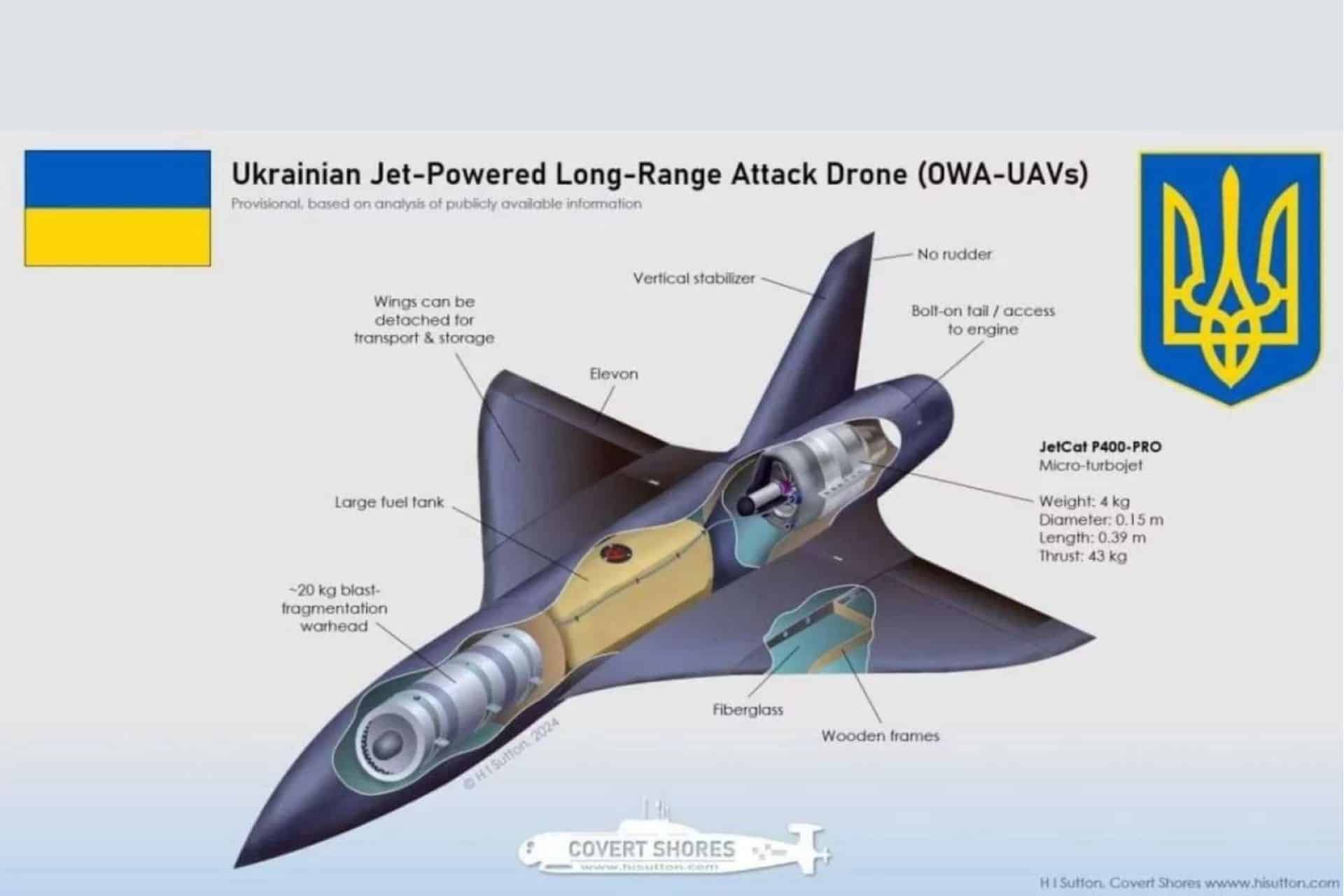
by Kyle Anzalone | Jun 22, 2026, https://libertarianinstitute.org/news/uk-tests-long-range-missile-for-ukraine/
The UK tested a missile with a range of 300 miles, with plans to send the munitions to Ukraine. The platform will allow Ukraine to deliver 500-pound warheads to Moscow.
The missiles tested by the UK military last week were developed under Project Brakestop. The goal of the project is to design a long-range weapon that can be produced for under half a million dollars and within 20 months.
UK Armed Forces Minister Louise Sandher-Jones said the new missiles will “complement” the Storm Shadow cruise missiles London sends to Kiev. “The UK stands shoulder-to-shoulder with Ukraine, and we will continue to provide the support it needs to defend itself against Russian aggression,” she added. “Project Brakestop shows what happens when we combine that commitment with the talent and ingenuity of British industry.”
The range of the missiles will allow Ukraine to target the Russian capital.
Ukraine has increased the large-scale drone strikes targeting Moscow and other Russian cities in recent months. Russian Foreign Minister Sergei Lavrov said Moscow would respond by “massive group strikes” against Ukrainian targets on a “on a regular basis.”
Russia reported downing over 300 Ukrainian drones overnight Sunday, including 80 in the Moscow region. While Moscow often does not discuss strikes that cause damage in Moscow, videos on social media appear. to show damage caused by Ukrainian attacks.
Substation damage delaying operation of repaired Zaporizhzhia power line, says IAEA

Friday, 26 June 2026, https://www.world-nuclear-news.org/articles/substation-damage-stopping-zaporizhzhia-power-line-reconnection-says-iaea
After months of ceasefire negotiations, planning and complex repairs, the main external power line to Zaporizhzhia Nuclear Power Plant has been fixed – but it can’t be put back into operation because of damage to a substation 100 kilometres away, the International Atomic Energy Agency has said.
IAEA Director General Rafael Mariano Grossi said: “Of the six temporary ceasefires that we have negotiated since late last year to help protect nuclear safety … this was the most challenging to implement. It required several months of delicate negotiations, followed by mine clearance and repairs on high pylons across the Dnipro River. The IAEA monitored these activities on the ground to confirm they were carried out as agreed.
“Both sides worked constructively with us to enable the repairs to proceed. Despite the many military and technical challenges, this demonstrates that concrete progress remains possible, even during a large-scale war. We will continue our efforts to reduce the ever-present danger of a nuclear accident.”
The IAEA team based at the Zaporizhzhia plant monitored the repair work on the plant side of the frontline, with a separate IAEA team monitoring the repair work on the other side of the Dnipro River.
However the 750 kV Dniprovska external power line is not back in operation yet, because of damage sustained in May at an electrical substation 100 kilometres northwest of the plant, Grossi said.
“Repeated damage to the electrical infrastructure on which nuclear power plants depend continues to create serious nuclear safety and security risks. I once again call for maximum military restraint around all nuclear facilities and the power infrastructure they require,” he said.
Since the main Dniprovska line was disconnected in March, the six-unit nuclear power plant, which has been under Russian military control since early March 2022, has been relying on its sole remaining 330 kV Ferosplavna-1 backup power line.
During the war there have been a number of occasions when all external power has been lost to the plant. Last week the back-up power line was reconnected after the 19th such loss of power. As with the previous occasions, the plant had to rely on power from its emergency diesel generators for the power required by the plant, including for various safety functions.
1 This Month
23-25 October – on Zoom – World BEYOND War’s annual global conferenc


Shut down the radiation-damaged Heysham nuclear reactors now
To see nuclear-related stories in greater depth and intensity – go to https://nuclearinformation.wordpress.com

Say No to NASA’s Reckless Nuclear Reactor on the Moon
Say No to NASA’s Reckless Nuclear Reactor on the Moon

-
Archives
- October 2026 (247)
- September 2026 (339)
- August 2026 (330)
- July 2026 (355)
- June 2026 (287)
- May 2026 (306)
- April 2026 (356)
- March 2026 (251)
- February 2026 (267)
- January 2026 (308)
- December 2025 (358)
- November 2025 (359)
-
Categories
- 1
- 1 NUCLEAR ISSUES
- business and costs
- climate change
- culture and arts
- ENERGY
- environment
- health
- history
- indigenous issues
- Legal
- marketing of nuclear
- media
- opposition to nuclear
- PERSONAL STORIES
- politics
- politics international
- Religion and ethics
- safety
- secrets,lies and civil liberties
- spinbuster
- technology
- Uranium
- wastes
- weapons and war
- Women
- 2 WORLD
- ACTION
- AFRICA
- Atrocities
- AUSTRALIA
- Christina's notes
- Christina's themes
- culture and arts
- Events
- Fuk 2022
- Fuk 2023
- Fukushima 2017
- Fukushima 2018
- fukushima 2019
- Fukushima 2020
- Fukushima 2021
- general
- global warming
- Humour (God we need it)
- Nuclear
- RARE EARTHS
- Reference
- resources – print
- Resources -audiovicual
- Weekly Newsletter
- World
- World Nuclear
- YouTube
-
RSS
Entries RSS
Comments RSS

