Cameco Corp. said it agreed to terms with SE NNEGC Energoatom, the Ukrainian state-owned nuclear energy utility, to provide natural uranium hexafluoride, or UF(6), through 2035.
“Key commercial terms, such as pricing mechanism, volume and tenor, have been agreed to, but the contract is subject to finalization, which is anticipated in the first quarter of 2023,” Cameco said.
The deal, which runs from 2024 to 2035, will see all deliveries in the form of UF(6). “The contract will contain a required degree of flexibility, given present circumstances in Ukraine,” Cameco said.
The agreement will see Cameco supply 100% of Energoatom’s UF(6) requirements for the nine nuclear reactors at the Rivne, Khmelnytskyy and South Ukraine nuclear power plants. The deal also has an option for Cameco to supply six reactors at the Zaporizhzhya nuclear power plant, which is currently under Russian control, should it return to Energoatom’s operation, the companies said.
On February 16, 2022, a full week before Putin sent combat troops into Ukraine, the Ukrainian Army began the heavy bombardment of the area (in east Ukraine) occupied by mainly ethnic Russians. Officials from the Observer Mission of the Organization for Security and Co-operation in Europe (OSCE) were located in the vicinity at the time and kept a record of the shelling as it took place. What the OSCE discovered was that the bombardment dramatically intensified as the week went on until it reached a peak on February 19, when a total of 2,026 artillery strikes were recorded. Keep in mind, the Ukrainian Army was, in fact, shelling civilian areas along the Line of Contact that were occupied by other Ukrainians.
We want to emphasize that the officials from the OSCE were operating in their professional capacity gathering first-hand evidence of shelling in the area. What their data shows is that Ukrainian Forces were bombing and killing their own people.This has all been documented and has not been challenged.
So, the question we must all ask ourselves is this: Is the bombardment and slaughter of one’s own people an ‘act of war’?
We think it is.And if we are right, then we must logically assume that the war began before the Russian invasion (which was launched a full week later) We must also assume that Russia’s alleged “unprovoked aggression” was not unprovoked at all but was the appropriate humanitarian response to the deliberate killing of civilians. In order to argue that the Russian invasion was ‘not provoked’, we would have to say that firing over 4,000 artillery shells into towns and neighborhoods where women and children live, is not a provocation? Who will defend that point of view?
No one, because it’s absurd. The killing of civilians in the Donbas was a clear provocation, a provocation that was aimed at goading Russia into a war. And –as we said earlier– the OSCE had monitors on the ground who provided full documentation of the shelling as it took place, which is as close to ironclad, eyewitness testimony as you’re going to get.
This, of course, is a major break with the “official narrative” which identifies Russia as the perpetrator of hostilities. But, as we’ve shown, that simply isn’t the case. The official narrative is wrong. Even so, it might not surprise you to know that most of the mainstream media completely omitted any coverage of the OSCE’s fact-finding activities in east Ukraine. The one exception to was Reuters that published a deliberately opaque account published on February 18 titled “Russia voices alarm over sharp increase of Donbass shelling”. Here’s an excerpt:
Russian Foreign Minister Sergei Lavrov voiced alarm on Friday over a sharp increase in shelling in eastern Ukraine and accused the OSCE special monitoring mission of glossing over what he said were Ukrainian violations of the peace process….
Washington and its allies have raised fears that the upsurge in violence in the Donbass could form part of a Russian pretext to invade Ukraine. Tensions are already high over a Russian military buildup to the north, east and south of Ukraine.
“We are very concerned by the reports of recent days – yesterday and the day before there was a sharp increase in shelling using weapons that are prohibited under the Minsk agreements,” Lavrov said, referring to peace accords aimed at ending the conflict. “So far we are seeing the special monitoring mission is doing its best to smooth over all questions that point to the blame of Ukraine’s armed forces,” he told a news conference.
Ukraine’s military on Friday denied violating the Minsk peace process and accused Moscow of waging an information war to say that Kyiv was shelling civilians, allegations it said were lies and designed to provoke it.” (Russia voices alarm over sharp increase of Donbass shelling, Reuters)
Notice the clever way that Reuters frames its coverage so that the claims of the Ukrainian military are given as much credibility as the claims of the Russian Foreign Minister. What Reuters fails to point out is that the OSCE’s report verifies Lavrov’s version of events while disproving the claims of the Ukrainians. It is the job of a journalist to make the distinction between fact and fiction but, once again, we see how agenda-driven news is not meant to inform but to mislead.
The point we are trying to make is simple: The war in Ukraine was not launched by a tyrannical Russian leader (Putin) bent on rebuilding the Soviet Empire. That narrative is a fraud that was cobbled together by neocon spin-meisters trying to build public support for a war with Russia. The facts I am presenting here can be identified on a map where the actual explosions took place and were then recorded by officials whose job was to fulfill that very task. Can you see the difference between the two? In one case, the storyline rests on speculation, conjecture and psychobabble; while in the other, the storyline is linked to actual events that took place on the ground and were catalogued by trained professionals in the field. In which version of events do you have more confidence?
Bottom line: Russia did not start the war in Ukraine. That is a fake narrative. The responsibility lies with the Ukrainian Army and their leaders in Kiev.
And here’s something else that is typically excluded in the media’s selective coverage. Before Putin sent his tanks across the border into Ukraine, he invoked United Nations Article 51 which provides a legal justification for military intervention. Of course, the United States has done this numerous times to provide a fig leaf of legitimacy to its numerous military interventions. But, in this case, you can see where the so-called Responsibility To Protect (R2P) could actually be justified, after all, by most estimates, the Ukrainian army has killed over 14,000 ethnic Russians since the US-backed coup 8 years ago. If ever there was a situation in which a defensive military operation could be justified, this was it. But that still doesn’t fully explain why Putin invoked UN Article 51. For that, we turn to former weapons inspector Scott Ritter, who explained it like this:
“Russian President Vladimir Putin, citing Article 51 as his authority, ordered what he called a “special military operation”…. under Article 51, there can be no doubt as to the legitimacy of Russia’s contention that the Russian-speaking population of the Donbass had been subjected to a brutal eight-year-long bombardment that had killed thousands of people.… Moreover, Russia claims to have documentary proof that the Ukrainian Army was preparing for a massive military incursion into the Donbass which was pre-empted by the Russian-led “special military operation.” [OSCE figures show an increase of government shelling of the area in the days before Russia moved in.]
..The bottom line is that Russia has set forth a cognizable claim under the doctrine of anticipatory collective self-defense, devised originally by the U.S. and NATO, as it applies to Article 51 which is predicated on fact, not fiction.
While it might be in vogue for people, organizations, and governments in the West to embrace the knee-jerk conclusion that Russia’s military intervention constitutes a wanton violation of the United Nations Charter and, as such, constitutes an illegal war of aggression, the uncomfortable truth is that, of all the claims made regarding the legality of pre-emption under Article 51 of the United Nations Charter, Russia’s justification for invading Ukraine is on solid legal ground.” (“Russia, Ukraine & the Law of War: Crime of Aggression”, Consortium News)
Here’s a bit more background from an article by foreign policy analyst Danial Kovalik:
“One must begin this discussion by accepting the fact that there was already a war happening in Ukraine for the eight years preceding the Russian military incursion in February 2022. And, this war by the government in Kiev… claimed the lives of around 14,000 people, many of them children, and displaced around 1.5 million more … The government in Kiev, and especially its neo-Nazi battalions, carried out attacks against these peoples … precisely because of their ethnicity. ..
While the UN Charter prohibits unilateral acts of war, it also provides, in Article 51, that “nothing in the present Charter shall impair the inherent right of individual or collective self-defense… ” And this right of self-defense has been interpreted to permit countries to respond, not only to actual armed attacks, but also to the threat of imminent attack.
In light of the above, it is my assessment.. that Russia had a right to act in its own self-defense by intervening in Ukraine, which had become a proxy of the US and NATO for an assault – not only on Russian ethnics within Ukraine – but also upon Russia itself.” (“Why Russia’s intervention in Ukraine is legal under international law”, RT)
So, has anyone in the western media reported on the fact that Putin invoked UN Article 51 before he launched the Special Military Operation?
No, they haven’t, because to do so, would be an admission that Putin’s military operation complies with international law. Instead, the media continues to spread the fiction that ‘Hitler-Putin is trying to rebuild the Soviet empire’, a claim for which there is not a scintilla of evidence. Keep in mind, Putin’s operation does not involve the toppling of a foreign government to install a Moscow-backed stooge, or the arming and training a foreign military that will be used as proxies to fight a geopolitical rival, or the stuffing a country with state-of-the-art weaponry to achieve his own narrow strategic objectives, or perpetrating terrorist acts of industrial sabotage (Nord-Stream 2) to prevent the economic integration of Asia and Europe. No, Putin hasn’t engaged in any of these things. But Washington certainly has, because Washington isn’t constrained by international law. In Washington’s eyes, international law is merely an inconvenience that is dismissively shrugged off whenever unilateral action is required. But Putin is not nearly as cavalier about such matters, in fact, he has a long history of playing by the rules because he believes the rules help to strengthen everyone’s security. And, he’s right; they do.
And that’s why he invoked Article 51 before he sent the troops to help the people in the Donbas. He felt he had a moral obligation to lend them his assistance but wanted his actions to comply with international law. We think he achieved both.
Here’s something else you will never see in the western media. You’ll never see the actual text of Putin’s security demands that were made a full 2 months before the war broke out. And, the reason you won’t see them, is because his demands were legitimate, reasonable and necessary. All Putin wanted was basic assurances that NATO was not planning to put its bases, armies and missile sites on Russia’s border. In other words, he was doing the same thing that all responsible leaders do to defend the safety and security of their own people.
Here are a few critical excerpts from the text of Putin’s proposal to the US and NATO: [on original]………………………….
It doesn’t take a genius to figure out what Putin was worried about. He was worried about NATO expansion and, in particular, the emergence of a hostile military alliance backed by Washington-groomed Nazis occupying territory on his western flank. Was that unreasonable of him? Should he have embraced these US-backed Russophobes and allowed them to place their missiles on his border? Would that have been the prudent thing to do?
So, what can we deduce from Putin’s list of demands?
First, we can deduce that he is not trying to reconstruct the Soviet empire as the MSM relentlessly insists. The list focuses exclusively on security-related demands, nothing else.
Second, it proves that the war could have easily been avoided had Zelensky simply maintained the status quo and formally announced that Ukraine would remain neutral. In fact, Zelensky actually agreed to neutrality in negotiations with Moscow in March, but Washington prevented the Ukrainian president from going through with the deal which means that the Biden administration is largely responsible for the ongoing conflict. (RT published an article today stating clearly that an agreement had been reached between Russia and Ukraine in March but the deal was intentionally scuttled by the US and UK. Washington wanted a war.)
Third, it shows that Putin is a reasonable leader whose demands should have been eagerly accepted. Was it unreasonable of Putin to ask that “The Parties shall refrain from deploying their armed forces and… military alliances.. in the areas where such deployment could be perceived by the other Party as a threat to its national security”? Was it unreasonable for him the ask that “The Parties shall eliminate all existing infrastructure for deployment of nuclear weapons outside their national territories”?
Where exactly are the “unreasonable demands” that Putin supposedly made?
There aren’t any. Putin made no demands that the US wouldn’t have made if ‘the shoe was on the other foot.’
Forth, it proves that the war is not a struggle for Ukrainian liberation or democracy. That’s hogwash. It is a war that is aimed at “weakening” Russia and eventually removing Putin from power. Those are the overriding goals. What that means is that Ukrainian soldiers are not dying for their country, they are dying for an elitist dream to expand NATO, crush Russia, encircle China, and extend US hegemony for another century. Ukraine is merely the battlefield on which the Great Power struggle is being fought.
There are number points we are trying to make in this article:
Who started the war? Answer– Ukraine started the war
Was the Russian invasion a violation of international law? Answer– No, the Russian invasion should be approved under United Nations Article 51
Could the war have been avoided if Ukraine declared neutrality and met Putin’s reasonable demands? Answer– Yes, the war could have been avoided
The last point deals with the Minsk Treaty and how the dishonesty of western leaders is going to effect the final settlement in Ukraine. I am convinced that neither Washington nor the NATO allies have any idea of how severely international relations have been decimated by the Minsk betrayal. In a world where legally binding agreements can be breezily discarded in the name of political expediency, the only way to settle disputes is through brute force. Did anyone in Germany, France or Washington think about this before they acted? (But, first, some background on Minsk.)
The aim of the Minsk agreement was to end the fighting between the Ukrainian army and ethnic Russians in the Donbas region of Ukraine. It was the responsibility of the four participants in the treaty– Germany, France, Russia and Ukraine– to ensure that both sides followed the terms of the deal. But in December, former German Chancellor Angela Merkel said in an interview with a German magazine, that there was never any intention of implementing the deal, instead, the plan was to use the time to make Ukraine stronger in order to prepare for a war with Russia. So, clearly, from the very beginning, the United States intended to provoke a war with Russia.
On September 5, 2014, Germany, France, Ukraine and Russia all signed Minsk, but the treaty failed and the fighting resumed. On February 12, 2015, Minsk 2 was signed, but that failed, as well. Please, watch this short segment on You Tube by Amit Sengupta who gives a brief rundown of Minsk and its implications: (I transcribed the piece myself and any mistakes are mine.) …………………. [Transcription on original]
There’s no way to overstate the importance of the Minsk betrayal or the impact it’s going to have on the final settlement in Ukraine. When trust is lost, nations can only ensure their security through brute force. What that means is that Russia must expand its perimeter as far as is necessary to ensure that it will remain beyond the enemy’s range of fire. (Putin, Lavrov and Medvedev have already indicated that they plan to do just that.) Second, the new perimeter must be permanently fortified with combat troops and lethal weaponry that are kept on hairtrigger alert. When treaties become vehicles for political opportunism, then nations must accept a permanent state of war. This is the world that Merkel, Hollande, Poroshenko and the US created by opting to use ‘the cornerstone of international relations’ (Treaties) to advance their own narrow warmongering objectives.
We just wonder if anyone in Washington realizes whet the fu** they’ve done?
US Attorney General Merrick Garland announced on Friday the first transfer of assets, confiscated as part of anti-Russia sanctions, to Ukraine to pay for the country’s reconstruction.
The measure affects $5.4 million expropriated from Russian businessman Konstantin Malofeyev on charges of sanctions evasion, according to the top official.
“With my authorization today, forfeited funds will next be transferred to the State Department to support the people of Ukraine,” Garland said, adding that the funds were confiscated following an indictment against Malofeyev, issued last April.
Earlier this week, a federal court in New York allowed prosecutors to confiscate $5.4 million belonging to Malofeyev, paving the way for the funds to be used to help rebuild Ukraine.
In June, millions were seized from a US bank account belonging to Malofeyev, against whom the US Treasury Department announced sanctions in April “for having acted or purported to act for or on behalf of, directly or indirectly” the Russian government.
The businessman, who owns Russian Orthodox Christian channel Tsargrad TV, has been on the US sanctions list since 2014. Malofeyev previously claimed that he had no holdings in the West since then.
In December, US President Joe Biden signed legislation allowing the Department of Justice to transfer some forfeited assets to the State Department to aid Ukraine. US law restricts how the government can use such assets.
It is up to the government in Kiev to decide how to use new rockets being delivered for the US-supplied HIMARS launchers, the Pentagon said on Friday. The statement is a confirmation that the latest batch of munitions the American taxpayers are funding will include Ground Launched Small Diameter Bombs (GLSDB).
The Boeing-manufactured munitions consist of a rocket motor mated with an airplane bomb, with an estimated range of up to 150 kilometers. While Friday’s announcement listed “additional ammunition” for the HIMARS and “precision-guided rockets,” Brigadier-General Patrick Ryder told reporters that this indeed included the GLSDB, confirming the information leaked to Reuters earlier this week.
Ryder also confirmed that the US won’t stand in the way of Ukrainians using the missiles to strike deep inside Russia.
“When it comes to Ukrainian plans on operations, clearly that is their decision. They are in the lead for those,” he said on Friday. “So, I’m not going to talk about or speculate about potential future operations, but again, all along, we’ve been working with them to provide them with capabilities that will enable them to be effective on the battlefield.”
The GLDSB are produced by Boeing in cooperation with Sweden’s Saab AB, and combine the GBU-39 small-diameter bomb with the M26 rocket motor. It was unclear how many of the munitions the Pentagon intended to send, or whether they would come from the US military stockpile or need to be freshly produced.
Reuters claimed to have seen a Boeing document saying the first deliveries could be “as early as spring 2023.” Meanwhile, Bloomberg cited unnamed officials who said the timeline could be as long as nine months, depending on when the US Air Force issues the contract. Bloomberg also reported the GLSDB order would account for $200 million of the $1.75 billion in the Ukraine Security Assistance Initiative funding, referring to contracts for weapons and ammunition not coming out of the Pentagon stockpile.
Whenever the missiles actually arrive, Russia has already hinted at how it will respond. On Wednesday, President Vladimir Putin tasked the military with “eliminating any possibility” of Ukrainian artillery strikes on Russian territory. Foreign Minister Sergey Lavrov said in an interview on Thursday that Moscow will “push back” the Ukrainian troops to a range at which they will not be a threat.
“The longer range the weapons supplied to the Kiev regime have, the further the troops will need to be moved,” Lavrov said.
Ukraine has used the US-supplied HIMARS launchers against both military targets and civilians in Donbass, Kherson and Zaporozhye. Kiev has repeatedly asked for the MGM-140 Army Tactical Missile System (ATACMS) rockets, which have a range of some 300 kilometers.
Moscow has repeatedly warned Washington that providing heavy weapons to Ukraine risks crossing Russia’s “red lines” and involving the US and NATO in the conflict directly. The US and its allies insist they are not parties to the hostilities, but continue to arm Kiev. By the Pentagon’s own admission, the US has committed $32 billion in military aid to Ukraine.
Last September, Fiona Hill and Angela Stent wrote this in Foreign Affairs: “According to multiple former senior U.S. officials, in April 2022, Russian and Ukrainian negotiators appeared to have tentatively agreed on the outlines of a negotiated interim settlement.”
In the end, of course, no such settlement was agreed. Which may be, at least in part, because Boris Johnson advised Zelensky not to sign it during his “surprise visit” to Kiev in early April.
As you may recall, one of Zelensky’s “close associates” told Ukrainska Pravda that Johnson was an “obstacle” to negotiations because he’d brought two simple messages: “Putin is a war criminal, he should be suppressed, not negotiated with. And secondly, if you are ready to sign any agreements on guarantees with him, then we are not. We can with you, but not with him, he will still abandon everyone.”
According to Roman Romanyuk, writing in Ukrainska Pravda:
Behind this visit and Johnson’s words lies much more than a simple reluctance to engage in agreements with Russia. The collective West, which back in February suggested that Zelenskyi surrender and run away, now felt that Putin is actually not as all-powerful as they imagined him to be. Moreover, right now there was a chance to “press him”. And the West wants to use it.
It should be noted that Romanyuk disagrees that Johnson’s visit was the main reason the deal fell through. In his view, concerns that “Ukrainian society might not accept such a deal” loomed larger. Others interpret the evidence differently.
Putin himself has claimed the West scuttled negotiations, noting in his September 21st speech that “after certain compromises were coordinated, Kiev was actually ordered to wreck all these agreements”.
Now, the former Israeli PM Naftali Bennett has lent credence to this view, claiming that the West “blocked” a draft peace deal between Russia and Ukraine. The revelation came in a long interview (in Hebrew) posted on Bennett’s YouTube channel.
Bennett’s words cannot be dismissed as mere speculation, given that he played a central role mediating between the two sides, after a request from Zelensky at the war’s outset.
In the interview, Bennett states that he believed Israel’s national interest would be served by a policy of neutrality, which is why he accepted the request to mediate. Toward this end, he sought to understand the interests of both sides.
“Putin’s perception,” he says, “was wait, when the wall came down, we reached an agreement with NATO that they wouldn’t expand … why are you introducing Ukraine into NATO?” Later in the interview, he states that “the war broke out because of the demand to join NATO”.
After a sequence of phone calls with the two leaders, Bennett flew to Moscow on March 7th. (Meanwhile, Russian and Ukrainian negotiators were holding talks at Gomel in Belarus.)
He says that Putin then “made two big concessions”. He promised not to “take out” Zelensky, and he “renounced disarmament of Ukraine”. The same day, Zelensky also “made a big concession” – he “relinquished joining NATO”. Describing these as “huge steps on each side”, Bennett’s impression was that “both sides very much want a ceasefire”.
According to the former Prime Minister, Putin was “very pragmatic”, and “so was Zelensky”. As an example of Putin’s pragmatism, he mentions that Putin “totally understood Zelensky’s political constraints”. Asked whether Putin is “gung ho to fight at all costs”, Bennett replies “no” because “he has goals to achieve”.
Regarding the various Western leaders involved, he says that “Boris Johnson adopted the aggressive line”, whereas “Macron and Scholz were more pragmatic”, and “Biden was both”.
Then we get to the most interesting part. “I think there was a legitimate decision by the West,” Bennett explains, “to keep striking Putin”, to take the “more aggressive approach”. “So they blocked it?” the interviewer asks. “Yes. They blocked it.”
Bennet’s account obviously comports closely with Romanyuk’s observation that the West felt there was a chance to “press” Putin.
One reason to be sceptical is that, insofar as Bennett’s mediation efforts ultimately failed, he has an incentive to blame outside forces (in this case, the West). For now, we can’t be sure exactly what happened. But the revelations are striking, consistent as they are with the earlier report in Ukrainska Pravda – down to the detail of Johnson being particularly hawkish.
At least ten rockets hit central areas of Donetsk on Saturday morning, damaging three residential buildings, a local Russian official has reported in his Telegram channel.
One of the projectiles fired by Ukrainian forces hit an apartment building in the Kievsky district. While rescuers continue to search for survivors under the rubble, preliminary information suggests that there were three people in one of the apartments.
There was no information on casualties at the time of writing, but the absence of victims would be unusual; indeed, Ukrainian shelling of the capital of the Donetsk People’s Republic intensified weeks before the Russian attack in February 2022, and has taken a heavy toll ever since.
The suffering of Donbass residents
According to the human rights commissioner of the DPR, Daria Morozova, at least 1,091 civilians were killed and another 3,533 were recorded as injured last year as a result of combat operations. The figures do not include places such as Mariupol, where the full scale of the tragedy has yet to be assessed.
The 4,624 people mentioned above were victims of regular artillery strikes on urban areas of Donetsk and Gorlovka.
When Donetsk residents are asked why the Ukrainian Armed Forces continue to attack civilians, people usually have no explanation other than the desire of the Ukrainian government and military to destroy Donbass and its people. This is supported by a massive campaign to dehumanize local residents and a number of hateful statements by Ukrainian politicians. “We will kill them with nuclear weapons,” warned former Prime Minister Yulia Timoshenko, while ex-president Pyotr Poroshenko has vowed: “Our children will go to school, while their children will go sit in basements. That’s how we will win this war.”
Ukrainian forces continue to bomb Donbass despite the shortage of shells experienced by both sides of the conflict. However, while Russia can solve this issue by activating its military-industrial complex, Ukraine is entirely dependent on foreign supplies.
It should make a lot more sense for Ukraine to use scarce ammunition on military targets rather than on peaceful residential areas. Even if a lot of the time, Kiev’s forces misfire. A typical example is a Ukrainian shell landing in the frozen Kalmius River that divides Donetsk.
How Ukraine explains the attacks
Whenever Ukrainian artillery hits a civilian object – for example, a flower market – or kills civilians, officials in Kiev deny it. Unofficial voices resort to false claims that no such thing ever happened. Over the past eight years, the latter have come up with several memes allegedly proving that the Ukrainian Army wasn’t involved – with explanations such as “the air conditioner exploded.” Even if Ukrainian forces manage to hit a military facility, such as a warehouse, they usually deny involvement, claiming that “someone smoked in the wrong place” and that the explosion wasn’t related to the conflict. Thus, an information environment is created that denies the fact that Kiev attacks cities.
The Ukrainian side claims the attacks on civilians are “self-inflicted” – implying that the Russian Army attacks cities under its control, supposedly to blame Ukrainian forces and demonize them in the eyes of the population, as well as for propaganda purposes. This kind of post-truth has given rise to a whole area of fact-checking, where journalists collaborate with open-source intelligence to calculate the trajectory of the strikes.
For Donbass residents, all this is extremely painful. Discussions of terrorist attacks on civilian infrastructure often end in profanities. According to Donbass locals, Ukrainians keep on attacking Donetsk simply because they can. Meanwhile, people are just trying to survive and are waiting for the front to move away from the area. Other details don’t concern them.
However, this is a distorted view of the situation; there is every reason to believe that the regular shelling of cities in Donbass is part of Ukrainian strategy and follows military logic. Perhaps Kiev’s “hybrid war” era military doctrine has adopted terrorist methods. So, how do these attacks on the civilian population help Ukraine?
Psychological pressure
Let’s take a clear example. In June 2022, the units of the first corps of the People’s Militia of the DPR were dislodged from their permanent locations because of the battle for Lisichansk – they had to storm a huge section of the front from Popasnaya to Verkhnekamenka, moving from south to north. The Russian Armed Forces then lacked personnel and had to use troops from Donetsk. Ukraine intensified strikes on the city to force the leadership to return the units back to their locations.
A similar thing is happening now. Some areas are under pressure – in particular, the fighters of the Wagner Group are pressing in Soledar and Artyomovsk (known in Ukraine as Bakhmut). They are advancing backed by the artillery of the Russian Armed Forces. Ukrainians use civilian strikes to provoke politicians, hoping that they will influence the military and interfere with the army’s plans. In June, this plan failed and the Ukrainians, taking advantage of the lack of counter-battery fire in the Donetsk region, committed a number of atrocities.
Commenting on the situation in a private conversation, one fighter explained why the army didn’t take the bait: “Normally, no military man – from simple soldier to general – suffers if the enemy attacks the city. This sounds harsh, but it’s better for the enemy to attack the city than the army’s manpower. This would be the usual military logic, but there is one key detail: 95% of our corps are made up of local residents who are worried about their cities. So, after completing the mission in Lisichansk, our soldiers were very angry when they got back to Donetsk.”
This is all very close to home for fighters from Donbass. In the case of a fast-paced conflict without a stable front line, such attacks would have motivated the soldiers, by enraging them. Perhaps this explains the near-complete silence of the Ukrainian artillery in the first month of the Russian military campaign. In those days, when the front line was mobile, it was better not to further motivate the enemy.
However, in positional warfare, fighters are conscious of a permanent threat to their relatives and other civilians in their hometowns. Motivated warriors who identify themselves as “defenders” feel as if they don’t have enough strength to break through. This acts to discourage. Concern for those who are not on the front line returns the soldier to his other life, behind the front lines, and distracts him from battle. By itself, this does not break morale, but soldiers are also affected by constant adrenaline swings, a risk of death or injury to themselves or their brothers in arms, the cold and damp conditions, the monotony of their work (for example, a good soldier digs more often than shoots), and numerous other factors.
Russia doesn’t have a strong memory of World War I – it has been replaced by that of World War II. However, the current fighting resembles the trench warfare of the early 20th century. With the possibility to adjust and fine-tune firing using Chinese drones and the chance to search the internet for how to repair military equipment. The rest of it – mud, trenches, the frozen front line – is like World War I, including politicians demanding a large-scale and ambitious offensive.
Why can’t the strikes be stopped?
At the end of July 2022, such an event began in the Donetsk region. Its main goal was to free the city from artillery strikes. The Donetsk corps were successful for several days, but then became stuck in positional battles. By the end of January, six months into the operation, the army had barely advanced 10km (6 miles).
The fighters were unable to break through the pre-established line of defense, and the forces only managed to wedge and slowly push through the three lines of fortifications near the villages of Vodianoye and Opitnoe, north of Donetsk airport. However, the fighters cannot give up on storming these fortifications – the strikes on Donetsk and Makeyevka must end for good.
As a result, there have been signs of an emerging contradiction. On the one hand, military leaders who are interested in achieving military goals and saving manpower, and on the other, politicians who express the interests of the civilian population and want to put a swift end to the artillery terror. Politicians want the public to like them. They don’t want to deal with the consequences of hostilities, hoping for things to return to normal so they can receive funding to restore the affected regions. As a result, they view the situation quite differently from the military.
Through manipulation, propaganda and informational and psychological influence, Ukrainians have made cunning use of the differences between civilian and military interests. This comes down to a grotesque choice between “killing the army in Avdeevka” and “allowing the Ukrainian Armed Forces to wipe Donetsk off the face of the Earth.” If politicians push the army to force the assault, the latter will make more mistakes, which will reduce their power. This, in turn, favors Kiev.
Perhaps seeking rational reasons behind the artillery strikes in Donbass is pointless – maybe it’s just the manifestation of rage on behalf of Ukrainian nationalists. However, if we ask ourselves “who benefits from this,” there is a creeping suspicion that terrorizing the population with NATO ammunition is a strategy initiated by Ukraine’s top military leadership. Firstly, these attacks tie up the forces of the Russian Army and distract it from concentrating on other areas. Secondly, they negatively affect the combat spirit of the fighters from Donbass. And finally, they allow political factors to intervene in military strategy, dealing a serious blow to its quality.
Ukraine’s Cabinet of Ministers has greenlighted the preliminary phases of building two $5 billion Westinghouse AP 1000 reactors at the Kmelnitsky nuclear power plant once the Russian invasion ends, the embattled country’s energy officials have said, according to World Nuclear News.
The cabinet-level approval builds on the deal Kyiv and Westinghouse signed in June that outlined plans for the US-based nuclear corporation to construct a total of nine new reactors in Ukraine, as well as supply all nuclear fuel burned in the country’s 15 Soviet-built reactors.
It is impossible to see how the provision of such weapons, against a larger enemy with no evident sign of capitulation and determined to maintain the fight in the field, however slapdash and ailing, will be a “gamechanger”. That word ought to be scrapped from any credible analysis, but we see it used repeatedly in the tabloid certitude of final victory.
It seems to be a case of little provision for so much supposed effect. The debates, the squabbles, the to-and-fro about supplying Ukraine with tanks from Western arsenals has served to confirm one thing: this is an ever-broadening war between the West against Russia with Ukraine an experimental proxy convinced it will win through. Efforts to limit the deepening conflict continue to be seen as the quailing sentiments of appeasers, the wobbly types who find democracy a less than lovable thing.
So far, promises have been made to ship the US M1A2 Abrams, Germany’s Leopard 2 and the UK’s Challenger. Others have alluded to doing the same thing – including France regarding its Leclerc tanks – but tardiness fills the ranks, and logistics will make the provision of such weapons a long affair. Re-export licenses will have to be issued, notably regarding the Leopard 2; training Ukrainian tank crews will also need to be undertaken.
All in all, the picture is not as rosy as those in Kyiv think, despite the confident assessment from Ukraine’s Deputy Foreign Minister, Andriy Melnyk that his country’s defence forces would have access to “at least a hundred tanks” within three months.
The US tanks are, for the most part, still grounded in their country of origin, with their deployment potentially delayed for months, if not years. Pentagon deputy spokesperson Sabrina Singh was frank in admitting that, “We just don’t have these tanks available in excess in our US stocks, which is why it is going to take months to transfer these M1A2 Abrams to Ukraine.” Singh, it should also be remembered, expressed the department’s view earlier this month that the tank was hardly suitable for Ukrainian needs, given how its jet turbine engine hungers for JP-8 jet fuel, unlike the diesel engine used by the Leopard and Challenger counterparts.
The engine is also rather tricky to maintain for crews, leaving it susceptible to blowing in the event of error. No less an authority than the Pentagon press secretary US Air Force brigadier general Pat Ryder, admitted that the M-1 “is a complex weapons system that is challenging to maintain, as we’ve talked about. That was true yesterday; it’s true today; it will be true in the future.”
There is also a backlog of orders for the tank. The Lima facility in Ohio, operated by General Dynamics, is the only facility that assembles the Abrams. It can produce a mere 12 tanks per month and must fulfill orders to supply 250 A2 tanks for Poland starting in 2025 to replace the same number of Soviet-era T-72 tanks Warsaw supplied to Kyiv last year. Taiwan also put in an order for 108 M1A2 tanks in 2019. Even getting to work on the 31 units promised by the Biden administration for Ukraine looks to be ambitious.
The wrangling over supplying Ukraine with tanks has been an at times acrimonious affair. This is hardly surprising. European states have their own specific readings, however dark or cautious, about how to approach the supply issue. The magic number being sought by Kyiv is 300. After initial resistance, German Chancellor Olaf Scholz gave in to his peers, both in his coalition outside, to send a company of Leopard 2 tanks and permit countries with the same tanks in their inventories to supply them to Kyiv. A fortnight of aggressive chatter at a number of venues, including Ramstein Air Base, pressing the flesh and breathing down various necks, saw a change of heart and, it has to be said, weak will on the part of the Chancellor.
It is impossible to see how the provision of such weapons, against a larger enemy with no evident sign of capitulation and determined to maintain the fight in the field, however slapdash and ailing, will be a “gamechanger”. That word ought to be scrapped from any credible analysis, but we see it used repeatedly in the tabloid certitude of final victory.
There is Ed Arnold of the Royal United Services Institute, who is confident that this tank transfer “will make a real difference.” But even Arnold attaches a few caveats, noting that much will depend on how Ukraine uses them. “Do they put them straight into the fight as soon as they’re available? Or do they integrate them into larger formations, train and rehearse those larger formations, and spend a bit more time integrating them into the way that they fight to then potentially use in the summer?”
Whatever the answer to such questions, this is a war that will yield no victors and will, in guaranteed fashion, make a mockery of victory. And the only cruel reality here, short of needless oblivion through imbecilic error of judgment, is to get the warring parties to the table to reach an agreement that is bound to cause despair as much as relief. It might, as unpalatable as it seems, require Ukraine to surrender a portion of devastated earth in the east. The unthinkable will have to be entertained.
The UN nuclear watchdog reported Thursday (26 January) that there were powerful explosions close to the Zaporizhzhia nuclear plant in Ukraine. This prompted renewed calls for a zone of security around the facility. Russian officials dismissed comments made by Rafael Grossi (head of the International Atomic Energy Agency, IAEA), claiming that they suggested Moscow couldn’t uphold nuclear safety.
US Big Defence will be the only winner of the proxy war in Ukraine. Not only do these global military contractors arm Ukraine, but they stand to benefit from the re-militarisation of Western European countries, Japan, and new NATO members.
In the view of Big Defence, peace is just a bad business proposition. There’s no money in it.
To Russia and Ukraine, the crisis is an existential issue. To the US and NATO, it’s a regime-change game. To Europe, it means the demise of stability – in the world economy, lost years (and that’s the benign scenario).
That’s how I characterised the US/NATO-led proxy war against Russia in Ukraine back in early March 2022. I argued that it was an “avoidable war that will penalise severely Ukraine, Russia, the US and the NATO, Europe, developing countries and the global economy”.[1]
At the time, the prediction was seen as contrarian. But it has prevailed. However, on January 25 the Ukraine proxy war entered a new, still more dangerous phase. The commitment of some 70 US, German, UK and Polish battle tanks herald lethal escalation, although hundreds more are needed to defeat Russia. For the first time since World War II, German tanks will be sent to the “Eastern front.” In Moscow, it will foster those voices who see the stakes of the war as existential.
Not only will economic and human costs climb even further, but strategic risks, including the potential of nuclear confrontation, will soar. With such escalation in high-tech arms sales to Ukraine, regional and military spillovers are no longer a matter of principle, but a matter of time.
Russia’s economic resilience
In early 2022, Western observers, with rare exceptions, predicted that the Russian economy would default within months as a net effect of sanctions. “Putin’s war” was doomed, they said. Obviously, the sanctions, which have been fuelled by might and economic coercion, have not been inconsequential. But nor were they new.
Already in February 2014, following the Russian annexation of Crimea, international sanctions were imposed against Russia and Crimea by the US, Canada, the EU, and the international organisations they dominate. While the West’s sanctions contributed to the fall of the Russian ruble, they also caused significant economic damage to the EU economy, with total losses at €100 billion in 2015. By mid-2016, Russia had lost an estimated $170 billion due to financial sanctions and another $400 billion in revenues from oil and gas.[2]………………………….
In fact, the Russian economy plunged 3.5 per cent in 2022, whereas inflation amounted to 5.4 per cent. In other words, Western institutions dramatically overestimated the GDP impact. Discrepancies of such magnitude are hard to explain away as simple prediction errors (figure 1 on original).
Proxy war united Russia
Officially, the invasion of Ukraine began as Russia’s “special military operation”. Unofficially, it soon morphed into a US/NATO-led proxy war against Russia in Ukraine. The true political objective of this war has been regime change. Hence the goal “to weaken Russia”, as Secretary of Defence Lloyd Austin acknowledged later. Hence, too, the international media predictions that the Russian economy would “inevitably” default and Putin be overthrown……………………
Today, in the view of ordinary Russians, Russia’s invasion of Ukraine is a defensive response to NATO’s offensive eastward enlargement. They see their country fighting for survival. That’s why the war caused Putin’s ratings to soar to the low 80s. That’s also why over 60 to 70 per cent of Russians support their government and believe the country is on the right track, despite extraordinary hardships. ……………………………………..
Amid this collapse of trust in the US and the EU, it certainly did not help that the Minsk peace process proved to be another Western ruse. Last December, German ex-Chancellor Angela Merkel disclosed in the Zeit newspaper that “the 2014 Minsk agreement was an attempt to give time to Ukraine.” That is, to make Ukraine stronger and for NATO to increase its support to the country in the face of Russia.[4]……………………
In the view of ordinary Russians, there is now a long continuum of betrayals from the pledge that NATO would never expand eastward in the early 1990s to Minsk today. In their view, the West’s recent arms escalation only confirms their worst suspicions.
Contradictory realities
Right before Christmas, President Volodymyr Zelenskyy delivered an emotional wartime appeal to a joint meeting of US Congress, pleading for more military assistance from the lawmakers, who were about to approve $45 billion in additional aid. It was necessary for “eventual victory”.[6]
Yet, there was a huge disconnect between the triumphant declaration and the realities. Earlier in the month, European Commission President Ursula von der Leyen had acknowledged that Ukraine’s losses in the war amounted to 100,000 soldiers and 20,000 civilians, though her tweet was quickly deleted and a new one was released without the true death count (figure 3 on original).[7
Behind the choreographed photo ops and bold sound bites, devastation had been expansive, progressive, and relentless…………..
In September 2022, a month before the Russian winter offensive, a World Bank report estimated that Russia’s invasion had caused over $97 billion in direct damage to Ukraine and it could cost $350 billion to rebuild the country. Worse, Ukraine had also suffered $252 billion in losses through disruptions to its economic flows and production, as well as extra expenses linked to the war.[8] (The report was quiet about the economic and human costs on the Russian side.)
In other words, what Zelenskyy asked in the Congress was less than one-tenth of what is actually needed to rebuild Ukraine.
Ukrainian nightmare
In effect, even as the international media was touting the mirage of Ukraine’s military triumph, the country’s real GDP declined over 35 per cent on an annual basis in the third quarter of 2022; that is, before Russia’s massive infrastructure attack.
Starting on 10 October, Russia’s waves of missile and drone attacks opened a new phase of the war.
The direct physical damage to infrastructure soared to $127 billion already in September; that’s over 60 per cent of Ukraine’s pre-war GDP. The impact on the productive capacity of key sectors, due to damage or occupation, is substantial and long-lasting.[9]
The population share with income below the national poverty line in Ukraine may more than triple, reaching nearly 60 per cent in 2022. Poverty will increase from 5.5 per cent in 2021 to 25 per cent in 2022, with major downside risks if the war and energy security situations worsen.[10]As casualties continue to mount, over a third of the population has been displaced and over half of all Ukrainian children have been forced to leave their homes. The nine months of war have caused massive population displacement. As of October 2022, the number of Ukrainian refugees recorded in Europe was over 7.8 million, and the number of internally displaced people was 6.5 million (figure 4 on original).[11]
As former Pentagon adviser Col. (ret.) Douglas Macgregor has argued, “Washington’s refusal to acknowledge Russia’s legitimate security interests in Ukraine and negotiate an end to this war is the path to protracted conflict and human suffering.”[12]
As former Pentagon adviser Col. (ret.) Douglas Macgregor has argued, “Washington’s refusal to acknowledge Russia’s legitimate security interests in Ukraine and negotiate an end to this war is the path to protracted conflict and human suffering.”[12]
West’s tough 2022 and darker 2023
Currently, the risk of recession casts a dark shadow over the US economy, ……………………………………………..
US and international war funding
In the proxy war, economic and humanitarian aid to Ukraine has been abundant………………………..
Internationally, the US provides the bulk of total aid to Ukraine (62 per cent). Aid from non-US sources amounts to $41.4 billion. The international total of more than $110 billion accounts for more than half of Ukraine’s pre-war GDP ($200 billion).[17] Effectively, these funding arrangements aim to sustain the hostilities and destruction not just in 2023, but at least until the late 2020s.[18] A scenario the West’s recent arms sales escalation could reinforce.
Ailing and indebted, the West cannot afford the proxy war in Ukraine. Hence, the frantic debt-taking. In the Eurozone, government debt to GDP remains close to 100 per cent. Ironically, that’s 40 percentage points higher than the region’s own debt limit. In the UK, the figure has doubled since 2008 to almost 100 per cent. In Japan, it is the worst among all high-income economies – close to 265 per cent, thanks to over two decades of secular stagnation. In the US, the debt ratio has also doubled and is inching toward 140 per cent. (That’s over 20 percentage points higher than that of Italy amid Rome’s 2010 debt crisis.) The rising debt as a percentage of the GDP will slow economic growth, push up interest payments to foreign holders of US debt, and heighten the risk of a fiscal crisis. The periodic debt-limit debacle in the US is just a minor political sideshow to the West’s future debt crisis, which will leave no economy, not even the major ones, unscathed (figure 5 on original).
The post-9/11 wars: the Big Defence bonanza
Ukraine is “absolutely a weapons lab in every sense because none of this equipment has ever actually been used in a war between two industrially developed nations,” said one source familiar with Western intelligence to CNN. “This is real-world battle testing.” Or as Zelenskyy put it more recently, arming Ukraine is a “‘big business opportunity,” as evidenced by his government’s new ties with Blackrock, Goldman Sachs and JP Morgan. In December 2022, he revealed that Ukraine had hired Blackrock to “advice” Kyiv on how to use the West’s reconstruction funds, which he then estimated would have to increase at least to $1 trillion.[19]
As I predicted in March 2022, US Big Defence will be the only winner of the proxy war in Ukraine. Not only do these global military contractors arm Ukraine, but they stand to benefit from the re-militarisation of Western European countries, Japan, and new NATO members. Washington has a great economic interest in such geopolitics. Brussels’ incentives are harder to fathom, especially as the euro area will pay a hefty premium on energy and food, which will also benefit Washington…………………………..
Military Keynesianism to rescue
From the economic standpoint, these military expenditures, including US Ukrainian aid, should be seen as massive, recurrent, multi-year bastard Keynesianism. That is, as a series of military stimulus packages to prop up the American economy (not Ukraine’s). Unlike Keynesian stimuli that can have an accelerator effect in the civilian economy, these packages benefit mainly the Pentagon and Big Defence; that is, the military industrial complex and its revolving-door elites.
Take, for instance, President Biden, Secretary of State Antony Blinken, National Security advisor Jake Sullivan and Blinken’s right-hand, Victoria Nuland. All four were key actors already in the 2014 Ukraine crisis. In one way or another, all are also linked with the Center for a New National Security (CNAS) and its consulting arm WestExec Advisors, which in turn is funded particularly by Big Defence. The same goes for Secretary of Defence Lloyd Austin, a veteran of the US Army and ex-board member of Raytheon, one of the largest defence giants and a big beneficiary of the Ukraine devastation.[22]
what’s good for Big Defence is not necessarily good for either the American people or the global economy. It aggravates income polarisation in America and between the high-income West and the developing Global South, while escalating geopolitical risks worldwide…………………………………
Plunging global growth
Unsurprisingly, global growth is now expected to decelerate sharply to 1.7 per cent in 2023…………………………
The unwarranted war
A year ago, I characterised the Ukraine conflict as an “unwarranted war” because it was avoidable. As declassified files show, a series of security assurances were given to Mikhail Gorbachev and other Soviet leaders against NATO’s eastward expansion at the turn of the 1990s, starting with President George H.W. Bush, followed by a cascade of assurances by German, French, British, and NATO leaders. The betrayal of these pledges was widely condemned already in 1997 by 50 US foreign policy authorities, including the leading Cold War hawks, in an open letter to President Clinton. What has ensued is three decades of NATO eastward expansion, which has made the world poorer and less secure, just as these US experts predicted over 25 years ago.[28]
If in 2022 the proxy war’s costs were disastrous in the West and Russia, 2023 will be worse…………………………….
The year 2022 turned the Ukrainians’ dream of peace and development to ashes, as over a third of their economy disappeared, perhaps a quarter of the population fled and a generation of young men was sacrificed for the West’s geopolitics. What’s ahead in 2023 will be worse. Reconstruction will require a lot more than $1 trillion, according to Zelenskyy. That’s over five times Ukraine’s pre-war GDP.
US Big Defence is the big winner of 2022 and, thanks to the military aid arrangements, could reap war profits well into the late 2020s. By then, new big “weapons labs” will be needed elsewhere – North Korea, Taiwan, Iran, perhaps even China, where there’s a will, there’s a way – to ensure new wars that will generate adequate returns.
…………………………………….. In the view of Big Defence, peace is just a bad business proposition. There’s no money in it.
………………………………….. Even in April 2022, after a month of hostilities, Russia and Ukraine tentatively agreed to end the war. Yet, that decision was undermined by former British Prime Minister Boris Johnson. His carefully timed Ukraine visit was designed to stop the talks, which were not acceptable to the US and its allies.[30] Today, in Pentagon, Defense Secretary Lloyd Austin sees the escalation as “a window of opportunity here, between now and the spring.”[31]
Only a year ago, Ukraine, under Zelenskyy’s leadership, was still positioned to play a constructive role as a bridge between Eastern and Western Europe, thanks to its vital position in China’s Bridge and Belt Initiative. Had that future prevailed, Ukraine might today be peaceful. Its GDP would be a third bigger. As a neutral country, its trading relationships would have thrived and it would have attracted investment from Russia and both Western and Eastern Europe. Young men would have good jobs. And Ukrainian refugees would be returning for new opportunities at home. When old sectarian conflicts dissipate, escaping abroad is no longer a necessity and even little children sleep their nights rather than being haunted by nightmares, overshadowed by post-traumatic stress.
Today, all those dreams, too, are in ashes. The proxy war is aimed against Russia. The Ukrainians’ role is to die in it. The puppet masters are the primary beneficiaries.
Grossi and others insist that the nuclear plants themselves are not the problem. “It’s very simple, the problem in Ukraine and in Russia is they are at war. The problem is not nuclear energy,” he told the BBC in an interview.
Except that it IS the nuclear plants that are the problem. After all, if Ukraine was powered by renewables and not nuclear plants, this wouldn’t even be an issue.
Bombardments in Ukraine keep reactors in the crosshairs
Ukraine’s reactors remain at risk as one-year anniversary of war looms
Clear and present danger, Beyond Nuclear, By Linda Pentz Gunter 29 Jan 23
A year ago, even before Russia invaded Ukraine, we ran our first article about the very real dangers of commercial nuclear power plants being caught up in a war.
A year later, we can thank only luck that what we predicted could happen, hasn’t. And the pinnacle — or, more accurately, nadir — of that “could” would be a catastrophic attack resulting in a major radioactive release.
Since the war began, the 15 Ukraine reactors situated at four sites, along with the defunct Chornobyl nuclear plant, have been at the center of media attention, once again bringing to light the inherent and extreme dangers of nuclear power plants at any time, let alone during an armed conflict. And, on a few occasions, all of those sites have also been in the crosshairs of actual fighting, most notably the six-reactor Zaporizhzhia nuclear power plant, the largest both in Ukraine and all of Europe.
Despite pleadings by the International Atomic Energy Agency and its director, Rafael Grossi, not to engage in combat close to the nuclear plants, no effective deterrent or peaceful protective measure has been found or implemented, even as the IAEA continues to urge the creation of safe zones around the nuclear sites.
Grossi and others insist that the nuclear plants themselves are not the problem. “It’s very simple, the problem in Ukraine and in Russia is they are at war. The problem is not nuclear energy,” he told the BBC in an interview.
Except that it IS the nuclear plants that are the problem. After all, if Ukraine was powered by renewables and not nuclear plants, this wouldn’t even be an issue. As an Austrian government briefing paper, collected under “Fairy tales by the nuclear lobby,” said: “A ‘successful’ attack on a nuclear power plant in densely populated Europe would have radiological and economic consequences far beyond those experienced after Chernobyl or Fukushima. So far, no terrorist attacks on wind turbines or solar panels have been reported.”
An attack or other precipitating events caused by the war in Ukraine, could still result in such a disaster. Sadly, with the war raging on, nothing has really changed since the February 24, 2022 invasion.
Since it’s the most dangerous, being the largest, and also the closest to the worst of the fighting, let’s take Zaporizhzhia as our test case.
There are approximately 200 different radioactive isotopes contained in any given nuclear reactor and its waste inventories. Zaporizhzhia houses at least 2,204 tons of highly radioactive waste within the reactors and the irradiated fuel pools, according to a March 2022 Greenpeace analysis, looking at 2017 figures, the latest data available. At least 855 tons of those wastes are in the pools. The quantities are so high because the reactors have been in operation for several decades. The first unit came on line in 1985, the sixth in 1996.
Among those 200 isotopes are iodine-131, which attacks the thyroid, cesium-134 that accumulates in muscle and strontium-90 which acts like calcium in the body and is easily incorporated into bone. Since all reactors also make plutonium-239 — with a half-life of 24,000 years — as part of the fission process, it, too, could be propelled into the environment. As an alpha-emitting particle, it is most dangerous when inhaled, attacking lungs, kidneys and other organs.
As we have written frequently at Beyond Nuclear since our first article appeared and the Russian war on Ukraine followed, there are a number of scenarios that could precipitate such a catastrophe. It could involve a full or partial reactor meltdown, an irradiated fuel pool fire or hydrogen explosion, or a breach of the radioactive waste storage casks.
The specific scenarios for this are described with essential detail and great clarity in the special section on “Nuclear Power and War” in the 2022 edition of the World Nuclear Industry Status Report.
“Unlike all other types of power plants, the safety of a nuclear power plant depends on continuously functioning cooling systems,” the WNISR authors write in the chapter introduction. “The physical reason for this is the radioactive decay of the fission products and transuranic elements produced by neutron capture on uranium. During this decay, considerable amounts of heat are generated, so-called decay heat. If it is not continuously removed by cooling, this leads to strong heat buildup, which can cause melting, fires, or other events that can cause major releases of radioactive materials. During operation and directly after a reactor shutdown, cooling requirements are particularly high.”
This also means that even when the reactors are shut down, as at least four have been at Zaporizhzhia, they are not out of danger. And the fuel pools present the greatest threat, as the radioactive waste inventory they contain is more radioactive than the fresh fuel before it is loaded into the reactor.
But it need not take a full blown attack to cause at least some of these disastrous outcomes. It could be as simple as a loss of power, or human error. ……………………………………………………………………………………………………………..
As we ponder this in the context of the perils of war, we must also remember that war just makes this outcome [a Chornobyl type disaster] more likely. A major nuclear disaster is still possible — and even probable — on a daily basis at any nuclear power plant anywhere and at any time. Loss of power and human error remain key causes, along with violent weather events — occurrences that will continue to become more frequent and more severe as the climate crisis worsens. Sabotage and terrorism are an ever-present possibility as well.
This means that striving for the unrealistic goal, as the IAEA does, of ensuring nuclear reactors are not caught up in a war zone, doesn’t make us all that much safer. Only the complete elimination of nuclear power as an energy source will achieve that.
Covert Action Magazine, By Eva Bartlett, August 23, 2022 Excellent photographs
Ukraine continues to fire internationally-banned anti-personnel mines on civilian areas of Donetsk and other cities in the Donetsk People’s Republic (DPR), in violation of international law and of the mine ban convention Ukraine signed in 1999 and ratified in 2005.
Since July 27, Ukraine has been firing rockets containing cluster munitions filled with banned PFM-1 “Petal” (or “Butterfly”) anti-personnel mines all over Donetsk and surrounding areas. Each rocket contains over 300 of the mines. Already by August 3, the DPR’s Ministry of Emergency Situations noted that Ukraine had fired several thousand of the prohibited mines on Donetsk.
As of August 15, 44 civilians, including two children, have suffered gruesome injuries. Another mine victim died in hospital.
Younger children don’t know that the mines aren’t toys, and elderly often simply don’t see them, or likewise don’t understand the danger, as was the case with an elderly lady with dementia who, on August 8, lost a foot as a result of stepping on a mine while she was going to work in her garden plot.
Tiny but powerful, these insidious mines are designed not to kill but to tear off feet or hands. Their design allows them to float to the ground without exploding, where they easily blend in with most settings and generally lie dormant until stepped on or otherwise disturbed.
According to Konstantin Zhukov, Chief Medical Officer of Donetsk Ambulance Service, a weight of just 2 kg is enough to activate one of the mines. Sometimes, however, they explode spontaneously. An unspoken tragedy on top of the already tragic targeting of civilians is that dogs, cats, birds and other animals are also victims of these dirty mines.
In the grass, or surprisingly even on sidewalks and streets, it is very easy to overlook them or mistake them for a leaf. Even when I’ve seen such mines marked with warning signs or circled, it still took me quite a bit to actually see them.
In its relentless deploying of these mines, Ukraine has targeted all over Donetsk, as well as Makeevka to the east and Yasinovataya to the north. Ukraine has fired them elsewhere, including the hard-hit northern DPR city of Gorlovka, as well as regions in the Lugansk People’s Republic in previous months.
In fact, according to DPR authorities, Ukraine began using the mines in March, during battles for Mariupol, and in May was already firing them into DPR settlements. Also in early May, while in Rubiznhe in the Lugansk People’s Republic, I was warned that Ukraine had been littering nearby areas with the mines, something confirmed by locals when I went to nearby Sievierodonetsk on August 12.
Ukraine turns Donetsk into a minefield
I first saw the Ukrainian-fired mines on July 30, in Kirovskiy, western Donetsk, just days after Ukraine began showering the city with them.
Mine clearance sappers had isolated mines scattered in a field, to detonate after they had destroyed mines in the courtyard of an apartment complex. Amidst the tall grass, wild plants and garden plots, the mines would have been impossible for a non-sapper to spot, and very easy to disturb and lose a foot or hand in doing so.
Although I’d been assured that sappers had cleared the path, I still watched every step I took. And generally for the duration of my time in the DPR, I looked down while walking, watching for mines that could have been moved by wind or rain.
Behind a wall at one end of the apartment complex courtyard, sapper timer-detonated the eight mines they’d found scattered around the playground, lanes and walkways.
On a central Donetsk street the next morning, I saw a grouping of seven mines on a curbside, gathered either by sappers or some courageous local, with warnings to pedestrians and drivers of their presence.
They were so plentiful that marking them however possible was the only way to mitigate the immediate danger of someone randomly stepping or driving over them until they could be neutralized by the sappers……………………………………………………………
Media Claims Russia is Laying the Mines
As with most of its war crimes against the civilians of the Donbass, Ukraine and NATO media invert reality and claim Russia is the guilty party. They cry crocodile tears for the Donetsk children Ukraine has targeted, also disingenuously claiming the now-famous video of a DPR soldier detonating a mine by throwing a tire at it was a Ukrainian soldier demining Russian-fired mines.
The notion that Russia would explode mines over the city is not a reality-based idea. Most of the population are ethnic Russians, a significant number who now happily hold Russian citizenship. And further, it is Russian and DPR sappers putting themselves at risk to clear the streets, walks and fields of the mines.
In fact, a 21 year old DPR sapper lost a foot to such mine. Director of the Department of Fire and Rescue Forces of the Ministry of Emergency Situations of the Donetsk People’s Republic, Colonel Sergey Neka, told me of his injury: “After the cleansing of territories from explosive objects, returning back to the transport, a mine fell from the building, as a result of which it exploded under his feet and he lost his foot.”
In Makeevka, Igor Goncharov, the Chief Physician of the bombarded orphanage, spoke to me about his anger that Ukraine was targeting the property, insisting it had been deliberate, that since 2001 the orphanage was well-known to various international organizations, as well as Kiev, because, “It was the only one specialized in HIV.”
According to him, “American law allowed the adoption of HIV-positive children, so the United States was the only state that adopted HIV-infected children, so we were well known both within Ukraine and the Russian Federation and abroad. When they shoot, they know where they shoot,” he said of Ukraine.
“I think that this is not just inhumane, it is without morality, without conscience and without honour.”
I asked him to address Ukrainian and Western claims that it was Russia which deployed the mines, Russia which is shelling Donetsk and surrounding areas, knowing full well any average local resident could likewise easily debunk the claims.
“Even without being educated in military matters, it’s easy to localize the craters. Which way they are located indicates which side they were sent from. We know perfectly well where they shoot from. It’s all from Peski, Avdeevka, Nevelskoye. You can hear the crash and the whistle coming first. Ballistics can be defined. All the shelling comes from the Ukrainian side, it is unambiguous.”
Even without that logical thinking, let’s recall that Ukraine has been committing war crimes in the Donbass for over eight years, violating the Minsk Accords signed in 2014 and 2015. That Ukraine would use Petal mines from its enormous stockpile, after already shelling and sniping civilians, it not at all out of the question.
Ukrainian nationalists openly declare they view Russians as sub-human. School books teach this warped ideology. Videos show the extent of this mentality: teaching children not only to also hate Russians and see them as not humans, but also brainwashing them to believe killing Donbass residents is acceptable. The Ukrainian government itself funds Neo-Nazi-run indoctrination camps for youths.
The convention, “prohibits the use, stockpiling, production, and transfer of anti-personnel landmines (APLs).” Further, as outlined, Ukraine is, “in violation of Article 5 of the Mine Ban Treaty due to missing its 1 June 2016 clearance deadline without having requested and being granted an extension.”
After all, it is mainly Ukrainians paying the price of the “war against Russia” fueled from afar.
“We are fighting a war against Russia,” the German Foreign Minister says, as the US and Germany authorize tank shipments, and new dangers, in the Ukraine proxy war.
Aaron Mate Substack 29 Jan 23
Since the first week of Russia’s invasion of Ukraine, French President Emmanuel Macron has repeated a mantra on behalf of his NATO partners: “We are not at war with Russia.”
Nearly one year in, that notion has officially been dispelled.
“We are fighting a war against Russia,” German Foreign Minister Annalena Baerbock said this week.
Baerbock was trying to assuage NATO allies’ frustration over German reluctance to send Leopard 2 tanks into Ukraine. She can now claim vindication. In a reversal of its initial position, the German government has announced it that will deliver Leopard 2 tanks to the Ukrainian army.
To overcome German Chancellor Olaf Scholz’s jitters, the White House engaged in an about-face of its own, approving the shipment of 31 US-made M1 Abrams tanks to Ukraine. …………………………………………………..
As Gen. Mark Milley learned when he came out in favor of diplomacy with Russia to end the fighting, the Pentagon’s outlook is no match for Washington’s proxy war fever. The White House reversed course, Politico notes, after “a parade of Democrats and Republicans” in Congress “pressured the Biden administration to grant Berlin’s request to send U.S. tanks first.” ……………………………
When President Biden overruled the Pentagon and unveiled the M1 approval, Austin stood by his side. “These tanks are further evidence of our enduring, unflagging commitment to Ukraine and our confidence in the skill of Ukrainian forces,” Biden declared.
Yet the publicly trumpeted US tank shipment comes with a quietly disclosed delay.
The M1s are “probably not for the near fight,” and in fact “are not likely to arrive for many months, if not years,” a US official told the Washington Post………………..
At this stage, NATO has pledged at least 105 tanks for Ukraine, well short of the 300 tanks that the head of Ukraine’s armed forces, Valerii Zaluzhnyi, has said are “urgent needs” to turn the tide………………………………………..
The F-16’s manufacturer, Lockheed Martin, is happy to oblige. Lockheed will be “ramping production on F-16s… to get to the place where we will be able to backfill pretty capably any countries that choose to do third party transfers to help with the current conflict,” Frank St. John, the military giant’s chief contracting officer, told the Financial Times. According to European officials, talks on such transfers are at an “early stage.”
Just as the prospect of diplomacy with Moscow is off-limits to Western policymakers, so is serious consideration of Russia’s response. The more advanced NATO weaponry pours in, the more that Russia will play its part in “permanent escalation”
Whatever the impact of the German tank shipments on the battlefield, their utility is not strictly military. By convincing Germany to send tanks for battle with Russian forces, the White House is advancing a goal that long predates the February 2022 invasion of Ukraine: undermine ties between Germany, Western Europe’s biggest power, and neighboring Russia, the United States’ biggest adversary.
……………………………………………………………………………………… “maintaining a powerful wedge between Germany and Russia is of overwhelming interest to the United States.”
………………………… Before Scholz caved to their pressure campaign, US officials noted that the German Chancellor “does not believe the world is ready to see German tanks near the borders of Russia, a reminder of the Nazi invasion in World War II,” according to the New York Times. Although the Times no longer allows itself to acknowledge it, there is another fraught historical irony: Germany is now sending tanks to a Ukrainian military that has formally incorporated what the Paper of Record once described as the “openly neo-Nazi” Azov Battalion.
……………………………. In seeking to force Germany to send its tanks into battle with Russia, the US wants Germany “to draw Russia’s counterfire,” German parliamentarian Sevim Dağdelen writes. “One cannot escape the impression that it is hoped a possible counterstrike would hit Berlin first and foremost. The United States would thus have achieved one of its long-term strategic objectives, namely to prevent cooperation between Germany and Russia for ever.” US officials, Dağdelen warns, are “forcing their ally, like a vassal, to sacrifice itself.”
Dağdelen’s characterization of the US use of Germany applies to Ukraine as well. According to Der Spiegel, Germany’s Federal Intelligence Service (BND) is “alarmed by the high losses of the Ukrainian army in the battle for the strategically important city of Bakhmut,” where a “three-digit number” of Ukrainian soldiers are losing their lives daily. Russia’s capture of Bakhmut, the BND warns, “would have significant consequences, as it would allow Russia to make further forays into the interior of the country.” Russian advances on Bakhmut follow a 300,000-plus troop mobilization that has “appeared to tilt the calculus of attrition in Moscow’s favor,” the Wall Street Journal notes.
Crimea is a particular point of discussion. There is a widespread view in Washington and Kyiv that regaining Crimea by military force may be impossible. Any Ukrainian military advances this year in Zaporizhzhia oblast, the land bridge that connects Crimea and Russia, could threaten Russian control. But an all-out Ukrainian campaign to seize the Crimean Peninsula is unrealistic, many U.S. and Ukrainian officials believe. That’s partly because Putin has indicated that an assault on Crimea would be a tripwire for nuclear escalation.
David Ignatius has been a career-long mouthpiece for the US State Department. He has just been called in by the current Secretary of State Antony Blinken to convey an urgent new message to President Vladimir Putin, the Security Council, and the General Staff in Moscow.
For the first time since the special military operation began last year, the war party in Washington is offering terms of concession to Russia’s security objectives explicitly and directly, without the Ukrainians in the way.
The terms Blinken has told Ignatius to print appeared in the January 25 edition of the Washington Post. The paywall can be avoided by reading on.
The territorial concessions Blinken is tabling include Crimea, the Donbass, and the Zaporozhye, Kherson “land bridge that connects Crimea and Russia”. West of the Dnieper River, north around Kharkov, and south around Odessa and Nikolaev, Blinken has tabled for the first time US acceptance of “a demilitarized status” for the Ukraine. Also, US agreement to restrict the deployment of HIMARS, US and NATO infantry fighting vehicles, and the Abrams and Leopard tanks to a point in western Ukraine from which they can “manoeuvre…as a deterrent against future Russian attacks.”
This is an offer for a tradeoff – partition through a demilitarized zone (DMZ) in the east of the Ukraine in exchange for a halt to the planned Russian offensive destroying the fortifications, rail hubs, troop cantonments, and airfields in the west, between the Polish and Romanian borders, Kiev and Lvov, and an outcome Blinken proposes for both sides to call “a just and durable peace that upholds Ukraine’s territorial integrity”.
Also in the proposed Blinken deal there is the offer of a direct US-Russian agreement on “an eventual postwar military balance”; “no World War III”; and no Ukrainian membership of NATO with “security guarantees similar to NATO’s Article 5.”
Blinken has also told the Washington Post to announce the US will respect “Putin’s tripwire for nuclear escalation”, and accept the Russian “reserve force includ[ing] strategic bombers, certain precision-guided weapons and, of course, tactical and strategic nuclear weapons.”
President Putin has offered a hint of the Russian reply he discussed with the Stavka and the Security Council last week.
Putin told a meeting with university students on Wednesday, hours after Blinken’s publication. “I think that people like you,” the president said, “most clearly and most accurately understand the need for what Russia is now doing to support our citizens in these territories, including Lugansk, Donetsk, the Donbass area as a whole, and Kherson and Zaporozhye. The goal, as I have explained many times, is primarily to protect the people and Russia from the threats that they are trying to create for us in our own historical territories that are adjacent to us. We cannot allow this. So, it is extremely important when young people like you defend the interests of their small and large Motherland with arms in their hands and do so consciously.”
Read on, very carefully, understanding that nothing a US official says, least of all through the mouths of Blinken, Ignatius, and the Washington Post is trusted by the Russians; and understanding that what Putin and the Stavka say they mean by Russia’s “adjacent historical territories” and the “small and large Motherland” has been quite clear.
Follow what Blinken told Ignatius to print, before Putin issued his reply. The propaganda terms have been highlighted in bold to mean the opposite — the public positions from which Blinken is trying to retreat and keep face.
January 25, 2023 Blinken ponders the post-Ukraine-war order By David Ignatius
The Biden administration, convinced that Vladimir Putin has failed in his attempt to erase Ukraine, has begun planning for an eventual postwar military balance that will help Kyiv deter any repetition of Russia’s brutal invasion.
Secretary of State Antony Blinken outlined his strategy for the Ukrainian endgame and postwar deterrence during an interview on Monday at the State Department. The conversation offered an unusual exploration of some of the trickiest issues surrounding resolution of a Ukraine conflict that has threatened the global order.
Blinken explicitly commended Germany’s military backing for Ukraine at a time when Berlin is getting hammered by some other NATO allies for not providing Leopard tanks quickly to Kyiv. “Nobody would have predicted the extent of Germany’s military support” when the war began, Blinken said. “This is a sea change we should recognize.”
He also underlined President Biden’s determination to avoid direct military conflict with Russia, even as U.S. weapons help pulverize Putin’s invasion force. “Biden has always been emphatic that one of his requirements in Ukraine is that there be no World War III,” Blinken said.
Russia’s colossal failure to achieve its military goals, Blinken believes, should now spur the United States and its allies to begin thinking about the shape of postwar Ukraine — and how to create a just and durable peace that upholds Ukraine’s territorial integrity and allows it to deter and, if necessary, defend against any future aggression. In other words, Russia should not be able to rest, regroup and reattack.
Blinken’s deterrence framework is somewhat different from last year’s discussions with Kyiv about security guarantees similar to NATO’s Article 5. Rather than such a formal treaty pledge, some U.S. officials increasingly believe the key is to give Ukraine the tools it needs to defend itself. Security will be ensured by potent weapons systems — especially armor and air defense — along with a strong, noncorrupt economy and membership in the European Union.
The Pentagon’s current stress on providing Kyiv with weapons and training for maneuver warfare reflects this long-term goal of deterrence. “The importance of maneuver weapons isn’t just to give Ukraine strength now to regain territory but as a deterrent against future Russian attacks,” explained a State Department official familiar with Blinken’s thinking. “Maneuver is the future.”
The conversation with Blinken offered some hints about the intense discussions that have gone on for months within the administration about how the war in Ukraine can be ended and future peace maintained. The administration’s standard formula is that all decisions must ultimately be made by Ukraine, and Blinken reiterated that line. He also backs Ukraine’s desire for significant battlefield gains this year. But the State Department, Pentagon and National Security Council are also thinking ahead.
Crimea is a particular point of discussion. There is a widespread view in Washington and Kyiv that regaining Crimea by military force may be impossible. Any Ukrainian military advances this year in Zaporizhzhia oblast, the land bridge that connects Crimea and Russia, could threaten Russian control. But an all-out Ukrainian campaign to seize the Crimean Peninsula is unrealistic, many U.S. and Ukrainian officials believe. That’s partly because Putin has indicated that an assault on Crimea would be a tripwire for nuclear escalation.
The administration shares Ukraine’s insistence that Crimea, which was seized by Russia in 2014, must eventually be returned. But in the short run, what’s crucial for Kyiv is that Crimea no longer serve as a base for attacks against Ukraine. One formula that interests me would be a demilitarized status, with questions of final political control deferred. Ukrainian officials told me last year that they had discussed such possibilities with the administration.
As Blinken weighs options in Ukraine, he has been less worried about escalation risks than some observers. That’s partly because he believes Russia is checked by NATO’s overwhelming power. “Putin continues to hold some things in reserve because of his misplaced fear that NATO might attack Russia,” explained the official familiar with Blinken’s thinking. This Russian reserve force includes strategic bombers, certain precision-guided weapons and, of course, tactical and strategic nuclear weapons.
Blinken’s refusal to criticize Germany on the issue of releasing Leopard tanks illustrates what has been more than a year of alliance management to keep the pro-Ukraine coalition from fracturing. Blinken has logged hundreds of hours — on the phone, in video meetings and in trips abroad — to keep this coalition intact.
This cohesiveness will become even more important as the Ukraine war moves toward an endgame. This year, Ukraine and its allies will keep fighting to expel Russian invaders. But as in the final years of World War II, planning has already begun for the postwar order — and construction of a system of military and political alliances that can restore and maintain the peace that Russia shattered.
Click to follow Putin’s remarks in the official Kremlin translation.
Highlighted in bold type in Blinken’s text is the phrase, “a strong, noncorrupt economy and membership in the European Union”. This is Blinken’s message to the Kremlin that the US wants to preserve Ukraine’s agricultural economy, its grain export ports, and the trade terms agreed with the European Union before the war. It is also Blinken’s acknowledgement that Vladimir Zelensky’s move early this week to force the resignations and dismissals of senior officials means the US is calling the shots in Kiev and Lvov.
Nothing is revealed in Blinken’s offer “for the Ukrainian endgame and postwar deterrence” of how, and who on the US and Russian sides, to negotiate directly on the particulars. Instead, there is the hint that if the Russians agree to trust the Americans and delay the planned offensive, and if they allow the rail lines to remain open between Poland and Lvov, the Americans will reciprocate by keeping the Abrams and Leopard tank deliveries in verifiable laagers west of Kiev.
As Russian officials have been making clear for months, no US terms of agreement can be trusted on paper, and nothing at all which Blinken says. A well-informed independent military analyst comments on the Russian options: “The best response is continue the special military operation, destroy the Ukrainian military in their present pockets, complete de-electrification and destruction of the logistics, then either take everything east of the Dnieper or establish a de facto DMZ, including Kharkov. Blinken and the others cannot be trusted to follow through if they think they have a chance to stall for time. The Ukrainian Nazis are conspicuously absent from this proposal – and they remain to be dealt with. We know there will be no end to trouble if the Russian de-nazification objective against them stops now.”

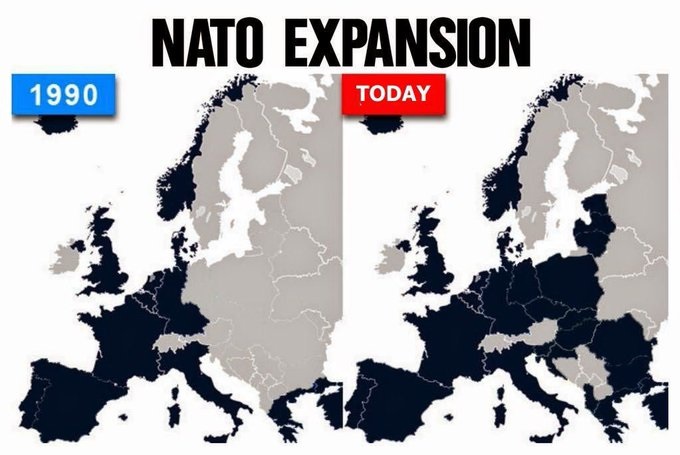

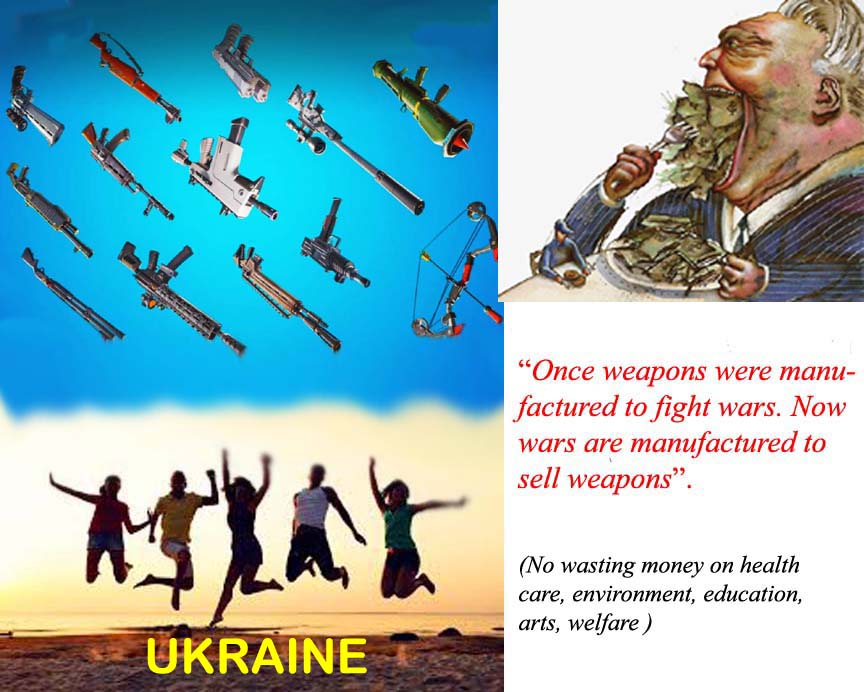




 nuclear-news