NATO Weapons Go Boom, British Missiles Strike Russia – Ukraine War Escalates
The NATO vs Russia proxy war in Ukraine recently escalated a notch or two, with simultaneous ‘Ukrainian’ airstrikes downing two modern Russian fighter jets and two helicopters… well inside ‘Russia proper’. This came the day after British-supplied, longer-range, cruise missiles struck the city of Lugansk, and hours after Russian airstrikes obliterated another huge store of NATO supplies for Ukraine’s much-vaunted ‘counter-offensive’.
This week on NewsReal, Joe & Niall discuss the latest deceptions in ‘the Ukraine war…. more https://www.sott.net/article/480219-NewsReal-NATO-Weapons-Go-Boom-British-Missiles-Strike-Russia-Ukraine-War-Escalates#
Risks too high at Zaporizhzhia
May 10, 2023 https://beyondnuclear.org/risks-too-high-at-zaporizhzhia/
Beyond Nuclear has put out a press statement warning that the risks of a nuclear catastrophe at Ukraine’s six-reactor Zaporizhzhia nuclear power plant are too high, with rumors of a Ukrainian offensive reportedly prompting mass evacuations of civilians living near the plant. Only an immediate ceasefire — or, better still, a negotiated end to a likely unwinnable war — can protect us from a potentially catastrophic nuclear incident at the plant, which has already endured shelling, missile attacks, and frequent loss of connection to the electrical grid.
The press release begins:
Fears of an imminent Ukrainian offensive that could put the country’s six-reactor Zaporizhzhia nuclear power plant in even greater danger, should prompt immediate efforts to negotiate a ceasefire, if not an end to the Russian war against Ukraine, urged safe energy group, Beyond Nuclear today.
News reports that civilians around the Zaporizhzhia nuclear power plant are being evacuated suggest that the conflict already consuming the southwestern region of Ukraine could be about to escalate, potentially engulfing the nuclear plant.
The Zaporizhzhia nuclear power plant has already escaped close calls, the target of shelling and missile attacks on at least one occasion and with frequent losses of offsite power that, if not restored promptly, could lead to a meltdown.
The plant has been occupied by Russian forces since March 4, 2022. Rumors abound that a severely depleted workforce is laboring under stressful and even violent conditions, while other staff have fled or have disappeared.
As a precaution, all six Zaporizhzhia reactors are currently shut down, but that does not mean they are out of danger.
“The fuel in the reactor core still requires electricity to power cooling, as do the pumps that supply cooling water to the fuel pools,” warned Beyond Nuclear international specialist, Linda Pentz Gunter. “A meltdown is still possible. Putting the reactors in what is termed ‘cold shutdown’ just buys workers more time to restore power, but a reliable supply of electricity to the site is still essential to avoid disaster.
“The consequences not only for the people of Ukraine and neighboring Russia, but for all of Europe, should any or all of these reactors melt down or suffer a fuel pool fire are unimaginably dire,” Pentz Gunter said.
Sowing Seeds of Plunder: A Lose-Lose Situation in Ukraine

President Zelenskyy put the land reform into law in 2020 against the will of the vast majority of the population who feared it would exacerbate corruption and reinforce control by powerful interests in the agricultural sector.
The largest landholders are a mix of Ukrainian oligarchs and foreign interests — mostly European and North American as well as the sovereign fund of Saudi Arabia.
Ed note: The irony of it! Ukrainians hold the hated memory of Soviet Russia starving Ukraine, as it sent their grain to Russia. Now we have the Western world helping themselves to Ukraine’s agriculture – with increasing farming for export, – pushing out the livelihood’s of Ukrainian small farmers. Zelensky – seen as a hero/saviour for now – – but how will this clown be remembered?
y Colin Todhunter, 10 May 23 https://www.globalresearch.ca/sowing-seeds-plunder-lose-lose-situation-ukraine/5818851
It’s a lose-lose situation for Ukrainians. While they are dying to defend their land, financial institutions are insidiously supporting the consolidation of farmland by oligarchs and Western financial interests.
So says Frédéric Mousseau, Policy Director of the Oakland Institute, an independent think tank.
Depending on which sources to believe, between 100,000 and 300,000 Ukrainian soldiers (possibly more) have died during the conflict with Russia. That figure, of course, does not include civilian casualties.
The mainstream narrative in the West is that Russia grabbed Crimea and then invaded Ukraine. Russia is portrayed as the outright aggressor which wants to restore its control over large swathes of Europe.
The expansion of NATO towards the east, the US-backed coup in 2014 – followed by eight years of the shelling of the ethnic Russian eastern parts of the country by the regime in Kyiv resulting in around 14,000 deaths – led up to the military intervention by Russia, which regards the expansionism and militarism as an existential threat.
It is not the purpose of this article to explore these issues. Much has already been written on this elsewhere. But billions of dollars’ worth of military hardware has been sent to Ukraine by the NATO countries and hundreds of thousands of young Ukrainians have died.
They died in the belief that they were protecting their nation – their land. A land that is among the most fertile in the world.
Professor Olena Borodina of the National Academy of Sciences of Ukraine says:
“Today, thousands of rural boys and girls, farmers, are fighting and dying in the war. They have lost everything. The processes of free land sale and purchase are increasingly liberalised and advertised. This really threatens the rights of Ukrainians to their land, for which they give their lives.”
Borodina is quoted in the February 2023 report by the Oakland Institute War and Theft: The Takeover of Ukraine’s Agricultural Land, which reveals how oligarchs and financial interests are expanding control over Ukraine’s agricultural land with help and financing from Western financial institutions.
Aid provided to Ukraine in recent years has been tied to a drastic structural adjustment programme requiring the creation of a land market through a law that leads to greater concentration of land in the hands of powerful interests. The programme also includes austerity measures, cuts in social safety nets and the privatisation of key sectors of the economy.
Frédéric Mousseau, co-author of the report, says:
“Despite being at the centre of news cycle and international policy, little attention has gone to the core of the conflict — who controls the agricultural land in the country known as the breadbasket of Europe. [The] Answer to this question is paramount to understanding the major stakes in the war.”
The report shows the total amount of land controlled by oligarchs, corrupt individuals and large agribusinesses is over nine million hectares — exceeding 28% of Ukraine’s arable land (the rest is used by over eight million Ukrainian farmers).
Amidst Chaos of War, a New Report Exposes the Stealth Take-over of Ukrainian Agricultural Land
The largest landholders are a mix of Ukrainian oligarchs and foreign interests — mostly European and North American as well as the sovereign fund of Saudi Arabia. A number of large US pension funds, foundations and university endowments are also invested in Ukrainian land through NCH Capital – a US-based private equity fund, which is the fifth largest landholder in the country.
President Zelenskyy put the land reform into law in 2020 against the will of the vast majority of the population who feared it would exacerbate corruption and reinforce control by powerful interests in the agricultural sector.
The Oakland Institute notes that, while large landholders are securing massive financing from Western financial institutions, Ukrainian farmers — essential for ensuring domestic food supply — receive virtually no support. With the land market in place, amid high economic stress and war, this difference of treatment will lead to more land consolidation by large agribusinesses.
All but one of the ten largest landholding firms are registered overseas, mainly in tax havens such as Cyprus or Luxembourg. The report identifies many prominent investors, including Vanguard Group, Kopernik Global Investors, BNP Asset Management Holding, Goldman Sachs-owned NN Investment Partners Holdings, and Norges Bank Investment Management, which manages Norway’s sovereign wealth fund.
Most of the agribusiness firms are substantially indebted to Western financial institutions, in particular the European Bank for Reconstruction and Development, the European Investment Bank, and the International Finance Corporation – the private sector arm of the World Bank.
Together, these institutions have been major lenders to Ukrainian agribusinesses, with close to US$1.7 billion lent to just six of Ukraine’s largest landholding firms in recent years. Other key lenders are a mix of mainly European and North American financial institutions, both public and private.
The report notes that this gives creditors financial stakes in the operation of the agribusinesses and confers significant leverage over them. Meanwhile, Ukrainian farmers have had to operate with limited amounts of land and financing, and many are now on the verge of poverty.
International financial institutions are in effect subsidising the concentration of land and a destructive industrial model of agriculture based on the intensive use of synthetic inputs, fossil fuels and large-scale monocropping.
Much of what is happening in Ukraine is part of a wider trend: private equity funds being injected into agriculture throughout the world and used to lease or buy up farms on the cheap and aggregate them into large-scale, industrial grain and soybean concerns. These funds use pension funds, sovereign wealth funds, endowment funds and investments from governments, banks, insurance companies and high net worth individuals (see the 2020 report ‘Barbarians at the Barn‘ by Grain.org).
Financialising agriculture this way shifts power to people with no connection to farming. In the words of BlackRock’s Larry Fink: “Go long agriculture and water and go to the beach.”
Funds tend to invest for between 10 and 15 years, resulting in good returns for investors but can leave a trail of long-term environmental and social devastation and serve to undermine local and regional food insecurity.
By contrast, according to the Oakland Institute, small-scale farmers in Ukraine demonstrate resilience and enormous potential for leading the expansion of a different production model based on agroecology and producing healthy food. Whereas large agribusinesses are geared towards export markets, it is Ukraine’s small and medium-sized farmers who guarantee the country’s food security.
This is underlined by the State Statistics Service of Ukraine in its report ‘Main agricultural characteristics of households in rural areas in 2011’, which showed that smallholder farmers in Ukraine operate 16% of agricultural land, but provide 55% of agricultural output, including 97% of potatoes, 97% of honey, 88% of vegetables, 83% of fruits and berries and 80% of milk.
In June 2020, the IMF approved an 18-month, strings-attached $5 billion loan programme with Ukraine. Also that year, the World Bank incorporated measures relating to the sale of public agricultural land as conditions in a $350 million Development Policy Loan (COVID ‘relief package’) to Ukraine. This included a required ‘prior action’ to “enable the sale of agricultural land and the use of land as collateral.”
According to the Oakland Institute:
“Ukraine is now the world’s third-largest debtor to the International Monetary Fund and its crippling debt burden will likely result in additional pressure from its creditors, bondholders and international financial institutions on how post-war reconstruction – estimated to cost US$750 billion – should happen.”
Financial institutions are leveraging Ukraine’s crippling debt to drive further privatisation and liberalisation – backing the country into a corner to make it an offer it can’t refuse.
Since the war began, the Ukrainian flag has been raised outside parliament buildings in the West and iconic landmarks have been lit up in its colours. An image bite used to conjure up feelings of solidarity and support for that nation while serving to distract from the harsh machinations of geopolitics and modern-day economic plunder that is unhindered by national borders and has scant regard for the plight of ordinary citizens.
Zaporizhzhia nuclear plant facing ‘catastrophic’ staff shortage amid Russian evacuation
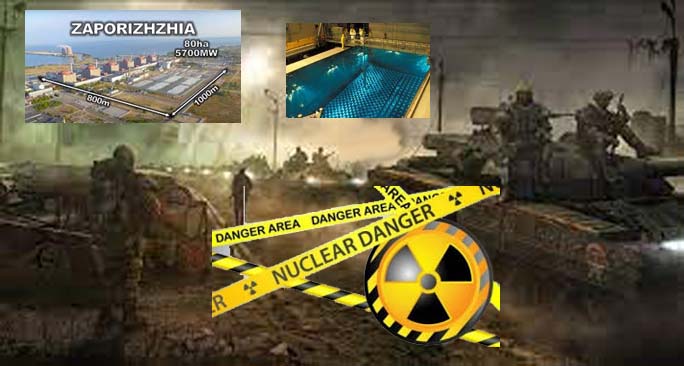
Russia plans to relocate thousands of staff from nuclear plant, atomic energy company claims, warning of ‘catastrophic lack of qualified personnel’
Associated Press, 11 May 23
Russia plans to relocate about 2,700 Ukrainian staff from Europe’s largest nuclear plant, Ukraine’s atomic energy company has claimed, warning of a potential “catastrophic lack of qualified personnel” at the Zaporizhzhia facility in Russian-occupied southern Ukraine.
Workers who signed employment contracts with Russia’s nuclear agency Rosatom following Moscow’s capture of the Zaporizhzhia plant early in the war are set to be taken to Russia along with their families, Energoatom said in a Telegram post on Wednesday.
The company did not specify whether the employees would be forcibly moved out of the plant, nor was it immediately possible to verify Energoatom’s claims about Moscow’s plan.
Removing staff would “exacerbate the already extremely urgent issue” of staff shortages, Energoatom said.
The Moscow-installed governor of the region ordered civilian evacuations from the area last Saturday, including from the nearby city of Enerhodar where most plant workers live. The full scope of the evacuation order was not clear.
Russian forces seized the Zaporizhzhia plant days after Russian president, Vladimir Putin, ordered the invasion of Ukraine in February 2022. Russian occupiers left the Ukrainian staff in place to keep the plant running but the exact number of workers currently at the plant is not known.
Fighting near the plant has fuelled fears of a potential catastrophic incident like the one at Chornobyl, in northern Ukraine, where a reactor exploded in 1986 and contaminated a vast area in the world’s worst nuclear accident.
Zaporizhzhia is one of the 10 biggest nuclear plants in the world. While its six reactors have been shut down for months, it still needs power and qualified staff to operate crucial cooling systems and other safety features…………………. more https://www.theguardian.com/world/2023/may/11/zaporizhzhia-nuclear-plant-facing-catastrophic-staff-shortage-amid-russian-evacuation
The success of the Zelensky regime coming unstuck?
Zelensky regime’s fate is sealed Indian Punchline BY M. K. BHADRAKUMAR
The West’s cryptic or mocking remarks doubting the Kremlin statement on the failed Ukrainian attempt to assassinate President Vladimir Putin do not detract from the fact that Moscow has no reason on earth to fabricate such a grave allegation that has prompted the scaling down of its Victory Day celebrations on May 9, which is a triumphal moment in all of Russian history, especially now when it is fighting off the recrudescence of Nazi ideology on Europe’s political landscape single-handedly all over again.
The alacrity with which the US Secretary of State Antony Blinken debunked the Kremlin allegation, perhaps, gives the game away. It is in the neocon DNA to duck in such defining moments. That said, predictably, Blinken also distanced the Biden administration from the Kremlin attack.
Earlier, the chairman of Joints Chiefs of Staff General Marks Milley also did a similar thing in an interview with the Foreign Affairs magazine disowning in advance any responsibility for the upcoming Ukrainian “counteroffensive”. This is the Biden Administration’s new refrain — hear no evil, speak no evil. No more talk, either, of backing Kiev all the way “no matter what it takes” — as Biden used to say ad nauseam.
The heart of the matter is that Kiev’s much touted “counteroffensive” is struggling amidst widespread western prognosis that it is destined to be a damp squib. Actually, the salience of the Foreign Affairs podcast this week with Gen. Milley was also his diffidence about the outcome. Milley refused to be categorical that Kiev would even launch its “counteroffensive”!
There is a huge dilemma today as the entire western narrative of a Russian defeat stands exposed as a pack of lies, and alongside, the myth of Kiev’s military prowess to take on the far superior military might of a superpower has evaporated. The Ukrainian military is being ground to the dust systematically. In reality, Ukraine has become an open wound that is fast turning gangrene, and little time is left to cauterise the wound.
However, Kiev regime is ridden with factionalism. There are powerful cliques who are averse to peace talks with Russia short of capitulation by Moscow and instead want an escalation so that the Western powers remain committed. And even after Boris Johnson’s exit, they have supporters in the West.
The militant clique ensconced in the power structure in Kiev could well have been the perpetrators of this dangerous act of provocation directed against the Kremlin with an ulterior agenda to trigger a Russian retaliation.
From Blinken’s vacuous remark, it seems the neocons in the Biden Administration led by Victoria Nuland are in no mood to rein in the mavericks in Kiev, either. As for Europe, it has lost its voice too.
This will probably show up in history books as a historic failure of European leadership and at its core lies the paradox that it is not France but the German government that has aligned itself closer with the US in the Ukraine war and risking an intra-European “epoch of confrontation.”
Even otherwise, these are fateful times, with the political middle ground already shrinking in France and Italy and is much weakened in Germany itself in the wake of the pandemic, the war, and inflation. Importantly, this is only partly an economic story, as the decline of the centre and the de-industrialisation in Europe are closely related and the social fabric that supported the centre has come unstuck.
……………………………………….. The considered Kremlin reaction is available from the remarks by the Russian Ambassador to the US, Anatoly Antonov:
“How would Americans react if a drone hit the White House, the Capitol or the Pentagon? The answer is obvious for any politician as well as for an average citizen: the punishment will be harsh and inevitable.” ………………………………………… more https://www.indianpunchline.com/zelensky-regimes-fate-is-sealed/
Ukraine war: ‘Mad panic’ as Russia evacuates town near Zaporizhzhia plant
BBC 8 May 23
Russia has sparked a “mad panic” as it evacuates a town near the contested Zaporizhzhia nuclear power plant, a Ukrainian official says.
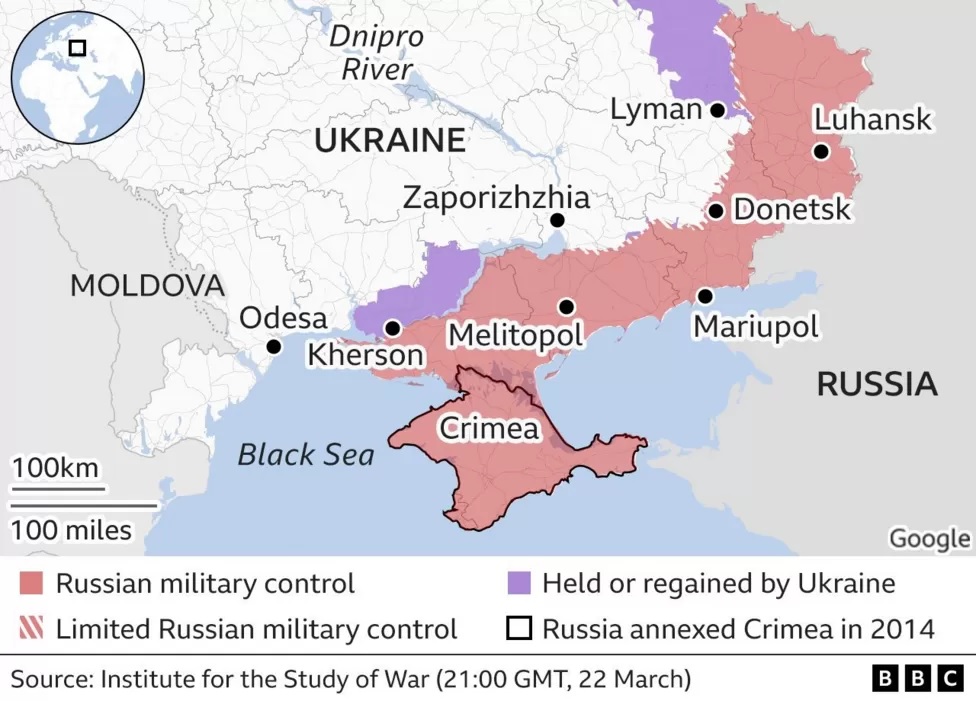
Russia has told people to leave 18 settlements in the Zaporizhzhia region, including Enerhodar near the plant, ahead of Kyiv’s anticipated offensive.
The Ukrainian mayor of Melitopol, Ivan Fedorov, said there were five-hour waits as thousands of cars left.
The UN’s nuclear watchdog warned a “severe nuclear accident” could occur.
Speaking to the BBC’s Newshour programme Rafael Grossi – the director of the International Atomic Energy Agency (IAEA) – said the evacuation of residents near the nuclear facility indicated the possibility of heavy fighting between Russian and Ukrainian forces around the plant.
Although its reactors were not producing electricity they were still loaded with nuclear material, he said.
Mr Grossi added that he had had to travel through a minefield when he visited the plant a few weeks ago.
Earlier, the IAEA warned in a statement that situation at the Zaporizhzhia facility was “becoming increasingly unpredictable and potentially dangerous”.
Operating staff were still at the site but there was “deep concern about the increasingly tense, stressful, and challenging conditions for personnel and their families”.
It said IAEA experts at the plant had “received information that the announced evacuation of residents from the nearby town of Enerhodar – where most plant staff live – has started”.
On Friday, the Russian-installed regional head Yevgeny Balitsky said that “in the past few days, the enemy has stepped up shelling of settlements close to the front line”.
“I have therefore made a decision to evacuate first of all children and parents, elderly people, disabled people and hospital patients,” he wrote on social media. .
The IAEA has issued warnings previously about safety at the plant – which Russia captured in the opening days of its invasion last year – after shelling caused temporary power cuts.
In March the IAEA warned the plant was running on diesel generators to keep vital cooling systems going, after damage to power lines.
Since Russia launched its invasion in February 2022 the number of staff at the plant has declined, the IAEA says, “but site management has stated that it has remained sufficient for the safe operation of the plant”.
Russian forces occupy much of the Zaporizhzhia region but not the regional capital Zaporizhzhia, which lies just north-east of Enerhodar across the Dnipro reservoir.
On Sunday, the Ukrainian general staff said civilians were being evacuated to the cities of Berdyansk and Prymorsk, further inside Russian-held territory……………………….. https://www.bbc.com/news/world-europe-65515443
Murder by Proxy
Meet the Ukrainian children killed by US/NATO funding and weapons
Deborah L. Armstrong 6 May 23 https://medium.com/@deborahlarmstrong/murder-by-proxy-291ceb5754b
ince 2014, 130 children have been killed in Eastern Ukraine by what was once their own government, which is now and has been funded by the United States since the US-backed Maidan coup tore the country in two. But that is only the most recent “official” number released by the Russian Federation. By now, the death toll is certainly higher, as the current conflict rages on and children continue to be killed by NATO weapons supplied to Ukraine.
These children, who grew up in Ukraine, come from Russian-speaking families and identify as Russian. The followers of Stepan Bandera, a Ukrainian Nazi collaborator and mass murderer who is now a “Hero of Ukraine,” believe that Russians, often referred to with the ethnic slur, “Moskals,” are sub-humans who need to be “sent to purgatory.” If you are unfamiliar with the history of the region, and Ukraine’s role in World War II, you can read all about it here and here.
These children, who grew up in Ukraine, come from Russian-speaking families and identify as Russian. The followers of Stepan Bandera, a Ukrainian Nazi collaborator and mass murderer who is now a “Hero of Ukraine,” believe that Russians, often referred to with the ethnic slur, “Moskals,” are sub-humans who need to be “sent to purgatory.” If you are unfamiliar with the history of the region, and Ukraine’s role in World War II, you can read all about it here and here.
Since Maidan, the neo-Nazis have been continuously bombarding the Donbass, where the majority of Russian-speakers (referred to as “Russian separatists” in Western press) live. Civilian infrastructure, such as markets, hospitals and schools, are routinely targeted as are the civilians themselves. It was these attacks on the Russian-speaking population, and plans for a major Ukrainian offensive against the Donbass, which prompted Putin to announce Russia’s Special Military Operation (SMO) in February, 2022.
A good friend of mine, who goes by the name Volje Voljevich, has been compiling an album of children killed in the Donbass. He painstakingly wrote up short summaries about 40 of the children, and the circumstances of their deaths. Many of them are memorialized at the Alley of Angels in Donetsk, where grieving family members bring flowers and stuffed toys. Here are just a few of their faces and their stories, thanks to Volje. [on original]………………….
About the author:
Deborah Armstrong currently writes about geopolitics with an emphasis on Russia. She previously worked in local TV news in the United States where she won two regional Emmy Awards. In the early 1990’s, Deborah lived in the Soviet Union during its final days and worked as a television consultant at Leningrad Television. You can support Deborah’s writing at Paypal or Patreon, or donate via Substack.
·
Disaster Fears After Explosives Found Inside Zaporizhzhia Nuclear Plant
NewsWeek, BY BRENDAN COLE ON 5/4/23
Observers from the United Nations nuclear energy watchdog have found explosives inside Zaporizhzhia Nuclear Power Plant, Ukrainian media has reported.
A small team from the International Atomic Energy Agency (IAEA) is at the nuclear plant, which is Europe’s biggest and was seized by Moscow early in its invasion of Ukraine.
Operated by Ukrainian staff working under Russian forces and the Russian nuclear company Rosatom, the hostilities at the site, in which both sides accused the other of shelling, have sparked international alarm at what might happen if the reactors were impacted.
Observers from the United Nations nuclear energy watchdog have found explosives inside Zaporizhzhia Nuclear Power Plant, Ukrainian media has reported.
A small team from the International Atomic Energy Agency (IAEA) is at the nuclear plant, which is Europe’s biggest and was seized by Moscow early in its invasion of Ukraine.
Operated by Ukrainian staff working under Russian forces and the Russian nuclear company Rosatom, the hostilities at the site, in which both sides accused the other of shelling, have sparked international alarm at what might happen if the reactors were impacted.
……………………………… Mark Nelson, an adviser on nuclear energy, said that the sites’ reactors were close together but have independent safety features. “Even the Chernobyl blast at Reactor 4 in 1986 did not prevent Reactor 3 from continuing to run and indeed sharing a turbine building until 2000,” he said. https://www.newsweek.com/russia-ukraine-nuclear-zaporizhzhia-iaea-explosives-1798382
This week, Ukraine’s nuclear operator Energoatom said that Russian-installed managers at the plant were trying to leave the site in south-eastern Ukraine over concerns about Kyiv’s anticipated counteroffensive.
Newsweek has emailed Energoatom and the Russian defense ministry for comment.
Record high water levels threaten dam near Zaporizhzhia nuclear plant.
Dam water threat near Ukraine nuclear plant: Russia By David Ljunggren, May 5 2023 https://www.canberratimes.com.au/story/8184463/dam-water-threat-near-ukraine-nuclear-plant-russia/
Record high water levels could overwhelm a major dam in southern Ukraine and damage parts of the Russian-controlled Zaporizhzhia nuclear power station, a Russian official has told Tass agency.
Renat Karchaa, an adviser to the general director of nuclear energy firm Rosenergoatom, said if the Nova Kakhovka dam did rupture, the power cable line for the Zaporizhzhia plant’s pumping stations would be flooded.
“This (would create) functional problems for the operation of the plant and risks for nuclear safety,” he told Tass.
Last November, after Russian forces withdrew from the nearby southern Ukrainian city of Kherson, satellite imagery showed significant new damage to the dam.
Both sides have accused each other of planning to breach the dam using explosives, which would flood much of the area downstream and would likely cause major destruction around Kherson.
Karchaa’s comments represent a significant contrast from those made in late March by Ukrainian officials, who said they feared the Zaporizhzhia facility could face a shortage of water to cool reactors by late summer because Russian forces had let water out of a reservoir that supplied the plant.
Russian troops took over the plant as they invaded parts of Ukraine last year.
It is at the centre of a nuclear security crisis due to near-constant shelling in its vicinity which Kyiv and Moscow blame on each other.
Zaporizhzhya Nuclear Power Plant: a Catastrophe Waiting to Happen
BY CAROL WOLMAN CounterPunch 1 May 23
A meltdown at Zaporizhzhya Nuclear Power Plant grows more likely with every passing day. With a meltdown, radioactive water from the plant would flow into the Dnieper River, which empties into the Black Sea, and thence to the Mediterranean. See below for map. The consequences would be catastrophic for Europe, North Africa, and the Middle East. Clearly this is an international problem. It calls out for an international solution.
Perhaps it is time to send in UN Peacekeeping Forces.
ZNPP has been at risk for a Fukushima-type meltdown since the Russians occupied the plant in March 2022. It sits on the front line of the war, the south side of the Dnieper River. The Russians quickly occupied the south side early in their invasion; the Ukrainians still occupy the north side.
The International Atomic Energy Agency was able to establish a presence at ZNPP after months of lobbying by its Director- General Mariano Grossi. He has personally visited twice and gets daily updates from the IAEA personnel on site. His latest report can be found here.
Grossi has been trying for almost a year to negotiate a safety zone around ZNPP. After his visit to the plant on 3/29/23, Grossi stressed that the increasing combat makes it urgent to find a way to prevent a potentially catastrophic nuclear accident.
He complains that he is not getting support from the UN, and even from his own agency. The EU issued a statement a few months ago but is not keeping the pressure on. Given the potential for catastrophe, it is astounding that more attention is not being given to the need to support Grossi’s efforts.
Instead, the media publishes reassuring articles about how many safety features ZNPP has.
Safety features are useless if the cooling water stops circulating around the nuclear material. The reactors have been shut down, so the pumps need an external power source.
The main power lines cross the Dnieper to the Ukraine energy grid on the north side of the river. The back up lines connect to conventionally fired plants in Ukrainian territory. They are right on the front line, and mortar fire from either side can cut them.
Since the invasion, all the external power lines to the plant- 4 major lines and 2-4 backup lines- have been cut simultaneously at least SIX times, forcing the pumps to rely on emergency diesel generators. As Grossi says ““Each time we are rolling a dice…And if we allow this to continue time after time, then one day our luck will run out.”
Without the constant circulation of cooling water, the nuclear fuel would overheat, resulting in a chain reaction and meltdown. This is what happened at Fukushima Daiichi 1:
; the earthquake and tsunami cut off the power and the pumps stopped working. A huge discharge of radioactive water into the vast Pacific Ocean continued for several years, until an ice wall was built around the damaged reactors.
Within three years after the Fukushima disaster, there were massive die-offs throughout the Pacific. Mollusks in particular suffered, and the result went up the food chain, so that sea mammals were starving and mutated. The sea bird population was decimated.
A meltdown at ZNPP would release large amounts of radioactive water into a much smaller body of water than the Pacific Ocean. The Dnieper River empties into the Black Sea and eventually into the Mediterranean. All the countries which border the Mediterranean would be affected. The consequences are unthinkable.
The circulation of cooling water could fail for another reason. It cycles through a holding pond nearby. Because of the constant influx of warm water from the reactors, still hot even in shutdown mode, the pond is prone to algae growth, which could clog the intake valves and stop the water flow. It is stocked with tropical fish, which eat the algae and keep the water clear.
The cooling pond is at risk. Global warming may cause the pond to overheat this summer, killing the scavenging fish…………………………………………………
Clearly this is an international problem. The danger of a meltdown at ZNPP is real; the consequences would be catastrophic for Europe, North Africa, and the Middle East…………………………………………………………….. https://www.counterpunch.org/2023/05/01/znpp-a-catastrophe-waiting-to-happen/
Why did Russians dig trenches in radioactive Chernobyl woods?

Even Ukrainians who stayed after the nuclear disaster tried to warn their
enemies. On February 24, 2022, the first day of the invasion of Ukraine,
the Russians crossed into the area from Belarus. They stayed for five
weeks, camping out for part of that time in some of the most contaminated
land around the site of the worst nuclear accident in history.
They dug defensive positions in the Red Forest, within a six-mile radius of reactor
No 4, where they lived, ate and slept for a fortnight. Nobody can
understand why.
“Don’t try to find logic,” said Oksana Pyshna, 30, a
tour guide turned employee of the state ministry responsible for the
exclusion zone, who showed us around. “It’s stupid.” The place is
called the Red Forest because that’s the colour the trees went after the
disaster as the cloud of poison spread through Ukraine, Belarus, Russia, on
to the Baltics and Scandinavia.
In 1986 and the years after, teams of men
dug up the topsoil and buried it: under the surface it is far more
poisonous. Carving trenches there was a terrible idea, said Pyshna.
“It’s the most dangerous territory in the special zone, because under
the ground we have nuclear waste.”
Perhaps the Russians felt safer there
because they knew the Ukrainians wouldn’t shell the area around the
nuclear plant. Perhaps the beauty of the woods blinded them to the danger.
Catfish throng the reactor’s cooling channel, deer shy through the silver
birches when visitors pass. There are, apparently, bears in the forests;
wolves too, wild ponies. In the autumn, the trees hang heavy with the most
perfect apples, green and pink.
But their pips can hold radioactive
isotopes: caesium-137 or strontium-90. Some Russian soldiers stationed in
the forest got radiation sickness, diplomats have confirmed. Kicking up the
dust or walking on the moss can contaminate you. Digging is much worse. The
few dozen locals – average age, 86 – who remained here after the
disaster have become unspeakably blasé about the risks of nuclear
radiation. Even they were shocked.
Times 29th April 2023
https://www.thetimes.co.uk/article/ukraine-chernobyl-nuclear-putin-russia-invasion-rgjzskfvq
Russia fixing power line from Zaporizhzhia nuclear plant to land it controls, IAEA says
VIENNA, April 28 (Reuters) https://www.reuters.com/world/europe/russia-fixing-power-line-zaporizhzhia-nuclear-plant-land-it-controls-iaea-says-2023-04-28/– Russia has informed the U.N. nuclear watchdog that equipment spotted at Ukraine’s Zaporizhzhia nuclear power plant, which Russia controls, will be used to fix a power transmission line that leads to Russian-held territory, the watchdog said on Friday.
The planned restoration of the downed power line could heighten Ukrainian fears that Russia is preparing to connect Zaporizhzhia, Europe’s largest nuclear power plant, to the power grid of territory that it controls.
A small number of International Atomic Energy Agency officials are present at the Zaporizhzhia nuclear power plant (ZNPP), which is operated by Ukrainian staff working under the orders of Russian forces and the Russian nuclear company Rosatom.
“The (IAEA) Team observed, and following questions were subsequently informed, that a large piece of equipment being transported into the turbine hall of Unit 3 was a transformer to replace the damaged ‘Kakhovka’ node in the ZNPP open switchyard,” the IAEA said in a statement.
“The Kakhovka line is one of the four 750 kV (kilovolt) lines that were operational before the military conflict. This line is linked to the currently Russian-controlled electrical grid, to the south of the ZNPP site,” it added.
Only one of those four power lines is currently working and is the only source of external power to the plant, which it needs to keep cooling the fuel in its six reactors even though they are shut down. Failing to cool that fuel could lead to a potentially catastrophic nuclear meltdown.
The IAEA said it also had not had access to the switchyard at a nearby thermal power plant (TPP) that can supply backup power to Zaporizhzhia. The IAEA last visited that switchyard in December, when damage from shelling was observed.
“Two weeks ago the team was informed that access would be granted in the coming days. It is important that ISAMZ (the IAEA Support and Assistance Mission to Zaporizhzhia) gets the necessary access to the ZTPP open switchyard given the implications on nuclear safety and security at ZNPP.”
Chernobyl anniversary offers a bleak look at what may await other Ukrainian nuclear plants
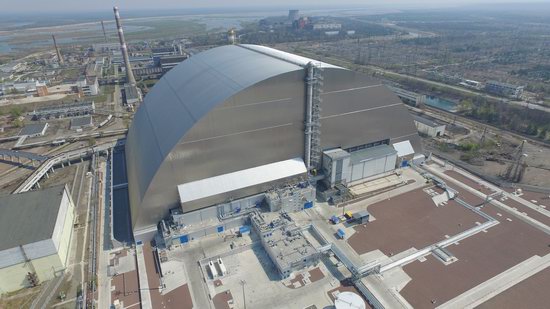
A huge steel and concrete sarcophagus covers the site of the meltdown. Under its dome, called the New Safe Confinement, lie 200 tons of lava-like nuclear fuel, 30 tons of highly contaminated dust and 16 tons of uranium and plutonium that continue to release high levels of radiation.
April 26, 2023 by Charles Digges https://bellona.org/news/nuclear-issues/2023-04-chernobyl-anniversar
A little over a year ago, Russian troops abandoned Chernobyl after briefly occupying it during the grim opening days of Moscow’s invasion of Ukraine. The takeover of the site where the world’s worst nuclear disaster happened thirty-seven years ago this week offered a preview of the reckless disregard for nuclear safety that has characterized so much of this war.
While the site has been left to Ukraine to painstakingly restore since the Russian withdrawal on March 31, 2022, the new anniversary of the Chernobyl plant’s original disaster on April 26, 1986, leaves lingering questions about what, exactly, the world can do when Ukraine’s nuclear infrastructure — or indeed any nuclear infrastructure — is attacked by a hostile neighbor.
The answer, at this point? Not much — aside from trying to pick up the pieces after the damage is already done.
As it stands, the Chernobyl exclusion zone is still dotted with mines planted by Russian troops when they rolled into the territory, churning up clouds of radioactive dust with hundreds of heavily armored vehicles. The mines have made treacherous any efforts to restore the territory.
Russian troops also dug trenches and set fires in an area known as the Red Forest — a gnarled expanse of irradiated trees — and scorched, according to NASA, some 14,000 hectares of land, filling the air with so much radioactive smoke that it was unsafe for firefighters to quell the blazes.
All the while, hundreds of Chernobyl employees — who oversee the site’s sprawling network of spent fuel storage facilities as well as the enormous efforts to dismantle the radioactive remnants of the exploded No. 4 reactor — were held hostage onsite, prevented from rotating out at the end of their shifts. Five workers were kidnapped and nine were killed, according to The Washington Post.
Those who remained said later that they had tried to keep the Russians from the most dangerous areas within the plant’s territory. But in what many called the worst situation they have seen in the decades since the initial disaster, Chernobyl’s power was cut by fighting, leaving them to rely on diesel generators for nearly a week to support the critical work of circulating water to cool spent nuclear fuel.
The damage the Russian soldiers did wasn’t purely technical. Doors to offices were ripped off hinges, windows smashed, walls spray-painted with graffiti.
“The poop was the icing on the cake,” Aleksander Barsukov, deputy director of the Chernobyl Ecocenter, which keeps samples of radioactive material collected from all over the world, told The Wall Street Journal after the Russian retreat.
By the time Russian troops pulled back from the plant on March 31, 2022 — amid reports of possible radiation poisoning among their ranks — Chernobyl’s technicians had been held at literal gunpoint at their workstations for more than a month.
During the retreat, according to Ukrainian accounts, Russian soldiers ransacked the site and took anything that looked valuable, looting more than 1,000 computers, and spiriting away dosimeters, software, lab tools, firefighting equipment — and in some cases even household appliances — piling them in stolen Ukrainian trucks.
“Whatever they didn’t steal, they broke,” Chernobyl Information Director Vitaly Medved told the BBC at the time.
Russian soldiers then brazenly mailed much of the booty home from across the Belarusian border. They also made off with radioactive instruments used to calibrate personal dosimeters for Chernobyl staff — substances that can cause radiation burns if handled improperly.
According to the European Bank of Reconstruction and Development, which has financed much of Chernobyl’s cleanup work since the original 1986 disaster, the Russian Army’s destructive adventure in the world’s most famous radioactive wasteland will cost some €100 million to repair.
The four RBMK reactors at the enormous nuclear station in Chernobyl no longer produce power, but before the invasion nearly 6,000 workers monitored the lasting effects of the disastrous meltdown that took place in 1986, as well oversaw as processing spent nuclear fuel from other plants in Ukraine. In the days before the invasion, all but a few hundred employees were evacuated.
Located just a few miles from the Belarusian border, Chernobyl was one of the first places occupied by Russian troops. Yevhen Kramarenko, the director of the exclusion zone — the 2,6000-square-kilometer area where radiation levels remain high and public access is limited — told The Washington Post that on the first day of the invasion, a Russian general presented himself as the new leader of the station, and introduced employees from Rosatom, Russia’s state nuclear corporation.
“I believe that at the time when they came,” Kramarenko told the paper, “they planned to be there permanently, they planned to take control for a long time.”
A sign of things to come?
Even before the occupation, the Chernobyl station had a post-apocalyptic air. It is situated in a dense forest, swarming with mosquitoes and gnats. Pripyat, the city where employees lived before the disaster, now stands empty and is being reconquered by nature.
A huge steel and concrete sarcophagus covers the site of the meltdown. Under its dome, called the New Safe Confinement, lie 200 tons of lava-like nuclear fuel, 30 tons of highly contaminated dust and 16 tons of uranium and plutonium that continue to release high levels of radiation.
Yet while Rosatom may have failed to keep hold of Chernobyl, the same cannot be said about Ukraine’s embattled Zaporizhzhia nuclear plant — Europe’s largest such facility — which once supplied a fifth of Ukraine’s electricity.
Since October of 2022, Moscow claims that it now controls the plant — a claim not honored by the UN’s International Atomic Energy Association, to say nothing of Kyiv.
From then on, Rosatom has begun flooding the Zaporizhzhia plant with Russian staff that it has transferred from its own Kalinin nuclear plant, 545 kilometers across the front to the northeast.
But while Russia asserts the six-reactor facility has been taken over as a protective measure, there is little to suggest that the joining of Russian and Ukrainian workforces is going smoothly. Only about 2,000 Ukrainian staff members still work at the plant, out of 11,000 before the war.
Indeed, much of Rosatom’s effort to assert itself at the plant has involved arresting and torturing Ukrainian workers opposed to the occupation as it toils to link Zaporizhzhia with the Russian electricity grid.
The plant, which lies on the south side of the Dnipro River next to the nuclear plant’s home city of Enerhodar, is on the front line of the war. Ukrainian troops are just a few of kilometers to the north, on the far bank of the Dnipro, while Russians are holed up in the power plant.Anxieties are high that the area could see renewed fighting in any Ukrainian counteroffensive.
Ukraine accuses the Russians of using the plant as a shield, hoping that the danger of causing a nuclear accident will keep Ukrainian soldiers from firing on them — the first time an atomic reactor has been put in such a position.
“They know Ukrainian troops would not dare to fire back. The nuclear power plant is a perfect hiding place from Ukrainian artillery,” Oleksiy Melnychuk, a former worker at the plant who fled from Enerhodar last July to Ukrainian-held territory, told Politico.eu. The Russians in turn accuse the Ukrainians of ignoring safety protocols and firing on areas near the plant.
The IAEA has inspectors on site and has been trying to walk a diplomatic tightrope to establish a non-military safety zone around the plant. While Moscow says it is keen to do so, Kyiv is leery of any step that could lend legitimacy to the Russian occupation.
Late last month, IAEA chief Rafael Mariano Grossi dropped the idea, and instead is now pushing for both sides to take steps to ensure that the plant isn’t attacked.
Over the last year, four of the station’s six VVER reactors have been put into a cold shutdown to minimize the risk of an accident, while two have been restarted to produce low levels of power to keep the plant operational. The facility needs access to electricity to ensure reactor cooling and other safety functions. However, its links to the Ukrainian grid have been cut six times since last March, forcing the ZNPP to rely on diesel-powered generators for emergency backup power — a situation that IAEA Director General Rafael Grossi has referred to as “rolling the dice.”
“And if we allow this to continue time after time then one day our luck will run out,” he added.
Still, even as events deteriorate, there is little the world can do but watch.
Even Grossi — who heads the world’s most respected nuclear power diplomacy body — has admitted as much. During a meeting of the IAEA’s 35-member board of governors last month, Grossi castigated his colleagues for “complacency” after the latest spate of airstrikes had again cut off Zaporizhzhia’s access to grid electricity.
“What are we doing to prevent this [from] happening?“ a flabbergasted Grossi asked the board. ”We are the IAEA, we are meant to care about nuclear safety.”
Even so, aspirations of pushing out the Russians among plant workers remain high.
“We still hope de-occupation is possible,” Melnychuk told Politico.eu. “You can’t even imagine how ready we all are to return and let our colleagues, working under tremendous pressure and fear, to finally have some rest.”
Unfortunately, the state of Chernobyl offers the clearest glimpse of what they may find if — or when — that time comes.
Russia is preparing to defend Zaporizhzhia nuclear power plant
According to British intelligence, Russian occupying forces in Ukraine have
built defensive positions at the reactors of the Zaporizhzhia nuclear power
plant (NPP) in Enerhodar. By reinforcing their positions, the Russians are
preparing for a counterattack by the Ukrainian Armed Forces. At the same
time, their actions increase the probability of damage to security systems.
The UK Ministry of Defence’s Twitter account published a satellite image on
April 27 showing the occupiers’ defensive positions at the Zaporizhzhia
NPP.
Emerging Europe 27th April 2023
Will the West turn Ukraine into a nuclear battlefield?

Stuart Dyson died in 2008 at the age of 39…….. his cancer was later recognized in a court of law as having been caused by exposure to depleted uranium. In a landmark 2009 ruling, jurors at the Smethwick Council House in the UK found that Dyson’s cancer had resulted from DU accumulating in his body, and in particular his internal organs.
While the UK’s decision to send depleted uranium shells is unlikely to turn the tide, it will have a lasting, potentially devastating, impact.
APRIL 26, 2023 byJoshua Frank
It’s sure to be a blood-soaked spring in Ukraine. Russia’s winter offensive fell far short of Vladimir Putin’s objectives, leaving little doubt that the West’s conveyor belt of weaponry has aided Ukraine’s defenses. Cease-fire negotiations have never truly begun, while NATO has only strengthened its forces thanks to Finland’s new membership (with Sweden soon likely to follow). Still, tens of thousands of people have perished; whole villages, even cities, have been reduced to rubble; millions of Ukrainians have poured into Poland and elsewhere; while Russia’s brutish invasion rages on with no end in sight.
The hope, according to Ukrainian President Volodymyr Zelensky, is that the Western allies will continue to furnish money, tanks, missiles, and everything else his battered country needs to fend off Putin’s forces. The war will be won, according to Zelensky, not through backroom compromises but on the battlefield with guns and ammo.
“I appeal to you and the world with these most simple and yet important words,” he said to a joint session of Great Britain’s parliament in February. “Combat aircraft for Ukraine, wings for freedom.”
The United Kingdom, which has committed well over $2 billion in assistance to Ukraine, has so far refused to ship fighter jets there but has promised to supply more weaponry, including tank shells made with depleted uranium (DU), also known as “radioactive bullets.” A by-product of uranium enrichment, DU is a very dense and radioactive metal that, when housed in small torpedo-like munitions, can pierce thickly armored tanks and other vehicles.
Reacting to the British announcement, Putin ominously said he would “respond accordingly” if the Ukrainians begin blasting off rounds of DU.
Stuart Dyson survived his deployment in the first Gulf War of 1991, where he served as a lance corporal with Britain’s Royal Pioneer Corps. His task in Kuwait was simple enough: he was to help clean up “dirty” tanks after they had seen battle. Many of the machines he spent hours scrubbing down had carried and fired depleted uranium shells used to penetrate and disable Iraq’s T-72 tanks, better known as the Lions of Babylon.
Dyson spent five months in that war zone, ensuring American and British tanks were cleaned, armed, and ready for battle. When the war ended, he returned home, hoping to put his time in the Gulf War behind him. He found a decent job, married, and had children. Yet his health deteriorated rapidly and he came to believe that his military service was to blame. Like so many others who had served in that conflict, Dyson suffered from a mysterious and debilitating illness that came to be known as Gulf War Syndrome.
After Dyson suffered years of peculiar ailments, ranging from headaches to dizziness and muscle tremors, doctors discovered that he had a severe case of colon cancer, which rapidly spread to his spleen and liver. The prognosis was bleak and, after a short battle, his body finally gave up. Stuart Dyson died in 2008 at the age of 39.
His saga is unique, not because he was the only veteran of the first Gulf War to die of such a cancer at a young age, but because his cancer was later recognized in a court of law as having been caused by exposure to depleted uranium. In a landmark 2009 ruling, jurors at the Smethwick Council House in the UK found that Dyson’s cancer had resulted from DU accumulating in his body, and in particular his internal organs……………………………………………………………………………………
Both Russia and the U.S. have reasons for using DU, since each has piles of the stuff sitting around with nowhere to put it. Decades of manufacturing nuclear weapons have created a mountain of radioactive waste. In the U.S., more than 500,000 tons of depleted-uranium waste has built up since the Manhattan Project first created atomic weaponry, much of it in Hanford, Washington, the country’s main plutonium production site. As I investigated in my book Atomic Days: The Untold Story of the Most Toxic Place in America, Hanford is now a cesspool of radioactive and chemical waste, representing the most expensive environmental clean-up project in history with an estimated price tag of $677 billion………………………………………………………….
Of course, we’ve known about the dangers of uranium for decades, which makes it all the more mind-boggling to see a renewed push for increased mining of that radioactive ore to generate nuclear power. The only way to ensure that uranium doesn’t poison or kill anyone is to leave it right where it’s always been: in the ground. Sadly, even if you were to do so now, there would still be tons of depleted uranium with nowhere to go. A 2016 estimate put the world’s mountain of DU waste at more than one million tons (each equal to 2,000 pounds).
So why isn’t depleted uranium banned? That’s a question antinuclear activists have been asking for years. It’s often met with government claims that DU isn’t anywhere near as bad as its peacenik critics allege. In fact, the U.S. government has had a tough time even acknowledging that Gulf War Syndrome exists. A Government Accountability Office report released in 2017 found that the Veterans Affairs Department had denied more than 80% of all Gulf War illness claims by veterans. Downplaying DU’s role, in other words, comes with the terrain.
“The use of DU in weapons should be prohibited,” maintains Ray Acheson, an organizer for the International Campaign to Abolish Nuclear Weapons and author of Banning the Bomb, Smashing the Patriarchy. “While some governments argue there is no definitive proof its use in weapons causes harm, it is clear from numerous investigations that its use in munitions in Iraq and other places has caused impacts on the health of civilians as well as military personnel exposed to it, and that it has caused long-term environmental damage, including groundwater contamination. Its use in weapons is arguably in violation of international law, human rights, and environmental protection and should be banned in order to ensure it is not used again.”
If the grisly legacy of the American use of depleted uranium tells us anything, it’s that those DU shells the British are supplying to Ukraine (and the ones the Russians may also be using there) will have a radioactive impact that will linger in that country for years to come, with debilitating, potentially fatal, consequences. It will, in a sense, be part of a global atomic war that shows no sign of ending. https://responsiblestatecraft.org/2023/04/26/will-the-west-turn-ukraine-into-a-nuclear-battlefield/
1 This Month
Chernobyl: The Lost Tapes – A good documentary on Chernobyl on SBS available On Demand for the next 3 weeks– https://www.sbs.com.au/ondemand/tv-program/chernobyl-the-lost-tapes/2352741955560

of the week–London Campaign for Nuclear Disarmament

Tell the Ukrainian Government to Drop Prosecution of Peace Activist Yurii Sheliazhenko
To see nuclear-related stories in greater depth and intensity – go to https://nuclearinformation.wordpress.com
-
Archives
- April 2026 (139)
- March 2026 (251)
- February 2026 (268)
- January 2026 (308)
- December 2025 (358)
- November 2025 (359)
- October 2025 (376)
- September 2025 (257)
- August 2025 (319)
- July 2025 (230)
- June 2025 (348)
- May 2025 (261)
-
Categories
- 1
- 1 NUCLEAR ISSUES
- business and costs
- climate change
- culture and arts
- ENERGY
- environment
- health
- history
- indigenous issues
- Legal
- marketing of nuclear
- media
- opposition to nuclear
- PERSONAL STORIES
- politics
- politics international
- Religion and ethics
- safety
- secrets,lies and civil liberties
- spinbuster
- technology
- Uranium
- wastes
- weapons and war
- Women
- 2 WORLD
- ACTION
- AFRICA
- Atrocities
- AUSTRALIA
- Christina's notes
- Christina's themes
- culture and arts
- Events
- Fuk 2022
- Fuk 2023
- Fukushima 2017
- Fukushima 2018
- fukushima 2019
- Fukushima 2020
- Fukushima 2021
- general
- global warming
- Humour (God we need it)
- Nuclear
- RARE EARTHS
- Reference
- resources – print
- Resources -audiovicual
- Weekly Newsletter
- World
- World Nuclear
- YouTube
-
RSS
Entries RSS
Comments RSS
 nuclear-news