US, UK to announce expansion of NATO weapons strikes inside Russia
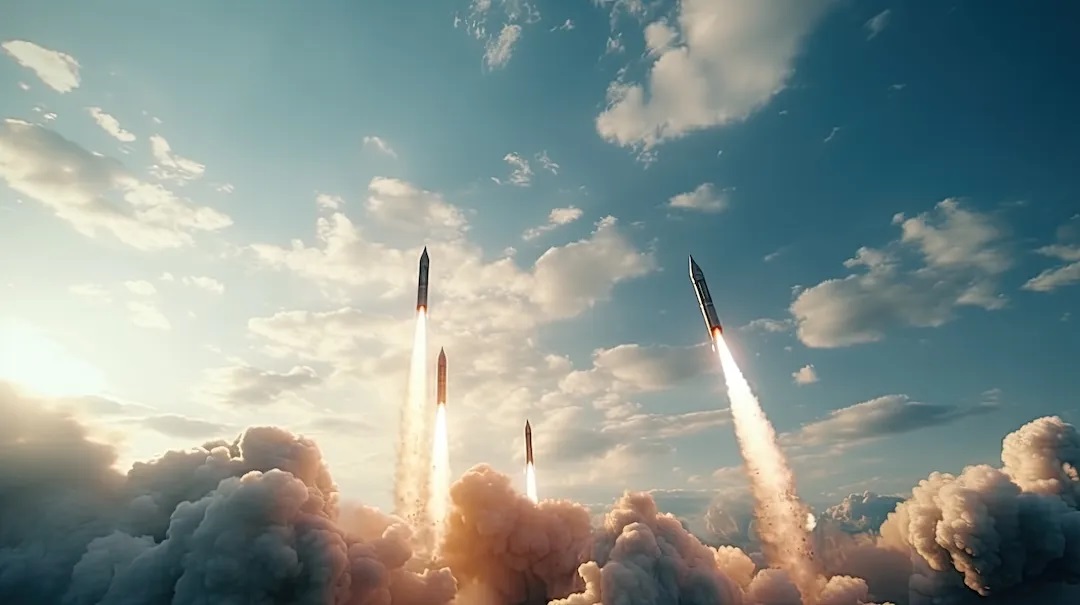
Andre Damon, 11 Sept 24 https://www.wsws.org/en/articles/2024/09/12/lsqq-s12.html
The United States and United Kingdom will imminently announce a major expansion of Ukrainian strikes deep inside Russia using NATO weapons, the Guardian and Politico reported on Wednesday.
The announcement will come just days after Ukraine launched its largest drone barrage deep inside Russian territory on Monday, for the first time killing someone in Moscow and destroying dozens of homes in the capital city of a nuclear-armed state.
The move was discussed between US Secretary of State Antony Blinken and British Foreign Minister David Lammy during their meetings with Ukrainian officials in Kiev on Wednesday.
When asked whether “Ukraine needs this long-range capability of striking into Russian territory,” Blinken replied that “we discussed long-range fires” with Ukrainian officials and that it would be further discussed when US President Joe Biden meets UK Prime Minister Keir Starmer in Washington on Friday.
He continued, “From day one, as you heard me say, we have adjusted and adapted as needs have changed, as the battlefield has changed, and I have no doubt that we will continue to do so as this evolves.”
Regarding the discussions, the Guardian reported, “British government sources indicated that a decision had already been made to allow Ukraine to use Storm Shadow cruise missiles on targets inside Russia, although it is not expected to be publicly announced on Friday when Starmer meets Biden in Washington DC.”
When asked on Tuesday about allowing expanded strikes inside Russia, Biden replied, “We’re working that out now.”
Politico cited Senate Foreign Relations Committee Chair Ben Cardin as saying he “would not be surprised” if the decision had already been made. The report continued, “Wednesday’s joint visit to Kyiv by Blinken and Lammy to meet Zelenskiy would not be taking place had there been no positive decision regarding Storm Shadow, the sources added.”
The news outlet noted, “But it would be considered unnecessarily provocative to make a public announcement about long-range missiles in Kyiv.”
In other words, the announcement will take place in a proverbial “Friday night news dump” to make the fact that NATO weapons will be raining down on Russian cities appear less “provocative” and to keep this development, which threatens to dramatically escalate the war, out of public consciousness.
In a statement on X, Lammy declared, “I am in Kyiv today with @SecBlinken to reiterate our united and ironclad support for Ukraine. We must stand up to Vladimir Putin’s imperialism. Our collective security depends on it.”
Blinken framed the massively provocative action being prepared by the US and UK as a response to an “escalation” by Russia. “And we’ve now seen this action of Russia, Russia acquiring ballistic missiles from Iran, which will further empower their aggression in Ukraine. So if anyone is taking escalatory action, it would appear to be Mr. Putin and Russia,” Blinken said.
On Monday, a group of leading House Republicans published a letter to President Biden calling for the lifting of all remaining restrictions on the use of NATO-provided weapons from Ukraine.
The letter demanded, “We write to urge you to lift the remaining restrictions on Ukraine’s use of U.S.-provided long-range systems, specifically Army Tactical Missile Systems (ATACMS), against legitimate military targets deeper inside Russia.”
The letter declared that “concerns about escalation” have been “consistently invalidated since day one of the war.” It asserted, “Neither Ukraine’s use of U.S.-provided weapons in Russia nor its military incursion into Russia’s Kursk region—the first foreign occupation of Russian territory since World War II—has triggered a Russian escalatory response.”
Commenting on the reporting by the Guardian, Russian Senator Aleksey Pushkov wrote on Telegram, “The decision to strike Russian territory is clearly being prepared. … There are too many conversations and hints about it for it to be reversed. Even if it has not been made yet, it looks like it will be a matter of days. The leak via The Guardian is not accidental. Public opinion is being prepared.”
Anatoly Antonov, the Russian Ambassador to the US, declared that Washington “continues to test the limits of our tolerance for hostile steps” and is “paving the way to World War III.”
On Wednesday, former Kremlin adviser Sergey Karaganov gave an interview to the Kommersant daily in which he urged the country to be prepared to use nuclear weapons in response to NATO attacks. “We have allowed the situation to deteriorate to a point when our adversaries believe we will not use nuclear weapons under any circumstances. … Having nuclear weapons without being able to convince your enemies that you are ready to use them is suicide.”
He added, “The main goal of a doctrine should be in convincing all current and future enemies that Russia is ready to use nuclear weapons.” He added, “It’s high time we stated that any massive strikes against our territory give us a right to respond with a nuclear strike.”
The massive escalation of the US-NATO war against Russia forms the backdrop of Wednesday’s presidential debate in which Vice President Kamala Harris pledged that her candidacy would be dedicated to “ensuring we have the most lethal fighting force in the world” in order to defend America’s “standing” in the world.
White House finalizing plans to expand where Ukraine can hit inside Russia
The talks have been closely held among a small group of officials inside the White House.
Gunners fire at a Russian position in the Kharkiv region, on April 21, 2024, amid the Russian invasion in Ukraine. | Anatolii Stepanov/AFP via Getty Images
Politico, By Erin Banco, Joe Gould and Paul McLeary 09/11/2024
The White House is finalizing a plan to ease some restrictions on how Ukraine can use U.S.-donated weapons and better protect itself from Russian missiles, according to a Western official and two other people familiar with the discussions.
The talks have been closely held among a small group of officials inside the White House, one of the people involved in the debate said. All were granted anonymity because they were not authorized to speak publicly about the conversations.
The details of the plan are still coming together. But officials in Washington, London and Kyiv have in recent days discussed expanding the area inside Russia that Ukraine can hit with American and British-made weapons. They’ve also discussed how to prevent additional cross-border attacks by Russia, including the U.S. agreeing to allow Ukraine to use U.K. long-range missiles that contain American parts to strike inside Russia.
The current conversations between Washington and Kyiv mark a significant change in tenor from the ones the two countries held earlier this summer. And it signals the Biden administration may be ready to finally agree to Kyiv’s requests to enable Ukraine’s military to more forcefully defend itself and to make more aggressive moves inside Russia.
The National Security Council declined to comment.
In an interview with PBS Newshour in June, national security adviser Jake Sullivan indicated that the U.S. might be willing to expand the area it would allow Ukraine to use U.S. weapons in Russia.
“It is not about geography. It is about common sense,” he said. “If Russia is attacking or about to attack from its territory into Ukraine it only makes sense to allow Ukraine to hit back.”
When asked if the administration would lift restrictions on long-range weapons, Biden told reporters Tuesday: “We’re working that out now.”…………………………………………………………..
U.S. officials have also pointed out that since the Army no longer buys Army Tactical Missile Systems, the inventory is limited and is drawing close to where the U.S. would be concerned about its own stockpile. The maker of the missile, Lockheed Martin, is still producing several hundred a year but they are slated for sale to allies overseas. The replacement for the weapon, the Precision Strike Missile, is only beginning to be fielded and not in numbers to fully replace the missiles currently being expended.
Secretary of State Antony Blinken and his British counterpart David Lammy were in Kyiv on Wednesday to huddle with Ukrainian President Volodymyr Zelenskyy to discuss the weapons issue, along with Ukraine’s incursion into Russia and recent Russian advances in Ukraine.
British defense leaders have been in discussions with their U.S. counterparts for weeks about getting the U.S. to sign off on Ukraine using British Storm Shadow missiles to strike inside Russia. No decision has been reached, according to one person familiar with the talks, but the issue will be a part of the discussion between President Joe Biden and U.K. Prime Minister Keir Starmer when the two meet at the White House on Friday………………………………………..
It’s unclear if the Biden administration has decided to lift its restrictions on long-range Army Tactical Missile Systems, which the U.S. has transferred to Ukraine. It has previously told Ukraine it does not want its military using those weapons to strike deep inside Russia………………..
Biden’s earlier decision to allow Ukraine the ability to conduct limited strikes inside Russia came with several caveats, including that Kyiv could only use the weapons in and around the Kharkiv region. The U.S. eventually expanded that geographic plane largely so that Ukraine could shoot down Russian glide bombs………………………………………………………………….. more https://www.politico.com/news/2024/09/11/white-house-weapons-ukraine-00178673
Biden administration split over Ukraine’s use of US weapons inside Russia
Pentagon and intelligence community caution against deployment of ATACM missiles by Kyiv
Ft.com Felicia Schwartz in Washington, September 11 2024
US President Joe Biden has said he is considering a request by Ukraine to use weapons provided by the US to strike deep inside Russian territory. Biden’s admission on Tuesday comes as his government is split over whether to allow the use of US weapons, with the state department, which is more open to Kyiv’s request, pitted against the Pentagon and the US intelligence community. “We’re working that out right now,” Biden said when asked by reporters whether he would allow Ukraine to use American long-range Army Tactical Missile System, or ATACMS, to target sites inside Russia.
Ukrainian President Volodymyr Zelenskyy has repeatedly called for restrictions on western-supplied, long-range weapons to be lifted so his military can strike Russian airfields and missile launchers, as well as the ammunition depots, fuel storage and command and control centres that are critical to Moscow’s war. Washington in recent months has shifted away from a blanket ban on the use of US-supplied weapons to attack Russian territory, allowing Ukraine to deploy them for defensive strikes. But Zelenskyy is pressing the US and other western countries to permit the use of long-range weaponry deep inside Russia as part of his strategy of increasing the cost of the invasion for President Vladimir Putin.

Antony Blinken, US secretary of state, is travelling to Ukraine this week with UK foreign secretary David Lammy to meet Zelenskyy and discuss his request and show support for their ally. Ahead of the visit, Blinken told a press conference in London “we’ll be listening intently to our Ukrainian partners. We’ll both be reporting back to the [British] prime minister, to President Biden in the coming days.” He added that Biden would discuss the matter with Keir Starmer, the UK prime minister, when he visits Washington on Friday.
The UK has urged the US to grant Ukraine permission to use long-range weapons provided by its western allies deep inside Russia and believes Kyiv should be able to target Russian sites and assets. US sign-off is needed in order for Ukraine to use the Storm Shadow missiles provided by the UK for long-range strikes inside Russia. While the US state department is more receptive to arguments from Ukraine and many of its western allies, the Pentagon and US intelligence community have cautioned against the use of the long-range weapons deep inside Russia.
The latter recently assessed that 90 per cent of Russian aircraft have been relocated to airfields at least 300km away from Ukrainian-controlled territory, outside of the range of ATACMS………………………………………. https://www.ft.com/content/48289996-e1bf-4c3e-befb-031698e89e1b
‘Let’s Just Fight’: How Britain Prefers War Over Peace in Ukraine

Boris Johnson avoided promoting a compromise peace in Ukraine after Russia invaded. Now, Labour continues to help prolong the conflict to secure British interests.
DECLASSIFIED UK, MARK CURTIS, 9 September 2024
Last week, defence secretary John Healey announced that the UK “will continue to step up our support to help Ukraine achieve victory” in its war with Russia.
Both he and foreign secretary David Lammy have repeatedly said “Labour will stand with Ukraine for as long as it takes to win”.
When President Volodymyr Zelensky’s Ukrainian forces conducted an incursion into Russia’s Kursk region last month, Healey praised the move as “bold”, saying it put Russian president Vladimir Putin “under pressure”.
Equipment used in that offensive included UK-supplied Challenger tanks sent to Ukraine last year.
Prime minister Keir Starmer has also told Zelensky he is willing to allow Ukraine’s use of UK-supplied long-range missiles to hit targets inside Russia – provided the US agrees to it.
Despite Labour’s public relations about “change” during the general election, Lammy has consistently said that “with Labour there will be no change in the UK’s financial, military, diplomatic and political support for Ukraine”.
The consequences of this are hard to overstate. Since Russia’s brutal invasion, inflicting untold misery on millions of Ukrainians, bombarding civilians and committing war crimes, UK governments have been overwhelmingly focused on one thing – “winning” the war.
Yet one thing Whitehall has conspicuously avoided is making serious attempts at promoting a compromise peace that would end the fighting.
Indeed, one casualty of Ukraine’s recent incursion into Russia is that it derailed secret talks to negotiate an agreement halting strikes on energy and power infrastructure, according to the Washington Post.
There are specific reasons Whitehall prefers war over peace in Ukraine. It is worth going back to the very first chance negotiators had to end this devastating conflict soon after Russia invaded.
Scuppering peace prospects
There is considerable evidence showing the UK helped scupper the prospects for peace within a few weeks of Russia’s invasion in February 2022.
The following month, direct peace negotiations between Ukrainian and Russian delegations and mediation efforts by the then Israeli prime minister, Naftali Bennett, created a genuine chance for ending the war peacefully.
Meeting in Turkey, the two sides produced the Istanbul communiqué in late March 2022 in which Ukraine promised not to join Nato or allow foreign military bases on its soil. For its part, Russia promised to withdraw its occupation troops from Ukraine, although not from the Donbas region or the Crimea.
David Arakhamia, the parliamentary leader of Zelensky’s “Servant of the People” party who led Ukraine’s delegation in the talks, later revealed that Moscow was “ready to end the war if we took neutrality… and made commitments that we would not join Nato”.
This was the key point”, he said in an interview in 2023.
Reports suggest Zelensky was then prepared to give up Nato membership and that he understood this was the key issue for Moscow. “And as far as I remember, they started a war because of this”, he said at the time.
‘Permanent neutrality’
Russia and Ukraine appeared relatively close to a deal that would “have ended the war and provided Ukraine with multilateral security guarantees, paving the way to its permanent neutrality and, down the road, its membership in the EU”, according to one detailed study…………………………………………………………………………………………………………..
‘Keep fighting and dying’
In their summit in Brussels on 24 March 2022, Nato decided to oppose peace negotiations until Russia had fully withdrawn all its troops from Ukraine.
By early April, the Washington Post was reporting that “For some in Nato, it’s better for Ukrainians to keep fighting and dying than to achieve a peace that comes too soon or at too high a price for Kyiv and the rest of Europe.”
Former German chancellor Gerhard Schröder, who acted as one of the mediators in the Istanbul talks, later said that “nothing could happen because everything else was decided in Washington…. the Ukrainians did not agree to peace because they were not allowed to. They first had to ask the Americans about everything they discussed.”
Enter Boris Johnson
As talks were approaching a possible agreement, UK prime minister Boris Johnson arrived unannounced in Kyiv on 9 April 2022.
A report in Ukrainska Pravda noted that Johnson brought two messages: “The first is that Putin is a war criminal, he should be pressured, not negotiated with”, and “the second is that even if Ukraine is ready to sign some agreements or guarantees, they [the collective West] are not”.
Before his visit, Johnson “instructed” Zelensky “not to make any concessions to Putin”, columnist Simon Jenkins wrote in the Guardian.
David Arakhamia said that Johnson had come to Kyiv to inform Ukrainian officials the West wouldn’t sign any agreement with Moscow, instead urging: “let’s just fight.”……………………………………………..
Peace feelers
The March/April 2022 negotiations may have produced the best opportunity to bring about a compromise peace, but there have been others since.
It is difficult to gauge whether the peace feelers put out by the Kremlin over the past two and half years are simply part of its propaganda strategy or serious attempts to end the fighting. The reason is that they have never been seriously tested by Washington and London……………………………………………………………..
Total war
The US and UK have long publicly rejected talks based on anything other than Russia’s complete withdrawal from Ukraine.
This principled position might have merit but for the real world intervening. Aggressors should surely not be rewarded in international relations, but this is something that applies as much to the US/UK in Iraq or Libya, or Israel in the occupied Palestinian territories, as to Russia in Ukraine.
Only in the case of Ukraine, however, has the UK held to the high-minded position that Moscow must withdraw all its forces before any peace moves can be considered.
The second obvious truth is that holding to the position of regaining full control over all Ukrainian territory – including the disputed areas in the Donbas and the Crimea – is simply a recipe for ongoing war.
As leading analyst Anatol Lieven has written, “To recover everything it has lost since 2014 looks impossible. It would require the total defeat of the Russian military.”
Yet this appears to be what Keir Starmer wants. “This terrible conflict must end with the defeat of Putin in Ukraine”, the then UK opposition leader said in the House of Commons in 2023.
Although Zelensky vows to fight on, some senior Ukrainian figures are more than aware of the need for pragmatism. ………………………………………………….
What does Britain want?
To the UK establishment, the Ukraine war is a proxy one against Russia, its key rival for influence in Europe.
With Ukraine as the latest battleground in a modern great game, Whitehall’s main goal is to maintain Russia as a pariah state and end its independent foreign policy, which challenges Nato’s supremacy in Europe and, to an extent, the Middle East.
The war has enabled the UK to cement relations with an important new ally. UK officials have barely hidden their glee at overcoming their European competitors to get to Kyiv first. ……………………………………………………
MI6 in Ukraine
It turns out that British intelligence was increasingly active in Ukraine for years before Russia’s invasion – a remarkable turnaround from the blackout of the Cold War years.
A bombshell New York Times investigation in February 2024 notes that the CIA established 12 secret “forward operating bases” along Ukraine’s border with Russia in the decade before 2022…………………………………………………..
According to the New York Times, in the run-up to the 2022 invasion, the head of one of Russia’s intelligence services reported to Putin that CIA and MI6 were controlling Kyiv and were turning the neighbouring country “into a beachhead for operations against Moscow.”
In other words, “Ukraine was drawn into a Western coalition for the purpose of waging a broad-based shadow war against Russia”, comments Mark Episkopos, a fellow at the Quincy Institute.
He adds: “Moscow repeatedly warned — for many years before 2014 — that it was and remains prepared to take drastic action to prevent Ukraine from being used by the West as a forward operating base against Russia. Yet that, as recounted in lurid detail by the New York Times, is precisely what has happened over the past 10 years”.
This budding intelligence relationship has been cemented by the war itself. US Defense Department documents leaked in March 2023 showed Britain then had the largest number of special forces operating in the country, with 50 troops.
War profits
Courting Ukraine as a new ally has major benefits for the UK arms industry, which exerts enormous influence over Whitehall’s foreign policies. War is good for them, peace not so much.
In the ten years before Russia’s invasion of Ukraine, UK arms companies sold only £35m in military equipment to Kyiv. That figure has skyrocketed since February 2022 to over £800m.
UK arms corporations have secured a new, lucrative market……………………………………….
The war is a boon right across the UK’s substantial military industry: Britain has sent around 400 different military capabilities to Ukraine since 2022.
For US arms companies, the prize has been even greater. Washington has provided over $150bn worth of military equipment and aid to Ukraine since 2022.
Endgame
Journalist Branko Marcetic has long documented reports highlighting Western opposition to Ukraine peace prospects.
“It’s becoming increasingly difficult to deny the war in Ukraine could have been ended mere months into the Russian invasion — and that the US and UK governments worked to prevent this from happening”, he writes.
If a compromise peace holds little value for the British elite, what does “winning” mean? A war with Russia?
In May this year the UK and US publicly gave Ukraine the go-ahead to use British-supplied weapons to strike targets inside Russia, saying it was up to Kyiv whether to do so.
That decision appeared to cross a line. With senior British military figures saying the UK must be prepared to fight a war with Russia, who knows what endgame is being planned in Whitehall, or what Keir Starmer’s limits might be. https://www.declassifieduk.org/lets-just-fight-how-britain-prefers-war-over-peace-in-ukraine/
CNN Shared A Glimpse Of Just How Bad Everything Has Become For Ukraine

The ideal solution for Kiev would be to reach a ceasefire for facilitating its voluntary withdrawal from part of Donbass (ex: Pokrovsk’s surroundings) in parallel with pulling out of Kursk, which are terms that Russia might entertain since they’d advance some of its political and military goals.
Andrew Korybko, Sep 09, 2024, https://korybko.substack.com/p/cnn-shared-a-glimpse-of-just-how
Outgunned and outnumbered, Ukraine’s military is struggling with low morale and desertion
By Ivana Kottasová and Kostya Gak, CNN, 8 Sept 24
The Ukrainian Armed Forces are in the midst of converging crises caused by the failed counteroffensive, the forcible conscription policy, and Zelensky’s Kursk blunder, which are leading to more desertions, defeats, and ultimately more desperation.
CNN carried out a rare act of journalistic service with their detailed report about how “Outgunned and outnumbered, Ukraine’s military is struggling with low morale and desertion”. It candidly describes the numerous problems afflicting the Ukrainian Armed Forces (UAF) at this pivotal moment in the conflict as they continue to occupy part of Kursk but are still losing ground in Donbass. Their story begins by introducing a battalion commander who lost most of the around 800 men under his control.
This figure couldn’t take it anymore and thus transferred to a cushy military administrative job in Kiev. He and the five others who CNN spoke to when researching their report informed them that “desertion and insubordination are becoming a widespread problem, especially among newly recruited soldiers.” In the words of one commander, “Not all mobilized soldiers are leaving their positions, but the majority are…They either leave their positions, refuse to go into battle, or try to find a way to leave the army.”
The reader is then informed that these troops are forcibly conscripted, thus adding context to why they desert, but they also claimed that morale problems began to infect the armed forces’ ranks during the now-resolved impasse over more American aid to Ukraine. While that likely played a role, CNN conspicuously omits to mention last summer’s failed counteroffensive, which proved that Ukraine is unable to reconquer its lost lands despite all the hype and the aid that it received up until that point.
Moving along after having clarified the real reason behind the UAF’s plunging morale over the past year, drones have made the battlefield more unbearable than before, and the amount of time between rotations has grown since some troops simply can’t leave their positions without risking their lives. CNN then added that “In just the first four months of 2024, prosecutors launched criminal proceedings against almost 19,000 soldiers who either abandoned their posts or deserted”.
They also acknowledged that “It’s a staggering and – most likely – incomplete number. Several commanders told CNN that many officers would not report desertion and unauthorized absences, hoping instead to convince troops to return voluntarily, without facing punishment. This approach became so common that Ukraine changed the law to decriminalize desertion and absence without leave, if committed for the first time.”
The impending Battle of Pokrovsk, which could be a game-changer for Russia on the Donbass front, risks turning into a total disaster for the UAF since “some commanders estimate there are 10 Russian soldiers to each Ukrainian.” Just as alarming is the claim from one officer that “There have even been cases of troops not disclosing the full battlefield picture to other units out of fear it would make them look bad.” Communication problems are also reportedly rife between Kiev’s varied units there too.
The Kursk front isn’t as bad, but it might not have served its political purpose of boosting morale among the UAF unlike what Zelensky has claimed. CNN quoted some sappers who were unsure of the strategy involved, questioning why they were redeployed from defending Pokrovsk to invade Russia when the Donbass front is experiencing such difficulties as was already reported. The piece then ends with a psychological support expert declaring that he’s no longer going to be emotionally attached to anyone.
Reflecting on CNN’s surprisingly critical report, it’s clear that the UAF is in the midst of converging crises caused by the failed counteroffensive, the forcible conscription policy, and Zelensky’s Kursk blunder, which are leading to more desertions, defeats, and ultimately more desperation. In such circumstances, Ukraine can either stay the course by remaining in Kursk at the expense of losing more ground in Donbass, withdraw from Kursk to help hold Donbass, or asymmetrically escalate.
The first two scenarios are self-explanatory while the last could concern expanding the conflict into other Russian regions, Belarus, and/or Moldova’s breakaway Transnistria region, seriously damaging Russian nuclear power plants out of desperation to provoke a nuclear response, and/or assassinating top Russians. There are only a few months left before the winter impedes combat operations on both sides, after which the status quo will persist until spring, when one or both sides might go on the offensive.
This timeline adds urgency to the impending Battle of Pokrovsk, which Russia wants to win as soon as possible in order to push through the fields beyond, capture more territory, threaten the Kramatorsk-Slavyansk agglomeration from the south, and possibly prepare to make a move on Zaporozhye city from the northeast. If Ukraine can hold out into next year, then it could have more time to build more defenses beyond Pokrovsk, thus reducing the pace of Russia’s advance if it comes out on top there.
Even if Ukraine holds on for at least several months or perhaps as long as half a year longer there, the problems touched upon in CNN’s piece will likely only exacerbate seeing as how more forcibly conscripted troops will be thrown into what might by then become the next infamous meat grinder. Morale will probably continue plummeting while defections could spike, both of which could combine to cripple the UAF and create an opening for Russia to exploit in Pokrovsk or elsewhere along the front.
The ideal solution for Kiev would be to reach a ceasefire for facilitating its voluntary withdrawal from part of Donbass (ex: Pokrovsk’s surroundings) in parallel with pulling out of Kursk, which are terms that Russia might entertain since they’d advance some of its political and military goals. It’s better for Ukraine from the perspective of its regime’s interests to have an orderly withdrawal than a chaotic one if Russia achieves a breakthrough, but Zelensky and his ilk aren’t known for their rational decisions.
Nevertheless, those like India and Hungary who are want to help politically resolve this conflict could propose something of the sort, perhaps also suggesting the revival of last month’s reported Qatari-mediated partial ceasefire proposal for eschewing attacks against the other’s energy infrastructure. Zelensky is unlikely to agree, especially since he’s under the influence of uber-hawk Yermak, but it would still be best to informally circulate some variant of the aforementioned proposal sooner than later.
Regardless of well-intentioned third parties’ proposals, the conflict appears poised to continue raging into the next year absent a complete military and/or political breakdown in Ukraine, neither of which can be ruled out though considering how bad everything has become per CNN’s latest report. Ukraine and its Anglo-American “deep state” allies could also stage a major provocation aimed at desperately “escalating to de-escalate” on more of their terms, so observers shouldn’t rule that scenario out either.
Ukrainian Tipping Points: UPDATE 2
Russian and Eurasian Politics, by Gordonhahn, September 11, 2024
Outgoing US President Joe Biden has said his administration is working on approval of Ukrainian use of U.S. long-range missiles against targets deep inside Russia (https://www.ft.com/content/48289996-e1bf-4c3e-befb-031698e89e1b). The UK is pressuring the US to approve such use, and US Secretary of State and UK’s foreign minister have just arrived in Kiev (https://ctrana.news/news/471869-blinken-i-hlava-mid-britanii-pribyli-v-kiev.html).
UPDATE 1:
Reuters reports US is just about se to send long-range missiles to Ukraine for attacks deep inside Russia:
US close to agreeing on long-range missiles for Ukraine; delivery to take months.
Summary
-Stealthy JASSM weapons have range to hit targets inside Russia
-Decision expected in autumn, U.S. officials say
-Pentagon trying to integrate JASSMs on Soviet-era Ukrainian jets
WASHINGTON, Sept 3 (Reuters) – The U.S. is close to an agreement to give Ukraine long-range cruise missiles that could reach deep into Russia, but Kyiv would need to wait several months as the U.S. works through technical issues ahead of any shipment, U.S. officials said.The inclusion of Joint Air-to-Surface Standoff Missiles (JASSM) in a weapons package is expected to be announced this autumn, three sources said, though a final decision has not been made (https://www.reuters.com/world/us-close-agreeing-long-range-missiles-ukraine-delivery-take-months-2024-09-03/).
ORIGINAL ARTICLE:
The NATO-Russia Ukrainian war is at a tipping point; one that leads to a Russian march to the Dniepr River and the relocation of what remains of pro-NATO Ukraine’s populace to right bank Ukraine and its Maidan government away from the western banks of the Diner and deeper into western Ukraine, likely Lvov. Not surprisingly, Kiev therefore is desperate and trying to escalate in ways that implicate or bring deeper, more direct NATO involvement, which has been deep and escalating on NATO’s part for years. For Kiev, ideal would be a full-scale NATO military intervention. The West’s previous strategy of gradual escalation – ‘boiling the frog’ by providing redlined air defense systems, then short-range missile/artillery systems, then tanks, then F-16s – hasd run its course.
The only options now are permitting Kiev to use Western missiles to hit deep inside Russia and target Russian President Vladimir Putin and other top leaders. Until now neither Kiev nor the West has crossed any Russian or ‘Putin red lines’ because there have not been any Russian-declared ‘red lines’ but Western MSM-set red lines. One would-be hard-pressed to cite even one clearly expressed Putin ‘red line.’
I fear the Western escalation will continue up to crossing an actual ‘red line’ that Russians have indirectly hinted at – Ukraine’s use of long-range Western missiles such as American ATACMs and British Storm Shadows to strike deep into Russia – will be crossed one way or another, likely after the U.S. presidential election on November 5th.……………………………………………………………………………………………………………… more https://gordonhahn.com/2024/09/11/ukrainian-tipping-points-update-2/—
Victoria Nuland, former US deputy secretary of state, confirms West told Zelensky to abandon peace deal

Comment: Nuland confirms what was already known. The reason the conflict is ongoing is because the US wanted it to be so.
https://www.rt.com/news/603708-ukraine-istanbul-us-nuland/ 9 Sept 24
Ukraine-Russia talks fell apart after Kiev asked foreign backers for advice, the former US deputy secretary of state has said.
The US, UK and other backers of Ukraine told Kiev to reject the deal reached at the 2022 Istanbul peace talks with Russia, former US under secretary of state Victoria Nuland has said.
In an interview with Russian journalist Mikhail Zygar, former editor-in-chief of the liberal news channel Dozhd, which aired on Thursday, Nuland was asked to comment on reports that the peace process between Moscow and Kiev in late March and early April 2022 collapsed after then-British Prime Minister Boris Johnson traveled to Ukraine and told Vladimir Zelensky to keep fighting.
“Relatively late in the game the Ukrainians began asking for advice on where this thing was going and it became clear to us, clear to the Brits, clear to others that [Russian President Vladimir] Putin’s main condition was buried in an annex to this document that they were working on,” she said of the deal being discussed by the Russian and Ukrainian delegations in Türkiye’s largest city.
The proposed agreement included limits on the kinds of weapons that Kiev could possess, as a result of which Ukraine “would basically be neutered as a military force,” while there were no similar constraints on Russia, the former diplomat explained.
“People inside Ukraine and people outside Ukraine started asking questions about whether this was a good deal and it was at that point that it fell apart,” Nuland said.
The veteran diplomatic hawk, who during her time in the State Department was renowned for her hostility towards Russia, quit the post of under secretary of state for political affairs in March this year. Nuland played a key role in the violent Western-backed coup in Kiev in 2014, which toppled Ukraine’s democratically elected president, Viktor Yanukovich.
During the escalation between Moscow and Kiev in February 2022, she called for deeper US involvement in the conflict and advocated for Ukraine to be armed with increasingly sophisticated weapons. However, in February, the 63-year-old essentially acknowledged the failure of her longstanding policy of containing Moscow, telling the CNN that modern Russia had turned out to be “not the Russia we wanted”
During her conversation with Zygar, Nuland confirmed that both Moscow and Kiev were eager to seek a diplomatic solution a month after the outbreak of the fighting.
“Russia had an interest at that time in at least seeing what it could get. Ukraine, obviously, had an interest if they could stop the war and get and get Russia out,” she said.
US officials “were not in the room” during the talks in Istanbul, only offering Kiev “support” in case it were needed, she claimed.
Putin said last week that the only reason the Istanbul deal failed was because of “the wish of the elites in the US and some European nations to inflict a strategic defeat on Russia,” adding that Boris Johnson served as the messenger to quash the peace process.
The negotiations in Türkiye yielded a draft agreement, which would have ended the hostilities, Putin recalled. Kiev was willing to declare military neutrality, limit its armed forces, and vow not to discriminate against ethnic Russians. In return, Moscow would have joined other leading powers in offering Ukraine security guarantees, he stressed.
According to the Russian leader, talks with Kiev are still possible, but can only happen “not on the basis of some ephemeral demands but on the basis of the documents that were agreed and actually initialized in Istanbul.”
IAEA’s Grossi says Zaporizhzhia cooling tower likely to be demolished
WNN 05 September 2024
International Atomic Energy Agency Director General Rafael Mariano Grossi has inspected the cooling tower affected by fire last month at Zaporizhzhia Nuclear Power Plant and says it is “not usable in the future, so it will probably be demolished”.
Grossi, on his fifth visit to the six-unit nuclear plant which has been under Russian military control since early March 2022, said that the security situation remains “very fragile … so our work continues … we will be analysing, assessing what we saw today – until the conflict is over or it enters a phase where there is no more active military activity … the possibility of something serious cannot be excluded”.
The IAEA has had a team of experts stationed at Zaporizhzhia for two years – with 23 rotations of staff during that time. Their presence is intended to boost nuclear safety and security at the plant which is on the front line of Russian and Ukrainian forces.
Ukraine and Russia each blame the other side for putting nuclear safety and security at risk. After the fire at the cooling tower Russia accused Ukraine of causing it with drone attacks, while Ukraine accused Russia of causing it deliberately, or by negligence………………………………….. https://www.world-nuclear-news.org/Articles/IAEA-s-Grossi-says-Zaporizhzhia-cooling-tower-set
USING UKRAINE SINCE 1948

By Joe Lauria, Consortium News., June 11, 2024, https://popularresistance.org/using-ukraine-since-1948/

The U.S. Has Staged Operations With Extremists From Ukraine To Undermine Russia For Nearly 8 Decades.
It’s led us to the doorstep of nuclear annihilation.
The United States has for nearly 80 years seen Ukraine as the staging ground for its once covert and increasingly overt war with Russia.
After years of warnings, and after talk since 2008 of Ukraine joining NATO, Russia fought back two years ago. With neither side backing down, Ukraine is increasingly becoming a flashpoint that could lead to nuclear war.
The West thinks Russia is bluffing.
But its doctrine states that if Russia feels its existence is threatened it could resort to nuclear arms. Instead of taking these warnings seriously, NATO is recklessly opening corridors for a ground war against Russia in Ukraine; France says it’s putting together a coalition of nations to enter the war, despite Russia saying French or any other NATO force would be fair game.
In Paris the other day Joe Biden said Russia wants to conquer all of Europe but can’t even take Khariv. It is this kind of inflammatory nonsense, combined with allowing Ukraine to fire NATO weapons into Russian territory, that is imperiling us all.
The danger started building up many years ago but it is now reaching a climax.
The U.S. relationship with Ukraine, and its extremists, to undermine Russia began after the Second World War. During the war, units of the Organization of Ukrainian Nationalists (OUN-B) took part in the Holocaust, killing at least 100,000 Jews and Poles.
Mykola Lebed, a top aide to Stepan Bandera, the leader of the fascist OUN-B, was recruited by the C.I.A. after the war, according to a 2010 study by the U.S. National Archives.
Lebed was the “foreign minister” of a Banderite government in exile, but he later broke with Bandera for acting as a dictator. The U.S. Army Counterintelligence Corps termed Bandera “extremely dangerous” yet said he was “looked upon as the spiritual and national hero of all Ukrainians….”
Instead of Bandera, the C.I.A. was interested in Lebed, despite his fascist background. They set him up in an office in New York City from which he directed sabotage and propaganda operations on the agency’s behalf inside Ukraine against the Soviet Union.
The U.S. government study says:
CIA operations with these Ukrainians began in 1948 under the cryptonym CARTEL, soon changed to AERODYNAMIC. …
Lebed relocated to New York and acquired permanent resident status, then U.S. citizenship. It kept him safe from assassination, allowed him to speak to Ukrainian émigré groups, and permitted him to return to the United States after operational trips to Europe.
Once in the United States, Lebed was the CIA’s chief contact for AERODYNAMIC. CIA handlers pointed to his ‘cunning character,’ his ‘relations with the Gestapo and … Gestapo training,’ [and] the fact that he was ‘a very ruthless operator.’
The C.I.A. worked with Lebed on sabotage and pro-Ukrainian nationalist propaganda operations inside Ukraine until Ukraine’s independence in 1991.
“Mykola Lebed’s relationship with the CIA lasted the entire length of the Cold War,” the study says. “While most CIA operations involving wartime perpetrators backfired, Lebed’s operations augmented the fundamental instability of the Soviet Union.”
Continued Until And Beyond Ukrainian Independence
The U.S. thus covertly kept Ukrainian fascist ideas alive inside Ukraine until at least Ukrainian independence was achieved.
Mykola Lebed, Bandera’s wartime chief in Ukraine, died in 1998.
He is buried in New Jersey, and his papers are located at the Ukrainian Research Institute at Harvard University, the U.S. National Archives study says.
The Successor Organization To The OUN-B In The United States Did Not Die With Him, However. &Nbsp;It Had Been Renamed The Ukrainian Congress Committee Of America (UCCA), According To IBT.
“By the mid-1980s, the Reagan administration was honeycombed with UCCA members. Reagan personally welcomed [Yaroslav] Stetsko, the Banderist leader who oversaw the massacre of 7,000 Jews in Lviv, in the White House in 1983,” IBT reported. “Following the demise of [Viktor] Yanukovich’s regime [in 2014], the UCCA helped organise rallies in cities across the US in support of the EuroMaidan protests,” it reported.
That is a direct link between the U.S.-backed 2014 Maidan coup against a democratically-elected Ukrainian government and WWII-era Ukrainian fascism.
Since 2014, the U.S. pushed for an attack on the Russian speakers in eastern Ukraine who had rejected the coup, and NATO began training and equipping Ukrainian troops. Combined with talk since 2008 of Ukraine joining NATO, Russia reacted after years of warning.
More than two years after Russia’s intervention, with Ukraine clearly losing the war, Western leaders will do just about anything to save their political skins, as they’ve staked too much on winning in Ukraine. Don’t listen to them. They need a West in denial of the dangers facing us.
As President John F. Kennedy said in his 1963 American University speech:
“Above all, while defending our own vital interests, nuclear powers must avert those confrontations which bring an adversary to a choice of either a humiliating retreat or a nuclear war. To adopt that kind of course in the nuclear age would be evidence only of the bankruptcy of our policy–or of a collective death-wish for the world.”
The world may wake up when it’s too late — after nuclear missiles have already started flying.
Rare photos show Earth’s fatal hotspot that can kill any human standing nearby in just five minutes

Harrowing photos of the lethal area reveal how dangerous it is to be near the hotspot
Joshua Nair, https://www.ladbible.com/news/world-news/chernobyl-elephants-foot-radiation-photos-743946-20240906 6 Sept 24
There’s a spot on Earth that is so dangerous, it could kill someone if they stood nearby for just five minutes.
And the story behind it is haunting.
A lot of things on our blue planet can be dangerous towards us humans, but something we can’t really avoid is radiation.
No, I’m not talking about generating electricity for all of our technology, I mean the radiation that can be caused by the use of weapons, which can leave everlasting effects on certain areas of the world.
Nuclear weapons are bad, but the biggest tragedy related to this isn’t to do with weapons at all, and it occurred in Chernobyl after a tragic power plant explosion in Pripyat, Ukraine.
What was the Chernobyl disaster?
At a nuclear power plant in the Ukrainian city of Chernobyl on 26 April, 1986, reactor number four exploded during a failed steam test, killing 30 people instantly.
Radiation released could be detected in countries as far as Sweden, while several civilians and workers in the area would go on to die from severe radiation poisoning, while others died from other health issues and terminal illnesses from the unsafe levels of radiation put into the atmosphere.
It is still by far and away the worst nuclear disaster in human history, reportedly costing governments around $700 million (£532 million) to deal with, while the area is uninhabitable.
The ‘Elephant’s Foot’
Known as the most dangerous object on the planet, it was caused by the Chernobyl disaster as a large hunk formed at the bottom of the reactor, which was caused by uranium fuel becoming molten when it overheated.
Steam blew the reactor apart, as heat, steam and molten nuclear fuel combined to make a 100-ton flow of dangerous chemicals that poured out of the reactor and through to the basement of the plant, solidifying and being given the name the ‘Elephant’s Foot’, resembling one.
Why is it so dangerous?
People soon realised after the explosion that it shouldn’t be approached for a while, as the radioactive lump continued to sear for months.
When measured, the Elephant’s Foot released almost 10,000 roentgens per hour, equivalent to the exposure given by four and a half million chest X-rays.
It’s is incredibly dangerous, with photos of people near the hotspot showcasing some of the bravest scientists out there, putting their lives at risk to better understand the Elephant’s Foot.
According to science magazine Nautilus, 30 seconds of exposure would have your cells haemorrhaging, and in just four minutes, violent vomiting and diarrhoea would hit, and if you got to five minutes in the lump’s vicinity, you’d die within two days.
Studies on the Elephant’s Foot
People have chosen to visit and study the site for short periods of time, and while it is still cooling down, the Elephant’s Foot is incredibly dangerous to be around, as scientists have only taken the smallest of samples to carry studies out on.
The Elephant’s Foot remains entombed in the New Safe Confinement (NSC) that was slid over Chernobyl to prevent any more radiation leaks from the nuclear power plant.
Ukrainian Tipping Points: UPDATE
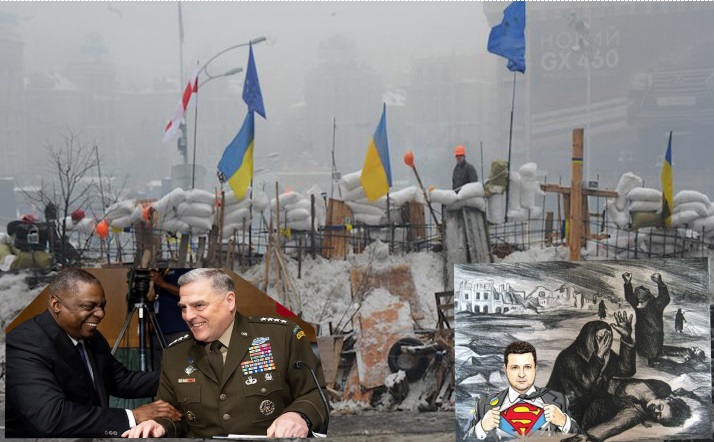
by Gordonhahn September 3, 2024 https://gordonhahn.com/2024/09/03/ukrainian-tipping-points-update/
Rueters reports US is just about se to send long-range missiles to Ukraine for attacks deep inside Russia:
US close to agreeing on long-range missiles for Ukraine; delivery to take months
Summary
-Stealthy JASSM weapons have range to hit targets inside Russia
-Decision expected in autumn, U.S. officials say
-Pentagon trying to integrate JASSMs on Soviet-era Ukrainian jets
WASHINGTON, Sept 3 (Reuters) – The U.S. is close to an agreement to give Ukraine long-range cruise missiles that could reach deep into Russia, but Kyiv would need to wait several months as the U.S. works through technical issues ahead of any shipment, U.S. officials said. The inclusion of Joint Air-to-Surface Standoff Missiles (JASSM) in a weapons package is expected to be announced this autumn, three sources said, though a final decision has not been made (https://www.reuters.com/world/us-close-agreeing-long-range-missiles-ukraine-delivery-take-months-2024-09-03/).
Chernobyl Roulette by Serhii Plokhy review – gripping account of wartime chaos at Ukraine’s nuclear plant
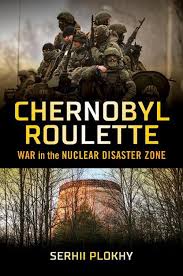
Luke Harding, Mon 2 Sep 2024, https://www.theguardian.com/books/article/2024/sep/01/chernobyl-roulette-by-serhii-plokhy-review-gripping-account-of-wartime-chaos-at-ukraines-nuclear-plant
The Ukrainian historian compellingly chronicles the singular courage and selflessness of atomic power station employees held hostage by Russian troops in 2022
Luke Harding, Mon 2 Sep 2024
On 24 February 2022, workers at the Chornobyl nuclear power station in Ukraine woke to the sound of explosions. A battle was going on, not far from the contaminated exclusion zone. By late afternoon, the Russians had arrived. A column of military vehicles pulled up at a checkpoint and an officer got out. Moscow, he said, was now in charge.
The plant’s 300 personnel – specialist operators and firefighters, plus troops from Ukraine’s national guard – became prisoners. Over the next few weeks, they kept the station’s systems going, working in cramped conditions and living side by side with their armed Russian masters. The enemy had invaded from Belarus. Its main force trundled onwards towards Kyiv.
Chernobyl Roulette by the Ukrainian historian Serhii Plokhy is a gripping account of the extraordinary events inside the plant (Plokhy spells the power station with an “e”). It is a tale of bravery and selflessness, reminiscent of the sacrifice demonstrated by the Chornobyl employees who went through the 1986 nuclear disaster, when reactor No 4 blew up. Some of those on duty in 2022 were involved in the original Soviet-era clean-up.
They included Valentyn Heiko, the 59-year-old shift foreman who was taken hostage with his colleagues. He proved to be a subtle and resilient leader. Heiko met the Russian commanders and told them they would have to follow Ukrainian safety rules and behave in a “civilised manner”. If they didn’t, he promised to unleash a radiation incident, killing them and everyone else. This was blackmail. And a bluff. It worked.
According to Heiko, some of the Russians were polite and rational. About a third of the soldiers, though, were brainwashed and often drunk. The occupiers moved into the fourth floor of the administration building. The station got crowded. There was a shortage of food, cigarettes and razors. The captive nuclear operators – unable to go home to the nearby town of Slavutych – grew beards and puffed on butts.
There were small acts of resistance. Liudmyla Kozak – one of 17 imprisoned women – refused a demand to wear a white armband. The Russians warned her she might be shot. Kozak found a white medical cap, embroidered it with a blue and yellow patch and wore that instead. An order was given to turn off the radio, which brought news of the Russian army’s setbacks around Kyiv. Staff switched it on anyway.
After three weeks, Heiko and his stressed and exhausted workmates could scarcely function. Astonishingly, 46 colleagues volunteered to replace them. The old shift exited the plant, travelled by bus through Belarus and crossed the Dnipro River in a fishing boat. Heiko carried the station’s Ukrainian flag with him. The new team went in the same way – uncertain if or when they would return.
The Kremlin’s occupation of the nuclear plant was an act of astounding recklessness. Soldiers dug trenches in the red forest, one of the world’s most toxic places. It is unclear if they suffered lasting health damage, their heads “full of sawdust”, as one gleeful Ukrainian official put it. Plokhy suggests this might be wishful thinking. Overall, though, radiation levels went up, as thousands of tracked Russian vehicles churned up deadly dust.
In the south of the country, meanwhile, another Russian unit captured the Zaporizhzhia nuclear power station, Europe’s biggest. The attackers fired rocket-propelled grenades at civilian infrastructure and damaged a reactor. Two and a half years on, the Russians are still there. Its turbine halls are stuffed with military kit and weapons. From the territory, they regularly bombard nearby Ukrainian towns with Grad missiles.
Last month, Russian soldiers started a fire in a cooling tower – an apparent warning, after Ukraine’s surprise counter-invasion of Russia’s Kursk region. Since the beginning of Moscow’s all-out attack, Vladimir Putin and his minions have issued a string of mass destruction threats directed at Kyiv and the west. State TV hosts talk about nuking London, Berlin and Paris.
The Chornobyl 2 story at least had a happy ending. On 30 March 2022, Russian servicemen fled north, as part of a pull-out from the Kyiv region. They departed with numerous items stolen from the plant: radiation dosimeters, computers and cars. In the town of Chornobyl, military looting parties carried off sacks of household goods. They even took ancient stuff: black-and-white TVs and video recorders.
The Ukrainian workers who put duty before personal survival narrowly averted another Chornobyl crisis. In Plokhy’s view, Moscow’s 2022 violent takeover of two atomic energy stations should serve as a “wake up call to the world”. It was, he argues, an act of nuclear terrorism carried out by a large nuclear power – a rogue one. The distinction between tactical nuclear weapons and civil nuclear facilities looks increasingly blurred, he says.
How the international community should respond to these alarming developments is less clear. Plokhy calls for a reform of the laws governing nuclear state behaviour and of the body that is supposed to administer them – the International Atomic Energy Agency (IAEA). When Russian tanks entered Chornobyl, the IAEA, led by Rafael Grossi, issued no condemnation of the Kremlin. Nor did it call on the occupiers to get out, appealing instead to “both sides”.
Plokhy is the author of several previous nonfiction books on Ukraine. These include Chernobyl: History of a Tragedy, which won the 2018 Baillie Gifford prize, and The Russo-Ukrainian War, an account of the conflict and its origins, published last year. Chernobyl Roulette is equally compelling. It salutes the singular men and women who stepped up – as their predecessors did before them – when protocols and governments failed.
IAEA chief on reviving Iran nuclear deal, preventing Russia-Ukraine nuclear disaster
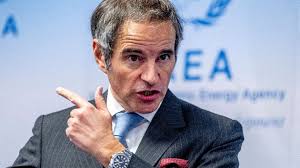
ALARABIYA NEWS, 1 Sept 24,
In a special interview on Al Arabiya, IAEA Director General Rafael Grossi discussed several pressing global nuclear issues. He highlighted the ongoing concerns related to the conflict between Russia and Ukraine, particularly the risks posed to nuclear power plants situated near active combat zones. Grossi emphasized the IAEA’s commitment to ensuring the safety of these facilities, despite the challenges and uncertainties. He stressed the importance of the agency’s impartiality, noting that their assessments are based solely on independently verified information to avoid politicization.
The IAEA chief also addressed the Iranian nuclear program, expressing concerns over the country’s continued accumulation of highly enriched uranium. He revealed that he had received a response from Iran’s new president, signaling a potential for renewed dialogue aimed at ensuring the peaceful nature of Iran’s nuclear activities. Grossi underscored the need for increased transparency and cooperation from Iran, especially in light of advancements in their nuclear capabilities……………………………………………… https://english.alarabiya.net/webtv/programs/special-interview/2024/09/01/iaea-chief-on-reviving-iran-nuclear-deal-preventing-russia-ukraine-nuclear-disaster—
Ukrainian Tipping Points
Paid liars from Washington, Stanford, London and elsewhere have tried and likely will continue to try to tell you ‘Ukraine is winning’. It is not and cannot do so without a full-scale NATO intervention and a likely resulting World War III.
Russian and Eurasian Politics, Gordonhahn, September 1, 2024
The NATO-Russia Ukrainian war is at a tipping point; one that leads to a Russian march to the Dniepr River and the relocation of what remains of pro-NATO Ukraine’s populace to right bank Ukraine and its Maidan government away from the western banks of the Diner and deeper into western Ukraine, likely Lvov.
Not surprisingly, Kiev therefore is desperate and trying to escalate in ways that implicate or bring deeper, more direct NATO involvement, which has been deep and escalating on NATO’s part for years. For Kiev, ideal would be a full-scale NATO military intervention. The West’s previous strategy of gradual escalation – ‘boiling the frog’ by providing redlined air defense systems, then short-range missile/artillery systems, then tanks, then F-16s – has run its course.
The only options now are permitting Kiev to use Western missiles to hit deep inside Russia and target Russian President Vladimir Putin and other top leaders. Until now neither Kiev nor the West has crossed any Russian or ‘Putin red lines’ because there have not been any Russian-declared ‘red lines’ but Western MSM-set red lines. One would-be hard-pressed to cite even one clearly expressed Putin ‘red line.’
I fear the Western escalation will continue up to crossing an actual ‘red line’ that Russians have indirectly hinted at – Ukraine’s use of long-range Western missiles such as American ATACMs and British Storm Shadows to strike deep into Russia – will be crossed one way or another, likely after the U.S. presidential election on November 5th.
The crossing of all previous red lines drawn largely by Western media produce a demonstration effect of supposed Russian weakness, which many play up in order to also facilitate a NATO decision to cross the long-range missile red line or to intervene overtly and officially on the ground in the war. The latter has been Volodomyr Zelenskiy’s goal since the war began and even before during the Minsk ‘ceasefire’. The repeated targeting of civilian areas in Donbass and now in Russia proper, bombing harvesting combines in Belgorod, and the now failed Kursk invasion itself is of the same genre. This desire, indeed desparate need to draw NATO ‘all in’ stands behind Zelenskiy’s fakes –Bucha, Russia attacked Zaporozhe Nuclear Power Plant Rus controls, a children’s hospital, schools, the Kramatorsk train station, etc., etc. This fakery is all part and parcel of the simulated reality that has been the Maidan and its resulting regime, built on legends of police brutality and mass shooting perpetrated by the Maidanists themselves.
Western propagandists use the alleged ‘failure of Putin to respond’ to Western-created ‘Putin red lines’ and to West-Ukraine provocations in order to give the impression that Russia is a paper bear and beatable, that Ukraine is winning and can win, and that the West and Ukraine should continue escalating and intensify its support and perhaps have NATO intervene full-scale. Zelensky himself – the premier propagandist and stage director in today’s West — has pointed to the mini invasion into Kursk as proof that Moscow’s ‘red lines’ are “illusory” and appealed to the leaders of Britain, France, Germay, and the US to allow the use of long-range missiles to strike air bases on Russian territory (www.thetimes.com/world/russia-ukraine-war/article/kursk-incursion-proves-putins-red-lines-are-a-bluff-says-zelensky-bdc893ztw).
At the same time, the West has played up ‘Putin’s nuclear threats’ – of whch there have been none. Russia has a clearly stated and codified nuclear use doctrine: nuclear weapons will be used only in the event od an existential threat to the survival of the Russian state……………………………..
So far, Washington has conducted a controlled but likely open-ended escalation until dominance is achieved; hence the relative U.S. restraint and its constraning of the UK, Poland, and others hitherto. But this restraint and constraint should not be overdrawn. The U.S. will escalate as far as is imaginable if it is safe to do so in order to deal a ‘strategic defeat’ to ‘Putin’s Russia.’ …………………………………………
Thus, the defeat of Kiev on the left bank augurs for a long standoff with Western support for continung attacks of various kinds across the Dniepr against Russian-controlled eastern Ukraine that will likely lead to a second phase of the war in right bank Ukraine. The only way to avoid this outcome is by way of a negotiated treaty involving at least Kiev and Moscow; the West is an unlikely partner in a peace endeavor, given the chaos now reigning in Washington. ……………………………..
The threat of such developments is peaking now. Zelenskiy and the Ukrainians are desparate given the not-so-long-coming collapse of Ukraine’s defense across the entire front; hence the desparate throw of the dice that is the Kursk invasion—a last desparate attempt to turn the tables on Moscow……………………
…………………………………………………Paid liars from Washington, Stanford, London and elsewhere have tried and likely will continue to try to tell you ‘Ukraine is winning’. It is not and cannot do so without a full-scale NATO intervention and a likely resulting World War III.
Western ‘experts’ and intel propagandists have failed Ukraine and their own peoples by their ignorance of Russia and their professional malfeasance. They have misunderstood and underestimated Russia for 35 years ………………..
……………. They underestimated how Russia would respond to NATO expansion and the broken promise it entailed, a Western-backed. ………………………….
………………………The grave failure of Western rusology, academia, and government, I suspect, is bringing the world back to schism and nuclear confrontation.
………………………………….. The U.S. Democrat Party-state and the media-academic-military-industrial-congressional complex cannot allow prior to the presidential election neither an obvious Ukrainian collapse to materialize as an ‘October surprise’ nor a a major escalation that brings or clearly risks U.S. troops or the homeland.
But there should be no doubt; there are domestic options of an escalatory nature being examined in Western decisionmaking and research centers. When one of the next Western or Western-backed Ukrainian escalations is enacted – regardless if it is engineered under a Trump or Harris administration or the guise thereof – there will follow, as sure as night follows day, a Russian response targetting not just ruined, disappearing Ukraine but the West. https://gordonhahn.com/2024/09/01/ukrainian-tipping-points/
Ukrainian defense chief visits Pentagon
“Ukraine has been given carte blanche for operations in Russian regions. “
https://www.rt.com/news/603337-ukraine-defense-minister-meets-austin/ 1 Sept 24
Politico reported earlier that Rustem Umerov would try to persuade the US to lift its restrictions on long-range strikes against Russia
Ukrainian Defense Minister Rustem Umerov has met with US Secretary of Defense Lloyd Austin to discuss additional military aid. The visit came amid renewed requests by Kiev for Washington to lift its restrictions on the use of US-supplied weapons for long-range strikes deep inside Russia.
Earlier this week, Politico claimed, citing anonymous sources, that Umerov and Vladimir Zelensky’s chief of staff Andrey Yermak would attempt to persuade their American backers to change their minds.
On Friday, the Pentagon’s Deputy Press Secretary Sabrina Singh announced that “Secretary of Defense Lloyd J. Austin III held bilateral talks with Ukrainian Minister of Defense Rustem Umerov today regarding Ukraine’s ongoing operations [and] security assistance priorities.”
The latter include air defense systems, artillery and armored vehicles needed to help Ukraine “build additional combat power.”
Another topic high on the officials’ agenda was the upcoming meeting of the Ukraine Defense Contact Group on September 6. The gathering will see more than 50 of the countries which support Kiev congregate in Ramstein, Germany to deliberate over plans for more military supplies for Ukraine, in order to cover both its immediate and long-term needs.
Austin pledged to “continue to build on the strategic partnership between” the US and Ukraine, Singh concluded.
On Tuesday, Pentagon spokesman Major-General Patrick Ryder clarified that Washington’s “policy has not changed,” meaning that Ukraine is allowed to use US-supplied weapons to defend against cross-border attacks, but not for “deep strikes” into what the US recognizes as Russian territory.
Meanwhile, White House National Security Council spokesman John Kirby told reporters on Monday that Washington “will keep the conversations with the Ukrainians going [on the issue], but we are going to keep them private.”
That same day, Zelensky insisted that “there should be no restrictions on the range of weapons for Ukraine.”
Commenting on Kirby’s statement on Friday, Russian Foreign Ministry spokeswoman Maria Zakharova claimed that it indicated that “Ukraine has been given carte blanche for operations in Russian regions.”
“The administration of [US President] Joe Biden is obviously getting ready to make new concessions to Zelensky and give him a free hand to use virtually any type of American weapons, including [for attacks] deep into Russian territory,” the diplomat alleged, as quoted by RIA Novosti.
Her remarks echoed those made on Tuesday by Russian Foreign Minister Sergey Lavrov, who insisted that the “West does not want to avoid escalation.”
The minister warned that Kiev’s backers would be “playing with fire” if they were to allow Ukraine to use their weapons to conduct long-range strikes deep inside Russia.
1 This Month

of the week – Shut Down Drone Warfare!


Tell the Ukrainian Government to Drop Prosecution of Peace Activist Yurii Sheliazhenko

Petition to revoke the licensing of the Near Surface Nuclear Disposal Facility (NSDF) at Chalk River. https://www.ourcommons.ca/petitions/en/Petition/Details?Petition=e-7247
To see nuclear-related stories in greater depth and intensity – go to https://nuclearinformation.wordpress.com
-
Archives
- April 2026 (114)
- March 2026 (251)
- February 2026 (268)
- January 2026 (308)
- December 2025 (358)
- November 2025 (359)
- October 2025 (376)
- September 2025 (257)
- August 2025 (319)
- July 2025 (230)
- June 2025 (348)
- May 2025 (261)
-
Categories
- 1
- 1 NUCLEAR ISSUES
- business and costs
- climate change
- culture and arts
- ENERGY
- environment
- health
- history
- indigenous issues
- Legal
- marketing of nuclear
- media
- opposition to nuclear
- PERSONAL STORIES
- politics
- politics international
- Religion and ethics
- safety
- secrets,lies and civil liberties
- spinbuster
- technology
- Uranium
- wastes
- weapons and war
- Women
- 2 WORLD
- ACTION
- AFRICA
- Atrocities
- AUSTRALIA
- Christina's notes
- Christina's themes
- culture and arts
- Events
- Fuk 2022
- Fuk 2023
- Fukushima 2017
- Fukushima 2018
- fukushima 2019
- Fukushima 2020
- Fukushima 2021
- general
- global warming
- Humour (God we need it)
- Nuclear
- RARE EARTHS
- Reference
- resources – print
- Resources -audiovicual
- Weekly Newsletter
- World
- World Nuclear
- YouTube
-
RSS
Entries RSS
Comments RSS
 nuclear-news