Ukraine will have to make territorial concessions – Waltz
https://www.rt.com/news/614323-waltz-ukraine-territorial-concessions/ 24 Mar 25
Trump’s national security adviser has also indicated that the US is ready to ramp up sanctions pressure on Russia if it declines a 30-day ceasefire.
Ukraine should be prepared to give up certain territories as part of any future peace negotiations with Russia, US National Security Adviser Mike Waltz has said.
Kiev claims sovereignty over Crimea, the Donetsk and Lugansk People’s Republics, as well as Kherson and Zaporozhye Regions. The territories officially became part of Russia after referendums in 2014 and 2022. Moscow has maintained that their status is non-negotiable.
Speaking to ABC News on Sunday, Waltz said that a potential settlement to the Ukraine conflict “is going to be some type of territory for future security guarantees” for Kiev.
According to the official, an alternative in the form of NATO membership for Ukraine “is incredibly unlikely.” Ukraine has demanded accession to the US-led military bloc whereas Moscow views Kiev’s NATO aspirations as a root cause of the ongoing conflict.
Attempts to “drive every Russian off of every inch of Ukrainian soil, including Crimea” would be unrealistic at this point, Waltz believes. The ongoing diplomatic efforts spearheaded by the US should focus on the “reality of the situation on the ground,” the national security adviser argued.
Also on Sunday, in an interview with Fox News, Waltz said that “we are engaging in diplomacy, and that will involve both carrots and sticks to get both sides to the table.” When asked whether US President Donald Trump was prepared to “punish” Russian President Vladimir Putin with more sanctions if he rejected a ceasefire, Waltz replied that “all options are on the table.”
Earlier this week, US Secretary of State Marco Rubio revealed that representatives from Washington and Kiev had “had conversations” on the issue of territorial concessions during the talks in the Saudi Arabian city of Jeddah on Tuesday. The diplomat argued that “neither side can militarily achieve their maximalist goals.”
He similarly predicted that “obviously, it’ll be very difficult for Ukraine in any reasonable time period to sort of force the Russians back all the way to where they were in 2014.”
Following the negotiations in Jeddah, Ukraine agreed to a 30-day ceasefire.
Trump’s special envoy, Steve Witkoff, traveled to Moscow on Thursday to present Putin with the details of the proposal.
The Russian head of state welcomed the ceasefire in principle but insisted on addressing several salient issues first, including the fate of the Ukrainian troops encircled in Russia’s Kursk Region
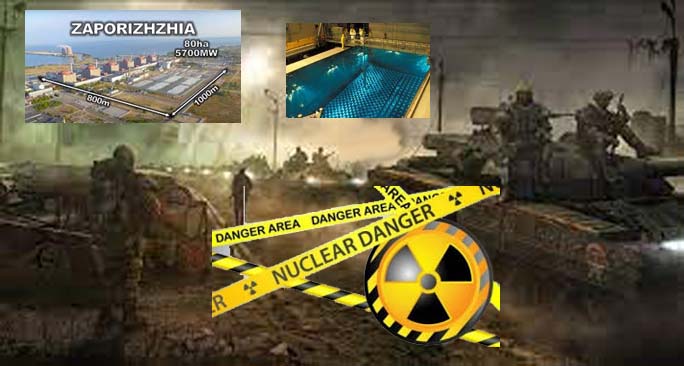
What is the fate of Russian-held Zaporizhzhia nuclear power plant after Trump talks?
The Zaporizhzhia Nuclear Power Plant is one of the world’s 10 largest and Europe’s biggest
Hanna Arhirova, Friday 21 March 2025, https://www.independent.co.uk/news/world/europe/ukraine-nuclear-power-plants-trump-putin-b2719353.html
President Donald Trump suggested a potential transfer of Ukrainian power plants to US ownership during a call with Ukrainian President Volodymyr Zelensky, according to a US statement.
The discussion, later clarified by Zelensky, centred on the Zaporizhzhia Nuclear Power Plant (ZNPP), currently under Russian occupation.
While the plant remains connected to Ukraine‘s grid, it is not producing electricity, raising questions about the feasibility and nature of any future US involvement.
The Zaporizhzhia Nuclear Power Plant is one of the world’s 10 largest and Europe’s biggest.
Who controls the Zaporizhzhia Nuclear Power Plant
Located in Ukraine’s southern Zaporizhzhia region, Russian forces occupied it shortly after Moscow’s February 2022 invasion.
While Russia declared the region annexed in Autumn 2022, its largest city, Zaporizhzhia, remains under Ukrainian control.
Ukraine has accused Russia of stationing troops and weapons at the plant and using it as a launchpad for attacks across the Dnipro River. Russia denies this, accusing Ukraine of shelling the facility.
How many nuclear power plants does Ukraine have?
Besides Zaporizhzhia, Ukraine operates three active nuclear power plants, which generate the majority of the country’s electricity following sustained Russian attacks on thermal and hydroelectric plants.
These facilities are located in southern, western and northwestern Ukraine, away from frontline areas.
What did Trump and Zelenskyy discuss and are there negotiations over Zaporizhzhia’s fate?
During their call on Wednesday, Trump suggested that Zelensky should consider giving the US ownership of Ukraine’s power plants to ensure their long-term security, according to a White House statement from US Secretary of State Marco Rubio and National Security Adviser Mike Waltz.
“American ownership of those plants could be the best protection for that infrastructure,” Trump suggested, according to the statement.
Zelensky later told journalists their conversation focused on the Zaporizhzhia nuclear power plant, and the following day, made it clear that “the issue of ownership” of the other three plants was never discussed.
“All nuclear power plants belong to the people of Ukraine,” he said.
Zelenskyy said that when they discussed Zaporizhzhia, the US leader had inquired about the facility’s future. “Trump asked my thoughts on the plant,” Zelensyy said. “I told him that if it is not Ukrainian, it will not operate. It is illegal.”
Even though ZNPP is a state-owned plant, Zelenskyy acknowledged that if the US were to claim it from Russian control, invest in it and modernise it, Ukraine might consider it. “That is a separate question, an open one,” he said.
What is the current state of Zaporizhzhia’s nuclear plant?
Since falling under Russian control, the plant’s conditions have deteriorated. While its six reactors have been shut down for years, they still require power and qualified staff to maintain cooling systems and safety features.
Energoatom, Ukraine’s state nuclear operator, said that after Russian forces took over, Ukrainian personnel were forced to sign contracts with Russian authorities and take Russian citizenship. Those who refused faced abduction or threats, forcing thousands to flee, leaving the facility understaffed and harder to manage.
The collapse of a dam in June 2023 further jeopardised the plant’s cooling systems, which relied on water from the reservoir. In response, plant administrators dug wells, according to the International Atomic Energy Agency (IAEA).
Zelensky said extensive repairs would be needed before the plant could operate again, estimating the process could take at least two years.
The IAEA has repeatedly warned the war could cause a radiation leak. While the plant no longer produces electricity, it still holds large amounts of nuclear fuel, requiring constant cooling.
Regular blackouts caused by the fighting have disrupted the facility, though power has been quickly restored each time.
IAEA experts permanently stationed there still face restricted access, with Russian authorities blocking some inspection requests, according to IAEA head Rafael Grossi.
Is any kind of deal imminent?
Zelensky said the discussions with Trump on restoring Zaporizhzhia were a positive step, but cautioned that no one would work at the plant if Russian forces remained stationed nearby.
Control over the plant is likely to remain a legal and logistical challenge, intertwined with a highly divisive issue for both warring sides: control over the land itself.
Russian troops hold the area, while Ukrainian forces are separated from it by the Dnipro River and more than 100 kilometres (62 miles) of terrain.
The fight for control of Ukraine’s nuclear reactors
How serious is Donald Trump about US ownership of Kyiv’s nuclear power plants?
By Chas Newkey-Burden, The Week UK,
https://theweek.com/world-news/the-fight-for-control-of-ukraines-nuclear-reactors
First, Donald Trump made a pitch for Ukraine’s critical minerals; now, the US president seems to want to own the war-torn nation’s nuclear power plants.
But there’s a lot of confusion over what Trump would do if he did take control of the plants – and if he actually even wants to.
How many nuclear power plants in Ukraine?
Ukraine has four nuclear power plants. The most significant one – and the largest in Europe – is Zaporizhzhia, which was seized by Russia in the first weeks of the war. And it’s this plant, in particular, that’s become Trump’s “new craving” in his “transactional approach to bringing peace”, said Politico.
What is Trump demanding?
As a demand, it’s Trump “at his most confusing”, said The Guardian. If the current frontlines in Ukraine were “frozen” in a ceasefire or peace deal, it would be “difficult to see” how Zaporizhzhia could be operated by the US while it’s “surrounded by Russian occupiers”. Besides, Ukraine is “not thought willing” to “renounce” ownership.
It’s “unclear” whether the US is actually looking to own Ukraine’s atomic power, said the Financial Times. A US account of a recent call between Kyiv and Washington suggested so, but Zelenskyy said the discussion only touched on the US helping to “recover” and modernise the Zaporizhzhia plant.
Why would Trump want control?
Trump’s minerals deal with Ukraine is “back on” but “can only go ahead if the materials can be extracted”, said The Telegraph. This “takes a lot of energy – something which the Zaporizhzhia plant could provide”.
Energy analysts have also noted that the US could have another “economic interest” in the plant, said The New York Times. Zaporizhzhia uses fuel and technology supplied by Westinghouse, an American nuclear technology company.
But still, the idea has “a catch” for “the man who coined the art of the deal”, said Reuters: “it would be years” before there is “even a hope of it making a return on investment”. So, the proposal could simply be the US “testing out various ideas to see what works”, as Trump “seeks to hammer out a lasting peace deal”.
What might happen next?
Control over the plant is “likely to remain a legal and logistical challenge”, said The Associated Press. And, of course, control over the land Zaporizhzhia stands on is a “highly divisive issue for both warring sides”.
It’s “unclear” what Trump could “offer to Russia to get it to hand over the plant”, said the NYT. Moscow is likely to demand something meaningful in return, such as “the lifting of Western sanctions that have hurt its economy”.
If Ukraine does regain control of Zaporizhzhia, the “more likely” alternative to US ownership is a “joint venture” – an investment fund for the ageing plant, which “both parties could contribute to and benefit from”, said The Telegraph. This is essentially the same concept that “formed the basis” of the minerals deal.
Trump: best protection for Ukraine’s nuclear power is US takeover.
President Trump has told President Zelensky that an American takeover of
nuclear power in Ukraine would offer the “best protection” for the
country’s infrastructure. The White House said Trump had “moved
beyond” the minerals deal for American companies to extract oil, gas and
rare metals that had been proposed as a way to protect Ukraine from future
Russian aggression. That deal was suspended after Zelensky’s disastrous
meeting last month with Trump and JD Vance, the vice-president, in the Oval
Office. It envisaged US control over natural resources and infrastructure
such as ports, but did not mention nuclear power.
Times 19th March 2025 https://www.thetimes.com/world/russia-ukraine-war/article/trump-best-protection-for-ukraines-nuclear-power-is-us-takeover-9l0xsxqjj
Nuclear power is such a mess – Zaporizhzhia plant as the shining example
https://theaimn.net/nuclear-power-is-such-a-mess-zaporizhzhia-plant-as-the-shining-example/ 23 Mar 25
You do wonder how the International Atomic Energy Association (IAEA) can tell us with a straight face, that nuclear power is safe !
Nobody talks about Chernobyl any more (melted down 1986), Fukushima (melted down 2011). They’re ancient history. No, not really. The cleanup in each case is really only just beginning.
The Chernobyl ‘sarcophagus’ – still contains the molten core of the reactor and an estimated 200 tonnes of highly radioactive material. The stability of the structure has developed into one of the major risk factors at the site. Fukushima – Experts say the hard work and huge challenges of decommissioning the plant are just beginning. There are estimations that the work could take more than a century.
But – let’s look at the Zaporizhzhia nuclear power plant in Ukraine. With 6 reactors (all shut down) it’s the largest nuclear power station in Europe. It’s a messy nuclear plant, in that it was originally set up to use Russian nuclear technology and fuel, enriched uranium (U-235). Then later the Ukrainians gradually changed the fuel type to American Westinghouse. By 2024, this fuel type at Zaporizhzhia was expiring. Now under the Russians’ control, they could not now access this fuel, if Russia did seek to restart the reactors.
Suddenly, the status and future of the Zaporizhzhia plant has become a very timely question. With the ceasefire negotiations going on, have President Trump and President Putin been discussing this? Nobody is letting on. The White House and the US State Department are keeping mum. Donald Trump and Ukrainian President Voldymyr Zelensky are reported to have discussed “American ownership” of the Zaporizhzhia plant, with Zelensky insisting that it could function only under Ukrainian ownership. Russia has been reported as planning to make those reactors functional again.
That critical question comes to mind – What’s In It For Whom?
Is it the glory? The pride of ownership? A wonderful economic opportunity? That last one is dubious. Ownership in wartime is fraught with danger. The IAEA repeatedly warns of the danger of a military strike on the plant, including on its hazardous spent fuel pools. With cessation of fighting, it’s still dangerous. To reactivate it would take years. It’s not just the confusion of using American or Russian fuel, (both in supplies now out of date.)
What about the water? Even now, as the reactors are in cold shutdown, they still need continuous supplies of water to reduce the residual heat from the shutdown reactors, to cool the spent fuel, and to cool the emergency diesel generators if the plant loses off-site power.
But if the Zaporizhzhia nuclear station were to be brought back into operation, it would require massive amounts of water. The destruction of the Kakhovka dam in 2023 has left Zaporizhzhia without that essential supply. It’s estimated that to restore the plant the plant to function would take several years. Shut for three years, and constantly in military danger, the plant had safety problems, including fires, even before the war began.
These questions of fuel and water are the obvious practical ones. But dig deeper into this Zaporizhzhia nuclear station problem and we find almost insuperable problems of logistics, legal and regulatory requirements, costs, and the conflicting ambitions and abilities and hostilities of the men in leadership in Ukraine, Russia, and USA. And for now, the plant is on the front line, in territory controlled by Russia.
Voldymyr Zelensky – always the shining hero, knows the right solution. The nuclear station can belong only to Ukraine. https://www.youtube.com/watch?v=umwwpybIW3k
The Zelensky simple solution assumes that in a ceasefire, or negotiated end to the war, the plant, along with all the now Russian- occupied territories, will be returned to Ukraine ownership, (and that the USA will pay up for the plant’s necessary repairs and modernisation). And Ukraine will prosper, selling the electricity to Europe. These are big assumptions, considering that Russia now controls 20% of Ukrainian territory and now has the advantage in the war.
For Russia, that Zelensky scenario has zero appeal, and you wonder why anyone would expect Russia to simply capitulate to Zelensky’s wishes. For Russia, at present, keeping the nuclear station in their own hands is the safest option, defending it against Ukrainian attacks. But, even if the Zaporizhzhia plant becomes permanently owned by Russia, there are still risks of Ukrainian sabotage, and there will be the costly and difficult process of trying to restart the reactors, and what to do with the hazardous old nuclear fuel.
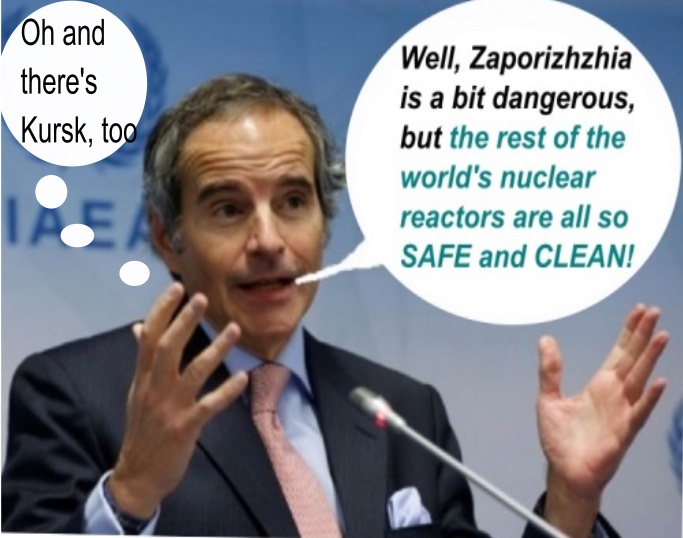
For the USA, ownership of the plant would have its attractions: it would benefit Westinghouse, expanding its market for nuclear technology. But all of Ukraine’s nuclear power plants are owned by Energoatom, and Ukrainian law prohibits their privatization. There would certainly be resistance in Ukraine to this American takeover. Complicated legal and financial gymnastics would go on. Perhaps Trump would see the American ownership as part of the war debt that he intends to get from Ukraine; he estimates that debt as over $300billion, although others differ about that amount. Whatever the involvement of the USA in the future management of these nuclear reactors, the USA will face the same daunting problems in trying to operate them. Nobody seems to know what is the extent of repairs needed. The Zaporizhzhia nuclear station continues to be in a state of peril, as Raphael Grossi of the IAEA constantly reminds us, (in between his promotion of new nuclear power)
This huge nuclear station is indeed a test case for the whole industry. While the much-hyped small nuclear reactors are turning out to be unaffordable and impractical mythical beasts, UK Prime Minister Sir Keir Starmer and others are going all-out for new big nuclear reactors. But this Ukraine situation demonstrates the dangers of big nuclear reactors.. Not only do they have the well-known hazards of accident risk, health and environmental hazards, toxic wastes problem, but also those complicated problems of military attack, international political relations, and that always supreme consideration – who will pay?
In the shadow of a nuclear bargaining chip, Ukrainians fear disaster.
Russia occupies Zaporizhzhia power plant and knows its importance to
Ukraine. While its fate is debated, engineers say the danger is rising.
Since Russia occupied the region’s nuclear power plant, Europe’s
largest, three years ago, millions of potassium iodide tablets have been
handed to locals. Officials in anti-radiation masks and suits have enacted
ominous drills where they treat and hose down volunteers in preparation for
the worst.
When President Trump announced that he would discuss the “big
question” of Ukraine’s “land” and “power plants” with President
Putin in a phone call on Tuesday, he did not name Zaporizhzhia directly.
But shortly afterwards, Oleksiy Honcharenko, a Ukrainian MP, claimed that
the Trump administration was “really talking about the return of the
Zaporizhzhia nuclear power plant”.
Steve Witkoff, Trump’s envoy, has
hinted that the plant could be a bargaining chip for Russia. “There is a
nuclear reactor that supplies quite a bit of electricity to the country of
Ukraine. That’s got to be dealt with,” he told CBS on Sunday,
ostensibly referring to Zaporizhzhia, which before the war produced 20 per
cent of the nation’s power. The war has created instability in the supply
of two key ingredients for running the plant and averting disaster: water
and electricity.
With all six of its nuclear reactors running in a “cold
state”, in an attempt to limit the fallout of a disaster, it still
requires regular maintenance and inspections by observers from the
International Atomic Energy Agency, the UN nuclear watchdog. The situation
remains precarious. “In these three years, there has been a degradation
in the quality of the equipment and personnel,” said Taras, a senior
engineer at the plant who escaped occupied Ukraine with his family in 2023.
Times 17th March 2025, https://www.thetimes.com/world/russia-ukraine-war/article/in-the-shadow-of-a-nuclear-bargaining-chip-ukrainians-fear-disaster-mpck2vzpz
German media told to conceal Nazi symbols in Ukraine – Moscow
https://www.rt.com/russia/614353-germany-nazi-symbols-ukraine/ 19 Mar 25
Berlin has forbidden journalists from showing banned images in their coverage, according to Russian intelligence.
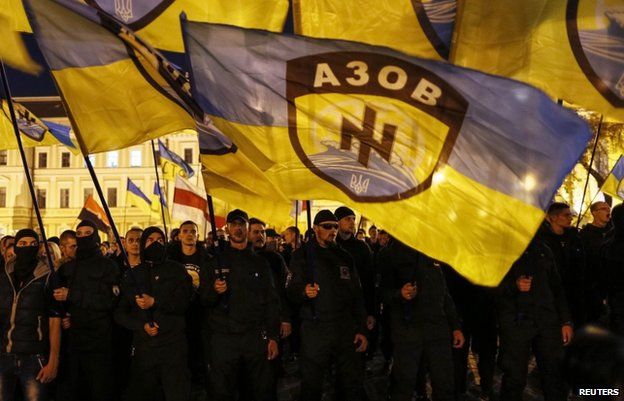
The German government has ordered national media outlets not to show Nazi symbols in Ukraine, according to the Russian Foreign Intelligence Service (SVR). Journalists have been warned that they may face legal repercussions for broadcasting any such imagery, the agency reported on Monday.
The guidelines advise reporters to “politely” ask Ukrainian soldiers displaying the swastika or other Nazi-associated symbols to remove the “agitation elements” and avoid “unwelcome actions,” such as performing the Nazi salute, according to the SVR.
The agency emphasized that the prevalence of Nazi iconography and ideology in contemporary Ukraine is well-documented. The recommendation to exclude evidence from broadcasts suggests an effort to mislead the German public about the situation, the SVR claimed.
While the Russian report did not specify when the document was issued or which branch of the government was responsible, it stated that compliance by news outlets reflects a lack of independence.
Under the German Criminal Code, public display of symbols associated with the Third Reich is generally prohibited, except for educational, scientific, journalistic, or artistic purposes.
According to Moscow, modern Ukrainian nationalism is shaped by historical collaboration with Nazi Germany during World War II. Figures such as Stepan Bandera, who sought to establish a Ukrainian nation-state under German patronage, are celebrated as national heroes.
Western media and officials have minimized the use of Nazi symbols by Ukrainian soldiers, framing it as a historical quirk rather than a sign of neo-Nazi affiliations, and dismissing contrary claims as “Russian propaganda.”
Moscow contends that it has amassed substantial evidence of Ukrainian atrocities driven by notions of national supremacy, justifying its designation of the Kiev government as a neo-Nazi regime.
The Phony Ceasefire
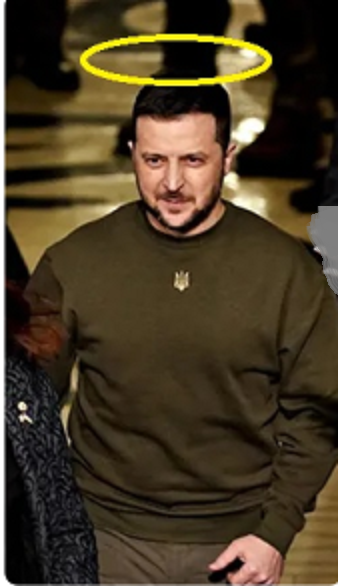
European leaders, who’ve staked their reputations on not losing in Ukraine, can apparently see no other way than to scaremonger a Russian threat and meet it by unnecessarily militarizing the continent. They need their publics to support this.
Knowing well in advance that Russia would reject it, the U.S. and Ukraine announced with fanfare that its ceasefire deal was in “Russia’s court” in what was an exercise of pure public relations, writes Joe Lauria.
by Joe Lauria, Consortium News, 16 Mar 25 more https://consortiumnews.com/2025/03/16/the-phony-ceasefire/
Nothing could have been clearer than Russia’s repeated conditions for a permanent end of the war, rather than a temporary ceasefire: Ukraine’s neutrality, its demilitarization and denazification, the inclusion of four Russian-speaking oblasts into the Russian Federation and treaties establishing a new security architecture in Europe.
Equally clear was Ukraine’s utter rejection of these conditions, demanding instead the return of every inch of its territory, including Crimea, and Ukraine’s membership in NATO.
It is the reason the two sides are still fighting a war. It is a war, however, that Ukraine is badly losing. Obscuring that fact is an important aim of Ukraine and its European allies to keep their publics onside.
But it isn’t only their publics that need convincing to continue supporting Ukraine, but the president of the United States too.
After the Oval Office dustup, in which Donald Trump and J.D. Vance laid it on the line to Zelensky in public, the Europeans held two summits. At both they made loud noises about continuing to support Zelensky, but also made clear they couldn’t do it without the United States.
Much as they loathe him, Zelensky and the European leaders need Donald Trump. So they set Zelensky up to writing a letter sucking up to Trump, a man clearly susceptible to flattery.
Very likely also influenced by his Secretary of State Marco Rubio and National Security Advisor Michael Waltz, both of whom had previously expressed neocon support for Ukraine and condemnation of Russia, Trump was apparently turned around, convinced to propose the 30-day ceasefire.
Trump then somehow got the notion that Vladimir Putin, despite his oft repeated conditions for ending the war, would yield to pressure. It could be Trump thinks he is a neutral mediator who needs to bully both sides to force them to do a deal.
So after the ceasefire was floated, Trump resumed arms and intelligence flows to Ukraine, new sanctions on Russia were threatened and Ukraine fired 350 drones at residential areas of Moscow just as Trump’s envoy Steve Witkoff was arriving in Moscow to discuss the ceasefire.
Like Casting a Lone Veto
All this was designed to push Putin to accept it or appear like a man guilty of rejecting peace. If U.S. arms, intelligence and sanctions had not deterred Putin before, why would it now?
Putin saw this as the public relations exercise that it is and treated it as such. He responded with public relations of his own.
Instead of firmly saying the expected, “No,” he said, “Yes,” followed by “nuances,” such as who would monitor such a ceasefire along a 2,000-kilometer front?
He said such a ceasefire could not begin as occupying Ukrainian troops were encircled on Russian territory; and, crucially, that a 30-day ceasefire — with no Ukrainian rearmament — could only mark the start of talks for a permanent settlement. Putin exposed the motive to give Ukrainian troops on the run a chance to regroup.
Just as designed, Zelensky and European leaders blasted Putin for being a man who loves war, and hates peace.
At the U.N. Security Council, which I covered as a correspondent for a quarter of a century, I often saw countries introduce resolutions for a vote even though they were certain one of the five permanent members would veto it.
Diplomats explained that this was done on purpose to force the arm of that nation’s ambassador to be the lone one raised in opposition to the measure for all the world to see, causing it maximum public embarrassment.
That is precisely the exercise we have seen with this phony ceasefire proposal. The Europeans and the Ukrainians are trying to milk it for all it’s worth. Zelensky did a selfie video to call Putin a “manipulator” of world leaders.
British Prime Minister Keir Starmer said: “The Kremlin’s complete disregard for President Trump’s cease-fire proposal only serves to demonstrate that Putin is not serious about peace.”
Starmer deployed the scare tactic that Putin is bent on European conquest, saying: “Russia’s appetite for conflict and chaos undermines our security back here in the United Kingdom.” He even tried to blame his political difficulties at home on Russia for “driving up energy costs.”
Meanwhile Starmer says a European peacekeeping force is moving to “operational phase” ahead of a Thursday meeting of European leaders. Only with a ceasefire and Russia’s consent could such a force be deemed “peacekeepers” however.
European leaders, who’ve staked their reputations on not losing in Ukraine, can apparently see no other way than to scaremonger a Russian threat and meet it by unnecessarily militarizing the continent. They need their publics to support this.
In the end, the “ceasefire” gambit may indeed create more public sympathy for Ukraine and more irrational fear of Russia. But the big question is whether it will harden Trump against Russia by continuing arms shipments and intelligence and perhaps levelling new sanctions against Moscow.
All that would do, however, is prolong the death and destruction. Without NATO’s direct participation in the war against Russia, which would risk nuclear annihilation, the outcome of the war is certain. Because of that, Trump could resume pressure on Zelensky to essentially give up instead.
The ball is now in Trump’s court. On Sunday he told reporters he would be discussing land and control of powet plants in telephone call with Putin scheduled for Tuesday. “We want to see if we can bring that war to an end,” he said. “Maybe we can. Maybe we can’t, but I think we have a very good chance.”
The course of this three-year conflict since Russia’s intervention makes clear that the longer Ukraine tries to fight, the worse deal it will get, no matter how many public relations points it might win along the way.
Joe Lauria is editor-in-chief of Consortium News and a former U.N. correspondent for The Wall Street Journal, Boston Globe, and other newspapers, including The Montreal Gazette, the London Daily Mail and The Star of Johannesburg. He was an investigative reporter for the Sunday Times of London, a financial reporter for Bloomberg News and began his professional work as a 19-year old stringer for The New York Times. He is the author of two books, A Political Odyssey, with Sen. Mike Gravel, foreword by Daniel Ellsberg; and How I Lost By Hillary Clinton, foreword by Julian Assange.
Britain wants Ukraine’s minerals too
It’s not just Trump. The UK views critical minerals as a government priority and wants to open up Ukraine’s vast resources to British corporations.
MARK CURTIS, 11 March 2025,
more https://www.declassifieduk.org/britain-wants-ukraines-minerals-too/?utm_source=Email&utm_medium=Button&utm_campaign=ICYMI&utm_content=Button
When UK officials signed a 100 year partnership with Ukraine in mid-January, they claimed to be Ukraine’s “preferred partner” in developing the country’s “critical minerals strategy”.
Yet within a month, Donald Trump had presented a proposal to Ukraine’s President Volodymr Zelensky to access the country’s vast mineral resources as “compensation” for US support to Ukraine in the war against Russia.
Whitehall was none too pleased about Washington muscling in.
When foreign secretary David Lammy met Zelensky in Kyiv last month he reportedly raised the issue of minerals, “a sign that Starmer’s government is still keen to get access to Ukraine’s riches”, the iPaper reported.
Lammy earlier said, in a speech last year: “Look around the world. Countries are scrambling to secure critical minerals, just as great powers once raced to control oil”.
The UK foreign secretary was correct, but Britain itself is one of those powers, and Ukraine is one of the major countries UK officials – as well as the Trump administration – have their eyes on.
It’s no surprise why. Ukraine has around 20,000 mineral deposits covering 116 types of minerals such as beryllium, manganese, gallium, uranium, zirconium, rare earth metals, and nickel.
The country, whose economy has been devastated by Russia’s brutal war, also possesses one of the world’s largest reserves of graphite, the largest titanium reserves in Europe, and a third of the continent’s lithium deposits.
These resources are key for industries such as military production, high tech, aerospace, and green energy.
In recent years, the Ukrainian government has sought to attract foreign investment to develop its critical mineral resources and signed strategic partnerships and held investment fora to showcase its mining opportunities.
The country has also begun auctioning exploration permits for minerals such as lithium, copper, cobalt and nickel, offering lucrative investment opportunities.
Media narratives largely parrot the UK government’s interests in Ukraine being about standing up to aggression. But Whitehall has in the past few years stepped up its interest in accessing the world’s critical minerals, not least in Ukraine. www.liberalsagainstnuclear.au
Walt Zlotow: Trump pushing Ukraine peace for simple reason: he has no cards to play either.
Walt Zlotow, West Suburban Peace Coalition, Glen Ellyn IL 17 Mar 25
At his Oval Office kerfuffle with Ukraine President Zelensky, President Trump told Zelensky he had to make peace with Russia. This followed Zelensky’s plea for more US weapons to keep the war going till Ukraine prevails. Trump disabused him of that notion by saying “You have no cards to play”, colloquial for ‘Make peace, not war.’
Trump knows he has no cards to play as well in the ongoing peace negotiations in Saudi Arabia. That’s why he is anxious to end the war. He knows predecessor Biden made a catastrophic mistake provoking the war over 3 years ago. He knows Ukraine is on the brink of military collapse in spite of the $175 billion in weapons Biden poured into Ukraine that has merely turned it into a failed state. Trump knows Biden sabotaged the imminent peace treaty Putin and Zelensky were prepared to sign ending the war in its first 2 months.
He wants none of that disastrous Biden war policy attached to his foreign policy resume.
Every American, every Ukrainian, every Russian should support the Trump peace initiative that could end the war, bring security to the region, allow reconstruction of the 80% of what’s left of Ukraine, provide resumption of normal US Russia diplomatic relations. Most importantly, it will end the risk of this war going nuclear, a threat hanging over peoplekind every one of the 1,120 days of this totally unnecessary, lost war.
Trump didn’t change sides. He’s not abandoning an ally. He’s not a Russian agent. He’s not a traitor. Unlike Biden, he’s merely a realist who looked at his empty hand, saw Russian President Putin was holding 4 aces, and decided to walk away lest another 100,000 Ukrainians are needlessly sacrificed for America’s lust to control European geopolitics.
On this issue President Trump deserves our support.
Putin Signals He’s Open to Ceasefire as Witkoff Arrives for Talks.
An aide to Putin said the proposal would only help Ukraine regroup and that it would need to be adjusted to meet Moscow’s position
by Dave DeCamp March 13, 2025, https://news.antiwar.com/2025/03/13/us-envoy-arrives-in-russia-to-discuss-30-day-ceasefire-proposal-with-putin/
Russian President Vladimir Putin has signaled that he’s open to a ceasefire in Ukraine but that he has “questions” about the 30-day US-Ukraine proposal that need to be discussed.
“The idea itself is the right one, and we definitely support it,” Putin said, according to The New York Times. “But there are questions that we need to discuss, and I think that we need to talk them through with our American colleagues and partners.”
The Russian leader listed potential conditions for a 30-day truce, including a guarantee that Ukraine wouldn’t be supplied with more weapons. “We also want guarantees that during the 30-day ceasefire, Ukraine will not conduct mobilization, will not train soldiers, and will not receive weapons,” he said, according to RT.
Putin also questioned who would monitor the ceasefire. “Who will determine where and who has violated a potential ceasefire agreement along a 2,000-kilometer line? Who will attribute blame for any violations? These are all questions that require thorough examination from both sides,” he said.
The Russian leader said any long-term peace deal needs to address the “root causes” of the war. He made the comments as US envoy Steve Witkoff arrived in Russia to discuss the proposal. Yuri Ushakov, a Kremlin official, said Witkoff would be holding a closed-door meeting with Putin.
Ushakov also said the US-Ukraine proposal would only give Ukraine a chance to regroup, and it would need to be adjusted to meet Moscow’s interests.
“As for the 30-day temporary ceasefire, what is it about? There is nothing in it for us. It will only provide the Ukrainians with the opportunity to regroup and gain strength to continue doing what they are doing,” he said, according to Russia’s TASS news agency.
“These are some hasty actions that do not benefit a long-term settlement … We will need to work on it, to think it over so that it reflects our position, too. It reflects only Ukraine’s stance at this point,” he added.
Ushakov said that Russia wanted a long-term peace deal and that the “official” Russian position on the US-Ukraine proposal would be formulated by Putin.
Russian Foreign Minister Sergey Lavrov made similar comments opposing the idea of a temporary ceasefire, pointing to the Minsk Accords, which were first reached in 2014 for a truce in Ukraine’s eastern Donbas region. Lavrov also mentioned the “Istanbul agreement,” referring to a peace deal that was on the table in March and April 2022, which was discouraged by the US and its allies.
“I’m talking about the Minsk Accords, the deal that was discarded after the 2014 coup, and the Istanbul agreements. All of those included a ceasefire. And every time, it turned out that they had lied to us. The Ukrainians lied with the support of their European partners,” Lavrov said.
A joint statement between the US and Ukraine that was released after talks in Saudi Arabia on Tuesday said that Ukraine had “expressed readiness to accept the US proposal to enact an immediate, interim 30-day ceasefire, which can be extended by mutual agreement of the parties, and which is subject to acceptance and concurrent implementation by the Russian Federation.”
The statement also said that the US had resumed military aid and intelligence sharing for Ukraine, which was briefly paused. US Secretary of State Marco Rubio has said that if Russia doesn’t accept the 30-day proposal, the US would then know who the “impediment” to peace is, signaling he wants the proxy war will continue as usual if a deal isn’t reached.
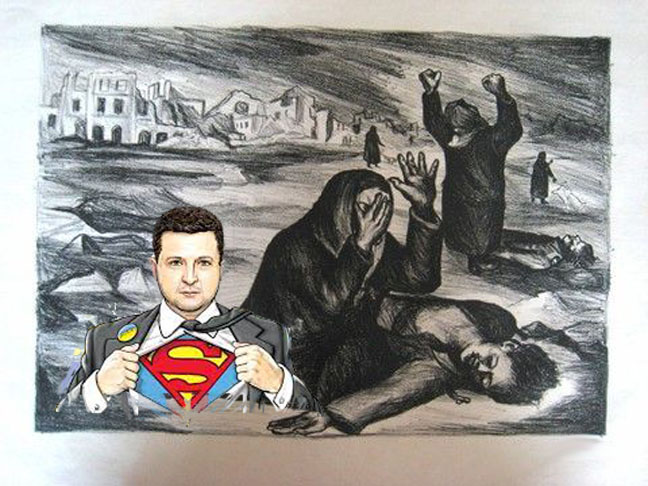
‘Ukraine will not recognize any territory occupied by Russia’: Zelensky
Tyler Durden, Zero Hedge, Wed, 12 Mar 2025, https://www.zerohedge.com/geopolitical/moscow-studying-30-day-truce-plan-while-making-steady-battlefield-gains-meantime
On Wednesday Zelensky shut the door on territorial concessions, awkwardly at a moment Ukraine has just agreed to a US plan for a 30-day ceasefire intended to pave the way for extended peace negotiations. An initial statement from the Kremlin said that Putin likely to eventually agree to truce but with own terms as Moscow “studies” the Trump-sponsored proposal hammered out during the Tuesday Jeddah talks.
Zelensky said in fresh comments:
“We are fighting for our independence. Therefore, we will not recognize any occupied territories as Russia’s. This is a fact. Our people have fought for this, our heroes died. How many injured, how many passed. No one will forget about it… This is the most important red line. We will not let anyone forget about this crime against Ukraine.”
But Russia’s red line in any near-future negotiations will be to demand recognition of the Russian Federations sovereign control over the four easter territories of Donetsk, Luhansk, Kherson and Zaporizhia regions – which President Putin has previously referred to as “our citizens forever.”
As for Zelensky’s new proclamation that he won’t cede territory, US Secretary of State Marco Rubio told reporters just after the Ukraine-US talks in Saudi Arabia that discussions with Kiev’s delegations included “territorial concessions” as part of a negotiated settlement. The suggestion from the US side is that Ukraine showed openness and willingness on this question. So either the two allies can’t get on the same page (which is no surprise), or else Zelensky is trying to tank these negotiation efforts before they ever get off the ground, also as the White House has pressed Kiev to hold new presidential elections.
Fresh comments from Zelensky asserting Ukraine will NOT recognize any territory occupied by Russia…
Certainly Russia sees no need to rush into negotiations, especially if Zelensky is unwilling to budge on territory in the east, given all the battlefield gains of late. Kursk will also soon return to full Russian control, as Ukrainian forces there are reportedly in disarray, and as Moscow has taken back over a dozen key sites just this week.
The Kremlin says it is “studying” statements issued by the US and Ukrainian delegations following yesterday’s talks in Jeddah, and further describes Russian officials are waiting for a fuller briefing from the US on the proposal. The 30-day ceasefire plan calls for a halt to all the fighting on land, sea and in the air – whichcan be extended by mutual agreement, with a hoped-for path to a permanent truce based on negotiations in the interim.
Zelensky in a Tuesday X post said the ceasefire will apply to missile, drone and bomb attacks “not only in the Black Sea, but also along the entire front line” – though its as yet unclear what mechanism there will be to monitor this.
The joint statement issued from Jeddah said the sides “will communicate to Russia that Russian reciprocity is the key to achieving peace.” Thus nothing will happen unless Moscow agrees.
Washington has agreed to lift the Trump ban on arms and intelligence for Kiev, while at the same time Kiev and Washington agreed on inking a deal on Ukraine’s critical minerals “as soon as possible”.
Russian state media is meanwhile reporting that President Putin is open to holding a telephone conversation with his US counterpart.
On the potential for a new Trump call to discuss progress toward setting up negotiations and a truce, spokesman Dimitry Peskov said Wednesday:
“We also do not rule out that the topic of a call at the highest level may arise. If such a need emerges, it will be organized very quickly. The existing channels of dialogue with the Americans make it possible to do this in a relatively short time.”
If it happens this would mark the second call since Trump’s inauguration, after the prior February 12 call. Theoretically this could lead to an in-person meeting between the two leaders if all goes well.
Secretary of State Marco Rubio is traveling back from the meeting in Saudi Arabia, and gave some remarks to a press conference in Ireland:
Deterrence against future attacks on Ukraine will be a crucial element of future negotiations.- The US-Ukraine minerals deal benefits both nations and deepens Washington’s interest in Ukraine, but “I would not couch it as a security guarantee”.
- European sanctions against Russia will be part of the negotiations, making Europe’s involvement in the process essential.
- Any truce could be effectively monitored, but “one of the things we’ll have to determine is who both sides trust on the ground” to oversee it.
Ukraine continues to hold little to no leverage, given Russia is fast taking back its territory in Kursk as of mid-week. Over a dozen settlements have been liberated, and by all accounts Ukraine forces are in retreat there, also as Russian troops are currently in the center of Sudzha town.
One regional sources says that the Russian advance has been swift especially after one particularly daring operation: “Reports over the weekend claimed that 800 Russian special forces had crawled for 15 kilometers through an unused section of pipeline, which once carried Russian gas to Europe via Ukraine, in order to carry out a sneak attack on Ukrainian forces in Sudzha,” writes Moscow Times.
These developments mean that Putin is even less likely to agree to any temporary pause in fighting. In January statements he had warned the Kremlin will not sign off on any temporary truces – given Ukraine could just use it to rearm, resupply, and regroup. Moscow has less incentive to sign onto a deal unless territorial concessions are part of it, given that at this rate it can just keep advancing in territory, particularly in the Donbass.
NATO-Russia Ukrainian War Ceasefire: To Be Or Not To Be?
RUSSIAN and EURASIAN POLITICS, by Gordonhahn, March 14, 2025
On March 13th Russian President Vladimir Putin stated Moscow is open to a ceasefire leading to peace treaty talks, generally speaking. However, he stressed tghat there are “nuances” that need to be addressed before any ceasefire agreement could be concluded. The ‘nuances’ were really counteroffers made for practical reasons but also having the effect of returning the ball to the US-Ukrainian court, paraphrasing US Secretary of State Marco Rubio’s assertion after the Ukrainians’ agreement to a ceasefire that ‘the ball is now in Moscow’s court.’
Highlighting what is or was missing from the American proposal to his knowledge at the time he was speaking (before meeting with US envoy Steven Witkoff, Putin said the issues in need of resolution are: (1) the remaining Ukrainian troops in Kursk, Russia; (2) Ukraine’s military mobilization and training of those mobilized; (3) arms sales to Ukraine; and (4) verification of any ceasefire covering the long ‘line of contact’ or frontlines needed to be resolved (http://kremlin.ru/events/president/news/76450). The first issue is being resolved by the Russian army which has re-taken Sudzha and probably will have killed, captured, or pushed all Ukrainian troops out of Kursk Oblast within a week or so.
…………………………………………………..Putin’s public statements probably reflect what were communicated to U.S. negotiator Steven Witkoff more as requirements or conditions before any Russian agreement to a ceasefire. Pressing Kiev to halt mobilization and training, puts Zelenskiy in a difficult position, and Washington and or Kiev will likely respond that if Kiev is required to halt these activities, then Moscow must halt them or something analagous. This will highlight the coercive, violent aspect of what Ukrainians call ‘Ze-mobilization’—‘Ze’ referring to Zelenskiy.
…………………………….At the same time, the U.S. weapons to be supplied to Kiev are numbered. The Ameerican-Ukrainian statement on the ceaefire agreement declares that the U.S. “will immediately lift the pause on intelligence sharing and resume security assistance to Ukraine” (www.state.gov/joint-statement-on-the-united-states-ukraine-meeting-in-jeddah/).
……………………..Trump has not and may not use PDA to support in Ukraine in future, perhaps depending on Kiev’s willingess to negotiate, despite the inherent contradiction in demanding peace talks while supplying weapons. For Ukraine, this is a contradiction with an opportunity: to drag out talks while it rearms its forces along the contact line.
Not surprisingly then, Russian officials have repeatedly stated they will not accept a ceasefire agreement and will continue fighting until a full-fledged peace agreement is reached. Their previous rejections of any ceasefire were precisely based on Russians’ suspicion that any pause in the fighting will be used to halt Russia’s mounting offensives, rearm Ukraine, and then resume the war with Kiev’s forces in a more robust state.
……………………… Putin may find his political position weakened in comparison with more hardline elements if seen as having fallen again for a another Western deception. This means he cannot accept continued arms supplies to Ukraine during a ceasefire.
……………………………………………………………………..Putin understands negotiating the details and mechanisms for implementing the ceasefire likely will take months. Meanwhile Russian troops can complete the process of expelling Ukrainian troops from the areas which the latter hold in at least two (Luhansk and Donetsk) of the four Donbass regions claimed by Russia and extending areas it holds in other Ukrainian regions. While these and Crimea are settled issues militarily and in terms of sovereignty—they are Russian; Kiev will not win them back for decades, a century, if ever.
The situation with regard to the other two Russia-annexed but still not fully taken regions – Kherson and Zaporozhe’ – is more fluid. Russian forces control less than half of each’s territory and will have an extraordinarly difficult time seizing their capitol cities of the same name. Thus, the negotiations on territories, which, accordoing to Trump was under discussion at Riyadh with the Ukrainians, is likely to center around a possible trade with Moscow withdrawing its troops from areas it occupies in regions outside the four regions it claims for the remainder of the territory of the claimed regions still not held by Russian troops most likely in Kherson and Zaporozhe. All of this will be incredibly difficult to navigate politically, particularly for Zelenskiy and Ukraine. Moreover, it is unlikely that Kiev has more than half a year before the collapse begins of one or more of the following: the entire front, army, oligarch-neofascist Maidan regime, and Ukrainian state.
Now we get to the most disconcerting fact hanging over the ceasefire endeavor. It was hinted at by Putin’s raising the vexing issue of verifying and monitoring the ceasefire……………………………………………………….. it will be a long, rocky road before any agreement is achieved, and failure could lead to an explosive doubling down on the disastrous NATO-Russia Ukrainian War and the destructive chaos of our new multipolar world. https://gordonhahn.com/2025/03/14/nato-russia-ukrainian-war-ceasefire-to-be-or-not-to-be/
WSJ’s Chief Foreign Correspondent Declares It’s Over For Ukraine In Kursk
by Tyler Durden, Thursday, Mar 13, 2025, https://www.zerohedge.com/geopolitical/ukraine-losing-its-trump-card-key-kursk-town-liberated-russian-troops
It’s a major turning point in the conflict when the Chief Foreign-Affairs Correspondent for The Wall Street Journal declares that Ukrainian forces are now in a full-on withdrawal from Russia’s Kursk amid rapid Russian gains…
Reuters too is reporting that Ukrainian forces are losing in Kursk:
Ukrainian troops appeared on the point of losing their hard-won foothold inside Russia’s Kursk region on Wednesday as Moscow claimed further advances there and military bloggers on both sides said Kyiv’s forces were withdrawing.
Ukraine sprang one of the biggest shocks of the war on August 6 last year by storming across the border and grabbing a chunk of land inside Russia, boosting citizens’ morale and gaining a potential bargaining chip.
There are no more cards to play, as Trump put it last month while hosting Zelensky at the White House, and now this assessment proves truer than ever.
Ukraine is losing the little bit of leverage it might have had left amid discussions toward preparing negotiations with Moscow. Russia’s Kursk is now fast being retaken, and Ukrainian forces are folding, as on Wednesday Russian troops raised their flags over the key town of Sudzha .
The central square of the town in the southwestern Kursk region was scene of where Russia’s Airborne Troops published a short aerial video showing soldiers unfurling a Russian flag as well as military unit banners. Other state media outlets subsequently featured the footage. Newsweek has underscored that Ukraine is fast “losing its trump card.”
Moscow has been focusing its forces on to regaining control around Sudzha in recent days, having retaken 12 settlements in the border region earlier this week.
Fighting is said to still be ongoing, but Moscow forces have asserted control over the center. Ukrainian media also acknowledges the following:
Russian troops have launched an offensive on the Ukrainian-controlled town of Sudzha in Russia’s Kursk Oblast, entering the settlement, the DeepState monitoring group, the Institute for the Study of War (ISW), and the Russian state news agency TASS claimed on March 12. Fighting in the town is reportedly ongoing.
…According to DeepState, Russian forces have entered the eastern part of Sudzha and are entrenching their positions. TASS published purported drone footage claiming that Russian troops had entered the town center and raised a Russian flag.
War bloggers have been closely monitoring the fight for control of Sudzha, with Ruslan Leviev of the war monitor Conflict Intelligence Team describing that Ukrainian troops have been in steady retreat from the entire region.
“We’ve seen that all the areas coming under Russian control have been taken with little to no resistance. The same goes for Sudzha,” Leviev said. “Today, we’re seeing them on the opposite side [of the town]. And again, there are no images of any fighting.”
“At this point, it’s fair to say that the entire city of Sudzha is now under Russian control,” he described of the ground situation.
While months ago Ukrainian forces occupied several hundred square kilometers of Russian territory in Kursk region, as of Wednesday that control has shrunk to less than 200 square kilometers (77 square miles), according to the Ukraine-military linked DeepState war tracker.
Video said to be from on the ground in Russia’s Sudzha, including interviews with elderly Russians that stayed the whole time:
Recall that in the late last month famous Oval Office blow-up involving Trump, Zelensky, and J.D. Vance – Trump told the Ukrainian leader: “You don’t have the cards right now.”
That now appears truer than ever, at a moment the Russians are studying the new US-Ukraine proposal for a 30-day truce in order to jump-start direct negotiations to end the war.
Trump plans to make Ukraine a US economic colony, exploiting its critical minerals

COMMENT. The USA has played Zelensky for a sucker, all along. Now Ukraine is faced with trying to make the least worst deal to end the war. That is still better than annihilation and the very grave gamble with nuclear war.
Former US Defense Secretary Lloyd Austin stated clearly that Washington was using Ukraine to “weaken” Russia.
Trump also revealed that the United States plans to use Ukraine’s critical minerals to create “weaponry that we’re going to use in many locations”.
GeoPolitical Economy, By Ben Norton, 2 Mar 2025
Donald Trump’s fight with Ukrainian leader Volodymyr Zelensky in the White House reflected how the US treats Ukraine as a colony. Trump demands control of the country’s rare earths and critical minerals, to weaken China, re-industrialize, and build tech products. Trump wants to be paid $350 billion, roughly twice Ukraine’s GDP.
The fight that broke out in the White House between US President Donald Trump and Ukraine’s leader, Volodymyr Zelensky, on February 28 was a stark symbol of the colonial relationship between the two countries.
“You’re in no position to dictate”, Trump yelled at Zelensky in the Oval Office. “You don’t have the cards right now. With us, you start having cards”.
The Trump administration has sought to impose an exploitative deal that will “make Ukraine a US economic colony”, in the words of the conservative British newspaper The Telegraph.
Trump is demanding control over Ukraine’s minerals, and plans to use revenue from the sale of its natural resources to pay the United States hundreds of billions of dollars, equivalent to roughly twice Ukraine’s GDP.
The US government believes that Ukraine could have trillions of dollars worth of rare earth elements and other critical minerals, which are needed for advanced technologies.
Trump wants to re-industrialize the United States, and he is offering corporations access to Ukraine’s resources to make their products.
This is part of Washington’s attempt to remove China from the supply chain for critical minerals, which has been a top priority of the Pentagon and the US House select committee on the Communist Party of China.
The Telegraph reported that Ukraine’s resources could be worth $15 trillion, writing that its “minerals offer a tantalising promise: the ability for the US to break its dependence on Chinese supplies of critical minerals that go into everything from wind turbines to iPhones and stealth fighter jets”.
Trump has stated that he wants to “un-unite” Russia and China, and his efforts to end the war in Ukraine also aim at splitting Moscow from Beijing.
Trump demands Ukraine pay the US twice its GDP
The US government pushed Ukraine into war with Russia, after expanding NATO up to Russia’s borders and backing a coup d’etat that overthrow Ukraine’s democratically elected, geopolitically neutral government in 2014. This set off a violent conflict that escalated into a massive proxy war between NATO and Russia in 2022.
Former US Defense Secretary Lloyd Austin stated clearly that Washington was using Ukraine to “weaken” Russia.
At different times, Trump has falsely claimed that the United States gave Ukraine $350 billion or $500 billion in aid. This is not true.
Independent analysts have calculated that the United States spent $119.7 billion on Ukraine-related “aid” since 2022.
According to the US Department of Defense, $182.8 billion was appropriated for military operations related to Ukraine from the end of 2021 to the end of 2024. The BBC noted that this figure includes military training in Europe and US weapons supplies.
Much of this “aid” consisted of US government contracts with private, for-profit weapons corporations, which produced the arms and ammunition that were sent to Ukraine.
In other words, the US military-industrial complex made a killing off of Ukraine “aid”.
Regardless, Trump is demanding that Ukraine pay the United States at least $350 billion, which is nearly two times the size of the country’s entire economy.
Ukraine’s GDP in 2024 was reported by the IMF to be $184.1 billion — although this figure is questionable, given the war.
The US wants Ukraine’s critical minerals
Republican Senator Lindsey Graham, a close Trump ally, has repeatedly said that the United States wants to exploit Ukraine’s critical minerals.
In a June 2024 interview on CBS, Graham stated:
What did Trump do to get the weapons flowing [to Ukraine during his first term]? He created a loan system.
They’re sitting on $10 to $12 trillion of critical minerals in Ukraine. They could be the richest country in all of Europe. I don’t want to give that money and those assets to Putin, to share with China.
If we help Ukraine now, they can become the best business partner we ever dreamed of. That $10 to $12 trillion of critical mineral assets could be used by Ukraine and the West, not given to Putin and China. This is a very big deal, how Ukraine ends.
In an interview on Fox News, just two weeks after Trump won the presidential election in November 2024, Graham argued that “the war is about money”, and he promised that Trump would impose a deal to “enrich ourselves with rare earth minerals”:………………
It is not known if Ukraine actually has these large reserves of rare earths. This claim has been called into question.
Nevertheless, the Trump administration believes there could be trillions of dollars worth of untapped minerals, and it wants to carry out exploration operations.
In the disastrous White House press conference with Zelensky on February 28, Trump was asked if his plan would provide security for Ukraine, and he replied: “We have security in a different form. We’ll have workers there, digging, digging, digging, taking the raw earth [sic], so that we can create a lot of great product in this country”.
Trump also revealed that the United States plans to use Ukraine’s critical minerals to create “weaponry that we’re going to use in many locations”.
“This is an incredible agreement for Ukraine, because we have a big investment in their country now”, he said in the meeting with Zelensky. “And what they have, very few people have. And we’re able to really go forward with very, very high-tech things, and many other things, including weaponry — weaponry that we’re going to use in many locations, but that we need for our country”.
Throughout the press conference, Trump repeatedly referred to rare earth elements as “raw earth”.
A journalist asked Trump how exactly Ukraine will benefit from his one-sided deal. Trump responded by enthusiastically explaining how it will help the United States. The following is a partial transcript:
REPORTER: How does this provide long-term security for Ukraine?
DONALD TRUMP: Well, we don’t know exactly how much, because we’re going to be putting some money in a fund, that we’re going to get from the raw earth, that we’re going to be taking, and sharing, in terms of revenue. So it’s going to be a lot of money will be made from the sale, and from the use of raw earth……………………………………………….
Trump’s remarks criticizing US environmentalists over their opposition to the mining of rare earths was an implicit acknowledgment that the process is toxic.
In a peer-reviewed article published in 2024, scientific experts warned that the “long-term, large-scale mining and utilization of rare earths has caused serious environmental pollution and constitutes a global health issue, which has raised concerns regarding the safety of human health”.
The US government has apparently made the assessment that it would be better to pollute Ukraine by exploiting rare earths there, where Americans won’t suffer from the environmental impact.
Trump boasts of arming Ukraine
Trump’s discourse on Ukraine has been utterly contradictory. He has alternated between blaming Democratic Presidents Joe Biden and Barack Obama for the war, while simultaneously boasting of supplying Kiev with weapons that Obama had initially refused to send.
Trump has repeatedly demanded credit for, during his first term, arming Ukraine with Javelin anti-tank missile systems, which were used to fight against Russian-backed forces in the eastern Donbas region.
In a press conference at the White House on February 25, a journalist asked Trump about the minerals deal. The following is a transcript of his response:
REPORTER: What does Ukraine get in return, Mr. President?
DONALD TRUMP: Uhh, $350 billion, and lots of equipment, and military equipment, and the right to fight on, and, originally, the right to fight.
Look, Ukraine, I will say, they’re very brave, and they’re good soldiers, but without the United States, and its money, and its military equipment, this war would have been over in a very short period of time.
In fact, I was the one that gave the Javelins. You remember the famous Javelins? That was me. That wasn’t Obama; it wasn’t Biden; it wasn’t anybody else; it was me. And they wiped out a lot of tanks with those Javelins.
And the expression was that Obama gave sheets, and I gave the Javelins. That was a big deal, at the time. It wiped out — that was the beginning, when people said, “Wow, that’s something”.
Well, that was American equipment. Without American equipment, this war would have been over very quickly. And American money, too. I mean, a lot of money.
During his fight with Zelensky on February 28, the US president made similar comments.
Trump blamed the Ukraine war on Biden, whom he called “stupid”. At the same time, however, although he denied responsibility for the war, Trump could not help but brag about sending weapons to Ukraine during his first term, which exacerbated the war that was already ongoing at the time, before it massively escalated in 2022.
“We gave you military equipment, and your men are brave, but they had to use our military equipment”, Trump yelled at Zelensky. “If you didn’t have our military equipment, this war would have been over in two weeks”.
USA will control Ukraine’s reconstruction fund
The text of the agreement that Trump has sought to impose on Ukraine has not been publicly released.
The conservative British newspaper The Telegraph obtained the early draft of the deal, which the media outlet said would “amount to the US economic colonisation of Ukraine, in legal perpetuity”.
This draft stated that the United States would get control over Ukraine’s “mineral resources, oil and gas resources, ports, other infrastructure (as agreed)”. It is based not on Ukrainian law, but rather New York law.
The Telegraph wrote:
The US will take 50pc of recurring revenues received by Ukraine from extraction of resources, and 50pc of the financial value of “all new licences issued to third parties” for the future monetisation of resources. There will be “a lien on such revenues” in favour of the US. “That clause means ‘pay us first, and then feed your children’,” said one source close to the negotiations.
It states that “for all future licences, the US will have a right of first refusal for the purchase of exportable minerals”. Washington will have sovereign immunity and acquire near total control over most of Ukraine’s commodity and resource economy. The fund “shall have the exclusive right to establish the method, selection criteria, terms, and conditions” of all future licences and projects. And so forth, in this vein. It seems to have been written by private lawyers, not the US departments of state or commerce.
This leaked draft caused international outrage, given how explicitly colonial it was.
To try to save face, US Treasury Secretary Scott Bessent published an op-ed in the Financial Times on February 22 explaining the Trump administration’s plans for Ukraine.
Bessent is a billionaire hedge fund manager who previously worked for the billionaire oligarch George Soros, who is ironically a bugbear of Western conservatives.
Bessent traveled to Ukraine in February to negotiate the agreement with Zelensky.
In his FT article, Bessent explained that, under the deal, the United States will oversee a joint fund with the Ukrainian government. He wrote:
The terms of our partnership propose that revenue received by the government of Ukraine from natural resources, infrastructure and other assets is allocated to a fund focused on the long-term reconstruction and development of Ukraine where the US will have economic and governance rights in those future investments.
The Treasury secretary strongly implied that US corporations will benefit from these investments, writing, “When I was in Kyiv, I met with many American companies that have been on the ground in Ukraine for years”.
Bessent stressed that the “terms of this partnership will mobilise American talent, capital, and high standards”.
In a separate, accompanying article, the Financial Times noted that, in his op-ed, Bessent had conveniently left out how much of Ukraine’s export revenue will be paid to the US.
A draft of the deal obtained by the FT stated that Ukraine’s fund will be set up “with the encumbrance (legal claim) of such revenues in favour of the United States”. The text made it clear that Washington will be given power over reconstruction projects in Ukraine.
This framework is reminiscent of the colonial arrangement that the United States imposed on Iraq, after invading the country in an illegal war of aggression in 2003 and overthrowing its government. The US central bank, the Federal Reserve, administers the money that Iraq receives from selling its crude oil.
Ukraine’s Prime Minister Denys Shmyhal stated that his country had agreed to Trump’s mineral deal, two days before Zelensky’s meeting at the White House. It is unclear if the fight changed the status of the agreement.
The other major revelation in Bessent’s FT article was that Zelensky himself had visited Trump Tower in September, just a few weeks before the presidential election. There, in Bessent’s words, “Zelenskyy proposed giving the US a stake in Ukraine’s rare earths elements and critical minerals”.
This was the biggest irony of all: Zelensky had long showed himself to be an obedient vassal of the United States, and he offered Trump some of Ukraine’s natural resources as an incentive to continue arms shipments.
Trump apparently loved the idea, but he wanted total control, not just a little. Now, Trump is demanding to be paid roughly twice the GDP of the country.
The colonial deal that the Trump administration is imposing on Ukraine recalls an infamous quote from the late US imperial strategist Henry Kissinger, who said in the context of Washington’s puppet regime in South Vietnam, “It may be dangerous to be America’s enemy, but to be America’s friend is fatal”.
The people of Ukraine have learned this lesson the hard way. https://geopoliticaleconomy.com/2025/03/02/trump-ukraine-us-economic-colony-minerals/
1 This Month

To see nuclear-related stories in greater depth and intensity – go to https://nuclearinformation.wordpress.com
-
Archives
- September 2026 (194)
- August 2026 (330)
- July 2026 (355)
- June 2026 (287)
- May 2026 (306)
- April 2026 (356)
- March 2026 (251)
- February 2026 (267)
- January 2026 (308)
- December 2025 (358)
- November 2025 (359)
- October 2025 (375)
-
Categories
- 1
- 1 NUCLEAR ISSUES
- business and costs
- climate change
- culture and arts
- ENERGY
- environment
- health
- history
- indigenous issues
- Legal
- marketing of nuclear
- media
- opposition to nuclear
- PERSONAL STORIES
- politics
- politics international
- Religion and ethics
- safety
- secrets,lies and civil liberties
- spinbuster
- technology
- Uranium
- wastes
- weapons and war
- Women
- 2 WORLD
- ACTION
- AFRICA
- Atrocities
- AUSTRALIA
- Christina's notes
- Christina's themes
- culture and arts
- Events
- Fuk 2022
- Fuk 2023
- Fukushima 2017
- Fukushima 2018
- fukushima 2019
- Fukushima 2020
- Fukushima 2021
- general
- global warming
- Humour (God we need it)
- Nuclear
- RARE EARTHS
- Reference
- resources – print
- Resources -audiovicual
- Weekly Newsletter
- World
- World Nuclear
- YouTube
-
RSS
Entries RSS
Comments RSS
 nuclear-news