Secret terror blueprints for US NSC to ‘help Ukraine resist’ exposed.
The Grayzone, By Kit Klarenberg – February 15, 2025
Newly-leaked documents reveal a crew of military academics pitching the US National Security Council a series of extreme strategies for Ukraine, from IED’s inspired by Iraqi insurgents to sabotaging Russia’s infrastructure to propaganda “from ISIS’ playbook.”
Conceived under the auspices of the UK’s University of St. Andrews, the plans were outsourced through third parties to ensure “plausible deniability.”
Explosive leaked documents reviewed by The Grayzone show how a shady transatlantic collective of academics and military-intelligence operatives conceived schemes which would lead to the US “helping Ukraine resist,” to “prolong” the proxy war “by virtually any means short of American and NATO forces deploying to Ukraine or attacking Russia.”
The operatives assembled their war plans immediately in the wake of Russia’s invasion of Ukraine in February 2022, and delivered them directly to the highest-ranking relevant US National Security Council official in the Biden administration.
Proposed operations ranged from covert military options to jihadist-style psychological operations against Russian civilians, with the authors insisting, “we need to take a page from ISIS’ playbook.”
ISIS was not the only militant outfit upheld as a model for Ukraine’s military. The intelligence cabal also proposed modernizing IEDs, like those staged by Iraqi insurgents against occupying US troops, for a potential stay-behind guerrilla army in Russia, which would attack rail lines, power plants and other civilian targets.
Many of the cabal’s recommendations were subsequently enacted by the Biden administration, dangerously escalating the conflict and repeatedly crossing Russia’s clearly-stated red lines.
Included among the proposals were providing extensive training to “Ukrainian expatriates” in using Javelin and Stinger missiles, enabling “cyberattacks on Russia by ‘patriotic hackers’ with deniability,” and flooding Kiev with “unmanned combat air vehicles.” It was also foreseen that “replacement fighter aircraft” would be provided by “many sources,” and that “non-Ukrainian volunteer pilots and ground crews” would be recruited to fight air battles in the manner of the Flying Tigers, a World War II-era force composed of American Air Force pilots, which was formed in April 1941 to help the Chinese oppose Japan’s invasion before Washington’s formal entry into the conflict.
The document was written and cosigned by a quartet of academic armchair warriors with colorful pasts. They included historian Andrew Orr, the director of the University of Kansas Institute for Military History. His recent academic contributions include a chapter in an obscure academic volume entitled, “Who is a Soldier? Using Trans Theory to Rethink French Women’s Military Identity in World War II.”
Joining him was Ash Rossiter, assistant professor of international security at the United Arab Emirates’ Khalifa University, and described as “ex-British Army Intelligence Corps.” Also participating was Marcel Plichta, then a doctoral candidate at St. Andrews. He’s described as a veteran of the US Defense Intelligence Agency, and his LinkedIn profile indicates he interned at NATO before working in roles with Pentagon contractors, then joined the DIA as an intelligence analyst. Along the way, Plichta claims to have “[nominated] known or suspected terrorists to the national watchlisting and screening community.”
Also involved in the academic cabal was Zachary Kallenborn, a self-styled US Army “mad scientist” currently pursuing his PhD in War Studies at King’s College London, with a focus on drones, WMD, and other edgy forms of modern warfare. Kallenborn, who has moonlighted at the DC-based Center for Strategic and International Studies, contributed to the Ukraine war planning by offering proposals for Iraqi insurgent-style “smart” IED attacks on Russian targets, and planting bombs on Russian trains and railways.
The cabal appears to have been led by Marc R. DeVore, a senior lecturer at Britain’s St. Andrews University. Little about his personal or professional background can be ascertained online, although his most recent academic publications discuss military strategy. Around the time the secret proposal document was being drafted, he published an article with Orr for the Pentagon’s in-house Military Review journal entitled “Winning by Outlasting: The United States and Ukrainian Resistance to Russia.” Moreover, he is a fellow at the elite Royal Navy Strategic Studies Centre, a Ministry of Defence-run “think tank.”
Emails show DeVore passed the group’s handiwork directly to Col. Tim Wright, who was the Director for Russia in the Biden administration’s National Security Council (NSC) at the time the emails were sent, according to his LinkedIn profile. Since July 2022, Wright has been the Assistant Head for Research and Experimentation in the Futures Directorate of the British Army.
The Grayzone attempted to contact Orr, Rossiter, and Devore by phone and email in order to solicit comment about their role in proxy war scheme, and about whether St. Andrews University was aware it was being used as a base for planning terror attacks against Russia. None have responded to our requests.
Surging the Ukrainian diaspora to the front
…………………………………………………………………….. This diaspora, it was believed, could easily be identified and recruited due to their registration with Ukrainian “consulates or embassies” in the West, then given “intensive classes” in using “shoulder-launched missiles” before being dispatched to Kiev………..
“Volunteer cyber warriors” conceal state hacking
The quartet’s plans extended into the realm of cyberware, calling for “Western intelligence agencies” to “provide cyber tools and suggestions” to “volunteer hackers who want to strike their blow for Ukrainian independence, while also warning them what targets we do not want attacked.”
A “major task for these volunteer cyber warriors,” the four wrote, “could be to make certain that videos of Russian indiscriminate attacks, the use of objectionable weapons such as thermobarics, Ukrainian civilian casualties, Russian casualties and poor befuddled captured Russian conscripts” were made available to Russian audiences. Simultaneously, “patriotic hackers” could seek to bombard Russians with propaganda “about domestic opposition to the war.”
The intelligence cabal made clear they aimed to achieve the same psychological impact as the world’s most notorious terrorist organization, declaring, “we need to take a page from ISIS’ playbook in agilely communicating our message to Russians.”………………………………………………………………………………… more https://thegrayzone.substack.com/p/secret-terror-blueprints-for-us-nsc?utm_source=post-email-title&publication_id=474765&post_id=157234988&utm_campaign=email-post-title&isFreemail=true&r=4ds0bd&triedRedirect=true&utm_medium=email
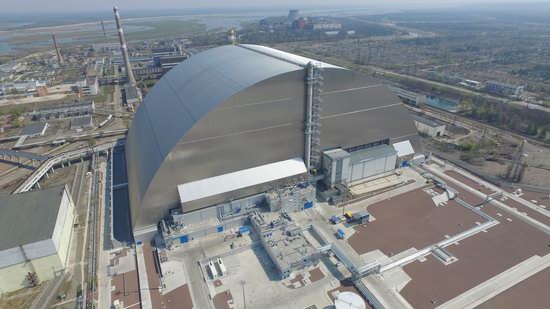
A drone pierced the outer shell of Ukraine’s Chernobyl nuclear plant. Radiation levels are normal
AP News 14th Feb 2025
CHERNOBYL NUCLEAR POWER STATION, Ukraine (AP) — A drone armed with a warhead hit the protective outer shell of Ukraine’s Chernobyl nuclear plant early Friday, punching a hole in the structure and briefly starting a fire, in an attack Kyiv blamed on Russia. The Kremlin denied it was responsible.
Radiation levels at the shuttered plant in the Kyiv region — site of the world’s worst nuclear accident — have not increased, according to the U.N. International Atomic Energy Agency, which said the strike did not breach the plant’s inner containment shell.
The IAEA did not attribute blame, saying only that its team stationed at the site heard an explosion and was informed that a drone had struck the shell.
Fighting around nuclear power plants has repeatedly raised fears of a nuclear catastrophe during three years of war, particularly in a country where many vividly remember the 1986 Chernobyl disaster, which killed at least 30 people and spewed radioactive fallout over much of the Northern Hemisphere.
The Zaporizhzhia nuclear power plant, which is Europe’s biggest, has occasionally been hit by drones during the war without causing significant damage……………………………………………………………………
Kremlin spokesman Dmitry Peskov denied Russia was responsible. “There is no talk about strikes on nuclear infrastructure, nuclear energy facilities. Any such claim isn’t true. Our military doesn’t do that,” Peskov said in a conference call with reporters.
It was not possible to independently confirm who was behind the strike. Both sides frequently trade blame when nuclear sites come under attack. https://apnews.com/article/russia-ukraine-war-chernobyl-zelenskyy-71d781dbd66754d0a548edd388f3447a
Russian attacks near Ukrainian nuclear infrastructure heighten scrutiny of Kyiv’s preparedness

Daily Mail 4th Feb 2025
KYIV, Ukraine (AP) – Moscow´s renewed attacks on Ukraine´s electricity infrastructure this winter have heightened scrutiny over the Ukrainian Energy Ministry’s failure to protect the country´s most critical energy facilities near nuclear power sites.
Despite more than a year of warnings that the sites were vulnerable to potential Russian attacks, the Energy Ministry failed to act swiftly, current and former Ukrainian officials in Kyiv told The Associated Press.
Two years of punishing Russian strikes on its power grid have left Ukraine reliant on nuclear power for more than half of its electricity generation. Especially vulnerable are the unprotected nuclear switchyards located outside the perimeters of its three functioning nuclear plants, which are crucial to transmitting power from the reactors to the rest of the country.
“The switchyards that handle electrical routing from nuclear power plants are a vital component of Ukraine´s nuclear energy infrastructure – powering homes, schools, hospitals and other critical civilian infrastructure,” said Marcy R. Fowler, head of the office for research and analysis at Open Nuclear Network, a program of the U.S.-based NGO PAX sapiens that focuses on reducing nuclear risk.
“Given Ukraine´s heavy reliance on nuclear energy, military attacks on these switchyards would be devastating, severely impacting civilian life and undermining the resilience of the energy grid,” she said.
Only in the fall, after Ukrainian intelligence agencies warned of potential Russian strikes targeting the nuclear switchyards, was action taken to begin building protection – far too late in the event of an attack, analysts said…………………..
Even more worrying, nuclear switchyards also have a second critical function: delivering electricity to nuclear plants from the offsite grid that is essential to cooling their reactors and spent fuel. A disruption could potentially spell disaster, the U.N. nuclear agency has repeatedly warned since the Russian attacks began in August.
And while Ukraine’s nuclear plants have backup emergency power systems, these “are designed to provide temporary support,” Fowler said. “Without functioning switchyards, the backup systems alone would not be sufficient to sustain operations or prevent safety risks during an extended outage.”
Lawmakers cited failure to protect these sites in a resolution last month calling for the removal of Energy Minister Herman Haluschenko. The list of grievances, which also censured Haluschenko for alleged systematic corruption and inadequate oversight of the energy sector, must still be voted on by parliament.
Haluschenko maintained at a news conference Tuesday the allegations were “a manipulation” and that fortifications for the electrical grid were “done.” But he would not answer direct questions about whether Ukraine’s nuclear switchyards in particular were protected.
Russian attacks in November and December came dangerously close to the country´s nuclear power plants, causing five out of its nine operating reactors to reduce power generation. The attacks did not strike the nuclear switchyards about a kilometer (half-mile) away from reactor sites but came alarmingly close.
The task of building protections for energy transmission substations, both nuclear and non-nuclear, fell to state and private companies, with the Energy Ministry supervising.
Three layers of fortifications were ordered: sandbags followed by cement barricades capable of withstanding drone attacks and – the most costly and least complete – iron-and-steel-fortified structures.
Following a government decree in July 2023, many state energy companies began immediately contracting to build first- and second-layer fortifications for their most critical power facilities. In the spring of 2024, the government repeated the urgent call to get the work done.
But nuclear switchyards, under the responsibility of Ukraine’s state nuclear company Energoatom, did not issue contracts to build second-layer concrete fortifications until this fall. By then, state energy company Ukrenergo, which manages the high-voltage substations that transmit power from the nuclear reactors to the grid, had already completed 90% of its 43 sites.
The bidding process for two nuclear plants – in Khmelnytskyi and Mykolaiv – only started in early October, according to documents seen by the AP. The tender for the Rivne Nuclear Power Plant was even later, at the end of November.
Construction is not expected to be completed until 2026, the contract documents said.
Concerns over the delays were raised repeatedly in closed-door meetings and letters sent to energy officials over the last year, three current and former government officials told the AP, speaking on condition of anonymity to discuss the foot-dragging by the Energy Ministry………………………………………………………………
https://www.dailymail.co.uk/wires/ap/article-14357703/Russian-attacks-near-Ukrainian-nuclear-infrastructure-heighten-scrutiny-Kyivs-preparedness.html
US failed to track weapons sent to Ukraine – Reuters

https://www.rt.com/news/612147-us-failed-track-ukraine-weapons/ 5 Feb 25
The chaos reached such proportions that the Pentagon struggled to define what “delivered” meant, the news agency has reported
US officials could not tell whether tens of billions of dollars of weapons sent to Ukraine were actually delivered due to tracking systems failures, Reuters reported on Monday, citing sources.
During the final year of former President Joe Biden’s administration, key weapons shipments to Ukraine faced prolonged delays due to concerns about depleting US stockpiles and debates over whether the arms would trigger an escalation with Russia.
According to a Reuters investigation, the Pentagon’s “chaotic weapons-tracking system in which even the definition of ‘delivered’ differed among US military branches,” was a significant contributor to the overall confusion.
The system failure “skewed” Pentagon data, making it almost impossible to accurately pinpoint weapons in the shipping process, Reuters said, citing reports by the Government Accountability Office (GAO).
Investigations by the Pentagon’s Inspector General and the GAO also found that the administration lacked clarity on the number of weapons delivered and the extent of shipment delays, according to Reuters.
An unnamed US official told the agency that the Pentagon has since updated internal manuals to clarify the term “delivered.” However, it is not clear how broadly the reform is being implemented, the article said.
The report found that shipment delays have persisted even after Congress broke a months-long deadlock on $60 billion in supplemental aid for Ukraine caused by Republican opposition.
As a result, by November, the US had fulfilled only half of its total 2024 commitment from its stockpiles to Kiev. Only 30% of armored vehicles promised by Washington had arrived by early December, Reuters sources claimed.
One US official expressed frustration over the pace of deliveries, suggesting that delays prevented Ukraine from making any substantial progress on the battlefield.
The official echoed the sentiments of numerous Ukrainian officials who have often blamed inadequate Western assistance for Kiev’s failure to stem Russia’s advances in Donbass and elsewhere.
In January 2024, the US Department of Defense Office of Inspector General released a report revealing that the Pentagon was unable to fully track over $1 billion worth of weapons sent to Ukraine. At the time, it said the Pentagon failed to “fully comply” with tracking requirements, adding that it was not possible to complete an inventory of everything sent to Kiev.
Moscow has consistently condemned Western arms deliveries to Ukraine, saying they will only prolong the conflict.
Trump Asks Congress To Approve $1 Billion Arms Transfer to Israel

The deal will be funded by US military aid and includes 1,000-pound bombs and armored bulldozers
by Dave DeCamp February 3, 2025 , https://news.antiwar.com/2025/02/03/trump-asks-congress-to-approve-1-billion-arms-transfer-to-israel/
The Trump administration has asked congressional leaders to approve a new $1 billion weapons transfer to Israel that will be funded by US military aid, The Wall Street Journal reported on Monday.
The deal includes 4,700 1,000-pound bombs worth more than $700 million and $300 million worth of armored bulldozers, which the Israeli military uses to demolish homes and infrastructure in Gaza and the West Bank.
The request for the new arms transfer comes as Israeli Prime Minister Benjamin Netanyahu is in Washington and set to meet with President Trump at the White House on Tuesday. He’s expected to push for US support for Israel to restart its genocidal war in Gaza instead of fully implementing the ceasefire deal.
The Journal report said Netanyahu is also expecting Trump to push ahead with a massive $8 billion deal that President Biden notified congressional leaders about in early January. The report said some Democrats in Congress put a hold on the massive sale and that the Trump administration is now pushing congressional leaders to unblock it.
The $8 billion deal includes munitions for fighter jets and attack helicopters as well as artillery shells. The Trump administration also recently released a hold on a shipment of 2,000-pound bombs for Israel.
Israeli officials suggested that the increased military aid was part of a deal to get Netanyahu to agree to the Gaza ceasefire deal. Trump’s envoy for the Middle East, Steve Witkoff, has said he’s pushing for the full implementation of the agreement, but the ceasefire is very fragile as Netanyahu doesn’t want to implement the second phase.
IAEA chief, in Kyiv, warns of nuclear risk from attacks on Ukraine grid
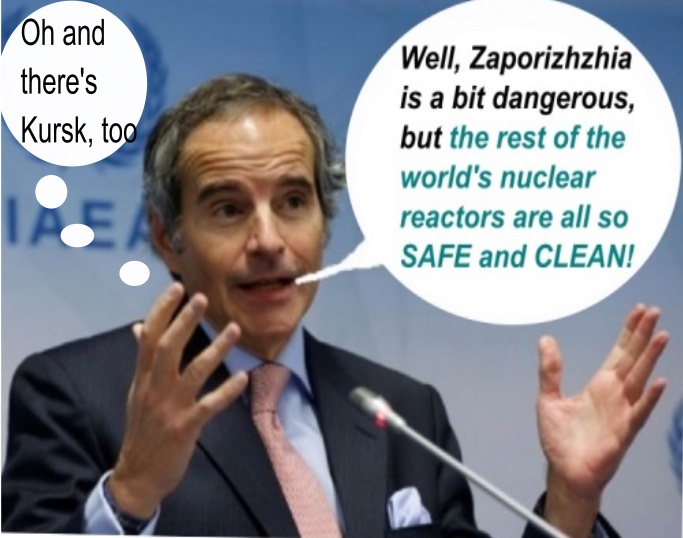
International Atomic Energy Agency (IAEA) chief Rafael Grossi said late on
Monday that he was on his way to visit Kyiv and inspect a key substation
that is critical for the safety of Ukraine’s nuclear power. “On my 11th
visit to Ukraine since the war began,” Grossi wrote on X. “I’m heading to
Kyivska substation, critical for the safety of Ukraine’s nuclear power, to
assess damage and help prevent a nuclear accident.” Last week, the IAEA
said in a statement that Grossi would visit Kyiv for “high-level” meetings
to ensure nuclear safety in the war that Russia started in February 2022.
Reuters 3rd Feb 2025, https://www.reuters.com/world/europe/iaeas-grossi-heads-kyiv-crucial-nuclear-safety-inspection-2025-02-03/
Israel sends missiles to Ukraine – Axios

https://www.rt.com/news/611950-israel-patriot-missiles-ukraine/, 30 Jan 24
Russia had warned against the transfer of Patriot interceptors
About 90 interceptor missiles for Patriot air defense systems have been sent from Israel to Poland, from where they will be forwarded to Ukraine, Axios has reported, citing three anonymous sources.
After Israel Defense Forces (IDF) retired their US-supplied Patriots in April 2024, Kiev asked for the missiles. Moscow warned West Jerusalem of potential consequences at the time, and the idea seemed to have gone nowhere.
“In recent days,” Axios reported this week, several US Air Force C-17 transport planes ferried the missiles from an airbase in southern Israel to the Polish city of Rzeszow, NATO’s logistics hub for supplying Ukraine.
West Jerusalem informed Moscow of the move and said it was “only returning the Patriot system to the US” rather than supplying weapons to Ukraine, Axios reported, citing an anonymous senior Israeli official. The same official claimed this was the same thing as the US transfer of artillery shells from “emergency storage” in Israel to Ukraine two years ago.
Both the Pentagon and the US European Command declined to give Axios a comment for the story. Russia has not officially addressed the matter as of yet.
According to Axios, Israeli Prime Minister Benjamin Netanyahu refused to take calls from Ukraine’s Vladimir Zelensky “for weeks.” The situation changed in late September when Netanyahu needed Zelensky’s permission for Hasidic pilgrims to visit Uman, a town south of Kiev where their movement’s founder, Reb Nachman of Bratslav, is buried. Zelensky refused until Netanyahu approved the Patriot transfer, a Ukrainian official told Axios.
A spokesperson for Netanyahu acknowledged to Axios that a Patriot system has been “returned to the US,” adding that “it is not known to us whether it was delivered to Ukraine.” The spokesperson also denied any connection between the Patriots and the Uman pilgrimage.
The missile delivery is the “most significant” Israeli contribution to Kiev since the Russia-Ukraine conflict escalated in February 2022. West Jerusalem has long insisted on providing only humanitarian aid to Kiev, out of concern about retaliation from Moscow in Syria, or through supplying Iran with sophisticated weapons, according to media.
Russia’s envoy to the UN, Vassily Nebenzia, warned Israel in July that arming Kiev would “have certain political consequences,” noting that any weapons sent to Ukraine “will eventually be destroyed,” just like the others.
Moscow has reduced its military presence in Syria after President Bashar Assad’s government in Damascus collapsed under an offensive by Hayat Tahrir al-Sham militants in December. Israel used the upheaval to destroy much of Syria’s military infrastructure and occupy additional territory in the Golan Heights. Earlier this month, Russia concluded a “strategic partnership” agreement with Iran.
Ukraine nuclear fears increase amid warnings from IAEA
Emerging Risks 28th Jan 2025, https://www.emergingrisks.co.uk/ukraine-nuclear-fears-increase-amid-warnings-from-iaea/
The director general of the International Atomic Energy Agency (IAEA) has said he is growing increasingly concerned that the organisation’s efforts to prevent a major nuclear incident in war-torn Ukraine in under increasing threat.
It comes as Rafael Mariano Grossi (above) revealed the agency’s team based at Ukraine’s Zaporizhzhya Nuclear Power Plant (ZNPP) has heard frequent explosions from outside the site over the past week.
He added The team reported hearing multiple instances of such military activity in recent days, at varying distances from the ZNPP. There was no damage reported to the plant itself. Although the sound of nearby military action has been a common occurrence ever since the IAEA established a continued presence at the ZNPP in September 2022, it has happened virtually daily in recent weeks.
“For almost three years now, we have been doing everything we can to help prevent a nuclear accident at the Zaporizhzhya Nuclear Power Plant and elsewhere in Ukraine,” Grossi explained. “An accident has not occurred, but the situation is not improving. It is still precarious. I remain seriously concerned about nuclear safety and security in Ukraine, including at the Zaporizhzhya site. Our work is far from over.”
He continued as part of the ongoing work to monitor developments relevant for nuclear safety and security, the IAEA team has continued to conduct walkdowns across the site – including but not limited to the main and emergency control rooms of four reactor units and one turbine hall – and observed and discussed various safety-related maintenance activities with the plant.
The IAEA team was also informed that the ZNPP is procuring three new mobile diesel generators, similar to those received late last year. They are in addition to the site’s 20 fixed emergency diesel generators that are designed to provide on-site power if there is a total loss of off-site power.
Separately, the ZNPP said that four diesel steam generators were put into operation for ten days to provide the steam needed to process liquid radioactive waste. These generators were commissioned a year ago.
Elsewhere in Ukraine, the IAEA said air raid alarms were heard on several occasions at Ukraine’s three operating nuclear power plants (NPPs) – Khmelnytskyy, Rivne and South Ukraine – as well as at the Chornobyl site. At the Khmelnytskyy NPP, the IAEA team members have taken shelter at their residence three times in recent days due to such alerts.
At the Khmelnytskyy and South Ukraine NPPs and the Chornobyl site, the IAEA teams were informed of instances of drones being detected at distances ranging from 2 to 30 km from the sites.
Despite such military activities, Ukraine’s nine operating nuclear power reactors have been operating at full capacity this week, safely generating much-needed electricity during the cold winter months.
Separately, the Agency continued with deliveries under its comprehensive programme of nuclear safety and security assistance to Ukraine. Last week, the Chornobyl site received equipment to enhance its nuclear security system. The delivery, the 104th organised by the IAEA since the start of the armed conflict, was supported with funds from the United Kingdom.
Russia claims nuclear plant targeted during massive Ukrainian drone attack

Russia and Ukraine continue to swap daily barrages, with the prospects of ceasefire talks appearing slim.
Aljazeera, 29 Jan 2025
A nuclear power plant was among targets during a massive Ukrainian drone attack, Russian officials have said.
Moscow said on Wednesday that the country’s energy infrastructure had come under attack by at least 100 drones overnight. Ukraine also reported strikes. The continuing barrages were accompanied by barbs from the two countries’ presidents, suggesting little prospect of peace talks.
The Russian Ministry of Defence said on Telegram that 104 drones were involved in raids across western Russia, many targeting power and oil facilities.
Local officials claimed that air defence systems had destroyed one drone that had attempted to strike the nuclear power plant in the western region of Smolensk.
“According to preliminary information, one of the drones was shot down during an attempt to attack a nuclear power facility,” Governor Vasily Anokhin said on the Telegram messaging app. “There were no casualties or damage.”
The Smolensk Nuclear Power Plant, the largest power generating plant in Russia’s northwest, was working normally on Wednesday morning, RIA state news agency reported, citing the plant’s press service.
Russia’s air defences reportedly destroyed drones over nine regions, including 11 over Smolensk, which sits on the border with Belarus. Nearly half were hit over Kursk, where Ukrainian troops have occupied several villages for months following an incursion.
Ukraine and Russia have been swapping drone and missile strikes on an almost daily basis, with energy infrastructure a particular target amid winter.
Warnings that the fighting could spark a nuclear disaster have been sounded since Russia launched its full-scale invasion of its neighbour in February 2022. However, most of the concern has focused on Ukraine’s Zaporizhzhia plant, which sits on the frontlines in the east of the country…………………………………………………………………….https://www.aljazeera.com/news/2025/1/29/russia-claims-nuclear-plant-targeted-during-massive-ukrainian-drone-attack
Ukraine’s parliament has given the go-ahead for the purchase of two old Russian nuclear reactors.
Reviving a Soviet-era project, the Ukrainian parliament has authorised the purchase of two Russian nuclear reactors from Bulgaria.
On Thursday, the energy committee of the Ukrainian parliament voted in favour of a law which ostensibly aims to improve the business environment in the country – but which also contained a last-minute amendment greenlighting the purchase of two old Russian nuclear reactors, to expand the Khmelnytskyi nuclear power plant.
“The Cabinet of Ministers of Ukraine and/or … ‘Energoatom’ … are granted permission to negotiate, finalize the text, sign, pay for, accept, and store the equipment,” the amendment, seen by Euractiv, reads.
The Khmelnytskyi plant in the south-west of Ukraine was first dreamt up in the early 1970s during the days of Leonid Brezhnev. Due to the Chernobyl disaster, it only ever operated at half capacity.
In 2023, negotiations began to buy two Russian reactors, originally bought for the unfinished Belene nuclear power plant in Bulgaria. The planned purchase has a floated price of at least €600 million.
US company Westinghouse is also planning to build two reactors at the Ukrainian site.
In June 2024, Ukrainian Energy Minister German Galushchenko, the initiative’s biggest promoter, said that he was betting on foreign loans to finance the purchase. However, in December, the EU’s representative in Kyiv ruled out support for the project.
Euractiv 16th Jan 2025
https://www.euractiv.com/section/eet/news/kyiv-pushes-ahead-controversial-e600m-purchase-of-russian-junk-nuclear-reactors/
Jan 16, 2025
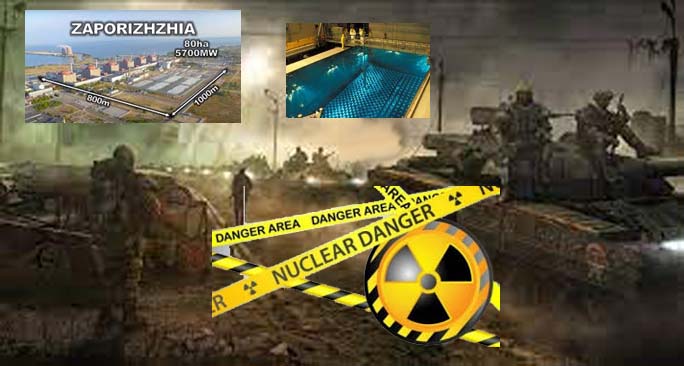
International Atomic Energy Agency (IAEA) staff reported hearing loud blasts near Ukraine’s Zaporizhzhya Nuclear Power Plant (NPP)
IAEA 5th Jan 2025,
https://www.iaea.org/newscenter/pressreleases/update-269-iaea-director-general-statement-on-situation-in-ukraine
International Atomic Energy Agency (IAEA) staff reported hearing loud blasts near Ukraine’s Zaporizhzhya Nuclear Power Plant (NPP) today, coinciding with reports of a drone attack on the plant’s training center, marking yet another threat to nuclear safety at Europe’s largest NPP, according to Director General Rafael Mariano Grossi.
The IAEA Support and Assistance Mission to Zaporizhzhya (ISAMZ) team stationed at ZNPP reported hearing two loud explosions coming from outside the perimeter of the site at approximately 12:45 and 15:45. For now, the IAEA has not yet been able to confirm any impact. The IAEA team also reported hearing machine gun fire coming from the site on multiple occasions.
The IAEA is aware of reports of an alleged attack by a drone at the ZNPP training center today, just outside of the site’s perimeter. Reports state that there were no casualties and no impact on any NPP equipment.
The ISAMZ team has reported that the intensity of military activities in the vicinity of Europe’s largest NPP – including multiple explosions at various distances from the site – has increased over the last 24 hours. “An attack on any nuclear power plant is completely unacceptable,” Director General Grossi stated. “In light of the increased military activity at ZNPP, I once again call for maximum restraint to avert the clear danger to its safety, and for the strict adherence to the five concrete principles established by the IAEA at the United Nations Security Council to protect the facility and the seven indispensable pillars of nuclear safety during an armed conflict also defined by the IAEA”.
US Has Given Israel $22 Billion in Military Aid Since October 2023
According to data from SIPRI, US weapons now account for 78% of Israel’s arms imports
by Dave DeCamp January 1, 2025, https://news.antiwar.com/2025/01/01/us-has-given-israel-22-billion-in-military-aid-since-october-2023/
Since October 7, 2023, the US has provided Israel with more than $22 billion in military aid, Israel Hayom reported Wednesday, citing data from the Stockholm International Peace Research Institute (SIPRI).
The stepped-up US military aid to Israel has supported the genocidal war in Gaza, Israel’s war in Lebanon, military operations in the occupied West Bank, and attacks on Syria, Iran, and Yemen.
According to SIPRI, from 2019 to 2023, US weapons accounted for 69% of Israel’s arms imports. Since October 7, that number has risen to 78%, demonstrating Israel’s significant reliance on US military aid.
In October 2024, Brown University’s Costs of War Project said the US had provided Israel with $17.9 billion in military aid in the first year of the onslaught in Gaza. Since then, Israel has signed a $5.2 billion contract with Boeing to purchase F-15 fighter jets, a deal funded by the US, bringing total US military aid since October 7, 2023, to over $22 billion.
The Costs of War report also said US military operations in the Middle East to support Israel cost American taxpayers at least $4.8 billion, a number that must have also risen since the US has continued to bomb Yemen and deployed a THAAD air defense system to Israel.
Israeli officials have been candid about how reliant they are on US support. An Israeli Air Force official told Haaretz that without US military aid, Israel would not be able to sustain operations in Gaza for more than a few months
A Trump-Putin Deal Over Ukraine Does Not Look Good for Europe
New EasternOutlook , Ricardo Martins, December 30, 2024
“Stop pushing Zelensky into peace talks”, tells EU Foreign Affairs chief to European leaders. For the EU, a negotiated peace deal is a win for Putin and a defeat for Europe. Understand the reasons.
Europe has invested too much to settle for ‘just’ a peace deal: the goal was to crush Russia
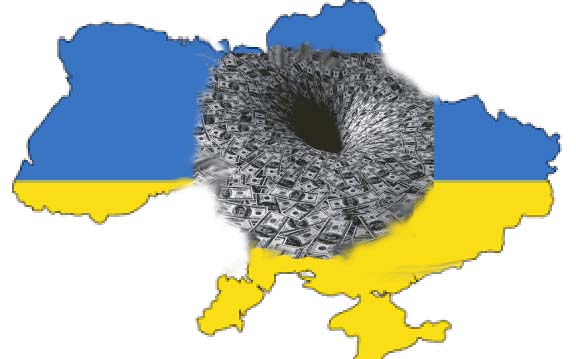
The total amount of military aid to Ukraine since the beginning of the conflict in February 2022 amounts to $119 billion, including 62 billion from the U.S., as confirmed by Pentagon chief Lloyd Austin. The amount allocated under the humanitarian label is more than double.
Europe has channelled significant resources into Ukraine, from financial aid packages, to military equipment, and training programmes. Great Britain, along with the U.S., has been crucial in intelligence support too. Beyond this, Europe has also invested heavily in influencing public opinion with narratives such as “Putin will invade Europe next.” The scale of these war-supporting efforts has been so extensive that many European countries have depleted both their arms stockpiles and public finances.
Annalena Baerbock, Germany’s Foreign Minister, has underscored the financial burden of ongoing support for Ukraine, revealing that the €37 billion allocated has necessitated cuts to social spending programs within Germany. The consequences of this financial obligation are staggering, according to the minister: crucial investments in early childhood programs and infrastructure modernization have been sidelined in favour of military assistance to Ukraine.
These efforts were designed to position Europe as a steady ally of Ukraine, committed to defending democratic values and regional stability. However, the looming possibility of an eventual Trump-Putin deal leaves Europe in a precarious position, grappling with the absence of a clear, face-saving strategy.
Therefore, the EU foreign affairs chief, Kaja Kallas, downplayed discussions about peace during her first meeting with EU foreign affairs ministers in Brussels, disregarding a Gallup poll showing that a majority of Ukrainians (52%) favour peace negotiations, while 38% support continuing the fighting. Kallas went further, admonishing EU heads of state at the latest EU summit: “Stop pushing Zelensky into peace talks.”
The most striking aspect of this statement is that it comes from someone holding the title of EU diplomacy chief—a role traditionally centred on fostering dialogue and negotiation. Yet, this very individual appears to dismiss the importance of diplomacy, even as Putin has repeatedly expressed willingness to engage in negotiations……………………………..
Such a deal could drastically shift the geopolitical landscape, potentially sidelining Europe in critical negotiations or undermining its investments and sacrifices. Europe’s commitment has been framed as a moral and strategic stand against aggression, but if Washington pivots toward reconciliation with Moscow, Europe could appear overextended and politically sidelined in its own European matters.
This situation is particularly uncomfortable given the EU’s reliance on the U.S. for broader security assurances. Zelensky understood it and bluntly stated: “Security guarantees without the US are not sufficient for Ukraine.”
Without a cohesive plan to address the fallout of a potential agreement between Trump and Putin, Europe risks losing credibility both within its borders and on the global stage.
Framing the Conflict as Putin’s Personal War: Simplistic Narratives Are More Convincing
The mantra “Russia must not win” has become a rallying cry across the EU, where any agreement is framed as a “victory for Putin.” This narrative conveniently reduces the war to a personal crusade by Vladimir Putin, dismissing the broader strategic and national interests driving Moscow’s actions.
. By personalizing the conflict, it becomes easier to frame it as a clear-cut battle of good versus evil, a narrative that is eagerly amplified by the media and political analysts. This portrayal has effectively stoked public fears with claims that “Europe is in danger,” galvanizing support for continued military engagement.
However, not everyone has embraced this oversimplified dichotomy. Independent analysts and critical observers have pushed back, pointing out the dangers of ignoring the complex geopolitical realities at play. They argue that viewing the conflict through a lens of rational strategic interests, rather than moral absolutism, could open avenues for meaningful dialogue and resolution—options currently sidelined in favour of escalation.
This refusal to consider alternative perspectives risks prolonging the conflict, leaving Europe increasingly strained by the economic and political costs of its unwavering commitment to a military solution. Meanwhile, voices calling for pragmatism and peace remain drowned out by the cacophony of war rhetoric.
In sum, Europe must urgently rethink its approach, prioritizing diplomatic agility and long-term strategies that enable it to assert its own influence, regardless of U.S. policy fluctuations. Meanwhile, Trump’s claim that he could end the war in 24 hours appears increasingly unrealistic. The so-called ‘Deep State’—comprising the informational, intelligence, and military apparatus—seems to have its own agenda, potentially signalling to Trump where the true power lies. Moreover, despite the immense human, infrastructural, and societal losses in Ukraine, the war remains highly profitable for certain entities.
Ricardo Martins ‒PhD in Sociology, specializing in policies, European and world politics and geopolitics, https://journal-neo.su/2024/12/30/a-trump-putin-deal-over-ukraine-does-not-look-good-for-europe/
Biden Administration Announces Nearly $6 Billion in New Ukraine Aid
ANTIWAR.com, Dave DeCamp, 31 Dec 24
Ukraine is receiving about $2.5 billion in military aid and $3.4 billion in ‘budget support,’ which funds government salaries and servicesby Dave DeCamp December 30, 2024.
The Biden administration on Monday announced nearly $6 billion in new aid for Ukraine as it’s determined to escalate the proxy war as much as possible before President-elect Donald Trump is inaugurated on January 20, 2025.
The aid includes $3.4 billion in “direct budget support,” a form of assistance meant to pay for Ukrainian government services, salaries, pensions, and other types of spending. It has also been used to subsidize Ukrainian small businesses and farmers.……………………….
Ukraine is also receiving nearly $2.5 billion in military aid from the US, which includes $1.22 billion from the Ukraine Security Assistance Initiative, a program that allows the US to purchase weapons for Ukraine. The remaining military aid is in the form of the Presidential Drawdown Authority, which enables President Biden to ship weapons directly from US military stockpiles.
The Biden administration is dumping more weapons into Ukraine even though there’s no path to a Ukrainian victory on the battlefield as Russian forces continue to make gains in the Donbas and Ukraine’s invading force in Kursk is being pushed out. Biden officials are determined to keep the war going and are even pressuring Ukraine to begin conscripting 18-year-olds.
According to the Pentagon, the new military aid includes:
Spare parts, maintenance and sustainment support, ancillary equipment, services, training, and transportation
Munitions for National Advanced Surface-to-Air Missile Systems (NASAMS)
HAWK air defense munitions
Stinger missiles
Counter-Unmanned Aerial Systems (c-UAS) munitions
Ammunition for High Mobility Artillery Rocket Systems (HIMARS)
155mm and 105mm artillery ammunition
Air-to-ground munitions
High-speed Anti-radiation missiles (HARMs)
Unmanned Aerials Systems (UAS)
Javelin and AT-4 anti-armor systems
Tube-launched, Optically guided, Wire-tracked (TOW) missiles
Small arms and ammunition and grenades
Demolitions equipment and munitions
Secure communications equipment
Commercial satellite imagery services
Medical equipment
Clothing and individual equipment
In recent months, President Biden signed off on several significant escalations in the proxy war, including supporting long-range strikes on Russian territory and the provision of widely banned anti-personnel mines to Ukraine.
Biden asked Congress for an additional $24 billion to spend on Ukraine, but the request was rejected by House Speaker Mike Johnson (R-LA), who said any decisions on Ukraine aid would be up to Trump. https://news.antiwar.com/2024/12/30/biden-administration-announces-nearly-6-billion-in-new-ukraine-aid/
Is it realistic for Donald Trump to boast of a quick peace deal for Ukraine ?
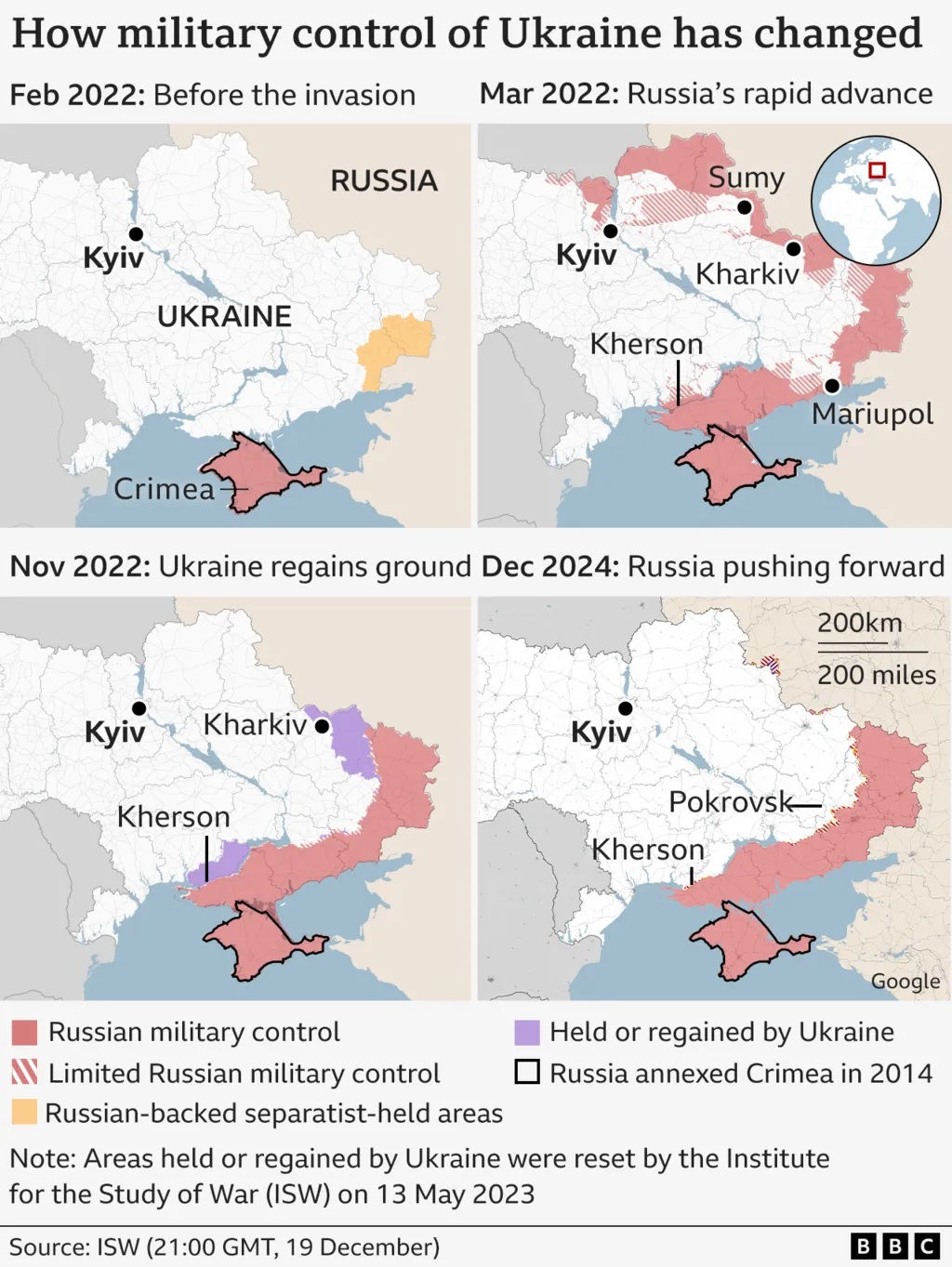
AIMN Editorial, https://theaimn.net/is-it-realistic-for-donald-trump-to-boast-of-a-quick-peace-deal-for-ukraine/ 2 Jan 25
Donald Trump has made so many promises on what he will quickly achieve once he takes office as President. The one about ending the Ukraine war in 24 hours probably gained him support from quite a few normally left-leaning people, who understand that the history of this conflict is far more complicated than is portrayed by the Western media.
However, Trump made that statement in July 2023. By 2025, he has somewhat moderated that particular promise. He has had several conversations with Ukraine’s President Zelensky, . Zelensky praised their Paris meeting on 7 December as “productive and meaningful”, but there were no details discussed. Later, Trump opposed the sending of long-range missiles for Ukraine , but said he would not “abandon” Ukraine. He predicted “less aid” to Ukraine https://www.youtube.com/watch?v=E-R7Gi-uLiY. BY 21st December, it was reported that Trump would continue to supply military aid to Ukraine, provided that NATO members dramatically increase their defence spending.
So, peace in Ukraine is not going to happen in such a hurry, even with President Trump and his supposed great negotiating skills. Britain considers sending troops to Ukraine to train Ukrainian regiments. NATO is not prepared for any compromises, especially about giving up the plan for Ukraine’s NATO membership. With any peace deal, the Western allies agree with Zelensky – “Security guarantees without the US are not sufficient for Ukraine.”
As well as European reluctance to a peace deal, there is the Russian point of view. Despite many set-backs, and a catastrophic loss of soldiers’ lives, Russia is now headed towards winning this war. Why make a deal now, before being in a more powerful position for demanding concessions?
Then we come to the USA. However much Donald Trump might want to end the carnage, and be seen as the peace hero, he is up against significant forces at home – making up what he calls the Deep State. This is a conspiracy theory that helped Trump to gain popularity – and I hate to agree with it, in its rather paranoid theme. BUT, war enthusiasts do exist – among the, military, intelligence, government officials, and wealthy industrialists, and they do exercise influence, and pressure politicians of both parties, to manipulate America’s defense policies. The war in Ukraine continues to be profitable to America’s weapons industries, and at no cost to American lives.
In the whole saga of the war in Ukraine, history has been forgotten. Of course Ukrainian-Russian relations have been tortuous and often terrible. In modern history it goes back to the 1930s, with Stalin’s starvation and genocide of Ukrainians. Then, following oppression from Russia, came in 1941, the short-lived moment of “liberation” by the German Nazis. That brought mass killings of Jews, slave labour, wholesale destruction, and the loss of up to 7 million lives. Russian control over Ukraine returned in 1944, and while the economy was restored, Stalin’s totalitarian rule was back again. In 1991 Ukraine gained independence from Russia.
Is it any wonder that Ukraine, with both Russian and Ukrainian languages still in common use, has been divided in attitudes and loyalties? Going even further back in history, Catherine the Great of Russia, in the 18th Century, made Kiev become Europe’s centre of art and culture, as well as making improvements in health, education, legal rights for Jews, improved conditions for serfs. Sure, she was an absolute monarch, – miles away from being democratic. Now her name and her statues are trashed in Kiev, which is a pity.
From 2014 to 2022, the Ukrainian government waged a war against the separatists in the Eastern, Donbass region. The war was about the 2014-2015 Minsk agreements which meant that the Donbass should have its autonomous government within Ukraine. Volodymyr Zelensky was elected on a platform that he would implement those agreements, but later he reneged on this promise. Russia’s President Putin in 2022 started what he called “a special military exercise” to support the separatists and uphold the Minsk agreement. That turned into the full-scale war against Ukraine.
European and USA support for Ukraine developed into a campaign, at enormous cost, to weaken Russia. The phrase “too big to fail” is used to describe financial crises. But it could apply to the Russia-Ukraine war. From the Western perspective the war is seen as a battle between good and evil – the evil giant Putin against the heroic little Zelensky. With NATO, with most European countries lined up against Russia, it is world democracy to be desperately defended, For Russia, it now is to prevent that last big nation on its border joining that threatening USA-armed line-up.
It was a mistake that Russia started a ‘special military enterprise’ -to evolve into a full-scale war. Some argue that by encouraging Zelensky to reneg on the Minsk agreement, the Western nations provoked the war.
Whatever started the war, the majority of Ukrainians, and especially those in the East, now just want it to end. The prevailing cry of Western leaders – “Putin must fail, Ukraine must prevail” expresses that simplistic view of good versus evil, and just ignores the complicated historic and local concerns of Eastern Ukraine. Diplomacy is jettisoned. As one writer puts it – voices calling for pragmatism and peace remain drowned out by the cacophony of war rhetoric.
Ultimately , every war ends in some sort of a diplomatic outcome. It is doubtful that Trump can make this one end quickly. It might be just one of the promises that he has to give up.
1 This Month

To see nuclear-related stories in greater depth and intensity – go to https://nuclearinformation.wordpress.com
-
Archives
- September 2026 (194)
- August 2026 (330)
- July 2026 (355)
- June 2026 (287)
- May 2026 (306)
- April 2026 (356)
- March 2026 (251)
- February 2026 (267)
- January 2026 (308)
- December 2025 (358)
- November 2025 (359)
- October 2025 (375)
-
Categories
- 1
- 1 NUCLEAR ISSUES
- business and costs
- climate change
- culture and arts
- ENERGY
- environment
- health
- history
- indigenous issues
- Legal
- marketing of nuclear
- media
- opposition to nuclear
- PERSONAL STORIES
- politics
- politics international
- Religion and ethics
- safety
- secrets,lies and civil liberties
- spinbuster
- technology
- Uranium
- wastes
- weapons and war
- Women
- 2 WORLD
- ACTION
- AFRICA
- Atrocities
- AUSTRALIA
- Christina's notes
- Christina's themes
- culture and arts
- Events
- Fuk 2022
- Fuk 2023
- Fukushima 2017
- Fukushima 2018
- fukushima 2019
- Fukushima 2020
- Fukushima 2021
- general
- global warming
- Humour (God we need it)
- Nuclear
- RARE EARTHS
- Reference
- resources – print
- Resources -audiovicual
- Weekly Newsletter
- World
- World Nuclear
- YouTube
-
RSS
Entries RSS
Comments RSS
 nuclear-news