Review of the Alaska meeting – The goal is always domination.
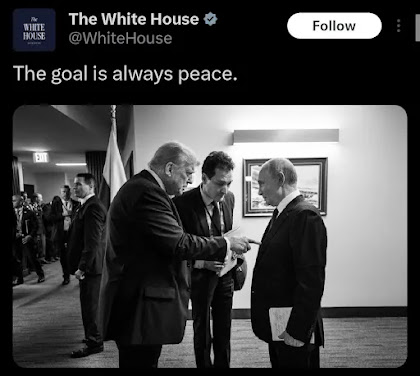
Organizing Notes, Bruce Gagnon, coordinator of the Global Network Against Weapons & Nuclear Power in Space, 16 Aug 25, https://space4peace.blogspot.com/2025/08/the-goal-is-always-domination.html?utm_source=substack&utm_medium=email
The Washington post reports in their top headline this morning the following: Trump reverses on Ukraine war ceasefire demand, aligning with Putin, splitting with allies: An immediate ceasefire to the war in Ukraine had long been a bedrock demand by the U.S., Ukraine and their European allies.
One can easily imagine that most neocons in Washington, London and the EU are pulling their hair out. Zelensky as well. His cash cow is wandering off the farm.
No immediate ceasefire was agreed upon. That was the chief demand of Zelensky, Starmer, Macon and Merz. They wanted to use that time to re-stock Ukraine with more weapons (especially drones) that could keep attacking civilians in the Donbass and inside of Russia.
Give Trump a nod (what ever his real motivations might be) he has now angered the ‘allies’ and they know that if they want the proxy war on Russia to continue (and they surely do) they are going to have to pay for it.
In one interview on Fox, Trump said the US funded Ukraine at the tune of $350 billion while the EU gave $100 billion.
Actually the US can’t afford to keep pissing money down the rat hole – especially when they want to spend that money getting ready for war with China. (And maybe still with Russia and Iran too.)
The Ukraine gamble is lost.
The oligarchic owned media in the US ensured that the Obama-Biden-Hillary Clinton orchestrated coup in Kiev in 2014 was swallowed by the people across the ‘democratic’ west. The public was firmly brainwashed to believe that Ukraine was the white hat team and Russia was the black hat bad guys.
Few know that the US-NATO started the war in 2014 and killed/wounded tens of thousands of Russian-ethnics in the Donbass region of eastern Ukraine – the place where the war is centered today.
In early 2022 Russian went into the Donbass after years of fruitless negotiations with the west to end their attacks on the Donbass. The US-NATO always wanted the war. They dreamed of breaking Russia up into pieces.
But don’t think the US has given up on its ill-fated quest to break up Russia. Alaska was just a ‘strategic retreat’. Just look at how Washington is fiddling with Armenia and Azerbaijan to destabilize another border land of both Russia and Iran.
The US is also working with Canada, Sweden, Denmark, Norway and Finland to militarize the Arctic in order to challenge Russia’s large border with that vast resource rich region.
The US-NATO only know war. Their economies are driven by military spending. Their so-called leaders are virtually all corporate apparatchiks.
And don’t forget that many of these EU-NATO leaders are related to former high level Nazi operatives during WW2.
Europe appears stuck in the quicksand of their disappearing ‘unipolar’ control. They just can’t accept that they must get along with the Global South that is rising after 500 years of colonial domination.
The US and EU got rich off the treasure they stole from the Global South. Museums across the west are loaded with treasures taken from these nations.
Trump is still about America First. That has not changed. The public in the US must campaign against the Pentagon’s trillion dollar a year offensive war machine.
That is the only way we will get true peace.
Russia says it prevented a Ukrainian drone attack on the Smolensk nuclear power plant.
Russia’s Federal Security Service (FSB) said that it had prevented a
Ukrainian drone attack on the Smolensk nuclear power plant in western
Russia on Sunday. The Soviet-era Smolensk nuclear power station, about 330
km (200 miles) southwest of Moscow near the border with Belarus, has three
RBMK reactors – the same basic design as the reactors at the Chernobyl
nuclear power station. The FSB, the main successor to the Soviet-era KGB,
said that Russian radio-electronic warfare systems intercepted a Ukrainian
drone over the territory of the Smolensk nuclear power station.
Reuters 17th Aug 2025, https://www.reuters.com/world/europe/russia-says-it-prevented-ukrainian-drone-attack-smolensk-nuclear-power-plant-2025-08-17/
War’s final act: Zelensky’s dangerous play to crash Russia-US talks
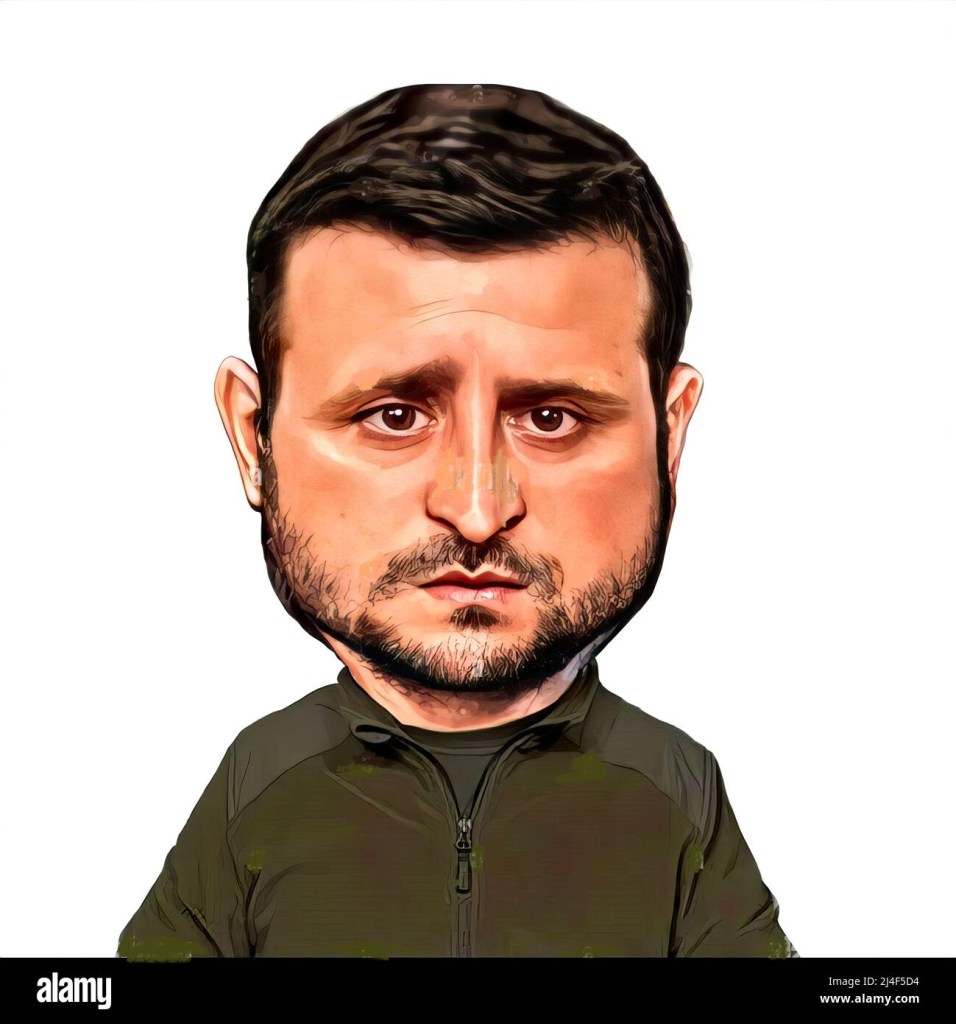
For Zelensky, peace is political extinction. Any agreement that cements territorial realities will shatter the narrative that has sustained his rule. It will mark the end of his leverage in the West, the erosion of his political base at home, and likely the swift rise of challengers eager to blame him for Ukraine’s fate.
As Ukraine’s defeat becomes undeniable, Zelensky resorts to desperate provocations – risking wider conflict to block peace talks between Russia and the US
By Nadezhda Romanenko, political analyst, 12 Aug 25, https://www.rt.com/russia/622816-enemy-of-peace-zelensky-seems/
The war in Ukraine is no longer balanced on a knife’s edge, as some might have thought during the Kursk invasion. The outcome is now visible to anyone willing to look past the headlines: Kiev’s forces are depleted, morale is collapsing, and the long-promised ‘turning points’ have come and gone without materializing. Even Western officials, once confident in endless military aid, are now speaking in guarded tones about “realistic expectations.” On the battlefield, the momentum has shifted irreversibly.
Against this backdrop, the recent statement from Russia’s Ministry of Defense should not be dismissed as mere rhetoric. Moscow alleges that Ukrainian forces are preparing a major provocation – an attack designed to sabotage the upcoming Russia-US peace talks. For those who understand the stakes, the logic is disturbingly clear.
Donald Trump, now poised to play a decisive role in shaping Washington’s foreign policy, has shown a pragmatic grasp of reality. Unlike his predecessors, he is not bound by the fantasy that Ukraine can ‘win’ if only more money and weapons are sent. He has signaled that ending this conflict is both possible and necessary. This puts him on a collision course with those who see peace not as a goal, but as a threat to their own survival.
For Zelensky, peace is political extinction. Any agreement that cements territorial realities will shatter the narrative that has sustained his rule. It will mark the end of his leverage in the West, the erosion of his political base at home, and likely the swift rise of challengers eager to blame him for Ukraine’s fate. Under such pressure, the temptation to derail talks by any means available – including acts of sabotage – becomes more than plausible.
This is not conjecture; it is the historical pattern of leaders who find themselves cornered. In modern conflicts across the globe, we’ve seen desperate governments resort to reckless measures when facing the collapse of their strategic position. The danger here is that such a provocation, if timed to coincide with peace negotiations, could provoke outrage in Washington, disrupt fragile diplomatic channels, and push the conflict back toward open escalation.
Trump has already done much to shift the debate away from the entrenched ‘forever war’ mindset. He has taken political risks to challenge the military-industrial inertia that thrives on endless conflict. But now, perhaps more than ever, he will need to remain steady. The coming weeks will test his ability to see through manipulations and to resist being drawn into the agendas of those who profit from instability.
Peace is within reach – but it will not survive if the world falls for one last, desperate trick from a regime with nothing left to lose.
It’s not ‘Who lost Ukraine?’ It’s ‘Who destroyed Ukraine?

Walt Zlotow, West Suburban Peace Coalition, Glen Ellyn IL , 15 Aug 25
When Mao won the Chinese civil war in 1949, adding China to the USSR in the roster of commie countries, the US war hawks of that era excoriated the Truman administration for ‘losing’ China’. Their unhinged claim was that the commie filled State Department made Mao’s inevitable takeover possible. That helped fuel Sen. Joe McCarthy’s equally unhinged campaign to smoke out all those imagined commies in the Truman administration a year later.
A whiff of that 1949 anti commie hysteria is playing out on mainstream media ahead of Friday’s sit down between President Trump and Russian President Putin seeking a ceasefire and end to this disastrous war destroying Ukraine.
Morning Joe Scarborough this morning pondered whether Trump will cave to evil Putin’s Ukraine dismembership demands to achieve the peace that might garner him a Nobel Peace Prize. Yep, Moring Joe laid out the ‘Who lost Ukraine’ meme on Trump to prepare us for the onslaught of anti-Trump, anti-Russian hysteria sure to follow if a settlement reflecting the reality of Ukraine’s dismembership is inked in Alaska tomorrow.
A settlement is only possible if a US/Russia settlement verifies the battlefield reality. Ukraine’s military is teetering on collapse with over a million dead cannon fodder and 4 oblasts gone to Russia forever. If Trump accomplishes peace…which is far from likely, the blame game will focus on Trump who ‘lost’ Ukraine which will end up as a greatly diminished rump state dependent on US/European life support for years to come.
Historians instead should begin with the 6 administrations preceding Trump’s second term 2.0: George H.W. Bush, Bill Clinton, W. Bush, Barack Obama, Donald Trump 1.0 and most grievously Joe Biden. H.W. Bush, Clinton, W. Bush, Obama, Trump 1.0 and Biden all promoted NATO expansion into Ukraine and dismissed all Russian security pleas that such expansion was a Red Line Russia would view as an existential threat.
While his predecessors put Ukraine on the road to destruction, Joe Biden essentially pulled the trigger on a war Ukraine had no chance of winning. Putin tried to avoid invading. He saw Ukraine massing 60,000 elite troops on the Donbas border to polish off the Ukrainian separatists there seeking independence and safety from Kyiv neo fascists. His plea of December 21 2021 was dismissed out of hand. Biden told Putin that Russia’s security interests, which included autonomy for Ukrainian separatists as well as a neutral Ukraine not in NATO, were ‘not subject to discussion whatsoever.’
Biden knew that response would provoke a Russian invasion. But Biden miscalculated that US weapons combined with draconian Russian sanctions would result in a Vietnam style defeat for Russia, possibly even the overthrow of President Putin.
So here we are three years, eight months later with Putin, not Trump holding all the cards in tomorrow’s negotiation. Trump knows the correct outcome is settling on Russia’s terms: no return of Ukraine territory, no NATO for Ukraine and a demilitarized Ukraine that can never attack inside Russia territory again. He also knows he’ll be branded by America’s ravenous war hawks as ‘The man who lost Ukraine’ should he end the war.
Nobody lost Ukraine. But we now know who destroyed Ukraine. The only question to be answered is…How severely Ukraine will be destroyed before the guns go silent.
Setting the record straight on the background to events in Ukraine.


First, both the provinces of Donetsk and Lugansk in the Donbass region voted for independence from Ukraine in 2014 in resistance to a U.S.-backed coup that overthrew the elected president Viktor Yanukovych in February of that year. The independence vote came just eight days after neo-Nazis burned dozens of ethnic Russians alive in Odessa. To crush their bid for independence, the new U.S.-installed Ukrainian government then launched an “anti-terrorist” war against the provinces, with the assistance of the neo-Nazi Azov Battalion, which had taken part in the coup. It is a war that is still going on eight years later, a war that Russia has just entered.
During these eight years, the Ukrainian Armed Forces and Azov have used artillery, snipers and assassination teams to systematically butcher more than 5,000 people (another 8,000 were wounded) — mostly civilians — in the Donetsk Peoples Republic, according to the leader of the DPR, who provided these figures in a press conference recently. In the Luhansk People’s Republic, an additional 2,000 civilians were killed and 3,365 injured. The total number of people killed and wounded in Donbass since 2014 is more than 18,000.
This has received at most superficial coverage by The New York Times; it has not been covered by Western corporate media because it does not fit the official Washington narrative
Ukraine & Nukes After a New York Times reporter grossly distorted what Putin and Zelensky have said and done about nuclear weapons, Steven Starr corrects the record and deplores Western media, in general, for misinforming and leading the entire world in a dangerous direction. https://consortiumnews.com/2022/03/03/ukraine-nukes/ By Steven Starr,
The New York Times recently published an article by David Sanger entitled “Putin spins a conspiracy theory that Ukraine is on a path to produce nuclear weapons.” Unfortunately, it is Sanger who puts so much spin in his reporting that he leaves his readers with a grossly distorted version of the what the presidents of Russia and Ukraine have said and done.
Ukrainian Volodymyr Zelensky’s recent statements at the Munich conference centered around the 1994 Budapest Memorandum, which welcomed Ukraine’s accession to the Nuclear Non-Proliferation Treaty (NPT) in conjunction with Ukraine’s decision to return to Russia the nuclear weapons left on its territory by the Soviet Union.
In other words, the Budapest Memorandum was expressly about Ukraine giving up its nukes and not becoming a nuclear weapon state in the future. Zelensky’s speech at Munich made it clear that Ukraine was moving to repudiate the Budapest Memorandum; Zelensky essentially stated that Ukraine must be made a member of NATO, otherwise it would acquire nuclear weapons.
This is what Zelensky said, with emphasis added:
“I want to believe that the North Atlantic Treaty and Article 5 will be more effective than the Budapest Memorandum.
Ukraine has received security guarantees for abandoning the world’s third nuclear capability [i.e. Ukraine relinquished the Soviet nuclear weapons that had been placed in Ukraine during the Cold War]. We don’t have that weapon. … Therefore, we have something. The right to demand a shift from a policy of appeasement to ensuring security and peace guarantees.
Since 2014, Ukraine has tried three times to convene consultations with the guarantor states of the Budapest Memorandum. Three times without success. . . I am initiating consultations in the framework of the Budapest Memorandum. The Minister of Foreign Affairs was commissioned to convene them. If they do not happen again or their results do not guarantee security for our country, Ukraine will have every right to believe that the Budapest Memorandum is not working and all the package decisions of 1994 are in doubt. . .
I am initiating consultations in the framework of the Budapest Memorandum. The Minister of Foreign Affairs was commissioned to convene them. If they do not happen again or their results do not guarantee security for our country, Ukraine will have every right to believe that the Budapest Memorandum is not working and all the package decisions of 1994 are in doubt.”
Sanger’s Times article implies that it was a “conspiracy theory” that Zelensky was calling for Ukraine to acquire nuclear weapons. Sanger was not ignorant of the meaning of the Budapest Memorandum, rather he chose to deliberately ignore it and misrepresented the facts.
President Vladimir Putin, along with the majority of Russians, could not ignore such a threat for a number of historical reasons that The New York Times and ideologues such as Sanger have also chosen to ignore. It is important to list some of those facts, since most Americans are unaware of them, as they have not been reported in the Western mainstream media. Leaving parts of the story out turns Putin into just a madman bent on conquest without any reason to intervene.
First, both the provinces of Donetsk and Lugansk in the Donbass region voted for independence from Ukraine in 2014 in resistance to a U.S.-backed coup that overthrew the elected president Viktor Yanukovych in February of that year. The independence vote came just eight days after neo-Nazis burned dozens of ethnic Russians alive in Odessa. To crush their bid for independence, the new U.S.-installed Ukrainian government then launched an “anti-terrorist” war against the provinces, with the assistance of the neo-Nazi Azov Battalion, which had taken part in the coup. It is a war that is still going on eight years later, a war that Russia has just entered.
During these eight years, the Ukrainian Armed Forces and Azov have used artillery, snipers and assassination teams to systematically butcher more than 5,000 people (another 8,000 were wounded) — mostly civilians — in the Donetsk Peoples Republic, according to the leader of the DPR, who provided these figures in a press conference recently. In the Luhansk People’s Republic, an additional 2,000 civilians were killed and 3,365 injured. The total number of people killed and wounded in Donbass since 2014 is more than 18,000.
This has received at most superficial coverage by The New York Times; it has not been covered by Western corporate media because it does not fit the official Washington narrative that Ukraine is pursuing an “anti-terrorist operation” in its unrelenting attacks on the people of Donbass. For eight years the war instead has been portrayed as a Russian “invasion,” well before Russia’s current intervention.
Likewise, The New York Times, in its overall coverage, chose not to report that the Ukrainian forces had deployed half of its army, about 125,000 troops, to its border with Donbass by the beginning of 2022.
In other words, acquiring tactical nuclear weapons will be much easier for Ukraine than for some other states I am not going to mention here, which are conducting such research, especially if Kiev receives foreign technological support. We c
The importance of neo-Nazi Right Sektor politicians in the Ukraine government and neo-Nazi militias (such as the Azov Battalion) to the Ukrainian Armed Forces, also goes unreported in the mainstream corporate media. The Azov battalion flies Nazi flags; they have been trained by teams of U.S. military advisers and praised on Facebook these days. In 2014, Azov was incorporated in the Ukrainian National Guard under the direction of the Interior Ministry.
The Nazis killed something on the order of 27 million Soviets/Russians during World War II (the U.S. lost 404,000). Russia has not forgotten and is extremely sensitive to any threats and violence coming from neo-Nazis. Americans generally do not understand what this means to Russians as the United States has never been invaded.
So, when the leader of Ukraine essentially threatens to obtain nuclear weapons, this is most certainly considered to be an existential threat to Russia. That is why Putin focused on this during his speech preceding the Russian invasion of Ukraine. Sanger and The New York Times must discount a Ukrainian nuclear threat; they can get away with doing so because they have systematically omitted news pertaining to this for many years.
Sanger makes a very misleading statement when he writes, “Today Ukraine does not even have the basic infrastructure to produce nuclear fuel.”
Ukraine is not interested in making nuclear fuel — which Ukraine already purchases from the U.S. Ukraine has plenty of plutonium, which is commonly used to make nuclear weapons today; eight years ago Ukraine held more than 50 tons of plutonium in its spent fuel assemblies stored at its many nuclear power plants (probably considerably more today, as the reactors have continued to run and produce spent fuel). Once plutonium is reprocessed/separated from spent nuclear fuel, it becomes weapons usable. Putin noted that Ukraine already has missiles that could carry nuclear warheads, and they certainly have scientists capable of developing reprocessing facilities and building nuclear weapons.
In his Feb. 21 televised address, Putin said Ukraine still has the infrastructure leftover from Soviet days to build a bomb. He said:
“As we know, it has already been stated today that Ukraine intends to create its own nuclear weapons, and this is not just bragging.
Ukraine has the nuclear technologies created back in the Soviet times and delivery vehicles for such weapons, including aircraft, as well as the Soviet-designed Tochka-U precision tactical missiles with a range of over 100 kilometers.
But they can do more; it is only a matter of time. They have had the groundwork for this since the Soviet era.
If Ukraine acquires weapons of mass destruction, the situation in the world and in Europe will drastically change, especially for us, for Russia. We cannot but react to this real danger, all the more so since let me repeat, Ukraine’s Western patrons may help it acquire these weapons to create yet another threat to our country.”
NATO-US Refuse Binding Nuclear Treaties
In his Times piece, Sanger states, “American officials have said repeatedly that they have no plans to place nuclear weapons in Ukraine.”
But the U.S. and NATO have refused to sign legally binding treaties with Russia to this effect. In reality, the U.S. has been making Ukraine a de facto member of NATO, while training and supplying its military forces and conducting joint exercises on Ukrainian territory. Why wouldn’t the U.S. place nuclear weapons in Ukraine — they have already done so at military bases within the borders of five other European members of NATO. This in fact violates the spirit of the NPT, another issue that Sanger avoids when he notes that Russia has demanded that the U.S. remove nuclear weapons from the European NATO-member states.
For years the U.S. proclaimed that the Ballistic Missile Defense (BMD) facilities it was placing in Romania and Poland, on the Russian border, were to protect against an “Iranian threat,” even though Iran had no nuclear weapons or missiles that could reach the U.S. But the dual-use Mark 41 launching systems used in the Aegis Ashore BMD facilities can be used to launch Tomahawk cruise missiles, and will be fitted with SM-6 missiles that, if armed with nuclear warheads, could hit Moscow in five-to-six minutes. Putin explicitly warned journalists about this danger in 2016; Russia included the removal of the U.S. BMD facilities in Romania and Poland in its draft treaties presented to the U.S. and NATO last December.
I wonder if Sanger has ever considered what the U.S. response would be if Russia placed missile launching facilities on the Canadian or Mexican border? Would the U.S. consider that a threat, would it demand that Russia remove them or else the U.S. would use military means to do so?
30 Years Ago
Sanger states that today Russia takes a “starkly different from the tone Moscow was taking 30 years ago, when Russian nuclear scientists were being voluntarily retrained to use their skills for peaceful purposes.”
Russians would reply that 30 years ago NATO had not moved to Russian borders and was not flooding Ukraine with hundreds of tons of weapons and the U.S. had not yet overthrown the government in Kiev to install an anti-Russian regime.
While the Times is still considered the U.S. “paper of record,” during the last few decades it has devolved into the primary mouthpiece for the official narratives coming from Washington.
There is a real danger to the nation when a free press is replaced with corporate media that stifles and censors dissent. Rather than a free press, we now have a Ministry of Propaganda that acts as an echo chamber for the latest diktats from the White House. The systematic creation of false narratives by corporate media, designed to serve the purposes of the federal government, have so misinformed the American public about world events that we find the nation ready to go to war with Russia.
This is suicidal course for not only the U.S. and the EU, but for civilization as a whole, because this would likely end in a nuclear war that will destroy all nations and peoples.
Steven Starr is the former director of the University of Missouri’s Clinical Laboratory Science Program, and former board member of Physicians for Social Responsibility. His articles have been published by the Bulletin of the Atomic Scientists, Federation of American Scientists and the Strategic Arms Reduction website of the Moscow Institute of Physics and Technology. He maintains the Nuclear Famine website.
Russia makes battlefield breakthrough in urgent push for land.
Telegraph, Kieran Kelly. Fermin Torrano in Ukraine, 12 Aug 25
With Trump talks looming, Russia’s army punches through exposed Ukrainian defences.
Russia is racing to seize as much Ukrainian territory as possible ahead of peace talks with Donald Trump on Friday.
In what may prove to be a major breakthrough for Vladimir Putin, Russian sabotage and reconnaissance units punched through exposed defences in eastern Ukraine, slipping as far as six miles behind the front line in just 48 hours, according to battlefield reports.
Kyiv has diverted special forces units to confront the insurgents on the ground in an attempt to prevent any more of Ukraine falling under Russia’s control before the summit in Alaska.
The location, near Dobropillya in Donetsk, is strategically significant. If Moscow’s forces are able to establish a foothold, the breach could allow Russia to cut off the city of Kramatorsk, one of the most vital strongholds in the Donbas still under Kyiv’s control.
If the city falls, it would give Putin almost full control over the Donbas and strengthen his negotiating power when bargaining over Ukraine’s fate with the Trump administration……………………………………… https://www.telegraph.co.uk/world-news/2025/08/12/russia-battleground-breakthrough-exposes-putin-push-land/
Does Trump have the guts to end America’s lost proxy war against Russia?
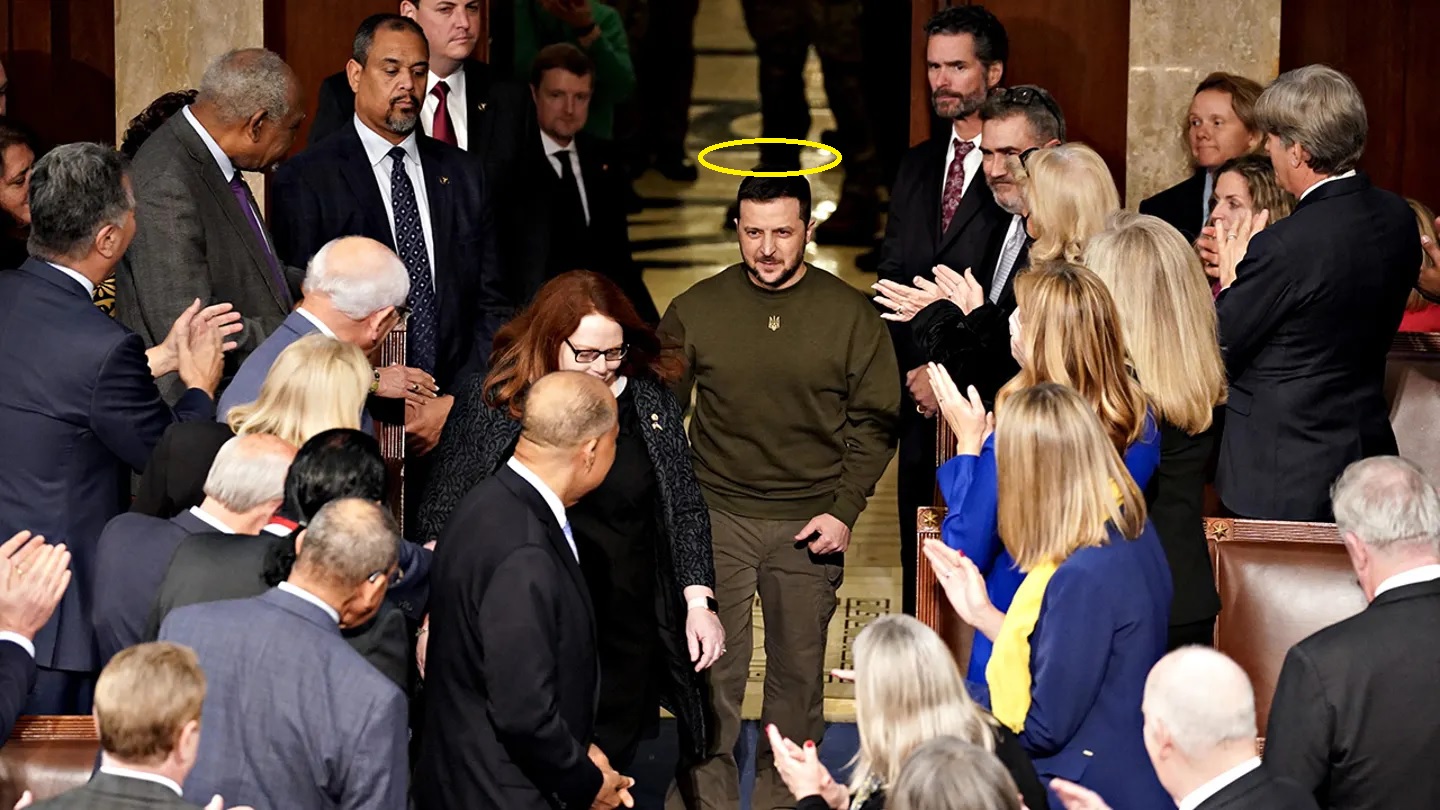
Walt Zlotow, West Suburban Peace Coalition, Glen Ellyn IL, 12 Aug 25.
For seven months Trump has reneged on his promise to end in one day America’s proxy war against Russia destroying Ukraine. Ukraine loses more soldiers and more territory every day with no chance of prevailing.
Tho a one day settlement was impossible, Trump came close to following thru by publicly berating Ukraine President Zelensky for continuing the war and threatening to cease all US weapons which keep Ukraine fighting. Then he pivoted back to war, demanding Russia’s Putin implement immediate ceasefire or face draconian sanctions. Putin responded to that nonsense with increased military attacks. Now with the upcoming summit this Friday, Trump has the opportunity to achieve peace in Ukraine.
Russia has already signaled concessions to achieve ceasefire. According to the Wall Street Journal, Russia told US envoy Steve Witkoff Russia would implement a full ceasefire if Ukraine would withdraw its remaining troops in the Donbas almost entirely controlled by Russia. In return Russia would freeze the lines in Kherson and Zaporizhzhia, the other 2 Ukraine oblasts Russia demanded full control over, rather than push on for full annexation. Russia would require Ukraine to remain neutral between East and West, giving up all intentions to join NATO.
Implementing that ceasefire would be a good start to permanently ending hostilities. But neither Ukraine President Zelensky nor European NATO leaders have bought into this sensible solution.
Zelensky maintains his delusional refusal to give up a single square mile of territory that will never return to Ukraine control. He could have kept every square mile of territory had he completed the peace deal with Russia in April 2022 that the US and UK sabotaged. Seventy percent of Ukrainians want the war to end forthwith. But the fool Zelensky keeps demanding ‘push on.’
European NATO leaders, especially UK’s Starmer, France’s Macron and Germany’s Merz are still committed to this failed war to maintain NATO dominance and isolation of Russia. They fear the loss of the US gravy train that pumps up their economies. They are as delusional as Zelensky.
Trump’s third obstacle to peace is the US national security state which abhors the US losing a senseless war of choice. War fanatics like Senator Lindsey Graham and retired generals paid off by the weapons makers, dominate mainstream news condemning inevitable US surrender. No voice for ending this proxy war madness is allowed to pitch peace on the airwaves or op ed columns. They will pound on Trump relentlessly should he chalk up another US war loss, albeit one bringing peace to Ukraine.
The only ceasefire and permanent war settlement possible will go down as a US/NATO defeat. Wonderful. NATO needs to disband as it has gone on trying to weaken, isolate Russia 34 years after becoming obsolete upon dissolution of the USSR in 1991.
Does Trump have the guts to force a settlement that overcomes the resistance of Zelensky, NATO leaders and the US war party? We may soon find out.
Zelensky Rejects Idea of Ceding Territory to Russia as Trump and Putin Prepare for Alaska Summit.

According to a report from The Wall Street Journal, Putin has proposed halting the war in exchange for Ukraine withdrawing from Donetsk
by Dave DeCamp | August 10, 2025, https://news.antiwar.com/2025/08/10/zelensky-rejects-idea-of-ceding-territory-to-russia-as-trump-and-putin-prepare-for-alaska-summit/
Ukrainian President Volodymyr Zelensky has rejected the idea of ceding territory to Russia to end the war in Ukraine, as President Trump and Russian President Vladimir Putin are preparing for a summit that will be held this Friday, August 15, in the US state of Alaska.
“Ukrainians will not gift their land to the occupier,” Zelensky said in a video address on Saturday. “We will not reward Russia for what it has perpetrated.
Zelensky’s comments came after The Wall Street Journal reported that Putin told US envoy Steve Witkoff that he would agree to a full ceasefire if Ukraine withdrew its forces from Donetsk, one of the two oblasts in Ukraine’s eastern Donbas region. Russia controls most of Donetsk and virtually all of Luhansk, the other half of the Donbas region.
Based on another Journal report, Russia is seeking to freeze the lines in Kherson and Zaporizhzhia — a potential climbdown from Moscow’s earlier demand for a full Ukrainian withdrawal from both oblasts.
A European counter-proposal that was presented to US officials on Saturday called for any territorial exchanges to happen in a reciprocal manner, meaning Russia would have to withdraw from some land if Ukraine ceded the territory it still controls in Donetsk. Some European officials said Moscow would have to cede control of Kherson and Zaporizhzhia.
The European proposal also calls for a ceasefire to be implemented immediately before any other steps are taken and says that any territorial concession from Ukraine must include concrete security guarantees, including potential NATO membership, which is a non-starter for Russia.
Much of how the peace process will go depends on how much pressure the US is willing to put on Ukraine to make a deal, since Zelensky’s war effort is reliant on US military support. The idea of a peace deal is popular in Ukraine as a recent poll from Gallup found that 69% of Ukrainians want a negotiated end to the conflict as soon as possible, while only 24% want to keep fighting until “victory.”
Kaliningrad Gambit: NATO’s Last Desperate Bluff /Spark for World War III?
Jeffrey Silverman, New Eastern Outlook, August 08, 2025
With Ukraine’s defences collapsing and Russia gaining the upper hand, NATO’s provocative focus on Kaliningrad risks triggering a nuclear escalation that could end any remaining prospects for diplomacy.
As many foresaw, the situation for Ukraine’s Western-backed proxy regime is unraveling fast. Russian forces are pushing forward with increasing momentum — Chasov Yar has reportedly fallen, and Pokrovsk and Kostiantynivka facing operational encirclement. The Eastern Front may soon collapse entirely.
Kiev appears outgunned and undermanned, the result of Russia’s grinding attritional strategy — high firepower, low casualties — not the reckless assault tactics portrayed in Western media.
In response, Washington is shifting gears — talking nuclear subs and floating threats against Kaliningrad, Russia’s fortified Baltic enclave, a move that may only harden Moscow’s resolve — and shift the conflict into a far more dangerous phase.
Russian military production has far outstripped that of the entire combined West by a factor of roughly four to one. Getting beyond lame Western rhetoric, the Russian Federation is producing weapons that actually work, unlike their NATO rivals, at a price far less than the West is capable of matching. Needless to say, the West claims plans are in progress to “close the gap in 2025” but they have been saying that since 2022, with no result in sight.
Sayings with punch!
They say tactics win battles, but logistics wins wars. The Russians took that to heart — favoring firepower and endurance over flashy maneuvers. The West, still chasing its blitzkrieg fantasies, missed the memo.
With Ukraine’s proxy army buckling, NATO faces a sobering question: what now?
Sanctions fizzled. The so-called “global consensus” crumbled as China, India, and Brazil shrugged off Washington’s threats and kept buying Russian energy. Trump’s bluster over secondary sanctions rings hollow — especially after Beijing humbled him in the last rare earth standoff.
Meanwhile, the West’s wunderwaffen parade — HIMARS, Javelins, Patriots, Leopards, F-16s — may have dazzled in brochures, but has done little to shift the battlefield calculus. Ukraine bleeds, Russia raises battle flags over liberated towns and cities, and NATO grows increasingly desperate.
And now, with few cards left to play, NATO’s gaze turns ominously to Kaliningrad — the heavily armed Russian exclave boxed in by Poland and the Baltics. A target? A bargaining chip? Or the next red line in a war spiraling out of control?
NATO Doctrine
General Christopher Donahue, commander of U.S. Army Europe and Africa, unveiled the new NATO doctrinefor Eastern Flank Defence at the inaugural LandEuro conference on Wednesday 30th July, by talking about NATO plans to attack Kaliningrad in the event of open conflict with Russia.
Speaking specifically about Kaliningrad, Donahue said modern allied capabilities could “take that down from the ground” faster than ever before:
“We’ve already planned that and we’ve already developed it. The mass and momentum problem that Russia poses to us…we’ve developed the capability to make sure that we can stop that mass and momentum problem.”
Sounds a bit too optimistic to me!
Apparently, NATO planners have learned little from the ongoing conflict in Ukraine, even less from the debacle in Afghanistan and Iraq, where offensives into built up areas require long preparation in terms of artillery and missile strikes. Modern satellite and drone observation makes it practically impossible to build up sufficient forces unobserved for “coup-de-main” surprise attacks of the type the western military still dream of, and the sheer level of destruction that modern weapons systems can unleash, such as the TOS-1, and FAB-3000 glide bombs, various cruise and Kinzhal hypersonic missiles, and conventionally armed Oreshnik IRBMs can unleash makes concentration of troops an extremely risky business.
Quite how NATO intends to square this circle is anyone’s guess, as the statements by Donahue are, to put it mildly, light on details………………………………………………………………………………………………………………………………………………………………
Method in Madness
What Western planners often ignore — or conveniently forget — is that Ukraine’s internal policies toward its Russian-speaking population were a major trigger for the conflict. Now, with the battlefield turning in Russia’s favor, NATO appears to be scrambling for leverage……………………………………………………….
Using Kaliningrad to poke the bear is just the spark that could set into motion the end of times, whether it is a military incursion, blockade, or a full-fledged attack, and this would be the end of diplomacy and humanity as we knew it.
The US and its NATO partners should never underestimate Russian resolve, as the portrayal of Russia as a defeated, overextended, or crumbling power is a story of another time and reality. Times have changed, and the world has changed, with new realities between East and West. https://journal-neo.su/2025/08/08/kaliningrad-gambit-natos-last-desperate-bluff-spark-for-world-war-iii/
The Alaskan Summit: Possible Agenda and Outcomes
by Gordonhahn, August 11, 2025
As US President Donald Trump and Russian President Vladimir Putin and their respective teams prepare for their summit meeting in Alaska, numerous media reports are appearing in the media purporting to record the basics of a territorial agreement on Ukraine agreed upon by both sides.
Based on unidentified US officials, the two sides have supposedly agreed that a ceasefire will commence when Ukraine withdraws its forces from Russian claimed and largely taken Donetsk and Luhansk (Lugansk) Regions and that Russia will then forego its claims on Zaporoshe and Kherson Oblasts, while keeping Crimea.
No American or Russian official has confirmed (or denied) this as the basics of an agreement on a ceasefire, which Russia has repeatedly refused. Thus, commentators are claiming that Mr Putin has made a compromise, abandoning some of his other previously stated objectives of the ‘special military operation’ (SMO), which consistently have included the following: a concrete commitment by Ukraine and NATO that Ukraine will not become a NATO member or receive NATO military assistance, i.e., Ukrainian neutrality (the main Russian demand and reason for the SMO); Ukraine’s de-Nazification (removal of neofascism from Ukrainian politics); and de-militarization (unspecified limits on Ukraine’s military power and/or force deployment).
This is all wrong…………………………………………………………………… To read further, please subscribe to my Substack: https://open.substack.com/pub/gordonhahn/p/the-alaskan-summit-likely-agenda?r=1qt5jg&utm_campaign=post&utm_medium=web&showWelcomeOnShare=true
Trump and Zelensky, two cornered rats with no way out of Ukraine catastrophe
Walt Zlotow, West Suburban Peace Coalition, Glen Ellyn IL, 5 Aug 25
Ukraine’s military is being systematically obliterated on the battlefield. US President Trump knows this. Ukraine President Zelensky does as well.
Yet, both are pretending the war can be won on terms favorable to the US and Ukraine. Trump is threatening secondary sanctions on nations buying Russian oil if Russia doesn’t end the war by August 8. Zelensky applauds this threat. Trump is also selling additional weapons to NATO allies to give to Ukraine’s lost cause.
Neither of Trump’s actions will have any effect on Ukraine’s impending battlefield defeat. Trump gets the ‘rat’ designation because he broke his campaign pledge to end the war by withdrawing US support and forcing Ukraine to negotiate the war’s end. But since that signals defeat of the US proxy war to weaken Russia, he clearly has decided it’s better to keep the war going rather than suffer a humiliating defeat. That merely ensures Ukraine’s near complete destruction as a functioning state.
Zelensky earned his ‘rat’ designation when he bailed out of ending the war in April 2022. He was on the cusp of a negotiated settlement with Russia that would have ended Ukraine’s effort to join NATO and guaranteed regional independence for Russian cultured Ukrainians in Donbas. For Ukraine it would have mean no lost territory and no massive casualties or infrastructure destruction. That is classic diplomacy achieving win-win.
But the rat Zelensky caved to US/UK pressure to dump that deal because Zelensky believed US/UK lies he could win simply with continued Western weapons. That, along with Trump’s refusal to end the war after promising to end it, has put Ukraine into a death spiral.
So with no way to win on the battlefield, our cornered rats are risking nuclear war every day this catastrophe continues. Zelensky keeps begging for long range NATO missies to attack deep into Russia. While that has no strategic value, it has value in provoking a Russian nuclear response, something to which Zelensky remains oblivious.
The nuclear risk Trump has embarked upon is even more reckless. He responded to a harmless Russian social media comment about a potential US/Russia nuclear confrontation, by sending two Ohio Class nuclear submarines toward Russian waters. Just as provocative and reckless, Trump’s sent B61-12 nuclear gravity bombs to the UK. These are offensive weapons having nothing do with will standard NATO defensive weaponry. They are the first delivery of these offensive weapons to the UK since removing them in 2008.
To Trump, reckless action is an appropriate response to relatively harmless words. Particularly since Trump is he world champ at using social media to threaten, browbeat friends and foes alike.
It’s not just the beleaguered people of Ukraine whose lives are threatened by the two cornered rats with no sane, safe way out of the lost war in Ukraine. It is all of us.
Ukraine hacks Russian submarine as Moscow expands Arctic presence
Ukraine claims to have pulled off a major hacking operation, obtaining
classified data on a new Russian nuclear submarine and revealing potential
vulnerabilities as Moscow intensifies its military presence in the Arctic.
Times 3rd Aug 2025, https://www.thetimes.com/world/russia-ukraine-war/article/ukraine-hacks-russian-submarine-as-moscow-expands-arctic-presence-2tmwc8dn5
IAEA reports hearing explosions, sees smoke near Ukraine’s Zaporizhzhia nuclear plant.
The International Atomic Energy Agency (IAEA) said on Saturday that its
team at Ukraine’s Zaporizhzhia Nuclear Power Plant (ZNPP) heard explosions
and saw smoke coming from a nearby location. The nuclear plant said one of
its auxiliary facilities was attacked today, IAEA said in a statement.
Reuters 2nd Aug 2025, https://www.reuters.com/world/europe/iaea-reports-hearing-explosions-sees-smoke-near-ukraines-zaporizhzhia-nuclear-2025-08-02/
US, UK in secret talks with Ukrainian officials to ‘replace Zelensky’: Report
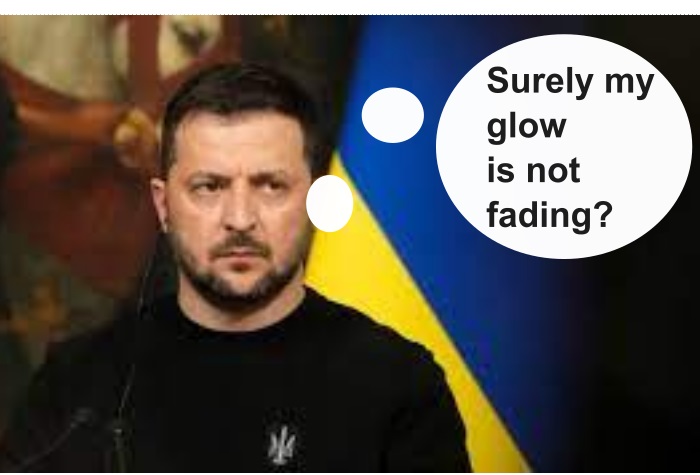
Three years into the war with Russia, the Ukrainian president has experienced his fortunes turn amid heavy human losses on the battlefield and intense Russian assaults.
JUL 29, 2025, https://thecradle.co/articles/us-uk-in-secret-talks-with-ukrainian-officials-to-replace-zelensky-report
Russia’s Foreign Intelligence Service (SVR) has revealed that US and British officials recently held a meeting in the Alps with top Ukrainian officials to discuss “replacing” Ukrainian President Volodymyr Zelensky.
According to a statement made available to TASS, the meeting involved Andrey Yermak, head of the Ukrainian president’s office, Kirill Budanov, chief of the Ukrainian Defense Ministry’s Main Directorate of Intelligence, and Valery Zaluzhny, the country’s ex-commander-in-chief who is now Ukraine’s ambassador to London..
“The Americans and the British announced their decision to propose Zaluzhny to the Ukrainian presidency. Yermak and Budanov ‘snapped a salute,’ while securing promises from the Anglo-Saxons to let them keep their present positions, as well as to take their interests into account in the course of making decisions over other personnel issues,” TASS reports.
The Ukrainian participants were reportedly promised they would retain their positions and influence over future personnel appointments following Zelensky’s ouster.
The SVR said Yermak helped prepare the ground for Zaluzhny by persuading Zelensky to weaken Ukraine’s anti-corruption bodies. Zelensky signed the new law, but Ukrainian MPs said the measure has not appeared on the parliament’s official website.
According to the SVR, the secret talks with UK and US officials aim to restructure Ukraine’s ties with the west, especially the US, and have established removing Zelensky as a prerequisite for continued western support in the war with Russia, after ceasefire talks between Moscow and Kiev in Istanbul last week ended without a breakthrough.
The SVR report comes a day after US President Donald Trump shortened his 50-day deadline for a ceasefire between Russia and Ukraine to “10 or 12 days,” warning of stalled progress and approving expanded weapons shipments to Kiev, including US-made Patriot systems financed by European partners and coordinated through NATO.
Former Ukrainian prosecutor general’s adviser Andriy Telizhenko said the plan to replace Zelensky predated Donald Trump’s return to office, adding, “Once the strings are cut, the puppet must be replaced.”
Journalist Seymour Hersh wrote in The End of Zelensky? that Zaluzhny “is now being viewed as Zelensky’s most reliable successor,” citing “well-informed Washington sources” confirming the role could be offered to him.
Zelensky’s end goal is in sight, and so is his end.
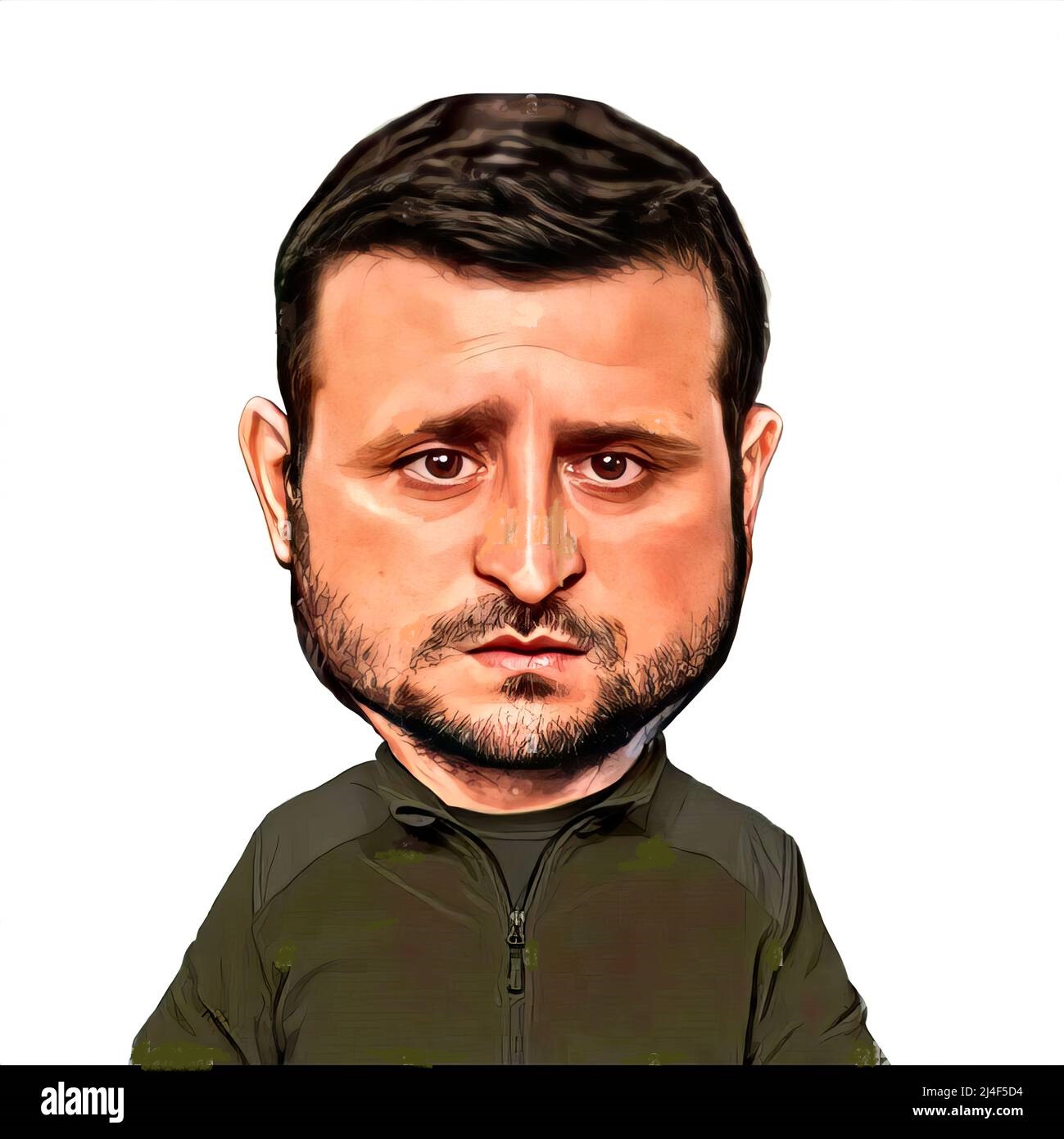
Tarik Cyril Amar, 23 July 25, https://www.rt.com/news/621881-zelensky-wont-go-down-quietly/
The Ukrainian leader is not “turning” to authoritarianism – it has always been his goal, and when he has it, he won’t let go.
When the US picks clients, vassals, and proxies, it needs men or women ready to trade in the interests, even the welfare and lives of their compatriots. Vladimir Zelensky is such a man. A look at the elites of EU-NATO Europe shows he is not alone. But he is an especially extreme case.
It is much less than a decade ago that the former media entrepreneur and comedian – often crude instead of witty – advanced from being a pet protégé of one of Ukraine’s most corrupt oligarchs to capturing the country’s presidency. As it turned out, never to let go of it: Zelensky has used the war, which was provoked by the West and escalated in February 2022, not only to make himself an indispensable if very expensive and often obstreperous American puppet but also as a pretext to evade elections.
And yet, now signs are multiplying that his days of being indispensable may be over. For one thing, Seymour Hersh, living legend of American investigative journalism, is reporting that Zelensky is very unpopular where it matters most, in US President Donald Trump’s White House. This is not surprising: Trump’s recent turn against Russia – whatever its real substance or marital reasons – does not mean a turn in favor of Ukraine and even less so in favor of Zelensky, as attentive observers have noted. According to the Financial Times, “Western allies of Ukraine” still believe that Trump keeps seeing Russian President Vladimir Putin “as his main negotiating partner and Zelensky as the primary obstacle to a workable peace deal.”
And according to “knowledgeable officials in Washington” who have talked to Hersh, the US leadership is ready to act on that problem by getting rid of Zelensky. And urgently: Some American officials consider removing the Ukrainian president “feet first” in case he refuses to go. Their reason, according to Hersh’s confidants: to make room for a deal with Russia.
Hersh has to make do with publishing anonymous sources. It is even conceivable that the Trump administration is leaking this threat against Zelensky to pressure him. Yet even if so, that doesn’t mean the threat is empty. Judging by past US behavior, using and then discarding other countries’ leaders is always an option.
Another, also plausible, possibility is that Zelensky will be discarded to facilitate not ending, but continuing the war, so as to keep draining Russian resources. In this scenario, the US would prolong the war by handing it over to its loyally self-harming European vassals. After, that is, seeing to the installation of a new leader in Kiev, one it has under even better control than Zelensky. Just to make sure the Europeans and the Ukrainians do not start understanding each other too well and end up slipping from US control. The Ukrainian replacement candidate everyone whispers about, old Zelensky nemesis General Valery Zaluzhny – currently in de facto exile as ambassador to the UK – might well be available for both options, depending on his marching orders from Washington..
Meanwhile, as if on cue, Western mainstream media have started to notice the obvious: The Financial Times has found out that critics accuse Zelensky of an “authoritarian slide,” which is still putting it very mildly but closer to the truth than past daft hero worship. The Spectator – in fairness, a magazine with a tradition of being somewhat more realistic about Ukraine – has fired a broadside under the title “Ukraine has lost faith in Zelensky.” The Economist has detected an “outrage” in Zelensky’s moves and, more tellingly, used a picture of him making him look like a cross between a Bond villain and Saddam Hussein. Even Deutsche Welle, a German state propaganda outlet, is now reporting on massive human rights infringements under Zelensky, with the impaired systematically targeted for forced mobilization.
Full disclosure: Knowing Ukrainian and Russian – Ukraine’s two languages – well and having written about the realities of Zelensky’s misrule for years already, my immediate response to these sudden revelations is “what took you so long?” My first articles explaining Zelensky’s obvious authoritarian tendencies – and practices, too – date back to 2021, and I have repeatedly pointed out that his popularity was slipping. All it took was to pay attention to Ukrainian polling.
But then, I know the reason for the mainstream’s delay: The bias induced by Western information warfare and media career conformism, which only weakens a little – or is redirected – when the geopolitics of the powerful change. In that sense, the increasingly sharp public criticism of Zelensky is yet another sign that he has fallen – and remains – out of favor with the American leadership that rules the West.
Zelensky’s recent actions may well indicate, as Hersh also suspects, that he knows he is in great danger – and not from Russia but his “friends” in the West. Just over the course of the last two weeks, Zelensky has reshuffled his government and, at the same time, started a devastating campaign against institutions and individuals that have two things in common: the mission to combat corruption and a well-deserved reputation for being particularly open to US influence.
Indeed, it is when Zelensky escalated his attacks on the latter that the Financial Times woke up from years of sweet slumber to discover there’s something authoritarian about the West’s top man in Ukraine. By now, things have only gotten worse: The domestic intelligence – and, of course, repression – service SBU has raided key anti-corruption organizations and made arrests. Simultaneously, Zelensky’s absolutely obedient majority in the Ukrainian parliament has passed a law to completely neuter these institutions by putting them under the president’s control, which the president then signed rapidly. By now, Ukraine is witnessing widespread protests against Zelensky’s attempt to combine maximum greed with unfettered if petty despotism.
For the Ukrainian news site Strana.ua – a media rarity, as it has managed to resist the Zelensky regime’s aggressive attempts to subdue and streamline it – the SBU raids on the anti-corruption agencies alone were a powerplay, designed to consolidate Zelensky’s one-man rule. That is correct, and he wasn’t even done.
At the same time, it is, obviously, also very convenient to remove the last feeble restraints on Ukraine’s fabulously pervasive graft, since whatever the West – that is, the Europeans – will now spend on Ukraine will be misappropriated even more wildly than before. That could come in handy especially if there should be a need to stay rich in exile.
This gangster-economic aspect of Zelensky’s fresh power grab has not escaped even his Western friends: the OECD has already warned the Ukrainian regime that the stifling of the anti-corruption agencies will harm Western investment in Ukraine’s reconstruction in general and its arms industry in particular. Likewise, the International Renaissance Foundation, a Soros power structure that has been all too active in Ukraine for more than three decades now, has also called for a repeal of the new law.
In essence, these and similar Western complaints all mean the same: We know you are robbing us blind already but we’ve made our peace with that because you serve our geopolitics. But if you try to take an even larger cut, we may reconsider.
Taken together, Zelensky’s government reshuffle and his assault on the anti-corruption agencies seem to reflect a double strategy: On one side, the endangered puppet is signaling submission to the US in at least some of his recent personnel moves, but on the other, he is also consolidating his power at home by insulating it from too much direct American influence. It is as if he were sending a message to Washington: “I really am your man. But if you try to choose another, I’ll fight.”
The historic irony is that, with Zelensky succeeding in finally razing the last pitiful remnants of pluralism in Ukraine, he – the once hysterically idolized darling of the “value-based” West – will be the president achieving a complete authoritarianism like no Ukrainian leader before him. And all that while propped up with hundreds of billions from the West.
Any displays of surprise or shock by Ukrainian and Western politicians or mainstream media betray either that they have been dozing under a rock for years or that they are being disingenuous. Because today’s Zelensky is not “turning” to authoritarianism. On the contrary, authoritarianism has always been his default disposition and his aim. Zelensky has been working on his personal assent to unchecked power – and, of course, its material spoils as well – since he became Ukraine’s president. That means, long before the conflict between Russia and Ukraine (and behind and through it the West) escalated in early 2022.
How do we know? Because it was already obvious, including to many Ukrainians, by 2021 at the very latest. It was then that Zelensky’s Ukrainian critics – not Russians or those with sympathy for Russia – attacked him and his political party “Servant of the People” for erecting a “mono-vlada,” that is, in essence, an authoritarian political machine to control not only the state but the public sphere as well.
By 2021, Zelensky had already engaged in all of the following: vicious lawfare against Ukraine’s opposition and his personal political rivals, such as former president Petro Poroshenko; massive media censorship and streamlining, while targeting with repression and chicanery any outlets, editors, and journalists daring to resist, for instance Strana.ua; systematically and illegally abusing emergency powers and unaccountable but powerful institutions (most of all, the National Security Council) to stifle criticism; and, last but not least, the fostering of a dictatorial personality cult which was boosted by the West.
Since then, things have only gotten worse. Zelensky has steadily fastened his hold over Ukraine, while prolonging and losing an avoidable and catastrophic war for a Western strategy to demote Russia. Ukraine has been bled dry for a cynical and (predictably) failing Western scheme; Russia, meanwhile is not only winning but has greatly increased its autonomy from the West.
The war may end soon or it may drag on. For the sake of Ukraine we have to hope it will be over soon. Zelensky, if he were a decent man, would then have to hand himself over to postwar Ukrainian justice or be his own judge, the old-fashioned way. But Zelensky is no decent man. If rumors now swirling are not only plausible but truthful, then his masters in Washington may be the ones preparing an appropriately indecent end for him. If the protests against him accelerate, Zelensky may even end up “color-revolution-ed.” How ironic.
1 This Month


Shut down the radiation-damaged Heysham nuclear reactors now
To see nuclear-related stories in greater depth and intensity – go to https://nuclearinformation.wordpress.com

Say No to NASA’s Reckless Nuclear Reactor on the Moon
Say No to NASA’s Reckless Nuclear Reactor on the Moon
-
Archives
- October 2026 (256)
- September 2026 (339)
- August 2026 (330)
- July 2026 (355)
- June 2026 (287)
- May 2026 (306)
- April 2026 (356)
- March 2026 (251)
- February 2026 (267)
- January 2026 (308)
- December 2025 (358)
- November 2025 (359)
-
Categories
- 1
- 1 NUCLEAR ISSUES
- business and costs
- climate change
- culture and arts
- ENERGY
- environment
- health
- history
- indigenous issues
- Legal
- marketing of nuclear
- media
- opposition to nuclear
- PERSONAL STORIES
- politics
- politics international
- Religion and ethics
- safety
- secrets,lies and civil liberties
- spinbuster
- technology
- Uranium
- wastes
- weapons and war
- Women
- 2 WORLD
- ACTION
- AFRICA
- Atrocities
- AUSTRALIA
- Christina's notes
- Christina's themes
- culture and arts
- Events
- Fuk 2022
- Fuk 2023
- Fukushima 2017
- Fukushima 2018
- fukushima 2019
- Fukushima 2020
- Fukushima 2021
- general
- global warming
- Humour (God we need it)
- Nuclear
- RARE EARTHS
- Reference
- resources – print
- Resources -audiovicual
- Weekly Newsletter
- World
- World Nuclear
- YouTube
-
RSS
Entries RSS
Comments RSS

