Russia rules out transferring control over Zaporizhzhia Nuclear Power Plant to Ukraine

the plant being jointly operated, including with the participation of international organizations,
“In this case, for example, it is impossible to properly ensure nuclear and physical nuclear safety, or regulate issues of civil liability for nuclear damage.
Transfer of the facility or control over it to Ukraine or any other country is ‘impossible,’ says Foreign Ministry
Burc Eruygur 26.03.2025, https://www.aa.com.tr/en/russia-ukraine-war/russia-rules-out-transferring-control-over-zaporizhzhia-nuclear-power-plant-to-ukraine/3520006#
Russia on Tuesday rejected transferring control over the Zaporizhzhia Nuclear Power Plant (ZNPP) to Ukraine or any other country, saying it is “impossible.”
US President Donald Trump and his Ukrainian counterpart Volodymyr Zelenskyy discussed the situation surrounding energy supplies to Ukraine and the country’s nuclear power plants during a phone call last Wednesday.
Trump told Zelenskyy that the US could be “very helpful in running the plants with its electricity and utility expertise” and that “American ownership of those plants could be the best protection for that infrastructure,” according to a White House statement.
Zelenskyy told journalists at a briefing later that he and Trump did talk about the restoration of the ZNPP and that Ukraine is ready to discuss the modernization of the plant but they did not discuss the issue of ownership of the plant.
A statement by the Russian Foreign Ministry stressed that the plant is a “Russian nuclear facility,” saying the transfer of the facility or control over it to Ukraine or any other country is “impossible.”
“All the station’s employees are citizens of the Russian Federation. Their lives cannot be played with, especially considering the atrocities that Ukrainians have committed and continue to commit on the territory of our country,” it said.
The statement also denied the possibility of the plant being jointly operated, including with the participation of international organizations, describing this as having “no such precedents in world practice.”
“In this case, for example, it is impossible to properly ensure nuclear and physical nuclear safety, or regulate issues of civil liability for nuclear damage.
The statement also denied the possibility of close cooperation between NATO intelligence services with Ukraine, which have impressive sabotage potential, makes it impossible, including with the participation of international organizations, describing this as having “no such precedents in world practice.”
“In this case, for example, it is impossible to properly ensure nuclear and physical nuclear safety, or regulate issues of civil liability for nuclear damage.
“An important aspect is that close cooperation between NATO intelligence services with Ukraine, which have impressive sabotage potential, makes it impossible to even temporarily admit representatives of these states to the ZNPP,” the statement added.
The situation around the Zaporizhzhia Nuclear Power Plant, Europe’s largest and one of the world’s 10 biggest, particularly remains tense as concerns persist over a possible nuclear disaster involving Moscow and Kyiv, both of which have frequently accused each other of attacks around the facility.
Since Sept. 1, 2022, International Atomic Energy Agency (IAEA) personnel have been present at the plant, which has been under Russian control since March 2022.
Ukraine and Israel are not US allies.
Walt Zlotow, West Suburban Peace Coalition, Glen Ellyn IL , 25 Mar 25
They are essentially US Trojan Horses used to project US power dominance in Europe and Middle East respectively.
Both US Trojan Horses have come up lame and are heading for the glue factory.
The US marched their Ukraine Trojan Horse up to Russia’s borders armed with NATO entrance papers and billions in US weapons. When Russia pleaded with the US for years to discuss Russia’s valid security concerns, the US replied ‘Nyet.’ Former President Biden knew Russia would attack but believed any invasion would be a Vietnam style quagmire for Russia. Biden saw the upcoming Russian collapse as the shining achievement of his half century anti-Russian Cold War mantra. That failed spectacularly.
The election of Trump has injected a healthy dose of realpolitik that acknowledges Biden’s folly. Trump is currently in negotiations to put America’s Ukraine Trojan Horse to pastoral retirement. Can’t come soon enough.
America’s Israeli Trojan Horse to dominate the Middle East is a horse of a different color. It’s more like Israel’s Trojan Horse near totally financed by Uncle Sam. America gets to sit back while Israel marches around their neighborhood committing genocide is Gaza, indiscriminately bombing innocents in Syria and Lebanon, and promoting US attacks on Yemen and eventually Iran. All this senseless carnage constitutes Israel serving as the US battering ram to recreate the Middle East according to its dominant worldview.
Like our Ukraine Trojan Horse, our Israeli Trojan Horse is failing to promote America’s true national interests. Most of the world’s 193 countries are aghast America promotes the most grotesque genocide this century. America’s standing may be at an all time low. Like with Ukraine, we’re enabling Israel to self destruct. It’s now a pariah state. Tourism and investment are in decline. Its military is demoralized both from significant casualties and having to commit genocide.
Both allies are flirting with wider war; nuclear in Ukraine, regional war in Israel.
America gets nothing from allies Ukraine and Israel except worldwide condemnation, squandered treasure and diminishing unipolar world dominance.
With allies like Ukraine and Israel, America does not need enemies.
Zaporizhzhia nuclear plant to stay in Russian control, Moscow says
By Reuters, March 26, 2025, https://www.reuters.com/world/europe/zaporizhzhia-nuclear-plant-stay-russian-control-moscow-says-2025-03-25/
MOSCOW, March 25 (Reuters) – Russia’s Foreign Ministry said on Tuesday the Zaporizhzhia nuclear plant was a Russian facility and transferring control of it to Ukraine or any other country was impossible.
The ministry also said that jointly operating the plant was not admissible as it would be impossible to properly ensure the physical and nuclear safety of the station.
It said Zaporizhzhia region, partly controlled by Russian forces, was one of four in Ukraine that had been annexed by Russia by virtue of referendums staged seven months after Moscow’s full-scale invasion of its neighbour and a presidential decree had formally made the station Russian property.
Western nations have dismissed the referendums as shams.
“The return of the station to Russia’s nuclear sector has been a fait accompli for quite some time,” the ministry statement said. “Transferring the Zaporizhzhia plant to the control of Ukraine or another country is impossible.”
Russian forces seized the station early in the invasion and each side has since routinely accused the other of staging attacks that endanger safety at the plant, Europe’s largest with six reactors.
Although the plant now produces no electricity, the U.N.’s nuclear watchdog has monitors stationed there, as it does at all Ukrainian nuclear power sites.
Ukraine demands the return of the station to its jurisdiction and rejects the 2022 annexation of its territory as illegal.
U.S. President Donald Trump, during a phone conversation this month with his Ukrainian counterpart Volodymyr Zelenskiy suggested the United States could help run and possibly own Ukraine’s nuclear power plants.
Zelenskiy said the plants belong to the Ukrainian people. He said he and Trump had discussed potential U.S. investment in the plant. Reporting by Maxim Rodionov and Ron Popeski; Editing by Hugh Lawson and Rod Nickel
Militarize Ukraine ‘to the teeth’ – Finnish president
Comment: Is the Finnish President among those that do not really want a settlement in Ukraine any time soon?
Thu, 20 Mar 2025 https://www.sott.net/article/498616-Militarize-Ukraine-to-the-teeth-Finnish-president
Alexander Stubb has also called for stronger sanctions against Russia and the seizure of its frozen assets
Finnish President Alexander Stubb has called on Kiev’s Western backers to pump Ukraine with military resources and financial aid, claiming that this will deter Russia. He made the call shortly after meeting Vladimir Zelensky in Helsinki and as EU lawmakers negotiate doubling the bloc’s weapons budget.
EU foreign policy chief Kaja Kallas had pitched a plan to increase the bloc’s cashflow for Ukraine from €20 billion ($20.9 billion) in 2024 to €40 billion ($43.7 billion) this year. However she admitted to La Stampa that she was opposed by Italy, France, Spain, and Portugal. The Italian newspaper has reported that a €5 billion cap has been placed on the donation.
Stubb told Politico on Wednesday that “Deterrence – which is based on militarizing Ukraine to its teeth,” would be the best way to end the Ukraine conflict.
The Finnish president lamented the fact that Kallas failed to gather support for her plan, expressing hope that that heads of state and government would be able to salvage the package.
“It’s very important now to send a message from Europe that the military, political and economic support continues,” he said, emphasizing that sanctions against Russia should be bolstered, while its frozen assets should be seized to ramp up pressure.
Hungary has refused to sign a joint EU summit statement on Ukraine, according to TASS, which reported that both lethal and non-lethal aid had been rejected by Budapest.
The Finnish president also supported potential Ukrainian membership in the EU and in NATO. Finland, which only joined the US-led military bloc in 2023, has been a strong backer of Kiev since the escalation of the conflict with Russia in February 2022.
Moscow has consistently condemned NATO expansion towards its borders, describing the bloc as a threat to Russia’s national security. President Vladimir Putin and other officials have repeatedly stressed that efforts to include Ukraine in the military bloc had been one of the root causes of the escalation of the conflict in 2022.
Stubb’s comments come amid negotiations for a 30-day ceasefire aimed at halting long-range strikes on energy infrastructure by both sides advocated by US President Donald Trump. Another round of talks between Russian and US delegations is scheduled for March 24 in the Saudi city of Jeddah.
Nuclear experts pour cold water on US idea to restore and run Ukrainian power plant.
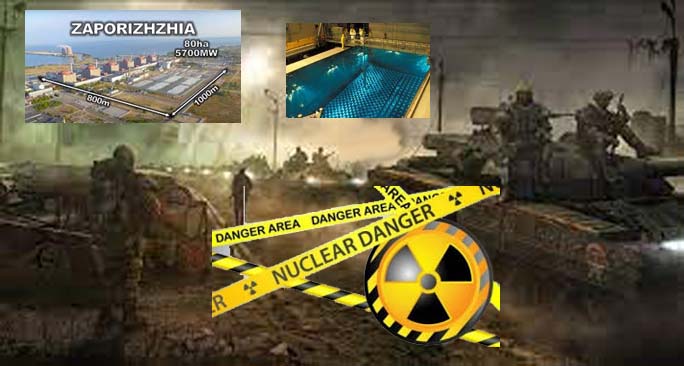
Nuclear experts have also highlighted that the US does not have any nuclear plants that use the same class of technology as Zaporizhzhia, which is a Soviet-designed “water water energetic reactor” (abbreviated as “VVER” in Russian).
By Lauren Kent, CNN, 20th March 2025, https://edition.cnn.com/2025/03/20/europe/ukraine-us-zaporizhzhia-nuclear-power-plant-explainer/index.html
Ukraine’s Zaporizhzhia nuclear power plant, occupied by Russian forces since the early days of the war, could be restored and protected by US ownership – at least according to the Americans.
But it’s unclear how the operation would work in practice, experts say, especially as the plant is on the front line, in territory controlled by Russia.
As part of ongoing talks to inch toward a partial ceasefire, US President Donald Trump and Ukrainian counterpart Volodymyr Zelensky “discussed Ukraine’s electrical supply and nuclear power plants” during a Wednesday phone call, according to the US readout of the call.
“(Trump) said that the United States could be very helpful in running those plants with its electricity and utility expertise. American ownership of those plants would be the best protection for that infrastructure and support for Ukrainian energy infrastructure,” the readout said.
On Thursday, Zelensky disputed that section, saying: “In terms of ownership, we definitely did not discuss this with President Trump.” Zelensky stressed that “all nuclear power belongs to the (Ukrainian) state, including the temporarily occupied Zaporizhzhia region.”
Zelensky said the day before that Ukraine is ready to consider the possibility of American investment in the restoration and modernization of Zaporizhzhia. During a news conference after his call with Trump, Zelensky said they only discussed the occupied Zaporizhzhia plant, rather than Ukraine’s wider nuclear power network.
“I believe that the station will not work under occupation. I believe that the station can be restored to operation,” Zelensky said, also cautioning that the process will take an estimated two years or more.
Before Russia’s full-scale invasion in 2022, the Zaporizhzhia plant supplied roughly 20% of Ukraine’s energy, with six reactors, making it the largest nuclear power station in Europe. Ukrainian staff remain at the plant under Russian occupation, and at one point staff were forced to work at “gunpoint.”
But the plant is now disconnected from the grid and the electricity infrastructure required to operate the plant safely has been damaged by drone strikes and frequent shelling. Russia also destroyed the nearby Kakhovka dam, emptying the reservoir that supplied water to cool the plant.
All six reactors are shut down and there are concerns over the plant’s ongoing maintenance, as explosions continue nearby, according to a UN nuclear watchdog team on the ground.
When asked about how the US could potentially run a Ukrainian nuclear plant, Energy Secretary Chris Wright told Fox News that he didn’t believe it would require American troops on the ground.
“Certainly, we have immense technical expertise in the United States to run those plants. I don’t think that requires boots on the ground,” Wright said. “But I’ll leave the foreign policy to President Trump and Secretary (of State Marco) Rubio. I know they are working tirelessly, ‘How do we bring peace to Ukraine?’
“But, if it was helpful to achieve that end – have the US run nuclear power plants in Ukraine? No problem. We can do that,” Wright added.
But experts question how feasible the idea floated by the Trump administration would be.
Operating the plant safely would require a safe, constant power supply to avoid a reactor meltdown, as well as the restoration of sufficient water supplies for cooling the plant.
“The first word of business would be to establish definitively that there could be no attacks on either the plant directly or on the supporting infrastructure – both power and water resources – and that would have to be iron-clad,” said Edwin Lyman, director of nuclear power safety at the Union of Concerned Scientists. “So far, that kind of agreement has been elusive, as shelling occurs at a daily basis in the vicinity of the reactors.”
“There’s no point in trying to rebuild a plant and operate it if it could be jeopardized at any moment,” Lyman said. “And the notion that US-ownership would somehow be more of a deterrent to Russia attacking the plant than now, when the Russians themselves control the plant, that doesn’t make sense either.”
The idea of US operation “raises a whole lot of logistical and technical and practical questions that are very unclear,” Lyman said, including the question of US liability for any accident at the facility. “With ownership or operator status comes responsibility.”
Nuclear experts have also highlighted that the US does not have any nuclear plants that use the same class of technology as Zaporizhzhia, which is a Soviet-designed “water water energetic reactor” (abbreviated as “VVER” in Russian).
“These are different technologies,” said Elena Sokova, director of the Vienna Center for Disarmament and Non-Proliferation, adding that there are strict licensing requirements for the plant’s operators.
“The US is an advanced country… but to be prepared to immediately take control of something that is of a different design, designed by different country, and where you have no experience of running it – I don’t think it’s a good solution or viable option.”
“Having said that, if we’re talking about a long process, I’m sure certain things could be worked out, particularly if there is an arrangement… to have the majority of the Ukrainian staff and operators running these reactors,” Sokova added.
Ukraine wants role in restoration of plant
Zelensky emphasized on Wednesday night that safe restoration of the plant is in the whole world’s interest, and Ukraine should have a role in that “because it is ours, and this is our land, this is our station.”
The Ukrainian president said any return of the plant would not be possible without control of the area where it is located – the city of Enerhodar – on the Russian-occupied side of the Zaporizhzhia region.
“If you just hand over the station, and a meter away from the station, everything is occupied or there are Russian weapons, no one will work like that,” Zelensky told reporters, raising concerns that the plant could be restored with US and Ukrainian investment, only to have Russia possibly damage or destroy it again later.
As fighting continues along the front line, the dire situation at the Zaporizhzhia plant “remains unchanged,” Andrian Prokip, energy program director at the Ukrainian Institute for the Future, wrote last month.
“It still does not receive adequate maintenance and it continues to serve as a Russian ammunition depot,” said Prokip, also a senior associate at the Wilson Center.
CNN’s Svitlana Vlasova, Christian Edwards and DJ Judd contributed to this report.
Ukraine will have to make territorial concessions – Waltz
https://www.rt.com/news/614323-waltz-ukraine-territorial-concessions/ 24 Mar 25
Trump’s national security adviser has also indicated that the US is ready to ramp up sanctions pressure on Russia if it declines a 30-day ceasefire.
Ukraine should be prepared to give up certain territories as part of any future peace negotiations with Russia, US National Security Adviser Mike Waltz has said.
Kiev claims sovereignty over Crimea, the Donetsk and Lugansk People’s Republics, as well as Kherson and Zaporozhye Regions. The territories officially became part of Russia after referendums in 2014 and 2022. Moscow has maintained that their status is non-negotiable.
Speaking to ABC News on Sunday, Waltz said that a potential settlement to the Ukraine conflict “is going to be some type of territory for future security guarantees” for Kiev.
According to the official, an alternative in the form of NATO membership for Ukraine “is incredibly unlikely.” Ukraine has demanded accession to the US-led military bloc whereas Moscow views Kiev’s NATO aspirations as a root cause of the ongoing conflict.
Attempts to “drive every Russian off of every inch of Ukrainian soil, including Crimea” would be unrealistic at this point, Waltz believes. The ongoing diplomatic efforts spearheaded by the US should focus on the “reality of the situation on the ground,” the national security adviser argued.
Also on Sunday, in an interview with Fox News, Waltz said that “we are engaging in diplomacy, and that will involve both carrots and sticks to get both sides to the table.” When asked whether US President Donald Trump was prepared to “punish” Russian President Vladimir Putin with more sanctions if he rejected a ceasefire, Waltz replied that “all options are on the table.”
Earlier this week, US Secretary of State Marco Rubio revealed that representatives from Washington and Kiev had “had conversations” on the issue of territorial concessions during the talks in the Saudi Arabian city of Jeddah on Tuesday. The diplomat argued that “neither side can militarily achieve their maximalist goals.”
He similarly predicted that “obviously, it’ll be very difficult for Ukraine in any reasonable time period to sort of force the Russians back all the way to where they were in 2014.”
Following the negotiations in Jeddah, Ukraine agreed to a 30-day ceasefire.
Trump’s special envoy, Steve Witkoff, traveled to Moscow on Thursday to present Putin with the details of the proposal.
The Russian head of state welcomed the ceasefire in principle but insisted on addressing several salient issues first, including the fate of the Ukrainian troops encircled in Russia’s Kursk Region
What is the fate of Russian-held Zaporizhzhia nuclear power plant after Trump talks?
The Zaporizhzhia Nuclear Power Plant is one of the world’s 10 largest and Europe’s biggest
Hanna Arhirova, Friday 21 March 2025, https://www.independent.co.uk/news/world/europe/ukraine-nuclear-power-plants-trump-putin-b2719353.html
President Donald Trump suggested a potential transfer of Ukrainian power plants to US ownership during a call with Ukrainian President Volodymyr Zelensky, according to a US statement.
The discussion, later clarified by Zelensky, centred on the Zaporizhzhia Nuclear Power Plant (ZNPP), currently under Russian occupation.
While the plant remains connected to Ukraine‘s grid, it is not producing electricity, raising questions about the feasibility and nature of any future US involvement.
The Zaporizhzhia Nuclear Power Plant is one of the world’s 10 largest and Europe’s biggest.
Who controls the Zaporizhzhia Nuclear Power Plant
Located in Ukraine’s southern Zaporizhzhia region, Russian forces occupied it shortly after Moscow’s February 2022 invasion.
While Russia declared the region annexed in Autumn 2022, its largest city, Zaporizhzhia, remains under Ukrainian control.
Ukraine has accused Russia of stationing troops and weapons at the plant and using it as a launchpad for attacks across the Dnipro River. Russia denies this, accusing Ukraine of shelling the facility.
How many nuclear power plants does Ukraine have?
Besides Zaporizhzhia, Ukraine operates three active nuclear power plants, which generate the majority of the country’s electricity following sustained Russian attacks on thermal and hydroelectric plants.
These facilities are located in southern, western and northwestern Ukraine, away from frontline areas.
What did Trump and Zelenskyy discuss and are there negotiations over Zaporizhzhia’s fate?
During their call on Wednesday, Trump suggested that Zelensky should consider giving the US ownership of Ukraine’s power plants to ensure their long-term security, according to a White House statement from US Secretary of State Marco Rubio and National Security Adviser Mike Waltz.
“American ownership of those plants could be the best protection for that infrastructure,” Trump suggested, according to the statement.
Zelensky later told journalists their conversation focused on the Zaporizhzhia nuclear power plant, and the following day, made it clear that “the issue of ownership” of the other three plants was never discussed.
“All nuclear power plants belong to the people of Ukraine,” he said.
Zelenskyy said that when they discussed Zaporizhzhia, the US leader had inquired about the facility’s future. “Trump asked my thoughts on the plant,” Zelensyy said. “I told him that if it is not Ukrainian, it will not operate. It is illegal.”
Even though ZNPP is a state-owned plant, Zelenskyy acknowledged that if the US were to claim it from Russian control, invest in it and modernise it, Ukraine might consider it. “That is a separate question, an open one,” he said.
What is the current state of Zaporizhzhia’s nuclear plant?
Since falling under Russian control, the plant’s conditions have deteriorated. While its six reactors have been shut down for years, they still require power and qualified staff to maintain cooling systems and safety features.
Energoatom, Ukraine’s state nuclear operator, said that after Russian forces took over, Ukrainian personnel were forced to sign contracts with Russian authorities and take Russian citizenship. Those who refused faced abduction or threats, forcing thousands to flee, leaving the facility understaffed and harder to manage.
The collapse of a dam in June 2023 further jeopardised the plant’s cooling systems, which relied on water from the reservoir. In response, plant administrators dug wells, according to the International Atomic Energy Agency (IAEA).
Zelensky said extensive repairs would be needed before the plant could operate again, estimating the process could take at least two years.
The IAEA has repeatedly warned the war could cause a radiation leak. While the plant no longer produces electricity, it still holds large amounts of nuclear fuel, requiring constant cooling.
Regular blackouts caused by the fighting have disrupted the facility, though power has been quickly restored each time.
IAEA experts permanently stationed there still face restricted access, with Russian authorities blocking some inspection requests, according to IAEA head Rafael Grossi.
Is any kind of deal imminent?
Zelensky said the discussions with Trump on restoring Zaporizhzhia were a positive step, but cautioned that no one would work at the plant if Russian forces remained stationed nearby.
Control over the plant is likely to remain a legal and logistical challenge, intertwined with a highly divisive issue for both warring sides: control over the land itself.
Russian troops hold the area, while Ukrainian forces are separated from it by the Dnipro River and more than 100 kilometres (62 miles) of terrain.
The fight for control of Ukraine’s nuclear reactors
How serious is Donald Trump about US ownership of Kyiv’s nuclear power plants?
By Chas Newkey-Burden, The Week UK,
https://theweek.com/world-news/the-fight-for-control-of-ukraines-nuclear-reactors
First, Donald Trump made a pitch for Ukraine’s critical minerals; now, the US president seems to want to own the war-torn nation’s nuclear power plants.
But there’s a lot of confusion over what Trump would do if he did take control of the plants – and if he actually even wants to.
How many nuclear power plants in Ukraine?
Ukraine has four nuclear power plants. The most significant one – and the largest in Europe – is Zaporizhzhia, which was seized by Russia in the first weeks of the war. And it’s this plant, in particular, that’s become Trump’s “new craving” in his “transactional approach to bringing peace”, said Politico.
What is Trump demanding?
As a demand, it’s Trump “at his most confusing”, said The Guardian. If the current frontlines in Ukraine were “frozen” in a ceasefire or peace deal, it would be “difficult to see” how Zaporizhzhia could be operated by the US while it’s “surrounded by Russian occupiers”. Besides, Ukraine is “not thought willing” to “renounce” ownership.
It’s “unclear” whether the US is actually looking to own Ukraine’s atomic power, said the Financial Times. A US account of a recent call between Kyiv and Washington suggested so, but Zelenskyy said the discussion only touched on the US helping to “recover” and modernise the Zaporizhzhia plant.
Why would Trump want control?
Trump’s minerals deal with Ukraine is “back on” but “can only go ahead if the materials can be extracted”, said The Telegraph. This “takes a lot of energy – something which the Zaporizhzhia plant could provide”.
Energy analysts have also noted that the US could have another “economic interest” in the plant, said The New York Times. Zaporizhzhia uses fuel and technology supplied by Westinghouse, an American nuclear technology company.
But still, the idea has “a catch” for “the man who coined the art of the deal”, said Reuters: “it would be years” before there is “even a hope of it making a return on investment”. So, the proposal could simply be the US “testing out various ideas to see what works”, as Trump “seeks to hammer out a lasting peace deal”.
What might happen next?
Control over the plant is “likely to remain a legal and logistical challenge”, said The Associated Press. And, of course, control over the land Zaporizhzhia stands on is a “highly divisive issue for both warring sides”.
It’s “unclear” what Trump could “offer to Russia to get it to hand over the plant”, said the NYT. Moscow is likely to demand something meaningful in return, such as “the lifting of Western sanctions that have hurt its economy”.
If Ukraine does regain control of Zaporizhzhia, the “more likely” alternative to US ownership is a “joint venture” – an investment fund for the ageing plant, which “both parties could contribute to and benefit from”, said The Telegraph. This is essentially the same concept that “formed the basis” of the minerals deal.
Trump: best protection for Ukraine’s nuclear power is US takeover.
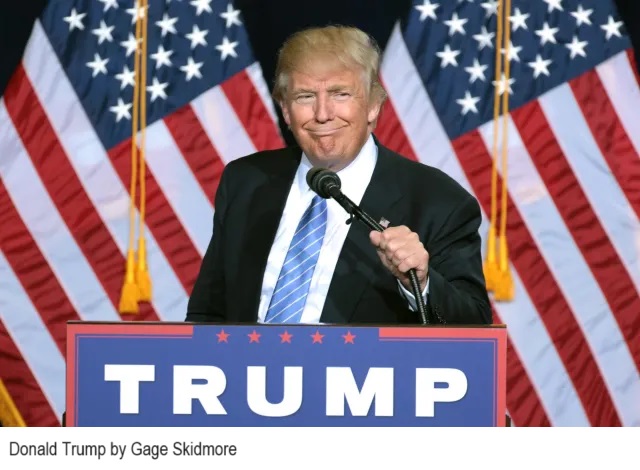
President Trump has told President Zelensky that an American takeover of
nuclear power in Ukraine would offer the “best protection” for the
country’s infrastructure. The White House said Trump had “moved
beyond” the minerals deal for American companies to extract oil, gas and
rare metals that had been proposed as a way to protect Ukraine from future
Russian aggression. That deal was suspended after Zelensky’s disastrous
meeting last month with Trump and JD Vance, the vice-president, in the Oval
Office. It envisaged US control over natural resources and infrastructure
such as ports, but did not mention nuclear power.
Times 19th March 2025 https://www.thetimes.com/world/russia-ukraine-war/article/trump-best-protection-for-ukraines-nuclear-power-is-us-takeover-9l0xsxqjj
Nuclear power is such a mess – Zaporizhzhia plant as the shining example
https://theaimn.net/nuclear-power-is-such-a-mess-zaporizhzhia-plant-as-the-shining-example/ 23 Mar 25
You do wonder how the International Atomic Energy Association (IAEA) can tell us with a straight face, that nuclear power is safe !
Nobody talks about Chernobyl any more (melted down 1986), Fukushima (melted down 2011). They’re ancient history. No, not really. The cleanup in each case is really only just beginning.
The Chernobyl ‘sarcophagus’ – still contains the molten core of the reactor and an estimated 200 tonnes of highly radioactive material. The stability of the structure has developed into one of the major risk factors at the site. Fukushima – Experts say the hard work and huge challenges of decommissioning the plant are just beginning. There are estimations that the work could take more than a century.
But – let’s look at the Zaporizhzhia nuclear power plant in Ukraine. With 6 reactors (all shut down) it’s the largest nuclear power station in Europe. It’s a messy nuclear plant, in that it was originally set up to use Russian nuclear technology and fuel, enriched uranium (U-235). Then later the Ukrainians gradually changed the fuel type to American Westinghouse. By 2024, this fuel type at Zaporizhzhia was expiring. Now under the Russians’ control, they could not now access this fuel, if Russia did seek to restart the reactors.
Suddenly, the status and future of the Zaporizhzhia plant has become a very timely question. With the ceasefire negotiations going on, have President Trump and President Putin been discussing this? Nobody is letting on. The White House and the US State Department are keeping mum. Donald Trump and Ukrainian President Voldymyr Zelensky are reported to have discussed “American ownership” of the Zaporizhzhia plant, with Zelensky insisting that it could function only under Ukrainian ownership. Russia has been reported as planning to make those reactors functional again.
That critical question comes to mind – What’s In It For Whom?
Is it the glory? The pride of ownership? A wonderful economic opportunity? That last one is dubious. Ownership in wartime is fraught with danger. The IAEA repeatedly warns of the danger of a military strike on the plant, including on its hazardous spent fuel pools. With cessation of fighting, it’s still dangerous. To reactivate it would take years. It’s not just the confusion of using American or Russian fuel, (both in supplies now out of date.)
What about the water? Even now, as the reactors are in cold shutdown, they still need continuous supplies of water to reduce the residual heat from the shutdown reactors, to cool the spent fuel, and to cool the emergency diesel generators if the plant loses off-site power.
But if the Zaporizhzhia nuclear station were to be brought back into operation, it would require massive amounts of water. The destruction of the Kakhovka dam in 2023 has left Zaporizhzhia without that essential supply. It’s estimated that to restore the plant the plant to function would take several years. Shut for three years, and constantly in military danger, the plant had safety problems, including fires, even before the war began.
These questions of fuel and water are the obvious practical ones. But dig deeper into this Zaporizhzhia nuclear station problem and we find almost insuperable problems of logistics, legal and regulatory requirements, costs, and the conflicting ambitions and abilities and hostilities of the men in leadership in Ukraine, Russia, and USA. And for now, the plant is on the front line, in territory controlled by Russia.
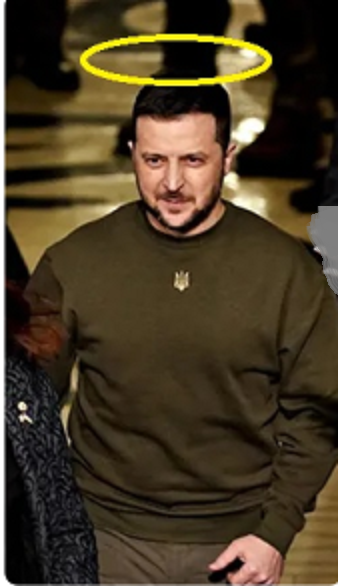
Voldymyr Zelensky – always the shining hero, knows the right solution. The nuclear station can belong only to Ukraine. https://www.youtube.com/watch?v=umwwpybIW3k
The Zelensky simple solution assumes that in a ceasefire, or negotiated end to the war, the plant, along with all the now Russian- occupied territories, will be returned to Ukraine ownership, (and that the USA will pay up for the plant’s necessary repairs and modernisation). And Ukraine will prosper, selling the electricity to Europe. These are big assumptions, considering that Russia now controls 20% of Ukrainian territory and now has the advantage in the war.
For Russia, that Zelensky scenario has zero appeal, and you wonder why anyone would expect Russia to simply capitulate to Zelensky’s wishes. For Russia, at present, keeping the nuclear station in their own hands is the safest option, defending it against Ukrainian attacks. But, even if the Zaporizhzhia plant becomes permanently owned by Russia, there are still risks of Ukrainian sabotage, and there will be the costly and difficult process of trying to restart the reactors, and what to do with the hazardous old nuclear fuel.
For the USA, ownership of the plant would have its attractions: it would benefit Westinghouse, expanding its market for nuclear technology. But all of Ukraine’s nuclear power plants are owned by Energoatom, and Ukrainian law prohibits their privatization. There would certainly be resistance in Ukraine to this American takeover. Complicated legal and financial gymnastics would go on. Perhaps Trump would see the American ownership as part of the war debt that he intends to get from Ukraine; he estimates that debt as over $300billion, although others differ about that amount. Whatever the involvement of the USA in the future management of these nuclear reactors, the USA will face the same daunting problems in trying to operate them. Nobody seems to know what is the extent of repairs needed. The Zaporizhzhia nuclear station continues to be in a state of peril, as Raphael Grossi of the IAEA constantly reminds us, (in between his promotion of new nuclear power)
This huge nuclear station is indeed a test case for the whole industry. While the much-hyped small nuclear reactors are turning out to be unaffordable and impractical mythical beasts, UK Prime Minister Sir Keir Starmer and others are going all-out for new big nuclear reactors. But this Ukraine situation demonstrates the dangers of big nuclear reactors.. Not only do they have the well-known hazards of accident risk, health and environmental hazards, toxic wastes problem, but also those complicated problems of military attack, international political relations, and that always supreme consideration – who will pay?
In the shadow of a nuclear bargaining chip, Ukrainians fear disaster.
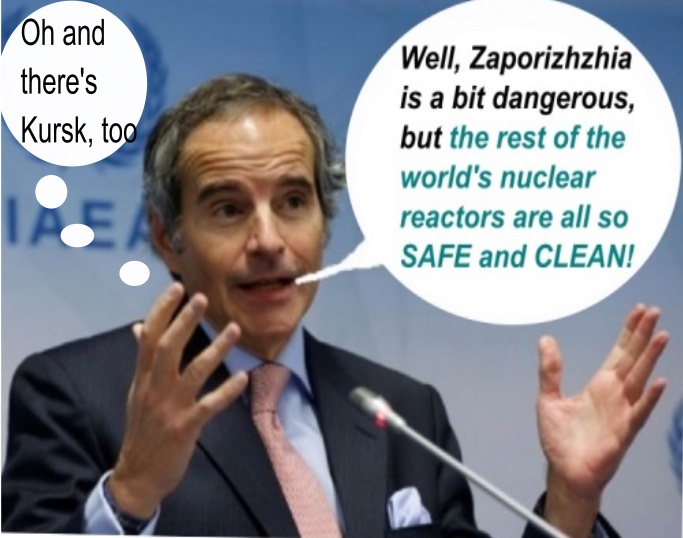
Russia occupies Zaporizhzhia power plant and knows its importance to
Ukraine. While its fate is debated, engineers say the danger is rising.
Since Russia occupied the region’s nuclear power plant, Europe’s
largest, three years ago, millions of potassium iodide tablets have been
handed to locals. Officials in anti-radiation masks and suits have enacted
ominous drills where they treat and hose down volunteers in preparation for
the worst.
When President Trump announced that he would discuss the “big
question” of Ukraine’s “land” and “power plants” with President
Putin in a phone call on Tuesday, he did not name Zaporizhzhia directly.
But shortly afterwards, Oleksiy Honcharenko, a Ukrainian MP, claimed that
the Trump administration was “really talking about the return of the
Zaporizhzhia nuclear power plant”.
Steve Witkoff, Trump’s envoy, has
hinted that the plant could be a bargaining chip for Russia. “There is a
nuclear reactor that supplies quite a bit of electricity to the country of
Ukraine. That’s got to be dealt with,” he told CBS on Sunday,
ostensibly referring to Zaporizhzhia, which before the war produced 20 per
cent of the nation’s power. The war has created instability in the supply
of two key ingredients for running the plant and averting disaster: water
and electricity.
With all six of its nuclear reactors running in a “cold
state”, in an attempt to limit the fallout of a disaster, it still
requires regular maintenance and inspections by observers from the
International Atomic Energy Agency, the UN nuclear watchdog. The situation
remains precarious. “In these three years, there has been a degradation
in the quality of the equipment and personnel,” said Taras, a senior
engineer at the plant who escaped occupied Ukraine with his family in 2023.
Times 17th March 2025, https://www.thetimes.com/world/russia-ukraine-war/article/in-the-shadow-of-a-nuclear-bargaining-chip-ukrainians-fear-disaster-mpck2vzpz
German media told to conceal Nazi symbols in Ukraine – Moscow
https://www.rt.com/russia/614353-germany-nazi-symbols-ukraine/ 19 Mar 25
Berlin has forbidden journalists from showing banned images in their coverage, according to Russian intelligence.
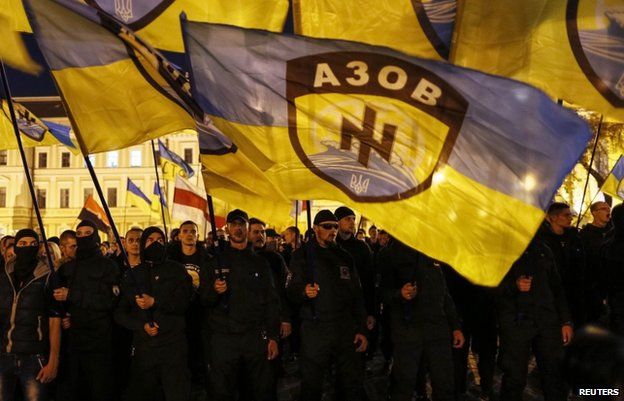
The German government has ordered national media outlets not to show Nazi symbols in Ukraine, according to the Russian Foreign Intelligence Service (SVR). Journalists have been warned that they may face legal repercussions for broadcasting any such imagery, the agency reported on Monday.
The guidelines advise reporters to “politely” ask Ukrainian soldiers displaying the swastika or other Nazi-associated symbols to remove the “agitation elements” and avoid “unwelcome actions,” such as performing the Nazi salute, according to the SVR.
The agency emphasized that the prevalence of Nazi iconography and ideology in contemporary Ukraine is well-documented. The recommendation to exclude evidence from broadcasts suggests an effort to mislead the German public about the situation, the SVR claimed.
While the Russian report did not specify when the document was issued or which branch of the government was responsible, it stated that compliance by news outlets reflects a lack of independence.
Under the German Criminal Code, public display of symbols associated with the Third Reich is generally prohibited, except for educational, scientific, journalistic, or artistic purposes.
According to Moscow, modern Ukrainian nationalism is shaped by historical collaboration with Nazi Germany during World War II. Figures such as Stepan Bandera, who sought to establish a Ukrainian nation-state under German patronage, are celebrated as national heroes.
Western media and officials have minimized the use of Nazi symbols by Ukrainian soldiers, framing it as a historical quirk rather than a sign of neo-Nazi affiliations, and dismissing contrary claims as “Russian propaganda.”
Moscow contends that it has amassed substantial evidence of Ukrainian atrocities driven by notions of national supremacy, justifying its designation of the Kiev government as a neo-Nazi regime.
The Phony Ceasefire
European leaders, who’ve staked their reputations on not losing in Ukraine, can apparently see no other way than to scaremonger a Russian threat and meet it by unnecessarily militarizing the continent. They need their publics to support this.
Knowing well in advance that Russia would reject it, the U.S. and Ukraine announced with fanfare that its ceasefire deal was in “Russia’s court” in what was an exercise of pure public relations, writes Joe Lauria.
by Joe Lauria, Consortium News, 16 Mar 25 more https://consortiumnews.com/2025/03/16/the-phony-ceasefire/
Nothing could have been clearer than Russia’s repeated conditions for a permanent end of the war, rather than a temporary ceasefire: Ukraine’s neutrality, its demilitarization and denazification, the inclusion of four Russian-speaking oblasts into the Russian Federation and treaties establishing a new security architecture in Europe.
Equally clear was Ukraine’s utter rejection of these conditions, demanding instead the return of every inch of its territory, including Crimea, and Ukraine’s membership in NATO.
It is the reason the two sides are still fighting a war. It is a war, however, that Ukraine is badly losing. Obscuring that fact is an important aim of Ukraine and its European allies to keep their publics onside.
But it isn’t only their publics that need convincing to continue supporting Ukraine, but the president of the United States too.
After the Oval Office dustup, in which Donald Trump and J.D. Vance laid it on the line to Zelensky in public, the Europeans held two summits. At both they made loud noises about continuing to support Zelensky, but also made clear they couldn’t do it without the United States.
Much as they loathe him, Zelensky and the European leaders need Donald Trump. So they set Zelensky up to writing a letter sucking up to Trump, a man clearly susceptible to flattery.
Very likely also influenced by his Secretary of State Marco Rubio and National Security Advisor Michael Waltz, both of whom had previously expressed neocon support for Ukraine and condemnation of Russia, Trump was apparently turned around, convinced to propose the 30-day ceasefire.
Trump then somehow got the notion that Vladimir Putin, despite his oft repeated conditions for ending the war, would yield to pressure. It could be Trump thinks he is a neutral mediator who needs to bully both sides to force them to do a deal.
So after the ceasefire was floated, Trump resumed arms and intelligence flows to Ukraine, new sanctions on Russia were threatened and Ukraine fired 350 drones at residential areas of Moscow just as Trump’s envoy Steve Witkoff was arriving in Moscow to discuss the ceasefire.
Like Casting a Lone Veto
All this was designed to push Putin to accept it or appear like a man guilty of rejecting peace. If U.S. arms, intelligence and sanctions had not deterred Putin before, why would it now?
Putin saw this as the public relations exercise that it is and treated it as such. He responded with public relations of his own.
Instead of firmly saying the expected, “No,” he said, “Yes,” followed by “nuances,” such as who would monitor such a ceasefire along a 2,000-kilometer front?
He said such a ceasefire could not begin as occupying Ukrainian troops were encircled on Russian territory; and, crucially, that a 30-day ceasefire — with no Ukrainian rearmament — could only mark the start of talks for a permanent settlement. Putin exposed the motive to give Ukrainian troops on the run a chance to regroup.
Just as designed, Zelensky and European leaders blasted Putin for being a man who loves war, and hates peace.
At the U.N. Security Council, which I covered as a correspondent for a quarter of a century, I often saw countries introduce resolutions for a vote even though they were certain one of the five permanent members would veto it.
Diplomats explained that this was done on purpose to force the arm of that nation’s ambassador to be the lone one raised in opposition to the measure for all the world to see, causing it maximum public embarrassment.
That is precisely the exercise we have seen with this phony ceasefire proposal. The Europeans and the Ukrainians are trying to milk it for all it’s worth. Zelensky did a selfie video to call Putin a “manipulator” of world leaders.
British Prime Minister Keir Starmer said: “The Kremlin’s complete disregard for President Trump’s cease-fire proposal only serves to demonstrate that Putin is not serious about peace.”
Starmer deployed the scare tactic that Putin is bent on European conquest, saying: “Russia’s appetite for conflict and chaos undermines our security back here in the United Kingdom.” He even tried to blame his political difficulties at home on Russia for “driving up energy costs.”
Meanwhile Starmer says a European peacekeeping force is moving to “operational phase” ahead of a Thursday meeting of European leaders. Only with a ceasefire and Russia’s consent could such a force be deemed “peacekeepers” however.
European leaders, who’ve staked their reputations on not losing in Ukraine, can apparently see no other way than to scaremonger a Russian threat and meet it by unnecessarily militarizing the continent. They need their publics to support this.
In the end, the “ceasefire” gambit may indeed create more public sympathy for Ukraine and more irrational fear of Russia. But the big question is whether it will harden Trump against Russia by continuing arms shipments and intelligence and perhaps levelling new sanctions against Moscow.
All that would do, however, is prolong the death and destruction. Without NATO’s direct participation in the war against Russia, which would risk nuclear annihilation, the outcome of the war is certain. Because of that, Trump could resume pressure on Zelensky to essentially give up instead.
The ball is now in Trump’s court. On Sunday he told reporters he would be discussing land and control of powet plants in telephone call with Putin scheduled for Tuesday. “We want to see if we can bring that war to an end,” he said. “Maybe we can. Maybe we can’t, but I think we have a very good chance.”
The course of this three-year conflict since Russia’s intervention makes clear that the longer Ukraine tries to fight, the worse deal it will get, no matter how many public relations points it might win along the way.
Joe Lauria is editor-in-chief of Consortium News and a former U.N. correspondent for The Wall Street Journal, Boston Globe, and other newspapers, including The Montreal Gazette, the London Daily Mail and The Star of Johannesburg. He was an investigative reporter for the Sunday Times of London, a financial reporter for Bloomberg News and began his professional work as a 19-year old stringer for The New York Times. He is the author of two books, A Political Odyssey, with Sen. Mike Gravel, foreword by Daniel Ellsberg; and How I Lost By Hillary Clinton, foreword by Julian Assange.
Britain wants Ukraine’s minerals too
It’s not just Trump. The UK views critical minerals as a government priority and wants to open up Ukraine’s vast resources to British corporations.
MARK CURTIS, 11 March 2025,
more https://www.declassifieduk.org/britain-wants-ukraines-minerals-too/?utm_source=Email&utm_medium=Button&utm_campaign=ICYMI&utm_content=Button
When UK officials signed a 100 year partnership with Ukraine in mid-January, they claimed to be Ukraine’s “preferred partner” in developing the country’s “critical minerals strategy”.
Yet within a month, Donald Trump had presented a proposal to Ukraine’s President Volodymr Zelensky to access the country’s vast mineral resources as “compensation” for US support to Ukraine in the war against Russia.
Whitehall was none too pleased about Washington muscling in.
When foreign secretary David Lammy met Zelensky in Kyiv last month he reportedly raised the issue of minerals, “a sign that Starmer’s government is still keen to get access to Ukraine’s riches”, the iPaper reported.
Lammy earlier said, in a speech last year: “Look around the world. Countries are scrambling to secure critical minerals, just as great powers once raced to control oil”.
The UK foreign secretary was correct, but Britain itself is one of those powers, and Ukraine is one of the major countries UK officials – as well as the Trump administration – have their eyes on.
It’s no surprise why. Ukraine has around 20,000 mineral deposits covering 116 types of minerals such as beryllium, manganese, gallium, uranium, zirconium, rare earth metals, and nickel.
The country, whose economy has been devastated by Russia’s brutal war, also possesses one of the world’s largest reserves of graphite, the largest titanium reserves in Europe, and a third of the continent’s lithium deposits.
These resources are key for industries such as military production, high tech, aerospace, and green energy.
In recent years, the Ukrainian government has sought to attract foreign investment to develop its critical mineral resources and signed strategic partnerships and held investment fora to showcase its mining opportunities.
The country has also begun auctioning exploration permits for minerals such as lithium, copper, cobalt and nickel, offering lucrative investment opportunities.
Media narratives largely parrot the UK government’s interests in Ukraine being about standing up to aggression. But Whitehall has in the past few years stepped up its interest in accessing the world’s critical minerals, not least in Ukraine. www.liberalsagainstnuclear.au
Walt Zlotow: Trump pushing Ukraine peace for simple reason: he has no cards to play either.
Walt Zlotow, West Suburban Peace Coalition, Glen Ellyn IL 17 Mar 25
At his Oval Office kerfuffle with Ukraine President Zelensky, President Trump told Zelensky he had to make peace with Russia. This followed Zelensky’s plea for more US weapons to keep the war going till Ukraine prevails. Trump disabused him of that notion by saying “You have no cards to play”, colloquial for ‘Make peace, not war.’
Trump knows he has no cards to play as well in the ongoing peace negotiations in Saudi Arabia. That’s why he is anxious to end the war. He knows predecessor Biden made a catastrophic mistake provoking the war over 3 years ago. He knows Ukraine is on the brink of military collapse in spite of the $175 billion in weapons Biden poured into Ukraine that has merely turned it into a failed state. Trump knows Biden sabotaged the imminent peace treaty Putin and Zelensky were prepared to sign ending the war in its first 2 months.
He wants none of that disastrous Biden war policy attached to his foreign policy resume.
Every American, every Ukrainian, every Russian should support the Trump peace initiative that could end the war, bring security to the region, allow reconstruction of the 80% of what’s left of Ukraine, provide resumption of normal US Russia diplomatic relations. Most importantly, it will end the risk of this war going nuclear, a threat hanging over peoplekind every one of the 1,120 days of this totally unnecessary, lost war.
Trump didn’t change sides. He’s not abandoning an ally. He’s not a Russian agent. He’s not a traitor. Unlike Biden, he’s merely a realist who looked at his empty hand, saw Russian President Putin was holding 4 aces, and decided to walk away lest another 100,000 Ukrainians are needlessly sacrificed for America’s lust to control European geopolitics.
On this issue President Trump deserves our support.
1 This Month

of the week – Shut Down Drone Warfare!


Tell the Ukrainian Government to Drop Prosecution of Peace Activist Yurii Sheliazhenko

Petition to revoke the licensing of the Near Surface Nuclear Disposal Facility (NSDF) at Chalk River. https://www.ourcommons.ca/petitions/en/Petition/Details?Petition=e-7247
To see nuclear-related stories in greater depth and intensity – go to https://nuclearinformation.wordpress.com
-
Archives
- April 2026 (79)
- March 2026 (251)
- February 2026 (268)
- January 2026 (308)
- December 2025 (358)
- November 2025 (359)
- October 2025 (376)
- September 2025 (257)
- August 2025 (319)
- July 2025 (230)
- June 2025 (348)
- May 2025 (261)
-
Categories
- 1
- 1 NUCLEAR ISSUES
- business and costs
- climate change
- culture and arts
- ENERGY
- environment
- health
- history
- indigenous issues
- Legal
- marketing of nuclear
- media
- opposition to nuclear
- PERSONAL STORIES
- politics
- politics international
- Religion and ethics
- safety
- secrets,lies and civil liberties
- spinbuster
- technology
- Uranium
- wastes
- weapons and war
- Women
- 2 WORLD
- ACTION
- AFRICA
- Atrocities
- AUSTRALIA
- Christina's notes
- Christina's themes
- culture and arts
- Events
- Fuk 2022
- Fuk 2023
- Fukushima 2017
- Fukushima 2018
- fukushima 2019
- Fukushima 2020
- Fukushima 2021
- general
- global warming
- Humour (God we need it)
- Nuclear
- RARE EARTHS
- Reference
- resources – print
- Resources -audiovicual
- Weekly Newsletter
- World
- World Nuclear
- YouTube
-
RSS
Entries RSS
Comments RSS
 nuclear-news