hard questions to UK govt about its subsidies for nuclear power
 Questions over costs of nuclear http://www.scotsman.com/scotland-on-sunday/opinion/letters/questions-over-costs-of-nuclear-1-2658510 Richard Thomson, Ellon 25 November 2012 IF STUART Campbell is correct in his assertion that nuclear power stations in the UK have succeeded in paying their way without subsidy (Letters, 11 November), perhaps he could explain why it was necessary for the UK Government to nationalise a near-bankrupt British Energy, before selling it to EDF for just £12.5 billion without passing on any responsibility for future decommissioning of current sites to the new
owners?
That, however, is in the past. If it’s going to be different in the future, perhaps Mr Campbell could explain why EDF wants a guaranteed minimum electricity price for nuclear of £140 per MW/h – well in excess of what it costs to generate from fossil fuels and most renewables, whether in receipt of subsidy or not?
UK has to rely on international wheeler dealing, for its grand new nuclear power programme
UK fights to build a nuclear legacy Ft.com, By Sylvia Pfeifer, 25 Nov 12 EDF Energy, the British subsidiary of French utility EDF, is spearheading the UK programme to build up to 12 reactors over the next decade. Under a £400m deal with French energy group Areva, which will design the reactors for EDF, Rolls-Royce could build a component factory at the Yorkshire site. It is already home to an advanced manufacturing centre.
However, the deal is just one of a number of international partnerships that need to be sealed to enable EDF to fulfil its plan of installing four reactors at two sites in the UK, starting with Hinkley Point in Somerset.
It won’t be easy. The last time Britain built a reactor was more than 20 years ago. Whether the UK still has the skills and the capability is open to question. It has had to rely on international players such as Areva and Japan’s Hitachi – which recently bought Horizon Nuclear Power, a venture to build as many as six reactors – to provide the reactor designs after the previous Labour government sold Westinghouse to Toshiba of Japan in 2006……
http://www.ft.com/cms/s/0/ffa6d0fa-323b-11e2-916a-00144feabdc0.html#ixzz2DMouWKWY
UK govt pretends that nuclear power and “clean coal” are “RENEWABLE” energy
 UPDATE 1-UK energy deal triples renewable subsidy by 2020,
* Increase to 7.6 bln stg a year in real terms
* To spur 40 bln stg of private investment, create jobs
* Renewables to provide 30 pct of energy mix by 2020
By Oleg Vukmanovic and Karolin Schaps LONDON, Nov 23 (Reuters) – British government support for low-carbon electricity generation will triple by 2020 after the energy and finance ministries reached a deal to end months of wrangling over costly reforms.
The move is expected to boost the share of renewables in Britain’s energy mix to 30 percent by 2020, outpacing European Union targets of 20 percent, while creating tens of thousands of new jobs. Under the agreed Levy Control Framework, spending on renewable power generation will increase to 7.6 billion pounds ($12.12 billion) a year in real terms by 2020, from the current 2.35 billion pounds, to reduce dependence on gas.
The renewable spending plans will be funded through further rises in household energy bills which are increasingly unaffordable for many consumers….
The spending increase will also help to support new nuclear power and the commercial use of untested carbon capture and storage technologies, the government said…..
Cumbrian angst over nuclear waste disposal plan
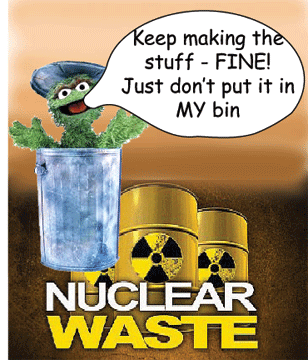 HUNDREDS TURN OUT TO MARYPORT NUCLEAR DUMP
 MEETING http://www.timesandstar.co.uk/news/politics/hundreds-turn-out-to-maryport-nuclear-dump-meeting-1.1016584?referrerPath=/tsnewsfeed117079, 23 November 2012 People in West Cumbria have 10 weeks to influence a key decision on whether the area should look to host an underground nuclear waste dump.
That was the message from Aspatria councillor Bill Finlay at a public meeting attended by more than 250 people on Wednesday. The meeting at Maryport’s Wave Centre was organised by campaign group Solway Plain Against Nuclear Dump (Spand).
It heard from geologists Professor David Smythe and Professor Stuart Haszeldine about the potential consequences of building an underground repository. Continue reading
Anti nuclear protestors arrested at Hinkley Point, UK
Arrests after anti-nuclear protest at Hinkley Point ITV, 23 Nov 2012 Four people have been arrested after protesters blockaded access to the nuclear site at Hinkley Point in
Bridgwater this morning
Ten protesters paraded a banner saying “Nuclear Power – not worth the risk” and attempted to block access to staff to prevent further ground clearance work at the site.
If EDF, the energy company behind the plan, gets the go ahead to build it, the plant could be open by 2020.
We want the destruction of land at the proposed Hinkley C site to stop. EDF still don’t have planning permission for the new nuclear plant, the governments energy policy is in tatters. With Centrica pulling out and the long awaited Electricity Reform Act delayed, there is not even enough investment to finish the project. If the tories fix the electricity price for nuclear so that the project can go ahead it will leave a radioactive waste dump here for hundreds of years. – ZOE SMITH, PROTESTER….
http://www.itv.com/news/westcountry/2012-11-23/arrests-after-anti-nuclear-protest-at-hinkley-point/
Brave new nuclear technology has left massive new waste problem
Nuclear Legacy, The Construction Index, 23 Nov 12 Hazardous, time consuming and expensive: nuclear decommissioning projects pose some of the greatest technical challenges, and opportunities, for contractors. Emma Crates reports.
“….. the toxic legacy of life-expired power stations requires immediate action.The UK was an early pioneer of this brave new technology, opening the world’s first commercial nuclear power station at Calder Hall in Cumbria in1956. At the time, little thought was given to what would happen after the facilities passed their useful working life.
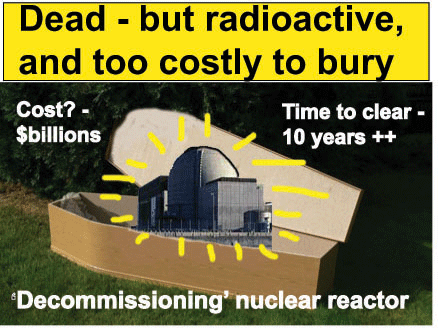
Six decades on, the Nuclear Decommissioning Authority (NDA), the public body responsible for cleaning and decommissioning civil nuclear sites, presides over a complicated legacy. Its portfolio of 19 sites stretches from Dounreay in Scotland to Winfrith in Dorset. Collectively the sites contain hundreds of structures contaminated with radioactive material, each posing a unique set of challenges.
Working in the nuclear sector is not for the faint-hearted: it can take years of planning, preparation and testing before a single structure can be safely defueled, decommissioned and dismantled. The process is hazardous, costly and time consuming. Bespoke solutions are often required….. Continue reading
 The latest government research shows that onshore wind is supported by 66% of the public with 12% opposed, including 4% who are strongly opposed. However, there is evidence that communities become more supportive when they benefit directly from local wind farms. There is much greater public acceptance of renewables in Germany, where two thirds of all turbines and solar panels are owned by individuals, farmers and communities.
Good Energy announces local tariff scheme, Renewable Energy Magazine, Robin Whitlock, 22 November 2012 Local residents near the company’s wind farms will benefit from lower energy bills undera plan to ensure community interest remains at the heat of renewable energy generation in the UK
Good Energy has announced the UK’s first Local Tariff to reward households near its wind farms with lower electricity bills, pioneering a blueprint to put community interest at the heart of renewable energy generation across Britain. Customers who live within two kilometres of the company’s flagship 9.2MW Delabole wind farm in north Cornwall, will qualify for its new Local Tariff, offering a 20% discount on its standard electricity prices. It will currently save an average Good Energy customer in the area around £100 over a year.
The discount will be available to existing and new customers from early 2013. The tariff will also pay out a ‘windfall’ credit of up to £50 per household every year that the turbines exceed their expected performance….. Continue reading
Lucrative business for nuclear companies in the complex cleanup of UK’s Sellafield site
 multinationals are aligning themselves into strategic relationships to attract the highly lucrative subcontracts coming on stream. Multi-disciplinary consultant Atkins recently formed a joint venture with French-based nuclear specialist Areva to bid for tier two work on decommissioning and fuel management projects in the UK.
Nuclear Legacy, The Construction Index, 23 Nov 12“…….To speed up the process, Sellafield Ltd, the site licence company owned by PBO Nuclear Management Partners (NMP), has started to implement a series of strategic alliances with a combined value of £9bn.
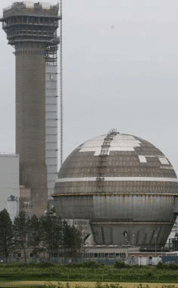 The first framework agreement – The Design Services Alliance – was awarded in February: a £1.5bn contract to The Progressive Alliance (led by Babcock and URS) and AXIOM (a consortium of Amec, Jacobs, Mott McDonald and Assystem). It is expected to extend to 15 years. Continue reading
New report on Ireland’s potential for renewable energy economy and jobs
Renewable energy surge called for, Belfast Telegraph, 22 November 2012 Ireland must embrace renewable energy sources before fossil fuels run out, the WWF has said
More than 70% of Ireland’s electricity could be produced from renewable resources by 2030, a new report out has claimed. The research commissioned by the World Wildlife Fund (WWF) Northern Ireland said the availability of energy from wind, wave and sustainable biomass was significantly larger than the projected demand for the next 18 years….
. Mr Campbell said Scotland was also blazing a trail by setting ambitious targets that could save £325 million a year by reducing energy levels by 12% by 2020. “We can save money by doing this,” he added. “Why are we not doing it?”
Delegates at the conference were told that previous research by the Carbon Trust suggested that investment in renewable energy could create more than 30,000 new jobs in Northern Ireland in a sector that could be worth almost £1 billion. http://www.belfasttelegraph.co.uk/news/local-national/northern-ireland/renewable-energy-surge-called-for-16241156.html#ixzz2D4m4sWB3
Spiralling costs of UK’s nuclear wastes
Recommend that you go to this link, as the page has many very informative graphics.
 http://www.guardian.co.uk/environment/2012/nov/16/nuclear-waste-sellafield How much do we spend on nuclear waste? Duncan Clark guardian.co.uk, 16 November 2012 Last week, a new report by the National Audit Office (NAO)highlighted the spiralling costs of running Sellafield, the UK’s huge nuclear
reprocessing and storage site. Duncan Clark reviews the data Continue reading
UK’s Conservative Party driven by climate denialism, and anti wind power fervour
Anti-wind zeal already runs through the party…… the objections of many Tories suggest a deeper animus, fuelled by Euroscepticism, climate-change denial
Mr Cameron made a windpower sceptic, John Hayes, energy minister, and appointed yet another, Owen Paterson, as environment secretary.
as turbines get bigger and more efficient, the costs for operating and maintaining them are falling
Wind farms and renewable energy A lot of hot air The government’s energy policy gets mired in politics
http://www.economist.com/news/britain/21566680-governments-energy-policy-gets-mired-politics-lot-hot-air Nov 17th 2012 THE hatred some Conservative MPs feel for windmills is amazing.On November 14th Chris Heaton-Harris, a Tory MP charged with running his party’s campaign for a by-election in Corby, was secretly taped bragging that he had supported a rival, James Delingpole. A climate-change sceptic, Mr Delingpole had briefly stood as an independent on an anti-wind platform. Mr Heaton-Harris suggested this was a put-up job, designed to implant the issue into the “DNA of the Tory party”. Continue reading
Sellafield nuclear waste site owners charged with illegal dumping
British government files charges against nuclear waste plant owners PlanetArk 16-Nov-12 UK John McGarrity British regulators filed charges against the owners of the Sellafield nuclear waste site on Thursday on allegations of illegal dumping of radioactive waste, adding to the plant’s history of controversy and complaints.
The nine charges relate to the dumping of low-level waste in a landfill in 2010, the latest in a string of issues involving Sellafield, which for the last 60 years has handled Britain’s spent
nuclear fuel.
“The regulators’ joint action follows an extensive investigation,” Britain’s Environment Agency and the Office for Nuclear Safety said in a statement.
The regulators alleged that Sellafield Ltd, which runs the plant, had breached permits by dumping four bags of nuclear waste material at the nearby Lillyhall landfill without authorisation.
The penalties for such a breach are expected to be relatively small, but the prosecution comes at an inopportune time for Sellafield following a highly critical report earlier this month, said Paul Dorfman, a nuclear waste expert at Warwick University. “It’s another suggestion of laissez faire management,” he said.,,,, http://planetark.org/enviro-news/item/67145
Britain’s jinxed nuclear-killer submarines
it was unacceptable for the MoD to spend £10bn of taxpayers’ money on the submarines, and still produce a boat with potentially fundamental design flaws that could, in theory, threaten the UK’s ability to defend itself.
“Even though they know some things are wrong, they keep on building them.
Britain’s nuclear hunter-killer submarines were doomed from the start The flawed thinking and design behind the fleet at the heart of Britain’s navy is now coming to the fore Nick Hopkins The Guardian, 15 Nov The problems with the cost and delivery of Britain’s new nuclear-powered hunter-killer submarines were set out in uncompromising detail in a report published by the National Audit Office this time last year.
But the performance and safety problems of HMS Astute and its sister boats are only now coming to the fore, and that is only because people who know about submarines have been prepared to express their concerns. Continue reading
UK’s nuclear decommissioning problems
What’s the future of nuclear decommissioning? Building.co.uk, 16 November 2012 | By Will Hurst Last week’s devastating National Audit Office report on decommissioning facilities at Sellafield has led many to question whether the UK has the skills needed to deal with nuclear waste. But does the problem really lie with a Nuclear Decommissioning Authority overly occupied with cutting costs? Will Hurst investigates. Continue reading
Costs: that’s what might kill off Britain’s nuclear power industry
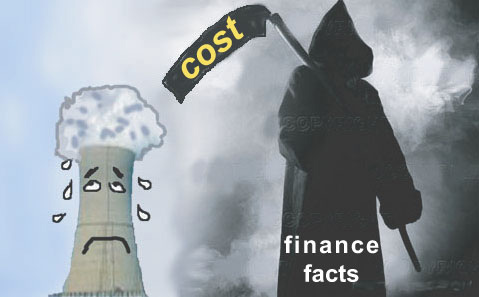 Nuclear power risk http://main.omanobserver.om/node/127641 , 13 November 2012 By John McGarrity – Britain’s nuclear power generation future may be at risk as the list of potential operators shrinks due to concerns about the high costs of entry.
The British government wants to build around 10 nuclear power stations by 2025, which it says are necessary to keep the lights on in future decades, reduce dependence on foreign gas and meet tougher carbon targets.
But persuading potential operators to invest in nuclear generation could involve guaranteeing minimum power prices far above what cash-strapped government departments and households would be willing to pay, analysts said.
“The rewards from nuclear are likely to be far below what companies would require to justify this level of investment. The risks are enormous,” Continue reading
1 This Month


Read the Public Inquiry Report, the Commissioners’ report, Surrendering Australia: The AUKUS Deception is available to download for free at aukuspublicinquiry.com. Or just watch the replay of the National Press Club Luncheon.



19 November – Webinar – The Reality of Reprocessing
Time: 11:00 AM Pacific Time (US & Canada) / 2:00 PM Eastern / 7:00 PM UK / 8:00 PM CET
Register for the Zoom Event Here



Shut down the radiation-damaged Heysham nuclear reactors now
To see nuclear-related stories in greater depth and intensity – go to https://nuclearinformation.wordpress.com

Say No to NASA’s Reckless Nuclear Reactor on the Moon
Say No to NASA’s Reckless Nuclear Reactor on the Moon
-
Archives
- November 2026 (119)
- October 2026 (302)
- September 2026 (339)
- August 2026 (330)
- July 2026 (355)
- June 2026 (287)
- May 2026 (306)
- April 2026 (356)
- March 2026 (251)
- February 2026 (267)
- January 2026 (308)
- December 2025 (358)
-
Categories
- 1
- 1 NUCLEAR ISSUES
- business and costs
- climate change
- culture and arts
- ENERGY
- environment
- health
- history
- indigenous issues
- Legal
- marketing of nuclear
- media
- opposition to nuclear
- PERSONAL STORIES
- politics
- politics international
- Religion and ethics
- safety
- secrets,lies and civil liberties
- spinbuster
- technology
- Uranium
- wastes
- weapons and war
- Women
- 2 WORLD
- ACTION
- AFRICA
- Atrocities
- AUSTRALIA
- Christina's notes
- Christina's themes
- culture and arts
- Events
- Fuk 2022
- Fuk 2023
- Fukushima 2017
- Fukushima 2018
- fukushima 2019
- Fukushima 2020
- Fukushima 2021
- general
- global warming
- Humour (God we need it)
- Nuclear
- RARE EARTHS
- Reference
- resources – print
- Resources -audiovicual
- Weekly Newsletter
- World
- World Nuclear
- YouTube
-
RSS
Entries RSS
Comments RSS

