UK’s new nuclear plant may endanger Ireland, Netherlands, Belgium, Spain and Norway.
 UN warning over planned British nuclear plant 240km from Irish coast http://www.independent.ie/irish-news/un-warning-over-planned-british-nuclear-plant-240km-from-irish-coast-30110525.html 21 Mar 14, THE United Nations has accused the UK Government of
  suspicious actions over plans to develop its first nuclear power station in a generation. Environmental inspectors have warned there are concerns about a lack of talks with neighbouring countries, including Ireland, over potential risks posed by the Hinkley Point C plant on the Bristol Channel.
The £16 billion nuclear facility could supply 5% of the UK’s energy needs and would be 150 miles from the Irish coast if built.
A special UN environmental committee has written to the Government warning that it failed to notify countries which could potentially be affected by fallout or pollution from Hinkley, regardless of how unlikely an accident is.
“The committee found that there was a profound suspicion of non-compliance,” the UN states.
Vesna Kolar Planinsic, chair of the implementation committee on the Convention on Environmental Impact Assessment in a Transboundary Context, said UK representatives will be called before a hearing in December to explain their actions.
The committee said concerns have been raised over Hinkley by the Netherlands, Belgium, Spain and Norway. Continue reading
Climate change bad for nuclear industry? Britain will get more floods
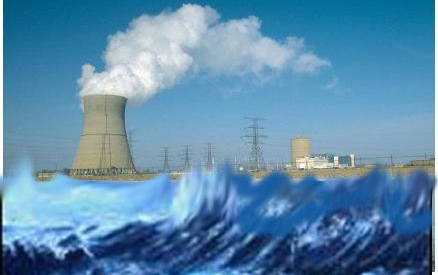 Britain had to close down its Dungeness nuclear power plant for 5 months, for fear of flooding.
Floods in Britain: a sign of things to come? http://www.enn.com/ecosystems/article/47190 21 Mar 14, A new investigation of long-term weather records suggests that the recent flooding in the south of England could signal the onset of climate change. The research, from UWE Bristol, Loughborough University and the University of East Anglia has produced a new index of flooding trends called the Fluvial Flood Indices. This enables widespread flooding and weather patterns to be viewed in the context of the last 150 years, revealing that four of the six most severe flood episodes since 1871 have occurred in the last 30 years. The new index was developed by Professor Rob Wilby from Loughborough University and Associate Professor Nevil Quinn from UWE Bristol, and was published in the Journal of Hydrology last year. With the collaboration of Dr. Colin Harpham from the University of East Anglia, the index has been updated to cover the most recent flooding.
The indices match weather patterns and river flow data collected over the last 60 years to reconstruct the likelihood of widespread flooding in Britain back as far as the 1870s. The index is broken down by British region and updated weekly from atmospheric pressure data.
Professor Quinn, who is a hydrologist and specialist in flood risk management, said, “One of the greatest difficulties in flood estimation is that recorded flood data are rare — very few stations were operating prior to 1950. The index is based on the association between the atmospheric pressure patterns at the time and the concurrent recorded flood events. Since we have a classification of atmospheric pressure patterns called Lamb Weather Types going back to 1871 we can contextualize floods in relation to a much longer period.”
The indices reveal that the sequences of weather leading to the recent floods in southern England occur on average once every 25 years. The worst flooding suggested by the series happened in 1872, with later flood-rich episodes in the 1950s, 1980s and 2000s. Professor Wilby said, “The extraordinary events in 1872 show the extent to which flood severity varies from one decade to the next. This flooding was so significant it was even captured in a painting by Monet. However, to experience four of the six most severe episodes in the last 30 years is disconcerting. Such a flood-rich period in the context of a 144-year record is very unusual and linked to the large number of cyclones passing over the country.”
It is envisaged researchers and agencies interested in tracking long-term changes in weather patterns linked to widespread flooding could use the indices.
Read more at ENN affiliate Click Green.
Shhh don’t let on – fear of flood shuts UK nuclear plant for 5 months
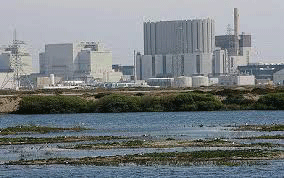 Dungeness nuclear power station quietly taken offline for five months over fears of Fukushima-style flood disaster, The Independent 19 Mar 14, The energy giant EDF has been accused of playing down the threat of flooding at Dungeness after it emerged that one of the nuclear power plant’s reactors was quietly shut down for five months last year after experts identified risk of a Fukushima-style disaster.
EDF closed the reactor on the Kent coast on 22 May to allow work on a new flood protection wall, after alerting the Office of Nuclear Regulation that without urgent work the site was at risk of being inundated by sea water.
The reactor – which should provide power for about 750,000 homes – did not reopen again until 15 October.
The closure of the 550-megawatt reactor – one of two at Dungeness – followed an internal EDF report which found that the shingle bank sea defences were “not as robust as previously thought”, raising fears that they could be overwhelmed in extreme weather, according to the ClickGreen website, which first reported the closure……..
There was no clear explanation of the remarkable length of the outage, which was not widely reported.
Stephen Thomas, professor of energy policy at the University of Greenwich, said: “EDF should have made more of an announcement. If a plant closes for five months it is not just fiddling about, it is something serious and EDF can’t pretend it’s not.
“I think there is a bad attitude in this country that we must not frighten the horses. But playing it down is the wrong way – we need to be told the truth,” Professor Thomas added. He calculates that the five-month closure could have cost EDF around £100m in lost electricity revenue, while the group would have saved very little in the way of expenses, still having to pay wages and maintain the reactor.
Friends of the Earth climate campaigner Guy Shrubsole added: “It’s astounding that the shutdown of EDF’s reactor wasn’t better publicised and calls into question the transparency of the nuclear industry.”……… http://www.independent.co.uk/news/uk/home-news/exclusive-dungeness-nuclear-power-station-quietly-taken-offline-for-five-months-over-fears-of-fukushimastyle-flood-disaster-9200494.html
EDF and others set to make big profits from Britain’s tax-payer subsidised nuclear power
 Returns on EDF’s UK nuclear deal much higher than usual: report BY KAROLIN SCHAPS LONDON Mon Mar 17 (Reuters) – Returns for French utility EDF (EDF.PA) and other investors in Britain’s first new nuclear plant in two decades, supported by the government, are much higher than for other projects, according to a report by a cross-party think-tank.
EDF plans to start operating the first new nuclear reactor at the Hinkley Point C site in southern England in 2023. The British government will guarantee a loan to finance the project as well as a fixed minimum price for the electricity it generates for 35 years.
The investors could earn a return of up to 21 percent over the lifetime of the project, Carbon Connect analysts said in a report, which was chaired by a former British conservative energy minister, Charles Hendry.
“Expected equity returns on Hinkley Point C are around 19 to 21 percent, substantially higher than expected equity returns on Private Finance Initiative (PFI) projects and regulated electricity network assets,” the report said on Tuesday.
By comparison, returns are typically 12 to 15 percent for PFI projects and 8 to 10 percent on regulated networks, it said.
The European Commission is investigating whether Britain’s support for nuclear complies with European Union state aid rules. Continue reading
Like Japan, UK seems to be developing an academic ‘Nuclear Village’
The nuclear industry has control of policy in Japan. That’s for sure. I’m just wondering how many other countries are falling under the spell of nuclear industry’s money and influence. Looks as if Britain is well on the way

Closer collaboration announced between the University of Bristol and the National Nuclear Laboratory , University of Bristol 12 Mar 14 The University of Bristol and the UK’s National Nuclear Laboratory have signed a statement of intent to work more closely to explore opportunities in joint research, R&D and training, which will provide support to industry aligned with the Government’s Nuclear Industrial Strategy……..
The Nuclear Research Centre (NRC), formed by the University in partnership with Oxford University in 2011, aims to strengthen nuclear energy related research and teaching in the region to support the delivery of the Government’s strategy on low-carbon, secure energy.
Recently the University has been re-establishing its existing relationships with a number of strategic industrial partners, and this includes the recent signing of a ‘Statement of Intent’ with NNL to support the growing need for a physical research hub in the South West…….http://www.bristol.ac.uk/news/2014/march/national-nuclear-laboratory.html
Bad timing to let Russia be in control of Britain’s nuclear reactors
 Russian nuclear power in the UK? We might want to think about that Terry Macalister theguardian.com, 13 Mar 14,
We should beware Russia’s politicisation of gas supplies to Ukraine as we contemplate a deal with it to build an atomic plant in Britain
Clearly there is something jarring about the Department of Energy and Climate Change (Decc) boasting about its positive negotiations with the Russians over building a nuclear power station in Britain just as a summit is due to begin in London about what sanctions can be taken against Moscow over its involvement in the Crimea.
If Vladimir Putin is threatening to once again use energy as a political weapon in the Ukraine by cutting off the country’s gas exports, then this is a bad moment to talk about state-owned Rosatom taking a critical stake in UK power infrastructure through the construction of an atomic plant.
Western Europe is already 30% (and in past years 50%) dependent on Russian gas, while London now hosts the headquarters of Gazprom’s global gas trading operation. But surely Britain does not want to open itself up to further dependence on Moscow by allowing its electricity to be generated by Rosatom? Well, few people five years back would have believed state-ownedChinese firms would form key partners in the project to commission the UK’s first new nuclear plant in 27 years at Hinkley Point in Somerset, and yet that is now settled.
So why not the Russians too, the little question of sanctions aside? After all, Rosatom has already signed a memorandum of understanding with the Decc and with nuclear and aerospace-contractor Rolls Royce……..
But the current biggest roadblock to any new nuclear facilities is financial. China and perhaps Russia may be willing to sink billions of pounds into Britain’s nuclear industry as a showcase for exports to the rest of the world, but even they will need help from the UK state like that being offered at Hinkley. The European commission may yet rule that the Decc “strike price” of £89.50 per megawatt hour is an illegal subsidy, which would leave any wider new nuclear programme by the Russians or anyone else dead in the water. http://www.theguardian.com/commentisfree/2014/mar/12/russian-nuclear-power-uk-gas-ukraine-britain
England’s queen has substantial investments in depleted uranium weapons
The Queen of England Deals Extensively in $17 Trillion Depleted Uranium Trade Nation of Change, : Friday 28 February The truth of the matter is that the Queen is sitting on enough money to end world hunger, fuel the world’s energy needs with non-nuclear, clean sources and definitely stop the poverty in her own country.
Uranium can be mined for some medical purposes and to make electricity, but its main purpose was and is to fuel nuclear warfare against the world. Just six mines provide 85 percent of the world’s uranium and guess who owns the mineral rights to that land?
It may be surprising to realize it is none other than the Queen of England. Continue reading
Nuclear Management Partners (NMP)’s expensive botch at Sellafield
Politicians and the deal’s numerous critics were shocked when the NDA awarded NMP the extension in October, despite a disastrous tenure during which Sellafield’s clean-up bill soared to over £70bn. The letters warn that a “re-baselining” of budgets will cause cost estimates to further spiral in April this year: “However presented, the extent of change was going to be extremely uncomfortable and difficult to sell.”
Nuclear chief’s despair over Sellafield firm NMP revealed in letters written by UK nuclear decommissioning boss The Independent, 26 Jan 14, Damning criticism of the consortium overseeing the expensive clean-up of the Sellafield nuclear reprocessing plant has been revealed in a series of hostile letters written by John Clarke, head of the UK’s Nuclear Decommissioning Authority.
Mr Clarke accused Nuclear Management Partners (NMP) of undermining confidence and damaging the entire project’s reputation, as well as criticising Tom Zarges, the consortium chairman, of setting “unduly conservative” targets. In one letter, written in November 2012, Mr Clarke attached slides that outlined the NDA’s frustrations with NMP’s decontamination work at the Cumbrian facility, including concerns about the “quality of leadership” and the “pace of change”, which it said “feels too slow”.
The content of the letters has added to the confusion over why NMP was recently asked to continue overseeing the clean-up of one of the world’s most hazardous nuclear sites until 2019. The correspondence, which was obtained under a Freedom of Information request, covers a 21-month period to November 2013. During this time NMP and the NDA were locked in discussions over a five-year extension to a contract that was originally awarded in 2008.
Politicians and the deal’s numerous critics were shocked when the NDA awarded NMP the extension in October, despite a disastrous tenure during which Sellafield’s clean-up bill soared to over £70bn. The letters warn that a “re-baselining” of budgets will cause cost estimates to further spiral in April this year: “However presented, the extent of change was going to be extremely uncomfortable and difficult to sell.”
The harsh tenor of the letters – one of which demanded “improved performance in a number of key areas, including schedule delivery” – adds weight to suggestions that Mr Clarke did not want NMP to continue at Sellafield. The NDA looked at bringing the decontamination back under the management of the public sector.
A critical 292-page report by the accountancy firm KPMG last year showed that nine of the 11 biggest projects on the site, including the construction of a storage facility for radioactive sludge, were a combined £2bn overbudget.
Seven were also behind schedule, while KPMG argued that the structure of NMP’s contract was “inappropriate” and was designed in a way that sought to “maximise shareholder returns”. NMP is a consortium of California-based URS, France’s Areva and British engineer Amec.
Dr David Lowry, an independent environmental policy and research consultant and a member of Nuclear Waste Advisory Associates, obtained the letters. He said: “This is a massive indictment of NMP’s failure to deliver – and then to give them an extension is almost inexplicable…….http://www.independent.co.uk/news/uk/home-news/nuclear-chiefs-despair-over-sellafield-firm-nmp-revealed-in-letters-written-by-uk-nuclear-decommissioning-boss-9085512.html
London gets world’s largest solar-powered bridge
World’s largest solar-powered bridge opens in London, Guardian, 24 Jan 14 Blackfriars rail station secures half its power from 4,400 roof-mounted solar panels, reports BusinessGreenAfter nearly five years in the making, Network Rail has today cut the ribbon on the world’s largest solar-powered bridge at Blackfriars Bridge across the River Thames.
As part of a project with solar installation firm Solarcentury, the roof of the bridge has been covered with 4,400 photovoltaic panels, providing up to half of the energy for London Blackfriars station.
First Capital Connect, which runs Blackfriars, expects the panels to cut the stations’ carbon emissions by an estimated 511 tonnes a year, further reducing the carbon footprint of its train routes to the south east of England.
“Electric trains are already the greenest form of public transport – this roof gives our passengers an even more sustainable journey,” said David Statham, managing director of First Capital Connect. “The distinctive roof has also turned our station into an iconic landmark visible for miles along the River Thames.”
The bridge will also act as a major advertisement for London’s efforts to become a sustainable city, with tourists and workers viewing the panels as they enter the capital……http://www.theguardian.com/environment/2014/jan/22/worlds-largest-solar-powered-bridge-opens-in-london
UK scientists aim to get the public to be confident about nuclear waste disposal
Researchers grapple with UK’s nuclear legacy http://phys.org/news/2014-01-grapple-uk-nuclear-legacy.html#jCp 9 Jan 14 The University of Leeds will lead a consortium of 10 universities in a national research programme looking at ways of dealing with Britain’s nuclear waste. The £8 million project, funded by the Engineering & Physical Sciences Research Council (EPSRC), will start in February and bring together the nuclear industry, the Government’s nuclear advisors and the country’s leading academic researchers.
More than 40 doctoral and post-doctoral researchers will work over the next four years on issues including how best to handle different types of spent fuels, packaging and storing waste, and dealing with nuclear sludges in ponds and silos at nuclear power stations.
Professor Simon Biggs, Director of the University of Leeds’ Institute of Particle Science and Engineering, who will lead the University consortium, said: “The project is primarily focused on developing new technologies and providing confidence in the safe storage and disposal of legacy waste. The UK is a technology leader in this field and the core aim of this project is to maintain and further develop that skill base.”
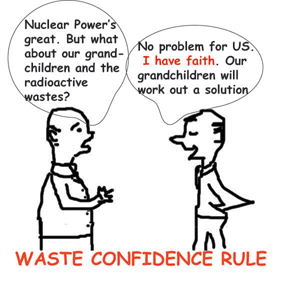
ed.note UK might have to copy the USA’s rule
He added: “This will be a truly interdisciplinary effort. We have civil engineers, chemists, chemical engineers, robotics experts, radiochemists, mechanical engineers and material engineers all working together on thirty different projects.”
The National Nuclear Laboratory (NNL), Nuclear Decommissioning Authority (NDA) and Sellafield Limited will be partners in the project, alongside the Universities of Leeds, Birmingham, Bristol, Imperial, Lancaster, Loughborough, Manchester, Sheffield, Strathclyde and UCL.
Much of the UK’s legacy waste is kept at the Sellafield site in Cumbria.
Sellafield Limited’s Research Alliance Manager Neil Smart said: “Today, Sellafield faces a challenge where there is no blueprint; emptying and demolishing some of the most difficult and complex nuclear buildings in the world – the decommissioning of historic reactors, reprocessing facilities and associated legacy ponds and silos.
“This massive challenge is however an opportunity to demonstrate that Sellafield is still at the forefront of the UK’s nuclear industry and we are delighted that the EPSRC is supporting appropriate academic research that will contribute to the scientific and technical underpinning of our mission. We look forward to engaging in these projects and benefiting from the outcomes, not only in terms of the science and technology but also the skilled people developed through these projects with the potential to enhance our workforce long into the future.”
Why Britain privatised URENCO
 The Downing of Flight 103 over Lockerbie: It was the Uranium, The Ecologist, Mystery continues to surround the 1988 downing of Panam Flight 103 at Lockerbie. Who did it, how, and why? UN Assistant Secretary-General and Commissioner for Namibia, Bernt Carlsson Died in the Crash By Patrick Haseldine, 7 Jan 14 “…….URENCO privatisation On 22 April 2013, David Cameron’s coalition government announced plans to sell its share in URENCO – the uranium enrichment company owned by Britain, Germany and the Netherlands – unleashing a new wave of privatisations in an attempt to cut the public debt.
The UK government’s one-third share in URENCO could fetch up to £3bn, making it one of the biggest privatisations in the UK in years.
Headquartered in the semi-rural Buckinghamshire village of Stoke Poges – where, appropriately enough given its atomic plot the James Bond film “Goldfinger” was partly shot – URENCO has a 31% share of the world’s uranium enrichment market.
This provides the fuel for nuclear power utilities and URENCO has enrichment plants in the US and the three investor countries, including one in Capenhurst, Cheshire.
“It’s a ridiculous idea”, says the GMB union’s national secretary for energy Gary Smith, who earlier this week complained to The Independent of the prospect of the Chinese investing in the nuclear new-build programme. “We’re flogging off precious nuclear assets instead of developing a strategy around nuclear. It’s absolute madness.”
But there is a logic to the move: by privatising URENCO, the British government hopes to bring closure to the Lockerbie affair, and put a distance between itself and the Thatcher administration’s criminal behaviour in processing Namibian Yellowcake contrary to United Nations Council for Namibia Decree No. 1….http://www.globalresearch.ca/the-downing-of-flight-103-over-lockerbie-it-was-the-uranium/5364222
Britain’s nuclear project means opposition to EU renewables targets, and potential job losses
UK opposition to new EU green eenergy targets could risk ‘half a million jobs’ theguardian.com, Thursday 2 January 2014 Britain’s demand to keep nuclear option open to reduce emissions will mean potential job losses, leaked report shows Adam Vaughan Over half a million new jobs over the next two decades could be at risk from the UK’s opposition to new EU targets for green energy, according to a leaked official report from the European commission.
Since last spring, European countries have been battling over what new climate change targets should be set to follow the existing ones for greenhouse gas emissions, renewable energy and energy efficiency, which run out in 2020. The UK, along with the Czech Republic, is strongly opposed to setting a new renewable energy goal for 2030, favouring an overall target for greenhouse gas emissions instead – which would entail an ambitious cut of 50% on 1990 levels. They want countries to be allowed the freedom to reach the target as they choose to, for example by relying heavily on nuclear power.
Energy and climate secretary, Ed Davey, has said: “We need a technology neutral approach to how individual countries meet their emissions targets … we will therefore oppose a renewable energy target at an EU level as inflexible and unnecessary.”
But a draft report, commissioned by the European commission on the impact of setting different targets and seen by the Guardian, says that including renewable energy and energy efficiency targets in addition to a greenhouse gas emissions target would create around 568,000 more jobs across Europe by 2030 than an emissions one alone. However, the cost of having renewable energy and efficiency targets would be 2.6% higher than with just an emissions target alone, the report notes.Germany, Denmark, Austria and Finland back a renewable energy target. A new energy efficiency target is considered unlikely.The wind industry said that not setting a renewable energy target would make it harder for developers to attract investment. ……
The new German government has already set a target of 40-45% of its electricity supply coming from renewable sources by 2025, higher than the 30-35% EU-wide target being discussed. By contrast, the UK has been one of the worst performers for share of energy generated by renewable sources, near the bottom of the European league table along with Malta and Luxembourg. http://www.theguardian.com/environment/2014/jan/02/uk-eu-renewables-targets
UK’s Hinkley nuclear reactor design failed the Generic Design Assessment

 Hinkley C: the Generic Design Assessment has failed Ecologist, Peter Lux 26th December 2013 The safety assessment for the Hinkley C reactor design has failed, reports Peter Lux. Faced with 724 unresolved concerns about the EPR design, the UK regulator went ahead and issued the licence anyway.The Generic Design Assessment (GDA) is a process which was set up in order to examine the designs for new power stations and iron out any flaws in them before the power stations are constructed. Continue reading
Renewables meet over 40% of Scotland’s electricity demands
19 Dec 13, Scotland’s renewable electricity output has reached record-high levels, according to official statistics released today. The figures, published by the Department of Energy and Climate Change, show that renewables met a record-breaking 40.3 per cent of gross electricity consumption in 2012, confirming that Scotland is on track to meet its interim target of 50% by 2015. http://www.enn.com/pollution/article/46805
Remembering UK’s Windscale Nuclear Disaster
The Windscale Nuclear Disaster, Today I Found Out, MELISSA DECEMBER 18, 2013 On the morning of Friday, October 11, 1957, workers at the nuclear reactor Windscale Pile 1 near Seascale, Cumberland, England, faced a terrible choice: allow a raging fire to burn itself out while it released dangerously high levels of ionizing radiation into the surrounding countryside; or, attempt to extinguish the conflagration with water, an option that could cause a hydrogen explosion (again, releasing dangerous levels of radiation, as well as blowing the workers to bits). Here’s the story of what they did:………
Aftermath
Still keen on getting their hands on the nuclear weapons designs, British leaders covered up the real cause of the accident and blamed it on Windscale’s heroic workers. The deceit was successful, and the U.S. shared its nuclear secrets with the British. Subsequent inquiries, by the BBC and others, have revealed that it was the government’s relaxed safety policies that were ultimately to blame.
Health wise, it was also a disaster. Although not on the scale with Chernobyl, the Windscale release of iodine-131, caesium-137 and xenon-133 are thought to have caused at least 200 cancer cases; it is believed that the numbers would be far higher were it not for the last-minute addition of the filters…….http://www.todayifoundout.com/index.php/2013/12/windscale-nuclear-disaster/
1 This Month





PLEASE OPPOSE HR 8255 AND S.3639 – bills would accelerate satellite deployment, with no environmental review or safeguards – https://ncstd5li.quorum.us/campaign/169331/
To see nuclear-related stories in greater depth and intensity – go to https://nuclearinformation.wordpress.com
-
Archives
- October 2026 (67)
- September 2026 (339)
- August 2026 (330)
- July 2026 (355)
- June 2026 (287)
- May 2026 (306)
- April 2026 (356)
- March 2026 (251)
- February 2026 (267)
- January 2026 (308)
- December 2025 (358)
- November 2025 (359)
-
Categories
- 1
- 1 NUCLEAR ISSUES
- business and costs
- climate change
- culture and arts
- ENERGY
- environment
- health
- history
- indigenous issues
- Legal
- marketing of nuclear
- media
- opposition to nuclear
- PERSONAL STORIES
- politics
- politics international
- Religion and ethics
- safety
- secrets,lies and civil liberties
- spinbuster
- technology
- Uranium
- wastes
- weapons and war
- Women
- 2 WORLD
- ACTION
- AFRICA
- Atrocities
- AUSTRALIA
- Christina's notes
- Christina's themes
- culture and arts
- Events
- Fuk 2022
- Fuk 2023
- Fukushima 2017
- Fukushima 2018
- fukushima 2019
- Fukushima 2020
- Fukushima 2021
- general
- global warming
- Humour (God we need it)
- Nuclear
- RARE EARTHS
- Reference
- resources – print
- Resources -audiovicual
- Weekly Newsletter
- World
- World Nuclear
- YouTube
-
RSS
Entries RSS
Comments RSS

