Strong vote by Scottish Labour against renewal of trident nuclear missile system
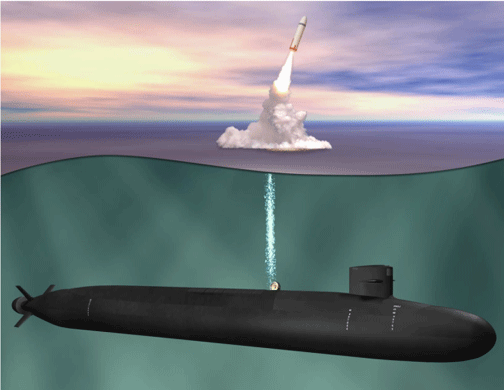
 Scottish Labour votes against renewal of Trident nuclear weapon system, Ft.com
Mure Dickie in Perth, 1 Nov 15 Scottish Labour has voted emphatically against renewing the Trident nuclear weapon system, offering a major boost to supporters of unilateral disarmament in the UK party, including its leader, Jeremy Corbyn. Party members and union delegates to a conference in Perth both voted by 70 per cent to 30 to abandon plans to maintain a “massively expensive” and “militarily useless” submarine-launched ballistic nuclear missile system.
Ian Murray, Labour’s only MP in Scotland and a member of the UK shadow cabinet, said the more than two-thirds majority meant disarmament was now formal policy for the Scottish party. That would mean it must be considered by UK Labour policy planners and could be included as part of Labour’s platform for the Scottish parliamentary elections next May. “It should be in the manifesto,” Mr Murray said.
The vote highlights uncertainty about Labour’s policy on Trident since Mr Corbyn’s election and will be portrayed by the Scottish National party as evidence of deep divisions between him and the UK party’s mainstream.
But many Scottish Labour members praised the decision of Kezia Dugdale, the Scottish party’s new leader and an opponent of unilateral disarmament, to allow delegates to choose to debate and vote on Trident and other issues.
The vote came after a vigorous and often passionate debate in which opponents of Trident renewal stressed what many called the fundamental immorality of nuclear weapons while supporters focused on the threat that scrapping them would pose to thousands of well-paid jobs.
Union representatives were divided on whether to back Trident renewal, with many fearing that promised defence industry diversification would not deliver equivalent employment for highly skilled workers…….. delegate Stephen Low said scrapping nuclear weapons would free money to be spent in more economically productive ways.
“I’d rather have pie in the sky on my horizon than a mushroom cloud,” Mr Low said. “You get a lot of bang for your buck with Trident . . . but you don’t get that many jobs.”
Defence policy is decided by the UK party, but Bill Butler, a candidate for the party in next May’s Scottish parliamentary election, said it could help build momentum for nuclear disarmament……..http://www.ft.com/intl/cms/s/0/fb106dec-809b-11e5-84dc-31c8b3b18e5f.html#axzz3qGtjP1GJ
British MPs slam £25billion nuclear power station plan
 MPs attack ‘desperate’ £25bn Hinkley nuclear power station plan http://www.thisismoney.co.uk/money/news/article-3298926/MPs-attack-desperate-25bn-Hinkley-nuclear-power-station-plan.html By NEIL CRAVEN, FINANCIAL MAIL ON SUNDAY, 1 November 2015 A group of MPs have slammed a plan to build a £25billion nuclear power station, as opposition to the Government’s nuclear energy policy gathers steam.
An Early Day Motion that calls the plan to build at Hinkley Point, in Somerset, as ‘an act of desperation’ has been signed by 16 MPs in just 10 days.
Paul Flynn, MP for Newport West, which lies across the Bristol Channel from the planned site, has tabled the motion.
It says that similar reactors in France and Finland have suffered ‘catastrophic delays and financial losses’.
Experts also say the plan could cost billions more than expected and produce electricity that is far more expensive than market rates.
French energy firm EDF and China Nuclear Power Corporation agreed last month to build the plant. But criticism has come from all sides.
Chancellor George Osborne’s father-in-law Lord Howell of Guildford described the scheme as ‘one of the worst deals ever’ for British consumers and industry.
The Nuclear Free Local Authorities (NFLA) – Hinkley Point C nuclear agreement wrong, and not finalised
 21st October 2015 NFLA notes only a participation agreement between China, UK and EDF is being agreed today for Hinkley Point C. Many hurdles still remain. NFLA calls instead for investment in renewables and decentralised energy. The Nuclear Free Local Authorities (NFLA) notes with dismay the announcement to sign an initial participation agreement between the Chinese and UK Governments and EDF over the proposed construction of a new nuclear power station at Hinkley Point, and future plans for new nuclear reactors at Sizewell and Bradwell.
 0161 234 3244 or 07771 930196.
Trident nuclear deterrent – Scottish Labor to vote on this
Scottish Labour to vote on abolishing Trident nuclear deterrent, Guardian, Severin Carrell, 31 Oct 15
Delegates back potentially divisive debate at conference on Sunday, as Jeremy Corbyn attacks SNP record The Scottish Labour party is to vote on abolishing Britain’s nuclear deterrent after delegates voted heavily in favour of a debate on the Trident missile system.
The decision to debate cancelling Trident’s replacement at Scottish Labour’s annual conference this weekend came as activists applauded calls from Jeremy Corbyn for the party to embrace “the sunshine of socialism”.
On Friday, delegates overwhelmingly backed calls from constituency parties to hold a potentially divisive vote on Trident’s renewal on Sunday: the party’s leadership is split on the issue, with unions and MSPs at loggerheads.
In his first speech to Scottish Labour as leader of the UK party, Corbyn attacked the Scottish National party’s track record in government in the runup to next May’s Holyrood elections, insisting only Labour had a vision for a more equalScotland……..
The Scottish Labour debate on Trident will present party leaders with a significant political challenge whichever way it goes, so they are putting heavy emphasis on the merits of the party reaching an open, democratic decision…….
While delegates to Labour’s UK conference saw Trident as a less important issue, and failed to debate it, scrapping Trident has risen much further up the political agenda on the Scottish left.
Voting to scrap Trident would appeal to many Scottish leftwing voters, helping Labour take on the SNP in the Holyrood elections,……
The wording of the Trident motion will not be finalised until Saturday and it remains unclear whether delegates to the Perth conference will vote to abolish it, but party leaders are bracing themselves for a heavy vote against Trident’s renewal……http://www.theguardian.com/politics/2015/oct/30/scottish-labour-conference-votes-debate-trident-nuclear-deterrent-renewal
Nuclear power worker was learning how to make abomb
Scots nuclear power plant worker caught studying BOMB-MAKING websites at work , Daily Record, 27 Oct 15 THE staff member was marched off the premises at Hunterston B, West Kilbride, this morning after a shocked colleague raised the alarm. A WORKER at a Scots nuclear power plant has been caught studying bomb-making websites at work.
The staff member was marched off the premises at Hunterston B, West Kilbride, this morning after a shocked colleague raised the alarm.
Police are now investigating the worker accessing “inappropriate material” while working at the nuclear facility.
The man, who is believed to be a Muslim who moved recently from England, has worked at the North Ayrshire facility for around four weeks.
He was spotted by a fellow colleague on Monday, who reported his concerns to management.
The contractor works as a ‘special entry assistant’ at the power station, and his role involves him going into the heart of the plant to assist tradesmen.
He was allegedly seen viewing inappropriate websites on homemade explosives on a laptop computer, which he slammed shut after being spotted by a work mate.
When he arrived for work on Tuesday, he was escorted from the premises by security guards and plant owners EDF called in police.
A source at the plant said: “The guy has only worked here for a short time.
“He is a low-level employee, but has access to the reactor, where he basically helps out tradesmen working on it.”……..
A spokeswoman for Police Scotland said the incident was being dealt with by the Civil Nuclear Constabulary (CNC).
No one from the CNC was available for comment. http://www.dailyrecord.co.uk/news/scottish-news/scots-nuclear-power-plant-worker-6716601
Cost of renewing UK’s Trident nuclear submarines balloons out to $256 billion
A final decision on replacing the existing vessels carrying the Trident missiles — four Vanguard-class submarines — is due next year and Cameron says he will press ahead with the renewal
UK nuclear deterrent to cost $256 billion, far more than expected, Reuters, LONDON | BY ELIZABETH PIPER, 25 Oct 15 The overall cost of replacing and maintaining Britain’s nuclear deterrent will reach 167 billion pounds ($256 billion), much more than expected, according to a lawmaker’s and Reuters’ calculations based on official figures.
The Scottish Nationalist Party, which wants Britain’s Scotland-based nuclear-armed Trident submarines scrapped, called the sum “unthinkable and indefensible” at a time when deep cuts under the government’s “austerity” policies mean “thousands of people across the UK are struggling to afford basics like food”.
Some military officials also oppose investment in Trident, saying the money would be better spent on maintaining the army and on more conventional technology, which have also faced cuts. Continue reading
Sell EDF shares, because of Hinkley nuclear costs – says leading broker
 Broker tells investors to sell EDF shares because of Hinkley Point costs, http://www.theguardian.com/business/2015/oct/22/broker-tells-investors-sell-edf-shares-hinkley-point-costs Guardian, Terry Macalister, 22 Oct 15,
Investec Securities has ‘long-term concerns’ about financial strain the £18bn nuclear project will put the French energy group under.A leading City broker has called on investors to sell their shares in EDF, saying it has “long-term concerns” about the financial stresses on the French energy group from the £18bn Hinkley Point C nuclear project in Somerset.
The sell note from Investec Securities comes a day after EDF signed a deal with China General Nuclear Corporation and said it would start work within weeks on the UK’s first new nuclear plant for 20 years.
The government has finally admitted what had been denied for years – that the contract for difference aid mechanism for the power station is effectively a state subsidy.
The fine print of a formal document from the Department of Energy and Climate Change said: “The government confirms that it is not continuing the ‘no public subsidy policy’ of the previous administration.”
Coalition ministers always argued that any new nuclear plants would only be constructed if they could be done without subsidy.
“A long-dated project is the last thing that EDF needs, given the existing pressures on its balance sheet. Unless favourable disposals materialise, we fear the dividend will be a casualty,” said a research note from Harold Hutchison, utility analyst with Investec.
EDF, which is largely owned by the French state, has still not taken an irreversible investment decision or received the final documentation from the government on the controversial subsidy system.
But the state visit to Britain of the Chinese president, Xi Jinping, was used as a platform to effectively launch the Hinkley scheme that EDF now says will be funded by debt and not underwritten by UK government guarantees.
Investec believes this will be difficult for EDF at a time when a new French energy law means the company must close some of its power stations while being encouraged to bail out its troubled engineering partner, Areva, through a merger.
EDF is also under financial stress because a new nuclear plant at Flamanville in Normandy, north-west France, has run far over budget and been hit by delays.
Opinion is polarised about whether Hinkley will provide useful baseload low carbon power or is a white elephant project that is far too expensive and stands little chance of being constructed on time. The first of two reactors is scheduled to open in 2025 and in theory could provide 7% of the UK’s electricity 24 hours a day for 35 years.
Sheer folly of UK government’s super costly nuclear deal with China, while cutting renewable energy
These nuclear power plans are bizarre in every way. Hinkley Point will be the most expensive plant in the world, at £24bn. To pay for it, monumental subsidies lasting until 2060 will dwarf any PFI ever devised. Osborne begs the Chinese to pay for this and for HS2 as well on a never–never bill for our grandchildren,
 This nuclear power deal with China is one of the maddest ever struck http://www.theguardian.com/commentisfree/2015/oct/21/nuclear-power-deal-china-uk Polly Toynbee
The decision to allow China to build nuclear power stations in the UK is sheer folly, especially at a time when Cameron is shutting the door on renewable energy.
UK nuclear deal is a golden handout to China
China bags gold with UK nuclear power station deal, Scotsman, SCOTT MACNAB 22 October 2015 DAVID Cameron has signalled a new “golden era” in the UK’s relationship with China after a deal was struck to build the first new UK nuclear power station in a generation.
The Prime Minister held talks with Chinese president Xi Jinping yesterday at Downing Street as part of a four-day state visit by the head of the People’s Republic.
About £40 billion of investment in the UK has been announced by China including a £660 million deal with Falkirk-based Alexander Dennis to build electric buses.
But the growing closeness between the two nations has prompted concerns over the UK’s nuclear security and China’s human rights record.
Concerns have been raised about giving China such a central role in UK energy generation. Aside from Hinkley Point, two other stations at Sizewell in Suffolk, and Bradwell in Essex, are set to follow. The plant at Bradwell will be Chinese-designed, and will provide China with its first western showcase for its nuclear technology.
However, the security services, as well as senior United States strategists, are among those to have voiced fears about the extent of the nuclear technology which China will now be getting its hands on. : http://www.scotsman.com/news/uk/china-bags-gold-with-uk-nuclear-power-station-deal-1-3924084#ixzz3pc0qK547
Solar and storage could supply as much electricity to UK, as nuclear, at half the subsidy cost
 New nuclear in the UK would require twice as much subsidy as solar – report, PV tech org news, 22 Oct 15. Solar and storage could provide as much electricity as a proposed new nuclear plant in the UK at half the subsidy cost, according to new analysis timed to coincide with expected news of a nuclear agreement between Britain and China this week……
The STA’s analysis compared the amount of subsidy required over the lifetime of Hinkley Point C with what would be needed to deliver the same amount of electricity through solar and storage over the same 35-year period.
It calculated that the subsidy needed for Hinkley C would come to £29.7 billion, compared to £14.7 billion for solar and storage – £3.8 billion for the solar element, £10.9 billion for storage.
Mike Landy, head of policy at the STA, said the association hoped the analysis would give the public cause to think about “how inexpensive solar has become” and “how competitive it is” against other forms of low-carbon generation.
“We are not saying that solar is the solution to all our energy problems, nor that it could completely replace other technologies. However the government needs to explain why it is drastically cutting support for solar energy whilst offering double the subsidy to Hinkley Point C.
“It also needs to explain why it is championing overseas state-backed utilities over British solar companies which given stable support would have considerable growth prospects,” Landy added.
The STA report comes just a day after environmental charity Greenpeace’s own analysis claimed that a fleet of three new nuclear reactors at Hinkley, Sizewell and Bradwell would add £33 per year to the average household energy bill for more than three decades. This would represent a 4.5-fold increase over the £6 cost per year associated with the solar feed-in tariff that UK’s Department of Energy and Climate Change is currently consulting on cutting for this reason.
During a hearing yesterday of the UK House of Commons’ Energy and Climate Change Select Committee with Andrea Leadsom, committee chair Angus Macneil put it to the energy minister that the government was being “miserly with renewables, but profligate with nuclear”, a claim which Leadsom rejected.
But Frank Gordon, senior policy analyst at the UK’s Renewable Energy Association, agreed with Macneil, telling PV Tech’s sister site, Solar Power Portal: “Well before Hinkley C is commissioned solar power will be generating electricity without subsidy. It will be able to produce baseload electricity as it combines with massively falling costs of energy storage.”
“Government support in its many forms is acting as an effective bridge to this future, but the proposed changes jeopardise some of the tremendous achievements of the past decade,” he added.http://www.pv-tech.org/news/new_nuclear_in_the_uk_would_require_twice_as_much_subsidy_as_solar_report
Britain’s cost for new nuclear could buy 6 times the amount of wind energy
 For Nuclear’s Cost, U.K. Could Have Six Times the Wind Capacity, Bloomberg Reed Landberg RVLANDBERG October 21, 2015 Britain could have six times the power-generation capacity for the same money by investing in wind turbines instead of the 24.5 billion-pound ($37.9 billion) Hinkley Point nuclear reactor.
That’s the conclusion of Bloomberg New Energy Finance, a London-based researcher that estimates the cost of power from renewables in the U.K. are rivaling fossil fuels even without subsidy. Wind easily beats the more expensive nuclear plant that Electricite de France SA is building with the support of investment from China.
The findings highlights the trade-offs Prime Minister David Cameron weighed in his decision to support EDF’s bid to build the first new reactors in the U.K. in more than two decades……..
In some places, notably the U.K., wind is cheaper than nuclear. The new EDF plant at Hinkley Point will sell electricity for 92.50 pounds per megawatt-hour. That compares with lowest contract price of 79.23 pounds for supplies from onshore wind-power plants that the government awarded in February after a competitive auction.
Hinkley Point will supply 3.2 gigawatts of electricity to the grid. Spending the equivalent money on wind would give 21 gigawatts of capacity, said David Hostert, a wind energy analyst at BNEF in London.
Details emerge on UK’s nuclear deal with China
China to take one-third stake in £24bn Hinkley nuclear power station http://www.theguardian.com/environment/2015/oct/20/china-to-take-one-third-stake-in-24bn-hinkley-nuclear-power-station Details unveiled of deal signed between state-owned companies from China and France to build world’s most expensive plant on UK soil, Guardian, Damian Carrington, 20 Oct 15 China will take a one-third stake in a French-led project to build a new £24bn nuclear power station in the UK at Hinkley Point in Somerset, expected to be the most expensive ever built.
The deal was signed between state-owned companies from China and France just hours before the Chinese president, Xi Jinping , arrived in London for a state visit, and is due to be announced on Wednesday.
It will lead to a final investment decision – the point of no return – by the end of 2015, according to the Financial Times.
The companies – France’s EDF and China General Nuclear Power Corporation – will be the only investors, having failed to attract others. The new completion date for the two reactors at Hinkley Point is 2025, eight years later than first suggested. The deal is strongly backed by the chancellor, George Osborne. The government believes the new plant, which would deliver 7% of the UK’s electricity, represents good value for low-carbon electricity which, barring problems, is always on.
The plant has been promised £92 per megawatt hour (MWh) for 35 years, double today’s average wholesale electricity price, with any shortfall being paid by consumers via household energy bills. Hinkley Point will also be backed by up to £17bn of UK government loan guarantees.
The deal signed this week is also expected to mention Chinese involvement on additional nuclear plants at Sizewell in Suffolk and Bradwell in Essex. China hopes to build 110 nuclear power plants at home and wants to use its own designs at Bradwell as a showcase to help it sell its technology further afield.
But the nuclear push has many criticsover its cost, the time it takes to build and the possible threats to the UK’s national security of having China in control of a plant on UK soil. Osborne’s father-in-law, former energy minister Lord Howell, said the project was “one of the worst deals ever” for British consumers and industry.
Howell, and others, have warned the reactor design planned for Hinkley C has never been completed successfully, pointing to huge cost and time overruns at EDF’s projects at Flamanville in France and Olkiluoto in Finland .
EDF needs the Chinese investment as it is burdened with high levels of debt and is expected to sell €10bn of assets in the next five years, according to the Financial Times. Earlier in October, two of the world’s biggest ratings agencies warned the company it faced credit-rating downgrades if Hinkley Point goes ahead.
A Greenpeace poll this week showed 29% of the UK public supports the Hinkley project, with 34% against it.
A protest camp was set up outside the site this week and Alan Jeffery, a spokesman for the Stop Hinkley campaign said: “We remain mystified about why Osborne wants to throw good money after bad on this project. In the process, he has devastated the UK’s burgeoning renewable energy industry, threatening up to 20,000 jobs in the process. He is doing his best to kill off an innovative industry of the future in order to keep alive a technology of the past.”
However, the Institution of Mechanical Engineers have welcomed the Hinkley plan. “Nuclear is set to play a central and vital role in the UK’s energy future,” said the IME’s Jenifer Baxter. “Although the financial costs of nuclear power seem high, this power station will provide and modernise the diversification we so badly need in ensuring the UK’s lights stay on.”
UK government confirms that it is now subsidising nuclear industry, and cutting renewables
 Government finally admits it is subsidising nuclear – while cutting help for renewables, Guardian, Damian Carrington, 22 Oct 15 The official admission blows a hole in already bewildering UK energy plans, which back the failed and expensive over the cheap and successful.
The government confirms that it is not continuing the ‘no public subsidy policy’ [for nuclear power] of the previous administration.
That little footnote, tucked away at the end of the announcement of Wednesday’s French-Chinese deal to build a new nuclear power station at Hinkley point, detonates an atomic bomb under the UK government’s already bewildering energy policy and leaves ministers hunkered down in a nuclear bunker.
Just the day before, energy minister Andrea Leadsom said: “It is vital that industries over time stand on their own two feet. I don’t think anyone here would advocate an industry that only survives because of a subsidy paid by the billpayer.” She was justifying 87% cuts to subsidies for solar power, just as they are on the verge of becoming cheaper than gas.
The contradiction does not need spelling out. Nuclear power has had 60 years to stand on its own two feet. The admission it still needs subsidy (after five years of ministers denying precisely that) shows that traditional nuclear power can barely crawl. Whether this admission strengthens the EU challenge against the UK that it is providing illegal state aid remains to be seen.
Ministers argue that big nuclear power stations are key to energy security. Thespooks disagree, saying having a Chinese-run nuclear power station in the UK for half a century is a hostage to fortune.
Ministers also say they are committed to cutting carbon from the UK energy supply, but that protecting consumers from higher energy bills is vital. Not many would disagree, so why are ministers all but banning new onshore wind farms, the cheapest form of green energy?
It was a manifesto commitment, says the government, presumably included to appease the minority of people who oppose wind farms. On Wednesday night, the House of Lords disagreed and voted down the Conservative’s anti-wind rules.
It’s a mess. But don’t worry, say ministers, we will shortly be announcing new policies – a “reset”. Except this explodes the most precious of all commodities in the energy system: investor confidence.
“A reset is unnecessary and would create delays to investment and increase political risks,” say the energy policy experts Prof Rob Gross and Prof Jim Watson. Over 1,000 jobs have already been culled in the solar industry, with warnings of many more to come, while Leadsom was warned on Tuesday that the UK arm of an international energy company had suffered a credit rating downgrade following the government’s planned cuts to renewable subsidies…..http://www.theguardian.com/environment/damian-carrington-blog/2015/oct/22/hinkley-point-uk-energy-policy-is-now-hunkering-in-a-nuclear-bunker
UK govt trumpets nuclear deal with China, silently wages war on renewable energy
 Solar subsidies are slashed, but the sun always seems to shine on nuclear, Guardian, 20 Oct 15
Two events this week will throw the government’s contradictory attitudes to spending on green and atomic power into sharp relief. A glaring anomaly of British energy policy will be on display this week: the government will loudly trumpet a nuclear deal with China, and then will come a no-fanfare end to a controversial solar subsidy consultation.
President Xi Jinping will probably sign a heads of agreement with David Cameron that will allow the government to say that a new plant at Hinkley Point in Somerset is on its way.
The groundwork for the deal was done by George Osborne on his recent trip to Beijing, with the chancellor determined to roll away any obstacles that could halt China becoming a major investor at Hinkley – and beyond.
The chief developer of the new nuclear reactors in the south-west – the first for 20 years – is EDF, which has also been trying to woo state-owned Chinese companies to invest in the £24.5bn scheme.
Only by promising to allow the Chinese to build their own replacement plant at Bradwell in Essex have Osborne and Cameron finally won Beijing’s support for Hinkley. After that it will be up to EDF to press the final investment button and for construction to start in earnest…….
At the same time the Conservative government has been waging what looks like a determined war against solar and other renewables, highlighted by a proposed 87% cut in subsidies from 1 January on rooftop solar panel installations.
More than 1,000 jobs have been lost in the past 10 days as three major solar installers have closed their doors in anticipation that ministers will bring burgeoning demand for small solar schemes to an abrupt halt.
Unlike the warm words of encouragement and firm policy help for nuclear, there has been a relentlessly negative attack on the solar industry, which ministers have suddenly decided should now stand on its own feet. There have been constant references to hard-pressed bill payers, with the intermittent nature of solar and wind being highlighted by the Department of Energy and Climate Change against the advantages of constant power from nuclear.
These generalisations hide a different truth. Renewable energy is largely a new UK private-sector success story, where costs are falling fast and which deserves considered and time-limited support. Nuclear power is a mature technology run by state-owned companies from France and China where costs seem to constantly rise and where 35-year price commitments at double the cost of existing wholesale power should not be being given.
With power capacity margins falling so low that many warn the lights could go out this winter, you have to conclude that the government lacks competence as well as vision……http://www.theguardian.com/business/2015/oct/18/solar-subsidies-slashed-but-sun-shines-on-nuclear
Chinese firm seeking to build nuclear in UK has history of errors in construction
Errors revealed at Chinese nuclear firm seeking to invest in UK plants, Guardian, Emma Graham-Harrison, 19 Oct 15 Huge quantity of protective steel was left out of initial construction of China General Nuclear Corp’s first reactor, built close to Hong Kong in 1987. One of the Chinese nuclear power firms pushing for a stake in the UK’s energy industry left out hundreds of critical steel rods when building its first reactor nearHong Kong in 1987 because workers misread the blueprint.
The missing parts were added in a higher layer of the foundation, with extra steel to reinforce them, after the extraordinary mistake was discovered. The plant has now been operating safely for more than two decades.
But the nature and scale of the error raises serious questions about the rigour of Chinese nuclear firms and the country’s oversight regime, experts say.
“[This a prospective] partner who, when they built the first nuclear power station in China, forgot to put in a large percentage of the protective steel,” said Professor Steve Tsang, senior fellow of the China Policy Institute at Nottingham University. “Potentially we are putting ourselves in a very difficult situation.”
China General Nuclear Corp built and runs Daya Bay nuclear plant in Shenzhen. It is one of two Chinese power firms expected to invest in the UK’s Hinkley Point power station and potentially build and operate a future nuclear plant, along with China National Nuclear Corporation and French firm EDF.
Chancellor George Osborne, on a trade mission to China last month, said the government would provide £2bn in initial financing for the much-delayed project, which EDF has struggled to fund. ndustry observers believe the Chinese cash for Hinkley is conditional on allowing Chinese firms to build their own plant at Bradwell in Essex. That project would function as a showcase for Chinese technology.
“I understand what the Chinese want, which is to have a demonstration plant, to show they can build inexpensively, quickly and reliably,” said Theresa Fallon, senior associate at the European Institute of Asian Studies.
“But it’s at a time when energy is relatively inexpensive, and this plant is a bit untried technology. I understand there are rules, but there were rules in Hong Kong too when you had the problems in Daya Bay. You are not building a gazebo, it’s really dangerous, serious stuff.”
News of the problems at one of China’s first commercial nuclear power plants only reached neighbouring Hong Kong weeks after the mistake was discovered on 14 September 1987……
A leading Chinese scientist told the Guardian this year that China’s nuclear power expansion plans are “insane” because the country’s safety controls are notrigorous enough.
“China currently does not have enough experience to make sound judgments on whether there could be accidents,” said 88-year-old He Zuoxiu, who worked on China’s nuclear weapons programme. “The number of reactors and the amount of time they have been operating safely both matter.”……http://www.theguardian.com/environment/2015/oct/19/steel-rods-missing-at-chinese-nuclear-firm-seeking-to-invest-in-uk-plants
1 This Month

Read the Public Inquiry Report, the Commissioners’ report, Surrendering Australia: The AUKUS Deception is available to download for free at aukuspublicinquiry.com. Or just watch the replay of the National Press Club Luncheon.


19 November – Webinar – The Reality of Reprocessing
Time: 11:00 AM Pacific Time (US & Canada) / 2:00 PM Eastern / 7:00 PM UK / 8:00 PM CET
Register for the Zoom Event Here



Shut down the radiation-damaged Heysham nuclear reactors now
To see nuclear-related stories in greater depth and intensity – go to https://nuclearinformation.wordpress.com

Say No to NASA’s Reckless Nuclear Reactor on the Moon
Say No to NASA’s Reckless Nuclear Reactor on the Moon
-
Archives
- November 2026 (103)
- October 2026 (302)
- September 2026 (339)
- August 2026 (330)
- July 2026 (355)
- June 2026 (287)
- May 2026 (306)
- April 2026 (356)
- March 2026 (251)
- February 2026 (267)
- January 2026 (308)
- December 2025 (358)
-
Categories
- 1
- 1 NUCLEAR ISSUES
- business and costs
- climate change
- culture and arts
- ENERGY
- environment
- health
- history
- indigenous issues
- Legal
- marketing of nuclear
- media
- opposition to nuclear
- PERSONAL STORIES
- politics
- politics international
- Religion and ethics
- safety
- secrets,lies and civil liberties
- spinbuster
- technology
- Uranium
- wastes
- weapons and war
- Women
- 2 WORLD
- ACTION
- AFRICA
- Atrocities
- AUSTRALIA
- Christina's notes
- Christina's themes
- culture and arts
- Events
- Fuk 2022
- Fuk 2023
- Fukushima 2017
- Fukushima 2018
- fukushima 2019
- Fukushima 2020
- Fukushima 2021
- general
- global warming
- Humour (God we need it)
- Nuclear
- RARE EARTHS
- Reference
- resources – print
- Resources -audiovicual
- Weekly Newsletter
- World
- World Nuclear
- YouTube
-
RSS
Entries RSS
Comments RSS

