Mainstream media did not report dangers of flooding to UK’s Drigg nuclear waste site
 NEW YEARS EVE NUCLEAR WASTE SITE FLOOD ALERT VIRTUALLY UNREPORTED http://www.celticleague.net/news/new-years-eve-nuclear-waste-site-flood-alert-virtually-unreported/ NEWS FROM THE CELTIC LEAGUE, 6 Jan 16
Our thanks to Albert Froon in the UK for posting us details of the attached article from ‘The Ecologist’ which was published on New Years Eve and warns of possible dangers from flooding at the Drigg nuclear waste site near Sellafield.
We have in the past highlighted the dangers posed by the drainage inadequacies of the main Sellafield site and the possibility of breaching of the River Calder which flows through the site (see links):
https://www.celticleague.net/news/heavy-rain-in-cumbria-wash-day-at-sellafield/
https://www.celticleague.net/news/enviroment-agency-responds-on-sellafield-drainage-issue/#respond
However in this case as you will see The Ecologist also highlights a UK Environment Agency alert about the River Irt which is adjacent to Drigg described as a nuclear waste repository. Basically however it’s simply a ‘nuclear landfill site’ and it’s probably no exaggeration to say that in its early years very little accurate record of what was disposed there was kept (see link):
You will also see in the article that Cumbrian environment campaigners ‘Radiation Free Lakeland’ sum the issue up succinctly in a letter to Cumbria County Council asking for Drigg’s gates to be locked to any more nuclear waste given the dangers from flood waters entering the site, eroding the landfill and contaminating land, river and sea with radioactive waste.
“To describe the UKs nuclear waste site as a ‘Repository’ is putting a spin on the UKs main nuclear dump for ‘low level’ waste”, the letter states.
“There is controlled discharge direct to the Irish Sea not to mention run off to the Drigg Stream and River Irt.
“Discharges to the air of radioactive gases are ongoing. According to the British Geological Society the Drigg site is above a regional aquifer. It is also likely to be destroyed by coastal erosion in 500 to 5,000 years (computer modelling can be wrong either way). Much of the waste is long lived and high risk.”
There is no doubt that the increasing frequency of storm and flood events in Cumbria pose a danger of sudden and irreversible pollution of the North Irish Sea area.
Meanwhile what are the Manx and Irish governments saying – nothing!
UK L:abour leader Corbyn names Trident nuclear critic as shadow defence secretary
Corbyn names Trident nuclear critic as shadow defence secretary, Ft.com By Jim Pickard, Chief Political Correspondent, 5 Jan 16 Emily Thornberry, a critic of the Trident nuclear deterrent, has been appointed as Labour’s shadow defence secretary in the most significant change in Jeremy Corbyn’s first reshuffle.
The Labour leader shifted Maria Eagle, the previous defence spokeswoman, to the culture brief as he seeks to take Labour back to its 1980s position of unilateral nuclear disarmament……..
an important step towards shifting party policy over nuclear weapons, although the leader will still face tough opposition from MPs and many union officials who back Trident. ….http://www.ft.com/intl/cms/s/0/fe69d4fe-b40f-11e5-8358-9a82b43f6b2f.html#axzz3wQGuTYie
With UK floods now, a timely call to stop extending Cumbria nuclear waste dump
 LOCK THE GATE ON DRIGG – THE UKS NUCLEAR WASTE SITE https://you.38degrees.org.uk/petitions/lock-the-gate-on-drigg-the-uks-nuclear-waste-site Campaign created by
 TO: CUMBRIA COUNTY COUNCIL
Early in 2016 Cumbria County Council will be considering the plan to extend the lifetime and capacity of Drigg Nuclear Dump on the West Coast of Cumbria. We the undersigned ask that you Lock the Gate on Drigg.
Why is this important?
To describe the UKs nuclear waste site as a “Repository” is putting a spin on the UKs main nuclear dump for “low level” waste. There is “controlled discharge direct to the Irish Sea” not to mention run off to the Drigg Stream and River Irt. Discharges to the air of radioactive gases are ongoing. According to the British Geological Society the Drigg site is above a regional aquifer. It is also “likely to be destroyed by coastal erosion” in 500 to 5000 years (computer modelling can be wrong either way) . Much of the waste is long lived and high risk.
Below are a few of the reasons why it is important that Cumbria County Council Lock the Gate on Drigg:

“Planning Application 4/11/9007 Low Level Waste Repository Site Optimisation and Closure Works.”
1. CLOSURE: The statement “closure works” is hugely misleading. The date for “closure” is set at 2079. So Drigg would continue to accept nuclear waste until that time. The site would be “capped.” Again this is misleading and to “cap” a nuclear dump is akin to putting a cap on a fizzy lemonade bottle while there are holes in the bottom of the bottle. The site will continue to leach aqueous emissions to groundwater and gaseous emissions to air for thousands of years.
2. LOW LEVEL: This suggests that the waste at Drigg is low risk and short lived. Neither is true. As the University of Reading has pointed out: “The Drigg site uses two disposal systems: 1) An original system operated from 1959 to 1988 comprising a series of parallel trenches excavated into glacial clays, back filled with LLW and covered with an interim water resistant cap. 2) Current disposal of compacted waste placed in steel ISO-freight containers, with void space filled with highly fluid cement based grout. These containers are then disposed of in a series of open concrete vaults. Radionuclides with highest activities in the inventory include 3H, 241Pu, 137Cs, 234U and 90Sr, 238U and 232Th.
3. RADIOACTIVE FLY TIPPING: The chemical and nuclear dump site has moved on from the years 1940 to 1988 when chemical and radioactive waste was tumble tipped into trenches. Now the waste is compacted into steel shipping containers filled with cement. Incredibly the containers are stacked high. In 2013 the LLW management wrote: “in containers at the tops of stacks, the external capping grout has undergone extensive physical degradation and settlement; the lids are not full of grout, and the grout is generally heavily cracked. The state of the capping grout in underlying layers is better; most containers only show sparse cracking and typical settlement in the lid is approximately 15 mm. Standing water, sometimes contaminated with low levels of radioactivity, is present in approximately half of the containers at the tops of stacks. ..In containers at the tops of stacks, organic matter (principally leaf mould) has accumulated beneath many open grout ports, with vegetation growing from some grout ports. ..Corrosion, sometimes fully penetrating, is present in some container lids at the tops of stacks…”
4. FLOODWATER AND SEA INUNDATION: “The Environment Agency has given a formal view that “the potential for disruption of the site is an acceptable risk” By “disruption of the site” they mean inundation by sea and flood. This is a far cry from the Environment Agency’s previous criticism in 2005: “BNFL (Now the NDA) has not yet demonstrated that the wider benefits to the UK from continued LLW disposal on this site outweigh the potential future impacts” We would hope that Cumbria County Council agree with the Environment Agency’s 2005 findings that that the real and present threat of inundation of the Drigg site by flood or by sea is not an acceptable risk to the people of Cumbria or to our international neighbours.
5. THE COLLAPSE in 1985 of the largest black-headed gull breeding colony in Europe on the Drigg dunes has never been satisfactorily explained. The official explanation is that a fox did it!
6. CHILDHOOD LEUKEMIA is officially blamed on “population mixing” due to the influx of workers firstly to the 1940 explosives factory (Royal Ordnance Factory) at Drigg and then the ROF at Sellafield. The irony of this incredible argument is that the plan for 3 new nuclear reactors at ‘ Moorside’ a few miles from Drigg (‘Moorside’ is at the village of Beckermet) would involve a boom and bust influx of thousands of workers along with a further tsunami of nuclear wastes and ever more Driggs.
How it will be delivered
By hand to Cumbria County Council
China keen to market nuclear expertise, but in the UK scrutiny is increasing

 Nuclear energy: Beijing’s power play, Ft.com Christopher Adams and Lucy Hornby, December 29, 2015 China is intent on exporting its nuclear expertise but in the UK scrutiny is increasing. “………. The French-designed plant, which after five years of construction is about to undergo testing, will serve as the prototype for a huge power station planned by the UK in south-west England. It is set to cost £18bn according to the latest estimates by French energy group EDF, which is leading the project.
Hinkley Point, in Somerset, is home to a working nuclear plant and twin disused Magnox reactors. Now David Cameron, UK prime minister, wants the site to host the first of a new generation of reactors that he envisages will replace Britain’s ageing nuclear fleet by 2030.
Under a commercial pact struck during October’s state visit to London by Chinese president Xi Jinping, CGN will take a one-third stake in Hinkley. Its state-owned rival, China National Nuclear Corporation, may also participate. A decade from now, assuming all goes to plan, Taishan’s distinctive egg-shaped reactor domes, double-hulled walls and monster turbines will dominate the shoreline of the Severn estuary. Hinkley Point C will supply 7 per cent of the UK’s electricity……….
CGN can ill-afford errors at Taishan, one of three unfinished projects using a third-generation technology called the European pressurised reactor. Designed by Areva of France, these reactors are being touted as a revolution in nuclear power. But they have had a troubled start on projects at Flamanville in France and Olkiluoto in Finland.
Taishan, too, has suffered delays, albeit not as bad as those in Europe. As a result, CGN is treading carefully. The Chinese plant’s targeted completion date, originally late 2013, has already been put back once, in part because of safety rules after Fukushima. Now it will probably come online in 2017 — though CGN will not say exactly when. Says Mr Zheng: “We must perform a lot of tests, and since it’s now a first of a kind, we need to do more tests than we planned. Those tests should have been done already in Finland or France, but we must do them now.”
The construction problems highlight the complexity of the EPR projects. There are questions over whether there really is demand for these larger reactors, given their cost and size. Mr Guo, though, is bullish. Standing under an 80-tonne door that will one day seal off the reactor hall, he lists the EPR’s credentials…….
He Zuoxiu, a retired physicist who helped develop China’s nuclear programme in the 1960s, questions whether nuclear power will ever truly be safe, even with safeguards to prevent disasters such as Fukushima. He cites a statistic: the US, Russia and Japan each had more than 50 reactors when they suffered accidents. In other words, the more a country has, the greater the chance of something going wrong……..
UK concerns
There are worries, too, that Britain’s tilt towards China — and chancellor George Osborne’s embrace of its investment — will open the door to security risks. The UK shift has caused consternation in the US, which accuses China’s state-owned industry of benefiting from military-linked corporate espionage.
Patrick Cronin, an Asia expert at the Center for a New American Security, says Britain should take care to balance its economic needs against those of national security, particularly on critical infrastructure such as nuclear plants. “Let’s say that 10 years from now there is a major conflict with China. This would give China, effectively, a veto over UK participation, for example, over the Taiwan issue in the next decade,” says Mr Cronin.
“Just understanding the most vulnerable parts of reactors in Britain is a vulnerability. A Chinese state-owned enterprise may show that information to people who have ill intentions to the UK, especially if there’s a crisis.”
Concerns have also been raised in Whitehall over the prospect of China being able to build digital loopholes into hardware it supplies, allowing Beijing to exploit vulnerabilities at nuclear plants. CNNC’s background as China’s nuclear weapons developer before it built the country’s civilian reactors has added to those fears……… http://www.ft.com/cms/s/0/789e5070-974a-11e5-9228-87e603d47bdc.html#axzz3vvmo6esp
As Wylfa nuclear plant closes in Wales, delays continue for UK’s new nuclear stations
Wylfa nuclear plant closes in Wales Station in Anglesey, Wylfa the oldest in the UK, shuts as focus is on energy provider EDF over its plans for new facilities at Hinkley Point, Guardian, Terry Macalister, 31 Dec 15 Britain’s oldest nuclear plant closed on Wednesday, leaving in its wake a £700m decommissioning bill and further questions about the UK’s ability to keep the lights on.
The closure of the Wylfa plant in Wales after 44 years of service puts more pressure on EDF Energy to take a final investment decision for new reactors at Hinkley in Somerset.
The station on the island of Anglesey generated enough electricity to power 1m homes, and with a capacity of 1,000MW was once the largest facility of its kind in the world. But after an earlier life extension scheme expired, the last of the 26 British-designed Magnox reactors was switched off by the private consortium that manages the plant for the Nuclear Decommissioning Authority (NDA)…….
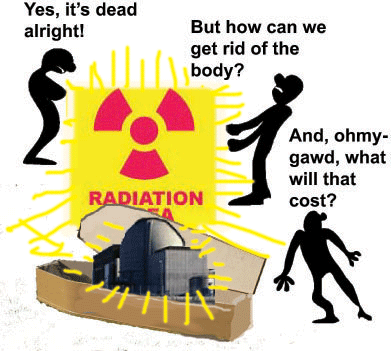 It will take another 10 years for the basic decommissioning to be undertaken at a cost of about £700m but the site cannot be redeveloped before the end of the century. High-level waste from Wylfa will remain on Anglesey until a national nuclear waste disposal facility is finally developed.
Britain still has a fleet of advanced cooled atomic reactors run by EDF but most of these will be retired by 2023 just as the government has also promised to halt all coal-fired power stations.
Hitachi of Japan is leading a Horizon Nuclear Power project to construct a new power plant at Wylfa, with a second earmarked for Oldbury in south Gloucestershire alongside a third facility planned in Cumbria. But the atomic industry’s revived fortunes ride primarily on the Hinkley C plant, which is expected to be the first new site since the Sizewell B station was completed in 1995.
The £18bn Somerset project has been repeatedly delayed but Chinese investors finally gave their support in the autumn while thegovernment promised the latest in a series of subsidies. EDF signalled in October that it would start work at Hinkley and it is expected to give the formal investment the go ahead within weeks before later saying it may not come until after Christmas.
Hinkley Point C, intended to provide about 7% of the UK’s total electricity, was originally scheduled for completion by 2018 but the latest date is 2025. Sceptics still question whether it will make that later date given the experiences of delays and cost overruns with a similar power project at Flamanville in Normandy, northern France.
There have also been problems at the new Olkiluoto nuclear plant in Finlandwhich is using the same plant design provided by EDF’s engineering partner Areva at Flamanville and planned for Hinkley………http://www.theguardian.com/environment/2015/dec/30/wylfa-nuclear-plant-closes-in-wales
Danger of moving plutonium from Dounreay to Sellafield after major flooding in Cumbria
 Concerns over moving of Dounreay material by rail after flooding 14 December 2015 by David Kerr A campaign group has raised new concerns about the movement of waste materials from Dounreay by rail after major flooding in Cumbria.
Spent “exotic fuels” are being moved from the Caithness site to Sellafield in the north of England by rail, as part of the decommissioning process.
The first of a series of loads of unirradiated plutonium fuel from Dounreay’s Prototype Fast Reactor arrived at Sellafield last Monday.
Around 13 tonnes is due to be moved between the north of Scotland and Sellafield over the next few years……
Core spokesman Martin Forwood said: “It beggars belief that the decision to risk the plutonium fuel transport was taken despite the widely-trailed storm evidence and rail warnings.
“We condemn the perverse decision as being dangerously irresponsible and as a blatant breach of the stringent safety and security rules required for such transports.
“Those responsible have shown a level of incompetence that verges on criminal and should be weeded out, so that public and rail safety is not similarly endangered again.
“If any public confidence at all in such transports is to be salvaged, answers on the decisionmaking process must be given and lessons learned.”
The unirradiated plutonium is the latest fuel to be removed from Dounreay as part of a decommisioning program which started in 2001 when the site was closed. ………..https://www.pressandjournal.co.uk/fp/news/highlands/778884/concerns-raised-by-campaigners-over-moving-dounreay-material-by-rail-after-flooding/
.
Underwater drones becoming a threat to UK’s Trident nuclear submarines
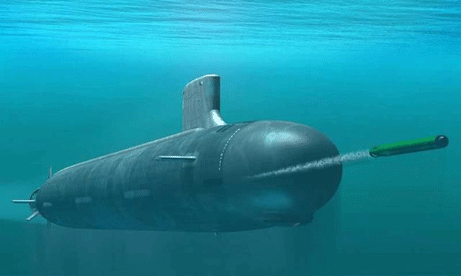 Trident: Nuclear deterrent under threat from underwater drones, expert warns, The Independent 27 Dec 15 Advances in technology may turn Britain’s £31bn nuclear submarine programme into an expensive liability. Britain’s independent nuclear deterrent could be torpedoed by an increasingly sophisticated breed of underwater drone, a leading defence expert has warned.
Rapid advances in underwater drone technology – autonomous underwater vehicles that can be controlled by ship- or land-based operators – threaten to make the controversial Trident nuclear submarines vulnerable, according to Paul Ingram, the chief executive of the British American Security Information Council (Basic).
Submarines have traditionally been seen as capable of providing stealth and invulnerability to pre-emptive attacks. The current requirement for Trident replacement subs is for them to operate as near to silently as possible.
However, a revolution in underwater drones, as well as advances in sonar, satellite and other anti-submarine warfare systems, mean that even totally silent submarines are likely to become detectable. Some sensor technologies can detect large submerged objects by monitoring small movements of surface water.
Experts warn that as the capabilities of detecting systems improve and their cost falls, large-scale remote and potentially autonomous sensor deployments become possible. The result is that the world’s oceans will become increasingly transparent, seriously calling into question the UK’s heavy reliance upon the Trident submarine programme for its nuclear deterrence………
In January, Carol Naughton, of the non-proliferation group British Pugwash, will launch a research project into the appropriateness of Trident as a platform for the UK’s nuclear weapons capability.
“We are in danger of embarking on a major spend that will not only fail to deliver the invulnerability required of the proposed deterrent system, but is also likely to add a worrying degree of instability into the nuclear weapons situation,” she said.
Last month the Prime Minister revealed that the strategic defence and security review (SDSR) had put the cost of the four subs at £31bn, up from £25bn nine years ago. The review said a contingency fund of £10bn would be set aside, suggesting the MoD anticipates the costs could rise still further.
The first sub is not due to come into service until the early 2030s. http://www.independent.co.uk/life-style/gadgets-and-tech/news/trident-nuclear-deterrent-under-threat-from-underwater-drones-expert-warns-a6786946.html
West Coast of Scotland shellfish polluted by radioactive trash from Sellafield
Scottish shellfish are contaminated by radioactive waste from Sellafield, Herald Scotland 20 Dec 15 Radioactive waste from the Sellafield nuclear plant in Cumbria is contaminating shellfish hundreds of kilometres away on the west coast of Scotland, according to a new scientific study.
Scottish researchers discovered traces of radioactive carbon discharged from Sellafield in the shells of mussels, cockles and winkles as far north as Port Appin in Argyll, 160 miles from the notorious nuclear plant.

The findings are a “wake-up call” for anyone who thinks pollution from Sellafield is yesterday’s problem, say campaigners. Sellafield, however, stresses that the contamination is well below safety limits.
The scientists found raised levels of radioactive carbon-14 in shellfish sampled at Port Appin, at Maidens in South Ayrshire and at Garlieston and Kippford on the Solway coast of Dumfries and Galloway. Mussels were most contaminated “due to the surface environment they inhabit and their feeding behaviour,” they said.
The contamination comes from Sellafield, which has poured huge amounts of radioactivity into the sea, researchers concluded. The plant, which reprocesses spent fuel from nuclear power plants in Scotland and across the UK, has discharged an average of more than eight million megabecquerels (measure of radioactivity) of carbon-14 a year from its pipelines between 1994 and 2013.
The levels peaked in 2003 but have remained “relatively high”, the scientists pointed out. Carbon-14 persists for tens of thousands of years in the environment and the amounts emitted from Sellafield make up the largest contribution to the long-term collective radiation dose across Europe from the entire nuclear industry.
“This is the first study to have shown that radiocarbon is accumulating in areas remote from Sellafield like Port Appin,” the lead researcher, Kieran Tierney, told the Sunday Herald.
Dr Ian Fairlie, an independent radiation consultant, described some of the carbon-14 contamination as “surprisingly high”. At Garlieston near Dumfries concentrations in mussels were almost three times the normal background level, while at Port Appin, north of Oban, they were 20 per cent higher…….
Pete Roche, an energy consultant and editor of ‘no2 nuclear power’ website, said: “This is a wake up call for anyone in Scotland who thinks contamination from Sellafield is yesterday’s problem.”
He pointed out that waste fuel from nuclear plants at Torness in East Lothian, Hunterston in North Ayrshire and Dounreay in Caithness will continue to be reprocessed at Sellafield until at least 2018. “Radioactive discharges will continue to flow back in the other direction long after that,” he argued……..http://www.heraldscotland.com/news/14157272.Scottish_shellfish_are_contaminated_by_radioactive_waste_from_Sellafield
UK govt prioritising nuclear, gas, oil, but removing support for renewables
Government U-turn on renewables shows gas, oil and nuclear are still favourites
 Now is not the time to pull the plug on supporting renewable energy. A few years of vital subsidies cannot make up for a century of support for fossil fuels. Guardian, Alasdair Cameron, 20 Dec 15
The entire global energy system is undergoing a clean revolution. The old certainties of centralised power and fossil fuels are falling apart before our eyes. In Paris last week world leaders set legally binding targets to decarbonise their economies in order to keep temperature rises at a maximum of 2C. The future is almost here.
It’s a future that is necessary and one that presents the economic opportunity of the century. Bloomberg NEFs New Energy Outlook for 2015 estimates that renewables alone will see more than $8tn of investment in the coming years with $3.7tn in solar alone.
Until recently the UK seemed to understand this, however imperfectly. In the second quarter of this year, the UK got 25% of its electricity from renewables and is aiming for 30% by 2020. The last two governments deserve credit for that.
Costs have fallen, with the latest ground-mounted solar and onshore wind now cheaper than new nuclear , and offshore wind – where the UK is a world leader – is not far behind.
The government’s line is that it’s time to pull the plug on supporting renewable energy – as if a few years of vital subsidies can make up for a century of economic and infrastructural support for fossil fuels. Renewable energy, like most industries, needs some government support to get going, and to realise the best results. Think of the tax breaksand research grants still given to oil and gas, the direct subsidies for nuclear, the publicly-funded roads that facilitate cars, or the national space programmes that eventually brought us the mobile phone.
The argument that this U-turn is about protecting consumers’ bills simply does not hold. Cuts to rooftop solar announced on Thursday will save just 0.9% off a yearly bill, by 2020.
Many of the alternatives the government is turning to are actually more expensive than renewables – Hinkley Point C would cost consumers twice the current wholesale price of electricity. And the single best thing that would cut bills – insulating homes – has seen just about all public support scrapped.
safety problems with Britain’s Trident ballistic missile submarine program
Britain’s nuclear arsenal is a ticking time bomb, The Week, Tom Barlow Brown, 18 Dec 15 the United Kingdom’s nuclear deterrent, the Trident ballistic missile submarine program, worth keeping?
For the British Parliament and much of the media, the problem is mainly the vast amounts of money spent to keep it going. According to the U.K. Ministry of Defense, the program’s total cost is £15-20 billion. Anti-nuclear campaigners give a figure of around £100 billion, give or take. At least, that’s how much it should rack up in costs over its 40 year lifespan.
However, what is less talked about is how both the submarines and the bases that maintain them have suffered from a series of glaring safety mishaps.
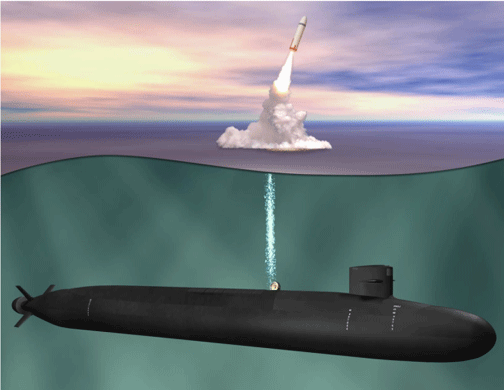
There are four Vanguard-class ballistic missile submarines currently in service with the Royal Navy. These 149.5-meter long, nuclear-powered vessels are relatively new — all of them having launched in the 1990s — but are aging fast. Each Vanguard-class submarine can carry up to 16 Trident II missiles, each one packing 12 independently-targetable nuclear warheads, meaning the nukes split off from the missile and explode in multiple locations. The actual number of deployed missiles and warheads, however, is a closely guarded secret.
Her Majesty’s Naval Base, Clyde in Scotland — otherwise known as Faslane — is the main base for the Royal Navy’s Trident subs, and has been exceedingly prone to accidents. The latest details come from a Royal Navy sailor-turned-whistleblower William McNeilly who published an 18-page report before going on the run.
McNeilly, writing under the pseudonym William Lewis, attacked the “military spin doctors” that he claimed distort the public’s knowledge of safety lapses. He detailed 30 accidents which range from the chilling to the ridiculous.
Among these were a fire in a missile compartment caused by a toilet rolls set too close to a cable, a range of problems with hydraulic systems and a general failure to follow safety procedures. The document also makes it clear that a number of safety issues were due to heavy cutbacks, resulting in a lack of qualified personnel…….
There are other concerns about safety at a different naval base in the United Kingdom — the Devonport dockyard, which is the largest naval base in Western Europe.
The most frightening of these accidents was the loss of power to the “nuclear ring” reactor cooling system of one submarine for 90 minutes. Had power not been restored, such an incident could have had potentially catastrophic consequences resulting in a major nuclear incident.
The dockyard is within walking distance of the city of Plymouth, home to around 250,000 people. Most of these residents would be in danger in the event of a reactor meltdown.
In 2011, a previously classified document authored by the base’s ex-safety regulator Commodore Andrew McFarlane warned that the reactors powering nuclear submarines based at Devonport were possibly unsafe……..
A House of Commons vote to renew Trident is expected in 2016.
After that, a fleet of replacement submarines will enter service in the early 2030s… if everything goes to plan. However, that is still a long way off, and the current class of Vanguard submarines will needs increasing amounts of maintenance to keep them running through the next decade.
The issue of Trident is back in the political limelight again with the current Labour Party and opposition leader Jeremy Corbyn looking to put scrapping the program on his party’s political agenda. In the meantime, it remains to be seen whether the Ministry of Defense will take any action on the program’s safety.
If they don’t, the consequences could be deadly serious.http://www.theweek.com/articles/594745/britains-nuclear-arsenal-ticking-time-bomb
Tax-payer funding to go to Britain’s small nuclear reactor companies!
In pursuit of partners: the UK doubles down on small modular reactors, Power Technology 9 December 2015 At the end of November, the UK Treasury announced a doubling of nuclear funding alongside a design competition to “revive the UK’s nuclear expertise and position the UK as a global leader in innovative nuclear technologies”. With small modular reactors a particular focus, Taylor Heyman profiles the companies that will be looking to throw their hat in the ring.
In the run-up to the 2015 Paris climate talks, UK chancellor George Osborne announced funding of £250m over five years to put the UK at the forefront of world research and development of small nuclear reactors (SMRs)….

The autumn statement also included details of a design competition to be launched in early 2016 to find the “best value small modular reactor design for the UK”, the Treasury said in the spending review policy paper. The competition is the beginning of a government strategy to complete an SMR sometime in the 2020s…
UK SMR: the contenders
There are bound to be a number of big players clamouring for the opportunity to work with the UK government in developing the UK’s first SMRs. Last December, the National Nuclear Laboratory (NNL), in conjunction with a range of research organisations and companies, released a feasibility study focusing on SMRs in the UK, commissioned by the Department of Energy and Climate Change (DECC). The review found four financially and techically viable options for SMR designs, by China National Nuclear Corporation (CNNC), B&W and Bechtel, Westinghouse and NuScale.
CNNC’s ACP100 design is a 310MWt pressurised water reactor designed to produce between 100 and 150MWe. The IAEA began a safety review of the design in July 2015, assessing the reactor’s safety, environmental impact and other elements of the design.
The BWXT mPower™ from B&W and Bechtel is an integral 530MWt pressurised water reactor which will produce around 180MWe. The team won the first round of funding from the cost-sharing funding initiative with the U.S. Department of Energy (DOE), Tennessee Valley Authority (TVA) and Bechtel, but decided to scale back their funding in April 2014. This considerably slowed the pace and scale of development.
Westinghouse, a company well-established and employing over 1,000 people in the UK has already presented the British Government with its proposal to partner in deploying SMR technology throughout the UK. The Westinghouse SMR design is a 225MWe integral pressurized water reactor with all primary components located inside the reactor vessel.
The NuScale offering is a 160MWt reactor which operates using the principles of natural circulation rather than traditional pumps. It can produce 50MWA. The idea behind the smaller design is scalability; reactor units can be added or taken away depending on demand. NuScale Power won the second round of DOE funding in 2013, receiving $217m over five years in cost-share funds to develop, license and commercialise its SMR technology. The first is projected for 2024 in Idaho, US.
No doubt other contenders for the partnership will come to the fore once details of the January competition are released by DECC. Whichever company is chosen, NNL hopes to play a role in the development of SMRs for the UK. “We have a strong capability in reactor design, including SMRs,” says NNL’s director of external relations Adrian Bull. “So we feel we would be well-placed to carry out significant scope within the overall programme.” http://www.power-technology.com/features/featurein-pursuit-of-partners-the-uk-doubles-down-on-small-modular-reactors-4749180/
Toshiba’s financial travails threaten UK’s nuclear power plans
Toshiba travails pose another threat to UK’s nuclear future, The Week Dec 11, 2015
Company is said to be touting for new investment as costs of its accounting scandal bite. First it was Hinkley Point, now it’s Moorside. Another project to add to the UK’s new generation of nuclear power plants has apparently hit the rocks.
Sources “with direct knowledge of the matter” told Reuters that Toshiba is asking around among Japanese financial institutions for help to fund the Moorside project, being built near the Sellafield site in west Cumbria. The plant will house three reactors designed by Toshiba subsidiary Westinghouse Electric to produce 3.4 gigawatts of power, slightly more than Hinkley Point in Somerset.
Two years ago the project was estimated to cost around £8bn, the Guardiannotes, but this could have doubled since, as the assumed cost of labour and meeting stringent regulations has increased. Reuters says Toshiba’s share of the costs would be £2bn, but since its accounting scandal it is now thought to have “become difficult for Toshiba to do this on its own”.
The sources said Toshiba “had made requests to Japanese insurers as well as some banks, including Norinchukin Bank, and has hired HSBC as a financial adviser”…..http://www.theweek.co.uk/67731/toshiba-travails-pose-another-threat-to-uks-nuclear-future
Britain’s heavy burden – its Trident nuclear programme
Nuclear Deterrent or Millstone?, America, December 21-28, 2015 Issue David Stewart For decades, Britain has possessed an independent nuclear deterrent capability. While public attention to that nuclear capacity has waxed and waned, it has always been controversial. The issue has arisen again here in Britain, launched, as it were, by several factors: the election of Jeremy Corbyn, a lifelong supporter of nuclear disarmament, as leader of the U.K. Labour Party; a looming need to upgrade and replace the current nuclear force, evoking concern about cost; and, finally, the Scottish independence referendum, which last year brought renewed focus on the Royal Navy’s submarines, packed with nuclear weapons, that are home-ported on Scotland’s west coast. Most recently, a controversial commentary during a television program by a high-ranking U.K. military officer brought the debate back to life, as has, indirectly, the terrorist attack in Paris.
The cost of the proposed replacement keeps rising; the most recent estimate is £163 billion—about $244 billion. Prime Minister David Cameron is determined to proceed with the modernization. The opposition focuses on the enormous price tag during a time of austerity and great need elsewhere. To many the proposed expenditure appears obscene. A further dimension to the debate is just emerging: Is such a huge cost justified even by purely strategic measures?
Many point out that France’s nuclear capacity did not deter the awful attacks on Paris in late November. The practical threat has shifted, even changed altogether. Nuclear deterrence and intercontinental ballistic missile delivery systems are useless against the danger that a group like ISIS represents….
A second Scottish independence referendum looks likely as the Scottish National Party is set to sweep next May’s Edinburgh Parliament elections. The S.N.P. utterly opposes Trident and its renewal. An independent Scotland would insist on the removal of missiles from Scottish soil and waters. Scottish politicians have wondered aloud if a U.K. government would ever countenance basing such weapons as close to London as they currently are to Glasgow. That position is striking a chord among many Scottish voters….. http://americamagazine.org/issue/nuclear-deterrent-or-millstone
Toshiba having problems getting money to build UK nuclear power project
 Toshiba seeks financial help with £8bn UK nuclear project http://www.theguardian.com/business/2015/dec/10/toshiba-seeks-financial-help-with-8bn-uk-nuclear-project, Terry Macalister
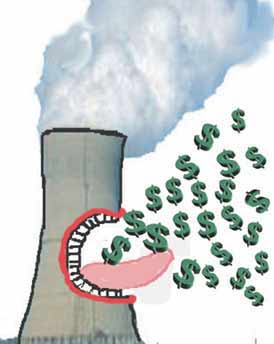
Japanese technology firm in talks with financial institutions to support atomic construction programme after share price tumbles Toshiba, the technology company at the centre of plans to build more nuclear reactors in Britain, is looking for outside help to fund its £8bn programme after a collapse in its share price.
The Japanese group is in talks with local financial institutions to support the construction of an atomic plant near the Sellafield facility in Cumbria, after running up losses following an accounting scandal.
The emergence of Toshiba’s problems will add to worries over Britain’s nuclear plans after the French energy group EDF, which plans to build the Hinkley Point C station in Somerset, dropped out of France’s CAC 40 index of leading shares.
There is widening concern in the City about the escalating costs of huge nuclear projects, which are damaging company share valuations and undermining the government’s commitment to new nuclear at a time when it has promised to phase out coal-fired power stations.
It has become difficult for Toshiba to do this (fund the NuGen programme in the north-west of England) on its own,” one source told Reuters, which reported that Toshiba had hired HSBC bank to help find new funds.
On Monday, the Japanese financial regulatorrecommended that Toshiba be fined 7.37bn yen (£40m) for overstating profits and the share price of the company is down 40% since the start of the year.
Toshiba is a 60% shareholder in the NuGen project to build 3.4 gigawatts (GW) of electricity generating capacity close to the Sellafield plant, where spent fuel is reprocessed.
Neither Toshiba nor NuGen, a partnership with Engie (formerly GDF Suez) of France, was available for comment. The cost of building three reactors designed by a Toshiba subsidiary, Westinghouse, was estimated two years ago at £8bn but experts believe that figure could have at least doubled. That is in line with the price tag for Hinkley, which EDF puts at £18bn.
The 3.2GW Somerset reactors, to be built by EDF with the help of Chinese state companies, have been given the go-ahead by the UK government but the project is awaiting the final investment decision from France.
This week EDF blamed the 85% holding by the French state and lack of free float shares for its removal from the CAC index. But many analysts in the City of London have released gloomy equity forecasts on EDF, fearing Hinkley might go over budget like the company’s Flamanville reactor project in Normandy.
The dangers of transporting nuclear waste by sea
 Nuclear waste transport risks ,Tor Justad, http://www.shetlandtimes.co.uk/2015/12/08/nuclear-waste-transport-risks-tor-justad “…..I would wish to draw attention to the proposal from the Nuclear Decommissioning Authority to transport nuclear waste by sea from Scrabster to Barrow – a distance of over 400 miles.
This high level nuclear waste/spent fuel emanates from the Dounreay nuclear site and is intended for Sellafield – described as “the most toxic nuclear site in Europe”.
The campaigning group Highlands Against Nuclear Transport (Hant) has been campaigning since 2013 to stop this plan on the grounds that the risk to the environment, fishing, aquaculture and tourism is unacceptable.
Transporting nuclear waste by sea is opposed by environmental groups throughout the world and Hant is of the view that all nuclear waste should remain on the sites where it is produced which is in line with Scottish government policy. Hant provided an input at a Nuclear Free Local Authorities (NFLA) seminar in Lerwick in August 2015 on “Transportation of Dounreay’s nuclear materials by rail or by sea to Sellafield – is it a safe solution for reducing the nuclear legacy in Scotland?” and was pleased to hear from SIC and Kimo representatives at that seminar that they supported Hant’s position.
The need for emergency response vessels stationed around the Northern Isles and Western Isles is important to safeguard these coasts against marine accidents and emergencies of any kind but the need is increased by the proposal to transport nuclear waste.
As is well known, nuclear radiation knows no land or sea boundaries so this issue is of concern to all coastal communities in the Highlands and Islands.
Hant will continue to campaign on this issue and would urge individuals and interested organisations to support this campaign.
1 This Month





PLEASE OPPOSE HR 8255 AND S.3639 – bills would accelerate satellite deployment, with no environmental review or safeguards – https://ncstd5li.quorum.us/campaign/169331/
To see nuclear-related stories in greater depth and intensity – go to https://nuclearinformation.wordpress.com
-
Archives
- October 2026 (49)
- September 2026 (339)
- August 2026 (330)
- July 2026 (355)
- June 2026 (287)
- May 2026 (306)
- April 2026 (356)
- March 2026 (251)
- February 2026 (267)
- January 2026 (308)
- December 2025 (358)
- November 2025 (359)
-
Categories
- 1
- 1 NUCLEAR ISSUES
- business and costs
- climate change
- culture and arts
- ENERGY
- environment
- health
- history
- indigenous issues
- Legal
- marketing of nuclear
- media
- opposition to nuclear
- PERSONAL STORIES
- politics
- politics international
- Religion and ethics
- safety
- secrets,lies and civil liberties
- spinbuster
- technology
- Uranium
- wastes
- weapons and war
- Women
- 2 WORLD
- ACTION
- AFRICA
- Atrocities
- AUSTRALIA
- Christina's notes
- Christina's themes
- culture and arts
- Events
- Fuk 2022
- Fuk 2023
- Fukushima 2017
- Fukushima 2018
- fukushima 2019
- Fukushima 2020
- Fukushima 2021
- general
- global warming
- Humour (God we need it)
- Nuclear
- RARE EARTHS
- Reference
- resources – print
- Resources -audiovicual
- Weekly Newsletter
- World
- World Nuclear
- YouTube
-
RSS
Entries RSS
Comments RSS

