Senior Tories agree with Jeremy Corbyn on ditching Trident nuclear weapons system
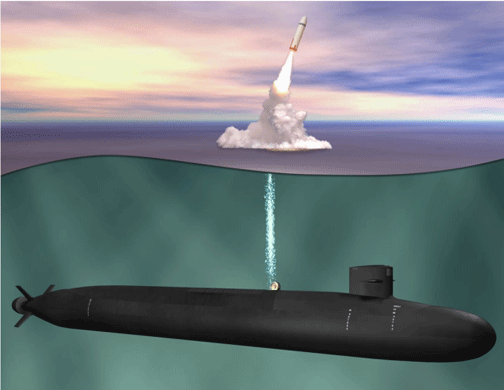
 Not just Jeremy Corbyn – senior Tories also think ditching Trident might be a good idea https://tompride.wordpress.com/2016/01/18/not-just-jeremy-corbyn-senior-tories-also-think-ditching-trident-might-be-a-good-idea/18 Jan 2016 by Tom Pride
Perhaps the Cameron government should be more careful before labelling Jeremy Corbyn a national security ‘threat’ just for saying Trident should be scrapped. Because there are several influential people in the Tory Party who think Trident should be scrapped too.
Former Conservative Defence Secretary Michael Portillo agrees with Jeremy Corbyn:
“Our independent nuclear deterrent is not independent and doesn’t constitute a deterrent against anybody that we regard as an enemy. It is a waste of money and it is a diversion of funds that might otherwise be spent on perfectly useful and useable weapons and troops. But some people have not caught up with this reality.”
And Tim Montgomerie – who has been called one of the most influential Tories outside the cabinet – has also floated ditching Trident (from the Times last March): In fact, in 2009 Montgomerie praised the willingness of the Tory Party to discuss the scrapping of Trident as “tough thinking”.
Veteran Tory MP and former Tory Party chairman David Davis has alsoquestioned the affordability of Trident.
And before he was Prime Minister, David Cameron himself refused to rule outscrapping Trident.
But it’s not just senior Tories who agree with Corbyn.
Field Marshal Lord Bramall, General Lord Ramsbotham, General Lord Ramsbotham and General Sir Hugh Beach have denounced Trident as “irrelevant”.
And in 2009, that well-known hotbed of radical socialism, the Daily Telegraphdiscussed reasons why Trident should be scrapped.
Even the Daily Mail has in the past pondered getting rid of Britain’s nuclear deterrent.
OK. I think I’ve just about got the hang of this Trident discussion thing now.
Scrapping Trident is only a threat to national security when it’s not being proposed by a Tory?
Oh shit. Our nuclear deterrent runs on Windows XP. No, really, it does.
Inquiry into Litvinenko’s radiation murder points to Putin as instigator
 Vladimir Putin ‘probably’ ordered KGB defector Alexander Litvinenko’s death by radioactive poisoning: inquiry, SMH, January 22, 2016 Nick Miller London: Russian President Vladimir Putin “probably” ordered the murder of defected KGB spy Alexander Litvinenko in London, an official inquiry in Britain has found.
The finding will put pressure on the British government to take fresh measures against Russia, possibly including targeted sanctions and travel bans. It may also harm potential co-operation in military action against ISIS, and upcoming peace talks on the Syrian conflict.
Litvinenko died in November 2006 after a radioactive poison was slipped into his tea at a London hotel.
The inquiry examined expert evidence and heard testimony from forensic scientists and family members, as well as secret evidence that was not disclosed in the public report – but believed to be from Western intelligence agencies.
Sir Robert said he was “sure” that Litvinenko was deliberately poisoned with the radioactive element polonium 210, which he ingested on November 1, 2006.
That afternoon Litvinenko had met two men for tea at the Pine Bar of the Millennium Hotel in Mayfair, London.
The men were Andrey Lugovoy and his associate Dmitri Kovtun – former Russian army officers. Lugovoy was a former KGB agent.
Forensic evidence showed the Pine Bar was “heavily contaminated” with polonium 210, the inquiry found………http://www.smh.com.au/world/vladimir-putin-probably-ordered-kgb-defector-alexander-litvinenkos-death-inquiry-20160121-gmba0w
EDF Directors might delay UK Hinkley nuclear decision yet again
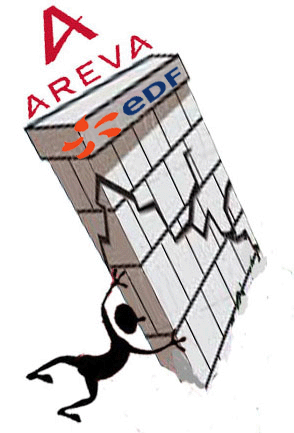 Hinkley Point – Edf to decide whether to build nuclear power station next week By Central Somerset Gazette January 19, 2016 A DECISION on whether a nuclear power station is built at Hinkley Point could be announced next week.
Reports in the French press indicate that the board of directors of the French state electricity generator EDF will meet on January 27 to make a final investment decision on the construction of two nuclear reactors at Hinkley Point near Bridgwater.
The final investment decision on the project has been delayed due to the lengthy negotiations with Chinese partners.
However even now there are concerns that the board might defer the decision for the ninth time……….
EDF is also locked in negotiations surrounding a complex deal to buy a French nuclear reactor builder, Areva, and in the disposal of it’s stake in eight current British nuclear power stations, five in the US, one in Finland and a number of Polish coal fired plants
Preparation of the site stopped last year when negotiations over the financing of the power station stalled.
Campaigners opposed to the building of Hinkley Point C are sceptical that the project will ever see the light of day.
Stop Hinkley spokesperson Roy Pumfrey said: “I’ll believe it when I see it. This is the ninth time EDF has said a final investment decision is imminent. Just last October the chairman of EDF, Jean-Bernard Levy, said work would be starting before the end of 2015. It would be completely reckless of the Board to give the go-ahead to this £25 billion project when the company is in such a parlous state.” http://www.centralsomersetgazette.co.uk/8203-Hinkley-Point-Edf-decide-build-nuclear-power/story-28559932-detail/story.html
Nuclear waste plans an abuse of democracy in Britain
This is basically an engineering project like no other. Its timescale will dwarf the oldest cathedrals.

this time they have legislation in place to make sure the county council can’t stop it. It’s an abuse of democracy.
 Hardest sell: Nuclear waste needs good home By Greig Watson BBC News 18 January 2016 “…….Steadily produced since the end of World War Two, the question of what to do with the nuclear waste from civil, military, medical and scientific uses has been causing equal measures of fear and frustration for decades. With a new generation of nuclear power stations on the way, a fresh search is under way for a community ready to take on the challenge.
Campaigner Eddie Martin says: “It’s very worrying, scary even. They have been looking for somewhere to put this material for decades and it keeps coming back to Cumbria.”…….
Nuclear power stations have been built in 31 countries but only a handful ,including Finland, Sweden, France and the US have started building permanent storage facilities.
All of these are purpose-built caves hundreds of metres below ground, known as a Geological Disposal Facility (GDF). Once the waste is treated and sealed inside containers, it is stacked in the caverns. GDFs are expected to remain secure for thousands of years.
Dr Robert says GDFs or deep boreholes are two possible options for the disposal of radioactive waste but there are still challenges to overcome, particularly in predicting their behaviour over hundreds or thousands of years.
“While there are natural examples of radiation being contained – think of the mines where uranium for nuclear fuel has been sat happily for millennia – the mix of isotopes in radioactive waste is much more complex so we need to know how the nuclear waste interacts with its storage material, be it glass, concrete or metal……… Continue reading
NuScale revs up its marketing propaganda for Small Modular Nuclear Reactors (SMRs)
 Mini-nuclear plants in UK by 2025, Fluor’s NuScale Says by Alex Morales, Financial Review, 18 Jan 16
UK ambitions to build small modular nuclear plants may be realised as soon as 2025, according to Fluor Corp’s NuScale unit, which is seeking to be a pioneer in the market.
 NuScale plans to submit its 50-megawatt reactor design for approval by US nuclear authorities towards the end of 2016. That would leave it well placed to seek the UK equivalent, called Generic Design Assessment, in 2017, Tom Mundy, executive vice-president for program development at the US company, said in an interview in London.
“Assuming the GDA is submitted and takes four years, we’d be looking at approval in 2021,” Mr Mundy said. “There’s then a 36- month construction time, so it’s plausible to expect that if all things line up, we could have a UK plant built by 2025.”
Britain is trying to secure new baseload power as it closes down all its coal-fired plants by 2025. Conventional nuclear power is proving expensive and time-consuming, while most companies don’t think it’s profitable to build new gas-fired stations. The Treasury in November said it will plow £250 million ($515 million) into research and development over the next five years aimed at building one of the world’s first small modular nuclear reactors in the 2020s………..
The global market for small modular reactors may total as much as £400 billion by 2035, according to a report in late 2014 by the National Nuclear Laboratory, which advises the UK government. It identified reactor designs that may meet UK requirements coming from NuScale, Toshiba.’s Westinghouse unit, China National Nuclear and the mPower venture by Babcock & Wilcox Enterprises. and Bechtel Group.
NuScale won’t manufacture its own reactors and has investigated the UK supply chain, according to Mr Mundy. Once established in Britain, the company could then export its modules to other European countries, he said………
When Chancellor of the Exchequer George Osborne announced the R&D funding for modular reactors, it was stated that a competition for funding will be held “early next year”. The Department of Energy and Climate Change said no fixed timetable has been set. Mr Mundy said he doesn’t doubt the government’s intentions.
“Nuclear power has a long legacy in this country, and our reactors are based on tried-and-tested light-water technology,” Mr Mundy said. “I’m optimistic that with what the chancellor said and the indications from DECC we’re going to continue to move forward.” http://www.afr.com/business/energy/nuclear-energy/mininuclear-plants-in-uk-by-2025-fluors-nuscale-says-20160118-gm89c4#ixzz3xd3bnLxN
Jeremy Corbyn suggests submarines without warheads
Jeremy Corbyn hints at no-nuke subs in Trident compromise
Labour leader suggests  to protect defence jobs while maintaining his stance on disarmament, Guardian, Rowena Mason, 17 Jan 16, Jeremy Corbyn has suggested the UK could have Trident submarines without nuclear weapons, a move that would mean disarmament while protecting defence jobs in Scotland and Cumbria……..
Crisis in Britain’s nuclear safety regulator
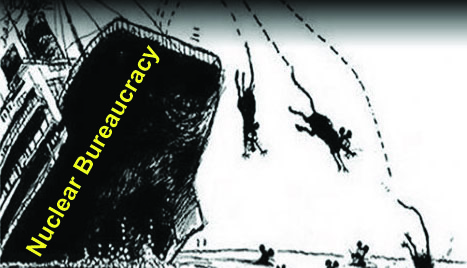
Nuclear watchdog risks meltdown, critics warn, The Times UK, 12 Jan 16 The nuclear safety regulator is facing a leadership crisis and is ill-equipped to deal with a mounting workload linked to China’s plans to invest £8 billion in the British industry, experts have warned.
The Office for Nuclear Regulation is responsible for ensuring the safety and security of 15 nuclear reactors, hazardous sites such as Sellafield and the transport and disposal of high-level nuclear waste. It also oversees the safety case for new reactors.
In recent months it has been plagued by desertions, including the departure of Andy Hall, the Chief Inspector, and Alasdair Corfield, the finance director. Neither has been….. – (Subscribers only)
http://www.thetimes.co.uk/tto/business/industries/utilities/article4662825.ece
Jeremy Corbyn – inconveniently sensible on nuclear weapons
Corbyn says the Trident isn’t worth the money. It is a costly weapon that can never be used. British security concerns should be focused on terrorism, economic turmoil and catastrophic climate change; nuclear weapons are irrelevant to all that. Corbyn argues, sensibly, that the Cold War era is long gone
Jeremy Corbyn talks common sense on nuclear weapons, WP. By Katrina vanden Heuvel January 12 The new leader of the British Labour Party, Jeremy Corbyn, has sparked a political firestorm by challenging the myths around nuclear weapons and Cold War deterrence. Corbyn announced that he would never use a nuclear weapon. He followed that apostasy by declaring that he opposed renewal of the British nuclear Trident submarine program.“I am opposed to the use of nuclear weapons. I am opposed to the holding of nuclear weapons. I want to see a nuclear-free world. I believe it is possible,” Corbyn declared.
Several Labour shadow ministers suggested they might resign if that became Labour’s policy. Conservative Prime Minister David Cameron and the right-wing British press have been pillorying Corbyn as a threat to national security for his heresy.
Corbyn’s aides argue this is not a new version of the debate over unilateral disarmament that wracked Labour in the 1980s. Rather, they insist the question is whether renewing the fleet is worth the money. Corbyn’s doubts are shared by some current and retired military officers. The British fleet of four Trident submarines is slated for retirement in the late 2020s. It will take almost that long to develop a successor. Renewing and operating the Trident program will cost an estimated 167 billion British pounds over the next four decades. The Army has already been reduced to below 82,000 soldiers, the lowest number since the 1700s. Renewing the Trident fleet would likely force more cuts.
Corbyn says the Trident isn’t worth the money. It is a costly weapon that can never be used. British security concerns should be focused on terrorism, economic turmoil and catastrophic climate change; nuclear weapons are irrelevant to all that. Corbyn argues, sensibly, that the Cold War era is long gone….
The Corbynites are sensitive about being accused of unilateral disarmament, since the party’s adoption of that position in the 1980s at the height of Cold War tensions was electorally damaging. Yet a British commitment to give up nuclear weapons unilaterally might just be the highest and best use of the Trident fleet…..
Corbyn is now taking a beating in the conservative tabloids for his blasphemies. Yet he is talking common sense. No leader in his right mind would use nuclear weapons. The British people would be better off spending the money that renewal would cost elsewhere. The reality is that the British nuclear arsenal will have greater global significance if it is dismantled rather than renewed. Corbyn is meeting fierce resistance, even inside his own party, but he is raising questions that deserve a full debate. https://www.washingtonpost.com/opinions/jeremy-corbyn-talks-common-sense-on-nuclear-weapons/2016/01/12/52e8c886-b88f-11e5-b682-4bb4dd403c7d_story.html
Is it just Hinkley that’s finished or the whole of EDF?
No2Nuclear Power Jan 2016 “………French utility EDF is considering selling assets  worth over 6 billion euros (£4.5 billion) this year, according to French daily Les Echos – notably it is considering selling a stake in its eight British nuclear plants to fund plans to build Hinkley Point C. But it could only sell a 29% share of EDF Energy (which is supposed to be worth 9 billion euros in total). This would leave EDF with a 51% stake, because Centrica already owns 20%. The paper said a sale had been studied but the process had not been launched. The company needs 55 billion euros to upgrade its ageing nuclear plants, plans to invest 18 billion pounds in Hinkley and spend several billion euros to buy Areva’s reactor unit. (1)
Dangers in transporting nuclear weapons through residential areas
 Fears voiced as nuclear weapons are transported through the Vale of Leven (incl video) Daily Record, 12 JAN 2016 BY MARTIN LAING A CONCERNED resident says movement of warheads in difficult driving conditions put lives at risk
CONCERN has been expressed for public safety after a nuclear convoy was filmed rumbling through residential areas of West Dunbartonshire.
Renton man Les Robertson shot video of the mult-vehicle convoy as it moved past the Co-Op store in Balloch and through the Vale of Leven on Saturday at tea time.
However, a spokesman for the Ministry of Defence denied there was any threat to public safety and said the police had been involved in helping to organise the movement of materials to the Clyde naval base at Faslane and Couplort.
Mr Robertson wrote to the Lennox Herald this week to highlight his fears that the transportation of live nuclear warheads through the area put lives at risk.
He said: “On Saturday, January 9, a nuclear warhead convoy, consisting of four warhead carriers and support vehicles, travelled through West Dunbartonshire on route to Coulport.
“Trident warheads are carried in large crates inside the large green trucks. They are fully assembled and complete. The core of the warhead is a ball of plutonium and uranium. This is surrounded by specially developed conventional high explosives which would be ignited to create the critical mass necessary for a nuclear detonation when launched and targeted.
“The Ministry of Defence says there is little risk of a nuclear detonation during transport but, in an accident, the highly volatile conventional explosive could be set off, causing the warhead to jet plutonium. It estimates that in a serious accident a circle some 550 metres in radius would be affected by blast and fragments of explosive.
“Given the terrible driving conditions on Saturday evening, the risk of an accident was heightened yet a convoy carrying its deadly cargo was allowed to travel close to a busy supermarket in Balloch and heavily populated housing schemes including the Haldane and Dalvait.”……… To view the video, go to www.lennoxherald.co.uk.
Experts warn of terrorist drone attacks on nuclear facilities
Terrorists could use drone bombs to attack nuclear power stations, experts warn http://www.independent.co.uk/news/uk/home-news/terrorists-could-use-drone-bombs-to-attack-nuclear-power-stations-experts-warn-a6805316.html, Ian Johnston 11 Jan 16

The Oxford Research Group looked at more than 200 drones and concluded they “will be used as simple, affordable and effective airborne improvised explosive devices”, the Guardian reported.
“The UK government, police, military and security services will need to introduce countermeasures to reduce or mitigate the risk of commercially available drones being used for attack,” the security think tank warned. “Islamic State [Isis] is reportedly obsessed with launching a synchronised multi-drone attack on large numbers of people in order to recreate the horrors of 9/11.”
The report recommends a licensing system for drones, using lasers and radio jammers to defend potential targets and issuing guidelines to the security forces on when to shoot down drones.
It pointed to a number of incidents where drones were used by protesters, including when a football match between Albania and Serbia was interrupted by a drone flying an Albanian flag.
Birth defects in families of Britain’s nuclear test veterans: the fight for justice
Their wives have been found to have three times the usual number of miscarriagesand even their grandchildren have eight times the normal amount of birth defects.
Nuclear test veterans bid for £1million to prove blasts caused cancer and birth defects http://www.mirror.co.uk/news/uk-news/nuclear-test-veterans-bid-1million-7147105 9 JAN 2016 BY SUSIE BONIFACE Britain’s nuclear heroes are bidding for a £1million research fund to finally prove the awful genetic legacy of the UK bomb tests.
Veterans are hoping the government cash will help them win a 60-year fight for justice after they were left with a crippling legacy of cancers , rare disease and 10 times the normal rate of birth defects in their children.
Nige Heaps of the British Nuclear Test Veterans’ Association said: “We hope that with this money we’ll be able to do the scientific work necessary to help prove the case, as well as improving the lives of survivors and their children.”
In his March budget Chancellor George Osborne praised the veterans’ campaign for recognition, backed by this newspaper, and announced a £25m fund to help all veterans over 60.
- The BNTVA has spent the past nine months preparing a detailed bid which has already had draft approval and will be formally submitted on Monday.The £1m they are asking for includes:
- £500,000 over two years for a genetic study by Brunel University
- £250,000 for research by charity Combat Stress into the mental health effects
- £150,000 for a two-year study at the University of Southampton on the sociological impact
- £6,000 to begin a remembrance project and future archive
- £94,000 to provide items like electric wheelchairs, home adaptations, transport or other help for those who need it
There is no guarantee BNTVA will get a penny. The Aged Veterans Fund they are applying to has £5million next year to split between eight veterans’ groups expected to bid.
- But Mr Heaps says he is confident of a breakthrough.He added: “There is no way scientifically to say any genetic damage was caused by radiation from the tests.
“The best we can hope for is to prove the veterans have a higher rate of genetic damage than the rest of the population. We have to fight the battles we can win.”
Around 22,000 men, many on National Service, were ordered to Australia and Christmas Island in the South Pacific from 1952 to witness the explosion of dozens of atomic and hydrogen bombs.
They were forced to live amid the toxic fallout for up to a year afterwards.Read more: Nuclear test veterans fighting for £72k payout after being irradiated by the Government
On their return, they began to report increased cases of blood, thyroid and tongue cancers and rare blood and bone disorders.
Their wives have been found to have three times the usual number of miscarriagesand even their grandchildren have eight times the normal amount of birth defects.
- The Ministry of Defence has always denied being to blame, and has spent millions fighting legal cases. Today fewer than 3,000 veterans survive, along with an estimated 150,000 descendants carrying the curse of their fathers’ service.But in 2007 genetic research in New Zealand – similar to that now proposed here – showed veterans had DNA damage three times worse than that suffered by survivors of Chernobyl.
Read more: Nuclear test veteran says his photos prove men were exposed to deadly radiation
Derek Fiddaman has had 200 cancers removed from his face and head – and expects to develop 100 more.
Derek was a 21-year-old naval rating on HMS Cossack when it was ordered to Christmas Island in 1957 as guardship for several hydrogen bomb tests codenamed Operation Grapple.
- The crew was ordered on deck to watch the explosions.In 1975 he developed lumps on his face and began 40 years and 1,000 hospital visits to have basal cell carcinomas – cancers rooted in the deepest layer of skin – cut out.
Derek, now 78, of Horsham, West Sussex, said: “I have about five cut out every year, so if I live another 20 years there’ll be 100 more.
“Each time they cut one out and I go back and there’s another one growing in the scar.”
- He’s one of those demanding the MoD admit irradiating them.He said: “I’m one of the lucky ones – it’s not going to kill me and they can at least cut my cancers out.
“You get used to it. All I want is to hear the word ‘sorry’. They never will, but that’s all I want.”
The proposed UK research will involve analysis of the DNA in blood and saliva of around 50 surviving veterans, wives and children, to assess genetic damage and see if it was passed on.
It will also look for a “radiation signature” in the DNA, if one is present.
If approved, the money will be released in the spring.http://www.mirror.co.uk/news/uk-news/nuclear-test-veterans-bid-1million-7147105
How safe is Scotland’s nuclear submarine graveyard ?
Questions raised over safety regime at Scotland’s nuclear submarine graveyard, HeraldScotland, Rob Edwards / 11:13 Sunday 10 January 2016 The safety regime at the Rosyth naval dockyard, home to seven defunct nuclear submarines, has been called into question after an emergency exercise failed to demonstrate adequate arrangements for rescuing casualties from an accident.
The UK government’s nuclear safety watchdog has ordered Babcock, the multinational company that runs the Fife dockyard for the Royal Navy, to rerun the exercise, codenamed Nightstar, in March because of mistakes made last September.
An inspection by the Office for Nuclear Regulation (ONR) concluded that there were flaws in the way that staff looked after injured people during the exercise at the base known as ‘Scotland’s nuclear graveyard’. There were also communication and command problems in dealing with the imagined accident.
The problems with the Nightstar exercise on September 30 2015 were disclosed in the ONR’s latest three-monthly report on Rosyth. Though inspectors thought that some of the exercise procedures were adequate, others were not……..
Looking after the submarines to ensure that radioactivity doesn’t leak and contaminate the environment has cost the MoD £13.5 million over the last five years. http://www.heraldscotland.com/news/14194001.Questions_raised_over_safety_regime_at_Scotland_s_nuclear_submarine_graveyard/
Jeremy Corbyn’s aim to change UK Labour’s stance on Trident nuclear weapons system
Trident: Jeremy Corbyn hopes to alter Labour’s stance on nuclear weapons by stripping shadow Cabinet of power, The Independent, Leader wants Labour’s ruling body to be able to make policy decisions Tom McTague Political Editor @TomMcTague 9 Jan 16 Jeremy Corbyn’s secret blueprint to seize control of Labour’s policy-making machine to fast-track a change in the party’s position on Trident has been revealed in leaked documents drawn up by his allies in the trade unions.
Leading members of the Shadow Cabinet have been made aware of a paper which would strip them of the power to set policy between conferences. Instead, Labour’s National Executive Committee would explicitly be given the role of deciding policy.
>One minister who has seen a copy of the proposal said that Mr Corbyn’s advisers were coordinating the move which would change the NEC’s “aims and objectives” to give it explicit power to set policy. The document is likely to be put before the NEC at its meeting this month.
Speaking to The Independent on Sunday, the shadow Chancellor John McDonnell said he had not seen the document but confirmed the NEC would decide “fairly quickly” on a process to change Labour’s position on Trident – and revealed it would happen “before the summer”.
He revealed that the review of the party’s nuclear policy, which is being conducted by former London Mayor Ken Livingstone and the new shadow Defence Secretary Emily Thornberry – would come up with a range of options, including unilateral disarmament, rather than recommending just one policy. One option, that is to be considered, is for Britain to become a “virtual nuclear state” like Japan and Iran – free of nuclear weapons but with the possibility of re-arming in a short period of time…….http://www.independent.co.uk/news/uk/politics/trident-jeremy-corbyn-hopes-to-alter-labours-stance-on-nuclear-weapons-by-stripping-shadow-cabinet-a6804376.html
EDF struggling to raise money to fund UK’s new Hinkley Point reactors.
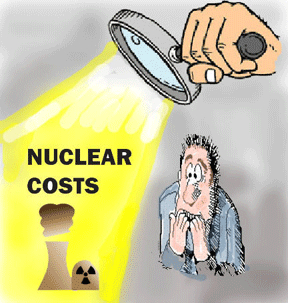
 EDF considers selling €3bn stake in UK nuclear business to help fund reactors
French energy firm may reduce stake in eight existing nuclear reactors it owns to raise money for Hinkley Point C project, Guardian, Terry Macalister, 8 Jan 16, EDF is considering the sale of a €3bn (£2.2bn) stake in its British nuclear business in a bid to raise cash for new Hinkley Point reactors.
Possible buyers would be state-owned Chinese companies, who are already committed partners on the £18bn Somerset project.
EDF could unveil details of a sell-off plan on 16 February, when it is scheduled to release annual financial figures and is expected to give a final investment decision on building Britain’s first new reactors for 20 years.
The French daily, Les Echos, reported on Thursday that EDF may reduce its stake in the eight existing nuclear reactors it owns from 80% to 51% by bringing in a new investor as part of a wider €6bn disposal programme. Industry sources told the Guardian that the possible sell off was only one of a number of different options that were under consideration as the group looked at financing Hinkley Point C and other projects.
They said it was still likely EDF would give the go ahead to Hinkley next month even though it did not have all the financing in place. The project is estimated to cost £18bn, according to EDF, though the European Union has warned it could go as high as £24bn.
Centrica, the owner of British Gas, already has a 20% holding but has made clear in the past that itdoes not want a larger commitment to nuclear, and declined to participate in the Hinkley newbuild scheme………
EDF struggled to interest anyone else in the Hinkley scheme, which many in the City have deemed over-expensive, so the Chinese would seem first in line to buy into the rest of the EDF nuclear business if it comes up for grabs……..
Environmentalists opposed to EDF’s new building plans in Britain believe the company may yet be forced to abandon Hinkley Point C because of a European legal challenge against the state aid promised by the UK. http://www.theguardian.com/business/2016/jan/07/edf-selling-3bn-stake-uk-nuclear-business-reactors-hinkley-point-c
1 This Month





PLEASE OPPOSE HR 8255 AND S.3639 – bills would accelerate satellite deployment, with no environmental review or safeguards – https://ncstd5li.quorum.us/campaign/169331/
To see nuclear-related stories in greater depth and intensity – go to https://nuclearinformation.wordpress.com
-
Archives
- October 2026 (49)
- September 2026 (339)
- August 2026 (330)
- July 2026 (355)
- June 2026 (287)
- May 2026 (306)
- April 2026 (356)
- March 2026 (251)
- February 2026 (267)
- January 2026 (308)
- December 2025 (358)
- November 2025 (359)
-
Categories
- 1
- 1 NUCLEAR ISSUES
- business and costs
- climate change
- culture and arts
- ENERGY
- environment
- health
- history
- indigenous issues
- Legal
- marketing of nuclear
- media
- opposition to nuclear
- PERSONAL STORIES
- politics
- politics international
- Religion and ethics
- safety
- secrets,lies and civil liberties
- spinbuster
- technology
- Uranium
- wastes
- weapons and war
- Women
- 2 WORLD
- ACTION
- AFRICA
- Atrocities
- AUSTRALIA
- Christina's notes
- Christina's themes
- culture and arts
- Events
- Fuk 2022
- Fuk 2023
- Fukushima 2017
- Fukushima 2018
- fukushima 2019
- Fukushima 2020
- Fukushima 2021
- general
- global warming
- Humour (God we need it)
- Nuclear
- RARE EARTHS
- Reference
- resources – print
- Resources -audiovicual
- Weekly Newsletter
- World
- World Nuclear
- YouTube
-
RSS
Entries RSS
Comments RSS

