First Minister ‘100% committed to new Wylfa nuclear plant’ Carwyn Jones made comments despite Labour’s Shadow Chancellor promising to ‘bring an end’ to nuclear power and weapons if Labour win Daily Post BY GARETH WYN-WILLIAMS, 30 May 17, The First Minister has reiterated his “100%” backing for a new nuclear plant
on Anglesey, a stance shared will all but one of the candidates hoping to become the island’s next MP.
This comes despite a recent vow from Labour’s Shadow Chancellor to “bring an end” to nuclear power and nuclear weapons in the first 100 days of a Labour government…..
This backing is shared with three other of the island’s five parliamentary candidates, with only the Liberal Democrat candidate Dr Sarah Jackson saying she’d prefer to explore more renewable energy options…….
Liberal Democrat, Dr Sarah Jackson, would prefer further research into renewable sources.
“I recognise the potential benefits of Wylfa Newydd to the island’s economy, but my preference would be to look at investment into renewable sources of energy. Instead of investing in technology that is becoming obsolete, it is far better for Ynys Môn to invest in the future.
“There are now exciting and innovative alternatives. Let’s invest in a cleaner, greener future.”http://www.dailypost.co.uk/news/north-wales-news/first-minister-100-committed-new-13097549
May 31, 2017
Posted by Christina Macpherson |
politics, UK |
Leave a comment

 STV 24th May 2017 British armed forces are guarding 12 sites in Scotland following the increased terrorism threat, the First Minister has announced. The deployment comes as part of the first phase of Operation Temperer, which is
being rolled out across the country by the UK Government.
The operation was called after the independent Joint Terrorism Analysis Centre raised the nation’s threat level to “critical”, meaning a terror attack can be expected imminently. Soldiers have replaced armed officers from the
Ministry of Defence’s (MOD) police force and the Civil Nuclear Constabulary across the UK. The three civil nuclear sites now under guard from members of the armed forces are Dounreay, Hunterston and Torness.
https://stv.tv/news/politics/1389463-army-guarding-scottish-sites-after-manchester-bombing/
May 27, 2017
Posted by Christina Macpherson |
safety, UK |
Leave a comment
 Decommissioning continues as normal at Dounreay under heightened response rate, John O’Groat Journal, 26 May 17, DOUNREAY said decommissioning work is continuing as normal as the UK terror threat level has been raised to critical.
Prime Minister Theresa May announced on Tuesday night the threat level was raised from severe to critical, the highest possible level after the Manchester Arena bombing on Monday night.
Critical level means an attack is expected imminently in the UK.
A spokeswoman at Dounreay has announced the site is operating at a heightened response rate but work continues as normal.
She said: “Security at Dounreay and other sites owned by the Nuclear Decommissioning Authority is kept under continuous review.
“The site is continuing to operate at a “heightened” response state and decommissioning work is continuing as normal….http://www.johnogroat-journal.co.uk/News/Decommissioning-continues-as-normal-at-Dounreay-under-heightened-response-rate-24052017.htm
May 27, 2017
Posted by Christina Macpherson |
decommission reactor, safety, UK |
Leave a comment
 Solar power reaches a record high as it surges past nuclear and coal http://www.telegraph.co.uk/business/2017/05/26/solar-power-reaches-record-high-surges-past-nuclear-coal/ Jillian Ambrose 26 MAY 2017 The bank holiday heatwave has started with a new record for solar power generation which blazed to a quarter of the electricity mix on Friday afternoon.
The nation’s solar panels scorched the previous record set last month by generating 8.7GW of power, more than nuclear and coal power combined.
Solar power was the second most used generating technology behind gas-fired power and made up around 25pc of the UK’s electricity, its highest ever share of the market on a working week day.The UK now has just over 12GW of solar power in place, the same production capacity as eight new-generation nuclear reactors.
Paul Barwell, the chief executive of the solar trade association, said: “This is a colossal achievement in just 5 years, and sends a very positive message to the UK that solar has a strong place in the decarbonisation of the UK energy sector.”
The boom in solar panels in recent years, fuelled by subsidies, has far exceeded expectations. The panels feed the power they produce directly into homes or the local electricity grid, cutting demand on the national system to what is expected to be a record low this year.
National Grid said the renewable generation boom poses
a challenge to its role balancing supply and demand on the national transmission network second by second.
Duncan Burt, who is responsible for National Grid’s control room said the ability to forecast weather patterns is becoming more significant.“We have an expert team of forecasters who monitor a range of data, to forecast just how much electricity will be needed over a set period,” he said.
“We have planned for these changes to the energy landscape and have the tools available to ensure we can balance supply and demand. It really is the beginning of a new era, which we are prepared for and excited to play our part,” he said.The Government closed off funding for solar projects through its Renewables Obligation scheme in April 2015, allowing a modest grace period for some developers to roll out new sites until April last year. This helped the boom to continue ahead of last summer, but new projects are expected to hit a lull for the next year or two.
Jamie Stewart, a senior power expert at market data provider Icis, said the ebb will give way to a renewed surge in new solar projects because plummeting costs mean it will no longer need Government handouts.
“When this grid parity is reached, the UK can expect to see a lot more solar power put in place up and down the country,” he said.
Abid Kazim, managing director of NextEnergy Capital, said on Thursday at an industry event that he plans to invest in subsidy free solar because the cost of the technology is “collapsing”.
“In energy price terms, solar is low-cost and mostly produces cheap electricity during peak demand hours from 07:00-19:00. This means at peak times it keeps down wholesale power prices, which make up around 45pc of a household bill,” Mr Stewart said.
May 27, 2017
Posted by Christina Macpherson |
renewable, UK |
Leave a comment
 Corbyn declines to back Trident but says he ‘respects’ Labour’s commitment to nuclear deterrent, CHRIS BAYNES , 26 May 17,
Britain’s nuclear weapons will form part of the defence review Labour has promised if it wins power in the June 8 General Election, Jeremy Corbyn has said.The Labour leader declined seven times in a BBC interview with Andrew Neil to say he personally supported the renewal of the UK’s Trident nuclear deterrent, replying only that it was party policy.
In the half-hour grilling, Mr Corbyn also defended a speech earlier on Friday in which he linked Britain’s involvement in military engagements in Iraq, Afghanistan, Iraq and Syria with terrorism in the UK.
And promised to be a “committed” member of Nato as prime minister and said he would not talk to the Islamic State terror group.
Mr Corbyn last year voted against the renewal of Trident, despite Labour’s official policy to maintain the weapon system.
Asked repeatedly whether he supported keeping the nuclear deterrent, he said: “I voted against the renewal. Everybody knows that because I wanted to go in a different direction. That is the decision that’s been taken; I respect that decision going ahead.”We’re going ahead with the programme which has been agreed by Parliament and voted on by the Labour Party.”……http://www.standard.co.uk/news/politics/corbyn-declines-back-trident-respects-labours-commitment-nuclear-deterrent-a3550191.html
May 27, 2017
Posted by Christina Macpherson |
politics, UK |
Leave a comment
 Utility Week 26th May 2017, Renewable energy could produce three quarters of the UK’s electricity by 2030 without compromising reliability, Friends of the Earth has claimed. In a report published today (26 May), entitled Switching on; how renewables will power the UK, the environmental group predicts that with falling energy costs and advances in storage technology, renewables could provide 75 per cent of the country’s power by that date.
The report predicts 65 per cent of the UK’s power will come from intermittent sources by 2030, and a further 10 per cent will come from less variable sources, like tidal, hydro and geothermal. And as it points out, the UK has gone from 7 per cent renewable electricity to 25 per cent in six years, without causing blackouts. http://utilityweek.co.uk/news/Friends-of-the-Earth-aims-for-75-per-cent-renewables-by-2030/1303782
May 27, 2017
Posted by Christina Macpherson |
renewable, UK |
Leave a comment
 Military replaces nuclear police at Sizewell in Operation Temperer response to Manchester terrorist bombing East Anglian Daily Times , 24 May 2017
Armed soldiers are at Sizewell nuclear power stations in Suffolk as part of the security response to Monday’s terrorist bombing in Manchester. The military presence is part of the Government’s Operation Temperer providing up to 3,800 troops to support police in their security operations, following the attack at Manchester Arena, which left 22 people dead.
A spokesman for EDF Energy, which operates Sizewell, moved to reassure people that the threat level was unchanged on site, where there is always an armed presence. The soldiers are replacing armed officers from the Civil Nuclear Constabulary (CNC), who had been redeployed as part of Operation Temperer.
The CNC said it had provided a number authorised firearms officers to support colleagues in Home Office forces.
“Our civil nuclear sites remain fully protected and the CNC will continue to carry out their core role of protecting nuclear sites and materials, while also being part of the strategic reserve supporting communities across the country,” a spokesman added.
Prime Minister Theresa May announced on Tuesday the terrorism threat was “critical” – the highest alert level – meaning an attack may be imminent. Home Secretary Amber Rudd said 984 military personnel were being deployed in support of the police……http://www.eadt.co.uk/news/armed-soldiers-at-sizewell-as-part-of-operation-temperer-response-to-manchester-terrorist-bombing-1-5033142
May 26, 2017
Posted by Christina Macpherson |
safety, UK |
2 Comments
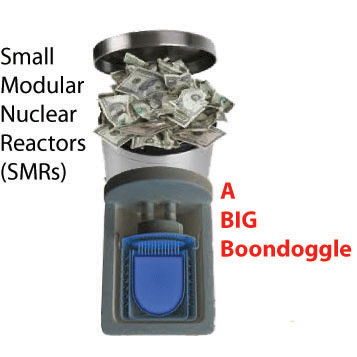
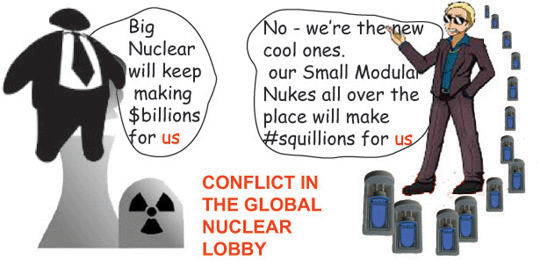 Britain’s on the brink of a small-scale nuclear reactor revolution, The Register, 24 May 2017 , Marcus Gibson Sure, there are hurdles, but no £18bn hole on the other side like Hinkley Point ……. a cheaper and smaller alternative is emerging if activity from British entrepreneurs and academics is anything to judge by – the small “modular” nuclear reactor, or SMR…….
No nuclear industry programme has yet produced a series of reactors along factory production lines, but a large order for SMRs could change all that.
Tony Roulstone, course director at Cambridge Nuclear Energy Centre, believes a production line operation could fulfil the promise of continuous improvements, of more efficient designs over the years, and the real prize of being manufactured in the UK…….
Dr Jenifer Baxter, lead author of the report, said: “Pushing ahead on the demonstration and commercialisation of SMRs would be a key way for the UK to once again become a world leader in the sector.”
This view was backed by a House of Lords committee that criticised the government’s “failure to deliver on a multimillion-pound competition to develop mini atomic power stations,” which it said “hurt the nuclear sector and risks international companies walking away from the UK.”
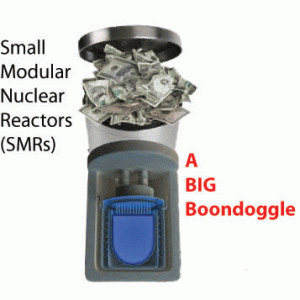 SMRs also ensure that the British government can avoid a repetition of the growing fiasco over the cost of Hinkley Point. An expert in engineering capacity and financing energy plants, who spoke to The Reg on condition of anonymity, said Hinkley Point “could cost the UK as much as £81bn if maximum financing costs are included”……
And yet SMRs face daunting development costs, and mind-boggling technical uncertainties. Like all nuclear sites they inevitably involve high costs, the problems of expensive decommissioning, the risk of accidents and waste disposal.
Sceptics include former government adviser professor Gordon MacKerron, who has described SMRs as “a classic case of supply-push technology development – no potential user of SMRs, mostly electric utilities, has expressed any serious interest in them.”…….https://www.theregister.co.uk/2017/05/24/mini_nuclear_reactors_for_british_power/
May 26, 2017
Posted by Christina Macpherson |
spinbuster, UK |
1 Comment
 Edie 23rd May 2017 Unilever has revealed that all of its UK manufacturing sites are 100% powered by electricity generated from certified renewable sources. The global consumer goods firm became the dedicated beneficiary of energy sourced from a Scottish Highlands-based wind farm in April.
The 23 turbines located in Lochluichart deliver 165GWh – 87% of the farms total output – of renewable electricity to 15 UK Unilever sites. The excess 24GWh of power generated at the farm are also sold-off under a retail tariff to local communities.
The new deal builds on Unilever’s previous agreement with Eneco in the Netherlands, which has seen a North Sea windfarm generate energy for Unilever since the New Year. Both deals mean Unilever’s UK business now sources 100% of its electricity from certified renewable sources. Across its entire global business, Unilever generates 63% of its
grid energy from renewable sources. https://www.edie.net/news/10/Unilever-goes-100–renewable-across-all-UK-sites/
May 26, 2017
Posted by Christina Macpherson |
renewable, UK |
Leave a comment
IB Times 22nd May 2017 In the wake of the “WannaCry” cyberattack which resulted in widespread disruption of the UK’s National Health Service (NHS), attention has now turned to other forms of infrastructure.
One security expert has warned Britain’s nuclear weapons are at risk of being targeted. The UK nuclear deterrent, known as Trident, consists of four Vanguard-class submarines which can carry up to 16 ballistic missiles, each armed with up to eight warheads. Most of its computers, however, reportedly run on a legacy variant of the under-supported Windows XP operating system. http://www.ibtimes.co.uk/are-britains-nuclear-weapons-systems-vulnerable-mass-cyberattacks-1622811
May 24, 2017
Posted by Christina Macpherson |
UK, weapons and war |
Leave a comment
 Coal AND Nuclear … A Honeycomb of Lies in West Cumbria, Coal Action UK March 28, 2017 Is Cumbria Being Frogmarched into Nuclear AND Coal?
 The plan to reopen the Whitehaven coal mine under the Irish Sea has been rumbling along for a few years with no raised eyebrows. Why are alarm bells not ringing out loud and clear? This nasty plan will go before Cumbria County Council in May (date tbc).
This article has been republished from Radiation Free Lakeland, Love the Land, by Marianne Birkby with her permission.)
Most Gaseous, Dangerous Pit in the Kingdom
These are strange, confusing days. There is all round praise being heaped on the plans to reopen Whitehaven coal mine on Cumbria’s West Coast, the most gaseous, dangerous pit in the Kingdom. In 1815, Sir Humphrey Davy’s invention of the miner’s safety lamp was first tested in Whitehaven Coking Coal Mine because of its reputation for “firedamp” (methane) and fatal explosions. By 1816 the Davey lamp was in full use in collieries around Great Britain. A letter of gratitude was written by Whitehaven Miners to Sir Humphrey Davy in 1816…. many of the miners signing the letter later lost their lives in the mine.
Honeycomb
The West Coast of Cumbria below both ground and sea is a labyrinthine honeycomb of mines. Not only coking coal but iron ore and many other minerals. This vast honeycomb of mines stretches to Sellafield. One of the earliest records of coal mining in West Cumberland dates to 1560, the last pit, the Haig, closed in 1986. There are old mine maps but these are far, far from complete. Understandably so, given the length of time that this area has been extensively mined. Many of the miners are still there in the dangerous honeycomb. Entombed in the same collapsed and sea inundated mine pits that the West Cumbria Mining Company wants to reopen.
Infamous Copeland By Election
In the recent infamous Copeland by election the candidates without exception declared themselves to be “big fans” of reopening the West Cumbria Coal Mine. They did this in true Alice in Wonderland style, expressing concerns about climate change while praising the plan to reopen the coal mine. For many years UK citizens have been subjected to a constant bombardment of disingenuous propaganda: ‘nuclear power is the answer to climate change and coal is far worse than nuclear for the climate’. The purpose of this propaganda being that we should welcome nuclear with open arms, while shunning coal. . George Monbiot has consistently and aggressively set the pace: “Nuclear scare stories are a gift to the truly lethal coal industry.” Monbiot’s constant mantra in the last several years is that those who oppose nuclear power are uninformed, bigoted idiots. Now it appears that the idiots in Cumbria are being groomed to welcome both coal AND nuclear…….http://coalaction.org.uk/2017/03/coal-and-nuclear-a-honeycomb-of-lies-in-west-cumbria-guest-blog/
May 24, 2017
Posted by Christina Macpherson |
politics, UK |
Leave a comment
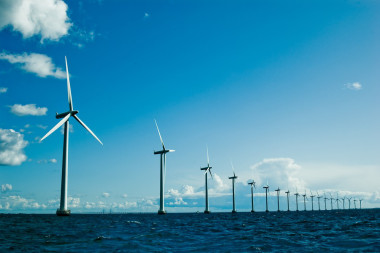
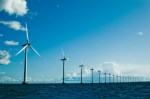 Telegraph 21st May 2017, The sound made by 100 tonnes of steel and carbon fibre rotating 400 feet overhead is surprisingly understated. Each whoosh of the 260 foot blades spans an area the size of the London Eye and generates enough electricity to power the average British home for 24 hours.
There are 32 of these 8MW turbines in the second phase of Dong Energy’s Burbo Bank wind farm spinning off the Merseyside coast. They are the most powerful ever, dotting an area the size of almost 6,000 football pitches within the Irish Sea, each one a beacon of Britain’s global dominance in the booming offshore wind industry.
http://www.telegraph.co.uk/business/2017/05/21/britains-wind-turbines-catch-breeze-rising-industry/
Jersey Evening Post 22nd May 2017, A FLOATING offshore wind farm that would cost £108 million to install is currently the frontrunner in work to develop renewable energy in Guernsey. A preliminary feasibility study was released this week and now more equipment will be installed at Mont Cuet, in the north of Guernsey, to help move the project forward.
The study by Xodus Group concluded that a 30MW offshore wind project could be viable. It shortlisted three preferred sites for five turbines. One option is 5km off Guernsey’s north coast and another is 15km away, west of Schole Bank, between Guernsey and Alderney. The third – the only floating option – is 25km north-west of the island. The offshore floating option is the most costly, but is seen as preferable because of the visual impact of the other two which have estimated capital costs of £68.23m and £80.98m respectively. http://jerseyeveningpost.com/news/2017/05/22/guernsey-considers-floating-offshore-wind-farm/
May 24, 2017
Posted by Christina Macpherson |
renewable, UK |
Leave a comment
FT 23rd May 2017 On May 10, the UK reached a fresh high for the amount of electricity generated by solar. Early on that Wednesday afternoon, solar output hit 8.5 gigawatts, according to Electric Insights, a website that tracks
Britain’s power.
At its peak, the green energy source was supplying more than 22 per cent of the 38GW being handled by the national grid, as solar for some hours exceeded the steady output from the UK’s fleet of nuclear power stations. The growing contribution of green energy to grids — particularly wind and solar — brings with it the problem of managing the
unpredictability and intermittency of these supplies.
Storage is still a very small part of the energy industry but it is developing quickly both at the domestic level — where homeowners can use batteries in tandem with solar panels on their roofs — and on a much larger scale, with the development of battery parks aimed at smoothing supplies to the grid. The popularity of storage systems to capture the electricity generated by domestic solar panels is helped by a generous subsidy in Germany that helps homeowners meet the initial costs of buying a battery, which is also true of other countries.
While costs of batteries are coming down, Mr Wilkinson acknowledges that in most cases “incentives are required” to expand the market for battery storage to help balance the grid. “Costs have come down dramatically but there is still a long way to go before they are going to be truly embedded everywhere in the grid and we’ll see huge volumes of them,” Mr Wilkinson says. Meanwhile, growth in the electric vehicle market has helped lower costs and improve the design of lithium-ion batteries. A battery pack that can be used in an electric vehicle has fallen from $1,000 per kilowatt hour in 2010 to $273 per kWh last year, according to BNEF, which is forecasting a further 73 per cent fall in costs by 2030.
https://www.ft.com/content/a6e01984-3567-11e7-99bd-13beb0903fa3
May 24, 2017
Posted by Christina Macpherson |
renewable, UK |
Leave a comment

 Times 21st May 2017 A Chinese state-owned power giant has set its sights on the £15bn nuclear plant planned for the Cumbrian coast. State Nuclear Power Technology Corporation (SNPTC) is considering investing in Toshiba’s troubled NuGen
project at Moorside — risking a collision with Theresa May and her new interventionist approach to foreign takeovers.
Industry sources said a delegation from SNPTC and its parent, State Power Investment Corporation, was due in London. Eight senior officials will meet executives from NuGen and Britain’s atomic power trade body, the Nuclear Industry Association, on Tuesday.
It is unclear whether the election hiatus will hinder meetings with Whitehall officials. The talks underline China’s ambitions in nuclear power after another state-owned giant, China General Nuclear, bankrolled the £18bn Hinkley Point plant in Somerset. CGN took a 33% stake in Hinkley but its ultimate ambition is to build a power station, fuelled
with its own home-grown reactors, at Bradwell in Essex.
Sources said SNPTC could seek to power NuGen with its own reactor — a derivative of Westinghouse’s AP1000 model, which is planned for the site. SNPTC could not be reached for comment. NuGen said it was exploring a “universe of
options” for investment. https://www.thetimes.co.uk/edition/business/chinese-eye-rescue-of-nuclear-plant-qlj09k5wn
May 22, 2017
Posted by Christina Macpherson |
business and costs, China, politics international, UK |
Leave a comment
 UK nuclear industry faces Brexit fall-out, Climate News Network, May 17, 2017, by Paul Brown, Leaving the EU treaty that prevents radioactive materials falling into the wrong hands could prove costly for the UK nuclear industry.
LONDON, – The UK’s vote to leave the European Union has put the country’s nuclear industry at risk because its trade in radioactive materials will be forbidden under international law.
In the worst case scenario, legal experts say, the lights could go out in the UK, but they think the more probable outcome is simply that the government will find itself with an expensive industrial problem and an embarrassing diplomatic mess.
The unintended consequence for the British nuclear industry of last year’s referendum vote to leave the EU is that the decision will also take the UK out of the Euratom treaty that protects the EU’s nuclear industry against radioactive material falling into the hands of rogue states or terrorist groups.
Nuclear power stations already provide about one-fifth of the UK’s electricity, and the government has ambitious plans to build at least 10 more reactors as part of its strategy to cut carbon emissions.
It has withdrawn subsidies from onshore wind and solar power, and underwritten new nuclear stations instead.
However, the industry relies on foreign companies − based both in the EU and outside − that provide parts, fuel and raw materials. When the UK leaves Euratom, this trade will be contrary to international law.
Tom Greatrex, chief executive of the Nuclear Industries Association, which represents 260 companies, says: “There is scope for real and considerable disruption.”
Nuclear materials
The Euratom safeguards are applied by the European Commission to provide confidence that nuclear materials in the EU are not diverted from their declared end use, which is producing electricity from uranium and plutonium, and dealing with the waste that results.
This enables countries inside the EU to trade with other member states in construction and providing parts and staff for nuclear power stations. It also allows trade in such dangerous materials as plutonium, uranium and spent fuel, provided it is both safe and for peaceful purposes.
There is no precedent for a member state leaving the EU. But, in theory, when the UK does so − and therefore leaves Euratom − possibly as soon as two years from now, this trade must cease, otherwise member states will be breaking the terms of the treaty.
This would effectively paralyse not only the UK industry, which relies on international trade to survive, but also many of its trading partners in the EU, and also Japan, China and the US, all of which the UK has nuclear deals with that would need a new safeguard regime in place in order to continue…….
Dame Sue Ion, chair of the Nuclear Innovation and Research Advisory Board, which was established by the UK government in 2013, said a whole lot of new international agreements would have to be in place before anything in the nuclear sector could be transferred between countries.
“We would be crippled without other agreements in place,” she said. – Climate News Network http://climatenewsnetwork.net/uk-nuclear-industry-fall-brexit/
May 22, 2017
Posted by Christina Macpherson |
Legal, UK |
Leave a comment