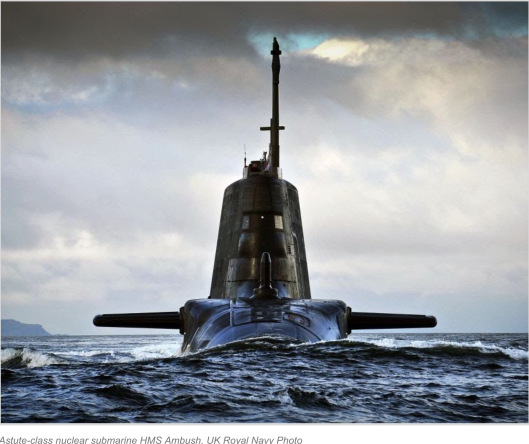
BBC 7th June 2017 A planning application is being prepared for a new phase in the decommissioning of the Dounreay nuclear power complex in Caithness.
Buildings on the experimental nuclear energy site, which dates to the 1950s, are being emptied of radioactive material and demolished. Starting in 2018, the planned next stage would involve dismantling reactors.
New temporary buildings would also need to be built to aid the new phase. The new buildings would include facilities for handling the clean up and demolition of areas of the site called the Silo and The Shaft. Also included are plans for restoration and landscaping work to restore areas of land to close to how they looked before the construction of Dounreay. The phase would take the site near Thurso to what is called its interim end state. Dounreay Site Restoration Limited has notified Highland Council that it expects to submit the planning application later this year.
http://www.bbc.co.uk/news/uk-scotland-highlands-islands-40188815
June 10, 2017
Posted by Christina Macpherson |
decommission reactor, UK |
Leave a comment
Winds of change: gusts across Europe help set renewable power record, Nuclear, wind and solar power in UK generate more electricity than gas and coal combined for first time ever. Guardian, Adam Vaughan, 8 June 2017
The windy weather across Europe in the past 24 hours may have been a curse for summer picnics, but it has set records for renewable power. In the UK, wind, nuclear and solar power were together generating more electricity than gas and coal combined at 1pm on Wednesday, for the first time ever.
Including hydropower and biomass burned at power stations such as Drax in North Yorkshire, renewables provided 50.7% of demand at lunchtime.
High wind speeds and the growing number of windfarms off the coasts of the UK, Germany, the Netherlands and other European countries have also set what are understood to be records……https://www.theguardian.com/environment/2017/jun/07/winds-gusts-europe-enewable-power-record
June 10, 2017
Posted by Christina Macpherson |
ENERGY, UK |
Leave a comment
Greens would ditch Hinkley Point C – an expert view on the manifestos and recycling
https://www.theguardian.com/environment/2017/jun/07/general-election-public-service-manifesto-pledges-environment Damian Carrington ,8 June 17
Conservatives
New support for fracking to extract shale and coal seam gas is the most striking pledge from the Conservatives, with the easing of planning rules, a new dedicated regulator and more of any future tax revenues going directly to communities hosting shale gas sites. Wind power remains ruled out in England, but offshore wind farms are supported. The energy efficiency of all fuel-poor homes would be upgraded to meet energy performance certificate (EPC) band C criteria by 2030. There is no environment section in the manifesto and the UK’s air pollution crisis gets a single sentence: “We will take action against poor air quality in urban areas.” A free vote on repealing the ban on fox hunting with dogs is promised.
Labour
Four million homes would be insulated to cut emissions, improve health and lower bills. Fracking would be banned but new nuclear power stations and renewable energy, including tidal lagoons, are supported. On air pollution, a new Clean Air Act is promised, but without any detail. The controversial badger cull, intended to curb TB in cattle, would end and bees and other pollinators would be protected by a ban on neonicotinoid pesticides. Labour would “set guiding targets for plastic bottle deposit schemes”, aimed at cutting the 7bn single-use bottles sold in the UK each year.
Liberal Democrats
Higher, cheaper, sleeker: wind turbines of the future – in pictures
Greens
Nine million homes would receive energy efficiency upgrades, bringing two million people out of fuel poverty. Fracking would be banned and the planned Hinkley Point C nuclear power station in Somerset cancelled, while public funds would be divested from the fossil fuel industry. A new government-owned investment body would finance the transition to a zero-carbon economy. The Greens would “end the monopoly of the big six [energy companies] by building democratic, locally owned alternatives”, which would get priority access to the national grid. Plastic waste would be tackled with the introduction of a bottle deposit scheme and free public water dispensers.
June 10, 2017
Posted by Christina Macpherson |
politics, UK |
Leave a comment
 Evening Standard 7th June 2017 Former Lib Dem energy minister Sir Ed Davey was today accused of “keeping quiet” about a paid job with a lobbying firm that represents the French energy giant he awarded an £18 billion deal.
The accusation came after Sir Ed sent voters in Kingston and Surbiton a summary of his career in an election leaflet. While the “CV” for voters in the key marginal said he had gone “back to consultancy” after losing his seat in 2015, it made no mention that he is working two days a month for MHP Communications, a company which specialises in influencing government policy on behalf of paying clients.
Among MHP’s clients is EDF, the French firm that struck a controversial deal to build the Hinkley Point nuclear power station in Somerset. The deal, overseen by Sir Ed as energy secretary in the Coalition, was attacked as poor value for the taxpayer by critics because it involved paying EDF nearly three times the current wholesale price of electricity in return for constructing and running the massive project. One expert called the contract the “worst deal I’ve ever seen”. http://www.standard.co.uk/news/politics/ed-davey-kept-quiet-on-election-cv-about-energy-lobbying-job-a3558901.html
June 9, 2017
Posted by Christina Macpherson |
politics, secrets,lies and civil liberties, UK |
1 Comment
 No2NuClear No 96 June 2017
 The future of Moorside has been thrown into doubt by the financial troubles of Japanese giant Toshiba which owns the company developing the scheme – Nugen. Nugen is undertaking a strategic review of its options following what it calls “vendor challenges”, (1) although the company says it is “110 per cent certain” it will be built. (2)
According to The Times Toshiba is seeking a buyer for NuGen, but bidders are scarce and the sale is fraught with complexity. The source of Toshiba’s malaise is the decision — a decade ago — to transform itself into a global force in nuclear energy. The acquisition of Westinghouse from state-owned British Nuclear Fuels (BNFL) was done amid the feverish climate of the precredit crisis boom.
Westinghouse has two contracts to install AP1000 reactors at existing nuclear power stations in Georgia and South Carolina, signed in 2008 — America’s first nuclear reactors in a generation. The plants are years late and an estimated $10bn (£7.7bn) over budget, with no certainty about completion. After Fukushima, Toshiba was forced to enhance safety procedures at the two plants, at vast expense. The Japanese giant has, in effect, been left on the hook for unlimited costs. It has booked $6.3bn of write-downs on the Westinghouse subsidiary — and has warned that there is now doubt over Toshiba’s status as a going concern.
Korean nuclear giant Kepco is the most likely suitor for NuGen, but wants to use its own reactors rather than Westinghouse’s AP1000 design. A sale of the American company would be highly contentious, given its strategic importance. If a buyer cannot be found, or bankruptcy does not sever the liabilities on the American projects, all the uncapped costs could stay with the Japanese company. “Toshiba could end up as just a holding company for Westinghouse,” said one industry source. That would be the nightmare scenario for its investors — and a hammer blow to Britain’s nuclear strategy. (3)
The Chinese state-owned State Nuclear Power Technology Corporation (SNPTC) is also reported to be considering investing in NuGen. Eight senior officials from SNPTC are said to have met executives from NuGen and Britain’s atomic power trade body, the Nuclear Industry Association in May. Sources said SNPTC could seek to power NuGen with its own reactor — a derivative of Westinghouse’s AP1000 model, which is planned for the site. (4)
The National Grid has also hit the pause button on Moorside’s 102-mile power line connection. Plans for the “biggest new power line since electricity network was built” have been shelved. (5)
The GMB union has demanded that the government “stop faffing” and step in to save Moorside. GMB slammed the government for “continued dithering” following the latest in a series of setbacks. “How many kicks in the teeth for the desperately needed new nuclear plant at Moorside will it take to bring politicians of all colours to their senses?” asked GMB national secretary Justin Bowden. “Britain must have the reliable zero carbon nuclear power that Moorside will bring as part of the balanced energy mix, alongside renewables and gas.” (6)
NuGen held a Stage 2 public consultation which finished at the end of July 2016, but now 10 months later, there has been no feedback report despite the fact that it was promised for No2NuclearPower nuClear news No.96, June 2017 24
‘Autumn 2016’. Nor has NuGen indicated that it will hold the further consultation called for by CORE, local authorities and others to make up for the lack of detailed information provided in the Stage 2 consultation documents. (7)
Meanwhile, Horizon Nuclear Power has published new plans for its nuclear power station at Wylfa Newydd, which it states should cut the labour force needed to build the 2.7GW plant. The company, which is owned by Hitachi, has proposed a more compact design in its latest blueprint for the site on the Isle of Anglesey, off the north Wales coast. (8)It has launched a third formal consultation on the latest proposals. (9) The power station’s footprint will be reduced by sharing more buildings between the twin reactors, including the facilities for transmitting the electricity generated at the site to the Grid. Off-site support buildings, including a garage and back-up control facilities, will be housed in a single location. Horizon is also investigating making greater use of off-site construction.
http://www.no2nuclearpower.org.uk/nuclearnews/NuClearNewsNo96.pdf
June 7, 2017
Posted by Christina Macpherson |
business and costs, UK |
Leave a comment

 No2Nuclear No 96 June 2017 According to the Office for National Statistics the number of full-time equivalent (FTE) direct jobs in the nuclear industry had declined to 12,400 by 2015, but about 9,400 of these workers do not produce electricity at all. They are engaged mostly in legacy nuclear waste management.
In 2015 ONS reported that the number of FTE direct jobs in the renewable forms of electricity generation had increased to 48,900 – about 16 times the number of jobs in nuclear electricity generation. (2) In 2015, 338 TWh of electricity was produced in the UK (DECC data). This comprised 70 TWh from nuclear, 85TWh from renewables and the rest from fossil fuels. (3) That amounts to about 43 jobs per TWh for nuclear and about 575 jobs per TWh for renewables. So not only are renewables cheaper than nuclear, but they also create around 13 times more jobs than nuclear power.
Offshore wind is becoming a double win for policymakers, according to Ray Thompson, Head of Business Development at Siemens Gamesa Renewable Energy. He says offshore wind is coming to represent a major challenge to competing technologies. The new Siemens blade manufacturing facility and project execution harbour in Hull which opened in December 2016 has already created 800 new jobs and the numbers on site will rise to over 1,000 when full production is reached. (4)
Renewable energy jobs could “offset” fossil-fuel job losses by 2030 according to the International Renewable Energy Agency (IRENA). Renewable Energy and Jobs – Annual Review 2017 presents the status of renewable energy employment, both by technology and in selected countries, over the past year. In this fourth edition, IRENA finds that renewable energy employed 9.8 million people around the world in 2016 – a 1.1% increase over 2015. Jobs in renewables, excluding large hydropower, increased by 2.8% to reach 8.3 million in 2016. China, No2NuclearPower nuClear news No.96, June 2017 8 Brazil, the United States, India, Japan and Germany accounted for most of the renewable energy jobs. The shift to Asia continued, with 62% of the global total located in the continent. (5) Nuclear Power and Jobs
A policy which promotes nuclear power significantly diminishes the prospects of creating new jobs in renewable energy industries – in establishing an offshore wind manufacturing base for instance.
Nuclear power is a capital intensive industry, which means it requires a much higher injection of money to produce its final product – it is not a very efficient way of creating jobs. If there were an alternative way of providing or saving the same amount of electricity, but at the same time creating more jobs, clearly that would be a strategy worth pursuing.
One way of comparing the number of jobs created by different energy sources is to calculate the number of jobs for each Terawatt hour (TWh–1 billion kilowatt hours) generated annually. This, of course, will depend on the performance of the generating station. So a new 1.6GW reactor employing 500 people which operates an average of 80% of the time will be providing 45 jobs per TWh. Goldemberg has estimated the number of jobs created per TWh of power generated and found that nuclear produces around 75 jobs per terawatt hour (TWh), whereas wind power produces 918 – 2,400 per TWh. Solar photovoltaics provides 29,580 – 107,000 jobs/TWh. (1) http://www.no2nuclearpower.org.uk/nuclearnews/NuClearNewsNo96.pdf
June 7, 2017
Posted by Christina Macpherson |
employment, renewable, UK |
Leave a comment
Solar Portal 6th June 2017 Rooftop solar panels in towns and cities across Scotland were able to generate more than the average home’s demand for electricity throughout May in an “extraordinary month for renewables”, according to WWF Scotland. Analysis of solar data by WeatherEnergy found that homes in Aberdeen, Dundee, Edinburgh and more were able to generate over 100% of the
average household electricity demand, with rooftop solar in Lerwick on the Shetland Islands producing the most kWh last month. http://www.solarpowerportal.co.uk/news/rooftop_solar_generation_reaches_new_highs_in_scotland
June 7, 2017
Posted by Christina Macpherson |
decentralised, UK |
Leave a comment
Toxic cargo of nuclear waste leaves Scotland for US under armed guard https://www.sundaypost.com/fp/toxic-cargo-of-nuclear-waste-leaves-for-us/ Jim Lawson, 04 June 2017 AN American military plane carrying a deadly cargo of radioactive waste has taken off from Scotland for the second time.

Dozens of armed police stood guard yesterday as highly-enriched uranium was loaded on to a giant American Air Force transport jet at Wick John O’Groats Airport. The secretive operation – signed off by David Cameron and Barack Obama last year – aims to clear a backlog of nuclear waste stored at Dounreay power station in Caithness.
But critics have blasted the high-security flights as unsafe and “morally reprehensible”.
Independent nuclear consultant John Large said: “This is pretty toxic stuff. It is weapons grade material. It is quite active. It’s ticking away and it does not turn itself off. “In the States, you cannot overfly with this type of material. The plane will put down on the east coast and the shipment will continue under armed escort by rail or by road.”
He said the risks in transporting nuclear waste by aircraft included “in the event of a crash, the fuel being engulfed in fire, the packages breaking down and the fuel igniting”.
Yesterday’s operation got underway at 10am, with the US C-17 Globemaster arriving in the early afternoon to pick up its dangerous cargo. Armed police guarded two trucks carrying the uranium – a critical component in nuclear weapons – in re-inforced steel flasks as they travelled the 32 miles from Dounreay to Wick airport. Roads around the airport were closed and sealed off as the deadly waste was delivered at 2pm.
Its cargo on board, the giant jet lumbered along the runway and took off at 4.25pm for the short hop across the Moray Firth to RAF Lossiemouth, where it topped up with fuel under armed RAF guard.
The runway at Wick is 1,712 feet too short for a fully fuelled Globemaster to get airborne.
It then took off for South Carolina, where the uranium will be transported to a nuclear facility in Tennessee.
A further 10 transatlantic flights – each costing around £1 million – are expected, but bosses remain secretive over the details. A spokesman for Dounreay, which is currently being decommissioned, said: “We can confirm nuclear materials are being removed from the site ahead of its closure.
“Compliance with the regulations includes protecting any information about the routes, times, dates and location”.
A police spokesman said: “We are supporting a partner agency’s operation and cannot comment further.” And a spokesman for Wick John O’Groats airport said it didn’t comment on “specific aircraft movements”.
June 5, 2017
Posted by Christina Macpherson |
safety, UK, USA, wastes |
3 Comments
Leading the way is Lightsource, Europe’s largest privately-held solar developer, which plans to expand into the US. Last year the company unveiled a world first: a floating solar installation to help power a Thames Water reservoir just outside London.
The 6-megawatt structure lies flat against the water and is made up of 24,000 solar panels that sit on a platform buoyed by 61,000 individual floats and held in place by 177 anchors.

Once eclipsed, the solar industry will rise and shine again over Britain http://www.telegraph.co.uk/business/2017/06/03/eclipsed-solar-industry-will-rise-shine-britain/ Jillian Ambrose 3 JUNE 2017 •
From above, the summer sun catches the glimmer and sheen of a new facet of the energy evolution.
A solar panel does not command attention quite like the stoic thermal power plants that rise up from British landscapes. But on a balmy summer’s day last month, the collective glare of millions of panels proved solar power’s mettle.
The spring bank holiday heatwave began with a new record for solar power generation, which created a quarter of the nation’s electricity mix on Friday afternoon. Britain’s solar panels produced more electricity than nuclear and coal power combined. They are likely to do this again and again as summer rolls on. Five years ago this was a feat few would have dared predict. The solar boom was fuelled by generous subsidies and spurred by rapidly falling costs, at a rate far exceeding expectations.
Paul Barwell, head of the Solar Trade Association, says there are now 12.1 gigawatts of solar in the UK, the same production capacity as eight new-generation nuclear reactors and enough to power 3.8m homes.
He says the “colossal achievement” achieved in just five years sends a positive message that solar has a strong place in the UK energy sector. This is a point Barwell is keen to make because the rise of solar power has been far from assured – the industry has been shattered by knee-jerk political interventions.
In China, policymakers put the country’s manufacturing heft firmly behind developing cheaper solar panels, accelerating the technology’s journey down the cost curve.
Once considered the preserve of the very well-off, in the UK rooftop solar panels were suddenly within the reach of homeowners. Farmers with depleted land found economically it made more sense to farm renewable electricity than sheep. Energy-intensive factories were easily persuaded to generate their own power to cut costs.
Now solar panels encrust the surfaces of reservoirs and are expected to plate the roof of Buckingham Palace. Continue reading →
June 5, 2017
Posted by Christina Macpherson |
renewable, UK |
Leave a comment
China and the EU confront Trump on climate change. May just fawns over him, Guardian, Ed Davey, 2 June 17 The Paris agreement is facing a mortal, US-led threat. But at this crucial moment, our prime minister is, once again, absent, silent and weak “……Experts in the UK have made clear that climate change is a grave threat to national security, and Trump’s own defence secretary has issued the same warning for the US. Donald Trump’s actions put us all in greater peril.
Yet in the face of this threat, May is silent. We have a prime minister who is weak on the world stage and complicit in Trump’s world-harming act. While our European neighbours are joining with Chinaand other developing countries to confront Trump and strengthen their efforts on climate change, Theresa May hasn’t issued a word of criticism. Whereas France’s new president used his first meeting with Trump to press him to stay in the Paris agreement, our prime minister failed to even mention it during her fawning trip to Washington in January…….
May’s lack of leadership on this issue is appalling, but perhaps not all that surprising. One of her first acts as prime minister was to abolish the Department of Energy and Climate Change. She’s sold off the Green Investment Bank that we established in coalition, and is now calling for a fracking “revolution”. Nick Timothy, her chief of staff and righthand man, wrongly called the Climate Change Act a “monstrous act of self-harm”. No wonder her policy on climate change is so weak.
What’s most disappointing about May’s failure on climate change is that Britain played such a pivotal role in securing international agreement on it in the first place. …..https://www.theguardian.com/commentisfree/2017/jun/01/china-eu-climate-change-may-trump
June 3, 2017
Posted by Christina Macpherson |
climate change, UK |
Leave a comment
Times 2nd June 2017 Flywheels will be used to balance supply and demand on Britain’s electricity grid in a £3.5 million project that could help the country to cope with more wind and solar power. Sophisticated flywheels that can store electricity for long periods of time are to be installed next to the University of Sheffield’s battery storage facility at Willenhall near Wolverhampton, in the first project of its kind in the UK.
The cylindrical structures draw electricity from the grid when surplus is available, powering a motor that makes the flywheel rotor spin at high speed. So far, efforts to tackle the problem have focused on lithium-ion batteries, which
can respond in less than a second to provide or absorb power and restore balance to the grid.
Eight such projects are being built around the UK after winning contracts from National Grid last year. Dr Gladwin said that such batteries would degrade over time the more they were charged and discharged, and were only expected to have a lifetime of ten years. Flywheels were a better way to deal with rapid short-term fluctuations, he said. The flywheel project in Willenhall should provide a megawatt of power for just over a minute before it runs out of energy.
https://www.thetimes.co.uk/edition/business/flywheels-could-join-batteries-in-storing-electricity-for-the-national-grid-fjw95ggqv
June 3, 2017
Posted by Christina Macpherson |
energy storage, UK |
Leave a comment
 ‘vulnerable to catastrophic hack’ Thinktank sceptical about MoD assurances, saying cyber-attack could lead even to ‘exchange of nuclear warheads’, Guardian, Ewen MacAskill, 1 June 17, The UK’s Trident submarine fleet is vulnerable to a “catastrophic” cyber-attack that could render Britain’s nuclear weapons useless, according to a report by a London-based thinktank.
The 38-page report, Hacking UK Trident: A Growing Threat, warns that a successful cyber-attack could “neutralise operations, lead to loss of life, defeat or perhaps even the catastrophic exchange of nuclear warheads (directly or indirectly)”.
The Ministry of Defence has repeatedly said the operating systems of Britain’s nuclear submarines cannot be penetrated while at sea because they are not connected to the internet at that point.
But the report’s authors, the British American Security Information Council (Basic), expressed scepticism.
“Submarines on patrol are clearly air-gapped, not being connected to the internet or other networks, except when receiving (very simple) data from outside. As a consequence, it has sometimes been claimed by officials that Trident is safe from hacking. But this is patently false and complacent,” they say in the report.
Even if it were true that a submarine at sea could not be attacked digitally, the report points out that the vessels are only at sea part of the time and are vulnerable to the introduction of malware at other points, such as during maintenance while docked at the Faslane naval base in Scotland.
The report says: “Trident’s sensitive cyber systems are not connected to the internet or any other civilian network. Nevertheless, the vessel, missiles, warheads and all the various support systems rely on networked computers, devices and software, and each of these have to be designed and programmed. All of them incorporate unique data and must be regularly upgraded, reconfigured and patched.”
The UK has four nuclear missile-carrying submarines, which are in the process of being replaced. Their replacements are scheduled to go into service in the early 2030s.
The report comes after the cyber-attack last month that disrupted the NHS, which uses the same Windows software as the Trident submarines. There was speculation too that the US used cyberwarfare to destroy a North Korean missile test. A Trident test-firing of a missile last year off the coast of Florida also went awry, with no official explanation given…….
Abaimov said: “There are numerous cyber vulnerabilities in the Trident system at each stage of operation, from design to decommissioning. An effective approach to reducing the risk would involve a massive and inevitably expensive operation to strengthen the resilience of subcontractors, maintenance systems, components design and even software updates. If the UK is to continue deploying nuclear weapon systems this is an essential and urgent task in the era of cyberwarfare.”
The report’s authors estimate that the capital costs for the UK government to improve cybersecurity for the Trident programme would run to several billions of pounds over the next 15 years.
The report is to be published on the Basic website.https://www.theguardian.com/uk-news/2017/jun/01/uks-trident-nuclear-submarines-vulnerable-to-catastrophic-hack-cyber-attack
June 2, 2017
Posted by Christina Macpherson |
safety, UK, weapons and war |
Leave a comment
 Energydesk 28th May 2017 On the very day Theresa May triggered Article 50, her government quietly issued another bold statement to Brussels. Documents obtained by Energydesk reveal UK government attempts to significantly weaken draft EU climate and energy rules, even as Brexit is underway.
Key renewable energy and energy efficiency targets proposed by the European Commission should be reduced, made non-binding, or even scrapped altogether, the UK said, despite the fact that they would not take effect until after the UK had left the EU.
“This smells of obstructionism,” Jonathan Gaventa, director of environmental think-tank E3G, told Energydesk. “The UK is pissing off countries it needs as allies.” The news comes as the future of the Paris climate agreement hangs in the balance, with the United States refusing to commit to the deal at the G7 meeting.
http://energydesk.greenpeace.org/2017/05/28/brexit-uk-eu-climate-change-energy-efficiency/
Guardian 28th May 2017
https://www.theguardian.com/environment/2017/may/28/uk-presses-europe-to-dilute-flagship-energy-efficiency-law
May 31, 2017
Posted by Christina Macpherson |
climate change, UK |
Leave a comment
 FoE 28th May 2017 Election manifestos: the scores are in: There are lots of issues close to our hearts at this election. It’s clear that the next 5 years are going to be crucial for protecting the environment. Overall when we totted up the scores (from 0 to 3) for each policy the Greens came out top, followed quite closely (almost neck and neck) by Lib Dems and Labour, with the
Conservatives some way behind. https://www.foe.co.uk/general-election/election-manifestos-scores-are
May 31, 2017
Posted by Christina Macpherson |
politics, UK |
Leave a comment
 The other Brexit has been forgotten: leaving Europe’s nuclear community is just as fraught with fissile hazard Telegraph 29th May 2017
The other Brexit has been forgotten. This parallel drama faces an equally dramatic cliff-edge in less than two years. It too is fraught with fissile hazard.
We are told almost nothing. The Conservative Party Manifesto does not mention Britain’s exit from European Atomic Energy Community (Euratom), which must automatically take place in conjunction with Brexit.
There is no outline of how the UK will seek to replace this arrangement, or what the emergency plan might be if we crash out of the system with no treaty access to nuclear fuel, services, and research.In such circumstances, Britain will cease to come under the international safeguards regime that makes nuclear business possible. It will struggle to acquire the isotopes used in medical radiation.
In a political sense this sounds implausible. In strict legal terms the UK will have the status of a pariah state under nuclear sanctions until the technicalities are sorted out.
If Britain has not locked in an alternative treaty structure or transition accord by March 2019, it will be cut adrift from the global
nuclear industry. Nobody will be allowed to deal with us. The House Business, Energy and Industrial Strategy Committee muddied the waters in a report earlier this month by suggesting that Downing Street is needlessly pulling out for ideological reasons, in order to escape the jurisdiction of the European Court (ECJ).
It cited testimony from Manchester University professor Grace Burke – an expert on nuclear materials – stating that leaving Euratom is “ill-informed, irresponsible and unnecessary”. The report said the Government had “failed to consider the potentially disastrous ramifications of its Brexit objectives for the nuclear industry. Ministers must act as urgently as possible. The repercussions of failing to do so are huge.”
This is a misunderstanding, typical of all discussions over Brexit. The European Commission’s legal services have concluded that Britain must leave Euratom under the Article 50 process.
Leaked Brexit documents from Brussels state that the EU will wash its hands of all responsibility for the radioactive waste imported from Germany and other EU states that is stored at Sellafield on Euratom’s behalf. This makes our problem yet bigger. The fissile material has a radioactive half-life of tens of thousands of years. It is treated as a liability on Government books. ……
….The Government announced an “ambitious” £250m competition in 2015 to identify the SMR reactors offering best value, but the scheme has stalled. “Every deadline has been missed,” said Dr Scott.
May 31, 2017
Posted by Christina Macpherson |
politics international, UK |
Leave a comment