Warning on ecological impacts of Sizewell nuclear project
coast will have “significant adverse ecological impacts” which will be very
difficult to mitigate. Creating Sizewell C would mean the loss of
nationally important fen habitat and the Suffolk Wildlife Trust (SWT) says
it could hit water-levels, affect coastal erosion, harm rare bats, and have
a profound impact on wildlife.
consultation as part of its preparations to submit its final plans for the
twin reactor. SWT’s head of conservation, Ben McFarland said the trust had
concerns about the potential impact of Sizewell C on wildlife and a lack of
sufficient information accompanying the plans for the development. The main
areas for concern include loss of rare and protected habitats including
land designated as Sites of Special Scientific Interest, a severe impact on
rare bats and a negative impact on birds with noise and lighting during the
10-year construction period likely to displace many specially protected
birds, such as the marsh harrier.
Brexit’s threat to Scotland’s environmental protection
Environment Protection Agency, the national regulator, said there was a
need for a “new and coherent” governance system to act as a safeguard once
EU protections and oversight disappear after Britain’s departure from the
bloc. Last year, The Herald revealed Scottish Environment LINK’s concerns
that Scotland’s rarest species north of the Border face being obliterated
in the fall-out from Brexit unless urgent new laws and funding are brought
in to safeguard vital conservation work.https://www.heraldscotland.com/news/17996856.scots-natural-environment-risk-inadequate-brexit-plans/
Protestors against Sizewell nuclear project get their message out, despite EDF’s blocking tactics
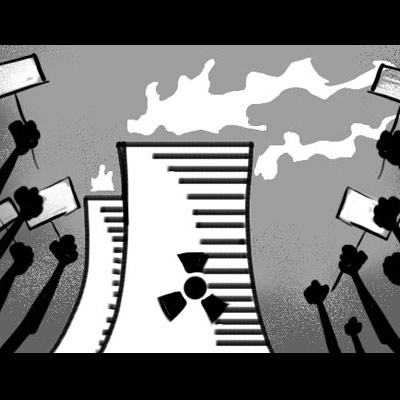
 East Anglian Daily Times 27th Oct 2019, A protest planned to take place in Pillbox Field, Sizewell, on October 26, was thwarted when EDF arranged for metal barriers and security staff to occupy an access road to the site. Undaunted but remaining peaceful, the protest was moved to a new location, Sizewell beach car park, where the activists erected marquees and carried out their planned truth-tellingexercises and people’s assembly.
XR protestor Victoria Proctor said:
“There’s been lots and lots of groups in the past few years that have been
working so hard to bring attention to what’s being planned along the coast.
“We’re trying to get the truth out there for people so they realise what is
under threat.
https://www.eadt.co.uk/news/extinction-rebellion-xr-protest-edf-sizewell-1-6343148
Too small for the monstrosity’: Anti-nuclear campaigners to take Sizewell C opposition to public meeting
|
Too small for the monstrosity’: Anti-nuclear campaigners to take Sizewell C opposition to public meeting https://www.eadt.co.uk/news/nuclear-free-local-authorities-meeting-colchester-essex-october-2019-1-6341230
Anti-nuclear campaigners are to voice their “real concern” over the planned building of new nuclear power stations – including at Sizewell C – during a public meeting. EDF Energy has said that building new nuclear reactors across the country, including in Suffolk, is crucial to meeting the country’s future ends – with Sizewell B station director Paul Morton recently saying: “The lights won’t stay on without it.” But that has caused controversy in Suffolk for years, with opponents questioning its environmental benefits while raising fears that building a massive new nuclear power station could have on the area of outstanding natural beauty at Sizewell. The Nuclear Free Local Authorities (NFLA) English Forum is now holding a public meeting at the Firstsite Gallery in Colchester on Saturday, October 26 in association with groups such as Together Against Sizewell C (TASC). NFLA steering committee chairman David Blackburn said it would allow “councillors and the concerned public to understand the real concerns in building new nuclear reactors”. Pete Wilkinson, of Together Against Sizewell C, called the planned Suffolk location “an eroding coastal site, bequeathing future generations an inequitable and intolerable radioactive waste legacy”. He also said it was “a site too small for the monstrosity it is required to contain, hemmed in by precious areas of outstanding natural beauty in a remote, inaccessible and tranquil area”. He added that Sizewell C would be “an unnecessary behemoth” that “electricity bill payers are being asked to subsidise”. EDF Energy was approached for comment. |
|
|
No such thing as a zero- or close to zero-emission nuclear power plant.
 David Lowry, Guardian 21st Oct 2019: in the analysis of MPs’ voting record on bills to combat climate change (Tories five times more likely than other MPs to vote against bills to tackle climate crisis, 12 October), both Jeremy Corbyn and Caroline Lucas are marked as 92% supportive on the basis they voted to
“keep nuclear power subsidies relatively low”.
Proposed Solution to Global Warming, Air Pollution, and Energy Security, in
his forthcoming book, 100% Clean, Renewable Energy and Storage for
Everything, Jacobson argues: “There is no such thing as a zero- or close to
zero-emission nuclear power plant. Even existing plants emit due to the
continuous mining and refining of uranium needed for the plant. Overall
emissions from new nuclear are 78 to 178g of CO2/kWH, not close to 0.”
https://www.theguardian.com/environment/2019/oct/21/tory-boasts-on-climate-action-are-full-of-hot-air
UK govt postpones decision on Wylfa nuclear project
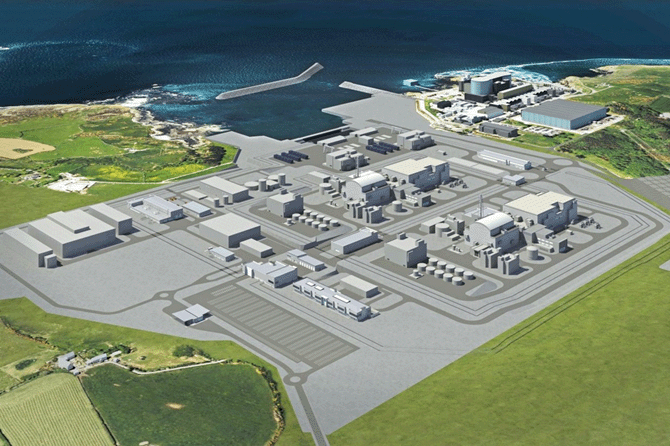 Wylfa: Anglesey nuclear power plant planning decision deferred, BBC,
She had been widely expected to back the proposals, granting what is known as a development consent order (DCO).
Hitachi shelved the scheme, the biggest energy project ever proposed in Wales, over funding issues.
Developers Horizon Nuclear Power had earlier said the decision would “heavily influence” how the project progresses.
Ms Leadsom has now given a deadline by the end of the year – and invited comments from Natural Resources Wales, the Office for Nuclear Regulation, Anglesey council and other bodies. She wants more assurances on various aspects – from biodiversity, visual impact, flooding and construction noise – and any risk to the Sandwich tern, which has a colony nearby.…….
Opponents of nuclear power have called on Ms Leadsom to dismiss the planning application and focus on renewable sources of electricity. Dylan Morgan of People Against Wylfa B said it was “obvious the developers are keen to get planning permission in order to try and sell the site”.
“But that’s easier said than done at the moment given the pretty perilous state of the global nuclear industry and the hopeless economics.”……. https://www.bbc.com/news/uk-wales-50139360
More evidence of safety risks: Hunterston B nuclear reactors should be closed
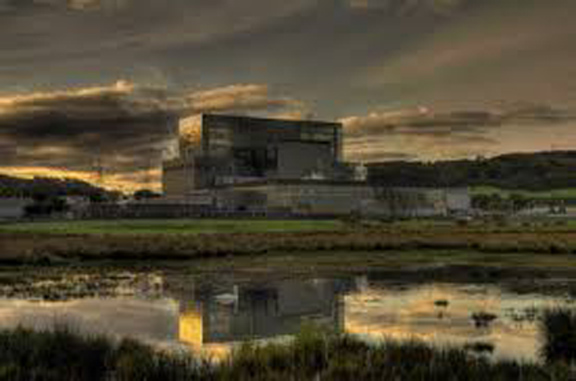
The Ferret 17th Oct 2019, Hunterston, The graphite cores of two ageing nuclear reactors at Hunterston in North Ayrshire have begun to crumble as cracks spread, prompting safety inspectors to impose tough new conditions threatening future operations.
Technical reports released by the UK government’s Office for Nuclear
Regulation (ONR) reveal that at least 58 fragments and pieces of debris
have broken off the graphite bricks that make up the reactor cores.
According to ONR there is “significant uncertainty” about the risks of
debris blocking channels for cooling the reactor and causing fuel cladding
to melt. This could cause an accident and a leak of radioactivity.
The 50-strong group of Nuclear Free Local Authorities (NFLA) is urging ONR to close down both reactors at Hunterston. “These latest alarming
revelations about the graphite reactor cores at Hunterston B starting to
crumble and potential issues with the fuel make us even more convinced that
reactor three should not be allowed to resume operation,” said NFLA
Scotland convener and Glasgow SNP councillor, Feargal Dalton.
“We will be pressing the Office for Nuclear Regulation very hard to examine very carefully any justification which EDF Energy puts forward to reopen reactor four after its initial four month trial, and to be open and transparent
about what they find.
The precautionary principle would suggest that this reactor too should stay closed.” NFLA radiation consultant, Dr Ian Fairlie, described ONR’s latest reports as “very worrying”. By considering the melting of fuel cladding the regulatory agency was “getting into even more dangerous matters than before”. He added:
“These reports and their harder language make one wonder why ONR granted
a four month extension to reactor four in August. Taken together the new
revelations strengthen the calls by local residents to close both reactors
at Hunterston B.” https://theferret.scot/hunterston-graphite-debris-nuclear/
Bradwell B – UK’s futile nuclear project
BANNG 17th Oct 2019, Andy Blowers ponders the question, ‘Why, since Bradwell B is such a futile project, don’t the regulators stop it now?’ in the BANNG column for Regional Life, October, 2019. Why is it that so often decision makers fail to see or, perversely, choose to ignore the blindingly obvious?
This thought occurred to me during a recent meeting of BANNG with officials from the Office for Nuclear Regulation (ONR) and the Environment Agency (EA) about the Bradwell B site?
There are at least three major ‘showstoppers’ that should have already made Bradwell B, to borrow a phrase, ‘dead in the water’: Cooling water – the Blackwater estuary cannot possibly provide or sustain the volume of cooling water needed.
Emergency plan – in the event of a serious accident it will be impossible
to evacuate the surrounding area. Climate change – the Bradwell site is
fragile and vulnerable to rising seas, storms and erosion which will,
sooner or later, impact on the power station and its dangerous nuclear
waste stores. https://www.banng.info/news/the-show-must-not-go-on/
Safety concerns over Berkshire nuclear weapons factories
 Safety concerns over Berkshire nuclear weapons factories, BBC, 17 Oct 19, Two nuclear weapons factories are to remain under extra scrutiny due to safety concerns over their ageing facilities, a government watchdog said. BBC News
The AWE sites in Aldermaston and Burghfield, Berkshire, make and maintain the UK’s nuclear warheads.
The Office for Nuclear Regulation (ONR) said the sites will be scrutinised closely for at least two years.
Contractor AWE Plc said the replacements for the outdated facilities had been delayed.
The private company manufactures the warheads for Trident, the UK’s nuclear deterrent at sea.
AWE had planned to replace the Burghfield facilities by 2016, but due to construction delays it is expected to be completed in 2023, according to the Local Democracy Reporting Service. …. https://www.bbc.com/news/uk-england-berkshire-50099579
Removal of highly radioactive material from 60 year old Dounreay Fast Nuclear Reactor (DFR).

BBC 15th Oct 2019, Radioactive material jammed inside a Scottish nuclear reactor since the 1970s has been removed for disposal. Remotely-operated tools were specially made to extract the breeder elements from the Dounreay Fast Reactor (DFR).
The DFR and its dome-shaped housing are to be demolished as part of the
wider decommissioning of the former nuclear power site near Thurso.
Dismantling the 60-year-old DFR is among the most challenging of the
decommissioning work.
https://www.bbc.co.uk/news/uk-scotland-highlands-islands-50055003
North West Evening Mail (UK) gives a fine example of incorrect pro nuclear goobledygook
 Radiation Free Lakeland 12th Oct 2019, New Nuclear** On the anniversary of the Windscale disaster and in the midst of the building of a new gas plant especially for Sellafield, the North West Evening Mail publishes a press release from the nuclear industry touting the ‘Rediscover Nuclear’ campaign.
Some of the laughable descriptions include “homegrown” “safe” “low carbon”. Each of these claims is a big fat lie. As Phil Johnstone tweets: UK “homegrown” nuclear. “UK only ever sold 2 reactors back in 60s, British Energy no longer exists. The UK doesn’t really have much of a civil nuclear industry. What is “homegrown” about it? Electricite de France? China General Nuclear Power Corporation?
https://mariannewildart.wordpress.com/2019/10/12/homegrown-dont-make-me-laugh/
Is UK’s regulator of Hinkley nuclear project ignoring the seismic risks of fracking in the area?
Drill or Drop 12th Oct 2019, Hinkley. The safety regulator for the nuclear industry has no information about the risk of earth tremors from fracking near the Hinkley Point power station, a campaign group has revealed. Frack Free Exmoor, Quantocks and Sedgemoor.
(FFEQS) has also shown that the Office for Nuclear Regulation (ONR) has had no correspondence on the subject with either the oil and gas industry regulator, the power station operator, local exploration companies or Somerset County Council. FFEQS has described the failure to assess the risk of fracking on the nuclear station, which includes the new Hinkley Point C facility, as “a gaping hole” in the safety case.
In August 2019, fracking by Cuadrilla near Blackpool caused more than 130 earth tremors, including the UK’s largest fracking-induced seismic event, measuring 2.9ML. This tremor led to formal complaints of cracks to walls, windows and doors to about 100 properties, DrillOrDrop understands. Hinkley Point is a few miles from an area where the exploration company, South Western Energy, has indicated it is interested in drilling for hydrocarbons (DrillOrDrop report).
Opposition to fracking appears to be growing in the region.
Sedgemoor District Council voted unanimously on 9 October 2019 to be a Frack Free zone. This follows previous similar votes in Somerset West and Taunton councils.
Energy Efficiency – effective, but forgotten since UK privatisation of Energy Saving Trust and the Carbon Trust.

Business Green 10th Oct 2019, Energy Efficiency. The public needs reminding that saving energy is good for the planet, argues Andrew Warren.
British people are very confused about what they should most usefully be doing, in order to assuage any guilt they might feel about damaging the climate. A Smart Energy GB study released this week found just three in 10 people think being energy efficient would have the biggest impact on protecting the environment.
This startling finding was backed up another a survey of 2,000 people undertaken by Opinium Research. That found saving energy tends to come way down the list of possible practical response under consideration. The most popular response to the Opinium survey was to “avoid throwing away food”. This was followed by various moves to reduce plastic wastage – buying plastic-packed groceries, single-use plastic bottles, using plastic shopping bags – or simply not recycling enough.
Steven Day, co-founder of Pure Planet, which sponsored the opinion survey, commented: “It is great that the majority of people are thinking more about their impact on our environment. But it looks like they
are feeling guilty about the smaller things – not the biggest-impact
activities causing the greatest harm.”
This lack of awareness of the potential for saving energy contrasts enormously with similar surveys undertaken twenty years ago, admittedly when overall awareness of the threat of climate change was far lower. Then, the vast majority of people would always respond to questions to the threat of climate change by emphasising the need to save energy, both at home and at work.
Since 2010 there have been no publicly funded awareness campaigns supporting energy efficiency funded by central government. Their abandonment directly followed the privatisation of the two main public advice agencies, the Energy Saving Trust and the Carbon Trust.
35,454 Petitioners call for scrapping of UK’s “regulated asset base” (RAB) funding for Sizewell nuclear project
 Sizewell.
TASC 11th Oct 2019, Just one major problem with the Sizewell C plans is that nuclear new build projects have been largely a financial disaster. Almost every major nuclear project in the West has been plagued by delays and cost overruns: Some delays are in the order decades. Likewise, the cost overruns are of epic proportions.
Some new-build projects have had cost overruns that run into billions. Changing the funding method for the planned Sizewell C to a
regulated asset base model would shift the risk of rising costs from EDF to consumers, and could lead to even worse project planning because the existing RAB model would offer little incentive for EDF to build on-time and on-budget. EDFs investment is safe regardless, and we wind up footing the bill no matter how incompetently EDF proceeds.
TASC 11th Oct 2019,Today, campaigners from Sizewell, Hinkley Point and Bradwell nuclear sites and consumer group SumOfUs will visit the Department of Business, Energy and Industrial Strategy to deliver a 35,454-signature petition protesting the government’s proposal to subsidise new nuclear power plants by hiking energy bills.
The petition calls on the government to scrap plans to subsidise the nuclear industry through a “regulated asset base” (RAB) funding model, under which consumers would be forced to pay a surcharge on their energy bills for new nuclear power projects such as Sizewell C in Suffolk and Bradwell B in Essex.
French nuclear company EDF rules out any interest in UK’s Wylfa nuclear plan
New Civil Engineer 10th Oct 2019, EDF Energy has ruled out taking an interest in the new Wylfa nuclear site in Wales despite claiming it is the ‘best site in the UK’ for nuclear
power. https://www.newcivilengineer.com/latest/edf-rules-out-wylfa-bid-despite-naming-it-best-site-in-uk-10-10-2019/
1 This Month




PLEASE OPPOSE HR 8255 AND S.3639 – bills would accelerate satellite deployment, with no environmental review or safeguards – https://ncstd5li.quorum.us/campaign/169331/
To see nuclear-related stories in greater depth and intensity – go to https://nuclearinformation.wordpress.com
-
Archives
- September 2026 (339)
- August 2026 (330)
- July 2026 (355)
- June 2026 (287)
- May 2026 (306)
- April 2026 (356)
- March 2026 (251)
- February 2026 (267)
- January 2026 (308)
- December 2025 (358)
- November 2025 (359)
- October 2025 (375)
-
Categories
- 1
- 1 NUCLEAR ISSUES
- business and costs
- climate change
- culture and arts
- ENERGY
- environment
- health
- history
- indigenous issues
- Legal
- marketing of nuclear
- media
- opposition to nuclear
- PERSONAL STORIES
- politics
- politics international
- Religion and ethics
- safety
- secrets,lies and civil liberties
- spinbuster
- technology
- Uranium
- wastes
- weapons and war
- Women
- 2 WORLD
- ACTION
- AFRICA
- Atrocities
- AUSTRALIA
- Christina's notes
- Christina's themes
- culture and arts
- Events
- Fuk 2022
- Fuk 2023
- Fukushima 2017
- Fukushima 2018
- fukushima 2019
- Fukushima 2020
- Fukushima 2021
- general
- global warming
- Humour (God we need it)
- Nuclear
- RARE EARTHS
- Reference
- resources – print
- Resources -audiovicual
- Weekly Newsletter
- World
- World Nuclear
- YouTube
-
RSS
Entries RSS
Comments RSS

