Britain’s Ministry of Defence continues its costly mistakes in nuclear weapons and submarines
 Dundee Courier 16th May 2020, A Fife MP has lifted the lid on “astonishing and deeply worrying”
mistakes made by the Ministry of Defence, which have led to the costs of replacing Britain’s nuclear weapons and nuclear submarines soaring by a staggering £1.35 billion.
Glenrothes and Central Fife SNP MP Peter Grant, who sits on parliament’s Public Accounts Committee, has described the situation as “unacceptable” following the release of a new report that
suggests errors made by the MoD are being repeated more than 30 years after
they were first highlighted by Britain’s public spending watchdog.
Pacific nuclear bomb tests interfered with rain patterns in UK
Pacific nuclear bomb tests made it rain 1,000s of miles away in UK, Reading University scientists find, Berkshire Live
During the Cold War, detonations in locations as remote as the Nevada Desert or Pacific islands had unforeseen consequences elsewhere in the world By Ian Hughes 17 MAY 2020
Nuclear bomb tests during the Cold War changed rainfall patterns thousands of miles from the detonation sites, according to scientists at the University of Reading.
They found electric charge released by radiation from detonations – carried out predominantly by the US and Soviet Union in the 1950s and 1960s – affected rain clouds at the time.
It means tests in remote locations such as the Nevada Desert or Pacific islands, had an effect on precipitation as far away as the Shetlands – 300 miles off the coast of Scotland.
A study used historic records between 1962-64 from a research station on the Scottish island.
Scientists compared days with high and low radioactively-generated charge, finding that clouds were visibly thicker, and there was 24 per cent more rain on average on the days with more radioactivity…………
It is thought researchers will now have a better understanding of important weather processes.
Although detonations were carried out in remote parts of the world during the Cold War, radioactive pollution spread widely throughout the atmosphere.
Radioactivity ionises the air, releasing electric charge.
The researchers, from the Universities of Reading, Bath and Bristol, studied records from well-equipped Met Office research weather stations at Kew near London and Lerwick in the Shetland Isles.
Shetland, in particular, was relatively unaffected by other sources of anthropogenic pollution. This made it well suited as a test site to observe rainfall effects which, although likely to have occurred elsewhere too, would be much more difficult to detect.
The Shetland rainfall on more than 150 days showed differences which vanished after the major radioactivity episodes were over.
The study was published in Physical Review Letters. https://www.getreading.co.uk/news/reading-berkshire-news/pacific-nuclear-bomb-tests-made-18248407
Campaigners condemn transport of nuclear weapons from AWE this week during lockdown
Campaigners condemn transport of nuclear weapons from AWE this week during lockdown
Nukewatch UK claims the convoy would have involved at least 50 personnel, including a crew change, and said it travelled along the M6 and on the M8 through Glasgow city centre……. https://www.readingchronicle.co.uk/news/18452947.campaigners-condemn-transport-nuclear-weapons-awe-week-lockdown/
Torture would await Assange in the US prison system
 From the frying pan into the fire. The torture that awaits Julian Assange in the US.https://www.thecanary.co/uk/analysis/2020/05/10/from-the-frying-pan-into-the-fire-the-torture-that-awaits-julian-assange-in-the-us/
Tom Coburg 10th May 2020 WikiLeaks founder Julian Assange is currently held in Belmarsh prison awaiting hearings that could see him extradited to the US to face prosecution for alleged espionage-related offences.
Award-winning US journalist Chris Hedges described the torture that would await Assange in the US prison system, adding “they will attempt to psychologically destroy him”. If extradited, Assange would likely be detained in accordance with ‘Special Administrative Measures’ (SAMs). One report equates this to a regime of sensory deprivation and social isolation that may amount to torture.
Journalists speak out
US journalist Chris Hedges spoke about the treatment Assange is likely to receive in the US. He argues that the US authorities will “psychologically destroy him” and that conditions imposed could see him turned into a ‘zombie’ to face life without parole:
Australian journalist John Pilger agrees:
If Julian is extradited to the US, a darkness awaits him. He’ll be subjected to a prison regime called special administrative measures… He will be placed in a cage in the bowels of a supermax prison, a hellhole. He will be cut off from all contact with the rest of humanity.
From the frying pan…
Assange is already in a precarious position, alongside all other UK prisoners. Belmarsh is a high-security Category A facility and, as with all other prisons in the UK, inmates there are at risk to infection from coronavirus (Covid-19).
On 28 April, the BBC reported that there were “1,783 “possible/probable” cases of coronavirus – on top of 304 confirmed infections across jails in England and Wales”. Also that there were “75 different “custodial institutions”, with 35 inmates treated in hospital and 15 deaths”.
Vaughan Smith, who stood bail for Assange, reported that the virus was “ripping through” Belmarsh:
We know of two Covid-19 deaths in Belmarsh so far, though the Department of Justice have admitted to only one death. Julian told me that there have been more and that the virus is ripping through the prison.
Assange has a known chronic lung condition, which could lead to death should he become infected with coronavirus. Assange’s lawyers requested he is released on bail to avoid succumbing to the virus, but that request was rejected.
As for the psychological effects of segregation, a European Committee for the Prevention of Torture and Inhuman or Degrading Treatment or Punishment report argued that it can “can have an extremely damaging effect on the mental, somatic and social health of those concerned”.
…and into the fire
It’s likely that Assange will be placed under SAMs if he is extradited to the US. The Darkest Corner, a report authored by the Allard K. Lowenstein International Human Rights Clinic and The Center for Constitutional Rights, describes how SAMs work.
In its summary, the report explains that:
SAMs are the darkest corner of the U.S. federal prison system, combining the brutality and isolation of maximum security units with additional restrictions that deny individuals almost any connection to the human world. Those restrictions include gag orders on prisoners, their family members, and their attorneys, effectively shielding this extreme use of government power from public view.
It continues:
SAMs deny prisoners the narrow avenues of indirect communication – through sink drains or air vents – available to prisoners in solitary confinement. They prohibit social contact with anyone except for a few immediate family members, and heavily regulate even those contacts. And they further prohibit prisoners from connecting to the social world via current media and news, limiting prisoners’ access to information to outdated, government-approved materials. Even a prisoner’s communications with his lawyer – which are supposed to be protected by attorney-client privilege – can be subject to monitoring by the FBI.
It ominously adds that: “Many prisoners remain under these conditions indefinitely, for years or in some cases even decades”. Moreover, these conditions can be used as a weapon to force a prisoner to plead guilty:
In numerous cases, the Attorney General recommends lifting SAMs after the defendant pleads guilty. This practice erodes defendants’ presumption of innocence and serves as a tool to coerce them into cooperating with the government and pleading guilty.
The report provides further details on how SAMs incorporate sensory deprivation and social isolation measures that “may amount to torture”. Also, it argues that the SAMs regime contravenes both US and international laws.
ECHR article 3
Should the UK courts agree to extradite Assange, he could face months, if not decades, of psychological torture. However, Article 3 of the European Court of Human Rights states clearly: “No one shall be subjected to torture or to inhuman or degrading treatment or punishment”. Under that article, the US extradition request should be rejected by the UK courts.
For a publisher to be subjected to such a nightmare scenario would be intolerable.
UK’s nuclear weapons programmes $1.67 billion over budget
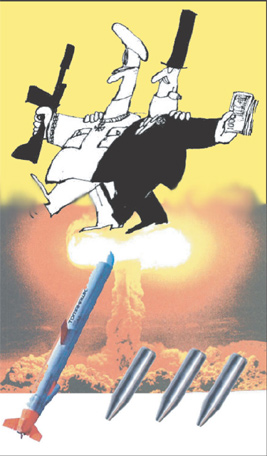 Three British nuclear programs are $1.67 billion over budget https://www.defensenews.com/global/europe/2020/05/12/three-british-nuclear-programs-are-167-billion-over-budget/ By: Andrew Chuter LONDON — Critical programs aimed at updating Britain’s nuclear weapons infrastructure have been hit by long delays and huge cost increases, according to the parliamentary Public Accounts Committee.
Poor management on three nuclear projects involving warhead assembly, core reactor production and submarine building have resulted in combined cost increases of £1.35 billion (U.S. $1.67 billion) as well as delays of between 1.7 and 6.3 years, the committee revealed in a report scheduled for release May 12.
The cost overruns were caused in large part by avoidable mistakes, such as beginning construction work without mature designs, said the committee.
The cost increases and delays cited in the report could be the tip of the iceberg in the nuclear sector. The three programs investigated by the committee represent about a quarter, by initial value, of the 52 nuclear infrastructure programs that the Ministry of Defence is pursuing. A report on nuclear infrastructure late last year by the government’s financial watchdog, the National Audit Office, said the initial value of all the projects was almost £5 billion.
The parliamentary committee said the MoD admitted that costs on the three projects “could keep rising, as its poor contract design has left the taxpayer to assume financial risk, while doing little to incentivize contractors to improve their performance.
The report said the MoD has poorly managed the three programs, failed to learn from past mistakes and agreed to poorly designed contracts with the major companies that have a stranglehold on Britain’s defense nuclear sector. The contracts did not allow the ministry to share the financial risk with contractors, which meant the government bore the full impact of cost increases, including those of subcontractors.
“To utterly fail to learn from mistakes over decades, to spectacularly repeat the same mistakes at huge cost to the taxpayer — and at huge cost to confidence in our defense capabilities — is completely unacceptable,” said Member of Parliament Meg Hillier, who chairs the Public Accounts Committee.
“We see too often these same mistakes repeated,” she added. “The department [MoD] knows it can’t go on like this. It knows it must change and operate differently. The test now is to see how it will do that, and soon.”
Climate change – a bigger still challenge follows coronavirus
 After coronavirus, focus on the climate emergency https://www.theguardian.com/world/2020/may/10/after-coronavirus-focus-on-the-climate-emergency Signatories including Dr Wolfgang Knorr say it is game over for preventing climate change, Colin Hines says a green infrastructure should be prioritised in a post-Covid-19 world, and Andy Radford on why we should consider permanent changes to the way we live
11 May 2020 Last month, the Guardian quoted Fatih Birol, executive director of the International Energy Agency, saying if we put post-pandemic bailout money in the wrong place “we will lock ourselves in a dirtier energy system, making it much more difficult to reach our climate targets” (‘Coronavirus profiteers’ condemned as polluters gain bailout billions, 17 April).
We beg to differ. It is game over for preventing dangerous climate change now that governments are planning the cheapest and quickest return to consumption. Riding on the wave of cheap oil and fossil-fuel bailouts is incompatible with keeping the average global temperature rise below 2C, let alone 1.5C.
Even if the world agreed to maintain all the pandemic-enforced restrictions on travel and consumption, the emissions saved would amount to almost nothing, compared with what’s needed to achieve the Paris agreement’s climate targets. Yet whether it’s to discourage mass fatalism, or prevent the very worst of what the future threatens, those of us with this knowledge still cling to “yes we can”. In this story, it is always five to midnight; it is always the last chance to prevent disaster. In contrast, collective action on climate can only grow out of complete honesty. It is time to acknowledge our collective failure to respond to climate change, identify its consequences and accept the massive personal, local, national and global adaptation that awaits us all.
Dr Wolfgang Knorr Department of Physical Geography and Ecosystem Science, Lund University, Prof Eric Rignot University of California, Irvine, Prof Rik Leemans Wageningen University and Research, Prof Andy Morse School of Environmental Sciences, University of Liverpool, Prof Dennis Baldocchi Department of Environmental Science, Policy and Management, University of California, Berkeley, Prof Thomas Hickler Senckenberg Biodiversity and Climate Research Centre, Prof Francis E Putz Department of Biology, University of Florida, Prof Maarten Krol Wageningen University, Dr Alberte Bondeau Institut Méditerranéen de Biodiversité et d’Ecologie, Aix-Marseille Université, CNRS, Prof Wolfgang Cramer Institut Méditerranéen de Biodiversité et d’Ecologie, Aix-Marseille Université, CNRS, Prof Paul Palmer University of Edinburgh, Dr James G Dyke Global Systems Institute, University of Exeter
Oxford University’s call for a green stimulus for the economy and Polly Toynbee’s demand for a dramatically fairer reversal of the impact of “wealth on health” could both be addressed by a nationwide Green New Deal programme (Poverty kills people: after coronavirus we can no longer ignore it, 5 May).
This would allow a way out of the economic collapse caused by coronavirus, while rebuilding our social infrastructure and tackling the climate emergency. It can also provide new jobs and huge opportunities for businesses. At its heart must be a labour-intensive social infrastructure that rebuilds our austerity battered public services. The prioritisation of green infrastructure will require a shift of economic priorities towards more decentralised local economies that reduce carbon emissions and air pollution, minimise the throughput of raw materials, provide long-term food security and protect biodiversity.
This radically new approach will involve listening to climate experts, funding the transition needed through massive government borrowing and introducing policies to curb our “freedoms” to travel, eat and consume in ways that threaten the planet. It is a Green New Deal imperative to tackle both the social and climate crisis that must emerge as the exit strategy from coronavirus.
Colin Hines
Convenor, UK Green New Deal Group
It is not only whales that are enjoying the opportunity for improved “conversations” presented by the current drop in manmade noise levels (Silence is golden for whales as lockdown reduces ocean noise, 27 April). From insects to fish, nature is booming as human activity intrudes less during lockdown. In our gardens, birdsong is more noticeable without a constant soundtrack of traffic noise. When our activities increase post-lockdown, we should reflect on the joy these sounds have given us and consider more permanent changes to the way we share the planet with our wildlife, for the benefit of all.
Andy Radford
Professor of behavioural ecology, University of Bristol
Barrow, UK – hub of nuclear weapons work and nuclear transport
Close Capenhurst 10th May 2020, Barrow is best known as the place where BAE Systems build Trident nukiller submarines. The company is also building the Astute-class submarines.
What is less well know is that the ships which transport nukiller waste around the globe go out of the port of Barrow. Neither do most people realise just what else goes on in the town. Pacific Nuclear Transport Limited, a subsidiary of International Nuclear Services, is based at Barrow. The
company website boast that it is ‘the world’s most experienced shipper of nuclear cargoes’. Barrow is also the home port for James Fisher & Sons, which works for the military, and built its first ship suitable fortransporting irradiated nuclear fuel in the 1960s. The company also provides Nukiller equipment and services.
wide and growing coalition of real concern about EDF’s Sizewell C nuclear project
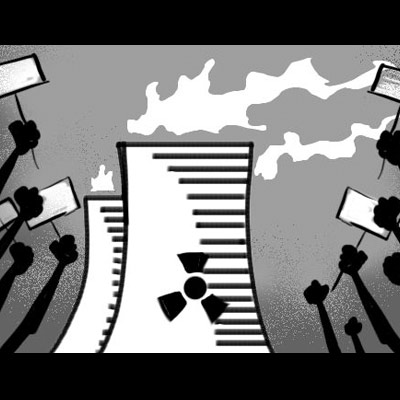
 East Anglian Daily Times 9th May 2020. NFLA, Cllr David Blackburn Councillors are right, EDF should delay its Sizewell C application. I warmly welcome the joint letter of opposition
councillors on Sizewell County Council calling on the Government to halt
EDF moving forward with a Development Consultation Order for Sizewell C
(EADT, 28th April).
The letter mirrors our own concerns noted last week in
our own letter to the EADT, and that of many parish, town and East Suffolk
District Councillors as well. Democratic discussions have to be put on hold
at the moment as the country deals with the worst public health emergency
in living memory.
It suggests an arrogance and a desperation within EDF to
want to move forward with the Sizewell C development at the moment. The
four rounds of local consultation on EDF’s Sizewell C plans showed a large
level of concern and opposition from across local government, much of which
stating that EDF have not provided adequate information to explain how they
would mitigate many of the harmful environmental effects of the
development. Indeed, all local environmental groups have raised huge
concern on its impact, particularly to the likes of wildlife gems like the
RSPB Minsmere site.
Just today, 60 prominent local people have added
similar concerns in a joint letter to The Times. It is clear there is a
wide and growing coalition of real concern about Sizewell C. EDF should not
just halt the DCO application, it should listen to local opinion and cancel
the project altogether. There is no need for Sizewell C. It is time EDF
listened to its critics and halted it.
Delay in preparations for Wylfa nuclear plant
North Wales Chronicle 7th May 2020, The firm behind a planned multi-billion-pound nuclear plant has asked for more time to carry out significant improvements to a 16 kilometre stretch
of road linking the development with the A55. In July 2018 Anglesey
Council’s planning committee approved the plans which include widening
and putting down a new surface on the A5025 between Valley and
Llanynghenedl, Llanfachraeth and Llanrhuddlad, and Cefn Coch to the
proposed Wylfa Newydd power plant site. But with the project officially on
hold and a UK Government decision on a Development Consent Order (DCO) not
expected until at least September, developers have now asked to extend the
condition ruling that work would have to start within two years.
A potential US extradition of Assange poses existential threats to democracy.
In his fight against extradition to the US, where he faces 175 years in prison and being subjected to harsh conditions under “Special Administrative Measures”, Assange is rendered defenseless. He is in effective solitary confinement, being psychologically tortured inside London’s maximum-security prison. With the British government’s refusal to release him temporarily into home detention, despite his deteriorating health and weak lung condition developed as consequences of long detention, Assange is now put at risk of contracting coronavirus. This threatens his life.
Now, as the world stands still and becomes silent in our collective self-quarantine, Assange’s words spoken years ago in defense of a free internet call for our attention from behind the walls of Belmarsh prison:
“Nuclear war, climate change or global pandemics are existential threats that we can work through with discussion and thought. Discourse is humanity’s immune system for existential threats. Diseases that infect the immune system are usually fatal. In this case, at a planetary scale.”

Assange’s US extradition, Threat to Future of Internet and Democracy, CounterPunch by NOZOMI HAYASE 8 May 20 On Monday May 4, the British Court decided that the extradition hearing for WikiLeaks publisher Julian Assange, scheduled for May 18, would be moved to September. This four month delay was made after Assange’s defense lawyer argued the difficulty of his receiving a fair hearing due to restrictions posed by the Covid-19 lockdown. Monday’s hearing at Westminster Magistrates’ Court proceeded without enabling the phone link for press and observers waiting on the line, and without Assange who was not well enough to appear via videolink.
Sunday May 3rd marked World Press Freedom Day. As people around the globe celebrated with online debates and workshops, Assange was being held on remand in London’s Belmarsh prison for publishing classified documents which exposed US war crimes in Iraq and Afghanistan. On this day, annually observed by the United Nations to remind the governments of the importance of free press, Amnesty International renewed its call for the US to drop the charges against this imprisoned journalist.
The US case to extradite Assange is one of the most important press freedom cases of this century. The indictment against him under the Espionage Act is an unprecedented attack on journalism. This is a war on free speech that has escalated in recent years turning the Internet into a battleground.
Privatized censorship Continue reading
As UK’s Torness nuclear power station deteriorates, – cheaper to build renewables than to repair aging reactors
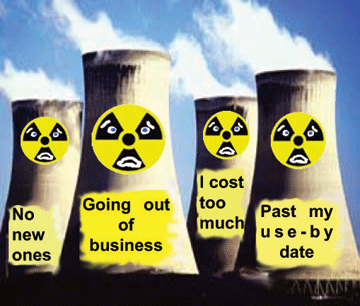 The Ferret 6th May 2020, Cracks that could increase the risk of a radioactive accident at Torness
nuclear power station in East Lothian will start appearing six years sooner than previously thought, according to the UK government’s safety watchdog. The Office for Nuclear Regulation (ONR) said that cracking which could cause debris to inhibit vital cooling of highly radioactive reactor fuel is now predicted to begin in 2022 rather than 2028.
After a major review ONR has given Torness permission to keep operating until 2030 –
but only if inspections to check for cracks are intensified. ONR promises
to “robustly challenge” the plant’s operators, EDF Energy, to ensure
that it “remains safe”.
Campaigners fear that Torness will become
increasingly unsafe, and warn it may have to close down sooner than
expected. EDF, however, insists that the station will keep generating
electricity safely until 2030. The coalition of 50 nuclear-free local
authorities in the UK has called on ONR to keep Torness under close
scrutiny. “These safety reservations surrounding the Torness periodic
safety review need to be cleared up as soon as possible,” said the
group’s Scotland convenor, SNP Glasgow councillor, Feargal Dalton.
“Whilst EDF is having to spend large resources trying to persuade the
regulator that it is safe to restart the Hunterston B reactors, this report
emphasises that similar issues with ageing are likely to arise at Torness
over coming years.” Councils would press ONR “to forensically
scrutinise what look like significant weaknesses in the EDF safety case,”
Dalton added.
“In the meantime, the Scottish Government should start
discussions about a ‘just transition’ for the workers at both
Hunterston and Torness so that Scotland can move to a safe, sustainable and
non-nuclear economy as quickly as possible.” The Edinburgh-based nuclear
consultant, Pete Roche, argued that it could be cheaper to build new
renewable capacity instead of continuing to operate ageing reactors.
“This could soon be the case with Torness, especially if it has to keep
being turned on and off to inspect the graphite core,” he said.
“Scotland clearly needs to be prepared for the possibility that Torness
might be forced to close not long after 2022.”
https://theferret.scot/torness-nuclear-reactors-cracking-2022/
UK’s Ministry of Defence (MoD) gags staff on subject of Trident nuclear weapons in Scotland.
Ferret 3rd May 2020, The Ministry of Defence (MoD) has banned its military and civilian staff
from speaking publicly about Trident nuclear weapons in Scotland. All
members of the armed forces and MoD civil servants have been instructed not
make any public comment, or have any contact with the media, on
“contentious topics” such as “Trident/Successor” and “Scotland
and Defence”. The instructions have been condemned as a “gagging order
worthy of a dictatorship” by campaigners. They have also been criticised
by the Scottish National Party as “an infringement too far”.
https://theferret.scot/ministry-of-defence-trident-scotland-gag/
UK ignored warnings about pandemic danger, cut health funding, spent up big on nuclear weapons
 Pride: why the UK spent billions on nuclear bombs but ignored pandemic threat https://www.opendemocracy.net/en/opendemocracyuk/pride-why-uk-spent-billions-nuclear-bombs-ignored-pandemic-threat/ Pride: why the UK spent billions on nuclear bombs but ignored pandemic threat https://www.opendemocracy.net/en/opendemocracyuk/pride-why-uk-spent-billions-nuclear-bombs-ignored-pandemic-threat/
A viral outbreak was judged more likely than a nuclear attack – so why was Trident ring-fenced while NHS funding was cut? Richard Norton-Taylor 30 April 2020 We now know that the government was warned last year that a viral pandemic posed the greatest potential threat to the country. In a confidential briefing from the Cabinet Office, which was leaked last week, ministers were told that tens of thousands lives could be at risk if an outbreak occurred. Among the recommendations were stockpiling PPE (personal protective equipment) and establishing plans for a contact tracing system.
It was not the first time that warnings fell on deaf ears. In 2014, the Ministry of Defence advised that “alertness to changing trends” was vital to mitigating the likelihood of a pandemic. Senior civilian and military officials promptly shoved the report into a draw where it was left to gather dust.
To make matters worse, the austerity programme carried out over the last decade, has led to significant cuts to government projects and public services, including the NHS, that would ready us for a pandemic. There has, however, been one notable exception to the cuts – the country’s nuclear weapons arsenal. Tens of billions continue to be spent on weapons that are of no use against the types of attacks judged a possible threat to the UK in the government’s National Risk Register. The latest register, drawn up in 2017, refers only to the need to protect nuclear power stations and the possibility of chemical, biological and nuclear material attacks by terrorists. But it adds that terrorists’ use of conventional weapons is “far more likely”. Successive governments have described Britain’s nuclear arsenal as an “ultimate insurance” against an attack, or blackmail, by a foreign power. If that is the case, then why did the government not increase its healthcare spending as insurance against what it knew was a far greater threat – an infectious pandemic. Defenders of Britain’s nuclear weapons argue that they are needed for political reasons, to preserve Britain’s status as world power. But arguments about whether nuclear weapons would ever be considered a realistic or effective threat against a potential aggressor are dodged. Continue reading |
Report warns on the threat of sea level rise to Sizewell nuclear plan
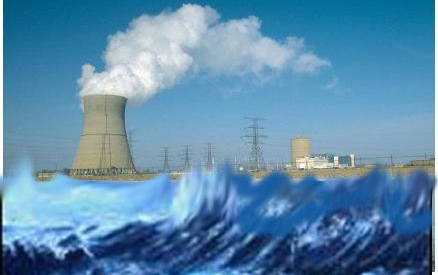 Sea level rise ‘could threaten nuclear power station’ planned for UK, report claims, Independent UK, EDF about to submit planning application for major development at Sizewell on Suffolk coast, Harry Cockburn, 1 May 20
Rising sea levels and coastal erosion could pose a threat to two nuclear reactors planned to be built on the low-lying Suffolk coast, according to local councils and analysis by an independent environmental group.
East Suffolk Council and Suffolk County Council have already lodged various concerns about French company EDF Energy’s plans for the new facilities at Sizewell C, and a new analysis by experts at the Nuclear Consulting Group suggests planned sea defences may be inadequate in future climate change scenarios.
EDF is reportedly about to submit its official planning application for the project, and has been working with Chinese state-owned nuclear company.
The Nuclear Consulting Group’s paper, written by structural engineer, Nick Scarr, suggests the Suffolk coast where the Sizewell development is planned, is inherently “unstable”, and that due to erosion by the sea the site could become an island before the station reaches the end of its active life, thereby risking a serious accident. Mr Scarr told the Climate News Network:
“Any sailor, or lifeboat crew, knows that east coast banks need respect — they have dynamic patterns, and even the latest charts cannot be accurate for long. “I was deeply concerned by EDF’s premise that there is micro-stability at the Sizewell site, which makes it suitable for new-build nuclear. It is true if you restrict analysis to recent historical
data, but it is false if you look at longer-term data and evidence-based climate science predictions…….. (subscribers only) https://www.independent.co.uk/independentpremium/nuclear-power-sea-rise-sizewell-c-edf-suffolk-a9492901.html
EDF’s planned Sizewell nuclear power station – vulnerable to sea level rise
Climate News Network 28th April 2020, Controversial plans by the French nuclear giant EDF to build two of its massive new reactors on the low-lying east coast of England are causingalarm: the shore is eroding and local people fear sea level rise could maroon the station on an island.
because they fear the proposed sea defences for the new station, Sizewell C, will be inadequate.
will be adequate.
of construction, 60 years of operation and then the time needed to decommission it.
https://climatenewsnetwork.net/sea-level-rise-threatens-uk-nuclear-reactor-plans/
1 This Month




PLEASE OPPOSE HR 8255 AND S.3639 – bills would accelerate satellite deployment, with no environmental review or safeguards – https://ncstd5li.quorum.us/campaign/169331/
To see nuclear-related stories in greater depth and intensity – go to https://nuclearinformation.wordpress.com
-
Archives
- September 2026 (339)
- August 2026 (330)
- July 2026 (355)
- June 2026 (287)
- May 2026 (306)
- April 2026 (356)
- March 2026 (251)
- February 2026 (267)
- January 2026 (308)
- December 2025 (358)
- November 2025 (359)
- October 2025 (375)
-
Categories
- 1
- 1 NUCLEAR ISSUES
- business and costs
- climate change
- culture and arts
- ENERGY
- environment
- health
- history
- indigenous issues
- Legal
- marketing of nuclear
- media
- opposition to nuclear
- PERSONAL STORIES
- politics
- politics international
- Religion and ethics
- safety
- secrets,lies and civil liberties
- spinbuster
- technology
- Uranium
- wastes
- weapons and war
- Women
- 2 WORLD
- ACTION
- AFRICA
- Atrocities
- AUSTRALIA
- Christina's notes
- Christina's themes
- culture and arts
- Events
- Fuk 2022
- Fuk 2023
- Fukushima 2017
- Fukushima 2018
- fukushima 2019
- Fukushima 2020
- Fukushima 2021
- general
- global warming
- Humour (God we need it)
- Nuclear
- RARE EARTHS
- Reference
- resources – print
- Resources -audiovicual
- Weekly Newsletter
- World
- World Nuclear
- YouTube
-
RSS
Entries RSS
Comments RSS

