UK’s fossil fuel use at an all-time low , as renewables generate 67% of Britain’s electricity

Fossil fuel use on the UK’s power grid dropped to an all-time low this week, in a sign analysts say is further evidence of the “renewables revolution” under way on the British electricity generation.
Just before midnight on Wednesday evening coal and gas were providing just six per cent
of electricity, according to Drax Electric Insights. “Renewables generated 24.19 GW – 65 per cent of the country’s entire electricity needs – while fossil fuels were at a new record low,” the analysts said
in statement on Thursday.
iNews 30th Dec 2021
https://inews.co.uk/news/fossil-fuels-power-wind-renewable-1375827
UK govt delays final decision on Sizewell nuclear project
The Government has agreed to a six-week extension to the final decision on
proposals for two nuclear reactors to be built on the Suffolk coast. As a
result of the Business Secretary, Kwasi Kwarteng, agreeing to the
extension, the Planning Inspectorate now has until February 25 to produce a
report on the project proposals. However, it appears that Mr Kwarteng was
not overly happy to extend the deadline by six weeks and has asked the
Planning Inspectorate to “ensure that future timetables, including the
reporting stage, are adhered”.
Suffolk Live 30th Dec 2021
https://www.suffolklive.com/news/sizewell-c-nuclear-power-station-6418440
The murky world of financing Small Nuclear Reactors (SMRs)

IKEA it ain’t: don’t go looking for friendly nuclear option, no matter the spin
MICHAEL WEST MEDIA, By Noel Wauchope|December 30, 2021
”……………..[Everyone] should be aware of the financial gymnastics going on in the USA, with NuScale, and in the UK, with Rolls-Royce. That’s just to single out the two most advanced of the many dubious SMR projects still at the starting gate.
The Murdoch media is enthusiastic about SMRs. Missing from the hype are a lot of unanswered questions. For a start — the ”M” stands for ”modular” — meaning that these reactors will be built in pieces, sort of, and transferred to a site, where they will be assembled, like a piece of IKEA furniture. But in fact there are at least 50 designs being promoted, and not all are modular.
The critical question comes down to – the money
The enthusiasm of the SMR lobby for the economic viability of SMRs is not matched by the facts.
For one thing to consider – there’s the price of the electricity to be eventually delivered by these small nuclear reactors. The Minerals Council of Australia estimates that by 2030 and beyond, SMRs could offer power to grids from $64-$77MWh, depending on size and type.
An analysis by WSP / Parsons Brinckerhoff, prepared for the 2015-16 South Australian Nuclear Fuel Cycle Royal Commission, estimated a cost of A$225 / MWh for a reactor based on the NuScale design, about three times higher than the MCA’s target range. CSIRO estimates SMR power costs at A$258-338 / MWh in 2020 and A$129-336 / MWh in 2030.
Then there are the costs of actually getting SMRs in the first place.
In Russia, China, France, and Argentina, the construction is done entirely or largely at taxpayers’ expense, and there is little or no transparency about the costs. But generally in the Western world, electricity production is supposed to be a commercially viable operation. In the context of promoting low -carbon technologies, SMRs are promoted as being cheaper than large ones. It is generally acceptable for the government to kick-start the process, with some funding, but with the understanding that the industry will become successful, profitable.
NuScale financing contortions
In the US, NuScale leads the pack. After its efforts to partner with Romania, UK, Canada and Jordan, NuScale has joined with a Utah-based utility consortium to develop what initially was proposed to be a power plant with 12 small reactors. The project, which is now forecast to cost $5.1 billion, has since been scaled back to six reactors, expected to start coming online in 2029. The Department of Energy (DOE) is to provide an annual supplement of about $130 million a year for a decade. However, that would be dependent upon annual renewals of the funding by Congress during that decade, which is a risk.
NuScale promises to deliver electricity at $55/MWh. UAMPS and NuScale have not explained the methodology used to develop this figure. Meanwhile PacifiCorp and Idaho Power have concluded that electricity from NuScale reactors would cost $94-$121/MWh.
Now NuScale is to go public by merging with what’s known as a special purpose acquisition company, or SPAC. The company, Spring Valley Acquisition Corporation, is already publicly traded. The new company named NuScale Power Corporation will list on the Nasdaq under the ticker symbol SMR. Their new SMR power plants will be called VOYGR, and NuScale will open centres at universities to promote technical training for them. The Department of Energy (DOE) will support these centres with funding, and NuScale will open centres at universities to promote technical training for them. DOE will support these centres with funding.
A SPAC is a type of shell company (shell companies being those not having actual business operations, just specific objectives, in this case, raising capital) The SPAC raises money from the public through initial public offerings, the sponsor getting 20% of the funds invested. Later private investments through public equity, or PIPES, can be added, often bought at a discount price by big institutions. The whole process is done relatively speedily, and with much less scrutiny than in usual mergers. US Securities and Exchange Commission Chair Gary Gensler wants to tighten regulations on SPACs:
Glitzy corporate presentation decks, hyped press releases and celebrity endorsements can balloon a SPAC’s equity well beyond a reasonable value long before proper disclosures are filed, Gensler said.
SPACs have had a chequered history — they enable the sponsors to avoid financial loss, even if the business fails, as many did, in the 1990s. Sixty-five per cent of deals completed in 2021 at a valuation above $1bn are trading below $10 — the price at which they were floated. All of the companies are trading below their stock market highs with some of them down by as much as 70%. Senator Elizabeth Warren and three other Democrats are investigating the imbalance between the financial results for the sponsors and banks versus the early investors.
Rolls-Royce still looking for money
The process of getting funding for the UK’s SMRs is equally tortuous. The government invested £18 million in November 2019, which delivered significant development of the initial design as part of Phase One of the project. At the beginning of November 2021, Rolls-Royce Holdings Plc raised 455 million pounds ($608 million) to fund the development of SMRs, with almost half of the financing coming from the U.K government Rolls-Royce Small Modular Reactor (SMR) business is a consortium, backed by BNF Resources and Exelon Generation. BNF Resources UK Limited is a subsidiary of BNF Capital Limited. Other members of the consortium are Assystem, Atkins, BAM Nuttall, Laing O’Rourke, National Nuclear Laboratory (NNL), Jacobs, The Welding Institute (TWI) and Nuclear AMRC, as well as Rolls-Royce. It’s not at all clear how much each group has put into the venture.
For the plan to have the planned £30 billion fleet of mini-nuclear power stations, the business will have to rely on UK taxpayers to help fund the construction of the first of the new designs. New government funding of £210 million announced on November 9 will take forward phase 2, over the next three years, of the so-called Low-Cost Nuclear project to further develop SMR design and take it through the regulatory processes to assess suitability of potential deployment in the UK. Exelon is contributing under an agreement from a year ago to find international markets. Rolls-Royce expects the first five SMR reactors to cost £2.2bn each, falling to £1.8bn for subsequent units.
Rolls-Royce will be seeking more investment for the project to help fund the building of actual SMRs.
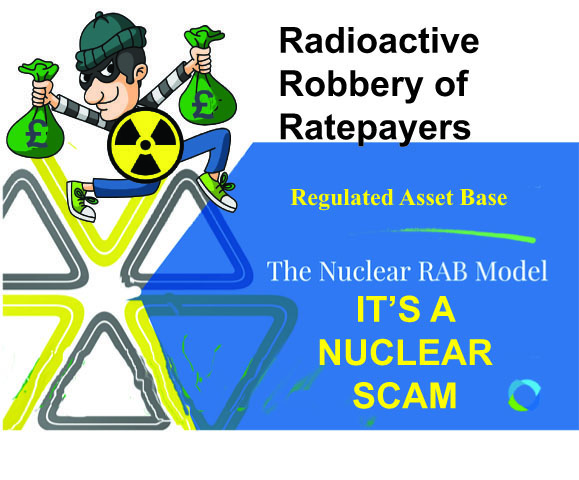
The government is currently passing legislation that will allow investors to back projects like SMRs using a regulated asset base (RAB) model, which allows them to recoup upfront costs from the consumers, over the construction period, long before those consumers actually get any electricity from the project.
Mythical beasts
So — what it all boils down to is an agreement to spend about £400 million over the next three years — to perhaps produce a design for a reactor, which might get approved by the regulators, and might find investors who might be willing to pay what will be at least £2 billion to build each one.
It’s not at all clear who is going to end up paying the most for small nuclear reactors, or indeed, if that fleet of SMRs will ever become a reality. It will probably be the taxpayers. I haven’t mentioned all those ancillary costs — of winning community approval, of security, waste disposal.
In the meantime, it’s worth being wary about the financial aspects, given the obscure manipulations going on in the US and UK, and remembering that not yet does one of these mythical beasts, Small Modular Nuclear Reactors actually exist.
Renewables remain the cheapest “new-build” source of energy generation. They exist. They work. https://www.michaelwest.com.au/ikea-it-aint-small-modular-nuclear-reactors/
.
What it’s like to live in an energy efficient ‘power home’ ‘I haven’t had to put my heating on in December’

What it’s like to live in an energy efficient ‘power home’: ‘I haven’t had to put my heating on in December’
Jo Law and her children are the first family to move into an energy-efficient all-electric ‘power home’ in Kent, more https://inews.co.uk/news/environment/energy-efficient-power-home-not-put-heating-on-december-1373278 29th Dec 2021 By Aasma Day
Jo Law shakes her head in disbelief as she says: “I’ve only had to put my heating on twice since I moved here in September – and one of those times was to test it out.
“I’ve never lived anywhere before where I’ve not needed the heating on in December.”
Like many people, mother-of-two Jo wants to do her bit for the planet, safeguarding it for her children and future generations. But she never imagined that her choice of home could be beneficial to the planet – as well as safeguarding her against energy price increases by saving her money.
Jo and her children were the first family to move into a new generation of “power homes” that are designed so they can generate more energy than they consume.
The 38-year-old had been through a turbulent time with major life changes as she separated from her partner, battled with Crohn’s disease, was diagnosed with bowel cancer and had to shield during the pandemic. Her new home signifies a fresh start.
“I had to sell my home I had with my partner after we separated and I couldn’t afford a mortgage to buy a place on my own,” explains Jo, who lives in Sittingbourne, Kent.
When she heard about new energy-efficient all-electric “power homes” in Kent which were becoming available to rent, she and her two children Molly, 13, and Harry, 10, became the first family to move in.
The all-electric modular homes are built in a factory in Cambridgeshire in partnership with offsite manufacturer Premier Modular Group and can generate more energy than they consume.
Featuring a roof covered in photo-voltaic solar roof panels which are disguised to blend in with traditional roof tiles allows the properties to generate their own electricity.
With an EPC rating of A, the homes are kept warm by airtight high performance structural panels and consume less electricity by being fitted with A energy-rated dishwashers, fridge freezers and washer dryers.
Meanwhile, a traditional boiler isn’t needed to heat water as hot water is provided to the home by a hot water tank with an integrated air source heat pump.
The homes generate enough electricity to charge an electric vehicle for free every day and any excess electricity can be sold back to the grid. The overall energy bills can be up to 85 per cent cheaper than those faced by an average household.
While millions of families across Britain live in old, cold and draughty homes, Jo says that she and her children have already noticed the difference since moving into their energy-efficient home from Public Sector Plc.
I love the energy efficiency and simplicity, and for the first time in my life, I’m not at all worried about needing to put the heating on all the time through the winter months.” Jo tells i.
“In fact, I’ve not needed the heating on because the house is so warm without it. Like most people, I have spent most of my life living in older homes which become difficult to keep warm during the winter.
“Even when we do need to put the heating on, we know we won’t have the worries of not being able to afford it. Even though a lot of the rooms in this house are bigger than our old home, our overall bills are a lot less.”
Mark Davis, partnerships director at Public Sector Plc, says that according to the UK Green Building Council, the built environment contributes 40 per cent of the UK’s total carbon footprint.
“Instead of creating homes which only consume energy, we wanted to flip this approach on its head and deliver homes which produce energy too.” he explains.
“In achieving this, we’ve been able to create new homes which act as mini power stations rather than major energy drains.”
He adds: “As millions of us face steep energy price increases across the country, we think it’s incredibly important to highlight there are alternative types of homes to live in.”
Public Sector Plc designed the homes in Kent specifically for council and housing association partners and they are currently working with a number of public sector organisations to develop new, affordable homes across the UK.
For Jo, the knowledge that she is doing her bit for the environment is just as important as saving money.
“We all want to help save the planet and are doing things like trying not to use plastic.” she says. “I want my kids to grow up in a better environment and knowing our home is better for the planet is comforting.
“I can see normal houses nearby and when they turn their heating on, you can see fumes from the boiler coming out of the house. But there’s nothing from our boiler and you can’t even hear it as it’s so quiet.
“All the eco stuff is in the loft and locked, so it just feels like a normal home and doesn’t seem any different and is warm, safe and secure.
“After the difficult time I’ve had with bowel cancer and shielding, moving into this home has felt like a weight off my shoulders and we feel settled and the children are happy here.
“As we all start to become more conscious of climate change, it’s heartwarming to know that we’ll not be wasting energy or money this winter.”
Secretive transports returning nuclear waste from UK to Australia

Nuclear waste from Britain heading to Lucas Heights, THE AUSTRALIAN, JACQUELIN MAGNAY 30 DECEMBER 21, LONDON@jacquelinmagnay,
Australia is to receive a two-tonne shipment of nuclear waste from Britain that will arrive under tight security and amid high secrecy in the coming months.
The shipment of intermediate-level nuclear waste has been prepared for delivery to the Australian Nuclear Science and Technology Organisation facilities at Lucas Heights, in Sydney’s south.
It will be just the second tranche of intermediate-level nuclear waste returned to the country, and its arrival shines a spotlight on Australia’s lack of a long-term storage plan for nuclear waste classified above low-level material.
The radioactive uranium and plutonium waste has been vitrified in four glass containers and then encased in an outer container made of specialised steel, known as a TN81 cask.
ANSTO says its previous experience in receiving intermediate-level nuclear waste – which occurred in 2015 when a larger shipment was returned from France – will mitigate any risks.

In that shipment, all local roads along the route were shut for more than five hours, and the operation involved the NSW Riot Squad and other police units to contain antinuclear protesters.
In the coming weeks, the nuclear waste will be moved by rail from the decommissioned nuclear plant at Sellafield in Cumbria to the British coast before being loaded onto a ship operated by Nuclear Transport Solutions.
It is expected to travel through Australian waters, including some maritime parks, before berthing.
The cargo is likely to be unloaded at Port Kembla in Wollongong under heavy guard, arriving sometime before the middle of next year.
Wherever the ship berths, the container will be loaded onto a truck for transport through residential and industrial areas, as well as along the Princes Highway through the Royal National Park south of Sydney and on to the Lucas Heights facility.
ANSTO says the final route will be a closely guarded secret and will be decided in consultation with NSW authorities.
NTS confirmed that the return of the intermediate-level waste in the form of vitrified residue to Australia had first been expected to take place last year.
Preparations for the shipment have been carried out since 2014……..
The Australian Radiation Protection and Nuclear Safety Agency has recently certified “the transport package”, and it will allow ANSTO to “temporarily” store the nuclear waste in the Interim Waste Store at Lucas Heights before another temporary storage facility for intermediate waste – currently being considered for Napandee, near the town of Kimba in South Australia – is ready to receive it.
This planned alternative storage solution, which is known as the National Radioactive Waste Management Facility, would bring together all the low-level radioactive waste from 100 different sites around the country and allow temporary storage of intermediate-level waste.
However, the proposed site in Kimba is being contested, with a judicial review requested earlier this month by traditional landowners the Barngarla Determination Aboriginal Corporation.
Longer-term storage plans for the intermediate waste are yet to be considered.
Despite this uncertainty, Australia is committed to receiving the waste after 114 ANSTO spent fuel rods were sent to Dounreay, Scotland, to be reprocessed of plutonium and uranium in 1996.
The processed waste being returned is of an equivalent radioactive level, but in a more condensed form than was originally exported to Scotland, and it has now been transported to the old Sellafield power station.
This means that instead of 52 500-litre drums of cemented waste, the British shipment will comprise four canisters of glass waste of an equivalent level.
It is classified by British authorities as having radioactivity levels greater than four GBq/tonne for alpha emitters and Beta/gamma emitters greater than 12 GBq/tonne – which puts it in the intermediate category.
ANSTO says it has experience in handling and storing such waste, citing the 2015 arrival of 25 tonnes of similar-level nuclear waste from France.
The new shipment will be stored next to that waste……………..
It is unclear if local councils positioned along the expected transport route will be notified when the shipment lands.
Previously, some export transportation of spent nuclear fuel rods from ANSTO to France for reprocessing has been carried out in the middle of the night with tight secrecy and no prior notice. Several councils, including Wollongong through which the nuclear waste will be carried, have called for Australia to sign and ratify the Treaty on the Prohibition of Nuclear Weapons.
Australia can expect to have to receive further shipments of returned waste every six or seven years, including spent fuel elements from the Opal reactor sent to La Hague in France for reprocessing before being returned. https://www.theaustralian.com.au/world/nuclear-waste-from-britain-heading-to-lucas-heights/news-story/e5e8511403cd24de66c79be3d1d96fe6
Consider the potential risks of having nuclear submarines on Devonport Dockyard
After news broke this year that Devonport Dockyard is getting a £1billion
rebuild to meet the requirements of the Navy’s futuristic
Dreadnought-class ballistic missile subs, you might be left thinking about
the potential risks of an increased nuclear presence in the west of
Plymouth. Although the subs won’t enter service until the 2030s, it’s
better to be safe than sorry. Or maybe you’ve considered the potential risk
associated with the 12 submarines which still have their nuclear cargo
intact on the dock.
Plymouth Live 29th Dec 2021
https://www.plymouthherald.co.uk/news/plymouth-news/what-nuclear-disaster-declared-plymouth-6238969
Plutonium found on a beach near Sellafield
While in Cumbria on a visit hosted by Radiation Free Lakeland in 2015,
former United States Nuclear Industry Regulator Arnie Gundersen now nuclear
educator with Fairewinds took samples from the beaches. These samples were
tested back in the US. One of the samples unintentionally collected was
found in Arnie’s coat pocket. It turned out to be plutonium. “Arnie’s
time sampling near Sellafield is part of our worldwide campaign to protect
families and communities from the devasting and lasting impact of radiation
exposure. Currently, we have begun the process of researching and
documenting our Irish Sea data for another peer-reviewed journal
article.”
Radiation Free Lakeland 27th Dec 2021
Julian Assange’s lawyers start process for UK Supreme Court appeal against his extradition to America

Julian Assange’s lawyers start process for Supreme Court appeal to stop WikiLeaks founder being extradited to US and tried on espionage charges
- Fiancee Stella Moris said application to bring appeal filed after 11am Thursday
- Judges must now decide whether to hear the case before any appeal takes place
- He is wanted in the US over alleged conspiracy to disclose national defence information
Daily Mail. By TOM PYMAN FOR MAILONLINE, 24 December. Julian Assange‘s lawyers have started the process for a Supreme Court appeal to stop the WikiLeaks founder being extradited to the US and tried on espionage charges, his fiancee has said.
Stella Moris said Assange filed an application to bring an appeal shortly after 11am on Thursday.
As his lawyers have applied to take his case to the Supreme Court, the UK’s highest court, judges must now decide whether to hear the case before any appeal takes place. Ms Moris, a lawyer and the mother of his two children, said in a statement on Thursday the High Court must first ‘certify that at least one of the Supreme Court appeal grounds is a point of law of general public
importance’ before the application has a chance to be considered by the Supreme Court.
A decision is not expected before the third week of January, Ms Moris added.
Birnberg Peirce Solicitors, who are representing Assange, said in a statement: ‘We believe serious and important issues of law of wider public importance are being raised in this application.
They arise from the Court’s judgment and its receipt and reliance on US assurances regarding the prison regimes and treatment Mr Assange is likely to face if extradited.
‘Because this application is now the subject of judicial consideration, his lawyers do not propose to comment further at the moment.
‘We hope and trust the High Court will grant a certificate on the questions raised as well as giving permission to appeal in order that they can thereafter be fully argued before the Supreme Court.’……………….. https://www.dailymail.co.uk/news/article-10341045/Julian-Assanges-lawyers-start-process-Supreme-Court-appeal.html?ito=social-twitter_dailymailUK
Radiation Free Lakeland joins the call against watering down safety regulations for nuclear fusion reactors.
Radiation Free Lakeland add our voice to the call from Nuclear Free Local Authorities that the already inadequate nuclear regulations are not watered down when it comes to dangerous fusion reactors. Fusion experiments require enormous amounts of heat and energy. The nuclear wastes from the fusion experimental reactors already amounts to 3000 cubic metres of nuclear wastes from the Culham experimental reactor alone. Nuclear Free Local Authorities say the following and RaFL agree that: Public safety must come before profit: Nuclear Free Local Authorities call for ‘no watering down’ of nuclear regulation for fusion reactors. Radiation Free Lakeland 23rd Dec 2021 https://mariannewildart.wordpress.com/2021/12/23/fusion-licensed-to-kill/ |
ROLLS ROYCE FALLS 3% ON QATARI INVESTMENT IN SMALL NUCLEAR BUSINESS
- Rolls Royce Holding PLC (LON: RR) has fallen 3% on news of the Qatari investment into the small nuclear reactor business
- It may well not be the investment itself that is the catalyst for the price change but Omicron
- The £85 million Qatar investment isn’t really a material number for Rolls Royce, even as it’s a vote of confidence in the programme.
Rolls Royce shares have continued their recent decline even as the news comes through of a Qatari investment in the small nuclear reactor programme. This could be seen as a surprise – investment in such a programme is likely to be a good deal for Rolls Royce after all. On the other hand, £85 million, the size of the investment, isn’t a large number compared to Rolls Royce – it’s not, as they say, a material number.
The likelihood is therefore that it is wider events driving the Rolls Royce share price, Omicron continues to rage around the world, air travel becomes increasingly restricted and so on. It’s worth pointing out that the RR incomes do not depend, particularly, on actually selling engines to people. There are fees involved in that, most certainly, but there’s an element of selling razors in how the business work. Once you’ve sold someone a razor then you’ve a capitve market for razor blades. Once you’ve got an engine in an aircraft then there’s a decades-long maintenance and repair income flow. That Rolls Royce income stream though depends upon hours in the air – exactly the thing being depressed by Omicron.
Rolls Royce shares have continued their recent decline even as the news comes through of a Qatari investment in the small nuclear reactor programme. This could be seen as a surprise – investment in such a programme is likely to be a good deal for Rolls Royce after all. On the other hand, £85 million, the size of the investment, isn’t a large number compared to Rolls Royce – it’s not, as they say, a material number.
The likelihood is therefore that it is wider events driving the Rolls Royce share price, Omicron continues to rage around the world, air travel becomes increasingly restricted and so on. It’s worth pointing out that the RR incomes do not depend, particularly, on actually selling engines to people. There are fees involved in that, most certainly, but there’s an element of selling razors in how the business work. Once you’ve sold someone a razor then you’ve a capitve market for razor blades. Once you’ve got an engine in an aircraft then there’s a decades-long maintenance and repair income flow. That Rolls Royce income stream though depends upon hours in the air – exactly the thing being depressed by Omicron. https://www.asktraders.com/analysis/rolls-royce-falls-3-on-qatari-investment-in-small-nuclear-business/
Changes in UK nuclear third party liability
UK nuclear third party liability laws updated from January 2022 https://www.pinsentmasons.com/out-law/news/uk-nuclear-third-party-liability-laws-updated-january-2022, OUT-LAW NEWS | 23 Dec 2021 Eluned Watson, Senior Associate Operators of nuclear sites in the UK, including those responsible for disposing of nuclear matter, should review their insurance and contractual arrangements to ensure they align with a new liability regime that takes effect on 1 January 2022, experts have said.
Michael Freeman and Eluned Watson of Pinsent Masons were commenting after an international protocol was ratified, triggering imminent changes to the nuclear third party liability regime in the UK.Currently, the liability regime for nuclear accidents in the UK is governed by the Nuclear Installations Act 1965. That Act implements the OECD Paris Convention on Third Party Liability in the Field of Nuclear Energy and the supplementary Brussels Convention that followed. The Act makes provision for compensation to be claimed for personal injury or property damage stemming from a nuclear accident.
In 2004, signatories to the two Conventions adopted a protocol to amend the third party liability regime that the Conventions provide for. That protocol has only recently been ratified in enough of the signatory countries to allow the changes to take effect. n the UK, legislation was passed in 2016 to anticipate the protocol coming into force. The Nuclear Installations (Liability for Damage) Order 2016, which amends the 1965 Act, takes effect on 1 January 2022.
Both the protocol and the UK Order substantially increase the value of claims that can be made in the aftermath of nuclear accidents to €700 million in damages, up from €140 million previously. In line with flexibility provided under the protocol, a cap on claims at €80m has been set in respect of damage to the means of transport.
The legislation sets annual caps on liability for operators of nuclear sites in the UK, initially at €700m a year but rising to a total operator liability of €1.2 billion over a period of five years from 2022.Operators of nuclear licensed sites are required to make financial provision for such liability, such as by insurance.
“We have been working closely with clients in the UK nuclear sector to ensure that their existing insurance and financial provision arrangements incorporate the changes necessary to reflect the changes to the liability regime,” said Watson.
The type of claims that can be made have also been expanded under the new regime.
The additional types of claim that can be made are for compensation in respect of the cost of measures of reinstatement related to the impaired environment, loss of income derived from the environment, the cost of preventive measures, and personal injury and property damage caused by such measures. Limitation periods are also amended. The right to claim compensation for personal injury will be extended from 10 to 30 years. The time limit on bringing claims of all other kinds is fixed at 10 years.
“The changes brought about by the 2004 protocol represents the most significant revision of the nuclear third party liability regime since it was first introduced in the 1960s,” said Pinsent Masons’ Freeman.
“Those operating within the nuclear sector should review all relevant contractual and supply chain arrangements, and in particular nuclear third party liability indemnification provisions, in order to ensure that the changes introduced by the 2016 Order are adequately and appropriately reflected,” he said.
In Cumbria – Dangerous Nuclear Waste Dumping- Mission Creep and Obfuscation.
Dangerous Nuclear Waste Dumping- Mission Creep and Obfuscation.
The following images [on original] are from a four page Advertorial by NIREX in Cumbria Life from 1993 (NIREX was the then government body on “Nuclear Waste Disposal.” ) The NIREX plan was for “deep disposal” of intermediate and some low level nuclear wastes. Now in 2021 the “vision” is to put the intermediate level nuclear wastes (previously earmarked for the NIREX dump at Longlands Farm, Gosforth) into Not So Deep Silos’ at the Low Level Waste Repository at Drigg and the even higher activity and very hot nuclear wastes (which even the gung ho NIREX never proposed putting deep underground) into a Geological Disposal Facility ( deep under the Irish Sea is in the frame)……….
Note that the NIREX advert from 1993 states that the Geological Disposal Facility plan is for “intermediate and some low level wastes.” In a newsletter in March this year for the Low Level Waste Repository at Drigg, it was said: “The NDA is exploring the benefits of developing Near Surface (NSD) – for disposing of a proportion of Intermediate Level Waste (ILW), but no decision has been taken on whether UK Government will pursue this option or whether LLWR, will in time, host a NSD facility.”
We asked a number of Freedom of Informations questions which have not been answered directly or honestly with a simple yes or no but serve to deflect and frustrate any scrutiny.
- Have the public been consulted about the RWM/NDA/CoRWM plan for Near Surface Disposal of Intermediate Level Waste at Drigg’s Low Level Waste Repository?
The honest answer would be NO
- Has the Borough or County Council held a debate or vote on whether to take any steps towards Near Surface Disposal of Intermediate Level Wastes by alllowing 16 rock characterisation boreholes to be drilled at a depth of 120m into the underlying sandstone ?
The honest answer would be NO
- What are the category of low and intermediate level wastes proposed for NSD and would this include the category of wastes previously designated by NIREX for a GDF ?
The honest answer would be: the major components of Intermediate Level Wastes are nuclear reactor components, graphite from reactor cores and sludges from the treatment of radioactive liquid effluents. All of these wastes were previously designated by NIREX for a Geological Disposal Facility.
You can see Low Level Waste Repository’s answers here: ………..https://www.lakesagainstnucleardump.com/post/dangerous-nuclear-waste-dumping-mission-creep-and-obfuscation
Inspections of Britain’s ageing nuclear weapons facilities
Inspectors have completed their year-long investigation into the ageing
facilities at AWE in Aldermaston and Burghfield. The Office for Nuclear
Regulation (ONR) has conducted ‘themed’ inspections into five British
nuclear facilities over the last year. It has been looking at how the
industry manages ageing plants and facilities to ensure the necessary
standards of safety and security are maintained.
The final inspection
report is now being compiled, and is expected to identify where
improvements are required. In late 2020, ONR selected five licensees for
inspection, as a representative sample of the industry. They are the Atomic
Weapons Establishment (AWE Plc), in Aldermaston and Burghfield, Berkshire,
EDF Energy Nuclear Generation Limited, at Sizewell B Power Station in
Suffolk, Devonport Royal Dockyard Ltd (DRDL) in Plymouth, Magnox Limited,
at Hinkley Point A in Somerset, and Sellafield Ltd, in Cumbria.
Berkshire Live 22nd Dec 2021
Heysham 2 nuclear power station to close earlier than planned
Heysham 2 nuclear power station will continue generating electricity
safely until 2028, however, “closing” two years earlier than originally
planned. In 2016, the sites’ operational lives were extended by seven
years to 2030. Operational dates are under constant review and since then
inspection, modelling and operational experience from other sites, have
given EDF a clearer picture of lifetime expectations for the AGR fleet as
the stations age. Heysham 1 will operate until 2024,
Lancaster Guardian 17th Dec 2021
Natalie Bennett, a Green member of UK Parliament deftly separates nuclear facts from nuclear fantasy

Separating fact from fission, https://theecologist.org/2021/dec/15/separating-fact-fission Natalie Bennett , 15th December 2021 Nuclear is no panacea for the climate crisis – even if we build new power plants they will come on line too late. Natalie Bennett is a member of the House of Lords, and a member of the Green party.
“The role of civil nuclear power in meeting the UK’s electricity needs and energy security” has just been debated by peers in the House of Lords. Had a television inquisitor put that question to me, I’d start by saying that I don’t accept the terms of the question.
New nuclear should have no role in the UK’s electricity generation, and policies promoting new plants – far from offering any hope of security – present a threat to that essential provision in this age of shocks.
The failed 20th century technology that is nuclear power is something I’ve been debating for a long time. So I could go on at length about the failure to find a solution to the pressing issue of nuclear waste – as Lib Dem Lord Oates did very effectively in the debate.
Cleanest
I could talk about safety issues – from Three Mile Island to Chernobyl to Fukushima. And while many in the debate tried to say, well “not so many people died” on those occasions, that fails to address the huge risks, and in our age of shocks, the increasing dangers presented by multiple climate, human and physical threats that could hamper recovery efforts when things start to go wrong.
I could talk to the links of “civil” nuclear to nuclear weapons – those hideous weapons of mass destruction. I could talk about the handing of enormous sums of money to multinational companies – or foreign governments.
But there are two important arguments less often aired that deserve to be put.
First, that new nuclear power plants are a distraction from what we should be doing. Think about how often you hear ministers talking about new nuclear – such as the latest championing of the – rather modest – government investment in the Rolls Royce fantasy of “small” nuclear reactors.

You also rarely hear ministers talking about renewables. And consider how seldom you hear the politicians in government in serious discussion about energy conservation. For the cleanest, greenest, energy you can possibly have is the energy that you don’t need to use.
Resilient
The fact that government ministers are not talking about this is unsurprising, given that the Green Homes Grant was such an utter disaster. But, in fact, the silence predates that particular Rishi Sunak mess.
Talking about – and acting on – new nuclear power swallows up the space where the renewables and conservation should be.
That’s something that’s true on a global scale, as a brilliant University of Sussex study last year demonstrated. There are, in the academic jargon, path dependencies that see renewables and nuclear crowding each other out.
And it is most painfully evident in the UK in the failure to pursue the most obvious, and productive, path for renewables, community energy.
Despite promises – and recommendations from the Environmental Audit Committee, the Net Zero Strategy contained no plan of action for a key means of spreading prosperity around the country, as well as helping to secure a resilient, decentralised energy system and engaging people directly in the essential drive to Net Zero.
Fission
Secondly, nuclear power projects are too slow. This is a killer argument for which nuclear proponents can have no answer.
Continue reading1 This Month
26 September – International Day for the Total Elimination of Nuclear Weapons





PLEASE OPPOSE HR 8255 AND S.3639 – bills would accelerate satellite deployment, with no environmental review or safeguards – https://ncstd5li.quorum.us/campaign/169331/
To see nuclear-related stories in greater depth and intensity – go to https://nuclearinformation.wordpress.com
-
Archives
- September 2026 (313)
- August 2026 (330)
- July 2026 (355)
- June 2026 (287)
- May 2026 (306)
- April 2026 (356)
- March 2026 (251)
- February 2026 (267)
- January 2026 (308)
- December 2025 (358)
- November 2025 (359)
- October 2025 (375)
-
Categories
- 1
- 1 NUCLEAR ISSUES
- business and costs
- climate change
- culture and arts
- ENERGY
- environment
- health
- history
- indigenous issues
- Legal
- marketing of nuclear
- media
- opposition to nuclear
- PERSONAL STORIES
- politics
- politics international
- Religion and ethics
- safety
- secrets,lies and civil liberties
- spinbuster
- technology
- Uranium
- wastes
- weapons and war
- Women
- 2 WORLD
- ACTION
- AFRICA
- Atrocities
- AUSTRALIA
- Christina's notes
- Christina's themes
- culture and arts
- Events
- Fuk 2022
- Fuk 2023
- Fukushima 2017
- Fukushima 2018
- fukushima 2019
- Fukushima 2020
- Fukushima 2021
- general
- global warming
- Humour (God we need it)
- Nuclear
- RARE EARTHS
- Reference
- resources – print
- Resources -audiovicual
- Weekly Newsletter
- World
- World Nuclear
- YouTube
-
RSS
Entries RSS
Comments RSS

