Cracks cause Torness nuclear plant to close early

Cracks cause Torness nuclear plant to close early, The Ferret Rob Edwards. December 15, 2021
Spreading cracks at the Torness nuclear power station in East Lothian mean that it will have to close two years earlier than planned, according to its operator, EDF Energy.
The power company has told stakeholders it now expects to shut the station down in 2028 instead of 2030 because of “impacts on the graphite cores”.
The Ferret revealed in May 2020 that the cores of the two reactors at Torness were predicted to start cracking in 2022, six years earlier than previous thought. At the time EDF maintained that the station could keep generating electricity safety until 2030…………….
A similar reactor at Hunterston B nuclear power station in North Ayrshire was permanently closed down on 26 November 2021, after 46 years of operation. The station’s second reactor is due to be turned off before 7 January 2022, 15 months earlier than previously planned.
Hunterston is 12 years older than Torness, and has been plagued by increasing cracks in its graphite cores caused by radiation bombardment. The Ferret reported in October 2020 that EDF estimated that one of Hunterston’s reactors could end up with nearly a thousand cracks……………
Torness, near Dunbar, was officially opened in May 1989 by then-Conservative Prime Minister, Margaret Thatcher. The site had been the target of anti-nuclear protests since 1978………….
Campaigners are seeking assurances that nuclear safety is not being compromised. “Problems with cracks in the graphite core which led to the closure of Hunterston B are clearly expected to cause similar problems at Torness,” said Pete Roche, an Edinburgh-based nuclear critic.
But Torness has a significant design difference likely to make the problem worse. Judging by statements made by the nuclear regulator it might be expected that Torness should close in 2024 or soon after.”
Roche suggested that EDF would strive to keep the station open as long as possible. “The Scottish Government should seek assurances from the Office of Nuclear Regulation that EDF will not be allowed to drag things out so long that safety is compromised,” he added.
Friends of the Earth Scotland argued that EDF had had to “admit the inevitable” and close earlier than planned. “The remaining question is whether they will make it even that far,” said the environment group’s director, Dr Richard Dixon.
“Nuclear is incredibly expensive, and suffers from complex problems like these cracks, as well as creating waste which will have to be looked after for thousands of years.”
Edinburgh Green councillor, Steve Burgess, also questioned how safe it was to keep running Torness. “This isn’t very reassuring news from Torness,” he said.
“Announcing that they are closing two years early, with mention of the graphite core, means EDF are acknowledging that they are coming hard up against a time when it really isn’t safe to operate.”………… more https://theferret.scot/torness-nuclear-plant-close-cracks/
Nuclear Free Local Authorities call for ”no watering down” of safety regulations regarding future nuclear fusion reactors
The Nuclear Free Local Authorities Network has called for ‘no watering
down’ of the safety regulations that will be applied to future fusion
reactors in its response to a public consultation by the Department of
Business, Energy, and Industrial Strategy.
In his letter to the BEIS, Councillor David Blackburn, Chair of the NFLA Steering Committee, outlines
the many challenges and risks that would be posed by operating nuclear
fusion, including the risk posed by the large quantities of radioactive
wastes that would result and the danger of radioactive tritium entering the
water supply.
Most frightening is the requirement to constantly and safely
contain the immense temperatures needed to spark and sustain a fusion
reaction and the long-term damage that the whole structure will suffer from
prolonged exposure to neutron radiation, a situation which if not carefully
monitored could result in the very integrity of the reactor vessel being
placed in jeopardy.
NFLA 15th Dec 2021
UK’s nuclear test veterans ‘were victims of a crime
UK’s nuclear test veterans ‘were victims of a crime’ with one suffering 100 tumours
Many of the 22,000 men who served at nuclear bomb tests carried out by Britain have died from cancers and suffered rare blood disorders – Andy Burnham and Steve Rotheram heard their tales of horror Mirror UK, BySusie Boniface, 15 Dec 2021
Campaigning giants Andy Burnham and Steve Rotheram have vowed to win recognition for Britain’s nuclear test veterans, telling them: “You were victims of a crime.”
The two metro mayors likened 70 years of official denials about the Cold War radiation experiments to Hillsborough, forced adoptions and the contaminated blood scandal.
Around 22,000 men served at 45 bomb tests and more than 600 radiation experiments in Australia, America and the South Pacific between 1952 and 1991. Many have died from cancers and suffered rare blood disorders. Their 155,000 descendants show 10 times the usual rate of birth defects, which the government refuses to investigate.
After meeting survivors, Mr Burnham said: “It feels like you were victims of a crime, and that has been passed down through your families.”
Mr Rotheram added: “The pattern of these scandals is the always the same. They deflect the truth, they make it about money, they deny, suppress, cover up, and blame.”
John Morris told them: “I don’t want their money, I just want the damned truth.”
In 1957, aged 20, he was among troops exposed on a beach when the 1.8 megaton Grapple X bomb was exploded 20 miles away. “I wore a shirt, shorts, and sunglasses. The flash was white, the heat like a blowtorch on your back, then we were knocked off our feet,” said John, 84, from Rochdale.
“There were 2,000 men running around, terrified. We couldn’t get in our wagons to get away because the tires had melted. If I told you to stand 20 miles away from the Sun, would you do it?”
After his return home, John was diagnosed with a radiation-related blood disorder. His first-born Steven died in 1962, aged four months, in an unexplained cot death. Daughter Liz Bacon said: “We’re made to feel unreasonable just for questioning it. He didn’t even get the autopsy report until 2018.”
Ex-railway manager Archie Hart, 84, of Warrington, told how he was an 18-year-old stoker on HMS Diana in 1956 when the ship was twice ordered to spend 8 hours in the fallout of atomic bombs in a human experiment designed to test the effect on ship and crew. Archie, wearing just a cotton hood for protection, was on deck throughout, and within two years began developing benign tumours.
“There’s 100 all over my body, some the size of tennis balls,” he told the mayors. “I can’t do the dance of the seven veils anymore, because my body’s an unsightly mess. What they did to us was morally wrong, and their cavalier attitude in the years since is causing problems to this day for the generations that follow.”
Both men have survived cancer, but told the mayors: “We were the lucky ones.”
Alan Owen, whose Royal Navy dad Jesse died aged 52 after witnessing 24 US bomb tests in 78 days in 1962, said: “The Americans compensated my family, but our own governments delay, deny, until we die.”
For more than 30 years the Mirror has campaigned for justice for the brave men who took part in Britain’s nuclear weapons tests.
The Ministry of Defence has fought back every step of the way.
We have told countless heartbreaking stories of grieving mums, children with deformities, men aged before their time and widows struggling to hold their families together, all while campaigning for recognition.
Two years ago we launched an appeal for a medal for the 1,500 survivors.
For the first time we were able to prove some were unwittingly used in experiments.
Our appeal was backed by then-Defence Secretary Gavin Williamson but his review foundered after he lost his job.
……………….. Mr Burnham said: “These are the tactics of the British state: to deflect onto the victims, use a lack of progress to grind people down, and create mental torture so people cannot fight injustice.”………………
Both mayors supported the idea of a medal for its “totemic significance” to veterans, whose average age is now 85, and promised to support a nuclear tests education programme to be rolled out across their regions’ schools, with veterans meeting children to discuss their personal legacy……………………… https://www.mirror.co.uk/news/politics/uks-nuclear-test-veterans-were-25708681
Call to halt UK’s Hinkley Point C new EPR nuclear reactor until problems at similar reactor in China resolved.
he Nuclear Free Local Authorities network (NFLA) has written to the
Minister of State for Energy and the Head of the Office of Nuclear
Regulation calling for an indefinite halt to construction work at the new
Hinkley Point C nuclear plant whilst the impact of the Taishan-1 nuclear
accident in China is investigated. T
The Chair of the NFLA Steering Committee, Councillor David Blackburn, has written to Minister Greg Hands and Chief Executive Mark Foy outlining concerns that a radioactive gas leak
at the Taishan 1 reactor in China has uncovered a potentially fatal design
flaw which could have a serious impact on the UK Government’s plans to
permit identical reactors to operate at Hinkley Point C in Somerset and at
Sizewell C in Suffolk. The Hinkley Point and Sizewell projects would both,
like Taishan-1. be equipped with EPRs (short for European Pressurised or
Evolutionary Power Reactors). EPR projects have a history of safety
concerns, massive delays and huge cost overruns. Although the Hinkley Point
C is planned to come on line in 2026, plants at Olkiluoto 3 in Finland and
Flammaville 3 in France are now 13 and 11 years behind schedule
respectively. Sizewell is still awaiting final government authorisation.
NFLA 13th Dec 2021
What’s next for Julian Assange? and for media freedom?
”If the United States is able to be successful in the prosecution of Julian Assange, it will set a very dangerous precedent for anybody publishing any material in the public interest that exposes US military secrets.”.
A UK court has cleared Julian Assange’s extradition to the US. Here’s what happens next
The 50-year-old Australian founded the WikiLeaks website in 2006 and has been held in detention since 2019 as a lengthy legal process continues over espionage charges. SBS, By Alexander Britton, 14 Dec 21
Attempts to see WikiLeaks founder Julian Assange face criminal charges in a United States court moved a step closer after Washington recently won an appeal over his extradition.
But the legal battle is far from over, with the legal wrangling set to continue into 2022 as Assange’s team pledged to have the case heard at the United Kingdom’s highest court.
Who is Julian Assange and why is he wanted by the US?
Julian Assange is a 50-year-old Australian who founded WikiLeaks, a site that publishes leaked materials from a variety of sources.
Set up in 2006, the site is widely known for its release of footage showing a 2007 US airstrike in Baghdad that killed journalists and civilians titled Collateral Murder.
He is wanted by the US for alleged violations of the country’s Espionage Act by publishing military and diplomatic files in 2010.
Should he be convicted, the maximum jail term could be 175 years……………………
Why does the case raise media freedom concerns?
Assange’s case has “dangerous implications for the future of journalism”, the secretary-general of Reporters Without Borders Christophe Deloire said.
They believe he has been targeted for his contributions to journalism and is facing “possible life imprisonment for publishing information in the public interest”.
This view is shared by MEAA Media federal president Marcus Strom who told SBS News: “This is an attempt by the United States to set a precedent, to intimidate the coverage of national security journalism.
“If the United States is able to be successful in the prosecution of Julian Assange, it will set a very dangerous precedent for anybody publishing any material in the public interest that exposes US military secrets.”………………………………
How have 11 years in detention impacted his health?
Assange’s legal team have raised concerns that the prolonged legal case has had a highly detrimental impact on his physical and mental health.
His fiancée Stella Moris told the UK’s Mail on Sunday that Assange had a mini-stroke during the October appeal, leaving him with memory loss and signs of neurological damage.
She was quoted by the paper as saying: “I believe this constant chess game, battle after battle, the extreme stress, is what caused Julian’s stroke on October 27.”
Doctors for Assange, a group set up in 2019, referred to Assange’s health as being in a “dire state” due to “his prolonged psychological torture”, while Nils Melzer, the UN’s special rapporteur on torture, said he was “crushed as a person”.
What has the reaction been in Australia and around the world?
Pressure has been placed on the Australian government to intervene in Assange’s case. Senator Rex Patrick urged Deputy Prime Minister Barnaby Joyce to make a case to the US Secretary of State while in isolation in the country, and Independent MP Andrew Wilkie said Prime Minister Scott Morrison needed to pick up the phone and “end this lunacy”.
Newspaper editorials have also made the case for Canberra to discuss the matter with counterparts in Washington and London, and international bodies have pushed for Assange’s release.
The Sydney Morning Herald wrote: “Prime Minister Scott Morrison should encourage Mr Biden to free Mr Assange. There is a strong humanitarian and pragmatic case to look for a way out of this Kafkaesque nightmare”.
Anthony Bellanger, general secretary of the International Federation of Journalists, said the ruling was a “major blow”.
Others calling for his release have included Amnesty International, who said the “indictment poses a grave threat to press freedom both in the United States and abroad”.
What could happen now?
Following the successful appeal from the US, the judges ruled the case should return to Westminster Magistrates’ Court for a district judge to formally send it to UK Home Secretary Priti Patel.
But Ms Moris has said lawyers will push for the case to be referred up to the UK’s highest court, the Supreme Court.
His legal team have also suggested New Zealand act as a peacemaker between the various parties in the case.
The group, including New Zealand-based lawyer Craig Tuck, want Prime Minister Jacinda Ardern to make representations to US President Joe Biden or UK Prime Minister Boris Johnson to end the “politically motivated prosecution”.
“This is something our prime minister could address by picking up the phone to president Biden or prime minister Johnson and saying, ‘Hey, enough’s enough. Let’s bury the hatchet and not in Julian’s head’,” Mr Tuck told Radio NZ.
With additional reporting from AFP and AAP. https://www.sbs.com.au/news/a-british-court-has-cleared-julian-assange-s-extradition-to-the-us-here-s-what-happens-next/03d8802e-798d-46fd-9359-eb70a052c30b
Radionuclides found from Hinkley nuclear mud Bristol Channel Citizens Radiation Survey .
Radionuclides found…! Bristol Channel Citizens Radiation Survey, Tim Deere-Jones, Stop Hinkley C. A new survey has concluded the spread of man-made radioactivity from reactor discharges into the Bristol Channel is far more extensive and widespread than previously reported.
The research has also detected a high concentration of radioactivity in Splott Bay, which could be linked to the controversial dumping of dredged waste off the Cardiff coast in 2018.The survey was undertaken over the summer by groups from both sides of the Bristol Channel after EDF Energy refused to carry
out pre-dumping surveys of the Cardiff Grounds and Portishead sea dump sites where they have disposed of waste from the construction of the Hinkley Point C nuclear power plant.
The survey found that shoreline concentrations of two radio nuclides (Caesium 137 and Americium 241)
typical of the effluents from the Hinkley reactors and indicators of the presence of Plutonium 239/240 and 241, do not decline significantly with distance from the Hinkley site as Government and Industry surveys had previously reportedOverall, the study found significant concentrations of Hinkley derived radioactivity in samples from all 11 sites, seven along the Somerset coast and four in south Wales and found unexpectedly high concentrations in sediments from Bristol Docks, the tidal River Avon, the
Portishead shoreline, Burnham-on-Sea and Woodspring Bay.
Public Enquiry 11th Dec 2021
Research finds ‘significant concentrations’ of radioactivity in
samples taken from across the Somerset and south Wales coast. Nation Cymru 9th Dec 2021
UK’s Hinkley B nuclear power station to shut down permanently next summer.
Hinkley Point B to start final run of producing electricity before
shutting down next summer. Hinkley Point B is about to start its final run
of producing electricity before it shuts down for good next summer. The
nuclear power station on the West Somerset coastline has been operating for
over 45 years and it’s expected that many members of staff will stay on to
help with de-fuelling and decommissioning.
ITV 11th Dec 2021
‘Spend money on the National Health Service – not nuclear submarines’
‘Spend money on the NHS – not nuclear subs’ https://www.newsandstar.co.uk/news/19777700.spend-money-nhs—not-nuclear-subs/ Philip Gilligan On behalf of South Lakeland and Lancaster District CND, 12 Dec 21, SINCE September, local Conservative politicians have seemed very eager to praise the new military pact known as AUKUS.
They are apparently unconcerned that the US and UK will be assisting Australia to acquire new long-range strike capabilities for its air force, navy and army, including the provision of nuclear-powered submarines fuelled by weapons grade uranium.
They clearly hope that BAE Systems staff in Barrow will be involved in designing and building the submarines, but appear to have ignored the potential threats to peace and stability inherent in such military escalation.
They seem unconcerned that AUKUS has already sparked tensions between the UK and France and seems likely to provoke a regional arms race in the South China Sea.
In the UK, the Campaign for Nuclear Disarmament (CND) is calling on the UK government to focus its resources instead on funding our NHS more adequately and on meeting the social care needs of our communities.
Indeed, CND wants the government to halt all its dangerous and provocative nuclear adventures.
Meanwhile, in Australia, the Maritime Union is also calling for a shift away from wasteful and environmentally harmful military spending to investment in health care and socially useful jobs.
They say that the pact will “continue to escalate unnecessary conflict with China”, and state “We don’t want war”.
This Saturday, Australian peace campaigners and trade unionists are holding an international day of action in opposition to the AUKUS pact.
South Lakeland and Lancaster District CND expresses its solidarity with the Australian campaign, while calling on the UK government to make genuine efforts to invest in increased and more diverse employment opportunities in Barrow.
UK’s Nuclear Energy Finance Bill Committee hears problems about funding of new nuclear projects, that will be too late to affect climate change.
nuClear News No 126 December 21, . New Nuclear Energy Developments In Safe Energy Journal No.92 and nuClear News No.135 we reported on a debate in the House of Commons on the Second Reading of the Nuclear Energy Finance Bill, which took place on 3rd November. (1) Since then, there have been several meetings of the Nuclear Energy Finance Bill Committee, including one session which took evidence from Doug Parr of Greenpeace, Mycle Schneider of the World Nuclear Industry Status Report and Professor Steve Thomas. (2)

The SNP’s Energy Spokesperson at Westminster, Alan Brown, asked Mycle Schneider about the argument that the UK needs baseload power and can’t meet its net zero targets without nuclear power. Mycle pointed out that we are in a climate emergency, so we need reductions in carbon emissions as quickly as possible. For every pound we spend we need to see large and fast results. It’s clear that there are other options beside nuclear which are more climate effective. The cost of renewables is cheaper and nuclear is five times slower. Possible investments in nuclear which might deliver after 2030 are much too slow.
Regarding the need for baseload electricity, the National Grid’s scenarios say nothing about the need for reliable baseload. Only one out of their three scenarios needs Sizewell C. Nuclear is not flexible. If the wind isn’t blowing nuclear doesn’t help. What is required is batteries and demand-side responses to compensate for intermittency.
Analysis of the French nuclear fleet shows that nuclear power is not a reliable source providing power 24/7. For 2019 – the year before Covid – when EDF starts an outage for maintenance and refuelling it has lost control entirely over the date and time it is able to restart its reactors. There were over 40 cases of revised times and dates. EDF was not even able to make reliable predictions 24 hours before the reactors were due to restart.
Labour’s Alan Whitehead asked Mycle Schneider about the experience of the United States using the Regulated Asset Base (RAB) funding model for two plants in South Carolina which were abandoned recently. Should there be measures in any Bill which make sure any nuclear plant is finished to avoid consumers being dumped with the cost of a plant that wasn’t finished. Construction of VC Summer started in 2013 and it was supposed to come on-line in 2017. By 2017 the cost estimate had increased by 75%. In July 2017 construction was abandoned. This was one of the consequences of the fact that Westinghouse filed for bankruptcy. The affair has cost consumers billions.

Steve Thomas said what marked out the VC Summer project and a similar project in Georgia from other US projects was that they allowed the recovery of costs from consumers before completion of the reactors. The Summer experience shows very clearly the folly of using the RAB model. We would have to be careful with any legislation which prevents nuclear plants under construction being abandoned. Dungeness B took 24 years from the start of construction to commercial operation, and over its 32 years of operation its availability was well below 50%. It should have been abandoned before it was completed.
Matthew Pennycook said there is a lack of clarity around the Chinese company, CGN’s investment in Sizewell C and how that interacts with the intentions of this Bill. He asked what is in the 2016 Strategic Investment Agreement and what provisions there are in that agreement that would allow the Government to remove CGN. And related to that there was £1.7 billion in the budget to enable a final investment decision for a large scale nuclear project. Is that money to buyout the CGN stake?

Steve Thomas said in the 2016 Agreement CGN agreed to take up to 20% of the Sizewell C project up to the Final Investment Decision (FID). They have an option to take 20% of the construction and operation of the plant if it goes ahead. EDF and CGN have spent about half a billion pounds so far, It may take another £0.5 billion at the most to get to FID. So £1.7bn seems too much. In terms of how you get CGN out of Sizewell C it probably depends on what happens to Bradwell B. The Chinese really want to get the endorsement of UK nuclear regulators for it HPR1000 reactor. If they are not going to be allowed to build Bradwell B, they are unlikely to be interested in putting money into Sizewell C.
Steve Thomas told MPs there is a lot of missing detail in the RAB proposals. One of the biggest elements is how much the surcharge will be during the construction. The Government has said it will be a maximum of about £10 per year per consumer. That would yield £6bn. In the context of a project that will cost £24-40bn, plus financing costs, £^bn is not much of a game changer.
PMQs On 24th November, during Prime Minister’s Questions Matthew Pennycook asked: “The Government’s integrated review has concluded that the Chinese state poses a systemic challenge to our national security, and the Prime Minister has made it clear that when it comes to China, we must remain vigilant about our critical national infrastructure. Can he therefore confirm unequivocally today that plans for China General Nuclear to own and operate its own plant at Bradwell in Essex have been abandoned, and explain to the House precisely how and when his Government intend to remove CGN’s interest from the Sizewell C nuclear project?”
Boris Johnson replied that “…we do not want to see undue influence by potentially adversarial countries in our critical national infrastructure. That is why we have taken the decisions that we have. On Bradwell, there will be more information forthcoming – What I do not want to do is pitchfork away wantonly all Chinese investment in this country, or minimise the importance to this country of having a trading relationship with China.” (3)
The Times pointed to the National Security and Investment Bill, going through parliament at present, which will allow the government to “screen” and potentially block sensitive foreign investments, and concluded that China will be cut out of future involvement in developing new nuclear power stations, but this is still not entirely clear. (4)
Mr Pennycook later responded to the PMs answer via Twitter: “We need certainty on the future of China’s involvement in UK nuclear power and clarity about how and when the Government intends to remove China’s state-controlled nuclear energy company from involvement in any future UK project.”
Subsequently the team behind Bradwell B said China’s nuclear group remains committed to the project. (5) https://www.no2nuclearpower.org.uk/wp/wp-content/uploads/2021/12/nuClearNewsNo136.pd
Appeal to UK’s Supreme Court will just lengthen Julian Assange’s legal torment
Edward Fitzgerald QC, for Assange, previously told the High Court that Australia had not indicated whether it would accept Assange, who “will most likely be dead before it can have any purchase, if it ever could”……..
Assange lawyers eye UK Supreme Court, The North West Star.Jess Glass and Tom Pilgrim, PA
11 Dec 21, Julian Assange’s lawyers intend to take his case to the Supreme Court, his fiancee says, after the High Court allowed the WikiLeaks founder’s extradition to the United States.
Assange, 50, is wanted in the US over an alleged conspiracy to obtain and disclose classified information following WikiLeaks’ publication of hundreds of thousands of leaked documents relating to the Afghanistan and Iraq wars
US authorities brought a High Court challenge against a January ruling by then-district judge Vanessa Baraitser that Assange should not be sent to the US, in which she cited a real and “oppressive” risk of suicide.
After a two-day hearing in October, the Lord Chief Justice Lord Burnett, sitting with Lord Justice Holroyde, ruled in favour of the US on Friday………..
The judges ordered that the case must return to Westminster Magistrates’ Court for a district judge to formally send it to UK Home Secretary Priti Patel.
Assange’s fiancee Stella Moris called the ruling “dangerous and misguided” and said his lawyers intended to seek an appeal at the Supreme Court……..
The legal wrangling will go to the Supreme Court, the United Kingdom’s final court of appeal.
“It is highly disturbing that a UK court has overturned a decision not to extradite Julian Assange, accepting vague assurances by the United States government,” Assange’s lawyer Barry Pollack said.
“Mr Assange will seek review of this decision by the UK Supreme Court.”
Supporters of Assange gathered outside of the court after the ruling, chanting “free Julian Assange” and “no extradition”.
They tied hundreds of yellow ribbons to the court’s gates and held up placards saying “journalism is not a crime”.
If Assange’s lawyers do take his case to the Supreme Court, justices will first decide whether to hear the case before any appeal is heard.
During October’s hearing, James Lewis QC for the US said that the “binding” diplomatic assurances made were a “solemn matter” and “are not dished out like Smarties”.
The assurances included that Assange would not be held in a so-called “ADX” maximum security prison in Colorado or submitted to special administrative measures (SAMs) and that he could be transferred to Australia to serve his sentence if convicted.
But lawyers representing Assange had argued that the assurances over the WikiLeaks founder’s potential treatment were “meaningless” and “vague”.
Edward Fitzgerald QC, for Assange, previously told the High Court that Australia had not indicated whether it would accept Assange, who “will most likely be dead before it can have any purchase, if it ever could”……..
The United Nations’ special rapporteur on torture Nils Melzer sharply criticised the verdict.
“This is a shortcoming for the British judiciary,” Melzer told the DPA news agency on Friday.
“You can think what you want about Assange but he is not in a condition to be extradited,” he said, referring to a “politically motivated verdict”.
with reporting from Reuters and DPA https://www.northweststar.com.au/story/7547237/assange-lawyers-eye-uk-supreme-court/?cs=13136
Industrial action set to ”cripple” the effective running of UK’s nuclear submarine base.
SPECIALIST staff are to escalate industrial action in a dispute which a
union has said is expected to “cripple” the effective running of UK’s
nuclear submarine base on the Clyde. Unite Scotland has confirmed that its
pay dispute with the ABL Alliance at the Royal Naval Armaments Depot (RNAD)
Coulport is to escalate with around 70 workers set to take strike action
from next week.
Herald 9th Dec 2021
UK government will ”prove the potential”of advanced nuclear reactors with its Advanced Modular Reactor Research, Development and Demonstration Programme.
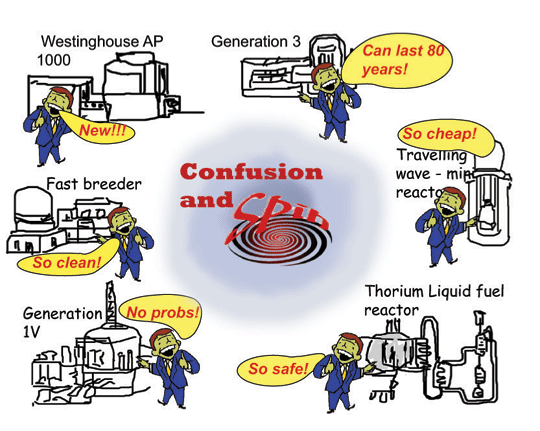
nuClear NewsNo 136 Dec 21, Advanced Reactors , Energy minister Greg Hands told the Nuclear2021 conference organised by the Nuclear Industry Association that the UK will build a high-temperature gas reactor (HTGR) as the centrepiece of its Advanced Modular Reactor Research, Development & Demonstration Programme.
The goal of the research programme is to “prove the potential” of advanced reactors and have a demonstration unit in operation “by the early 2030s, at the latest”. The key focus would be to produce high temperature heat which could be used for hydrogen production, to supply industrial processes and potentially district heating as well as electricity generation.
Several other reactor concepts could have been selected. The emerging category of ‘advanced’ reactors includes the lead-cooled fast reactor, molten salt reactor, supercritical water-cooled reactor, sodium-cooled fast reactor and very-high-temperature gas reactor in addition to hightemperature gas reactors.
Paul Howarth, CEO of the National Nuclear Laboratory (NNL), called it “a further signal of the resurgence of nuclear.” He added, “With the opportunity HTGRs bring to deliver high temperature heat, hydrogen and synthetic fuels, the potential of this technology to help decarbonise our industries and energy grid is significant.” He noted that NNL is “actively working on the fuel, graphite and high temperature materials required for HTGRs.”
The Advanced Modular Reactor Research, Development & Demonstration Programme counts on £170 million of government funding from a £385 million package intended to accelerate development of highly flexible nuclear technologies. (1)
In July the Government sought views on its preference to explore the potential of High Temperature Gas Reactors (HTGRs) for the Advanced Modular Reactor Research Development & Demonstration (AMR RD&D) Programme. It says the call found no significant, additional evidence to materially change the outcome of the Government’s underpinning analysis. As a result, the Programme will focus on High Temperature Gas Reactors with the ambition for this to lead to a HTGR demonstration by the early 2030s at the latest. In parallel, government continues to support the development of all AMRs as part of wider policy on advanced nuclear activities. This includes: opening the Generic Design Assessment (GDA) process to advanced nuclear technologies and developing a siting approach for further nuclear developments. (2) https://www.no2nuclearpower.org.uk/wp/wp-content/uploads/2021/12/nuClearNewsNo136.pdf
Bradwell nuclear project would become vulnerable to sea level rise
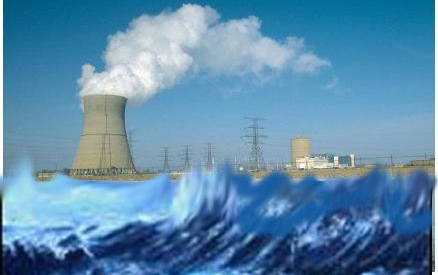
BANNG refutes recent statement by BRB that Bradwell B would be Essex’s
biggest contribution to reduced carbon emissions. Low lying land at
Bradwell would become vulnerable to sea level rise. And Bradwell B would be
unlikely to start operating before the middle of next decade – far too
late to make an appreciable contribution to a net zero 2050. In fact it
would have a negative impact on renewable energy and flexibility.
Maylands Mayl 10th Dec 2021
1 This Month
26 September – International Day for the Total Elimination of Nuclear Weapons





PLEASE OPPOSE HR 8255 AND S.3639 – bills would accelerate satellite deployment, with no environmental review or safeguards – https://ncstd5li.quorum.us/campaign/169331/
To see nuclear-related stories in greater depth and intensity – go to https://nuclearinformation.wordpress.com
-
Archives
- September 2026 (313)
- August 2026 (330)
- July 2026 (355)
- June 2026 (287)
- May 2026 (306)
- April 2026 (356)
- March 2026 (251)
- February 2026 (267)
- January 2026 (308)
- December 2025 (358)
- November 2025 (359)
- October 2025 (375)
-
Categories
- 1
- 1 NUCLEAR ISSUES
- business and costs
- climate change
- culture and arts
- ENERGY
- environment
- health
- history
- indigenous issues
- Legal
- marketing of nuclear
- media
- opposition to nuclear
- PERSONAL STORIES
- politics
- politics international
- Religion and ethics
- safety
- secrets,lies and civil liberties
- spinbuster
- technology
- Uranium
- wastes
- weapons and war
- Women
- 2 WORLD
- ACTION
- AFRICA
- Atrocities
- AUSTRALIA
- Christina's notes
- Christina's themes
- culture and arts
- Events
- Fuk 2022
- Fuk 2023
- Fukushima 2017
- Fukushima 2018
- fukushima 2019
- Fukushima 2020
- Fukushima 2021
- general
- global warming
- Humour (God we need it)
- Nuclear
- RARE EARTHS
- Reference
- resources – print
- Resources -audiovicual
- Weekly Newsletter
- World
- World Nuclear
- YouTube
-
RSS
Entries RSS
Comments RSS

