Anti-nuclear forces gather in Wales
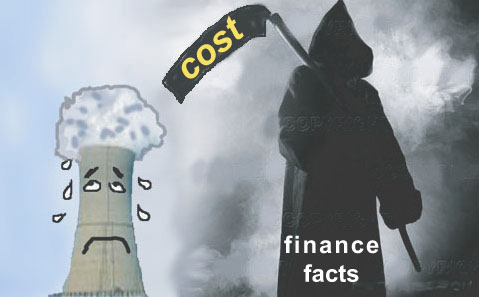
Anti-nuclear campaigners are gathering forces against what they say is a
“repeated narrative” that nuclear energy is viable and helps create
more jobs. PAWB (People Against Wylfa B), CND Cymru, Nuclear Free Local
Authorities, Cymdeithas yr Iaith, CADNO, the Welsh Anti-Nuclear Alliance
and Beyond Nuclear have organised a conference in Caernarfon to air their
views.
North Dot Wales 20th July 2022
Greencoat Capital Investing might be turning yellow – swallowing the climate lies of the nuclear industry.
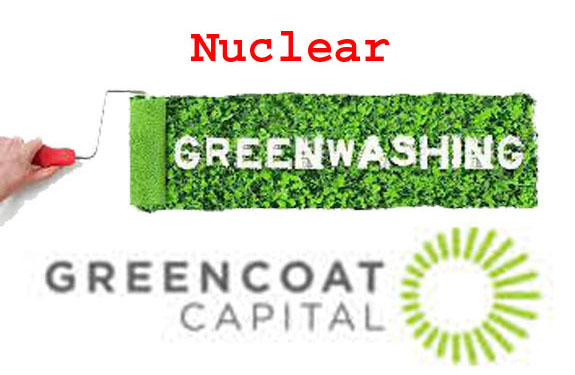
One of Europe’s largest renewable energy investors is considering
creating a nuclear investment fund to take a stake in three of EDF’s
nuclear plants, it has been reported. Greencoat Capital, which currently
has more than £6bn under management and plans to grow over the coming
years, is considering taking a stake in the proposed Sizewell C plant in
Suffolk, according to The Times. The fund could also be invested in the
ongoing Hinkley Point C build in Somerset and the existing Sizewell B
plant.
Construction News 18th July 2022 https://www.constructionnews.co.uk/buildings/sizewell-c-major-fund-mulls-investment-18-07-2022/
Millom and Haverigg being conned by nuclear industry over waste dump, claims former councillor.

A Millom resident, who recently resigned from her local council in disgust
at the shenanigans she witnessed, has claimed that the residents and
elected members of Millom and Haverigg and surrounding villages are
‘being conned’ with lies and false promises from Nuclear Waste Services
and some members of the local South Copeland GDF Community Partnership.
Only last month, Jan Bridget founded the Millom and District against the
Nuclear Dump campaign group as a voice for local people who are opposed to
the proposal to bring a nuclear waste dump to the South-West of Cumbria.
The waste dump or Geological Disposal Facility (as Nuclear Waste Services
prefers to call it) will be final resting place for the high-level
radioactive waste generated by Britain’s civil and military programmes
over the last seventy years.
One catalyst for local opposition has been
NWS’s plan to ‘sound blast’ the Irish Sea to determine if the geology
of the seabed could host the waste dump. Almost 50,000 individuals have
signed an online petition in opposition to the plan, whilst environmental
and conservation groups have registered their concerns that the health of
marine wildlife will be seriously compromised.
To date, the local and national authorities have been deaf to these objections. Over the last
month, the Millom and District group has become an effective local force
opposing plans for a dump. Nearly 400 local people have so far joined, and
members have been active with a protest by 19 local people outside an
NWS-organised community consultation event in Haverigg, and a door-to-door
delivery campaign completed with activists posting almost 5,000 leaflets
through letter boxes. As a member of Millom Town Council, Jan spoke up for
the objectors, but, from the hostile response she received from several
fellow Councillors involved with the Community Partnership, it soon became
clear that her lone voice was unwelcome in the council chamber, and the
atmosphere turned so toxic that Jan felt unable to stay.
NFLA 18th July 2022 https://www.nuclearpolicy.info/news/millom-and-haverigg-being-conned-by-nuclear-industry-over-waste-dump-claims-former-councillor/
Heatwave? No, it’s a national emergency, disrupting lives and threatening our health.

Will Hutton: Heatwave? No, it’s a national emergency, disrupting lives and
threatening our health. The idea of climate change as a distant problem
won’t survive the next stifling week. Tomorrow, as we seek shelter from a
burning sun, climate change will feel all too real.
Britain has suffered ever more vicious storms and floods over the past few years but the next
couple of days will drive home the menacing discontinuity with our idea of
normal, a step change in our collective awareness. The expected heat –
temperatures that may exceed 40C warns the Met Office – are not only a
record, but life-threatening.
Only some 70 parliamentarians turned up to last week’s presentation on climate change led by Sir Patrick Vallance and other scientific officials. None of the Tory leadership candidates was
among them.
The accepted Tory wisdom, driven by its right, is that, at
best, climate change commitments should be deferred until the cost of
living crisis is over – at worst, they should be scaled back indefinitely
or wholly reframed.
Finally, at Friday’s Channel 4 debate, three candidates
publicly committed to the legally enshrined target of net zero by 2050:
Rishi Sunak, Tom Tugendhat and Penny Mordaunt. The right’s frontrunner, Liz
Truss, offered a commitment, but carefully not to a date; and Kemi
Badenoch, the insurgent candidate from the right, wanted the whole issue
reframed.
If Badenoch and Truss were to watch Vallance’s presentation, they
would surely change their view. Global temperatures are rising. So is the
cumulative amount of carbon in the atmosphere. The polar ice caps are
melting at bewildering and accelerating speed. Sea levels are increasing.
So are extreme weather events. All are unambiguously the result of human
influence, says the Met Office.
A global commitment to net zero by 2050
could limit the temperature rise to 1.5C. The right is massively out of
step with science, evolving public opinion and the business opportunities –
a triple whammy of misalignment that will prove deadly.
The science is incontestable. So is our daily experience. What is less discussed is how
acting presents a massive opportunity. Already the best in business and
finance are committed to net zero by 2050. In the City, argument rages
whether it’s best to disinvest completely from fossil fuel companies or to
support them as they transition to a new business model; what is accepted
in a world far from rightwing thinktanks, columnists and chat rooms is that
the change must be made.
On climate change scepticism, the right is
unambiguously wrong – it might not even prove the route to the Tory
leadership. It is certainly not the route to winning general elections.
Observer 16th July 2022
No end to nuclear costs for UK taxpayers
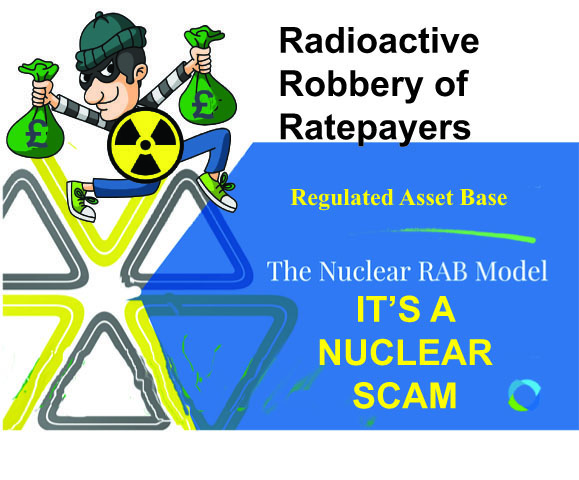
Varrie Blowers unpacks the impacts of the Nuclear Industry (Financing) Act
2022 in BANNG’s Regional Life column for June 2022.
Heard the fantasy about constructing an airport in the Thames estuary? And the one about
constructing a bridge from Scotland to Northern Ireland?
Well, there is a new fantasy going the rounds: that eight new nuclear power stations will be
constructed in the UK in the next decade. And where is the Government proposing to obtain the huge sums required for construction? From your pocket, of course! Under the Nuclear Industry (Financing) Act, 2022, it is intended that in order to attract investors a levy will be added to consumers’ energy bills to pay the upfront costs. Energy Minister, Kwasi Kwarteng, thinks this will be ‘a small amount’ but at this time of
soaring energy bills seems unable to reveal the actual figure. And, on top of this, taxpayers will be paying £1.7bn to enable a large-scale nuclear
plant to achieve a final investment decision in this Parliament.
BANNG 13th June 2022
Nearly 50,000 people have signed a petition calling for a full council debate and vote on the plans for seismic testing in the Irish Sea.
Anti-nuclear waste campaigners have protested over plans for seismic
testing in the Irish Sea. The research, which uses sound waves, is being
carried out to determine if the seabed contains suitable geology for
underground nuclear waste storage. Mid and South Copeland are among areas
in the UK mooted for what is known as a Geological Disposal Facility (GDF).
Nearly 50,000 people have signed a petition calling for a full council
debate and vote on the plans.
BBC 13th July 2022
Office for Nuclear Regulation (ONR) finds shortfalls in EDF’s cybersecurity plans
French energy giant EDF has been placed under ‘enhanced attention’ by the
UK’s Office for Nuclear Regulation (ONR) after identifying shortfalls in
its cybersecurity plans, according to reports this weekend.
The ONR is
taking action due to the findings of routine inspections over the past 12
months. The Telegraph newspaper quoted the body as saying it had
“identified shortfalls in governance, risk and compliance in certain
technical controls” during these inspections. EDF owns and runs the UK’s
network of nuclear power stations at five locations and is currently
building a new nuclear power station at Hinkley Point in Somerset, together
with minority Chinese partner CGN.
The action takes place against a
backdrop of increased awareness of the vulnerability of energy
infrastructure around Europe to cyber-attack. In particular, Russia has
been blamed for cyber-attacks on both windfarms and nuclear power plants in
Europe as part of its invasion of Ukraine.
Info Security 11th July 2022
https://www.infosecurity-magazine.com/news/edf-scrutiny-cybersecurity-record/
Les Echos 11th July 2022
Scotland not impressed with UK Tory government’s enthusiasm for nuclear power

THE Scottish Government has rejected UK Energy Minister Greg Hands plea to “rethink” its stance on new nuclear power stations in Scotland. The Tory minister said it’s a “great pity” Scotland has opposed the construction of any fission power plants amid the cost of living crisis and that he would be willing to sit down with First Minister Nicola Sturgeon and Scottish Energy Secretary Michael Matheson to hear their concerns.
It has been a longstanding Scottish Government and SNP policy to oppose nuclear, with the focus instead on the just transition to renewables.
Hands made the comments during a round table with Scottish journalists in London, where he also said there was no reason to re-assess licences for fossil fuel projects in the North Sea – despite persistent warnings from the United Nations on any more oil and gas fields being brought into production.
Scottish Net Zero Secretary Matheson has previously said safety concerns are the main reason the government has rejected any new nuclear sites, adding that “it is probably the most expensive form of electricity you can choose to produce”.
Following the closure of Hunterston B in North Ayrshire in January, due to cracks found in graphite bricks which make up the reactor core, the only functioning nuclear power station in Scotland is the Torness plant near Dunbar, East Lothian.
The UK Government has said it will not “impose” any new nuclear power on Scotland despite
plans to approve up to eight new fission reactors –by 2030, boosting overall capacity up to 24GW by 2050. But Hands has insisted the Scottish government should reconsider its stance.
When The National pointed out that nuclear power is expensive, takes a long time to be brought online and produces harmful toxic waste, Hands said: “This country has an amazing
safety record when it comes to nuclear. …………………..
. Maggie Chapman, the Scottish Greens MSP for North East Scotland, criticised his comments and said that renewables are “cheaper, cleaner and safer” than nuclear, and are easier to scale up.
She said: “Time and again the Tories have shown that they cannot be trusted with our environment. Nuclear power is neither safe nor reliable, and it leaves a toxic legacy that could last for centuries. “As Hinkley Point shows us, it is also very expensive. Any expansion would take years, and need to be paid for on top of skyrocketing bills.
The National 11th July 2022
New Energy Security Bill waters down regulation for fusion, warns Nuclear Free Local Authorities
As the Nuclear Free Local Authorities have feared, following a pre-Christmas BEIS consultation, the Johnson Government has recently revealed its plans to relax the regulatory regime applicable to future fusion reactors by choosing not to classify them as ‘nuclear installations’.
Fission nuclear reactors are subject to nuclear site licencing requirements overseen by the Office of Nuclear Regulation under the Nuclear Installations Act 1965 (NIA 1965), but government ministers have now decided that fusion plants should instead be regulated by the Health and Safety Executive and Environment Agency like other industrial facilities. The new Energy Security Bill just introduced to Parliament by the Business Secretary will exclude fusion reactors from the provisions of the NIA 1965.
Ministers claim that fusion does not present the same ‘higher hazards’ found in fission plants, but the NFLA fears that their decision is about making the UK attractive to investors in their haste to make the UK a ‘fusion industry superpower’ rather than prioritising public safety.
In its response to the Department of Business, Energy and Industrial Strategy (BEIS) consultation, the NFLA had called for ‘no watering down’ of the regime, challenging the notion that fusion was largely without risk.
For research commissioned by the NFLA revealed that fusion would result in the production of large quantities of radioactive waste, with the risk that radioactive tritium could enter the water supply. Fusion also requires immense temperatures, hotter than the sun, to spark and sustain a fusion reaction and this energy must be safely contained using challenging and unproven engineering solutions. Operation would also result in the whole structure being subjected to prolonged exposure to neutron radiation, a situation which if not carefully monitored could result in the very integrity of the reactor vessel being placed in jeopardy.
The Chair of the NFLA Steering Committee, Councillor David Blackburn, said: “The NFLA’s view is that the government’s decision is misguided. It seems blasé to treat a fusion plant for regulatory purposes in the same way as a factory making chemical products. Fusion presents some of the same hazards and challenges as fission, but some are new; surely then fusion is nuclear and so a plant utilizing this technology must be a ‘nuclear installation’.
“In the view of the NFLA, there is no logical reason on safety grounds not to apply the same regulatory regime to fusion reactors as fission reactors. By signalling through the Energy Security Act their determination to exclude fusion from the rigours of the licencing regime, it seems clear that the present government is more focused on reducing the regulatory and cost burden on investors and commercial operators entering the market, putting expediency and profits before public safety.”
On waste management and decommissioning, the government’s position is even more unclear with ministers calling it ‘premature’ to outline clear proposals at this time, something the NFLA is especially perturbed about.
Councillor Blackburn added: “It is a shame that ministers have missed a trick by refusing to state clearly that future operators will have to share a greater burden of the cost of decommissioning and waste management, rather than passing the bill to the Nuclear Liabilities Fund and ultimately the British taxpayer.”
Macron’s nationalisation of EDF could have major implications for the UK
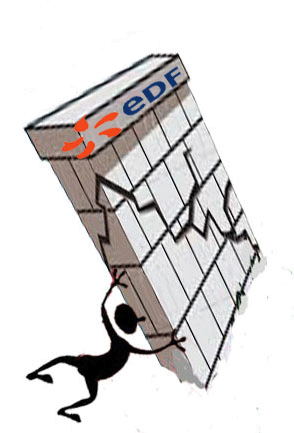
EDF has a more fundamental problem than state ownership can fix: the expense and long build times of nuclear power, compared to other technologies. “[Nationalisation] may change the capacity of the state to directly back the plans, but it doesn’t change the fact that it won’t be profitable,” argues Yves Marignac, at the négaWatt Association think-tank. “Nuclear is profoundly uneconomic. The market has said no,” adds Dr Paul Dorfman, associate fellow at the University of Sussex.
What Macron takeover means for Britain and France’s ‘nuclear renaissance’.
EDF nationalisation could have major implications for the UK’s nuclear fleet. France’s prime minister Elisabeth Borne faced boos and heckling as she set our her government’s plans to the National Assembly last week, striving for coalition after President Emmanuel Macron lost his outright majority in June.
High on her list was an announcement for France to take full ownership of its debt-laden energy giant EDF, as the weakened president tries to tackle the deepening energy and cost of living crisis
rippling across Europe amid the war in Ukraine.
Across the Channel, political turmoil was also affecting EDF. An announcement on planning approval for its Sizewell C nuclear project in Suffolk was pushed back until July 20 amid the chaos surrounding Boris Johnson’s resignation.
The company has a massive role in the UK’s energy sector, as owner of the UK’s nuclear fleet and only developer currently forging ahead with the country’s nuclear renaissance. Yet ballooning debts, outages and delays have raised doubts about its abilities on both sides of the Channel.
Will nationalisation in France be enough to fix its problems? The company’s problems stretch back beyond the turmoil in energy markets this year. Its debts of €43bn have swelled over several years amid high capital costs and spells of low electricity prices. Each year, EDF has to sell a chunk of its output at a fixed price to rivals, under state efforts to encourage competition.
Meanwhile, development of its flagship next-generation EPR reactors has been troubled. Though the first EPR power plant started running in China in 2018, one of its units has had to be shut for repairs due to cracked fuel rods. EDF says the problems have been “investigated and understood” and a solution found, with no risk posed to people or the environment. A second plant opened in Olkiluoto, Finland, in March – more than 10 years late and €8bn over budget. A third EPR in Flamanville, France, is running more than a decade behind schedule.
Meanwhile, Hinkley Point C, the new EPR power plant that EDF is building in Somerset, is now not expected to start generating until June 2027, with the pandemicdisrupting work. Sceptics of nuclear power argue EDF has a more fundamental problem than state ownership can fix: the expense and long build times of nuclear power, compared to other technologies. “[Nationalisation] may change the capacity of the state to directly back the plans, but it doesn’t change the fact that it won’t be profitable,” argues Yves Marignac, at the négaWatt Association think-tank. “Nuclear is profoundly uneconomic. The market has said no,” adds Dr Paul Dorfman, associate fellow at the University of Sussex.
Telegraph 10th July 2022
US nukes in UK ‘would provoke Putin and put Britons on front line in any nuclear war’
THE RETURN of US nukes to the UK would be “insanely provocative” and put Britons on the front line of a nuclear war, it has been claimed.
https://www.express.co.uk/news/uk/1636941/vladimir-putin-russia-us-nuclear-weapons-lakenheath-return-latest By JON KING. Jul 9, 2022 US Government budget papers revealed earlier this year that vaults at RAF Lakenheath in Suffolk are being upgraded so they can store B61-12 nuclear bombs. The air base received the latest nuclear capable fighter jet, the F-35A, in December with 48 expected to be stationed there.
Hans Kristensen, Director of the Nuclear Information Project at the Federation of American Scientists, spotted the US Department of Defense had added the UK to a list of NATO nuclear weapons storage locations.
RAF Lakenheath has been home to US nuclear weapons in the past and has been undergoing upgrade work amounting to £600million, most of which is paid for by US taxpayers.
The Ministry of Defence (MoD), however, has neither confirmed nor denied that US nuclear weapons are in Britain or going to come to UK shores.
CND General Secretary Kate Hudson, commenting on US nuclear weapons coming to Britain, told Express.co.uk: “We should be very worried by this. Allowing the US to bring these weapons back to Britain is a very dangerous development.
“It would be insanely provocative. It would put us even more on the front line in any nuclear exchange. To have new, US [nuclear weapons] here when there’s a considerable possibility of a war between NATO, the US, and Russia – it is very, very dangerous.
“We hope the US will pull back from any actual deployment.”
An MOD spokesperson said: “It is NATO and UK policy to neither confirm nor deny the presence of nuclear weapons at a given location.”
It comes at a time of heightened tensions between Russia and the West with Russian President Vladimir Putin having put his country’s nuclear deterrent on alert at the beginning of the war in Ukraine.
Russia’s foreign ministry said last month Moscow would supply ally Belarus with missile systems capable of carrying nuclear weapons.
Former Russian President Dmitry Medvedev told the United States on Wednesday (July 6) attempts by the West to punish a nuclear power such as Russia for the war in Ukraine risked endangering humanity.
Commenting before Boris Johnson announced he was stepping down as leader of the Conservative Party, Ms Hudson accused the PM of being a “vociferous advocate” of escalating the war against Russia and putting Britain in a “very dangerous” position.
She continued: “If that continues, it is likely we will have a nuclear exchange. It is pretty impossible to imagine Britain would not be at the front of that exchange, knocking out Lakenheath and Faslane.”
Nationalisation of French energy giant EDF means it is unlikely to spearhead future nuclear power projects in UK, according to top industry insider
By FRANCESCA WASHTELL, FINANCIAL MAIL ON SUNDAY,
The nationalisation of French energy giant EDF means it is unlikely to spearhead future nuclear power projects in the UK, according to a top industry insider.
The Hinkley Point C developer will instead focus investment on reactors in France, the source said.
French Prime Minister Elisabeth Borne announced last week that the state would buy the 16 per cent of shares in EDF it does not already own.
EDF, one of Britain’s big household energy suppliers, will continue work on Hinkley in Somerset, as well as Sizewell C in Suffolk, which is still being approved by the UK Government.
But the source said EDF would now shift its focus to France as it battles the energy crisis sweeping Europe, adding: ‘The odds of it putting money into another UK plant are incredibly small.
‘This has been a long time coming because being fully nationalised means it can put more money into French projects without having to worry about state aid.’ ……………………………… https://www.thisismoney.co.uk/money/markets/article-10998301/Nationalised-EDF-wont-build-new-nuclear-sites-UK.html
Fears environment bills could be sidelined in Tory leadership race
Greg Clark is now being given the task of deciding on the proposed
Whitehaven coalmine in Cumbria but has not worked in the department for
years. On Thursday the government also announced it was postponing for a
second time a decision on whether to approve the £20bn Sizewell C nuclear
power plant in Suffolk. The treasury, with its new chancellor, Nadhim
Zahawi, is to decide whether to go ahead with a windfall tax on oil and gas
companies. A decision on this is due next week, and while it is a popular
measure with voters it is unknown whether Zahawi will press ahead with it,
and whether he will remove the loophole that would provide tax relief for
new oil and gas. There could also be a wait of some time for a government
response to the fracking review. The British Geological Survey has given
its report on the safety and feasibility of fracking to the Department for
Business, Energy and Industrial Strategy (BEIS), but the results will not
be seen until the government responds to it, with BEIS sources saying they
do not know when that will be. BEIS will also have to deal with the cost of
living and energy crises, with insulation measures and direct support for
the poorest households the most urgent priority. The energy security bill
is also coming, with an opportunity to overhaul the energy market so the
low cost of renewable electricity feeds through to consumers. Greenpeace
UK’s policy director, Doug Parr, said: “No matter how dire things may
seem in Westminster right now, when it comes to the climate crisis things
risk getting much worse without immediate action. However, delays to
decisions on whether or not to backtrack on coal and build a new mine, or
waste untold time and money on a new nuclear power station that will only
distract from genuine energy solutions, could be taken as positive, if they
were set to be given the green light as rumours suggest. “This
parliamentary reset must deliver a new prime minister that will take bolder
action on climate and nature. They must invest in real solutions like
cheap, clean, homegrown renewables and fixing the vast number of cold,
damp, energy-wasting homes. If not, we may lose even more time and find
ourselves in a far worse position than we already are.”
Guardian 9th July 2022
Sizewell C – just the latest nuclear scam
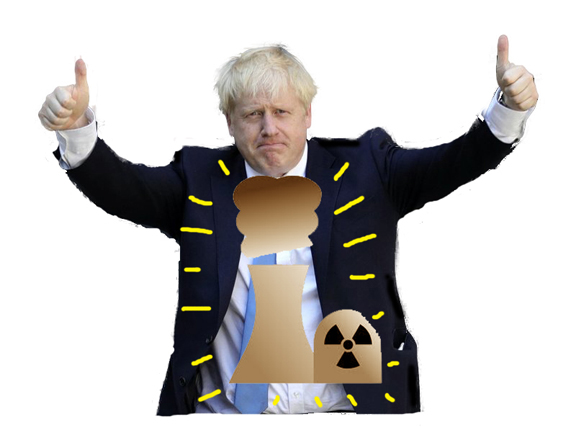
Whatever chaos unfolds between today (Thursday) and tomorrow, Boris
Johnson is apparently still planning to confirm his Government’s
commitment to a new nuclear power station at Sizewell tomorrow.
As we all know, Johnson’s default political tactic is to lie, regardless of which
particular issue or crisis he’s having to address. For those who’ve
made something of a labour of love tracking Johnsonian mendacity, watch out
for this latest nuclear nonsense tomorrow – it’s absolutely guaranteed
to be brimful of outright lies, half-truths, omissions and rhetorical
boosterism of the kind that has made him (probably!) the least trustworthy
politician in the world apart from Vladimir Putin.
On this occasion, that’s simply because this whole ‘nuclear renaissance’ story is one
great big scam from start to finish. If I could count the ways,
anticipating the lying drivel that will be emerging from the BEIS press
release.
Jonathon Porritt 7th July 2022
http://www.jonathonporritt.com/sizewell-c-just-the-latest-nuclear-scam/
Why would anybody invest in Sizewell C nuclear plant? – An unlikely proposition?
Why would anybody invest in Sizewell C nuclear plant? – An unlikely
proposition? The Government has tasked Barclays Bank with finding investors
for the proposed Sizewell C (SZC) plant.
Reports surfaced in the Mail on
Sunday that Centrica is planning on taking a stake in the company. Perhaps
the fact that the report emerged in the Mail on Sunday rather than the
Financial Times is a sign that the decision is still subject to vagaries.
This report has me scratching my head so hard it hurts!
Why would Centrica,
which in 2016 abandoned plans to invest in Hinkley C partly because of
‘the lengthening time frame for a return on the capital invested in a
project of this scale‘ now opt for an investment in SZC? After all the
doubt about return on investments in SZC may be viewed as, if anything,
even more threadbare, to that of Hinkley C.
100% Renewables 7th July 2022
1 This Month
Chernobyl: The Lost Tapes – A good documentary on Chernobyl on SBS available On Demand for the next 3 weeks– https://www.sbs.com.au/ondemand/tv-program/chernobyl-the-lost-tapes/2352741955560

of the week–London Campaign for Nuclear Disarmament

Tell the Ukrainian Government to Drop Prosecution of Peace Activist Yurii Sheliazhenko
To see nuclear-related stories in greater depth and intensity – go to https://nuclearinformation.wordpress.com
-
Archives
- April 2026 (152)
- March 2026 (251)
- February 2026 (268)
- January 2026 (308)
- December 2025 (358)
- November 2025 (359)
- October 2025 (376)
- September 2025 (257)
- August 2025 (319)
- July 2025 (230)
- June 2025 (348)
- May 2025 (261)
-
Categories
- 1
- 1 NUCLEAR ISSUES
- business and costs
- climate change
- culture and arts
- ENERGY
- environment
- health
- history
- indigenous issues
- Legal
- marketing of nuclear
- media
- opposition to nuclear
- PERSONAL STORIES
- politics
- politics international
- Religion and ethics
- safety
- secrets,lies and civil liberties
- spinbuster
- technology
- Uranium
- wastes
- weapons and war
- Women
- 2 WORLD
- ACTION
- AFRICA
- Atrocities
- AUSTRALIA
- Christina's notes
- Christina's themes
- culture and arts
- Events
- Fuk 2022
- Fuk 2023
- Fukushima 2017
- Fukushima 2018
- fukushima 2019
- Fukushima 2020
- Fukushima 2021
- general
- global warming
- Humour (God we need it)
- Nuclear
- RARE EARTHS
- Reference
- resources – print
- Resources -audiovicual
- Weekly Newsletter
- World
- World Nuclear
- YouTube
-
RSS
Entries RSS
Comments RSS
 nuclear-news