Russia marketing nuclear fuel to USA !!
 Will The Russians Become Fuel Supplier To U.S. Nuclear Power
 Plants? http://www.forbes.com/sites/kenrapoza/2016/05/31/will-the-russians-become-fuel-supplier-to-u-s-nuclear-power-plants/#413acf8f2638 Kenneth Rapoza , 31 May 16,
It’s not unprecedented. While the U.S. does not currently use Russian technology at any of its nuclear power stations, a deal between Global Nuclear Fuel Americas and TVEL would be the first to make it happen. Global Nuclear Fuel-Americas is a GE-led joint venture that includes its main nuclear power plant partner Hitachi and rival Toshiba, which owns Westinghouse.
Under the agreement proposed May 24, GE partners and TVEL will “work together toward the licensing, marketing and fabrication of fuel” for U.S. pressurized water reactors (PWRs). Global Nuclear Fuel and TVEL would create a strategic alliance with the purpose of introducing the Russian fuel rods into the U.S. market.
“We believe strongly in the TVEL technology,” said Jonathan Allen, a spokesman for GE Hitachi.
TVEL’s latest nuclear fuel assembly technology is for use in Westinghouse-designed reactors. There are currently 35 of these reactors operating in the U.S., but none of them are allowed to use TVEL’s technology because it has not yet been approved U.S. nuclear industry regulators. The assembly rod, known as the TVS-K design, has been used for many years in Rusatom’s VVER-1000 nuclear power plants at 78 nuclear power reactors in 15 countries, most of them in the former Soviet bloc.
“This (deal gives) additional diversification of fuel supplies to U.S. reactors,” said Oleg Grigoryev, Vice President of Commerce and International Cooperation at TVEL.
Russia’s entrance into the U.S. market comes at a time when its partner in the deal, Toshiba, is also trying to capture some of TVEL’s market share in Finland, Czech Republic, Bulgaria and Ukraine. Washington has actually lent support to Westinghouse in sales pitches to governments looking to move out of Russia’s energy orbit. A move to bring Russian technology to the U.S. could also be seen as a fig leaf to Moscow, which has been locked in an energy security battle for Europe over the last year.
Opening the U.S. market to Russian tech would be the same as the traditional Russian markets, including Ukraine, opening up to Westinghouse.
Fuel assembly rods are essentially the batteries of nuclear power plants. They hold the uranium that goes into the reactor that generates electricity. Westinghouse is TVEL’s biggest competitor. But Chinese developers, working close with Westinghouse and Toshiba in China in a tech sharing deal, are also moving up market and could become rival suppliers at some point in the future.
TVEL has a roughly 17% global market share of fuel assemblies, with Westinghouse and Areva competing for first place with close to 30%.
Russia flogging nuclear to Africa
More African countries interested in nuclear energy: Russia, SABC News,31 May 2016 Amina Accram, Moscow “…….8th annual ATOM EXPO and conference currently underway in Moscow Russia…….. The Nigerian government aims to electrify at least eighty percent of its population by the year 2035. It is now investing in nuclear energy to meet this target. …General Director Atomic Energy Commission in Nigeria Frannklin Osaisai says Nigeria is seeking to diversify its economy by increasing agriculture output. It will use nuclear technology to advance this. …….
Russia flogging nuclear to Nigeria
Rosatom to prepare agreement on nuclear power plant project in Nigeria http://tass.ru/en/economy/879335 May 31, MOSCOW, Russian state nuclear corporation Rosatom will prepare an agreement on construction of a nuclear power plant in Nigeria, first deputy head of Russian state owned nuclear corporation Rosatom Kirill Komarov said at the Atomexpo 2016 forum.
“We established a joint coordination committee. We have already held the first meeting of the committee and plan to hold a second meeting this summer,” he said, adding that he hopes the sides will prepare an agreement on the development of the project, he said.
According to him, this document will determine further steps on implementation of the project on construction of nuclear power plants in Nigeria.
Russia flogging nukes to Bolivia
 Agreement on Bolivia’s nuclear research center may be signed at SPIEF MOSCOW, May 31. /TASS/. An agreement on construction of a nuclear research center in Bolivia may be signed at the Petersburg International Economic Forum due to be held in June 2016, Kirill Komarov, the first deputy CEO of Russia’s state nuclear corporation Rosatom, said on Tuesday.
“We are set for very serious work. Soon, we plan to sign an agreement on the project implementation, to sign an agreement on the site examination,” he said. “It is not ruled out that some of our documents will be signed in a span of two weeks, at the Petersburg Economic Forum.”…….
Russia and Bolivia signed intergovernmental agreements on cooperation in the area of peaceful use of nuclear energy and on cooperation in the construction of a nuclear research and technology center on March 6…….http://tass.ru/en/economy/879346
UK: Secrecy over nuclear waste plans regarding EDF’s Hinkley Point deal
 EDF’s Hinkley Point deal over radioactive waste sparks anger https://www.theguardian.com/business/2016/may/30/edf-hinkley-point-deal-radioactive-waste-sparks-anger?utm_source=esp&utm_medium=Email&utm_campaign=GU+Today+main+NEW+H+categories&utm_term=174833&subid=12125&CMP=EMCNEWEML6619I2
Expert criticises ministers over refusal to disclose agreement with energy supplier for planned nuclear plant Guardian, Terry Macalister, 31 May 16, A furious row has broken out after the Department of Energy and Climate Change (DECC) refused to disclose the arrangement with EDF for dealing with radioactive waste at the planned Hinkley Point C nuclear plant.
The information commissioner’s office has turned down a freedom of information (FoI) request for state aid arrangements between the UK and the European commission to be made public.
The FoI complainant, David Lowry, has launched an appeal, claiming it is in the public interest for British citizens to be able to judge whether their government had made the right decision about the new reactors in Somerset.
Lowry, a British-based senior research fellow with the Institute for Resource and Security Studies in the US, said: “I do not believe the balance of judgment should be in favour of a foreign company, EDF Energy, who will potentially make huge multibillion-pound financial gain from the continued non-disclosure, and hence non scrutiny, over myself as a British tax and electricity bill payer.”
The government said that anyone building new reactors in Britain must manage and pay for the cost of handling waste products, unlike the existing situation where all radioactive materials are effectively dealt with through the public purse via the Nuclear Decommissioning Authority.
However, although the operator must agree to take responsibility for the spent fuel and other radioactive waste, the cost is expected to be passed on to the domestic electricity user through higher bills.
Under the new arrangements, the prospective nuclear operators must enter into a waste transfer contract (WTC). Those contracts, like the one covering Hinkley, must be submitted for scrutiny by the EC under its state aid rules. It is the pricing methodology of the WTC that Lowry wished to review and which remains under wraps.
Greenpeace said Lowry raised critical issues that went to the heart of whether the £18.5bn project was good or bad value for the taxpayer and British energy consumers.
John Sauven, the executive director of Greenpeace, said: “The government has repeatedly said that Hinkley is great news for the British public and our energy security. But they refuse to back this up with hard evidence. In fact, DECC is incredibly cagey and is failing to answer questions on where the dangerous radioactive waste will go or how much Hinkley will cost us.
“If Hinkley is such a good deal, it should be no problem for the government to release the information to prove it. Their failure to do so leaves us to believe that their assumptions are correct – it’s a terrible deal for bill payers and they simply don’t know what to do with the nuclear waste.”
DECC turned down the original request under regulation 12(5)(a) of the Environmental Information Regulations 2004 arguing, “disclosure would adversely affect international relations, defence, national security or public safety”.
This argument was accepted by the information commissioner who believed that disclosure of the state aid discussions with the EC “would adversely affect the relationship between the (UK) government and the commission’s ability to work effectively together”.
Lowry said he thought the real reason the government did not want to disclose the information was to save ministers from embarrassment. “I think the concern is if the truth were to come out with documents being made public would adversely affect the credibility of the government submissions as their threadbare content would be laid bare for all to see,” he said.
DECC declined to comment, saying it was a matter for the information commissioner.
Russia halts nuclear waste disposal from Ukraine

 https://www.rt.com/business/344821-russia-halts-nuclear-waste-disposal/ 30 May, 2016 Russia’s state nuclear agency Rosatom has stopped removing spent nuclear fuel from Ukraine because bills have been unpaid, said nuclear decommissioning executive Oleg Kryukov. There are problems related to Ukraine’s payments,” he said, adding that the first shipment of nuclear waste for disposal has been postponed.
Kryukov affirmed the agency plans to continue disposing of nuclear waste already in Russia for processing.
“We have a contract with Ukraine on storing spent nuclear fuel and its recycling. We are going to continue with the contract, although the Ukrainian side plans to build its own warehouse for spent fuel without recycling,” he said on the sidelines of the Atomexpo-2016 forum.
Under the agreement signed between two countries in 1993, Russia supplies reactor fuel to Ukraine and takes spent fuel rods for storage and reprocessing.
A year ago, Ukraine said it planned to invest $25 million in a centralized spent nuclear fuel storage facility at the Chernobyl nuclear power plant.
Kiev is currently trying to attract Western investors to kick-start the project.
Russia’s backyard a hotbed of nuclear danger – Armenia
 Dangerous Nuclear Security Failures in Russia’s Backyard Armenia is gambling with nuclear safety. National Interest Petra Posega May 30, 2016 Nuclear security is seemingly at the forefront of global attention, but the large framework of international safeguards is increasingly perceived as a toothless tiger. In the contemporary age, where asymmetric threats to security are among the most dangerous, the time is nigh to mitigate the risk of rogue actors having potential access to materials that are necessary to develop nuclear weapons.
Nowhere is this urgency more pivotal than in already turbulent areas, such as the South Caucasus. With many geopolitical instabilities, lasting for decades with no completely bulletproof conflict resolution process in place, adding the threat of potential nuclear weapons means creating a house of cards that can cause a complete collapse of regional peace and stability. That is precisely why Armenia’s recently uncovered recurring actions toward the goal of building its own nuclear capacity must be addressed more seriously. They should also attract a bolder response to ensure safety of the region is sustained.
According to a report by the Vienna-based nuclear watchdog the International Atomic Energy Agency (IAEA), Armenia has established a record of illegal trafficking in nuclear and other radioactive materials. There have been several serious incidents spanning from 1999 onward. A large number of reported incidents has occurred on the country’s border with Georgia, leading the IAEA to conclude there is high probability that a so-called Armenian route does in fact exist. There is a further evidence to support this assertion. An unusually high number of Armenians have been caught in nuclear trafficking activities. Additionally, some of the incidents that made their way into the official reports suggest that the main focus of trafficking activities is the smuggling of materials that could be used for nuclear weapons. There were also reports suggesting the trafficking of other radioactive materials that could be used for alternate purposes, such as building a so-called dirty bomb. Since the stakes are always high with nuclear weapons, this threat must not be underrated and dismissed too easily……..
It is worrying that some of the nuclear material that was trying to find its way into Armenia through South Ossetia has been, at least according to some reports, traced back to Russian nuclear facilities. This is of course no small wonder, since Russia is the official supplier of nuclear fuel for the only nuclear power plant in Armenia—the Metsamor nuclear plant, which supplies roughly 40 percent of the country’s electricity.
But the reactor itself demonstrates another facet of the nuclear threats that Armenia poses, namely, nuclear safety threats. The reactor is extremely outdated, and there are no proper safeguards and safety mechanisms installed to ensure adequate monitoring of its operations and recognition of potential faults in the system.
The world just marked the thirtieth anniversary of the devastating Chernobyl accident, and it is unsettling to know there is high risk of a similar disaster in an adjacent area. …. http://nationalinterest.org/feature/dangerous-nuclear-security-failures-russias-backyard-16392?page=2
Nuclear concerns hold back Apple data centre plans in Ireland
Alice MacGregor Tue 31 May 2016 Apple is being questioned over its site selection for a new Irish data centre, with opponents arguing that the proposed €850 million (approx. £648 million) server farm would be located too close to nuclear facilities in Wales and Cumbria.
Oscar Gonzalez, Apple’s head of data centre site selection, came against arguments from a group including engineer Allan Daly at an oral hearing last week. Daly raised the issue that Apple requires that new centres be at least 320km from any nuclear facility in the UK – and was concerned that the proposed Irish site would not meet this specification……..https://thestack.com/data-centre/2016/05/31/nuclear-concerns-hold-back-apple-data-centre-plans-in-ireland/
Germany readying law on nuclear waste storage costs
BERLIN – The German Cabinet plans to approve a draft law on Aug. 3 that will require its utilities to pay billions of euros into a state fund to help cover the cost of nuclear storage, according to an Economy Ministry timetable seen by Reuters on Monday.
A commission recommended in April that Germany’s “big four” power firms — E.ON, RWE, EnBW and Vattenfall — pay a total €23.3 billion ($26 billion) to remove unwanted long-term liability for the storage of nuclear waste.
The commission asked utilities to transfer provisions set aside for storage sooner than expected, starting with a first instalment totalling €17.2 billion no later than early 2017. The government is widely expected to adopt the commission’s proposals.
The legacy costs stem from Germany’s decision to end nuclear power by 2022 following the start of Japan’s Fukushima disaster five years ago.
The Bundestag lower house of parliament is due to vote on the law in early November and to be debated in the upper house at the end of November, the timetable showed.
Exposing the vulnerability of Scottish nuclear facilities to terrorist attack
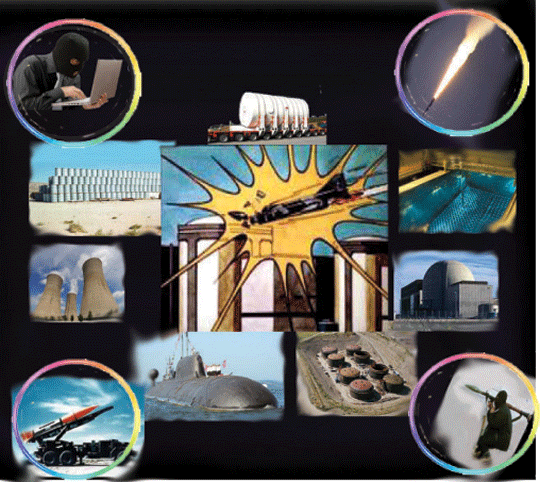 Nuclear-Free Local Authorities say Scottish nuclear facilities are vulnerable to terrorist attack Herald Scotland, Rob Edwards 29 May 16, UK authorities are underestimating the risks of devastating terrorist attacks on nuclear plants and shipments of radioactive material, according to an expert report seen by the Sunday Herald.
A new analysis for the 40-strong group of Nuclear-Free Local Authorities (NFLA) highlights the vulnerability of Scottish nuclear facilities at Faslane, Hunterston, Torness and Dounreay to mass drone strikes, sophisticated cyber attacks and terrorist infiltrators.
UK authorities are underestimating the risks of devastating terrorist attacks on nuclear plants and shipments of radioactive material, according to an expert report seen by the Sunday Herald.
A new analysis for the 40-strong group of Nuclear-Free Local Authorities (NFLA) highlights the vulnerability of Scottish nuclear facilities at Faslane, Hunterston, Torness and Dounreay to mass drone strikes, sophisticated cyber attacks and terrorist infiltrators.
“The main consequences would be, whatever the level of attack, mass public panic and sensationalist media reportage,” he says. “We would inevitably see total road gridlock, as everyone tries to flee by car en masse at once.”
His report argues that a series of unidentified drone flights over French nuclear power stations last summer “should be seen as a major wake-up call for the nuclear industry”. Drones could carry shaped charges, poison gas, booby traps or decoys, and could come individually or in large groups.
Hinkley nuclear project’s future is in doubt – French unions not happy with Hinkley plan


 Hinkley Point: French unions put nuclear plant’s future in doubt By Jake Morris & Chris Cook BBC Newsnight 27 May 2016
The future of the planned new nuclear power plant at Hinkley Point remains in doubt as key French unions still oppose the project, BBC Newsnight has learned.
EDF, which would build the plant, had delayed a decision on the project in Somerset until the summer while it consulted French union representatives.
The company, which is 85% French state-owned, had hoped to win support from a committee of workplace representatives.
But the committee said staff had not been reassured about the plant’s costs.
Trade union representatives hold six of the 18 seats on EDF’s board.
‘Several reservations’
Jean-Luc Magnaval, secretary of the Central Works Committee that EDF consulted with, told Newsnight that staff feared the cost of the project would cripple EDF.
He said: “We have reservations about several aspects of the project: organisation, supply chain, installation, and procurement.
“The trade unions are unlikely to give their blessing to the project in its current state.
“We are not reassured by the documents we have received. We have been given a marketing folder, not the full information we require.
“We got the documents on 9 May – we are sending EDF a request for more explanations.”…….
EDF chief executive Vincent de Rivaz also told MPs on the committee that he did not know when a final decision on the project would be made…….
While one third of the £18bn capital costs of the project are being met by Chinese investors, Hinkley Point would remain an enormous undertaking for the stressed French company……..http://www.bbc.com/news/business-36394601
Nuclear spruikers head to Cumbria for a marketing talkfest
Carlisle to host two-day Cumbria Nuclear Conference, News & Star, 27 May 2016 The nuclear industry is coming to Carlisle this autumn, when the city hosts the first Cumbria Nuclear Conference.
The two-day event on September 21 and 22 will attract movers and shakers from across the sector and highlight the opportunities – and challenges – to businesses arising from the new nuclear plant at Sellafield.
Speakers confirmed include NuGen chief executive Tom Samson, energy minister Andrea Leadsom, the former defence secretary and Barrow MP Lord Hutton, and John Clarke, chief executive of the Nuclear Decommissioning Authority.
Carlisle MP John Stevenson has organised the event. He said: “Nuclear is a big opportunity for Cumbria – that much is widely recognised.
“But how we do maximise the benefits for the county? That’s what the conference will address. We need to raise awareness of the opportunities.”…….
NuGen – a partnership between Toshiba of Japan and the French energy company ENGIE – has plans to build three Westinghouse AP1000 reactors…….NuGen is due to make a final decision on whether to proceed with the Moorside project in 2018 and had hoped to start construction two years later and have the first reactor on stream by 2024, although it now says the target date has slipped to 2025……
UK governmnet not deciding on Hinkley nuclear station anytime soon
No deadline set for final decision on Hinkley nuclear plant Energy minister tells MPs that no time limit has been set for EDF to make a final investment decision on the much-delayed nuclear plant, Guardian, Damian Carrington 24 May 16
The UK has set no deadline for the final go-ahead to the much-delayed Hinkley Point C nuclear plant, energy minister Andrea Leadsom told a committee of MPson Tuesday.
The head of the company aiming to build the new reactors, French state-owned EDF, told the same hearing he could not give a date for the decision nor confirm that it would start generating electricity in 2025, as previously pledged.
If built, the £18bn plant would generate 7% of the UK’s electricity and is a central plank of the government’s energy policy. EDF originally promised UK customers they would be cooking their Christmas turkeys with power from Hinkley by 2017. But the schedule has repeatedly slipped, amid concerns over the cost and difficulty of the project, which has led to questions about how the UK would keep the lights on without Hinkley……..
The energy secretary, Amber Rudd, said in April that a failure to build Hinkley would not mean the lights going out… http://www.theguardian.com/environment/2016/may/24/edf-no-deadline-set-for-final-decision-on-hinkley-nuclear-plant
Timing is all important, for iodine tablets to be effective against ionising radiation
North Rhine-Westphalia prepares for Belgium nuclear accident with iodine tablets, DW, 2q4 May 16“…….In the case of a nuclear disaster, timing is paramount in the administration of iodine tablets. The medication works by supplying the thyroid gland with a concentrated amount of “healthy” iodine. In theory, this should prevent the gland from absorbing any radioactive iodine released into the air in a nuclear accident.
Taken too early, however, “healthy” iodine will already have been partially or even completely broken down. Taken too late, the radioactive iodine will have already been absorbed by the thyroid – potentially increasing the risk of thyroid cancer.
The only nuclear accident to date, which called for the use of iodine tablets was the 1986 Chernobyl disaster. In Poland, some 10.5 million children and 7 million adults were successfully administered the “healthy” iodine, with later examinations reaping only positive results. In Belarus, however, where no iodine tablets were administered, thyroid cancer in children – which is usually extremely rare – was reported 100 times higher than normal. http://www.dw.com/en/north-rhine-westphalia-prepares-for-belgium-nuclear-accident-with-iodine-tablets/a-19279950
Sweden heads for 100% renewable energy

 Sweden phases out fossil fuels in attempt to run completely off renewable energy Sweden’s prime minister announced his country will work towards becoming ‘one of the first fossil fuel-free welfare states of the world’, Independent, 25 May 16 Samuel Osborne @SamuelOsborne93 Renewables account for over half of Sweden’s energy, while the UK has one of the lowest renewable energy shares in Europe.
In 2015, Sweden’s prime minister announced his country will work towards becoming “one of the first fossil fuel-free welfare states of the world,” in a speech to the UN General Assembly.
Between 2013 and 2014, 51.1 per cent of Sweden’s energy needs were met by renewables, according to data from Eurostat and the Renewable Energy Directive.
As the chart by Statista shows, [on original] Sweden’s renewable energy share (RES) was larger than that of many other European nations. ……http://www.independent.co.uk/news/world/europe/sweden-phases-out-fossil-fuels-in-attempt-to-run-completely-off-renewable-energy-a7047306.html?utm_content=bufferb00d8&utm_medium=social&utm_source=twitter.com&utm_campaign=buffer
1 This Month




Shut down the radiation-damaged Heysham nuclear reactors now
To see nuclear-related stories in greater depth and intensity – go to https://nuclearinformation.wordpress.com

Say No to NASA’s Reckless Nuclear Reactor on the Moon
Say No to NASA’s Reckless Nuclear Reactor on the Moon
-
Archives
- October 2026 (302)
- September 2026 (339)
- August 2026 (330)
- July 2026 (355)
- June 2026 (287)
- May 2026 (306)
- April 2026 (356)
- March 2026 (251)
- February 2026 (267)
- January 2026 (308)
- December 2025 (358)
- November 2025 (359)
-
Categories
- 1
- 1 NUCLEAR ISSUES
- business and costs
- climate change
- culture and arts
- ENERGY
- environment
- health
- history
- indigenous issues
- Legal
- marketing of nuclear
- media
- opposition to nuclear
- PERSONAL STORIES
- politics
- politics international
- Religion and ethics
- safety
- secrets,lies and civil liberties
- spinbuster
- technology
- Uranium
- wastes
- weapons and war
- Women
- 2 WORLD
- ACTION
- AFRICA
- Atrocities
- AUSTRALIA
- Christina's notes
- Christina's themes
- culture and arts
- Events
- Fuk 2022
- Fuk 2023
- Fukushima 2017
- Fukushima 2018
- fukushima 2019
- Fukushima 2020
- Fukushima 2021
- general
- global warming
- Humour (God we need it)
- Nuclear
- RARE EARTHS
- Reference
- resources – print
- Resources -audiovicual
- Weekly Newsletter
- World
- World Nuclear
- YouTube
-
RSS
Entries RSS
Comments RSS

