Woes of France’s nuclear company AREVA, as it splits into three
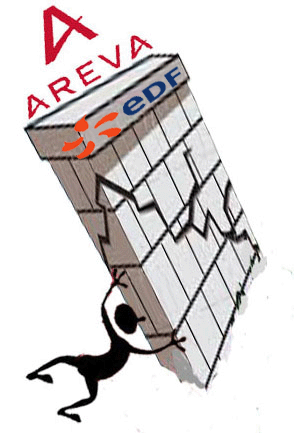
 French firm involved in Hinkley Point C unveils restructure plan Areva, a 10% equity participant in the Somerset scheme, reveals plans to split into three to stem losses and isolate Finnish project, Guardian, Terry Macalister, 16 June 16, Areva, one of the French companies at the heart of the controversial Hinkley Point C nuclear project, has unveiled plans to break itself up into three parts in a bid to stem huge losses.
The 87% state-owned atomic engineering and uranium mining company is hoping to raise €9bn (£7bn) from the government and from selling off assets after running up losses of €2bn last year.
Areva, a 10% equity participant in the £18bn planned new Hinkley scheme, is also using the split to isolate financial commitments to a hugely delayed project at Olkiluoto in Finland……
EDF, which is also part-owed by the French state, has its own massive debt problems and had refused to buy part of Areva, as ministers wanted, unless it could take the business without any financial commitments for the Olkiluoto 3 scheme.
Areva, which is providing the same European pressurised water reactor for Olkiluoto as is planned for Hinkley, is currently in a standoff over competing legal claims with the Finnish utility TVO relating to the project in Finland…….
A formal decision to go ahead with the investment at Hinkley has been put off until September amid internal opposition at EDF from unions and others about the wisdom of taking on such a major financial commitment……..https://www.theguardian.com/business/2016/jun/15/french-firm-involved-in-hinkley-point-c-unveils-restructure-plan
Radioactive material at popular UK beach near Sizewell nuclear station
 NUCLEAR LEAK ALERT Traces of radioactive material found at seaside beauty spot near decommissioned nuclear site Suffolk’s Southwold beach is the second to be hit by contamination in two months, The Sun UK BY CHARLIE PARKER 17th June 2016
The contamination on the idyllic Southwold beach is feared to be linked to the Sizewell A nuclear plant, which is located on coast not far from the popular seaside spot.
The nuclear factory is in the process of being decommissioned at a cost of £1.2 billion after shutting down ten years ago.
The coastal spot is nicknamed Hampstead-on-Sea because of the all the celebrities who flock there for the holidays.
Chris Evans, Dame Judi Dench and Stephen Fry and other big names regularly visit the beach spot.
Alarmingly, Southwold is the second Suffolk beach to be hit by the contamination in just two months.
In April, scientists monitoring the area around Sizewell revealed that a ‘small amount’ of an particularly dangerous and ‘unusual’ radioactive isotope had been found at Aldeburgh, eighteen miles from Southwold.
The Sizewell plant, which houses two outdated magnox nuclear reactors, is on the coast between the two resorts.
The Environment Agency insisted today that there are ‘no safety or environmental concerns and no risk to members of the public’……
Sizewell A is in the midst of its own investigations over the discovery of Strontium-90, produced by nuclear fission, at Aldeburgh beach – one of five coastal areas monitored by the site…….
Sizewell A power station was shut down on 31 December 2006, with the Nuclear Decommissioning Authority placing the contracts at a budgeted cost of £1.2 billion.
On 7 January 2007 a contractor working on the decommissioning of the station noticed water leaking on to the floor of the laundry where he was washing his clothes……..
The water was found to be cooling water from the pond that holds the reactor’s spent nuclear fuel which had dropped more than 1 foot (0.30 m) without activating any of the alarms.
It was feared that up to 40,000 gallons (151,500 litres) of radioactive water had leaked from a 15ft (4.6 m) split in a pipe, with some spilling into the North Sea where it could wash along the Suffolk coast.
Had the exposed irradiated fuel had caught fire, it would have resulted in the release of radiation into the air.
Southwold is popular with holidaymakers – the town’s populations is typically less than 2,000 but this figure swells to almost 10,000 in summer………https://www.thesun.co.uk/news/1298270/traces-of-radioactive-material-found-at-seaside-beauty-spot-near-decommissioned-nuclear-site/
Ukraine’s very dangerous nuclear waste storage situation

 Nuclear waste stored in ‘shocking’ way 120 miles from Ukrainian front line, Guardian, Arthur Neslen, 13 May 2015, Experts raise concerns over waste stored in the open air at Europe’s largest nuclear power station, as the conflict increases Ukraine’s reliance on power from its ageing plants C
oncerns have been raised by environmentalists and atomic power experts over the way waste is being stored at Europe’s largest nuclear power station, in crisis-ridden Ukraine.
More than 3,000 spent nuclear fuel rods are kept inside metal casks within towering concrete containers in an open-air yard close to a perimeter fence at Zaporizhia, the Guardian discovered on a recent visit to the plant, which is 124 miles (200km) from the current front line.
“With a war around the corner, it is shocking that the spent fuel rod containers are standing under the open sky, with just a metal gate and some security guards waltzing up and down for protection,” said Patricia Lorenz, a Friends of the Earth nuclear spokeswoman who visited the plant on a fact-finding mission.
“I have never seen anything like it,” she added. “It is unheard of when, in Germany, interim storage operators have been ordered by the court to terror-proof their casks with roofs and reinforced walls.”
Industry experts said that ideally the waste store would have a secondary containment system such as a roof…….
Plant security at Zaporizhia is now at a ‘high readiness’ level, while air force protection and training exercises have been stepped up. Officials say that if fighting reaches the plant, there are plans for the closure of access roads and deployment of soldiers.
But they say that no containment design could take the stresses of military conflict into account. “Given the current state of warfare, I cannot say what could be done to completely protect installations from attack, except to build them on Mars,” Sergiy Bozhko, the chairman of the State Nuclear Regulatory Inspectorate of Ukraine (SNRIU) told the Guardian……
Antony Froggatt, a senior research fellow and European nuclear specialist at Chatham House agreed that a secondary containment system would offer greater protection from internal or external explosions.
“It is obvious that if you do not have an array of dry cast [interim] stores with secondary containment around it, then that will have a greater risk of release of radioactive material,” he said…..
Sources at the European Bank of Reconstruction and Development (EBRD) told the Guardian that any funding request from Ukraine for such a structure would be seriously considered. The bank has already made €300m available for nuclear lifetime extension programmes in Ukraine, before the regulators have even signed off on them.
We know about the weak links in the plant [security]… But I doubt that that these should be disclosed
A pall was cast over security arrangements at Zaporizhia last May when the plant was the scene of an armed confrontation between security guards and paramilitaries from the ultra-nationalist ‘right sector’, which is allied with neo-Nazi groups. The gunmen reportedly wanted to ‘protect’ the plant from pro-Russian forces, but were stopped by guards at a checkpoint…….
Westinghouse has lobbied the Ukrainian government at ministerial level to commit to buying their fuel for at least five reactors. Plant managers say that it will be used in Zaporizhia by 2017.
But local people in the reactor’s shadow say they fear the consequences of a patched up Soviet-era plant cranking up to generate electricity into the 2020s.
“History teaches us that history doesn’t teach us anything,” Ivanovic said. “Another catastrophe could happen again.” https://www.theguardian.com/environment/2015/may/06/nuclear-waste-stored-in-shocking-way-120-miles-from-ukraine-front-line
The media ignored the fiasco of AREVA’s nuclear waste storage facility at Chernobyl
 Areva’s Incredible Fiasco in Chernobyl http://journaldelenergie.com/nucleaire/arevas-incredible-fiasco-in-chernobyl/
Le 17 février 2016 par Martin Leers INVESTIGATION. The EPR reactor is not Areva’s first failure in the field of nuclear engineering. The French nuclear company was involved in another disgraceful fiasco in Chernobyl, which the press has not wasted any time exposing.
In the heart of the exclusion zone, just 2.5 kilometers from the ruins of Chernobyl’s reactor no. 4, lies a strange pile of concrete boxes, and two horizontal beams with multiple oval holes drilled into them extending for hundreds of meters. This unusual assemblage is called ISF2, which stands for “Interim Spent Fuel Storage Facility 2”. It is a nuclear waste storage facility, which Ukraine commissioned Areva to build. The French nuclear group made a major design error in the facility, which has rendered it inoperable. This facility, considered by the international community to be as vital to the nuclear safety of Chernobyl as the giant arch over the damaged reactor, is still not functioning to this day, largely because of Areva’s initial errors.
After the explosion of Chernobyl’s reactor no. 4, 29 years ago, the nuclear power plant, which housed three additional units, continued to operate for more than 14 years.[1] The dismantling of these three reactors and the management of their nuclear waste is the other major project for Chernobyl’s nuclear safety, concurrent with the giant arch meant to cover the “sarcophagus” of the ruined reactor.
Areva pledged to produce a « turnkey » installation where spent nuclear fuel from Chernobyl’s reactors no. 1, 2 and 3 would be stored for at least 100 years
In 1999, Areva’s branch devoted to nuclear reactors and engineering (Areva NP then Framatome) signed a contract with the Ukrainian government corporation Energoatom to build ISF2, a center for dry cask storage where the spent nuclear fuel from Chernobyl’s reactors no. 1, 2 and 3 would be stored for at least 100 years. This marked a first for storing fuel from Soviet-designed RBMK nuclear reactors.[2] Areva pledged to produce a « turnkey facility » by the Summer of 2005 and began construction in the Spring of 2000. This storage facility was financed mainly by 16 donor countries from a fund reserved for “urgent nuclear safety improvements” managed by the European Bank for Reconstruction and Development (EBRD), which also contributed to it. The European Union (EU) and nine EU member countries have been major contributors to this fund, which is separate from the fund earmarked for financing works on the containment of reactor no. 4. Continue reading
US agencies and prosecutors influence Europe’s banks to impede Iran nuclear deal
Why our nuclear deal with Iran is turning to dust, The Independent, Robert Fisk @indyvoices 16 June 16
Many of Europe’s largest banks won’t do business with Iran for fear of breaching other US sanctions, which have nothing to do with the nuclear agreement – but a lot to do with US agencies and prosecutors.
The Middle East is littered with missed opportunities, lost chances and dreams turned to dust. The Iranian nuclear deal is now heading in the same direction. President Hassan Rohani, hero of the hour and Iran’s new Mr Good Guy in America, even obtained the support of Iran’s Supreme Leader, Ayatollah Ali Khamenei, when he signed off on the agreement with six world powers last year to reduce the country’s nuclear activities in return for an end to Western sanctions. But he’s beginning to look like a patsy.
And all of the old Iranian revolutionaries, the sons of martyrs and the war veterans and the Revolutionary Guard Corps and the managers of its billion-dollar conglomerates are turning out to have been right all along. The sanctions have been lifted – but they haven’t been lifted. Western investments are not, despite all the promises, pouring into Iran because banks – especially European banks – are too frightened of breaching the rest of America’s sanctions laws to do business with the Islamic Republic. Washington both giveth and taketh away; it’s a slogan that every Iranian president should learn.
Mohamed Khatami was the only real statesman the Middle East produced in half a century and he was elected president of Iran in 1997. He wanted a “civil society”, the nearest you can get to a secular nation ruled by Shiite democracy-necrology-government for and by the dead. But the United States treated Khatami with scorn – and so the crackpot Mahoud Ahmedinejad became the next president, a man with whose ravings America’s right-wing felt far more comfortable.
Hadn’t they said all along that Iran’s leaders were anti-Semitic nuclear crazies, even – this from the Israelis – worse than Hitler? Now Rohani, the man-America-could-do-business-with, may lose next year’s presidential election because he, too, forgot the slogan which, at its simplest, reads: don’t trust America.
Iran has not been reintegrated into the global financial system – and it’s not going to be – though the Chinese will be happy to do business. Khamenei’s supporters are now suggesting that the Supreme Leader – not the shrewd but naïve president – is the great hero of modern Iranian history (after Ayatollah Ruhollah Khomeini, of course). The banks, he says, fear the Americans who “have not acted on their promises and [only] removed the sanctions on paper”. Worse still, he’s right. “Khamenei’s life is the one you should be writing about,” one of his believers announced last week. “He is the saviour.” Yes, thanks to America.
For many of Europe’s largest banks won’t do business with Iran for fear of breaching other US sanctions, which have nothing to do with the nuclear agreement – but a lot to do with US agencies and prosecutors, hunting for evidence of Iranian money laundering, the financing of “terrorism” and monetary crime. The French BNP Paribas shelled out £6.3bn for its Iranian dealings a couple of years ago – over five years, along with StanChart and HSBC, the figure comes to a whopping £10.7bn.
So why should the UK’s Standard Chartered, Societe Generale, Credit Suisse or Deutsche Bank line up to pay more fines just because their governments want to do business in Tehran? Some American bankers – this from the Economist – won’t even hand over their business cards to Iranians. Now that’s what you call fear………
While Iran cannot break free of sanctions from which it thought it had been unshackled, its own paid militia in Lebanon – a nation which a Shiite prelate once described as “the lung through which Iran breathes” – is being caught up in the same financial net. So it’s not difficult for the Iranians to spot what they call in Persian the “dasisa” – and what the Hezbollah, in Arabic, refer to as the “muamara” – which means, quite simply: THE PLOT.
Decide for yourself if it’s true. But in Iran, the lifting of sanctions is a promise un-kept, the Revolutionary Guards are smiling and the nuclear deal is, surely, going downhill. A dream, in other words, fast turning into dust http://www.independent.co.uk/voices/why-our-nuclear-deal-with-iran-is-turning-to-dust-a7084981.html
Russia’s powerful new nuclear icebreaker
Russia unveils ‘world’s biggest’ nuclear icebreaker, Yahoo News June 17, 2016, Moscow (AFP) – Russia on Thursday floated out a new nuclear-powered icebreaker, said to be the world’s biggest and most powerful, to be used for hauling liquefied natural gas from its Arctic terminal.
Arktika, ordered by Russia’s Rosatom state nuclear agency, was built at the Baltic Shipyard in Saint Petersburg, and will be ready to use by the end of next year.
“There are no icebreakers like it in the world,” said Rosatom chief Sergei Kiriyenko at the ceremony, according to a company statement. “The Arktika icebreaker presents truly new opportunities for our country.”…….It can cut through ice of up to 2.8 metres (nine feet) thick. https://au.news.yahoo.com/world/a/31854163/russia-unveils-worlds-biggest-nuclear-icebreaker/#page1
French company EDF manages to postpone closure of Fessenheim nuclear plant
French power company stalls nuclear plant closure http://www.dw.com/en/french-power-company-stalls-nuclear-plant-closure/a-19336521
The Fessenheim plant will not be closed until EDF is given a new assesment for damages compensation, the electric company has said. This pushes back plans to shut down the 40-year-old plant for at least a year. The fight over the plan to close France’s oldest operational nuclear power station took another turn on Thursday. The operators of the Fessenheim Nuclear Power Plant near the German and Swiss borders want a new assessment of the damages they will be awarded before they begin the process of shutting down the reactors.
The news came at the same time French nuclear watchdog ASH said one of Fessenheim’s reactors had to be shut down temporarily due to irregularities in a steam generator.
Opposition to Fessenheim began even before it was built in the 1970s, but has ramped up in recent years due to a number of minor safety breaches in the past decade. Leading the charge has been anti-nuclear power Germany, particularly the state of Baden-Württemberg, whose border lies a mere 1.5 kilometers (0.93 miles) from the reactors.
President Francois Hollande had promised to shut the plant by the end of 2016, but now EDF, France’s majority state-owned electrical company, wants a new appraisal of how much the government should pay it in damages for losses incurred as a result of the shut down. They say the 100 million euros ($114 million) offered by the government is far too little.
Observers say that a realistic timeline for the plant to go offline would be 2018, but to that end EDF has given no official date for its end of operations.
Bulgaria must pay Russia over cancelled nuclear project, says court.
Court orders Bulgaria to pay Russia over cancelled nuclear project: minister http://uk.reuters.com/article/uk-bulgaria-russia-arbitration-idUKKCN0Z213A , Jun 16, 2016
An arbitration court has ruled that Bulgarian state energy firm NEK should pay nearly 550 million euros (437.70 million pound) in compensation to Russia‘s Atomstroyexport for a cancelled nuclear power project, Bulgaria’s energy minister said on Thursday.
“NEK received the court’s decision late last night. It is still not handed down officially. In the next days, NEK will approach Atomstroyexport over the decision,” Energy Minister Temenuzhka Petkova told reporters.
Atomstroyexport had sought more than 1 billion euros at the Paris-based International Court of Arbitration against NEK over the cancellation of the Belene nuclear power plant it had been contracted to build.
NEK teamed up with Atomstroyexport to build two 1,000 megawatt reactors at Belene, on the Danube River at the border with Romania, in 2006.
Sofia abandoned the project in 2012, after it failed to attract investors for the 10 billion euros ($11 billion) scheme and also came under pressure from its Western allies about its energy dependence on Moscow.
Petkova said the court has ruled that NEK should cover the funds the Russian state company had spent to produce equipment for the project, but has rejected claims for additional works and damages from lost profits.
Bulgaria is currently extending the lifespan of its two 1,000 Soviet-made reactors at its Kozloduy nuclear power plant and is looking for an investor to build one more reactor at the same site.
At UK’s Burghfield nuclear weapons factory – a rolling anti-nuclear blockade
Rolling blockade at Burghfield nuclear weapons factory, Red Pepper, Theo Simon writes from one of the longest continuous blockades of a nuclear weapons base 16 June 2016 When I joined the anti-nuclear blockaders lying with arms in lock-on tubes across a Berkshire lane, none of us imagined how the day would play out. After a leisurely start that caught the waiting cops off guard, we’d arrived at the Burghfield nuclear weapons factory near Reading to kick-off a rolling month of blockades the Trident Ploughshares campaign had planned for June.
After a few hours successfully blocking access to the MOD site, rather than doing what the cops expected and leaving, we consolidated our forces and stayed through the night with our lock-ons extended across the gate. Reinforced with new arrivals, we slept through to a second day, and began the longest continuous blockade of a nuclear weapons base ever, with construction traffic turned back and building-work for the warhead factory set back by a week as a result! And there were only 20 of us.
Back in the day when nuclear warheads were the only form of mass destruction on the horizon, terror of nuclear war with Russia mobilized thousands, and protests at nuclear bases could draw upon hundreds of people. Today a new generation of humanity faces many apparently more imminent threats – so many, played out in so many variations on our screens, we’re understandably confused and numb to the very real peril we are in. The most powerful popular argument against Trident seems to be how much it will cost – not the unspeakable obscenity of preparing for mass murder, or the urgent need for disarmament if we are to avoid extinction this century.
Finland concerned about the uncertain state of France’s nuclear industry
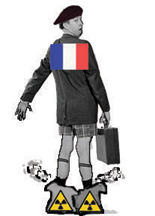
 Finns deeply worried about French nuclear industry Ft.com Richard Milne, Nordic Correspondent , 14 June 16
One of the main international customers for a much-delayed and costly nuclear reactor has expressed deep worries over the future of France’s atomic industry amid signs of political wrangling.
Finland’s TVO was the first customer for French nuclear group Areva’s European Pressurised Reactor technology — due to also be used at the UK’s controversial Hinkley Point power station — but the project has been beset by large cost overruns and a delay of almost a decade.
The two companies had been in negotiations in recent weeks to resolve multibillion-euro legal claims by both parties, as well as pave the way for the sale of a majority stake in Areva’s nuclear reactor business to French utility EDF.
But the sudden breakdown of those talks has rattled TVO, which operates some of Finland’s nuclear power plants. Jarmo Tanhua, chief executive, told the Financial Times of his big concerns about the future of France’s nuclear industry.
“We are afraid of what is happening. One thing is we don’t really understand why we don’t proceed with the negotiations. Our understanding is that it has something to do with the restructuring in France or the politics,” he said.
Mr Tanhua added that his biggest fear was that the French could decide to run down “some parts of the industry or some know-how”, particularly in its EPR technology.
AREVA’s second biggest shareholder, Kuwait funds, wants to sell out of AREVA
 Kuwait fund wants to sell French nuclear group Areva stake -media, 13 June 16, ra ra http://www.reuters.com/article/us-areva-kuwait-idUSKCN0YZ19M Sovereign wealth fund Kuwait Investment Authority (KIA) has told French authorities it wants to sell its stake in nuclear group Areva (AREVA.PA), La Lettre de l’Expansion reported on Monday.KIA is Areva’s second-biggest shareholder with a 4.82 percent stake, according to ThomsonReuters data.
The newsletter said the Kuwaiti fund had complained that its investment in Areva, which is majority owned by the French government, was made based on incorrect company accounts.
French Industry Minister Emmanuel Macron and Areva declined to comment on the report. KIA was not immediately available for comment.
KIA paid 600 million euros ($676 mln) for the stake in 2010, but since then Areva shares have plunged by about 90 percent as the firm’s equity has been wiped out by years of losses. Areva will be rescued by a 5 billion euro state-funded capital increase and its nuclear reactor unit will be taken over by state-owned utility EDF (EDF.PA) later this year or early next year.
The French state holds about 87 percent of Areva’s capital.
KIA or other minority shareholders have never publicly complained about Areva’s accounts, but former Areva chief executive Anne Lauvergeon was put under formal investigation last month for her role in the 2007 acquisition of uranium mining firm Uramin.
In France, a formal investigation does not automatically lead to a trial but often does.
Lauvergeon has repeatedly denied any wrongdoing and has said that asset depreciations at Uramin were partly due to the collapse of uranium prices after the Fukushima nuclear disaster in Japan in March 2011.
Areva has had to write down billions of euros on Uramin, which contributed to years of losses and eventually wiped out its equity, leading to a state rescue package early this year.
($1 = 0.8875 euros)
(Reporting by Geert De Clercq, Michel Rose and Andrew Torchia; Editing by Susan Fenton and Alexander Smith)
Sweden’s contradiction – wants 100% renewable energy, AND to save the nuclear industry

 Sweden has committed to 100% renewable energy by 2040 – and at the same time ‘saved nuclear power’ http://nordic.businessinsider.com/sweden-is-to-use-100-renewable-energy-by-2040—but-no-expiration-date-has-been-set-for-nuclear-energy-2016-6/
Business Insider Nordic June 10, 2016 the Swedish government coalition together with a couple of the opposition parties presented a new broad agreement for Sweden’s energy consumption.
A date was set for Sweden’s energy production to be 100% renewable, but at the same time the agreement promises better conditions for Sweden’s nuclear power production: lower taxation, new facilites and no expiration date.
The agreement was presented at a press conference at which many of the involved parties emphasized the agreement as progress in the adaptation of renewable energy sources. Amongst other points an ambitious goal was set for 100% of Swedish energy consumption to come from renewable energy sources by 2040, according to Omni.
Such claims did not prevent some of the opposition parties from making the agreement out as a major victory in the dispute over the use of nuclear energy. A major tax on nuclear power was instead scrapped and no expiration date has been set, though one is often called for in the political debate.
According to SVT, Pernilla Gunther, who’s represented the Christian democratic party in the negotiations said, “With these negotiations we’ve achieved the goal of saving nuclear power, both in the long term and short term.”
Swedish nuclear power is a very controversial political topic.
The issue of nuclear power in Sweden is controversial because after the Harrisburg nuclear catastrophe a referendum in 1980 led to the decision that nuclear power should be non-existent in Sweden by 2010. The referendum has been criticized because there was no option to vote for not abolishing nuclear power.
Since then only one facility have been closed, while the Swedish parliament has approved that new facilities may be opened to replace old ones. The new agreement even allows for 10 new facilities to be built.
In this light it is not sursprising that the different parties are highlighting conflicting aspects of an agreement they all stand behind.
The problem seems to be that no sitting government is prepared to commit to abolishing nuclear power any time in the foreseeable future, though it is easy to shout demands and refer to the will of the people when in opposition. There has not been any consensus as to an alternative that is good enough, but with the new agreement perhaps there is hope.
When it comes to wind power, for example, the Liberal party left the discussions because they could not support the subsidies. Similarly the Danish government recently took a step back from the country’s wind power investment, because a ruling by the European Commission that would abolish the subsidy, along with falling prices on other sources is making wind power relatively expensive all of a sudden.
Renewable energy production is progressing, but the plan i svery ambitious.
At the same time, renewable energy production is certainly progressing and doing so according to schedule. Sweden and Norway have a joint scheme for meeting the green energy target of 28.4 terawatt-hours by 2020 and according to Reuters, the countries are set to deliver on track though Norwegian regulators may adjust the renewable quota downwards and while Swedish regulators adjust it upwards.
In any case the target is modest compared with Denmark, which already produces those amounts of renewable energy, with only a third of the population, according to Reuters. Yet Denmark has set the date of relying 100% on renewable energy to 2050. That makes the Swedish agreement saying 2040 seem very ambitious.
EDF/AREVA keen to get in on selling nuclear reactors to South Africa
 Bullish Areva wants in on SA’s nuclear tender, City Press Yolandi Groenewald 2016-06-
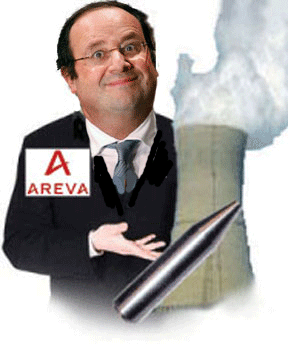 10 France’s state-owned nuclear businesses are focused on winning the lucrative South African nuclear tender despite recent financial difficulties.
The French will bid as EDF/Areva – nuclear technology company Areva sold its reactor business to the state-owned energy utility EDF earlier this year……..
EDF was facing large investments at its French operations. Its investment compromised about €50 billion (R869.6 billion) over 10 to 15 years, which would extend the operating lifespan of its ageing fleet to 60 years……
The French nuclear industry has faced a number of storms during the past year. Areva teetered on the edge of bankruptcy after years of losses wiped out its equity. It was rescued by French state aid and a sale of its reactor business to EDF.
The Flamanville project in France, Areva’s first European Pressurised Reactor (EPR) nuclear pressurised water reactor, is years behind schedule, way over budget and riddled with technical difficulties…….
France, Russia, China, the US and South Korea are competing for what could be South Africa’s biggest procurement project. The contract, estimated to cost between R580 billion and R1.56 trillion, aims to add nuclear capacity of 9 600 megawatts.
The government has said the nuclear programme would be developed at a pace the country can afford……..http://city-press.news24.com/Business/bullish-areva-wants-in-on-sas-nuclear-tender-20160603
Heightened threat of a nuclear terror attack
The threat of a NUCLEAR terror attack is at its highest since the Cold War, as ISIS continues to try and obtain materials for a dirty bomb, warns international think-tank
http://www.dailymail.co.uk/news/article-3632958/The-threat-NUCLEAR-terror-attack-highest-Cold-War-ISIS-continues-try-obtain-materials-dirty-bomb-warns-international-think-tank.html#ixzz4B7rqj3W2

- Threat of a nuclear attack on Europe at its highest level since Cold War
- ISIS continues to try to obtain nuclears and threat attack on the West
- Paris and Brussels terrorists had studied Belgian nuclear power plant
By SARA MALM FOR MAILONLINE, 9 June 2016
The threat of a ‘dirty bomb’ terror attack on a European city is at its highest level since the end of the Cold War, international nuclear experts have warned.
ISIS’s efforts to obtain nuclear materials, and continued threats to attack Western capitals contribute to experts’ analysis that the threat of a bomb is higher than ever.
ISIS has used chemical weapons in Iraq and Syria and militants linked to both the Paris and Brussels attacks had been studying a Belgian nuclear power plant.
‘ISIS has already carried out numerous chemical weapons attacks in Syria,’ Moshe Kantor, head of Luxembourg Forum on Preventing Nuclear Catastrophe, said at a conference on Tuesday.
‘We know it wants to go further by carrying out a nuclear attack in the heart of Europe.
‘This, combined with poor levels of security at a host of nuclear research centres in the former Soviet Union mean the threat of a possible ‘dirty-bomb’ attack on a Western capital is high.’
He urged the United States and Russia, both nuclear powers, to cooperate on using their technological resources to monitor the illegal transportation of radioactive materials.
In March, it emerged that Brussels suicide bomber brothers Khalid and Ibrahim El Bakraoui had originally been considering an attack on a nuclear site in Belgium…….http://www.dailymail.co.uk/news/article-3632958/The-threat-NUCLEAR-terror-attack-highest-Cold-War-ISIS-continues-try-obtain-materials-dirty-bomb-warns-international-think-tank.html
Rising number of thyroid cancers beyond Ukraine, linked to Chernobyl nuclear disaster
The authors conclude that it is likely that radiation exposure from Chernobyl has affected residents of countries much further afield than Belarus and Ukraine including Belgium, potentially increasing the incidence of thyroid cancer in those exposed as children over the last 30 years.
 Chernobyl radiation could be linked to rising number of thyroid cancers in Belgian children https://www.sciencedaily.com/releases/2016/06/160607080653.htm Source:Taylor & Francis
- Summary:
- Exposure to radioactive fallout from the April 1986 Chernobyl nuclear accident in Belgium may have increased the incidence of thyroid cancer in those exposed as children.
- Exposure to radioactive fallout from the April 1986 Chernobyl nuclear accident in Belgium may have increased the incidence of thyroid cancer in those exposed as children, according to new research published in the journal Acta Chirurgica Belgica.
Thyroid cancer is usually rare among children, with less than one new case per million diagnosed each year. However, after the Chernobyl accident a striking increase in the disease was reported in children and teenagers in the most contaminated areas of Belarus and Ukraine. Now, this new research from Belgium suggests countries further afield were also affected.
Prior to April 1986, surgeons at Mont-Godinne University Hospital, Yvoir, Belgium had seen no cases of thyroid cancer in children. But in 1995, surgeon Luc Michel and colleagues treated four cases of papillary thyroid cancer in patients who were younger than 9 years old at the time of Chernobyl and operated on a further five patients between 2000 and 2002 aged under 12 at the time of the accident.
To examine whether this disturbing trend could be due to exposure to radioactive fallout from Chernobyl, the surgical team collected information on the number of new cases of papillary thyroid cancer in all patients born before April 1986 who were operated on at the hospital for any type of thyroid lesion between April 1986 and April 2015. They also obtained data from a classified Belgian Royal Institute of Meteorology (BRIM) report which revealed that in early May 1986 the average level of atmospheric radioactivity in Belgium rose to twenty times higher than normal, from 3.2 Bq.m-3 to over 70 Bq.m-3 .
36 new cases (19.5%) of papillary thyroid cancer were found among 185 Belgian children aged under 15 at the time of the accident, compared with just 175 cases (8.1%) in 2164 patients aged older than 15 years.
-
Numerous studies have shown that exposure to certain types of radiation increase the incidence of thyroid cancer in children and adolescents. The authors conclude that it is likely that radiation exposure from Chernobyl has affected residents of countries much further afield than Belarus and Ukraine including Belgium, potentially increasing the incidence of thyroid cancer in those exposed as children over the last 30 years. However, they caution that it is not clear whether these cases reflect an increased incidence in the Belgian population as a whole.
Story Source:
The above post is reprinted from materials provided by Taylor & Francis.Note: Materials may be edited for content and length.
Journal Reference:
- Luc A. Michel, Julian Donckier, Alain Rosière, Caroline Fervaille, Julien Lemaire, Claude Bertrand. Post-Chernobyl incidence of papillary thyroid cancer among Belgian children less than 15 years of age in April 1986: a 30-year surgical experience. Acta Chirurgica Belgica, 2016; 1 DOI: 10.1080/00015458.2016.1165528
1 This Month




Shut down the radiation-damaged Heysham nuclear reactors now
To see nuclear-related stories in greater depth and intensity – go to https://nuclearinformation.wordpress.com

Say No to NASA’s Reckless Nuclear Reactor on the Moon
Say No to NASA’s Reckless Nuclear Reactor on the Moon
-
Archives
- October 2026 (301)
- September 2026 (339)
- August 2026 (330)
- July 2026 (355)
- June 2026 (287)
- May 2026 (306)
- April 2026 (356)
- March 2026 (251)
- February 2026 (267)
- January 2026 (308)
- December 2025 (358)
- November 2025 (359)
-
Categories
- 1
- 1 NUCLEAR ISSUES
- business and costs
- climate change
- culture and arts
- ENERGY
- environment
- health
- history
- indigenous issues
- Legal
- marketing of nuclear
- media
- opposition to nuclear
- PERSONAL STORIES
- politics
- politics international
- Religion and ethics
- safety
- secrets,lies and civil liberties
- spinbuster
- technology
- Uranium
- wastes
- weapons and war
- Women
- 2 WORLD
- ACTION
- AFRICA
- Atrocities
- AUSTRALIA
- Christina's notes
- Christina's themes
- culture and arts
- Events
- Fuk 2022
- Fuk 2023
- Fukushima 2017
- Fukushima 2018
- fukushima 2019
- Fukushima 2020
- Fukushima 2021
- general
- global warming
- Humour (God we need it)
- Nuclear
- RARE EARTHS
- Reference
- resources – print
- Resources -audiovicual
- Weekly Newsletter
- World
- World Nuclear
- YouTube
-
RSS
Entries RSS
Comments RSS

