EDF’s shares down as nuclear reactor outages cut profits
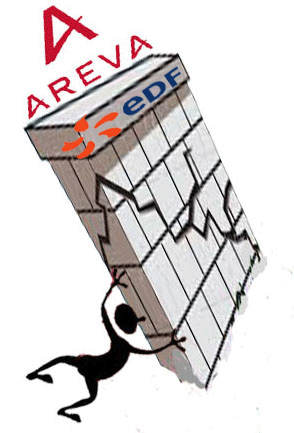 EDF Warns on Profit as Nuclear Plant Outages Increase http://www.wsj.com/articles/edf-warns-on-profit-as-nuclear-plant-outages-increase-1474535674
Standard & Poor’s downgrade of EDF’s debt rating also weighs on share price By INTI LANDAURO and WILLIAM HOROBIN Sept. 22, 2016
PARIS—State-controlled power utility Electricite de France cut its earnings outlook on expectations of lower nuclear output from an increase of plant outages, sending its share price down.
EDF, which last week got the go-ahead from the British government to build the £18 billion ($23.4 billion) Hinkley Point nuclear plant in the U.K., said it expects earnings before interest, taxes, depreciation and amortization of between €16.3 billion ($18.3 billion) and €16.6 billion.
It previously had forecast a range of €16.3 billion to €16.8 billion. The company had already lowered its nuclear output forecast in July, but had maintained its earnings target.
The profit warning, which sent EDF’s shares down 1.8% to €10.62, is another blow for shareholders, who have seen the value of the company lose more than 20% this year. The utility, which already suffers from low electricity prices in its home country and losses of market share, has recently embarked on expensive new projects that are deemed a political priority.
The French government, which owns about 85% of EDF, pressured the company to take a majority stake in beleaguered nuclear reactor manufacturer Areva NP. The government also pushed EDF to make the final investment decision to build the Hinkley Project in the U.K.
Some senior EDF officials and labor unions worried about the project’s impact on the company’s net debt which already stood at €37 billion last year. One board member resigned over the issue in July as did Chief Financial Officer Thomas Piquemal in March.
The U.K. government’s approval of the Hinkley Point project prompted Standard & Poor’s to downgrade EDF’s debt rating to A- on Wednesday evening, further pressuring the share price on Thursday morning.
To help utility with such onerous projects, the French government has decided to inject €3 billion in new equity in EDF.
EDF’s revised profitability forecast takes into account a decision by the country’s top administrative court to allow the company to raise the regulated prices it charges to some of its customers, despite the opposition from the government.
Write to Inti Landauro at inti.landauro@wsj.com and William Horobin at William.Horobin@wsj.com
BBC and Science Media Centre (SMC UK) are pro nuclear spruikers
the BBC Science team’s involvement in a shocking display of bad science during the commemorations of the 2011 disaster in 2016 March this year. Even though there was outrage in the scientific community at the Fukushima video, it was some months before the BBC quietly took down the video.
the public that saw the biased Fukushima video were unaware of the wrong and dangerous information that was given.
 There are many other articles out there that show the BBC defending Geraldine Thomas (BBC Expert) after the complaints came in and rebuffs for that on fissionline magazine and this was also added pressure that forced the BBC to take the Fukushima video down. (Ed note: Geraldine Thomas is currently in Australia, extolling the benefits of the nuclear industry, and downplaying the health effects of ionising radiation) )
Sellafield – Contempt of Parliament – BBC News missed 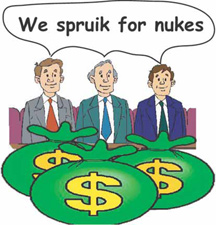 it. https://europeannewsweekly.wordpress.com/2016/09/19/sellafield-contempt-of-parliament-bbc-news-missed-it/by arclight2011part2 The nuclear industry supported press, in rebuffing the BBC Panorama teams claims of safety issues and lies to Parliament, we see some counters to the safety concerns but no response to the well documented evidence of the head of the Sellafield consortium lying to the Parliamentary committee and covering up the grave incident of plutonium release (and its cost) in November 2014.
Tony Price lies to Parliament (from Panorama Documentary) [on original]
The Spokesperson for Sellafield can be seen on the video acting a bit surprised at the questioning and revelations the Panorama reporter revealed. He just denied that any “spin” (ie lies) were said during the Parliamentary committee and that is the last word we have on this explosive revelation of criminality from the nuclear industry.
It is most surprising that the BBC News office did not pick this up as we see on the BBC web site they are fully aware of the issue of contempt of parliamentary procedure;
“….Examples of contempt include giving false evidence to a parliamentary committee, ….The Commons has the power to order anyone who has committed a contempt of Parliament to appear at the Bar of the House and to punish the offender…..”2008 BBC
Since that report was uncovered, the nuclear industry and their PR and government connections have swayed the public and eased their fears. The BBC and Science Media Centre (SMC UK) (Also called Sense About Science) was crucial to doing this and at the same time minimising the environmental and health impacts of the 2011 Fukushima disaster that had caused a huge drop in investor interest in nuclear projects.
So in the last 5 years the BBC has produced many supportive documentaries and educational materials favouring nuclear energy (Since the SMC UK started to receive large corporate funding) . In fact at the end of last year, the BBC science department was involved with promoting Sellafield and largely ignoring the many problems that existed there.
That was followed up by the BBC Science teams involvement in a shocking display of bad science during the commemorations of the 2011 disaster in 2016 March this year. Even though there was outrage in the scientific community at the Fukushima video, it was some months before the BBC quietly took down the video. Thereby, much of the public that saw the biased Fukushima video were unaware of the wrong and dangerous information that was given. Then just a couple of months ago a high profile visit to Sellafield by dignitaries was to underline the improvements and give Sellafield the all clear. Still other experts tried to combat the BBC and SMC UK PR management of all media regarding nuclear;
“The Ecologist, 12th August 2015 Dr David Lowry
Professor ‘Jim’ Al’Khalili’s ‘Inside Sellafield’ programme was a tour de force of pro-nuclear propaganda, writes David Lowry – understating the severity of accidents, concealing the role of the UK’s nuclear power stations in breeding military plutonium, and giving false reassurance over the unsolved problems of high level nuclear waste…”
The main thing for the BBC, government and nuclear industry was that the nuclear industry was still being perceived as above board and transparent. We saw a similar maneuver after the release of the Panorama Documentary on its You Tube site (Under BBC management orders?). The video was removed after just a few hours of being uploaded and after the link had been shared to an international social media audience. The video was put back up sometime later but after the interest had passed.
Although the media has largely ignored this story many experts have been commenting on the situation in Sellafield and there is a lot of well sourced data that bears the whistleblowers observations and claims (See source links below) . But it is the criminal manipulation of politicians during the Parliamentary committee process that demands our immediate attention. It undermines our Democracy.
Whilst discussing the issue of coverage, by the BBC, of the nuclear industry (with the exception of the excellent undercover investigative abilities of the BBC Panorama team) , I asked an experienced Science Media journalist and Author on how he viewed the BBC`s general coverage of nuclear matters over recent years and he had this to say;
“The BBC is guilty of a journalistic disgrace.” Karl Grossman, Professor of Journalism, State University of New York/College at Old Westbury, USA. [11th September 2016]
Meanwhile in the UK Paul Dorfman (Energy analyst spokesman for main stream UK media) said to me;
”Recent events reveal the ongoing national disgrace that is Sellafield, including the truly appalling state of the historic spent fuel ponds’….”
And Paul Dorfman was able to qualify his point through the excellent investigative work of the Panorama team. [11th September 2016]
In France an Energy systems engineer, well versed in La Hague (The French equivalent to Sellafield) and its impacts said this in response to a discussion on the Panorama revelations;
“….those plants, Sellafield and La Hague, would exterminate the whole world population in under 40 years, because there are tons of plutonium in Sellafield and tons in La Hague adding thousand times more than necessary to exterminate all animals through the world. The biggest aberration of history, the timing bomb for the global extinction, a potential aschimothusia .[“sacrifices” committed by force of a state ] …” Xavier Nast 11 September 2016
Marianne Birkby confirmed to me the ongoing “legacy” of dangerous safety practices at Sellafield;
“…The state of the Sellafield ponds is described by the BBC as an “historic legacy” but the “legacy” is ongoing with every reactor that continues to burn nuclear fuel whose waste is sent to Sellafield for reprocessing. . The now infamous photographs of the shocking state of the Sellafield ponds that were given to Radiation Free Lakeland by a brave whistleblower are not “historic.” Those shocking photographs are a graphic illustration of the continuing madness of nuclear power….” Marianne Birkby, Founder of Radiation Free Lakeland 11 September 2016
Sources for this article (Not already linked above)
The BBC Panorama You Tube documentary linkhttps://www.youtube.com/watch?v=JZ1i3HScYak
Dr Lowry http://drdavidlowry.blogspot.ie/2016/09/inside-sellafield-and-military.html?spref=tw
Dr Ian Fairlie response to the Panorama findings and historical summary on Sellafield here http://www.ianfairlie.org/news/bbc-panorama-programme-sellafield/
Critical scientific analysis of the BBC Science departments dangerous and insulting attempts of reporting on Fukushima (And the reason that the BBC had to take down the video, some months later. The comments on this video are enlightening and you can see both pro nuclear and anti nuclear people actually agreeing and making known their complaints to the BBC) – March 2016https://www.youtube.com/watch?v=qrgdAA5oiIA
Note from writer; There are many other articles out there that show the BBC defending Geraldine Thomas (BBC Expert) after the complaints came in and rebuffs for that on fissionline magazine and this was also added pressure that forced the BBC to take the Fukushima video down.. The whole story of BBC bias in Energy matters is too vast to cover here but I leave you with the above Key words and links (for the researcher) . The truth will out!! – Shaun McGee
Another secret and dangerous trade deal – the Trade In Services Agreement
 The new TTIP? Meet TISA, the ‘secret privatisation pact that poses a threat to democracy’ http://www.independent.co.uk/news/business/news/ttip-trade-deal-new-what-is-tisa-privatisation-pact-secret-threat-to-democracy-a7216296.html
Government insists ‘public services are under no threat whatsoever from this deal’
- Ian Johnston
- Wednesday 31 August 2016An international trade deal being negotiated in secret is a “turbo-charged privatisation pact” that poses a threat to democratic sovereignty and “the very concept of public services”, campaigners have warned.But this is not TTIP – the international agreement it appears campaigners in the European Union have managed to scupper over similar concerns – this is TISA, a deal backed by some of the world’s biggest corporations, such as Microsoft, Google, IBM, Walt Disney, Walmart, Citigroup and JP Morgan Chase.
Few people may have heard of the Trade In Services Agreement, but campaign group Global Justice Now warns in a new report: “Defeating TTIP may amount to a pyrrhic victory if we allow TISA to pass without challenge.”
Like the Transatlantic Trade and Investment Partnership, TISA is being negotiated in secret, even though it could have a major impact on countries which sign up.
- While TTIP is only between the EU and US, those behind TISA have global ambitions as it involves most of the world’s major economies – with the notable exceptions of China and Russia – in a group they call the “Really Good Friends of Services”.
The Department for International Trade dismissed the idea that public services were at risk from TISA, adding that the UK was committed to securing an “ambitious” deal.
But according to Global Justice Now’s report, the deal could “lock in privatisation of public services”; allow “casino capitalism” by undermining financial regulations designed to prevent a recurrence of the 2008 recession; threaten online privacy; damage efforts to fight climate change; and prevent developing countries from improving public services.
- Nick Dearden, director of group, said: “This deal is a threat to the very concept of public services. It is a turbo-charged privatisation pact, based on the idea that rather than serving the public interest, governments must step out of the way and allow corporations to ‘get on with it’.
“Of particular concern, we fear TISA will include clauses that will prevent governments taking public control of strategic services, and inhibit regulation of the very banks that created the financial crash.”
He suggested pro-Brexit voters should be concerned at the potential loss of sovereignty.
“Many people were persuaded to leave the EU on the grounds they would be ‘taking back control’ of our economic policy,” Mr Dearden said.
“But if we sign up to TISA, our ability to control our economy – to regulate, to protect public services, to fight climate change – is massively reduced. In effect, we would be handing large swathes of policy-making to big business. “
- The report says the widespread opposition to TTIP, a deal between only the EU and US, had not yet been repeated over TISA.
“It is vital for elected representatives, campaigners and ordinary citizens to unite against this threat,” it adds.
“TISA threatens public services. From postal services to the NHS, TISA could lock in privatisation and ensure that big multinationals increasingly call the shots on areas like health, education and basic utilities.”
A so-called “ratchet” clause in the deal means that after a service – like trains or water or energy – is privatised, this is almost impossible to reverse even if it fails.
- According to the report, a “standstill” clause also means “no new regulation can be passed that gives foreign companies worse treatment” than when TISA is passed.
“Taken together, the standstill and ratchet clauses could make it much harder for a future government to renationalise the railways, a move backed by a majority of the British public,” it says.
“Similarly, it could mean that the creeping privatisation of the NHS becomes more and more irreversible with greater involvement of companies from countries like the US. And forget taking control of the electricity system back from the big six energy firms.”
- Migrant workers could be classified as “independent service suppliers”, the report says, meaning they would not be eligible for the minimum wage or be allowed to join a union.
People going to another country may find their visa is tied to their job, so if they were sacked, they would be deported.
“This sort of system of modern indentured labour is wide open to abuse by unscrupulous employers who may get away with illegal practices safe in the knowledge that they can threaten any employee with deportation if they complain,” the report says.
“This sort of system is used in countries like Saudi Arabia, the UAE and Qatar and has resulted in working conditions that have been described as being close to slavery.”
The global economic crash of 2008 was precipitated by the sale of complex financial products linked to unsafe “sub-prime” mortgages. The report says there is a danger the final TISA deal would “undermine efforts to regulate risky financial products” with a proposal that firms should be allowed to offer “any new financial service”.
- “The danger is that TISA will deter governments from limiting the use of such ‘innovative’ financial products and leave us powerless to stop the next financial crisis,” it says.
TISA could also potentially prevent governments from favouring renewable energy over fossil fuels – despite the need to reduce greenhouse gas emissions and the health effects of air pollution.
Private firms would also be allowed to move online data from one country to another under one proposal being considered. While the original country’s privacy laws would have to be respected, the report said it was “not clear how this will be … enforced”.
While developed countries in Europe have established public services that would not be threatened unless a state’s government decided to open them up to private firms, the same is not true of many developing countries. If they signed up to the deal, it could effectively prevent them from setting up public institutions taken for granted in the West.
- The TISA negotiations were held behind closed doors for about 18 months until they were publicly revealed by the global trade union group Public Services International (PSI). Information about some of the proposals has been also disclosed through Wikileaks and similar sites.
Daniel Bertossa, PSI’s director of policy, said: “Anybody who’s interested in maintaining democratic control of national institutions should be very concerned about the Trade in Services Agreement that is being negotiated in secret.
“It will remove large sections of national sovereignty and the ability of any government, including the UK Government, to regulate important service sectors [on issues] such as energy, such as transport, such as privacy. The Trade in Services Agreement is part of a radical project to limit governments’ sovereign right to regulate and freeze it almost in permanence in the interests of foreign corporations.”
According to the European Commission, TISA is about “facilitating trade in services”.
“The EU is the world’s largest exporter of services with tens of millions of jobs throughout Europe in the services sector. Opening up markets for services will mean more growth and jobs,” its website says.
- The Independent has contacted “Team TISA”, a group of mainly American companies in favour of the deal, asking for a comment. On its website, it says: “Services are the fastest growing sector of the global economy and account for two thirds of global output, one third of global employment and nearly 20 per cent of global trade.
“The TISA provides an opportunity to expand services trade among over 50 countries, covering nearly 70 per cent of global trade in services.
“The potential expansion TISA provides will benefit not only global growth, but also US domestic growth.
“As the world’s largest services exporter, with over $1.3 trillion (about £1 trillion) in annual cross-border and foreign-affiliate sales, the US will benefit tremendously from elimination of services barriers.”
A Department for International Trade spokesperson said: “Public services are under no threat whatsoever from this deal or any other trade agreement. The UK remains committed to an ambitious Trade in Services Agreement.”
France: Public consultation on the draft decree on protection against the dangers of ionizing radiation
Sean Arclight Hervé Courtois CRIIRAD calls to mobilize against the adoption of very high reference levels
to manage nuclear accidents and their consequences.
The French authorities are preparing to establish the zones management criteria contaminated following a nuclear accident (or after an attack affecting a nuclear installation). What level of radiation exposure, and thus risk, will be taken in reference to decide whether or not to hire a particular action to protect the population? Very concretely: to what level of risk you will be condemned to live in contaminated areas? At what level of risk can you expect to be compensated and rehoused in a healthy environment?
The French authorities have retained the levels of effective dose as high as possible: 100 mSv for the accident phase and 20 mSv / year for accidental post phase (while for the public, the maximum dose limit is typically 1 mSv / year and that this value is already at a high level of risk). More limitations are high, lower are the expenses related to the protection and compensation for damage. This choice is unfortunately consistent with the capping of compensation for victims of a major nuclear accident. Nuclear power is exempted from the application of the polluter pays principle: they are the victims who bear the health and economic consequences of the disaster.
This decision does not just happen. It is the fruit of 20 years of efforts of the nuclear lobby, and specifically the French nuclear lobby via the Trojan horse, the FNEC (1). The key idea is to convince people that can be done entirely live in contaminated areas. Just a bit of training and equipment to control their environment, food. These experts have just “forgot” the central problem of the deteriorating health status of people, especially children.
If you are shocked by the image of the Japanese children wear around their necks a dosimeter as a pendant, if it is not the future you want for your children, act!
1. Study Centre on the Protection of the evaluation in the field Nuclear: an association with 4 members (EDF, AREVA, CEA and IRSN) and has widely infiltrated the national and international decision-making and including the ICRP (Jacques Lochard, Director of the FNEC, is now vice chairman of the main committee)
The Ministry of Environment, Energy and Marine has launched a consultation on the draft decree on the Directive 2013/59. Remember that France must transpose the Directive into French law by January 2018. This consultation is an opportunity to denounce the proposals which we find unacceptable and show already our requirements. We later learned of this consultation will end on 30 September.
Take part in the public consultation
and say NO to the obligation to live in contaminated areas!
> Learn more
> How to participate in the public consultation?
The Directive covers many topics which will be discussed further. Other actions will be implemented in the coming weeks. We already rely on your help to relay! https://www.facebook.com/groups/1021186047913052/
Russia warns: if Hinkley nuclear project fails it will discredit the entire global nuclear industry
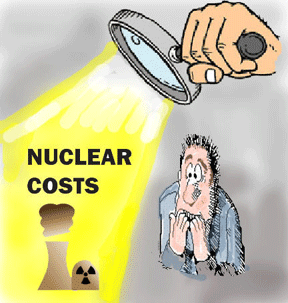
 Russia issues Hinkley nuclear warning, climate news,network September 19, 2016, by Terry Macalister State-owned Russian nuclear corporation says the industry’s credibility is at risk if building the new UK power plant is delayed or runs over budget.
LONDON, 19 September, 2016 – A major nuclear developer has warned the French energy giant EDF that it must deliver the Hinkley Point project in the UK on time and on budget or risk damaging the credibility of the wider industry.
In an exclusive interview with Climate News Network, Kirill Komarov, first deputy chief executive of Russian state-owned corporation Rosatom, expressed fears that problems at other EDF schemes − such as Flamanville in France andOlkiluoto in Finland − could be repeated.
Rosatom believes the decision by the UK prime minister, Theresa May, to give the go-ahead to the first new nuclear reactors in Britain for over 20 years was a major step forward, but knows that the eyes of the world will now be on a good performance at the Hinkley power plant in southwest England.
Komarov said: “It’s a good signal that the government confirmed its commitment to nuclear. At the same time, record-high cost and the risks of possible delays and cost overruns might undermine the reputation of the sector.”
The Russian group, which is constructing nuclear reactors in China, India and the Middle East, believes its own prices are up to 30% lower than EDF’s…………
Rosatom believes the UK should be wary of the potential delays attached to the new European Pressurised Reactor (EPR) designs that are being trialled at Olkiluoto, Flamanville and soon at Hinkley.
The company also reckons that the 1600 megawatt capacities of EPRs may be too large for the needs of the modern world. It believes its own VVER-designed 1000-1200 MW reactors are more suitable, especially in developed countries where power demand is unlikely to grow too much, because of energy efficiency and demand reduction policies.
Rosatom is clearly keen to sell its reactors in the UK, which has relatively tight regulations and is seen by EDF and others as a good shop window for the world http://climatenewsnetwork.net/russia-issues-hinkley-nuclear-warning/
180 mishaps in UK nuclear waste transport vehicles

 UK nuclear weapons convoys ‘have had 180 mishaps in 16 years’ Vehicles carrying nuclear weapons have had collisions, breakdowns and brake failures, disarmament campaign says, Guardian, Rob Evans, 21 Sept 16, Military convoys carrying nuclear weapons through Britain’s cities and towns have experienced 180 mishaps and incidents, including collisions, breakdowns and brake failures during the last 16 years, according to a report produced by a disarmament campaign.
The incidents catalogued in the report – based on official logs released under theFreedom of Information Act – include fuel leaks, overheated engines, clutch problems, and other mechanical faults in the convoys.
At other times, according to the report, the convoys went the wrong way, were diverted, and lost communications with commanders. The rate at which the incidents have occurred has risen in recent years, with 43 in the last three years.
In its report published on Wednesday, the International Campaign to Abolish Nuclear Weapons (Ican) warns that a serious accident involving the convoys could spread radioactivity over cities, contaminating communities and increasing cancer risks.
The convoys pass through cities and towns between Scotland and southern England. However, an opinion poll commissioned by Ican shows that nearly two-thirds of British adults did not know that the military transports nuclear warheads on British roads, prompting the campaigners to argue that members of the public have not given their consent to the dangers they pose.
Materials for nuclear weapons are driven through or flown over 122 local councils in the UK, including densely-populated areas such as Bristol, Birmingham, Cardiff, Edinburgh, Glasgow, Leeds, Liverpool, Sheffield, Manchester and Newcastle, according to Ministry of Defence data…….
The Ican report describes how nuclear warheads are carried in dark green, 44-tonne trucks between a bomb factory at Burghfield near Reading in Berkshire and a naval depot at Coulport on Loch Long near Glasgow, where they are loaded onto submarines.
The 900-mile round trips, usually spread over one or two days, are completed between two and six times a year, with the most recent onereported to have been completed this week.
According to Ican, the convoys – comprising up to 20 vehicles including police cars and a fire engine – use a variety of routes. One from Burghfield, where the warheads are assembled and maintained, goes along the M40, round Birmingham and past Preston on the M6, and then the M74 to Glasgow……..
Matt Hawkins, spokesman for Ican, said the report “painted a grim picture of the great risks posed by nuclear convoys”, adding that nuclear weapons “only add danger to our lives, exposing us all to the risk of radiation leaks or an attack by terrorists on one of these convoys”.
In 2003, following pressure from the Guardian, the MoD was forced to publish a list of accidents involving nuclear weapons between 1960 and 1991 after decades of secrecy. It showed that the weapons had been dropped, struck by other weapons and carried on a truck that slid down a hill and toppled over. https://www.theguardian.com/uk-news/2016/sep/21/uk-nuclear-weapons-convoys-have-had-180-mishaps-in-16-years
UK Liberal Democrats oppose Hinkley nuclear plan – ‘very poor value for money’
 Lib Dems vote to oppose Hinkley nuclear plant in emergency conference motion, Left Foot Forward,
Adam Barnett 19 September, 2016 Project is ‘very poor value for money’ and we should use renewable energy instead, say members Liberal Democrats voted to oppose a new nuclear power station at Hinkley Point C today in an emergency policy motion at party conference.
The party agreed this morning that the new £18 billion plant in Somerset was ‘very poor value for money’ for consumers and proposed renewable energy instead.
The motion also noted that similar nuclear plants in France and Finland are both ‘years behind schedule and significantly over budget’.
It concludes:
‘Conference believes that construction of a new nuclear station at Hinkley Point is both entirely dependent on public subsidy and represents very poor value for money for UK consumers, and that therefore it should be opposed.
Conference calls for a UK energy strategy resting on investments in energy efficiency, renewable energy, storage and interconnection with European grids, thereby providing energy security, an end to fuel poverty and the reduction of greenhouse gas emissions at the same time as creating jobs, exports and prosperity.’……..https://leftfootforward.org/2016/09/lib-dems-vote-to-oppose-hinkley-nuclear-plant-in-emergency-conference-motion/
Finland ready to grasp a nuclear marketing opportunity in South Australia

 Finland’s Onkalo nuclear waste disposal facility want to export the technology to South Australia, The Advertiser Daniel Wills, Helsinki, Finland, The Advertiser September 21, 2016 OPERATORS of the world’s most advanced nuclear disposal facility want to export the technology to South Australia and form an alliance to help the state develop its own commercial facility to take waste from around the world.
At a briefing with Premier Jay Weatherill at Finland’s Onkalo nuclear waste disposal facility, Posiva Solutions Oy managing director Mika Pohjonen said his company would be willing to licence intellectual property and engineering solutions to SA if it were to proceed with expanding the local nuclear industry.
Posiva is a joint venture owned by two of Finland’s biggest energy companies — Teollisuuden Voima Oyj and Fortum Power and Heat. It is set to become the first organisation in the world to bury a canister of spent nuclear fuel when they begin inserting them into the bedrock from 2020. Mr Pohjonen said SA could hope to move from site selection to burying canisters within about 15 years, less than half the time taken by Finland, because the Scandinavians had already undertaken the slow work of proving the technology………
The Onkalo disposal site is about 10 times smaller than that conceived by SA’s Nuclear Fuel Cycle Royal Commission.……
Mr Weatherill will by the end of the year declare a formal State Government position to Parliament on expansion of the industry………
“The next major step is a threshold question about whether we maintain our prohibition against a facility for spent fuel or whether we take a step to explore it further.”- Mr Weatherill said ….

European Court of Auditors see nuclear decommissioning funds shortfall
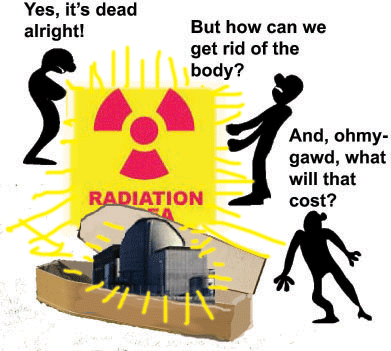 EU auditor sees nuclear decommissioning funds shortfall, Reuters, By Alissa de Carbonnel, 20 Sept 16, | BRUSSELS European Union plans for financing the decommissioning of nuclear plants in Bulgaria, Lithuania and Slovakia are inadequate and more resources need to be put aside, the European Court of Auditors said in a report.
The report criticizing costly delays and warning of technical hurdles ahead shines a spotlight on the challenges facing Germany and other nations within the bloc that are planning to retire their nuclear reactors.
The EU’s spending watchdog said the estimated cost of decommissioning the three Soviet-era plants closed more than a decade ago had risen 40 percent since 2010 to at least 5.7 billion euros ($6.4 billion) by 2015. That figure doubles if the cost of disposing spent fuel once and for all is included.
The EU auditors said while the bloc’s budget covered the vast majority of the costs of shutting down the reactors in the three member states, significant funding was still needed to take the plants offline completely.
They said the reactor buildings at Bulgaria’s Kozloduy, Lithuania’s Ignalina and Slovakia’s Bohunice had yet to be dismantled and no solution had been found for the disposal of spent nuclear fuel……..
The only repository for spent fuel being dug deep underground in Europe has been under construction in Finland for nearly 40 years and won’t be ready until after 2020…….
A working paper by the European Commission, seen by Reuters in February, showed the bloc was short of more than 118 billion euros needed to dismantle its nuclear plants. ($1 = 0.8945 euros)(Editing by David Clarke) http://www.reuters.com/article/us-eu-nuclearpower-idUSKCN11Q12A
China’s nuclear marketing plan gets a big boost from Theresa May’s decision to go ahead on Hinkley project
 British Project May Clear Way for China’s Nuclear Exports to the West VOA, Saibal Dasgupta, 20 Sept 16 BEIJING —
There’s a whole lot more in British Prime Minister Theresa May’s decision to allow a Chinese company to invest in the Hinkley Point C nuclear plant than mere business.
Chinese investment is limited to investing funds in the $24 billion project, which will use two French reactors supplied by Electricity de France. But the project could clear the way for Chinese involvement in a more crucial project at Bradwell, east England, which would allow China to export its nuclear technology to the Western world, analysts say.
China General Nuclear Corporation, the investor in Hinkley Point, already has signed a pre-feasibility agreement for the Bradwell project……..
Only a few developing countries like Pakistan are using Chinese reactors. These countries are not known to have the kind of strict regulatory control seen in the West.
The Bradwell B project could be a game changer. Getting regulatory approval in Britain for its reactors is crucial for China because it can open the doors for Chinese nuclear exports to the West……..
But there’s many a slip between May’s lip and China’s cup of hope. Britain already is in the midst of fierce debate with critics voicing concern about security issues. Critics question a provision in the contract that provides for a fixed electricity rate for 35 years at a time when energy prices are falling, and are expected to be much lower in the future……..
For Beijing, British approval for the Hinkley Point project is a major image booster, analysts say. Chinese business is seen in the West as an acquirer of property and trader of low-tech, unbranded goods, they point out…….http://www.voanews.com/a/british-project-china-nuclear-exports-west/3517485.html
Scotttish politicians slam the danger, secrecy, of hazardous air transport of nuclear wastes
 There’s no safe way to move nuclear waste’: Scottish Politicians slam nuke flight that needed armed cop convoy http://www.dailyrecord.co.uk/news/scottish-news/gun-cop-8859315, 18 SEP 2016 BY JIM LAWSON Green MP John Finnie and Caithness MP Paul Monaghan among those to voice concerns about flying nuclear waste to the US. THE first flight believed to be carrying British nuclear waste to America took off from Wick Airport amid tight security yesterday.
Scots politicians and anti-nuclear campaigners have slammed the deal, brokered by David Cameron and Barack Obama, to move the waste.
 The airport was closed from early morning as armed police patrolled the perimeter.
Twenty miles away in Thurso, more armed officers escorted a lorry from the
Dounreay nuclear plant through the town. It was carrying two heavily reinforced containers.
At 11.40am, a police convoy brought the containers on to the runway.
A US Air Force transport plane landed 10 minutes later and loading began almost immediately. The plane took off two-and-a-half hours later.
The plan to transport highly enriched uranium from Dounreay to the US emerged late last year.
Dounreay bosses won’t confirm or deny the scheme, but Cameron revealed after talks with Obama earlier this year that uranium from the plant would be moved to South Carolina.
Other types of uranium will be sent to Europe in exchange and used to make medical isotopes. But Dr Richard Dixon, director of Friends of the Earth, said: “There is no truly safe way to move this waste.”
 Caithness MP Paul Monaghan said the deal was “morally reprehensible” and Green MP John Finnie said people would be stunned that nuclear waste was being transported by plane.
Nuclear expert John Large said: “The risk in transport by air is the fuel being engulfed in fire, the packages breaking down and the fuel igniting.”
The runways at Wick have been extended at a cost of £18million to take the US planes, and Highland Council have published an order allowing local roads to be closed for five hours at a time until March 2018.
 Police refused to comment on yesterday’s operation for security reasons.The first flight believed to
be carrying British nuclear waste to America took off from Wick Airport amid tight security yesterday.
Scots politicians and anti-nuclear campaigners have slammed the deal, brokered by David Cameron and Barack Obama, to move the waste.
The airport was closed from early morning as armed police patrolled the perimeter.
Twenty miles away in Thurso, more armed officers escorted a lorry from the Dounreay nuclear plant through the town. It was carrying two heavily reinforced containers.
At 11.40am, a police convoy brought the containers on to the runway.
A US Air Force transport plane landed 10 minutes later and loading began almost immediately. The plane took off two-and-a-half hours later.
The plan to transport highly enriched uranium from Dounreay to the US emerged late last year.
 Dounreay bosses won’t confirm or deny the scheme, but Cameron revealed after talks with Obama earlier this year that uranium from the plant would be moved to South Carolina.
Other types of uranium will be sent to Europe in exchange and used to make medical isotopes. But Dr Richard Dixon, director of Friends of the Earth, said: “There is no truly safe way to move this waste.”
The runways at Wick have been extended at a cost of £18million to take the US planes, and Highland Council have published an order allowing local roads to be closed for five hours at a time until March 2018.
Police refused to comment on yesterday’s operation for security reasons.
Britain’s nuclear gamble will cost every UK family an extra £1,000
The £18bn Hinkley gamble: Nuclear deal will cost every UK family an extra £1,000 as May signs off on the plans to protect Britain’s national security
- Prime Minister approved plans after restricting influence of Chinese state
- Britain will guarantee EDF £92.50 per megawatt hour, up on current market price of £38.91
- Tory MP Zac Goldsmith said the plant would generate ‘most expensive energy in the history of energy generation’
By JASON GROVES DEPUTY POLITICAL EDITOR FOR THE DAILY MAIL, 16 Sept 16
Electricity bill-payers will be forced to make up the difference once the plant in Somerset comes on stream in the 2020s.
The National Audit Office has warned these subsidies will add almost £30billion to electricity bills over the project’s lifetime. That is an extra £30 for the average annual bill over 35 years – totalling more than £1,000 per household.
Last night Tory MP Zac Goldsmith said by the end of the project ‘this new power plant will have generated the most expensive energy in the history of energy generation’.
And former Tory chancellor Lord Lawson said every independent energy expert believed the Hinkley project was a ‘thoroughly lousy deal’. He said EDF was ‘hopelessly behind schedule’ on similar plants in France and Finland and called on ministers to pull the plug if it encountered similar problems here……..
Last year, the French nuclear safety authority found weaknesses in the steel used to construct the pressure vessel at the heart of the reactor. These faults could mean that either the plant would have to operate at a much-reduced capacity, or the reactor would have to be rebuilt – or worse abandoned.
In extremis, if the vessel fails critics fear it could lead to a catastrophic nuclear accident on the scale of the Chernobyl disaster.
It is the same reactor design EDF plans to use for Hinkley, a so-called European Pressurized Reactor (EPR). This is similar to the Sizewell nuclear power station on the Suffolk coast, but on a larger scale and with extra safety features.
However, the British government has agreed to pay EDF much, much more for the electricity the Hinkley version would produce than the French government has for the electricity from Flamanville.
Controversially, the Cameron government guaranteed EDF a fixed price of £92.50 per megawatt hour over a period of 35 years, whereas EDF will charge the French government only €64 (£54) per megawatt hour for the electricity it hopes to produce in Normandy……….. http://www.dailymail.co.uk/news/article-3791895/The-18bn-Hinkley-gamble-nuclear-deal-cost-UK-family-extra-1-000-signs-plans-protect-Britain-s-national-security.html
At least 4 years before UK’s Bradwell nuclear plan could be approved
China must wait four years for decision on Bradwell nuclear plant
After Hinkley Point C go-ahead, Essex reactor would be even more significant for China – and more controversial for UK, Guardian, Graham Ruddick and Tom Phillips, 17 Sept 16 China faces at least a four-year wait to find out whether its plans to build a nuclear power station in Essex will be approved.
If it got the go-ahead, Britain would be relying heavily on Chinese investment for its future energy supply after the government approved the construction of an £18bn nuclear power station at Hinkley Point in Somerset, which will be 33% owned by China General Nuclear (CGN).
Theresa May pushed through the Hinkley Point C project despiteopposition from MPs and the public over its cost and the involvement of China. However, the project in Bradwell, Essex, is even more controversial because it would be majority owned and designed by China………
Under the deal, CGN agreed to invest £6bn inHinkley Point C in return for leading its own power plant project at Bradwell.
The Bradwell plant is considered vital by the state-owned company because it would be the first Chinese nuclear reactor to be built in a developed country and an opportunity to promote China’s technological expertise.
CGN plans formally to submit its plan for a nuclear reactor at Bradwell within weeks. However, it would take at least four years for the Office of Nuclear Regulation (ONR) to assess the proposals and possibly approve them. This means that despite the government having approved Hinkley Point C, the shape of Britain’s future energy supply will remain unresolved for some time……..
The process for the Chinese company would be the same as for other new reactors and would take around four years, as long as the group met the timetable for submissions and provided sufficient detail…….
CGN would own two-thirds of the Bradwell B project, with the French energy company EDF owning the rest. This is the reverse of Hinkley Point C, which is two-thirds owned by EDF and of a French design…….
Johnny Hon, a Sino-British entrepreneur and vice-president of the 48 Group Club, which promotes trade links between the countries, said: “Although the news is most welcome from China’s perspective, their most anticipated deal is the third potential reactor in Bradwell in Essex – whose details are yet to be confirmed.
“This reactor would be the first in a developed country to use Chinese technology and [would] be a breakthrough in establishing China as a global leader in nuclear power.”…….
General Electric, the US industrial giant, has confirmed it is in line to receive $1.9bn (£1.5bn) by building steam turbines and generators for the power plant. https://www.theguardian.com/uk-news/2016/sep/16/china-must-wait-four-years-for-decision-on-bradwell-nuclear-plant
Climate Change Think Tank sets out 10 serious mistakes in Hinkley nuclear decision
 HINKLEY GREEN LIGHT A MASSIVE STRATEGIC MISTAKE, SAYS CLIMATE CHANGE
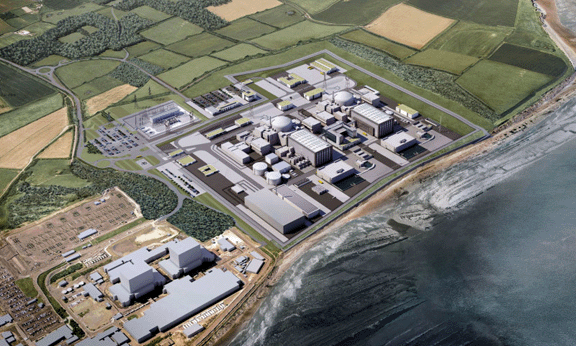 THINK TANK http://tomburke.co.uk/2016/09/15/hinkley-green-light-a-massive-strategic-mistake-says-climate-change-think-tank/ September 15, 2016 by tomburke Following reports today that the Government is about to give the green light to the Hinkley Point C nuclear power station, E3G, a leading climate change think tank said it would be a hugely expensive strategic mistake, using expensive 20th century technology that would soon be obsolete.
E3G Chairman, Tom Burke said: “It is a 20th Century solution to 21st Century problems. Bigger is no longer better. There are faster, cheaper, cleaner and smarter ways to deliver affordable, secure, low carbon electricity to Britain’s consumers.
Nothing about this deal is good for Britain’s hardworking families. They will pay the bill for decades but the jobs will go abroad. It is bad for consumers, bad for the climate and bad for the country.
The Prime Minister is missing a real opportunity to set Britain on course to a more productive and secure future. Instead she has committed us to an expensive and anachronistic energy policy that will leave Britain further behind in a rapidly changing world.”
- E3G sets out below ten reasons why this is a bad deal for British consumers and documents the range of cheaper, smarter, options for low carbon energy security that are better value for money.
HINKLEY POINT : The 10 Mistakes
The Investor Agreement that Greg Clark will sign with EDF is an irrevocable index-linked ‘take or pay’ contract to purchase 35 years’ worth of electricity from EDF at more than twice the current wholesale price. This will cost British consumers £37 billion in subsidy, four times that originally forecast[1]
- This deal binds future governments as well as the current Government. It will prevent Britain’s consumers buying cheaper electricity if it would displace that from EDF.
- It means Britain’s electricity consumers will pay more than £1 billion/year in subsidy to EDF for 35 years.
- The business case for this Agreement has never been subject to informed public scrutiny. The arguments for HPC and the rest of the nuclear programme have never been stress tested.
- The National Audit Office has already raised doubts that it represents value for money in the light of developments, including significant reductions in electricity demand forecasts, since it was first proposed[2].
- The National Infrastructure Commission has identified a package of other measures that could provide affordable, secure, low carbon electricity at lower cost.
- The National Grid has cut its forecast of the need for new centralised generation capacity in Britain by more than 50%, announcing its estimate of growth for decentralised generation was 50 times too low[3]
- EDF’s unions will argue in the French Courts that delaying a Hinkley decision until 2018 would allow for a design review to be completed that would reduce the subsidy needed from £92.50/MWh to £75/MWh[4].
- State Aids clearance for the UK subsidy is under challenge by the Austrian Government and others in the European Court. A further State Aids challenge is likely to the French Government’s re-financing of EDF. If either is successful the deal will fall.
- Hinkley will not produce electricity until 2030. There are cheaper, faster, cleaner and more reliable options available to deliver affordable, secure, low cost electricity to British consumers. These include:
- energy efficiency has reduced electricity demand by 25TWh ( 7% – the same as Hinkley will produce ) since 2010. A McKinsey report for the Government estimates that by 2030 demand could be reduced by a further 23% while reducing consumers bills;
- the National Infrastructure Commission reports that additional interconnectors could supply 2-3 Hinkleys by 2025;
- another National Infrastructure Commission report proposed investment in storage and smart grids that would provide the equivalent of 4 Hinkleys by 2030 and save £8 billion.
- Dong Energy, the world’s largest wind energy company, could replace all Hinkley’s electricity sooner and at lower cost. Offshore wind costs are continuing to fall.
- electricity from solar power is now also cheaper than Hinkley, having fallen by half in the last five years. From almost no solar panels in the UK, a third of a Hinkley has been added since 2010. Half of that was delivered in just 18 month.
- E3G is an independent global think tank, working to accelerate the transition to a low-carbon economy. E3G specializes in climate diplomacy, climate risk, energy policy and climate finance.
- In 2016, E3G was ranked the number one environmental think tank in the UK by the Go To Think Tank Index, second in Europe and sixth in the World.
The miserable and ongoing history of EDF’s unfinished nuclear reactors in Flamanville and Olkiluoto
The £18bn Hinkley gamble: Nuclear deal will cost every UK family an extra £1,000 as May signs off on the plans to protect Britain’s national security
- Prime Minister approved plans after restricting influence of Chinese state
- Britain will guarantee EDF £92.50 per megawatt hour, up on current market price of £38.91
- Tory MP Zac Goldsmith said the plant would generate ‘most expensive energy in the history of energy generation’
By JASON GROVES DEPUTY POLITICAL EDITOR FOR THE DAILY MAIL, 16 Sept 16 “……..Construction at the site near Cherbourg began in 2007, with a scheduled completion date of 2012. But within a year, cracks were found in the concrete base and a quarter of the welds in the reactor’s secondary steel lining were found to be defective.
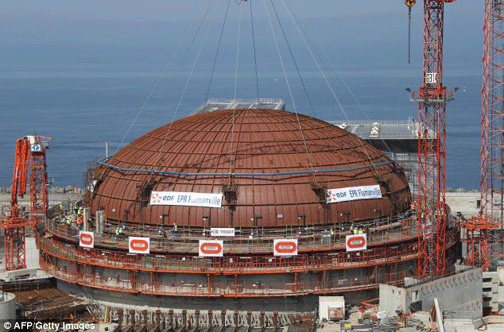
Inspections also revealed holes in concrete pillars and faults in buildings where nuclear fuel is to be stored.
A report by France’s nuclear safety authority in 2011 recorded 13 incidents of sub-standard safety measures. In 2013, a welder fell to his death. Then last year defects were discovered in safety valves in the cooling system.
Chillingly, this was similar to a problem that led to the Three Mile Island nuclear plant accident in Pennsylvania in 1979, which before Chernobyl was the world’s worst nuclear accident, and resulted in $1billion (£750million) of clean-up costs.
It was also in 2015 that Flamanville suffered a potentially killer-blow.
Tests on the steel used to construct the base and lid of the nuclear reactor vessel showed that too much carbon had been used, leading to weaknesses in the structure.
Professor Steve Thomas, of the University of Greenwich, said that if this led to the reactor failing, there would be no warning. ‘It will fail catastrophically and allow its radioactive contents into the environment,’ he said.
For their part, EDF and its project partner – the majority French state-owned company Areva, which makes nuclear reactors – have been forced to make more tests on the steel.
At the time the faults were found, the Financial Times said: ‘The scale of the risks to EDF if those tests identify a serious problem is hard to exaggerate.’
Whatever the findings of these new tests, Flamanville’s opening date – which has already been put back six years – is still nowhere in sight.
Professor Thomas warns that if it has to be rebuilt, the process could take up to five years, adding: ‘That might be prohibitively expensive and the whole plant could be abandoned.’
All this assumes that government-owned EDF doesn’t go bust in the meantime – which is a possibility.
In March, the company’s finance director Thomas Piquemal resigned, saying that taking on Hinkley as a project risked driving the firm to bankruptcy. Problems were compounded by the fact that Areva has had to be bailed out by the French government, with an injection of £3.4billion of public money in April. Inevitably, the European Commission has launched an investigation into this rescue package to check it did not ‘unduly distort competition’.
For some time, Areva – which is 87 per cent owned by the state – had been struggling with a downturn in the nuclear industry and has suffered big financial losses on its projects.
Once the pride of France, the reactor designer saw its credit rating downgraded last year, and in February it reported a €2billion (£1.7billion) net loss for 2015.
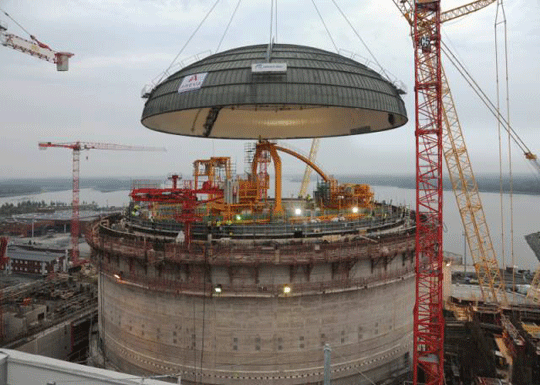
The project been subject to lawsuits, technology failure, construction errors and a bitter row between participant companies that has been described as ‘one of the biggest conflicts in the history of the construction sector’.
Work began on the EPR in 2005 and was scheduled to be completed in 2009. But from early on, problems emerged.
The concrete base on which the plant was to be built proved to be faulty, and had to be taken up and relaid. Then there was a problem with the electronic control systems.
Because it is absolutely vital that engineers can manage the temperature inside the reactor, a new nuclear plant must have two parallel control systems in case one fails.
The problem at Olkiluoto was that the two systems were too similar – meaning that if something caused the first one to shut down, there was a big risk that the second one would also close down.
The issue took five years to resolve – with the result that the power station is not expected to open until 2018 at the earliest.
Not surprisingly, the Finnish government has cancelled an option to buy a second reactor.http://www.dailymail.co.uk/news/article-3791895/The-18bn-Hinkley-gamble-nuclear-deal-cost-UK-family-extra-1-000-signs-plans-protect-Britain-s-national-security.html
1 This Month




Shut down the radiation-damaged Heysham nuclear reactors now
To see nuclear-related stories in greater depth and intensity – go to https://nuclearinformation.wordpress.com

Say No to NASA’s Reckless Nuclear Reactor on the Moon
Say No to NASA’s Reckless Nuclear Reactor on the Moon
-
Archives
- October 2026 (279)
- September 2026 (339)
- August 2026 (330)
- July 2026 (355)
- June 2026 (287)
- May 2026 (306)
- April 2026 (356)
- March 2026 (251)
- February 2026 (267)
- January 2026 (308)
- December 2025 (358)
- November 2025 (359)
-
Categories
- 1
- 1 NUCLEAR ISSUES
- business and costs
- climate change
- culture and arts
- ENERGY
- environment
- health
- history
- indigenous issues
- Legal
- marketing of nuclear
- media
- opposition to nuclear
- PERSONAL STORIES
- politics
- politics international
- Religion and ethics
- safety
- secrets,lies and civil liberties
- spinbuster
- technology
- Uranium
- wastes
- weapons and war
- Women
- 2 WORLD
- ACTION
- AFRICA
- Atrocities
- AUSTRALIA
- Christina's notes
- Christina's themes
- culture and arts
- Events
- Fuk 2022
- Fuk 2023
- Fukushima 2017
- Fukushima 2018
- fukushima 2019
- Fukushima 2020
- Fukushima 2021
- general
- global warming
- Humour (God we need it)
- Nuclear
- RARE EARTHS
- Reference
- resources – print
- Resources -audiovicual
- Weekly Newsletter
- World
- World Nuclear
- YouTube
-
RSS
Entries RSS
Comments RSS

