Swiss to vote on government’s anti-nuclear energy strategy, The Local, 2 Feb 17, The Swiss people will go to the polls on May 21st to decide whether the government’s ‘energy strategy 2050’ should go ahead.
The policy, which will instigate a gradual withdrawal from nuclear power in favour of renewable resources, is opposed by the right-wing Swiss People’s Party (SVP) which in October launched a campaign to gather enough signatures to force a referendum on the matter.
On Tuesday the government confirmed that the SVP had gathered 68,390 valid signatures, well over the necessary threshold of 50,000,
reported news agencies.
Consequently, in May the Swiss people will get the chance to have their say on the government’s energy plans.
The
Energy Strategy 2050 was devised following the Fukushima nuclear disaster in 2011 and is spearheaded by energy minister and current Swiss President Doris Leuthard.
Under the plans no new nuclear power plants will be built in Switzerland and the five that do exist – including the world’s oldest operating reactor, Beznau I – will be decommissioned at the end of their technically safe operating life.
February 3, 2017
Posted by Christina Macpherson |
politics, Switzerland |
Leave a comment
This includes the proposed nuclear new build at Moorside, near Sellafield.
Last month Toshiba announced its US subsidiary, Westinghouse Electric, may have overpaid – by several billion dollars – for another nuclear construction and services business. Following this, its shares fell dramatically.
Toshiba confirmed yesterday it is now reviewing its involvement in all other overseas projects as a way of dealing with this situation. It also plans to sell its semiconductor business.
Its president and chief executive Satoshi Tsunakawa said: “Going forward, we will revise the positioning of the nuclear business as our main focus business in the energy sector, and review the future of nuclear businesses outside Japan.”…….
Stewart Young, leader of Cumbria County Council, said: “I would be very concerned if this had any impact on NuGen.
“We will be seeking further information about their position and will be concerned if they is any effect on what would be the biggest single private sector investment that Cumbria has ever seen.”
To compound matters, Toshiba is also embroiled in an accounting scandal and it was yesterday announced that several Japanese banks may be about to launch a lawsuit against it.
A decision on whether to proceed with Moorside is due in 2018……http://www.in-cumbria.com/Doubts-on-Cumbrian-nuclear-project-bad89e7b-4e16-4895-b1ad-7c48a357166e-ds
February 1, 2017
Posted by Christina Macpherson |
business and costs, UK |
Leave a comment
 http://www.reuters.com/article/us-eu-eib-idUSKBN1581IT By Francesco Guarascio | BRUSSELS, 29 Jan 17 The European Investment Bank, the EU’s lending institution, will maintain a target of investing around 20 billion dollars a year to fight climate change over the next five years, it said on Tuesday, sending a warning to climate skeptics.
Climate investment is already about a quarter of EIB total loans. Last year the bank lent 83.8 billion euros ($90 billion), of which 19 billion went to projects to counter climate change.
“We, Europeans, must lead the free world against climate skeptics,” the EIB president Werner Hoyer said at a news conference in Brussels.
While he did not mention Donald Trump directly, the new U.S. president has promised to bolster the U.S. oil, gas and coal industries, in part by undoing federal regulations curbing carbon dioxide emissions. He has also suggested pulling out of a global climate change pact signed in Paris in 2015, calling it expensive for U.S. industry.
World temperatures hit a record high for the third year in a row in 2016, the World Meteorological Organisation said last week.
Hoyer said the bank would maintain ambitious targets against global warming. “We aim to provide $100 billion for climate action over the next five years, the largest contribution of any single multilateral institution,” he said.
Britain’s decision to leave the European Union is adding to EIB’s concerns, as it is one of the four main shareholders of the bank, holding about 16 percent of its shares.
Only EU member states can be EIB shareholders. Hoyer said the Brexit impact on the bank “is completely unclear” but he did not rule out the possibility of changing rules to allow Britain to remain a shareholder even after Brexit – an option that would need approval from London and the other 27 EU capitals.
Hoyer said in the two years of Brexit negotiations, expected to start in March, the bank will remain in “limbo”.
“We will be missed in the UK if we had to reduce our business there or disappear completely,” Hoyer added. Last year, the bank lent to Britain more than 7 billion euros.
He said that, contrary to other large EU states, Britain has no national promotional bank and “relies heavily” on EIB funding for certain investments in infrastructure and other projects. The EIB already now invests outside the EU, but its lending is mostly concentrated on Europe. Hoyer said Britain could remain a recipient of EIB lending after leaving the EU, but “it is a question of dimension”.
He urged negotiators to be constructive and avoid “further damage” to existing projects funded by the bank in Britain.
($1 = 0.9312 euros) (Reporting by Francesco Guarascio; Editing by Alison Williams)
January 30, 2017
Posted by Christina Macpherson |
climate change, EUROPE |
Leave a comment
 UK offshore wind power falls below £100/MWh 4 Years ahead of schedule, REneweconomy By James Ayre on 27 January 2017 Cleantechnica

A new report has shown the cost of UK offshore wind power has fallen below the joint UK Government and industry target of £100 per megawatt-hour four years ahead of schedule, putting offshore wind on target to become one of the cheapest large-scale clean energy sources
The third annual Cost Reduction Monitoring Framework report was delivered this week by ORE (Offshore Renewable Energy) Catapult to the Offshore Wind Programme Board, showing that the levelized cost of offshore wind has fallen by 32% since 2012, and now sits under £100 per megawatt-hour (MWh), four years ahead of the scheduled target set by the UK Government with the UK’s offshore wind industry.
Specifically, offshore wind projects reaching a Final Investment Decision in 2015 and 2016 were done at an average levelized cost of electricity (LCOE) of £97/MWh, compared to £142/MWh in 2010/11.
The report also highlights that high industry confidence exists for offshore wind’s ability to continue delivering cost savings as a result of technological innovation and continued collaboration across the sector.
Additional key findings from the report include:
January 28, 2017 Posted by Christina MacPherson | Unc
January 28, 2017
Posted by Christina Macpherson |
business and costs, renewable, UK |
Leave a comment
 Mikhail Gorbachev: It ‘looks as if the world is preparing for war’ as nuclear threat re-emerges, Telegraph Barney Henderson, new york 27 JANUARY 2017 Mikhail Gorbachev has warned that a new arms race means “the nuclear threat once again seems real” as he stated it “looks as if the world is preparing for war”.
The former Soviet leader called on Donald Trump and Vladimir Putin to work together to take steps to reduce the world’s nuclear arsenal.
“Politicians and military leaders sound increasingly belligerent and defence doctrines more dangerous. Commentators and TV personalities are joining the bellicose chorus. It all looks as if the world is preparing for war,” he wrote in an article for Timemagazine.
Mr Gorbachev said the US and Russian presidents should champion a resolution at the UN Security Council to guard against a nuclear conflict.
“I think the initiative to adopt such a resolution should come from Donald Trump and Vladimir Putin – the presidents of two nations that hold over 90% of the world’s nuclear arsenals and therefore bear a special responsibility,” he wrote……
Mr Gorbachev, who detailed his own efforts at denuclearisation during the dying days of the Cold War in the 1980s, issued a stark warning of a world where weapons of mass destruction were becoming cheaper and more readily available.
“Money is easily found for sophisticated weapons whose destructive power is comparable to that of the weapons of mass destruction; for submarines whose single salvo is capable of devastating half a continent; for missile defence systems that undermine strategic stability,” he wrote.
He said his proposed UN Security Council resolution should state “nuclear war is unacceptable and must never be fought”…….http://www.telegraph.co.uk/news/2017/01/27/mikhail-gorbachev-looks-world-preparing-war-nuclear-threat-re/
January 28, 2017
Posted by Christina Macpherson |
politics international, Russia, USA, weapons and war |
Leave a comment
 Leaving Euratom: the government should reconsider, Weinberg Next Nuclear 27 Jan 17 “…….A complex set of negotiations will now have to take place as most nuclear co-operation with the UK relies on safeguards provided through Euratom. It may not be possible to agree and ratify new agreements before Britain leaves the EU in 2019. According to Vince Zabielski, a senior lawyer at law firm Pillsbury Winthrop Shaw Pittman, “current new build projects will be placed on hold while those standalone treaties are negotiated” meaning possible delays at Hinkley as well as Bradwell, Moorside and Wylfa.
The decision however is not just bad for the UK, but for nuclear as a whole. With the UK one of the last big supporters of the technology, weakening its strength in the field will give power to anti-nuclear camps across the continent.
Weinberg Next Nuclear is very concerned that the departure from Euratom could severely damage the UK’s nuclear industry, with impacts on energy security, industrial competitiveness and decarbonisation objectives. We find no reason why such drastic action needs to be taken. Article 50 deals with the two Treaties of Lisbon: the Treaty on the European Union and the Treaty on the Functioning of the European Union. However the Euratom treaty is separate, not mentioned in either of the above treaties thus there is no reason for including Euratom in any part of Article 50 debate. As Jonathan Leech, a senior lawyer and nuclear expert at Prospect Law said, “there doesn’t seem to have been any real explanation as to why, because we are going towards the unknown at great speed. Legally we don’t have to [leave Euratom because the UK is leaving the EU],”.
Weinberg Next Nuclear thus urges the government to reconsider and avoid the highly damaging consequences this unnecessary withdrawal could have on the UK’s nuclear future. http://www.the-weinberg-foundation.org/2017/01/27/leaving-euratom-the-government-should-reconsider/
January 28, 2017
Posted by Christina Macpherson |
politics, secrets,lies and civil liberties, UK |
Leave a comment

 Decision to leave Euratom ‘bonkers’, say experts Future of UK nuclear research ‘uncertain’ after Brexit bill revelation https://www.timeshighereducation.com/news/decision-leave-euratom-bonkers-say-experts January 27, 2017 By Holly Else The UK is to leave the European Atomic Energy Community as part of Brexit in a move that has been condemned by energy researchers.
The decision to leave the organisation, which funds and coordinates nuclear research, was outlined as part of the government’s Brexit bill published on 26 January.
One nuclear energy researcher called the decision “bonkers”, while another added that it had created a huge amount of “uncertainty” for the field.
The decision has also raised questions about whether the country’s memberships of other European research organisations are at risk.
The community, known as Euratom, is an organisation that provides the basis for research and trade in nuclear power. The government’s desire to leave the organisation is outlined in the explanatory notes published alongside the bill giving it the authority to trigger Article 50 and leave the European Union.
It is not yet clear whether it would seek to rejoin the organisation after Brexit.
Euratom, in conjunction with the Engineering and Physical Sciences Research Council, funds the Culham Centre for Fusion Energy in Oxfordshire, which is the UK’s national laboratory for fusion research. Culham also hosts JET, Europe’s largest nuclear fusion device.
According to its website, the centre collaborates with more than 20 UK universities, and it specifically mentions links with groups at the universities of Warwick and Oxford as well as the Doctoral Training Network in fusion.
Steven Cowley, previously director of the Culham centre and now president of Corpus Christi College, Oxford, said: “It would be bonkers to leave Euratom both for research and for nuclear safeguards.”
James Marrow, professor of energy materials at the University of Oxford, said that the funding available from Euratom was the “glue” that holds together the UK’s national nuclear research.
Euratom is the way that we interacted with the European [nuclear research] programmes. [This move] creates huge uncertainty,” he said.
“Nuclear [research] is a bit different from many other areas in that it only makes progress through big projects, so for a single nation it is extremely difficult for them to develop anything new…[Projects] are very much collaborative, so we would be left out,” he added.
Meanwhile Juan Matthews, visiting professor at the Dalton Nuclear Institute at the University of Manchester, said that he hoped that the inclusion of Euratom in the Brexit bill was a mistake as it “just didn’t make sense”.
“Euratom also controls the nuclear research and development aspects of the [EU’s] Horizon 2020 programme…UK research benefits more than our national contributions to Horizon 2020. A significant part of this is the work at the Culham Centre for Fusion Energy on JET and our contribution to the ITER project,” he said.
ITER is another experimental nuclear fusion project in France. Professor Matthews added that “sorting all this out will produce delays and will hit hard both our economy and our science”.
Reacting to the news, Mark McCaughrean, a senior adviser at the European Space Agency, tweeted: “While #Euratom is specifically linked to EU, how long before the ‘principle’ is extended to other European research organisations?”
A spokeswoman for the UK government said: “Leaving Euratom is a result of the decision to leave the EU as they are uniquely legally joined. The UK supports Euratom and will want to see continuity of cooperation and standards.” holly.else@tesglobal.com
January 28, 2017
Posted by Christina Macpherson |
politics, politics international, UK |
Leave a comment
 Brexit Could Also Hurt Britain’s Nuclear Research and Safety Inspections http://www.gizmodo.co.uk/2017/01/brexit-could-also-hurt-britains-nuclear-research-and-safety-inspections/ By James O Malley on 28 Jan 2017
Another wrinkle has been added to an already complex Brexit process. Just a small one… Umm.. Nuclear safety.
Politico reports that when we trigger Article 50, not only will we be withdrawing from the European Union, but we’ll also be pulling out of Euratom, the EU agency which oversees nuclear safety and security across the continent.
That’s right. Somehow Europe has configured itself so that Brexit won’t affect our Eurovision membership, but will affect nuclear safety.
The inclusion of Euratom in our middle finger to our continental colleagues was
revealed in a note on the Article 50 bill that has just been put before Parliament.
The upshot of this is that it means Britain will have to hire tonnes of new people itself to help do stuff like carry out nuclear non-proliferation inspections in countries like Iran, authorise the sale of nuclear material, and inspect our own nuclear power plants to make sure that everything is fine. As Politico notes, what makes this particularly complicated is that at the moment Euroatom is the legal owner of all of the actual nuclear materials – and this will have to be transferred to Britain… but then Britain also does a lot of the work reprocessing materials on behalf other members. Basically, it’ll be a bit of a nightmare.
The other really disappointing outcome from Brexit could also be Britain pulling out of Euratom’s Research & Development wing, which is currently working on making fusion power a reality. At the moment, we’re helping construct a brand new massive fusion reactor in France, but Brexit could put that in jeopardy. [Politico]
January 28, 2017
Posted by Christina Macpherson |
politics, safety, UK |
Leave a comment
 Five anti-Trident protesters found guilty after blockading nuclear bomb factory The group argued they were putting their religious beliefs into action BY blockading the AWE Burghfield The Independent Jon Stone Political Correspondent @joncstone 27 Jan 17, Five anti-Trident protesters have been found guilty of blockading a nuclear weapons manufacturing facility – days after new concerns were raised about the safety of Britain’s Trident nuclear missiles.
The protesters, who barred the entrance to Burghfield Atomic Weapons Establishment in Berkshire in June of last year, were from the Christian group Put Down the Sword / Trident Ploughshares.
Trident mounted nuclear warheads are assembled at Burghfield, which has been the site of repeated demonstrations for a number of years. The MoD said work on the missile system was disrupted by the protests……
The activists’ defence team argued that they were acting in accordance with their religious beliefs, which they said were protected by the Human Rights Act.However district judge Khan said that he did not agree that “that the actions of the defendants were a manifestation of a religious belief” and in any case that “these rights have to yield to the primary right of passing and re-passing the highway” outside the base…….
A joint statement from the defendants said: “We stand by what we said in court: Trident is an illegal and immoral waste of money, a crime against humanity and God.
“The prosecution said we could just have joined in a prayer vigil to the side of the road, instead of lying in it; we said our consciences wouldn’t allow that. We believe prayer is important but sometimes our faith compels us to put our whole bodies in the way of injustice and violence.“The Bible says religious acts are meaningless unless we also stand up for the poor and needy; we are called to bring a just peace with hope for all. We will continue to seek peace, and to take the consequences of doing so. It’s a small price to pay for the chance to challenge an evil like nuclear weapons.”http://www.independent.co.uk/news/uk/politics/trident-burghfield-reading-nuclear-missiles-bomb-factory-base-protests-guilty-a7549261.html
January 28, 2017
Posted by Christina Macpherson |
Legal, opposition to nuclear, Religion and ethics, UK |
Leave a comment
 Brexit will delay new British nuclear power stations, warn experts
Analysts say exit from EU atomic treaty is ‘lose-lose’ that will raise costs and safety questions at plants such as Hinkley Point C, Guardian, Adam Vaughan, 27 Jan 17, Britain’s first nuclear power station in two decades will be delayed by a government decision to quit Europe’s atomic power treaty, experts have warned.
Ministers revealed on Thursday that Brexit would involve the UK leaving Euratom, which promotes research into nuclear power and uniform safety standards.
The news poses problems for the Hinkley Point C station in Somerset, while raising questions over safety inspection regimes and the UK’s future participation in nuclear fusion research.
Referring to Hinkley and other nuclear projects in the pipeline, he said: “The UK nuclear industry is critically dependent on European goods and services in the nuclear supply chain and their specialist nuclear skills. Leaving Euratom will inevitably increase nuclear costs and will mean further delays.”
EDF, which is building the Hinkley project and hopes to construct other plants, has told MPs that “ideally” the UK would stay in the treaty, as it provided a framework for complying with international standards for handling nuclear material.
Without mentioning Hinkley, the French state-owned company also warned that restrictions on the movement of people because of Brexit could delay delivery of new energy infrastructure.
Antony Froggatt, a research fellow at the Chatham House thinktank, said: “Outside of Euratom and the single market, the movement of nuclear fuel, equipment and trained staff will be more complicated.”
He noted that because the UK was a supporter of nuclear power, Brexit would affect the balance of nuclear policies in the EU, where Germany, Italy and even strongly pro-nuclear France had taken steps in recent years to reduce their reliance on atomic power.
Vince Zabielski, a nuclear energy specialist at the law firm Pillsbury Winthrop Shaw Pittman, said: “If the UK leaves Euratom before new standalone nuclear cooperation treaties are negotiated with France and the US, current new build projects will be placed on hold while those standalone treaties are negotiated.”
Other lawyers questioned why the government had decided to quit Euratom and in the manner it had done so, in the explanatory notes accompany the article 50 bill.
“There doesn’t seem to have been any real explanation as to why, because we are going towards the unknown at great speed. Legally we don’t have to [leave Euratom because the UK is leaving the EU],” said Jonathan Leech, a senior lawyer and nuclear expert at Prospect Law.
“At the moment, the UK standing on the world nuclear stage is predicated on a series of cooperation agreements, and those we have the benefit of from being a member of Euratom, and the few bilateral agreements are based on Euratom, too. Take that away and you have no basis for international nuclear cooperation.”
He said quitting Euratom would create unnecessary uncertainty for new nuclear power and research into fusion power, a cleaner alternative to nuclear fission in which the UK has been a world leader for decades……. https://www.theguardian.com/business/2017/jan/27/uk-exit-eu-atomic-treaty-brexit-euratom-hinkley-point-c
January 28, 2017
Posted by Christina Macpherson |
politics, politics international, UK |
Leave a comment
New power stations in doubt after Brexit change, THE TIMES, Sam Coates, Emily Gosden, 27 Jan 17, The new wave of British nuclear power stations was in jeopardy after the government announced it would pull out of a Europe-wide nuclear co-operation organisation.
Ministers sneaked out the news that the UK would leave the European Atomic Energy Community, known as Euratom, within the notes accompanying the bill published yesterday to trigger Article 50, the process for leaving the European Union.
Euratom was established through a 1957 treaty and plays a crucial role in ensuring compliance with international nuclear safeguards as well as establishing a European market for nuclear goods and services.
The decision to announce Britain’s planned exit from Euratom yesterday caught the nuclear industry by surprise and caused concern in parts of government. Some ministers wanted to delay the announcement because of…http://www.thetimes.co.uk/article/britain-quits-european-nuclear-body-pgmq9m9fc
January 28, 2017
Posted by Christina Macpherson |
politics, politics international, UK |
Leave a comment
 Anglesey nuclear reactor consultation attacked BBC News, 27 Jan 17 Anti-nuclear campaigners have accused Natural Resources Wales of carrying out an “insulting” consultation over designs for a new reactor on Anglesey.
Hitachi-GE wants to build a new type of reactor at Wylfa, with a UK stakeholder meeting over the design held in Birmingham last month.
Wylfa opponents say a similar meeting run by NRW is not public – and only open to invited guests.
But NRW said it is holding a series of public drop-in sessions on the island.
However, the campaign group People Against Wylfa B (Pawb) described the individual meeting “for a small number of invitees” being held at the old Wylfa power plant site next Monday as “an affront to democracy”.
“This is totally unacceptable. On a matter as important as this, it is an insult to the people of Ynys Môn (Anglesey) and north Wales,” said Dylan Morgan, from Pawb.
“To add insult to injury, it is intended to hold the meeting in a room on the Wylfa Magnox site which is far from being a neutral venue and reinforces the perception that Natural Resources Wales and the Welsh Government are dancing to the nuclear industry’s tune.”
The environmental agency described the meeting in question as a “technical” briefing for those unable to attend the Birmingham event, with about 100 invited to attend.
The UK Government is currently carrying out consultations on what is known as the generic design assessment for the type of nuclear reactor that could be built at a new Wylfa power plant.
A UK first
The Japanese-American nuclear partners want to bring a new advanced boiling water reactor to the site and to the site at Oldbury in Gloucestershire.
It would be the first of its kind in the UK. A decision on the design is expected to be taken by UK ministers in December this year.
Pawb has now written to the Welsh Government’s Environment Secretary Leslie Griffiths, asking her to intervene as the minister responsible for overseeing the work of NRW.
“We call on you to instruct Natural Resources Wales to rearrange a public meeting in a neutral, convenient and central location in Ynys Môn,” stated Pawb.
“A meeting held to discuss the generic design assessment of the Hitachi ABWR has to be advertised openly and widely and not ‘to a small number of invitees’.”…….. http://www.bbc.com/news/uk-wales-38760203
January 28, 2017
Posted by Christina Macpherson |
opposition to nuclear, UK |
Leave a comment
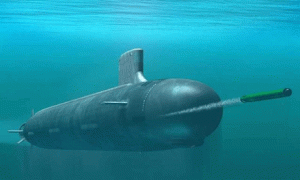 Scottish cold war nuclear submarine collision kept secret for 43 years
Documents published by CIA reveal crash between US and Soviet subs a few miles off coast of Scotland in 1974, Guardian, Matthew Weaver, 26 Jan 17, Two nuclear submarines from rival sides in the cold war collided a few miles off the coast of Scotland in an incident that was covered up for 43 years.
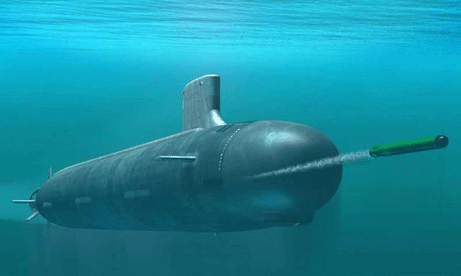
The potentially catastrophic crash occurred in November 1974 when the SSBN James Madison, armed with 16 Poseidon nuclear missiles, was heading out of the US naval base at Holy Loch, 30 miles north-west of Glasgow.
Soon after leaving the port it hit an unidentified Soviet submarine that had been sent to tail it, according to a cable to then US secretary of state Henry Kissinger, marked “secret eyes only” [pdf].
The cable, sent by national security adviser Brent Scowcroft, said: “Have just received word from the Pentagon that one of our Poseidon submarines has just collided with a Soviet submarine.
“The SSBN James Madison was departing Holy Loch to take up station when it collided with a Soviet submarine waiting outside the port to take up trail.
“Both submarines surfaced and the Soviet boat subsequently submerged again. There is no report yet of the extent of damage. Will keep you posted.”
The cable was published by the CIA on 17 January as part of a mass release of more than 12m pages of previously classified reports in 930,000 documents.
The cable corroborates an until-now unconfirmed report on the incident in the Washington Post on 1 January 1975 by the investigative journalist Jack Anderson. He reported that the collision left a 9ft scratch on the side of the James Madison and that the two submarines came within inches of sinking one another.
Another document marked “top secret” [pdf]released in the same batch expressed alarm that the news of the collision had leaked.
It said: “On 3 January, the NID [National Intelligence Daily] ran an item on the collision just off Holy Loch of US Polaris submarine and a Soviet attack submarine. Unfortunately, Jack Anderson had run the same news in the Washington Post a day or two earlier.
“This pre-emption on Anderson’s part forced the surfacing (no pun intended) of a piece of information in a current intelligence 2 months after the event occurred. …..
Kate Hudson, general secretary of the Campaign for Nuclear Disarmament, said the secret cable exposed the “enormous risks” of nuclear weapons.
“The history of nuclear weapons is a history of near misses, accidents, potential catastrophes and cover-ups. This latest example joins 25 other near misses that could have led to nuclear war.”
CND is calling for an inquiry into Trident, the successor to the Poseidon programme, after it emerged that a malfunctioning missile with the potential to carry a nuclear warhead was forced to self-destruct in mid-air off the US coast last June.
Hudson added: “These enormous risks have to be acknowledged particularly when we also now face the increasing likelihood of cyber-attack on nuclear weapons systems. With advancing technological developments added to the already dangerous mix there can be no confidence that nuclear weapons are a credible part of British security in the 21st century……… https://www.theguardian.com/us-news/2017/jan/25/nuclear-submarine-collision-cold-war-cia-scotland
January 27, 2017
Posted by Christina Macpherson |
history, incidents, secrets,lies and civil liberties, UK |
Leave a comment
Europe faces droughts, floods and storms as climate change accelerates
Europe and northern hemisphere are warming at faster pace than the global average and ‘multiple climatic hazards’ are expected, says study, Guardian, Arthur Neslen, 25 Jan 17. Europe’s Atlantic-facing countries will suffer heavier rainfalls, greater flood risk, more severe storm damage and an increase in “multiple climatic hazards”, according to the most comprehensive study of Europe’s vulnerability to climate change yet.
Temperatures in mountain ranges such as the Alps and the Pyrenees are predicted to soar to glacier-melting levels, while the Mediterranean faces a “drastic” increase in heat extremes, droughts, crop failure and forest fires.
Europe and the entire northern hemisphere are warming at a quicker pace than elsewhere, to the extent that tropical diseases such as West Nile fever are expected to spread across northern France by mid-century.
Hans-Martin Füssel, one of the lead authors of the European Environment Agency report, said that scientific evidence was pointing increasingly to a speeding up in the pace of climate change.
We have more data confirming that sea-level rise is accelerating,” he said. “It is not a linear trend, largely due to increased disintegration of ice sheets. There is also new evidence that heavy precipitation has increased in Europe. That is what is causing the floods. The [climate] projections are coming true.”
Earlier this month, Nasa, Noaa and the Met Office confirmed that 2016 had broken the record for the hottest year ever previously held by 2015, which had itself broken the record that had been held by 2014.
The new EEA report finds that land temperatures in Europe in the last decade were 1.5C warmer than the pre-industrial age, although near-surface temperatures – measured at a metre above ground level – were only 0.83C-0.89C warmer……..
In the Arctic, one of the most rapidly warming parts of the planet, many habitats for flora and fauna such as sea ice, tundra and permafrost peat lands have already been lost.
Oxygen-depleted ocean “dead zones” caused by agricultural fertilisers – particularly in the Baltic Sea – and ocean acidification fed by an influx of freshwater from melting continental ice will pose further threats to marine ecosystems, and the indigenous peoples who depend on them.
While retreating sea ice will open up the potential for greater resource exploitation, the report’s authors warn that “utilising Arctic oil and natural gas resources would challenge the transition to a low-carbon society, as it is recommended that two-thirds of known global fossil resources remain in the ground if the 2C warming limit of the UNFCCC [UN framework convention on climate change] is to be met.” https://www.theguardian.com/environment/2017/jan/25/europe-faces-droughts-floods-storms-climate-change-accelerates
January 27, 2017
Posted by Christina Macpherson |
climate change, EUROPE |
Leave a comment
 Czech government presses ahead with nuclear plans as Poland suspends programme, Radio Prague 26-01-2017 Chris Johnstone Same day, two different stories about nuclear power in the Czech Republic and neighbouring Poland.
On Wednesday, the Czech government announced the creation of three working groups to push ahead with plans to build nuclear reactors in the country to replace aged capacity and boost nuclear power production to around half of the country’s electricity needs.
In Warsaw, the Polish finance ministry announced it was suspending its very ambitious nuclear programme aimed at securing future power supplies and curbing the use of coal-fired power plants. The ministry said that previous financing proposals burdening the state budget were simply not acceptable. The nuclear plans could still be revived but other options, such as modern coal plants would also be looked at, the ministry added.
In Prague, the statement from the Ministry of Industry and Trade said that the creation of the new working groups gave new impetus to the government strategy to boost nuclear power. That was agreed mid-way through 2015 by the current government………..
Czech nuclear plans are currently a mixture of the fairly clear, fairly fuzzy, and extremely unclear. It’s clear that a decision will be needed by around 2025 if a new reactor or reactors are to be built at Dukovany to replace the four units there which will be phased out from 2035 onwards. That’s the overwhelming priority. State controlled ČEZ is currently piloting the nuclear preparations, but it could eventually give way to a specially created state company or some joint venture with the international nuclear constructer eventually selected. And the overall power outlook, not just electricity prices but future demand as well given the continued roll-out of renewables and EU moves to curb demand are all also major intangibles.
Some of the targets for the working groups to report back are as early as May and June but other stretch out for the years to come. In theory though the Czech government should be making a decision about whether it will be willing to finance new nuclear capacity by the middle of the year. But whether any decision will be binding on a new government so close to elections is another question.
So, while Wednesday’s news looked so different on the surface, the doubts and uncertainties about new nuclear are widely shared. http://www.radio.cz/en/section/business/czech-government-presses-ahead-with-nuclear-plans-as-poland-suspends-programme
January 27, 2017
Posted by Christina Macpherson |
EUROPE, politics |
1 Comment