 Serious Fraud Office launches probe into Amec Foster Wheeler,Telegraph, Alan Tovey , 11 JULY 2017 Amec Foster Wheeler is being investigated by the Serious Fraud Office over its dealings with Unaoil over possible bribery and corruption through payments to middlemen.
The energy support services group rushed out a regulatory announcement on Tuesday evening confirming the formal launch of a probe by the watchdog.
In May the company signalled it could be in the SFO’s sights in documents relating to its £2.2bn merger with peer Wood Group.
Circulars detailing risks to deal revealed that a Wood Group business “engaged Unaoil and that the joint venture made payments to Unaoil under agency agreements”.
Agency agreements are widely understood to mean payments to third parties which can be used to pay bribes, though there is no indication that this happened with Wood’s joint venture.
At the time Amec said it was co-operating with the SFO, but the regulator’s staff have now decided to launch a formal investigation as a result of what they have discovered.
Unaoil is at the centre of a global corruption scandal with allegations that it paid bribes to secure deals. Petrofac has already been dragged into the scandal with its executives questioned by the SFO, though the company has said previously it has not found any evidence of wrongdoing…..
If the investigations turn into full-scale prosecutions they could result in heavy fines which could deal a huge blow to the merged Amec-Wood business, as they would come after the tow had merged the companies could be liable for huge fines…..Both Amec and a spokesman for Unaoil declined to comment. http://www.telegraph.co.uk/business/2017/07/11/serious-fraud-office-launches-probe-amec-foster-wheeler/
July 29, 2017
Posted by Christina Macpherson |
secrets,lies and civil liberties, UK |
Leave a comment

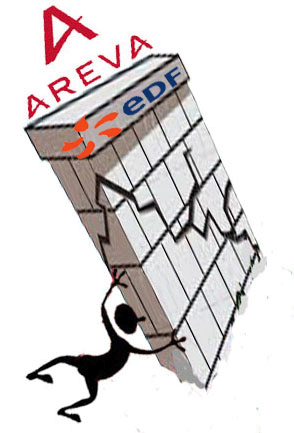
 EDF profits dented by nuclear woes,Telegraph, Jillian Ambrose 28 JULY 2017
Earnings at energy giant EDF have plummeted by a fifth in the first half of this year due to ongoing woes in its French fleet of nuclear reactors and lower profits from those in the UK.
The French state-backed group behind the UK’s first new nuclear plant in a generation, Hinkley Point C, has suffered a major setback to its domestic reactors, some of which have been closed for safety checks since October.
French nuclear power output fell by 3.9pc from the first half of last year to 197.2TWh in the six months to June 30, the group said. Despite a 4.2pc rise in UK EDF’s nuclear generation to 32.2TWh, the fleet of reactors were still a drain on earnings due to the weaker market price for electricity.
The slump in its two core markets wiped more than 20pc from its underlying earnings before interest, tax, debt and amortisation to €7bn (£6.3bn) but the group has assured investors that it remains on track to meet its guidance of between €13.7bn to €14.3bn for the year.
Jean-Bernard Lévy, EDF’s chairman and chief executive, underlined the “unfavourable market context” but said the group’s move towards renewable energy was accelerating……http://www.telegraph.co.uk/business/2017/07/28/edf-profits-dented-nuclear-woes/
July 29, 2017
Posted by Christina Macpherson |
business and costs, France |
Leave a comment
Floods hit northern Germany, force some evacuations, https://www.washingtonpost.com/world/europe/heavy-rain-leads-to-flooding-in-parts-of-germany/2017/07/26/1be4b41c-71e8-11e7-8c17-533c52b2f014_story.html, By Associated Press July 26
BERLIN — Heavy rains led to flooding Wednesday in some parts of northern Germany, forcing some evacuations and prompting residents to pile sandbags in front of their homes to protect themselves from a swollen river.
The center of the town of Goslar, in the mountainous Harz region of northern Germany, west of Berlin, was closed off and a hotel and a home for the elderly were evacuated as its central market square was flooded.
Elsewhere, streets were flooded and basements had to be pumped dry of water in the Harz region, and two stretches of railway lines were closed.
In nearby Hildesheim, people stacked sand bags along the banks of the swelling Innerste River. The fire department in Hildesheim was ready to evacuate more than 1,000 people from a neighborhood threatened by the flooding, the German news agency dpa reported.By Associated Press
July 29, 2017
Posted by Christina Macpherson |
climate change, Germany |
Leave a comment
No drought relief in sight as Rome faces water rationing, Vatican shuts off fountains, By Kristina Pydynowski, AccuWeather senior meteorologist July 27, 2017, There are no signs of the drought ending in Italy in the foreseeable future.
July 29, 2017
Posted by Christina Macpherson |
climate change, Italy |
Leave a comment

 Russia’s $70 Billion ‘Secret’ Spending Lets Money Do the Talking, Bloomberg By
Evgenia Pismennaya and Anna Andrianova, — With assistance by Zoltan Simon, July 26, 2017 As state secrets go, Russia’s program of export finance and loans to other nations might be one of the worst kept.
While discussions about aiding cash-strapped allies frequently spill into the open, the Finance Ministry’s debt chief Konstantin Vyshkovsky says information about individual loans isn’t public and a budget addendum on state financial and export credit is classified as “secret.” But, speaking in an interview at his office a short walk from the Kremlin, Vyshkovsky said Russia has committed about $70 billion in total to such loans, a figure that hasn’t been disclosed before. …..
Russia doesn’t make much effort to keep the spending under wraps, using it to grease political ties and pave the way for projects from China to Hungary for its nuclear energy agency, Rosatom. Some loans also go bad, keeping the subject in the public eye. Most recently, crisis-stricken Venezuela failedto make payments on its debt, opening a 53.9 billion ruble ($900 million) hole in Russia’s expected government revenue this year…….
The vast majority of money made available by the government covers export finance, with the borrower getting Russian products and services and a domestic company receiving the funds. Nuclear projects account for 90 percent of the $70 billion total in state loans, followed by the defense industry and civil aviation, according to Vyshkovsky…….
Unlike most nations that offer guarantees in the form of export insurance for loans made out by commercial banks, what makes Russia’s approach unique is that it provides the funding directly from the budget.
As the example of Hungary’s “deal of the century” shows, money talks. A member of the European Union, it scrapped bids for the expansion of its nuclear plant in 2014 and handed the contract to Rosatom after Russia offered to pre-finance much of the project in the form of a 30-year, 10 billion-euro ($11.7 billion) loan that covered 80 percent of the total cost. At the time, the government, still paying higher borrowing costs because of its junk sovereign credit status, said it had secured a loan at “below-market” rates.
While Rosatom has had less luck in countries like Bulgaria, it’s also involved in building a nuclear plant in Turkey valued at some $20 billion. When it comes to such costly projects, few rivals can match the financial muscle of Russia, which is additionally drawn to offer government backing because politics come into play.
“These are major, long-term loans,” said Vladimir Salnikov, deputy director of the Center for Macroeconomic Analysis and Short-Term Forecasting in Moscow. “The presence of not just economic but also political considerations naturally translates into the state’s increased role in giving such projects financial support.” https://www.bloomberg.com/news/articles/2017-07-25/russia-s-70-billion-secret-spending-lets-money-do-the-talking
July 28, 2017
Posted by Christina Macpherson |
marketing, Russia |
Leave a comment
 NFLA 25th July 2017, The Nuclear Free Local Authorities (NFLA) has written today to the Energy
Minister Greg Clark asking why his announced inquiry into the failings of
the Nuclear Decommissioning Authority (NDA) in having to pay as much as
£100 million of public money for a flawed contract process – over
cleaning-up Magnox nuclear reactors – is being done behind closed doors.
It is also asking when the inquiry will be completed and whether it will be
fully discussed in Parliament and further afield.
http://www.nuclearpolicy.info/news/why-inquiry-nda-magnox-contract-tendering-process-behind-closed-doors/
July 28, 2017
Posted by Christina Macpherson |
secrets,lies and civil liberties, UK |
Leave a comment
Utility Week 25th July 2017,The UK requires more time than the two years withdrawal period outlined in
the Article 50 process to set up its own nuclear safeguarding arrangements,
a leading Liberal Democrat peer has warned.
Lord Wallace said in a debate last week in the House of Lords that it would take five years to train the
nuclear inspectors who will be required to staff up the UK’s replacement
of Euratom, the pan-European safeguarding agency that the British
government has pledged to withdraw from.
The peer, a former deputy first minister of Scotland, said that the nuclear industry required some form of
transitional arrangement. And he said in the long term, the government
needed to stop treating as a red line the continued jurisdiction of the
European Court of Justice in English courts. http://utilityweek.co.uk/news/UK-needs-five-years-to-replace-Euratom/1308222
July 28, 2017
Posted by Christina Macpherson |
politics international, UK |
Leave a comment
BMJ 25th July 2017, A group of leading doctors and healthcare professionals have called on
Britain to work towards multilateral nuclear disarmament. In a letter to
the Daily Telegraph published on 25 July, 15 doctors and health
professionals wrote that Britain should “take a lead in making the world
safer” by working towards multilateral disarmament. The letter’s
signatories include Fiona Godlee, editor in chief of The BMJ, Richard
Horton, editor in chief of the Lancet. http://www.bmj.com/content/358/bmj.j3600
July 28, 2017
Posted by Christina Macpherson |
UK, weapons and war |
Leave a comment
Radiation Free Lakeland 27th July 2017, Peter Bullard the Director of Cumbria Wildlife Trust told campaigners:
“Cumbria Wildlife Trust has been holding this event on the beach at St
Bees for a number of years. You have been raising the issue of safety for a
number of years. The beach is considered a safe place for children to play
by the relevant authorities. We have carried out a risk assessment of the
event and will be holding the event again this year.”
On 30th July. Radiation Free Lakeland point out that the Sellafield Annual Report(pdf)
states that one of the last radioactive particles to be picked up from St
Bees was a tiny metal particle of Cobalt 60 which is a synthetic
radioactive isotope of cobalt with a half-life of 5.2714 years. It is
produced artificially in nuclear reactors.
CWT insist that all radioactive particles have been picked up from St Bees beach. However, Sellafield
themselves admit that their monitoring is limited, they do not pick up all
radioactive particles, monitoring stops over Easter, Summer and Christmas
in order not to frighten beach users. The tide comes in twice a day.
As well as the award Cumbria Wildlife Trust will receive a new report
commissioned by Radiation Free Lakeland and written by the Edinburgh Energy
and Environment Consultancy. The report focuses on the environmental impact
of nuclear reactors and states: “…scientific ignorance of the subject
was so great that eventually the nuclear industry was forced to admit that
sea disposal, particularly in the Irish Sea, had really been an enormous
experiment, but an unfortunate one.
In fact, both soluble and insoluble nuclides can travel for at least several hundreds of kilometres and both
are available for transport out of the sea area of their initial discharge.
Deposition of suspended sediments and their associated radioactivity occurs
(under the influence of a range of mechanisms) into estuarine and coastal
sub tidal sediments, estuarine and coastal fringing inter-tidal mud and
salt flats and offshore sub-tidal sediment deposits.
https://mariannewildart.wordpress.com/2017/07/26/the-last-radioactive-particle-has-been-removed-from-st-bees-cumbria-wildlife-trust-presented-with-award/
July 28, 2017
Posted by Christina Macpherson |
environment, UK |
Leave a comment
 Telegraph 26th July 2017, Do we have enough power to deal with the growth in electric vehicles?
National Grid has warned that the boom in the number of people charging up
their cars could result in a surge in peak demand, requiring hundreds of
billions of pounds worth of investment in new power plants – unless the
electric vehicle revolution is properly managed.
In one scenario National Grid estimates that electric vehicles alone could cause peak power demand
to climb by 1.3 GW a year between 2025 and 2045. This would require the
UK’s shrinking generation capacity to grow by the equivalent of two large
gas-fired power units a year or one £18bn Hinkley Point C nuclear plant
every three years. By 2030 the UK would need 8GW, almost three extra
Hinkley projects, to meet the need of drivers who choose to top up their
vehicles during peak hours.
Fortunately, there’s a better way to accommodate the charge-up demand which could cut the extra power needed by
more than half to a more manageable 3GW increase by the end of the next
decade while saving consumers money. Earlier this week Business Secretary
Greg Clarke fired the starting gun on a battery boom through a £246m
research and development competition, and a new plan to put home batteries
at the heart of its industrial strategy.
The support should help the electric vehicle drive, but also help the energy system to cope with the
higher demand caused by the fleet of new cars. A heady roll out of electric
vehicles is expected to drive the cost of battery storage down at an even
faster rate than expected, meaning drivers could be parking their electric
cars next to affordable home batteries, which are linked to cheap solar
panels.
Currently consumers are only able to use around 30pc of the power
generated by solar panels because their demand picks up once the sun is
setting. But the battery boom means energy users can store the unused solar
power generated during the day to charge their cars at night, saving money
and easing the pressure on the grid.
Major wind farms, including the giant Burbo Bank project off the Liverpool coast, are already connected to
batteries so that energy stored during windy nights can power homes when
demand lifts in the morning. Using renewable energy more effectively also
means costs will fall too. The shift in economics is expected to trigger a
deluge of fresh investment into renewable power projects, without the need
for subsidies. The cumulative impact of more renewable power – and better
use of it – could help meet the demand created by electric vehicles in the
first place. http://www.telegraph.co.uk/business/2017/07/26/electric-vehicles-have-put-energy-sector-road-change/
July 28, 2017
Posted by Christina Macpherson |
energy storage, UK |
Leave a comment
Morning Star 27th July 2017, TWO peace campaigners were released from prison in Scotland yesterday after
an unexpected U-turn by prosecutors who dropped bail demands that they stay
away from protests at nuclear bases.
Angie Zelter, 66, and Brian Quail, 79, both members of the nuclear disarmament campaign group Trident
Ploughshares, were arrested on July 13 during a protest outside the Royal
Naval Armaments Depot at Coulport, where Trident nuclear warheads are
stored.
The pair returned to the justice of peace court — the Scottish
equivalent of a magistrates’ court — in Dumbarton yesterday for an
intermediate hearing on the charges they face. In a surprise move, the
procurator fiscal (public prosecutor) withdrew the demand for the
undertaking to stay away from the two bases and they were given bail.
The pair headed straight to Faslane nuclear submarine base north-west of
Glasgow for another protest after their release. Jane Tallents of Trident
Ploughshares said: “Their principled action was to refuse to say they
would not protest. “The procurator just dropped the insistence on the
condition. http://www.morningstaronline.co.uk/a-d0bc-Anti-nuclear-campaigners-out-of-prison-after-bail-restrictions-lifted
July 28, 2017
Posted by Christina Macpherson |
opposition to nuclear, UK |
Leave a comment
Morning Star 25th July 2017, AN ANTI-NUCLEAR protester being held in a Scottish jail will have her
appeal against special bail conditions heard today. Edinburgh’s Sheriff
Appeal Court will hear the case of Trident Ploughshares founder Angie
Zelter, 66, who was arrested after a blockade of the Coulport nuclear base
on Loch Long earlier this month. Ms Zelter, who was arrested with five
other activists, remains in prison after refusing to undertake not to go
within 100 metres of the Scottish nuclear weapons bases at Coulport and
Faslane. Seventy-nine-year-old retired teacher Brian Quail also refused to
accept the condition and remains in custody. At an initial hearing in
Dumbarton, Ms Zelter argued that, while she has no intention of lying in
the road again, she has every right to protest at the bases. Ms Zelter said
that the Trident nuclear weapons system is illegal as it is an
indiscriminate weapon that, if used, would cause the deaths of millions of
civilians. http://www.morningstaronline.co.uk/a-881a-Anti-nuclear-protester-appeals-bail-conditions
July 28, 2017
Posted by Christina Macpherson |
opposition to nuclear, UK |
Leave a comment
https://www.apnews.com/70c22c24c7d343118dedd9cf82f94124BEVERLY HILLS, Calif. (AP) — HBO says production will begin next year on a miniseries about the Chernobyl nuclear disaster.
The five-part series will star Jared Harris as a Soviet scientist tapped by the Kremlin to investigate the accident.
The series will dramatize the events of the 1986 Ukrainian nuclear catastrophe that resulted in widespread radioactive fallout. Thirty people were killed and more than 100,000 had to be relocated.
HBO announced at the Television Critics Association’s summer meeting on Wednesday that production on “Chernobyl” is set to begin in Lithuania in spring of 2018.
July 28, 2017
Posted by Christina Macpherson |
Resources -audiovicual, Ukraine |
Leave a comment
 Times 23rd July 2017,New questions are being raised about the UK’s £41bn programme to replace
its Trident nuclear deterrent after the cost of building the reactors that
will power the submarine fleet soared.
An extra £235m of taxpayers’ money is needed for the £1.465bn scheme to make and maintain the reactor cores
for the navy’s existing nuclear submarines and the four Dreadnought-class
ballistic missile submarines, the first of which is expected to enter
service in 2028.
Last week a government watchdog gave the project a damning “red” warning. The rating – the severest possible – by officials at the Infrastructure and Projects Authority (IPA), which reports to the Cabinet
Office and Treasury, means a successful delivery of the project “appe ars
to be unachievable” under the original budget and that “there are major
issues on project definition, schedule, budget, quality and/or benefits
delivery, which at this stage do not appear to be manageable or
resolvable.” https://www.thetimes.co.uk/edition/news/red-alert-over-trident-reactorcosts-6np7vsr6b
July 26, 2017
Posted by Christina Macpherson |
UK, weapons and war |
Leave a comment
 Mark Johnson’s Blog 23rd July 2017, In the current UK debate about Euratom, there are three common errors.
July 26, 2017
Posted by Christina Macpherson |
politics, UK |
Leave a comment