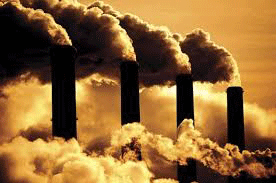
 Independent 11th Aug 2017, The Government has been accused of undermining its own efforts to tackle
climate change after new research revealed it is investing twice as much in
fossil fuel projects overseas as it is in renewables.
Almost half (46 per cent) of the money the UK spent on energy overseas went on fossil fuels
while barely more than a fifth (22 per cent) was spent on renewable energy
sources. The research, commissioned by Catholic charity CAFOD and carried
out by the Overseas Development Institute, analysed spending between 2010
and 2014 – the last period for which data is available.
http://www.independent.co.uk/news/uk/politics/government-fossil-fuels-renewable-energy-uk-export-finance-climate-change-global-warming-co2-a7887376.html
August 12, 2017
Posted by Christina Macpherson |
climate change, politics, UK |
Leave a comment
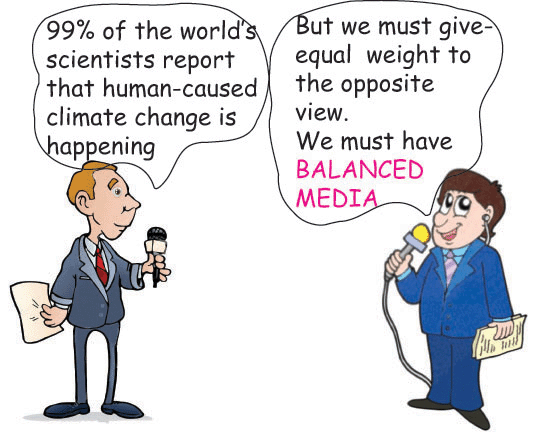
Independent 10th Aug 2017, The BBC has been criticised for inviting a climate change denier to come on
air and voice his belief that global warming isn’t happening. Science
broadcasters including Brian Cox and Jim al-Khalili criticised the decision
to bring on famous denialist Nigel Lawson, apparently to make sure that
there was a balanced debate.
Both pointed out that there is very little debate about global warming – an established fact on which almost every
mainstream scientist is agreed. Lord Lawson was able to make a number of
claims, which went mostly unchallenged. He said, for instance, that the
world had actually become colder over the last 10 years – despite the fact
that 2014, 2015 and 2016 have been the hottest years on record.
Environmental experts including Carbon Brief fact-checked each of the
claims and found that none of them were true. But apparently because Lord
Lawson had been invited on as an opposing voice in a debate – to follow an
interview with Al Gore about his latest climate change film – he was mostly
asked to disagree with the science on global warming and his opinions were
little picked up on.
http://www.independent.co.uk/environment/today-programme-nigel-lawson-al-gore-climate-change-denier-global-warming-bbc-radio-4-inconvenient-a7886426.html
August 12, 2017
Posted by Christina Macpherson |
climate change, media, UK |
Leave a comment
Daily Planet 9th Aug 2017, A UK-based solar developer has this week applied to the Tunisian government
for authorisation to build a 4.5 gigawatt plant in the country, making it a
solar plant large enough to provide carbon-free electricity to over five
million European homes or over seven million electric vehicles.
TuNur is looking to build the new solar complex in the Tunisian Sahara, supplying
energy to both Tunisia and Europe. Three high voltage submarine cable
systems are planned, allowing for the transport of power to Europe with low
loss.
The first will link Tunisia with Malta, which is already connected to
the European grid, and would reinforce the island’s position as a central
Mediterranean energy hub. The second cable, which would come ashore north
of Rome has been under development for several years and is being evaluated
as a “project of common interest” by the European Community.
The project is the latest in a number of solar projects based in North Africa,
and follows the Noor project in Morocco, which launched in 2016. Noor 1, is
the first section, providing 160 megawatts of a total 580 megawatt
capacity. https://dailyplanet.climate-kic.org/tunisian-solar-power-plant-power-five-million-homes-europe/
August 12, 2017
Posted by Christina Macpherson |
EUROPE, renewable |
Leave a comment
Guardian 10th Aug 2017,The drive to replace polluting petrol and diesel cars with a new breed of
electric vehicles has gathered momentum in recent weeks. But there is an
unanswered environmental question at the heart of the electric car
movement: what on earth to do with their half-tonne lithium-ion batteries
when they wear out?
British and French governments last month committed to
outlaw the sale of petrol- and diesel-powered cars by 2040, and carmaker
Volvo pledged to only sell electric or hybrid vehicles from 2019. The
number of electric cars in the world passed the 2m mark last year and the
International Energy Agency estimates there will be 140m electric cars
globally by 2030 if countries meet Paris climate agreement targets.
This electric vehicle boom could leave 11m tonnes of spent lithium-ion batteries
in need of recycling between now and 2030, according to Ajay Kochhar, CEO
of Canadian battery recycling startup Li-Cycle. However, in the EU as few
as 5% (pdf) of lithium-ion batteries are recycled.
This has an environmental cost. Not only do the batteries carry a risk of giving off
toxic gases if damaged, but core ingredients such as lithium and cobalt are
finite and extraction can lead to water pollution and depletion among other
environmental consequences.
There are, however, grounds for optimism. Thus far, the poor rates of lithium-ion battery recycling can be explained by the fact that most are contained within consumer electronics, which
commonly end up neglected in a drawer or chucked into landfill. This won’t
happen with electric vehicles, predicts Marc Grynberg, chief executive of
Belgian battery and recycling giant Umicore. “Car producers will be accountable for the collection and recycling of spent lithium-ionbatteries,” he says. “Given their sheer size, batteries cannot be stored at
home and landfilling is not an option.” https://www.theguardian.com/sustainable-business/2017/aug/10/electric-cars-big-battery-waste-problem-lithium-recycling
August 12, 2017
Posted by Christina Macpherson |
RARE EARTHS, UK |
Leave a comment
Guardian 10th Aug 2017, Norway’s plan to ramp up oil and gas production in the Arctic threatens
global efforts to tackle climate change, according to a new study.
The research says 12 gigatonnes of carbon could be added by exploration sites
in the Barents Sea and elsewhere over the next 50 years, which is 1.5 times
more than the Norwegian fields currently being tapped or under
construction.
The authors of the report from Oil Change International – an
NGO backed by Friends of the Earth, WWF and Greenpeace – say this
undermines the 2015 Paris agreement to cut worldwide emissions in order to
keep the planet’s temperature rise to between 1.5C and 2C.
The report highlights the “cognitive dissonance” between Norway’s progressive domestic
measures to comply with the Paris agreement on emissions cuts and its role
as Europe’s biggest exporter of fossil fuels.
https://www.theguardian.com/environment/2017/aug/10/norways-push-for-arctic-oil-and-gas-threatens-paris-climate-goals-study
August 12, 2017
Posted by Christina Macpherson |
ARCTIC, climate change, EUROPE |
Leave a comment
 Carbon Brief 10th Aug 2017, Factcheck: Lord Lawson’s inaccurate claims about climate change on BBC
Radio 4. The Today programme, BBC Radio 4’s flagship current affairs
breakfast show, featured a prominent five-minute interview this morning
with the climate sceptic Conservative peer Lord Lawson.
Lawson was asked by the presenter Justin Webb to respond to Webb’s earlier interview with Al
Gore. The former US vice president is in the UK promoting his new
documentary, The Inconvenient Sequel: Truth to Power, a follow-up to his
Oscar-winning film released a decade ago.
Lawson, who has a history ofcontroversial appearances on the Today programme, made a number of
inaccurate claims throughout his interview. It has already attracted
widespread criticism from scientists. Carbon Brief has transcribed and
annotated the interview to highlight and contextualise the errors. https://www.carbonbrief.org/factcheck-lord-lawson-inaccurate-claims-about-climate-change-bbc-radio-four
August 12, 2017
Posted by Christina Macpherson |
media, UK |
Leave a comment
Poland speaks out harshly against Belarusian nuclear plant, Poland has lent its voice to a growing chorus of countries that won’t buy power from the Belarusian Nuclear Power Plant that Moscow is building in Ostrovets because it considers the project to be unsafe, RIA Novosti reported, Bellona, August 9, 2017 by Charles Digges, Poland has lent its voice to a growing chorus of countries that won’t buy power from the Belarusian Nuclear Power Plant that Moscow is building in Ostrovets because it considers the project to be unsafe, RIA Novosti reported.
Warsaw joins Lithuania in its dour appraisal of the project despite recent assurances from the International Atomic Energy Agency that the plant meets safety norms.
Saying Warsaw “has a different opinion” than the IAEA, Polish Foreign Minister Witold Waszczykowski told reporters “We won’t change our position on buying energy from this atomic station.”
“I think that at its foundation lies unsafe technology, and a lack of safety led to Chernobyl,” he said, adding “We are against this nuclear station and don’t plan to cooperate and buy its energy.”
Waszczykowski’s remarks Tuesday were the latest of the stinging rebukes from Eastern Bloc nations against the Belarusian nuclear plant, which have been running on high volume in recent months.
The VVER-1200 nuclear plant, built on a whopping export credit from Russian state nuclear corporation Rosatom, is expected to come online in 2020.
In April, Vilnius passed a law against buying energy from what its parliament termed “unsafe nuclear power plants in third countries,” and forbidding utilities from transferring energy from such plants through the country’s territory.
The legislation’s clear target, however, is the Belarusian plant, which is going up a mere 40 kilometers from the Lithuanian capital, from which its rising cooling towers are visible on a clear day.
Since May, Lithuania has mounted a campaign among its diplomats throughout Europe to heap criticism on the plant to anyone willing to listen.
Tomas Tomilinas, a Lithuanian parliamentarian recently told Bellona that his country’s opposition to the plant was nothing less than a question of national security.
“Here there cannot be any compromises in questions of guaranteeing the safety of our country and its capital Vilnius,” Tomilinas told Bellona. “We absolutely disagree with the choice of site for the plant and are unsatisfied with answers from the Belarusian side on a whole host of safety issues and incidents that have already occurred during construction.”
Anxieties about the plant have simmered among Belarus’s neighbors since 2010, but redoubled since the plant’s construction site saw a series of clumsy mishaps……..http://bellona.org/news/nuclear-issues/2017-08-poland-speaks-out-harshly-against-belarusian-nuclear-plant
August 11, 2017
Posted by Christina Macpherson |
Belarus, EUROPE, politics international |
Leave a comment
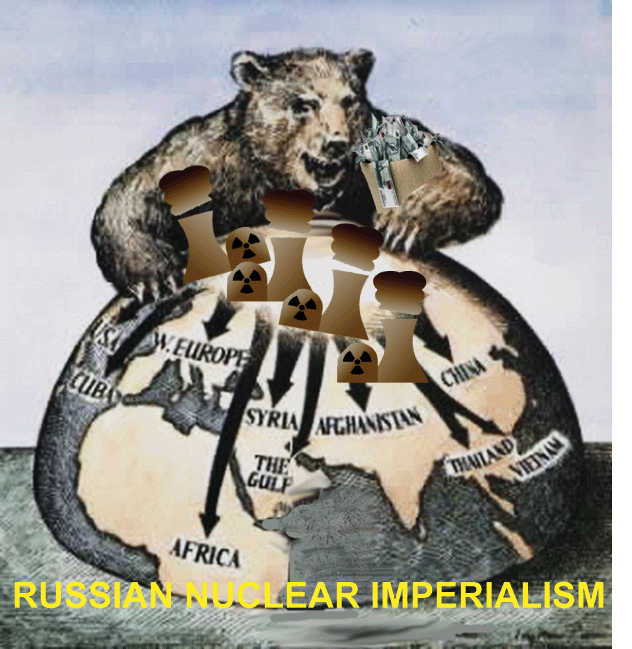
 Poland speaks out harshly against Belarusian nuclear plant Poland has lent its voice to a growing chorus of countries that won’t buy power from the Belarusian Nuclear Power Plant that Moscow is building in Ostrovets because it considers the project to be unsafe, RIA Novosti reported, Bellona, August 9, 2017 by Charles Digges, “………Since the early 2000s, many in the West see Russia’s ambitions to built nuclear plants abroad as attempt to cast Moscow’s apron strings into the European Union.
By fully financing reactor builds, they say, the Kremlin is offering a Faustian bargain: energy independence in exchange for long-term debt and Moscow friendly politics.
The Moscow-leaning government of Viktor Orban in Hungary is a good example. Budapest relies on a Soviet-built nuclear power plant for 50 percent of its electricity, and recently signed a €12 billion deal for a second Russia-built plant. Budapest is now also less likely to pester Moscow over sensitive issues like Russia’s covert war in Ukraine.
That’s because Moscow has a habit of settling political disputes by shutting off the power and heat in places where it has built infrastructure. Disputes between Russia and Ukraine, which remain bitter, led to cuts in Europe’s gas supply from Russia during the winter in 2006 and 2009.
Lithuania’s law against the Ostrovet’s plant is Vilnius’s attempt to opt out of being a hostage to Moscow’s new zero-sum nuclear energy policy, and Poland seems to agree.
These boycotts against buying nuclear power have been enormously effective in shutting down other unpopular nuclear builds in the region.
A Russian nuclear plant in the Kaliningrad enclave was quietly shelved in 2011 when Poland declared it wouldn’t help out with financing.
Lithuania’s own plans for a nuclear power plant took a more tortured route. Since 2009, the country has been trying, unsuccessfully, to kindle investment interest in its own Visaginas nuclear power plant to replace the Soviet-built Ignalina station.
A decisive blow against that project came, however, when Poland, as it had done in Kaliningrad retracted financing offers. http://bellona.org/news/nuclear-issues/2017-08-poland-speaks-out-harshly-against-belarusian-nuclear-plant
August 11, 2017
Posted by Christina Macpherson |
Belarus, Russia, secrets,lies and civil liberties |
Leave a comment
 BBC 8th Aug 2017, A bomb believed to be from World War Two has been found in the Bristol
Channel near Hinkley Point nuclear power station. The 500lb device was
discovered 2.5 nautical miles from the coast, about 8m below the surface.
Divers conducting a survey for the construction of the new power station
found the ordnance on Monday. It was destroyed in a controlled explosion at
about 15:00 BST on Tuesday. The “unusual” ordnance was found off Lilstock
Range, just west from Steart point and Bridgwater in Somerset.
The coast around Lilstock was used as part of a practice bombing range for the Royal
Navy. EDF Energy said its team of divers made the discovery 8m below the
surface while checking the seabed ahead of the construction of the main
cooling water tunnels for new Hinkley Point C nuclear power station being
built. http://www.bbc.co.uk/news/uk-england-bristol-40865105
August 11, 2017
Posted by Christina Macpherson |
incidents, UK |
Leave a comment
 CORE 9th Aug 2017, Respondents to NuGen’s Stage 2 Moorside public consultation which closed
one year ago will learn little from NuGen’s response to CORE’s open
letter to its CEO Tom Samson on 30th June.
Refusing to comment on some of CORE’s questions on the grounds that ‘they are commercial processes’,
NuGen has confirmed only that it intends to publish a Stage 2 interim
consultation report – ‘but this has been deferred to ensure that
changes which arise as a result of the reviews (an engineering and wider
strategic review) are appropriately reflected in the report, which will
reflect both the feedback that NuGen received and detail how NuGen will
take that feedback into account’.
CORE’s spokesman Martin Forwood commented today that “NuGen’s inability to level with consultees,
however uncertain Moorside’s prospects, reflects the extent of the
turmoil facing its project and makes a mockery of its claim that
‘openness and transparency about our plans is the key to building
trust”.
The latest news of the plug being pulled on the half-built AP1000
reactors in the US and the fall from grace on the Tokyo Stock Exchange of
NuGen’s sole investor Toshiba will further add to the increasing
uncertainties swirling around in the Moorside mists”. http://corecumbria.co.uk/news/nugen-consultees-kept-in-the-dark-as-moorside-turmoil-increases/
August 11, 2017
Posted by Christina Macpherson |
business and costs, UK |
Leave a comment
Solar Power Portal 9th Aug 2017, Soaring generation from the UK’s solar assets sent UK power demand to a
new low last month, according to data compiled by monitoring firm EnAppSys.
 The data showed that average half-hourly demand throughout July stood at
26.2GW, courtesy of a significant amount of embedded generation from
sources such as rooftop solar. These sources are seen on the grid as demand
reduction and, as a result, reduce the amount of power that is drawn down
from the grid.
Throughout July the average embedded generation figure stood
at 3GW. Solar and other renewables have already witnessed a number of new
generation records this year, particularly in Spring. Unseasonable weather
in April helped solar to a new landmark generation record.
https://www.solarpowerportal.co.uk/news/soaring_solar_sends_uk_power_demand_to_eight_year_low
August 11, 2017
Posted by Christina Macpherson |
decentralised, UK |
Leave a comment
Open Democracy 10th Aug 2017, Three decades after the Chernobyl nuclear accident in Ukraine, Belarus is
building its first nuclear power station. Concerns about the project’s
safety aren’t deterring the authorities. Speaking near the site of the
Chernobyl nuclear disaster on the 31st anniversary of the accident this
April, Belarusian president Alexander Lukashenka remarked that “both
Belarusians and Ukrainians know that the Chernobyl catastrophe knows no
borders”, in reference to the fact that 70% of the radioactive dust
created in the 1986 chemical explosion descended on Belarus.
Following the same logic, the authorities of neighbouring Lithuania are trying to raise
the alarm about Belarus’s construction of its first nuclear power plant,
which they believe to be the next nuclear disaster in waiting.
One of the major complaints concerns the choice of location. Set near the small town
of Astravets, less than 50km from Vilnius, the site also falls within an
earthquake-prone area.
Lithuanian authorities allege that Belarus did not
conduct a cross-border environmental impact assessment, in breach of the
Espoo Convention, and that in an event of a large-scale accident at the
nuclear plant, the Lithuanian capital, as well as a third of the
country’s population, could face catastrophic consequences.
https://www.opendemocracy.net/od-russia/lidia-kurasinska/new-chernobyl-at-your-doorstep
August 11, 2017
Posted by Christina Macpherson |
Belarus, safety |
Leave a comment
 Toshiba’s $8.8bn loss reignites fears over Cumbria nuclear project, Telegraph, 10 AUGUST 2017 • The Japanese consortium behind the UK’s largest planned new nuclear project has unveiled an annual loss of almost $9bn (£6.9bn), underlining the stark risks of the Government’s high-cost nuclear ambitions.
Toshiba has delayed publishing its full-year results while teams of auditors pore over the financial damage wrought by the collapse of its US-based nuclear developer Westinghouse, before finally revealing the $8.8bn (£6.7bn) loss for 2016 three months later than planned.
The electronics giant has avoided crashing out of the Tokyo stock exchange for filing its accounts late, but its commitment to building the Moorside power plant in Cumbria remains in doubt.Toshiba is now the only investor propping up the Nugeneration consortium that plans to build the 3.8GW Moorside project, and the approved reactor design is Westinghouse-made.
The GMB union said the “fiasco” over Toshiba’s financial state “highlights the folly of allowing foreign companies to be in control of the UK’s critical future energy needs”…….
August 11, 2017
Posted by Christina Macpherson |
business and costs, UK |
Leave a comment


 The Europeans have 90 days to save the nuclear agreement with Iran .http://thebulletin.org/europeans-have-90-days-save-nuclear-agreement-iran10992, IAN J. STEWART, Ian Stewart heads Project Alpha at King’s College London and directs the European Non-proliferation and Security Initiative at the Vienna Center for Disarmament and Non-proliferation.8 Aug 17
The Trump administration and Iran are risking Europe’s strategic interests. The European states had pursued a peaceful but verifiable agreement on the Iran nuclear issue since the early 2000s and were key to achieving the nuclear agreement with Iran. The European Union and its member states were among the key actors in negotiating the JCPOA and are now centrally involved in ensuring that Iran adheres to (and doesn’t cheat on) the agreement. This European involvement includes chairing the Joint Commission, the mechanism accepted by all parties and endorsed by the United Nations Security Council as responsible for ensuring that the agreement is fully implemented by all sides.
To date, it has also been the Europeans who have adhered most closely to the letter of the agreement. European countries have lifted sanctions as required by the JCPOA and have engaged in civil nuclear cooperation with Iran on issues like nuclear security. European businesses have also begun to re-engage with Iran, including through one particularly large contract between the French oil company Total and the National Iranian Oil Company to develop a phase of the South Pars oil field. At the same time, European States have taken a firm line when Iran has pushed the bounds of the JCPOA, including its technical violation of the heavy water cap and proposals to import large quantities of uranium from Kazakhstan.
For its part, however, Iran has largely adhered to both the letter and the spirit of the JCPOA. Iran has destroyed the core of the Arak reactor and dismantled vast numbers of centrifuges. And its technical violations have been relatively minor to date. Worryingly, there are signs that Iran has also engaged in some higher risk activities, such as a previously underreported case involving the import of carbon fibre for its missile program, a dual‑use material subject to export controls under the Nuclear Suppliers Group guidelines. But to be clear, this case was not considered a violation of the JCPOA by the United States, as the agreement covers only the import of dual-use goods for “Iran’s nuclear programme [as] set out in this JCPOA or other non-nuclear civilian end-use.” Counterintuitively, this language means that imports of nuclear-related dual-use items for a missile-related end use are not considered “civil” and are therefore a violation not of the JCPOA but of UNSCR2231, which prohibits development of missiles capable of carrying nuclear weapons. In this case, Iran is evidently pushing the bounds of what is allowed under the JCPOA.
Despite the Trump administration’s rhetoric, the United States has also largely lived up to its commitments under the JCPOA. In particular, the United States lifted—and doesn’t appear to be planning to reverse—its own nuclear-related sanctions. (Washington has taken additional action in relation to Iran’s ballistic missile program, including through the designation of additional entities to be sanctioned.)
Amid this general adherence to the JCPOA, however, President Trump’s harsh anti-Iran rhetoric and the opposition of Iranian hardliners and Iran’s Islamic Revolutionary Guard Corps risk undermining the nuclear agreement—an agreement that has undoubtedly has set back Iran’s nuclear weapons potential by many years and is in Europe’s strategic interests.
There’s much more that Europe could do.The Iran nuclear agreement belongs as much to Europe as it does to the other countries involved. European states demonstrated that they were willing to take an economic hit from sanctions to bring the agreement about. They have also invested heavily on the diplomatic front to both achieve and maintain the JCPOA. There is now no question that the European states wish to see full, continued implementation of the JCPOA and would only change this view if Iran committed an egregious violation. For these reasons, the European states have embarked upon a diplomatic and public campaign to persuade the United States that it must not withdraw from the agreement.
To sustain the JCPOA, however, the Europeans must urgently undertake three additional actions to demonstrate to both the United States and Iran that Europe will implement the JCPOA for as long as Iran is in compliance.
First, the Europeans should again explore the possibility of creating a safe financial channel for transactions with Iran. This move would have the dual benefit of encouraging trade with Iran, which has hitherto been slow to pick up, while also making clear to hardliners in the United States that it could not, on its own, undermine the JPCOA by leveraging the international financial system. Second, Europe should be prepared to adopt further sanctions on Iran for any violations of Security Council resolution 2231. This should include both missile launches and violations of the procurement restrictions mentioned above. These two actions would make clear that Europe is committed to implementing the JCPOA regardless of the actions of the United States and, at the same time, that the European countries are not willing to accept egregious action by Iran.
The European Union should embark on a third action. Presently the JCPOA is the best mechanism to ensure that Iran’s nuclear program stays peaceful, but the value of the agreement’s restrictions will reduce over time. By the mid-2020s, Iran will again be scaling up its enrichment effort. Therefore, the EU should begin to search for a longer-term solution both to the Iran nuclear issue and to broader regional tensions. This might best be pursued in the short term through the holding of bilateral dialogues and through civil society discourse on relevant security issues, including the nuclear issue and broader regional security issues.
Europe’s interest and President Trump’s interest align. Although President Trump might feel he can do without the Obama-era JCPOA, in reality the agreement is the best mechanism for both the Europeans and the United States to ensure the peaceful nature of Iran’s nuclear program—at least for the next decade. It is also in the interest of Iran and its people. As such, it is appropriate for the Europeans to use its position and influence to ensure the sustainability for the JCPOA for as long as the IAEA confirms Iran’s compliance.
The Trump administration might resist the idea of a safe European financial channel with Iran or European leadership in relation to broader regional issues. It should nonetheless be willing to accept these measures, given that the result would be to ensure the continued peaceful nature of Iran’s nuclear program. The alternative would be for the United States to unilaterally weaken is position vis-à-vis Iran and diminish its control over the global financial system, which would be counter to broader US security interests.
President Trump must ultimately decide within 90 days on whether to recertify Iran in compliance or to jeopardize the security interests of both the United States and its closest allies.
August 9, 2017
Posted by Christina Macpherson |
EUROPE, Iran, politics international |
Leave a comment
 Nuclear-concerned Norway wants to give iodine tablets to citizens, The Local, 8 Aug 17Aging nuclear power plants across Europe as well as increasing tensions between Russia and the West also concern Norwegian authorities, writes NRK.
The Dmitry Donskoi sailed through Danish territorial waters in July as part of a joint exercise between the Russian and Chinese navies.
The Dmitry Donskoi sailed through Danish territorial waters in July as part of a joint exercise between the Russian and Chinese navies. The presence of nuclear submarines along the coast of Norway means an increased risk of accidents, according to Norwegian authorities.
Maritime visits such as those from the 172-metre-long Russian sub Dmitry Donskoi, the world’s largest nuclear submarine currently sailing off Norway’s coast, are no longer a rare event, according to the Norwegian Radiation Protection Authority (Statens strålevern, NRPA).
The Russian vessel can carry up to 200 nuclear warheads and is powered by two nuclear reactors.
“We have seen an increasing number of nuclear submarines off Norway’s coast – both visiting allies and Russian submarines patrolling off the coast all the way to Great Britain,” NRPA section manager Astrid Liland told NRK.
Increased numbers of nuclear submarines along the coast of Norway increase the risk of radioactive accidents, say authorities, who have now decided to assess the viability of distributing iodine tablets to parts of the population.
“An accident of this kind with a nuclear-powered submarine could actually occur anywhere along our coast,” Liland said to NRK. A study group has been assigned to analyse how iodine tablets, sometimes used as a preventative measure against thyroid cancer in children and young adults after nuclear accidents, can be made available to that group, as well as to women who breastfeed.
For the tablet to have any effect, it must be taken within hours of any exposure to radioactive iodine.
43 crates containing a total of three million iodine tablets are already being stored at a depot in Oslo as one of Norway’s nuclear contingency precautions.
These tablets could be distributed to municipalities in the relevant areas.
Nuclear submarines are not the only reason for the Norwegian authorities’ increased concern over radioactive accidents.
Aging nuclear power plants across Europe as well as increasing tensions between Russia and the West also concern Norwegian authorities, writes NRK.
The Dmitry Donskoi sailed through Danish territorial waters in July as part of a joint exercise between the Russian and Chinese navies.
August 9, 2017
Posted by Christina Macpherson |
EUROPE, safety |
Leave a comment