France’s Climate Science Grants Want To Make The Planet Great Again–And Thousands Have Applied
France’s response to the U.S. withdrawal from the Paris climate accord was to offer safe harbor for scientists and entrepreneurs who might lose funding in the U.S. For worried Americans, it might be a good deal. Fast Company, BY ADELE PETERS , In the past, a young American climate researcher with a PhD might have applied to work at NASA or NOAA. Now, some are considering moving to Europe instead.
Since French president Emmanuel Macron announced the “Make Our Planet Great Again” initiative on June 1–inviting climate researchers, entrepreneurs, and nonprofits to come to France, hours after Trump announced his intention to withdraw from the Paris climate agreement–roughly 11,000 people have applied. The program offers $69 million in support to selected applicants; Germany recently announced that it will join France and offer another $17 million….
The grants are flexible, with no set limits on the amount of time someone can work in France or preference for particular research areas or businesses, as long as they address climate change and are judged to have strong potential…….
“In the U.S., the current administration seems poised to do real damage to U.S. climate science, both in terms of critical observations and the science that goes with it,” says Dennis Hartmann, a professor in the Department of Atmospheric Sciences at the University of Washington. “The effects would be long lasting, as young scientists, especially, would be forced out of the field, and critical observational information would be lost, and some long-term time series broken……
After France made its offer, others have followed: Germany plans to launch its own website as a partner to the initiative. The U.K. also launched a new fund–though not specifically focused on climate–designed to attract international researchers. Canada is similarly investing in a new program to attract international researchers.
France’s program, like the others, is open worldwide, but Americans make up many of the applicants, likely both because of the strength of American academia and business and the current political climate…..
France is hoping that the program can be part of helping the world meet–and even go beyond–the objectives of the Paris agreement to limit global warming. “If collectively, all over the world, we achieve to respect that agreement, it would be a great thing,” says the Elysée source. “Secondly, we want to improve research and an understanding of our world and climate phenomena. A third aspect is that we expect it to deliver hope . . . we do believe that cleantech can offer new jobs, new industries of the future.” https://www.fastcompany.com/40446915/frances-climate-science-grants-want-to-make-the-planet-great-again-and-thousands-have-applied
Utility Week 15th Aug 2017, Major players in the nuclear industry have been summoned by the government
to present their plans for the development of small modular reactors.
NuScale and Rolls-Royce among companies reportedly invited to talks with
the government over the next few weeks. Hitachi and Westinghouse have also
been invited.
The meeting is likely to relate to a competition launched by
the government in March 2016 to find the best value SMR design for the UK.
The results were originally due to be revealed last autumn alongside a
roadmap for the development of SMRs. Appearing before the House of Lords
science and technology committee in March former energy minister Jesse
Norman told members the competition would be “back on track” soon. http://www.utilityweek.co.uk/news/nuclear-players-to-present-smr-plans-to-ministers/1309792
Jersey Evening Post 15th Aug 2017, TRACES of radioactive material have been unearthed by construction workers
at the Flamanville nuclear site – less than 30 miles from Jersey’s
coast.
The incident has been reported to the French nuclear regulator ASN
– the Autorité de Sûreté Nucléaire – and has been classed as a
‘Significant Environmental Event’. Employees were said to have been in
the process of clearing 8,700 tons of non-nuclear waste as part of a larger
project to build a car park, when they came across nearly 100 suits used by
technicians working in zones exposed to nuclear activities. A spokesman for
the plant said that the construction had been stopped following the
incident and that some of the waste had been in the ground since 1989. http://jerseyeveningpost.com/news/2017/08/15/radioactive-material-unearthed-at-p
Jordan in talks with Russia on financing solutions for nuclear reactor2017-08-17 AMMAN, (Xinhua)— Jordan on Wednesday said talks were still ongoing with Russia to secure the best financing solutions to build the country’s first nuclear power plant.
The Jordan Atomic Energy Commission said in a statement that the two countries were still committed to the project to build a nuclear power plant in Jordan with two reactors each having a capacity of 1,000 megawatts.
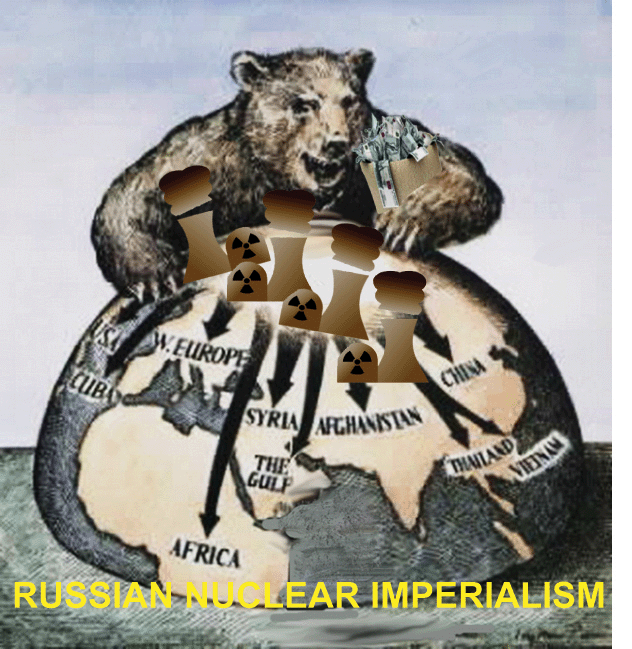
Russia’s Rosatom, the state atomic energy corporation, has been keen on implementing the project since its inception and is involved in the project with all its technical and financial aspects, the commission said, quoted by the Jordan Times.
The commission’s statement came following some local reports claiming that the Russian company was looking into withdrawing from the project and it has already submitted a request to Jordan in this regard…….
Jordan will secure 1.5 billion U.S. dollars and Russia will do the same for building the plant, which is estimated to cost 10 billion dollars. The rest will be financed by banks and funds.
Sakharov become an ardent supporter of the 1963 Partial Test Ban, and an outspoken critic of nuclear proliferation and, in the late 1960s, anti-missile defences that he feared would spur another nuclear arms race. He became increasingly ostracised by the state, a dissident against oppression who would in 1975 be awarded the Nobel Peace Prize, and referred to as “the conscience of mankind”, says von Hippel.
The monster atomic bomb that was too big to use, In 1961, the Soviet Union tested a nuclear bomb so powerful that it would have been too big to use in war. And it had far-reaching effects of a very different kind. By Stephen Dowling, BBC, 16 August 2017, On the morning of 30 October 1961, a Soviet Tu-95 bomber took off from Olenya airfield in the Kola Peninsula in the far north of Russia……
nothing the Soviet Union had tested would compare to this.
TSAR BOMBA – Most Horrific Man-made Explosion in History – USSR Hydrogen Bomb
The Tu-95 carried an enormous bomb underneath it, a device too large to fit inside the aircraft’s internal bomb-bay, where such munitions would usually be carried. The bomb was 8m long (26ft), had a diameter of nearly 2.6m (7ft) and weighed more than 27 tonnes. It was, physically, very similar in shape to the ‘Little Boy’ and ‘Fat Man’ bombs which had devastated the Japanese cities of Hiroshima and Nagasaki a decade-and-a-half earlier. The bomb had become known by a myriad of neutral technical designations – Project 27000, Product Code 202, RDS-220, and Kuzinka Mat (Kuzka’s Mother). Now it is better known as Tsar Bomba – the ‘Tsar’s bomb’……
It was more than a metal monstrosity too big to fit inside even the largest aircraft – it was a city destroyer, a weapon of last resort…… In order to give the two planes a chance to survive – and this was calculated as no more than a 50% chance – Tsar Bomba was deployed by a giant parachute weighing nearly a tonne. The bomb would slowly drift down to a predetermined height – 13,000ft (3,940m) – and then detonate. By then, the two bombers would be nearly 50km (30 miles) away. It should be far enough away for them to survive.
Tsar Bomba detonated at 11:32, Moscow time. In a flash, the bomb created a fireball five miles wide. The fireball pulsed upwards from the force of its own shockwave. The flash could be seen from 1,000km (630 miles) away.
The bomb’s mushroom cloud soared to 64km (40 miles) high, with its cap spreading outwards until it stretched nearly 100km (63 miles) from end to end. It must have been, from a very far distance perhaps, an awe-inspiring sight.
On Novaya Zemlya, the effects were catastrophic. In the village of Severny, some 55km (34 miles) from Ground Zero, all houses were completely destroyed (this is the equivalent to Gatwick airport being destroyed by a bomb that had fallen on Central London). In Soviet districts hundreds of miles from the blast zone, damage of all kinds – houses collapsing, roofs falling in, damage to doors, windows shattering – were reported. Radio communications were disrupted for more than an hour.……
Tsar Bomba unleashed almost unbelievable energy – now widely agreed to be in the order of 57 megatons, or 57 million tons of TNT. That is more than 1,500 times that of the Hiroshima and Nagasaki bombs combined, and 10 times more powerful than all the munitions expended during World War Two. Sensors registered the bomb’s blast wave orbiting the Earth not once, not twice, but three times……
One of the architects of this formidable device was a Soviet physicist called Andrei Sakharov – a man who would later become world famous for his attempts to rid the world of the very weapons he had helped create. He was a veteran of the Soviet atomic bomb programme from the very beginning, and had been part of the team that had built some of the USSR’s earliest atom bombs…….
With such immense power, there would be no guarantee that the giant bomb wouldn’t swamp the north of the USSR with a vast cloud of radioactive fallout.
That was of particular concern to Sakharov, says Frank von Hippel, a physicist and head of Public and International Affairs at Princeton University.
“He was really apprehensive about the amount of radioactivity it would create,” he says, “and the genetic effects that could have on future generations
“It was the beginning of his journey from being a bomb designer to becoming a dissident.”…….
The Soviets had built a weapon so powerful that they were unwilling to even test it at its full capacity. And that was only one of the problems with this devastating device.
The Tu-95 bombers built to carry the Soviet Union’s nuclear weapons were designed to carry much lighter weapons. The Tsar Bomba was so big that it couldn’t be placed on a missile, and so heavy that the planes designed to carry it wouldn’t have been able to take them all the way to their targets with enough fuel. And, if the bomb was as powerful as intended, the aircraft would have been on a one-way mission anyway…..
Tsar Bomba had other effects. Such was the concern over the test – which was 20% of the size of every atmospheric test combined before it, von Hippel says – that it hastened the end of atmospheric testing in 1963. Von Hippel says that Sakharov was particularly worried by the amount of radioactive carbon 14 that was being emitted into the atmosphere – an isotope with a particularly long half-life. “This has been partly mitigated by all the fossil fuel carbon in the atmosphere which has diluted it,” he says.
Sakharov worried that a bomb bigger than the one tested would not be repelled by its own blastwave – like Tsar Bomba had been – and would cause global fallout, spreading toxic dirt across the planet.
Sakharov become an ardent supporter of the 1963 Partial Test Ban, and an outspoken critic of nuclear proliferation and, in the late 1960s, anti-missile defences that he feared would spur another nuclear arms race. He became increasingly ostracised by the state, a dissident against oppression who would in 1975 be awarded the Nobel Peace Prize, and referred to as “the conscience of mankind”, says von Hippel.
Times of India 16th Aug 2017,Utility EDF must review all components of its nuclear reactors that were
made by Areva’s foundry Creusot Forge by the end of 2018, French nuclear
regulator ASN said in a statement on Wednesday. The ASN did not say that
EDF would have to halt its reactors for the review, but the company would
have to provide the required documentation for each reactor two months
before it could restart the reactors following refueling. A spokeswoman for
EDF told Reuters the company does not expect any impact on power generation
and that the ASN’s timing had been integrated in its reactor maintenance
schedule.
IPPR 16th Aug 2017, The implications of the UK’s withdrawal from the European Union are
particularly significant for the energy sector. This uncertainty
surrounding Brexit negotiations in turn raises specific regional concerns.
The North as a whole boasts 48 per cent of the UK’s renewable power,
including 71 per cent of England’s biomass generation, 41 per cent of UK
wind power and 40 per cent of UK installed nuclear capacity. Concerns over
the retention of mechanisms and legislation that support the energy sector
are therefore particularly pressing for businesses and other energy
stakeholders in the North. https://www.ippr.org/research/publications/impact-of-brexit-on-energy-in-the-north
Energy Transition 11th Aug 2017, Since the 1950s, the Euratom Treaty has encouraged large investments into
nuclear energy projects and funding for nuclear research. In all this time,
the treaty was never revised to suit present-day demands.
The trend towards cheaper renewable energy is ignored, while millions of euros that go
towards nuclear research are legitimated. Cordula Büsch takes a look at
why the Euratom treaty needs to be reformed, if not abolished.
Theresa May has explicitly mentioned in her letter to the EU Council which officially
triggered article 50 in March that the UK will leave the Euratom treaty,
despite Euratom membership not being connected to EU membership.
Perhaps this can be taken as an opportunity, a wake-up call, to finally discuss the
dissolving of Euratom altogether. Just like the Brexit negotiations, this
will bear many challenges and open questions, such as the future of the
long-term ITER project to build a fusion reactor. In 2012-2013 Euratom
funded the ITER project with the substantial amount of EUR 2.2 billion.
Nonetheless, it should be a necessity to discuss the future of Euratom,
especially now at a time when demands to reform the EU are voiced by the
remaining 27 members. The current trend shows that more European countries
are thriving to shut down their nuclear power plants. There are also more
countries without nuclear power plants among the EU27 than those keeping up
their support of nuclear energy.
With Belgium and Germany joining the group
of countries without nuclear power plants within the next 8 years, this
group will entail 15 member states. The support for nuclear energy is
steadily shrinking and with the UK, a nuclear power nation is soon leaving
the EU, which changes proportionalities within the union. Even France has
issued the Energy Transition for Green Growth bill preparing to cut down
nuclear energy to 50% by 2025.
Global Warming Policy Foundation concedes that the Tory peer’s supposedly official figures were wrong and produced by a right-wing think tank, Ian Johnston Environment Correspondent @montaukian 15 aug17, A claim by Britain’s leading climate science sceptic, Nigel Lawson, that the world’s average temperature has fallen in the past 10 years was based on an “erroneous” temperature chart, his think tank, the Global Warming Policy Foundation, has admitted.
The former Tory Chancellor was interviewed on BBC Radio 4’s Today programme about the release of former US Vice-President Al Gore’s new film, The Inconvenient Sequel: Truth to Power, which describes how climate change is already having significant effects on the planet but also that the plunging cost of renewable energy means there is a solution.
The film points out the world’s average temperature had hit the highest on record for three years in a row – 2014, 2015 and 2016 – and an increase in extreme weather events.
His first film in 2006, An Inconvenient Truth, predicted that site of the 9/11 memorial would face an increased risk of being flooded as sea levels rise. At the time, this prompted some ridicule, but this actually happened during Hurricane Sandy in 2012.
Lord Lawson claimed in the interview that the Intergovernmental Panel on Climate Change (IPCC) had “confirmed that there has been no increase in extreme weather events”.
And he then added: “As for the temperature itself, it is striking, he [Gore] made his previous film 10 years ago, and according – again – to the official figures, during this past 10 years, if anything, mean global temperature, average world temperature, has slightly declined.”
However the Global Warming Policy Foundation (GWPF) has now revealed the source of these supposedly “official” figures was a meteorologist who works for a libertarian think tank, the Cato Institute, founded by US billionaire and leading climate sceptic, Charles Koch.
And the GWPF also admitted the figures were wrong.
“It has been brought to our attention that a temperature chart prepared by US meteorologist Ryan Maue and published by Joe Bastardi and which was referred to in the Today programme appearance of Lord Lawson is erroneous,” the think tank tweeted.
“This has been acknowledged in recent days by those responsible for the dataset. We are therefore happy to correct the record.”
And, just as Al Gore said, the temperature has reached the highest recorded level in the last three successive years.
The GWPF added that it stood by Lord Lawson’s claims that the IPCC agreed there had been no increase in extreme weather.
It is difficult to attribute any single storm or heatwave to the effect of global warming.
However, the latest IPCC report says: “It is likely that the frequency of heat waves has increased in large parts of Europe, Asia and Australia.
“There are likely more land regions where the number of heavy precipitation events has increased than where it has decreased. The frequency or intensity of heavy precipitation events has likely increased in North America and Europe.”
US AND KOREAN NUCLEAR PLANT CANCELLATIONS: IMPLICATIONS FOR UK NEW NUCLEAR BUILD, Prospec t Law August 10, 2017 The US currently has 100 nuclear power plants in operation supplying about 20% of its power needs. A further four were under construction, two each in Georgia and South Carolina, until the owners of the South Carolina plants recently announced the cancellation of construction of its two Westinghouse AP1000 units, Summer 2 and 3.
Summer 2 and 3 had been under construction since 2013, with original operational dates of late 2019 and late 2020. However, due to construction delays and cost overruns, these were later revised to December 2022 for Summer 2 and March 2024 for Summer 3. The finances were a key factor in the decision to cancel construction, with the original estimate of $11.5 bn having more than doubling to $25 bn. The reasons behind this are no doubt complex, but as the US has not constructed a new reactor since the 1970s, the loss of nuclear expertise must be a factor.
Summer 2 and 3 were intended to showcase advanced nuclear technology and pave the way, along with the Georgia plants – also Westinghouse AP1000s, for a nuclear renaissance in the US. A further four AP1000s and 12 SMRs (Small Modular Reactors) are currently proposed and several more are in the early stages of planning. The fate of these and the two Georgia plants remains to be seen…….
The Westinghouse bankruptcy has also complicated the picture in the US, with its AP1000 design being used for the South Carolina and Georgia projects and its role being reduced to a vendor supporting the EPC. Their situation has also had an effect in the UK, with Toshiba’s stake in Nu-Gen now being considered by KEPCO. Rather than utilise the Westinghouse design, which was approved by the UK nuclear regulator, ONR, in March this year, KEPCO wants to use its own technology, which will cause a delay in construction of the Moorside plant while the necessary regulatory design assessment is undertaken.
The South Korean nuclear industry is also in difficulty, with the new anti-nuclear government suspending construction of the Shin Kori 5 and 6 nuclear plants for several months while it undertakes a public consultation on their future. This decision has generated much debate in the country and is seen as a threat to its nuclear exports, and KEPCO’s future Nu-Gen.
Industry giants including NuScale, Rolls-Royce, Hitachi and Westinghouse have been summoned by ministers in a bid to reignite interest in the project. They have been asked to present their plans in meetings over the next few weeks.
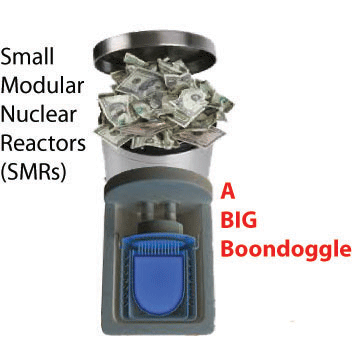
Small modular reactors (SMRs) are a fraction of the size and cost of major nuclear power stations such as EDF’s controversial Hinkley Point C project. The Government signalled a key role for the technology in efforts to secure the energy supply and meet climate change targets two years ago.
An apparent lack of action since then has drawn criticism and raised industry concerns that the project has fallen by the wayside amid the political instability of Brexit and the general election.
In May, a House of Lords report branded the Government’s failure to publish the results of a competition for development funding as “particularly alarming”.
Companies considering investments in the technology had hoped that ministers would indicate which proposals they would support months ago, but they received no communication, fuelling the speculation that SMRs were being quietly abandoned. Renewed government interest in the technology is a boost to the nuclear industry. Rolls hopes to adapt technology developed to power Royal Navy submarines, for instance.
It has said developing SMRs for civil use will cost £1.2bn, with the first installation expected to require a further £1.7bn. Costs are forecast to fall as more mini reactors are built. Modular design allows the systems to be built in “blocks” in factories then assembled on-site. An SMR is expected to require a site about a tenth of the size of a conventional nuclear power station and generate between 200 megawatts and 450 megawatts of power.
Hinkley Point C, currently under construction in Somerset, is set to generate 3.2 gigawatts. Cost projections on the project have soared from £6bn in 2013 to £20bn, and the first new power is not expected to be generated until at least 2025.
Last month, the National Audit Office (NAO) hit out at Hinkley Point, saying taxpayers could face a final bill of as much as £50bn, because the wholesale market price for electricity is falling steadily while nuclear power construction remains expensive and high-risk. Under a 2013 deal between the Government and EDF, Hinkley is guaranteed to earn £92.50 for every megawatt-hour (MWh) of energy produced through a combination of wholesale market prices and a levy on consumer energy bills. At the time, the Government said this would require top-up payments totalling £6bn from consumers’ energy bills to meet the “strike price”, but falling market prices have widened the forecast gap every year since then.
The NAO criticised the Government’s nuclear plans, saying ministers had “committed electricity consumers and taxpayers to a high cost and risky deal in a changing energy marketplace. Time will tell whether the deal represents value for money”.
Plans for another nuclear plant at Moorside in Cumbria are also in doubt after Westinghouse, the US nuclear reactor developer which is owned by Japan’s Toshiba, filed for Chapter 11 bankruptcy amid spiralling losses brought about by cost over-runs and project delays.
Toshiba is currently a 60pc shareholder in the consortium to develop the 3.8 gigawatt plant at the Moorside site.
Moving to a new backer could push development of the plant back years with regulatory delays and costs likely to go up.
A spokesman for the Department of Business, Energy and Industry Strategy said of the small reactor plans: “We are currently considering next steps for the SMR programme and we will communicate these in due course.”
Success for SMRs could hinge on developing production lines and export businesses that would increase scale and bring costs down further in the years ahead
Tony Roulstone of the Cambridge Nuclear Energy Centre, a former senior Rolls engineer, recently told The Engineer magazine: “The cost of building nuclear plants is related to their complexity and the work you have to do on site to build them, and nothing the industry has tried has worked. So it’s time to try something else.
“The manufacturing approach works in every other industry. Nuclear is the only industry in which production engineering is not used.”
Mr Roulstone added: “It’s only by getting into a factory environment and building these things over and over again that you learn how to bring the cost down.”
When George Osborne, the then chancellor, announced £250m of taxpayer funding for development of the technology in 2015, he said the cash would be allocated by 2020.
Mr Osborne, whose time as chancellor came to an abrupt end last year, added that the money would help to “revive the UK’s nuclear expertise and position the UK as a global leader in innovative nuclear technologies”.
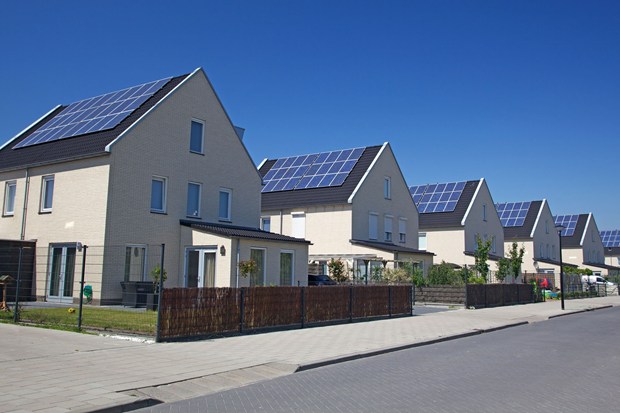
Guardian 12th Aug 2017, If you want solar photovoltaic panels on your home but don’t have the money for them, EDF Energy is offering to install a free system – complete with
storage batteries – if you agree to buy the subsidised power it generates
for 20 years.
The French-owned energy giant is looking for 100 homes to
trial its Sunplug scheme, which is being offered in conjunction with
established solar supplier Lightsource. To sign up you need to have a
large, unshaded south-facing roof at a pitch of about 45 degrees. If you
are accepted, the company will install the largest solar panel system the
roof can take – a 16-panel setup will generate 4kW – plus an LG storage
battery that lets you use the power that’s generated during the day in the
evening.
In return, EDF gets to keep the feed-in tariff paid by the
government, which is worth about £150 a year. It also keeps the export
tariff – around £50 a year. The householder is contractually bound to
pay Sunplug 9.9p per kilowatt hour for each unit of electricity they use
from the panels and battery.
This is a little cheaper than what you would pay if you bought green electricity from the grid. For example, green
supplier Good Energy charges 15.5p, with a standing charge averaging 26p a
day. The advantage could come in future years as the price demanded by
Sunplug can only rise by the retail prices index or 2.5% – whichever is
lower.
If the price of grid electricity rises substantially over the next
20 years, users will make considerable savings. However, if they don’t,
some users will be left wondering why they bothered, not least because they
have to have the system inspected each year, which will cost about £80. So
this scheme is likely to appeal to anyone who wants green electricity at
fixed prices over the next two decades.
The other significant benefit comes at the end of the 20-year term, when the householder is given ownership of
the system, which should continue to generate substantial free power. So
what’s the Money verdict? Solar PV systems are still a good investment if
you have the money upfront, the right roof and location, and if you plan to
stay in the house for a long time. The case for the free Sunplug deal is
less clear. To us, it looks too heavily weighted in favour of the company.
If it offered some free electricity each day or other incentives, that
would make the scheme more attractive.
Solar Power Portal 10th Aug 2017, Installing solar and storage technologies into homes could save them as
much as £600 each year on their fuel bills, a new study has found.
The report, released by Swansea University’s Specific Innovation and
Knowledge Centre, claims that an integrated system comprising solar PV roof
installations, battery storage and solar heat collection technology on
south-facing walls could cut energy consumption by more than 60%.
Herald 13th Aug 2017, THE only sensible response to the escalating nuclear stand-off between
Donald Trump and Kim Jong-un is to rid the UK of its atomic arsenal,
according to a Nobel Peace Prize-nominated SNP MSP.
Donald Trump says US military solutions ‘locked and loaded’ against North. Korea.news.com.au , AUGUST 12, 2017US PRESIDENT Donald Trump says North Korean leader Kim Jong-un will “regret it and regret it fast” if he attacks the US air bases in Guam or any of America’s allies.
Mr Trump’s latest threat comes after he declared on Friday via Twitter that the US military was “locked and loaded”, and ready to act against the rogue regime……..
While Mr Trump talks up the US’s military might, his lieutenants have been attempting to diffuse the situation via diplomatic backchannels, but the President declined to discuss these tactics.
“We don’t want to talk about progress, we don’t want to talk about backchannels, we want to talk about a country that has misbehaved for many, many years — decades actually — through numerous administrations and they didn’t want to take on the issue and I have no choice but to take it on and I’m taking it on,” Mr Trump said.
“We’ll either be very, very successful quickly or we’re going to be very, very successful in a different way quickly.”
German Chancellor Angela Merkel has criticised Mr Trump’s inflammatory language towards North Korea, saying “I consider an escalation of rhetoric the wrong answer”.
“I do not see a military solution to this conflict,” she added.
“Let her speak for Germany,” Mr Trump said in response.
Politicians from both sides of American politics have criticised Mr Trump’s approach to the conflict — especially his threat to rain down “fire and fury” on North Korea — saying his comments have raised the tension.
“My critics are only saying that because it’s me,” he said.
“If somebody else uttered the exact same words that I uttered they’d say, ‘What a great statement, what a wonderful statement’……
Also on Friday, Mr Trump retweeted a US Pacific Command message that said US planes stand ready to “fulfill a #FightTonight mission”.
The threats follow a week of escalating rhetoric between the two countries after the US threatened “fire and fury” against the rogue state.
North Korea retaliated by releasing potential plans to strike the US territory of Guam in the Western Pacific, however US diplomats say a dialogue is being pursued and Americans should “sleep well” at night.
The country’s official Korean Central News Agency reported on a mass rally held in Pyongyang’s Kim Il-sung Square and cited the secretary of the Pyongyang City Youth League Committee as saying “the young people in the country would become five million human bullets and bombs and nuclear warheads to blow the US from this planet”.
Meanwhile Australian Prime Minister Malcolm Turnbull said Australia would come to the aid of the United States if North Korea attacks America……
Despite the rhetoric, US officials said there was no major movement of U.S. military assets to the region, nor were there signs Pyongyang was actively preparing for war.
Military officials will move ahead with planned drills between the US and South Korea. Called Ulchi-Freedom Guardian, the exercises are expected to run from August 21-31 and involve tens of thousands of American and South Korean troops on the ground and in the sea and air.
Washington and Seoul say the exercises are defensive in nature and crucial to maintaining a deterrent against North Korean aggression…..
The streets of Pyongyang also reportedly remain calm amid rising tension in the region.
German Chancellor Angela Merkel says she doesn’t see a military solution to rising tensions between the United States and North Korea and called for a de- escalation of the rhetoric.