He says through its social media manipulation operations, spy agency Government Communications Headquarters (GCHQ) tried to influence online activists during the 2009 Iranian presidential election protests, and the 2011 uprisings widely known as the Arab Spring.
Al-Bassam told the Chaos Communication Congress in Germany last week that the Joint Threat Research Intelligence Group (JTRIG) – a unit in GCHQ – uses “dirty tricks” to target activists.
He says JTRIG has been tasked by the British government to “[use] online techniques to make something happen in the real or cyber world.” To fulfil this aim, a wide but basic array of technological tools and software are used, including ‘DEADPOOL,’ which is described as a “URL shortening service,” and ‘HUSK,’ a “secure one-to-one web based dead-drop messaging platform.”
He told the conference: “It’s basically a fancy name for sitting on Twitter and Facebook all day and trolling online. What they do, is they conduct what they call ‘human intelligence’ – which is like the act of interacting with humans online to try and make something happen in the real world.
“In their own words one of the things they do is to use ‘dirty tricks’ to ‘destroy, deny, degrade [and] disrupt’ enemies by ‘discrediting’ them.”
JTRIG has been involved in infiltrating hacktivist groups Anonymous and LulzSec, and protesters in Iran, Syria and Bahrain, he says.
As a “honey pot” to attract activists, GCHQ set up free URL shortening service lurl.me, which was used on Twitter and other social media platforms to spread revolutionary messages in the Middle East. These messages would attract people protesting against the government there, and British intelligence would collect information on them.
Al-Bassam said he discovered this information among the documents leaked by NSA whistleblower Edward Snowden. “In 2011, I was unknowingly messaged… by a covert agent from [GCHQ], who was investigating the hacktivist groups of Anonymous and Lulzsec. Later that year, I was arrested and banned from the internet for my involvement in Lulzsec.
Then, in 2014, I discovered through a new Snowden leak that GCHQ had targeted Anonymous and Lulzsec, and that the person that messaged me was a covert employee, pretending to be a hacktivist.”
He added: “Because I was myself targeted in the past, I was aware of a key detail – a honeypot URL shortening service set up by GCHQ, that was actually redacted in the Snowden documents published in 2014. This URL shortening service enabled GCHQ to deanonymize another hacktivist and discover his real name and Facebook account, according to the leaked document.
“Using this key detail, I was able to discover a network of sockpuppet Twitter accounts and websites set up by GCHQ, pretending to be activists during the Arab spring of 2011,” he said.
Times 1st Jan 2018,Consultancy firms working for the government on the Hinkley Point C nuclear power station were advising the project’s Chinese investor and its French builder at the same time, an investigation by The Times has revealed.
KPMG, the professional services group, was paid £4.4 million between 2012 and 2017 as a financial adviser to the energy and business departments, despite telling officials that it was also acting for China General Nuclear Power
Corp on the project.
The apparent conflict of interest has been revealed after the Information Commissioner’s Office intervened to press for
disclosure from the Department for Business, Energy and Industrial Strategy. Previously, officials had redacted the information, claiming that it was commercially sensitive.
In a second potential conflict, Lazard, the financial advisory firm, was paid £2.6 million between 2012 and 2015 to
advise the business department on Hinkley Point. Details of its previously redacted tender documents reveal that it was an adviser to EDF, the French developer that is investing in Hinkley Point alongside the Chinese. A source said that Lazard’s advice to EDF was not related to the Somerset project.
Meg Hillier, chairwoman of the Commons public accounts committee, said that Hinkley Point was crucial public infrastructure and therefore it was “vital that auditors get full sight” of the potential conflicts. It “looks cosy”, she said, adding that it was “not really appropriate” for firms to be advising both sides.
The details have been released more than a year and half after The Times complained to the Information Commissioner’s Office, which informally advised the business department to reconsider its position. The department previously had handed over heavily redacted documents in response to a Freedom of Information request.
The Information Commissioner’s Office said that there was a “significant and important public interest”, something that had been strengthened by a report from the National Audit Office in June, which found that the government’s deal had “locked consumers into a risky and expensive project with uncertain strategic and economic benefits”. The project has been riddled with delays and controversy over its spiralling costs.
The National Audit Office also criticised the business department for insufficiently managing the potential conflict of Leigh Fisher, another government adviser. The Times reported in November 2016 that Leigh Fisher, the management consultant, had been awarded contracts worth a combined £1.2 million despite telling officials that the British division of Jacobs Engineering Group, an American firm that owns Leigh Fisher, was working for EDF on Hinkley Point. https://www.thetimes.co.uk/edition/business/advisers-on-hinkley-point-c-nuclear-power-station-had-cosy-ties-to-both-sides-xftxcl9sz
The decommissioning process at the site, which closed in December 2015, has been hit by delays following problems with machinery.
About half of the fuel has been removed from the plant and work to remove fuel was expected to be completed by the end of 2018.
Operator Magnox has now said it will not be completed until November 2019. The site’s two reactors held 49,000 fuel elements which have to be cleared as part of the decommissioning process.
But the work has been delayed because the 50-year-old machine used to remove them needed new parts.
Wylfa is the last of Magnox’s 12 UK power stations to be switched off and, across the firm’s sites, the cost of the process has almost doubled to an estimated £6bn.
It will take more than 100 years for the site to be fully cleared.
Horizon wants to build a replacement nuclear plant, Wylfa Newydd, next to the site, which would operate for 60 years and generate electricity for around five million homes.
But the proposals have to overcome planning and cost hurdles – the “strike price” for the electricity generated – before the plant can get the go ahead.
While this number was much lower than the previous year, one incident was above the lowest level on the INES scale, for the first time since 2015.
The International Nuclear Events Scale (INES) has seven levels, Level 1 being the lowest.
In 2016 there were 15 nuclear incidents in Belgium, all on Level 1. While there were fewer incidents this year, one of these was on Level 2.
That incident took place in July, during the transport of poorly packaged radioactive material that had been sent on passenger flights from Cairo to Brussels via Zurich. Many passengers, including one Belgian, were potentially exposed to radiation above the prescribed limit, but without any significant consequences for their health.
One of the Level 1 incidents was at the Doel plant where a deterioration of the concrete was observed in October.
Blunders, catastrophic, delays, even bankruptcy… ANOTHER nuclear power plant is going into financial meltdownhttp://www.thisismoney.co.uk/money/article-5223475/ANOTHER-nuclear-power-plant-enerting-financial-meltdown.html Neil Craven for The Mail on Sunday, 1 January 2018The company behind one of Britain’s biggest nuclear power projects has plunged to a £266 million loss citing ‘uncertainties’ over its future and the viability of crucial technology.
Japanese firm Toshiba said the huge loss incurred by one of its UK subsidiaries was due to writing off hundreds of millions of pounds of investment in the proposed Moorside plant, in west Cumbria.
It is the latest sign of financial strain at the Tokyo-based firm amid wider concerns over the spiralling costs and catastrophic delays that have beset the UK’s nuclear industry.
Britons were last week supposed to be cooking their turkeys with power from EDF’s nuclear plant at Hinkley Point in Somerset, which is now not expected to be in use for another decade. ‘EDF will turn on its first nuclear plant in Britain before Christmas 2017,’ said Vincent de Rivaz in 2007, who stepped down as group chief executive in November. ‘It is the moment of the power crunch. Without it, the lights will go out.’
It was envisaged that new nuclear plants at Moorside, Hinkley Point and Wylfa in Anglesey would between them generate a fifth of the UK’s electricity.
This may still happen. But right now, nuclear firms are struggling with the expense, stringent regulatory hurdles and costly project delays – just as the cost of other forms of electricity fall. Toshiba won the contract to build the nuclear power plant at Moorside, on land next to the Sellafield nuclear fuel reprocessing site.
But it was forced in March to place its US nuclear division Westinghouse into bankruptcy protection. Last month, it said it would sell Westinghouse for £4 billion. Troubled Toshiba is now in talks to sell its interests in the Moorside project to Kepco, majority-owned by the South Korean government.
Toshiba has two UK subsidiaries: Advance Energy UK, which incurred the £266 million loss; and NuGeneration, which is directly responsible for running Moorside.
With a cloud of uncertainty over the project, the Japanese firm has admitted in reports issued by its UK subsidiaries: ‘The directors do not know whether a sale of the shares of [NuGeneration] will be completed nor how any successful bidder will frame the deal.’
Kepco said it hoped to complete a deal to take over the running of the project early next year.
Uncertainties are understood to include the use of Westinghouse’s AP1000 reactor. Approval for use at Moorside was first sought from UK regulators in 2011. It was granted approval by the Office for Nuclear Regulation in March – just days after Westinghouse entered bankruptcy protection.
Should Kepco decide to ditch the design and use its own, the project would likely be delayed for years until a new design is approved. Some estimates say that could put any launch back from 2025 to the late 2020s at the very earliest. ‘The whole thing is a mess,’ said Martin Forwood of campaign group Core, which opposes the Moorside development.
‘Kepco would almost certainly push to use its own reactors so the big question is whether they would have to start afresh on consultation.
‘A lot of people around Moorside believe it will never take off.’
Forwood said the costs of other forms of renewable energy are falling and energy storage systems are being developed. ‘The longer these plans get delayed the less nuclear is needed,’ he added.
And, according to Forwood, the firms involved in the projects at Moorside and Wylfa ‘are not going to get anywhere near what the Government signed up for at Hinkley’.
The House of Commons Public Accounts Select Committee last month said there had been ‘grave strategic errors’ awarding French government-backed EDF the Hinkley Point contract.
It said ‘the economics of nuclear power in the UK have deteriorated’ and a ‘blinkered determination’ to agree the 35-year Hinkley deal, ‘regardless of changing circumstances’ had lumbered consumers with £30 billion payments over market rates for electricity.
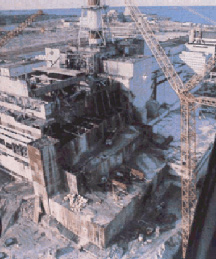
Scientists might have been wrong about the Chernobyl disaster, New York Post ,By James Rogers, November 20, 2017 A new theory on the Chernobyl disaster could shed fresh light on the world’s worst nuclear accident.
In an article published in the journal Nuclear Technology, scientists argue that the first of two explosions reported by eyewitnesses was a nuclear, not a steam explosion, as is widely thought. Instead, the researchers believe that the first explosive event noted by eyewitnesses was a jet of debris ejected to an altitude of almost 2 miles by a series of nuclear explosions within the Chernobyl reactor. Some 2.7 seconds later, they say, a steam explosion ruptured the reactor and sent yet more debris into the atmosphere at lower altitudes.
“We realized that we, based on real measurements and observations, could explain details in the Chernobyl accident scenario and the nature of the two major explosions that occurred during a few seconds that unfortunate night more than 31 years ago,” explained the report’s lead author Lars-Erik De Geer, in an email to Fox News.
The 1986 explosion at the Chernobyl nuclear plant in Ukraine sparked a widespread environmental disaster. Thirty workers died either from the explosion at the number four reactor or from acute radiation sickness within several months. The accident exposed millions in the region to dangerous levels of radiation and forced a wide-scale, permanent evacuation of hundreds of towns and villages in Ukraine and Belarus.
A cloud of radioactive particles from the disaster reached other parts of parts of Europe, such as Sweden.
The report cites xenon isotopes detected by the VG Khlopin Radium Institute in Leningrad four days after the accident. Leningrad, now known as Saint Petersburg, is about 599 miles north of Chernobyl. Xenon isotopes were also reported in Cherepovets, about 622 miles north of Chernobyl.
The result of recent nuclear fission, the isotopes were likely caused by a recent nuclear explosion, according to the experts. This is in contrast to the main Chernobyl debris that contained equilibrium xenon isotopes from the reactor’s rupture and drifted toward Scandinavia.
This new theory presented by experts from the Swedish Defense Research Agency, the Swedish Meteorological and Hydrological Institute and Stockholm University, could offer fresh insight into the disaster. The new analysis could help prevent similar incidents from occurring, experts say.
The destroyed reactor tank suggests that the first explosion caused temperatures high enough to melt a 6.6-foot bottom plate in part of the core, the researchers said, noting that this damage is consistent with a nuclear explosion. In the rest of the core, the bottom plate was relatively intact, but had dropped by nearly 13 feet. This, they say, is consistent with a steam explosion, noting that the temperature would not be sufficient to melt the plate, but could generate enough pressure to force it down.
Additionally, seismic measurements and eyewitness reports of a blue flash above the reactor a few seconds after the first explosion could also support the new theory of a nuclear explosion followed by a steam explosion……..
The disaster shone a spotlight on lax safety standards and government secrecy in the former Soviet Union. The explosion on April 26, 1986, was not reported by Soviet authorities for two days and then only after winds had carried the fallout across Europe and Swedish experts had gone public with their concerns.
The final death toll from Chernobyl is subject to speculation, due to the long-term effects of radiation. Estimates range from 9,000 by the World Health Organization to one of a possible 90,000 by the environmental group Greenpeace.
Times 29th Dec 2017, In 1987 Ray Burke,
then environment minister, received a firm reply from his British
counterpart after calling for the closure of the Sellafield nuclear
processing plant.
State papers showed that Peter Walker, the UK energy
secretary, rejected what he claimed were the Fianna Fáil TD’s unfounded
allegations about the safety of British nuclear energy facilities,
including Sellafield. Walker, who died in 2010, said that the Nuclear
Installations Inspectorate, the British nuclear watchdog at the time, was
satisfied that closure of the plant would be “out of all proportion to
the very low risks which arose from a few minor incidents”.
Mr Burke wrote to Walker on March 24, 1987 to raise concerns about the threat posed
to Irish citizens by nuclear installations in Britain. He also criticised
the British government’s decision to proceed with the construction of
another nuclear reactor at Sizewell in Suffolk given the number of
incidents at British nuclear plants. https://www.thetimes.co.uk/article/uk-rejected-irish-ministers-nuclear-power-complaints-7fvbnhmh7
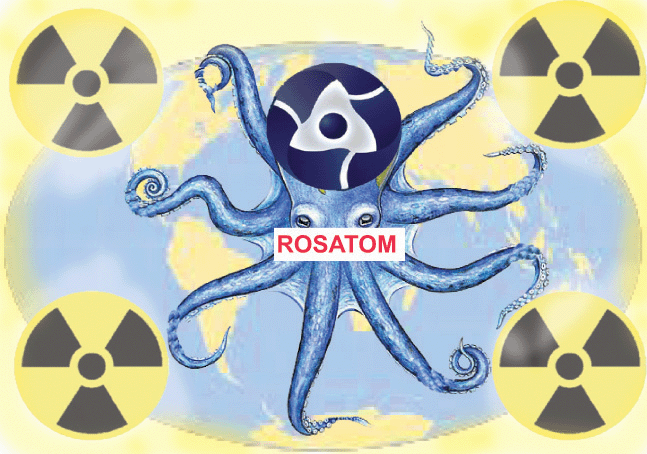
Russia And Uzbekistan Sign Nuclear Energy Deal, By RFE/RL staff – Dec 30, 2017, Russia’s Rosatom State Atomic Energy Corporation and Uzbekistan have signed a nuclear-cooperation agreement that Rosatom says will pave the way for bilateral cooperation “in many aspects of civil nuclear energy.”Rosatom said the agreement was signed on December 29 by its Director-General Aleksei Likhachyov and Uzbek Deputy Prime Minister Nodir Otajonov.
“The collaboration could include creation and development of infrastructure in Uzbekistan, training, construction of nuclear power plants and research reactors, as well as operational and maintenance support during their life cycle,” the Rosatom statement said.
“It could also cover exploration and mining of uranium, handling of uranium waste, and the production of radioisotopes for use in medicine, agriculture, and academic research,” the state-owned firm said.
Likhachyov said Rosatom was ready to build a two-unit nuclear power plant in Uzbekistan and has offered to start training Uzbek nuclear experts-to-be at Moscow’s expense beginning in September 2018.
In early November, during a visit to Tashkent by Russian Prime Minister Dmitry Medvedev, a memorandum on cooperation between Rosatom and Uzbekistan’s Academy of Science was signed, along with an agreement on production and provision of nuclear fuel by Uzbekistan for Rosatom.
Suddeutsche Zeitung 29th Dec 2017, [Machine Translation]In the nuclear power plant Neckarwestheim a leak hasbeen discovered during a tour in Block II in the control area. This was
announced by the Ministry of the Environment on Friday in Stuttgart. As a
result of the leak on a pipeline behind a circulation pump discovered on 22
December, about 100 liters of radioactive concentrate had leaked into the
control area of the reactor auxiliary building. However, this has no or
only a very low safety significance, said the Ministry. The operator had
shut off the pump. The affected area had been decontaminated, people were
not harmed. The cause will be further investigated. The system will be out
of service until the repair is complete. http://www.sueddeutsche.de/news/wirtschaft/atomkraft—stuttgart-leck-in-rohrleitung-bei-atomkraftwerk-neckarwestheim-dpa.urn-newsml-dpa-com-20090101-171229-99-447002
Cheap renewables undercut nuclear power, The technology advances and plunging costs of cheap renewables make base load nuclear power redundant. Climate News Network, by Paul Brown, LONDON, 29 December, 2017 “………Completion doubts
Even the former UK energy secretary Sir Edward Davey, who signed off on the Hinkley Point deal, said “the economics have clearly gone away.” He doubted that the building would ever be completed, he told Greenpeace in an interview.
All the other UK nuclear projects are still at various stages of planning, and how any of them will be paid for is yet to be worked out. It is already clear that none can be financed without government subsidy.
An important political development in 2017 was that for the first time both the US and the UK admitted that their support for the nuclear industry is linked to the need to maintain their military capability in nuclear submarines and personnel. This is key, because both powers have previously claimed that there is no link between civil and military nuclear industries.
Even before their admission it was already clear that the big economies which have no nuclear weapons, like Germany, can see no point in having a civil nuclear industry.
Export drive
That does not stop smaller countries, some without any nuclear power stations at all at present, signing agreements with the Russian state-owned company Rosatom. In what many see as a Russian policy to extend its international influence, Rosatom already says it is building reactors in Belarus, China, India, Bangladesh, Hungary, Turkey, Finland and Iran, and is seeking to expand, with tenders in for 23 other reactors abroad.
RUSSIA has warned North Korea and the US are on course for an explosive war of a level “never before seen in human history”. US President Donald Trump and Kim Jong-un could stumble into a nuclear war of “unprecedented scale”, warned Vladimir Putin’s top diplomat Oleg Burmistrov.
Russia’s so-called ambassador-at-large predicted the start a war could be “unprovoked” and said the US it is “playing with fire” in goading North Korea.
Moscow has repeatedly called for calm in the region as Trump and Kim’s fiery war of words stoked the conflict to horrifying new heights in recent months.
Burmistrov called on the world to do “everything possible” to prevent the war that would spiral into the first use of nuclear weapons since World War 2.
North Korea is feared to be plotting another missile test before the end of the year – with US “missile sniffer” plane Cobra Ball taking flight yesterday amid Kim’s threats.Burmistrov told Sputnik: “[It could be] the catastrophe of the scale, never before seen in human history.
“We are talking not only about a major military conflict but also about a conflict that potentially has a nuclear component.
“Now we are in the face of a major military conflict, which can become a reality if the military solution plan is implemented.
“And we need to do everything possible to prevent this from happening.” Putin’s top man suggested US war drills in the region may be “testing” North Korea and looking for grounds to impose a total economic blockade on Pyongyang.
He described the region as a “powder keg” as military forces continue to march into the Korean Peninsula.
The ambassador added: “The situation on the Korean Peninsula is characterised by an unprecedented level of tension, there is a growing danger of slipping into an armed conflict, unprovoked, but which may begin due to accidental circumstances.”
Burmistrov has previously visited Pyongyang to discuss the nuclear crisis and has also hosted meetings with North Korean officials in Moscow. This week, Russian foreign minister Sergey Lavrov met with US secretary of state Rex Tillerson to discuss North Korea.
Despite separate tensions between Moscow and Washington, the two came to an agreement that they would “never accept” a nuclear-armed Kim.
North Korea is believed to be gearing up to launch a space rocket, which experts have warned could be a cover for another weapons test. Kim should be expected to carry out at least one more launch before the end of the year, North Korea expert Michael Madden told Daily Star Online.
Pyongyang is believed to have long-term ambitions to launch a nuclear missile into the heart of the Pacific.
Disturbing links between Britain’s nuclear power stations and the military are highlighted by Dr David Lowry. In her excellent article on the Hinkley C nuclear plant financial fiasco (The long read, 21 December), Holly Watt mentions the innovative insight of Sussex University academics Prof Andy Stirling and Dr Phil Johnstone, who have identified the central importance of expansion of the skill base of the new nuclear build programme – headed by Hinkley C – for the Trident military nuclear renewal programme. Watt also mentions the first nuclear plant built on the same site, Hinkley A. What is barely acknowledged about this reactor is it was both built and operated to manufacture plutonium for British nuclear warheads, and probably some plutonium it created was sent to the US for use in its military stockpile too.
I have dug up considerable evidence that demonstrates this beyond any doubt. The first public hint came with an announcement on 17 June 1958 by the Ministry of Defence, on “the production of plutonium suitable for weapons in the new [nuclear] power stations programme as an insurance against future defence needs”.
The Conservative government’s paymaster general, Reginald Maudling, told parliament a week later: “At the request of the government, the Central Electricity Generating Board has agreed to a small modification in the design of Hinkley Point … so as to enable plutonium suitable for military purposes to be extracted should the need arise. The government made this request in order to provide the country, at comparatively small cost, with a most valuable insurance against possible future defence requirements.”
And that is exactly what they did. The nuclear world has thus turned full circle, as the atomic conjoined twins that had been painfully separated for nearly 50 years are being rejoined in an insidious way by this new Conservative government. Dr David Lowry Senior research fellow, Institute for Resource and Security Studies
CORE 26th Dec 2017, There can’t be many nuclear bodies that choose to bury – just three days before Christmas – what is touted as a good news story by the industry. But this is exactly what Sellafield Ltd has contrived to do in its 22nd December announcement that the long overdue and eye-wateringly expensive Evaporator D has come on line at Sellafield.
Yet by confirming that the new Evaporator actually came on line at 0800 on the 8th December, the start-up has been kept under wraps for a fortnight until a time when public attention was focused on seasonal festivities rather than on nuclear
news. Keeping such a story under the public radar for so long is, to say the least, wholly out of character for the industry – though the Evaporator’s history is hardly something to shout about.
It is not however just about the burial of ‘good’ news itself that many will find disturbing, but rather the manner in which the burial rites have been manipulated and massaged to dupe the wider world. Designed to process the dangerous high level waste liquids produced by the site’s reprocessing operations so that they can be vitrified and canned for eventual disposal, Evaporator D is located in the site’s Highly Active Liquid Evaporation and Storage (HALES) facility.
Its tortured construction track record since its inception over a decade ago by British Nuclear Fuels (BNFL) is well
documented and gives the lie to its original costings and timescale. As reported in the industry’s Nuclear Fuel journal in 2009 ‘Sellafield operators estimated (in 2007) the cost of the proposed Evaporator D at GBP90 million and said they expected it to be operational around 2010/2011’. Now in operation over six years late, the Evaporator’s £750M cost today represents an eight-fold increase on its original costing. …..
There are few positives to be taken from the Evaporator D saga that rivals the similar squandering of public money on the ill-fated and now defunct Sellafield MOX plant and even – when its financial accounts are eventually exposed publicly for the first time – the THORP plant itself. The one positive that will bring at least some cheer to the UK taxpayer is that, then costed at £600M, plans for an Evaporator E were abandoned by Sellafield in 2012. http://corecumbria.co.uk/briefings/sellafields-delayed-evaporator-d-now-operating-and-gift-wrapped-for-christmas/
North Korea will not be accepted as a nuclear power by US or Russia, say Rex Tillerson and Sergei Lavrov Both sides agree to pursue a ‘diplomatic solution’ to the crisis, The Independent, Mythili Sampathkumar New York @MythiliSk 28 Dec 17 The US and Russia have insisted they will not accept North Koreaas a “nuclear state”, amid a series of missile tests by the East Asian nation and increased rhetoric from both Kim Jong-un and Donald Trump.
US Secretary of State Rex Tillerson and Russian Foreign Minister Sergei Lavrov spoke by phone on a myriad of issues, but both agreed on their stance regarding Pyongyang’s continued development of nuclear weapons despite United Nations sanctions.
State Department Heather Nauert said in a statement that “both sides agreed that they will continue to work towards a diplomatic solution to achieve a denuclearised Korean peninsula”. However, on the same call on Tuesday, Mr Lavrov criticised President Donald Trump’s “aggressive rhetoric” towards North Korea……..
Late last week, the UN Security Council also unanimously passed – including votes from Russia and China who have closer ties to Pyongyang – more sanctions on North Korea, further limiting its oil supplies and slave labour market. …..
Climate Change To Triple Number Of Migrants Reaching European Union By 2100, Study Predicts, Clean Technica, December 28th, 2017 by James Ayre
The number of migrants making their way into the European Union will nearly triple by the year 2100 if rapid climate warming occurs, according to a new study published in the journal Science.
The new study — which was actually requested by the European Commission itself — relates directly only to climate warming, it should noted — mass migrations triggered by wars and cultural conflicts would be in addition to those discussed by the study……
the reality is that the findings are likely a vast underestimate of what will be occurring during the second half of the 21st century — as climate warming and weirding intensify; and as the common human activities of projection, scapegoating, and lazy thinking do as well.
According to the new study, asylum applications to the EU (from across 103 different nations) tended “to rise in the 2000–2014 period when temperatures at home were far hotter or colder than the ideal for growing maize.”
The projection put forward by the study is that asylum applications could climb to 1.01 million per year by 2100 (up from an average of 351,000 during 2000-2014) under a scenario that sees temperatures rise fairly fast. The primary driver of this rise would be reduced agricultural productivity (again, the human conflict aspects of what’s coming aren’t being factored into this work).
As I noted above, the reality is that even that figure is likely a vast underestimate of what’s coming — based on a look back at earlier periods of rapid climatic change and/or ecological collapse (soil fertility loss included) and taking into account more factors than the research did………
won’t rising temperatures and falling agricultural yields lead directly to weakening civil institutions (self-consumption), political repression, and civil war? Isn’t that exactly what’s happened in Syria over the last decade?