China’s plan for global nuclear dominance depends on Britain
 China’s long game to dominate nuclear power relies on the UK https://www.theguardian.com/environment/2018/jul/26/chinas-long-game-to-dominate-nuclear-power-relies-on-the-uk
Approval of Chinese nuclear technology in the UK would act as a springboard to the rest of the world, Guardian, Adam Vaughan and Lily Kuo in Beijing, 27 Jul 2018
China wants to become a global leader in nuclear power and the UK is crucial to realising its ambitions.
While other countries have scaled back on atomic energy in the wake of the Fukushima disaster, state-backed Chinese companies benefit from the fact that China is still relying on nuclear energy to reach the country’s low-carbon goals.
“China is going in the opposite direction. The massive experience possessed by the Chinese nuclear industry, consistently building for the past 30 years and adopting various next-generation technologies, is being recognised by the global nuclear industry,” said Zaf Coelho, the director of Asia Nuclear Business Platform, based in Singapore.
The UK, where as many as six new nuclear power stations could be built over the next two decades, is an obvious export target for Chinese nuclear. If state-owned China General Nuclear Power (GNP) – the main player in China’s nuclear industry – buys a 49% stake in the UK’s existing nuclear plants, as it was recently reported to be considering, that would mark a significant expansion of China’s role in the UK nuclear sector.
But the depth of CGN’s existing involvement in UK nuclear may surprise some.
The most high-profile project is the £20bn Hinkley Point C power station in Somerset, which is being built by EDF Energy with a French reactor design but was only made possible by CGN UK’s 33.5% stake to underwrite its daunting finances.
It was that Chinese ownership of a strategic piece of infrastructure that led Theresa May to temporarily halt the signing of the crucial subsidy deal for Hinkley when she became prime minister.
Isabel Hilton, the CEO of Chinadialogue.net, said the UK opening up vital infrastructure to China was without parallel in the western world. “No other OECD country has done this. This is strategic infrastructure, and China is a partner but not an ally in the security sense.
“You are making a 50-year bet, not only that there will be no dispute between the UK and China, but also no dispute between China and one of the UK’s allies. It makes no strategic sense.”
The UK has appeared amenable to Chinese investment, though recently the UK cybersecurity watchdog warned British telecommunications companies against dealing with Chinese tech firm ZTE. One expert acknowledges that security concerns are a potential check to Chinese ambitions.
Zha Daojiong, a professor of non-traditional security studies at Peking University, said: “The question is not whether your nuclear technology is safe or not, it’s a question of politics. To be blunt, most countries think: ‘Anybody but China.’ This kind of thinking is becoming more and more popular among western countries. It’s a serious problem.”
CGN is also drawing up plans for Bradwell B in Essex, where China hopes to showcase its own nuclear reactor technology. CGN UK holds the majority stake (66.5%) in the development company, with EDF in a supporting role. Then there is a third joint venture to get Bradwell’s Chinese reactor design through the UK nuclear regulatory process.
Finally, there is Sizewell C in Suffolk, where EDF wants to build a clone of Hinkley Point C if it can attract enough private investment. CGN holds a 20% share.
While Germany and other western countries have turned their backs on nuclear, the UK is strongly committed to new nuclear to meet its carbon goals and this means, despite security concerns, the government needs Chinese involvement.
Robert Davies, the chief operating officer of CGN UK, said: “The UK is open to investment, and we want to invest in clean energy in this country.”
He is acutely aware of the need for future plants to be cheaper, given criticism over the cost of the EDF subsidy deal. “We understand the cost of electricity has to fall significantly from Hinkley Point,” he said.
But the company is open about the bigger prize – the UK as a springboard for exporting Chinese nuclear technology to other countries.
“For us, the UK is an important stepping stone into Europe. The GDA process [UK regulatory approval] is recognised in the nuclear world as having a lot of clout,” said Davies.
Asked if the UK should be concerned about China owning its nuclear power stations, he said: “We are not surprised and see nothing wrong with governments questioning our rationale for investing in their country.”
For now, the company’s UK footprint is small – just 70 of its 44,000 staff are based here. But his hope is the firm will become viewed “not as an outsider that has come in, but part of the furniture”.
China’s commitment was on show at a recent lavish nuclear industry event in London. No expense was spared on hosting the summit at the prestigious Guildhall building, where the Chinese ambassador to the UK told jokes and argued the case for new nuclear.
Mycle Schneider, a Paris-based nuclear industry analyst, said cost was not an issue for Beijing because the Chinese are playing a long game. “It was clear quite early on there was a strategy to make the UK a platform … A few billion here or there is not the point. It’s about strategic assets.”
But he said CGN still had a lot to learn about how the UK worked. “China does not have any building experience in any countries other than Pakistan, and that is not really comparable to the UK.”
Zhou Dali, a former Chinese energy official, as director of the energy research institute of China’s National Development and Reform Commission, said: “We are learning how to do business with patience. Because you cannot force others to do something. You can only help.
“We will give more and more information about the technology’s improvements, but the final decision will be made by the UK people and your politicians.”
Additional reporting by Wang Xueying
National Infrastructure Commission’s landmark report calls for drastic cut in UK’s nuclear power plans
Building 26th July 2018 , The National Infrastructure Commission’s landmark report this month
seemed to sound the death knell for nuclear energy new-build, calling for a
large-scale shift to renewables by 2050 – and for only one more nuclear
power station approval by 2025. But are we really likely to get 90% of
Britain’s electricity from green sources within a generation? The NIC’s
assessment does not call for the end of all nuclear new-build aspirations.
But the direction of travel is clear: its prediction is that the cost of an
energy system heavily reliant on nuclear will, on current terms, be
marginally more expensive than one powered 80%-90% by other renewables, and
– importantly – that the cost of renewables is much more likely to fall
in future and thus ultimately work out significantly cheaper.
It is only because of all the uncertainties inherent in these predictions that it
recommends continuing with nuclear at all, albeit on a “go slow” basis,
so as not to entirely lose capacity in the industry in case the programme
has to be fired up again.
The assessment says a minimum of 50% and as much
as 90% of UK electricity should come from renewables such as wind and solar
power by 2050. And hence, that no more than one further nuclear reactor
should be given the go-ahead before 2025. This, it says “will allow the
UK to maintain, but not expand, a skills base and supply chain [and] to
pursue a high renewables mix […] without closing off the nuclear
alternative”. This may sound like a nuanced shift, but for those in the
sector it is very radical.
Few outside of environmental lobby groups have
ever proposed a UK electricity generation sector reliant 80%-90% on
renewables before. Richard Lowe, director of power in Aecom’s
environmental division, welcomes the emphasis on renewables but questions
how realistic it is. “Others such as the Committee on Climate Change have
done their own projections as to what is realistic, and I wouldn’t say
this is the midpoint of the range – it’s very much at one end of the
scale.”
https://www.building.co.uk/nuclear-energy-gone-with-the-wind/5094829.article
Optimistic report on Swansea Bay Tidal Lagoon- tidal renewable energy for Britain?
Wales Online 26th July 2018 , A new task force is being set up to look at ways of resurrecting plans for
the Swansea Bay Tidal Lagoon, which appeared dead in the water just last
month. It follows the publication of a report which said the £1.3bn
project could be delivered without the need for a UK Government financing
deal. The report concluded that the lagoon was “fundamentally a strong
and deliverable technical proposition”.Paul Marsh, of report authors
Holistic Capital, said: “We believe the project can be funded
independently of UK Government, and potentially delivered as a purely Welsh
initiative. “We believe, based on our in-depth review, that the original
£1.3bn cost of the lagoon can be reduced.
https://www.walesonline.co.uk/news/wales-news/plans-swansea-bay-tidal-lagoon-14952875
Renewable energy headed to be 50% of total UK electricity generation by 2025.
 Dave Toke’s Blog 26th July 2018 Today’s UK energy statistics reveal that renewable electricity generation
increased by around 20 per cent in just one year so that 29.3 per cent of electricity consumed came from renewable energy in 2017.
If at least 80 per cent of the offshore windfarms now in different stages of planning (let alone other renewable energy sources) come online, as could be expected, in the next 7 years, then renewable energy will comprise half of total UK electricity generation by 2025.
Electricity consumption fell once again in the year 2017 compared to 2016. Electricity consumption is now 9 per cent less than it was in 2010. over 20 GWe of offshore wind are in various stages of planning and construction. In total these would generate around 25 per cent of UK electricity.
Since the Government are saying they will hold auctions for offshore wind and some other renewables in 2019 and 2021
this means that a lot of them will be built by 2025. Of course we are going to have substantially more onshore wind and solar by 2025 to buttress these figures (although the Government are doing very little to help) meaning that electricity generated from renewable energy will top 50 per cent of total consumption in 2025/6
http://realfeed-intariffs.blogspot.com/2018/07/renewables-generated-close-to-30-per-of.html
France’s nuclear power stations affected by extreme heat – causing restricted output

 S&P 24th July 2018 , France’s EDF expects nuclear-fired power production at its Bugey and
Saint-Alban power stations to be curtailed “due to extreme temperature forecast,” the utility said Tuesday. On grid operator RTE’s website, EDF said environmental issues are limiting “some” nuclear production availability in the country, starting Saturday. EDF did not give details on the exact impact of the output restrictions. The two nuclear power stations have a combined capacity of over 6 GW. Environmental issues have already resulted in weekend outages at EDF’s Bugey-3 reactor on the river Rhone.
Hot weather conditions previously have led to cooling water restrictions due to raised river temperatures. According to forecaster MeteoFrance, temperatures should remain above seasonal average, or around 2 degrees Celsius above norms over the weekend.
https://www.spglobal.com/platts/en/market-insights/latest-news/electric-power/072418-high-temperatures-to-cut-french-nuclear-production-edf
Warming sea water affecting cooling systems in Finland’s nuclear power station
 Warm sea water in Finland reduces power from Loviisa nuclear plant https://www.reuters.com/article/us-finland-nuclear-fortum-oyj/warm-sea-water-in-finland-reduces-power-from-loviisa-nuclear-plant-idUSKBN1KF2COLefteris Karagiannopoulos 26 July 18 OSLO (Reuters) – Finland’s Loviisa power plant, consisting of two reactors with a combined capacity of 1 gigawatt, had to reduce power by 170 megawatts on Wednesday as the sea water that is used to cool the reactors had become too warm, operator Fortum said.
Because of the very warm temperatures the Nordic region is currently experiencing, the sea water that is collected to cool the Loviisa reactors is warmer and the water released is also warmer, at 32 degrees Celsius on Wednesday.
Releasing hot water back to the sea after cooling the reactors could be a hazard and if it exceeds 34 degrees Fortum said the reactors must be shut down due to regulations.
“We decreased power by 170 megawatts for a bit less than two hours. The sea water that cools the reactors was at 24 degrees, which is warmer than usual,” Fortum’s chief of operations in the plant, Timo Eurasto, told Reuters.
Such a rare occurrence may happen again in the next days because of the unusually warm temperatures, he said, adding that there was no danger to people, the plant, or the environment.
“High sea water temperature may indeed reduce the efficiency of the cooling systems of the plant. This is compensated by reducing or shutting down the reactor power,” said Nina Lahtinen, nuclear safety section head at Finland’s regulator STUK.
In Germany traders warned last week that higher temperatures in August may create cooling issues for the country’s reactors, with E.ON subsidiary PreussenElektra cutting output slightly from two units.
Sweden’s nuclear energy regulator SSM, told Reuters on Tuesday that power production at the Forsmark nuclear plant has also been reduced “by a few percentage points” due to cooling issues.
Last time Fortum had to reduce power in its reactors due to warmer-than-usual cooling water was seven years ago, said Loviisa plant’s Eurasto.
Unusually warm and dry weather in the Nordics led temperatures to record highs this summer, affecting water levels at the reservoirs that feed Norway and Sweden with hydropower, causing prices to spike as a result.
Creusot nuclear safety scandal continues with many more anomalies revealed
 Stop Penly 24th July 2018 , Creusot, the scandal continues and concerns a growing number of components.
On July 17, 2018, EDF published a note on the information provided to the safety authority concerning the nuclear equipment manufacturing files carried out at the Creusot plant, now under the control of the state energy
operator.
The verification of all the manufacturing files of these components reveals 1,775 anomalies and 449 non-compliances on the equipment of 46 of its operating nuclear reactors. With 94 anomalies and 19 nonconformities for 34 parts manufactured at Le Creusot, reactor 3 Bugey (Ain) seems to be the most affected.
http://stopeprpenly.org/?p=1161
Electricite de France wants pension funds to cough up for building Sizewell nuclear project
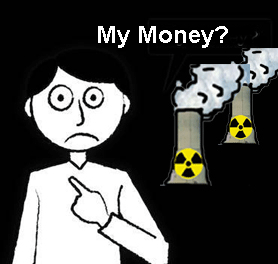
 EDF Wooing Pension Funds to Finance Sizewell U.K. Nuclear Plant, Bloomberg, By Rachel Morison 12 pension funds interested in backing plant in East Anglia Plant would lower nuclear costs by copying design of Hinkley
The developer of Britain’s first nuclear power station in more than three decades has approached 12 pension funds about helping finance a sister plant on the other side of the country.
Electricite de France SA is working on ways to pay for its Sizewell C project in East Anglia that will make it cheaper than the Hinkley Point C nuclear plant it’s building on the coast of Southwest England. Hinkley has been a lightning rod for controversy since the government pledged to pay 92.50 pounds ($122) a megawatt-hour for its power, more than 60 percent more than the latest offshore wind farms……..
Prime Minister Theresa May’s government has estimated it needs to draw in 100 billion pounds within the next decade to upgrade power grids and replace aging generation plants as the bulk of Britain’s nuclear fleet finishes its life in service. ……..https://www.bloomberg.com/news/articles/2018-07-26/edf-wooing-pension-funds-to-finance-sizewell-u-k-nuclear-plant
British tax-payers’ liability in the event of a nuclear accident at Wylfa

Government outlines public liability at Wylfa nuclear plant https://www.newcivilengineer.com/latest/government-outlines-public-liability-at-wylfa-nuclear-plant/10033570.article 26 JULY, 2018
Nuclear operators must have insurance, energy and clean growth minister Claire Perry told parliament, and any costs more than €1.5bn (£1.33bn) would be “met at parliament’s discretion”.
The Westminster Hall debate followed a report in the Times that claimed Japanese company Hitachi would not pay for any accidents at the proposed plant in Anglesey, north Wales.
Energy and clean growth minister Claire Perry said: “There were some questions about liability in the event of an accident. I am happy to say that the last significant incident was the Windscale fire in 1957, and we are light years away from that plant in terms of nuclear operating technology and the safety regime that we operate.
“The Nuclear Installations Act 1965 makes the insurance that I mentioned a requirement, without which operators cannot operate. As the hon. Member for Southampton, Test mentioned, we also have legislation based on the Paris and Brussels conventions.
If the total cost of claims ever exceeded €1.2 billion, a further €300 million would be provided by all contracting parties to the Brussels supplementary convention. Any further claims above that total would be met at Parliament’s discretion.”
Alan Brown MP said: “It marks a departure from the “polluter pays” principle. It is critical that the UK Government do not sign up to any such crazy proposals.”The government is in “commercial negotiations” with Hitachi over the plans, and will take a £5bn stake in the project.
Further delays, costs escalations, at EDF’s Flamanville European Pressurized Reactor (EPR)

FT 25th July 2018 , French power utility EDF has said there will be further delays and cost overruns at its flagship Flamanville nuclear site. In April, the company said that problems with the weldings at its Flamanville site might have an
impact on the costs and the schedule for starting the long-delayed nuclear reactor.
On Wednesday, the company said that out of the 148 inspected welds, 33 had quality deficiencies and would be repaired. As a result it had “adjusted the Flamanville EPR schedule and construction costs . . . The loading of nuclear fuel is now scheduled for the fourth quarter in 2019 and the target construction costs have been revised from €10.5bn to €10.9bn.”
The plant was already seven years late and €7bn over budget. The Flamanville plant in France is one of three being
built in Europe using the next-generation European Pressurized Reactor technology. The other two projects are the Olkiluoto project in Finland, which is more than a decade late, and the UK’s Hinkley Point, which is mired in controversy over the high cost of the project.
http://www.ft.com/content/1b2473c8-8fdd-11e8-b639-7680cedcc421
Bradwell Nuclear Power Station closed 16 years ago, now ready for decades of “interim” wastes
 Maldon & Burnham Standard 23rd July 2018 , BRADWELL Power Station has finished treating radioactive waste as it makes another big step towards being decommissioned. Site operator Magnox is now
preparing the site for the 80 year care and maintenance process. The power
station stopped generating electricity in March 2002, after running for 40
years. In a programme spanning seven years, hundreds of thousands of litres
of radioactive resin and sludge has been made ready for interim storage.
The radioactive sludge was collected from the ponds which stored the
site’s spent nuclear fuel during operation. The resins helped with
removing the radioactive content from site’s discharges – making sure
they were kept within safe and permitted levels. Once it had been
retrieved, the waste was treated and packaged in self-shielding ductile
cast iron containers known as yellow boxes, making it suitable for interim
storage in the site’s purpose-built facility.
http://www.maldonandburnhamstandard.co.uk/news/16371458.bradwell-power-station-finishes-treating-radioactive-waste/
Solar power plant operating within the Chernobyl Exclusion Zone
Positive News 24th July 2018 , A solar power plant has started producing electricity within the Chernobyl
Exclusion Zone, marking a new epoch for the notorious nuclear facility in
Ukraine. The €1m (£870,441), one-megawatt solar farm went live in May
and generates enough electricity to power a medium-sized village.
https://www.positive.news/2018/environment/33949/nuclear-wasteland-is-home-to-worlds-unlikeliest-green-energy-experiment/
Scandal of radioactive particles on Britain’s beaches
Radiation Free Lakeland 24th July 2018 , An urgent request has been sent to Sellafield to monitor and retrieve
radioactive particles from St bees beach ahead of Cumbria Wildlife
Trust”s ‘Beached Art’ day. Sellafield have treated this
straightforward request under Freedom of Information rules which means that
there will not be a reply for at least a month and then we may have to pay
for the request to be answered.
The request has been sparked by a citizen
science project carried out by Radiation Free Lakeland volunteers in
collaboration with nuclear science undergraduates at Worcester Polytechnic
Institute in the US. The accuracy of the independent report has been
confirmed by the Environment Agency (letter from EA below on original ) . Marianne
Birkby of RaFL says “the EA recognise the accuracy of our citizen science
project and the accuracy of the students work, but they fail to acknowledge
that our samples were taken without the use of expensive detecting (or any)
equipment,
Also plutonium was not tested for, so this report while accurate
does not reveal the full picture. This means that the volume and
viciousness of radioactive particles being washed onto our beaches is far
greater than is being admitted to. It also means the likelihood of
inhalation and ingestion of particles by beach users is far greater than
“low.” Cumbria Wildlife Trust and other beach users have faith in the
authorities when they say the beaches are safe. This faith is misplaced.
The nuclear waste scandal has been going on for decades polluting our
beautiful beaches with insidious radioactive particles and it will continue
unabated unless people square up to the nuclear industry and say enough is
enough”
https://mariannewildart.wordpress.com/2018/07/24/radioactive-sand-sculptures-by-cumbria-wildlife-trust/
Britain’s nuclear regulator concerned for Hinkley project, as Flamanville nuclear project’s delays and safety problems continue
Times 26th July 2018 , Doubts about the Hinkley Point nuclear plant being built on time
intensified yesterday when its developer announced fresh delays to a prototype in France caused by defective welding. EDF, the French state-controlled energy company, is building Britain’s first new nuclear plant in a generation in Somerset and aims to start generating electricity from the £20 billion project in 2025.
The company is building the same
reactor type at Flamanville, Normandy, but has repeatedly had to put back
the start-up date, originally 2012, because of construction problems. EDF
said yesterday that first power generation at Flamanville would now slip by
a year to early 2020 because it needed to repair “quality deficiencies”
in the welding in part of the plant that carries steam to the turbines. The
cost of the plant has increased by a further €400 million to €10.9
billion, more than three times its original budget.
City analysts at RBC
Capital Markets said the announcement would “add to concerns about
whether EDF’s other projects . . . can be delivered on time and
budget”. Hinkley Point is due to generate 3.2 gigawatts of power, seven
per cent of Britain’s power needs, and is meant to help keep the lights
on when coal and older nuclear plants close. EDF insists it has learnt the
lessons from the EPRs being built elsewhere, ensuring that the British
project will proceed more smoothly.
However, Britain’s nuclear safety
regulator has raised concerns about substandard quality control checks on
EDF’s supply chain. A source insisted that Hinkley should not suffer the
same problems as Flamanville because the project uses a different
contractor and testing method, both of which had already been deployed
successfully in Finland. Kate Blagojevic, head of energy at Greenpeace UK,
said: “EDF’s nuclear design just doesn’t work very well. The nuclear
power plant in Finland is a decade late and because of yet more technical
problems, the Flamanville plant has gone from late to later. This bodes ill
for Hinkley Point C.” A spokesman for EDF said: “The construction of
Hinkley Point C remains on track. The project has already benefited, and
will continue to learn from the experience of other projects.
https://www.thetimes.co.uk/edition/news/reactor-fault-raises-spectre-of-delays-at-20bn-hinkley-point-xflrcbg2j
France’s Flamanville nuclear reactor: swelling costs, and more delays
New Economy 25th July 2018 The cost of EDF’s new Flamanville nuclear reactor has swelled to more
than three times the French state-owned utility’s original budget after
further issues were revealed in the construction process. EDF said target
construction costs had risen by €400m ($468m) to €10.9bn ($12.7bn).
Already seven years behind schedule, the project will now be delayed by
another year, with the loading of nuclear fuel not expected until the
fourth quarter of 2019. In April, EDF revealed that problems with the
weldings at its flagship nuclear site could impact the project’s costs
and timetable following an assessment by the French Nuclear Safety
Authority.
On July 25, EDF said 33 of 148 inspected welds were found to
have “quality deficiencies” and would be repaired: “EDF teams and
their industrial partners are fully mobilised and are continuing all other
assembly and testing activities at the Flamanville [European Pressurised
Reactor (EPR)], including the system performance tests.” France’s
Flamanville project is one of three EPRs currently being built across
Europe.
The third-generation technology has taken decades to develop and
aims to improve safety, as well as reduce costs. EDF is also building the
Olkiluoto 3 project in Finland and Hinkley Point C in the UK, both of which
are also behind schedule.
https://www.theneweconomy.com/energy/edf-reveals-further-cost-overruns-and-delays-to-its-flamanville-nuclear-reactor
1 This Month
23-25 October – on Zoom – World BEYOND War’s annual global conferenc


Shut down the radiation-damaged Heysham nuclear reactors now
To see nuclear-related stories in greater depth and intensity – go to https://nuclearinformation.wordpress.com

Say No to NASA’s Reckless Nuclear Reactor on the Moon
Say No to NASA’s Reckless Nuclear Reactor on the Moon

-
Archives
- October 2026 (199)
- September 2026 (339)
- August 2026 (330)
- July 2026 (355)
- June 2026 (287)
- May 2026 (306)
- April 2026 (356)
- March 2026 (251)
- February 2026 (267)
- January 2026 (308)
- December 2025 (358)
- November 2025 (359)
-
Categories
- 1
- 1 NUCLEAR ISSUES
- business and costs
- climate change
- culture and arts
- ENERGY
- environment
- health
- history
- indigenous issues
- Legal
- marketing of nuclear
- media
- opposition to nuclear
- PERSONAL STORIES
- politics
- politics international
- Religion and ethics
- safety
- secrets,lies and civil liberties
- spinbuster
- technology
- Uranium
- wastes
- weapons and war
- Women
- 2 WORLD
- ACTION
- AFRICA
- Atrocities
- AUSTRALIA
- Christina's notes
- Christina's themes
- culture and arts
- Events
- Fuk 2022
- Fuk 2023
- Fukushima 2017
- Fukushima 2018
- fukushima 2019
- Fukushima 2020
- Fukushima 2021
- general
- global warming
- Humour (God we need it)
- Nuclear
- RARE EARTHS
- Reference
- resources – print
- Resources -audiovicual
- Weekly Newsletter
- World
- World Nuclear
- YouTube
-
RSS
Entries RSS
Comments RSS

