NUCLEAR NAZI How Adolf Hitler’s plan to build an atomic bomb and destroy London was only thwarted when ferry carrying key ingredients sunk https://www.thesun.co.uk/news/7150860/how-adolf-hitler-atomic-bomb-london-only-thwarted-by-ferry-ride/
The discovery shines light on Hitler’s ambitions to become a nuclear power and nuke Britain,By Harvey Solomon-Brady 1st September 2018
ADOLF Hitler’s plans to blow up London with a nuclear bomb very nearly succeeded, a new documentary has revealed.
A Nazi ship with the secret mission of transporting heavy water – an ingredient used for nuclear reactors – has been found by scientists and naval historians in Norway. The 170ft Hydro ferry, which Winston Churchill ordered to be sank in 1944, has been dragged up from the bottom of a 460-ft-deep Norwegian lake near Oslo.
Churchill was unaware of the ship’s purpose but ordered its sinking anyway, a choice that is now believed to have saved Britain’s capital city.
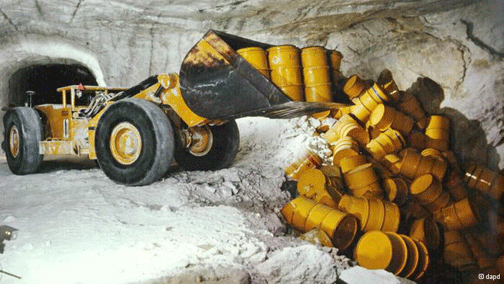
The National Geographic series Drain the Oceans sees teams discover 40 barrels of heavy water when they virtually lifted the vessel.
This quantity of heavy water would have been more than enough to catapult Germany on her way to becoming a nuclear power. Naval historian professor Eric Gove told the Daily Telegraph: “After the war, those involved in the German nuclear programme said that the loss of heavy water was absolutely decisive. It stopped their reactor programme in its tracks.”
Norway became a target of the Allies after it began producing water in 1934, above Lake Tinn at Vemork.
Five years later in 1939 the country began its ‘uranium club’. Otto Hahn and Fritz Strassmann had placed Germany at the head of the pack in the nuclear race after they discovered fission.
Fission is the radioactive decay process where an atom’s nucleus splits into smaller parts.
The scientists needed heavy water in order to control the fission process.
After Hitler invaded Norway in 1940, he ordered his troops to move straight for the nuclear plant in Vemork.
Consequently, Operation Gunnerside was launched in 1943 after Britain feared Hitler would use this substance against his enemies.
Despite blowing up the plant while the Hydro was sunk, the Norwegians did not destroy all the Germany supply of heavy water the Nazis began to move the following year by train and ferry. However, Churchill was already a move ahead.
He and his generals had already ordered their Norway counterparts to attach a bomb to the vessel.
The mission was later documented in The Heroes of Telemark.
Drain the Ocean will appear on National Geographic every week from September 6.
September 3, 2018
Posted by Christina Macpherson |
Germany, history, weapons and war |
Leave a comment
- The UK’s nuclear arsenal is housed on four submarines, with one of those submarines on patrol at all times.
- During their isolated missions, crews watch for signals that the UK still exists — and may launch a counter-attack if they believe their country has been destroyed.
- One of these signs is whether BBC Radio 4 is still broadcasting the “Today” programme, Britain’s flagship news and politics show.
- If the submarine commander believes Britain has been destroyed, he may be under orders to launch a nuclear strike.
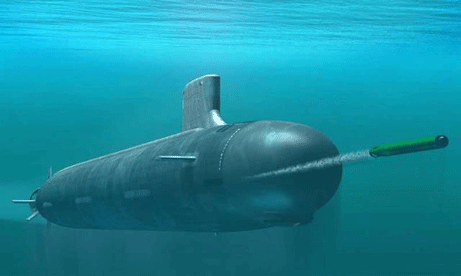
Deep underwater, on submarines equipped with nuclear missiles, British crews are constantly prepared to fire their weapons, and potentially play a part in bringing about the end of the world. Sailors on the four Vanguard-class submarines which patrol the waters and hold the UK’s nuclear deterrent operate under strict protocol for working out when to act and what to do — part of which is said to include listening to BBC radio.
According to a prominent British historian, the broadcast of BBC Radio 4’s “Today” programme is one of the official measures the Royal Navy uses to prove that the United Kingdom still exists. “Today” has been broadcast at around breakfast time since 1958 and is the highest-profile news programme in British media.
Lord Peter Hennessy, a history professor who joined the UK’s House of Lords in 2010, said that if it can’t be heard for three days in a row, then it could signify Britain’s demise, and trigger their doomsday protocol.
According to Politico, Hennessy says: “The failure to pick up the BBC Today program for a few days is regarded as the ultimate test.”
If no sign comes through, the commander and deputy will open letters that contain instructions from the prime minister and execute their final wishes.
These letters, each known as a “Letter of Last Resort’ are secret instructions, written when a prime minister enters the office and sealed until an apocalypse. They tell the UK’s submarine commanders what to do with the country’s nuclear weapons if the country has been destroyed.
Writing these letters is one of the first tasks undertaken by any new prime minister. They are locked inside a safe inside another safe, and placed in the control rooms of the nation’s four nuclear submarines, Politico reports. The safes will only be accessible to the sub’s commander and deputy.
Matthew Seligman, Professor of Naval History at Brunel University, told BBC Newsbeat that there are “only so many options available.”
“Do nothing, launch a retaliatory strike, offer yourself to an ally like the USA, or use your own judgment.
“Essentially, are you going to use the missiles or not?”
The UK has four submarines that are capable of carrying the country’s Trident nuclear missiles. At least one of these has been on patrol at all times since 1969, the government says.
There are 40 nuclear warheads and a maximum of eight missiles on each submarine.
Only the prime minister can authorize the launch of the country’s nuclear weapons.
September 3, 2018
Posted by Christina Macpherson |
UK, weapons and war |
Leave a comment
 North Wales Chronicle 31st Aug 2018 , Horizon Nuclear Power is seeking planning permission
 to carry out the 15
month long process that includes clearing field boundaries, demolishing
buildings and “relocating species”, covering an area the equivalent of
almost 500 football pitches. The plans, to be discussed by Anglesey
Council’s planning committee next week, also include building car parks
and offices at the site on the outskirts of Cemaes.
Recommended for approval by officers, Horizon has endeavoured to begin the work even before
the fate is known of the necessary Development Consent Order (DCO)
application for the nuclear plant itself. A process that could take at
least 18 months for the Planning Inspectorate to decide upon, the DCO will
also include a substantial public consultation period.
http://www.northwaleschronicle.co.uk/news/16611204.740-acre-site-for-wylfa-newydd-recommended-for-approval/
September 3, 2018
Posted by Christina Macpherson |
business and costs, politics, UK |
Leave a comment
Glamorgan Gem 30th Aug 2018 , Plaid Cymru councillors in Barry have warned against disposing more than
300,000 tonnes of mud from Hinkley Point a few miles off the coast from
Cardiff, Penarth and Barry. Earlier this year Natural Resources Wales (NRW)
said sample results of the dredged material had demonstrated it is safe,
but campaigners claim it has been “insufficiently tested”.
NRW gave the French company EDF a licence to move mud from the construction site at
Hinkley Point C and release it at ‘Cardiff Grounds’ in the Severn
Channel where it can be dispersed. Plaid points out that concerns have been
raised by marine scientist Tim Deere-Jones that the mud has not been tested
for radioactivity at a depth lower than five centimetres and that the wrong
tests have been carried out. Cllr Nic Hodges, who represents Barry Island
and Barry’s West End on the Vale Council, spoke at a rally outside the
Senedd in Cardiff Bay on Bank Holiday Monday, calling for further testing.
http://www.glamorgan-gem.co.uk/article.cfm
September 3, 2018
Posted by Christina Macpherson |
environment, UK |
Leave a comment
French environment minister resigns https://beyondnuclearinternational.org/2018/08/29/french-environment-minister-resigns/Update: A newly leaked report examines the possibility of France building six new EPR reactors starting in 2025, after a prolonged period of inactivity in the industry. The report was ironically commissioned by Hulot and economy minister, Bruno Lemaire, and concludes that France “cannot stop building” reactors in order to maintain industrial know how and provide jobs, according to the newspaper, Les Echos, which broke the story. The report’s finding may have contributed to Hulot’s decision to resign. However, the notion that France would build six more EPRs was met with derision by nuclear critics who pointed out that the French nuclear industry has been unable to complete even one EPR in either France of Finland, where both projects are years behind schedule and massively over-budget.
Is the departure of Nicolas Hulot significant?, By Linda Pentz Gunter, 30 Aug 18
Opinion in France is decidedly mixed about the sudden resignation of French environment minister, Nicolas Hulot. He made his announcement on a radio show, taking the government of centrist, Emmanuel Macron, by surprise.
Certainly, the ecological crown had sat uneasily on Hulot’s head throughout his tenure in government. He arrived there ostensibly from the activist ranks — he was also a journalist — and was thought to be strongly anti-nuclear. But when French gendarmes raided and destroyed an opposition encampment at the proposed high-level radioactive waste repository site in Bure last February, Hulot failed to come to the defense of the anti-nuclear activists, some of whom were arrested. Even when challenged in the French parliament for his silence, he bobbed and weaved, relying on evasive rhetoric.
Yet when he resigned on Tuesday, he claimed it was to stop “having to lie to myself” and told the radio program on which he made the announcement that nuclear power is “a useless folly.”
All smoke and mirrors, says long-time anti-nuclear activist and watchdog, Stéphane Lhomme of L’Observatoire du Nucléaire. “Nicolas Hulot has never taken any concrete action against the nuclear lobbies he pretends to fight,” Lhomme wrote on his blog.” He points out, as did Beyond Nuclear International in an earlier article, that Hulot’s foundation — Nature and Man — is funded by corporations, including EdF, the national nuclear utility.
Indeed, it could be EdF who will be doing the celebrating now that Hulot is gone, according to a Reuters article. The company’s share price rose by two percent on the announced resignation, and former EdF board member, Gerard Magnin, told Reuters that “Hulot was the last remaining obstacle to a strategy with nuclear as the sole option for security of supply and carbon-free energy.”
Macron and his “neither Left nor Right” party, known as Republic on the Move, has proven to be as malleable as his predecessor, the Socialist party’s Francois Hollande, at first announcing he would reduce France’s reliance on nuclear energy to 50 percent by 2025, down from the current 75 percent, as Hollande had vowed. But Macron quickly capitulated to the power of the nuclear lobby, and pushed the timeline back a decade at least. A new timeline will be announced next year.
The French anti-nuclear network, Sortir du nucléaire, took a surprisingly conciliatory tone toward Hulot’s decision, saying in a press release that they “applaud the honesty and the political courage implicit in this decision.” The network praised Hulot for “denouncing the crushing weight of the nuclear lobby,” and stated that in a democracy it should be the people, not lobbies or a single, powerful leader who should set the direction of the country and its future.
Lhomme is not so sure that lobbyists are breathing a sigh of relief with Hulot’s departure. He asserts they never had anything to fear from Hulot — even as they declared him “enemy number one” — because he is “someone who talks a lot and takes no action.”
At the end of the day, the fallout from Hulot’s resignation may change nothing, or it may further shake confidence in the Macron government. Jean-Luc Mélanchon, leader of the Leftist “Unbowed” party, who was a Macron opponent during the presidential elections, proclaimed in a tweet that the Hulot resignation marked the beginning of the “decomposition” of Macronism.
Whether Hulot was a champion of environmental causes stifled by a corporate-leaning government, or whether the ire of environmentalists finally reached his conscience, will play out in the coming months when we see what he does next.
August 31, 2018
Posted by Christina Macpherson |
France, politics |
Leave a comment
Nucnet 28th Aug 2018 , BGE, Germany’s state-owned radioactive waste disposal company, is to
cooperate with the Federal Institute for Geosciences and Natural Resources
(BGR) on the selection process for a national deep geologic repository
site, BGE said. According to a statement, BGE and BGR, which provides
scientific advice to the government, will also cooperate on the management
of existing waste repositories, including the Asse, Konrad and Morsleben
sites. The agreement will remain valid until the final repository site
selection process is complete, BGE said.
Under the agreement BGR will carry
out R&D on behalf of BGE, the statement said. The Gorleben salt mine in
Lower Saxony, northern Germany, has been under investigation as a potential
final repository site.
A moratorium on the evaluation of Gorleben was
introduced in 2000 by a former Social Democrat and Green Party
administration, but ended in 2010 and exploration at the site was
restarted. However, work was discontinued again at the end of 2012 to allow
for a political compromise on site selection and then ended in July 2013.
August 31, 2018
Posted by Christina Macpherson |
Germany, wastes |
Leave a comment
Popular French environment minister quits in blow to Macron, Laurence Frost, Geert De Clercq, PARIS (Reuters) 28 Aug 18 – French Environment Minister Nicolas Hulot resigned on Tuesday in frustration over sluggish progress on climate goals and nuclear energy policy, dealing a major blow to President Emmanuel Macron’s already tarnished green credentials.
Hulot, a former TV presenter and green activist who consistently scored high in opinion polls, quit during a live radio interview following what he called an “accumulation of disappointments”.
“I don’t want to lie to myself any more, or create the illusion that we’re facing up to these challenges,” Hulot said on France Inter. “I have therefore decided to leave the government.”
Hulot was among Macron’s first ministerial appointments following his May 2017 election victory. His inclusion helped to sustain a green image France had earned 18 months earlier by brokering the Paris Agreement to combat global greenhouse emissions.
But the centrist president has watered down a series of campaign pledges on the environment, including a commitment to cut the share of nuclear power in French electricity to 50 percent by 2025 and boost renewable energy.
Those policy shifts have been a repeated source of frustration for Hulot. Since a post-election honeymoon period, they have been accompanied by a sharp slide in Macron’s ratings, which touched new lows after his bodyguard was filmed assaulting demonstrators last month.
……. Greenpeace France director Jean-Francois Julliard said that while Macron had “made some fine speeches” and stood up to U.S. President Donald Trump on climate change, he had “never turned these words to concrete action” at home……..https://www.reuters.com/article/us-france-politics/popular-french-environment-minister-quits-in-blow-to-macron-idUSKCN1LD0K0
August 29, 2018
Posted by Christina Macpherson |
France, politics |
1 Comment
 Kepco in last-ditch attempt to save Moorside nuclear plant project https://www.ft.com/content/50389e18-a6df-11e8-926a-7342fe5e173fSouth Korean utility group looks at potential lenders to finance construction Sylvia Pfeifer in London, Song Jung-a in Seoul and Leo Lewis in Tokyo, 28 Aug 18
Korea Electric Power Corp is meeting lenders to finance the construction of a new nuclear power plant in west Cumbria, as it makes a last-ditch attempt to save the project. Kepco said it was “exchanging opinion with potential lenders” but noted that the Korean government, which owns a majority stake in the company, had said it was “too early” to enter financing negotiations. The South Korean group was named last December as the preferred bidder for Toshiba’s NuGen unit, which was to build the plant at Moorside. But the deal ran into problems after the UK announced in June that it was considering how the funding for new nuclear power plants should be structured. One model under review is for private investors to secure a return on a nuclear plant’s so-called regulated asset base (RAB). The following month, Toshiba said it was exploring alternative options for the business and had terminated Kepco’s preferred bidder status.
Toshiba has set a deadline to secure a deal by the end of September, according to people close to the negotiations. The company declined to comment. The persistent delays have prompted NuGen to review its operations. It started a 30-day consultation period at the start of August raising the prospect of about 100 job losses. Toshiba is believed to have spent hundreds of millions of pounds on developing the site so far. It was forced to pay close to $139m to buy a 40 per cent stake held by France’s Engie last year. The failure of the Moorside plant would deal a blow to the UK government’s plans to encourage the construction of new reactors to replace its ageing fleet.
A government spokesperson in Seoul confirmed the company had launched a joint study to ascertain whether the RAB model was “workable”. The Korean government is understood to remain keen to progress with the investment because it would give it a foothold in one of the few western nations backing the construction of new reactors. But it has said the investment must pass a “national audit” test before it can proceed.
Kepco wants to deploy two of its APR-1400 reactors at Moorside to generate a combined electricity of about 3GW — close to 7 per cent of Britain’s electricity needs. Kepco said it was “too early” to say whether it would be able to meet the criteria for the audit. A spokesperson for the Department for Business, Energy and Industrial Strategy said the government had “repeatedly engaged with Kepco and the government of the Republic of Korea both in Korea and the UK in support of ongoing Moorside negotiations”. “Ultimately, this remains a commercial matter between Toshiba and Kepco,” he added.
August 29, 2018
Posted by Christina Macpherson |
business and costs, South Korea, UK |
Leave a comment
Hundreds protest against nuclear power station mud dump, BBC News 27 August 2018
August 29, 2018
Posted by Christina Macpherson |
opposition to nuclear, UK |
Leave a comment

 Putin lost his supposedly ‘invulnerable’ nuclear-powered missile at sea — now he has to go find it https://www.businessinsider.co.za/russia-to-search-for-nuclear-powered-cruise-missile-lost-at-sea-2018-8, Ryan Pickrell , Business Insider US Aug 26, 2018
- Russia is gearing up to search for a missing nuclear-powered cruise missile that was lost at sea during a failed test-fire last year.
- Russian President Vladimir Putin has boasted about the weapon’s advanced capabilities, but all tests have reportedly ended in failure.
- While the missile is supposed to be able to fly indefinitely, its nuclear-powered core has yet to initiate to allow it to do that.
Russia lost a nuclear-powered missile during a failed test last year, and now Moscow is gearing up to go find it, according to CNBC, citing people familiar with a relevant US intelligence report.
Proudly claiming that the world will “listen to us now”, Russian President Vladimir Putin boasted in early March that his country had developed a new nuclear-powered cruise missile with unlimited range, but each of the four tests between November 2017 and February reportedly ended in failure, according to reports from May.
“The low-flying, stealth cruise missile with a nuclear warhead with a practically unlimited range, unpredictable flight path and the ability to bypass interception lines is invulnerable to all existing and future missile defence and air defence systems,” Putin claimed. “No one in the world has anything like it,” he added.
The reports from testing don’t support the Russian president’s claims.
The longest recorded flight, according to US assessments, lasted only a little over two minutes. Flying just 35km, the missile spun out of control and crashed. In each case, the nuclear-powered core of the experimental cruise missile failed, preventing the weapon from achieving the indefinite flight and unlimited range the Russian president bragged about.
The tests were apparently conducted at the request of senior Kremlin officials despite the protests of Russian engineers who argued that the platform was not ready for testing. Russian media reports claim the weapon will be ready to deploy in ten years.
During one weapons test in November of last year, the missile crashed into the Barents Sea. Three ships, one with the ability to handle radioactive material, will take part in the search operations, which have yet to be officially scheduled.
Experts are concerned about the possibility that the missile may be leaking radioactive nuclear material. The missile is suspected to rely on gasoline for takeoff but switch to nuclear power once in flight.
August 27, 2018
Posted by Christina Macpherson |
incidents, Russia |
Leave a comment
**Chernobyl & Sellafield** Slugger O’Toole 26th Aug 2018 , The Chernobyl disaster released fission products into the atmosphere above the Ukrainian nuclear power plant on 25 and 26 April 1986 which drifted over the Soviet Union and Europe scattering radioactive contamination.
In the months and years that followed, UK government working groups wrote reports on “the Lessons of Chernobyl”.
“After some initial problems” officials in Northern Ireland were “closely involved” with the working party as it drew up plans to build a radiation monitoring network (RIMNET) to automate the measurement of radioactivity in the air at stations across the UK to aid the response to “peace time nuclear accidents”.
Official papers released under the 20 year rule in file NIO/28/2/44A [PDF] indicate that the Northern Ireland Office wished to site automated monitoring stations in Aldergrove; Silent Valley; Ballinrees; Castle Archdale; They also desired the continuous measurement of radioactivity levels in drinking water in key locations – the Silent Valley reservoir and at a DOE Water Extraction Plant at Dunore Point on Lough Neagh – which “provide the vast majority of the Northern Ireland
population with drinking water”.
If you head down to the Public Records Office you can check out file NIO/28/2/44A and read how the Secretary of
State Tom King’s office responded to a letter from the clerk of Omagh District Council In November 1987 who wrote “on behalf of a convocation of Councils … pledged to achieving the closure of the Sellafield Nuclear Complex”.
On the one hand … Mr S McKillop described the press release which accompanied the letter as “tendentious and unconstructively critical of government policy as regards nuclear installations generally” and prepared a draft response.
August 27, 2018
Posted by Christina Macpherson |
spinbuster, UK |
Leave a comment

The Nuclear Power Plant of the Future May Be Floating Near Russia, NYT 26 Aug 26 18 “………some environmental groups — even those open to a role for nuclear power as a substitute for traditional power plants — are skeptical.
For one, they are not convinced by Rosatom’s assurances of safety. Critics worry that during a tsunami, the 21,000-ton steel structure might not ride out the wave. In a worst-case scenario, they say, it would instead be torn from its moorings and sent barreling inland, plowing through buildings until it landed, steaming and dented and with two active reactors on board, well away from its source of coolant.
In such a case, Rosatom says, a backup power source and coolant on board would prevent the reactors from melting down, at least for the first 24 hours. “During this time we would consider what to do,” said Dmitri Alekseyenko, the deputy director for Rosatom’s floating reactor program. Regulators in the United States, however, require on-land reactors to operate for 72 hours in an emergency shutdown without external water supplies.
And the fact that the technology is well tested in Russian ships gives critics little solace, given a long history of spills and accidents involving nuclear-powered submarines and icebreakers operated by the Soviet and Russian navies.
In the 1960s and 1970s, the Soviet Union dumped reactors in the Kara Sea, in the Arctic Ocean north of Kola Bay. Russian nuclear submarines sank in 1989 and 2000, while one Russian nuclear icebreaker caught fire in 2011 and the reactor on another leaked radiation that year, according to Bellona, a Norwegian environmental group.
“The question is, would clients of Russia be comfortable with something like this being parked right at a pier in a major city?” Matthew McKinzie, director of the nuclear program at the Natural Resources Defense Council in Washington, said in a telephone interview.
A Greenpeace sailboat tailed the Akademik Lomonosov on its maiden voyage from a shipyard in St. Petersburg to Murmansk, where it will be fueled, flying a banner in English saying: “Floating Nuclear Reactor? Srsly?” ….
August 27, 2018
Posted by Christina Macpherson |
Russia, spinbuster, technology |
Leave a comment
World War 3 fears: Russia threaten NUCLEAR WEAPONS to Syria in response to US sanctions RUSSIA may deploy nuclear weapons to Syria in response to the US policy of imposing sanctions over Moscow crossing “red lines”, a senior Russian lawmaker has warned. Sunday Express, By MATT DRAKE Aug 26, 2018 Vladimir Gutenev, first deputy head of the economic policy committee of the State Duma, the lower chamber of the Russian parliament, said it is time for Russia to draw its own red lines.
Among such measures, the official said the deployment of Russian tactical nukes in countries such as Syria, the use of gold-linked cryptocurrencies for Russian arms exports and the suspension of a number of treaties with the US – such as non-proliferation of missile technologies.
Mr Gutenev said: “I believe that now Russia has to draw its own ‘red lines.’ “The time has come to ponder on variants of asymmetric response to the US, which are now being suggested by experts and are intended not only to offset their sanctions but also to do some retaliatory damage.
Among such measures, the official said the deployment of Russian tactical nukes in countries such as Syria, the use of gold-linked cryptocurrencies for Russian arms exports and the suspension of a number of treaties with the US – such as non-proliferation of missile technologies.
Mr Gutenev said: “I believe that now Russia has to draw its own ‘red lines.’
“The time has come to ponder on variants of asymmetric response to the US, which are now being suggested by experts and are intended not only to offset their sanctions but also to do some retaliatory damage.
“It’s no secret that serious pressure is being put on Russia, and it will only get worse.
“It is intended to deal a blow to defence cooperation, including defence exports.”
The minister added that Russia should follow the advice of “experts” and follow the US’ example of deploying nuclear weapons in other countries.
He added: “We should follow the advice of certain experts, who say that Russia should possibly suspend the implementation of treaties on non-proliferation of missile technologies, and also follow the US example and start deploying our tactical nuclear weapons in foreign countries.
“It is possible that Syria, where we have a well-protected airbase, may become one of those countries.”……….https://www.express.co.uk/news/world/1008474/world-war-3-russia-nuclear-weapon-syria-us-sanctions
August 27, 2018
Posted by Christina Macpherson |
politics international, Russia, Syria, weapons and war |
1 Comment
Nucnet 23rd Aug 2018 , If the UK and the EU fail to reach an agreement on Brexit terms, the UK
will no longer be a member of the Euratom R&T programme, no longer be a
member of Fusion for Energy, and will no longer be able to collaborate on
the International Thermonuclear Experimental Reactor (Iter) project through
the EU, the government said today.
In a paper on nuclear research if there is no Brexit deal, the UK government said it is committed to continued
domestic research and other international partnerships to ensure the UK
retains its “world leading position” in this field. The paper said the
UK is on track to have bilateral nuclear cooperation agreements in place
with “key priority partners” ahead of Brexit in March 2019. This will
allow for continued, unimpeded civil nuclear trade and nuclear research
cooperation with these countries.
But the UK will no longer be a member of Fusion for Energy, the organisation responsible for providing the EU’s
contribution to the multinational Iter fusion project in France. This means
UK businesses will not be able to bid for contracts to work on the Iter
project. However, the UK government said today it would be willing to
discuss opportunities for UK researchers, companies, and institutions, to
collaborate on “this critical experiment”.
https://www.nucnet.org/all-the-news/2018/08/23/uk-will-not-be-able-to-contribute-to-iter-without-brexit-deal-says-government
August 26, 2018
Posted by Christina Macpherson |
politics international, technology, UK |
1 Comment
Centrica (accessed) 24th Aug 2018 , By 2040 Bloomberg New Energy Finance predicts that more than half of global
energy capacity will come from renewables and flexible sources, such as
battery storage and demand side response. At 7% of global capacity,
flexible sources such as batteries and demand side response – where homes
and businesses automatically cut energy usage a peak times – will account
for the same level of global energy capacity as oil-fired power plants
today.
And more than half of this energy storage capacity will come from
small-scale batteries installed by households and businesses alongside
rooftop solar panels.
This trend away from larger power plants and towards
smaller, decentralised energy systems is happening in both developed and
developing nations. The decarbonisation trend is being accelerated by the
falling price of renewable energy technology, and the availability of
technology such as batteries that makes it easier to store electricity.
This in turn accelerates decentralisation, as renewables are by their
nature smaller and more spread out than the equivalent capacity provided by
a traditional power plant.
The rate of decarbonisation and decentralisation
is being accelerated by digital technology, giving people the power to
save, or even make, money by being more flexible with their energy use,
while helping electricity grid operators to balance supply and demand.
Europe’s largest demand side response aggregator, REstore, was acquired
by Centrica in 2017. Centrica CEO Iain Conn says he expects demand side
response to become one of the fastest growing elements of the energy market
over the next few years. From smart home products such as Hive that allow
home owners to control their energy use from their smartphone, through to
companies like REstore employing artificial intelligence to calculate just
how much energy capacity a factory can offer as a virtual power plant.
Energy, like every other sector, is going digital.
Greater insight through
digital technology is just the start of the shift of power away from energy
companies and towards the customer. Centrica is currently piloting a
project in the south west of England that will allow local residents and
businesses to buy and sell energy between themselves without the
intervention of their energy supplier. The £19 million Local Energy Market
in Cornwall is enabling 200 homes and businesses to do this using a digital
record known as Blockchain. It is used to create a secure electronic ledger
of transactions between participants. Iain Conn says he believes such local
networks will become the norm in a new decentralised energy market.
https://www.centrica.com/platform/three-tech-trends
August 26, 2018
Posted by Christina Macpherson |
decentralised, UK |
Leave a comment