Irrational optimism about Small Modular Nuclear Reactors (SMRs)

 “Panglossian puffery”, says David Lowry. The report ignores the security and nuclear waste problems of small modular reactors.
The Nuclear Free Local Authorities (NFLA) says this is yet another attempt to promote the benefits of SMRs despite large and quite possibly insurmountable hurdles to cross. The Government suggests the report was produced by an ‘independent’ group, yet at least half of the group have strong links to the nuclear industry, including the Nuclear Industry Association. The UK appear to be one of the few governments pursuing a strategy of promoting SMRs. Even France and Finland, the only other countries in Europe currently developing large nuclear projects, have no plans to develop such technology. Indeed France has just commissioned a whole raft of new smaller-scale solar energy projects.
the finance sector is accurate in being sceptical of new nuclear developments given the rapidly decreasing costs of renewable energy.
Rolls-Royce warned last month that it was preparing to shut down the [Small Modular Nuclear Reactor] project if the government did not make a long-term commitment to its technology.
Panglossian SMRs , NuClear News Sept 18, The government should subsidise the deployment of small modular nuclear reactors in order to speed the transition to a low carbon energy system, according to an independent review into the technology commissioned by Ministers. The Expert Finance Working Group on Small Reactors (EFWG) said in a report that government should offer subsidies for small nuclear reactors to help de-risk the technology and kickstart cost reductions. (1)
Small modular reactors (SMRs) generally have a capacity less than 600MW, with the costs ranging from £100 million to £2.3 billion, which the experts suggest could be delivered by 2030. The EFWG has recommended the government to help de-risk the small nuclear market to enable the private sector to develop and finance projects – it believes SMRs could be commercially viable propositions both in the UK and for an export market.
The report says the “Government should establish an advanced manufacturing supply chain initiative, as it did with offshore wind, to bring forward existing and new manufacturing capability in the UK and to challenge the market on the requirement for nuclear specific items, particularly Balance of Plant (BOP), thereby reducing the costs of nuclear and the perceived risks associated with it.”
Nuclear Energy Minister Richard Harrington said: “Today’s independent expert report recognises the opportunity presented by small nuclear reactors and shows the potential for how investors, industry and government can work together to make small nuclear reactors a reality. Advanced nuclear technologies provide a major opportunity to drive clean growth and could create high-skilled, well-paid jobs around the country as part of our modern Industrial Strategy.” (2) Continue reading
Northen British companies to build 100s of casks for Sellafield’s 66 year-old nuclear wasyes

 radioactive waste from one of the UK’s most important nuclear
decommissioning projects. Businesses in Lancashire, Cumbria and West
Yorkshire are joining forces to produce self-shielded boxes which will
store legacy waste from the First Generation Magnox Storage Pond (FGMSP) at
Sellafield. The 66-year old open air pond was originally used to store
nuclear fuel from the UK’s first generation of nuclear power stations. It
has been prioritised for clean-up by the Nuclear Decommissioning Authority.
The clean-up work requires the manufacture of hundreds of boxes to store
material taken out of the facility.
http://www.thebusinessdesk.com/yorkshire/news/2025845-northern-collaboration-sellafield-n-plant-clear
UK consumers could pay for new nuclear power plants years before they are built
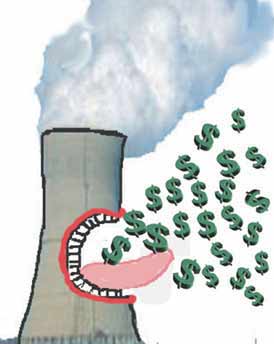 Nuclear Finance NuClear News http://www.no2nuclearpower.org.uk/wp/wp-content/uploads/2018/09/NuClearNewsNo110.pdf Sept 18 Consumers could pay for new nuclear power plants years before they are built. The government is considering using a controversial financing system to build new nuclear power stations which would see customers charged for construction costs long before a project has actually been built. The fact that Mark Corben – former chief financial officer at the Special Purpose Vehicle (SPV) for the Thames Tideway Tunnel – has moved to the UK Department for Business, Energy and Industrial Strategy (BEIS) to advise on development of a new finance model for funding new nuclear projects, confirms that the Government is seriously considering this method of finance. (1
The approach, called the Regulated Asset Base (RAB) model, has been described as an “open cheque book” for developers, as consumers could be locked into paying the costs of a project going wrong – like construction taking longer than planned, or prices spiralling – indefinitely until it’s complete.
Shadow energy minister Alan Whitehead MP said: “The problem with this model as applied to new nuclear power stations is that it transfers all the risk of construction from the developer to the customers, with the rather wobbly promise of benefits to come in the future.” Like other publicprivate finance models, the RAB model has a sticky history. The government has already supported the use of RAB for the Thames Tideway Tunnel, a £4.2bn project to revamp 15 miles of sewer lines in North London, which Thames Water says a RAB model has helped lower costs. As well as taking a RAB approach to financing the Thames Tideway, the government offered a “contingent financial support” package which guarantees public money when certain parts of the project go wrong. It’s this transfer of liability first to the consumer, and then also the taxpayer, which helps lower risk and attract investors. A similar package may be offered to nuclear developers.
In 2017, the cross-party British Infrastructure Group of MPs, chaired by Conservative exminister Grant Shapps, raised concerns that bill payers had been asked to write a “blank cheque” for the project. The National Audit Office (NAO) has also been critical of the Thames Tideway contract, as it still isn’t clear how much consumers will have to pay. The idea of a RAB approach has already proven popular with the nuclear industry. EDF boss Humphrey Cadoux-Hudson recently told the Financial Times that he is in talks with dozens of private investors over financing Sizewell C, the French giant’s post-Hinkley nuclear project in Suffolk – and that the RAB model could be pivotal.
Much of the work around taking a RAB approach to financing nuclear power has been carried out by Dieter Helm, professor of Energy Policy at the University of Oxford and a figure respected by government. Writing in a blog about the model’s application to nuclear last month, Helm highlighted a number of open issues – such as which regulator would set the RAB for nuclear projects, as well as the “very severe lobbying pressures” any regulator would come under when making its RAB evaluations. Helm concludes that the RAB may be an efficient approach to financing nuclear power, but still doesn’t address fundamental issues about its cost competitiveness with other technology like wind and solar, or what do with all its radioactive waste. “It is for society to decide whether it wants new nuclear or not,” he said. “The market cannot decide.” (2)
Finally the Government has, after I feared so long it would, chosen the doomsday option to fund new nuclear power stations – one that will be disastrous for the consumers and taxpayers, says Dave Toke, reader in Energy Policy at Aberdeen University. After years of swearing that they would not offer subsidies to nuclear power, and saying that in the future the terrible drain of (historical) over-spending on nuclear power would stop, the Government has gone back to square zero. Essentially, under the Government’s proposals nuclear developers will have no real limit on what they can spend to build the power stations. It is a recipe for national disaster. No private developer is willing to take the construction risks of funding nuclear power in the UK, whatever ‘strike price’ is offered for the electricity that might be generated in future.
For Hinkley Point C the French state will pay for the inevitable cost overruns that come along with building the plant, combined quite probably, with an out-of-contract bailout by the British Government when the going gets tough. But now the Government is casting around for another nuclear power plant to be built, – Wylfa or Sizewell C – but neither developer (Hitachi or EDF) wants to take the risk of paying the almost inevitable losses on the project. So enter the Government’s new proposals which will no doubt be promoted as a simple accountancy trick to lower costs. But it hides the fact that taxpayers will take the losses. Under the RAB arrangements electricity consumers will start paying extra on their bills from when construction starts, which could be anything from 7-10+ years ahead of any energy being generated. (3)
Wylfa nuclear project, Bechtel, and the inconvenient truths about the costs
 Bechtel & Wylfa NuClear News Sept 18, http://www.no2nuclearpower.org.uk/wp/wp-content/uploads/2018/09/NuClearNewsNo110.pdf Reports in the Japanese press that Bechtel is to withdraw from its key role in building Wylfa Newydd due to concerns over the project’s profitability, and the drastic rise in construction costs, (1) were swiftly denied. (2)
Nevertheless all mention of the joint venture Hitachi set up earlier in the year with Bechtel and JGC Corporation called Menter Newydd, (New Venture in Welsh) –to help deliver the Wylfa Newydd project – seems to have disappeared. The detailed allocation of work between Horizon and Menter Newydd remained to be worked out, but the new joint venture was expected to lead a significant proportion of on-site construction activities. At that time it seemed that Horizon would be the owners of the nuclear plant and Menter Newydd would be the builders.
The Wales Online website from 22nd May 2016 which announced the establishment of Menter Newydd said “Menter Newydd is a joint venture of Hitachi Nuclear Energy Europe, US giant Bechtel Management Company and Japanese firm JGC Corporation (UK) and will be responsible for the construction of Wylfa Newydd, overseen by Horizon Nuclear Power.” (3)
Bechtel now describes itself as a “project management contractor (PMC) to help deliver a new, two-reactor nuclear plant in Wales for Horizon Nuclear Power”: (4) Clearly a downgrading of its role.
And what of the JCG Corporation? Virtually no mention of Wylfa on their website. But a notice of changes of Directors dated 8th February 2018 has Tsuyoshi Iwasaki who was Associate Executive Director Project Director for Wylfa Newydd retiring and becoming simply an “advisor” to nothing specific. (5)
According to Asahi Shimbun on 17th August Bechtel has decided to withdraw from its key role in construction and only offer a consulting service. The article goes on to say that Horizon Nuclear Power, now a subsidiary of Hitachi, will be in charge of the construction while receiving advice from Bechtel and Japanese electric power companies. One Hitachi executive played down the significance of Bechtel’s withdrawal from its role in construction. “It only means that roles of companies will change. The impact to the project is not big,” the executive said
But the newspaper says “…if Horizon replaces Bechtel, it faces the risk that the construction costs will become higher than anticipated. Hitachi is aiming to lower its stake in Horizon from the current 100 percent to less than 50 percent as a condition for the start of construction of the nuclear plant, and so it is asking other companies to invest in Horizon. But if other companies are concerned over Horizon’s risk, they will hesitate to invest in it. As a result, Hitachi will face bigger difficulties in raising funds for construction and proceeding with the project.”
The Daily Post, on the other hand says: “Reports that a US construction giant has withdrawn from building Wylfa Newydd are “categorically untrue” But Asahi Shimbun didn’t say they had withdrawn completely – only that they had downgraded their role from lead constructor to more of a consultancy role.
Horizon made a big deal out of its announcement that it had appointed Bechtel as Project Management Contractor (PMC) claiming that it would mean cheaper nuclear electricity. It also said it had signed further contracts with Hitachi Nuclear Energy Europe and JGC New Energy UK Limited (JGC) to continue to provide support during the project’s development stage. Bechtel, who will have nearly 200 employees embedded within Horizon, will oversee the project management of the power station, together with Horizon.
Duncan Hawthorne, CEO of Horizon Nuclear Power, said: “These world-leading companies bring a wealth of nuclear, engineering and construction expertise to complement our growing organisation and will help us replicate the cost and schedule successes of the previous four ABWR reactors. The UK still needs reliable nuclear power to help transform our energy mix, and we are gearing up to deliver that. “Our first power station will be cheaper than what has gone before and after that, with smart financing, supply chain learnings and no need for first time overheads, future project costs will fall further still.” (7)
People Against Wylfa B (PAWB) commented that Bechtel has obviously come to the conclusion that it would not make financial sense for them to take part in such a huge and extortionately expensive project. There is an apparent difference of opinion between Hitachi and Bechtel about the cost of construction with Bechtel’s estimates being higher. If a company as large as Bechtel is getting cold feet, it will be difficult for Hitachi to engage another company to take their place. One idea mentioned was that Horizon could replace Bechtel to manage the construction. The risk linked to that would be huge since Horizon is only a local subsidiary company to Hitachi without any experience of building anything let alone two monster nuclear reactors. Hitachi also has no experience of building nuclear reactors. Their track record is offering their boiling water reactors for other companies to build. If, as reported Bechtel will stay as a consultant to the project that is very different to being an active building partner.
The Westminster Government and the Welsh Labour Government should wake up to what is very obvious to other countries worldwide that nuclear power is a technology that belongs to the middle of the twentieth century. It is dirty, dangerous and a threat to environmental and human health. There is an international trend now that sees the price of renewable energy technologies coming down. Using these various technologies and a comprehensive energy conservation programme in our homes, public buildings and workplaces is the sensible and progressive way ahead. This would create work immediately – unlike Wylfa B – without the enormous risks, both financial and healthwise. (8)
NuGen searches for a buyer for Moorside nuclear project
http://www.no2nuclearpower.org.uk/wp/wp-content/uploads/2018/09/NuClearNewsNo110.pdf NuClear News Sept 18 Kepco, the Korean state-owned nuclear company, which was looking at rescuing the troubled Nugen project at Moorside has strong reservations about the proposed funding model – the Regulated Asset Base (RAB) model. The company is no longer the leading bidder, and according to the Korean press prefers the Contract for Difference (CfD) deal given to EDF for Hinkley C. (1)
Sources in Korea blame the shift in Government policy on support for new nuclear for delaying the deal between Kepco and Toshiba. The Korea Herald, a daily English language newspaper based in Seoul, quoted a Korean government official who claims that the deal for NuGen is being renegotiated because the UK government’s decision to “change profit models for the project”. (2)
Toshiba has opened the door to alternative buyers for NuGen, raising doubts over the future of Moorside. Talks with Kepco, however, are still continuing, despite Kepco being stripped of its preferred bidder status. (3)
Cumbrian MPs have been demanding Government help to make sure nuclear new build happens. Trudy Harrison, Tory MP for Copeland said: “The Government must take a proactive stance. Nuclear new build is not commercially viable without Government support. It is now time for Government to get a grip on our energy policy. In Cumbria we have the skills and experience.” Mrs Harrison is setting up a Moorside strategic partnership, with representatives from Sellafield, Cumbria LEP and councils.
Sue Hayman, Labour MP for Workington, has written to the Government to ask them to act immediately over NuGen. She is co-chair of the All Party Parliamentary Group on Nuclear Energy. “NuGen is now in the last chance saloon. The Government must act now or it will be too late, and West Cumbria will not get the 20,000 jobs, economic investment and infrastructure improvements that depend on Moorside.”
Barrow’s MP, John Woodcock, now sitting as an Independent says: “We cannot wait much longer for the government to step in and rescue the stalled £15billion Moorside project”. (4)
NuGen announced it was restructuring as part of a review because of the “prolonged time” it had taken to seal the deal with the Korean utility. Around 100 staff and contractor jobs, including that of chief executive Tom Samson, are at risk under the restructuring plans. (5)
Toshiba has set a deadline to secure a deal by the end of September, according to the Financial Times. The Company is believed to have spent hundreds of millions of pounds on developing the site so far. It was forced to pay close to $139m to buy a 40% stake held by France’s Engie last year. The Korean government is understood to remain keen to progress with the investment because it would give it a foothold in one of the few western nations backing the construction of new reactors. But it has said the investment must pass a “national audit” test before it can proceed. Kepco wants to deploy two of its APR-1400 reactors at Moorside to generate a combined electricity of about 3GW – close to 7% of Britain’s electricity needs. Kepco said it was “too early” to say whether it would be able to meet the criteria for the audit. (6)
Meanwhile, NuGen has provided information to support the Moorside site in Cumbria being carried forward into the UK government’s new national policy statement as a site for a new nuclear power plant. NuGen CEO Tom Samson said, “NuGen remains committed to delivering a nuclear power station at Moorside in Cumbria.” (7)
UK’s Bradwell B nuclear project entering an uncertain phase
NucClear News Sept 18, Bradwell B nuclear project is entering a new phase according to China General Nuclear Power Corporation (CGN) and EDF. The developers have begun analysing the findings from early investigative work carried out on the site on the Dengie peninsula. China General Nuclear Power Corporation (CGN) and EDF are at the pre-planning stage of their plans to build a UKHPR1000 nuclear reactor plant, with the design for this currently undergoing a Generic Design Assessment (GDA) by the Office for Nuclear Regulation and the Environment Agency.
The East Anglian Daily Times reports that up to 30 people were on site during more than 40,000 hours of investigative work, with specialist firms such as Structural Soils Ltd working alongside local firms such as Scott Parsons Landscaping Services at Burnham-on-Crouch taking part. The landscaping firm’s project team has used drilling rigs to complete 20 boreholes. These will be used to analyse the make-up of the land using geophysical testing which should be completed later this year.
Since the start of the year, more than 3000 metres of exploratory holes in the ground have been completed and soil samples taken from each. These will now be taken to various laboratories for testing and examination as part of EDF’s engineering analysis. Now the firm is sending out a newsletter update to local residents explaining the progress of the project. (1)
The Blackwater Against New Nuclear Group (BANNG) responded to the newsletter saying it was a partial and misleading piece of smooth ‘nuke speak’ that gives all the upsides and none of the downsides of a new nuclear power station at Bradwell. Nowhere in the newsletter is there the slightest hint that Bradwell B might not go ahead. In fact, early stage or not, so sure is CGN/EDF of success that an indicative project timeline is provided, showing that construction ‘begins’ in 5 – 7 years from now.
The newsletter tells us that comments can be made on the Generic Design Assessment (GDA) process. But one might well ask if there is any point in commenting on this given the obvious confidence of CGN/EDF that the Hualong 1000 reactor, not yet in use anywhere in the world, will pass the regulators’ tests. Yet all the digging of boreholes and marine surveys cannot disguise the fact that the site is in Flood Zone 3 and, therefore, totally unsuitable for potentially dangerous new nuclear reactors. Words such as ‘flooding’, storm surges’, ‘other coastal processes’, ‘all predicted to get worse with climate change’.
There is no mention in the newsletter of the immense upheaval, currently taking place around Hinkley Point C in Somerset, that will take place on the estuary if Bradwell B goes ahead, making it a major industrial site and changing it forever; of the jetty on the Blackwater that will likely be needed to bring in large pieces of equipment to the construction site; of the routine radioactive emissions that will take place; of the on-site, long-term highly radioactive waste stores. (2)
BANNG has sent comments to the GDA process. Although the process is meant to be generic, not site-specific, BANNG is calling for the continuing viability of coastal sites under the threat of climate change to be taken into consideration. BANNG considers that the continuing integrity of sites is an issue that must be identified and taken into account in the GDA. Sites that are liable to inundation within the next 200 years should be ruled out. Forecasts of coastal change reveal that the parts of the Dengie peninsula on which Bradwell B is proposed will be permanently below sea level within the next century. Assuming Bradwell B starts generating in 2030 with an operational lifetime of 60 years followed by, perhaps, fifty years storage on site before a GDF is available it will be at least the middle of the next century before the site is fully decommissioned and cleaned up. Estimates of time-scale are, of course, uncertain but these are broadly in line with current government forecasts. And this is a highly optimistic picture. Decommissioning is likely to be a protracted exercise, a GDF may not be available for new build spent fuel and site deterioration may set in well before the site is cleared. It is highly probable there will be nuclear activity on floodable sites for up to two centuries. Indeed, this may be a conservative estimate.
The GDA is predicated on the eventual development of a disposal facility. Although the government has stated that ‘it is satisfied that effective arrangements will exist to manage and dispose of the waste that will be produced from new nuclear power stations’ this amounts to no more than a claim. http://www.no2nuclearpower.org.uk/wp/wp-content/uploads/2018/09/NuClearNewsNo110.pdf
Power balance is changing, with the flexibility of renewable energy systems
By 2040 Bloomberg New Energy Finance predicts that more than half of global energy capacity will come from renewables and flexible sources, such as battery storage and demand side response
NuClear News Sept 18 Tom Greatrex of the Nuclear Industry Association (1) says we should ignore the National Infrastructure Commission’s (NIC’s) recommendation that we only order one more nuclear station on top of Hinkley Point C before 2025 (2), because cutting carbon without the help of nuclear is a “risky business”. He says the Government understands the inherent value of a baseload low carbon source of generation.
The NIC says: “It is now possible to conceive of a low-cost electricity system that is principally powered by renewable energy sources.” It says at least 50% and up to 65% of electricity in 2030 should come from renewables. (3)
Australia is having similar debates where the fossil fuel lobby argues that because “coal” is “baseload”, it must therefore be “reliable”, but wind and solar are intermittent, so they cannot be relied upon to keep the lights on. It’s political rhetoric that belies the reality of the electricity system. Australia’s grid has challenges, but they are not necessarily ones that can be solved just by having more “baseload”. What is really needed – as the Australian Energy Market Operator, chief scientist Alan Finkel, and any number of other independent experts point out – is dispatchable and reliable generation, one that the grid operator can count on, at times of peak demand and heat stress. And the answer does not lie in traditional “baseload” generation – the more than 100 trips of big fossil fuel plants since December, often at times of soaring heat, underline that point.
The energy debate is usually dominated by simple political rhetoric – based around emissions or no emissions, cheap prices or expensive ones, baseload versus intermittency. That just skims over the surface. Behind the scenes, as the clean energy transition continues, debates are raging about good engineering practices and the design of markets. One of Australia’s leading electrical engineers, Kate Summers says large diverse renewable resources are far more stable in output than singular sources. She uses a series of graphs to illustrate that at moments when stability can be won or lost it has been wind and solar that have held firm, and acted as what one might consider to be “baseload”. And it has been coal and gas that has proved “intermittent” at the very minutes that stability is needed. (4)
It’s the Flexibility Stupid
A new report from Chatham House says evidence is growing that highly flexible electricity systems could deliver lower whole-system costs, especially given the dramatic projected falls in solar and wind power costs by 2030.
While the renewables rollout is a key part of global climate policy, the challenge is that the costs associated with managing the system start to escalate once renewables exceed a 30% share of generated electricity. Unless properly planned for, the growth in electric vehicle use and electric heating could further amplify these ‘system integration costs’. They include the cost of holding fossil fuel power plants in reserve for periods of low renewable supply, grid upgrades and the dumping of power from renewables when system constraints are reached. Governments can ensure electricity is affordable by promoting ‘flexibility’. Grid operators and power companies should pursue a diverse range of flexible, decentralized, modular technologies.
New technologies that enhance system flexibility, including smart electric vehicle (EV) charging, battery storage, digitalization with intelligent control and demand-side management, are unleashing a new phase of transformations in the power sector, for which existing companies are ill prepared. Companies providing these solutions may come to dominate the power sector in the coming decades. The accelerating deployment of this array of ‘flexibility enablers’ means the spectre of cost escalation – resulting from the expense of managing intermittent wind and solar power at huge volumes – may never materialize.
Smart, staggered EV charging could enable significant advances in system flexibility. By 2030, smart EV charging in the UK could be equivalent to 18% of the country’s current generating capacity. Rapid cost reductions in battery manufacturing, driven by increased deployment of EVs, are enabling affordable static, grid-level storage, in turn enhancing power system flexibility.
Digitalization of the electricity sector will lead to significant advances in system efficiency and flexibility. Residential demand will become flexible and networks functionally ‘smarter’. Machine-learning algorithms could be a game-changer, helping to manage the increasing complexity of electricity systems and identify new system-level efficiencies.
Enhanced system flexibility and a growing role for these technologies will provide new entry points for highly disruptive market actors, many of them not traditionally associated with the power sector. These actors include powerful technology companies and automotive manufacturers such as Google, Tesla and BMW. More widespread electrification of transport, and eventually of heating, will change the political and regulatory landscape of the electricity sector.
The transformations which have happened so far, with the rapid introduction of renewable technologies and falling demand due to greater energy efficiency, have undermined the business models of traditional power utilities. Now they face the prospect that renewables will achieve ever higher penetrations within the electricity market, aided by greater system flexibility. This will continue to erode the role of large power stations in ‘system balancing’ – balancing supply and demand – and will put further pressure on existing business models.
Evidence is growing that highly flexible electricity systems could deliver lower whole-system costs, especially given the dramatic projected falls in solar and wind power costs by 2030. But new regulatory approaches are needed to encourage market actors to deliver flexibility. Regulatory frameworks need to prioritize and incentivize investment in these areas, and encourage alternative business models. And in this future, our reliance on large fossil fuel power plants would fade, along with the utility business models that have long been based on a centralized power system.
New business models are emerging to aggregate and manage behind-the-meter investments. One example: storage-as-a-service. The innovative US utility, Green Mountain Power (GMP), in Vermont offers customers a Tesla Powerwall 2.0 battery for $15 a month so long as the customer allows GMP to manage when and how the battery is charged and discharged. Alternatively, customers can buy one for $1,500 – which is roughly a fifth of the actual cost of the battery. In either case, substantial subsidies, approved by the Vermont’s Public Utilities Commission, are offered. The regulator has been convinced that the scheme will more than pay for itself in the sense that all customers, not just those participating, will benefit from the program. The distributed storage paid off handsomely during a heat wave in early July 2018. The company was able to discharge stored energy out of about 500 Tesla Powerwall batteries installed in the homes of some 400 customers and feed it into the grid when it was sorely needed. It saved roughly half a million dollars by avoiding the need to buy expensive power from suppliers at the time of peak demand. GMP, which serves roughly a quarter-million customers in VT uses the batteries in customers’ premises as a virtual power plant (VPP). Customers like the batteries because they typically replace an emergency generator when power fails – which is not uncommon during storms in rural areas. (6)
UK Power Networks
The UK’s largest electricity distributor has proposed adopting a “flexibility first” approach to the delivery of extra grid capacity, in a move that could bring renewable energy onto the network at a lower cost. UK Power Networks has revealed plans to “supercharge” local markets for flexibility services, which rely on customers changing their energy consumption or generation to balance network demand, possibly by creating them itself.
The company claims that if flexibility services were made available to the 8.2 million buildings it serves, new markets for distributed renewable generation would open across London, the South East and the East of England. It speculates that such increased competition would result in a higher proportion of renewable power being bought onto the network, but at a lower cost. The Flexibility Roadmap proposes a radical rethink to the way we do business, moving away from automatically building new assets and instead giving the distributed energy resources market the opportunity to offer their services. If the market can provide the capacity we need at a more cost-effective rate than building new infrastructure, that’s exactly what we should do.
Specifically, UK Power Networks believes that the actions outlined in the roadmap will lower costs for consumers by delaying or avoiding expensive grid reinforcements, increase the resilience of the network and provide new sources of revenue for flexibility providers. To ascertain how it should best meet demand for flexibility, the company has launched a consultation on its Flexibility Roadmap. The consultation will run from August to 8 October. If accepted the proposals will come into effect from 2019.
Earlier this summer, UK Power Networks unveiled its plan to create the nation’s first “virtual” solar power station by the end of the year, using PV panels on the rooftops of its London customers’ homes. (7)
Demand-Side Response
By 2040 Bloomberg New Energy Finance predicts that more than half of global energy capacity will come from renewables and flexible sources, such as battery storage and demand side response. At 7% of global capacity, flexible sources such as batteries and demand side response – where homes and businesses automatically cut energy usage a peak times – will account for the same level of global energy capacity as oil-fired power plants today. And more than half of this energy storage capacity will come from small-scale batteries installed by households and businesses alongside rooftop solar panels. This trend away from larger power plants and towards smaller, decentralised energy systems is happening already in both developed and developing nations.
Energy, like every other sector, is going digital. From smart home products such as Hive that allow home owners to control their energy use from their smartphone, through to companies like REstore employing artificial intelligence to calculate just how much energy capacity a factory can offer as a virtual power plant. Centrica’s CEO Iain Conn says he expects demand side response to become one of the fastest growing elements of the energy market over the next few years. Europe’s largest demand side response aggregator, REstore, was acquired by Centrica in 2017.
In the same way as demand side response aggregators are emerging as a new type of energy company for the decentralised era, a new breed of companies is providing a route to market services for small generators. Centrica acquired one of Europe’s leading route to market companies, the Denmark-based Neas Energy, in 2016. Neas is able to take all of the Big Data coming from smart meters and Internet of Things (IoT) connected devices to build an accurate real-time picture of energy demand, as well as demand trends. Neas also uses software that combines this data with smart algorithms that judge weather patterns, so that it knows how much any given wind turbine or solar panel is likely to generate, and when. This helps balance the grid by matching supply and demand more accurately. And for the smaller energy producer, it helps them sell their energy at the most accurate market price. The growth in services supplied by companies like Neas is being driven by the rapid improvement and increasing availability of smart digital technology to both energy companies and their customers.
Greater insight through digital technology is just the start of the shift of power away from energy companies and towards the customer. Centrica is currently piloting a project in the south west of England that will allow local residents and businesses to buy and sell energy between themselves without the intervention of their energy supplier. The £19 million Local Energy Market in Cornwall is enabling 200 homes and businesses to do this using a digital record known as Blockchain. It is used to create a secure electronic ledger of transactions between participants. Iain Conn says he believes such local networks will become the norm in a new decentralised energy market.
Home owners using Blockchain to become their own micro-energy companies may seem like something for the distant future, but Microsoft’s Michael Wignall says that digital technology is accelerating at such a pace that these kinds of radical changes will be delivered over a short period of time. The Fourth Industrial Revolution we are currently experiencing will make energy systems of the future completely unrecognisable from what they are today. (8)
“Energy storage is all the rage”, says Dave Elliott, Emeritus Professor of Technology Policy at the Open University. But while the field is full of innovation at present, pumped hydro storage continues to dominate. And while storage offers one way to respond to the variability of some renewables, there are other options, including smart grid demand management (to time-shift demand peaks) and super-grid imports and exports (to balance local supply and demand variations across wide areas). (9) “There is nothing that storage can do that something else can’t do,” according to Professor Mark O’Malley of Canada’s McGill University and University College Dublin. (10)
Batteries, capacitors, and flywheels, along with smart-grid demand adjustments, may all be fine for brief periods, dealing with short-term variations in renewable inputs, but are not much use for longer-term lulls in renewable availability. Pumped hydro projects may be able to deliver power for perhaps a day or so, depending on their scale, but for longer term storage that’s when big hydrogen gas or compressed air underground storage facilities may come into their ownlinked to back-up generators. The stores can be charged using green energy already produced, when there was surplus, locally or on a wider basis, with super-grid links for transfers. http://www.no2nuclearpower.org.uk/wp/wp-content/uploads/2018/09/NuClearNewsNo110.pdf
Climate change takes its toll on nuclear reactors that can’t cope with the heat
 Weatherwatch: nuclear power plants feel the heat, During this summer’s heatwave, nuclear reactors in five European countries had to be shut down or put on reduced power, https://www.theguardian.com/news/2018/sep/07/weatherwatch-nuclear-power-plants-feel-the-heat Guardian, Paul Brown, 8 Sep 2018 An argument of the nuclear lobby is that renewables, particularly wind and solar, are unreliable because of changing weather. Only nuclear power can guarantee to keep the lights on or the air conditioners running.
Anti nuclear activists to seek injunction to stop the dumping of radioactive mud at Cardiff
Penarth Times 6th Sept 2018 , THE dumping of mud from a nuclear plant site off the coast of Penarth is
due to start today. Around 300,000 tonnes will be dredged from the seabed
near the Hinkley Point C site and will be moved to Cardiff Grounds, not far
from Penarth.
Although the grounds are a licensed disposal site for
sediment, the plan has been met with anger and thousands of people have
protested against it. Around 7,000 people signed a petition sent in to the
National Assembly and now anti-nuclear power activists say they are
prepared to go to court to get an injunction.
http://www.penarthtimes.co.uk/news/16693340.mud-dumping-to-begin-today/
Russia’s nuclear wastes, and the clean-up of Andreeva Bay
What is the situation at Russia’s biggest dump site for spent nuclear fuel?

Three shiploads with spent nuclear fuel are to be sent from site this year and the whole cleanup is to be completed in year 2024, representatives of nuclear power company Rosatom said in this week’s meeting in the Joint Russian-Norwegian Commission Nuclear Safety.
The cleanup of the Andreeva Bay is one of the biggest ongoing bilateral cooperation projects between Norway and Russia and Norwegian tax payers have over the years covered project expenses worth hundreds of millions of kroner.
The nuclear waste storage, which is located only about 55 km from the border to Norway, holds about 22,000 spent nuclear fuel elements, and was long considered a ticking environmental bomb.
Shipments to Mayak
The cooperation on site marked a milestone in late June 2017, when the first batch with 470 spent fuel elements left Andreeva Bay. Present were a number of dignitaries, among them Norway’s then foreign minister Berge Brende. They all waved as special purpose vessel «Rossita» set course for Murmansk, where the deadly materials will be reloaded onto special trains and sent to reprocessing plant Mayak.
«It is a big day for the environment, for Russian-Norwegian cooperation, for people in Finnmark and the Kola Peninsula and all the ones who care about the Barents Sea,» Brende told the Barents Observer at a press briefing following the event.
However, far from everything is smooth and easy in cooperation over the complex and highly sensitive nuclear wastes. Access to site by independent controllers is strictly regulated and information sparse. The Norwegian journalists that have been invited to take part in official visits have not been allowed to bring cameras.
Growing concern
The situation might have become ever more complicated this week, after two leading Norwegian officials on nuclear safety were held back on the Russian border.
One of the two people is Per-Einar Fiskebeck, the long-serving special adviser at the Finnmark County Governor’s office, who for decades have closely followed up the Andreeva Bay project.
The Norwegian Ministry of Foreign Affairs describes the incident as «serious» and confirms that it is concerned about the situation.
«It is worrying if this would affect the further progress in the nuclear safety cooperation, which otherwise has been a success story in the Norwegian-Russian relationship in the north,» a comment from the ministry reads. Continue reading
USA and Russia – in 20th Century -devised hideously elaborate ways of blowing each other up
 Top-secret ‘doomsday machine’ documents reveal terrifying nuclear apocalypse plans https://metro.co.uk/2018/09/04/top-secret-doomsday-machine-documents-reveal-terrifying-nuclear-apocalypse-plans-7911916/ Jasper Hamill 4 Sep 2018 It’s no secret that the US and Russia spent much of the 20th century devising hideously elaborate ways of blowing each other up. Now declassified documents written in 1964 have revealed the true extent of the apocalyptic atomic broadside Washington planned to unleash against its greatest enemy. A pair of top-secret memos written by top military chiefs shows the US was intending to implement an ‘overkill’ strategy which would have flattened Russian cities and killed tens of millions of people.
They demonstrate how generals were considering the possibility of unleashing thousands of nukes in a bid to cause ‘95% damage’ to targets such as military facilities and ‘urban-industrial centres’ including major cities. The files also document plans to blow up 30% of all the people living in 30 Chinese cities, saying this outcome would be ‘desirable’. The secret files were unearthed by George Washington University’s National Security Archive and shed light on a secret nuclear strategy called the Single Integrated Operational Plan (SIOP), which is often referred to as a ‘doomsday machine’ and has never been declassified. Researchers are only able to learn about this highly disturbing scheme by reading other documents which discuss it, meaning the release of the two memorandums is a major step forward in understanding the grim fate which would have befallen the world if a nuclear war erupted.
‘US nuclear war plans [made] during the Johnson administration included the option of a retaliatory strike against nuclear, conventional military, and urban-industrial targets with the purpose of removing the Soviet Union “from the category of a major industrial power” and destroying it as a “viable” society,’ wrote the National Security Archive in a statement. ‘The document, the Joint Staff’s review of SIOP guidance in June 1964, showed continued acceptance by policymakers of the cataclysmic nuclear strike options that had been integral to the plan since its inception. Accordingly, the SIOP set high damage requirements – 95% for the top priority nuclear targets – ensuring that it remained an “overkill” plan, referring to its massively destructive effects. ‘Prepared and continually updated by the Joint Strategic Target Planning Staff, the SIOP has been characterized by some as a “doomsday machine”.’ The latest declassified document is a review of SIOP conducted by the Joint Staff, a group of senior military leaders.
It lays out plans for retaliatory and preemptive strikes against Russia or China which range in severity from an assault aimed at knocking out nuclear weapons facilities to a blitzkrieg designed to ‘destroy the will and ability of the Sino-Soviet bloc to wage, remove the enemy from the category of a major industrial power and assure a post-war balance of power favourable to the United States’. The plans also expose a scheme to use ‘population loss as the primary yardstick for effectiveness in destroying the enemy society with only collateral attention to industrial damage’, the National Security Archive added. What this means is that the US was willing to bomb Russia back to the Stone Age and viewed the destruction of its population as a valid strategy of war…. https://metro.co.uk/2018/09/04/top-secret-doomsday-machine-documents-reveal-terrifying-nuclear-apocalypse-plans-7911916/?ito=cbshare
Austria continues its legal action crusade against nuclear power in Europe
 Liberation 5th sept 2018 Austria continues its legal crusade against nuclear power in Europe. The
government has decided to appeal against an ECJ ruling authorizing public
subsidies to the British Hinkley Point EPR. “Just back from her maternity
leave, the Minister of Sustainable Development, Elisabeth Köstinger,
declares war again at the Atomic Lobby.”
The Kronen Zeitung , the country’s
leading newspaper, set foot on the plate announcing Tuesday, that the
Austrian government would appeal, before the Court of Justice of the
European Union (CJEU), a judgment that authorized public subsidies from the
British government for the Hinkley Point nuclear power plant. The Austrian
Council of Ministers will decide this Wednesday to appeal, with the support
of Luxembourg.
Austria does not want to abandon the legal battle against
nuclear energy in Europe, which it is conducting on several fronts. Last
March, Vienna also filed another complaint, this time concerning the Paks
reactors in neighboring Hungary. On the left, right and even far right, no
Austrian political party defends atomic energy. Antinuclearism is indeed
the subject of a broad consensus in the country. Since 1978, this type of
energy is de facto prohibited. That year, a referendum prevented the
commissioning of the Zwentendorf atomic power plant, which would have been
the first in Austria.
http://www.liberation.fr/planete/2018/09/05/l-autriche-poursuit-sa-croisade-juridique-contre-le-nucleaire-en-europe_1676553
Will UK’s House of Lords agree to force a geological nuclear dump on Cumbria
 Radiation Free Lakeland 2nd Sept 2018 , Will These Lords Leap to Cumbria’s Defence? Will They Shout About the
“Implementation” of Geological Dumping of Nuclear Wastes. On the 6th
September the House of Lords will be debating the Government’s cunning
plan to implement Geological Disposal of Nuclear Wastes. Radiation Free
Lakeland have sent a letter to all of the Cumbrian Lords to urge them to
tear up this policy which seeks to force a geological nuclear dump on
Cumbria and instead to scrap the whole “Implementation” plan. Our
letter is below [on original] and we urge all those who love Cumbria to write a similar
letter to any or all of the Cumbrian members of the House of Lords.
https://mariannewildart.wordpress.com/2018/09/02/will-these-lords-leap-to-cumbrias-defence-will-they-shout-about-the-implementation-of-geological-dumping-of-nuclear-wastes/
Austria will appeal EU ruling on UK’s Hinkley Point nuclear plant
Austria plans to appeal EU ruling on UK’s Hinkley Point nuclear plant https://www.reuters.com/article/us-eu-nuclear-uk-austria/austria-plans-to-appeal-eu-ruling-on-uks-hinkley-point-nuclear-plant-idUSKCN1LJ0Y5
VIENNA (Reuters) – Austria plans to appeal against a ruling by Europe’s second-highest court which rejected its objections to Britain’s plans for a nuclear power plant at Hinkley Point, the country’s sustainability minister said on Monday.
“Our lawyers have examined this in detail in the past weeks. We believe the chances of an appeal remain intact,” Sustainability Minister Elisabeth Koestinger said in an interview with newspaper Kronen Zeitung.
The ministry said it expects Austria’s cabinet to formally give the go-ahead for an appeal when it meets on Wednesday.
French utility EDF and China General Nuclear Power Corp aim to have the Hinkley Point C nuclear power station on line in 2025 with costs for the project seen at 19.6 billion pounds ($25.3 billion).
The European Commission cleared the project in 2014, saying it did not see any competition issues. But Austria took its objections to the General Court in Luxembourg, which dismissed them in July.
One aspect Vienna objects to is a guaranteed price for electricity from the plant which is higher than market rates. It also opposes state credit guarantees of up to 17 billion pounds being provided for the project.
Austria can appeal to the European Court of Justice but only on matters of law.
Opposition to nuclear power is widespread in Austria, which built a nuclear reactor but never brought it on line.
Voters rejected plans to bring it into operation in a referendum in 1978 and the reactor, at Zwentendorf on the Danube northwest of Vienna, now serves as a training center.
($1 = 0.7757 pounds) Reporting by Francois Murphy; editing by Jason Neely
French and German anti nuclear campaigners block uranium transport
 Reporterre 1st Sept 2018 [Machine Translation] Since the morning of Saturday, September 1, several anti-nuclear Franco-German militants block a uranium transport.
They climbed a bridge 140 m high near Koblenz, Germany, blocking the railway on the Moselle, informs us the group Contratom Deutschland. The blocked train carries ” Yellow Cake ” from Namibia ; it left Hamburg on Thursday for the Orano uranium conversion plant in Narbonne Malvesi, in the south of France.
In Narbonne, uranium is transformed into UF4 and then used, after several transformations and enrichment, in nuclear power plants around the world. According to Orano, the Narbonne plant processes 25% of the world’s uranium.
“If we want to get out of the nuclear industry, ” says Cécile, a French climber living in Germany who takes part in the action, ” we must stop these transports and prevent them from reaching the Orano factory in
Narbonne Malvési, the gateway to European nuclear energy.
Germany, a net exporter of electricity, unlike political discourse, does not come out quite nuclear. The transports supplying the nuclear facilities continue and the Framatome Nuclear Fuel Plant in Lingen (Lower Saxony) and Urenco’s uranium enrichment plant in Gronau (North Westphalia) continue to operate. That’s why we want to stop nuclear transport. ”
https://reporterre.net/Un-train-d-uranium-a-destination-de-Narbonne-bloque-en-Allemagne
1 This Month
23-25 October – on Zoom – World BEYOND War’s annual global conferenc


Shut down the radiation-damaged Heysham nuclear reactors now
To see nuclear-related stories in greater depth and intensity – go to https://nuclearinformation.wordpress.com

Say No to NASA’s Reckless Nuclear Reactor on the Moon
Say No to NASA’s Reckless Nuclear Reactor on the Moon

-
Archives
- October 2026 (199)
- September 2026 (339)
- August 2026 (330)
- July 2026 (355)
- June 2026 (287)
- May 2026 (306)
- April 2026 (356)
- March 2026 (251)
- February 2026 (267)
- January 2026 (308)
- December 2025 (358)
- November 2025 (359)
-
Categories
- 1
- 1 NUCLEAR ISSUES
- business and costs
- climate change
- culture and arts
- ENERGY
- environment
- health
- history
- indigenous issues
- Legal
- marketing of nuclear
- media
- opposition to nuclear
- PERSONAL STORIES
- politics
- politics international
- Religion and ethics
- safety
- secrets,lies and civil liberties
- spinbuster
- technology
- Uranium
- wastes
- weapons and war
- Women
- 2 WORLD
- ACTION
- AFRICA
- Atrocities
- AUSTRALIA
- Christina's notes
- Christina's themes
- culture and arts
- Events
- Fuk 2022
- Fuk 2023
- Fukushima 2017
- Fukushima 2018
- fukushima 2019
- Fukushima 2020
- Fukushima 2021
- general
- global warming
- Humour (God we need it)
- Nuclear
- RARE EARTHS
- Reference
- resources – print
- Resources -audiovicual
- Weekly Newsletter
- World
- World Nuclear
- YouTube
-
RSS
Entries RSS
Comments RSS

