Floating Nuclear Power Plants in Northeast Asia? A Daunting Prospect. Weak multilateral architecture, territorial disputes, and natural disaster vulnerability compound the unknowns of Russia’s new energy platform. The Diplomat, By Tom Corben October 05, 2018 Given the controversy of all things nuclear power in the post-Fukushima era, it was no surprise that the April launch of Russia’s first floating nuclear power plant (FNPP), the Akademik Lomonosov, drew polarizing responses immediately (in spite of the fact that its nuclear fuel was only loaded earlier this week). Russia’s state-owned nuclear utility Rosatom, claimed that the Akademik Lomonosov’s safety precautions exceed “all possible threats,” granting it “invincibility against natural disasters,” and highlighted the enhancements to economic development efforts in Russia’s far-flung territories. Conversely, environmental organizations like Greenpeace labeled the Akademik Lomonosov a “nuclear titanic” or “Chernobyl on ice,” a serious risk to the global environmental and human security. Observers ought to regard warily the sensationalist claims of advocates and opponents of FNPPs alike. Even so, it is difficult not to view Rosatom’s “invincibility” claim without incredulity.
Rosatom has previously claimed in safety briefings to the International Atomic Energy Agency (IAEA) that the Akademik Lomonosov could withstand a magnitude-10 earthquake, tsunamis powerful enough to cast the barge ashore, and even the impact of a 10-ton aircraft. However, disasters such as that at Fukushima in March 2011 show the perils of blind faith in the integrity of nuclear technology and existing safety regimes that claim to preclude all possible disaster scenarios, particularly those where consecutive or compounding disaster events may present unforeseen challenges. That the Akademik Lomonosov is essentially the first of its kind (the comparatively small USS Sturgis aside) means that practitioners and observers alike have little historical experience to draw upon in offering completely watertight safety assessments. Commentators have pointed to nuclear-powered carriers and submarines to counter criticisms that seaborne reactors are inherently dangerous, yet several such vessels have sunk in the past, along with their radioactive cargo. There is, however, no precedent for a reactor complex the size of the Akademik Lomonosov’s going down in coastal or blue waters, nor for the sorts of short- or long-term hazards that may result or the responses that may be required.
These unknown risks are particularly accentuated when framed in the Northeast Asian context. Either the Akademik Lomonosov or one of its successors will reportedly head for the seismically-active Kamchatka Peninsula, which lies north of the Kuril Island chain presently disputed by Japan and Russia. The Sanchi oil tanker disaster in January demonstrated that the region’s geopolitical faultlines can complicate multilateral responses to industrial-environmental threats when they occur in or impact upon disputed territories, even when multilateral fora designed to facilitate collective risk management response to ocean-born hazards already exist. As far as FNPPs are concerned, these mechanisms do not presently account for potential radiological crises. In short, Northeast Asian states will need to move quickly and recalibrate existing institutions accordingly if they are to preclude another serious geopolitically-charged, potentially radiological, environmental disaster.
The Akademik Lomonosov features two KLT-40C reactors (variants of the military-grade KLT-40M model used aboard Russian icebreakers), capable of generating 70MWe — enough energy to provide power and desalinated water for between 100,000–200,000 people. These impressive statistics aside, however, neither the KLT-40C model nor Russia’s overall nuclear safety record are entirely reassuring. In May 2011, for example, the Russian icebreaker Taymyr experienced a severe coolant leak, releasing radioactivity into the atmosphere, and needed to be towed into port for urgent repairs — all this despite recent safety upgrades. There are also several cases of Russian nuclear submarines sinking with hundreds of kilos of uranium and/or nuclear-tipped missiles still aboard, most notably the K-159 wreck in the Barents Sea, though what threat these might pose to the local environment remains unknown.
Furthermore, the appeal of FNPPs as a portable baseline power source for developing distant territories could become a significant setback in the event of a crisis of “unforeseeable” circumstances. Remote territories are just that — remote. In the event of a serious crisis, and considering the absence of local Russian nuclear infrastructure, it may take considerable time for a response team to reach the vessel. That would translate into more time for said crisis to spiral further.
Compounding the tyranny of distance is the region’s geological volatility. A magnitude 7.8 earthquake struck the Kamchatka Peninsula last July, while magnitude 8 quakes struck the Kuril Islands in 2006 and 2007, generating 50-foot tsunamis. While none of these instances resulted in major damage, in 1952 a massive earthquake and tsunami killed thousands and wrought destruction on settlements across the peninsula and the Kuril Islands. In fact, recent research has also demonstrated that seismic and volcanic activity in Russia’s Far East poses a serious natural disaster threat to the entire Pacific Rim. As far as the Akademik Lomonosov is concerned, some argue that its flat-bottomed hull design and lack of self-propulsion increases its vulnerabilityto impending or sudden disaster events. With a registered top speed of only 4 miles per hour with the assistance of tugboats, the task of avoiding an oncoming threat would become all the more difficult. For the sake of comparison, nuclear-powered carriers can hit anywhere between 55-92 kilometers (34-57 miles) per hour unassisted.
In a worst case scenario, a damaged or sinking FNPP could pose a regional radiological threat, one quickly compounded should the vessel be cast toward or into disputed territories or those of another state. Events in January suggest that Northeast Asia is unprepared for such an event. A slow response to the Sanchi oil tanker incident saw the burning vessel drift out of recognized Chinese waters and into those adjacent to the disputed Senkaku/Diaoyu Islands, where it eventually sank. Neither Beijing nor Tokyo moved to assume control of clean-up operations because of these geopolitical tensions, yet their inaction ironically saw the corruption of adjacent common fishing grounds.
In response, commentators (including myself) called for the creation of a regional disaster response agreement capable of bypassing competing territorial claims in the interests of containing similar catastrophes in the future…….
The likely arrival of FNPPs in Asia in the future will bring with them unprecedented risks that should not be discounted if states are serious about avoiding, or at least preparing for, an unprecedented radiological crisis of regional proportions. https://thediplomat.com/2018/10/floating-nuclear-power-plants-in-northeast-asia-a-daunting-prospect/
October 8, 2018
Posted by Christina Macpherson |
ASIA, Russia, safety, technology |
Leave a comment
 What does the UK’s nuclear future look like?, By Chris MasonPolitical correspondent, BBC News, 5 October 2018
October 8, 2018
Posted by Christina Macpherson |
politics, politics international, UK |
Leave a comment
 Campaigners claim Carlingford Lough dredging proposal could bring “nuclear material” into bay, The Irish News, John Monaghan, 07 October, 2018 CAMPAIGNERS on both sides of the border are objecting to plans to deposit dredged material within Carlingford Lough, claiming it would bring nuclear substances into the bay.
Warrenpoint Port is proposing moving the placing of material collected during its regular dredging – carried out in order to maintain clear access for vessels – from 16 miles out at sea to within the lough.
The port has earmarked a site between Greencastle and Cranfield for the plans.
The Carlingford Ferry crosses close to the proposed zone, from Greencastle in Co Down to Greenore in Co Louth.
Christine Gibson, from Greencastle Keep It Green, said: “We have major concerns about the nuclear and radioactive substances in the lough and how this is going to be dredged and dumped at Greencastle – which is a designated site for its wildlife and natural assets.”
“We are concerned about coastal erosion and how it will affect our air and water quality,” she told the BBC………
Biologist Breffni Martin believes the plan is linked to Brexit.
“The thinking could be that, after Brexit, the European designations could disappear.
“It is hard to understand given the protections that are there, why Warrenpoint would go ahead with this, because in a European framework it seems unlikely that it would be approved,” he added. https://www.irishnews.com/news/northernirelandnews/2018/10/07/news/campaigners-claim-carlingford-lough-dredging-proposal-could-bring-nuclear-material-into-bay-1452231/
October 8, 2018
Posted by Christina Macpherson |
Ireland, wastes |
Leave a comment
What Happened
In a speech on Oct. 2 in Brussels, U.S. Ambassador to NATO Kay Bailey Hutchison demanded that Russia return to complying with the Intermediate-Range Nuclear Forces (INF) Treaty or else the United States would be forced to develop its own non-INF-compliant weapons to match Russian capabilities. In response, Russian Foreign Ministry spokeswoman Maria Zakharova said that “It seems that people who make such statements do not realize the level of their responsibility and the danger of aggressive rhetoric.”
Some Background on the INF
The INF Treaty is a key arms control pact between the United States and Russia that halted a destabilizing buildup of intermediate-range nuclear missiles in Europe during the 1980s. The pact served as a cornerstone in efforts to end the Cold War. Recently, however, the United States has accused Russia of developing, testing and deploying a type of cruise missile that violates the limits set by the INF, and Moscow in turn has accused Washington of deploying drones and missile launchers that violate the terms of the treaty.
Over the past year, the United States has tried various tactics to get Russia to comply with the treaty. Washington has sanctioned Russian officials and tried to pressure Moscow by deploying tactical nuclear weapons aboard its submarine-launched ballistic missiles. The U.S. Congress has also passed legislation that would pave the way for the development of a missile that, if fielded, would violate the INF treaty. None of these measures appear to have worked yet; the United States and its NATO allies insist that the Russians are still in violation of the treaty.
Why It Matters
Hutchinson’s statements show that the White House is clearly determined to follow Congress’ lead in considering the deployment of U.S. missiles that violate the INF. The first open INF violations from both the United States and Russia will likely lead to many more violations that could kill the already fragile treaty. The demise of the INF would further catalyze a budding and potentially highly destabilizing arms race between the United States and peer competitors Russia and China. It would also be deeply alarming to Washington’s European allies, who would once again sit between Russian and U.S. intermediate range nuclear missile arsenals, just as they did during the Cold War.
An additional concern is that an ugly fight over the status of the INF could spill over into negotiations for the renewal of the other big global nuclear arms control treaty: the New START treaty, which limits the number of U.S. and Russian deployed strategic nuclear weapons and launchers. Unlike the INF, New START is nominally on much surer ground, as Russia and the United States both already have so many strategic nuclear weapons that there are few major incentives to violate it. However, mistrust from the demise of the INF could potentially erode New START anyway. This outcome, although unlikely for now, would lead to a far more serious arms race than is currently taking place.
October 8, 2018
Posted by Christina Macpherson |
politics international, Russia, USA, weapons and war |
Leave a comment
Le Monde 6th Oct 2018 The postponement of the decline in nuclear energy worries the renewable
energy sector. The French government would push back to 2035 the goal of
reducing the atomic share from 75% to 50% in the national electricity
production.
https://www.lemonde.fr/economie/article/2018/10/06/le-report-de-la-baisse-du-nucleaire-inquiete-le-secteur-des-energies-renouvelables_5365549_3234.html
October 8, 2018
Posted by Christina Macpherson |
France, politics |
Leave a comment
 David Lowry’s Blog 4th Oct 2018
,
At the Conservative Party Conference in Birmingham this week, energy minister Richard Harrison asserted on a 100% pro-nuclear panel: “I still believe the whole base case with nuclear power that we do need this base of power production,” while widely praising new nuclear as reliable and increasingly cost-competitive.
(https://www.politicshome.com/news/uk/energy/nuclear-power/opinion/nuclear-industry-association/98770/arguments-nuclear-power-have)
It makes you wonder who briefs him.
A week or so earlier, a pro-nuclear lobby group, New Nuclear Watch Institute, which masquerades as a think tank, issued a tendentiously inaccurate 34 page report, arguing that new nuclear is essential to meet carbon emission reduction targets. It was reported in The Guardian
In response I wrote this unpublished letter, below, correcting certain factual mistakes:
 Here we go again! Your energy editor’s on line article (“Abandoning nuclear power plans ‘would push up carbon emissions,” 26 Sept) reports lobby group the New Nuclear Watch Institute as claiming nuclear power is both low carbon and its alternatives “ will raise the cost of electricity.
All the robust evidence demonstrates the opposite in both cases. Just over a year ago you published a letter from me challenging the low or even zero carbon claims of nuclear ( “Beware nuclear industry’s fake news on being emissions free,”17 Sept 2017;www.theguardian.com/environment/2017/sep/17/beware-nuclear-industrys-fake-news-on-being-emissions-free)
In my letter from a year ago, I pointed out I had challenged this nuclear low carbon myth in your columns 12 years earlier. (“There is nothing green about Blair’s nuclear dream, “ 20 October 2005<https://www.theguardian.com/politics/2005/oct/20/greenpolitics.world.
I said in my letter a year ago “It is about time this dangerous falsehood was confined to the dustbin of history.”
Sadly it seems, like Freddy, it seems it is going to be resurrected each mellow autumn!
Here are some of the more egregiously challengeable extracts from the report……..
https://docs.wixstatic.com/ugd/2bb616_6657309359e9460f86801598980dc296.pdf
http://drdavidlowry.blogspot.com/2018/10/low-carbon-myth-of-nuclear-power.html
October 5, 2018
Posted by Christina Macpherson |
politics, spinbuster, UK |
Leave a comment
 Independent 5th Oct 2018 , The UK capital is increasingly vulnerable as a result of sea level rises
and will have to use its main flood defence, the Thames Barrier, more
frequently.
London is among the cities identified as being at risk of major
flooding, according to a new report. Sea levels are expected to rise by
over 40cm unless global warming is limited to 1.5C above pre-industrial
levels, the more ambitious target set by the Paris climate agreement.
An analysis released by Christian Aid as nations meet in Korea to finalise a
major UN climate change report concerning the 1.5C target looks at some of
the coastal cities most at risk. Climate change could act as a “threat
multiplier” to existing problems such as sinking ground and subsidence,
water extraction and bad planning.
London’s sinking problem is largely a vestige of the last ice age when glaciers that weighed Scotland down and
lifted up the south like a see-saw melted and reversed the effect,according to the study.
https://www.independent.co.uk/environment/london-sea-level-rise-sink-global-warming-climate-change-houston-bangkok-a8569276.html
October 5, 2018
Posted by Christina Macpherson |
climate change, UK |
Leave a comment
Six sites in Spain have radioactive contamination, nuclear agency admits https://elpais.com/elpais/2018/10/04/inenglish/1538636406_969260.html
Yet none of the areas are officially classified as contaminated ground due to a legal limbo MANUEL PLANELLES, English version by Susana Urra.Madrid 4 OCT 2018
Spain’s Nuclear Security Council (CSN) has admitted the existence of radioactive contamination in an area located between Madrid and Toledo, as EL PAÍS revealed a few weeks ago. The agency also lists five more contaminated sites whose existence was previously known.
However, none of the six zones listed by the CSN are officially classified as contaminated ground because Spain has yet to produce a formal inventory of sites affected by radioactive leaks, a full decade after a royal decree ordered one to be drafted.
The CSN said that the Nuclear Energy Law needs to be amended first in order for the inventory to go ahead. And since 2008, no government has made any moves in this direction. In this legal limbo, the agency in charge of Spain’s nuclear security is simultaneously stating that these contaminated sites exist, but that they are not officially listed as such.
On November 7, 1970, several dozen liters of highly radioactive liquid from a spent nuclear fuel reprocessing operation leaked from the Juan Vigón National Nuclear Energy Center, located inside Madrid’s university campus. The liquid spilled into the sewer system and reached the Manzanares river; from there it flowed to the Jarama River, to the adjoining irrigation canal, and to the Tagus River.
The Franco regime, which was busy developing an atomic bomb under the Islero Project, hushed up the accident and the existence of contaminated soil, which it collected after draining the Jarama canal. The sludge considered to be least contaminated was then buried in eight ditches alongside the waterway. The legacy is still there, covered with weeds and lacking warning signs of any kind.
In its release, the CSN said that the Ecological Transition Ministry is working on legal changes to facilitate the approval of an official list of contaminated sites in Spain. This, said the oversight body, will help determine the need for cleanup operations or access restrictions.
“There are several sites showing radioactivity originating from human activity,” says the release. However, the CSN says that “it is estimated that there is no significant radiological risk.”
Besides the eight ditches along the Jarama, which are contaminated with cesium-137 and strontium-90, the CSN lists five other areas whose existence was already known. At the top of the list is Palomares, in southeastern Spain, where a US B-52 bomber collided in midair with a refueling plane on January 17, 1966, dropping four hydrogen bombs. While the bombs did not explode and nobody was killed, two of them released plutonium across the land.
There are two more contaminated sites on the Tinto River in Huelva province. One is located in the marshes of Mendaña, on the Tinto’s estuary, where there are high levels of cesium-137; the other site is near the spot where the Tinto meets the Odiel, and it contains significant amounts of radium-226.
Also on the list is El Hondón, a rural area in Cartagena (Murcia), which contains phosphate sludge and uranium-238; the last site is in the Ebro reservoir in Flix (Tarragona), where there was also phosphate sludge and uranium-238, although the CSN said that the sludge has already been removed from the site.
On Wednesday, the environmental groups Ecologistas en Acción and Jarama Vivo staged a protest in one of the ditches along the Jarama, where they placed symbolic warning signs. “A mere visual inspection of the site clearly shows how easy it is to access,” said these groups in a release. This lack of oversight has meant that, over the years, some of the earth may have been moved around, “causing a possible risk of radioactive contamination to the local population.”
“Right now there is no guarantee whatsoever that this toxic waste hasn’t been moved and scattered,” said Raúl Urquiaga, of Jarama Vivo. “In fact, some of the sites are in the same spots as infrastructure such as the A-4 bypass, roads and transmission towers.”
October 5, 2018
Posted by Christina Macpherson |
environment, Spain |
Leave a comment
 Finnish Olkiluoto-3 nuclear unit tests slipping behind schedule: TVO https://www.spglobal.com/platts/en/market-insights/latest-news/electric-power/100418-finnish-olkiluoto-3-nuclear-unit-tests-slipping-behind-schedule-tvo, Elaine Hiruo –Jonathan Dart
HIGHLIGHTS
New final phase schedule due in December
Too early to say if first power tests delayed
Output schedule ‘available ahead of commercial op’
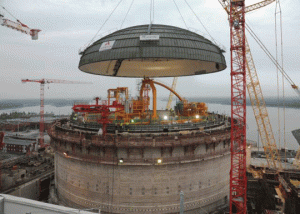
London — Areva-Siemens is to provide a new schedule in December for the final phases of the 1.6-GW Finnish Olkiluoto-3 nuclear reactor after slippage in its commissioning tests, owner operator TVO confirmed Thursday.
This could potentially push back first delivery of power in tests currently scheduled from May 2019, “but we won’t know this until December,” TVO spokesman Pasi Tuohimaa told S&P Global Platts.
Previously TVO has said test production over a roughly five-month period could account for 10%-15% of Finland’s annual electricity needs ahead of full commercial operation, or 2-4 TWh.
Such is the potential volume at risk that TVO is to put up a schedule of Olkiluoto-3’s production tests six months before commercial operation, Tuohimaa said. He stressed that at this stage it was impossible to assess accurately how much electricity would be produced during testing.
“The completion of the commissioning tests has not been progressing according to the updated schedule for commissioning by the plant supplier Areva-Siemens Consortium,” TVO said in a statement late Wednesday.
The operator could not say whether “rebaselining” of the final phase schedule would affect the current September target for the start of commercial operation at the plant, which is already almost 10 years behind the original schedule and three times over the original Eur3.2 billion budget.
Neither could TVO say whether test production of electricity at varying power levels from May 2019 would be affected by the re-scheduling.
In June 2017, TVO said Olkiluoto-3 would begin commercial operation in September 2019, rather than in May of that year as expected. Hot testing had taken longer than expected, it said.
Q2 2019 Nordic baseload power on the NASDAQ futures exchange traded Thursday 0900 GMT at Eur36.40/MWh, down 30 euro cent from two trades earlier in the European morning.
elaine.hiruo@spglobal.com– jonathan.dart@spglobal.com
October 5, 2018
Posted by Christina Macpherson |
business and costs, Finland |
Leave a comment
 Radiation Free Lakeland 3rd Oct 2018 , Nuclear mud isn’t the only waste. The industry is getting rid of waste by
sending it to landfill, ‘recycling’ – new routes are being found to
dump as much waste as possible.
The planned incinerator at Carlisle does not give any indication where the waste would be coming from. Radiation
Free Lakeland have written a letter of objection. The door is wide open to
a tsunami of radioactive waste being incinerated.
The private operators and even the regulators can get away with saying ‘ what dont be ridiculous
there is NO RADIOACTIVE WASTE planned for the new incinerator’. They said
this to us about radioactive wastes being dumped at Lillyhall. This is
because the waste that used to be classified as radioactive is now
classified as “exempt” for “free release” so by the magic touch of
a magic pen it is no longer radioactive.
https://mariannewildart.wordpress.com/2018/10/03/how-to-get-shot-of-nuclear-wastes/
October 5, 2018
Posted by Christina Macpherson |
secrets,lies and civil liberties, UK |
Leave a comment
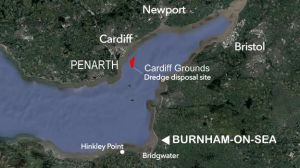 Welsh leaders urged to halt ‘nuclear mud’ dumping off Cardiff, Sediment from Hinkley Point C construction site is being disposed of at Cardiff Grounds, Guardian, Steven Morris @stevenmorris20– 2 Oct 2018 Pressure is increasing on the Labour-led Welsh government to halt the dumping of “nuclear mud” in the sea close to Cardiff after a campaign by an eclectic group of scientists, surfers and a pop star.
October 5, 2018
Posted by Christina Macpherson |
politics, UK, wastes |
Leave a comment
 Watchdog warns EDF over weldings at flagship new nuclear plant, Ft.com 4 Oct 18 France’s nuclear regulator has said that EDF’s flagship next-generation nuclear plant at Flamanville might need further work due to faulty weldings which have already delayed the project.
In July, EDF said there would be further delays and cost overruns due to problems with the weldings. It pushed back the loading of nuclear fuel and the target construction costs at the late and over-budget plant. The state-backed energy utility said at the time that out of the 148 inspected welds, 33 had quality deficiencies and would be repaired. It said a further 20 would be reworked “even though they do not have any defects” while for another 10 it would submit a proposal to the ASN to convince the regulator of their safety. Now, the ASN has suggested, subject to further tests, that 8 of those 10 welds may need further work. The regulator said it “invites EDF to begin preparations on possible repair work to the welds concerned,” in a statement on Wednesday.“ASN also considers that the observed discrepancies indicate a failure of the monitoring carried out by EDF on certain activities of the EPR reactor site in Flamanville. It therefore asks EDF to extend the review of the quality of equipment installed on this reactor,”
“ASN also considers that the observed discrepancies indicate a failure of the monitoring carried out by EDF on certain activities of the EPR reactor site in Flamanville. It therefore asks EDF to extend the review of the quality of equipment installed on this reactor,” the ASN added………
The Flamanville plant in France is one of three being built in Europe using the next-generation European Pressurized Reactor technology. The other two projects are the Olkiluoto project in Finland, which is more than a decade late, and the UK’s Hinkley Point, which is mired in controversy over the high cost of the project.S……. https://www.ft.com/content/ec9c379a-c707-11e8-ba8f-ee390057b8c9ocial Responsibility
October 5, 2018
Posted by Christina Macpherson |
France, safety |
Leave a comment
US threatens to ‘take out’ Russian missiles if Moscow keeps violating nuclear treaty By Ryan Browne and Frederik Pleitgen, CNN October 2, 2018 CNN)The United States Permanent Representative to NATO, Amb. Kay Bailey Hutchison, warned Tuesday that the US could “take out” Russian missiles that are perceived to be in violation of the Intermediate-Range Nuclear Forces Treaty should Moscow continue to violate the agreement…..
October 5, 2018
Posted by Christina Macpherson |
politics international, Russia, USA, weapons and war |
Leave a comment
 Google Faces Lawsuit In Belgium For Not Blurring Military Sites And Nuclear Power Plants On Maps, Gizmodo, Matt Novak Sep 29, 2018 Belgium plans to sue Google over the tech giant’s refusal to blur sensitive military sites and nuclear power plants on the company’s various mapping platforms. Military leaders in Belgium have not yet filed a formal complaint but confirmed to Reuters that they intend to sue……
October 5, 2018
Posted by Christina Macpherson |
EUROPE, Legal |
Leave a comment


 Months after Calder Hall opened, the Euratom Treaty established the European Atomic Energy Community. The UK did not formally join straight away but did have a relationship with it.