The nuclear disasters that we don’t hear about – The Kyshtym Disaster
5 Unknown Nuclear Disasters: Chernobyl Is Far from the Only One, Chernobyl is not the world’s only nuclear disaster, there are plenty of others to keep you up at night., Interesting Engineering, By Marcia Wendorf, 2 Aug 19
The Kyshtym Disaster
In September 1957, Ozyorsk, Russia was a closed city, built around the Mayak plant which produced plutonium for both nuclear weapons and fuel.
After scrambling to build the Mayak plant between 1945 and 1948, all six of its reactors initially dumped high-level radioactive waste directly into Lake Kyzyltash. When it became contaminated, they moved on to dumping into Lake Karachay, which also became contaminated.
In 1968, the Soviet government disguised the EURT area by creating East Ural Nature Reserve, with access allowed to only authorized personnel. Documents describing the disaster were only declassified in 1989.
On the International Nuclear Event Scale (INES), Kyshtym is rated a 6, making it the third-most serious nuclear accident behind only the Fukushima Daiichi nuclear disaster and the Chernobyl disaster, which are both Level 7
In 1953, workers built a storage facility for liquid nuclear waste, but that waste was being heated by residual decay heat from the nuclear reaction. The coolers around one of the tanks failed, and on September 29, 1957, that tank exploded with the force of between 70 to 100 tons of TNT.
While there were no immediate casualties, the explosion released an estimated 20 MCi (800 PBq) of radioactivity into the air. A plume containing 2 MCi (80 PBq) of radionuclides, primarily caesium-137 and strontium-90, moved toward the northeast and contaminated an area of more than 52,000 square kilometers (20,000 sq miles).
At least 270,000 people lived in that area, which is referred to as the East-Ural Radioactive Trace (EURT).
In an attempt to maintain secrecy, no evacuation was ordered, but a week later, on October 6, 1957, 10,000 people were removed from their homes.
Estimates of the death toll caused by the accident go from 200 to more than 8,000, depending on the study. A 2001 work stated that the accident caused 66 diagnosed cases of chronic radiation syndrome.
Amazingly, it wasn’t until 18 years later, in 1976, that the full scope of the disaster was disclosed by Zhores Medvedev in the publication the New Scientist.
In 1968, the Soviet government disguised the EURT area by creating East Ural Nature Reserve, with access allowed to only authorized personnel. Documents describing the disaster were only declassified in 1989.
On the International Nuclear Event Scale (INES), Kyshtym is rated a 6, making it the third-most serious nuclear accident behind only the Fukushima Daiichi nuclear disaster and the Chernobyl disaster, which are both Level 7…… https://interestingengineering.com/5-unknown-nuclear-disasters-chernobyl-is-far-from-the-only-one
K-19: The Widowmaker Trailer
The nuclear disasters we don’t hear about – The Windscale Fire
Windscale: Britain’s Biggest Nuclear Disaster – Part 01
5 Unknown Nuclear Disasters: Chernobyl Is Far from the Only One, Chernobyl is not the world’s only nuclear disaster, there are plenty of others to keep you up at night., Interesting Engineering, By Marcia Wendorf, 2 Aug 19
The Windscale Fire
Less than two weeks after Kyshtym, a fire broke out in Unit 1 of the two reactors at the Windscale facility located in what is now known as Sellafield, Cumbria UK.
The two reactors were created because of Britain’s need for an atomic weapon following World War II. Determining that a uranium enrichment plant would cost ten times as much to produce the same number of atomic bombs as a nuclear reactor, the decision was made to build a nuclear reactor that would produce plutonium.
The cores of the reactors were comprised of a large block of graphite, with horizontal channels drilled through it for the fuel cartridges. Each cartridge consisted of a 12-inch-long (30 centimeters) uranium rod encased in aluminum.
The reactor was cooled by convection through a 400-foot (120 m) tall chimney. When Winston Churchill committed the UK to create a hydrogen bomb, the fuel loads at Windscale were modified to produce tritium, but this also meant that the core became hotter.
On the morning of October 10, 1957, the core began to uncontrollably heat, eventually reaching 400 degrees C. Cooling fans were brought in to increase the airflow, but just worsened the problem. It was then that operators realized that the core was on fire.
Workers tried dousing the core first in carbon dioxide, then in water, but both proved ineffective. What finally worked was cutting off air to the reactor building, which starved the fire.
The fire caused the release of radioactive radionuclides across the UK and Europe, including an estimated 740 terabecquerels (20,000 curies) of iodine-131, 22 TBq (594 curies) of caesium-137 and 12,000 TBq (324,000 curies) of xenon-133.
By comparison, the 1986 Chernobyl explosion released far more, and the Three Mile Island accident in 1979 in the U.S. released 25 times more xenon-135 than Windscale, but less iodine, caesium, and strontium. The atmospheric release of xenon-133 by the Fukushima Daiichi nuclear disaster was similar to that released at Chernobyl, and thus, high above what the Windscale fire released.
There were no evacuations of the surrounding area, but it has been estimated that the incident caused 240 additional cancer cases. For a month after the accident, milk coming from 500 square kilometers (190 sq mi) of the nearby countryside was destroyed.
The reactor tank has remained sealed since the accident and still contains about 15 tons of uranium fuel. The reactor core is still slightly warm due to continuing nuclear reactions. It is not scheduled for final decommissioning until 2037. On the International Nuclear Event Scale, Windscale ranks at level 5………. https://interestingengineering.com/5-unknown-nuclear-disasters-chernobyl-is-far-from-the-only-one
 |
ReplyForward
|
The nuclear accidents we don’t hear about – Soviet Submarine K-19
5 Unknown Nuclear Disasters: Chernobyl Is Far from the Only One, Chernobyl is not the world’s only nuclear disaster, there are plenty of others to keep you up at night., Interesting Engineering, By Marcia Wendorf, 2 Aug 19
Soviet Submarine K-19
K-19 was one of what the Soviets called their Project 658-class submarines, while NATO called them Hotel-class. They were the first generation of nuclear submarines equipped with nuclear ballistic missiles.
Commissioned on April 30, 1961, K-19 was snake bit from the start. On its initial voyage, on July 4, 1961, it was conducting exercises off the coast of Greenland when suddenly, pressure in the reactor’s cooling system dropped to zero due to a leak.
The emergency SCRAM system immediately inserted the control rods, but due to decay heat, the reactor’s temperature rose to 800 degrees C (1,470 degrees F). The accident released steam containing fission products throughout the ship through the ventilation system.
The captain ordered the ship’s engineering crew to fabricate a new cooling system, but this required them to work within the radioactive area. The jury-rigged cooling water system prevented a complete meltdown of the reactor core.
American warships nearby had picked up K-19’s distress call and offered to help, but K-19’s captain, fearful of giving away Soviet military secrets, refused. Instead, K-19 sailed to meet up with a diesel-powered Soviet submarine. The accident had irradiated K-19’s entire crew, as well as the ship and some of her ballistic missiles.
Within a month, all eight members of the ship’s engineering crew died of radiation exposure. They are Boris Korchilov, Boris Ryzhikov, Yuriy Ordochkin, Evgeny Kashenkov, Semyon Penkov, Nicolai Savkin, Valery Charitonov, and Yuriy Povstyev.
Within the next two years, 15 other sailors died of radiation-related illnesses.
Towed into port, K-19 contaminated a 700 meter (2,300 feet) wide area, and the repair crews who worked on her. Eventually, the Soviet Navy dumped the damaged reactor into the Kara Sea.
The 2002 movie K-19: the Windowmaker, which starred Harrison Ford and Liam Neeson, is based on the K-19 disaster….. https://interestingengineering.com/5-unknown-nuclear-disasters-chernobyl-is-far-from-the-only-one
August 2- The Intermediate-Range Nuclear Forces Treaty expires- new arms race begins
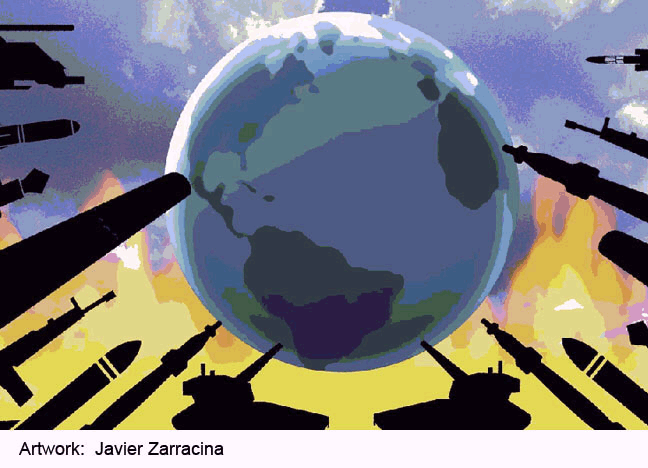
 Demise of US-Russian Nuclear Treaty Triggers Warnings, VOA News , By Charles Maynes, July 31, 2019 “……… “Gorbachev and Reagan had the goal of arms reduction and they did not allow themselves to be pushed off track,” Palazhchenko says.
Russia’s coverup of 2017 nuclear accident in the Ural mountains
|
On July 26, a large group of experts led by Olivier Masson from the Institute of Radioprotection and Nuclear Safety in Durance, France, and Georg Steinhauser of the Institute of Radioecology and Radiation Protection in Hanover, Germany, published a paper definitively attributing a radiation cloud that spread over Europe in 2017 to an undeclared accident in the Southern Urals region of Russia, likely at the Mayak nuclear facility near Chelyabinsk. Two years ago, Russia promised to investigate where the cloud could have come from, but a commission formed on Russia’s initiative failedto produce a clear conclusion. At the same time, Mayak and Rosatom, the state-owned nuclear power company to which it belongs, have denied that any accident took place. In late September 2017, several Russian regions and then a number of European countries detected high concentrations of radioactive ruthenium-106 in the atmosphere. As the contamination traveled, more countries noticed it and published reports. The first Russian denials, from the authorities of the Sverdlovsk and Chelyabinsk regions in the Urals, came a week later. Even after the Russian state weather service Roshydromet reported ruthenium-106 pollution in the South Urals, a Rosatom-led commission insisted the contamination wasn’t the result of an accident and suggested that it could have been caused by a defunct satellite burning up in the atmosphere. The Masson-Steinhauser group ruled out the satellite theory: Such an incident would have caused higher concentrations of ruthenium at high altitudes, which was not the case. Instead, the researchers argued that only a nuclear reprocessing facility could have caused this particular type of contamination. A number of Western and Russian facilities had been responsible for ruthenium-106 releases in the past. By analyzing the weather patterns and ruthenium measurements, including those from Roshydromet, the international team placed the source close to the location of Mayak, the erstwhile scene of a major nuclear disaster – the 1957 “Kyshtym Accident” that forced the evacuation of 10,000 people in the area and caused long-term consequences for residents’ health. The 2017 ruthenium release, luckily, hurt no one – the radioactive gas quickly became diluted and there was no significant fallout. This made it easier for the Russian authorities to deny that an accident had taken place. But then, just like in the Soviet Union, which did its best to keep the Chernobyl disaster under wraps until it could no longer deny it or minimize its impact, denying everything is more or less the officially adopted tactic in Vladimir Putin’s Russia, even when there are casualties. The government and its propaganda apparatus have, for example, put out a progression of elaborate but untrustworthy versions of the 2014 downing of Malaysia Airways Flight 17 — which was hit with a Russian missile from territory held by pro-Russian rebels in eastern Ukraine. Even after the Masson-Steinhauser team published its findings, Leonid Bolshov, a physicist who was a key member of the Russian-led commission, claimed that the paper “ignored” measurements taken near Mayak, “where almost no ruthenium-106 was detected.” According to Bolshov, the commission’s findings weren’t affected by the new analysis. The dispatch quoting Bolshov from the Russian propaganda agency RIA Novosti bore the headline “Physicists Connected Ruthenium-106 Leak with Experiments in Italy.” Indeed, the Masson-Steinhauser paper discusses a possible link between the accident and Mayak’s work on a cerium-144 source for an Italian neutrino experiment; Mayak canceled the order soon after the ruthenium release. But the headline carefully avoids mentioning Mayak or Russia. The right thing for Mayak and Rosatom to do would be to share with international experts any data on that work, including, of course, whatever could have led to the ruthenium release. That, however, is as likely as an honest Chernobyl movie made in Putin’s Russia. Last week, the unofficial trailer of a new Russian Chernobyl series was leaked on YouTube. Its maker, NTV, a television company with close ties to Putin’s inner circle, promptly pulled it down and threatened those who post it with legal consequences for copyright infringement. But those who sawthe video flooded it with dislikes and negative comments; indeed, it looks like a tear-jerking soap opera with no attempt at authenticity. One of the plot lines appears to involve U.S. Spies. When the series runs, it’ll be another reminder to foreign, especially European, scientists that it’s up to them to watch the Russian nuclear industry for signs of serious accidents. Russia, like the Soviet Union before it, won’t be the first to tell the world about them. |
|

Samantha Smith – a 10 year old who acted to reduce nuclear weapons
 Your voice matters in reducing nuclear weapons https://www.thestar.com/opinion/contributors/2019/07/31/your-voice-matters-in-reducing-nuclear-weapons.html
Belgium broke law but can keep nuclear plants open, EU court rules
Belgium broke law but can keep nuclear plants open, EU court rules, DW, 31 July 19
Belgium’s self-imposed deadline for giving up nuclear power is not far off. Environmentalists look forward to the end of the atomic era, but not everyone thinks the country is ready to change course. The European Union’s top court ruled on Monday that Belgium can continue to run two aging nuclear reactors, despite breaking EU law by not carrying out the necessary environmental audits.
By failing to carry out the environmental assessments before prolonging the life of Doel 1 and 2 nuclear reactors near the northern port city of Antwerp, Belgium infringed EU law, the court ruled.
However, the plants could stay open provisionally, the European Court of Justice (ECJ) said: “Where there is a genuine and serious threat of an interruption to electricity supply.”
More than half of Belgium’s electricity is generated by nuclear power with reactors in Doel and in Tihange, in the east, near the border with Germany. But a 2003 law says the country’s last reactor must shut down by December 1, 2025.
The grid operator Elia has warned of a “serious crisis” if the government doesn’t act to fill gaps in production. Despite recent technical hitches, some think Belgium has no choice but to keep its nuclear plants running.
Impact assessments
In recent years, reactors at both the Doel power station near Antwerp (pictured above) and the Tihange plant near Liège have been shut down temporarily because inspectors found tiny cracks caused by hydrogen flakes. During one period last autumn, six of Belgium’s seven reactors were down at the same time.
Nuclear power always carries risks, including the potential for leakage and cyber attacks, according to Sara Van Dyck from BBL, a Belgian environmental NGO. She says Belgium’s two nuclear plants “were designed in other times with other security standards.” The reactors all started production between 1975 and 1985.
The problems have attracted protest. In 2017, tens of thousands of anti-nuclear demonstrators formed a human chain stretching from Tihange to the nearby Dutch city of Maastricht and the German city of Aachen. The Antwerp-based “elf Maart Beweging” (March 11 Movement),” named after Japan’s Fukushima nuclear disaster of March 11, 2011, says keeping the Doel plant running is tantamount to playing “Russian roulette with Antwerp.” Doel has more people living in the vicinity of a nuclear plant than anywhere else in Europe — 9 million within 75 kilometers (46 miles). …….
What all sides can agree on is that Belgium must make a decision, one way or another. Following the national elections in May, the country still doesn’t have a new government, and can’t afford to skirt the issue. https://www.dw.com/en/belgium-broke-law-but-can-keep-nuclear-plants-open-eu-court-rules/a-49787150
Brexit: nuclear medicine at risk from no-deal
A no-deal Brexit will disrupt the supply chains that bring medicines to the UK and take goods from the UK to continental Europe. About 45m packs of medicine travel from the UK to Europe every month and the UK receives 37m packs in return. Even if a deal is reached, supply chains will continue to be disrupted long after the event.
Healthcare professionals are particularly concerned about the impact this could have on nuclear medicine. This branch of medicine mostly involves using radioactive dyes to perform diagnostic tests, which can be used to check if cancer has spread or to see how well the heart or kidneys are working. Therapies are also used to treat hyperthyroidism or thyroid cancer with radioactive iodine.
According to the British Nuclear Medicine Society, 60% of the radiopharmaceuticals the UK uses come from the EU and are used during the treatment of as many as 600,000 patients per year. These are transported mostly by road and rail across the English Channel.
Danger of delays
All medicines have expiration dates, but with radioactive pharmaceuticals there is the added problem of radioactive decay. This happens as the radioactive substance changes into one that is more stable. While this process releases the radiation needed for scans and therapies, it also means they don’t last forever.
A measure of how quickly a radioactive substance decays is its half-life. This is the time taken for the strength (or activity) of the measured radiation to decrease by half. For example, the radioactive iodine used in therapies, iodine-131, has a half-life of only eight days. After two days the strength is reduced by 15% and after eight days, by 50%.
The speed of decay means that unplanned delays of only a couple of days at a border could render the nuclear medicine unusable. The shelf life of nuclear medicines is therefore often low compared with other drugs. Extensive stockpiles simply cannot be kept……..
For UK taxpayers, the government depending on the pharamaceutical industry, either domestic or foreign, for supply of medicines is an expensive option. The NHS can use its vast purchasing power to source drugs much more cheaply than healthcare providers can in most other countries, including the US. Indeed, UK sale prices of the top 20 selling medicines are only one-third of the US equivalent.
For specialised areas such as nuclear medicine, the cost difference compared with the US is probably much more. Brexit, especially without a deal, places the NHS in a precarious position and will mean suppliers are in an advantageous position to close this price gap, driving up prices in the UK. Also, the US administration may offer a poisoned chalice in the form of a US free-trade agreement that includes the NHS, meaning higher prices like in the US.
Patients and the NHS may end up paying much higher prices for nuclear medicine, if they can get the supplies at all. https://theconversation.com/brexit-nuclear-medicine-at-risk-from-no-deal-121139
UK union unhappy with financing plan for new nuclear power plants
Times 30th July 2019 New nuclear power plants should be funded through general taxation instead of piling the costs on to consumers, a leading union has said. The GMB said
that the government’s proposed regulated asset base funding model for
further reactors was “acceptable”, but that the costs should be paid “from
a progressive general taxation system”. Last week The Times reported leaked
government analysis that up to 40 gigawatts of either nuclear power or
carbon capture and storage plants was needed by 2050 to meet “net zero”
emissions targets. That equates to 12 Hinkley Point plants. Under the
regulated asset base model, developers would receive a regulated return
while the plant was under construction, cutting their financing costs. It
would still be funded on bills, exposing consumers to cost overruns.
https://www.thetimes.co.uk/article/a80b0ffa-b23b-11e9-9df9-ac98825b867a
New research: 2017 radioactive cloud traced to an unacknowledged nuclear accident in southern Russia

Mysterious Radiation Cloud Over Europe Traced to Secret Russian Nuclear Accident https://www.livescience.com/66050-radiation-cloud-secret-russian-nuclear-accident.html By | July 29, 2019 A vast cloud of nuclear radiation that spreadover continental Europe in 2017 has been traced to an unacknowledged nuclear accident in southern Russia, according to an international team of scientists.
The experts say the cloud of radiation detected over Europe in late September 2017 could only have been caused by a nuclear fuel-reprocessing accident at the Mayak Production Association, a nuclear facility in the Chelyabinsk region of the Ural Mountains in Russia, sometime between noon on Sept. 26 and noon on Sept. 27.
Russia confirmed that a cloud of nuclear radiation was detected over the Urals at the time, but the country never acknowledged any responsibility for a radiation leak, nor has it ever admitted that a nuclear accident took place at Mayak in 2017. [Top 10 Greatest Explosions Ever]
The lead author of the new research, nuclear chemist Georg Steinhauser of Leibniz University in Hanover, Germany, said that more than 1,300 atmospheric measurements from around the world showed that between 250 and 400 terabecquerels of radioactive ruthenium-106 had been released during that time.
Ruthenium-106 is a radioactive isotope of ruthenium, meaning that it has a different number of neutrons in its nucleus than the naturally occurring element has. The isotope can be produced as a byproduct during nuclear fission of uranium-235 atoms.
Although the resulting cloud of nuclear radiation was diluted enough that it caused no harm to people beneath it, the total radioactivity was between 30 and 100 times the level of radiation released after the Fukushima accident in Japan in 2011, Steinhauser told Live Science.
The research was published today (July 29) in the journal Proceedings of the National Academy of Sciences.
Ruthenium release
The cloud of radiation in September 2017 was detected in central and eastern Europe, Asia, the Arabian Peninsula and even the Caribbean.
Only radioactive ruthenium-106 — a byproduct of nuclear fission, with a half-life of 374 days — was detected in the cloud — Steinhauser said.
During the reprocessing of nuclear fuel — when radioactive plutonium and uranium are separated from spent nuclear fuel from nuclear power reactors — ruthenium-106 is typically separated out and placed into long-term storage with other radioactive waste byproducts, he said.
That meant that any massive release of ruthenium could only come from an accident during nuclear fuel reprocessing; and the Mayak facility was one of only a few places in the world that carries out that sort of reprocessing, he said.
Advanced meteorological studies made as part of this new research showed that the radiation cloud could only have come from the Mayak facility in Russia. “They have done a very thorough analysis and they have pinned down Mayak — there is no doubt about it,” he said.
The accident came a little more than 60 years since a nuclear accident at Mayak in 1957 caused one of the largest releases of radiation in the region’s history, second only to the 1986 explosion and fire at the Chernobyl nuclear power plant, which is now in the Ukraine. [Chernobyl Nuclear Disaster 25 Years Later (Infographic)]
In the 1957 accident, known as the Kyshtym disaster after a nearby town, a tank of liquid nuclear waste at the Mayak facility exploded, spreading radioactive particles over the site and causing a radioactive plume of smoke that stretched for hundreds of miles.
Nuclear accident
The study showed that the 2017 accident at Mayak was unlikely to have been caused by a relatively simple release of radioactive gas, Steinhauser said. Rather, a fire, or even an explosion, might have exposed workers at the plant to harmful levels of radiation, he added.
Russia has not acknowledged that any accident occurred at the Mayak facility, maybe because plutonium is made there for thermonuclear weapons. However, Russia had established a commission to investigate the radioactive cloud, Steinhauser said.
The Russian commission ruled that there was not enough evidence to determine if a nuclear accident was responsible for the cloud. But Steinhauser and his team hope it may look again at this decision in the light of the new research.
“They came to the conclusion that they need more data,” he said. “And so we feel like, okay, now you can have all of our data — but we would like to see yours as well.”
Any information from Russia about an accident at the Mayak facility would help scientists refine their research, instead of having to rely only on measurements of radioactivity from around the world, Steinhauser said.
The international team of scientists involved are keenly interested in learning more about its causes. “When everybody else is concerned, we are almost cheering for joy, because we have something to measure,” he said. “But it is our responsibility to learn from this accident. This is not about blaming Russia, but it is about learning our lessons,” he said.
Boris Johnson’s secret instructions on nuclear action
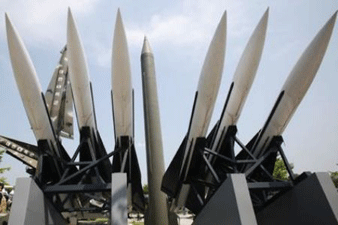
 EXPLAINER: The Letters of Last Resort – Boris Johnson’s secret instructions on nuclear action, There are, at most, nine countries on earth with nuclear weapons. Joe, 28 July 19
Before today, two of those arsenals were in the hands of Donald Trump and Kim Jong-un. As of today, they have been joined by Boris Johnson.
Among the very first things that will happen as Johnson begins is premiership, is a briefing from the Chief of the Defence Staff, who will tell him exactly the kind of devastation and death a nuclear Trident missile would cause. Johnson will then be tasked with composing the “letters of last resort.”
The letters of last resort are an almost mythical device, the kind of thing that would make more sense in a Tom Clancy novel than they do in real life. But they are real, and they are terrifying.
They are four letters, each one issued to the commanding officers of each of the United Kingdom’s four nuclear-capable ballistic missile submarines. They are only to be opened under one specific circumstance: the destruction of the government of Britain through a major, likely nuclear, bombing campaign.
The letters are only to be opened under the assumption that the Prime Minister and any designated deputies are dead, and that it is up to the UK’s military submarines to respond.
Typically, the UK has one of these submarines patrolling at any given time, armed with 40 of its 120 operational nuclear warheads. The other three subs are based in Faslane naval base in Scotland.
And right now, those letters are being written by Boris Johnson. Cool.
Four possible directives are known:
- That the UK should retaliate.
- That the UK should not retaliate, and should retreat to a commonwealth nation.
- That the commanding officer should use their own judgment.
- Place the submarines under the command of an allied country, such as the United States.
It is very possible, however, that a PM will be much more specific than this.
When quizzed on the matter of their own letters by the BBC, former Prime Ministers John Major, Tony Blair and Gordon Brown all revealed that they had included a caveat that under no circumstances should civilians be targeted with nuclear weapons.
Nobody will ever know for sure though, since the letters are burned in their unopened state as soon as an outgoing premiership comes to a close……… https://www.joe.ie/life-style/boris-letters-of-last-resort-676243
Tax-payers still on the hook for UK’s planned ‘nuclear renaissance’
Despite Hinkley, the new plan for nuclear is hardly better than the old one https://www.theguardian.com/business/2019/jul/27/despite-hinkley-new-plan-nuclear-hardly-better-than-old-one
EDF Energy’s deal to build Hinkley Point C, Britain’s first new nuclear power plant in a generation, has been dubbed the world’s most expensive power plant of all time, a “white elephant” in a changing energy landscape, and a risky and expensive gamble with taxpayers’ money.
There was little chance that a deal so politically unpalatable could be repeated for EDF’s follow-on project at Sizewell B. Instead, officials returned to the drawing board to re-engineer a multibillion-pound funding framework that could help lower the eye-watering costs of constructing a nuclear reactor.
The £20bn Hinkley Point C project will cost energy bill payers £92.50 for every megawatt-hour of electricity it produces for 35 years. It is a price well above both the UK’s wholesale energy price of around £55 a megawatt-hour, and the new breed of offshore wind farms.
The new funding model promises to cut the cost of building a new nuclear plant by a fifth – but this, too, comes at a cost. The government’s plans to make nuclear affordable means Britons will twice shoulder the risk of building new nuclear reactors.
First, by paying upfront for the reactors through energy bills to help fund their construction. Second, by taking on the cost of any overruns or construction delays through a taxpayer guarantee. The public purse would also compensate nuclear investors if the project were scrapped.
It is the same model used to fund London’s £4.2bn super-sewer project, the Thames Tideway tunnel, which has drawn criticism for raising water bills while investors reap financial rewards.
By shifting the risk from private investors to taxpayers, nuclear developers will be able to borrow money at cheaper rates, which will lead to lower bills for consumers.
On paper, the proposal is a better deal than Hinkley, but it’s far from perfect.
The National Infrastructure Commission has taken a dim view of the model. “This makes projects appear cheaper as consumers are effectively financing the projects at zero interest. At least some of the risk associated with construction costs also sit with consumers, a further hidden cost, since consumers are not paid to hold these risks in the way investors would be,” it said.
In addition, the sums hold true only if the project remains on schedule and on budget for the decade it takes to construct a nuclear plant. There are worryingly few examples where this has been the case; EDF Energy’s forerunner to the Hinkley project, at Flamanville in Normandy, is expected to cost four times original estimates. It was expected to begin generating electricity in 2012, but is now expected to start up in 2022.
he French energy giant has said the lessons learned from Flamanville mean Hinkley Point will avoid a similar fate. Sizewell will be at an even greater advantage because it will use the same UK workers once Hinkley is complete.
Why take the risk at all, though?
“If ministers want affordable and clean energy, the fastest, safest and cheapest way to do that is to boost renewables like wind and solar,” said Doug Parr, chief scientist at Greenpeace.
There have been major advances in flexible renewable energy technologies in recent years, but ministers retain an appetite for the “firm” low-carbon electricity generated by nuclear reactors despite the financial hurdles to building them.
The UK’s energy landscape is littered with stalled nuclear plant projects which have so far failed to make a financial case. Already half the projects proposed three years ago have foundered.
But the government’s commitment to a new atomic era is still the most reliable element of its nuclear programme to date.
Nuclear power losing its appeal in Eastern Europe
Eastern Europe’s Love Affair With Nuclear Is Hitting the Rocks
Countries in the former Soviet bloc are desperately trying to upgrade facilities but are squeezed by time and money. Bloomberg, By James M Gomez and Zoltan Simon, July 28, 2019 Zoltan Gorog is ready for the Russian invasion. The real estate agent in the Hungarian town of Paks has added Cyrillic to the blue and white sign hanging above his offices. He’s set up empty desks for when he needs to expand to cope with the surge in business.
Rather than a flood of people, though, there’s barely a trickle. Five years after Hungary’s government signed an agreement with nuclear energy company Rosatom Corp. to build two new reactors at the aging plant near the town, there’s still no start date for the bulk of the work….. (subscribers only) https://www.bloomberg.com/news/articles/2019-07-28/eastern-europe-s-love-affair-with-nuclear-is-hitting-the-rocks
Constructive talks between Iran and Europe, but no definite result
Emergency talks on nuclear deal constructive but inconclusive, Iranian minister says WP, By Adam Taylor, July 28
DUBAI — Iran’s deputy foreign minister said Sunday that an emergency meeting in Vienna between Tehran and its partners in the Iran nuclear deal had yielded positive developments but had not “resolved everything.”
“The atmosphere was constructive, and the discussions were good,” Abbas Araghchi told reporters.
Araghchi said he and his partners from Germany, France, Britain, China, Russia and the European Union remain determined to save the deal.
The fate of the agreement remains uncertain after the Trump administration pulled out last year and reimposed sanctions on Iran. That move prompted Tehran to scale back its commitments under the pact.
Iran said this month it had breached a stockpile limit for low enriched uranium allowed under the deal and was enriching uranium at a higher levelthan permitted. Officials have said they will continue to reduce their obligations if the remaining parties to the deal do not help alleviate Iran’s economic isolation.
Salehi also said Iran was moving to restart activity at the heavy-water nuclear reactor at its Arak facility, according to the reports.
Iran’s uranium enrichment capabilities and its heavy-water nuclear reactor were restricted under the 2015 deal, formally known as the Joint Comprehensive Plan of Action, for fear that they could be used by Iran to pursue a nuclear weapons program.
To be used in nuclear weapons, uranium must be highly enriched. The JCPOA placed a limit on the amount of enriched uranium Iran could possess and the level to which it could be enriched.
The claim that Iran’s enriched-uranium stockpile had exceeded the 300-kilogram limit was subsequently confirmed by the International Atomic Energy Agency. But in Iranian media on Sunday, Salehi was reported to have said that it went further than this………
The IAEA did not immediately respond to a request for comment.
Analysts see Arak’s heavy-water reactor as a risk for proliferation because it could allow Iran to produce weapons-grade plutonium. The nuclear deal required Iran to pour concrete into the pipes of the reactor’s core as part of a redesign.
Salehi said last week that the redesign, in partnership with China and Britain, was making progress. Britain replaced the United States in the project after the Trump administration pulled out of the nuclear deal.
In his meeting with lawmakers on Sunday, Salehi was reported to have said that the developments were not indicative of an intent to produce nuclear weapons.
“We do not intend to produce nuclear weapons because of religious reasons,” lawmaker Mehrdad Lahouti quoted Salehi as saying, according to the Iranian Students News Agency.
Though Iran and Britain are working together on the heavy-water reactor, relations between the countries have been tense in recent weeks, since British marines helped seize an Iranian-flagged tanker near Gibraltar and Iran seized a British-flagged tanker that was passing the Strait of Hormuz in the Persian Gulf.
The often forgotten nuclear disaster in Russia’s Ural Mountains
River of radiation: Life in the area of the world’s 3rd-worst nuclear disaster Rt.com 28 Jul, 2019 Before Fukushima and Chernobyl, the worst-ever nuclear disaster was a massive leak from a plant in the eastern Urals. RT went to see how people live in areas affected by the fallout from the USSR’s risky rush to the nuclear bomb.
Chernobyl and Fukushima are the two names that are most likely to come to mind when one thinks about nuclear disaster, and rightfully so. People in the US will likely recall the Three Mile Island accident, while Britons may say the “Windscale fire.”
The name “Kyshtym” will probably mean nothing to the wider public, despite it belonging to the third-worst nuclear accident in history. An RT Russian correspondent traveled to the area to speak with locals, some of whom personally witnessed the 1957 disaster, to find out what living in such a place feels like.
Bomb at any cost
Kyshtym is the name of a small town in what is now Chelyabinsk Region in Russia, located in an area dotted by dozens of small lakes. A 15-minute car ride east will bring you to another town called Ozyorsk. Six decades ago, you wouldn’t find it on any publicly available map because it hosted a crucial element of the Soviet Union’s nascent nuclear weapons program, the Mayak plant.
The Soviet leadership considered building up a stockpile of weapons-grade plutonium to be a high priority, while environmental and safety concerns came as an afterthought. Some of the less-dangerous radioactive waste from Mayak was simply dumped into the Techa River, while the more-dangerous materials were stored in massive underground tanks.
The sealed steel containers, reinforced with meter-thick concrete outer walls, were considered strong enough to withstand pretty much anything. In September 1957 this assumption was proven wrong, when one of the tanks exploded with an estimated power of 70-100 tons of TNT. This happened due to an unrepaired cooling system, which allowed radioactive waste to build heat and partially dry up, forming a layer of explosives, an investigation later found. An accidental spark was then enough to blow off the 160-ton lid of the tank, damage nearby waste storages, and shatter every window pane within a 3km radius.
A plume of radioactive waste was ejected high into the air. Some 90 percent of the material fell right back, contaminating the area and adding to the pollution in the Techa River, but some was atomized and traveled northeast with the wind. A 300km long, 10km wide stretch of land running through three Russian regions is what’s left by the fallout. The worst-affected part of it was designated a natural reserve a few years after the disaster.
Cover up
The disaster was covered up in the Soviet media, which reported that the strange lights in the night sky – actually a glow caused by ionization from radioactive waste – was a rare event related to the aurora. The locals knew something was wrong, of course, due to the evacuation of two dozen nearby villages and the large-scale decontamination work that was to be carried out over the next several years.
Later, the military came to get radiation readings in it. Afterwards, soldiers demolished the banya and took away not only the house but even the layer of soil on which it was built.
Officially, the scale of the disaster remained a state secret until the late 1980s.
Poisoned river
The Techa River remains contaminated now, long after Mayak stopped dumping waste in it. The radiation is relatively low, however: standing next to it is no worse than traveling on an airplane. Thousands of people cross it every day via a bridge road that connects Chelyabinsk and Ekaterinburg – the two nearest provincial capitals.
The only inhabited village down the river is called Brodokalmak and is about 85km downstream from Ozyorsk, and 50km away from the bridge crossing …….
Ghost village
Halfway between the bridge and Brodokalmak is another village, Muslyumovo. It was inhabited until about a decade ago, when Rostatom, the Russian nuclear monopoly, offered to relocate its 2,500 residents. Now it’s a ghost village………
Triple exposure
Another place that had a close brush with Mayak’s waste is Metlino, a town about 25 minutes east from Ozyorsk. Some residents were unfortunate enough to have been exposed to radiation three times in their lives, according to Lyudmila Krestinina, who heads a lab at a local radiation research medical center.
First, they lived on the Techa River when it was used to dump waste. Then the disaster happened, and the cloud went past, close enough for some fallout but not close enough for it to become a major risk. The third time happened in 1967.
“There was drought and the Karachay bog, where waste was dumped from the Mayak, caught fire. The wind brought radioactive smoke over Metlino,” she said. “Now the contamination level has decreased several times, but it’s still higher than background radiation.”
The bog used to be a lake in the early days of Mayak, which started to dry up in the 1960s. The 1967 incident prompted major landscaping work to cover its shallow parts with earth and provide greater water supply. This solution was ultimately deemed unfeasible, so the rest of the lake was covered as well. The work ended just four years ago. ……. https://www.rt.com/russia/465243-kyshtym-nuclear-disaster-mayak/
1 This Month
23-25 October – on Zoom – World BEYOND War’s annual global conferenc


Shut down the radiation-damaged Heysham nuclear reactors now
To see nuclear-related stories in greater depth and intensity – go to https://nuclearinformation.wordpress.com

Say No to NASA’s Reckless Nuclear Reactor on the Moon
Say No to NASA’s Reckless Nuclear Reactor on the Moon
-
Archives
- October 2026 (170)
- September 2026 (339)
- August 2026 (330)
- July 2026 (355)
- June 2026 (287)
- May 2026 (306)
- April 2026 (356)
- March 2026 (251)
- February 2026 (267)
- January 2026 (308)
- December 2025 (358)
- November 2025 (359)
-
Categories
- 1
- 1 NUCLEAR ISSUES
- business and costs
- climate change
- culture and arts
- ENERGY
- environment
- health
- history
- indigenous issues
- Legal
- marketing of nuclear
- media
- opposition to nuclear
- PERSONAL STORIES
- politics
- politics international
- Religion and ethics
- safety
- secrets,lies and civil liberties
- spinbuster
- technology
- Uranium
- wastes
- weapons and war
- Women
- 2 WORLD
- ACTION
- AFRICA
- Atrocities
- AUSTRALIA
- Christina's notes
- Christina's themes
- culture and arts
- Events
- Fuk 2022
- Fuk 2023
- Fukushima 2017
- Fukushima 2018
- fukushima 2019
- Fukushima 2020
- Fukushima 2021
- general
- global warming
- Humour (God we need it)
- Nuclear
- RARE EARTHS
- Reference
- resources – print
- Resources -audiovicual
- Weekly Newsletter
- World
- World Nuclear
- YouTube
-
RSS
Entries RSS
Comments RSS

