USA offers to build Britain’s nuclear reactors
 US offers to build UK’s 5G and nuclear stations to end ‘coercive’ relationship with China
Mike Pompeo said the United States ‘stands ready to assist our friends in the U.K’ Telegraph UK , By Danielle Sheridan, POLITICAL CORRESPONDENT10 June 2020 • America has offered to build Britain’s 5G and nuclear power stations so that the “coercive and bullying” relationship with China can end, Mike Pompeo has said.
In a statement released yesterday the US Secretary of State said America stood with its “allies and partners against the Chinese Communist Party’s (CCP) coercive bullying tactics”, as he sighted reports that Beijing had threatened to punish HSBC and “break commitments to build nuclear power plants in the United Kingdom unless London allows Huawei to build its 5G network”.
HSBC is understood to have claimed that it could face reprisals in China if Huawei was blocked from selling equipment to the next generation of networks being built by Britain’s mobile operators…. (subscribers only) https://www.telegraph.co.uk/politics/2020/06/10/us-offers-build-uks-5g-nuclear-stations-end-coercive-relationship/
Grave climate risks to Sizewell C nuclear project – all too close to the sea
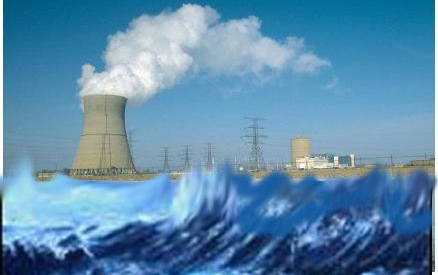  Times 10th June 2020, As if big nuclear power plants weren’t already toxic enough. To the usual Times 10th June 2020, As if big nuclear power plants weren’t already toxic enough. To the usuallist — exploding costs, endless delays, ruinously pricey electricity and a vast clean-up bill — Sizewell C brings another joy. And not just that it’s being partly built by CGN of China: odd reward for the crackdown on Hong Kong. No, it’s that Sizewell C is in a “dangerous location”. Or so says Nick Scarr from the Nuclear Consulting Group, a collection of academics and experts. The consulting engineer has examined the plans from France’s EDF and CGN to build the 3,200MW nuke on the Suffolk coast from the perspective of coastal erosion and climate change. And, assuming he’sright, his paper is alarming — unless you’re relaxed about the risk of the plant being encircled by sea.
Sizewell C will be bigger and closer to the sea than the site’s existing reactors. Mr Scarr takes issue with EDF claims that it’ll be effectively protected by the offshore Sizewell-Dunwich bank and a coralline crag, so creating a “natural wave break”. He points to studies showing waves are getting through in storms, while at the Sizewell C site the crag is more gravelly than desired.
With decommissioning of the plant not due until 2150, Mr Scarr believes EDF and CGN are paying far too little attention to forecasts from the Met Office and the Intergovernmental Panel on Climate Change. Not least the notion that once-a-century “extreme sea level events”, are “projected to occur much more frequently by 2050”. He says the once in 10,000 year flood risk that “EDF trumpets” is “just 0.71m above the historical 1953 flood level”. This is only Mr Scarr’s opinion, but he says his paper has been “approved” by Professor Andrew Plater of Liverpool
University: a leading coastal geomorphologist. So what’s EDF’s
response? Well, it reckons Mr Scarr’s analysis of the effects of the sandbank and crag is both confused and wrong. It also says it has evaluated
the likely effect of climate change. “The design of the power station, including its sea defence and the raised platform it will be built on, will protect Sizewell C from flooding,” EDF insists. It says it’ll take an “adaptive approach”, raising the sea defences “during the lifetime of Sizewell C if needed”. Mr Scarr says such an approach only works for
construction projects such as painting the Forth Bridge every year, not sea defences for a nuclear plant. Indeed, he reckons it’s “clear evidence” that the location cannot “offer the criteria necessary for long-term safety of the project”. https://www.thetimes.co.uk/edition/business/sizewell-c-debate-turns-a-bit-salty-gvvzhp7rf |
The last major treaty for nuclear weapons control now hangs in the balance
|
Nuclear might crux of push for new pact. Treaty expiration would end caps on arms; U.S. envoy says Russia meeting set Northwest Arkansas Democrat Gazette by PAUL SONNE AND ROBYN DIXON, 10 June 20, THE WASHINGTON POST The last major treaty limiting U.S. and Russian nuclear might hangs in the balance as the Trump administration pushes to replace it with an arms-control pact that also includes China five months before the U.S. presidential election.The New START accord, which restricts the number of deployed strategic nuclear warheads and certain launch platforms, is set to expire in February. If the Trump administration declines to extend it and the caps disappear, the United States and Russia will be left without any significant limits on their nuclear forces for the first time in decades.
Russia has said it is willing to extend the New START pact unconditionally. But the Trump administration has balked, saying the treaty signed by former President Barack Obama in 2010 is outdated, insufficient and overly advantageous for Moscow. …….. The result is a game of nuclear brinkmanship in the waning days of the Trump administration’s first term…… https://www.nwaonline.com/news/2020/jun/10/nuclear-might-crux-of-push-for-new-pact/ |
|
French nuclear watchdog demands EDF fix faults at 5 reactors
French nuclear watchdog demands EDF fix faults at 5 reactors, Montel News, MURIEL BOSELLI, Paris 10 June 20, France’s nuclear safety authority has served EDF with a formal notice to repair deviations and reinforce five reactors at its 5.4 GW Gravelines nuclear power plant by the end of October – work that would not require shutdowns.
The notice concerned deviations in five out of the plant’s six reactors. Operator EDF had already made changes to equipment around reactor 5, ASN said on Wednesday. https://www.montelnews.com/en/story/french-nuclear-watchdog-demands-edf-fix-faults-at-5-reactors/1121918
Sellafield’s 11000 cubic metres of nuclear waste – UK’s storage problem
 Plans for 11,000m³ of nuclear waste, In Cumbria, 8 June 20 A DECISION on whether Sellafield can continue storing 11,000 cubic metres of nuclear waste in one of its Seascale buildings is due to be made tomorrow (Tuesday).Sellafield was granted permission to build a five-storey building in 1992 for interim storage of encapsulated intermediate-level waste. Plans for 11,000m³ of nuclear waste, In Cumbria, 8 June 20 A DECISION on whether Sellafield can continue storing 11,000 cubic metres of nuclear waste in one of its Seascale buildings is due to be made tomorrow (Tuesday).Sellafield was granted permission to build a five-storey building in 1992 for interim storage of encapsulated intermediate-level waste.
However the permission expires at the end of 2021, due to a condition imposed at the time by Copeland council. The nuclear firm now wants to have permission to continue storing the waste, as a more permanent solution is not yet available. The county council’s development control and regulation committee will discuss the application at a meeting at 10am. A report prepared for the authority said: “The building is required to be retained for the continued storage of intermediate-level waste (ILW) which is required to be stored until alternative facilities come on line. “The alternative storage solution is likely to be the Geological Disposal Facility (GDF), which is currently out to consultation on host site availability, and until such time as the GDF is made available a suitable interim storage place for ILW is required…… Both Seascale and Ponsonby parish councils have objected to the proposal. The report said that the Seascale authority wanted Sellafield to submit a full planning application. “When constructed these [facilities] had a 50-year life and Copeland put a time limit of 30 years to allow time for future storage options; these amendments need a full planning application. “Seascale Community are living with what are described as health and quality of life risks and this needs to be taken into account.”…….. The meeting is due to take place virtually. For more information on how to join the meeting, visit the council’s site cumbria.gov.uk https://www.in-cumbria.com/news/18502494.plans-11-000m-nuclear-waste/ |
|
China is reconsidering building nuclear reactors in Britain
|
China poised to pull plans for UK nuclear plants https://www.straitstimes.com/world/europe/china-poised-to-pull-plans-for-uk-nuclear-plants 5 June 20 LONDON (BLOOMBERG) – China’s ambassador to the UK said that Prime Minister Boris Johnson’s plans to seek alternatives to Huawei Technologies Co Ltd in the 5G network could spoil plans for Chinese companies to build nuclear power plants and the HS2 high-speed rail network, the Sunday Times reported.Mr Liu Xiaoming signalled that Beijing is viewing the decision over Huawei as “a litmus test of whether Britain is a true and faithful partner of China”, the newspaper reported the ambassador telling business leaders, saying that the words were “interpreted as a threat by those listening”.
China General Nuclear Power Corp plans to build its own nuclear reactor at Bradwell in Essex, according to the newspaper report. China has a minority share in nuclear power plants at Hinkley Point in Somerset and Sizewell C in Suffolk, both in partnership with EDF of France. |
|
Huge police squadron paid by nuclear industry to monitor residents of Bure
the tens of millions of euros per year disbursed by Andra to pay for the presence of the gendarme squadron represents a significant sum. In 2018, the agency’s net profit amounted to only 11.5 million euros,
Cigeo related expenses are directly funded by the three major nuclear players: EDF and Orano, two private companies, and CEA, a public research establishment. In 2018, they poured 212 million euros into the landfill project.

Large Man Looking At Co-Worker With A Magnifying Glass — Image by © Images.com/Corbis
In Bure, the nuclear waste agency pays the police,  À Bure, l’agence des déchets nucléaires se paie des gendarmes, Reporterre, 5 juin 2020 / Marie Barbier (Reporterre) et Jade Lindgaard According to information obtained by Mediapart and Reporterre, an agreement was signed in 2018 between the national gendarmerie and Andra, the agency responsible for the burial of nuclear waste, in this village of the Meuse. Since then, the agency has paid tens of millions of euros to monitor residents through gendarmes. This partnership poses ethical and legal problems.
Around Bure, in the Meuse, where the most dangerous nuclear waste from French power plants must be buried in a gigantic mine 500 meters underground, the villages are only inhabited by a handful of people. And yet, 75 gendarmes patrol there 24 hours a day. For almost a year and a half, according to information collected by Mediapart and Reporterre, these soldiers are paid by Andra, the National Agency for Radioactive Waste Management, which has set up a laboratory at the future landfill.
In October 2018, an agreement was signed between Andra and the General Directorate of the National Gendarmerie (DGGN) “in order to guarantee the safety of personnel and facilities in the long term” the agency confirmed to us, in response to our questions. According to figures given by the agency itself, “ten million euros” are spent each year by Andra, a public industrial and commercial establishment (EPIC), to pay the soldiers engaged and cover related costs, including catering. To date, therefore, at least twenty million euros have been spent – or are in the process of being spent – in this context
The mobile gendarmes are hosted directly on Andra’s site, in a block built for this purpose. They sleep there, store their equipment and their vehicles and take their recovery days there before leaving to patrol. These soldiers, often very young, stay there for three to six weeks before leaving on another assignment. They are immediately replaced by new arrivals. The DGGN refused to communicate the exact content to us The government decision to assign a squadron of mobile gendarmes to this territory dates from the summer of 2017. In June, Le Bindeuil, a hotel-restaurant known to accommodate Andra staff and gendarmes, suffered damage during the anti-nuclear days. And in August, a demonstration ended in confrontations with the police. These facts are today the subject of judicial information, in which ten people are under investigation, and which gives rise to massive and particularly intrusive surveillance, as we detailed in our four-part investigation……..
Is it legal to pay a squadron of gendarmes to protect themselves?….
Long dormant, this system was revived by a decree, signed by Alain Juppé in 1997…..
….. In 2009, an agreement was signed with EDF for the protection of nuclear power plants. “At the national level, the overall workforce is around a thousand gendarmes,” confirms EDF, who specifies that “this specialized platoon is financed by EDF” but that the latter “does not communicate on the cost of this protection” .
This is to prevent a new Zad, like that of Notre-Dame-des-Landes, from forming But Andra’s laboratory cannot, unlike nuclear power plants, be considered a sensitive site. No radioactive waste is present there. Cigeo’s excavation work.
So what is the purpose of the gendarmerie platoon paid by Andra at the Bure site? According to many residents that we were able to contact, these gendarmes are mainly assigned to the surveillance of the territory and its inhabitants. For the police, it is a question of preventing the militants evicted from Lejuc wood – a communal forest once occupied by opponents of Cigeo – from returning. And to prevent a new Zad from forming, he example of Notre-Dame-des-Landes, in Loire-Atlantique
According to residents interviewed for this article, the patrol vehicles are reformed vehicles, old Range Rovers, or newer models from Kangoo and Transit. A villager saw them move at night with torches bearing the acronym of Andra. What exactly are their prerogatives? The Directorate General of the National Gendarmerie refused to answer our questions.
“Permanent and repeated identity checks infringe on individual freedoms” and can “only lead to incidents”.
Me Matteo Bonaglia, one of the lawyers indicted in the framework of the criminal investigation for association of criminals, says he is “surprised by such means allocated to Andra. This explains, however, the over-militarization that we observe in this territory where the fight against the project to bury nuclear waste is playing out, Andra being able to allocate the assistance of the police force in a proportion three times greater than everywhere elsewhere.
It is already difficult to oppose the Cigeo project and assert its anti-nuclear opinions. Here, the multiplication of controls and the over-representation of gendarmes constitutes a de facto obstacle to freedom of opinion and the free expression of ideas. It also explains the large number of trials that have taken place in recent years for offenses such as contempt and rebellion, not everyone is so willing to be subject to constant scrutiny. ”
This agreement with the gendarmerie is all the more problematic since Andra appears several times in the file currently being examined after the start of the fire at the Hôtel-restaurant du Bindeuil, in which ten anti-nuclear activists are put under review and to which Mediapart and Reporterre had access.
The agency did not bring a civil action, but complained three times. Thus, on February 17, 2017, its director, David Mazoyer, filed a complaint “on behalf of Andra” after “degradations” committed on the site of the eco-library, belonging to the agency. “During the night of February 16 to 17, 2017,” explains the director of gendarmes in Ligny-en-Barrois the opponents damaged, bent or tore down the fence around the site, mainly on the west facade and on a line of about 150 meters. These degradations were the subject of an additional indictment and joined the long list of crimes covered in this sprawling instruction.
A few months later, on June 21, 2017, the day of the fire at the Le Bindeuil hotel and restaurant, David Mazoyer filed a second complaint: “Other members of their movement attacked the code on the pedestrian portal giving access to the Ecothèque site. This device is damaged and out of use. I am filing a complaint on behalf of Andra for the destruction of this device. ”
Finally, on April 24, 2018, it was the head of Andra’s risk protection and prevention service who complained about receiving documents after discovering photos belonging to the Ecoteca during a search.
According to our information, the platoon of gendarmes paid by Andra is not assigned to the “Bure cell”, a cell of gendarmes with their own badge in charge of the current investigation. But what about a complainant who pays gendarmes to go and monitor the people against whom he has complained? By order of the prefecture, Andra gendarmes can also in theory be assigned to the maintenance of order at demonstrations or at the courthouse. The mix of genres would then be total: a complainant who pays the police in a demonstration against him or worse, during trials of opponents of his project …
In addition to this potential conflict of interest, the apparently legal agreement between Andra and the national gendarmerie raises legal questions. In 2018, a circular from the Minister of the Interior Gérard Colomb paved the way for a much wider billing than what had been initially planned. “The circular no longer takes the precaution of limiting it to” organizers of sporting, recreational or cultural events for profit “. We can invoice everyone, regardless of the object and the lucrative purpose or not, “said Mickaël Lavaine.
In 2018, the publication of his article in the review of legal current events in administrative law gave rise to an action brought by the Collectif des Festivals before the Council of State, the organizers denouncing the considerable sums of security which they owed. ” discharge to the State.
This mixture of genres questions the impartiality of police work
In this legal debate, the two paragraphs of article L211-11 of the code of internal security, organized by the Columbus circular, are opposed. The first specifies that these conventions concern only “organizers of sporting, recreational or cultural events for profit”, the second target much more broadly all “natural or legal persons”. “The Council of State will have to rule on this debate: is paragraph 2 linked to paragraph 1? If he decides in this sense, which I defend, that means that Andra cannot be invoiced, nor of the associations which organize the potato festival. This would return to the spirit of the text of the Tour de France, “said Mickaël Lavaine. The Council of State is expected to decide by summer.
For the researcher, this legal debate poses a much broader question: “The internal security code specifies that the police or gendarmerie forces may be charged for law enforcement services which cannot be attached to the normal obligations incumbent on the public authorities’. But what is the obligation normal state? This notion is vague enough to be able to put what you want into it. If we push the logic of the Columbus circular to its end, there is nothing to prohibit charging the organizer of an FO demonstration or the CGT for the police devices of a demonstration. However, the Declaration of Human Rights provides that the public force must be financed by taxes. ”
For Alexandre Faro, lawyer for one of the activist witnesses assisted in the investigation opened after the fire at Bindeuil, “this amounts to privatizing the police in favor of Andra. From a strict legal point of view this is very questionable because in France the police are a monopoly of the state and the Constitution provides that sovereignty is exercised by the people and for the people. ”
These debates also animated Andra employees when the agreement with the DGGN was signed. An internal source tells us that “that posed questions”: “Why is Andra paying when it is a public establishment?
Far from being anecdotal, the tens of millions of euros per year disbursed by Andra to pay for the presence of the gendarme squadron represents a significant sum. In 2018, the agency’s net profit amounted to only 11.5 million euros, mainly made up of research tax credit, as indicated in the establishment’s annual financial report. Cigeo related expenses are directly funded by the three major nuclear players: EDF and Orano, two private companies, and CEA, a public research establishment. In 2018, they poured 212 million euros into the landfill project.
The gendarmes paid by Andra who crisscross the territory are not the same as those who are investigating for justice as part of the judicial information and have listened for months to opponents of Andra. But they belong to the same institution. This mix of genres questions the impartiality of police work. Then does not public power find itself in a situation of insincerity towards the citizens whom it controls with such relentlessness? The gendarmes, Andra, justice, political leaders on one side; opponents of the other. Two tight-knit camps, one facing the other, like in a war situation.
https://reporterre.net/A-Bure-l-agence-des-dechets-nucleaires-se-paie-des-gendarmes
Anti–nuclear resistance in Russia: problems, protests, reprisals

Produced by RSEU’s program “Against nuclear and radioaсtive threats”
Report “Anti–nuclear resistance in Russia: problems, protests, reprisals” Produced by RSEU’s program “Against nuclear and radioaсtive threats”
Editor and translator: Vitaly Servetnik
English editor: Anna WhiteCover
illustration: Anastasia Semenova
Layout: Sergey Fedulov
Saitnt Petersburg 2020
Nuclear energy: failures and lies…….5
Expired reactors……………………………6
Decommissioning problems…………..7
Uranium mining protest………………..8
The Mayak plant: Rosatom’s dirty face………10
Struggle against nuclear repository……………11
A road through a radioactive graveyard……..14
Conclusion: nuclear power is a problem, not a solution….14
Nuclear energy: failures and lies
4 https://7×7–journal.ru/articles/2019/08/09/admin-istraciya–severodvinska–udalila–s–oficialnogo–saj-ta–reliz–o–skachke–radiacii–v–gorode–posle–vzry-va–pri–ispytanii–reaktivnoj–ustanovki–baza–soobshi-la–o–shesti–postradavshih–ot–oblucheniya
8 https://www.tol.org/client/article/23174-nucle-ar-strength-kola.html
9 https://barentsobserver.com/en/sections/nature/ kola-reactor-3-runs-overtime (Eng.)
10 https://barentsobserver.com/en/nature/ ice-cold-swimming-nuclear-protest (Eng.)
11 http://pim.org.ru/old/2005–04–28–answer–mur-manproc.pdf (Rus.)
12 https://profile.ru/society/ekolog–znachit–vrag–13271/
13 https://kec.org.ru/organisation/histrory/
14 http://rusecounion.ru/eng/nuclearstatusre-port2019 (Eng.)
15 http://rusecounion.ru/eng/node/2994 (Eng.),http://rusecounion.ru/eng/node/2991 (Eng.)
16 https://www.rbc.ru/spb_sz/29/12/2018/ 5c2633749a7947f8833fc99817 http://decommission.ru/2019/06/14/laes_sos-nobyl/
18 http://decommission.ru/2017/12/21/yad-news_1_201217/
19 http://rusecounion.ru/eng/node/2993 (Eng.)
20 http://rusecounion.ru/eng/node/2992 (Eng.)
21 http://greenworld.org.ru/?q=human_right_21111622 https://shtab.navalny.com/hq/kurgan/3687/
23 https://novayagazeta.ru/arti-cles/2019/11/08/82647–strana–uraniya
24 https://youtu.be/irqY75jSnA8
25 https://vk.com/wall–141292704_3351
26 https://45.ru/text/gorod/53533571/
27 https://ovdinfo.org/express–news/2020/04/15/v–kurgane–fsb–vozbudilo–ugolovnoe–delo–protiv–ekoaktivistki
28 http://chng.it/xHgMmwkPq5
29 http://rusecounion.ru/ru/no–uf6
30 http://activatica.org/blogs/view/id/8619/title/ pochemu–nuzhno–ostanovit–uranovyy poezd
31 https://www.zaks.ru/new/archive/view/195957
32 http://rusecounion.ru/ru/decomatom_19320
33 https://66.ru/news/society/226814/
34 https://greenpeace.ru/blogs/2019/12/17/peter-burg–ne–hochet–radioaktivnyh–podarkov/
35 https://foeasiapacific.org/2019/07/01/ russia-must-stop-criminal-persecu-tion-of-ecodefense-director-alexandra-koroly-ova-repeal-the-foreign-agent-law-and-promote-envi-ronmental-justice/ (Eng.)
36 https://ecodefense.ru/2019/12/30/alexandra–koroleva–political–refuge/
37 http://rusecounion.ru/ru/decom_mayak_2018
38 http://nuclear.tatar.mtss.ru/fa230907.htm
39 http://chel–portal.ru/enc/dvizhenie_za_yader-nuyu_bezopasnost
40 http://hudoc.echr.coe.int/eng?i=001-103084(Eng.), http://hudoc.echr.coe.int/eng?i=001-158136(Eng.)
41 https://www.vesti.ru/doc.html?id=949087
42 https://theins.ru/confession/81445
43 https://www.kommersant.ru/doc/941081
44 https://www.rbc.ru/poli-tics/18/03/2015/550812909a79475f79d367cc
45 https://novayagazeta.ru/ news/2016/12/13/127413–sud–v–chelyabinske–likvid-iroval–priznannyy–inostrannyym–agentom–fond–za–prirodu
46 https://za–prirodu.ru/page/ekspansija–neve-zhestva
47 http://babr24.com/kras/?IDE=198678
48 http://www.change.org/mogilnik
49 https://youtu.be/WTKfCnXt58Q?t=1729
50 https://meduza.io/news/2016/08/25/krasnoyarsk-ogo–aktivista–obvinili–v–razzhiganii–nenavisti–k–at-omschikam
51 http://greenworld.org.ru/sites/default/greenfiles/ Mariasov_doklad_int.pdf
52 https://vk.com/@pitsunova–filkina–gramota–ros-rao
53 https://news.sarbc.ru/main/2019/07/25/235566.html
54 https://regnum.ru/news/polit/2867802.html
55 http://chng.it/5RsJDQfkxq
56 https://ovdinfo.org/express–news/2020/03/11/ kirovskie–vlasti–ne–soglasovali–miting–ni–na–odnoy–iz–31–ploshchadok–no
57 http://rusecounion.ru/ru/horda_msk
58 https://youtu.be/R9_9phYaWBE
59 https://youtu.be/bMKfYD1SLdc
60 https://youtu.be/l5K8agywCNw
61 https://youtu.be/iXOyT0qPUi0
62 http://activatica.org/blogs/view/id/9759/title/ na–sklon–v–moskvoreche–vernulsya–simvol–obo-rony–sob
Czech Fiscal Council warns on the long-term risk of financing a new nuclear reactor

Even the World Nuclear News, voice of the global nuclear industry, admits that nuclear reactors are just too costly
Czech budget council warns of Dukovany cost https://www.world-nuclear-news.org/Articles/Czech-budget-council-warns-of-Dukovany-cost 05 June 2020
 The Czech Fiscal Council, Národní rozpočtová rada (NRR), has warned that financing a new nuclear power unit could have a long-term impact on the country’s budget and could be “a lot higher” than current estimates.
Czech Prime Minister Andrej Babiš said last week that the government will provide a loan to ČEZ to cover 70% of the cost of building a new unit at the Dukovany nuclear power plant, with the majority state-owned utility funding the remaining 30%. The project cost is estimated to be about EUR6.0 billion (USD6.7 billion).
In its latest quarterly report, published on 3 June, the NRR said it was outside its remit to comment on the country’s choice of energy mix, but that it considered it necessary to comment on aspects of policy that significantly affect public budgets.
“In May 2020, the government presented a proposal to provide a loan to ČEZ covering up to 70% of the funds needed for the completion of the Dukovany nuclear power plant, while the costs of project implementation are expected to be around CZK160 billion. It’s obvious that such an amount would have to be secured by the state on the capital markets and thus the share of public debt in GDP would increase,” it said.
v”In addition, experience from the construction of nuclear power plants abroad in recent years has shown that the budgeted amounts are generally significantly exceeded. In the end, the fiscal costs of completing a nuclear power plant may be significantly higher than current estimates. Decisions of similar importance should therefore, in the NRR’s view, be taken on the basis of careful analysis and after a more detailed discussion.”
ČEZ applied to the State Office for Nuclear Safety on 25 March to construct two new reactors at its Dukovany nuclear power plant. Four VVER-440 units are currently in operation at the site, in Vysočina Region.
Russian city Severodvinsk, (near site of nuclear accident) sealed off due to Covid-19
 Coronavirus seals off city near secret Russian nuclear accident site, https://thebarentsobserver.com/en/2020/06/coronavirus-seals-city-near-secret-russian-nuclear-accident-site The Moscow Times 05, 2020, Authorities have blocked access to Severodvinsk, the north Russian city located near the site of last year’s mysterious nuclear testing accident as the coronavirus outbreak there intensified.The governor of the Arkhangelsk region signed an order to close public access to Severodvinsk this Saturday, the city’s press service said Thursday. Severodvinsk is near the Nyonoksa testing site where an August 2019 explosion during a rocket engine test killed five Russian nuclear workers and led to a radiation spike.
Severodvinsk will set up checkpoints Friday and restrict entry and exit starting midnight Saturday to everyone except workers and people attending funerals, going to country houses or transiting through the city.
“The measure remains in effect until special orders,” the city’s press service said in a statement.
Around 700 people have been infected with Covid-19 at two of the city’s major shipyards since April, an unnamed shipbuilding industry source told the Vedomosti business daily. The Sevmash and Zvezdochka shipyards reportedly saw more than 200 new cases in the past week alone.
The outbreak has prompted federal health officials last week to order enterprises in Severodvinsk to limit their activities.
The Arkhangelsk region has confirmed 2,496 coronavirus infections since the start of the outbreak. Severodvinsk accounts for roughly half of the region’s overall cases.
Last August, a missile exploded during what is believed to have been a recovery operation. The secrecy surrounding the accident has led outside observers to speculate that the explosion involved the Burevestnik nuclear-powered intercontinental cruise missile, dubbed the SSC-X-9 Skyfall by NATO.
President Vladimir Putin later said the accident occurred during testing of what he called promising new weapons systems.
Nuclear submarine accidents contaminating Russia’s Far East
Here’s What You Need To Remember: The explosion blew out the reactor’s twelve-ton lid—and fuel rods—and ruptured the pressure hull. The reactor core was destroyed, and eight officers and two enlisted men standing nearby were killed instantly. A the blast threw debris was thrown into the air, and a plume of fallout 650 meters wide by 3.5 kilometers long traveled downwind on the Dunay Peninsula. More debris and the isotope Cobalt-60 was thrown overboard and onto the nearby docks.
In 1985, a Soviet submarine undergoing a delicate refueling procedure experienced a freak accident that killed ten naval personnel. The fuel involved was not diesel, but nuclear, and the resulting environmental disaster contaminated the area with dangerous, lasting radiation. The incident, which remained secret until after the demise of the USSR itself, was one of many nuclear accidents the Soviet Navy experienced during the Cold War……
The explosion blew out the reactor’s twelve-ton lid—and fuel rods—and ruptured the pressure hull. The reactor core was destroyed, and eight officers and two enlisted men standing nearby were killed instantly. A the blast threw debris was thrown into the air, and a plume of fallout 650 meters wide by 3.5 kilometers long traveled downwind on the Dunay Peninsula. More debris and the isotope Cobalt-60 was thrown overboard and onto the nearby docks.
According to Nuclear Risks, the accident scene was heavily contaminated with radioactivity. Gamma ray radiation was not particularly bad; at an exposure rate of five millisieverts per hour, it was the equivalent of getting a chest CT scan every hour. However, the explosion also released 259 petabecquerels of radioactive particles, including twenty-nine gigabecquerels of iodine-131, a known cause of cancer. This bode very badly for the emergency cleanup crews, especially firefighters who needed to get close to the explosion site, and the nearby village of Shkotovo-22. Forty-nine members of the cleanup crew displayed symptoms of radiation sickness, ten of them displaying acute symptoms…….
While the Chazhma Bay region appears contaminated to this day with radiation, it is unknown how much of it is the result of the K-431 incident and how much the result of the many nuclear-powered submarines that were junked and forgotten in the area.
The K-431 incident was one of several involving Soviet submarine reactors. Ten Soviet submarines experienced nuclear accidents, and one other, K-11, also suffered a refueling criticality………. https://news.yahoo.com/1985-nuclear-submarine-explosion-contaminated-213000521.html
Russia will now allow use of atomic weapons against non-nuclear strike
By including a non-nuclear attack as a possible trigger for Russian nuclear retaliation, the document appears to send a warning signal to the U.S. The new expanded wording reflects Russian concerns about the development of prospective weapons that could give Washington the capability to knock out key military assets and government facilities without resorting to atomic weapons.
In line with Russian military doctrine, the new document reaffirms that the country could use nuclear weapons in response to a nuclear attack or an aggression involving conventional weapons that “threatens the very existence of the state.”
But the policy document now also offers a detailed description of situations that could trigger the use of nuclear weapons. They include the use of nuclear weapons or other weapons of mass destruction against Russia or its allies and an enemy attack with conventional weapons that threatens the country’s existence.
U.S.-Russia relations are at post-Cold War lows over the Ukrainian crisis, the accusations of Russian meddling in the U.S. 2016 presidential election and other differences.
Last year, both Moscow and Washington withdrew from the 1987 Intermediate-range Nuclear Forces Treaty. The only U.S.-Russia nuclear arms control agreement still standing is the New START treaty, which was signed in 2010 by U.S. President Barack Obama and then-Russian President Dmitry Medvedev. The pact limits each country to no more than 1,550 deployed nuclear warheads and 700 deployed missiles and bombers and envisages sweeping on-site inspections to verify compliance.
Uranium mining protests in Russia
“……..Uranium mining protest
In the Kurgan region, Rosatom’s subsidiary company, Dalur, has been mining uranium and the local communities fear an environmental disaster. In the summer of 2019, the state environmental appraisal revealed a discrepancy between Dalur’s documentation and the Russian legislation
Activists attribute her persecution to her work at the Public Monitoring Fund for the Environmental Condition and the Population Welfare which she led back in 2017. The Foundation has repeatedly published information on the possible environmental damage resulting from Dalur’s mining activity. (28)
9
In the fall of 2019, environmentalists revealed that radioactive and toxic waste (uranium hexafluoride, UF6)were being imported from Germany through the port of Amsterdam into Russia. This is the waste from the uranium enrichment process which will be sent to the Urals or Siberia and stored in containers above the ground. Thus, under the auspices of a commercial transaction, the German uranium–enriching enterprise, Urenco, avoids its nuclear waste problem, while Rosatom profits by taking the hazardous waste into Russia.
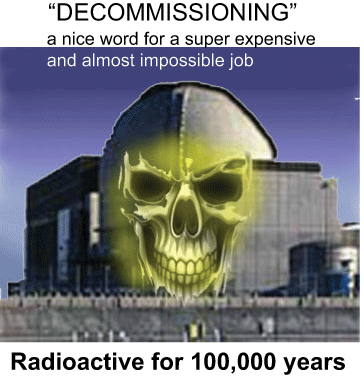
Activists, despite government oppression, campaign for decommissioning of Russia’s aging nuclear reactors
 Anti–nuclear resistance in Russia: problems, protests, reprisals [Full Report 2020] Report “Anti–nuclear resistance in Russia: problems, protests, reprisals” Produced by RSEU’s program “Against nuclear and radioaсtive threats”
“………..For many years, Murmansk regional environmental groups have opposed the ageing Kola NPP reactor’s lifetime extension. They have participated in public hearings, have organised many demonstrations (8-9-10), appealed to and received support from the prosecutor’s office(11), but this was all ignored by Rosatom. Activists also called on the governor to shut down the old NPP, but environmental organisations were shutdown instead. One such organisation is Kola Environmental Center (KEC) – listed as a Foreign Agent in 2017– and was subject to two trials and fined 150,000 rubles (12). KEC was forced to close down as a legal entity in2018, but has continued its environmental work as a public movement(13). Another organisation in the region –Nature and Youth – made the decision to close down in order to avoid prosecution, but continues its work as an unregistered initiative
• In 2018, after 45 years of operation, the first power unit of the Leningrad NPP was finally shut down.The second one scheduled for shutdown is in 2020, the third in 2025 and the fourth in 2026. However,decommissioning projects have not yet been clearly developed for the reactors.
• The public organisation, Green World, has worked for many years in Sosnovy Bor, Leningrad Region, a city dominated by the nuclear industry and closed to outsiders. Since 1988, activists of the organisation have opposed dangerous nuclear projects in the Baltic Sea region(17) and have provided the public with independent information on the environmental situation. (18)
In its place, another organisation was opened – the Public Council of the South Coast of the Gulf of Finland. Activists have continued their work as before under this new name…….”
French state-controlled utility EDF has to inspect valve leaks at Flamanville, Taishan, Finland nuclear sites
Flamanville and Taishan nuclear sites after valve leaks were reported at
Finland’s Olkiluoto 3 (OL3) nuclear reactor, a company’s spokesman said
on Wednesday. EDF was unaware of any major issues at Flamanville and
Taishan sites similar to the valve leaks in Finland, the spokesman also
said. Finland’s nuclear watchdog reported on May 25 valve problems in a
component involved in the cooling process at the long-delayed OL3 nuclear
reactor.
1 This Month
23-25 October – on Zoom – World BEYOND War’s annual global conferenc

To see nuclear-related stories in greater depth and intensity – go to https://nuclearinformation.wordpress.com

Say No to NASA’s Reckless Nuclear Reactor on the Moon
Say No to NASA’s Reckless Nuclear Reactor on the Moon
-
Archives
- October 2026 (160)
- September 2026 (339)
- August 2026 (330)
- July 2026 (355)
- June 2026 (287)
- May 2026 (306)
- April 2026 (356)
- March 2026 (251)
- February 2026 (267)
- January 2026 (308)
- December 2025 (358)
- November 2025 (359)
-
Categories
- 1
- 1 NUCLEAR ISSUES
- business and costs
- climate change
- culture and arts
- ENERGY
- environment
- health
- history
- indigenous issues
- Legal
- marketing of nuclear
- media
- opposition to nuclear
- PERSONAL STORIES
- politics
- politics international
- Religion and ethics
- safety
- secrets,lies and civil liberties
- spinbuster
- technology
- Uranium
- wastes
- weapons and war
- Women
- 2 WORLD
- ACTION
- AFRICA
- Atrocities
- AUSTRALIA
- Christina's notes
- Christina's themes
- culture and arts
- Events
- Fuk 2022
- Fuk 2023
- Fukushima 2017
- Fukushima 2018
- fukushima 2019
- Fukushima 2020
- Fukushima 2021
- general
- global warming
- Humour (God we need it)
- Nuclear
- RARE EARTHS
- Reference
- resources – print
- Resources -audiovicual
- Weekly Newsletter
- World
- World Nuclear
- YouTube
-
RSS
Entries RSS
Comments RSS

