Nuclear power sales heavily affected byCOVID-19 in France: legal battles to follow
  The Impact of COVID-19 on Nuclear Electricity Sales Contracts in France, JDSUPRA, The Impact of COVID-19 on Nuclear Electricity Sales Contracts in France, JDSUPRA,
Nora Djeraba, Ruxandra Lazar, King & Spalding 19 June 20, The electricity sector, like numerous others in France, has been heavily affected by the economic shutdown due to the COVID-19 pandemic.
The first two weeks of confinement led to a reduction in electricity consumption in France of around 15 to 20% compared to the consumption usually observed at the same year period under equivalent weather conditions[1]. Such a variation in electricity consumption over such a short period of time is unprecedented, the most recent significant drop in demand having been observed during the economic crisis of 2008-2009, when, in contrast, the contraction in demand spread over the long term, reaching a maximum of -5% from one year to the next. Concomitantly, electricity prices on the wholesale markets dropped from EUR50-55/Mwh at the beginning of 2020 to around EUR20/Mwh at the end of March. This distressed economic situation highly impacted the so-called “alternative” electricity suppliers in France, i.e., suppliers other than the incumbent operator, EDF, which entered the retail electricity market in France as a result of its opening up to competition. Several of these suppliers declared force majeure under the contracts entered into with EDF for buying nuclear electricity at a price which became too high compared to the wholesale market price. Several decisions have already been rendered on this issue by the French energy market regulator – Commission de regulation de l’énergie or “CRE”, the Conseil d’Etat (the highest administrative court on administrative matters) and the Commercial Court of Paris, but the legal battle is only just beginning and, given the amounts at stake, we can expect it will be long and bitter……… https://www.jdsupra.com/legalnews/the-impact-of-covid-19-on-nuclear-52378/ |
|
Covid-19 pandemic being used to prevent proper public consultation on Bradwell nuclear project
 Ecologist 17th June 2020, Bradwell B, a proposed nuclear power plant, appears to be moving forward to its construction phase during the Covid-19 pandemic without proper public consultation.
China General Nuclear Power Group (CGN), a Chinese state-owned energy corporation, and Électricité de France (EDF), are seeking to build a new nuclear power plant in Bradwell-on-Sea, opposite Blackwater Estuary Natural Nature Reserve on the Essex coast. A statement released by JAN (Japanese Against Nuclear) UK stated: “The companies cancelled two-thirds of the planned public consultation events due to the Covid-19 pandemic. But the pandemic should not be used to avoid the legal requirement of public engagement.
French, American, Russian nuclear companies join forces to build Bulgarian nuclear station
Well, Framatome is really the old AREVA, coming back from bankruptcy. They’re all in it together, nuclear companies worldwide, conning the taxpayers
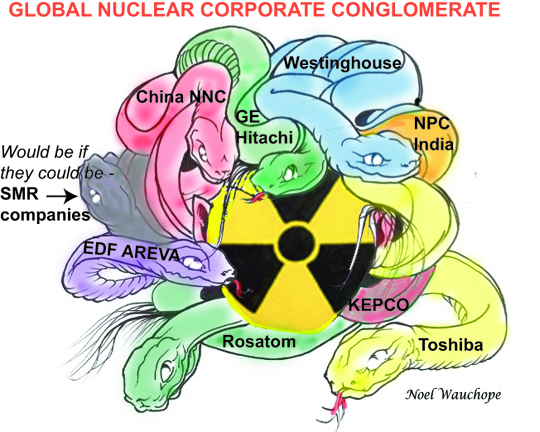 Framatome, GE and Rosatom team up for Belene project, WNN.18 June 2020, Russian state nuclear corporation Rosatom announced today it has signed Memoranda of Understanding (MoUs) with France’s Framatome and GE Steam Power of the USA to participate in a tender to construct the Belene nuclear power plant in Bulgaria.
The MoUs were signed by Kirill Komarov, Rosatom’s first deputy director general of corporate development and international business, Frédéric Lelièvre, Framatome’s senior executive vice president in charge of sales, regional platforms and I&C, and Michael Keroulle, president of GE Steam Power.
As part of the agreements, Rosatom said that if it were to become a strategic investor in the project through a competitive process, GE would be considered as the partner for an Arabelle based turbine-generator set and turbine hall equipment, while Framatome would be considered as the key partner for the instrumentation and control (I&C) systems for the Belene plant.
The Belene project in northern Bulgaria includes construction of two 1000 MWe units, each using the Russian VVER-1000/V-466 design which is a pressurised water reactor with four circulating loops. Preliminary site works began in 2008, and contracts for components including large forgings and I&C systems were signed with suppliers, but the project was stymied by financing problems……….
Rosatom noted that it has already successfully collaborated with Framatome and GE on international projects, including the Paks-II nuclear power plant in Hungary and the Hanhikivi-1 plant in Finland. It said the cooperation with GE is carried out within the framework of the Akkuyu project in Turkey and the El-Dabaa project in Egypt. AAEM, a joint venture between GE and Rosatom subsidiary Atomenergomash, is a supplier of equipment for the turbine island of each plant. https://world-nuclear-news.org/Articles/Framatome-GE-and-Rosatom-team-up-for-Belene-projec
Siberia’s alarming prolonged heat wave
Climate crisis: alarm at record-breaking heatwave in  Siberia https://www.theguardian.com/environment/2020/jun/17/climate-crisis-alarm-at-record-breaking-heatwave-in-siberia
Thu 18 Jun 2020 A prolonged heatwave in Siberia is “undoubtedly alarming”, climate scientists have said. The freak temperatures have been linked to wildfires, a huge oil spill and a plague of tree-eating moths.
On a global scale, the Siberian heat is helping push the world towards its hottest year on record in 2020, despite a temporary dip in carbon emissions owing to the coronavirus pandemic.
Temperatures in the polar regions are rising fastest because ocean currents carry heat towards the poles and reflective ice and snow is melting away.
Russian towns in the Arctic circle have recorded extraordinary temperatures, with Nizhnyaya Pesha hitting 30C on 9 June and Khatanga, which usually has daytime temperatures of around 0C at this time of year, hitting 25C on 22 May. The previous record was 12C.
In May, surface temperatures in parts of Siberia were up to 10C above average, according to the EU’s Copernicus Climate Change Service (C3S). Martin Stendel, of the Danish Meteorological Institute, said the abnormal May temperatures seen in north-west Siberia would be likely to happen just once in 100,000 years without human-caused global heating.
Freja Vamborg, a senior scientist at C3S, said: “It is undoubtedly an alarming sign, but not only May was unusually warm in Siberia. The whole of winter and spring had repeated periods of higher-than-average surface air temperatures.
“Although the planet as a whole is warming, this isn’t happening evenly. Western Siberia stands out as a region that shows more of a warming trend with higher variations in temperature. So to some extent large temperature anomalies are not unexpected. However, what is unusual is how long the warmer-than-average anomalies have persisted for.”
Marina Makarova, the chief meteorologist at Russia’s Rosgidromet weather service, said: “This winter was the hottest in Siberia since records began 130 years ago. Average temperatures were up to 6C higher than the seasonal norms.”
Robert Rohde, the lead scientist at the Berkeley Earth project, said Russia as a whole had experienced record high temperatures in 2020, with the average from January to May 5.3C above the 1951-1980 average. “[This is a] new record by a massive 1.9C,” he said.
In December, Russia’s president, Vladimir Putin, commented on the unusual heat: “Some of our cities were built north of the Arctic Circle, on the permafrost. If it begins to thaw, you can imagine what consequences it would have. It’s very serious.”
Thawing permafrost was at least partly to blame for a spill of diesel fuel in Siberia this month that led Putin to declare a state of emergency. The supports of the storage tank suddenly sank, according to its operators; green groups said ageing and poorly maintained infrastructure was also to blame.
Wildfires have raged across hundreds of thousands of hectares of Siberia’s forests. Farmers often light fires in the spring to clear vegetation, and a combination of high temperatures and strong winds has caused some fires to burn out of control.
Swarms of the Siberian silk moth, whose larvae eat at conifer trees, have grown rapidly in the rising temperatures. “In all my long career, I’ve never seen moths so huge and growing so quickly,” Vladimir Soldatov, a moth expert, told AFP.
He warned of “tragic consequences” for forests, with the larvae stripping trees of their needles and making them more susceptible to fires.
The ‘chemical fingerprint’ of a 2017 nuclear explosion
 Scientists just found the ‘chemical fingerprint’ of an alleged nuclear explosion that went undeclared in Russia, Business Insider, Aria Bendix Jun 16, 2020
- A group of scientists known as the “Ring of Five” detected unusual levels of radiation in Europe in 2017.
- A new study offers “irrefutable proof” that the radiation came from nuclear waste reprocessing.
- The study lends further evidence to the claim that Russia failed to disclose an accident at the Mayak nuclear facility in September 2017.
- For the past three years, a group of scientists called the “Ring of Five” has been inching toward the conclusion that an undisclosed nuclear accident took place in Russia in 2017.
In July 2019, the group released evidence that an explosion may have occurred at the Mayak nuclear facility — once the center of the Soviet nuclear-weapons program. Mayak was also the site of the 1957 Kyshtym explosion, the world’s third-worst nuclear accident behind Fukushima and Chernobyl.
- In late 2019, the scientists suggested that, given the large amount of radiation admitted on the date, the accident took place on September 26, 2017. The radiation seemed to spread from Russia’s Southern Urals region (where the Mayak facility is located) toward central Europe, Scandinavia, and Italy.
A third study, released Monday, offers “irrefutable proof” that the explosion was linked to nuclear waste reprocessing — a method that separates plutonium and uranium from spent nuclear fuel. The Mayak facility is the largest nuclear reprocessing facility in the region. That makes it the most likely, if not the only possible, origin site — though Russia has never acknowledged a nuclear accident at the facility in 2017…….
- The Ring of Five has been monitoring Europe’s atmosphere for elevated levels of radiation since the mid-1980s. The group originally hailed from five countries: Sweden, Germany, Finland, Norway, and Denmark. But after the Chernobyl disaster in 1986, the team enlisted the help of other nations to expand their efforts. It now includes researchers from 22 countries.
- On October 2, 2017, Italian scientists sent an alert to the Ring of Five about elevated levels of ruthenium-106, a radioactive isotope, in Milan. The discovery marked the first time that ruthenium-106 had been found in the atmosphere since Chernobyl.
“We were stunned,” Steinhauser said. “We did not have any anticipation that there might be some radioactivity in the air. We were just measuring air filters as we do on a weekly basis, 52 times a year, and suddenly there was an unexpected result.”
- Steinhauser said the explosion was the “single greatest release from nuclear-fuel reprocessing that has ever happened.”
But Russia has not responded to any findings from the Ring of Five. In December 2017, Russian officials attributed the radiation to an artificial satellite that burned up in the atmosphere. The scientists’ latest study excludes that possibility.
- The study is the first direct evidence that the ruthenium-106 came from nuclear waste reprocessing. It identified a unique “chemical fingerprint” among samples of the isotope collected in 2017.
Within those samples, the scientists found signs of two chemicals commonly associated with nuclear waste reprocessing: (III) chloride and ruthenium(IV) oxide. This provided “direct evidence that fuel reprocessing was the origin of the 2017 environmental release,” the scientists wrote………. https://www.businessinsider.com/russia-nuclear-accident-mayak-facility-new-evidence-2020-6?r=AU&IR=T
Sizewell nuclear power station could become a dangerous nuclear island
No2NuclearPower 16th June 2020, Letter to The Times (unpublished) Rachel Fulcher Suffolk Costal FOE:
The Sizewell C debate is salty indeed (Alistair Osborne, 10/06/20). Anyone taking a brisk walk along the Suffolk coast around Sizewell can see clearly how unstable and dynamic it is. Defensive anti-tank blocks from World War II spill down the collapsed cliffs, and here and there the remains of a
pill box, once aloft, can be seen lying on the shingle. ‘Dragons’ teeth’ have disappeared under the sea and then re-appeared before being finally removed – some by EDF ironically. Signs warn of cliff falls, yet, sadly, a man was killed not long ago walking his dog along the beach.
EDF Energy maintains that the two offshore sand banks will continue to protect the nuclear power stations at Sizewell from storm surges for the projected lifetime of Sizewell C, including the long-term storage of high-level nuclear waste. What madness is this? Local swimmers and sailors know only too well how these shift and change. Once you could swim out and stand on one – no longer possible as it has eroded and flattened.
Equally, as Nick Scarr correctly points out, and as our own in-depth researches demonstrate, the two banks have been moving apart, allowing the larger waves to reach the shore during storms.
The power of the sea should not be under-estimated. At nearby Thorpeness, thought to be stable due to the out-lying coralline crag, houses are now teetering on the edge, despite the revetment hastily put in place. Gabions are already rusting away and the huge sand bags have been tossed about by the waves. EDF Energy says in their consultation documents that their new defences would guard Sizewell C against projected climate change and sea level rise.
Even if that were the case, which cannot be proven, what would be the result of these? For a
start, they would cause ‘coastal squeeze’, preventing natural roll-back and resulting in flanking erosion and flooding. Not only would this put at increased risk villagers living either side of the station, but the RSPB’s flagship reserve of Minsmere immediately to the north and Sizewell
Marshes SSSI at the rear.
Indeed, this would leave a highly unsafe nuclear island. Water in the wrong place at a nuclear power station can have devastating consequences, as the catastrophe at Fukushima demonstrates only
too well. Let’s hope that the Planning Inspectorate puts the precautionary principle in place and turns down this hazardous development.
http://www.no2nuclearpower.org.uk/news/campaign-update/sizewell-debate-turns-salty/
UK’s Nuclear Future in Doubt amid Diplomatic Fallout over Huawai.
 Telegraph 14th June 2020, UK’s Nuclear Future in Doubt amid Diplomatic Fallout over Huawai. Boris Johnson’s now faces a test of his diplomatic and political skills against the Chinese state. Eyeing China’s crackdown on Hong Kong protesters, seeking to define the UK’s place in the world post-Brexit, and shaken by the pandemic, the UK is hardening its stance on China – and the communist superpower is responding in kind.
Expectations that the UK will reduce Chinese company Huawei’s role in the UK’s 5G network have been met with veiled threats that Chinese companies might pull out of building UK nuclear power plants and other infrastructure – ratcheting up tensions with potentially profound political and economic consequences.
Chinese direct investment in the UK reached almost £50bn between 2000 and 2018, while in
2018 the UK sold £22.6bn worth of goods to China and bought £44.7bn of Chinese goods. It was less than five years ago that David Cameron and Chinese president Xi Jinping popped into the Plough in Cadsden, Bucks, to toast a “golden era” of friendship between the two nations over pints
of IPA and fish and chips.
The visit took place just two days after the Chinese nuclear power giant China General Nuclear and France’s EDF agreed to build the Hinkley Point C nuclear power plant in Somerset, as part of about £40bn in business deals signed between the UK and China. Hinkley
Point C is now taking shape next to the Bristol Channel, but plans for a second plant with EDF, Sizewell C, and CGN’s own plant, Bradwell B inEssex, as well as other infrastructure investment now appear to be at risk if the UK ousts Huawei.
Plenty argue that would be no bad thing. China’s involvement in the UK’s nuclear power plants has long been controversial due to security concerns, while some experts also argue that large nuclear power plants have had their day as a source of energy. “The energy landscape has changed,” argues Paul Dorfman, of the UCL Energy Institute,
given that offshore wind power and other renewable technologies are getting much cheaper and more effective……. https://www.pressreader.com/uk/the-sunday-telegraph-money-business/20200614/281698321989436
Sizewell C nuclear project threatens nationally important landscapes, habitats and species of the Suffolk coast
Risk of fire on a nuclear submarine. France’s lucky escape, due to reactor being removed for overhaul
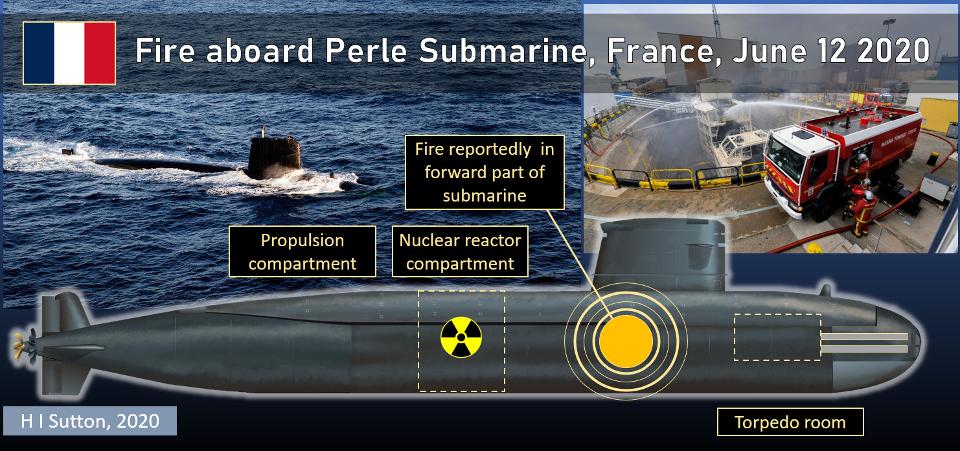
Why The Catastrophic Fire On A Nuclear Submarine Is Nothing To Gloat About https://www.forbes.com/sites/hisutton/2020/06/14/why-the-catastrophic-fire-on-a-nuclear-submarine-is-nothing-to-gloat-about/#ef9667d2ffd0
As details emerge of the fire aboard the French submarine Perle on Friday, it seems unlikely to me that the boat will be returned to service. Whichever way you look at it, the fire is a terrible blow for the French Navy (Marine Nationale). Their submarine fleet is already stretched. But France’s misfortune brings home a basic reality that it could happen to any navy.
The cause of the fire, which took most of Friday to extinguish, has yet to be determined. Florence Parly, Minister of the Armed Forces, was reported by Naval News as saying on June 13 that the “cause for such a strong (and rapid) fire is still unknown.” She also said that if the boat turns out to be fixable, everything will be done to repair it. Any hint of optimism in this statement may point to the terrible predicament that it will leave the French Navy in if it cannot be repaired.
No Reason To Gloat
You will not find many in the defense community laughing at France’s expense. When a Russian or Chinese warship suffers a similar accident, many casual observers are quick to make jokes. Less so the defense community.
For example on April 13 a Chinese Type-075 assault carrier caught fire in Shanghai. That ship, the first of its type, was being fitted out before delivery. The types of work done during refit are similar to the deep overhaul that Perle was being subject to. Or in December last year a Russian aircraft carrier caught fire.
But the Western defense community is very aware that these accidents could equally apply to their home navies. Overhauling ships and submarines is ‘hot work’ and fires can easily occur.
The fire took 14 hours to put out, from 10.35am until 00.50 am the next morning. This may sound like a long time, but the U.S. Navy had a similar experience dealing with a fire aboard the Los Angeles class submarine USS Miami in 2012. That fire, which was also during an overhaul, lasted 12 hours and caused so much damage that the boat had to be written off. In the American case it turned out that the fire had been started deliberately by a dockyard worker hoping that the alarm would get him off work early.
In general, fires aboard submarines can be harder to put out. This is because of the cramped spaces aboard, and also because there are very few openings into the submarine. And they can be more devastating than a similar fire aboard a surface vessel because the heat can deform the steel hull. On a surface vessel this can be repaired more easily, but with a submarine it can make the hull weaker so that it is no longer safe to dive. This is why I am not optimistic that she will be repairable.
The fire was not as bad as it could have been. Fortunately the nuclear reactor had apparently already been removed. So the fire has not been categorized as a nuclear accident. And the torpedoes and missiles had also been unloaded so there was no risk of them exploding.
Many core systems, such as the combat system and sonar, had also been removed. So if the hull can be saved, then returning her to service is at least feasible. But everything seems to depend on whether the hull itself has been weakened.
Radioactive cloud over Europe in 2017 came from a civilian nuclear reactor
|
Radioactive cloud over Europe had civilian background https://www.eurekalert.org/pub_releases/2020-06/uom-rco061220.phpIsotope measurements on air filters: researchers investigated undeclared nuclear release / Study in “Nature Communications” 14 June 20
UNIVERSITY OF MÜNSTER A mysterious cloud containing radioactive ruthenium-106, which moved across Europe in autumn 2017, is still bothering Europe’s radiation protection entities. Although the activity concentrations were innocuous, they reached up to 100 times the levels of what had been detected over Europe in the aftermath of the Fukushima accident. Since no government has assumed responsibility so far, a military background could not be ruled out. Researchers at the Leibniz University Hannover and the University of Münster (both Germany) now found out that the cloud did not originate from military sources – but rather from civilian nuclear activities. Hence, the release of ruthenium from a reprocessing plant for nuclear fuels is the most conclusive scenario for explaining the incident in autumn 2017. The study has been published in the journal Nature Communications.
Background: It is impossible to make a clear distinction between civilian and military sources solely based on measurements of radioactive isotopes of ruthenium. For the first time, researchers from the Institute of Radioecology and Radiation Protection at Leibniz University of Hannover and the Institute of Planetology at Münster University succeeded in quantifying stable ruthenium isotopes in air filters that were released with the radioactive ruthenium. Within the scope of the study, the team left conventional scientific paths: “We usually measure ruthenium isotopes to study the formation history of Earth”, says Prof. Thorsten Kleine from the University of Münster, adding that the methods originally developed to address research questions in planetology were instrumental in solving this mystery. The fact that the airborne ruthenium stemming from nuclear activities occurred in minuscule amounts and were diluted with natural stable ruthenium presented a significant challenge. Through the clean chemical separation of ruthenium fractions from air filters and subsequent high-precision measurements via mass spectrometry, the researchers determined the ratio of stable ruthenium from the nuclear source. The ruthenium isotopic ratios found in the filter are consistent with the signature of a civilian source, in particular the signature of spent nuclear fuel from a nuclear power plant. A military background (such as the production of weapons-grade plutonium) can be ruled out. Furthermore, high-precision measurements enabled the researchers to draw further conclusions. “The isotope signature discovered in the air filter exhibits no similarities with nuclear fuels of conventional Western pressurised or boiling water reactors. Instead, it is consistent with the isotope signature of a specific type of Russian pressurised water reactors – the VVER series. Worldwide, approximately 20 reactors of this type of VVER are currently operational”, specifies Professor Georg Steinhauser from Leibniz University Hannover. Original publication: T. Hopp et al. (2020): Non-natural ruthenium isotope ratios of the undeclared 2017 atmospheric release consistent with civilian nuclear activities. Nature Communications; DOI: 10.1038/s41467-020-16316-3 |
|
Why doesn’t debt-ridden EDF cut its losses and close its uneconomic UK nuclear reactors
|
Unanswered questions dog UK’s new nuclear plans Climate News Network June 11th, 2020, by Paul Brown A French company has designs on the United Kingdom: new nuclear plans for more reactors, with British consumers footing the bill.
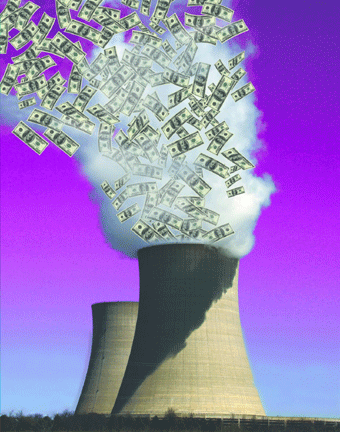
– The French company EDF, a company in a hurry, wants permission to start building two more reactors in the United Kingdom, and it hopes to save money – by arranging for British taxpayers to pay the capital costs of its new nuclear plans. EDF is already building two reactors at Hinkley Point in the West of England, and it is hoping to transfer workers from that site to Suffolk, on the east coast, believing that will help it to save up to 20% of the construction cost of the two planned reactors, because everyone employed there will know already what to do. The catch is that EDF has no money itself to finance the construction and wants the UK government to impose a new tax on British electricity consumers so that they will pay the cost through their electricity bills. The UK has yet to decide whether to go ahead with this tax, euphemistically called a Regulated Asset Base. If adopted, what the scheme means is that the UK consumer will pay EDF’s bills rather than the company having to borrow the money from banks, which are increasingly unlikely to lend money to such expensive schemes because they take so long to build and promise little return. Anxieties abound Meanwhile EDF, which has a Chinese nuclear company as its junior partner, promises to create 25,000 jobs, including 1,000 apprenticeships during construction, and says 900 full-time jobs will be available when Sizewell C, as the station will be called, is complete. If all goes to plan the company hopes to start work in 18 months and says the two reactors will take 10 years to build. It expects them to provide 7% of the UK’s electricity, enough for six million homes. There are many objectors. Some say much of the coastline will be badly affected, including internationally important nature reserves. Others fear the site is highly vulnerable to sea level rise and therefore a danger to the public. Local people also fear that the construction site, with its attendant lorry and commuter traffic, will disrupt their lives for a decade, destroying the important tourist trade. Cheaper options Other more strategic objections, which might weigh heavier with the government, are that nuclear power is very expensive and much cheaper and less controversial alternatives exist, particularly on-shore and off-shore wind and solar power, and biogas. More importantly, a drive for energy efficiency, badly neglected in the UK at present, would render the whole project unnecessary. The problem EDF has is its track record on construction and repairs. The type of reactor it plans to build, the European Pressurised Water Reactor, said by the company to be the most powerful in the world, is proving extremely difficult to build, and till now none has yet been completed outside China. Construction is running more than 10 years late in both Finland and France, and costs continue to escalate.
EDF’s debts are now huge, so big that the French state is working out how to restructure the company by splitting it into a renewables arm (which is profitable) and a nuclear branch. There are serious doubts about the reliability of EDF’s claims and timetables for fixing existing power stations and opening new ones. The company currently owns all of the UK’s operating nuclear reactors, most of which are near the end of their lives, and there are serious doubts about whether they are economic and in some cases even safe. Two reactors at Hunterston in Scotland have serious cracking in the graphite blocks that are part of the control mechanism. The company has spent two years trying to justify continuing to operate the reactors to the Office for Nuclear Regulation (ONR). Similarly, at the other end of the UK, at Dungeness in south-east England, the station is also closed for extensive repairs, an outage that was going to take weeks has now stretched to two years – and the start-up date has just been put back again. Looking on the bright side One of the features of all of EDF’s activities is the extraordinary optimism the company seems to have, particularly about when reactors will be finished or ready to restart after repairs. With the Hunterston reactors restart dates have been announced nine times, only to be postponed each time. This track record led the Climate News Network to ask EDF some searching questions, including why they continued to offer optimistic start-up dates that were repeatedly postponed. We also asked why the company kept the Hunterston and Dungeness stations open at all, since repairing them was costly and they were already near the end of their operating lives. We asked EDF: “At what point do you cut your losses and close the stations permanently?” After five days of pleading for more time to answer, it sent us already published press releases extolling the virtues of the plan to build Sizewell, and several comments. …….HTTPS://CLIMATENEWSNETWORK.NET/UNANSWERED-QUESTIONS-DOG-UKS-NEW-NUCLEAR-PLAN/, l |
|
Fire on French submarine – luckily its nuclear reactor, nuclear fuel, had been removed for overhaul
 A French Submarine Caught Fire In Drydock. It Could Lead Paris To Rethink Its Nuclear Deterrence Strategy. Forbes, Sebastien Roblin 11 June 20 A fire broke out in the rear section of the French nuclear-powered attack submarine Perle on Friday morning as she lay in drydock in the port of Toulon. White clouds of smoke poured into the sky as firefighters from Toulon and Marseilles rushed to the scene. A French Submarine Caught Fire In Drydock. It Could Lead Paris To Rethink Its Nuclear Deterrence Strategy. Forbes, Sebastien Roblin 11 June 20 A fire broke out in the rear section of the French nuclear-powered attack submarine Perle on Friday morning as she lay in drydock in the port of Toulon. White clouds of smoke poured into the sky as firefighters from Toulon and Marseilles rushed to the scene.
Finally at 9:36 p.m local time the Mediterranean Maritime Prefecture reported that the fire had been brought under control by completely flooding the rear compartments of the boat with foam, further noting that the “reactor rooms remains untouched.”…….. Just as importantly, the ship’s 48 megawatt pressurized water nuclear reactor, nuclear fuel, and (conventional-only) weapons had been removed when the submarine entered the drydock in January 2020 for an overhaul by Naval Group due for completion by February 2021. For that reason, the local maritime prefecture claims there is no possibility of radioactive contamination from the incident.
The firefighting effort reportedly involved 30 specialist naval firefighters with support from a firefighting boat, as well as additional specialists scrambled from Marseilles, 11 specialized ground-based firefighting vehicles, and at least 10 ESNA submariners to advise the firefighters. However, there are growing fear that the Perle may have sustained too much damage to be saved. A veteran submariner told the local paper Var Matin “If the thick hull [made of 80HY high-tensile steel]…is deformed, the boat is screwed.” The cause of the blaze is speculated to possibly be faulty welding or a high-pressure cutting gone awry. France’s Nuclear Submarine Force French periodical LeMonde warned that should the Perle suffer “irremediable damage,” there was the possibility “the entire organization of French nuclear deterrence may have to be rethought. And the Navy may have to give up on certain strategic missions.” The Perle does not actually carry any nuclear weapons. However, one of the primary roles of French attack submarines is protecting the four larger Triomphant-class nuclear-powered ballistic missile submarines (SSBNs) from hostile submarines. Indeed, the SSBN Le Téméraire conducted a test launch of an unarmed M51 nuclear ballistic missile just the day prior. France perceives these submarines as performing a vital role in strategic nuclear deterrence, or “dissuasion” as it’s called in France………. Establishing the cause of the accident that may put out of action a valuable strategic asset will also be a priority for Defense Minister Florence Parley, particularly given how much more serious the incident might have been had weapons, the reactor and/or additional personnel had been onboard. For now the citizens of Toulon can only be thankful that loss of life was averted and that there is no apparent risk of contamination. The French Navy will have to take stock of the damage, adjust its plans for its SSN fleet accordingly—and consider how it can minimize the odds of another such accident occurring. https://www.forbes.com/sites/sebastienroblin/2020/06/12/a-french-submarine-caught-fire-in-drydock-it-could-lead-paris-to-rethink-its-nuclear-deterrence-strategy/#4addae213d05 |
|
|
Sellafield waste will stay on site after 2021, Cumbria County Council agrees

The Sellafield atomic fuel reprocessing site, operated by Sellafield Ltd., stands in Seascale, U.K.,
Sellafield waste will stay on site after 2021, Cumbria County Council agrees, In Cumbria, By Liam Waite @imliamwaite 11th June 20 Sellafield can continue to store 11,000 cubic metres of nuclear waste in one of its Seascale buildings, Cumbria County Council has agreed.
Permission was granted in 1992 for Sellafield to store encapsulated intermediate-level waste in a five-storey building on the site but that permission was due to expire at the end of next year due to a planning condition.At a virtual meeting of the council’s development control and regulation committee yesterday, councillors voted unanimously in favour of removing the condition and allowing the waste to continue to be stored there after an application by Sellafield Ltd.
Members were told that there was no permanent alternative available in the absence of the proposed new UK Geological Disposal Facility, the location of which has not yet been decided. …… https://www.in-cumbria.com/news/18506264.sellafield-waste-will-stay-site-2021-cumbria-county-council-agrees/
Armenia Rejects Russian Funding For Nuclear Plant Upgrade
|
Armenia Rejects Russian Funding For Nuclear Plant Upgrade, https://www.rferl.org/a/armenia-rejects-russian-funding-for-nuclear-plant-upgrade/30667786.html June 12, 2020 By RFE/RL’s Armenian Service
YEREVAN — The Armenian government has announced it has decided to use only 60 percent of a $270 million Russian loan designed to finance the ongoing modernization of its Soviet-era nuclear power plant at Metsamor. The plant’s sole functioning reactor went into service in 1980 and was due to be decommissioned by 2017. However, a previous government in 2014 decided to extend the life of the 420-megawatt reactor by 10 years after failing to attract foreign investment for the construction of a new nuclear plant. In 2015, the Russian government agreed to provide Armenia with a $270 million loan and a $30 million grant to upgrade the Metsamor nuclear power plant. The modernization work, led by Russia’s Rosatom nuclear energy agency, was due to be completed by the end of 2019, but the process fell behind schedule, preventing the full disbursement of the Russian funds. Armenia’s infrastructure minister on June 11 said the country had used only $107 million of the Russian money. Suren Papikian said Moscow had offered to extend the loan agreement by two years under the condition that Armenia agreed to use 80 percent of the money to commission equipment and services from Russian companies. The government of Prime Minister Nikol Pashinian backed Papikian’s proposal to reject the Russian offer and to finance the remaining work through government bond sales. Pashinian’s government said it planned to spend 63 billion drams ($130 million) to upgrade the facility over the next two years. Pashinian said that the government will now be free to select the suppliers for Metsamor, which he said will “substantially” lower the costs. Armenia’s sole nuclear plant, located 35 kilometers west of Yerevan, generates roughly 40 percent of the country’s electricity. The European Union and the United State have long pressed for its closure, saying that it does not meet modern safety standards. |
|
Russia: commentary on its nuclear deterrence principles
The only public statement on nuclear deterrence was a standard sentence repeated in Russia’s military doctrine and other documents stating that Russia would only resort to nuclear weapons if it was attacked by weapons of mass destruction, or if an attack threatened the very existence of the state. …..
While the existence of such an ‘escalate to de-escalate’ doctrine and other details on Russia’s potential use of nuclear weapons was contested in the past, the final sentence of Article 4 of the doctrine comes closest to answering this question. It states that, once a war has started, nuclear deterrence policy is to seek to prevent it from escalating further, or from being terminated on terms unfavourable to Moscow. This is a short version of what in Russian military literature is termed ‘escalation control’. Escalation control implies that threats, demonstrations of strike capabilities, and inflicting “calibrated damage” on the enemy (which may, but does not have to, include nuclear weapons) should contain, localise, and if possible terminate a war on Moscow’s terms. …..
Article 19 deliberates on the conditions under which nuclear weapons could be released. It explicitly mentions a ‘launch on warning’ posture. This is a signal to the US that conventional or low-yield re-entry vehicles (the latter are in development) of intercontinental missiles would be treated as a full-scale attack and that Washington should therefore not think of employing them in a tactical or limited attack close to Russia’s borders. ……….
The Russian decree does not contain any detailed provisions on force structure, weapons systems (future or present), force modernisation, or references to other nuclear powers. Much detail is lacking from what one might normally expect to see in a nuclear doctrine. Article 15 states merely that nuclear deterrence needs to be adaptable, and should leave the enemy guessing about the time, scale, and manner of the use of nuclear weapons. It also says that Russia intends to maintain the minimal force required to achieve its tasks………
Taken together, all these provisions seem surprisingly minimalist. It may well be that Russia intends to signal to the United States that, if the American-Chinese arms race takes off, Moscow does not intend to follow suit and “spend itself into oblivion”, as US assistant secretary for terrorist financing in the Treasury, Marshall Billingslea, put it. Russia is hardly likely to publicly admit that in the 21st century it will most probably be a secondary nuclear power. But, in fact, it does seem to be adapting to this role.
Finally, Article 3 notes that Russia’s nuclear deterrence is flanked by other state measures to achieve its goals, including diplomatic and “information policies” (propaganda). The publication of the doctrine and the content of Article 3 effectively represent the firing of the starting pistol on a new ‘information campaign’ in the West: expect to soon see an information operation that aims to inflate the purported capabilities of Russia’s nuclear forces and induce fear (such as the new “Wunderwaffen”, presented in March 2018), and new diplomatic overtures in the fields of arms control, in particular designed to split the alliance. At least on the latter, Putin may get assistance from the White House: Trump’s clumsy and undiplomatic handling of the INF and Open Skies issues provide more opportunities to exploit than any Russian diplomat would have ever dreamed of creating. ……… https://www.ecfr.eu/article/commentary_russias_nuclear_deterrence_principles_what_they_imply_and_what_n
1 This Month
23-25 October – on Zoom – World BEYOND War’s annual global conferenc

To see nuclear-related stories in greater depth and intensity – go to https://nuclearinformation.wordpress.com

Say No to NASA’s Reckless Nuclear Reactor on the Moon
Say No to NASA’s Reckless Nuclear Reactor on the Moon
-
Archives
- October 2026 (160)
- September 2026 (339)
- August 2026 (330)
- July 2026 (355)
- June 2026 (287)
- May 2026 (306)
- April 2026 (356)
- March 2026 (251)
- February 2026 (267)
- January 2026 (308)
- December 2025 (358)
- November 2025 (359)
-
Categories
- 1
- 1 NUCLEAR ISSUES
- business and costs
- climate change
- culture and arts
- ENERGY
- environment
- health
- history
- indigenous issues
- Legal
- marketing of nuclear
- media
- opposition to nuclear
- PERSONAL STORIES
- politics
- politics international
- Religion and ethics
- safety
- secrets,lies and civil liberties
- spinbuster
- technology
- Uranium
- wastes
- weapons and war
- Women
- 2 WORLD
- ACTION
- AFRICA
- Atrocities
- AUSTRALIA
- Christina's notes
- Christina's themes
- culture and arts
- Events
- Fuk 2022
- Fuk 2023
- Fukushima 2017
- Fukushima 2018
- fukushima 2019
- Fukushima 2020
- Fukushima 2021
- general
- global warming
- Humour (God we need it)
- Nuclear
- RARE EARTHS
- Reference
- resources – print
- Resources -audiovicual
- Weekly Newsletter
- World
- World Nuclear
- YouTube
-
RSS
Entries RSS
Comments RSS

