European Commission drafts plan to label gas and nuclear investments as ”green”

EU drafts plan to label gas and nuclear investments as green, Reuters, By Kate Abnett and Simon JessopSummary
EU drafts plan to label gas and nuclear investments as green Reuters, By Kate Abnett and Simon JessopSummary
EU drafts plan to label gas and nuclear investments as green Reuters, By Kate Abnett and Simon JessopSummary 2 Jan 22
- European Commission drawing up green investment rules
- Draft proposal labels nuclear, some gas plants as green
- Countries disagree on the fuels’ green credentials
- EU advisors said gas not compatible with climate goals
Jan 1 (Reuters) – The European Union has drawn up plans to label some natural gas and nuclear energy projects as “green” investments after a year-long battle between governments over which investments are truly climate-friendly.
EU countries and a panel of experts will scrutinise the draft proposal, which could change before it is due to be published later in January. Once published, it could be vetoed by a majority of EU countries or the European Parliament.
Brussels has also made moves to apply the system to some EU funding, meaning the rules could decide which projects are eligible for certain public finance.
A draft of the Commission’s proposal, seen by Reuters, would label nuclear power plant investments as green if the project has a plan, funds and a site to safely dispose of radioactive waste. To be deemed green, new nuclear plants must receive construction permits before 2045.
…………………. Gas and nuclear power generation would be labelled green on the grounds that they are “transitional” activities – defined as those that are not fully sustainable, but which have emissions below industry average and do not lock in polluting assets.
…………….. The policy has been mired in lobbying from governments for more than a year and EU countries disagree on which fuels are truly sustainable.
……………. Some environmental campaigners and Green EU lawmakers criticised the leaked proposal on gas and nuclear.
“By including them… the Commission risks jeopardising the credibility of the EU’s role as a leading marketplace for sustainable finance,” Greens president Philippe Lamberts said………. https://www.reuters.com/markets/commodities/eu-drafts-plan-label-gas-nuclear-investments-green-2022-01-01/
EU Commission’s draft taxonomy plan – ”a licence to greenwash”

 |
EU Commission’s taxonomy plan is “licence to greenwash” Greenpeace European Unit
https://www.greenpeace.org/eu-unit/issues/climate-energy/45988/nuclear-gas-eu-taxonomy-licence-to-greenwash/ 01/01/2022 Brussels – The European Commission intends to label certain fossil gas and nuclear activities as “sustainable” investments in the EU’s taxonomy of green economic activities, according to a draft communication released late on 31 December 2021.
According to the Commission document, nuclear projects with a construction permit issued by 2045 would be eligible for private investments, as long as they can provide plans for the management of radioactive waste and for decommissioning.
Gas projects with permits issued until 2030 would also be eligible, provided they fulfil a series of conditions, including emissions under 270g CO₂e/kWh. These provisions would deal a significant blow to the EU’s climate and environment action.
Nuclear power generates high-level radioactive waste, and a commercially viable long-term solution has yet to be found. Fossil gas is already the leading source of greenhouse gas emissions from power generation in Europe. Encouraging investments in fossil gas by giving it a green label will only exacerbate its devastating climate impact, warned Greenpeace.
In both cases, renewables are cheaper and faster to deploy, meaning that sending the wrong signal to private investors could disrupt the energy transition towards 100% renewables and delay the EU’s progress on its climate commitments.
The development comes after the EU had already severely undermined the taxonomy last year by labelling the burning of trees for energy as another sustainable activity.
Greenpeace EU programme director Magda Stoczkiewicz said: “The Commission’s taxonomy is a licence to greenwash. Polluting companies will be delighted to have the EU’s seal of approval to attract cash and keep wrecking the planet by burning fossil gas and producing radioactive waste. Promoting these toxic and expensive forms of energy for decades to come is a real threat to Europe’s energy transition. The Commission has shown a shocking disregard for the climate crisis, nature and the people of Europe. The European Parliament and governments need to stop this plan.”
Next steps
Following feedback from government representatives and experts, the Commission will present the final text later in January.
National governments and the European Parliament have the power to reject the proposal to stop it from automatically entering into force.
Contacts:Magda Stoczkiewicz – Greenpeace EU programme director: +32 (0)495 290028, magda.stoczkiewicz@greenpeace.orgGreenpeace EU press desk: +32 (0)2 274 1911, pressdesk.eu@greenpeace.org
A technology that leaves behind hazardous wastes ”cannot be sustainable”
Federal government calls EU nuclear push “greenwashing”. Environment
Minister Lemke and Economics Minister Habeck sharply criticize the EU
Commission’s nuclear proposal. A technology that leaves behind hazardous
waste “cannot be sustainable”., Spiegel 1st Jan 2022
Hard to swallow the manipulations going on in nuclear waste decisions on UK’s Geological Disposal Facility
‘GDF flies in face of past decisions on storing nuclear waste’ https://www.newsandstar.co.uk/news/19816090.gdf-flies-face-past-decisions-storing-nuclear-waste/ David Kirkwood, 2 Jan 22,
Penrith ON December 20, I received an email informing me that Allerdale Borough Council leadership had held a meeting on November 24 and voted in favour of progressing the nuclear Geological Disposal Facility in Allerdale.
This statement was released amid the Omicron virus and Christmas festivities simply to bury the controversial news. It flies in the face of the two previous decisions rejecting the burying of nuclear waste material anywhere in Cumbria.
One of the main reasons was that the geology in Cumbria was unsuitable for a repository. Secondly, the most important reason was the population did not want it.
It is obvious why this decision has been reached, quite simply the local government reorganisation was engineered to try and invalidate the previous decisions taken by the soon-to-be-dismantled County Council.
Perhaps, someone from the Radioactive Waste Management can explain why a company called Genr8 North Ltd can be involved with both Allerdale Borough Council and Copeland Borough Council, if as they say they have no commercial interest in a nuclear geological disposal facility being built?
I find this very hard to believe.
This is just an attempt by a few individuals to brainwash the majority into acceptance. I’m certain in years to come the radioactive nuclear waste will be buried in Cumbria irrespective of the wishes of the resident population.
Will the European Commission buy into the lie that nuclear power is clean and green?
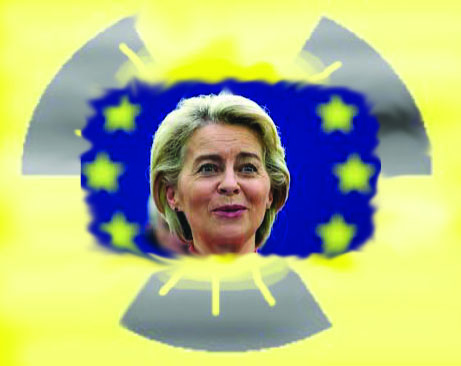
Just who will be making this decision? The global nuclear lobby is desperate to get tax-payer funding , to keep its expensive, dirty, dangerous product going.
Pro nuclear stooges, like Ursula von der Leyen (at left) are keen to get Europe to decide that nuclear power is necessary for climate change.
They keep calling nuclear “zero’ or ”low carbon” – ignoring the full chain of carbon-emiitting processes involved in nuclear structures and in fuelling rectors.
Also ignored , the delays in gettting the industry going – too late to be of any use.
nuclear: Fate of EU green taxonomy ‘now in the hands of von der Leyen’.
The taxonomy text will need approval from a majority of EU member states and members of the European Parliament.
Brussels proposes green label for nuclear and natural gas
European Commission paves way for investments despite concerns over waste and CO2 emissions , Ft.com, Mehreen Khan in Brussels, 1 January 2022.
Brussels wants to recognise nuclear power and forms of natural gas as “green” activity as part of a landmark EU classification scheme to help financial markets decide what counts as sustainable investment. In long-awaited plans, the European Commission has paved the way for investment in new nuclear power plants for at least the next two decades and natural gas for at least a decade, under a green labelling system known as the “taxonomy for sustainable finance”. The labelling system, which will cover industries that generate about 80 per cent of all greenhouse gas emissions in the EU, is the first attempt by a major global regulator to decide what counts as truly sustainable economic activity and help stamp out so-called greenwashing in the financial sector.
A draft legal text, seen by the Financial Times, says the EU’s green label should be awarded to controversial energy sources including nuclear power and natural gas under certain circumstances. The decision was taken after a vocal group of pro-nuclear countries, led by France, and pro-gas governments in southern and eastern Europe, demanded the taxonomy should not punish energy sources that provide a bulk of their power generation….
The draft taxonomy text says nuclear power should be considered a sustainable economic activity as long as EU countries that host power stations can safely dispose of toxic waste and meet a criteria to cause “no significant harm” to the environment. The construction of new nuclear plants will be recognised as green for permits granted until 2045, says the text. ……….
https://www.ft.com/content/7872a05f-9e38-4740-9b1b-4efc69ca316c
Why nuclear power is a bad way to balance renewable energy
Why nuclear power is a bad way to balance renewable energy https://100percentrenewableuk.org/why-nuclear-power-is-a-bad-way-to-balance-renewable-energy
David Toke, Ian Fairlie and Herbert Eppel from 100percentrenewableuk discuss how nuclear power effectively switches off wind and solar power and how a 100percent renewable energy system is much better for the UK than one involving nuclear power.
The Government, backed by a lot of public policy reports paid for by pro-nuclear interests, constantly pushes out the view that nuclear power is ‘essential’ to balancing wind and solar power. But what they never mention is the massive waste of renewables that occurs in such a scenario. Under the scenarios planned by the Government nuclear power is paid very high prices to generate power even when there is excess electricity, which pushes renewables to close down. The Government also refuses to undertake serious investigations of how a system that uses excess renewables to create short and long term storage is a much better way of organising our energy needs rather than wasting more money on building nuclear power stations.
Look at our video which, drawing upon research on the role of nuclear and renewables, discusses these issues.
If you agree the aims of 100percentrenewableuk please join the discussion via our email group.
UK’s fossil fuel use at an all-time low , as renewables generate 67% of Britain’s electricity

Fossil fuel use on the UK’s power grid dropped to an all-time low this week, in a sign analysts say is further evidence of the “renewables revolution” under way on the British electricity generation.
Just before midnight on Wednesday evening coal and gas were providing just six per cent
of electricity, according to Drax Electric Insights. “Renewables generated 24.19 GW – 65 per cent of the country’s entire electricity needs – while fossil fuels were at a new record low,” the analysts said
in statement on Thursday.
iNews 30th Dec 2021
https://inews.co.uk/news/fossil-fuels-power-wind-renewable-1375827
Nuclear authorities dismiss a massive tritium leak from nuclear reactor as unimportant. But should they?
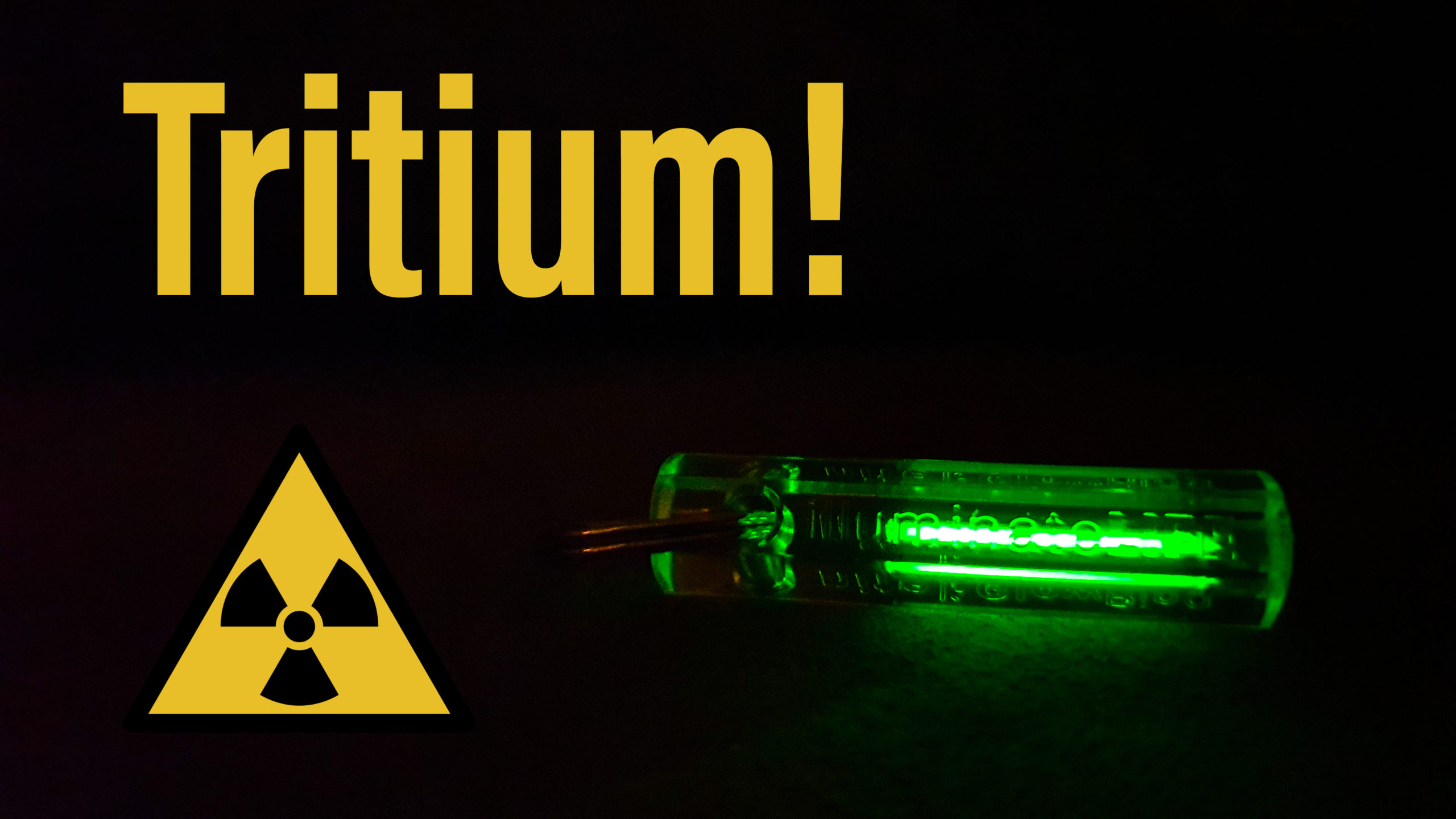
Nuclear: do our power plants release too much tritium? This fission residue is not very radiotoxic. But the discharge standards in waterways are more permissive in France than in Japan. With the holiday season and the covid epidemic, the event has gone almost unnoticed. But it is reported in detail on the site of the Nuclear Safety Authority (ASN). Between November 25 and December 8, 2021, at the Tricastin site, around 900 liters of effluents containing tritium infiltrated the soil, causing “abnormal radiological activity”. More precisely, the measurements carried out on site made it possible to detect a peak in radioactivity of 28,900 Becquerels per liter on December 12. Taking up this information, the Mediapart site mentions a major radioactive leak. After ASN inspection, the event was nevertheless classified at level 0 on the international nuclear events scale. How to explain this difference in perception? L’Express 28th Dec 2021 https://www.lexpress.fr/actualite/sciences/nucleaire-nos-centrales-rejettent-elles-trop-de-tritium_2165111.html |
In Germany, coal-produced electricity has dropped, along with nuclear, while renewable-provided electricity continues to increase
Paul Dorfman: I disagree with Lord Howell of Guildford’s assertion (letter, Dec 29) that the decline of nuclear power in Germany has been accompanied by an increase in coal burning. Electricity generation
from coal in Germany dropped nearly 40TWh in 2020 as nuclear generation fell by 11TWh the same year.
The growth in renewables has outstripped the drop in nuclear power by almost double. Since 2011, nuclear in the German electricity mix halved from 22 per cent to 11 per cent, while the share of renewables increased from 17 per cent to 45 per cent.
Not only that, but Germany regularly has the lowest wholesale electricity prices in Europe after Scandinavia. The simple fact is that nuclear power plants are by far the most expensive technology for generating electricity.
Times 29th Dec 2021
Strong local Council opposition to Hartlepool plan for hosting Britain’s nuclear waste dump .

Talks on multi-billion pound nuclear waste facility in Hartlepool stall amid lack of council support. Talks over Hartlepool potentially becoming home for a multi-billion pound development to store large amounts of nuclear waste underground have stalled.
Presentations on the controversial development for a Geological Disposal Facility were led by leaders of
Hartlepool community organisation The Wharton Trust earlier this year (2020). But the issue is unlikely to go any further after the leader of Hartlepool Borough Council and other political leaders spoke out strongly against it. ………………….
Councillor Shane Moore said: “I want to be absolutely clear with residents that I do not support any proposal to create a site for the disposal of nuclear waste here in Hartlepool and it is disappointing to hear that people are still trying to push this.
“I am not prepared to be the council leader that started the ball rolling to turn my hometown into the nuclear waste dump of the United Kingdom and frankly I don’t care how many pieces of silver are being offered.”
Hartlepool Mail 30th Dec 2021
Long and difficult dismantling of EDF’s graphite technology nuclear reactors to continue
The dismantling of EDF’s graphite technology nuclear reactors, which are
particularly long and difficult to deconstruct, can continue, the Nuclear
Safety Authority (ASN) said on Monday in a press release.
Le Figaro 27th dec 2021
Germany shuts down half of its remaining nuclear plants
Germany shuts down half of its remaining nuclear plants Aljazeera, 31 Dec 21,
Decision to close three facilities comes a year before decades-long use of atomic power winds down for good………
One of the plants – Brokdorf, located about 40 kilometres (25 miles) northwest of Hamburg on the Elbe River – became a particular focus of anti-nuclear protests that were driven by the 1986 Chernobyl catastrophe in the Soviet Union.
The other two plants are Grohnde, about 40km (25 miles) south of Hannover, and Grundremmingen, 80km (50 miles) west of Munich.
……………… the German government said this week that decommissioning all nuclear plants next year and then phasing out the use of coal by 2030 will not affect the country’s energy security or its goal of making Europe’s biggest economy “climate neutral” by 2045.
“By massively increasing renewable energy and accelerating the expansion of the electricity grid we can show that this is possible in Germany,” Economy and Climate Minister Robert Habeck said.
Several of Germany’s neighbours have already ended nuclear power or announced plans to do so, but others are sticking with the technology. This has prompted concerns of a nuclear rift in Europe, with France planning to build new reactors and Germany opting for natural gas as a compromise until enough renewable power is available, and both sides arguing their preferred source of energy be classed as sustainable.
Germany’s remaining three nuclear plants — Emsland, Isar and Neckarwestheim — will be closed by the end of 2022.
While some jobs will be lost, utility company RWE said more than two-thirds of the 600 workers at its Gundremmingen nuclear power station will continue to be involved in post-shutdown operations through to the 2030s. Germany’s nuclear power companies will receive almost $3bn for the early shutdown of their plants.
Environment Minister Steffi Lemke has dismissed suggestions that a new generation of nuclear power plants might prompt Germany to change course yet again.
“Nuclear power plants remain high-risk facilities that produce highly radioactive atomic waste,” she told the Funke media group this week.
A final decision has yet to be taken about where to store tens of thousands of tonnes of nuclear waste produced in German power plants. Experts say some material will remain dangerously radioactive for 35,000 generations. https://www.aljazeera.com/news/2021/12/31/germany-shuts-down-half-of-its-remaining-nuclear-plants
Scottish MP slams UK plans to increase nuclear arsenal.
Kirsten Oswald slams plans to increase nuclear arsenal https://www.barrheadnews.com/news/19817662.kirsten-oswald-slams-plans-increase-nuclear-weapons/By William Brown
East Renfrewshire’s MP has hit out at plans by the UK Government to increase Britain’s nuclear arsenal.
Kirsten Oswald was speaking in her role as chair of Parliamentary CND – a cross-party group of MPs and Peers which supports the Campaign for Nuclear Disarmament.
The UK Government announced earlier this year that it will increase Britain’s nuclear arsenal by more than 40% but legal opinion obtained by CND states that this puts Britain in breach of the Nuclear Non-proliferation Treaty.
Ms Oswald said: “The decision to announce an increase in the UK’s nuclear arsenal, in contravention of the Nuclear Non-proliferation Treaty, is a worrying example of this Tory government’s contempt for international law.
“There is no place in Scotland for nuclear weapons and the importance of working together to achieve nuclear disarmament worldwide has never been clearer.
“Our priorities should lie in supporting communities through the Covid pandemic, not in stockpiling weapons of mass destruction in contravention of international law.”
Britain under pressure to follow Joe Biden’s plan to honour nuclear test veterans

Britain under pressure to follow Joe Biden’s plan to honour nuclear test veterans
Shadow Defence Secretary John Healey has written to Defence Secretary Ben Wallace urging the British Government to follow the White House’s example, Mirror UK, ByBen Glaze, Deputy Political Editor, 30 Dec 2021
Ministers are under fresh pressure to grant medals to Britain’s nuclear test veterans after Joe Biden pledged to honour America’s nuke guinea pigs.
The US President announced legislation for an “Atomic Veterans Service Medal” to “honor retired and former members of the Armed Forces who are radiation-exposed veterans”.
The plan would cover those who “participated in nuclear tests between 1945 and 1962”………..
t is thought around 22,000 men, many of them on National Service, took part in hundreds of nuclear blasts in America, Australia and the South Pacific.
They now report a legacy of rare cancers, a higher risk of miscarriages for their wives, and 10 times the usual rate of birth defects in their children.
Genetic research has proved they have the same level of DNA damage as clean-up workers at Chernobyl……………….. https://www.mirror.co.uk/news/politics/britain-under-pressure-follow-joe-25819130
Finland’s underground nuclear waste facility in construction, seeks licence

On 30 December 2021, Posiva Oy submitted to the Government an operating
licence application referred to in the Nuclear Energy Act for an
encapsulation plant and a disposal facility for spent nuclear fuel.
The facility is currently under construction in Olkiluoto, Eurajoki. Posiva has
been preparing for the disposal of spent nuclear fuel for more than 40
years. Its encapsulation plant is located above ground, and the fuel
repository of underground disposal facility is located in the bedrock at a
depth of approximately 400-430 metres.
Posiva is applying for an operatinglicence for a period from March 2024 to the end of 2070. According to theapplication, most of the spent nuclear fuel of Posiva’s owners, i.e.
Teollisuuden Voima Oyj’s Olkiluoto nuclear power plant and Fortum Power
and Heat Oy’s Loviisa nuclear power plant would be disposed of in
Posiva’s facility between 2024 and 2070. The disposal of all the spent
nuclear fuel of the Posiva owners is expected to be completed until the
late 2120s according to the present nuclear power operation plans.
Ministry of Economic Affairs 30th Dec 2021
https://tem.fi/en/posivas-operating-licence
-
Archives
- October 2026 (104)
- September 2026 (339)
- August 2026 (330)
- July 2026 (355)
- June 2026 (287)
- May 2026 (306)
- April 2026 (356)
- March 2026 (251)
- February 2026 (267)
- January 2026 (308)
- December 2025 (358)
- November 2025 (359)
-
Categories
- 1
- 1 NUCLEAR ISSUES
- business and costs
- climate change
- culture and arts
- ENERGY
- environment
- health
- history
- indigenous issues
- Legal
- marketing of nuclear
- media
- opposition to nuclear
- PERSONAL STORIES
- politics
- politics international
- Religion and ethics
- safety
- secrets,lies and civil liberties
- spinbuster
- technology
- Uranium
- wastes
- weapons and war
- Women
- 2 WORLD
- ACTION
- AFRICA
- Atrocities
- AUSTRALIA
- Christina's notes
- Christina's themes
- culture and arts
- Events
- Fuk 2022
- Fuk 2023
- Fukushima 2017
- Fukushima 2018
- fukushima 2019
- Fukushima 2020
- Fukushima 2021
- general
- global warming
- Humour (God we need it)
- Nuclear
- RARE EARTHS
- Reference
- resources – print
- Resources -audiovicual
- Weekly Newsletter
- World
- World Nuclear
- YouTube
-
RSS
Entries RSS
Comments RSS

