Coronavirus cases doubled in a few days at Sellafield nuclear site

CORONAVIRUS cases at Sellafield have more than doubled in a week as
Omicron continues to spread rapidly throughout the county. Numbers of cases
among those employed on the site rose from 320 in the week to Wednesday 29,
up to 712 in the week to January 5.
Carlisle News & Star 7th Jan 2022
https://www.newsandstar.co.uk/news/19829854.coronavirus-rates-double-week-sellafie
Nuclear submarine visiting Gibraltar puts people and the environment in danger
Gibraltar fury erupts as US submarine told to leave Rock over ‘nuclear risk’

A US submarine has been urged to leave Gibraltar in order to stop putting the Rock at “nuclear risk”. Express UK, By MICHAEL CURZON, Tue, Jan 4, 2022. The USS Albany made a scheduled port visit in Gibraltar on December 30, 2021. Ecological campaigners criticised the visit as putting the Rock at a ”nuclear risk” over the New Year period and demanded the submarine to “leave”.
Spanish non-governmental organisation Verdemar Ecologistas en Acción said the presence of nuclear submarines at the rock puts thousands of people – along with the environment – at risk.
It said: “Campo de Gibraltar does not want to participate in any submarine war.
“We continue to insist that these submarines are floating bombs and put our families and our environment at risk.”
The organisation was equally critical in December following reports of a UK Astute-class vessel docking in Gibraltar. ………….
t also doubled down on its insistence that the submarine “leave and stop putting at nuclear risk” the Cadiz coast of the Strait of Gibraltar.
The USS Albany made a further stop in December off the coast of Limassol, Cyprus and engaged in coordinated operations with NATO.
Additional reporting Maria Ortega. https://www.express.co.uk/news/world/1544360/gibraltar-news-us-submarine-nuclear-risk-uss-albany
Falkland Islands in a nuclear-free zone, yet Britain deployed 31nuclear weapons there.
UK Deployed 31 Nuclear Weapons During Falklands War, January 5, 2022 British warships in 1982 were armed with dozens of nuclear depth charges in a nuclear-free zone in Latin America, Richard Norton-Taylor reports. Consortium News, By Richard Norton-Taylor Declassified UK.
The revelation is contained in a new file released to the National Archives. Marked “Top Secret Atomic,” it shows that the presence of the nuclear weapons caused panic among officials in London when they realized the damage, both physical and political, they could have caused.
The military regime in Argentina claimed the Falkland islands and invaded on April 2, 1982. The U.K. government under Margaret Thatcher dispatched a naval task force to the South Atlantic to retake the islands.
A Ministry of Defence (MoD) minute, dated April 6, 1982, referred to “huge concern” that some of the “nuclear depth bombs” could be “lost or damaged and the fact become public.” The minute added: “The international repercussions of such an incident could be very damaging.”
Nuclear depth bombs are deployed from navy ships to attack submerged submarines.
The unidentified official who wrote the minute continued:
“The secretary of state [John Nott] will wish to continue the long-established practice of refusing to comment on the presence or absence of UK nuclear weapons at any given location at any particular time.”
Heated Row
The existence of the weapons provoked a heated row between the MoD and the Foreign Office. The latter asked the MoD to “unship” the weapons. The Navy refused to do so……………………………….
Nuclear Free Zone
The Foreign Office was also anxious about the presence of the nuclear weapons because of the 1967 Treaty of Tlatelolco. This established a nuclear free zone in Latin America and surrounding waters, including the Falklands.
Although Britain had signed and ratified the treaty’s protocols other countries, including Argentina, had not done so. According to Freedman, Margaret Thatcher insisted that no ship carrying nuclear weapons would enter the three-mile territorial waters around the Falklands which would be a “potential breach” of the Tlatelolco treaty.
The MoD admitted in 2003 that British ships in the task force carried nuclear weapons and that a weapon container had been damaged. But the number of weapons had not been revealed before this document was transferred to the National Archives in Kew, south west London.
But a number of documents from the file have been weeded by the MoD or the Cabinet Office. They include an intriguing note, dated April 11, 1982, beginning “The Chiefs of Staff believe…” What they believed we are not allowed to know.
What About Gibraltar?
Many more documents are missing from a separate file, now declassified, entitled “Gibraltar: Impact of the Falklands Crisis”.
Gibraltarians, like the Falkland Islanders, inhabited a British “Overseas Territory” and were concerned because Spain supported Argentine claims of sovereignty over the islands just as it claimed Gibraltar, the large rock and British base on the southern tip of the Iberian peninsula.
Whitehall weeders have withheld no fewer than 73 documents from the Gibraltar file. They have done so under exemptions in the Freedom of Information Act, and, specifically, sections 27(i), 40 (2), and 41.
These cover information whose disclosure might “prejudice” the interest of the U.K. abroad, “personal data” and “information provided in confidence.” Passages in other documents in the file have also been excised.
What has the British government to hide? Documents declassified previously may offer some clues. Thatcher repeatedly expressed concern about the implications of the Falklands crisis for Gibraltar.
Despite the public rhetoric, successive U.K. governments have been prepared to negotiate about sovereignty of the Falklands and sought a joint sovereignty agreement with Spain over Gibraltar in 2000 and again in 2002. This article is from Declassified UK. https://consortiumnews.com/2022/01/05/73354/
Ireland’s EU commissioner Mairead McGuinness insists that nuclear power is ”green”, amidst backlash over the EU ”taxonomy”
McGuinness insists EU move to label nuclear and gas ‘green’ based on science
Comments come amid backlash towards draft of so-called taxonomy
Naomi O’Leary Europe Correspondent, Irish Times, , Jan 4, 2022 Ireland’s EU commissioner Mairead McGuinness has insisted that a controversial plan to classify some nuclear and gas power energy as “green” for investment purposes is based on scientific advice.
It comes amid a backlash towards a draft of the so-called taxonomy, which is a labelling system for economic activities deemed to be “green” and is intended to drive investment towards achieving the European Union’s goals of carbon neutrality by 2050.
The draft was issued on New Year’s Eve, hours before a deadline to release it within 2021. The Commission has been forced to deny this was an attempt to slip the proposals out with little notice.
The deeply contentious file falls under Ms McGuinness’ brief as commissioner for financial stability, Financial Services and Capital Markets Union, putting the Irish former Fine Gael MEP in the hot seat as EU member states and political groups tussle over the topic.
Setting standards
The taxonomy is intended to set standards for what kind of activities businesses can present as “green”. There are plans to make it apply also to EU funds, potentially driving a flood of money towards the sectors included.
Under the draft plans, nuclear power plant investments could be labelled as green if it is a “transitional” fuel and receives a permit before 2045. Any project must include funding, plans and a site for the safe disposal of radioactive waste………
The draft proposal has been sent to member states and the European Parliament and will now be subject to discussions. It could be blocked if a qualified majority of at least 20 member states, or half the MEPs in the European Parliament, vote to oppose it.
Austria’s climate minister responded to the draft by threatening to “sue” if the plan for nuclear went ahead as described. Meanwhile, some in the nuclear industry protested the proposed tightened standards were too strict. The issue also caused discord between the Green and Social Democrat parties in Germany’s new coalition.
Ms McGuinness said in a statement to The Irish Times that the Commission’s work in the area “is based on robust, science-based criteria” and that the taxonomy regulation “gives a prominent role to scientific advice and advice from experts across the economy and civil society”………….. https://www.irishtimes.com/business/energy-and-resources/mcguinness-insists-eu-move-to-label-nuclear-and-gas-green-based-on-science-1.4768772
Anger as European Union is poised to subsidise the corrupt and rapacious nuclear industry

Germany and Austria have expressed their fury over a French victory on EU rules that would open the door to new investment in nuclear power. The European Commission’s proposed new “taxonomy” rules will allow private investment in atomic energy to be linked to climate policy subsidies as well as funding for gas-fuelled power stations to replace coal-fired generators.
Incensed Austrian ministers compared the Brusselsdecision, which was rushed through late on New Year’s Eve, to Adolf Hitler’s 1941 “Nacht und Nebel”, night and fog, decree to round upand destroy all resistance to the Nazis.
“The EU commission took a step towards greenwashing nuclear power and fossil gas yesterday in a night and fog action,” Leonore Gewessler, the Austrian climate protection minister, said. “They are harmful to the climate and the environment and destroy the future of our children.”
Greenpeace UK has urged Boris Johnson not to allow gas or nuclear to be included in Britain’s own green investment rules. “This loophole could be a drain for Europe’s climate ambitions, as they switch from phasing out dirty fuels, to phasing out dirty fuels only when it seems convenient. The UK must resist being pulled into this failing approach,” Doug Parr, the chief scientist and policy director of British Greenpeace, said.
Times 2nd Jan 2022
https://www.thetimes.co.uk/article/eu-capitals-at-odds-on-nuclear-power-kd2fsznr6
European Commission’s divisive plan to label nuclear power ”green”, revealed on the sly?
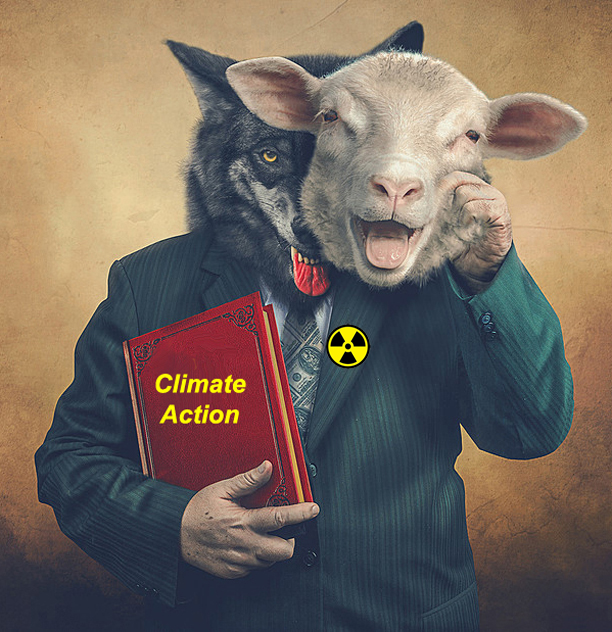
“Short of digging an actual hole, the European Commission couldn’t have tried harder to bury this proposal”
” we get a document written behind closed doors and published on New Year’s Eve,”
EU labels nuclear power ‘green’, Germany calls it dangerous, Sydney Morning Herald, By John Chalmers, January 4, 2022 Brussels: The German government has condemned nuclear energy as dangerous, slamming European Union proposals that would let the technology remain part of the bloc’s plans for a climate-friendly future.
Germany is on course to switch off its remaining three nuclear power plants at the end of this year and phase out coal by 2030, whereas its neighbour France aims to modernise existing nuclear reactors and build new ones to meet its future energy needs. Berlin plans to rely heavily on natural gas until it can be replaced by non-polluting sources for energy.
The opposing paths taken by two of the EU’s biggest economies have resulted in an awkward situation for the bloc’s Executive Commission.
“We consider nuclear technology to be dangerous,” German government spokesman Steffen Hebestreit told reporters in Berlin, noting that the question of what to do with radioactive waste that will last for thousands of generations remains unresolved.
Hebestreit added that Germany “expressly rejects” the EU’s assessment of atomic energy, has repeatedly stated this position towards the commission and is now considering next steps.
The European Union has rejected accusations that it waited until New Year’s Eve to publish the divisive proposals to allow some natural gas and nuclear energy projects to be labelled as sustainable, saying “we weren’t trying to do it on the sly”.
The commission’s decision to include gas and nuclear investments in the European Union’s “sustainable finance taxonomy” rules was circulated in a draft proposal late on December 31 and leaked to some media organisations.
“Short of digging an actual hole, the European Commission couldn’t have tried harder to bury this proposal,” said Henry Eviston, spokesman on sustainable finance at the European Policy Office of the environmental group WWF.
“When the question was whether renewables are green, the commission gave citizens three chances to provide their opinion. For fossil gas and nuclear, we get a document written behind closed doors and published on New Year’s Eve,” he said in an online posting………………………………….
The European Commission will now collect comments to its draft until January 12 and hopes to adopt a final text by the end of the month. After that, the text can be discussed with EU governments and Parliament for up to six months. But it is unlikely to be rejected because that would require 20 of the 27 EU countries, representing 65 per cent of EU citizens, to say “no”.
The aim of the agreement is to send a signal to private investors as to what the EU considers acceptably “green” and stop greenwashing, whereby companies or investors overstate their eco-friendly credentials. The deal will also set limits on what governments can use EU recovery funds to invest in.
https://www.smh.com.au/world/europe/eu-labels-nuclear-power-green-germany-calls-it-dangerous-20220104-p59lmt.html
Pro nuclear shills use UK’s energy crisis to promote nuclear, but with government action, renewable energy would solve the problem
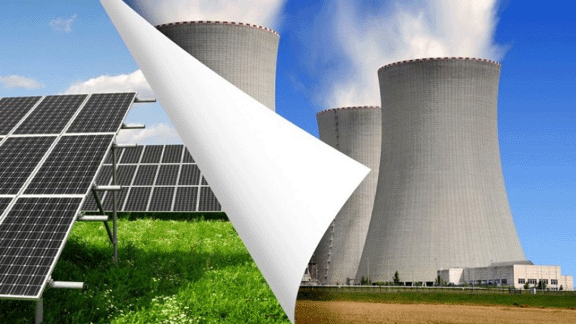
Government failure behind energy crisis, Chartist, By Dave Toke -31/12/2021 The only thing wrong with renewables is that we’ve not built nearly enough of them, says Dave Toke. Amidst a global shortfall of gas supplies in relation to demand (and a global increase in gas prices), the anti-renewables lobbies are busy blaming a lack of wind and solar (wot, solar too?) for the soaring energy prices. It’s nonsense of course to pin the blame on renewables for a combination of a global oil and gas crisis and the UK’s unique market vulnerability to natural gas supply squeezes, but that’s precisely what is happening. The truth is we’d be much more secure and greener with a much higher proportion of energy coming from renewables backed up with a revived storage network that successive UK governments have allowed to run down.
Of course we’ve had fossil fuel energy price surges and crises for decades, but now, suddenly, to read some papers and a lot of tweets, I’m told mainly from fossil fuel lobbyists, it’s the fault of renewables! Remarkable!
Some are even using the crisis to boost the case for nuclear power. Now that’s ironic, given that five out of 14 of EDF’s nuclear units are offline as I write! With nuclear, of course, it’s always going to be better in the future (and never is). Certainly, the idea that the UK relying on 3.2GW units (like Hinkley C and the planned Sizewell C) for its security at times of pressure is a guarantee of system security needs rather clearer analysis than is being done at the moment. (By the way, did you know that the first Hinkley C – like EPR in China – got shut down this summer because of radioactive leaks? Somebody please tell me when it gets back online.)………………..
We need much, much more renewables. Currently, the UK generates about 100TWh a year of wind and solar, compared to around 900TWh of natural gas consumption. How on earth can you blame wind and solar for a failure to meet gas demand when the Government has so far incentivised only a small fraction of the renewable energy generation required to phase out reliance on natural gas? It’s gaslighting on a grand scale (pun intended).
And, yes, there’s easily enough renewables to do the job. All of UK energy could be supplied from offshore wind occupying less than less than 8 per cent of the UK’s offshore waters, not counting all the solar and other renewable energy resources in the UK. https://www.chartist.org.uk/government-failure-behind-energy-crisis/
German government struggles to unite on EU energy proposal
German government struggles to unite on EU energy proposal, DW, 4 Jan 22,
The EU Commission’s proposal to classify nuclear power and natural gas plants as “green” investments has sparked debate in Germany’s new coalition government. Conflict is also brewing between EU states.
Less than a month after Germany’s new coalition government was sworn in, it is facing a major test: To find a united stance in response to a controversial proposal by the EU Commission, published on New Year’s Eve.
The EU Commission wants to label natural gas and nuclear power as climate-friendly, and include investments in both energies on its long-awaited taxonomy list — a green labeling system for investments in the energy sector.
The list is part of the bloc’s plans to decarbonize the European economy and build clean power plants, which will require the investment of billions of euros.
Under the draft proposal, the gas and nuclear plants must meet certain criteria: Investment in new nuclear plants as they are planned in France, the Netherlands, and Poland, can be considered “sustainable” only if respective states ensure they meet the latest technology standards, and provide a concrete plan for the disposal for high-level radioactive waste.
Natural gas plants could also be granted a green label for a limited period of time, provided certain criteria are met. These could involve limits on the amount of greenhouse gas emitted or proving that the plants can also be operated with green hydrogen or low-carbon gas.
The classification of economic activities by the EU Commission under the so-called taxonomy is intended to enable investors to switch their investments to more sustainable technologies and companies.
Divided coalition………………
Climate and Economy Minister and Vice-Chancellor Robert Habeck, told German press agency dpa that he felt the EU proposal “waters down the good label for sustainability.”
“It’s questionable whether this greenwashing will be accepted by the financial markets anyway,” the Green politician said.
Environment Minister Steffi Lemke (Greens) also rated the EU proposal as “questionable.”………….
Klaus Jacob of the Research Center for Environment Policy at Berlin’s Freie Universität says the debate within the government was completely foreseeable.
“This isn’t a predetermined breaking point in the coalition,” Jacob told DW…………………….
Nuclear phaseout nearing completion
The three governing coalition parties are, however, in agreement when it comes to the phaseout of nuclear energy. Germany’s last nuclear power plants are due to be decommissioned just a year from now.
The decision to phase out nuclear power was made during the 1998-2003 coalition between the SPD and Greens under Chancellor Gerhard Schröder, in response to the realization that there was no way to store nuclear waste safely. Almost two decades earlier, Germany’s anti-nuclear protests gave birth to the Green Party and the phaseout has long been one of its core policies.
Angela Merkel’s coalition government of center-right Christian Democrats and FDP then rolled back the phaseout. But in 2011, after the accident at the Fukushima atomic power plant in Japan, Merkel made an about-turn and decided to push through with the phaseout after all.
Referring to the EU’s plans to green label nuclear energy, Environment Minister Lemke said the Commission “creates the great danger of blocking and damaging really viable, sustainable investments in favor of dangerous nuclear power.”……………
EU fissure
The 27 EU member states now have until January 12 to comment on the Commission’s draft. But it’s unlikely that the proposal can be blocked. Besides Germany, only Austria, Luxembourg, Denmark, and Portugal have voiced criticism.
Implementation can only be prevented if at least 20 EU countries (representing at least 65% of the total EU population) or at least 353 members of parliament vote against it.
Other EU countries are continuing to push nuclear energy and campaign for it to be included on the EU’s list of sustainable energy sources eligible for investment — prominently France which holds the rotating EU presidency and is heading for presidential elections in April.
Austria, meanwhile, is threatening to go to the European Court of Justice to stop the draft from being passed.
Edited by Rina Goldenberg https://www.dw.com/en/german-government-struggles-to-unite-on-eu-energy-proposal/a-60319292
Climate Noise Has Obscured Nuclear Dump Cronyism and Nuclear Impacts of Coal Mine – Why Bother With Traffic Light System for Induced Earthquakes? — RADIATION FREE LAKELAND
Originally posted on Keep Cumbrian Coal in the Hole: The following letter has just been sent to the Coal Mine Planning Inspector Mr Stephen Normington following a letter from the Rt Hon Greg Hands, Minister of State for Energy, Clean Growth and Climate Change (this Govnt department appointed the coal mine boss as “invaluable” nuclear…
Climate Noise Has Obscured Nuclear Dump Cronyism and Nuclear Impacts of Coal Mine – Why Bother With Traffic Light System for Induced Earthquakes? — RADIATION FREE LAKELAND
Excerpts – ”……………………..should the coal mine be approved by government, then a seismic Traffic Light System at least as stringent as that for the oil and gas industry should be part of the conditions imposed. The empirical evidence (presented by Radiation Free Lakeland at the Planning Inquiry) is unequivocal in its findings that coal mining produces earthquakes of far greater magnitude and frequency than that of fracking. Despite this Greg Hands MP states that there will be no Traffic Light System for the coal mine.
In tandem with the absence of a seismic Traffic Light System is the outrageous allowance of 6mm/s Peak Particle Velocity as agreed by the Inquiry’s Rule 6 Parties and Developer for ground movements as a result of the deep mining proposed. As you will be aware the PPV at which “receptors” will make complaints is 1mm/s.
An observer of the bulk of the Planning Inquiry would have had no idea of the uniquely dangerous sense of place regarding the planned coal mine. If this same coal mine was anywhere in the world the climate impacts would be the same.
………. But this coal mine is not anywhere in the world. It is five miles from Sellafield, the worlds riskiest nuclear waste site, under the arguably most radioactively contaminated sea in the world and directly beneath the radioactively contaminated Cumbrian Mud Patch………
our concerns lay with the undeniable connections/cronyism between the coal mine and the proposed Geological Disposal Facility.
The Government’s refusal to consider a seismic Traffic Light System for the earthquake inducing coal mine is a case in point.
Mark Kirkbride the CEO of West Cumbria Mining was appointed in 2019 as an “invaluable” adviser to the Government (Committee on Radioactive Waste Management) on the digging of big holes for a Geological Disposal Facility for Heat Generating Nuclear Wastes and for shallower Near Surface Disposal of Low and Intermediate Level Nuclear Wastes.
We are painfully aware, as no doubt is government nuclear dump advisor Mark Kirkbride, that a seismic Traffic Light System for an earthquake inducing deep undersea coal mine would also impact negatively on the facilitation of an even deeper hole for a GDF. The Irish Sea area adjacent to the coal mine is in the frame for a GDF.
…….. which is far more than the sum of its (more widely reported) climate/jobs parts. Should this coal mine go ahead the people and environment of Cumbria and the planet WILL be exposed to deep radiological, immediate and irreversible impacts that will make the more widely reported and not to be sneezed at climate impacts pale into insignificance.
The whole thing feels like a massive stitch up in which the climate issues have been used as a smoke screen to hide the nuclear impacts of this coal mine. If Leonardo DiCaprio (of “Don’t Look Up” fame) thinks climate campaigners have it bad he should walk a mile in the shoes of nuclear safety campaigners! https://keepcumbriancoalinthehole.wordpress.com/2022/01/03/climate-noise-has-obscured-nuclear-dump-cronyism-and-nuclear-impacts-of-coal-mine-why-bother-with-traffic-light-system-for-induced-earthquakes/
Angry response in Europe to the draft European Commission plans to accept nuclear power as ”climate-friendly” – eligible for tax-payer financial help.
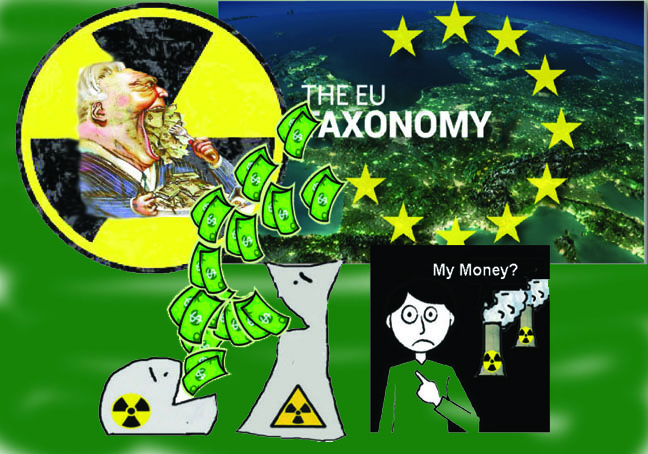
BRUSSELS (AP) — Draft European Union plans that would allow nuclear and gas energy to remain part of the bloc’s path to a climate-friendly future came under immediate criticism over the weekend from both environmentalists and some governing political parties in EU member nations.
In draft conclusions seen by The Associated Press, the EU’s executive commission proposes a classification system for defining what counts as an investment in sustainable energy. Under certain conditions, it would allow gas and nuclear energy to be part of the mix.
The plans would have a huge impact on nuclear-fired economies like France and on Germany’s gas-fueled power plants since they might have had to fundamentally change their strategies.
….. The plans still need the backing of a large majority of the 27 member states and a simple majority in the European Parliament. But the initial thrust from the EU Commission is a key element of the procedure for passage.
“Classifying investments in gas and nuclear power as sustainable contradicts the Green Deal,” the EU’s initiative that is intended to make the bloc climate-neutral by 2050, said Ska Keller, the president of the Green group in the European Parliament.
…..German Economy Minister Robert Habeck criticized the plan to classify investments in gas and nuclear power plants as climate-friendly.
“The EU Commission’s proposals water down the good label for sustainability,” Habeck, who represents the Germany’s environmentalist Greens in the country’s coalition government, told German news agency dpa. “We don’t see how to approve the new proposals of the EU Commission,” he said.
“In any case, it is questionable whether this greenwashing will even find acceptance on the financial market,” Habeck stressed, referring to the practice of painting investments as sustainable when they actually are not.
In Austria, Climate Protection Minister Leonore Gewessler from the Greens also sharply rejected the proposed regulation, saying “the EU Commission took a step towards greenwashing nuclear power and fossil gas in a night and fog action.”
“They are harmful to the climate and the environment and destroy the future of our children,” Gewessler said.
The environmental NGO Greenpeace called the Commission draft proposals “a licence to greenwash.”
“Polluting companies will be delighted to have the EU’s seal of approval to attract cash and keep wrecking the planet by burning fossil gas and producing radioactive waste, said Greenpeace’s Magda Stoczkiewicz.
Especially nuclear power remains extremely controversial in Europe, where many are still vividly remember the fear following the 1986 nuclear accident in Chernobyl, Ukraine. In Germany, children weren’t allowed to play outside anymore for months, couldn’t go mushroom hunting for years and the farmers had to destroy their entire harvest the year it happened………. https://spectrumnews1.com/ca/orange-county/ap-top-news/2022/01/02/eu-draft-on-financing-nuclear-and-gas-plants-raises-ire
Britain’s National Infrastructure Commission (NIC) advises government against new nuclear power projects.
UK NIC backs alternatives to nuclear, Renew Extra Weekly, 2 Jan 21, The UK Government asked the National Infrastructure Commission (NIC) for its advice on whether an additional new nuclear plant, beyond the proposed Sizewell C project, was needed to deliver the UK’s sixth Carbon (reduction) Budget, due in 2035. In response, the NIC said no, it was not needed or viable for 2035, since new nuclear was slow to deploy. It asserted that ‘it is highly unlikely that a new large scale nuclear plant is deliverable in the next 15 years; trying and failing would jeopardise delivery of the sixth Carbon Budget’. Instead it backed renewables, hydrogen and low/negative carbon technology- which is said could be deployed faster.
It noted that ‘since 1990, nuclear projects have faced significant delays all around the world. Even just in Europe around half of all plants have faced at least a 50% delay in construction, and 1 in 4 plants have faced at least a 90% delay in construction’. So it said that ‘any nuclear project schedule estimate should be expected to take at least 50% longer than planned. If a new project began development next year and took the same amount of time as the Hinkley Point C project is expected to take to complete, it would not come online until at least the mid 2040s’. So that put it well outside the 2035 timeframe.

Small Modular/advanced reactors might be a faster option, but the NIC said ‘relying on significant capacity being deployed before 2035 would be risky’. It pointed out that ‘no SMR has gone through the Generic Design Assessment process and some developer proposals are conditional on government support to progress project development. There are no SMRs in operation in countries similar to the UK.
To fill the same capacity gap illustrated in the BEIS modelling, at least six SMRs would be needed by 2035, if not more. This would require compressing the normal delivery timeline and doing things in parallel rather than in sequence, significantly increasing the risk of delays. Delivery success will also be dependent on the capability of the developer.’
Alternatives likely to be faster
Instead of these nuclear options, for delivery within the timeframe to 2035, it backed ‘renewables with a combination of gas power plants with carbon capture and storage, hydrogen fired gas plants and bioenergy with carbon capture & storage’. It said ‘these alternatives are more likely to be deliverable at scale in the next 15 years’. …………………..
even without costing analysis, it said its analysis clearly demonstrated ‘that a third new nuclear plant is not necessary to reach the 2035 emissions target and that more gas CCS, hydrogen powered gas plants, and BECCS could be deployed instead. Whilst these technologies are yet to be deployed at scale, the Commission considers them to be a lower delivery risk than nuclear.’ And it claimed that its proposed alternative technology mix was supported by analysis previously conducted for the Commission and by other bodies such as National Grid ESO & the Climate Change Committee. …………………
It’s odd that the NIC plunge into CCS and Hydrogen, rather than talking about renewables more. Maybe they are taken for granted. But if, led by wind and solar, they could be expanded much faster than BEIS and NIC envisage, then maybe we could forget about fossil CCS, BECCS and also Sizewell C. That might be helped if tidal stream technology could also get going- with CfD help, it ought to be able to by 2030. Geothermal too, for heat and power. All NIC says is that, from the BEIS analysis, it’s clear that ‘significant volumes of renewables are needed to deliver a low carbon power system by 2035. This is supported by previous analysis for the Commission and others. Rapid cost reductions and short and reliable build profiles mean that renewables will be the backbone of any future GB power system’. OK, fine, but we need details & plans now for faster expansion, along with a much improved commitment to energy saving! https://renewextraweekly.blogspot.com/2022/01/uk-nic-backs-alternatives-to-nuclear.html
German Greens fight plan to funnel billions of euros into the nuclear industry via deceptive taxonomy ”sustainable” label

German Greens lead attack on EU plan to label nuclear power ‘sustainable’. Brussels’ proposal is central to European goal of channelling billions of euros into green investments, Ft.com, Mehreen Khan in Brussels and Joe Miller in Frankfurt 3 Jan 21,
Germany, Austria and Luxembourg have hit out at Brussels’ plans to classify nuclear power as a sustainable technology in the EU’s landmark labelling system for green investment, which is central to Europe’s plans to decarbonise the bloc’s economy. German economy minister Robert Habeck, who is a member of the Green party in the country’s governing coalition, said: “It is questionable whether this greenwashing will even find acceptance on the financial market.” He told German press agency DPA on Saturday: “In our view, there was no need for this addition to the taxonomy rules.”
Brussels’ proposal is part of a so-called “taxonomy” list, which aims to help channel billions of euros of investment needed to decarbonise the bloc’s economy. The plan, the first attempt by a leading regulator to bring clarity to investors seeking to put private capital into sustainable economic activity, covers about 80 per cent of the bloc’s emissions and is intended to be a “gold standard” for markets to decide what is truly green or not. But the process has been beset by fierce political infighting inside the European Commission and its member states.
Leonore Gewessler, Austria’s minister for climate and energy, said on Saturday that Vienna would consider suing the European Commission if the classification of nuclear power as green went ahead. Claude Turmes, Luxembourg’s energy minister, meanwhile called the inclusion of nuclear power a “provocation”. The inclusion of nuclear power is widely seen as a victory for the French government which has urged Brussels to ensure the new rules do not punish a technology that provides almost two-thirds of French electricity. Nuclear reactors do not generate CO2 emissions but produce highly toxic waste…………..
The Brussels draft text will form part of a consultation with EU countries and independent experts that will run until January 12. However, anti-nuclear EU governments do not have the power to veto the taxonomy, which diplomats say is likely to win majority support in the EU Council. Astrid Matthey, one of the independent experts who advises the commission on the rules, criticised the draft for “contradicting the very purpose of the taxonomy”.
“The conditions under which both technologies are to be included are far from ensuring that we reach the Paris climate targets and do-no-significant-harm to the environment. There is still a long way to go for this draft to become aligned with the Green Deal and the EU’s environmental targets”, said Matthey. https://www.ft.com/content/92ab113f-ab17-4492-be65-56c9173cfc53
Bitcoin miners in Kazakhstan will rely on government building new nuclear power plant
Kazakhstan bitcoin miners could use nuclear energy as gov’t might build power plant, Kazakhstan’s government is discussing a plan to build a nuclear power plant, which might boost the country’s Bitcoin (BTC) and crypto mining industries in the long run. Micky.com By Jet Encila -January 2, 2022…….. construction might take up to 10 years……..
Since September’s crackdown, an estimated 88,000 mining rigs have been smuggled across the border from China, increasing electricity demand in many places, based on multiple sources.
Not only in Central Asia, but also in the United States and Europe, the cooperation between mining and nuclear energy providers is deepening.
In the United States, a handful of miners have already begun getting power from nuclear reactors, while in Ukraine, the national nuclear energy supplier has been collaborating with miners at Europe’s largest nuclear plants in an attempt to mitigate financial losses.
—https://micky.com.au/kazakhstan-bitcoin-miners-could-use-nuclear-energy-as-govt-might-build-power-plant/
France’s electricity consumers face curbs as EDF struggles with problems and shutdowns
French electricity consumers face curbs on their electricity supplies following shutdowns at four of EDF’s nuclear power plant. France is highly reliant on its nuclear power plants, obtaining around 70 per cent of its electricity from nuclear on an annual basis. This, along with other various examples of nuclear unreliability, must seriously question the British Government’s determination to plough on with its programme of new nuclear power plant. The four nuclear plants have been shut down ‘after the detection of anomalies in the emergency injection circuits‘. France’s Grid Operator, RTE, has warned consumers that limitations on supplies may be necessary soon. France has been struggling with its nuclear sector and EDF’s efforts to build another nuclear plant at Flamanville have been hobbled by very long construction delays and massive cost overruns. 100% Renewables 31st Dec 2021 https://100percentrenewableuk.org/french-electricity-consumers-face-brownouts-and-even-power-cuts-after-nuclear-power-plant-shutdowns |
Risky for UK to plan for small and advanced nuclear reactors
New nuclear technologies, such as small and advanced nuclear reactors, may
have a role to play in the long term. But relying on significant capacity
being deployed before 2035 would be risky. They will face both the
challenges of being first of a kind plants and being a nuclear technology.
National Infrastructure Commission (Accessed) 1st Jan 2022
-
Archives
- October 2026 (104)
- September 2026 (339)
- August 2026 (330)
- July 2026 (355)
- June 2026 (287)
- May 2026 (306)
- April 2026 (356)
- March 2026 (251)
- February 2026 (267)
- January 2026 (308)
- December 2025 (358)
- November 2025 (359)
-
Categories
- 1
- 1 NUCLEAR ISSUES
- business and costs
- climate change
- culture and arts
- ENERGY
- environment
- health
- history
- indigenous issues
- Legal
- marketing of nuclear
- media
- opposition to nuclear
- PERSONAL STORIES
- politics
- politics international
- Religion and ethics
- safety
- secrets,lies and civil liberties
- spinbuster
- technology
- Uranium
- wastes
- weapons and war
- Women
- 2 WORLD
- ACTION
- AFRICA
- Atrocities
- AUSTRALIA
- Christina's notes
- Christina's themes
- culture and arts
- Events
- Fuk 2022
- Fuk 2023
- Fukushima 2017
- Fukushima 2018
- fukushima 2019
- Fukushima 2020
- Fukushima 2021
- general
- global warming
- Humour (God we need it)
- Nuclear
- RARE EARTHS
- Reference
- resources – print
- Resources -audiovicual
- Weekly Newsletter
- World
- World Nuclear
- YouTube
-
RSS
Entries RSS
Comments RSS

