Secretive process of Allerdale Working Group studying potential dump sites for UK’s vast stockpile of nuclear waste
Allerdale Working Group met behind closed doors in July and decided which
parts of Allerdale may become the burial site for the UK’s vast stockpile
of nuclear waste.
Cumbria Trust was refused permission to be involved in
the site selection, and Allerdale Working Group is still refusing to reveal
its choice to us as that’s how the rules of the process have been
arbitrarily defined.
The similarities with the previous failed process,
MRWS, are clear. When the geological screening report didn’t produce the
outcome they would have preferred, they supressed it, only to release an
amended version 3 months later in which the Solway Plain had switched from
excluded to included. As with the current process, these meetings and
deliberations were hidden from the public gaze.
Cumbria Trust 21st Aug 2021
GDF – LDNP Back in the mix?
France returns high level nuclear waste to Germany (What happens to it then?)
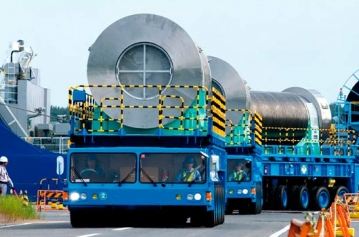
France signs billion-euro deal to return nuclear waste to Germany, https://www.rfi.fr/en/france/20210820-france-signs-billion-euro-deal-to-return-nuclear-waste-to-germanyThe French nuclear group Orano has signed a contract worth more than 1 billion euros to return high-level nuclear waste processed in France to Germany by the end of 2024.
Orano announced on Thursday that a “package of deals” between electricity companies PreussenElektra, RWE, ENBW and Vattenfall had formalised an in-principle agreement made in June by the French and German governments.
For 44 years German electricity companies have sent spent nuclear fuel to Normandy for recycling.
Train convoys carrying the waste were regularly blocked by environmental activists, some of whom chained themselves to the tracks.
Thorny issue
Under the agreement, which followed years of difficult negotiations, it is not medium-level German waste that will be returned, but high-level French waste from EDF power plants.
Orano said this meant it would take less volume and less time to send the same level of radioactive waste back to Germany.
“In terms of mass and radioactivity, this does not change anything,” Orano said in a statement, describing the deal as a “fairly common practice of equivalence”.
A single train of 100 containers carrying the spent nuclear fuel is to be transported from Orano’s plant in La Hague, Normandy, to Germany within the next three years.
Under French law, nuclear waste that enters France for processing cannot remain in the country.
However Germany does not have a solution for the long-term management and storage of radioactive material.
France’s oldest nuclear reactors allowed to operate for another decade
France’s oldest nuclear reactors allowed to operate for another decade https://www.rfi.fr/en/france/20210225-france-s-oldest-nuclear-reactors-allowed-to-operate-for-another-decade-edf by:Amanda Morrow
France’s Nuclear Safety Authority (ASN) has approved extending the lifetime of the country’s oldest nuclear reactors for a further 10 years. Electricity operator EDF will be in charge of improving the safety of the 900 MWe plants, which were intended to run for 40 years but will now run for 50.
The reactors in question are the oldest of the French fleet, having been commissioned in the early 1980s.
Approval for their continued service comes with several conditions, including that improvements be made to ensure that radioactivity remains confined in the event of an accident.
A first objective is to limit the impact of accidents, including serious ones such as a meltdown of the reactor core,” said ASN’s deputy director general Julien Collet.
Other concerns included protecting the plants against earthquakes, floods and extreme heat, as well as internal fire hazards.
The reactors in question are Bugey (Ain), Blayais (Gironde), Chinon (Indre-et-Loire), Cruas (Ardèche), Dampierre (Loiret), Gravelines (Nord), Saint-Laurent (Loir-et-Cher) and Tricastin (Drôme).
Staunch opposition
Following calls from environmental campaigners to shut down ageing nuclear reactors, France’s oldest plant, Fessenheim, was switched off last year.
However the evacuation of its combustible waste will continue until the summer of 2023, while the demolition of the site lay not be complete until 2040.
France derives nearly 70 percent of its electricity from nuclear power, a world record. It’s hoping to reduce this figure to 50 percent by 2035 to make more room for renewable energy.
Why Cosmic Radiation Could Foil Plans for Farming on Mars
Why Cosmic Radiation Could Foil Plans for Farming on Mars, New research suggests gamma rays stunt plant growth. Inside Science , August 20, 2021 – Karen Kwon, Friday, August 20, 2021 – — What would it take for humans to live on Mars? The first step is to successfully get people to the red planet, of course. Once there, the astronauts would face a task that could be even more difficult: figuring out how to survive in an environment that is vastly different from Earth’s. A new study demonstrates one of the challenges — Earth’s plants don’t grow as well when exposed to the level of radiation expected on Mars.
Wieger Wamelink, an ecologist at Wageningen University in the Netherlands who describes himself as a space farmer, has been frustrated by sci-fi depictions of growing plants on Mars. “What you often see is that they do it in a greenhouse,” he said, “but that doesn’t block the cosmic radiation,” which consists of high-energy particles that may alter the plants’ DNA. Mars lacks the same degree of protection from cosmic radiation that the Earth’s atmosphere and magnetic field provide. To prove his suspicion that cosmic radiation could be dangerous to plants, Wamelink decided to test the hypothesis himself.
First, Wamelink and his team had to recreate the cosmic radiation. The team settled on using gamma rays generated by radioactive cobalt, even though the actual cosmic radiation that bombards Mars’ surface consists of various types of radiation, including alpha and beta particles……………..
Four weeks after germination, the scientists compared the two groups and saw that the leaves of the group exposed to gamma rays had abnormal shapes and colors. The weights of the plants also differed; the rye plants in the gamma-ray group weighed 48% less than the regular group, and the weight of the garden cress exposed to gamma rays was 32% lower than their unblasted counterparts. Wamelink suspects the weight difference is due to the gamma rays damaging the plants’ proteins and DNA. The results were published in the journal Frontiers in Astronomy and Space Sciences this month……………. http://insidescience.org/news/why-cosmic-radiation-could-foil-plans-farming-mars
If children are to live with the climate crisis, we must green the curriculum
If children are to live with the climate crisis, we must green the curriculum, Guardian, Meryl Batchelder,
It’s clear to me when I teach that sustainability and the environment should be a thread running through every subject
Thu 19 Aug 2021 ”……………….. With so much focus on children – the ones who will have to live with the coming ecological disaster – the role of education is key. This summer has seen unprecedented wildfires and floods. Pupils see scenes of biblical devastation on the news, but in many schools they are not being given the required information or context and this can lead to misunderstanding or anxiety.
……………. There is still no mention of the climate crisis in the national curriculum for England in primary schools, and in key stage 3 science very little of the curriculum relates to climate education. Incredibly, the last major update to the national geography curriculum for England in 2013 saw the then education secretary, Michael Gove, attempt to drop climate change.
………….. So what needs to change? We need a green curriculum that starts in early years and extends through all key stages. Properly taught, climate change education should be a thread through all subjects – not just science and geography – from the food miles of the ingredients we cook in food technology to debates on humanitarian issues such as mass migration in religious education or personal, social, health and economic (PSHE) education.
Working in a state school means I am duty bound to teach lessons within the confines of the national curriculum. As far as this allows, I have sought to enrich my pupils’ learning with fieldwork, hands-on science, technology, engineering and mathematics (STEM) challenges and even gardening. But not every school has the resources or expertise to bring climate education into the classroom. Earlier this year, the climate education campaign group Teach the Future reported that seven in 10 UK teachers say they have not received adequate training to educate their students on the climate crisis……….. https://www.theguardian.com/commentisfree/2021/aug/19/children-climate-crisis-green-curriculum-sustainability-environment—
As renewable energy powers ahead, the UK government’s prospects for funding nuclear power projects look very risky

China’s cash for UK nuclear plants is in doubt https://climatenewsnetwork.net/chinas-cash-for-uk-nuclear-plants-is-in-doubt/
August 16th, 2021, by Paul Brown Cooler Sino-British relations mean China’s cash for UK nuclear plants is at risk
LONDON, 16 August, 2021 − A serious stumbling block now threatens the prospect of China’s cash for UK nuclear plants materialising − and also the likelihood of a successful outcome to COP26, the global climate conference which the British government is due to host later this year.
In order to finance the construction of nuclear stations that are supposed to generate up to 20% of the UK’s electricity, the British government needs Chinese money. Without it, the already prohibitively expensive projects may become completely unaffordable.
Neither the deeply indebted French government-owned company EDF, which is building two stations, each with twin reactors, nor the UK government is prepared to underwrite the entire cost of the projects. This is because of the huge sums required − around £45 billion (US$62bn).
However, the UK government faces severe political pressure to end Chinese involvement, because of the perceived threat of ceding control over vital services such as the electricity supply.
Problematic deal
The problem for Boris Johnson, the UK prime minister, is particularly acute as Britain is hosting COP26, this year’s UN climate conference, in Glasgow in November. Relations between the UK and China are already poor, in part because of disputes over democratic freedoms for the people of Hong Kong.
But with China the world’s largest carbon emitter, Johnson needs it onside if he is to have a chance of making COP26 the success it must be to avert catastrophic climate change.
The problem over funding the nuclear programme arises because of a deal struck in 2015 between the then British prime minister, David Cameron, and China’s president Xi Jinping.
That agreed that China would stump up one third of the £23bn ($32bn) cost of the Hinkley C nuclear power station in the West of England, and also pay 20% of the cost of another planned station, Sizewell C, on the east coast. In return the Chinese could then build a nuclear plant of their own design at Bradwell B in Essex, closer to London, and use it as a platform to export their Hualong HPR1000 reactor technology to the rest of the world
To President Xi the cost of helping to fund the French company to build nuclear stations in Britain was outweighed by the advantage of getting Chinese technology validated in the UK as a bridge to future exports.
Six years later, however, with the Hinkley Point project well under way and Sizewell C supposedly close to launch, the British government is now nervous about allowing the Chinese such a strong involvement in the UK’s nuclear secrets and the nation’s power supply.
Its dilemma, though, is that if the UK reneges on its 2015 agreement, then China could abandon both projects, leaving a financial black hole of many billions of pounds. Trades unions are horrified at the potential loss of jobs the possible cancellation of the projects would cause.
One alternative to Chinese funding is a UK nuclear tax which would be paid in advance by electricity users to fund the construction of the power stations. With power bills already due to rise by more than 10% in Britain before the end of 2021, this is unlikely to be an electorally popular solution.
Renewable competition
What will happen is anyone’s guess. Given Johnson’s well-known habit of postponing difficult decisions, and the looming COP26, it is likely that nothing will be announced until the crucial Glasgow talks are over. The French, in anticipation, have already announced that they are postponing the “final investment decision” on Sizewell C until next year.
Meanwhile the renewable energy industry, particularly offshore wind, is powering ahead with a massive construction programme. Its projects will all produce electricity far more cheaply than any of the UK’s proposed new nuclear stations.Last ditch attempts by the nuclear industry to put a green gloss on its proposals by persuading ministers that its spare electricity capacity can be used to make green hydrogen seem unlikely to succeed.Perhaps in time it will become obvious to Johnson that if banning Chinese involvement in British nuclear plants means they end up not being built that will be a bonus, because cheaper renewable energy will soon be available to fill any perceived gap in supply. − Climate News Network
Chinese nuclear power firm CGN could be pushed out of UK’s Bradwell nuclear power project – and then what?

Could CGN be pushed out of the UK’s nuclear industry? The Conservative backwoodsman MPs smell blood on China. They have already reversed Government policy and banned Huawei from involvement in rolling out the fifth generation (5G) of wireless communications networks.
They now intend to stop another Chinese firm, CGN, from showcasing its HPR1000 technology when building a replacement nuclear power station at Bradwell in Essex. The MPs will achieve this by amending the forthcoming National Security and Investment Bill.
Trouble is, CGN already has contracts signed to part-fund nuclear power stations together with Electricité de France, at Hinkley Point in Somerset and Sizewell in Suffolk. In both cases, the Chinese have absolutely key engineering roles, with know-how not easily replaced.
The big question is: if CGN were kicked out of Bradwell, whether they would also walk away from the other two projects. Of course in doing so, they would then be in breach of many existing contractual obligations. But, in
such circumstances, good luck with suing the Chinese government.
Electrical Review 16th Aug 2021
Could CGN be pushed out of the UK’s nuclear industry?
200 million fish + millions of other sea creatures will be killed by cooling systems of Hinkley Point C and Sizewell C nuclear power stations
The high fatality rate which the cooling systems of two British nuclear
power stations may impose on marine life is worrying environmentalists, who
describe the heavy fish toll they expect as “staggering”.
The twonstations, Hinkley Point C, under construction on England’s west coast,
and Sizewell C, planned for the eastern side of the country, will, they
say, kill more than 200 million fish a year and destroy millions more sea
creatures.
But the stations’ builders say their critics are exaggerating
drastically. In a detailed rebuttal of the objectors’ arguments, Cefas
denies any conflict of interest between advising EDF about the damage the
stations would do to the marine environment and its own duty to protect
fish stocks – and it claims that the loss of millions of fish would not
affect stocks overall.
Good Men Project 16th Aug 2021
UK Nuclear Plants Will Exact Heavy Fish Toll
Dungeness area in England set to go underwater as global heating continues
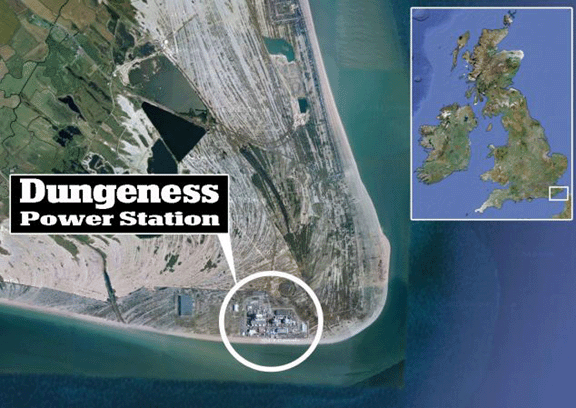
The Kent beaches set to be wiped out in 30 years because of climate
change. New data suggests that large parts of Kent could regularly fall
below sea level by the year 2050. The southern side of Kent looks to be
greatly impacted, with the entire Dungeness area to be underwater.
Kent Live 15th Aug 2021
https://www.kentlive.news/news/kent-news/kent-beaches-set-wiped-out-5789954
UK’s Marine Management Organisation gives the OK for dumping Hinkley radioactive trash in the Bristol Channel
A nuclear power station’s application to deposit hundreds of thousands
of tonnes of sediment as part of works taking place in the Bristol Channel
has been given the go-ahead.
The Marine Management Organisation (MMO), a
government agency which serves to protect and enhance [???] UK marine environment
and sustainable marine activities, has allowed a variation to a marine
licence to Hinkley Point C. This permits the power station to carry out
dredging and disposal of mud at the existing Portishead disposal site in
the Bristol Channel.
North Somerset Times 17th Aug 2021
Where’s the water coming from? In dry East Anglia, EDF has no solution for Sizewell nuclear power’s insatiable thirst.

EDF have announced yet another consultation, running for 3 weeks from 3rd to 27th August, this time it’s …Where’s the water coming from? One would think after nearly a decade of planning and many questions on ‘Where’s the Water coming from?’ EDF would have this sorted but NO.
Northumbrian Water/Essex & Suffolk Water have announced they cannot supply the ever increasing amounts of water needed to build SZC and will need several years to install over 20km of piping from the River Waveney to the site. We all know East Anglia is one of the driest areas in the country and members of TASC have been posing the question for years, see our response to Deadline 2.
As far back as Jan 2017 The Economist published an article on mains water at SZC, it makes for an interesting read, then as far back as 2010 TASC’s own Joan Girling was asking the very same question Where’s the water coming from?’
TASC (accessed) 17th Aug 2021
EDF launch yet another Consultation ~ Respond by 27th August
Public comment period regarding Bradwell nuclear project is drawing to its end.
After nearly four years, just one month remains for members of the public
to comment on the reactor technology for the proposed nuclear power station
at Bradwell B. The China General Nuclear Power Group (CGN) and the French
power company EDF, through their joint venture company General Nuclear
System Limited, initiated the Generic Design Assessment (GDA) process of
the proposed reactor in January 2017.
The public comment process, allowing
the public to provide feedback on the UK HPR1000 reactor technology planned
for use at Bradwell B, opened in November 2017 and is due to finish on
Friday, 17 September 2021. Since it began, a range of concerns have been
raised, including those related to climate change, safety and technical
questions.
Maldon Nub News 16th Aug 2021
Opposition to nuclear power plants in Poland
On the edge of a lake near the Baltic coast, half-flooded and overgrown with fir trees and shrubs, lie the remains of Poland’s last attempt to build a nuclear power plant. Begun in 1982, the project in Zarnowiec was abandoned after years of protests, and its half-finished concrete shell was left to the elements. Four decades on, Poland is trying again.
Last year, the government signed off on a plan to build the country’s first nuclear plant by 2033. Five more are due to follow by 2043 as part of a broader effort to wean Poland’s economy off its increasingly uneconomic dependence on coal. The final location for the first plant has not yet been chosen.
But in villages that dot the wooded countryside around Zarnowiec, there are already placards protesting against the prospect. “Why destroy one of the most beautiful places in Poland?” asks a member of an initiative against a plant near Lubiatowo, a hamlet some 20km from Zarnowiec. “Anyone who comes in here [to build a nuclear plant] will have a war.”
FT 16th Aug 2021
https://www.ft.com/content/6031bd28-5f7e-40ed-9e6d-aef34eade58d
Strong local opposition to a proposed nuclear waste dump

People opposed to the building of a nuclear waste dump have gathered on
Mablethorpe beach in opposition to the move. Around 150 people were at the
beach on Saturday, August 14, to mark their opposition to the proposal –
which would affect the former Theddlethorpe Gas Terminal.
Radioactive Waste Management (RWM) has flagged the site as a potential geological disposal
facility where radioactive waste would be buried deep underground. One of
the organisers of yesterday’s event, who didn’t wish to be named, told
Lincolnshire Live: “There is a lot of anger about what has been done here.
“People have moved to this area because they wanted a quiet, countryside
life and so the idea of having a nuclear waste dump has upset pretty much
all local residents.
“A local estate agent even said that people
immediately started to pull out of house sales when the news about the
proposal first came out. “They think that just to get the spoil out of the
ground will mean about 20 lorries an hour going back and forth, which
doesn’t seem realistic on the roads around here. “We’re waiting to hear
more details at the moment because we’re still in the dark on this, but
we’re going to continue to protest against it.
Lincolnshire Live 15th Aug 2021
https://www.lincolnshirelive.co.uk/news/local-news/people-opposed-nuclear-waste-dump-5789940
The French nuclear complex — Macron’s love letter to the nuclear industry

Macron’s love letter to the nuclear industry
The French nuclear complex — Beyond Nuclear International The French nuclear complex https://beyondnuclearinternational.org/2021/08/15/the-french-nuclear-complex/
August 15, 2021 by beyondnuclearinternationa
The all too easy alliance between the civil and military sectors
From the Swiss Energy Foundation
...et sans nucléaire militaire, pas de nucléaire civile (“and without the military nuclear sector, no civilian nuclear sector”). These were the words of French head of state, Emmanuel Macron, during his visit at the end of the year to Le Creusot, a hotspot of the French nuclear industry. Indeed, the civil and military uses of nuclear energy were, are, and will remain, inextricably linked. This is exemplified by the French reactor research project NUWARD.
The year 2020 ended with a declaration of love from Emmanuel Macron to the French nuclear industry: “Our energy and ecological future depends on nuclear energy”. He added: “Our economic and industrial future depends on nuclear energy. ” Macron addressed these words in a well-received speech delivered at Le Creusot, Burgundy, the very heart of the nuclear industry. The industrial town of Le Creusot is an important production site for components for nuclear power plants as well as for nuclear weapons systems for military use.
The nuclear industry in crisis

However, the last few years have not been a time of joy for the French nuclear industry, but rather a time of crisis. To stay with Le Creusot: The reactor forge facility there, which among other things manufactures the safety-relevant components for nuclear power plants, drew attention to itself in 2016 with a series of irregularities: it emerged that, for years, there had been systematic forgeries. Faulty forged parts were produced. Instead of discarding the rejects, reports were falsified and quality assurance undermined. France’s new-build project, the Evolutionary Power Reactor (EPR), was also affected. The former showcase project sank steadily into a billion-dollar grave.
Along with the Le Creusot scandal, numerous other miscalculations and breakdowns cast a bad light on the French nuclear industry. The construction of the new EPR in Flamanville, as well as other construction projects abroad, made headlines with years of delays and cost explosions. The builder is the French quasi-state nuclear giant EDF. It did not want to bear the cost debacle alone, but also pointed the finger at EPR nuclear giant Areva. However, since 2018, Areva has ceased to exist.

To prevent bankruptcy, the state has virtually ransomed Areva by means of subsidies. The group was split into the state-owned company New Areva (now “Orano”), responsible for the fuel cycle business, and the reactor construction division Areva NP (now “Framatome”), which also includes the Le Creusot forge. Meanwhile, EDF, 80% of which is state-owned, is struggling with enormous debts —some 41 billion euros at the end of 2019, according to the French Ministry of Economy.
Nuclear DNA – French identity
So the task at hand is to shore up the once-radiant sector in crisis. And Macron’s assurances to Framatome and Co. came at the just right time. On the one hand, there are economic interests, as just explained with the problem child EDF, on the other hand, there is also the French identity and military capacity, founded on France’s nuclear power status. Since the post-war period, France’s self-image has been based to a large extent on the nuclear sector. In Le Creusot, Macron not only praised those present, he also announced the construction of a new aircraft carrier —nuclear-powered, of course.
The NUWARD project: an exemplary case

Among those present at Le Creusot, in addition to Framatome, were managers from EDF, Orano and the Naval Group defense contractor. All of the players are a hybrid of government and private funding, civilian and military exploitation interests. And with the exception of Orano, they are all involved in the new French Small Modular Reactor (SMR) project called NUWARD. The nuclear industry is pinning its hopes on “small modular reactors”.
The project for the French variant NUWARD started about ten years ago, when the contractors EDF, Naval Group (then DCNS), the state nuclear and energy research center CEA (Commissariat à l’énergie atomique et aux énergies alternatives) and the then Areva were commissioned with initial feasibility studies. TechnicAtome (formerly Areva TA), a specialist in marine nuclear propulsion systems, was also brought in for the pre-conceptual design. Finally, in September 2019, the partners presented their collaborative NUWARD project at the General Conference of the International Atomic Energy Agency in Vienna.
The parties involved emphasize the benefits of NUWARD as an export commodity in the global energy market: it is necessary to meet the increasing demand for energy in the context of rising population and climate policy challenges. To wit: Nuclear energy is again praised as a (supposedly) climate-friendly solution. The small NUWARD with a capacity of about 340 MW is intended as a complement to the EPR with a capacity of about 1700 MW.

But civilian applications are hardly ever the only ones. The new aircraft carrier, which is to replace the retired “de Gaulle” from 2038, will be nuclear-powered. The experts responsible for this are TechnicAtome and Naval Group. The new generation of French submarines, currently being developed under the so-called Barracuda program with the same stakeholders, also relies on nuclear propulsion. The suspicion is that TechnicAtome and Naval Group’s interests in NUWARD are aligned on this. According to ASAF, the French Army’s support association, the latter enjoys the opportunity to acquire knowledge that can later be applied in the military field.
From research to armament leader
A deeper look at the project partners involved and their activities shows that the mixture of civil-military engagement is by no means new. For example, the defense industry group Naval Group, the CEA and TechnicAtome are involved in the Barracuda project mentioned above. Naval Group itself, which calls itself the “European leader in naval defense”, is majority-owned by the French government and one-third by the defense contractor Thales Group (which in turn is about one-third owned by the government). In addition to its largely military projects, the group is also active in the civilian sector, as in the case of the EPR4 or through offshore wind energy projects.
Naval Group, meanwhile, is a 20% shareholder in TechnicAtome, whose core business is nuclear submarine propulsion. In addition, the corporation pursues civil nuclear activities. For example, it was responsible for safety systems at Hinkley Point (UK) at the EPR. TechnicAtome was spun off in the 1970s from the state research institute CEA, which remains a shareholder today, along with the state and EDF (itself 85% state-owned).
The CEA can be seen as a symbol of the interdependence of the military-civilian nuclear establishment. CEA, from the French acronym for Atomic Energy Commission, was founded after World War II and oversees all French nuclear research, both military and civilian. To this day, the research institution is wholly owned by the government. Of note are the unique privileges the CEA enjoys as a public agency: it is accountable for its decisions solely to the French president and is not subject to the same financial controls as other government agencies.
France Nucléaire – Quo vadis?
For the French head of state, abolishing the civil-military “double dimension” makes no sense at all. Rather, it illustrates the coherence between strategic autonomy and energy independence. And this is now being proudly presented in public again, as in Le Creusot.
It is therefore not only worthwhile for the French state to support the struggling civilian nuclear industry, but it seems almost imperative. It does so not only through share packages (see Areva). In addition, Macron is lobbying Brussels to give nuclear energy more prominence in the EU’s climate strategy, with the hope of receiving money from the Green New Deal pots. This would also help the enforcement of the planned national subsidies vis-à-vis the EU.
State aid en masse is thus intended to save civil nuclear power in France, because the French presidential palace cannot afford to — and will not — do away with the civilian part. As Macron revealed in his closing homage to nuclear power at Le Creusot: “Our strategic future, notre status de grande puissance, depends on nuclear energy”.
The original article in German, can be found here on the Swiss Energy Foundation (SES) website in its Focus France section. We are grateful to the SES for this translation.
1 This Month


of the week– Nuclear Reactor Information Task Force

14 May – online event From Bombs to Data Centres: the Face of Nuclear Colonialism
To see nuclear-related stories in greater depth and intensity – go to https://nuclearinformation.wordpress.com
-
Archives
- May 2026 (180)
- April 2026 (356)
- March 2026 (251)
- February 2026 (268)
- January 2026 (308)
- December 2025 (358)
- November 2025 (359)
- October 2025 (376)
- September 2025 (257)
- August 2025 (319)
- July 2025 (230)
- June 2025 (348)
-
Categories
- 1
- 1 NUCLEAR ISSUES
- business and costs
- climate change
- culture and arts
- ENERGY
- environment
- health
- history
- indigenous issues
- Legal
- marketing of nuclear
- media
- opposition to nuclear
- PERSONAL STORIES
- politics
- politics international
- Religion and ethics
- safety
- secrets,lies and civil liberties
- spinbuster
- technology
- Uranium
- wastes
- weapons and war
- Women
- 2 WORLD
- ACTION
- AFRICA
- Atrocities
- AUSTRALIA
- Christina's notes
- Christina's themes
- culture and arts
- Events
- Fuk 2022
- Fuk 2023
- Fukushima 2017
- Fukushima 2018
- fukushima 2019
- Fukushima 2020
- Fukushima 2021
- general
- global warming
- Humour (God we need it)
- Nuclear
- RARE EARTHS
- Reference
- resources – print
- Resources -audiovicual
- Weekly Newsletter
- World
- World Nuclear
- YouTube
-
RSS
Entries RSS
Comments RSS
 nuclear-news