Nuclear power “just doesn’t make sense” for Ireland, a leading energy expert says.
Why nuclear power ”just doesn’t make sense” for Ireland, news talk, Stephen McNeice, 26 AUG 2021
Nuclear power “just doesn’t make sense” for Ireland, a leading energy expert says.
John Fitzgerald was speaking following recent fears that Ireland could face potential blackouts this winter.
Those concerns have eased now that two power generators are due to come back online in October and November, ahead of the high-demand winter season.
However, the situation has raised concerns about how the system will cope during periods when renewable sources such as wind turbines are unable to produce much power.
Those concerns have increased as more and more data centres are announced for Ireland – all of which require substantial and consistent supplies of electricity.
That has led to some questions about whether nuclear power – which, outside of safety concerns, is seen as a reliable source of energy by many countries – should be considered for Ireland.
Professor Fitzgerald – Research Affiliate at the ESRI and an Honorary Fellow of Trinity College Dublin – told The Pat Kenny Show it wouldn’t work for Ireland.
“Our generators come in what are called 400 megawatt lumps – nuclear comes in 1200 megawatt lumps.
“If you have a bloody massive nuclear generator in Ireland, you’ve got to have three gas stations puttering away and ready to go in case anything goes wrong. It just doesn’t make sense.”
rading electricity……
he suggested the current make-up of Ireland’s electricity grid does make sense.
He said: “The thing about nuclear is it’s always on, whereas with wind it’s intermittent.
“When you have a load of wind on the system, having a load of nuclear doesn’t fit – it makes more sense to put in more wires to France and Britain and trade the electricity.
For now, he said the concerns with wind energy are about what happens in periods – usually in January – when you have several weeks with low or no wind.
He explained: “You have to have alternatives so the lights don’t go off when the wind doesn’t blow.
“What the concerns were – although there are less now than they would have been two weeks ago – is there are two big gas generators which are broken.
“They’re an important part of the system, and if they didn’t come back on… then when the wind didn’t blow we’d be short of generation.”
However, he said EirGrid and its predecessors have ensured Ireland’s electricity supply has been one of the most reliable in the world.
He added: “We just need to keep them at it.” https://www.newstalk.com/news/why-nuclear-power-just-doesnt-make-sense-for-ireland-1243726
Swedish government decides to increase interim storage capacity for nuclear waste
The Government has decided to allow a capacity increase of the interim
storage facility for spent nuclear fuel, pending a repository for final
disposal being constructed and put into operation. An intermediate decision
on interim storage is necessary to safeguard the energy supply in the
coming years.
The Government is prioritising and working as swiftly as
possible to prepare the decision on the repository. In the Government’s
assessment, it will be a matter of months before such a decision can be
made. However, the permit process following a government decision will take
additional time.
Without a valid permit for increased interim storage in
place before the end of 2023, Sweden’s electricity generation could be
adversely affected. This is why an intermediate decision on interim storage
is necessary.
The Government is examining how spent nuclear fuel and other
nuclear waste will be disposed of. In the next step, the Government will
refer the evaluation of new research on the protective capability of the
copper canister in relation to both copper corrosion and the planned cast
iron insert to the Swedish Radiation Safety Authority and the Swedish
National Council for Nuclear Waste.
In the consultation process, the
Government wants these authorities to determine whether the article on
copper corrosion and the research to which the article refers provide new
information that may be of significance to the Government’s decision on
the case.
Swedish Government 27th Aug 2021
Engie nuclear subsidiary Endel in bad shape about to be sold
Nuclear: Engie about to sell its Endel subsidiary to the Altrad group. The
energy company’s industrial and nuclear maintenance subsidiary is in bad
shape. The state has given the green light for the operation.
Le Figaro 26th Aug 2021
‘Critical issues’ with Sizewell C plans to be discussed at public hearings
‘Critical issues’ with Sizewell C plans to be discussed at public hearings https://www.eadt.co.uk/news/sizewell-c-september-2021-hearings-8274260Andrew Papworth0 August 26, 2021 “Critical issues” with plans for a new nuclear power station on the Suffolk coast – including the impact building work would have on residents – are to be discussed at public hearings.
The Planning Inspectorate is holding a series of Issue Specific Hearings on EDF Energy’s bid to build Sizewell C as part of its formal examination of proposals for a new twin-reactor.
Hearings have been taking place this week, with another four days of hearings scheduled to take place at Snape Maltings in mid-September.
The first day on Tuesday, September 14 will look at flood risk and water supply issues, while the following day will examine the “potential adverse effects on human health and living conditions of local residents during construction”.
The hearings on Thursday, September 16 will look at landscape and heritage issues, including “potential adverse effects on heritage assets forming part of the Heveningham Hall estate and National Trust Coastguard Cottages”.
The code of practice for the construction of the site will be assessed on Friday, September 17.
A spokesman for EDF Energy said: “We are pleased the hearings are going ahead, as they will allow the examining authority to continue to explore all our proposals and enable all interested parties to participate.”
But Paul Collins, chairman of the Stop Sizewell C campaign group, said: “We are well over two-thirds of the way through the Sizewell C examination, which has exposed many serious failings in EDF’s application.
“There are still a number of critical issues to be heard.
“Whether or not the Planning Inspectorate will agree with our MP’s recommendation that the examination is extended remains to be seen, although we note EDF’s latest financial report is now hinting that a secretary of state decision is due ‘mid-2022’ as opposed to April 2022, which suggests that they at least are expecting this.”
Once the examination process is concluded, an inspector will make a recommendation to government as to whether the nuclear plant should go ahead or not.
Sizewell C had delayed the original submission of the planning application by two months and extended the period of public registration due to the coronavirus pandemic.
This had followed eight years of public consultation to form the proposals for the new power station.
The meetings will be live-streamed and also available to watch afterwards.
Anti-nuclear campaigners slam plans to install new nuclear reactors in Wales
Anti-nuclear campaigners slam plans to install new nuclear reactors in Wales, NATION CYMRU, 27 Aug 2021 Anti-nuclear campaigners in Wales have criticised the Welsh Government for supporting “flawed and outdated” technology amid plans to install new reactors in Wales.
It was revealed on Wednesday that Mike Tynan, former head of UK operations at US nuclear engineering group Westinghouse, has been recruited by the Welsh Government to head up their nuclear company Cwmni Egino with the aim of resurrecting the Trawsfynydd site.
Both Trawsfynydd and the Wylfa site on Anglesey are being discussed as possible locations for small modular reactors at existing nuclear sites.
But anti-nuclear campaign groups PAWB and CADNO said that the nuclear power station at Trawsfynydd should be a focus for the development of renewable and sustainable technologies.
Trawsnfynydd is already the site of the decommissioned Magnox nuclear power station that ran between 1965 and 1991.
PAWB and CADNO said that once again hopes for work for local people will be raised, with few substantive promises.
“There is not enough proof that the technology will have been developed enough to make a difference in the critical fight against climate change in time,” they said.
“In addition, limited public resources that support nuclear mean that those resources are not available to truly green and sustainable technologies.
Climate change, homelessness, poverty, inequality – these are the complex problems of our time. The nuclear obsession does nothing to solve these problems; it adds to them. ”……………….. https://nation.cymru/news/anti-nuclear-campaigners-slam-plans-to-install-new-nuclear-reactors-in-wales/
Nuclear and Climate Clash – Russia’s nuclear weapons centre threatened by wildfires.

The fires have reached the closed city of Sarov, which has been a center for nuclear research since the Soviet era and was the site of the first Soviet atomic bomb’s development.
Today, the research center makes nuclear warheads and is believed to be developing Russia’s strategic missiles, including its highly touted hypersonic arsenal.
Wildfires Near Russia’s Nuclear Research Center Spark State of Emergency https://www.themoscowtimes.com/2021/08/24/wildfires-near-russias-nuclear-research-center-spark-state-of-emergency-a74878 Aug. 24, 2021 Russian authorities have declared an interregional state of emergency as tough-to-contain forest fires threaten the country’s top-secret nuclear weapons research center, Interfax reported Tuesday, citing the emergencies ministry.
Wildfires have raged in the Nizhny Novgorod region and the neighboring republic of Mordovia, both roughly 500 kilometers east of Moscow, since early August.
The fires have reached the closed city of Sarov, which has been a center for nuclear research since the Soviet era and was the site of the first Soviet atomic bomb’s development.
Today, the research center makes nuclear warheads and is believed to be developing Russia’s strategic missiles, including its highly touted hypersonic arsenal.
Firefighters have struggled to contain the fires due to hard-to-reach terrain, dead wood that remained after the 2010 wildfires and poor weather conditions.
Several aircraft from the Emergency Situations Ministry and Defense Ministry have been deployed to fight the fires.
The emergencies ministry told Interfax that two helicopters and a Be-200ES aircraft will be deployed to the site of the fires on Wednesday.
Russia has been hit hard by an unprecedented wildfire season fueled by historic heatwaves and drought conditions exacerbated by climate change, particularly in Siberia.
German utility aims to expand renewables, rejects keeping nuclear reactors open
RWE CEO rejects keeping nuclear power plants open, Reuters DUESSELDORF, Aug 24 – German utility RWE (RWEG.DE) rejected on Tuesday the idea of letting nuclear power plants stay open for longer due to the fact they produce less carbon dioxide.
“We are not available for this,” CEO Markus Krebber told journalists. The German government is paying four nuclear operators – including RWE – nearly 2.6 billion euros ($3.05 billion) in compensation for forcing them to shut their nuclear plants early in response to the Fukushima disaster.
RWE, which used to rely heavily on nuclear power and coal, has transformed itself into one of the largest green power companies in Europe.
Krebber called for a new federal government to accelerate the pace of the shift to renewable energy by increasing targets, expanding the grid and cutting the approval procedures for wind energy plants.
Krebber, who took over as CEO at the end of April, will present his strategy in the fourth quarter, including a new dividend policy: “We are no longer a dividend stock. We are a growth stock,” he said. https://www.reuters.com/business/energy/rwe-ceo-rejects-keeping-nuclear-power-plants-open-2021-08-24/
Communities react with shock to news they are being considered as locations for nuclear waste facility

Nuclear storage plans for north of England stir up local opposition
Communities react with shock to news they are being considered as locations for underground facility, Guardian, Tommy GreeneTue 24 Aug 2021 The long-running battle to build an underground nuclear waste facility in the north of England has run into fresh problems, as communities reacted with shock to the news that they were being considered as locations.
The north-east port town of Hartlepool is one of the sites in the frame as a potential site for a geological disposal facility (GDF), while a former gas terminal point at Theddlethorpe, near the Lincolnshire coast, is another. Cumbria, where much of the waste is stored above ground, is also being considered.
Victoria Atkins, a government minister and the MP for Louth and Horncastle, said she was “stunned” by the prospect that her constituency could host a GDF, claiming that the Conservative-controlled Lincolnshire county council’s engagement with the government’s radioactive waste management group had been kept hidden from her.
The facility is intended to deal with the long-running problem of nuclear waste storage by providing a safe deposit for approximately 750,000 cubic metres of high-activity waste hundreds of metres underground in areas thought to have suitable geology to securely isolate the radioactive material. The waste would be solidified, packaged and placed into deep subterranean vaults. The vaults would then be backfilled and the surrounding network of tunnels and chambers sealed……….
Between 70% and 75% of the UK’s high-activity radioactive waste, which would be designated for the GDF, is stored at the Sellafield facility in west Cumbria. The sources of the waste include power generation, military, medical and civil uses.
Existing international treaties prohibit countries from exporting the waste overseas, leading some scientists to argue for underground burial that, they say, would require no further human intervention once storage is complete……………
the proposals have stirred up strong local feeling among both community leaders and residents, and accusations of secrecy have been levelled at councils and the RWM in recent weeks.
In north-east England, the political fallout generated by news of the GDF “early stage” discussions triggered the resignation of Hartlepool council’s deputy leader, Mike Young, on Tuesday evening.
“We are making huge strides in Hartlepool and across Teesside and Darlington,” the Tees Valley mayor, Ben Houchen, said following the decision. “And the last thing we need as we sell our region to the world is to be known as the dumping ground for the UK’s nuclear waste.”
Cumbria county council, which resisted the last efforts to site a GDF locally in 2013, has declined to take part in either of the two existing working groups, saying its involvement would give the process “a credibility it doesn’t deserve”.
There is already considerable opposition from local groups. “The vast majority of people here are horrified by the GDF,” said Jane Bright, a Mablethorpe resident and spokesperson for the Guardians of the East Coast campaign. “I should think it’s no more welcome elsewhere. But there’s a lot of pride in this area and we’ll fight this for as long as it takes.”
Marianne Birkby, a Cumbrian resident and founder of the Radiation-Free Lakeland group, said: “We’re seen as the line of least resistance here. In Cumbria, we’ve been there before with this. Now people are now trying to get their heads around it again, in the middle of a pandemic. This dump would essentially make us a sacrifice zone to the nuclear industry.” https://www.theguardian.com/environment/2021/aug/23/nuclear-storage-plans-for-north-of-england-stir-up-local-opposition
Russia begins constructing nuclear submarines amid increasing friction with West
Russia begins constructing nuclear submarines amid increasing friction with West, By Guy Taylor– The Washington Times – Monday, August 23, 2021
Russia has begun building new nuclear submarines capable of carrying intercontinental ballistic missiles as part of a wide-reaching military modernization effort amid rising tensions with the United States and other Western powers.
Russian President Vladimir Putin personally announced the new construction, delivering orders via a video call Monday for two ICBM-armed nuclear submarines, as well as two diesel-powered subs and two corvettes at shipyards in Severodvinsk, St. Petersburg and Komsomolsk-on-Amur………..
On a separate front, U.S. military officials sought to draw attention to the increased Russian military activity in the Arctic.
In April, CNN reported that new imagery had revealed a major Russian build-up in the Arctic and claimed Moscow had begun actively testing new weapons in the region, parts of which are freshly ice-free due to changing climate patterns.
Moscow’s apparent goal is to secure its northern coast and dominate a key shipping route from Asia to Europe.
The April CNN report cited weapons experts and Western officials expressing particular concern about one Russian “super-weapon” — the unmanned Poseidon 2M39 torpedo, a stealth projectile powered by a nuclear reactor and intended by Russian designers to sneak past coastal defenses on the seafloor……..
Monday’s ceremony for the new ships was part of the Army-2021 show intended to showcase military might and attract foreign customers for Russia‘s arms industries. The weeklong show features aircraft, tanks, missiles and other weapons.
“Many of our weapons have capabilities that have no analogues in the world, and some will remain unrivaled for a long time to come,” the Russian president said. https://www.washingtontimes.com/news/2021/aug/23/russia-begins-constructing-nuclear-submarines-amid/
Greater powers to be given to UK’s armed Civil Nuclear Constabulary – a threat to peaceful protest?

UK Government plan to give armed nuclear police more powers raises ‘profound concerns The Ferret, ’Billy Briggs
August 23, 2021
A UK Government plan to give an armed police force called the Civil Nuclear Constabulary (CNC) greater powers has raised “profound concerns” and been described as “deeply worrying”.
The CNC is a specialist force tasked with protecting civil nuclear sites in Scotland, England and Wales and nuclear materials in transit both in the UK and internationally.
Counter-terrorism is a major part of its policing and the force employs 1,500 police officers. The CNC guards nuclear sites at Torness, Hunterston and Dounreay in Scotland, among other places across the UK.
It’s remit is set out in the Energy Act 2004 but the UK Government has just held a consultation seeking views on a plan to expand and diversify the force’s role.
Anti-nuclear groups have voiced fears over the proposal, however, arguing that the CNC’s remit should be limited to civil nuclear sites. The Scottish Greens said that centralised control over an armed police force with new powers would be a “very concerning development”…………..
Those responding to the consultation included the UK and Ireland Nuclear Free Local Authorities (NFLA) which submitted a joint response with anti-nuclear groups – Blackwater Against New Nuclear Group, Together Against Sizewell C, CADNO, People Against Wylfa B, Stop Hinkley and Nuclear Waste Advisory Associates.
The NFLA argued that the CNC’s powers should be “limited to civil nuclear sites, as its title implies”. Any expansion to other roles and duties for the CNC, they argued, would “represent an expansion of nuclear police at expense of the civil police force”
Councillor David Blackburn, NFLA steering committee chair, said: “NFLA has joined with these six other campaigning groups to raise its profound concerns that an expansion of the Civil Nuclear Constabulary and an increase in its powers is moving it in the wrong direction. What is required rather is concerted efforts to reduce the risks of the UK’s nuclear legacy and to avoid developing new nuclear reactor sites.”
He argued that by making nuclear sites safer “there will become less of a need for an armed police force”.
“The concerning wider push for new laws which could reduce peaceful protest also greatly concerns us,” Blackburn said. “The proposals in this consultation move the CNC further into being an extensively armed police force, when we should instead be looking at ways to have a democratically controlled and accountable police force protecting the public in a measured way.”……… https://theferret.scot/uk-government-plan-to-give-armed-police-more-powers/
Ho hum … the umpteenth delay for Finland’s Olkiluoto 3 nuclear reactor
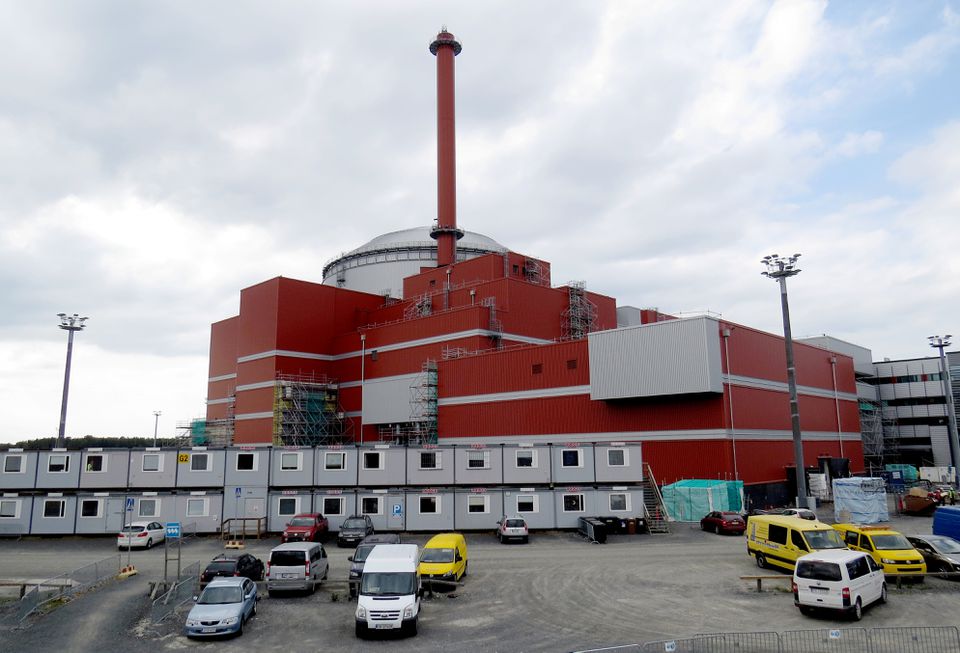
Finland’s Olkiluoto 3 nuclear reactor faces another delayBy Nora Buli OSLO, Aug 23 (Reuters) – The start of Finland’s much-delayed Olkiluoto 3 nuclear reactor has been pushed back by a further three months, with full power production now scheduled for June 2022, operator TVO said in a statement late on Friday.
“Teollisuuden Voima Oyj (TVO) has received additional information from the plant supplier Areva-Siemens consortium that the regular electricity production of the OL3 EPR plant unit will be further postponed for three months due to extended turbine overhaul and inspection works,” TVO said.
Olkiluoto 3 was meant to be finished in 2009 but the project has been beset by a series of setbacks……. https://www.reuters.com/business/energy/finlands-olkiluoto-3-nuclear-reactor-faces-another-delay-2021-08-23/
Scotland could be dragged into an accelerating nuclear arms race
| George Kerevan: How Scotland could be dragged into an accelerating nuclear arms race. ON Saturday, All Under One Banner will hold a demonstration against nuclear weapons at the Faslane naval base on the Clyde, home to Britain’s nuclear submarine fleet. This will be the first major anti-nuke demo since the outbreak of Covid-19. The protest by a group best known for its big independence marches is also backed by Scottish CND. This convergence of the national and nuclear issues is no accident. The west’s debacle in Afghanistan has opened a dangerous new phase in global politics. Any Scottish independence referendum will take place against a background of rising international tensions that must intrude in our domestic debate. The National 23rd Aug 2021 https://www.thenational.scot/politics/19530331.george-kerevan-scotland-dragged-accelerating-nuclear-arms-race/ |
No apology from France, as new report reveals the harm done to Pacific islands by atomic bomb tests

Although testing stopped more than two decades ago, its legacy lives on in French Polynesia’s politics, health, economy and environment,
“In every other Pacific Island, you have the same,” said Colombani, who also spent more than a decade working in French Polynesia’s tourism sector. “You have the postcard, but if you look beyond that, there’s something you cannot even imagine.”
New study on nuclear testing in French Polynesia reveals France’s ‘censorship and secrecy’ https://www.pri.org/stories/2021-08-06/new-study-nuclear-testing-french-polynesia-reveals-france-s-censorship-and
More than 400 claims have been filed against the French government for nuclear tests on French Polynesia between 1966 and 1996. Scientists say about 110,000 people have been affected by radioactive fallout. It’s been nearly two decades since France stopped testing nuclear weapons in French Polynesia.
But many across French Polynesia’s 118 islands and atolls across the central South Pacific were disappointed last month when President Emmanuel Macron, on his very first trip to the territory France has controlled since 1842, failed to apologize for the nearly 200 nuclear tests conducted between 1966 and 1996.
“Faced with dangerous powers in the concert of nations, I wish to say here that the nation owes a debt to French Polynesia,” Macron said in a July 27 speech. He went on to admit that the tests on the Mururoa and Fangataufa atolls were “not clean in any way” — but stopped short of an official apology.
Guillaume Colombani, who works for Radio Te Reo-o-Tefana, said while they weren’t expecting an apology, it was still devastating not to get one.
“So, when you do something wrong, whatever it is, if you go and see the people you have hurt and you say, ‘Listen, I’m sorry for what I’ve done,’” said Colombani, “it is easier for the community to say, ‘OK, we accept, here’s forgiveness,’ or ‘No, we don’t accept. You have to do something for us.’”
Colombani, 41, grew up in Tahiti during the last decades of the nuclear tests and said he remembers seeing images of blue lagoons turning white after bombs were set off. He can recount the hyper-polarization of the issue and the anti-nuclear demonstrations spurred across the Pacific.
Although testing stopped more than two decades ago, its legacy lives on in French Polynesia’s politics, health, economy and environment, he said.
Underestimated exposure levels
Scientists have long estimated some 110,000 people were affected by the radioactive fallout — many of them French Polynesians who worked at the testing sites. However, a study released earlier this year revealed that France underestimated the level of toxic exposure during the atmospheric tests that took place in the 1960s and ’70s.
The Mururoa Files was based on a two-year investigation of more than 2,000 declassified French state documents as well as various interviews conducted in French Polynesia.
“We found that they underestimated the level of exposure by factors of two to 10, depending on the tests and locations,” said Sebastien Philippe, a researcher and lecturer at the Princeton School of Public and International Affairs with the program on science and global security and co-author of the study.
That’s two to 10 times higher than the estimates given by France’s Atomic Energy Commission in a report produced nearly a decade after testing stopped. The findings compiled by Philippe and his team found, among other things, that one reason the estimates of radiation exposure were so low is that France did not take into account contaminated drinking water.
Ultimately, this systematic underestimation not only made it more difficult to link cases of cancer to the nuclear tests, but it also made it harder for victims to get compensated.
“The compensation process was scientifically broken, and I think the reason for that is the government really realized how much money it was going to cost them, and decided it would be easier to deal with this in court,” Philippe said.
More than 400 claims have been filed against the French government, but only about half have been settled in the last 10 years. Philippe said this was allowed to happen because of the French government’s “censorship and secrecy” surrounding the nuclear testing.
One upside of the release of this study, he said, was the French government’s commitment to open more government archives to the public — a commitment that President Macron made on his recent trip. The French government did not respond to The World’s request for comment about Macron’s trip.
Irreversible environmental damage
The underestimation of the radioactive fallout also made it difficult to fully understand the scope of irreversible environmental damage from the nuclear testing.
Keitapu Maamaatuaiahutapu, a physicist and climate scientist at the University of French Polynesia, said the destruction was particularly bad when the testing went underground in the mid-’70s and bombs were set off in boreholes drilled into the atolls.
These bombs had power “100 to 1,000 times more than the bomb dropped on Hiroshima,” he said.
Whole lagoons full of coral were decimated and fish populations were poisoned for years. Now, there’s also a concern that the atolls may break apart — a process being sped up by rising ocean levels due to climate change, he said.
“And the release of the radioactivity from those holes,” Maamaatuaiahutapu said. “Not only would that create [a] tsunami, but it would pollute the ocean.”
France continues to control all of the information about the damage caused by nuclear testing, including heavily guarding the test sites themselves, he said, so there might not be a way to tell when something might happen. Both the Mururoa and Fangataufa atolls are more than 700 miles away from the main island of Tahiti.
Maamaatuaiahutapu also said that he doesn’t believe that French Polynesia will never get an official apology from Paris, and that also creates political problems.
Experts said that French Polynesians who are loyal to France don’t want to criticize Paris, because it supports the territory with some $2 billion a year.
On the other hand, the independent movement, which both Maamaatuaiahutapu and Colombani are part of, supports every effort to hold France accountable, and to spread the word about nuclear tests across the Pacific — a place known mostly for its beauty.
“In every other Pacific Island, you have the same,” said Colombani, who also spent more than a decade working in French Polynesia’s tourism sector. “You have the postcard, but if you look beyond that, there’s something you cannot even imagine.”
Russian nuclear power plants insured for $27 billion
Russian nuclear power plants insured for $27 bln
The insurance case is recognized as loss, damage of insured property as a result of radiation impact, fire, lightning stroke, explosion https://tass.com/economy/1328737MOSCOW, August 22. /TASS/ Rosenergoatom, a member of the electric power division of the Russian state-run nuclear corporation Rosatom, will ensure all domestic nuclear power plants (NPP) against catastrophic risks for 2 trillion rubles ($27 bln). Sogaz became the winning bidder according to minutes of the meeting of the procurement board, posted on the government procurement website.Rosenergoatom will pay the insurance premium of 3 bln rubles ($40.5 mln) to the insurer.
“All the property to be accounted as fixed assets” of Rosenergoatom’s nuclear power plants is registered under the insurance agreement, according to the posted draft agreement.
The insurance case is recognized as loss, damage of insured property as a result of radiation impact, fire, lightning stroke, explosion, crash of piloted aircraft, their parts or cargo, earthquake, volcanic eruption, hurricane, whirlwind, storm, typhoon and other natural disasters, unlawful acts of third parties, terrorism, sabotage, machinery and equipment failures and cyberrisks. The insurance will be valid from September 1, 2021 to August 31, 2023.
Greenham Common’s renowned Women’s Peace Camp, the world’s longest-running anti-nuclear demonstration
Greenham Common 40 years on – when ordinary women drove nuclear weapons
out of UK. Three Welsh protesters reveal what they learnt after being part
of the renowned Women’s Peace Camp, the world’s longest-running
anti-nuclear demonstration, forty years ago in Berkshire.
Mirror 21st Aug 2021
https://www.mirror.co.uk/news/uk-news/greenham-common-40-years-ordinary-24809222
1 This Month


of the week– Nuclear Reactor Information Task Force

14 May – online event From Bombs to Data Centres: the Face of Nuclear Colonialism
To see nuclear-related stories in greater depth and intensity – go to https://nuclearinformation.wordpress.com
-
Archives
- May 2026 (180)
- April 2026 (356)
- March 2026 (251)
- February 2026 (268)
- January 2026 (308)
- December 2025 (358)
- November 2025 (359)
- October 2025 (376)
- September 2025 (257)
- August 2025 (319)
- July 2025 (230)
- June 2025 (348)
-
Categories
- 1
- 1 NUCLEAR ISSUES
- business and costs
- climate change
- culture and arts
- ENERGY
- environment
- health
- history
- indigenous issues
- Legal
- marketing of nuclear
- media
- opposition to nuclear
- PERSONAL STORIES
- politics
- politics international
- Religion and ethics
- safety
- secrets,lies and civil liberties
- spinbuster
- technology
- Uranium
- wastes
- weapons and war
- Women
- 2 WORLD
- ACTION
- AFRICA
- Atrocities
- AUSTRALIA
- Christina's notes
- Christina's themes
- culture and arts
- Events
- Fuk 2022
- Fuk 2023
- Fukushima 2017
- Fukushima 2018
- fukushima 2019
- Fukushima 2020
- Fukushima 2021
- general
- global warming
- Humour (God we need it)
- Nuclear
- RARE EARTHS
- Reference
- resources – print
- Resources -audiovicual
- Weekly Newsletter
- World
- World Nuclear
- YouTube
-
RSS
Entries RSS
Comments RSS
 nuclear-news