Greencoat Capital Investing might be turning yellow – swallowing the climate lies of the nuclear industry.

One of Europe’s largest renewable energy investors is considering
creating a nuclear investment fund to take a stake in three of EDF’s
nuclear plants, it has been reported. Greencoat Capital, which currently
has more than £6bn under management and plans to grow over the coming
years, is considering taking a stake in the proposed Sizewell C plant in
Suffolk, according to The Times. The fund could also be invested in the
ongoing Hinkley Point C build in Somerset and the existing Sizewell B
plant.
Construction News 18th July 2022 https://www.constructionnews.co.uk/buildings/sizewell-c-major-fund-mulls-investment-18-07-2022/
Greenpeace radiation investigation at Chornobyl to assess accuracy of IAEA data.

During the Russian occupation of the Chornobyl region, Greenpeace experts warned that this could lead to increased radioactive contamination.
But the IAEA gave an “all-clear” at the end of April. The nuclear agency has a mandate to promote nuclear power.
Greenpeace Germany will present the results of the Chornobyl radiation research, in English, at a press conference in Kyiv on July 20 at 9:00 am CEST (ZOOM Link: https://t1p.de/dzbks).
Greenpeace https://www.miragenews.com/greenpeace-radiation-investigation-at-chornobyl-820855/ 18 July 22,
Chornobyl, Ukraine – Near the ruins of the Chornobyl nuclear power plant, an international team of radiation experts led by Greenpeace Germany is examining abandoned Russian positions for radioactive contamination. Trenches and dugouts were built by Russian soldiers during their occupation of the Chornobyl site in March. About 600 soldiers were deployed there. The research project is being conducted with the approval of the Ukrainian government and in cooperation with scientists from the State Agency of Ukraine on the Exclusion Zone Management (SAUEZM).
For the first time since the beginning of the Russian invasion, independent measurements will be taken and the April 28 statement of the International Atomic Energy Agency (IAEA) will be assessed. According to the IAEA, while there was increased radiation the levels did not pose a great danger to the environment or people. The IAEA’s deputy director is Mikhail Chudakov, a long-time employee of the Russian nuclear company Rosatom.[1]
Shaun Burnie, a nuclear expert from Greenpeace Germany, on site in Chornobyl, said:
“We want to know what really happened on the ground. The IAEA’s information so far is insufficient. The Ukrainian authorities are enabling the Greenpeace Germany research team to gather independent information about radiation safety in the region. This includes investigating the radioactive contamination that deposited in the Exclusion Zone when the Chornobyl reactor exploded in 1986. Between seven and nine tonnes of nuclear fuel were pulverized and ejected into the atmosphere in the 1986 explosion.”
During the Russian occupation of the Chornobyl region, Greenpeace experts warned that this could lead to increased radioactive contamination. But the IAEA gave an “all-clear” at the end of April. The nuclear agency has a mandate to promote nuclear power.[2]
“While the European Commission actively supports nuclear power by including it in its taxonomy. It’s more important than ever to investigate the environmental impact of Chornobyl, the world’s worst nuclear disaster,” said Burnie.
Greenpeace Germany will present the results of the Chornobyl radiation research, in English, at a press conference in Kyiv on July 20 at 9:00 am CEST (ZOOM Link: https://t1p.de/dzbks).
Public Release. This material from the originating organization/author(s) may be of a point-in-time nature, edited for clarity, style and length. The views and opinions expressed are those of the author(s).View in full here.
4 French nuclear reactors authorized to discharge hotter water during heatwave, as 29 others remain offline
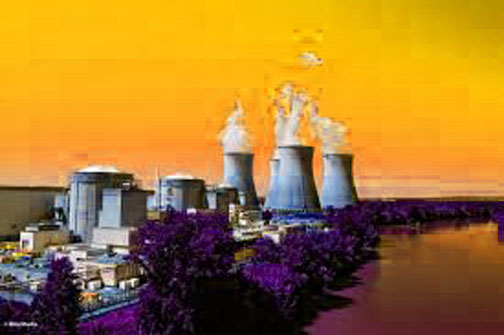
Heat wave: a fourth nuclear power plant authorized to release hotter water than normal to continue operating. Twenty-nine French reactors out of 56 are currently unavailable for various reasons. Hence these exemptions.
A temporary derogation from environmental rules has been granted to a new nuclear power plant, that of Bugey, in Ain, to allow it to continue to operate “at a minimum level of power” during the heat wave, according to a decree published on Sunday July 17. in the Official Journal .
“The reactors of the Bugey nuclear power plant discharging effluents into the Rhône may, during the fixed period (…), continue to practice these discharges as long as the heating after mixing of the effluents into the Rhône (.. .) does not exceed 3 ° C in average daily value” , specifies the decree of Sunday.
On Friday, a derogation had been granted to the nuclear power plants of Golfech (Tarn-et-Garonne), Blayais (Gironde) and Saint-Alban (Isère). For these three power stations and that of Bugey, the
authorization was granted until July 24th.
And this, while 29 French reactors out of 56 are currently unavailable for various reasons. Since
2006, each plant has had its own regulatory water discharge temperature limits that must not be exceeded. The power plants indeed pump water to cool the reactors, before rejecting it. The derogation device, which aims to guarantee the proper functioning of the electricity network, had so far only been used once, in 2018 for the Golfech power plant, for a period of 36 hours.
France Info 17th July 2022
Swiss nuclear power plant reduces output to protect fish during heatwave

One of Switzerland’s nuclear power stations has temporarily scaled back operations to avoid raising the temperature of its feeder river to levels that are dangerous for fish.
https://www.swissinfo.ch/eng/sci-tech/swiss-nuclear-power-plant-reduces-output-to-protect-fish-during-heatwave/47761010 , July 18, 2022
Beznau is Switzerland’s oldest nuclear plant and comprises two stations built on a small artificial island in the river Aare in the north of the country. Unlike two newer stations, Beznau was not built with a cooling tower but relies on water from the Aare to control temperatures.
Producing some 6,000 gigawatt hours of electricity per year typically raises the temperature of downstream water by between 0.7 and one degree Celsius.
Switzerland is experiencing a prolonged summer heatwave that has already raised the temperature of rivers, including the Aare. Freshwater fish species living in the river cannot tolerate water temperatures much above 25 degrees Celsius.
As a result, Beznau operator Axpo has been forced to reduce output to meet its legal environmental commitments.
The plant would be forced to shut down completely if water temperatures rise above 25 degrees for three consecutive days, reports Swiss public broadcaster SRFExternal link.
Switzerland is already facing up to the impact of rising energy costs and potential shortagesExternal link in the coming months, driven in part by meteorological conditions but also disruptions caused by the Ukraine war.
But this danger is expected to strike in the winter months when Switzerland’s hydro-power dams are less productive. At this time of year, the river temperature issue will be less of a problem.
Switzerland produces around 30% of its electricity from its three nuclear power plants. The government decided in 2011 to phase out nuclear power following the Fukushima disaster in Japan.
The initial idea was to stop nuclear power production by 2034. The Mühleberg plant is currently being dismantledExternal link.
Uncertainties about securing long-term power supplies led to the fixed deadline of 2034 being scrapped and replaced with a more vague commitment to only keeping the remaining power stations running as long as it is safe.
Nationalisation of EDF seen as ‘inevitable’ to carry out France’s nuclear plans

EDF’s market capitalisation has collapsed in the past few years, going from €150 billion in 2007 to less than €40 billion today.
A debt estimated at more than €43 billion, fuelled by delays in constructing its new fourth-generation reactors, also puts the company in a difficult spot.
https://www.euractiv.com/section/energy/news/nationalisation-of-edf-seen-as-inevitable-to-carry-out-frances-nuclear-plans/ By Paul Messad | EURACTIV.fr | translated by Daniel Eck 18 July 22
The government’s decision to nationalise Electricité de France, announced on 6 July, provoked mixed reactions in the French Parliament.
Yet, according to Jean-Michel Gauthier, director of the Energy & Finance Chair at HEC Paris, the decision was “inevitable” because of the regulatory constraints faced by the company.
Under French law, EDF must sell part of its nuclear electricity to the competition at a set price (€42/MWh) and buy it back on the market like any other supplier.
But because of the pandemic and the war in Ukraine, the current market price stands above €200/MWh, according to France’s electricity transmission system operator RTE.
This means EDF is selling at a loss to feed the competition, something unions and many observers have decried as a “plundering” of the French company.
On top of that, the state has also asked EDF to dish out €8 billion for the so-called “tariff shield” to limit gas prices in times of crisis.
EDF’s market capitalisation has collapsed in the past few years, going from €150 billion in 2007 to less than €40 billion today.
A debt estimated at more than €43 billion, fuelled by delays in constructing its new fourth-generation reactors, also puts the company in a difficult spot.
But according to Professor Gauthier, the company’s debt “is not at all the subject”. It is even “irrelevant, with regard to the major subjects of energy and industrial policy in France,” he told EURACTIV.
According to Gauthier, the main challenges lie in the company’s vast nuclear programme. First, EDF will have to spend more than €50 billion by 2030 to extend the life of existing nuclear power plants.
As announced by President Emmanuel Macron in February, the French energy giant must also adopt measures to build six new fourth-generation EPR-type reactors. According to the latest estimates, that effort will cost €50-60 billion.
Going under full state ownership will offer EDF a debt guarantee, as well as lower rates to raise additional debt, Gauthier says.
More worrying, according to him, is the number of key points the state has dropped from its nuclear industrial policy in recent years.
“These are the major issues: what is to be done with the EPR 2, the third generation reactors, the ASTRID project and the small modular reactors (SMR),” he said.
The professor also questioned the state’s means to meet its pledged energy ambitions.
Renewables in all this?
However, these multi-billion euro projects only deal with nuclear without addressing EDF’s capacity to deploy renewable energies – another major priority of the government.
“Today, given the bubble around green finance, there is no reason for the state to own solar or wind power capacity,” explained Gauthier.
“We can therefore imagine [that we] go back to square one […], i.e. that the State puts the portfolio of EDF Renewables, a subsidiary wholly owned by EDF, on the market,” he added. This project could revive divisions between the state and the unions if green-lighted.
For the time being, it is necessary “to keep a single EDF”, the company’s CEO Jean-Bernard Lévy told broadcaster BFM TV on Monday (11 July).
EDF without renewables would be a dark “utopia”, he also said.
When it comes to energy-related decisions, the state must be the “only pilot” on board and the “only decision-maker”, Gauthier concluded.
Millom and Haverigg being conned by nuclear industry over waste dump, claims former councillor.

A Millom resident, who recently resigned from her local council in disgust
at the shenanigans she witnessed, has claimed that the residents and
elected members of Millom and Haverigg and surrounding villages are
‘being conned’ with lies and false promises from Nuclear Waste Services
and some members of the local South Copeland GDF Community Partnership.
Only last month, Jan Bridget founded the Millom and District against the
Nuclear Dump campaign group as a voice for local people who are opposed to
the proposal to bring a nuclear waste dump to the South-West of Cumbria.
The waste dump or Geological Disposal Facility (as Nuclear Waste Services
prefers to call it) will be final resting place for the high-level
radioactive waste generated by Britain’s civil and military programmes
over the last seventy years.
One catalyst for local opposition has been
NWS’s plan to ‘sound blast’ the Irish Sea to determine if the geology
of the seabed could host the waste dump. Almost 50,000 individuals have
signed an online petition in opposition to the plan, whilst environmental
and conservation groups have registered their concerns that the health of
marine wildlife will be seriously compromised.
To date, the local and national authorities have been deaf to these objections. Over the last
month, the Millom and District group has become an effective local force
opposing plans for a dump. Nearly 400 local people have so far joined, and
members have been active with a protest by 19 local people outside an
NWS-organised community consultation event in Haverigg, and a door-to-door
delivery campaign completed with activists posting almost 5,000 leaflets
through letter boxes. As a member of Millom Town Council, Jan spoke up for
the objectors, but, from the hostile response she received from several
fellow Councillors involved with the Community Partnership, it soon became
clear that her lone voice was unwelcome in the council chamber, and the
atmosphere turned so toxic that Jan felt unable to stay.
NFLA 18th July 2022 https://www.nuclearpolicy.info/news/millom-and-haverigg-being-conned-by-nuclear-industry-over-waste-dump-claims-former-councillor/
France’s nationalisation of nuclear energy corporation EDF raises more questions than it answers
Just as Europe attempts to move away from its dependence on Russian gas and grapples with soaring power prices, problems at some of EDF’s existing 56 reactors in France have caused shutdowns and sent its energy output to multi-decade lows.
At the site of France’s first new nuclear reactor in more than 20 years, robots are whirring away fixing faulty welding as developer EDF races to open the plant after a decade of delays that have damaged its reputation.
Ahead of it lies a challenge of a different order of magnitude: a construction program to build six more, just as the French government, which owns 84 per cent of the business already, plans to take full control.
The full nationalization of EDF, which was announced earlier this month, comes as a series of crises pile pressure on the group’s finances.
In theory this will provide it with some relief away from the glare of public markets. So far, however, the state buyout has raised more questions than it has answered, including how the government thinks it might do a better job at fixing long-running industrial problems that have plagued projects at EDF, some of them as basic as a lack of experienced welders. “It’s not because the government will now have 100 percent that it’s going to suddenly take three years less to build a reactor,” one person close to the company said. “Right now, we’re in symbolic territory with this nationalization. It does not resolve any of the main problems we know the group is facing – will it allow EDF to bolster the skills it needs?” said Cécile Maisonneuve, a senior adviser at the center for energy and climate at French think thank IFRI. “None of the industrial or regulatory issues were linked to its capital structure.”
Just as Europe attempts to move away from its dependence on Russian gas and grapples with soaring power prices, problems at some of EDF’s existing 56 reactors in France have caused shutdowns and sent its energy output to multi-decade lows.
FT 17th July 2022
https://www.ft.com/content/7d7225ad-dd3b-4b95-95a6-c270a0089277
Heatwave? No, it’s a national emergency, disrupting lives and threatening our health.

Will Hutton: Heatwave? No, it’s a national emergency, disrupting lives and
threatening our health. The idea of climate change as a distant problem
won’t survive the next stifling week. Tomorrow, as we seek shelter from a
burning sun, climate change will feel all too real.
Britain has suffered ever more vicious storms and floods over the past few years but the next
couple of days will drive home the menacing discontinuity with our idea of
normal, a step change in our collective awareness. The expected heat –
temperatures that may exceed 40C warns the Met Office – are not only a
record, but life-threatening.
Only some 70 parliamentarians turned up to last week’s presentation on climate change led by Sir Patrick Vallance and other scientific officials. None of the Tory leadership candidates was
among them.
The accepted Tory wisdom, driven by its right, is that, at
best, climate change commitments should be deferred until the cost of
living crisis is over – at worst, they should be scaled back indefinitely
or wholly reframed.
Finally, at Friday’s Channel 4 debate, three candidates
publicly committed to the legally enshrined target of net zero by 2050:
Rishi Sunak, Tom Tugendhat and Penny Mordaunt. The right’s frontrunner, Liz
Truss, offered a commitment, but carefully not to a date; and Kemi
Badenoch, the insurgent candidate from the right, wanted the whole issue
reframed.
If Badenoch and Truss were to watch Vallance’s presentation, they
would surely change their view. Global temperatures are rising. So is the
cumulative amount of carbon in the atmosphere. The polar ice caps are
melting at bewildering and accelerating speed. Sea levels are increasing.
So are extreme weather events. All are unambiguously the result of human
influence, says the Met Office.
A global commitment to net zero by 2050
could limit the temperature rise to 1.5C. The right is massively out of
step with science, evolving public opinion and the business opportunities –
a triple whammy of misalignment that will prove deadly.
The science is incontestable. So is our daily experience. What is less discussed is how
acting presents a massive opportunity. Already the best in business and
finance are committed to net zero by 2050. In the City, argument rages
whether it’s best to disinvest completely from fossil fuel companies or to
support them as they transition to a new business model; what is accepted
in a world far from rightwing thinktanks, columnists and chat rooms is that
the change must be made.
On climate change scepticism, the right is
unambiguously wrong – it might not even prove the route to the Tory
leadership. It is certainly not the route to winning general elections.
Observer 16th July 2022
Russia’s will to win in Ukraine
https://www.americanthinker.com/blog/2022/07/russias_will_to_win_in_ukraine.html By Jared Peterson 8 July 22,
There was never a U.S. or Western strategic interest in Ukraine for which it was rational for us to provoke this war. And once this war started, Russia’s commitment to its successful conclusion — inevitably, unavoidably — was known to all who could fog a mirror as greater than that of the U.S. and the West.
Western policy elites who claim not to have seen this war coming — after the Biden administration treated Ukraine as a de facto member of NATO during all of 2021, and after Russia had been saying for nearly a decade that it would not tolerate Ukraine as a U.S. military bulwark on its border — are just plain fools. If they really were this blind, they were unqualified for their jobs.
Before the war started, as late as December of 2021, the Russians very probably would have settled the Ukraine problem by a declaration of permanent Ukrainian neutrality (i.e., no NATO membership, ever); some form of reasonable autonomy for the Russian-speaking, pro-Russian Donbas within Ukraine; and recognition of Crimea as Russian. This settlement in no way would have adversely affected legitimate U.S./Western interests. The only U.S. ox that would have been gored by this settlement would have been that of our odious neocon triumphalists, who want America to destroy Russia and become the world’s unquestioned hegemon.
Now, after Russian lives, treasure, and U.S.-orchestrated sanctions and obloquy, who knows what Russia’s demands will be?
Those who think Russia will be defeated in this war are whistling past the graveyard. They should listen to John Mearsheimer.
The Russians will not be defeated, period, for the simple reason that, by orders of magnitude, Ukraine means more to them than it does to us. They see a Ukraine within NATO, armed to the teeth with U.S. sophisticated weapons aimed at them, as an existential threat to mother Russia. They won’t let it happen. They have said so for years. If the war looks as though it’s moving toward a Russian defeat, they will do what it takes to avert that. We don’t want that outcome. That way lies catastrophe.
The West’s interest in Ukraine, on the other hand, is merely a neocon, U.S. hegemony adventure, seeking to assert U.S. top dog dominance in Eastern Europe, and thereafter the world. Failing to achieve this foolish and arrogant goal, the culmination of U.S.-sponsored eastern expansion of NATO to which Russia has objected vigorously since the time of Yeltsin would in no way threaten any real U.S. or Western interest.
Other things being roughly equal (as they are in this war), victory in war goes to the side with the greater commitment and willingness to suffer. Russia has the greater will in this war. And it knows how to suffer. Therefore, it wins.
Unless the Pentagon chooses nuclear Armageddon, in which case both sides will lose.
It was a fool’s errand for the U.S. to provoke this war, and for that matter a fool’s errand from the start (1999), for the U.S. to expand NATO eastward in the total absence of any Russian threat after the collapse of the Soviet Union.
It’s very hard to see how this can end other than very badly.
This proxy war has no exit strategy – the West’s desired outcome – a long and gruelling war?

In short, there is no exit strategy to this proxy war. There are no plans in place to deliver Putin a swift defeat, and the Biden administration remains steadfastly dismissive of even the slightest gestures toward diplomacy with Moscow. Boris Johnson has reportedly been buzzing around admonishing Ukraine’s President Zelensky, France’s President Macron and who knows who else not to work toward peace in Ukraine. The doors to ending this war quickly by either winning it or negotiating a peace settlement are both bolted shut, all but guaranteeing a long and bloody slog.
Which as it turns out suits Washington just fine. Biden administration officials have stated that the goal is to use the Ukraine war to “weaken” Russia, ……….. And since this is the course of action that has been taken by the empire, we can only assume that this is its desired outcome: not victory, not peace, but a long and gruelling war.
Caitlin Johnstone, 15 July 22. The International Committee of the Democratic Socialists of America has released a statement opposing the US government’s ongoing proxy war in Ukraine, saying the billions being funneled into the military-industrial complex “at a time when ordinary Americans are struggling to pay for housing, groceries, and fuel” is “a slap in the face for working people.” The statement advocates a negotiated settlement for peace, saying continuing to pour weapons into the country will “needlessly prolong the war, resulting in more civilian deaths” and that it “risks escalating and widening the war – up to and including nuclear war.”
In response to this entirely reasonable and moderate position, the DSA is currently being raked over the coals with accusations of Kremlin loyalty and facilitation of murder and bloodshed by blue-checkmarked narrative managers on Twitter. This is because the only acceptable positions for anyone of significant influence to have about this war range from supporting continuing current proxy warfare operations to initiating a direct hot war between NATO and Russia.
That’s how narrow the permissible spectrum of debate has been shrunk regarding this conflict: status quo hawkish to omnicidal hawkish. Anything outside that spectrum gets framed as radical extremism. As Noam Chomsky said: “The smart way to keep people passive and obedient is to strictly limit the spectrum of acceptable opinion, but allow very lively debate within that spectrum — even encourage the more critical and dissident views. That gives people the sense that there’s free thinking going on, while all the time the presuppositions of the system are being reinforced by the limits put on the range of the debate.”
This spectrum of debate has been shrunk on the one hand by imperial spinmeisters continually hammering home the message that any support for de-escalation and diplomatic solutions is “appeasement” and indicative of Russian sympathies, and on the other by hawkish pundits and politicians pushing for the most freakishly aggressive responses to this war possible. By forbidding the spectrum of acceptable debate to move toward peace while shoving it as hard as possible in the direction of warmongering extremism, imperial narrative managers have successfully created an Overton window wherein the only debate permitted is over how directly and forcefully Russia should be confronted, with calls for peace now falling far outside that window.
Which is a problem, because both direct NATO hot war with Russia and continuing along the empire’s current course of action in Ukraine are stupid. Direct conflict between nuclear powers likely means a very fast and very radioactive third world war, and the status quo proxy warfare approach isn’t stopping Russia as more and more territory is taken in the east in cool defiance of western claims that Ukraine is bravely vanquishing its evil invaders. Biden administration officials have told the press that they doubt Ukraine will even be able to reclaim the territory it has lost already. Unless and until something significant changes, Ukraine has no apparent path to victory in this war anytime soon.
In short, there is no exit strategy to this proxy war. There are no plans in place to deliver Putin a swift defeat, and the Biden administration remains steadfastly dismissive of even the slightest gestures toward diplomacy with Moscow. Boris Johnson has reportedly been buzzing around admonishing Ukraine’s President Zelensky, France’s President Macron and who knows who else not to work toward peace in Ukraine. The doors to ending this war quickly by either winning it or negotiating a peace settlement are both bolted shut, all but guaranteeing a long and bloody slog.
Which as it turns out suits Washington just fine. Biden administration officials have stated that the goal is to use the Ukraine war to “weaken” Russia, ………………. And since this is the course of action that has been taken by the empire, we can only assume that this is its desired outcome: not victory, not peace, but a long and gruelling war. …………………………. https://caitlinjohnstone.substack.com/p/this-proxy-war-has-no-exit-strategy?utm_source=substack&utm_medium=email
NASA, Russian space agency sign deal to share space station flights – Roscosmos
Yahoo News, Joey Roulette July 15, 2022 (Reuters) -NASA and Russia’s space agency Roscosmos have signed a long-sought agreement to integrate flights to the International Space Station, allowing Russian cosmonauts to fly on U.S.-made spacecraft in exchange for American astronauts being able to ride on Russia’s Soyuz, the agencies said Friday.
NASA and Russia’s space agency Roscosmos have signed a long-sought agreement to integrate flights to the International Space Station, allowing Russian cosmonauts to fly on U.S.-made spacecraft in exchange for American astronauts being able to ride on Russia’s Soyuz, the agencies said Friday.
“The agreement is in the interests of Russia and the United States and will promote the development of cooperation within the framework of the ISS program,” Roscosmos said in a statement, adding it will facilitate the “exploration of outer space for peaceful purposes.”
NASA and Roscosmos, the two-decade-old space station’s core partners, have sought for years to renew routine integrated crewed flights as part of the agencies’ long-standing civil alliance, now one of the last links of cooperation between the United States and Russia as tensions flare over the war in Ukraine.
The first integrated flights under the new agreement will come in September, NASA said, with U.S. astronaut Frank Rubio launching to the space station from the Moscow-leased Baikonur Cosmodrome in Kazakhstan alongside two cosmonauts, Sergey Prokopyev and Dmitry Petelin.
In exchange, cosmonaut Anna Kikina will join two U.S. astronauts and a Japanese astronaut on a SpaceX Crew Dragon flight to the orbital laboratory, launching from NASA’s Kennedy Space Center in Florida.
The two agencies had previously shared astronaut seats on the U.S. shuttle and the Russian Soyuz spacecraft.
After the shuttle’s retirement in 2011, the U.S. relied on Russia’s Soyuz for sending American astronauts to the space station until 2020, when SpaceX’s Crew Dragon capsule revived NASA’s human spaceflight capability and began routine ISS flights from Florida……………………….. more https://www.yahoo.com/news/nasa-russian-space-agency-sign-132725285.html
Ukraine reveals negotiation ‘end point’
Foreign Minister warns of Kiev’s red lines before any talks.
Ukraine will not agree to any territorial concessions as part of a peace agreement with Russia, its Foreign Minister Dmitry Kuleba told journalists on Wednesday. Talks between Moscow and Kiev have been in a deadlock since March.
“The objective of Ukraine in this war… is to liberate our territories, restore our territorial integrity, and full sovereignty in the east and south of Ukraine,” Kuleba said, as reported by Reuters. “This is the end point of our negotiating position.”
Moscow recognized the independence of the Donetsk and Lugansk People’s Republics in the Donbass region shortly before the military operation in Ukraine was launched in late February. Crimea, which was also once part of Ukraine, voted to join Russia in a referendum in 2014 after the Maidan coup in Kiev led to the overthrow of the democratically elected government.
In the southern part of Ukraine, Russian forces and Donbass militias seized Kherson Region and the majority of Zaporozhye Region. In the East, allied forces wrested control of the territory of the Lugansk People’s Republic (LPR) from Ukraine in early July. Russian troops and militias also control parts of the Ukrainian Kharkov Region bordering the LPR. The two sides are now fighting for control over the territory of the Donetsk People’s Republic.
Peace talks between Moscow and Kiev remain stalled at the moment, Kuleba said, adding that Kiev sees no reason to engage in negotiations. “Currently there are no [peace] talks between Russia and Ukraine because of Russia’s position and its continued aggression against our country,” he told journalists.
The US and Germany have also said they see no point in negotiating with Russia. Moscow accused the West of preventing Kiev from even thinking about peace talks, previously saying Ukraine could end the conflict if it agrees to Moscow’s demands……………… https://www.rt.com/russia/558942-ukraine-end-point-negotiating-position/
Nuclear: Doel 3 and Tihange 2 cannot be extended for safety reasons
15 July 2022 By The Brussels Times with Belga,
Operations at the Tihange 2 and Doel 3 reactors cannot be extended for technical and safety reasons, Engie Electrabel, which runs Belgium’s nuclear power plants, said on Thursday.
The Federal Agency for Nuclear Control (FANC) has not commented on the issue since neither the government nor Engie has requested a risk analysis.
The Doel 3 power plant will be shut down on the night of September 23 to 24 in accordance with the nuclear phase-out law. Tihange 2 will close in February…………………………..
Engie was asked earlier this month whether the Doel 3 and Tihange 2 reactors could be maintained until after winter, but the company said that solution could not be implemented for technical and safety reasons, an opinion confirmed by experts from Minister Van der Straeten’s office.
More delays for the multi-billion-euro ITER nuclear fusion project in France
The multi-billion-euro ITER nuclear fusion project in France faces yet
more delays because transport sanctions imposed in response to the invasion
of Ukraine could stop key parts from Russia reaching Europe, according to a
senior official in Europe’s contribution to the initiative. Leonardo
Biagioni, deputy chief financial officer at Fusion for Energy, which
manages Europe’s contribution to ITER, said that sanctions would “most
likely” delay the project. Speaking this morning at the EuroScience Open
Forum (ESOF) in Leiden, he said that transport sanctions against Russia,
including restrictions on Russian registered vessels docking in European
ports, risk making it hard to move parts manufactured by Russia to ITER’s
site in the south of France.
Science Business 14th July 2022
https://sciencebusiness.net/news/iter-faces-further-delays-if-key-parts-stuck-russia
There Is No ‘Magic Bullet’ That Can Turn The Tide For Ukraine
1945 By Daniel Davis 8 July 22
It is necessary, in light of these physical realities, for U.S. and Western policies to change. Continuing to give verbal support to Ukraine and claiming that eventually, Kyiv’s side will win the war is not likely to change the outcome and is likely to result in a policy failure for Washington.
There Is No ‘Magic Bullet’ That Can Turn The Tide For Ukraine,8 July 22, Last Sunday when the remaining Ukrainian soldier withdrew from Lysychansk, Ukrainian President Volodymyr Zelensky said evacuating his troops from the city “where the enemy has the greatest advantage in fire power,” was the right call, but “means only one thing… That we will return thanks to our tactics, thanks to the increase in the supply of modern weapons.” While many in the West would like that to be true, the reality is very different: there is no basis upon which to hope for a future offensive to drive Russian troops out of conquered territories.
The most likely result for the Ukrainian Armed Forces (UAF) if they continue fighting the Russians is that more of Zelensky’s troops will be killed, more Ukrainian cities will be turned to rubble, and more territory Kyiv will lose to the invaders. A sober analysis of the capacity of the of the two armed forces, an assessment of the military fundamentals that have historically proven decisive on the battlefield, and an examination of the sustainability potential for both sides, make it plain that Russia will almost certainly win a tactical victory.
Ukrainian Presidential Advisor Oleksiy Arestovych said that, to the contrary, the withdrawals in Severodonetsk and Lysychansk weren’t defeats at all, but instead “successful” in that he claimed they allowed Ukraine to “buy time for the supply of Western weapons and the improvement of the second line of defense, to create conditions for our offensive actions in other areas of the front.” This is a common belief in the West but one not borne out by the facts……………..
The much-ballyhooed supply of “heavy weapons” from the West that both Zelensky and Arestovych claim is coming will not be enough to turn the tide. Not even close. Zelensky advisor Mykhailo Podolyak correctly noted that the minimum needed by Ukraine to have a chance at reaching parity with the Russian invaders would require modern kit in the range of 1,000 howitzers, 500 tanks, and 300 rocket launchers.
As detailed by The Kiel Institute for the World Economy, the sum total of all heavy weapons delivered or promised by the West through last week’s G7 and NATO summits amounts to a paltry 175 howitzers, 250 Soviet-era tanks, and an anemic dozen or so rocket launchers. To date, no other help is being considered.
The ramifications of this mismatch should be clear: despite numerous and boisterous claims of Western support, it is militarily unsound for Ukraine to base its defense plans on the hope that major quantities of high quality Western heavy weapons will show up to help Ukraine stop the Russians. But there is a bigger, less obvious truth at play as well: even if Zelensky got everything on Podolyak’s list, it still would not likely change the battlefield dynamics.
The reason is that, like in all modern wars, military victory or defeat in the Russian-Ukraine War is likely to be determined by the side that has the highest quality of manpower and less on the platforms of war. For all its major missteps in the opening round, Russia began the war with a total active force of 900,000 whereas Ukraine had approximately 250,000…………………………
In short, there is no valid military path through which Ukraine can hope that trading space for time will result in stopping Russia’s methodical progress through Ukraine – much less reverse it. To continue contesting every town and city is to ensure the Ukrainian casualties continue to mount and its urban areas destroyed. In the end, Russia is still likely to achieve a tactical victory.
It is necessary, in light of these physical realities, for U.S. and Western policies to change. Continuing to give verbal support to Ukraine and claiming that eventually, Kyiv’s side will win the war is not likely to change the outcome and is likely to result in a policy failure for Washington.
No one wants to negotiate from a position of weakness with an invading power, but the harsh truth is that the longer Zelensky and his Western supporters continue pursuing unrealistic objectives, the more likely Ukraine eventually suffers an outright military defeat.
Expert Biography: Now a 1945 Contributing Editor, Daniel L. Davis is a Senior Fellow for Defense Priorities and a former Lt. Col. in the U.S. Army who deployed into combat zones four times. He is the author of “The Eleventh Hour in 2020 America.” Follow him @DanielLDavis. https://www.19fortyfive.com/2022/07/there-is-no-magic-bullet-that-can-turn-the-tide-for-ukraine/
1 This Month





PLEASE OPPOSE HR 8255 AND S.3639 – bills would accelerate satellite deployment, with no environmental review or safeguards – https://ncstd5li.quorum.us/campaign/169331/
To see nuclear-related stories in greater depth and intensity – go to https://nuclearinformation.wordpress.com
-
Archives
- October 2026 (81)
- September 2026 (339)
- August 2026 (330)
- July 2026 (355)
- June 2026 (287)
- May 2026 (306)
- April 2026 (356)
- March 2026 (251)
- February 2026 (267)
- January 2026 (308)
- December 2025 (358)
- November 2025 (359)
-
Categories
- 1
- 1 NUCLEAR ISSUES
- business and costs
- climate change
- culture and arts
- ENERGY
- environment
- health
- history
- indigenous issues
- Legal
- marketing of nuclear
- media
- opposition to nuclear
- PERSONAL STORIES
- politics
- politics international
- Religion and ethics
- safety
- secrets,lies and civil liberties
- spinbuster
- technology
- Uranium
- wastes
- weapons and war
- Women
- 2 WORLD
- ACTION
- AFRICA
- Atrocities
- AUSTRALIA
- Christina's notes
- Christina's themes
- culture and arts
- Events
- Fuk 2022
- Fuk 2023
- Fukushima 2017
- Fukushima 2018
- fukushima 2019
- Fukushima 2020
- Fukushima 2021
- general
- global warming
- Humour (God we need it)
- Nuclear
- RARE EARTHS
- Reference
- resources – print
- Resources -audiovicual
- Weekly Newsletter
- World
- World Nuclear
- YouTube
-
RSS
Entries RSS
Comments RSS

