You can’t trust Liz Truss (oil and gas devotee) on energy policy for Britain
a frenzied building of eye-wateringly expensive new nuclear power plants.
the ramping up of nuclear power will add billions to UK consumers’ bills
Liz Truss’s energy plans will be disastrous for our bills and the planet.
Truss will oversee the greatest transfer of wealth in history, from UK
families to oil and gas executives she used to work for.
The celebratory champagne corks must have popped in the headquarters of the oil and gas
corporations on the day Ofgem announced the devastating rise in energy
prices for poverty-stricken British consumers. Especially after they read
Liz Truss’s disastrous “response” in the Daily Mail addressing the
lifting of the home energy price cap.
Truss, the former commercial manager
for the oil giant Shell, proposes a massive ramping up of commercial
projects by the oil corporations, including expansion of North Sea oil and
gas, a resumption of fracking on the UK mainland and a frenzied building of
eye-wateringly expensive new nuclear power plants.
The proposed explosion of oil and gas projects will not knock a single penny from fuel bills, as
the UK’s fossil fuel industry is fully integrated into global markets, and
so production will remain priced at inflated global prices for UK
consumers.
And the ramping up of nuclear power will add billions to UK
consumers’ bills, as nuclear energy is already over twice the cost of wind
and solar and it will take decades before any new plants could reduce
consumer addiction to fossil fuels.
Truss’s statement was silent on
insulation or energy efficiency investments that would actually bring down
bills for consumers, by reducing dependency on fossil fuels. After the
Mail’s 2011 successful “anti-green-crap” campaign – according to Carbon
Brief reportedly at the instigation of the then Lord Lawson’s Global
Warming Policy Foundation – destroyed the home insulation programme that
was then successfully insulating 2.4 million homes a year. If that
programme had been implemented, up to 18 million UK families would have
enjoyed lower bills this winter and the pressure on the UK’s electricity
and gas markets would have been far lower.
Truss has not committed to
lifting her government’s de-facto ban on onshore wind, the cheapest source
of energy in the UK, but has promised a crackdown on solar farms. Blocking onshore wind and solar increases consumer bills and keeps us enslaved to nuclear and oil corporations.
Further thrilling the oil executives, she
ruled out expanding windfall taxes on the huge profits pouring into their
coffers. She also opposes “handouts” for consumers. Nuclear electricity
is now also over twice the price of renewables. The Tory government
recently overrode the planning inspector’s refusal of planning permission
for the proposed new Sizewell C nuclear power plant, over uncertainty on
where the water required to run the plant would come from.
Ministers are proposing that a nuclear levy be added to bills to fund its construction –
before it produces a single kWh of electricity. And they still have nowhere
to safely secure its toxic radioactive waste for the thousands of years
required.
Independent 30th Aug 2022
Navy officer opposed to nuclear weapons sues UK Ministry of Defence
BBC News 1 Sept 22, A former Royal Navy weapons officer who was removed from a submarine because he opposed nuclear weapons is suing the Ministry of Defence for religious discrimination.
Sub Lt Antonio Jardim, a Christian with joint British-Portuguese nationality, was assigned to HMS Vanguard.
He was given the nickname “Trigger” because of his “reluctance to pull the trigger”, according to tribunal papers.
Mr Jardim was later moved to an onshore role in Portsmouth.
HMS Vanguard is one of the UK’s nuclear deterrent submarines based at Faslane, Scotland.
In a statement ahead of an employment tribunal in Southampton, Mr Jardim said: “I wanted to leave the service after the treatment I received when making my moral views known.
“I believe I have been subjected to a series of connected acts of discriminatory treatment based upon my religious beliefs.”
He added: “Due to the stress from the entire process, along with an unbearable workload and lack of progress with my voluntary withdrawal from training and service complaint, I was sent sick on shore.”
Mr Jardim decided to leave the service in May 2021……………………….
documents also state that on the Trident officers general course in June 2020, having told the course officer about his concerns, he was “removed from the course and told to wait in his cabin”.
Then for the next two weeks he had “interviews and phone calls and he was told not to return to the boat, and his name was written in the quartermaster’s book stating that he was not to be let on board”.
A full hearing will take place on 13 March 2023. https://www.bbc.com/news/uk-england-hampshire-62744226
U.S. Calls For ‘Controlled Shutdown’ Of Zaporizhzhya Plant As IAEA Inspectors Seek Access
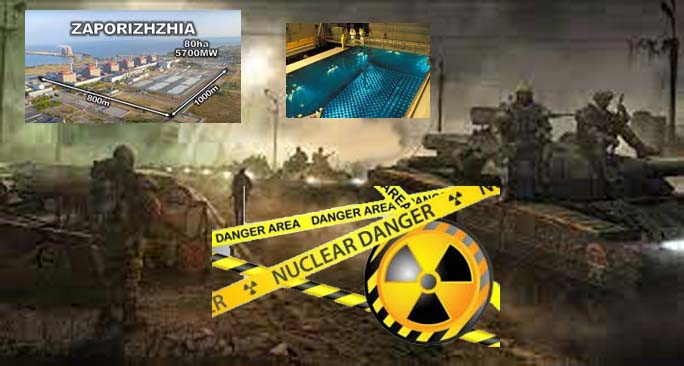
Radio Free Europe 29 Aug 22, The United States said a “controlled shutdown” of the Russian-occupied Zaporizhzhya nuclear power plant in southern Ukraine was the “safest option” and urged Moscow to agree to a demilitarized zone around the site, where increased fighting is sparking fears of a possible massive radiation leak.
“As we’ve said many times, a nuclear power plant is not the appropriate location for combat operations,” White House national security spokesman John Kirby told reporters on August 29.
“We continue to believe that a controlled shutdown of the Zaporizhzhya nuclear reactors would be the safest and least risky option in the near term,” he added.
His comments come as a mission from the UN nuclear safety agency is due to arrive in Kyiv late on August 29 and quickly travel on to the Russian-occupied nuclear plant.
It was not immediately clear if the team would be allowed access to the nuclear site by occupying Russian forces.
Rafael Grossi, head of the International Atomic Energy Agency (IAEA), said in a post on Twitter that the “day has come” and a team of IAEA experts was “now on its way” to the nuclear power plant, which Russian invading forces have controlled since shortly after the Russian invasion began on February 24.
“We must protect the safety and security of #Ukraine’s and Europe’s biggest nuclear facility. Proud to lead this mission which will be in #ZNPP later this week.”
The Ukrainian Foreign Ministry said the IAEA mission was due to reach Kyiv on August 29 and “start work at the Zaporizhzhya nuclear plant in the coming days.”
The IAEA’s experts were set to assess physical damage to the plant, determine the functionality of safety and security systems, evaluate staff conditions, and perform urgent safeguards activities, the agency said.
Neither he nor the agency specified when they would arrive at Zaporizhzhya.
………………….The United Nations and Ukraine have called for a withdrawal of military equipment and personnel from the plant to ensure it is not a target in the conflict.
………….. The G7’s Non-Proliferation Directors’ Group welcomed news of the IAEA’s trip and again voiced concerns about the safety of the plant under the control of Russian armed forces.
“We reaffirm that the Zaporizhzhya Nuclear Power Plant and the electricity that it produces rightly belong to Ukraine and stress that attempts by Russia to disconnect the plant from the Ukrainian power grid would be unacceptable,” it said in a statement issued on August 29.
Russia’s permanent representative to international organizations in Vienna, Mikhail Ulyanov, said Moscow welcomed the IAEA mission and said Russia had made a significant contribution to the visit, the RIA Novosti news agency reported.
Safety fears at the facility have escalated in recent weeks as Kyiv and Moscow have traded blame for rocket strikes around the facility in the southern Ukrainian city of Enerhodar.
…………. Attacks were reported over the weekend not only in Russian-controlled territory adjacent to the plant along the left bank of the Dnieper River, but along the Ukraine-controlled right bank, including the cities of Nikopol and Marhanets, each about 10 kilometers from the facility.
Ukraine’s atomic energy agency, Enerhoatom, issued on August 28 a map forecasting where radiation could spread from the power plant in the event of an accident, showing that based on wind forecasts for August 29 a nuclear cloud could spread across southern Ukraine and southwestern Russia.
Authorities last week began distributing iodine tablets to residents who live near the Zaporizhzhya plant in case of radiation exposure.
Much of the concern centers on the cooling systems for the plant’s nuclear reactors. The systems require electricity, and the plant was temporarily knocked offline on August 25 because of what officials said was fire damage to a transmission line. A cooling system failure could cause a nuclear meltdown.
Periodic shelling has damaged the power station’s infrastructure, Enerhoatom said on August 27.
The IAEA reported on August 28 that radiation levels were normal, that two of the Zaporizhzhya plant’s six reactors were operating, and that while no complete assessment had yet been made, recent fighting had damaged a water pipeline, since repaired. https://www.rferl.org/a/ukraine-zaporizhzhya-nuclear-iaea-inspection-russia-invasion/32008573.html
France braces for uncertain winter as nuclear power shortage looms
“Sky-high electricity prices are an economic threat, with France’s nuclear issues seemingly turning into a greater challenge than Russian gas flows,”
https://www.reuters.com/world/france-braces-uncertain-winter-nuclear-power-shortage-looms-2022-08-30/ By Forrest Crellin, Silvia Aloisi and Nina Chestney
PARIS, Aug 30 (Reuters) – France, once Europe’s top power exporter, may not produce enough nuclear energy this winter to help European neighbours seeking alternatives to Russian gas, and may even have to ration electricity to meet its own needs.
France has for years helped to underpin Europe’s electricity supply, providing about 15% of the region’s total power generation.
But this year, for the first time since French records began in 2012, France has become a net power importer as its own production of nuclear energy hit a 30-year low, based on data from consultancy EnAppSys
The supply squeeze, caused by a wave of repairs at the country’s nuclear power stations, couldn’t have come at a worse time. Europe is in the grip of an energy crisis as Russian gas supplies plummet in the wake of the Ukraine conflict and France, which derives 70% of its electricity from nuclear energy, has lost its edge.
French power prices have hit a string of all-time highs – topping 1,000 euros ($1,004.10) per megawatt hour earlier this month – on expectations the country will not have enough electricity to meet domestic demand. That surge, from prices of around 70 euros a year ago, has added to a cost-of-living crisis.
“Sky-high electricity prices are an economic threat, with France’s nuclear issues seemingly turning into a greater challenge than Russian gas flows,” said Norbert Rücker, head of economics and next generation research at Julius Baer.
Moscow says – US Afraid Inhumane Acts Committed by Azov Terrorists Will Be Made Public
25 Aug 22, WASHINGTON (Sputnik) – Washington is afraid that crimes committed by Ukraine’s Azov* neo-nazi regiment would come to light during the international tribunal for war criminals in Mariupol, the Russian Embassy to the US said.
The Russian embassy noted that the upcoming tribunal against Ukrainian war criminals, which is being prepared by the DPR authorities, would hold Ukrainian Neo-Nazis accountable……………………………..
Donetsk People’s Republic (DPR) leader Denis Pushilin earlier said that the suspected war criminals captued by the Donbass militias would face international an tribunal, which is to be held in Mariupol. He noted that the DPR authorities would not delay the trial, adding that the Foreign Ministry is working to invite the international community to take part in the tribunal……………. The politician stated that among suspects are neo-Nazis and some troops who committed atrocities in Donbass over the past 8 years.
He noted that the DPR authorities would not delay the trial, adding that the Foreign Ministry is working to invite the international community to take part in the tribunal.
*Azov is a terrorist organisation banned in Russia https://sputniknews.com/20220825/us-afraid-inhumane-acts-committed-by-azov-terrorists-will-be-made-public-russian-embassy-says-1099967315.html
New nuclear bases and nuclear submarines in Scotland deemed “unachievable” by a UK Government watchdog
Two projects vital for renewing the Trident nuclear weapons system on the Clyde have been damned as “unachievable” by a UK Government watchdog. The building of new facilities at the Faslane and Coulport nuclear bases in Argyll, as well as the manufacturing of new submarine reactors, both had
“major issues” which didn’t seem to be “resolvable”, according to the Infrastructure and Projects Authority (IPA).
The IPA has given the two projects its lowest rating of “red” for 2021-22, the worst in four years. The problems were attributed to “shortage of suitably experienced personnel”, “supply chain issues” and delays.
Campaigners have attacked the UK nuclear weapons programme as a “shambles”, warning that
it has repeatedly failed to deliver. Replacing Trident was “murderous”, “reckless” and “insanely expensive”, they said.
The Ferret 29th Aug 2022 https://theferret.scot/nuclear-trident-projects-unachievable
Russia accuses Ukraine of fresh shelling of nuclear plant
https://www.reuters.com/world/europe/russia-accuses-ukraine-fresh-shelling-nuclear-plant-2022-08-30/) – Russian-installed authorities in the Ukrainian city of Enerhodar accused Ukrainian troops on Tuesday of once again shelling the territory of the Zaporizhzhia nuclear power plant, Russia’s TASS news agency said.
The city authorities said two shells exploded near a spent fuel storage building at the plant, the agency added.
Ukraine and Russia have repeatedly accused each other of attacking Europe’s biggest nuclear power plant, set to be visited this week by a mission of the International Atomic Energy Agency.
WikiLeaks founder Julian Assange files latest appeal in bid to stop extradition to United States
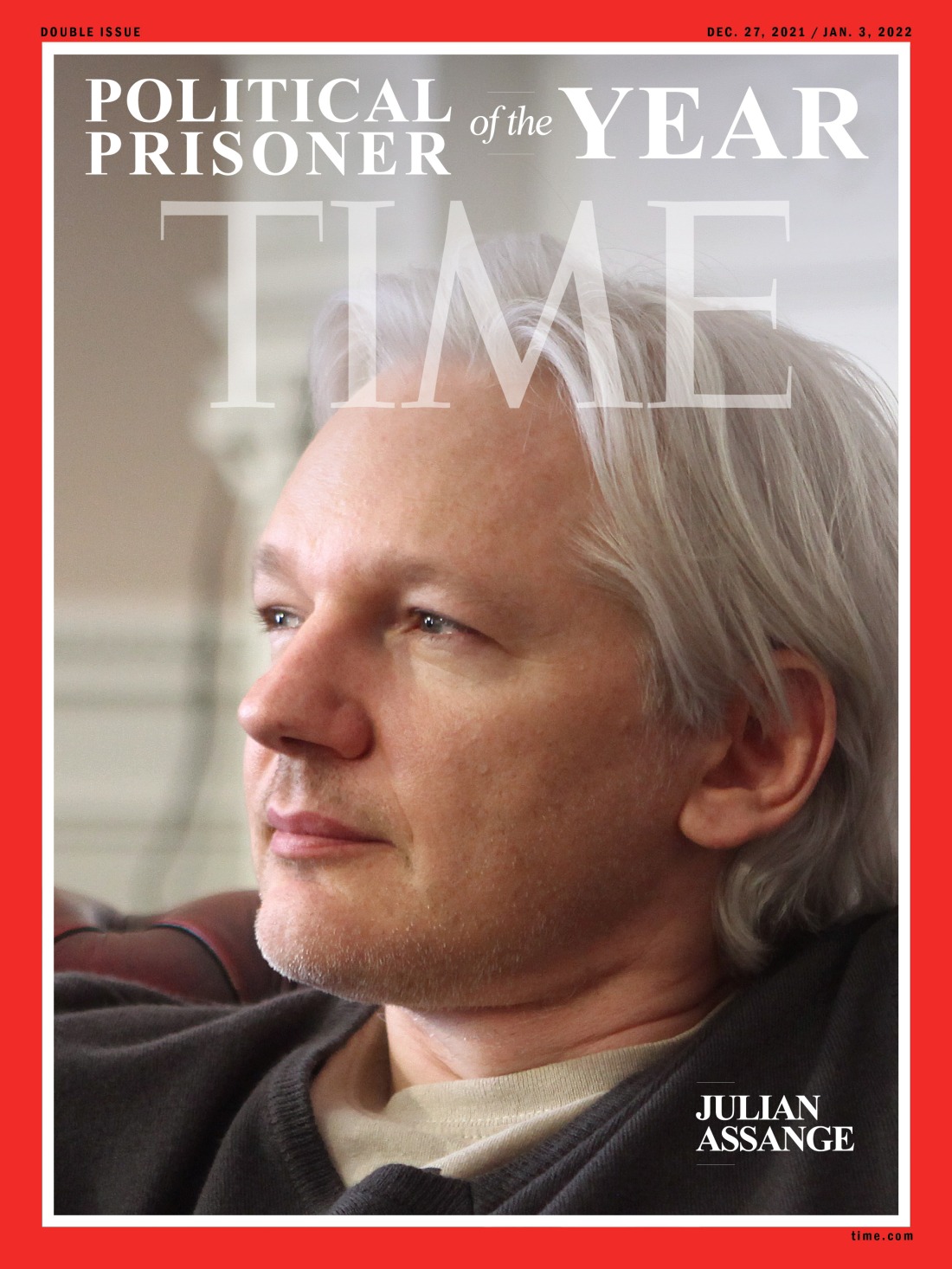
Julian Assange’s legal team has filed an appeal to Britain’s High Court in an effort to thwart his extradition to the United States to face espionage charges.
Key points:
- The appeal argues that Julian Assange is being prosecuted and punished for his political opinions and for protected speech
- Assange has been in custody since his was arrested in April 2019 and dragged out of the Ecuadorian embassy in London
- He is facing 17 espionage charges and one charge of computer misuse in the United States
British Home Secretary Priti Patel approved the extradition of the WikiLeaks founder in June after he was denied an appeal in the Supreme Court appeal back in March.
A public relations firm representing Assange said in a statement that the respondents to the appeal were Ms Patel and the government of the United States.
Lawyers for Assange will argue that he is being prosecuted and punished for his political opinions and for protected speech, and that the extradition request violates the US-UK Extradition Treaty and international law as it relates to what it calls political offences.
His lawyers will also argue that the US Government “misrepresented the core facts of the case” to the British courts and that the extradition request “constitute an abuse of process”.
“The Perfected Grounds of Appeal contain the arguments on which Julian Assange intends to challenge District Judge Vanessa Baraitser’s decision of 4 January 2021 and introduces significant new evidence that has developed since that ruling,” the statement read.
That January 2021 ruling saw Judge Baraister refuse the US Government’s extradition request on the basis that of Assange’s mental condition and the risk of suicide if he were held in a maximum-security prison.
But Judge Baraister rejected nearly all of the arguments put forward by Assange’s lawyers at the time, including that the charges against him were politically motivated and that he would not receive a fair trial in the US.
In December 2021 the US Government won an appeal against that decision in the UK’s High Court, with Judge Timothy Holroyde finding that the US had given assurances to the UK about Assange’s detention, including about his treatment in the US prison system and that the US would allow him to be transferred to Australia to serve any prison sentence.
Assange’s latest appeal also argues Ms Patel “erred in her decision to approve the extradition order on grounds of specialty” because the extradition request violated the US-UK Extradition Treaty.
US authorities have accused the 51-year-old of conspiring to hack government computers and of violating an espionage law in connection with the release of confidential cables by WikiLeaks in 2010-2011.
Assange is facing up to 175 years in prison over the 17 espionage charges and one charge of computer misuse over the leaks, but the US government has said that a sentence of between three and six years was more likely.
Stella Assange, Assange’s wife, said the pursuit of her husband was “criminal abuse”.
“Since the last ruling, overwhelming evidence has emerged, proving that the United States prosecution against my husband is a criminal abuse,” she said in a statement.
“The High Court judges will now decide whether Julian is given the opportunity to put the case against the United States before open court, and in full, at the appeal.”
Commemorate August 29: International Day against Nuclear Tests
Jerusalem Post, By IVO SLAUS, AUGUST 29, 2022, At the initiative of the Republic of Kazakhstan, the UN declared August 29 as the International Day against Nuclear Tests, universally adopted in 2009. While many of those discussing the possible use of nuclear weapons, including Mutually Assured Destruction (MAD), Tactical Nuclear Weapons, and Nuclear Utilization Target Selection (NUTS), and are modernizing and “improving” their nuclear capacity, most of them know almost nothing about nuclear warfare and its consequences for humankind.
In contrast, the people of Kazakhstan and their leaders have witnessed many nuclear tests carried out at the Semipalatinsk Nuclear Test Site for 40 years (1949-1989). From Pervaya Molniya (first lightning) on August 29, 1949, there were 456 tests at Semipalatinsk, 340 underground, and 116 above ground. Kazakhstan and its 1.5 million citizens have suffered from all the negative consequences of nuclear tests. Early death, lifelong debilitating illnesses, and horrific birth defects, including “jelly babies” – children born without limbs.
With good reason, Kazakhstan signed and ratified the Treaty on Prohibition of Nuclear Weapons and was among the original 50 states party to the treaty. On its independence day, Kazakhstan inherited 1,400 Soviet nuclear warheads, and quickly relinquished them, emphasizing that security is better achieved through disarmament and negotiation.
Kazakhstan also initiated a global moment of silence to honor all victims of nuclear weapons testing – at 11:05 Kazakhstan time on August 29. At 11:05 a.m. the clock shows V, standing for victory.
The elimination of nuclear weapons is truly a victory for humankind. On July 9, 1955, the Russell-Einstein Manifesto, signed by 11 outstanding scientists, was issued stressing, “Here is the problem we present to you, stark, dreadful and inescapable: Shall we put an end to the human race or shall mankind renounce war?… Remember your humanity and forget the rest!”
……………………….. we were never as close to doomsday as we are today. Expressed by the doomsday clock, introduced in 1947 and put at seven minutes to midnight, which symbolizes the human-made catastrophe, the doomsday clock since 2020 is at 100 seconds and most likely will deteriorate. The recent conflicts in Europe and Asia will probably abbreviate it further………………………more https://www.jpost.com/opinion/article-715783
The cost of Ukraine’s de-Russification
the burgeoning de-Russification in Ukraine is one of the issues that needs a cool-headed examination. The process of removing Russian cultural and linguistic influence from the country is not an easy — or necessarily equitable — thing to do, when around a quarter of Ukrainians still identify as Russian speakers.
The country’s insistence on its right to exist as separate from Russia is understandable, but expunging Russian cultural and linguistic influence risks future trouble.
Politico. BY JAMIE DETTMER, AUGUST 29, 2022
Wars transform nations and people — leaving them, whether victorious or vanquished, “all changed, changed utterly,” as Irish writer W.B. Yeats noted.
Yeats was writing about the armed insurrection against British rule in Ireland during April 1916. The uprising had lasted just six days, but Ireland would never be the same.
Ukraine’s ongoing epic defense of its national identity, territorial integrity and sovereignty has already lasted six months, and there is no end in sight. It has left widespread devastation, with towns and buildings wrecked, families traumatized and uprooted, livelihoods upended and lives lost and mourned.
But there’s another transformation underway — and it’s in Ukrainian hearts.
Being told endlessly that they don’t exist has led to the understandable Ukrainian reaction of insisting on their existence, and their right to exist as separate from Russia. This is leading them to try and expunge Russian cultural and linguistic influence on their country. But how they do so, and to what degree, is fraught with future danger.
In a March 2014 speech marking the annexation of Crimea, Russian President Vladimir Putin had declared that Russians and Ukrainians “are one people. Kiev is the mother of Russian cities. Ancient Rus’ is our common source and we cannot live without each other.”
But, although the two nations are ensnared by history, the full-scale war he launched in February has only demonstrated the opposite, and has made it much more difficult for them to live with each other.
Indeed, for a nation that Putin has argued doesn’t exist, Ukraine has been kicking up a storm, and is now taking the fight well behind military frontlines, brazenly crossing the border into Russia and occupied Crimea, disrupting Russian supply lines and logistics, leaving the Kremlin to fall back on preposterous lies to explain explosions witnessed by vacationing Russians…………………
Ukrainians’ firmer sense of nationhood and identity, fueled by fury at what is befalling them, risks becoming less inclusive and more Russian-hating. How could it be otherwise?
……………. the burgeoning de-Russification in Ukraine is one of the issues that needs a cool-headed examination. The process of removing Russian cultural and linguistic influence from the country is not an easy — or necessarily equitable — thing to do, when around a quarter of Ukrainians still identify as Russian speakers.
……………………………… In January, Human Rights Watch also raised concerns about the lack of protections for Russian speakers in a new state language law that entered into force this year. The law requires print media outlets registered in Ukraine to publish only in the Ukrainian language, or to provide an accompanying Ukrainian version, or equivalent in content, volume and method of print, when publishing in another language. But while exceptions were made for other minority languages, such as English and official European Union languages, there were none provided for Russian.
………………….. in June, the Ukrainian parliament passed a set of new laws banning the distribution of Russian books printed overseas, and the playing or performance of Russian music by post-Soviet era artists, further seeking to distance the country from Russian culture.
But through the often tragic twists and turns of Ukraine’s tangled history, and the cultural imperialism of Russian czars and communist autocrats, Ukrainian and Russian culture are inextricably linked and have contributed to each other’s shaping — for good or ill.
…………………. there are risks in rejecting all things Russian……………..
In his independence day speech this week, Zelenskyy vowed Kyiv’s forces will retake Russian-occupied Crimea. But if that day comes, how will Kyiv approach de-Russification? Will it still insist on the use of the Ukrainian language in most aspects of public life on a peninsula where 65 percent of the population are ethnic Russian?
As Ukraine goes about trying to win this war, it also needs to think about how it will win the peace. https://www.politico.eu/article/the-cost-of-ukraines-de-russification/
It is really urgent” to “get out of this dependence on the nuclear fleet – French energy expert.

EDF: “It is really urgent” to “get out of this dependence on the nuclear
fleet which is weakening us more and more”, warns an expert. Yves Marignac
pleads among other things for a diversification of our electrical system
and a control of our electricity consumption, but also the development of
renewable energies.
France Info 25th Aug 2022
Stop the Extradition! #FreeAssangeNOW
Julian Assange Files his Perfected Grounds of Appeal
Crowdfunder, Today, 26 August 2022, Julian Assange is filing his Perfected Grounds of Appeal before the High Court of Justice Administrative Court. The Respondents are the Government of the United States and the Secretary of State for the Home Department, Priti Patel.
The Perfected Grounds of Appeal contain the arguments on which Julian Assange intends to challenge District Judge Vanessa Baraitser’s decision of 4 January 2021, and introduces significant new evidence that has developed since that ruling.
The Perfected Grounds of Appeal concerning the United States Government include the following points:
- Julian Assange is being prosecuted and punished for his political opinions (s.81(a) of the Extradition Act);
- Julian Assange is being prosecuted for protected speech (Article 10)
- The request itself violates the US-UK Extradition Treaty and International law because it is for political offences;
- The US Government has misrepresented the core facts of the case to the British courts; and
- The extradition request and its surrounding circumstances constitute an abuse of process.
The Perfected Grounds of Appeal concerning the Secretary of State for the Home Department (SSHD) include arguments that Home Secretary Priti Patel erred in her decision to approve the extradition order on grounds of specialty and because the request itself violates Article 4 of the US-UK Extradition Treaty.
“Since the last ruling, overwhelming evidence has emerged proving that the United States prosecution against my husband is a criminal abuse. The High Court judges will now decide whether Julian is given the opportunity to put the case against the United States before open court, and in full, at the appeal,” said Julian Assange’s wife Stella Assange.
Background:……………………………………… more https://www.crowdfunder.co.uk/p/free-assange/updates/187543#startc—
Nuclear: EDF extends the shutdown of four reactors for several weeks. (Translation)
The energy company announced on Thursday that reactors 1, 3 and 4 of the Cattenom power plant, as well as reactor 1 of Penly, will only be reconnected to the electricity network between November and January. An announcement related to the stress corrosion problem detected since last fall on several units.
By Les Echos
Posted on August 25, 2022 at 5:55 PMUpdated on August 25, 2022 at 6:04 p.m.
France will have to do without at least four nuclear reactors until the beginning of winter. This Thursday, EDF announced the extension, for several weeks, of the shutdown of units affected by the problem of stress corrosion detected for the first time in the fall of 2021.
According to the new provisional timetable published by the energy company, reactors 1 and 4 of the Cattenom power plant, in Moselle, will be reconnected to the electricity network on November 1 and 14 respectively . Reactor number 3 will resume service on December 11, while unit number 1 of the Penly power plant (Seine-Maritime) will not be reconnected until January 23……… (subscribers only) https://www.lesechos.fr/industrie-services/energie-environnement/nucleaire-edf-prolonge-pour-plusieurs-semaines-larret-de-quatre-reacteurs-1783781#utm_source=newsletter&utm_medium=email&utm_campaign=nl_lec_18h&utm_content=20220825&xtor=EPR-5020-%5B20220825
Anti-radiation-sickness pills given out amid shelling near Ukrainian nuclear station

Fears of a potential leak at Europe’s largest nuclear power plant has
prompted authorities to hand out anti-radiation sickness tablets, as
Russia and Ukraine blame each other . Ukraine said Russian forces fired on areas just across
the river from the plant, while Russia claimed Ukrainian shells hit a
building where nuclear fuel is stored.
Authorities were distributing iodine
tablets to residents who live near the Zaporizhzhia Nuclear Power Plant, in
southeastern Ukraine, on Saturday in case of radiation exposure, which can
cause health problems. Much of the concern centres on the cooling systems
for the plant’s nuclear reactors.
ITV 28th Aug 2022
Boris Johnson plans to sign off on new £30bn nuclear plant in his final week in power.
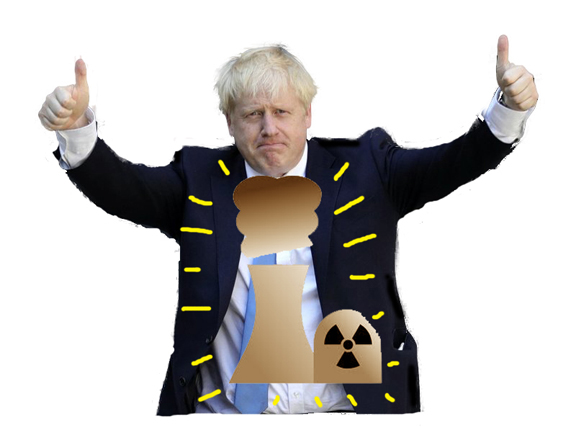
- He is hoping to push through the planned Sizewell C nuclear power station
- The new nuclear power station is expected to cost up to £30billion to build
By JASON GROVES POLITICAL EDITOR FOR THE DAILY MAIL, 29 August 2022
Boris Johnson will call for a massive increase in Britain’s domestic energy production this week, as he signs off on funding for a new nuclear power station.
The Prime Minister is expected to use his final speech in office to insist that a lasting solution to the current energy crisis must include a massive scaling up of the UK’s domestic energy resources.
He is also hoping to push through a decision on funding for the planned new Sizewell C nuclear power station in Suffolk, which would help guarantee Britain’s energy security.
Ministers have agreed in principle to sign off on the Sizewell C plant, which is expected to cost up to £30billion to build.
Whitehall sources suggested that both Liz Truss and Rishi Sunak have been consulted on the deal, which is expected to involve the Government taking a 20 per cent stake costing up to £6billion.
Final negotiations are continuing with French power firm EDF, which will operate the plant.
But Mr Johnson hopes to give the green light this week as a statement of intent on his plan to build one nuclear power station a year…………………………………………….
The result of the Tory leadership contest will be announced on 5 September and Mr Johnson is expected to leave office the following day. https://www.dailymail.co.uk/news/article-11155317/Boris-Johnson-plans-sign-new-30bn-nuclear-plant-final-week-power-sources-say.html
1 This Month





PLEASE OPPOSE HR 8255 AND S.3639 – bills would accelerate satellite deployment, with no environmental review or safeguards – https://ncstd5li.quorum.us/campaign/169331/
To see nuclear-related stories in greater depth and intensity – go to https://nuclearinformation.wordpress.com
-
Archives
- October 2026 (74)
- September 2026 (339)
- August 2026 (330)
- July 2026 (355)
- June 2026 (287)
- May 2026 (306)
- April 2026 (356)
- March 2026 (251)
- February 2026 (267)
- January 2026 (308)
- December 2025 (358)
- November 2025 (359)
-
Categories
- 1
- 1 NUCLEAR ISSUES
- business and costs
- climate change
- culture and arts
- ENERGY
- environment
- health
- history
- indigenous issues
- Legal
- marketing of nuclear
- media
- opposition to nuclear
- PERSONAL STORIES
- politics
- politics international
- Religion and ethics
- safety
- secrets,lies and civil liberties
- spinbuster
- technology
- Uranium
- wastes
- weapons and war
- Women
- 2 WORLD
- ACTION
- AFRICA
- Atrocities
- AUSTRALIA
- Christina's notes
- Christina's themes
- culture and arts
- Events
- Fuk 2022
- Fuk 2023
- Fukushima 2017
- Fukushima 2018
- fukushima 2019
- Fukushima 2020
- Fukushima 2021
- general
- global warming
- Humour (God we need it)
- Nuclear
- RARE EARTHS
- Reference
- resources – print
- Resources -audiovicual
- Weekly Newsletter
- World
- World Nuclear
- YouTube
-
RSS
Entries RSS
Comments RSS

