Zaporizhzhia Nuclear Power Plant: Energoatom denies fire in power unit 2
Yahoo News, Ukrainska Pravda, September 29, 2022, STANISLAV POHORILOV —
Energoatom, a Ukrainian state enterprise operating nuclear power stations in this country, has denied information about power unit No. 2 of the Zaporizhzhia Nuclear Power Plant (ZNPP) being on fire, and explained what has happened.
Source: press service of Energoatom
Quote: “Telegram channels are spreading false information about power unit No. 2 of the ZNPP being on fire. We hereby officially confirm that this is not true. As of 15:40, 29 September 2022, no fires have been detected in power units of the ZNPP.”
Details: Energoatom added that an emergency, not related to the fire, could occur due to a mine explosion, since the perimeter around the power plant is mined by occupiers, and explosions happen because of wild animals (boars, foxes, dogs) wandering around.
Today, there was an explosion on the perimeter, on a line of voltage supply to an oxygen station of power unit No. 6. The explosion damaged the line, and a power surge resulted in a short circuit in one of the voltage transformators, causing minor smoke.
There was no need to involve a fire brigade, which arrived at the scene.
Background:………………….. https://news.yahoo.com/zaporizhzhia-nuclear-power-plant-energoatom-134651082.html
Why Donbass residents voted to join Russia – the pro-Russian point of view
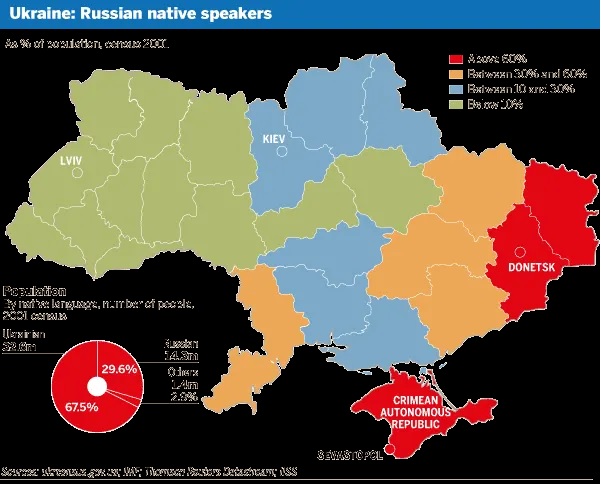
‘I can’t imagine our future differently’: Donbass residents explain why they voted to join Russia, By Vladislav Ugolny, a Russian journalist based in Donetsk Rt.com, 30 Sept 22
Last week, referendums on once-again becoming part of Russia were held in the Donetsk (DPR) and Lugansk (LPR) People’s Republics, as well as in the liberated territories of Zaporozhye, Kherson, and Nikolaev regions (the latter was annexed to Kherson Region).
According to the results, the ‘For’ option won all four by an overwhelming margin. RT’s correspondent in Donbass, Vladislav Ugolny, has been observing the sentiment there for the past eight years. He describes how the referendums took place, what they meant to local residents, and why their outcome simply could not have been different.
All arguments ‘against’
For those who are sufficiently immersed in the history of the struggle of the Russian residents of Ukraine for unity with their historic homeland, the results of the referendums are hardly surprising. But it is also worth pointing out from the start that not everyone in these regions took part in the vote……………………..
There are many people who are unhappy with what has been happening in Donbass these past eight years – where they have slowly languished as geopolitical hostages – and are also prepared to die for their land and identity. It is thanks to them and their resilience that Russia’s military offensive was possible. And these referendums also took place because of them.
They all had a lot of reasons to hate what was happening. The wounded were often dismissed retroactively to avoid paying for their injuries. And in a betrayal of memory, the names of children killed by Ukrainians in Sloviansk and Konstantinovka, towns not controlled by the DPR, disappeared from the Alley of Angels (a monument honoring the children of Donbass killed by Ukrainians). By removing these names, it was as if DPR officials were abandoning the territories and the memory of those who remained under Kiev’s occupation.
In the early years of its independence, the LPR had constant political crises, from which the despised Igor Plotnitsky emerged as the victor. Until he was overthrown and the much more popular Leonid Pasechnik was elected.
All arguments ‘for’
The hope for reunification was based on the fact that Russia is a stable state governed by the rule of law, with fully-fledged institutions and an established civil society. Living their lives on the frontline of a geopolitical confrontation, Russians in Donbass dreamed that one day war would disappear.
They hoped that Donbass would become an ordinary, peaceful region of Russia, like neighboring Rostov. They hoped that they would be able to put away their weapons and return to the mines and factories, and they could teach their children without regular shelling………..
Fate decided otherwise and the referendums had to be held during the fighting, with the risk of Kiev shelling the polling stations. Thus, the votes themselves did not become a moment of triumph and victory. But they could no longer be delayed, given that one of the declared aims of Moscow’s military operation was to restore peace to Donbass.
……….. The sweeps in Kharkov Region after towns and villages were seized by Kiev earlier this month, and the convoys of refugees, were apparently the final straw.
The risk of polling stations being shelled was one reason some locals criticized the referendums. A friend of mine who is now serving in one of the DPR’s army units refused to participate in the referendum. He justified it by saying he had expressed his position a long time ago and was now defending it with a gun in his hand.
However, his view was marginal. Residents of Donbass, despite the risks of terrorist attacks, flocked to the polls. Since the issue was a foregone conclusion, the polling stations became a place for declaring one’s position.
Journalists were told not about the choice people made, but rather about how long they had waited for the opportunity to make it.
The procedures of the referendum were designed with the usual legal provisions in mind, but the voters themselves effectively abolished the concept of ‘secret ballot’ by ticking the ‘yes’ box publicly.
The people of Donbass needed the referendum not to reassert their choice, which was made back in 2014 and has not changed since, but to present it to the international community in a more or less accepted framework,” a graduate of the political science department at Donetsk National University said after the vote. A leg injury prevented her from going to the polling station, but she was able to vote Yes by door-to-door voting:
Dmitry, a native of the border town of Yenakievo, Donbass, said, “Of course I waited for the referendum and voted Yes. I cannot imagine our future any other way. Back in 2015, I was repeatedly offered the chance to leave my home region and live in Ukraine so that I would not know what war is like.
“As you can see, I refused. Voting in the referendum was not my biggest contribution, but I was glad I did it. I didn’t doubt it for a second, especially when, about 40 minutes later, a HIMARS missile was shot down over the polling station, with shrapnel hitting my neighborhood.”
This is how the referendum was held in Donbass. As for the Zaporozhye and Kherson regions, the votes there were less festive there due to greater infiltration by Ukrainian security services and a bigger risk of sabotage. The lack of an eight-year wait was also a factor. However, even there, people were hoping that the Kharkov tragedy would not be repeated in their areas…… https://www.rt.com/russia/563764-they-voted-to-join-russia/
‘People’s Plan for Nature’ – a response to UK government’s attack on environmental protection laws
Three of the UK’s biggest conservation charities have joined with
celebrities to launch a new People’s Plan for Nature, in response to the
Government’s “open season” on policy protection for nature, which
could seed hundreds of environmental laws eased.
The National Trust, the RSPB, and WWF have joined forces with celebrity champions Maisie Williams
and Cel Spellman to launch the People’s Plan for Nature, a national
rallying cry for the public to have its say on how to respond to the
ecological crisis. The plan calls on Prime Minister Liz Truss and new
Environment Secretary Ranil Jayawardena to take rapid action on what the
charities describe as “open season” on existing environmental
legislation, with the recent mini-budget and rumours that Defra will U-turn
on its manifesto sparking concerns amongst green groups.
Edie 30th Sept 2022
Electricite de France, (EDF) loaded with debt and safety problems , gets a new CEO
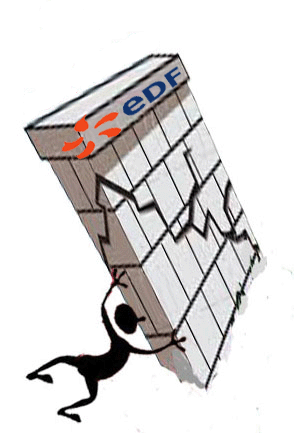
The French government has picked a senior Schneider Electric executive to
head EDF as it moves to fully renationalise the embattled nuclear power
operator and seeks an end to reactor outages straining electricity supplies
across Europe.
Luc Rémont is set to become chair and chief executive after
President Emmanuel Macron cleared his nomination at the group, which is 84
per state-owned, the Élysée Palace said. His appointment, still subject
to parliamentary checks, comes as the government kicks off a
nationalisation process.
A €9.7bn tender offer to buy out minority
shareholders could be handed to regulators next week, two people close to
the process said. The management overhaul at France’s former electricity
monopoly follows a fraught search for candidates that underscored some of
the turmoil around a group with huge industrial tasks ahead and that has
long been intertwined with politics.
Run-ins between the government and outgoing boss Jean-Bernard Lévy over some of the company’s operational problems have spilled into the public in recent weeks, in a blame game over
the state of its existing reactors and France’s hesitation to invest more in the sector. Already highly indebted, EDF is gearing up to build at least six new nuclear reactors in France, the biggest order in more than a quarter of a century.
It is still struggling with long delays and cost overruns on existing projects. A record number of outages at its 56 reactors have plunged its nuclear output to 30-year lows, torn a hole in its profits and turned France into a net importer of power in the middle of an energy crisis. On Thursday, a series of strikes over wages further squeezed EDF’s output.
FT 29th Sept 2022
https://www.ft.com/content/43a1dbd8-fbf0-420e-919e-e9b67bf8305d
US, UK sabotaged peace deal because they ‘don’t care about Ukraine’: fmr. NATO adviser
https://thegrayzone.com/2022/09/27/us-uk-sabotaged-peace-deal/ AARON MATÉ· SEPTEMBER 27, 2022,
Former Swiss intelligence officer and NATO adviser Jacques Baud on the next phase of the Russia-Ukraine war and new allegations that the US and UK undermined a peace deal that could have ended it.
The West’s aim “is not the victory of Ukraine, It’s the defeat of Russia,” Baud says. “The problem is that nobody cares about Ukraine. We have just instrumentalized Ukraine for the purpose of US strategic interests — not even European interests.”
Guest: Jacques Baud. Former intelligence officer with the Swiss Strategic Intelligence Service who has served in a number of senior security and advisory positions at NATO, the United Nations, and with the Swiss military.
Corrections:
- In his Sept. 21 speech, Putin did not make an explicit threat to use nuclear weapons. He vowed to “make use of all weapon systems available to us,” in the event of “a threat to the territorial integrity of our country and to defend Russia and our people.”
On nuclear weapons, the US did not have a “No First Use” policy. On the 2020 campaign trail, Joe Biden said that he supported the idea of “No First Use.” He abandoned that in his presidential nuclear posture; but that was reversing his campaign stance, not official US policy.
Nuclear power classed as “amber”, not “green”. Is it officially accepted as Environmental, Social, and corporate Governance (ESG) ?

the Commission applies a number of screening and disclosure conditions to nuclear’s taxonomy inclusion. For instance, there are screens based on scientific advice such as requiring disposal facilities for low-level radioactive waste to already be operational, member states having a plan for high-level waste disposal by 2050 and a ban on exporting radioactive waste to developing countries for disposal.
Does the EU taxonomy vote mean nuclear is officially ESG? ETF Stream, By Jamie Gordon, 26 Sep 2022,
The implementation of the Delegated Act will test both the EU’s credibility and investors’ appetite to adhere to prescriptive ESG frameworks
The European Parliament took the contentious step in July of voting to include nuclear energy within its taxonomy of sustainable activities, however, it remains to be seen whether other ESG frameworks will follow suit and if any naysayer investors will be swayed by the regulator’s decision.
Almost three years after first being discussed, nuclear energy, along with natural gas, look set to be added to the EU’s taxonomy via the Complementary Climate Delegated Act from 1 January 2023, earmarking them as sustainable investments for the time being.
The road to this verdict was not only meandering but full of obstacles, with Kenneth Lamont, senior research analyst at Morningstar, previously describing nuclear as being “stony on a political level” for investors and policymakers.
It began with the European Commission’s Technical Expert Group publishing the Taxonomy Technical Report in March 2020, which notably snubbed nuclear from its list of green activities.
A year later, leaders of seven EU member states wrote a letter calling on the European Commission to accommodate all paths to climate neutrality while the Commission’s Joint Research Centre argued nuclear should be eligible for ESG investment.
Even though the Commission announced a month later it would bootstrap nuclear and gas to its taxonomy via a Delegated Act, in October, a ‘Nuclear Alliance’ of 15 European Ministers called for the energy source to be included in the main body of the taxonomy by the end of 2021.
Ignoring these calls, the Commission published a draft of the Delegated Act on 31 December, which was soon met by fierce opposition as Austria and Luxembourg threatened to bring a lawsuit before the European Court of Justice.
Despite members of the Environment and Economic Affairs committees later voting against the proposed taxonomy changes in June, the defeat of the motion to block the Delegated Act in the European Parliament in July means nuclear will soon make its delayed entry into the taxonomy.
Conditional inclusion
While the move is significant for challenging the nuclear exclusions applied to many ESG frameworks and products, it bears remembering the Commission’s Platform on Sustainable Finance views nuclear as an ‘amber’ rather than ‘green’ activity – and its inclusion in the taxonomy is both conditional and time-limited………………………………..
Despite nuclear’s seemingly low-carbon credentials, the European countries most active in building new plants – Ukraine, the UK and France – currently only have a combined five plants under construction versus 17 for China alone.
Similarly, 27 out of the 31 reactors that have been under construction since 2017 are of Russian or Chinese design, according to analysis by SocGen.
…………………………….. there are several compelling arguments against nuclear being in the taxonomy such as what to do with thousands of tonnes of radioactive waste, concerns around directing capital away from renewables and the worthwhile geopolitical point that in 2020, 20.2% of the EU’s uranium supply came from Russia and 19.2% from its ally, Kazakhstan, according to Eurostat.
It is also worth noting the size of political opposition to nuclear as a ‘transition energy’, with 278 of 639 MEPs opposing the Delegated Act in July’s motion.
Considering these points, the Commission applies a number of screening and disclosure conditions to nuclear’s taxonomy inclusion. For instance, there are screens based on scientific advice such as requiring disposal facilities for low-level radioactive waste to already be operational, member states having a plan for high-level waste disposal by 2050 and a ban on exporting radioactive waste to developing countries for disposal.
Also, large listed non-financial and financial companies will be required to disclose what portion of their activities are linked to the energies included in the Delegated Act.
Greater complexity across EU policy……………………………………………………………………..
The ultimate test, however, will be if taxonomy inclusion changes investor attitudes towards nuclear, given its aim is to act as a framework for guiding capital towards worthy recipients.
………………………………. Many index providers will remove nuclear power operators from their exclusion lists and will become more flexible in including utilities that generate power from nuclear facilities in their indices,” he added.
However, he warned others with their own internal rules and those fulfilling client mandates would be less likely to change their indices in fear of losing business.
FTSE Russell, for instance, continues to categorise nuclear as tier three under its Green Revenues Classification System, meaning it has some environmental benefit but this is overall net neutral or negative……………………………………
Some investors might also be put off by the fact the technical screening criteria of the Delegated Act will be reviewed every three years, which includes time limits for the contribution of nuclear and gas to climate change mitigation efforts. If the EU reverses its recent taxonomy changes in future, investors in nuclear and gas will have to rush to get rid of these exposures in order to remain aligned.
For now, ESG might like nuclear a little more than it did a year ago but EU taxonomy support only applies to certain subsectors, subject to conditions and set to be reviewed over time.
Overall, though, the Delegated Act should be understood as more an act of EU pragmatism than moral change of heart on what it means to be sustainable. Nuclear may have a role to play in net-zero efforts but will face an uphill battle to convert its detractors. https://www.etfstream.com/features/does-the-eu-taxonomy-vote-mean-nuclear-is-officially-esg/
JOHN PILGER’S 2014 WARNING ABOUT UKRAINE
- https://popularresistance.org/john-pilgers-2014-warning-about-ukraine/ By John Pilger, Consortium News., September 25, 2022, Educate!
- John Pilger Warned The “U.S. Is Threatening To Take The World To War” Over Ukraine, Words That Have Taken On New Meaning.
- Originally published in The Guardian on 13 May 2014.
Why do we tolerate the threat of another world war in our name? Why do we allow lies that justify this risk? The scale of our indoctrination, wrote Harold Pinter, is a “brilliant, even witty, highly successful act of hypnosis”, as if the truth “never happened even while it was happening”.
Every year the American historian William Blum publishes his “updated summary of the record of U.S. foreign policy” which shows that, since 1945, the U.S. has tried to overthrow more than 50 governments, many of them democratically elected; grossly interfered in elections in 30 countries; bombed the civilian populations of 30 countries; used chemical and biological weapons; and attempted to assassinate foreign leaders.
In many cases Britain has been a collaborator. The degree of human suffering, let alone criminality, is little acknowledged in the west, despite the presence of the world’s most advanced communications and nominally most free journalism. That the most numerous victims of terrorism – “our” terrorism – are Muslims, is unsayable. That extreme jihadism, which led to 9/11, was nurtured as a weapon of Anglo-American policy (Operation Cyclone in Afghanistan) is suppressed. In April the U.S. state department noted that, following Nato’s campaign in 2011, “Libya has become a terrorist safe haven“.
The name of “our” enemy has changed over the years, from communism to Islamism, but generally it is any society independent of western power and occupying strategically useful or resource-rich territory, or merely offering an alternative to U.S. domination.
The leaders of these obstructive nations are usually violently shoved aside, such as the democrats Muhammad Mossedeq in Iran, Jacobo Arbenz in Guatemala and Salvador Allende in Chile, or they are murdered like Patrice Lumumba in the Democratic Republic of Congo. All are subjected to a western media campaign of vilification – think Fidel Castro, Hugo Chávez, now Vladimir Putin.
Washington’s role in Ukraine is different only in its implications for the rest of us. For the first time since the Reagan years, the U.S. is threatening to take the world to war. With eastern Europe and the Balkans now military outposts of Nato, the last “buffer state” bordering Russia – Ukraine – is being torn apart by fascist forces unleashed by the U.S. and the EU. We in the west are now backing neo-Nazis in a country where Ukrainian Nazis backed Hitler.
Having masterminded the coup in February against the democratically elected government in Kiev, Washington’s planned seizure of Russia’s historic, legitimate warm-water naval base in Crimea failed. The Russians defended themselves, as they have done against every threat and invasion from the west for almost a century.
But Nato’s military encirclement has accelerated, along with U.S.-orchestrated attacks on ethnic Russians in Ukraine. If Putin can be provoked into coming to their aid, his pre-ordained “pariah” role will justify a Nato-run guerrilla war that is likely to spill into Russia itself.
Instead, Putin has confounded the war party by seeking an accommodation with Washington and the EU, by withdrawing Russian troops from the Ukrainian border and urging ethnic Russians in eastern Ukraine to abandon the weekend’s provocative referendum.
These Russian-speaking and bilingual people – a third of Ukraine’s population – have long sought a democratic federation that reflects the country’s ethnic diversity and is both autonomous of Kiev and independent of Moscow. Most are neither “separatists” nor “rebels”, as the western media calls them, but citizens who want to live securely in their homeland.
Like the ruins of Iraq and Afghanistan, Ukraine has been turned into a C.I.A. theme park – run personally by C.I.A. director John Brennan in Kiev, with dozens of “special units” from the C.I.A. and F.B.I. setting up a “security structure” that oversees savage attacks on those who opposed the February coup. Watch the videos, read the eye-witness reports from the massacre in Odessa this month. Bussed fascist thugs burned the trade union headquarters, killing 41 people trapped inside. Watch the police standing by.
A doctor described trying to rescue people, “but I was stopped by pro-Ukrainian Nazi radicals. One of them pushed me away rudely, promising that soon me and other Jews of Odessa are going to meet the same fate. What occurred yesterday didn’t even take place during the fascist occupation in my town in world war two. I wonder, why the whole world is keeping silent.” [see footnote]
Russian-speaking Ukrainians are fighting for survival. When Putin announced the withdrawal of Russian troops from the border, the Kiev junta’s defence secretary, Andriy Parubiy – a founding member of the fascist Svoboda party – boasted that attacks on “insurgents” would continue. In Orwellian style, propaganda in the west has inverted this to Moscow “trying to orchestrate conflict and provocation“, according to William Hague. His cynicism is matched by Obama’s grotesque congratulations to the coup junta on its “remarkable restraint” after the Odessa massacre. The junta, says Obama, is “duly elected”. As Henry Kissinger once said: “It is not a matter of what is true that counts, but what is perceived to be true.”
In the U.S. media the Odessa atrocity has been played down as “murky” and a “tragedy” in which “nationalists” (neo-Nazis) attacked “separatists” (people collecting signatures for a referendum on a federal Ukraine). Rupert Murdoch’s Wall Street Journal damned the victims – “Deadly Ukraine Fire Likely Sparked by Rebels, Government Says“. Propaganda in Germany has been pure cold war, with the Frankfurter Allgemeine Zeitung warning its readers of Russia’s “undeclared war”. For the Germans, it is a poignant irony that Putin is the only leader to condemn the rise of fascism in 21st-century Europe.
A popular truism is that “the world changed” following 9/11. But what has changed? According to the great whistleblower Daniel Ellsberg, a silent coup has taken place in Washington and rampant militarism now rules. The Pentagon currently runs “special operations” – secret wars – in 124 countries. At home, rising poverty and a loss of liberty are the historic corollary of a perpetual war state. Add the risk of nuclear war, and the question is: why do we tolerate this?
Labour’s ‘Great British Energy’ Company likely to be a nuclear turkey
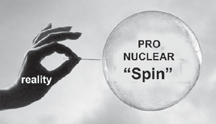
My ears perked up in eager anticipation when Keir Starmer, in his address to Labour’s Conference, started talking about setting up a state-backed renewable energy development company. But I sighed with
despair when it became clearer that this would be an investment conduit for what would be failing, black hole-type, nuclear projects.
Unless it is ring-fenced for renewable energy, and nuclear kept out, this will sink like a stone. If it is to be a vehicle for investing in new nuclear power plant, small or large, it will be like attaching a ship anchor to a rowing boat. It will sink. Quite fast in fact. The whole thing now sounds like an impractical soundbite meant to satisfy a committee on which sits Labour’s prime pro-nuclear donor, the GMB.
It’s actually a great pity that this is being spoiled by the nuclear-damned notion of this ‘Great British
Energy’ Company. I’m sorry Keir, I’d really like to be impressed by this, but it is a loser, certainly in the way it is being spun. When will politicians get it into their heads that new nuclear investment won’t and
can’t make money? Or maybe it’s just the soundbite that counts and they just don’t care that it doesn’t make sense?
100% Renewable UK 27th Sept 2022
UK Government to speed through nuclear development by making a bonfire of existing environmental regulations.
Whilst the media may have focused on the Chancellor’s contentious plan
to make the rich richer by cutting tax for higher earners, anti-nuclear
campaign groups, including and the Nuclear Free Local Authorities, are
concerned that buried within the finer print of the HM Treasury Growth
Plan, which was published alongside Kwasi Kwarteng’s speech in
Parliament, is a clear plot to streamline planning regulations and stifle
public objections to civil nuclear projects.
Treasury mandarins have identified Hinkley Point C and Sizewell C, numbered 115 and 116
respectively, as amongst the large infrastructure projects earmarked to be
fast-tracked by the end of next year by creating a bonfire of existing
regulations covering protection of the natural environment and the rights
and opportunity of the public and other stakeholders to object.
According to departmental officials new legislation will be brought forward to
‘address barriers by reducing unnecessary burdens to speed-up the
delivery of much-needed infrastructure’.
NFLA 27th Sept 2022
The New York Times on Ukraine: Vietnam Déjà Vu
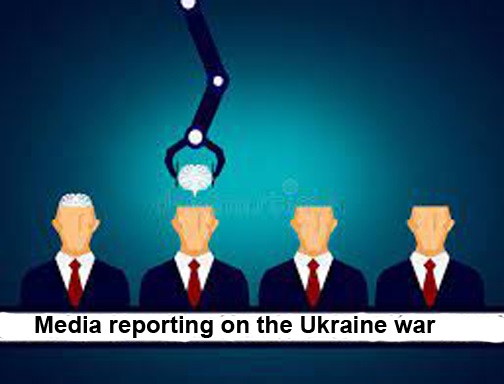
Zelensky did not explain how Ukraine was going to accomplish this, short of a U.S./NATO war with Russia. That’s the rub.
the Times wants to pre-empt Biden from doing the only sensible thing: tell Zelensky to stop the extreme rhetoric and talk to the Russians.
AntiWar.com, by Ray McGovern
The New York Times is going full-bore for war in Ukraine. It is difficult to explain the yellow journalism, but the so-called “paper of record” did the same thing on Vietnam (see below). In other words, the Gray Lady is whoring again.
It may be, as some allege, that the NYT has never met a war it did not want to get the U.S. involved in – or, once in, to escalate. However true that may be, I still cannot figure out why – why again.
With four Ukrainian oblasts about to join Russia and a mercurial President of Ukraine, Volodymyr Zelensky, making outlandish threats to take them – and Crimea – back, perhaps the Times believes it must move decisively to make it as difficult as possible for President Biden to behave more sensibly.
The Guardian reported yesterday that “Zelensky has vowed to liberate the entire country as Russia pressed on with its supposed referendum in occupied areas of Ukraine …” Zelensky said Ukraine’s armed forces would throw the Russian forces out and retaliate against “every strike of the aggressor.” He pledged that Ukraine’s armed forces would regain control of the southern Kherson region and the eastern Donbas, which includes Luhansk province and Crimea.
Shades of Zelensky’s Feb. 24, 2021 Presidential Decree No. 117 “Approving the Strategy for de-occupation and reintegration of the temporarily occupied territory of the Autonomous Republic of Crimea and the city of Sevastopol” – which gave the major push to growing tension in and around Ukraine.
Zelensky did not explain how Ukraine was going to accomplish this, short of a U.S./NATO war with Russia. That’s the rub.
Must Biden Appear Tough Before Midterms?
The Times seems out to use the prelude to the midterms to advantage. If past is prologue, the Times wants to pre-empt Biden from doing the only sensible thing: tell Zelensky to stop the extreme rhetoric and talk to the Russians.
The Times may fear the off-chance that an adult will come into the room and persuade President Biden that:
- He does not have to keep being diddled by Zelensky and his neocon supporters;
- Ukraine is not winning the war, despite recent successes on the battlefield;
- The US cannot seriously “weaken” Russia without risking wider war;
- On the sanctions front, German politicians may not be able to resist turning on the spigot to North Stream 2, lest the European economy and the European people freeze this winter.
Shameful
Never having been held accountable for reporting as flat fact that there were weapons of mass destruction in Iraq and cheerleading for the US/UK war of aggression starting in March 2003, the New York Times seems to feel it has carte blanche to demonize Russian President Vladimir Putin, in exactly the same way it did Saddam Hussein – and Ho Chi Minh, for god’s sake, four decades earlier.
Over the weekend the Times’s reporting has been slanted to lead readers to conclude that Putin is some kind of monster with whom no one could possibly negotiate. NYT reporters and also opinion writers rely now on Ukrainian officials; then on US intelligence officials. The collective performance is truly a travesty.
On Saturday, for example, opinion writer David Brooks tells us Putin is “a deeply wounded tiger.” And ( get this!)……………………………………………..
that our major newspapers propagated a view that “the only way out of the crisis … was a military victory over the forces of Ho Chi Minh.” In other words, no negotiations.
Actually, the American public had been coming to the conclusion that the war was a mistake, but having been indoctrinated for so many years about our “vital interests” in Vietnam, opposition did not really gather steam until it was too late.
And today, for the Establishment media, it is déjà vu all over again, to quote Yogi Berra – again.
Ray McGovern works with Tell the Word, a publishing arm of the ecumenical Church of the Saviour in inner-city Washington. His 27-year career as a CIA analyst includes serving as Chief of the Soviet Foreign Policy Branch and preparer/briefer of the President’s Daily Brief. He is co-founder of Veteran Intelligence Professionals for Sanity (VIPS). https://original.antiwar.com/mcgovern/2022/09/25/nyt-on-ukraine-vietnam-dj-vu/
Two UK nuclear stations were due for closure in 2014. Now EDF wants to extend their lifetime yet again.

EDF considers extending life of two UK nuclear plants due to energy crisis. Hartlepool and Heysham 1, operational for four decades, are due to close in 2024 but EDF says that is under review.
Guardian Alex Lawson Energy correspondent, 29 Sep 2022
France’s EDF is considering extending the life of two British nuclear power plants due to the severity of the energy crisis.
EDF said on Wednesday that it would review whether there was a case to keep open the Hartlepool nuclear power plant in County Durham and Heysham 1 on the north-west coast of England near Lancaster. Both plants had been scheduled to close in March 2024.
EDF operates all of Britain’s eight nuclear power plants, five of which are still providing power to the grid, about 13% of the UK’s electricity. The entire fleet is due to shut by 2028 apart from Sizewell B, which will close in 2035.
When EDF took over the nuclear fleet in 2009, Heysham 1 and Hartlepool were due to run until 2014. After technical reviews, that was extended to 2019 and then, in 2016, a further five-year extension was approved after further reviews.
Sources said any extra lifespan for the stations was likely to be far shorter than previous extensions……..
EDF said it had decided to launch the review “in light of the severity of the energy crisis and the results of recent graphite inspections” and said an extension would “depend on the results of graphite inspections over the coming months”…………………………………………………………
Some power-generation companies, including those on nuclear, old solar and windfarm contracts have landed an unexpected windfall from the jump in electricity prices while their costs have not risen, triggering calls for a windfall tax……………………….. https://www.theguardian.com/environment/2022/sep/28/edf-considers-extending-life-of-two-uk-nuclear-plants-due-to-energy-crisis-hartlepool-heysham
Both sides need to acknowledge their mistakes, especially regarding Crimea and the Donbass
At the end of this presentation, we see that the blame is shared, but not equally. The West recognized the 2014 coup; it tried to stop the ensuing massacre, but ultimately let the full nationalists continue it; it armed Ukraine instead of forcing it to comply with the Minsk 1 and 2 agreements. Russia, for its part, built a bridge that locks the Sea of Azov without consultation. Peace will only be preserved if both sides recognize their mistakes.
Are we able to do this?
Crimea, which had already voted in a referendum to become part of the future independent Russia when the USSR was dissolved, six months before the rest of the Ukrainian Soviet Republic declared its independence, voted again in a referendum. For four years, Crimea was claimed by both Russia and Ukraine. Moscow argues that between 1991 and 1995, it and not Kiev was paying pensions and salaries of officials in Crimea. In fact, Crimea was always Russian, even if it was considered part of Ukraine. In the end, it was Russian President Boris Yeltsin who, in the midst of a severe economic crisis, decided to abandon Crimea to Kiev. However, Crimea then voted for a constitution recognizing its autonomy within Ukraine, which Kiev never accepted. The second referendum, in 2014, overwhelmingly proclaimed independence. The Crimean Parliament then called for the attachment of its state to the Russian Federation, which the latter accepted. To strengthen the continuity of its territory, Russia built, without consulting Ukraine, a gigantic bridge linking its metropolis to the Crimean peninsula across the Sea of Azov, effectively privatizing this small sea.
How to Stop the Escalation to War,
Voltaire.net, by Thierry Meyssan, Translation, Roger Lagassé, 27 Sept 22,
The Ukrainian conflict is turning into a war between the West on one side and Russia and China on the other. Each side is convinced that the other one wants its loss. And fear is a bad advisor. Peace can only be preserved if each side recognizes its mistakes. This must be a radical change, because today neither Western discourse nor Russian actions correspond to reality.
o political leader wants a war on his territory. When they do, it is usually out of fear. Each side fears the other, rightly or wrongly. Of course, there are always a few elements that push for a cataclysm, but they are fanatical and in the minority.
This is exactly the situation in which we find ourselves. Russia is convinced, rightly or wrongly, that the West wants to destroy it, while the West is identically convinced that Russia is conducting an imperialist campaign and will eventually destroy its freedoms. In the shadows, a very small group, the Straussians, want confrontation.
This is not to say that World War III is just around the corner. But if no political leader radically changes his or her foreign policy, we are walking directly into the unknown and must prepare for absolute chaos.
To clear up misunderstandings, we must listen to the narratives of both sides.
Moscow believes that the overthrow of democratically elected President Viktor Yanukovych was a coup d’état orchestrated by the United States. This is the first point of divergence as Washington interprets the events as a “revolution”, the “EuroMaidan” or “Dignity” revolution. Eight years later, numerous Western testimonies attest to the involvement of the US State Department, the CIA and the NED, Poland, Canada and finally NATO.
The people of Crimea and Donbass refused to endorse the new power, which included many “integral nationalists”, successors of the defeated of the Second World War.
Crimea, which had already voted in a referendum to become part of the future independent Russia when the USSR was dissolved, six months before the rest of the Ukrainian Soviet Republic declared its independence, voted again in a referendum. For four years, Crimea was claimed by both Russia and Ukraine. Moscow argues that between 1991 and 1995, it and not Kiev was paying pensions and salaries of officials in Crimea. In fact, Crimea was always Russian, even if it was considered part of Ukraine. In the end, it was Russian President Boris Yeltsin who, in the midst of a severe economic crisis, decided to abandon Crimea to Kiev. However, Crimea then voted for a constitution recognizing its autonomy within Ukraine, which Kiev never accepted. The second referendum, in 2014, overwhelmingly proclaimed independence. The Crimean Parliament then called for the attachment of its state to the Russian Federation, which the latter accepted. To strengthen the continuity of its territory, Russia built, without consulting Ukraine, a gigantic bridge linking its metropolis to the Crimean peninsula across the Sea of Azov, effectively privatizing this small sea.
Crimea is home to the port of Sevastopol, which is indispensable to the Russian navy. The latter represented nothing in 1990, but became a power again in 2014.
The West recognized the Soviet referendum in Ukraine in 1990, but not the one in 2014. Yet the right of peoples to self-determination does apply to the Crimeans. The West argues that many Russian soldiers were present without wearing their uniforms. True, but the results of the two referendums in 1990 and 2014 were similar. There is no room for suspicion of fraud.
To show that they did not accept this “annexation”, the West collectively imposed sanctions on Russia, without authorization from the Security Council. These sanctions violate the UN Charter, which gives exclusive authority to the Security Council.
The Donetsk and Luganks oblasts have also rejected the 2014 coup government. They proclaimed their autonomy and posed as resisters to the “Nazis” in Kiev. Equating “integral nationalists” with “Nazis” is historically justified, but does not allow non-Ukrainians to understand what is going on.
The “integral nationalist” was created in Ukraine by Dmytro Dontsov at the very beginning of the 20th century. Initially, Dontsov was a left-wing philosopher, only gradually moving to the extreme right. He was a paid agent of the Second Reich during the First World War, before participating in the Ukrainian government of Symon Petliura, which arose during the Russian Revolution of 1917. He participated in the Paris Peace Conference and accepted the Treaty of Versailles. During the inter-war period, he exercised a mastery over Ukrainian youth and became a propagandist of fascism, then of Nazism.
He became violently anti-Semitic, preaching for the massacre of the Jews long before this theme was supported by the Nazi authorities, who spoke only of expulsion until 1942. During the Second World War, he refused to take over the leadership of the Organization of Ukrainian Nationalists (OUN), which he entrusted to his disciple Stepan Bandera, assisted by Yaroslav Stetsko.
Almost all the documents about his activity within Nazism have been destroyed. It is not known what he did during the war, except for his active participation in the Reinhard Heydrich Institute after the latter’s assassination. The newspapers of this anti-Semitic organ gave him a lot of space
At the Liberation, he fled to Canada, under the protection of the Anglo-Saxon secret services, and then to the United States. At the end of his life, he was still as virulent as ever and had evolved into a form of Viking mysticism, preaching the final confrontation against the “Muscovites. Today, his books, especially his Nationalism, are required reading for militiamen, especially those in the Azov Regiment. Ukrainian “integral nationalists” massacred at least 3 million of their fellow citizens during World War II.
Washington reads this history differently. For it, the “integral nationalists” certainly made mistakes, but they were fighting for their independence against both the German Nazis and the Russian Bolsheviks. The CIA was therefore right to host Dmytro Donsov in the USA and to employ Stepan Bandera on Radio Free Europe. And even more, to create the World Anti-Communist League around the Ukrainian Nazi Prime Minister, Yaroslav Stetsko, and the leader of the Chinese anti-communist opposition, Chiang Kai-shek. Today, again according to Washington, these facts belong to the past.
In 2014, with President Petro Poroshenko, the Kiev government cut off all aid to the “Muscovites” of Donbass. It stopped paying pensions to its citizens and salaries to their civil servants. It banned the Russian language, spoken by half of Ukrainians, and launched punitive military operations against these “sub-humans”, killing 5,600 and displacing 1.5 million in 10 months. In the face of these horrors, Germany, France and Russia imposed the Minsk agreements. The aim was to bring the Kiev government to its senses and to protect the people of the Donbass.
Noting that the first agreements had not been followed by effect. Russia had the Minsk 2 agreement endorsed by the Security Council. This was resolution 2202, adopted unanimously. During the explanations of vote, the United States developed its interpretation of this period. For them, the “resistance” in Donbass were only “separatists” supported militarily by Moscow. They therefore specified that the Minsk 2 agreement (February 12, 2015) did not replace the Minsk 1 agreements (September 5 and 19, 2014), but added to them. They thus demanded that Russia withdraw the troops it had deployed without uniform in the Donbass. Germany and France had a joint statement added, co-signed by Russia, guaranteeing the “binding” implementation of this set of “commitments.”
However, shortly afterwards, President Poroshenko declared that he had no intention of implementing anything and resumed hostilities, a position that the government of President Zelensky has reiterated. In the seven years following resolution 2202, 12,000 new victims were killed, according to Kiev, or 20,000, according to Moscow.
During this period, Moscow did not intervene. President Vladimir Putin not only withdrew his troops, but also forbade an oligarch to send mercenaries to support the people of Donbass. The latter have been abandoned by the guarantors of the Minsk agreements and by the other members of the Security Council.
In the Russian way of politics, one waits until one is in a position to do something before announcing it. So Moscow did not say anything, but prepared for what was to come. Suffering from the sanctions it had endured since the annexation of Crimea, it expected the West to tighten them when it intervened to implement resolution 2202. So Putin approached other sanctioned states, including Iran, to circumvent the sanctions on him and prepare to circumvent others. Anyone who regularly visits Russia will have noticed that the Putin administration is developing food autarky, including for meat and cheese, which his country had previously lacked. Russia has moved closer to China in banking, which we have wrongly interpreted as a move against the dollar. In reality, it was a preparation for the exclusion of the SWIFT system.
When President Putin launched his army into Ukraine, he made it clear that he was not declaring a “war” to annex Ukraine, but was implementing a “special military operation” under Resolution 2202 and his “responsibility to protect” the civilian population of Donbass.
As expected, the West responded with economic sanctions that severely disrupted the Russian economy for two months. Then things turned around and these sanctions turned out to be profitable for Russia, which had prepared for them for a long time.
On the ground, the West sent a lot of weapons, then deployed military advisors and some special forces. The Russian army, three times smaller in number than the Ukrainian army, began to suffer. It has therefore just decreed a partial mobilization to send new troops without having to dismantle its national defence system.
Nato, for its part, has developed a plan to mobilize a core group of states and an expanded group of its more distant allies. The idea is to spread the financial effort over as many partners as possible until Russia is exhausted.
Moscow responded by announcing that if the West took a further step, it would use its new weapons.
The Russian and Chinese armies have mastered hypersonic launchers, which the West lacks. Moscow and Beijing can destroy any target, anywhere in the world, in a matter of minutes. It is impossible to stop them, and this imbalance will last at least until 2030, according to US generals. Russia has already said that it will strike first at the British Foreign Office, which it considers to be the head of its enemies, and the Pentagon, which it considers to be its armed wing. In the event of an attack, the Russian and Chinese armies would first destroy the United States’ strategic communication satellites (CS3). The latter would lose in a few hours the possibility of guiding nuclear missiles and therefore of retaliating. There is little doubt about the outcome of such a war.
……………Engaging in this confrontation is not impossible. In the United States, the Straussians, a very small group of unelected politicians, are determined to bring about the apocalypse. In their view, the United States will no longer be able to exercise dominance over the entire world, but it can still achieve it over its allies. To do this, they must not hesitate to sacrifice some of their own, if their allies suffer even more than they do and if, in this way, they remain the first (not the best).
As in all conflicts, people are afraid and some individuals push them to war.
Russia has just held four referendums on self-determination and annexation, both in the two republics of Donbass and in two oblasts of Novorossia. The view of the G7, whose foreign ministers were attending the UN General Assembly in New York, was immediately to denounce the referendums as invalid because they were held in a war situation, which is a debatable opinion. So they went on to denounce a violation of the sovereignty and territorial integrity of Ukraine and the principles of the UN Charter. These last points are false. By definition, the right of peoples to self-determination does not violate the sovereignty and territorial integrity of the state from which they can, if they wish, separate. Moreover, all the members of the G7 (except Japan) have signed the Helsinki Final Act, in which they undertake to defend all these principles simultaneously.
It is particularly odious to note the way in which the G7 interprets the right to self-determination to its advantage. For example, the United Nations General Assembly has condemned the illegal occupation by the United Kingdom of the Chagos Archipelago. It ordered that it be returned to Mauritius by October 22, 2019. Not only has this not been done, but one of the Chagos Islands, Diego Garcia, is still illegally leased to the United States to house the largest military base in the Indian Ocean. Moreover, France illegally transformed its colony of Mayotte into a department in 2009. It held a referendum in violation of General Assembly resolutions 3291, 3385 and 31/4, which affirm the unity of the Comoros and prohibit referendums in only one of its parts, the state of the Comoros and the French colony of Mayotte. It is precisely to avoid decolonization that France has organized this referendum, given that it has installed a maritime military base there and above all a military interception and intelligence base.
From a Russian point of view, these referendums, if internationally recognized, would put an end to military operations. By refusing them, the West is prolonging the conflict. Their intention is to see the rest of Novorossia fall into the hands of Russia. If Odessa becomes Russian again, Moscow will have to accept the accession of the adjacent Transnistria to the Russian Federation. Transnistria is not Ukrainian, but Moldovan, hence its current name of Dniester Moldavian Republic.
Russia refuses to accept a Moldavian territory that has historical reasons to proclaim itself independent. But it did not accept it either with South Ossetia and Abkhazia, which also have historical reasons to proclaim themselves independent, but are Georgian. Neither Moldova nor Georgia have committed crimes comparable to those of modern Ukraine.
At the end of this presentation, we see that the blame is shared, but not equally. The West recognized the 2014 coup; it tried to stop the ensuing massacre, but ultimately let the full nationalists continue it; it armed Ukraine instead of forcing it to comply with the Minsk 1 and 2 agreements. Russia, for its part, built a bridge that locks the Sea of Azov without consultation. Peace will only be preserved if both sides recognize their mistakes.
Are we able to do this? https://www.voltairenet.org/article218093.html
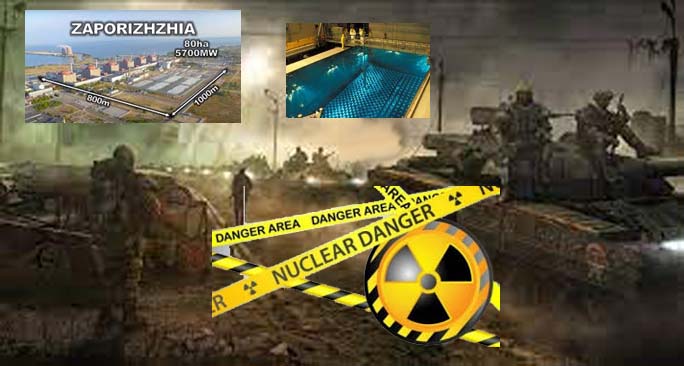
Missile strike near Ukrainian nuclear plant raises new fears. But the real question is why is it there at all?
https://beyondnuclearinternational.org/2022/09/26/another-close-call/ By Linda Pentz Gunter, 28 Sept 22,
“What is Russia thinking?” asked CNN news anchor Ana Cabrera of her guest, retired Air Force colonel, Cedric Leighton, after reports that Russian missiles landed within 328 yards of the South Ukraine nuclear power plant on September 19.
But here’s the question that should have been asked — but rarely is: why are we still using such a profoundly dangerous technology to generate electricity? What are WE thinking? (We will leave aside here the conflicting accusations about who is shelling the reactors. The point is their very presence in a war zone and all that implies.)
Nothing has brought that risk into sharper focus than the Russian invasion of Ukraine, where 15 operational reactors at four sites are sitting duck targets that could release a radioactive nightmare if struck — whether accidentally or deliberately — by either side as battle rages.
When the invasion began on February 24, it was the closed Chornobyl site — scene of the world’s worst, and most notorious, nuclear power plant disaster in 1986 — that was first occupied. Although none of the four reactors there are operating any longer, there is a significant radioactive waste inventory on site. This was stirred up by Russian forces and their heavy equipment. Soldiers even dug sleeping trenches, apparently unaware of the radiation exposure risks that resulted.
This time around, however, Chornobyl is of lesser concern than the four other nuclear sites in Ukraine, although it remains a potential disaster scene largely due to the irradiated fuel stocks on site.
The four active nuclear sites — at Rivne and Khmelnitsky in western Ukraine, and South Ukraine and Zaporizhzhia in the south and eastern regions— are generally described as “newer” than Chornobyl, but this is only true in the technological sense. Chornobyl was an old Soviet RBMK design, lacking containment. Incredibly, Russia still reportedly operates 10 Chornobyl-style RBMK reactors, albeit modified to try to avoid the fatal design flaws that contributed to the 1986 explosion and meltdown.
The operating reactors in Ukraine are VVER pressurized water reactors similar to those used in the United States, for example. The VVER is also a Russian design but with an actual containment, so in theory, more robust than the old RBMKs. However, there is a great deal of doubt that the VVERs, like any reactor today, are robust enough to withstand an onslaught of missiles under war conditions.
Yet, in another sense, the VVER reactors are far older than Chornobyl Unit 4 was when it exploded. That reactor had only been operating approximately two years when disaster struck. The present day 1,000 megawatt reactors in Ukraine have been operational mostly since the 1980s, accumulating much larger radioactive inventories.
As Beyond Nuclear has continued to warn, the radiological — and therefore health — consequences of a major breach of one of these reactors would be far worse than those of the 1986 Chornobyl accident.
But it needn’t take a war. The dangers presented by commercial nuclear power plants are inherent. They are there every day. They are made worse by warfare, which increases the likelihood of a nuclear disaster — and that same war now also increases the danger that nuclear weapons might be used.
And yet, as we continue to “play with fire”, as even IAEA chief, Rafael Grossi described the insanity of shelling near or at nuclear plants in Ukraine, the obvious connection isn’t made.
We’ve seen scientists and media outlets map out how far a deadly radioactive plume would spread if, say, Zaporizhzhia suffered a fatal missile strike. But scarcely if ever do they go on to observe that we are only holding our collective breath so tightly because of the persistent threat that these reactors pose on any given day.
We don’t need to use nuclear power today. We never needed it. And it is a totally insane way to boil water.
Linda Pentz Gunter is the international specialist at Beyond Nuclear and writes for and curates Beyond Nuclear International.
Save the fish: Nuclear Free Local Authorities call for acoustic deterrent at Sizewell C
https://www.nuclearpolicy.info/news/save-the-fish-nuclear-free-local-authorities-call-for-acoustic-deterrent-at-sizewell-c/ 28 Sept 22, The Nuclear Free Local Authorities have written to the Environment Agency calling for the developers of a new nuclear power plant at Sizewell C to be required to install an acoustic fish deterrent to save local fish stocks from destruction should the plant become operational.
The Environment Secretary George Eustace has recently decided that EDF Energy should be required to install a similar device at Hinkley Point C, a new nuclear plant currently being built on the Somerset coast, and as Sizewell C would be built to the same design the NFLA can see no reason why the same condition should not be applied to the Suffolk plant.
Councillor David Blackburn, Chair of the NFLA Steering Committee, has just written to the Environment Agency responding to a consultation over the permits that will be issued to EDF by the Environment Agency now that a Development Consent Order has been granted by a government minister.
Commenting he said: “We are still a very long way from Sizewell C becoming operational and it is far from a done deal. Most of the finance is not in place, there remains doubts about the safety and reliability of the proposed EDR reactor, EDF appears to be having cold feet given its financial position and poor operational performance at home, and local activists are looking to challenge the decision to go-ahead in the courts.
“I hope that the decision to grant approval can be successfully challenged in the courts or that EDF’s many troubles elsewhere may still kibosh the plan, but if somehow, despite the odds, this insane plan goes ahead it is important that we ensure that high standards are encapsulated in the conditions attached to the operation of Sizewell C to protect the natural environment and the people who live in adjoining communities – at least as far as is possible when your neighbour is a huge nuclear power plant.”
Although the NFLA submission to Environment Agency covers many points but two particular concerns are plans for long-term salination and the welfare of marine life.
Councillor Blackburn further explained: “We are grateful to Sizewell C for their advice on our response to this consultation; we completely share their concerns about the adverse impact of this plant on the lives of local people and the local environment. Our two key points in our response are that should EDF Energy look to desalination as a long-term solution to the lack of potable water that an extensive public consultation should take place prior to a decision on approval and that an acoustic fish deterrent should be installed at Sizewell C.
“The Environment Secretary has creditably recently upheld his inspector’s decision to require EDF Energy to install an Acoustic Fish Deterrent at Hinkley Point C. The EPR reactors proposed for Sizewell C will be the same as those proposed for Hinkley Point C. Both sites will be heavily reliant upon sucking in vast amounts of seawater to cool the plant, the impact on local sea life is likely to be similarly destructive. Accordingly, the NFLA believes that an acoustic fish deterrent, which projects sound waves to deter fish entering the plant, should be installed at Sizewell C as a condition of any permit issued by the Environment Agency giving the go ahead.”
HISTORIC CONTEXT OF THE REFERENDA IN UKRAINE.
Popular Resistance, By Moon of Alabama., September 24, 2022, Educate!
Voting for membership in the Russian Federation has started in four oblast of Ukraine:
………………….. The Ukrainian regime has resorted to pure terrorism to prevent the votes from happening:
” Ukrainian partisans, sometimes working with special operations forces, have blown up warehouses holding ballots and buildings where Russian proxy officials preparing for the vote held meetings. Ukrainian officials have acknowledged that they are engaged in a campaign to assassinate key Russian administration officials; more than a dozen have been blown up, shot and poisoned, according to Ukrainian and Russian officials.“
Such behavior by the Zelenski regime against its still Ukrainian compatriots will only encourage the people in the four oblast to vote for an alignment with Russia.
The propaganda in the ‘west’ will declare that the vote is irregular and that the results, likely to be pro-Russian, will be fake.
But a view on historic election outcomes since Ukrainian independence in 1991 show clear geographic preferences in east and south Ukraine for pro-Russian policies:
[ The original here shows a graphic chart illustrating voting patterns over the years]
The graphic above is from research published by the Eurasian Research Institute of the International Hoca Ahmet Yesevi Turkish-Kazakh University. Its author writes:
“As we can see, the have always been a clear-cut geographical split in the way the regions of Ukraine vote for particular candidates. The East and West division or also referred as Southeast and Northwest division was always present throughout the electoral history of the independent Ukraine. It is conventionally believed that the eastern part of Ukraine is more influenced by Russia politically, economically and culturally. Therefore, the presidential candidates proposing more pro-Russian agenda usually gain much more political support in eastern regions than in other parts of Ukraine.
On the other hand, the western part of the country has traditionally been more pro-European with strong reference to traditional core Ukrainian ethnic traditions and values. Consequently, presidential candidates with pro-European political agenda and traditional Ukrainian appeal usually had strong support in western regions of the country. It is interesting to note that preferences of the electorate were not related to the geographical origin or background of the presidential candidates and any candidate could easily become popular in the east as well as in the west. Moreover, the same candidate could be both pro-eastern and pro-western in different periods of time as did Leonid Kuchma in 1994 and 1999, who is the only Ukrainian president to serve two consecutive terms from 1994 to 2005.“
The division is consistent with ethnic and linguistic differences between those parts of Ukraine.
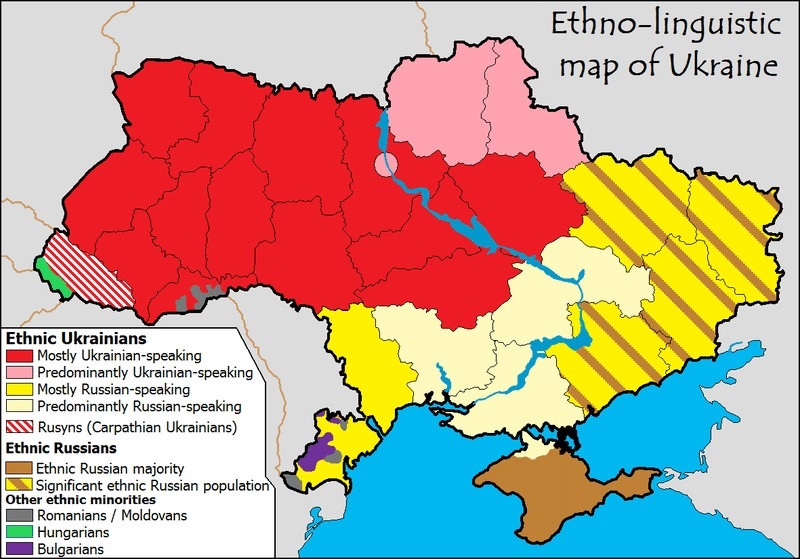
In 2014, after the violent fascist coup in Kiev, one of the first laws implemented by the new government removed the Russian language from official use. Instead of overcoming the differences between its people it only sealed the predominant split in Ukraine.
The election promise of the current Ukrainian president Vladimir Zelenski to make peace with the Russia aligned rebellious Donbas region by adhering to the Minsk 2 agreements was rewarded with a large share of southeastern votes for his presidency. However, after having been threatened with death by fascists, Zelenski has made a 180 degree turn and has since posed as Ukrainian nationalist. In consequence he has lost all support in southeastern Ukraine.
The southeastern parts of today’s Ukraine have for centuries been part of the central Russian empire. They were only attached to the Soviet Republic of Ukraine under Lenin’s rule in 1922 and, in the case of Crimea, in 1954 under Nikita Khrushchev who himself had grown up in the Donbas region.

A likely high turnout and majority vote for membership in the Russian Federation will only correct the historic misalignment created by those illogical transfers.
https://popularresistance.org/historic-context-of-the-referenda-in-ukraine/
1 This Month





PLEASE OPPOSE HR 8255 AND S.3639 – bills would accelerate satellite deployment, with no environmental review or safeguards – https://ncstd5li.quorum.us/campaign/169331/
To see nuclear-related stories in greater depth and intensity – go to https://nuclearinformation.wordpress.com
-
Archives
- October 2026 (74)
- September 2026 (339)
- August 2026 (330)
- July 2026 (355)
- June 2026 (287)
- May 2026 (306)
- April 2026 (356)
- March 2026 (251)
- February 2026 (267)
- January 2026 (308)
- December 2025 (358)
- November 2025 (359)
-
Categories
- 1
- 1 NUCLEAR ISSUES
- business and costs
- climate change
- culture and arts
- ENERGY
- environment
- health
- history
- indigenous issues
- Legal
- marketing of nuclear
- media
- opposition to nuclear
- PERSONAL STORIES
- politics
- politics international
- Religion and ethics
- safety
- secrets,lies and civil liberties
- spinbuster
- technology
- Uranium
- wastes
- weapons and war
- Women
- 2 WORLD
- ACTION
- AFRICA
- Atrocities
- AUSTRALIA
- Christina's notes
- Christina's themes
- culture and arts
- Events
- Fuk 2022
- Fuk 2023
- Fukushima 2017
- Fukushima 2018
- fukushima 2019
- Fukushima 2020
- Fukushima 2021
- general
- global warming
- Humour (God we need it)
- Nuclear
- RARE EARTHS
- Reference
- resources – print
- Resources -audiovicual
- Weekly Newsletter
- World
- World Nuclear
- YouTube
-
RSS
Entries RSS
Comments RSS

