What will be the consequences of Finland’s and Sweden’s NATO membership?
The West has no positive vision anymore – its actions are about re-armament, threats, sanctions, demonization, the self-righteous “we-never-did-anything-wrong” and the concomitant projection of its own dark sides upon others, China in particular.
This is not the time to make decisions in a moment of historical hysteria and panic. This is indeed a moment to keep cool.
One can only regret that Sweden and Finland lack the intellectual power to see the larger picture in time and space. NATO has had the time since 1949 to prove that it can make peace. We know now that it can’t. Joining it, therefore, is one big gift to militarism and future warfare.
IT IS FOOLISH FOR FINLAND AND SWEDEN TO JOIN NATO, Popular Resistance By Jan Oberg, The Transnational., May 15, 2022
”……………………………………………………………There are potentially so many – some more likely than others – that they cannot all be listed in a short pointed analysis like this. But let me mention:
- The Swedes and the Finns will become less secure. Why? Because there will be harder confrontation and polarization instead of soft borders and mediating attitudes. In a serious crisis, they will, for all practical purposes, be occupied and told what to do by the US/NATO.
- To the degree that, at some point in the future, the two countries will be asked to host US bases – like Norway and Denmark now – they won’t be able to say ‘No’! Such bases will be Russia’s first-order targets in a war situation.
- From a Russian point of view, of course, their NATO membership is extremely tension-increasing and confrontational. Russia has 8% (US$ 66 billion) of the military expenditures of the 30 NATO members. Now there will be a huge re-armament throughout NATO; Germany alone plans to increase to almost twice as much as Russia’s expenditures. Ukraine will receive about US$ 50 billion. Add a re-armed Sweden and Finland and we shall see Russia rush down to 4% of NATO’s expenditures – and still be called a formidable threat.
- There will be virtually no confidence-building and conflict-resolution mechanisms left in Europe. No discussion will be possible about a new all-European peace and security system. And whether it is understood and respected or not, Russia will feel even more intimidated, isolated and – in a certain situation – become even more desperate. As does, normally, the weaker party in an asymmetric conflict. We are living in very dangerous times and these two countries in NATO will only increase the danger, there is no way it could reduce it.
- If Finland and Sweden so strongly want to be “protected” by the United States and/or NATO, it is completely unnecessary for these two countries to join because, if there is a serious crisis, the US/NATO will under all circumstances come to “protect” or rather use their territories to be closer to the Baltic republics. That’s what the Host Nation Support agreements are about.The only reason to join would be paragraph 5 – but the disadvantage is that paragraph 5 requires that Finland and Sweden will be expected to participate in wars that are not about their defense and perhaps even in future international law-violating wars à la those in Yugoslavia, Iraq and Libya. So, will Finnish and Swedish young people be killed in future NATO-country wars? Are they ready for that?
- It will cost a fortune to convert their military infrastructure to full NATO membership – and when they have joined, they cannot not pay whatever the price will turn out to be. In addition, there will be much less de facto sovereign decision-making possible – here de jure is almost irrelevant. And it was already very self-limited before they joined.
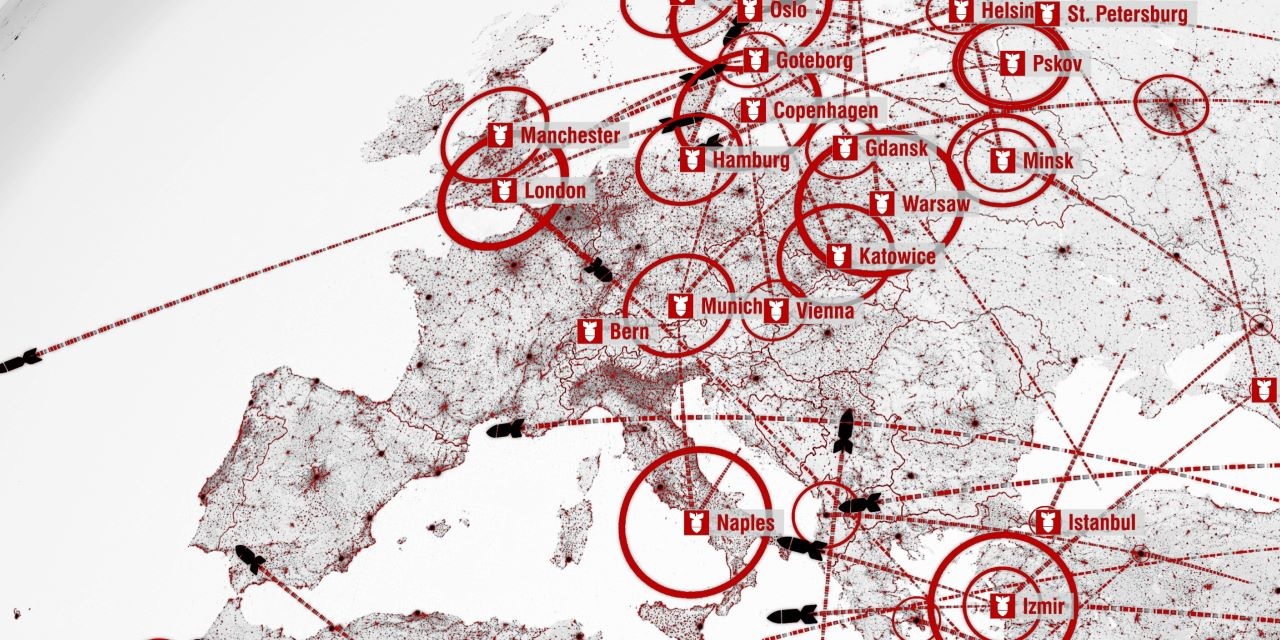
- As NATO members, Finland and Sweden cannot but share the responsibility for nuclear weapons – the deterrence and possible use of them by NATO. It’s also obvious that NATO vessels may bring nuclear weapons into their ports – but they will of course not even ask – they know the arrogant US response is that “we neither confirm nor deny that sort of thing.
- ”This goes against every fibre of the Swedish people – and Sweden’s decision to not develop nuclear weapons dating some 70 years back.
- The days when Sweden and Finland can – in principle, at least – work for alternatives are numbered. That is, for the UN Treaty on nuclear abolition and the UN goals of general and complete disarmament, any alternative policy concepts like common security, human security, a strong UN etc. They won’t be able to serve as mediators – like, say, Austria and Switzerland. No NATO member can pay anything but lip service to such noble goals. NATO is not an organization that encourages alternatives. Instead, it seeks monopoly as well as regional and global dominance.
- Finland and Sweden say yes to militarist thinking, to a ‘peace’ paradigm that is imbued with weapons, armament, offensiveness (long-range + large destructive capacity), deterrence and constant threatening: NATO is human history’s most militaristic organization. Its leader, the United States of America, has been at war 225 out of 243 years since 1776. Every idea about nonviolence, the UN Charter provision of making peace by predominantly peaceful means (Article 1 in the Charter) will be out of the window.
- The political attention, as well as funds, will tend to switch to military matters, away from contributing to solving humanity’s most urgent problems. But – we know it now – the excuse will be Putin’s invasion of Ukraine. Is there any huge change that cannot be justified with reference to that?
- While everybody knows that the Arctic is going to be a region of central security and peace concerns in the near future, this issue has hardly been discussed in relation to the two countries’ NATO membership. However, it doesn’t require much expertise to see that US/NATO access to Sweden and Finland is a clear advantage in the future confrontation with Russia and China there.
- As NATO members, Sweden and Finland not only accept but reinforce decades of hate of the Russian people, everything Russia including Russian-European culture. It will say yes to the West’s reckless, knee-jerk collective (illegal) punishment of everything Russia, the cancellation of Russia on all dimensions.Once upon a time, in contrast, Finland’s President Kekkonen stood for policies of active neutrality, a go-between role and initiating the OSCE. Finland was proud that its people felt that neither the East nor the West was an enemy, various kinds of equidistance prevailing. And that was during the height of the First Cold war when the Warsaw Pact was about 10 times stronger vis-a-vis NATO than Russia is today. How and why? One reason was that policies had an intellectual foundation and leaders a consciousness about what war meant. Not so today.
- The prospect that no NATO advocates talk about is this: In all likelihood, we have only seen the hard beginning of an extremely Cold War with an ever-increasing risk of a Hot War too. It is the stated purpose of the US – and that means NATO – to weaken Russia militarily in Ukraine so it can’t rise ever again and to undermine its economy back home through history’s hardest, time-unlimited and unconditional sanctions – that is, sanctions that will not be lifted in a lifetime or more.
- And, finally, by joining NATO, the two countries will be forced to side with the larger West in the future world order change in which China, the Middle East, Africa and South America as well as huge non-Western regional associations will gain strength.The US priority Number One is China. As NATO members, Sweden and Finland will be unable to walk on two legs in the future, a Western and a Non-Western, and will decline and fall with the West – the US Empire and NATO in particular.
- If you think that’s a too daring and pessimistic scenario, you’re not following developments and trends outside the West itself. Also, please consider that a split and problem-torn US, EU and NATO have just come together for one reason: the negative policy of hating Russia and cover-up for its crystal clear co-responsibility for the conflict that brought us where we now are.
- The West has no positive vision anymore – its actions are about re-armament, threats, sanctions, demonization, the self-righteous “we-never-did-anything-wrong” and the concomitant projection of its own dark sides upon others, China in particular.
- For small countries to put all their eggs in one basket when they do have alternatives and acting without a clue about the next five-to-ten years has always been a recipe for disaster, for war.
- Both NATO and the EU act these days as the passengers did in the restaurant of the elegant, luxurious RMS Titanic.
- There were huge problems which should have been solved for humanity to survive: climate, environment, poverty, inequality, militarism, nukes, etc. They are now forgotten. Economic crisis and disruptions followed, and then came the Corona and took a heavy toll on all kinds of resources and energies. And, finally, now this war in Europe with its underlying NATO-created conflict.
This is not the time to make decisions in a moment of historical hysteria and panic. This is indeed a moment to keep cool.
One can only regret that Sweden and Finland lack the intellectual power to see the larger picture in time and space. NATO has had the time since 1949 to prove that it can make peace. We know now that it can’t. Joining it, therefore, is one big gift to militarism and future warfare. …………………………… https://popularresistance.org/it-is-foolish-for-finland-and-sweden-to-join-nato-and-ignore-both-the-real-causes-and-consequences/
Nuclear lobby happily predicts a bright and beautiful future for new nuclear reactors in Ukraine

Ukraine planning for post-war nuclear power plants, WNN,16 May 2022 Energoatom’s CEO Petro Kotin says that construction work on two new Westinghouse AP1000 units at the Khmelnitsky nuclear power plant “will begin as soon as the war is over”.
In an interview with vesti.ua, he said that the agreement signed with Westinghouse covered the construction of five units in total, with the other three units to be distributed at the country’s other existing nuclear power plants.
Kotin said that in addition to those five units “we are looking at new sites. The most promising thing we are working on now is the Chyhyryn site in the Cherkasy region, where a power unit was planned to be built in Soviet times. There was a plot allocated for this and there are good conditions, the population is positive about the construction of such a facility. It is the centre of Ukraine, there is a high-power transmission line nearby, and a lot of water, which is important for a high-capacity nuclear power unit.”
He said that they would also create a garden city out of Orbita, the part-built town that was largely abandoned when the nuclear power plant plans were halted more than three decades ago.
………………… Kotin said there needed to be rules agreed in cases of such aggression in future against a civilian nuclear facility and agreement on “how to protect it, what actions should be taken by the the International Atomic Energy Agency (IAEA) at the international level”. One measure Ukraine has wanted enforced was the adoption of a 30 kilometre non-military zone around nuclear facilities.
…………….. Another issue raised was that Ukraine currently has “a lot of capacity that is in reserve due to the reduction of electricity consumption in Ukraine”, which, he said, could be exported. And, on Monday, Interfax Ukraine reported that Prime Minister Denys Shmyhal said at a government meeting Ukraine planned to resume additional power lines with Poland “to export electricity from Ukrainian nuclear power plants………… https://world-nuclear-news.org/Articles/Ukraine-planning-for-post-war-nuclear-power-plants
Germany to reject EU green investment label for nuclear power

https://www.reuters.com/business/germany-reject-eu-green-investment-label-nuclear-power-2022-05-16/ , By Kate Abnett. BRUSSELS, May 16 (Reuters) – Germany will oppose European Union plans to include nuclear energy as a sustainable investment in its “taxonomy” policy for labelling green investments, the government said on Monday.
Brussels is seeking approval from EU countries and European Parliament for its plan to label gas and nuclear as climate-friendly investments, which has split opinion among states who disagree on the fuels’ green credentials.
Germany, the EU’s biggest economy, is among those planning to reject it when countries come to vote on the plan in the coming weeks.
“The Federal Government has expressed its opposition to the taxonomy rules on nuclear power. This ‘no’ is an important political signal that makes clear: Nuclear energy is not sustainable and should therefore not be part of the taxonomy,” Germany’s environment ministry and its economy and climate ministry said in a statement.
“Accordingly, the Federal Government would vote for the Council to object to the EU Commission’s delegated legal act,” the ministries said.
To reject the rules, 20 of the EU’s 27 countries must oppose it – a high threshold seen as unlikely to be reached. Germany’s stance could also steer opinion in the European Parliament, however, where a majority of the assembly’s 705 lawmakers could block the gas and nuclear rules in a July vote.
The EU’s sustainable finance taxonomy was designed to provide a “gold standard” for green investing, by limiting which investments can be labelled climate-friendly to only those that truly protect the planet.
Nuclear energy generation is CO2-free, but produces radioactive waste. Separately, Austria and Luxembourg have threatened legal action over the plan to label nuclear investments as green.
The plan to label gas as climate-friendly has faced criticism from countries including Spain, although some countries had lobbied hard for the taxonomy to incentivise gas investments to help them phase out coal. Gas emits less CO2 than coal when burned, but is also associated with leaks of methane, a potent greenhouse gas.
Injured troops to be evacuated from Azovstal – Moscow
https://www.rt.com/russia/555560-injured-troops-evacuation-azovstal/— 16 May 22,
Evacuation from the Mariupol stronghold to a Donbass city agreed, Russian military said. Russian and allied troops blocking the Azovstal steelworks in Mariupol will allow injured Ukrainian soldiers to leave the stronghold and go to hospital in Novoazovsk, the Russian defense ministry said on Monday. The evacuation is planned for later on Monday after an agreement was reached, the military said.
According to the Russian ministry, it has suspended hostilities at Azovstal to allow the humanitarian evacuation later in the day.
Novoazovsk is a small city about 40km east of Mariupol, which is controlled by the militia force of the Donetsk People’s Republic. The evacuated troops will apparently remain in the custody of the breakaway republic, which Russia recognized as an independent state before launching its attack against Ukraine in late February.
Azovstal serves as the last bastion of Ukrainian troops in Mariupol, a major port city that saw some of the most intense fighting during Russia’s offensive in Ukraine. The vast facility has an extensive network of underground tunnels and shelters, where Ukrainian fighters are holed up.
Russia decided not to storm the site, saying it would take too many lives of its soldiers, and opted for a prolonged siege instead. Ukrainian troops stationed there, many of whom belong to the controversial nationalist Azov battalion, have been complaining about a shortage of food, medical supplies and ammunition for weeks.
Russia attacked the neighboring state in late February, following Ukraine’s failure to implement the terms of the Minsk agreements, first signed in 2014, and Moscow’s eventual recognition of the Donbass republics of Donetsk and Lugansk.
The German- and French-brokered protocols were designed to give the breakaway regions special status within the Ukrainian state.The Kremlin has since demanded that Ukraine officially declare itself a neutral country that will never join the US-led NATO military bloc. Kiev insists the Russian offensive was completely unprovoked and has denied claims it was planning to retake the two republics by force.
IT IS FOOLISH FOR FINLAND AND SWEDEN TO JOIN NATO
- Popular Resistance By Jan Oberg, The Transnational., May 15, 2022
And Ignore Both The Real Causes And Consequences.
Here’s what the West is intellectually unable – in the midst of its boundlessly self-righteous, militarist mood to see:
NATO’s expansion policy created – and is responsible for – the conflict. Russia created – and is responsible for – the war. There exists no violence which is not rooted in underlying conflicts. Conflict and peace literate people, therefore, talk about both.
And if they want peace, they do not increase the symptoms – the war – they address the real cause, the conflict and ask the conflicting parties to tell what they fear and what they want and then move, step-by-step towards a sustainable solution.
But neither the mainstream media nor politicians have the civil courage to address the conflict. It’s only about the war and only about Russia/Putin who must be punished, no matter the price to be paid by future generations. If we survive.
It’s a banality to point out that it takes at least two to conflict. But that’s the intellectual and moral level decision-makers, media and much of academia operate in these dark times.
This approach has no future and can never bring peace. Period.
Decisions taken with this irrational approach and emotionalism will only make things worse. Such as Sweden and Finland joining NATO based on the hysteric panic of the moment: There simply exists no credible, realistic scenario that would lead to an isolated, out-of-the-blue Russian attack on either of them if they remained non-aligned as they’ve been for decades.
That some less knowledgeable people – or people who speak for NATO membership – have been talking about even an isolated, out-of-the-blue attack on the Swedish island of Gotland is Monty Python politics.
Why will Sweden and Finland join?
So why will Finland and Sweden now make a disastrous, tension-increasing decision to join NATO? Here are some of the possible reasons:
Both have been under heavy pressure by NATO and the US in particular. Sweden’s prime minister, Olof Palme, was murdered – a man who stood for the UN goal of international disarmament, nuclear abolition and the intelligent concept of common security. US ambassadors have held secret meetings with Swedish MP, there are many channels, demands and rewards.
Sweden’s single worst security challenge was the Russian submarine, U 137 Whisky on the Rocks. It was Russian, yes, but the operation was an American PSYOP – Psychological Operation – conducted by the “Navigation Expert” on board who was the only one never interviewed in Sweden and who soon after disappeared……………………………….
Both countries have moved to be wooed by the US and NATO. They have, over the last 20 years, become engaged with NATO in all kinds of ways – so, as the saying goes, why not marry now? In other words, Finland and Sweden now join because they have – incrementally – made one wrong decision after the other, painted themselves into a “no-choice-but-NATO” corner and abdicated every ounce of their historical, independent-minded creative foreign policy thinking. And stopped criticism of warfare and militarism………………………………….
Further, Sweden and Finland are now joining because elites related to the Military-Industrial-Media-Academic Complex, MIMAC, in both countries – rather than the people – decide security and foreign policy matters. Of course, there was extremely little open public discussion; it wasn’t wanted. Decision-makers knew that NATO’s nuclear weapons foundation and its members’ contact wars, particular in the Middle East were seen as basically evil among the citizenry.- Liberal media suggest that there cannot be a referendum because there is such a time pressure – presumably before that Russian invasion of Sweden and Finland – and, so, just make the most important foreign and security political decision since 1945 in a hurry now there is popular outrage at Russia – the beloved, necessary enemy.
- The Swedish decision-makers of course know that there will never be a 75% or so majority for NATO – which is what there should be to make such a fundamental, fateful decision. So much, you may say, for democracy – but no new NATO member has held a referendum where NATO and other alternatives were freely discussed and a 75% majority came out in favor. ………………………….
A further reason to join is the intellectual disarmament that decision-makers have unified around one alternative, forgotten to leave other doors open and deliberately quelled alternatives. The discourse of peace – in media, politics and research – has been disappeared. Peace has come to mean weapons, deterrence, more and more of it coupled to blind loyalty with every US/NATO war. …………………
- An institute such as SIPRI – Stockholm International Peace Research Institute – has decayed intellectually into something that should rather be named Stockholm International Military Security Research, SIMSI – as I have suggested years ago.
- In other words, the political creativity that was needed to run an independent policy of neutrality, non-alignment and global disarmament coupled with a strong belief in international law vanished years ago.
- It’s easier to follow the flock – particularly when, as it seems, the Social Democratic party today exists only by name.
- Without exhausting all those – tragic – reasons, one final reason to mention is the role of the media. Like everywhere else, media from left to right have unified around a pro-Western, non-neutral policy. The present pro-NATO propaganda, not the least in the liberal Dagens Nyheter, is pervasive. Critical voices are marginalized and public information “explainers” are reduced to some high school-like basic facts coupled with FOSI, Fake + Omission + Source Ignorance. Sweden is able to have televised panel discussions where, de facto, all the participants are more or less pro-NATO thus leaving out a large part of public opinion. )…………………………… https://popularresistance.org/it-is-foolish-for-finland-and-sweden-to-join-nato-and-ignore-both-the-real-causes-and-consequences/
![]() |
Beaches near Sellafield contaminated with radioactive particles.
Radiation Free Lakeland has written to Cumbria Wildlife Trust asking them
to cancel the “Sea-Coastal Foraging Evening” at St Bees on 18th May.
Who doesn’t love to forage for food on the beach? The problem with
beaches near Sellafield (and not so near) is that radioactive particles are
routinely washed onto the beaches and into the abundant wild food found on
our beaches. Sellafield has blighted our coasts and continues to do so with
impunity thanks to the criminal nonchalance promoted by events like the one
organised by Cumbria Wildlife Trust. The risk to health is very real,
especially to the young and the pregnant.
Radiation Free Lakeland 15th May 2022
The horrible dangers of pushing a US proxy war in Ukraine

If there is indeed a shift in strategy to another level of confrontation with Russia, we need to know what we’re getting into.
Responsible Stateccraft APRIL 27, 2022, Anatol Lieven,
To judge by its latest statements, the Biden administration is increasingly committed to using the conflict in Ukraine to wage a proxy war against Russia, with as its goal the weakening or even destruction of the Russian state.
This would mean America adopting a strategy that every U.S. president during the Cold War took great pains to avoid: the sponsorship of war in Europe, bringing with it the acute risk of escalation towards direct military confrontation between Russia and NATO, possibly ending in nuclear catastrophe. The U.S. and NATO refusal to support armed rebellions against Soviet rule in eastern Europe was obviously not based on any kind of recognition of the legitimacy of Communist rule and Soviet domination, but simply on a hard-headed calculation of the appalling risks involved to America, Europe and humanity in general.
……………………………… Lavrov compared the situation in terms of nuclear danger to the Cuban missile crisis. We might do well to remember in this context how very close humanity came to nuclear annihilation in the fall of 1962. At one point, the fate of the world depended on the wisdom and caution of just one Soviet naval officer on board a nuclear attack submarine: Commander (later Admiral) Vassily Arkhipov………..

Two of Lloyd Austin’s remarks are especially worth examining in some detail. The first is that weakening Russia is necessary in order to prevent it repeating its invasion of Ukraine elsewhere. This statement is either meaningless, hypocritical, or both. There is no sign that Russia wants to or indeed could invade any other countries. As far as an attack on NATO is concerned, the miserable performance of the Russian military in Ukraine should have made absolutely clear that this is a fatuous chimera. If Russia cannot capture cities less than 20 miles from Russia’s own border, the idea of an attack on NATO is ludicrous.
As far as Georgia, Moldova and Belarus are concerned, it already holds the positions it needs in these countries. Russia’s military presence in Armenia and Nagorno Karabakh is at the request of the Armenians themselves, and is indeed essential to protect them against Turkey and Azerbaijan. When it comes to combating Islamist extremism in Central Asia and elsewhere, Russia’s interests and those of the West are in fact aligned.
Lloyd Austin also stated that U.S. officials believe that Ukraine can “win” the war with Russia given the right equipment and support from the West. The question is what “winning” means. If it means preserving Ukrainian independence, freedom to join the European Union, and sovereignty over the great majority of Ukrainian territory, then this is a legitimate and necessary goal. Indeed, thanks to Ukrainian courage and Western weaponry, it has already to a great extent been achieved.
Moscow’s original goal of overthrowing the Ukrainian government and subjugating the whole of Ukraine failed utterly. Given the losses that the Russian military has suffered, it seems highly unlikely that Russia can capture any more large Ukrainian cities, let alone conquer the whole of Ukraine.
If however what is meant by victory is Ukrainian reconquest — with Western help — of all the areas lost to Russia and Russian-backed separatists since 2014, then this is a recipe for perpetual war, and monstrous losses and suffering for Ukrainians. The Ukrainian army has fought magnificently in defense of its urban areas, but attacking entrenched Russian defensive positions across open country would be a very different matter.
Moreover, since Russia has annexed Crimea and the vast majority of the Russian people believe that this is Russian national territory, no future Russian government could possibly agree to give it up. A goal of complete Ukrainian victory therefore does indeed imply the destruction of the Russian state — something that Russia’s nuclear arsenal exists to prevent.
There is however a fatal ambiguity involved in such statements. For if what they suggest is a U.S. commitment to help Ukraine to go on fighting until Ukraine has reconquered all of the territory taken by Russia since 2014, including Crimea, then this implies a permanent war with the destruction of the Russian state as its goal; for short of the collapse of the Russian state, no Russian government will surrender Crimea, and for geographical reasons, no Ukrainian victory on the ground can bring this about. Furthermore, while China has so far been very restrained in its support for Russia over Ukraine, Beijing could not possibly tolerate a U.S. strategy aimed at the destruction of the Russian state and the consequent complete isolation of China. https://responsiblestatecraft.org/2022/04/27/the-horrible-dangers-in-pushing-a-us-proxy-war-in-ukraine/
Boris Johnson’s UK ”nuclear renaissance” – now desperate for funding, pleads to USA

| Kwasi Kwarteng seeks US investment for UK nuclear plants to end reliance on China. There are plans for expansion of nuclear power in Britain as part of a new energy security strategy following the invasion of Ukraine. The Business Secretary is to fly to the US this week to drum up American investment in new nuclear plants amid concerns that the UK is too reliant on China for help building reactors in Britain. Kwasi Kwarteng is expected to hold talks with Jennifer Granholm, the US energy secretary, in Washington DC, where a Whitehall source said the minister was “keen to strengthen cooperation with the Americans on energy security”. Last month Boris Johnson and Mr Kwarteng announced plans for a massive expansion of nuclear energy in Britain as part of the country’s new energy security strategy that followed Vladimir Putin’s invasion of Ukraine. Mr Kwarteng is said to be concerned that Britain has become too reliant on two major players in the nuclear market – China General Nuclear, a Chinese state-owned energy giant, and EDF, which is owned by the French state. Ministers are hoping to raise more than £10 billion in private capital to fund the new Sizewell C nuclear power station in Suffolk. The Government is expected to take a 20 per cent equity stake in the project, with a further 20 per cent for EDF and the final 60 per cent coming from private investors. A Whitehall source said: “We’ve become too reliant on a handful of companies to develop new nuclear. Britain split the atom and built the world’s first full-scale nuclear power station, but we’ve fallen so far behind after three decades of drift. “We want British and American companies to pile in the cash to get our nuclear renaissance off the ground. The Business Secretary is keen to work with safe and reliable investors from like-minded countries and hug them close.” Telegraph 14th May 2022 https://www.telegraph.co.uk/politics/2022/05/14/kwasi-kwarteng-seeks-boost-us-investment-nuclear-end-reliance/ |
Uncertain funding for Britain’s plans for new nuclear reactors
China General Nuclear has provided substantial investment for Britain’s
nuclear power stations alongside France’s EDF. The two companies are
funding Hinkley Point C in Somerset but the project has been beset by cost
overruns and delays.
EDF is expected to announce more delays to Hinkley C
within weeks and will have to raise billions in extra finance for the
project. The company has warned CGN is not likely to increase its funding
for the plant.
Ministers have drawn up a so-called Regulated Asset Base
funding model to replace Chinese investment for nuclear plants in future
and incentivise other private investors to put forward funding. The RAB
model would see consumers start paying indirectly towards the costs of a
new power project during the construction phase. They would fund the
project through a small rise in their energy bills.
The model replaces the current Contracts for Difference scheme used for Hinkley Point C whereby
the developer finances the construction phase and only receives revenue
when the plant generates electricity.
EDF has also warned that separate
plans to build the Bradwell nuclear power plant in Essex are likely to fall
through because of political opposition to Chinese investment. In its
annual report, EDF said: “There is great uncertainty around the
development perspectives of the Bradwell Project, mainly related to the
political opposition to a Chinese company leading a critical UK
infrastructure project and from the lack of local stakeholder support.
““The risks of not being in a position to carry out the Bradwell project
are high and have increased in 2021.”
The government is also exploring
options for squeezing China out of the plans to build the Sizewell C plant
in Suffolk.
Telegraph 13th May 2022
https://www.telegraph.co.uk/business/2022/05/13/energy-bills-rise-pay-nuclear-plants-says-kwarteng/
Regulated Asset Base system will transfer nuclear’s financial risks to the UK public, rather than the nuclear companies

Some energy experts, however, are sceptical that the promised tidal wave of investment will ever materialise
Cran-McGreehin says one danger of the RABmodel is that it transfers risk to bill-payers rather than the companies building the station.
| City institutions have been taking a keen interest in the Tideway’s progress. Investors are intrigued by the novel way the £4.2 billion project was financed. The method has been seized on by the government to kick-start a £100 billion-plus splurge on new nuclear power stations, a move that could create a giant new market in infrastructure investment. The not-so-magic ingredient is asking customers to pay more up front and to guarantee payments in the future. Kwasi Kwarteng, the business secretary, said the plan would have a “small effect” on bills but did not say by how much they would go up. Industry experts think each large new station — and the plan envisages as many as eight — would add between £6-£10 to the average household bill. The buffer of cash raised from customers can be used to hammer out problems with power plant designs, and can be eaten into if construction proves troublesome. The project company is also allowed to continue to charge customers once the station is working, with the amount based on the value of the project. The whole arrangement is monitored by an independent regulator, hence its name: regulated asset base (RAB) financing. As a condition of the licence, investors in the project company are on the hook for a pre-agreed level of cost overruns. The Department for Business claims the reduction in interest payments could save consumers £30 billion over the life of a new power station. “In essence it is reducing the cost of capital by cutting back the construction risk to investors,” Richard Goodfellow, head of infrastructure, projects and energy at the City law firm Addleshaw Goddard, said. Some energy experts, however, are sceptical that the promised tidal wave of investment will ever materialise. “There is no cheap or easy way to do new nuclear,” Simon Cran-McGreehin, head of analysis at the Energy and Climate Intelligence Unit (ECIU), said. “I fear the government’s big ambitions will prove a distraction that won’t ultimately lead to much.” Since Johnson threw his weight behind the RAB route, the government has quickly put in place some necessary stepping stones. Four days after the nuclear summit at Downing Street, the Department for Business quietly published the criteria that projects would have to meet. Ministers are hoping that big British pension funds will buy the bonds and have helped to clear the way with reforms to the EU’s Solvency II regime, which at present limits the type of investments that insurers can hold. Goddard sees groups with a record of investing in infrastructure projects — Canadian pension funds, for example — as the biggest players. “I would expect the bulk of the investment — perhaps two-thirds — to come from the big global infrastructure funds that are already big investors in UK assets,” he said. “There are some investors who will be put off — either because of the size of the projects, the timescales, or just because it is nuclear.” After Sizewell, the pipeline of projects is unclear. Ministers are keen to push ahead with the on-again, off-again scheme for a new station at Wylfa on Anglesey. Hitachi, the Japanese industrial group, was to have built two new reactors there, but the project has now been taken up by the US engineering giant Bechtel. Senior sources at EDF say it is also casting a covetous eye over Wylfa as the possible site for another Hinkley Point design. There have also been discussions on a new plant at Moorside, close to the Sellafield nuclear site in Cumbria. RAB financing could also be adopted for a new type of small reactor. Rolls-Royce, which builds the power plants for nuclear submarines, has submitted a design to Britain’s nuclear regulators, while two US providers, Last Energy and TerraPower, are also weighing options in the UK. Cran-McGreehin says one danger of the RABmodel is that it transfers risk to bill-payers rather than the companies building the station. His bigger query, however, is whether there is too much concentration on nuclear. “Governments do from time to time get very excited about nuclear, then cool off,” he said. “I am not convinced allthis will actually come to pass, and in the meantime it risks taking thefocus away from investment in renewable energy.” Times 14th May 2022 https://www.thetimes.co.uk/article/why-nuclear-push-could-be-sweet-music-for-city-7gj7s5s38 |
Kwasi Kwarteng: Nuclear push may increase energy bills, minister admits.
THE TORY Energy Secretary has admitted the Government’s nuclear plans may
increase household energy bills. Kwasi Kwarteng conceded the Tory push for
new nuclear power plants could see energy bills go up despite the
Government’s failure to introduce immediate measures to tackle the cost
of living crisis.
The National 13th May 2022
Timely release of Netflix documentary on Three Mile Island nuclear accident
| Christina Macpherson <christinamacpherson@gmail.com> | 7:18 AM (10 hours ago) | ![]() ![]() | |
to me![]() |
There are those
who would maintain, despite all this, that the profit motive is fine so
long as the industry is properly regulated. Again, the Three Mile Island
affair calls this into question. Regulators tend to be appointed by
politicians. Even if they have an apolitical remit – such as, you know,
keeping people safe – their leaders tend to play close attention to
political priorities. If the political priority is to encourage nuclear
energy as an alternative to importing hydrocarbons from unreliable
partners, then they will pay attention to that.
Independent 14th May 2022
https://www.independent.co.uk/voices/three-mile-island-netflix-documentary-nuclear-power-b2078962.html
Drones seized at UK nuclear bases after a ‘swarm’ and reports of ‘red lights’
Drones have been seized by security personnel at nuclear facilities with
one report of a ‘swarm’ at a UK installation, newly released files
show. The unmanned aerial systems were either sighted or secured at sites
across the country amid concerns over the security threat posed by the
technology.
Twenty such reports between 2020 and last year have been
released to Metro.co.uk under the Freedom of Information Act. In two
instances, the drones landed ‘in the area’ and were secured by
personnel. Multiple other reports were made of the aerial vehicles near
facilities or nuclear objects such as reactors, boats and submarines. A
passing detail in another response shows there was a report of a swarm –
where interlinked drones take part in the same operation or attack – at a
nuclear licensed site in the UK. The incident took place between January
2014 and July 2020, according to the Office for Nuclear Regulation, which
gave no further details.
The reports come at a time of heightened tensions
between the West and China and Russia, which have each been linked to
concerted physical and cyber spying operations in the UK. Peter Burt, who
has studied drone use and is part of the Nukewatch monitoring network,
wants the UK authorities to provide a fuller picture of the incidents and
the potential threats posed. Mr Burt told Metro.co.uk:
‘There have
certainly been cases of coordinated swarms of drones spotted flying over
nuclear facilities in other countries, for example in France and the United
States, so this raises questions about the security of our own nuclear
facilities. I think it’s a legitimate question to ask whether similar
incidents have occurred in this country and, if they have, who do we think
is behind them? ‘I have had scant information back from the Ministry of
Defence when I have submitted Freedom of Information Act requests about
this issue and I think there is a clear public interest in more information
being disclosed.’
Metro 15th May 2022
Ending the War of Attrition in Ukraine

by Jeffrey D. Sachs, NEW YORK (IDN) 114 May 22, — Wars often erupt and persist because of the two sides’ miscalculations regarding their relative power. In the case of Ukraine, Russia blundered badly by underestimating the resolve of Ukrainians to fight and the effectiveness of NATO-supplied weaponry. Yet Ukraine and NATO are also overestimating their capacity to defeat Russia on the battlefield. The result is a war of attrition that each side believes it will win, but that both sides will lose.
Ukraine should intensify the search for a negotiated peace of the type that was on the table in late March, but which it then abandoned following evidence of Russian atrocities in Bucha—and perhaps owing to changing perceptions of its military prospects.
The peace terms under discussion in late March called for Ukraine’s neutrality, backed by security guarantees and a timeline to address contentious issues such as the status of Crimea and the Donbas. Russian and Ukrainian negotiators stated that there was progress in the negotiations, as did the Turkish mediators. The negotiations then collapsed after the reports from Bucha, with Ukraine’s negotiator stating that “Ukrainian society is now much more negative about any negotiation concept that concerns the Russian Federation.”
But the case for negotiations remains urgent and overwhelming. The alternative is not Ukraine’s victory but a devastating war of attrition. To reach an agreement, both sides need to recalibrate their expectations.
When Russia attacked Ukraine, it clearly expected a quick and easy victory. Russia vastly underestimated the upgrading of the Ukraine military following years of US, British, and other military support and training since 2014. Moreover, Russia underestimated the extent to which NATO military technology would counter Russia’s greater number of troops. No doubt, Russia’s greatest error was to assume that the Ukrainians would not fight—or perhaps even switch sides.
Russia’s greatest error was to assume that the Ukrainians would not fight—or perhaps even switch sides.
Yet now Ukraine and its Western supporters are overestimating the chances of defeating Russia on the battlefield. The idea that the Russian army is about to collapse is wishful thinking. Russia has the military capacity to destroy Ukrainian infrastructure (such as the rail lines now under attack) and to win and hold territory in the Donbas region and on the Black Sea coast. Ukrainians are fighting resolutely, but it is highly unlikely that they can force a Russian defeat.
Nor can Western financial sanctions, which are far less sweeping and effective than the governments that imposed them acknowledge. ………………
Moreover, the sanctions are creating serious economic consequences for the United States and especially Europe……………..
In the meantime, Ukraine continues to suffer grievously in terms of deaths, dislocation, and destruction. The IMF now forecasts a 35% contraction of Ukraine’s economy in 2022, reflecting the brutal destruction of housing, factories, rail stock, energy storage and transmission capacity, and other vital infrastructure.
Most dangerous of all, as long as the war continues, the risk of nuclear escalation is real. If Russia’s conventional forces were actually to be pushed toward defeat, as the US is now seeking, Russia might well counter with tactical nuclear weapons. A US or Russian aircraft could be shot down by the other side as they scramble over the Black Sea, which in turn could lead to direct military conflict. Media reports that the US has covert forces on the ground, and the US intelligence community’s disclosure that it helped Ukraine kill Russian generals and sink Russia’s Black Sea flagship, underscore the danger.
The reality of the nuclear threat means that both sides should never forgo the possibility of negotiations. That is the central lesson of the Cuban Missile Crisis, which took place 60 years ago this coming October. President John F. Kennedy saved the world then by negotiating an end to the crisis—agreeing that the US would never again invade Cuba and that the US would remove its missiles from Turkey in exchange for the withdrawal of the Soviet missiles from Cuba. That was not giving in to Soviet nuclear blackmail. That was Kennedy wisely avoiding Armageddon.
It is still possible to establish peace in Ukraine based on the parameters that were on the table at the end of March: neutrality, security guarantees, a framework for addressing Crimea and the Donbas, and Russian withdrawal. This remains the only realistic and safe course for Ukraine, Russia, and the world. The world would rally to such an agreement, and, for its own survival and well-being, so should Ukraine. https://www.indepthnews.net/index.php/opinion/5298-ending-the-war-of-attrition-in-ukraine#.Yn3tJBvujtI.twitter
UN: There is ‘credible’ information Ukrainian forces are torturing Russian POWs
https://www.washingtonexaminer.com/policy/foreign/un-there-is-credible-information-ukrainian-forces-are-torturing-russian-pows
Abigail Adcox, Washington Examiner, Tue, 10 May 2022
There is “credible” information that Russian prisoners of war have been mistreated by Ukrainian forces since the beginning of the Russian invasion in February, a United Nations official said.
The evidence suggests that Russia is not the only country willing to break international norms during war, as the U.N. reports that Ukrainian forces have subjected Russians under their watch to treatment that violates
international law, Matilda Bogner, head of the U.N. Human Rights Monitoring Mission in Ukraine, said Tuesday.
“Ukraine and Russia must promptly and effectively investigate all allegations of torture and ill-treatment of prisoners of war. They must also effectively control and instruct their forces to stop any further violations from occurring.”
Russia is accused of several war crimes, including raping Ukrainian women, targeting and killing innocent civilians, and forcing others to go to Russia against their will.
Comment: Given Ukraine’s long history of prisoner abuse throughout the eight-year war on Donetsk-Lugansk, torture is its standard procedure. Were the UN’s complaints effective then?
Some of the violations were determined by Bogner and other U.N. officials during a visit to towns in the Kyiv and Chernihiv regions that were occupied by Russian armed forces until the end of March.
The group also reported that hundreds of educational or medical facilities have been damaged or destroyed in areas of hostility across the country. At least 50 places of worship have been damaged, more than half of which cannot be used. Bogner said:
“The best way to end the violations that we have been documenting will be to end the hostilities. However, while they are ongoing and for as long as they last, parties must in the conduct of operations take constant care to spare the civilian population.”
“We have received credible information of torture, ill-treatment and incommunicado detention by Ukrainian Armed Forces against prisoners of war from Russian armed forces and affiliated armed groups. We continue to see the publication of videos, which show inhumane treatment, including prisoners from both sides being coerced to make statements, apologies and confessions, and other forms of humiliation.”
The mistreatment from both sides is considered a violation of international humanitarian law, as the U.N. continues to investigate and document egregious violations since Russia invaded Ukraine on Feb. 24.
Ukraine and Russia must promptly and effectively investigate all allegations of torture and ill-treatment of prisoners of war. They must also effectively control and instruct their forces to stop any further violations from occurring,” Bogner said.
Russia is accused of several war crimes, including raping Ukrainian women, targeting and killing innocent civilians, and forcing others to go to Russia against their will.
Some of the violations were determined by Bogner and other U.N. officials during a visit to towns in the Kyiv and Chernihiv regions that were occupied by Russian armed forces until the end of March.
The group also reported that hundreds of educational or medical facilities have been damaged or destroyed in areas of hostility across the country. At least 50 places of worship have been damaged, more than half of which cannot be used.
“The best way to end the violations that we have been documenting will be to end the hostilities,” Bogner said. “However, while they are ongoing and for as long as they last, parties must in the conduct of operations take constant care to spare the civilian population.”
-
Archives
- May 2026 (126)
- April 2026 (356)
- March 2026 (251)
- February 2026 (268)
- January 2026 (308)
- December 2025 (358)
- November 2025 (359)
- October 2025 (376)
- September 2025 (257)
- August 2025 (319)
- July 2025 (230)
- June 2025 (348)
-
Categories
- 1
- 1 NUCLEAR ISSUES
- business and costs
- climate change
- culture and arts
- ENERGY
- environment
- health
- history
- indigenous issues
- Legal
- marketing of nuclear
- media
- opposition to nuclear
- PERSONAL STORIES
- politics
- politics international
- Religion and ethics
- safety
- secrets,lies and civil liberties
- spinbuster
- technology
- Uranium
- wastes
- weapons and war
- Women
- 2 WORLD
- ACTION
- AFRICA
- Atrocities
- AUSTRALIA
- Christina's notes
- Christina's themes
- culture and arts
- Events
- Fuk 2022
- Fuk 2023
- Fukushima 2017
- Fukushima 2018
- fukushima 2019
- Fukushima 2020
- Fukushima 2021
- general
- global warming
- Humour (God we need it)
- Nuclear
- RARE EARTHS
- Reference
- resources – print
- Resources -audiovicual
- Weekly Newsletter
- World
- World Nuclear
- YouTube
-
RSS
Entries RSS
Comments RSS